Arabs & Arabian Records Aggregator. Chronicler. Milestones of the 25 Countries of the Arabic Speaking World (official / co-official). AGCC. MENA. Global. Ist's to Top 10's. Records. Read & Enjoy./ www.arabianrecords.org
Saudi engineer Rakan Al-Shammari has left an indelible mark on the railway industry in Germany.
His journey began with the pursuit of electrical engineering studies and he later taught at several German universities.
Al-Shammari’s path to success began while working as a project manager at Rail Power System GmbH. His dedication and passion for trains led him to excel in the field. The journey was not without its difficulties, as it required him to learn German, pursue bachelor’s and master’s degrees, and eventually take on teaching responsibilities.
Al-Shammari said: “In 2006, after graduating from high school, I applied for the Custodian of the Two Holy Mosques Foreign Scholarship Program. I spent a year studying the German language, followed by preparatory studies, and then I joined the University of Kassel to major in electrical and communications engineering. During my final year at university, I undertook practical training at the German Railways Company.”
He noted that after completing the practical experience, he pursued further education as a graduate student. “While studying for my master’s, I was offered a position as a lecturer at the university under a contractual arrangement, where I taught electricity to first and second-year students.”
He received a job offer in 2017 and joined a company specializing in railway project management in Germany. “This company managed new construction projects, particularly in infrastructure, as the German Railway Company itself does not execute such projects,” he noted.
Al-Shammari told Arab News that his educational journey began in the desert, where he studied until the third grade of primary school, living in tents and drinking well water. He later attended Al-Yarmouk Primary School in the city of Rafha for grades four to six and completed his secondary education in the city of Al-Uwaiqliyah.
Al-Shammari firmly believes that Saudi Arabia is on the cusp of a transportation revolution and is already reaping the rewards. He emphasized that the Kingdom will emerge as a developed country in the coming years, not solely reliant on oil and energy, but also due to the strength of its people and leadership, and their commitment to continual development and competition.
He expressed pride in having visionary leaders who invest in the talents of their citizens. He also noted Germany’s openness to creative minds and its support for them, attracting skilled individuals from around the world. He believes that effective resource management enhances the economy and strengthens Germany’s global position.
Al-Shammari acknowledged the initial difficulties he faced in studying in Germany, as it was his first experience living outside his familiar surroundings.
His advice to everyone is to embrace their sense of responsibility, seize opportunities, and pursue continuous learning in order to contribute to their country. He also emphasizes the importance of diversifying educational sources and collaborating with experts and scholars to develop a unique persona capable of competing on a global scale.
Finally, Al-Shammari expressed gratitude to the Saudi leadership, his family and friends, and the Saudi Cultural Mission in Germany. He acknowledged the mission’s continuous support, including increased stipends for Saudi students who excelled academically, enabling them to perform to the best of their abilities during their scholarships.
source/content: arabnews.com (headline edited)
___________
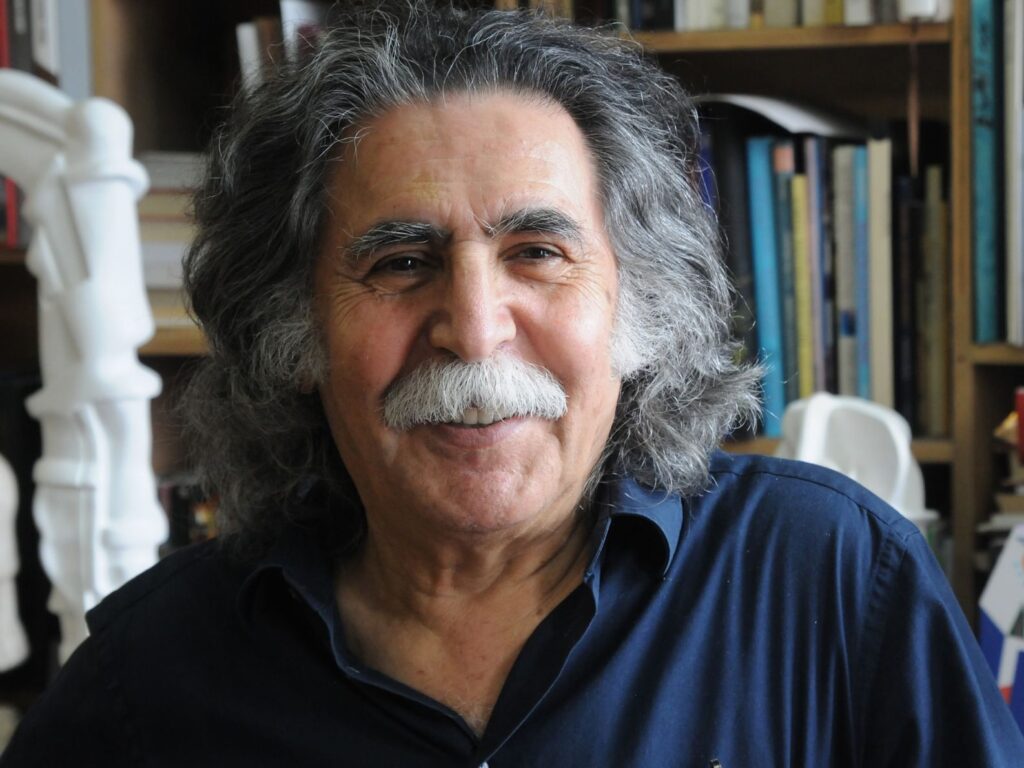
Al-Shammari said his educational journey began in the desert, where he studied until the third grade of primary school, living in tents and drinking well water. (Al-Shammari’s Instagram)
The awards celebrated the tireless efforts of the regional organisations dedicated to environmental stewardship and social responsibility.
Around 50 companies across the Gulf Cooperation Council (GCC) region won the Gulf Sustainability Awards (GSA) 2023 for their exceptional achievements in environmental responsibility.
Held in Dubai on Wednesday, the event brought together a diverse array of sustainable companies, both large and small, from the public, private and semi-governmental sectors to compete for recognition.
The awards celebrated the tireless efforts of the regional organisations dedicated to environmental stewardship and social responsibility.
Many renowned speakers including Shruthi Boosey of Jana Consultants; Tatiana Antonelli Abella, founder of Goumbook FZE; Kevin Holliday, managing director at C3 – Companies Creating a Change; and Dr Samir Thabet, corporate sustainability manager at Nesma & Partners; among others.
Juhi Yasmeen Khan, one of the renowned judges and advisory board member of the ‘Gulf Sustainability Awards’, stated that, “It was very difficult to judge this year as all the entries did exceedingly well.”
Mohammad Mustafa, a student at the University of Wollongong in Dubai, gave a presentation about sustainability and how youth can contribute towards environmental protection and sustainability. His presentation received great acknowledgement from the attendees.
“This was the best Gulf Sustainability Awards ever. In seven years, I haven’t seen so much positive energy to change the impact of business on the planet positively,” said Neil Skehel, founder and CEO of Awards International.
“GSA finds and recognises the best sustainability initiatives of the GCC. Well done to our winners and the overall winner Qatar Museums. It’s through the united efforts of corporate houses, educational institutions, governmental and non-governmental organisations and even the media, where ideas can become actions. It was truly wonderful seeing the pioneers of the future and how we are capable of creating a positive impact on the planet and the entirety of the sustainability world,” he added.
“The bar is raised. I look forward to next year when the bar will be even higher.”
Young speaker and panellist Mustafa also shared his insights from the perspective of a Youth Ambassador for sustainability.
“This event genuinely is the keystone to enacting positive change into the world, and by having me as the youth speaker it opens the doors for the future generation,” he said, adding that “sustainability seems grand and something that requires a large amount of planning and resources, but every small impact can make the biggest change.”
Mustafa said youth are burdened with the problems of the climate crisis, but at the time they are blessed with ingenuity and creativity which they should use to shape their future.
Here are the Gold Award winners in various categories:
Best community development, Recaap by Veolia; Best Workplace and HR Practices, Schneider Electric FZE; Best Net-Zero Initiative, Taqa; Best CSR Initiative, Aster DM Healthcare; Government Sustainability Initiative, Saudi Mining Polytechnic; Reaction to Crisis, Abu Dhabi Ports Group; Best Sustainable Education and Awareness Programme, Sedco Holding; Most Innovative ESG Initiative, Taqa; Environmental Sustainability Programme, DP world; Learning and Educational Programme, Potential.com and HSBC; Innovation in Sustainable Technologies, Cafu; Sustainable Business Model, DGrade; Sustainable Business Model – large firms, Taqa; UN’s Sustainable Development Goals, Ministry of Municipal and Rural Affairs and Housing; Best Sustainable Product, Toppan Gravity (Gravity Group Ind); Best Sustainable Product – small firms, DGrade; Green Building, Qatar Museums – Fire Station; E-Waste Management, Schneider Electric; Water and Waste Management, DGrade; Water and Waste Management – large firms, Drydocks World; Sustainable Team of the Year, Taqa; Sustainable Professional of the Year, Verteco – David King; Overall winner, Qatar Museums, Fire Station.
Annabel Rabiyah moves through the kitchen with familiarity. She’s unconcerned with measurements and makes Iraqi kubbeh (meat wrapped in a wheat pastry and fried) and khubz tawa (Iraqi flat bread) from memory, using her hands to mix ingredients. She knows when to add more water to the farina and flour mixture for the kubbeh based on the feel of the dough, and she’s generous with the black pepper, a spice central to Iraqi food.
As head chef and co-founder of the Awafi Kitchen, a Boston-based pop-up culinary space dedicated to sharing Iraqi-Jewish food and culture, Rabiyah cooks the Iraqi food she learned from her family. She started the Awafi Kitchen in 2017 with several family members to tell stories through food and highlight the overlap between Iraqi and Jewish food.
“The more I delved into learning about the cuisines, [what] I thought was essentially Jewish was [also] Iraqi food,” Rabiyah said. “It’s not even similar, it’s essentially just Iraqi food.”
Before the pandemic, the Awafi Kitchen partnered with local artists and venues to offer a culinary element to their projects, hosted pop-up meals at restaurants in the Boston area, and used these collaborations to uplift Sephardic and Mizrahi Jewish history and culture. More recently, Rabiyah has pivoted to teaching online cooking classes, and occasional baked good deliveries. She can be seen on YouTube, demonstrating a recipe for ba’be ‘btamur, Iraqi-Jewish hand-rolled date pastries, and khubz tawa, which she taught herself by watching Iraqi videos and experimenting in the kitchen.
Rabiyah—who has a Master’s degree in nutrition and has a day job as an urban farmer supporting 56 community gardens in Boston for The Trustees of Reservations—has used her work with Awafi Kitchen to go deeper into her own cultural background. It’s also part of a larger effort to bring attention to the cuisine and culture of Jewish people who aren’t part of the Ashkenazi majority.
Creating Space for Sephardic and Mizrahi Jewish Identities
Rabiyah, who grew up in the U.S. with an Ashkenazi Jewish mother and an Iraqi father, spent years grappling with questions about her heritage. “I grew up with a very politicized identity,” she said. “As a child, people really didn’t believe that Iraqi Jews existed.”
Rabiyah’s family immigrated to the U.S. from Baghdad after the 1967 Six-Day War. Before that, she says, Jewish and Iraqi culture were synonymous there, largely because of the size of the Jewish population. “In the [1930s] it was 40 percent Jewish in Baghdad,” said Rabiyah. “They shut down the main commercial street for Shabbat.” Now, the Jewish community there is essentially non-existent.
It’s hard to say how many Sephardic and Mizrahi Jews live in the U.S.; the U.S. Census doesn’t ask about Jewish religion or culture, and most national surveys of American Jewish life fail to ask respondents about lineage. One survey conducted by Brandeis University found that 88 percent of American Jews identify as white, 2 percent as Black, 5 percent as Hispanic, and 4 percent as “other.” One analysis by a group of Stanford researchers concluded that 12–15 percent of American Jews are people of color. For the same reasons, there’s little data on how many Jews in the U.S. identify as Ashkenazi, but immigration throughout the 20th century was largely from Eastern European countries.
Judaism is a global religion with multiple distinct cultures. Yet in the U.S., a country that has long been a site of refuge and relocation for Jewish people fleeing persecution, the dominant stories about Jewish culture center Ashkenazi Jews, whose ancestors hail from Eastern European countries and Russia. They’re often perceived as white and of European descent, and their assimilation into American culture has helped to create a false narrative that Ashkenazim are the norm. The impact of this, Rabiyah said, is an erasure of Sephardic and Mizrahi Jews, whose lineages begin in North Africa, Spain, and the Middle East.
Rabiyah is using food to record family history, document generations of Jewish movement across countries, and to demonstrate that people like her—Jews of color—exist. Take tbeet, a famous Iraqi-Jewish dish that involves slowly cooking a chicken in rice and is deeply embedded in Jewish faith and culture. It was traditionally started on Fridays, before it was forbidden to start a fire to honor the Sabbath, and served 12 hours later on Shabbat.
She also hopes to show how Iraqi Jews have acculturated to the U.S. and continue to adapt traditional foods here by swapping out ingredients that are easier to find. In order to develop recipes for the Awafi Kitchen, she reached out to elders in her family and in her community and asked them to tell her about recipes that have never been written down.
“Family is at the core of our food, and our story,” Rabiyah wrote on Instagram. “Our family members include some of the last Iraqi Jews that grew up in Iraq. Their memories feel so important to preserve.”
Collaborating with Sephardic and Mizrahi Creative Culinary Projects
In December, Rabiyah partnered with the Brooklyn-based collective Experimental Bitch Presents in their production of a play called In The Kitchen. Rabiyah developed the recipe for ba’aba beh tamur, an Iraqi cookie typically made for the Jewish holiday of Purim. To adapt to the pandemic, the project was a play-in-a-box: audience members received boxes with the audio play and the ingredients and recipe for the cookies.
Listeners heard the voice of Hannah Aliza Goldman, an actor, performer, writer, and food historian, draw on her own family history—her father’s lineage is Sephardic from Morocco, and her mother is Ashkenazi.
In preparation for the play, Goldman retraced her grandmother’s journey and returned to the village in Morocco where she grew up. In the 1930s, more than 250,000 Jewish people lived in Morocco, while today that number hovers around 3,000. For Goldman, much like Rabiyah, cooking traditional Sephardic recipes is a way to rebuild lost connections to that side of her cultural heritage.
“In Jewish culture we have different definitions of homeland,” Goldman said. “My grandmother was very religious. For her, Eretz Zion—Israel—was the homeland and they chose to move there for religious reasons. In the same vein, Morocco was also her home.”
Championing Sephardic and Mizrahi cuisine while telling the stories of migration and multiple homelands is a way of preventing cultural erasure, said Coral Cohen, the play’s director. For this reason, she plans to work with other Sephardic and Mizrahi artists in the future as well. Like Goldman, Cohen comes from a Mizrahi and Ashkenazi family. “Being white-passing, it’s important to acknowledge the privilege that we have, but really important to strongly identify as Mizrahi Jews, as Sephardic, as Iraqi, or Persian, because we are so erased in this country,” Cohen added.
Cohen and Goldman relied on community partners, such the Sephardic Mizrahi Q Network, a community of LGBTQ-identifying Sephardic and Mizrahi Jews who gathered around meals before the pandemic, to get the word out. The Q Network was inspired to use food as a way to reconnect with heritage, tell stories, and demonstrate that there are multiple valid ways of being Jewish.
In 2017, Ruben Shimonov, born in Uzbekistan and raised in the U.S., found himself searching for a Jewish community of people like himself: queer, non-Ashkenazi, and able to hold multiple identities at once. Every Friday night for Shabbat, members of the Q Network would share a meal together. Now, the community shares space on a Zoom screen, but prior to the pandemic the New York-based organization would rotate hosting responsibilities, eating in a different home every week.
“Food is one of society’s oldest technologies of community building,” Shimonov said. “We’ve had everything from chicken with preserved lemon and green olives to Persian rice. All the food represents the beauty and the diversity in [the Jewish] community.”
Representing that diversity is equally important to Rabiyah. For her, cooking her own family’s recovered recipes is a way of ensuring that other Sephardic and Mizrahi Jews feel increasingly seen and heard. “If you want your perspective to be shared,” she said. “Especially if you’re in a context of a lesser-told history—you have to tell it yourself.”
When Nouhaila Benzina stepped onto the field for Morocco’s first match of the Women’s World Cup against Germany, she made history.
She became the first player to wear the Islamic headscarf at the senior-level Women’s World Cup.
Had Morocco qualified for the Women’s World Cup a decade ago, a player who wanted to wear the hijab during a game might have been forced to choose between faith and football.
That was until 2014, when head coverings were officially authorised by FIFA.
Who is Nouhaila Benzina?
She’s a 25-year-old defender on Morocco’s Atlas Lionesses.
In recent weeks, Benzina shared social media posts from others about the history-making nature of her World Cup appearance.
“Lots of work was done over many years, and thank God it had a positive result,” Benzina told Al Jazeera.
“We hope to play at a high level and honour Moroccans.”
‘That could be me’
Morocco are one of eight teams making their debut at the FIFA Women’s World Cup this year, alongside Haiti, The Republic of Ireland, Panama, the Philippines, Portugal, Vietnam and Zambia.
“We are honoured to be the first Arab country to take part in the Women’s World Cup,” Morocco captain Ghizlane Chebbak said on Sunday.
“Girls will look at Benzina (and think) ‘That could be me,’” said Assmaah Helal, a co-founder of the Muslim Women in Sports Network said of the hijab.
“Also the policymakers, the decision-makers, the administrators will say, ‘We need to do more in our country to create these accepting and open and inclusive spaces for women and girls to participate in the game.’”
Why did FIFA ban the hijab before?
FIFA cited “health and safety” concerns, some related to possible choking, with regulations forbidding “equipment that is dangerous to himself or another player.”
An incident in 2007 instigated the official ban.
Canadian girl Asmahan Mansour — who was 11 years old at the time — attempted to wear a headscarf at a tournament but the referee said it wasn’t permitted.
She was told she could remove it and play, but her hijab would not be permitted on the pitch.
When the issue reached FIFA, the sport’s global governing body banned head coverings in competitions it sanctioned, except for coverings that exposed the neck.
Initially, FIFA cited “religious symbolism” as a reason for not permitting head coverings.
But considering the multitude of tattoos, signing of the cross and goal celebrations by footballers, it became too difficult to enforce.
Helal was among the social activists, Muslim athletes, and government and soccer officials who worked to overturn the ban.
Speaking on the 2007 ban, Helal said it “sent a strong message to Muslim women, particularly those who wear hijabs, (that) we don’t belong.”
A two-year trial was granted
In 2012, the International Football Association Board (IFAB) allowed players to wear head coverings at international competitions over a two-year period following a request from the Asian Football Confederation (AFC).
No senior-level World Cups, men’s or women’s, were scheduled during the trial period.
Ban on head coverings lifted in 2014
In March 2014, FIFA lifted its ban on head coverings.
The decision was announced at a meeting of International Football Association Board in Zurich.
FIFA’s then secretary general Jérôme Valcke said hijabs and turbans were permitted on the field.
“It was decided that female players can cover their heads to play,” he said.
“Male players can play with head covers too.
“It will be a basic head cover and the colour should be the same as the team jersey.”
Helal said that since the ban was lifted, she has seen an increase in Muslim girls and women playing soccer, pursuing coaching pathways and leading their own football clubs.
“I think it’s key to understand that the hijab is an essential part of a Muslim woman, should she choose to wear it,” Helal said.
“It’s actually part of our identities.”
A Melbourne resident who attended Morocco’s public practice session last week, Maryan Hagi-Hashi, said she is supporting the Atlas Lionesses alongside tournament co-host Australia.
She appreciates the representation that the Moroccan team and Benzina provide, she said.
“There’s a mixture of (Muslim) women that wear hijab and don’t wear a hijab,” Hagi-Hashi said.
“I think the world has realised there is diversity.”
Two years after the ban was lifted, the under-17 Women’s World Cup in Jordan marked the first time Muslim players wore headscarves during an international FIFA event.
Rise of national team matched by that of country’s female referees.
When the Moroccan national women’s football team next takes to the pitch, their feat will be recorded for ever in the history books.
The Atlas Lionesses play Germany in Australia on July 24, becoming the first Arab nation to play in the Fifa Women’s World Cup.
But it is not just the players who are changing the future of the sport.
The rise of the Moroccan women’s team goes hand in hand with the successes of the country’s female referees, who have made huge strides in breaking the long male monopoly on football officiating.
Three female Moroccan football referees, Bouchra Karboubi, Fatiha Jermoumi and Soukaina Hamdi, have been appointed by Fifa, the sport’s world governing body, to referee at the Women’s World Cup, which kicks off on Thursday in Australia and New Zealand.
Aside from Palestinian Heba Saadieh, the women are the only female Arab football officials at the tournament.
“Morocco’s female football teams have witnessed a significant growth in recent years, in terms of numbers, age categories and locations, which [created the need for] qualifying female referees to officiate their games, and hence creating opportunities for those with great potential in that field,” said Brahim Chokhmane, sports editor at Tunisian newspaper Le Matin.
Mr Chokhmane pointed to a growing trend in the region to try to close the gender gap in sports — and in football in particular.
He said the Royal Moroccan Football Federation (RMFF) has begun to follow the trend.
In June, the Confederation of African Football (CAF) said clubs wanting to participate in the 2023-2024 Champions League and Confederation Cup competitions must have women’s professional teams.
Last year’s African Cup of Nations was the first time the tournament put out an all-female line-up of match officials – among them Morocco’s Jermoumi and Karboubi.
Women refereeing men’s matches
Women in Morocco have never been closer to equality with their male counterparts on the football pitch.
In March 2023, the federation appointed the first female coach in North Africa to train a men’s football team.
Last year, it appointed Karboubi to be the first woman in the Arab world to officiate a final of a men’s professional competition. Jermoumi was a first assistant at the country’s most prestigious football tournament, the Moroccan Throne Cup.
In 2020, the RMFF launched several football tournaments for women footballers and set a target of 90,000 amateur female players.
The moves have inspired more women to play – and referee – football.
Zakia El Grini, 33, who earned her Fifa badge as a football referee in 2022, said: “More Moroccan women feel confident nowadays to train, and work, as football referees, thanks to those who pioneered in the field and paved the way for others, and to the increasing number of female footballers.”
Less than two decades ago, there were fewer than 15 locally accredited Moroccan female football referees.
There are now eight internationally accredited female referees and more than 120 locally licensed ones.
Hafsa Ayab, 15, a student at the refereeing school for the Chaouia Doukkala Regional Football League, in the west of Morocco, told The National that she sees Karboubi as a role model and dreams of reaching the same success.
“I was not a fan of football itself as a game, but have found my passion in refereeing,” she said. “I am lucky to be able to pursue this dream.”
As the number of Moroccan players increase significantly, Moroccan referee Soukaina Hdia, 32, said more women will be encouraged to take part.
“And it will continue to increase, especially as more Moroccan women partake in global events,” she said. “It will encourage more females to do the same. I recall how, in 2009, I was the only female football referee in the Chaouia Doukkala region, but now there are dozens”.
‘Bullying doesn’t stop’
The pursuit of a refereeing career for women is not an easy one, Hdia said.
“I have been in this profession since 2009, and the bullying doesn’t stop, especially during interviews, or from the audience. I did grow immune to negative comments, though.”
Karboubi too has been the target of harassment and bullying.
After officiating Morocco’s Throne Cup’s final last year, images of the referee side by side with pictures of a kitchen went viral on social media, as some football fans took umbrage at Karboubi’s decision to show a yellow card to one player.
Ranked 136 of 146 countries in the World Economic Forum’s Gender Gap Index, Morocco’s women live lives strongly determined by deeply ingrained gender roles.
“The bullying is sometimes worse against female referees with headscarves, like what happened to me,” said El Grini, who officiated the kingdom’s Throne Cup this year.
“But the main obstacle preventing many Moroccan women from pursuing football refereeing as a career is the family. Many still view refereeing as meant only for men, but the truth of the matter is that sports and refereeing are open to all,” she said.
This story is published in collaboration with Egab.
Fawaz bin Ali Al-Dahas, a former director general of the Makkah History Center, said: “Uthman bin Affan was the first to order the construction of a portico, and it was called the Ottoman portico”.
The porticoes of the Grand Mosque in Makkah, with their Islamic architectural motifs and inscriptions of verses from the Qur’an, have a history that dates back to the time of Uthman bin Affan, the third caliph who led the Muslims after the death of the Prophet Muhammad.
Known as “riwaq” in the Arabic language, the porticoes or arcades are structures built as entrances that usually open into courtyards. The word “riwaq” was first used to refer to the structure that surrounds the circumambulation area of the Kaaba.
The porticoes surrounding the Holy Kaaba were not part of the original design.
Fawaz bin Ali Al-Dahas, a former director general of the Makkah History Center, said: “Uthman bin Affan was the first to order the construction of a portico, and it was called the Ottoman portico.”
This was later expanded during the Abbasid caliphate in the 8th century. The modifications included the addition of elaborate mosaics and inscriptions that remain to this day.
There was no further expansion of the portico until the foundation of the Saudi state under King Abdulaziz.
“During King Abdulaziz’s reign, there was an expansion of the Prophet’s Mosque in Madinah, and the king wanted to do the same at the Grand Mosque in Makkah, but he died before that could happen,” Al-Dahas said.
The first Saudi expansion of the Grand Mosque happened during the reigns of King Saud, King Faisal and King Khalid, and included the reconstruction of the Ottoman portico.
The second Saudi expansion began in 1988, with King Fahd laying the foundation stone.
________________________
BACKGROUND
• The first Saudi expansion of the Grand Mosque happened during the reigns of King Saud, King Faisal and King Khalid, and included the reconstruction of the Ottoman portico.
________________
• During King Abdullah’s reign, the Grand Mosque underwent the largest expansion in its history, increasing its total capacity and expanding the courtyard around the Kaaba.
During his reign, large courtyards surrounding the mosque were built and paved with heat-resistant marble. The Safa and Marwa area was expanded to facilitate the movement of those performing the Sa’ee — an integral part of the Hajj and Umrah pilgrimage — and a bridge was built to connect the roof of the mosque to Al-Raquba area.
During King Abdullah’s reign, the Grand Mosque underwent the largest expansion in its history, increasing its total capacity and expanding the courtyard around the Kaaba.
King Salman has since launched five initiatives as part of a plan for the third Saudi expansion of the Grand Mosque. These include the expansion of the main building and courtyards, a pedestrian tunnel project and a central service station project.
As a result of the many expansion projects since the creation of the Saudi state, Abdulrahman Al-Sudais, president of the General Presidency for the Affairs of the Two Holy Mosques, announced in May that the Ottoman portico would be renamed the Saudi portico.
“The Saudi portico will be complementary to the Ottoman portico, with its distinction in a larger area that the Grand Mosque has never seen before,” Al-Sudais said.
The Saudi portico provides a wider space for worshipers with its high-quality engineering standards and is characterized by the availability of technical services, sound and lighting systems, and a faith-based environment for visitors to the mosque.
source/content: arabnews.com (headline edited)
___________
A look at how the Portico by the Abbasid caliphate looked like, as taken by the first Makkah photographer, Abdul Ghaffar. / (Library of Congress photos)
The arts and theatre events will run until July 9 in London and across the UK.
How do you programme an Arab festival that questions Arab identity? This was the challenge facing Alia Alzougbi and Taghrid Choucair-Vizoso as they approached their first attempt at curating Shubbak Festival – the arts, film and theatre event that runs every summer in Britain.
Running until July 9, Shubbak will stage more than 40 plays, music events, films, exhibitions, workshops and standup comedy shows, produced by creatives from the Middle East and its diaspora.
The acts will range from debut solo work by musician Hamed Sinno, formerly of Mashrou’ Leila, to stand-up by Palestinian comedian Sharihan Hadweh, who dissects the hurdles of life in the West Bank from her perspective as a blind artist.
“We’re quietly challenging ‘stay in your lane’ politics,” says Alzougbi, who was appointed with Choucair-Vizoso as co-chief executive of Shubbak last year. While the 75th anniversary of the Nakba was a major part of the backdrop to their curation, so were wider cultural conversations such as climate change and the Black Lives Matter movement.
And the pair, who each grew up across the Middle East and London, saw that the very notion of being Arab includes complex layers of belonging, which they wanted Shubbak to reflect.
“Part of the obstacle that we come across in being an ‘identity festival’ is this notion of homogeneity and genericity,” Alzougbi continues. “One of the first things that we did was to change our strap line from ‘Shubbak: A Window on Contemporary Arab Culture’ to ‘A Window on Contemporary Arab Cultures’.
“We pluralised it in order to acknowledge that Arab identity is complex, it’s fluid, it’s imagined, it’s constructed, and we were very interested in both the personal and political changes – whether they’re tectonic or barely sensed.”
As part of their commemorations of the Nakba, for example, they are staging the play “Trouf: Scenes from 75* Years,” which evolves and grows every year it is performed. First staged as “Scenes from 68* Years” at the Arcola Theatre in East London in 2016, it reflects the continuing nature of the Palestinian struggle as it records the years that have elapsed both since the Nakba and since its own beginnings.
Its author, too, speaks to the movement of people common in Arab (and non-Arab) cultures. It was written by Hannah Khalil, a Palestinian-Irish playwright, who now lives in London and grew up briefly in Dubai.
The version of the play at Shubbak is staged by two Tunisian theatre companies – L’Artisto and Nabeul Performing Arts Centre found points of connection between the Palestinian story and their own experience, in scenes showing queuing for goods or lost and forgotten villages, as people in both Tunisia and Palestine move from rural to urban environments.
The festival features performers from a number of Maghrebi countries including Tunisia. Alzougbi and Choucair-Vizoso were interested in the Arabic-speaking countries of North Africa as places where Arab and African identities have long mixed and intersected.
They partnered with the recently reopened Africa Centre, an important site in the history of African liberation movements, to host an exhibition that takes Libya as its starting point, dissecting and expanding the way governments use visual culture to entrench their power.
“North Africa sometimes can get lost in identity politics and borders around imagined communities,” says Alzougbi.“This collaboration between Shubbak and the Africa Centre represents a deep commitment – an acknowledgement and celebration of North Africa as this place where we all meet.”
The pair also thought hard about the inclusivity of the event: “Shubbak is for everyone,” says Choucair-Vizoso, explaining that some performances offer childcare, so that parents can watch the play without thinking about the babysitting cost waiting for them at the end, while other events have a pay-what-you-can sliding scale.
Others are free. “We’re committed to reducing access barriers to the arts and to festivals,” she continues. “We’re actively thinking of who may have previously felt excluded – not necessarily from Shubbak, but in any festival. People are so overwhelmed by the grind of the everyday, particularly here in London with the cost of living crisis and the illegal immigration bill.
“They’re so battered by having to survive daily life that there’s no capacity to be an exhibition visitor or a theatre audience member. So for us, we thought, how do we bring together people – who feel like they’re on the periphery – together with exceptional, global artists?”
The festival also continues Shubbak’s past practice of staging events beyond London. The Saudi-Palestinian artist Tamara Al-Mashouk presents a piece about migrant detention centres in Dover, the coastal destination for many crossing the Channel from France.
The choreography The Power (of) The Fragile, in which Mohamed Toukabri explores separation and closeness, on stage with his mother, will be performed both at the Battersea Arts Centre in London and at the Lowry near Manchester.
Their consideration of the ethics of the event also went beyond the audience. Much of the subject matter treated by Arab cultural producers is harrowing: responses to continuing occupation, deprivation or unstable politics. What does it mean to launch yourself through that, night after night? And how do Arab producers tackle challenging topics, such as gender violence or religious extremism, without falling into stereotypes about the Arab world?
To deal with these concerns, Alzougbi and Choucair-Vizoso are inviting performers, artists and writers from the Global South to closed-door sessions, where the pair hope participants can freely discuss these concerns and the emotional tolls – as well as what might be changed in the future with new generations of performers.
“We’re working with the knowledge that we’re constantly in flux, and that what served us yesterday no longer serves us today,” says Alzougbi. “That’s the human condition. We have these conversations openly in the team, and we do not always agree or have consensus. And aren’t we blessed to have that? Aren’t we blessed to have a space where we’re able to say ‘we’ve moved on’?”
Initiative will turn the house into a museum to preserve philosopher’s mark on history.
The UAE and Tunisia have signed an agreement to restore the Tunis home of 14th century thinker Ibn Khaldun and turn it into a museum to preserve his mark on history.
The agreement was signed by Abdulrahman Al Owais, chairman of the board of trustees of the Sheikh Zayed Grand Mosque Centre, and Hayat Al Qarmazi, Tunisia’s Minister of Cultural Affairs.
The initiative is being held under the patronage of Sheikh Mansour bin Zayed, Vice President, Deputy Prime Minister and Minister of the Presidential Court, and the Sheikh Zayed Grand Mosque Centre.
“The initiative to restore the house of the great Arab scholar and philosopher Ibn Khaldun in Tunis constitutes one of the initiatives of the Sheikh Zayed Grand Mosque Centre for preserving human heritage at all local, Arab and international levels,” said Mr Al Owais, who is also Minister of Health and Prevention and Minister of State for FNC Affairs.
Ms Al Qarmazi said the agreement was a “step in the right direction” in terms of advancing the partnership between the UAE and Tunisia in a way that showcases the rich cultural heritage of the Arab and Islamic worlds.
Ibn Khaldun home is located in the Bab Al Jedid area, one of the gates of the Tunisian capital. The house was built during the Hafsid rule and consists of a ground floor and an upper floor surrounding an open courtyard.
Born in Tunis in 1332, the scholar spent his early adult years studying law and taking part in local politics as he dealt with Arab tribesmen.
He wrote The Muqaddimah, a book which covered universal history, politics and civilisation, as well as biology, chemistry and theology.
Largely ignored in his lifetime, it was only 300 years later that Ibn Khaldun’s work was picked up by Orientalists and became fashionable in European circles.
Abdulrahman Al Owais, chairman of the board of trustees of the Sheikh Zayed Grand Mosque Centre, and Hayat Al Qarmazi, Tunisia’s Minister of Cultural Affairs, look at a model of the renovation plans. Wam