Riyadh beats Paris, Berlin, and Madrid in global Smart City ranking

Riyadh has beaten the capitals of France, Germany and Spain in a global Smart City ranking, with Makkah, Jeddah, and Madinah included in the list for the first time.

The list, which seeks to find out how technology is enabling cities to achieve a higher quality of life for their inhabitants, places the Saudi capital 30th on the global ranking – making it the third highest Arab city.

It is also up from 39th last year and 55th in 2019.

Makkah is placed 52nd – which still makes it the fourth highest Arab city – with Jeddah coming in the 56th position and Madinah ranked 85th.

Abu Dhabi and Dubai lead the way for Arab cities, coming in at 13th and 17th respectively on the list of 141 settlements. 

According to the Saudi Press Agency, the Smart City observatory is one of the global indexes that evaluates the preparedness of cities and it is an assessment tool and holistic, interdisciplinary approach for urban planners, decision-makers, and researchers to evaluate smart tech systems’ contributions to improving the living standards of residents.

The improvement in the Saudi cities’ ranking in the Smart City index was the result of collaborative efforts of all concerned agencies, including the National Smart City Platform, launched by the Saudi Data and Artificial Intelligence Authority, added SPA.

The top ranked city is Zurich in Switzerland, followed by Olso in Norway, and Canberra in Australia.

The full report notes the absence of American or African cities in the top 20, which is dominated by those in Europe or the Asia-Pacific – with the exception of Abu Dhabi and Dubai.

New York ranks 22nd while Cairo, at 108th, is the leading African city. Medellin in Colombia is the leading South American location at 118.

The report notes: “The 2023 rankings reflect a growing interest and higher levels of concern about the quality of life that residents are expecting to enjoy in their respective cities. 

“Size is often a handicap rather than an advantage in this regard. This explains why most large metropolises such as Boston (34th) or Paris (46th) rank relatively low in the index, in spite of remarkable progress in a number of key areas such as sustainability and mobility.”
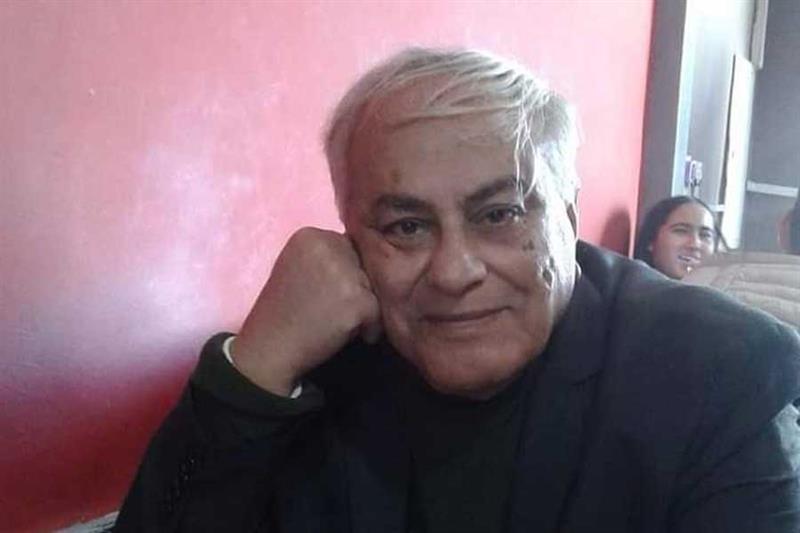
IRAQI Writer Abdul Rahman Majeed Al-Rubaie

Iraqi writer Abdul Rahman Majeed Al-Rubaie passes away at 83.

The news was confirmed by his friend and fellow writer, Waheed Al-Taweelah, who shared his condolences on Facebook.

Born in Nasiriyah, Iraq, in 1939, Al-Rubaie was considered one of Iraq’s most important contemporary writers.

He was known for his honest and emotionally rich depictions of the human condition in Iraq.

He authored several novels, short stories, plays, and poems that focused on themes of social justice, political commentary, and everyday struggles in Iraq.

Al-Rubaie was a versatile artist who practiced teaching, journalism, and diplomatic work in Lebanon and Tunisia.

He was also a member of the Iraqi Writers Union, the Journalists Syndicate in Iraq, and the Fine Artists Association in Iraq.

His acclaimed novel Al-Washm [The Tattoo], excerpted in Banipal No 17, has been reprinted six times in Morocco but was never published in Saddam’s Iraq.

Al-Rubaie’s contributions to Iraqi literature were widely acclaimed, and he received numerous awards and accolades throughout his life.

In addition to his acclaimed novels, such as “Tattoos” and “Rivers,” Al-Rubaie also wrote plays that were staged in Iraq and abroad.

His play “The City of Strangers” was performed in Baghdad in the 1970s and was later staged in Tunisia and Lebanon.

Another play, “The Game of Assassination,” was performed in Baghdad in 1985 and explored the dark side of Iraqi politics.

Al-Rubaie’s poetry was equally celebrated.

His collections such as “For Love and the Impossible” and “Shahryar Sailing” showcase his lyrical and reflective style.

His poetry often delved into themes of love, loss, and the beauty of the natural world.

Throughout his career, Al-Rubaie was a strong advocate for freedom of expression and the power of literature to promote social change.

He was vocal about the importance of writers and intellectuals in shaping public discourse, and he often used his writing to challenge prevailing attitudes and norms.

Al-Rubaie’s work has been translated into several languages and has received critical acclaim both in Iraq and abroad.

His contributions to Iraqi literature have left an indelible mark on the country’s cultural landscape.

source/contents: english.ahram.org.eg (headline edited)

___________

Iraqi writer Abdul Rahman Majeed Al-Rubaie

_______

IRAQ

SAUDI ARABIA: February 22nd. Founding Day 2023 in Saudi Arabia: What is it and how is it different from National Day?

The new annual celebration aims to celebrate the origins of Saudi Arabia.

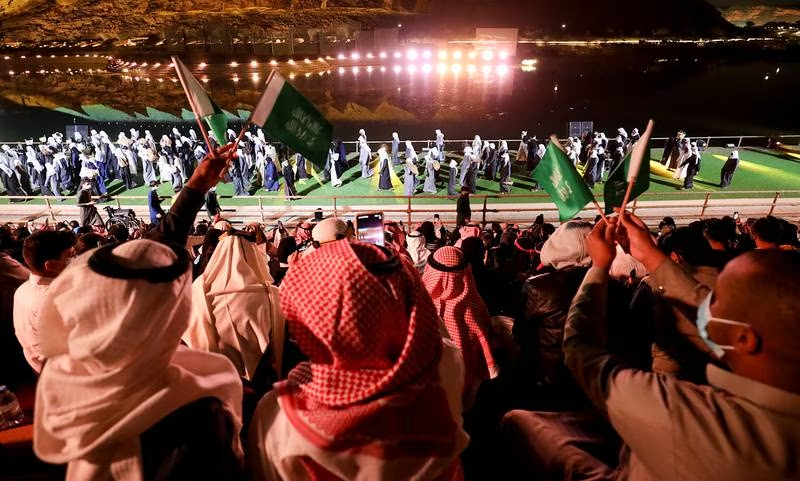
Wednesday, February 22, marks Saudi Arabia’s Founding Day, a new annual holiday to commemorate the founding of the first Saudi state in Arabia.

The holiday was established with a royal decree issued by King Salman last year through the official Saudi Press Agency. It said the move is meant to commemorate the history of Saudi rule dating back hundreds of years.

It is a different event to Saudi National Day, which is marked on September 22.

What does Founding Day commemorate?

Saudi Arabia’s new annual holiday commemorates the ascendancy to power of Mohammed bin Saud, who founded the First Saudi State.

In February 1727, bin Saud inherited leadership over the central Arabian town of Diriyah, which had been established by his ancestors back in the 15th century.

He oversaw the expansion of Diriyah from a city-state to an emirate, conquering territories in central Arabia and uniting them under his family’s rule.

His dynasty became known as the Al Saud, named after his father, Saud bin Mohammed Al Muqrin, who had ruled Diriyah from 1720, the date often cited as the founding of the dynasty.

Founding Day commemorates these origins and aims to highlight the important part the Al Saud dynasty has played in the history of Arabia.

What was the First Saudi State?

Although Mohammed bin Saud came to power in Diriyah in 1727, the establishment of the First Saudi State is usually dated to 1744.

It was in this year that he allied with Mohammed bin Abdul Wahab, a religious scholar who led a movement that called for a return to the “true” version of Islam.

This alliance was at the heart of the First Saudi State, also known as the Emirate of Diriyah, the first of three Saudi states.

From Diriyah, the Al Saud dynasty quickly expanded to conquer much of the Arabian Peninsula, including the Hejaz region, home to the holy cities of Makkah and Madinah.

This expansion was seen as a threat by the Ottoman Empire, the region’s major power, which sought to restore its influence in Arabia.

After a seven-year war, Ottoman-allied forces led by Egypt’s Ibrahim Pasha defeated the Al Saud and destroyed Diriyah, bringing an end to the First Saudi State in 1818.

From the First Saudi State to the modern kingdom

The Al Saud re-established their state six years later with a new capital at Riyadh, close to Diriyah.

Throughout the 19th century, they competed with the rival Al Rashid dynasty for supremacy over central Arabia. Internal conflicts and military defeats eventually weakened the Al Saud position, leading to the capture of Riyadh by the Al Rashid in 1891 and the end of the Second Saudi State.

Imam Abdulrahman Al Saud, who led the Al Saud at the time, sought refuge with the local Bedouin in the deserts of the Empty Quarter before taking his family to Kuwait.

His son, Abdulaziz, recaptured Riyadh in 1902 in a raid, laying the foundations for the expansion of Saudi rule across Arabia. In 1932, Abdulaziz formalised his reign by establishing the Kingdom of Saudi Arabia, with himself as its first king.

His sons, including the current King Salman, have ruled the kingdom since.

How is Saudi Arabia’s National Day different from its Founding Day?

Saudi National Day is celebrated annually on September 23. It marks the 1932 decree, issued by King Abdulaziz, which renamed the Kingdom of Najd and the Hejaz as the Kingdom of Saudi Arabia.

The unification of the kingdom took place on the 21st of Jumada Al Awwal in 1351 H — which corresponds to September 23, 1932.

Today, National Day is celebrated through fireworks displays, ceremonies and parades.

What will happen on Founding Day?
Events to show off traditional crafts, culture and heritage are planned across the kingdom.

Live music and dance performances are scheduled in cities including Riyadh, Jeddah and Dammam.

Festivities are expected to last several days, with students given a long weekend until February 27.

source/content: thenationalnews.com (headline edited)

___________

Founding Day commemorates when Imam Mohammed bin Saud established the first Saudi state in the Hijri year 1139, or February of 1727AD.

__________________

SAUDI ARABIA

EGYPTIAN AMERICAN: Columbia University names Egypt-born Minouche Shafik as its next President

New York-based Columbia university announced on Wednesday that Egyptian-born figure Minouche Shafik would become its first-woman president next summer.

“Nemat {Minouche} Shafik, a leading economist whose career has focused on public policy and academia, will become the next president of Columbia University on July 1, 2023.” Columbia University said adding that her election by the board of trustees as the University’s 20th president concluded a wide-ranging and intensive search launched after the University’s Current President Lee C. Bollinger announced that he would step down at the end of the 2022-2023 academic year.

Shafik will become the 20th president of the famous American educational institution.

Minouche Shafik was appointed director of the London School of Economics and Political Science (LSE) in September 2017.

She also served as the Deputy Governor of the Bank of England prior to her appointment as LSE Director in 2017.

She was made a Dame Commander of the British Empire in Queen Elizabeth’s Birthday Honours list in 2015, and in July 2020 was created a baroness, becoming a crossbench peer in the UK’s House of Lords. 

Shafik’s successful portfolio includes leading roles such as Vice President of the World Bank, where she became the youngest VP in the history of the bank, and Permanent Secretary of the UK Department for International Development and Deputy Managing Director of the International Monetary Fund (IMF).

Born in Alexandriam her childhood in Egypt was brief though, as she left the country for the US when she was four. She later returned to the country briefly as a teenager, according to interviews.

She holds a BSc in economics and politics from the University of Massachusetts in Amherst, and an MSc in economics at LSE before completing a PhD in economics at St Antony’s College at the University of Oxford.

Her doctorate thesis was on the role of the private sector and the public sector in Egypt.

source/content: english.ahram.org.eg (headline edited)

__________

_____________________

AMERICAN / EGYPT