Arabs & Arabian Records Aggregator. Chronicler. Milestones of the 25 Countries of the Arabic Speaking World (official / co-official). AGCC. MENA. Global. Ist's to Top 10's. Records. Read & Enjoy./ www.arabianrecords.org
Rajaa Cherkaoui El Moursli was part of the research team that made the groundbreaking discovery of the Higgs Boson particle.
Moroccan prominent nuclear physicist Rajaa Cherkaoui El Moursli was featured this year on the list of Forbes 50 Over 50 for the Middle East and Africa (MENA) in recognition of her outstanding scientific contributions.
El Moursli’s research has helped prove the existence of the Higgs Boson, which is the particle responsible for the creation of mass.
“While her almost 30-year-long career in science has been filled with achievements, it’s a career that would not have existed had she not convinced her father to let her seek out a graduate degree in France in the early 1980s,” Forbes wrote. This was a time when Moroccan women were “expected to leave home to marry and not pursue a vocation.”
After earning her Ph.D in Nuclear Physics from the University of Joseph Fourier in Grenoble, France, El Moursli returned to Morocco in 1982. There, she joined the Faculty of Sciences at the University Mohammed V in Rabat.
Early in her career, she took the helm as the head of the Laboratory of Nuclear Physics in Rabat. El Moursli’s research focuses on the applications of nuclear physics, medical physics, and high-energy physics.
A pivotal moment in her career occurred in 1996 when she became an integral part of Morocco’s participation in the international ATLAS collaboration at the European Organization for Nuclear Research (CERN). The event marked her entry into one of the world’s most prestigious scientific research centers, located in Geneva.
El Moursli’s contributions have extended beyond the laboratory giving her membership with international organizations such ATLAS, KM3NET, and ANTARES.
Within these roles, she has been vital in creating and implementing master’s degree programs at her university, notably creating Morocco’s first master’s program in medical physics. Currently, over thirty graduates from her program hold crucial positions as radio physicists in Moroccan hospitals.
Throughout her career, she has supervised numerous doctoral and master’s students and has played a crucial role in building and strengthening academic programs.
In 2015, she became the first Moroccan to receive the L’Oreal-UNESCO award for Women in Science, representing Africa and the Arab States.
El Moursli served as VP of Research, Innovation, Cooperation, and Partnership at Mohammed V University. She also chaired the competition program “My Thesis in 180 Seconds.”
Her accolades include being a fellow of the World Academy of Sciences (TWAS) and serving on the “For Women in Science” international jury.
In 2017, she was honored by the Organization of Islamic Cooperation for her outstanding contributions to science and technology in the Islamic world.
Now in 2024, El Moursli continues to play a pivotal role in shaping the global scientific landscape and showcasing Moroccan achievements to the world.
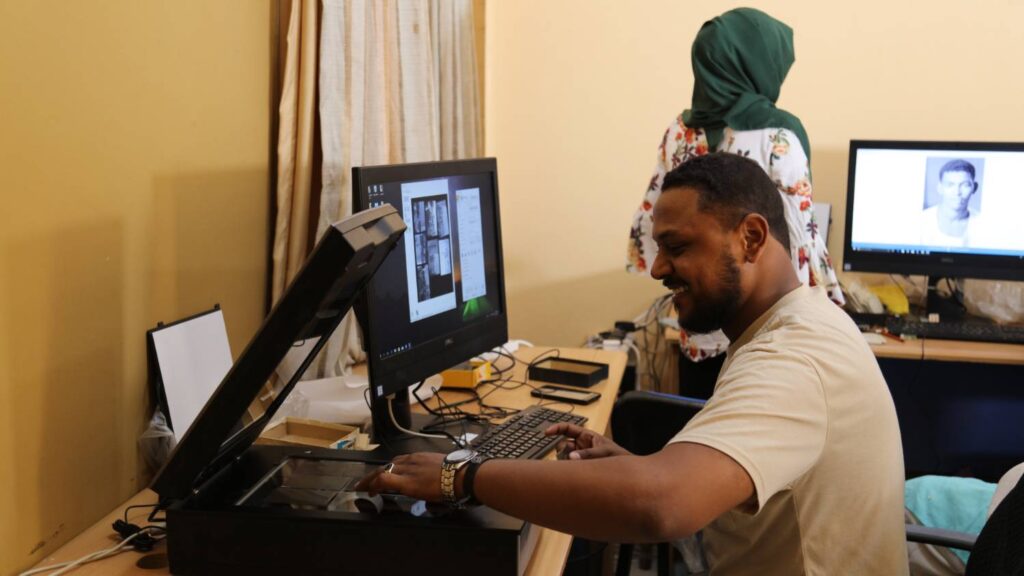
A group of academics have spent close to a decade scanning historic documents and images and making them available online.
Sudanese academic Badreldin Elhag Musa followed the news with alarm when Al Qaeda-affiliated fighters set fire to two libraries containing historic documents in the Malian city of Timbuktu in 2013.
While local residents managed to smuggle many manuscripts to safety in advance, a Unesco team later found that some 4,200 of the documents stored in the libraries were either destroyed or stolen – about a tenth of its archives .
At the time, Elhag Musa already had concerns about the preservation of rare documents in his country. The events in Timbuktu accelerated the sense of urgency for the scholar, a member of the Sudanese Association for Archiving Knowledge (Saak).
The tragic episode served as a warning that highlighted the plight of cultural heritage artefacts in areas of actual or potential conflict – just like Sudan.
Elhag Musa set a plan in motion, connecting with King’s College London Professor Marilyn Deegan, who has over 20 years of experience in digital humanities. His goal: to find ways to safeguard as much of Sudan’s cultural heritage as possible.
A decade later, the result is Sudan Memory, a project that seeks to preserve and promote valuable cultural materials about Sudan through digitisation. The online platform aims to ensure current and future generations can benefit from the country’s rich heritage.
In total, more than 200 people and over 40 institutions have been involved in the project, which offers 60,000 digitised documents.
The results are invaluable: The materials range from manuscripts, photographs, books and films, covering a myriad of topics, as well as jewellery, traditional dresses, and artefacts from different regions spanning around 6,000 years of history.
“We never expected such success when we started,” Elhag Musa told Middle East Eye.
His colleague Deegan notes, “We’ve digitised… well over 100.000 images,” adding, “We thought we would be able to do millions…but I think we did do a lot.”
Sourcing collections
One of the reasons that prompted Elhag Musa and his colleague at Saak to protect Sudan’s cultural heritage with such urgency was that many of the country’s richest archives, particularly private collections, are in danger.
The reasons are manifold, ranging from extreme weather and lack of appropriate storage to neglect and conflict.
Many valuable collections, whether public or private, are also locked away and not easily accessible to the public.
Yet at the same time, many of Sudan’s archives and collections were in good enough condition to undertake a project like Sudan Memory, as Deegan saw for herself on her first visit to Khartoum, Omdurman and Atbara in May 2013.
“Archives in Sudan are not (like) the British Library, but they are not too bad,” she said.
Although its origins go back a decade, the Sudan Memory team was only able to start digitising documents in 2018, some time after securing funds.
At first, the focus was on large institutions; one of the entities that contributed the most was the National Records Office (NRO), which serves as Sudan’s national archives.
The NRO holds more than 30 million documents, some dating as far back as 1504 CE, and they are currently classified into around 300 collections.
Today, some of these materials can be found in the Sudan Memory archive, including early issues of The Sudan Times newspaper, as well as old magazines, rare books and precious photographs.
Another major collection included in the Sudan Memory project was provided by Al Rashid Studio, the largest private photo studio in the country.
Located in the city of Atbara, once the centre of Sudan’s railway industry and regarded as the cradle of its trade union and communist movements, the studio holds over four million negatives dating back to the 1940s.
Through these negatives, the Rashid family has captured the cosmopolitanism that once defined Atbara, as well as some of the changes Sudan has undergone in recent decades.
“What’s interesting about [it] is looking at the early images and seeing over time how things like fashion changed, and how that’s related to politics,” Deegan noted.
A turbulent process
Building the Sudan Memory archive was not an easy task, primarily as a result of political circumstances in the country.
Training could not start until scanners were imported into the country and these were not installed until July 2018, as the team had to navigate sanctions still in place at the time – a period when former president, Omar al-Bashir, was still in charge.
These restrictions also affected the purchase of other equipment and the transfer of funds to teams within Sudan.
Additionally, in the lead-up to the revolution in Sudan in late 2018 and the period until the formation of the now-ousted transitional government, there was little stability within the country’s institutions with many regularly closing, thereby disrupting the project.
And just as the situation began to settle down and work restarted, the Covid-19 pandemic hit in early 2020, once again putting a hold on scanning in local institutions.
Throughout this turbulent process the project stayed going thanks to the efforts of Katharina von Schroeder, Sudan Memory’s project manager in Khartoum.
“Just like many other projects, Covid times were difficult,” Elhag Musa said.
“But for us the passion was great, and as Marilyn continued to work on targeting international sources [of funding], we went on to focus on training talented team members on digitisation skills,” he added.
As if all this was not enough, the military coup of October 2021, which derailed the fragile transition in the country, further aggravated political instability in Sudan and delayed the project’s launch in Khartoum indefinitely.
“It has just been so turbulent over the last few years,” Katherine Ashley, another of Sudan Memory’s project managers, told MEE.
“But people, if anything, have become as or even more generous and excited to share their collections and do things about it,” she noted.
Private collections
About halfway through the project, the Sudan Memory team decided to expand beyond the country’s major institutions and dive into private collections as well.
And that’s when Ashley, who has extensive experience in the field, came in.
“The big collections are amazing, but the ones that people feel so passionate about are (ones) hidden away in people’s homes; private collections and stories,” she said.
“This is what (made me realise) how important it is to try and make some effort…on Sudan and record some of these oral histories and stories,” Ashley added.
One such preserved collection is that of Sadia el-Salahi , a Sudanese artist and designer born in 1941 in Omdurman and famous for her pioneering work on Sudanese folklore and traditional costumes.
In 1968, Salahi joined the Sudanese Ministry of Culture and became the first Sudanese national to hold the position of head costume designer, according to Sudan Memory.
“She sadly passed away…but we were lucky to record what was left of her collection and also do a video recording about her career and life story,” Ashley said of Salahi, who died in 2022.
Another jewel in the crown of the Sudan Memory project is an interactive 3D reconstruction of Suakin Island , on the west coast of the Red Sea, as it was in 1900.
The portal also features some important documentation about the history of the island, and links to digitised content about it.
To a great extent, the reconstruction of Suakin was possible thanks to Mohamed Nour, a local Sudanese citizen, and his family, who dedicated their life to building a museum of the island’s history through photographs, artefacts and other documents.
“It’s a lifelong work that they are continuing,” Ashley said.
Remembering Sudan’s Jewish community
A significant part of the archive created by Sudan Memory does not come from within the country but by a process they call digital repatriation: content about Sudan acquired from institutions and individuals abroad.
“We are bringing Sudanese materials back into the country,” Deegan noted, adding: “We are pushing Sudanese materials out to the world, but also bringing stuff back in.”
One example is the Tales of Jewish Sudan archive , a collection of stories, photos and recipes from Sudan’s Jewish community compiled by historian Daisy Abboudi, a descendant of the Sudanese-Jewish community born in the UK.
The history of Sudan’s Jews is difficult to trace, but Abboudi has documented that from the early 20th century onwards, Jews from all over the Middle East and North Africa began to arrive after the building of a rail connection to Cairo by the British army.
At its peak in 1950s, Sudan’s Jewish community numbered approximately 250 families, mainly concentrated in Khartoum, Omdurman and Wad Madani. And its members were predominantly merchants involved in the textiles, silks and Arabic gum trades.
“The community was very active, they had a club, a synagogue… It was an equipped, functioning community,” Abboudi told MEE.
“It was small, but I think that that made it even more vibrant and active,” she added.
However, from the mid-20th century onwards, and for reasons ranging from the establishment of the State of Israel to the rise in antisemitic incidents and rhetoric in Sudan, the Jewish community began to shrink amid successive waves of emigration.
According to Abboudi, by the end of 1973 following the Arab-Israeli war, the last remaining Jews left Sudan.
To prevent the memory of the once vibrant Jewish community in Sudan from fading, Abboudi started Tales of Jewish Sudan in 2015 with the aim of preserving its history and stories before it was too late – a goal now shared with Sudan Memory.
“Living in the more Ashkenazi-dominant British community, I felt that my history was neglected, ignored or somehow not present. And that’s why I started,” she said.
“But also for my generation and the generations to come, because I realised that as soon as those people are no longer here, that community will be forgotten,” she explained further.
Another curious example of repatriated Sudanese materials comes from Air Tickets History , a collection belonging to Greek collector, Gklavas Athanasios, that today holds over 4,500 airline tickets and boarding passes from more than 1,000 airlines spanning six continents.
The extensive collection includes several documents dated from 1960 to 1983 from Sudanese airlines, such as Sudan Airways, the national airline; also one of the first airlines in Africa, Mid Airlines, a charter airline established in Khartoum in 2002, and Marsland Aviation.
“I started collecting tickets when I was eight and had my first flight with Olympic Airways, from Athens to Samos Island,” Athanasios told MEE. “But about the Sudanese tickets I unfortunately don’t have much information, as I bought them on Ebay many years ago.”
All in all, the compilation of these documents gathered from major institutions and private collections both inside and outside Sudan helps to build up a complex picture of the memory of a nation.
“We were optimistic, but we didn’t expect at all that we would succeed in the organisation of such magnificent collaboration,” Elhag Musa said.
And the process that has been followed also serves to pave the way to go further.
“What we do have at least is a much broader understanding of what is there and what else could be done in the future,” Ashley said.
She has broken two world records at 2023 International Powerlifting Federation World Junior Championships.
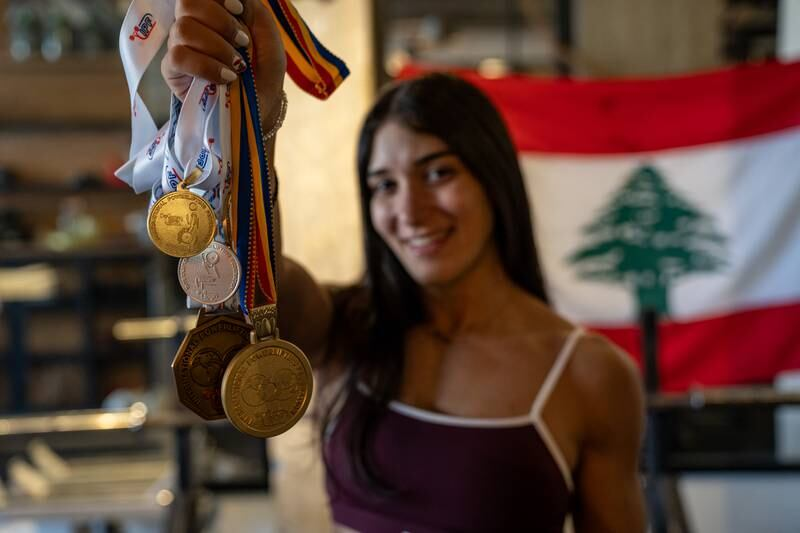
When she stepped on to the platform amid enthusiastic cheers from her supporters, Lebanese powerlifter Joya Khairallah, 22, was faced with a steel bar loaded with several red plates weighing an impressive total of 183.5kg.
This was an immense challenge for the young woman, weighing only 52kg, but she had to overcome it if she wanted to claim first-place at the 2023 International Powerlifting Federation (IPF) World Junior Championships.
No one in her category had ever accomplished this feat, until August 29 in Cluj-Napoca in Romania, when Miss Khairallah firmly grasped the heavy bar and pulled it from the ground level to her hips, a movement called a “deadlift” – one of three lifts performed in powerlifting.
When she reached the lockout position, marking the end of the movement, she screamed in triumph and knelt to the floor, having just broken the world record.
“After stepping on to the platform, I initially had doubts because I was exhausted, and my back was hurting, but I persevered, I got it and I won,” she told The National in Beirut during her first training session, a few days after the international competition.
“There’s no actual word that really describes how I felt. It feels wonderful, but I’m still a bit in denial,” she added.
The Lebanese champion achieved a total of 428.5kg for the three lifts (bench, squat, and deadlift), setting yet another IPF Junior World Record in her weight class.
This exceptional performance earned Khairallah a gold medal in the competition for Lebanon.
The country has been grappling with an unprecedented economic crisis for four years and had made the headlines for its shortages of basic goods, and numerous corruption cases.
But this time, the country has been celebrating athletic achievements.
“It’s a big honour for me to represent Lebanon, I raised the flag high. I hope I could give hope to people, even though we’re going through a lot in Lebanon,” Khairallah said, sporting a small Lebanese flag painted on one of her nails.
Another Lebanese powerlifter, Etienne El Chaer, 22, set two world records in the Junior’s under 120kg categoryandclaiming gold at the same competition.
‘Women can be powerful, just like men’
Khairallah’s journey has not been easy.
Born in Beirut, the young woman started training in high school five years ago.
As she dedicated more time to her passion, she met significant resistance.
Powerlifting is generally labelled as a man’s sport and Khairallah had to challenge deeply ingrained gender stereotypes within Lebanese society.
“I met a lot of people who said that I shouldn’t lift weights because it’s a sport for men and that having a lot of muscles doesn’t look beautiful on a girl and that it takes away some of our femininity”, she said, with her carefully curled dark hair flowing down her shoulders.
She recalls with a laugh that her mother once told her not to wear a dress at her sister’s wedding because she had become too muscular.
But she persevered.
“I enjoy proving people wrong, and I love doing what I’m passionate about. Women can be powerful, just like men, and it’s an incredible feeling,” she said.
After high school, she trained hard to become a certified coach. Her parents, although unfamiliar with the sport, eventually supported her.
She now works as a personal trainer and runs a home-made peanut butter business called “Joya the Ant Peanut Butter”.
She said that her accomplishments have required many “sacrifices,” such as strict dietary discipline, rigorous training, and missing out on nights out and weekends with her family.
But her dedication is paying off. She has participated in five international competitions over the past five years, including two world championships, and secured a silver medal in the 2022 event.
But being an athlete in Lebanon comes with many financial challenges.
The Lebanese champion says special athletes’ food, membership fees, dedicated equipment, and travel expenses to competitions are all costly.
“So, they really do add up, and in our current financial situation, it’s not easy,” she said.
Furthermore, athletes from certain countries also have to navigate the endless struggle of securing a visa.
Khairallah said that she did not receive her visa until the day before her scheduled flight to Romania.
“During my last training sessions, I was training hopelessly. These were the crucial final sessions where I should have been entirely focused on the weights, but I couldn’t concentrate because I was scared I wouldn’t get the visa, and that I wasn’t going to make my dream come true,” she told The National.
She eventually obtained the precious document and realised not only her dream but also that of her many Lebanese supporters.
The initiative is part of the upcoming World Defense Show which will take place in Riyadh from Feb. 4-8
Princess Reema said Kingdom places great importance on promoting and supporting women’s work in various sectors, including defense and security
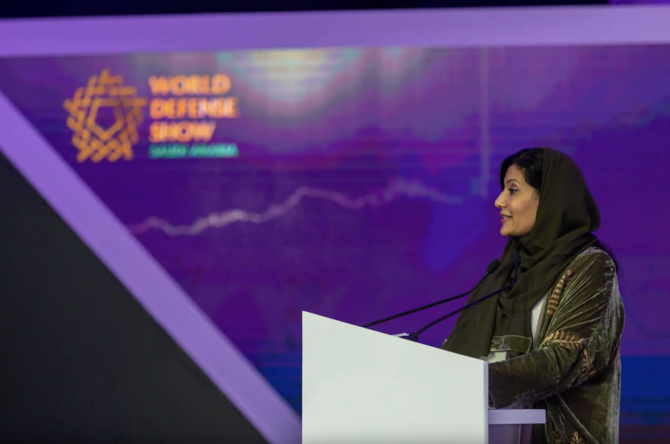
Princess Reema bint Bandar, Saudi ambassador to the US, is to chair the International Women in Defense program.
The initiative aims to promote women’s participation and celebrate their role in the defense sector.
It is part of the upcoming World Defense Show which will take place in Riyadh from Feb. 4-8 under the patronage of King Salman.
Princess Reema, who leads the program, said the Kingdom placed great importance on promoting and supporting women’s work in various sectors, including defense and security.
She said Saudi Vision 2030 had contributed to the success and excellence of women in different fields by integrating them into the Saudi labor market.
“These programs reflect the Saudi government’s commitment to empowering women and increasing their participation globally. The Women in Defense program provides a unique platform to enhance opportunities for further success,” she added.
The program will host executive directors and female leaders from different countries, showcasing women’s achievements, discussing ongoing challenges and exploring their contributions to the defense sector worldwide.
CEO of the World Defense Show, Andrew Pearcey, said the event would focus on the growth of small and medium-sized Saudi enterprises and startups to highlight their talents and ideas in the sector. The Kingdom was now one of the biggest spenders in the defense market, he added.
The first show, in 2022, brought together 600 defense and security exhibitors from 42 countries and recorded SR29.7 billion ($7.9 billion) in deals.
source/content: arabnews.com (headline edited)
___________
The Women in Defense program aims to empower and celebrate female participation in the defense sector. (@WDS_KSA)
Razan Al-Ajmmi plans to open international school in Saudi Arabia
People should visit ‘to see the beauty of the land from the sky,’ she says
Razan Al-Ajmmi, Saudi Arabia’s first licensed woman skydiver, has the lofty ambition of opening a school to help others take to the skies.
She outlined her plans during a recent interview on The Mayman Show by Arab News.
“I want to have like international competitions. I want to see the people around the world coming to Saudi Arabia, to my country, to see the beauty of the land from the sky,” she said.
Al-Ajmmi said it was difficult for her to start skydiving because Saudi Arabia has no schools, which forced her to seek training and jumps abroad.
She was determined to follow her passion. “If I don’t have something in my place, in my home, it doesn’t mean that is like an excuse or (should) stop me,” she said.
Al-Ajmmi said her first jump, about four years ago, was just a spontaneous try. After that experience, she quickly became a fan of the sport. “After the first jump, and when I just landed, I went to my instructor, and I say: ‘Hey man, I want to be a skydiver. I want this,’” she said.
Al-Ajmmi said she enjoys everything about the extreme sport, including the mental and physical challenges.
“I always like (having) freedom to do what I want to do in my life. And the idea of flying in the sky and you just fly, there is no rules, nothing except the safety rules. And you can do everything in the sky. This is what I like in the skydiving, I just go out from the plane and being in the sky, flying, move my body and do whatever I want to do,” she said.
Al-Ajmmi said she had to go through several levels of training to get an A-license, which requires a minimum of 25 jumps. The top level is a D-license, which is achieved after getting A and B accreditations.
All skydivers must complete an Accelerated Freefall course, a kind of bootcamp. This is for beginners to learn freefall techniques, canopy control, and emergency procedures, which would lead to solo jumps, she explained.
She recognizes the risks associated with skydiving and stressed that split-second decisions are often needed to prevent major errors and accidents. She said safety measures include the automatic opening of a second parachute.
The adrenaline enthusiast has advice for those wanting to try the sport. “Always try before (making) decisions. If you have a chance … just use them, take them, try and work hard. Life is not easy. Nothing is easy. You cannot take your things like by (an) easy way. What comes easy, goes easy.”
Yasmine Idriss hopes her ‘heroine’s journey’ will inspire others to take the road less traveled.
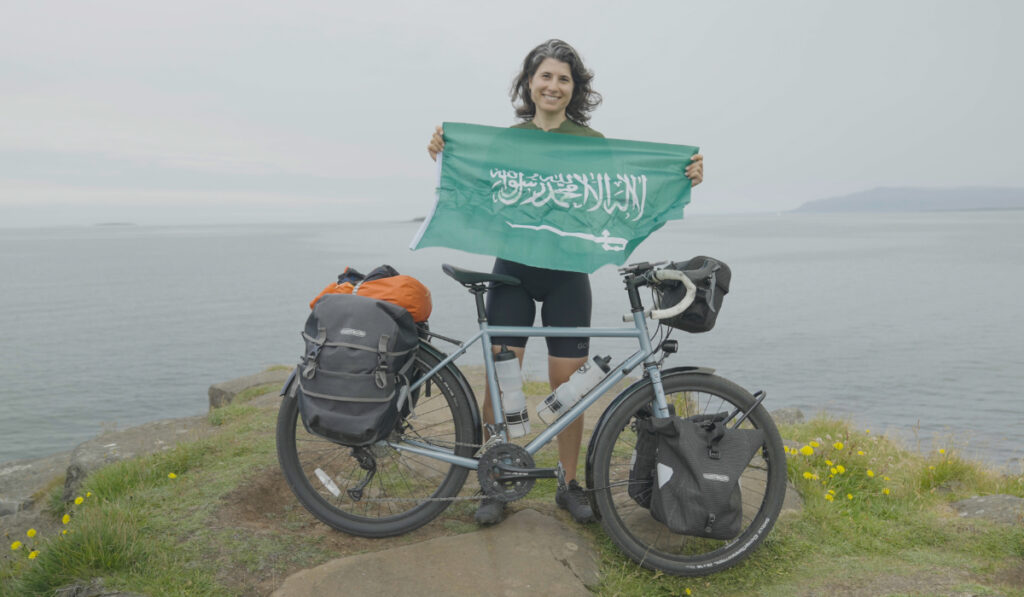
Earlier this year, Yasmine Idriss sat down with Arab News just before setting off to Iceland to cycle the country’s Ring Road on the journey of a lifetime. Now, she has become the first Arab woman to complete the grueling trip.
Initially, she thought her time on the road — which runs for almost 1,400 km — would give her the chance to plan her next career move. Little did she know she would pedal her way to much deeper enlightenment.
Her entire journey, from raging winds to sweet serenity, is captured in a documentary film titled “Threshold,” due out in 2024.
“I open up quite a bit (in the film) about what this was for me and what the ‘heroine’s journey’ is. The heroine’s journey isn’t just a woman going through the hero’s journey. (It) has a lot more surrender embedded in it, and that’s a huge theme of what Iceland was for me,” she told Arab News.
While Idriss knew there was no way to replicate the effects of Iceland’s biting winds during her training period, she hadn’t expected them to be quite as fierce as they were — she faced the highest winds of the entire season and was blown off track in all directions. With oncoming traffic on one side and sharp rocks on the other, she prayed for stability.
HIGHLIGHTS
• Yasmine Idriss’s entire journey is captured in a documentary film titled ‘Threshold’ due out in 2024.
• Kathi Hendrick helped create the narrative for the documentary while Madison Hoffmann is the lead filmmaker.
“It was a very brutal welcoming to what this Ring Road journey was going to be about,” she said.
With the exception of just two days in her three-week trip, the wind was constant — not stopping “even for a second,” she said. While most life challenges come in waves, ebbing and flowing, the continuous assault brewed frustration.
“Why? What is the purpose? What can I be learning from this? Why is this so hard?” Idriss says she wondered.
Her close friend — and one of her two companions on the road — Kathi Hendrick, said to her: “Wind stops inertia, wind forces you to move, it forces you to be awake, otherwise you would fall.”
The physical challenges paralleled the emotional. Realizing that she was exerting more strength than needed, she surrendered.
“The muscles that needed to be working were working, and the muscles that didn’t need to be working were relaxed. Psychologically, how that translated was: I just let anything that needed to happen, happen,” she explained.
I feel proud to be able to represent Saudi women. I don’t feel like I’m the first. There are so many amazing Saudi women who have paved the way for me, (who have) done amazing things (and) are doing amazing things.
Yasmine Idriss, Cyclist
Hendrick supported the cyclist on the trip and helped create the narrative for the upcoming documentary, while Madison Hoffmann, also a good friend, was the lead filmmaker.
Idriss said: “Somehow the three of us were mirroring each other’s experiences. Each of us was going through something very similar; even though I was on a bike and they were in the van, there was a sort of synchronicity that was happening. It was just really beautiful to see the magic that can happen when women come together in a supportive way.”
The trip was meant to help clarify what the next chapter of her life would look like. Idriss had just left her position as the head of a sustainable footwear company, which she thought was her dream job.
Removing herself from the responsibilities of daily life, and being disconnected from family and friends, ignited a deep transformation, as trips of this nature tend to do. “Over 20 days on the bike, it was an inward journey,” she said.
While there was no hiding from the elements, there was no avoiding the self either. From ending a close relationship to facing difficult questions, “everything was brought to light,” Idriss said, adding that that was exactly what she needed.
Idriss is now advocating for time away to recharge and innovate in a hyper-productive society, packed with intense working hours and social commitments.
She explained: “For Vision 2030, we’re developing like crazy. We’re one of the fastest developing countries in the world, and it’s happening with such beautiful leadership. We also need rest, and we need space, and we need to take care of ourselves in order to be as productive as our communities need us to be right now.”
While she primarily embarked on the journey for her own self-exploration, she humbly hopes to drive others to do the same.
“I feel proud to be able to represent Saudi women. I don’t feel like I’m the first. There are so many amazing Saudi women who have paved the way for me, (who have) done amazing things (and) are doing amazing things,” she said. “If I can be a mirror for the world to look at what women are doing in Saudi Arabia, then that would be a huge privilege. And if I can inspire others to go on their own road, whether that’s a walk in the neighborhood, or climbing Mount Everest like Raha Moharrak, then I have accomplished my mission.”
Immersing herself in the landscapes of Iceland, with all the challenges and revelations that it brought, inspired her to “(bring) this work to others and invite others into similar journeys of transformation in a very different form. This is what I’m working on next.”
source/content: arabnews.com (headline edited)
_________
Yasmine Idriss has made history as the first Arab woman to complete the grueling 1,400 km cycling trip along the Nordic Ring Road. (Supplied)
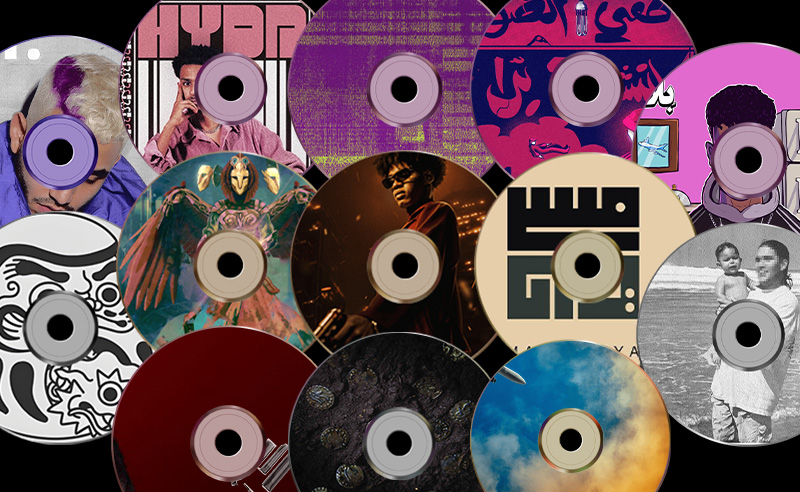
The SceneNoise team presents their picks of the 50 best albums released across the MENA region in 2023.
As 2023 comes to a close, the SceneNoise team takes a look at the most prominent albums and EPs released in the MENA region during the year. From pounding post-Shaabi rhythms to free-form Jazz compositions and speaker-rattling Trap and Drill, the year was full of artists taking risks with their sonic identities, as the regional music scene as a whole has begun to embrace change and development when it comes to the styles that shape our sound.
Here are our picks for the top 50 albums and EPs of 2023:
Marwan Moussa – Import / Export
A prominent figure in Egypt’s rap scene and winner of the Best African Rapper award, Marwan Mousa’s 2023 album ‘IMPORT//EXPORT’ delved into two distinct styles. The first half, aptly titled ‘IMPORT’, showcases a fusion of western-influenced trap and drill, while the second half, ‘EXPORT’, embraces the rich sonics of Shaabi music in collaboration with multi-platinum Grammy-nominated producer Khaled Rohaim.
pi01
3Phaz – Ends Meet
3Phaz’s distinctive approach to Egyptian and electronic music in his latest album, “Ends Meet,” has garnered widespread acclaim for its innovative take on deconstructing Shaabi rhythms and Arabic melodies with a blend of traditional sounds from Shaabi and Mahraganat, as well as intersections with Grime, Techno, and Bass-heavy subcultures.
‘Ends Meet’ captures a world that may not be utopian but exudes a sense of liberation and joy through seven percussion-driven compositions, featuring hard-hitting kicks, dynamic rhythmic excursions, and traditional flute-like synth melodies.
pix02
Grande Toto – 27
ElGrandeToto leaves his mark once again on the global music scene with his latest release, ‘27’. The album showcases Toto’s journey from the streets of Casablanca to a sold-out concert at the legendary Olympia in Paris, solidifying his position as the most streamed Arabophone artist on Spotify.
pix03
The Wanton Bishops – Under the Sun
The Wanton Bishops’ album ‘Under the Sun‘ defies genre categorization, encompassing Oriental, Electronic, Blues, Rock and Roll, Psychedelic, Surf, Synth-pop and Dance influences. The album serves as an ode to Beirut, uniting the city’s divided polarity and bridging the gap between the post-war generation and internet millennials.
pix04
Hady Moamer – Zekrayat ElMostabal
Hady Moamer, known under the pseudonym Jean Bleu, has been steadily rising in Egypt’s music scene. After making his mark as both a producer and rapper with the eclectic EP ‘Darbt Bar2‘, Moamer unveiled his second EP, ‘Zekrayat Elmostabal‘ (‘The Memories of The Future’), a captivating collection of tracks that blend Upper Egyptian folklore with modern British sounds, exploring a range of human emotions.
pix05
Pink Seasalt – Out of Luck
Egyptian indie rock band Pink Seasalt took us on a trip with their dreamy and eclectic tunes on their album ‘Out of Luck’. Led by guitarist and songwriter Mahmoud Hafez, the band’s mesmerising live performance at Memphis Records’ Tidal Dream Festival earlier this year showcased their talent and won the hearts of a crowd of fans.
pix06
El Mokh – El Magzar
Egyptian music producer El Mokh, took a new direction to Mahraganat music in his debut album ‘El Magzar.’ Seamlessly blending influences from Lofi, Shaabi, Mahraganat, and Hip-hop, the album features seven tracks that artfully divide into two distinct halves.
pix07
Xander Ghost – Fayadan
Cairo-born, UK-based rapper and producer Xander Ghost’s ten year long career with music has led him to develop a unique blend of electronic music, pop, and rap music that maintains accessibility in his EP ‘Fayadan‘, a fusion of experimental mixes, Synth-Trap beats, and unexpected sounds rarely heard in Arabic rap.
pix08
Noel Kharman – Mouthakerti
Rising to regional notoriety through her viral mash-ups of Arabic classics and modern pop songs, followed by a successful run of original releases, Palestinian artist Noel Kharman finally released her long awaited debut EP ‘Mouthakerti’ (My Diary), where she channels a blend of Arabic Pop influences while tackling love, loss, hope and ambition.
pix09
Taymour Khajah – Barren Land
In music, it’s said that you need to know all the rules before you can break them. On ‘Barren Land’, Kuwaiti multi-instrumentalist, composer, and music producer Taymour Khajah takes this statement to heart as he deftly blurs the lines between technical prowess and rebellious cacophony in his blend of spoken word vocals and free-thinking Jazz instrumentals.
pix10
Dina El Wedidi – Five Seasons
On her latest EP ‘Five Seasons’, Egyptian artist Dina El Wedidi effortlessly laces dense melodic and rhythmic ideas into an accessible fusion of Jazz, Pop, and traditional Arabic music in one of her most intricately arranged releases to date.
pix11
Hamza Namira – Raye2
‘Raye2’ serves as a glimpse into current-day Egyptian Pop music, as the album embraces elements from emerging global trends such as Afrobeats, while still maintaining the quintessential feel-good energy of a Pop record. With artists around the region experimenting with similar sonics, this album stands out for the sheer effort and attention to detail found in its thoughtful production and songwriting.
pix12
Husayn – Switch
After his success with the Egyptian rap group Maadi Town Mafia, Husayn took the opportunity to explore his own personal sound with his album ‘Switch’, where he touches on genres like Pop, EDM, old-school Hip-hop, and Trap, while tying everything together under the concept of making the switch between different personas to interact with different people.
pix13
Muhab – Ya Kahera
Having made a name for himself in the Egyptian rap scene in the last year with the release of two full-length albums, ‘Bye’, and ‘Ya Kahera’, Muhab struck a chord with Rap fans due to some similarities with Egyptian Rap pioneer Marwan Pablo. However, in ‘Ya Kahera’, the artist began developing a sound that he could truly call his own, where he adopts elements of Egyptian Trap and Shaabi instrumentals, while veering further from typical Rap flows and looking more to RnB inspired vocals.
pix 14
Assyouti – The Disintegration of Eric Omelette
Considered a pioneering figure in Cairo’s underground electronic music scene, Egyptian producer Assyouti has established himself over the years through his high-octane releases and unmatched energy. On his latest release ‘The Disintegration of Eric Omelette’, Assyouti outdoes himself yet again with a collection of no-nonsense jungle and his personal spin on breakcore.
pix 15
Saint Levant – From Gaza With Love
After being propelled into the global mainstream with the success of his 2022 single ‘Very Few Friends’, Palestinian artist Saint Levant took on the task of developing his new-found style of sultry trilingual RnB on his sophomore EP ‘From Gaza, with Love’, where he revisits a series of tumultuous love affairs, funnelled through the melodies that shaped his upbringing.
pix 16
Shobee – HOWLS
Moroccan artist Shobee has been consistently rising through the ranks of the kingdom’s rap scene, showcasing smooth flows and an underlying musicality throughout his spontaneous releases. Having released his debut album ‘HOWLS’ earlier this year, the rapper made a point to display his versatile and experimental instrumentals in the concise full-length project, while retaining his low-key energy that he has become highly regarded for.
pix17
Wingii – Magnesto
Much like fellow rapper and Maadi Town Mafia member Husayn, Egyptian rapper Wingii also uses his debut album to explore his own sound with a mix of Jersey Club, Trap, and Drill beats, along with some Alt-rock and piano-based instrumentals in the introspective album named after, and heavily inspired by, the life of his uncle Mangesto.
pix 18
Rasha Nahas – Amrat
Departing from big-band arrangements and opting instead for a more minimalistic pallet, Rasha Nahas’ ‘Amrat’ is a story of two chapters; the first driven by loneliness and alienation, written during the pandemic while suffering a hand injury, and the second driven by a longing for home. In the process of writing the album, Nahas’ injury limited her usual guitar-based workflow, leading her to experiment with new sounds and electronic instruments, marking the album as a transformative point in the artist’s career.
pix 19
Ouella – Yak Labas
‘Yak Labbas’ is a 6-track EP in which Moroccan artist Ouella expresses his longing for his Moroccan heritage. Born and raised in Egypt, Ouella’s experience has been that of feeling like an outsider in either culture, and in this EP, he dives into his constant need to connect with his roots.
pix 20
Maurice Louca & Elephantine – Moonshine
Forming a musical family of sorts while recording the album, Egyptian experimentalist Maurice Louca and the band of free-form Jazz musicians, Elephantine, have developed a close interpersonal connection that sits at the core of ‘Moonshine’. With two drummers, expansive arrangements, and an underlying sense of melancholic expression, the album delivers a sonic experience that is both organic and intoxicating.
pix 21
Tardast – Leave to Remain
Speaking on his struggles as a refugee in the UK, Iranian grime MC Tardast’s Farsi flows, signature production style, and traditional influences give ‘Leave to Remain’ its distinct sound, coined as ‘Farsi Grime’ by the artist himself. In this album, Tardast refines this sound even further as he recounts his growth as an artist in the diaspora.
pix 22
SANAM – Aykathani Malakon
Lebanese free-rock sextet SANAM’s debut album is an otherworldly exploration of spacious textures, poignant poetry, and visceral instrumentation. Having decided to record the album live with no overdubs, the six seasoned musicians’ varied backgrounds blended together in the undirected harmony that arose from their improvisation.
pix 23
Laï – Digital
In her debut EP ‘Digital’, Lebanese singer-songwriter Laï ventures into a dark interpretation of Pop music, full of moody textures and ominous atmospheres, in a style she describes as Anti-pop. The ambitious concept of the album, along with the animated visualizers, present Laï as a digital version of herself, adding to the nuance of emotional exploration found on the release.
pix 24
QOW – EL Mosameh Sherine
By sampling and rearranging some of Sherine Abdel-Wahab’s most memorable ballads, Egyptian producer QOW, also known as Omar El Sadek, takes listeners on an unfolding ambient odyssey, where evolving textures and soft melodies draw listeners into the project’s hypnotic draw.
pix 25
Baskot Lel Baltageyya – Baskot
While listening through this album, you may pick up on elements from genres such as Alternative Rock, Electronica, or Post-shaabi, but when fused together, the sound of ‘Baskot’ defies categorization, as it does not lean too heavily on any one influence. Instead, the album only weaves these familiar elements within the surreal soundscapes that give the album its character, brought to life through Adham Zidan’s experimental compositions and Anwar Dabbour’s uncanny songwriting.
pix 26
ZULI – Komy
While legendary Egyptian producer ZULI’s latest EP ‘Komy’ is full of hard-hitting club bangers, it is only a taste of what the artist has in store for the future, as he explains that the EP is a collection of tracks that have been sitting around for years, with some dating back to as early as 2016 which he wanted to “get out of the way” before releasing his newer material. The EP still stands out as an innovative release, in which the producer looks to collaborators around the region to expand his sonic influence. The producer, along with his collaborators, also made the commendable decision to donate all proceeds to Medical Aid for Palestinians (MAP).
pix27
Zenobia – Warriors Never Die
Musical duo Zenobia ventures into the realm of Palestinian folk songs, specifically those associated with women’s melodies. Zenobia carefully selected four emblematic folk songs traditionally sung by women, originally intertwined with moments in everyday life such as weddings, celebrations, and funerals, amplifying the voices of marginalised individuals, becoming a conduit for the narratives of the unheard.
pix 28
Shkoon – Masrahiya
Delving into the Arabic rendition of “theatre” or “a play,” Shkoon’s latest album, ‘Masrahiya,’ explores the intricacies of performances and the masks we wear in our daily existence. ‘Masrahiya’ unfolds as a masterful tapestry within the framework of a three-chaptered album, where themes of tragedy, politics, and irony seamlessly intertwine. The duo characterises their music as a perpetual rebellion against traditional sonic norms, ardently endeavouring to surpass cross-cultural boundaries and reflect on the multifaceted nature of the human condition.
pix29
Mishaal Tamer – The Deep
Mishaal Tamer’s enchanting voice transformed the Saudi singer into the Middle East’s loverboy. Each song on the album casts a spotlight on pivotal moments that have shaped Mishaal’s life and career. The album is a poignant exploration of the artist’s fears and anxieties, and reflects his willingness to confront and share the most intimate chapters of his personal narrative through the medium of music.
pix 30
Lana Lubany – The Holy Land
Palestinian Pop artist Lana Lubany’s ‘The Holy Land’ is an introspective, eight-song musical exposé, examining themes of homeland and belonging. Connecting Western and Middle Eastern sounds, Lana Lubany’s distinct, alluring, and rhythmically bilingual music resonates loudly in her latest release. ‘The Holy Land’ presents the narrative of her personal odyssey from self-loss to self-discovery with each song functioning as a distinct chapter representing negativity, temptation, mental turmoil, reaching a point of no return, and ultimately reclaiming personal strength.
pix 31
El Kontessa – Nos Habet Caramel
El Kontessa’s inaugural album, ‘Nos Habet Caramel’, unites seven sample-rich, rhythm-infused tracks characterised by percussions, impactful vocal hits, synths, and sounds sourced from Cairo’s environments. Seamlessly merging her production skills with DJ expertise, El Kontessa crafts each track into a condensed and dynamic structure reminiscent of a DJ’s set.
pix 32
Tinariwen – Amatssou
‘Amatssou’ is the ninth album by the Tuareg band Tinariwen, with the album’s title meaning “beyond the fear” in Tamasheq, a Berber dialect. The Tuareg band intertwines their trademark winding guitar melodies and mesmerising rhythms with contributions from guest musicians, including Daniel Lanois on pedal steel, piano and strings. The enriched arrangements give the songs a grand and universally resonant quality. Infused with poetic allegory, the lyrics advocate for unity and freedom. Within the songs, themes of struggle and resistance emerge, subtly alluding to recent political turmoil in Mali.
pix 33
Youmna Saba – Wishah
‘Wishah’, which translates to ‘Veil’ in Arabic, is a musical composition composed by Youmna Saba featuring voice, oud, and electronic sounds. Structured into five distinct chapters, the composition unfolds to reveal a process of gradual revelation. Each track peels away layers of constructed emotions and perceptions intricately woven over time, exposing a space that no longer holds existence. “Wishah” serves as a poignant farewell to home, capturing the essence of departure and the transformative experience that accompanies it.
pix 34
TIF – 1.6
Hailing from Algeria, TIF stands as a trailblazer in the burgeoning North African rap scene, seamlessly blending Hip-hop bass with Oriental influences. Often referencing themes of love, emancipation and homeland in his lyrics, TIF is a master in code switching, with his soft vocals offering a fresh approach to rap. ‘1.6’ is a highly awaited follow-up to his standout performance on ‘Houma Sweet Houma’ in 2022.
pix 35
Teen Idle – Nonfiction
In her latest album, ‘Nonfiction,’ New-Jersey-raised Egyptian-born musician Sara Barry explores themes of departure, heartbreak and the challenges of growing up. The album vividly depicts the perpetual process of bidding farewell to childhood and the hardships that accompany adulthood, underscoring our hesitancy to embrace change. Through its 11 tracks, ‘Nonfiction’ skillfully blends indie-rock with bedroom pop, creating a sonic landscape that blurs traditional boundaries.
pix 36
Mayssa Jallad – Marjaa: The Battle of the Hotels
‘Marjaa: The Battle of the Hotels’ is a concept album based on singer-songwriter Mayssa Jallad’s dual expertise in music and urban research. Crafted in collaboration with producer Fadi Tabbal, the music intricately weaves Tabbal’s spatial approach to sound with Jallad’s exploration of Beirut’s Hotel District. The album is a homage to Jallad’s master’s thesis in Historic Preservation, a comprehensive study detailing the history of the Battle of the Hotels that unfolded in the late 70s in Lebanon.
pix 37
Acid Arab – Three
The Franco-Algerian collective Acid Arab’s latest, titled ‘٣ (Trois)’ features ten tracks of compelling dancefloor hits. The album’s sophisticated production and the captivating performances of eight guest vocalists from North Africa, Syria, and Turkey contribute to its diverse and intriguing nature. Acid Arab incorporates Algerian Gasba, Anatolian Trance, Synthetic Dabkeh, and Bionic Raï. With nearly a decade of exploration in various music genres through collaborations and extensive travels across the Mediterranean and beyond, Acid Arab continues to push boundaries.
pix 38
Vargas – I Hate Summer
In his second studio album, Moroccan rapper Vargas ventures into new territories, exploring a fusion of techno, rap, dance, and drill. ‘I Hate Summer’ has a variety of low and high energy tracks which share the same fusion of sounds and genres that are distinct to Vargas’ persona.
pix 39
Hassan AbouAllam – Shalfata
Cairo-based Hassan AbouAllam’s latest dance album is made up of four tracks, plus a remix of each of them from renowned producers and dancefloor masters Zuli, 3Phaz, Trakka, and Joaquin Cornejo. The project is marked by clean mixed drums and distorted sound design and vocals, giving listeners some ear candy within every track.
pix 39
Marwan Pablo – Akher Qet3a Faneya
After another lengthy hiatus, Alexandria-born rapper Marwan Pablo dropped his long-awaited ‘Akher Qet3a Faneya’. The album was mostly produced by Pablo himself, along with a few tracks produced by frequent collaborator Hadi Moamer. Although Pablo didn’t necessarily switch his sound, he introduced new flavours and twists that added to his discography of bouncy production and social commentary-based rhymes, illustrating the dark realities of his personal experiences in society.
pix 40
El Sawareekh – 2oll Ya Rayek
This project illustrates the Mahraganat duo’s originality and consistent efforts to develop their sound. By incorporating numerous elements from genres such as Shaabi, Hip-hop and Pop, they have managed to refresh their influential style in their latest EP.
pix 41
Zaid Zaza – Zaza El Waseem
On his latest album ‘Zaza El Waseem’, Ziad Zaza points to change as his main motivation behind the LP. The Fayoum-born, Cairo-based artist juggles multiple genres on this release, dabbling with EDM, Pop and Mahraganat sonics while also staying true to the Drill sonics that have defined his sound in the past.
pix 42
MOSHTRQ – VA01 MOSHKILA
After establishing a reputation for themselves within Cairo’s underground music scene, MOSHTRQ’s first release as a collective sees them embarking on an exploration largely centred around fast tempos and left-field sonics. From Postdrone’s warped break-beats and vocal chops to Yaseen and Dakn’s tempo shifting hybrid bass banger, it’s safe to say that every MOSHTRQ artist adds their own distinct sound and character to this release.
pix43
Afroto – Belad
Afroto’s five-track EP ‘Belad’ showcases his diversity as an artist as he expands his vocal style within multiple genres ranging from Shaabi, Trap and Electronica. ‘Belad’ also features regional rap stars Ziad Zaza and Marwan Moussa, who amplify the energy of the EP with their electrifying verses.
pix 44
Sabine Salame – Tafi El Daw
Lebanese artist Sabine Salame’s debut album features 10 diverse tracks that take the listener through the different emotional stages of immigration. The album stands out due to its effortless merge of Rap, spoken word and melodic singing. Through the use of dark humour, Sabine is able to translate her personal tragedies of separation and alienation into an overall uplifting experience. The album is a collaboration with fellow Lebanese producer and sound design artist, Jawad Nawfal AKA Munma.
pix 45
Mvndila – HYDR
Straight from the heart of Sudan emerges 23-year-old up-and-coming rapper, singer and songwriter Mvndila who delivers heartfelt testimonies about the emotional toll of being a young man in a modern day Sudan on his latest EP ‘HYDER’. The five-track EP comes with heavyweight production credits boasting names like ‘77, Sammany, Swish, Khayyat, and MarwanOnTheMoon, while covering topics such as depression, love and codependency.
pix 46
Lil Baba – Seif
Known for his influential production style, Lil Baba’s debut EP as a rapper showcases his singing chops, smooth flows and witty wordplay. The release also brings together members of ‘El Mexic’ collective such as Abo El Anwar, Ahmed Santa, and Abyusif, as well as Egyptian hit-maker 3enba to deliver a diverse list of tracks that maintains a consistent vision and sound throughout.
pix 47
Eldab3 – 3awdet Eldab3
Although Eldab3 hasn’t been the most active artist throughout his career, when he does release, he makes sure that he offers a valuable addition to the sound coming out of the region. In ‘3awdet Eldab3’, the artist refines his fusion of Rap, Electronic and Mahraganat to create well-rounded entries that solidify his artistic vision with his most concise collection of tracks to date.
pix 48
Abo El Anwar – Akhro Noor
Prolific Egyptian rapper Abo El Anwar dropped his first full-length album ‘Akhro Noor’ in early 2023. The project features a set of heavy hitting tracks that revolve around Jersey club beats, old school Rap sonics, as well as some emotional RnB tracks. The project also features summer-hit Blanco, featuring Maadi Town Mafia member Husayn, where the pair go back and forth along the track while effortlessly merging their flows and lyrics creating a catchy sing-along that took TikTok by storm.
The London-born aspiring actress has a deep appreciation for her Moroccan heritage – which may explain why migration is an issue so close to her heart.
Nora Attal has the index finger of one manicured hand extended across the bridge of her nose, and the straightest face she can muster in the circumstances.
It started as an attempt to brush aside the fuss made about her eyebrows, which are, according to various beholders, glorious, serious, stunning, bold, thick, enviable and — somewhat at odds — natural and well groomed.
But now the British-Moroccan fashion model is mulling over a new signature look. “Oh, no! They’re just hair on my face,” Attal tells The National, embarrassed and amused by the attention. “I get them from my Dad — he has very bushy eyebrows.
“If I didn’t groom them, they would be a monobrow. Actually, I saw the film Frida yesterday. It was incredible. I think,” she pauses to regard the mocked-up effect in the zoom camera, “I might just do that … grow a monobrow.”
Perhaps such thinking is to be expected after a 48-hour infusion of cultural rebellion. The day before watching the biopic on the hirsute and indomitable Mexican artist Frida Kahlo, Attal was celebrating turning 23 at her first ever music festival near her home in Spain.
There, she was among the crowd asked by flamboyant American rapper and actress Megan Thee Stallion to make a particular gesture of protest to the US Supreme Court for overturning Roe v. Wade.
“Megan Thee Stallion’s my new icon,” Attal, an enthusiastic gesticulator in daily life, says, “but who I look up to evolves all the time.”
She favours strong, not-so-silent types. Michelle Obama, the former first lady of the US, was top for a while for always telling it as it is — “I still respect her a lot” — along with actor, musician and serial disrupter Riz Ahmed and the Arab writer and women’s rights champion Leila Slimani.
“People like this, I love. I really try to take in their energy,” she says.
It’s a fighting spirit that Attal herself embodied recently when Maria Grazia Chiuri, the creative director of the French fashion house Dior, reportedly said that “models don’t represent women … the model is only a girl who passes in front of you”.
Having walked the runway for Dior 20 times since Chiuri took over, an indignant Attal vented on her Instagram stories, posting: ‘And to hear that I’m not a woman … she is very vocal about her feminism narrative, yet so archaic in thinking that models should only be hangers”.
“Coming into adulthood has been quite nice,” she tells The National. “I understand myself more and, because of modelling, I’ve travelled such a long time alone, experienced a lot, and I’ve maybe grown up quicker.
“I’m definitely more confident, like the way I speak to adults in the industry.”
She recalls being a shy, studious little girl, born in London to two Moroccan parents, Charhabil (Charlie) and Bouchra, and growing up on a council estate in Battersea until the family moved to Surrey.
Sport was an outlet, sometimes whether she liked it or not because of her talent for everything from gymnastics, basketball and tennis to golf and representing her county in long-jump.
Saturday mornings in the house were full of music, regularly featuring Michael Jackson, Prince, Stevie Wonder, and Diana Ross, to whose live performance Attal would dance the night away at a star-studded after party in Marrakech a decade later.
The walls of her childhood bedroom were plastered with magazine covers and fashion campaigns, America’s Next Top Model was the programme of choice, and she would doodle clothes on mannequins in English class instead of writing, say, the set essay on Thomas Hardy.
Yet the industry wasn’t one that young Nora easily identified with or conceived of entering, not least because “there weren’t many people who looked like me”.
“I don’t think she would have ever imagined anything like this,” Attal says, her hands making an all-compassing vertical circle in the air. “Ever, ever, ever.”
It wasn’t long, though, before the striking 12-year-old in blue Converse trainers and a hoodie was first spotted while out in a shopping mall.
“My Dad said ‘yeah, no’ when I went to see the agency,” she remembers with a smile, “and I really appreciate that now …
“It’s tough. I don’t think that young girls should be working in such an adult industry, which doesn’t have a union or HR department that you can go to.”
Modelling, it seems, wasn’t going to take no for an answer. Two years later, the British fashion and documentary photographer Jamie Hawkesworth turned up at her high school, casting for a JW Anderson campaign.
Attal subsequently debuted as Anderson’s muse, dubbed “the mystery girl”, and spent the next few years fitting fashion shows and shoots around education, poring over textbooks while waiting at castings or back stage after hair and make-up.
A fortnight before receiving her A-Level results in History, Psychology and Art at Ewell Castle School, the September issue of British Vogue landed in newsagents with Attal on the cover beside Kate Moss, Edie Campbell, Stella Tennant and Jean Campbell.
The avid true-crime fan was offered a place at Greenwich to study criminology but “took a gap year, deferred it and then dropped it”.
“Working in this industry, I can see that almost anything is possible if you put your mind to it,” she says. “I think everyone should know that.
“My family, being Moroccan, would have loved it if I became a doctor or a lawyer or a pharmacist, and had a normal life but you should do what makes you happy — and you will be successful.”
Represented by Viva Model Management, her own success can be measured by the fact that it would be faster to name the exclusive brands, designers, magazines and celebrity photographers that she hasn’t collaborated with than those she has.
Her brown doe-like eyes, long dark hair and slender 5ft 10in figure quickly became a mainstay on the global circuit in an ascent likened to that of Gigi Hadid.
As with Hadid, she has come to treasure her Mena heritage, and an appreciation has deepened over the years for the hardships that her parents overcame as immigrants “for me to get where I am”.
“It is really important for me to remind myself of that,” she says.
It makes her all the more sensitive to the migration issues prevalent in the UK, particularly the controversial policy of deporting asylum seekers to Rwanda. She has just sent an email opposing the plan to her local MP in England, and urged her 71,000 Instagram followers to do the same.
“I think it’s terrible, I really do. My mum has friends from Syria and Iraq. It could be anyone. Even if you don’t have Syrian friends or Iraqi friends, it’s just a basic human right.”
She talks about what it has meant to have been able to incorporate her North African roots into modelling work many times during a vibrant career.
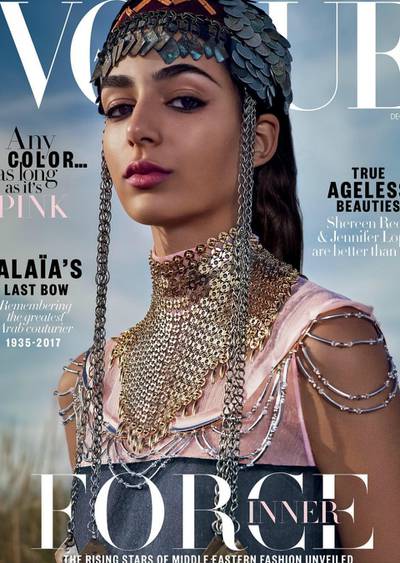
The editor of Vogue Arabia, Manuel Arnaut, described her as “cool, contemporary and a great ambassador of the Arab world” when she graced the December 2017 cover in a Berber ceremonial headpiece.
Among several shoots with the noted American photographer Steven Meisel was one set against the dunes of the Sahara, and she has traversed a catwalk at El Badi Palace in Marrakech.
But perhaps her favourite fashion “story” ever was for a Vogue Italia issue devoted to DNA. The editorial team descended on Attal’s ancestral home in Larache, near Tangier, where she has spent two months every year since she was a toddler.
Her abiding memories of those visits are the aromas of tagine and couscous emanating from the kitchen of her grandmother, Fatna, and forays to the picturesque old town of Chefchaouen in the surrounding hills or along the coastline in search of quiet bays.
This time, though, Fatna lined up in the family living room next to Attal, her brother, Adam, sister, Yesmin, and parents, all dressed top to toe in Chanel for a black and white photo shoot.
“My grandma had never seen anything like it in her life,” she says, fondly. “She thought it was quite strange but was excited. She really loved it.”
More recently, her extended family fronted Ralph Lauren’s holiday campaign for Eid in a video clip that also included Attal’s then fiance, Victor Bastidas, a director and cinematographer 10 years her senior.
The couple met on location at the 16th-century Samode Palace nestled in the ancient Aravalli hills outside Jaipur, but it is all a bit of a blur to Attal now.
What stands out most is being photographed aged 17 by Mario Testino alongside an elephant painted with orange and pink food dye, and embellished in heavy jewellery.
“Arrrgh!,” she says, reliving the excitement and leaning back to show the proximity with her hands. “I shot with an elephant in real life that had to be just here.”
Happily, Bastidas and Attal bonded years later in London over their mutual love for the music written and performed by Thom Yorke for Luca Guadagnino’s supernatural horror film Suspiria, and began dating just before the coronavirus tightened its grip on the world.
Their fairy-tale wedding was held a few months ago at Cortijo San Francisco, a 1,900-square-metre “farmhouse” in Estepona, near Marbella, built as a refuge by the Hollywood actor Stewart Granger who starred in King Solomon’s Mines with Deborah Kerr.
There is a picture from the day of an ornate Mexican fireplace that would have dominated the room until Attal, in strappy skyscraper heels and a breathtaking Lanvin gown, stepped down a narrow passageway into the scene.
The pandemic has marked many other new beginnings for Attal. She did a Run for Heroes in support of the NHS, painted and made lino prints, learnt to cook (pizza, ramen noodles from scratch, a mean carrot cake), and moved to Barcelona for the fresh air and to be closer to nature.
At such a time, it is unsurprising that someone whose favourite poem is William Blake’s Auguries of Innocence — “To see a World in a Grain of Sand. And Heaven in a Wild Flower …” — began to consider the wider picture.
“It was a very big reset. It made me sit down and think about what I wanted to do with my life,” Attal says.
The answer was to act, and she has just graduated from the prestigious Baron Brown Studio in California after two years of studying the Meisner technique over the internet.
Asked if she’s thought much about who she would like to work with, Attal whips out her phone. “Yes, I have lists for everything. A list of directors, of actors, films that I like, references of things.”
For the record, Guadagnino is director number one, leading, in no particular order, Todd Phillips, Pedro Almodovar, Tim Burton, Wes Anderson and the Iranian Asghar Farhadi, “though I don’t speak Farsi, but…,” she says, trailing off hopefully.
Whether theatre or independent film, Attal doesn’t mind. Just having undertaken the training is, she believes, her biggest triumph, which is saying something.
“I’m actually very proud of myself for going back to school, even though it’s on Zoom or it’s not necessarily as heavy as being a doctor.
“I’m doing things that maybe I wouldn’t have done before. I’ve taken the step to tell agents and brands that ‘No, I can’t do that job because I’m studying acting’, and I’m putting my foot down. I think, before, I doubted my abilities, and now I’m like: ‘Yeah, just do it, why not?’”
It is hard not to wonder where Attal’s forthright tendency, fervour and self-determination, so unusual in a young woman in her early 20s, come from.
A clue may lie in a single line buried among the Moroccan press coverage that describes her paternal great-grandfather as a revolutionary, poet and director. The snippet is, it has to be said, uncorroborated, but sounds just about right.
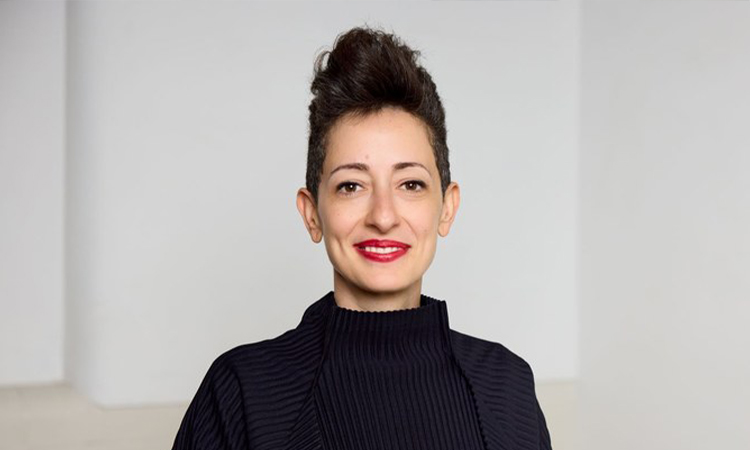
His Highness Sheikh Mohammed bin Rashid Al Maktoum, Vice President, Prime Minister and Ruler of Dubai, has announced Prof. Lina Ghotmeh, architect and professor of architecture, as the winner of the first Great Arab Minds (GAM) award in the architecture and design category, in recognition of her timeless contributions to global architecture.
In a tweet published on his official X account, Sheikh Mohammed congratulated Prof. Ghotmeh on winning the first award in this category of GAM, the Arab world’s largest movement launched in 2022 to search for exceptional Arab talents in various fields. Prof. Ghotmeh’s insightful work and research highlight the intimate relationship between architecture and nature.
His Highness Sheikh Mohammed said that architecture and architectural landmarks are the foundation of the distinguishing features that set cities and communities apart, and the building blocks of their identities and values, making them easily recognised. He added that they are also timeless tales of the creative outputs of humanity and the rise of civilisations.
Prof. Ghotmeh has a remarkable track record in her field. She has overseen the development of over 65 global architectural projects, including renowned museums, exhibitions and cultural buildings. More specifically, Ghotmeh conducts in-depth analyses of environments and meticulously selects materials that are not only suitable for each setting but also capable of withstanding harsh conditions. Her unique approach ensures that all her projects are evolved and practical outcomes of her research on coexisting with nature and the surrounding environment.
Among Prof. Ghotmeh’s most notable works is a building near the industrial port of Beirut, which survived the 2020 Beirut explosion, having been designed using innovative techniques and select local materials.
President His Highness Sheikh Mohamed bin Zayed Al Nahyan today honoured the winners of the Zayed Sustainability Prize in a ceremony held as part of the UN Climate Change Conference (COP28) hosted by the UAE at Expo City Dubai.
The ceremony was attended by numerous heads of delegations participating in COP28, ministers, senior government officials, and prize winners and finalists.
His Highness congratulated the winners, praising their efforts in promoting sustainability and encouraging them to continue their important contributions in this field. His Highness emphasised that the UAE is steadfast in building upon its established legacy in sustainability, a foundation laid by the country’s Founding Father, the late Sheikh Zayed bin Sultan Al Nahyan. In this regard, His Highness highlighted the significant role of the Zayed Sustainability Prize in advancing sustainable development, serving humanity, and empowering innovators, entrepreneurs, and youth to actively contribute towards making a positive difference for our planet.
The Zayed Sustainability Prize aims to perpetuate the legacy of the late Sheikh Zayed bin Sultan Al Nahyan by honouring and supporting small and medium enterprises, non-profit organisations, and secondary schools that offer sustainable solutions addressing challenges in health, food, energy, water, and climate. Over more than 15 years, the Prize has positively impacted the lives of 384 million people worldwide through the innovative solutions presented by its 106 winners.
The Zayed Sustainability Prize also focuses on promoting youth engagement in sustainability through its Global High Schools category, which encourages youth to play active roles in supporting their communities and leading future sustainability efforts. The winners in this category, numbering 47 global high schools, have positively impacted the lives of more than 55,186 students and 453,887 people in their local communities.
The eleven winners of this year’s edition were unanimously selected in September by the jury after a thorough review of all candidates to assess their contributions and commitment to presenting innovative, impactful, and inspiring solutions across various prize categories, including Health, Food, Energy, Water, Climate Action, and Global High Schools.
During the ceremony, Dr. Sultan bin Ahmed Al Jaber, Minister of Industry and Advanced Technology, Director-General of the Zayed Sustainability Prize, and COP28 President, stated, “In line with the vision and direction of the leadership, the Zayed Sustainability Prize has been contributing to inclusive sustainable development and advancing climate action for over 15 years. Today, the UAE reaffirms its commitment to stimulating action to mitigate climate change impacts, empowering communities in need of support, and creating positive change in the world, especially in the Global South.”
The winners in the Climate Action category include Kelp Blue Namibia, recognised for its ambitious efforts in cultivating extensive seaweed forests in deep waters. The company has contributed to the restoration of ocean biodiversity and the sequestration of 100,000 tons of carbon dioxide from the atmosphere annually, in addition to creating job opportunities in coastal communities.
In the Health category, the Indonesian organisation DoctorSHARE was honoured for its pioneering work in delivering healthcare to remote and hard-to-reach areas through its floating hospitals. The organisation has made a widespread positive impact, treating more than 160,000 patients.
The Gaza Urban and Peri-Urban Agriculture Platform (GUPAP) from Palestine emerged as the winner in the Food category, commended for its contributions to supporting Gaza’s agricultural sector. This non-profit organisation facilitates access to locally produced food and has provided employment opportunities for about 200 women in agriculture, benefiting over 7,000 individuals.
In the Energy category, Ignite Power from Rwanda was recognised for its significant efforts in providing affordable electricity to remote communities in sub-Saharan Africa. The company has supplied solar power solutions to 2.5 million people through a pay-as-you-go model, thereby avoiding 600,000 tons of carbon dioxide emissions. They have also introduced innovative solar-powered irrigation solutions, creating 3,500 job opportunities in local communities.
For the Water category, the French non-profit organisation Eau Et Vie was awarded for ensuring access to clean water in impoverished areas by installing water taps directly in homes in urban regions. The organisation has facilitated water access for 52,000 people across 27 neighbourhoods in 10 cities, raised health practice awareness among 66,000 individuals, and reduced water costs by 75 percent.
The recipients of the Global High Schools awards are Colegio De Alto Rendimiento De La Libertad (Peru), representing the Americas; Gwani Ibrahim Dan Hajja Academy (Nigeria), representing sub-Saharan Africa; International School (Morocco), representing the Middle East North Africa; Northfleet Technology College (United Kingdom), representing Europe Central Asia; KORT Education Complex (Pakistan), representing South Asia; and finally, Beijing High School No. 35 (China), representing East Asia Pacific.
The Chair of the Jury and former President of the Republic of Iceland, Ólafur Ragnar Grímsson, said, “This year’s winners have demonstrated a remarkable wave of ingenuity in their solutions to address urgent global challenges. We have confidence that these winners will catalyse substantial and scalable change in communities worldwide, propelling us towards vital climate action objectives and forging a path to a sustainable future for all.”