Arabs & Arabian Records Aggregator. Chronicler. Milestones of the 25 Countries of the Arabic Speaking World (official / co-official). AGCC. MENA. Global. Ist's to Top 10's. Records. Read & Enjoy./ www.arabianrecords.org
Authors, scholars and institutions from Arab world and beyond honoured as Abu Dhabi prize celebrates two decades of cultural influence.
The 2026 winners of the Sheikh Zayed Book Award were announced on Friday, marking two decades of one of the Arab world’s most influential literary prizes.
Established in 2006 and held under the patronage of President Sheikh Mohamed, the award has grown into a fixture on the region’s cultural calendar, drawing submissions from across the world and supporting the global reach of Arabic literature.
This year’s winners reflect that international scope, with recipients from countries including Egypt, Morocco, Germany and the UAE.
Egyptian writer Ashraf Elashmawy took the Literature prize for his novel Births in the Zoo, a work that explores shifts in Egyptian society through closely observed, character-driven storytelling. Moroccan researcher Mustapha Rajouane won in the Young Author category for a study examining how rhetoric shapes narrative in the modern Arabic novel.
In Translation, Iraqi-American scholar Nawal Nasrallah has been recognised for her English edition of a 13th-century Arabic culinary text, bringing a complex historical manuscript to a wider readership. Jordanian academic Zuhair Tawfiq received the Literary and Art Criticism award for his study of how Arab and western cultures have historically imagined one another.
German writer and translator Stefan Weidner won in the Arab Culture in Other Languages category for a major anthology of pre-Islamic Arabic poetry, while the Emirates Literature Foundation was honoured for its role in developing the UAE’s literary scene and supporting readers and writers.
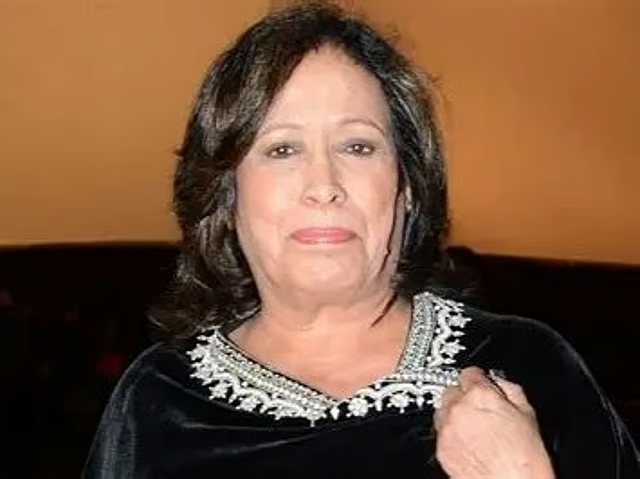
The Encyclopaedias and Lexicons category went to Egyptian academic Mohamed Elkhosht for his six-volume Encyclopaedia of World Religions, and veteran Egyptian singer Nagat Al Saghira was named Cultural Personality of the Year, recognising a career that has helped shape modern Arabic song and language.
More than 4,000 submissions were received from 74 countries, underlining the award’s growing international profile. Since its launch, it has attracted more than 33,000 entries and honoured 136 winners, including writers, translators and cultural institutions.
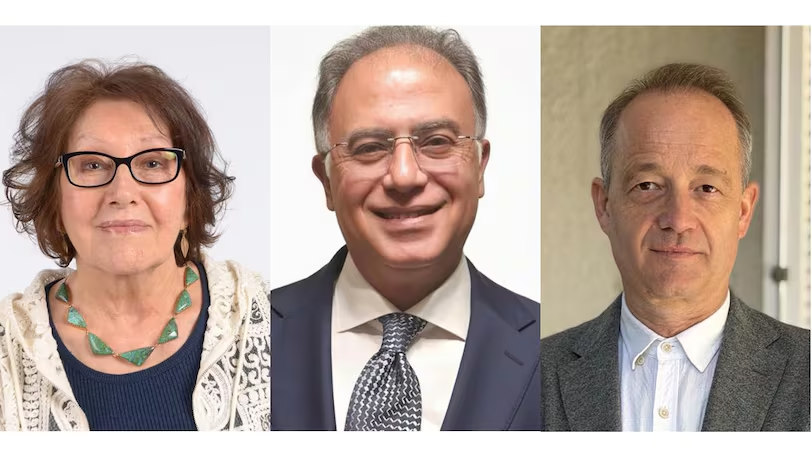
Mohamed Khalifa Al Mubarak , chairman of the Department of Culture and Tourism – Abu Dhabi, said the award continues to build on the UAE’s long-standing investment in culture and knowledge, while Ali bin Tamim, secretary general of the award, described it as a platform that has helped shape contemporary Arabic literary and research landscapes.
A programme of events is planned throughout the year to mark the award’s 20th anniversary. Winners will be honoured at a ceremony in Abu Dhabi, with Al Saghira receiving Dh1 million for being Cultural Personality of the Year, and other category winners awarded Dh750,000 each.
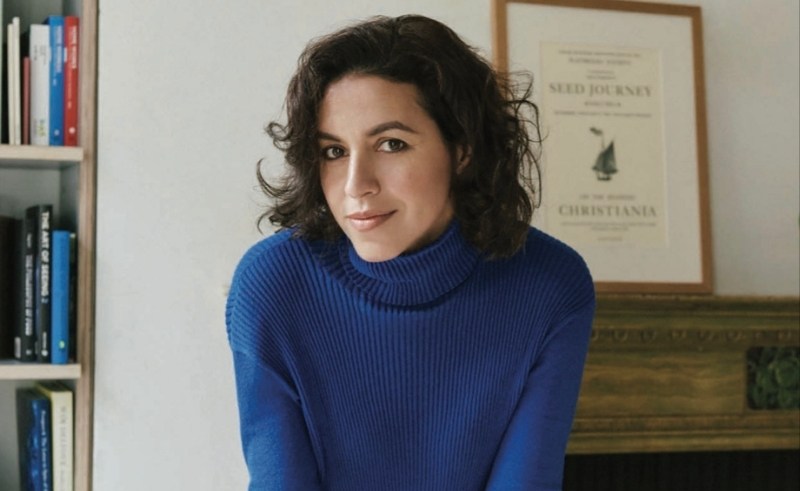
Shahira Fahmy has been announced as the first Egyptian Jury President of the Arab World Institute Design Award 2026.
As the first Egyptian architect to serve as Jury President of the Arab World Institute Design Award, Shahira Fahmy joins a panel of designers, curators, editors and cultural figures shaping the fourth edition of the Paris-based award programme. Organised by the Institut du Monde Arabe, the award recognises emerging and established designers from across the Arab world, with a focus on craftsmanship, material innovation and contemporary design practices.
“Design in the Arab world has always carried memory, resourcefulness and a strong understanding of place,” says Shahira Fahmy. “What interests me about this award is its ability to create visibility for designers responding to current realities while remaining connected to local knowledge and cultural identity.”
The Arab World Institute Design Award 2026 invites projects created between September 2024 and April 2026 across four categories: Emerging Talent Award, Contemporary Craftsmanship Award, Impact Award in partnership with Arab Bank Switzerland, and the Grand Prize for established architects and designers. The programme examines how design engages with sustainability, craft traditions, production processes and material research across the region.
Founded in Cairo in 2005, SFA – Shahira Fahmy Architects expanded to Dubai in 2024 and works across architecture, heritage restoration, urban planning, and interior design. The practice is known for projects including the restoration and rehabilitation of Zone 1 in AlUla Old Town, Dar Tantora The House Hotel and Beit Bin Nouh for the Royal Commission for AlUla. The work contributed to AlUla Old Town’s nomination for the Aga Khan Award for Architecture in 2025.
“For me, architecture and design are tied to people and context,” Fahmy says. “Whether working on a heritage site in AlUla or a contemporary urban project, the process begins by listening to what already exists.”
A graduate of Cairo University, Fahmy taught at the university for a decade and has lectured internationally at institutions including Columbia GSAPP and The American University in Cairo. Her work has also been recognised through fellowships at Harvard University, including the Loeb Fellowship at the Graduate School of Design, the Hutchins Fellowship at the W. E. B. Du Bois Research Institute, and the Berkman Klein Fellowship at Harvard Law School.
Joining Fahmy on this year’s jury are Daniele Gerkens, Memia Taktak, Mette Degn Christensen, Michèle Maria Chaya, Nicolas Lecompte, Samer Yamani, Sheikha Reem Al Thani, Aidan Imanova, Ali Khadra and Arnaud Morand.
“It is important to see platforms like this continue conversations around Arab design through ecology, craftsmanship, material experimentation, and the future of communities across the region,” Fahmy adds.
Finalist projects will be shortlisted in May 2026. The selected projects will then be reviewed by the jury ahead of the awards ceremony at the Institut du Monde Arabe in Paris in September 2026, as part of Paris Design Week.
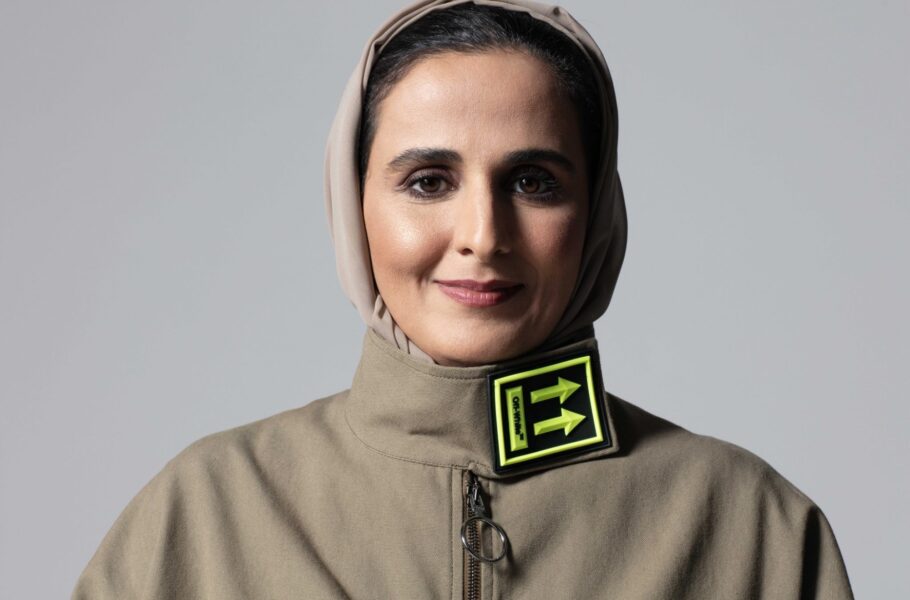
H.E. Sheikha Al Mayassa bint Hamad bin Khalifa Al Thani, Chairperson of Qatar Museums, has been ranked second globally in the 2025 ArtReview Power 100 list.
She first appeared on the Power 100 in 2011 at No. 90, quickly rising to No. 11 in 2012 before reaching the top position at No. 1 in 2013.
The Power 100 is compiled by a panel of around 30 individuals from across the globe, and from all parts of the artworld, who propose those people who have shaped the art that has emerged in their locality over the past year. The criteria for inclusion are that each person on the Power 100 has had an influence on the art being made and shown now; that they have been active in the last 12 months; and that their presence stretches beyond a local scene (while many act locally, the influence of that local action can reverberate internationally).
What emerges is a means of capturing an artworld that is not purely an economic system, or an aesthetic one, but a complex social system. Through this list, ArtReview gives a portrait of the network of relationships that shaped the art of 2025.
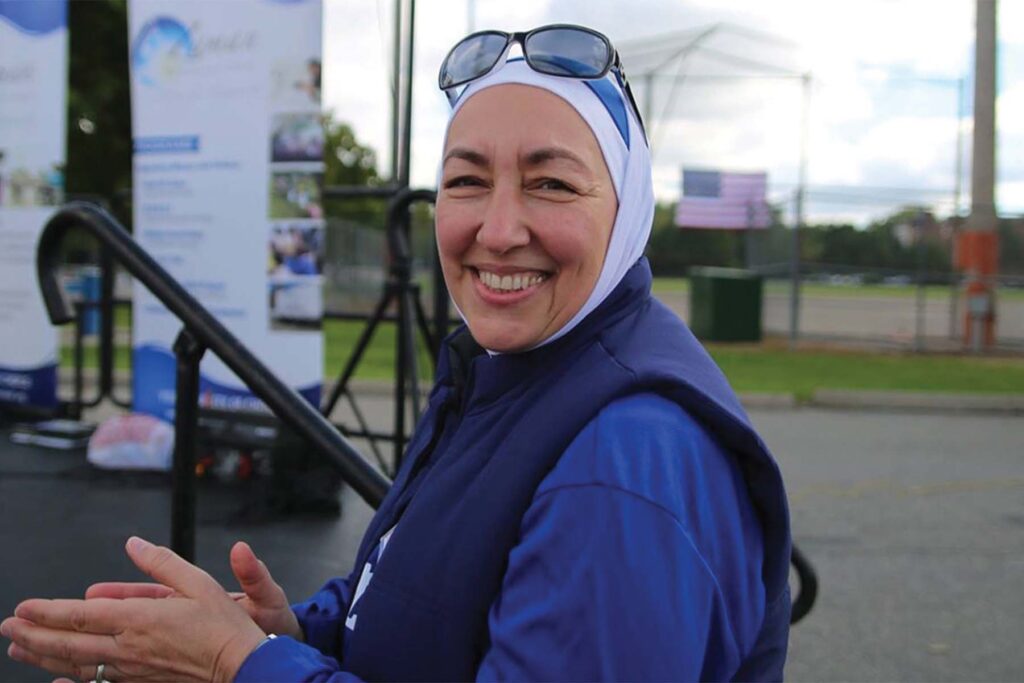
Just recently CNN revealed the Top 10 CNN Heroes of 2019 – these are men and women that are changing the world by helping families affected by the tragedy, cleaning up the environment, protecting neglected animals, and so much more. They were nominated by CNN to receive a ten thousand dollar cash prize with the Hero of the Year to receive one hundred thousand dollars. One of the nominees is Najah Bazzy, an Arab-American who changed the lives of thousands of women and children in the Detroit Metropolitan Area.
Background
Najah learned to navigate through attitudes and beliefs that were conflicting very early in life. Born in a neighborhood that was predominantly Arab and Muslim – Dearborn, Michigan – she refers to herself as ‘a new thing’ – a by-product of a merger between being Arab, American, and Muslim all at once. She believes these are not mutually exclusive identities, even in a post 9/11 America.
They are, which is now having the largest concentration of Arab Americans in the United States, back then was a hub of immigrants. In an interview, Najah says: “It was the people from Poland, Italy, Macedonia, Mexico, and others that we learned about their traditions and their different faiths. That’s why I love diversity so much. Neighbors sat on the front porch and they shared food while their children would go from house to house visit other children and play. The amount of care that people had for each other was tremendous, and this is where I learned to love my neighbor.”
However, she also felt a different attitude towards Muslims after the September 11 attacks. “I’ve had death threats. I’ve had to have protection placed on me. It’s an uncomfortable feeling,” she shares. “To know that you can put out love, and other people judge that love saddens me. I want to make every breath count, so I can’t fear those who choose hate. I can only control the love I have in my heart and choose that love.”
Cause
Najah is the founder of Zaman International, a non-profit organization, which has the mission to facilitate change and advance the lives of marginalized women and children of different backgrounds in the Detroit area; she has been doing it by enabling them to meet essential needs common to all humankind. The group’s 40,000-square-foot warehouse offers for free aisles of food, rows of clothes, and furniture to those in need.
The history of the organization is truly inspirational. In 1996, when a three-month-old infant was with a terminal diagnosis, Najah Bazzy, a Transcultural Clinical Nurse Specialist, provided clinical, spiritual and cultural support to his parents who were new arrivals to the United States. She helped them face the reality that no treatment would save their child.
After visiting the family at their home, Najah was shocked by their living conditions. Instead of a refrigerator, the family used a picnic cooler to house their limited food supply and baby formula. Instead of a stove, a portable propane stove was used for cooking. The infant’s bed was a laundry basket piled high with towels, and the infant only had the hospital’s receiving blanket to keep him warm. When the infant passed away and the family was unable to pay for a funeral, Najah raised funds from the community to provide him with a proper burial. This was the beginning of Plots for Tots, Zaman’s signature program which provides dignified burial support for families that have lost a fetus or infant.
Witnessing this family’s sorrowful experience and shocking living conditions, Najah was inspired and determined to harness the community’s efforts to help struggling families. She asked community members to donate furniture, food, clothing, and household goods. The support and need for such efforts quickly increased, encouraging Zaman to formalize as an organization committed to using community support to address community needs.
Impact
In 2018, Zaman distributed 170,400 pounds of food, collected 886,950 pounds of clothing, provided over 7,750 hours of job skills and literacy instruction to more than 90 women, and gave 268 winter coats and 895 school supply-filled backpacks to local children. Meanwhile, it partnered with 444 community partners on a range of initiatives and funded overseas relief projects, bringing safe water and humanitarian relief to more than 431,900 people.
Now that Zaman’s mission has been shared with the world, Bazzy is encouraging interested readers to help by donating through the CNN Heroes program, for which a CrowdRise donation page has been set up.
“What I’m most proud of this year is that Zaman is 94 cents on the dollar (which has been audited financially), she said, and it goes to programs,” she said about the percentage of donation dollars used to help fund its operations to serve those in need.
“We really encourage people to go to the website and to donate any amount that they can, anything helps.”
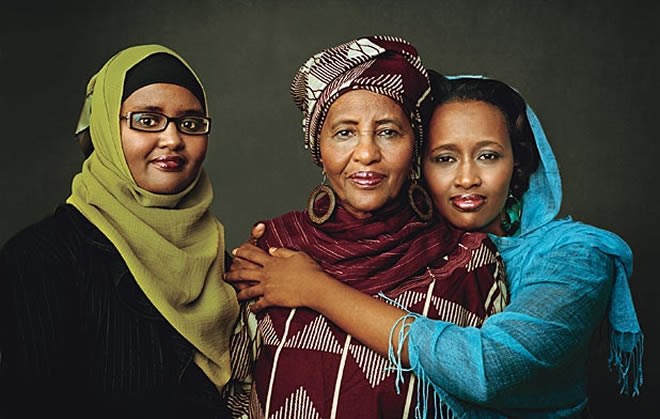
Dr Hawa Abdi Dhiblawe, prominent human rights activist, founder and chairperson of the Dr Hawa Abdi Foundation and one of Somalia’s first female obstetricians has passed away in Mogadishu. She was 73.
She died Wednesday morning, but the circumstances surrounding her death remain unestablished at the moment.
Dr Abdi affectionately referred to as the Mother Theresa of Somalia, was a Nobel Peace Prize nominee. Her work is credited for saving the lives of thousands during some of Somalia’s darkest moments. She cared for the wounded, the sick – often for free – at a hospital, she established on her family’s land in 1983. What began as a humble one-room operation would eventually care for close to 90,000 people during Somalia’s catastrophic drought in 2011.
While caring for her patients, Dr Abdi famously faced down nearly 750 militants from Hizbul Islam who laid siege to her compound in 2011. She heroically told them at the time, “I’m not leaving my hospital. If I die, I will die with my people and my dignity.’ She yelled at the young gunmen, “You are young, and you are a man, but what have you done for your society?”. The militants were met with fierce resistance from the locals who gathered around the hospital demanding to see Dr Hawa and mounting international pressure. After a week, the second-in-command came to Dr Hawa with a signed apology letter written in both Somali and English.
When the civil war broke out in 1991, Dr Abdi’s grandmother implored her to stay behind and use her skills to assist the most vulnerable. She witnessed firsthand the devastation that occurred in Somalia early after the collapse of the government.
“During those dark days of 1992, starvation set in, and I sold my family’s gold to buy enough food to sustain the vulnerable children and give the gravediggers enough strength to work. Even when we were burying 50 people per day, I was still able to provide free land, security, and medical treatment. We clung to one another, and we survived, but the fighting continued. Now, again, we see famine—not caused by drought alone, but by the conflict that continues to ravage Somalia,” she said in an interview.
Dr Hawa Abdi was born in Mogadishu in 1947 and attended local elementary, intermediate and secondary academies.
In 1964 she travelled to the Kiev to study gynaecological medicine with the help of a Soviet scholarship. In 1971, she began her medical career as one of Somalia’s first female gynaecologists working in Mogadishu’s most prominent hospital. She quickly recognized the lack of resources for a hospital birth outside the capital. She decided in 1983 to open her clinic known as the Rural Health Development Organisation (RHDO) in the outskirts of Mogadishu. She focused primarily on the treatment of women from non-urban areas.
Dr Hawa told the New York Times that her dream to become a doctor began when she was 12 after her mother died during childbirth.
She was also an author; her moving memoir, Keeping Hope Alive: How One Somali Woman Changed 90,000 lives was published in 2013 and was well-reviewed.
Her unwavering commitment to the downtrodden has earned her recognition worldwide. She and her daughters whom Glamour Magazine named Women of the Year in 2010 and described as ‘Saints of Somalia’ have been running the clinic and Dr Hawa Abdi Foundation. She was nominated for a Nobel Peace Prize in 2012. In that same year, she was honoured with the BET’s Social Humanitarian Award, Women of Impact Award from the WITW Foundation, and the John Jay Medal for Justice. In 2014, she received the Medal from Want award from the Roosevelt Foundation. She was awarded the 2013 Vital Voices’ Women of the Year Award. In 2015, she was the recipient of the Pilosio Building Peace Award. Most recently, she was honoured by Harvard University with an honorary Doctors of Law degree in May 2017.
source/content: hiraan.com (headline edited)
____________
A Family Affair: From left: Dr. Amina Mohamed, Dr. Hawa Abdi and Dr. Deqo Mohamed, photographed during a business trip to Geneva, Switzerland, on September 18, 2010. Hair and makeup: Mitzi for Visage Management
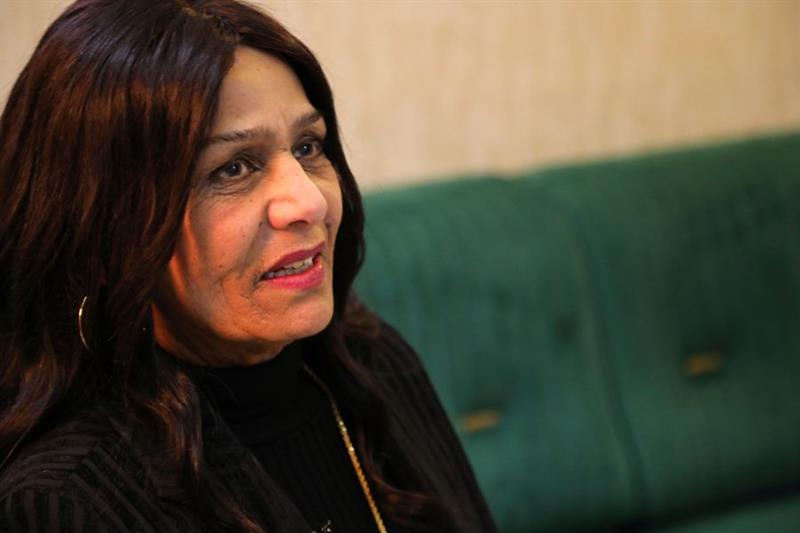
Seven days after the legendary Iraqi singer Sajida Obaid died, women sat wrapped in black veils and abayas, their faces wet at her family home in the northern city of Irbil. Some were family members and others were fans who had loved her for decades.
Bitter black coffee, the drink of Iraqi mourning, passed quietly from hand to hand. The music drifting in from outside filled the spaces between sobs.
Outside, men sat under a canvas tent in the street. A traditional band beat the daf as some of the men wiped their eyes. In Iraq, the seventh day marks a return, a final gathering before grief begins to thin into memory.
Obaid died on April 4 at the age of 68 after a battle with lung cancer. The news was overshadowed by the Iran war that had spilled over into neighboring Iraq. But for her fans, her death felt personal — the loss of a woman whose voice had given them, for a few hours at a time, something close to freedom.
A space for women to let loose
In Iraq, a woman moving through public life carries weight with her; eyes watching what she wears, how she moves, whether she is stepping too far outside the lines. So Obaid decided to hold parties only for women. Every staff member including the DJ, the waiters, the security, and the organizers was a woman. No phones were allowed to prevent photography. To protect the women in the room, their freedom stayed inside those walls.
Women who would never dream of dancing in front of male audience came. They dressed how they wanted and danced the way they had forgotten they could.
Virgin Jaji, 68, was one of them. While the Arab world traditionally begins its mornings with the dreamy songs of the Lebanese singer Fayrouz, Jaji said she has listened to Obaid every morning for years, in the car, at home, even at the gym. “Even my parrot only dances to Sajida Obaid’s music.
“In her women’s parties we danced like we had no cares in the world,” Jaji said, her eyes red from crying. “We felt free. Truly free.”
Mina Mohammed, 40, said, “The first time I heard about a women-only party by Sajida, I borrowed money from friends just to be in that hall. Her voice will always take me back to the best moments of my life.”
A quick rise to stardom
Obaid was born in Baghdad in 1957, the daughter of a Roma family. In Iraq, Roma people are known as “Kawliya,” a community long tied to music and performance, but also one that has lived for generations at the edge of society. Sajida began singing at 12, performing at parties to help her family pay the bills.
By her teenage years she was already a known name. Her voice was warm and commanding, rooted in the dance rhythms of the Kawliya and in the older, more tender Iraqi style known as mawal. By the 1980s, it had reached the most powerful and most dangerous men in Iraq.
Saddam Hussein’s security guards would pull her away mid-performance from other people’s weddings and bring her to sing. She performed at the weddings of Saddam’s children and at birthday parties for his sons and daughters. It was the complicated price of being a national star in an era of dictatorship. She traveled the world, performed at international festivals and sometimes played as many as seven shows a week.
Shrinking space for Iraqi women
But the women-only parties were always special to her, said her brother and manager, Aayed Awda.
“Those parties were something the women themselves asked for, including women from the most conservative families, because they wanted a place where they could dress freely, move freely, be themselves,” he said. “Sajida believed deeply in helping women and giving them that space.”
Obaid’s songs sometimes pushed social boundaries, like “Inkasarat al-Sheesha” (“the shisha broke”), about a woman who has lost her virginity and must now face her family. “What will I tell my mother?” the lyrics ask. In Iraq, that is not a light question. Obaid sang it with a full voice, without apology.
Many Iraqi women feel that the gains they had made in rights over the years are receding. Last year, Iraqi Parliament passed amendments to the country’s personal status law that opponents say would in effect legalize child marriage and erode women’s rights in matters like divorce and inheritance.
“Iraq feels like it’s moving backward, and the space for women’s freedom is shrinking,” said Mohammed, the fan who borrowed money to attend Obaid’s parties. She hopes that the carefree moments they brought can “be carried forward, even in small ways, like women-only DJ nights with her music.”
A quiet end
In her final months, the woman who had sung on stages across five continents lived quietly in Irbil, in the home of her elder brother’s family. She had no children. She had married twice and divorced twice. She rarely went out. She spent her days close to the people she loved and played with the children in the house.
“She was gentle and warm, and she never once caused harm to anyone,” said her niece Sahar Sabti, 38, who shared the home with her. “She took care of everyone around her.”
About four months before Obaid died, doctors found lung cancer, Sabti said. She still insisted on flying to Canada for a concert. But when she came home to receive her first chemo session, her body gave up.
She was hospitalized in Irbil, where she remained for more than two weeks before being sent home on oxygen. Her family took her to the hospital once more, and this time she didn’t come home.
Her brother recalled the 40 years they worked together, and their sibling bickering about the shade of her makeup, the cut and color of her dress, the theme of the next party.
“We disagreed on everything,” Awda said, his voice breaking. “And I miss every single one of those arguments.”
On the seventh day of mourning, as the drum outside finally fell silent and the women inside dried their faces, they spoke about Obaid the way people speak about someone who has stepped out of the room for a moment.
“For me and my friends, dancing and Sajida are the same word,” said Leila Botrus, 55. “She brought people together everywhere she went through joy, through music.”
Outside in the tent, the band played its last song of the evening. The coffee in the cups grew cold, but the women stayed a little longer together.
In that room, filled with women sitting close together, it felt as though Sajida had left behind exactly what she always gave them; a space of their own.
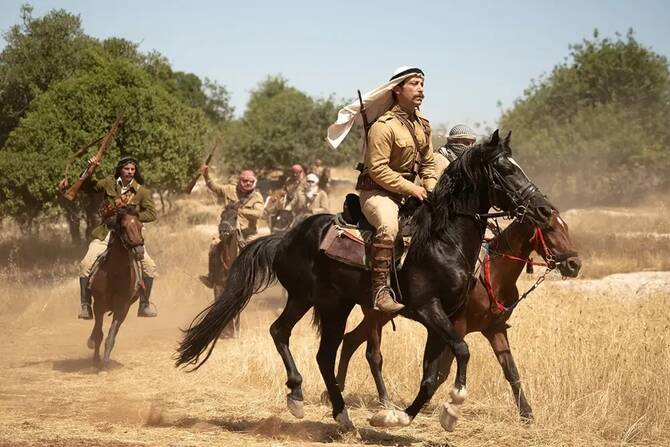
Annemarie Jacir’s award-winning film “Palestine 36” leads the nominations for the 10th Critics Awards For Arab Films, which were announced on Wednesday.
The annual prizes, organized by the Arab Cinema Center, have been voted on by a record 307 Arab and international critics from 75 countries this year, with the awards ceremony due to take place during the Cannes Film Festival on May 16.
“Palestine 36” has been nominated in six categories including best film, director and screenplay. It is followed by Maryam Touzani’s “Calle Malaga” with five nominations; Cherien Dabis’ “All That’s Left of You” with four; and “Yunan,” “My Father’s Scent,” and “Once Upon a Time in Gaza” with three each.
Kaouther Ben Hania’s Oscar-nominated “The Voice of Hind Rajab” garnered one nomination in the best director category.
“Palestine 36” is set during the 1936 Arab Revolt and follows five interconnected narratives as villages across Palestine confront British colonial rule.
With rising numbers of Jewish immigrants escaping antisemitism in Europe, and the Palestinian population uniting against Britain’s 30-year dominion, all sides spiral toward inevitable collision in a decisive moment for the British Empire and the future of the entire region.
“I hope people see themselves in the film,” she told Arab News in December last year. “I don’t want to teach anyone anything. There’s a lot of history in the film and there’s a lot of history that’s been erased. I hope that’s something that comes through.”
source/content: arabnews.com (headline edited)
______________
Annemarie Jacir’s award-winning film “Palestine 36” leads the nominations for the 10th Critics Awards For Arab Films, which were announced on Wednesday. (Supplied)
The commission is headquartered in Beirut and brings together 21 member states across the Middle East and North Africa.
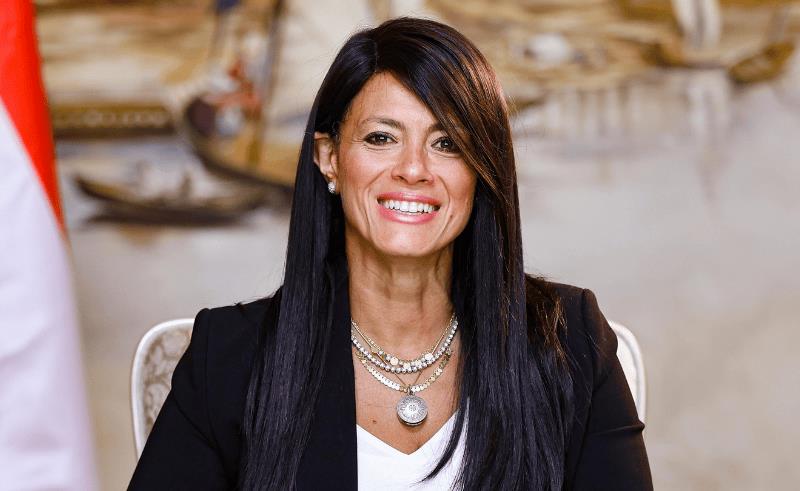
Rania Al-Mashat has been appointed Under-Secretary-General of the United Nations and Executive Secretary of the Economic and Social Commission for Western Asia, following an announcement by Secretary-General António Guterres.
Al-Mashat brings more than 25 years of experience in macroeconomic policy, central banking and international development. Between 2018 and 2026, she served in Egypt’s government across multiple portfolios, including tourism, international cooperation, and planning and economic development, becoming the country’s first female minister of tourism.
Prior to her ministerial roles, she served as sub-governor for monetary policy at the Central Bank of Egypt and worked as an adviser to the chief economist at the International Monetary Fund in Washington.
The Economic and Social Commission for Western Asia, headquartered in Beirut, is one of the UN’s five regional commissions, serving 21 countries across the Middle East and North Africa. Its mandate includes supporting economic integration, policy coordination and sustainable development across the region.
Al-Mashat holds a PhD and MA in economics from the University of Maryland, College Park and a BA in economics from the American University in Cairo. She has also completed executive programmes in leadership and public policy at Harvard and Oxford.
Iconic Kuwaiti actress Hayat Al Fahad, widely known as the “Lady of the Gulf Screen”, has died at the age of 78 after a prolonged illness, in a loss that has reverberated across the Arab artistic community.
The announcement was made on Tuesday via the official account of the Al Fahad Artistic Production Foundation, which paid tribute to her as a towering figure in Gulf drama whose legacy will endure for generations.
Al Fahad had faced recurring health complications in recent months, which kept her away from the screen. Sources close to the family said her condition deteriorated sharply in recent days, leading to her admission to intensive care before her death.
Over a career spanning more than five decades, Al Fahad was not only an actress but also a writer and producer, known for works that explored Gulf society with depth and candour.
Born in Kuwait in 1948, Al Fahad is regarded as one of the Arab world’s most influential television and stage figures. Her career spans acting, broadcasting, writing, and producing, with celebrated credits including the beloved television series Khalti Qumasha, Ruqiya wa Sabika, Jarh Al Zaman, and ‘Ndama Tu’Gany Al Zuho.
Despite advancing age, she remained active in Ramadan productions until her later years, delivering performances marked by experience and enduring passion.
Her death marks the end of a defining chapter in Gulf television, though her work will continue to resonate across the Arab world.
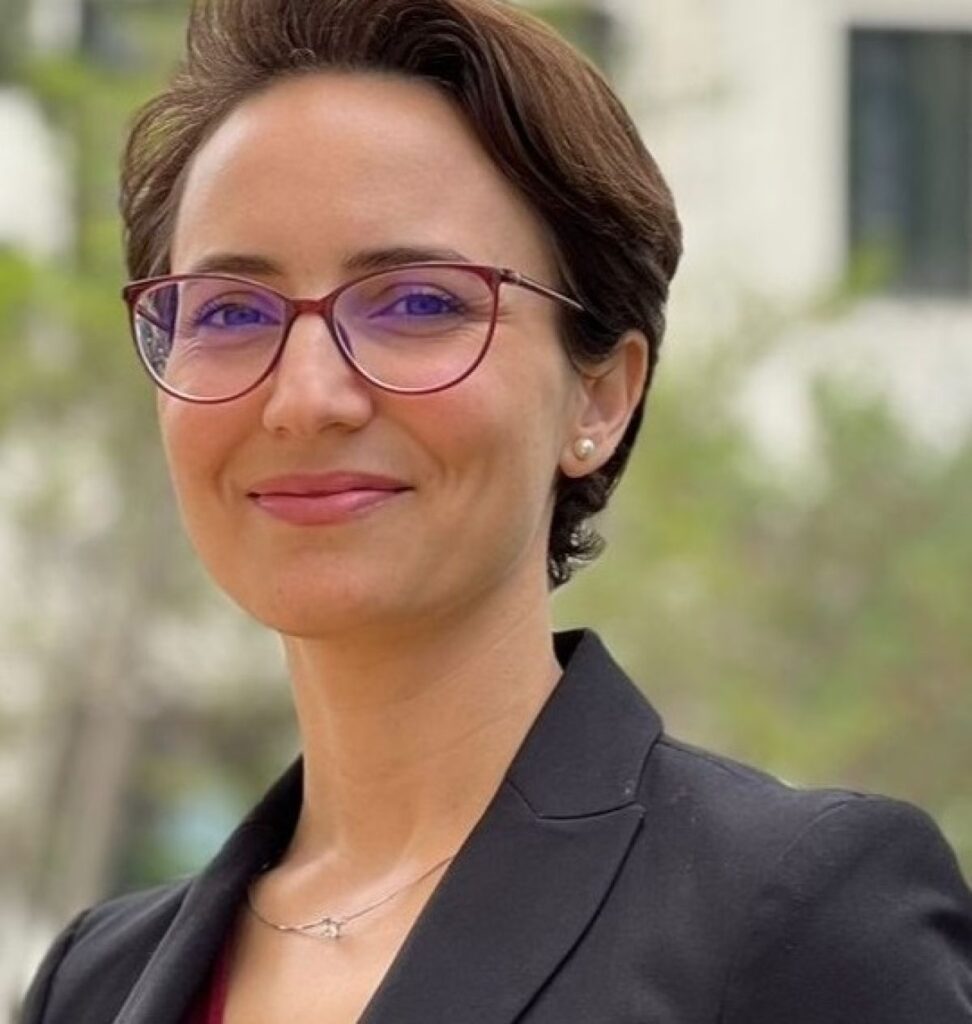
Tunisian researcher Emna Harigua has been honoured with Tunisia’s 2025 Best Female Scientific Achievement Prize for her innovative drug discovery work powered by artificial intelligence (AI).
In recognition of women’s essential contributions to science and innovation, Harigua, who holds a doctorate in biomathematics, bioinformatics and computational biology, was awarded the prestigious prize by Tunisia’s Ministry of Family, Women, Children and Seniors as part of the celebrations for the country’s National Women’s Day, observed on August 13. Her achievements include leading research in AI-powered drug discovery through a national node in the Global South AI for Pandemic and Epidemic Preparedness and Response Network, a global initiative supported by IDRC and the United Kingdom’s Foreign, Commonwealth and Development Office.
Harigua, a scientist at the Institut Pasteur de Tunis, Tunisia, and principal investigator of the BIND project (Bioinformatics and Artificial Intelligence for Infectious Diseases), is leading an AI-powered platform that accelerates research against some of the world’s most persistent infectious agents that pose health risks.
Her research targets neglected tropical diseases such as leishmaniasis and malaria, combining bioinformatics, AI and experimental validation to shorten the drug discovery timeline and reduce costs. The BIND project has already identified nine novel anti-Leishmania drug candidates, with three now in pre-clinical validation. In addition, the team launched CidalsDB, an open-access AI platform for drug identification, marking a step forward in global efforts toward open science and collaborative health research.
“This award is not just a personal milestone — it’s a recognition of the potential of African-led science to tackle global health challenges,” said Harigua.
Beyond her lab, Harigua is a strong advocate for building Africa’s capacity in computer-aided drug discovery and ensuring that cutting-edge technologies serve the health needs of African communities. Her work — presented recently at the International Science Council during a workshop held in Nairobi, Kenya, on the impact of emerging technologies on science systems — underscores a vision where innovation, collaboration and inclusion drive the future of medical research.
source/content: idrc-crdi.ca (headline edited)
____________
Fourat Thamine, Institut Pasteur Tunisia. / Tunisian scientist Emna Harigua receives national recognition for her AI-powered drug discovery platform.