Arabs & Arabian Records Aggregator. Chronicler. Milestones of the 25 Countries of the Arabic Speaking World (official / co-official). AGCC. MENA. Global. Ist's to Top 10's. Records. Read & Enjoy./ www.arabianrecords.org
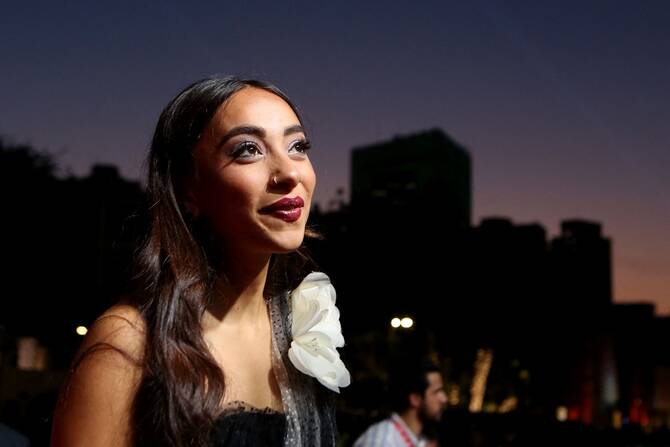
Saudi Arabia actress and filmmaker Sarah Taibah has nabbed a role in a social media campaign for US luxury jewelry house Tiffany & Co.
The actress shared a post on her Instagram account, in which she goes about her day adorned in various pieces by Tiffany & Co.
“Sketchbook in hand, eternal sunshine of a stormy mind, and days rarely slow down. Absolutely in (love) with HardWear by @Tiffanyandco, it’s been my little talisman throughout,” she captioned the short clip.
The HardWear collection draws on a design from 1962, according to the brand.
“HardWear is an expression of love’s transformative strength. Like New York, the city in which it was born, the collection embodies an enduring resilience and ability to be free,” the label wrote on its website.
The collection features necklaces, bracelets and earrings with interlocked links, veering into a more industrial aesthetic than the dainty jewelry the house is known for.
Taibah shows off a pair of diamond encrusted earrings, along with a necklace and watch from the collection that was handcrafted in Switzerland.
Taibah shot to fame for her show “Jameel Jeddan,” the first local production that was wholly created and starred in by a Saudi Arabia woman.
The plot of the 2022 release was anything but typical. Strong-headed Jameel wakes up from a five-year coma and is forced to finish her last year in high school and rejoin an unfamiliar society.
As a coping mechanism, she begins to experience glitches in the form of an animated alternative reality.
Taibah is working on an offbeat Saudi romcom “A Matter of Life and Death,” which she wrote. The film is being directed by Anas Batahaf and will star Taibah and Yaqoub Al-Farhan.
Her collaboration with Tiffany & Co. is not the first time she has worked with a global luxury brand.
In February, Spanish fashion house Loewe unveiled a Ramadan campaign directed by Lebanese-Sudanese auteur Dana Boulos and starring Taibah and Saudi Arabia Olympic rower Husein Alireza.
The cast included Omani artist Mays Almoosawi, Kuwaiti visual artist Najd Al-Taher, Emirati film director Sarah Al-Hashimi, Kuwaiti DJ Cascou and Bahraini contemporary artist Salman Al-Najem.
source/content: arabnews.com (headline edited)
____________
Sarah Taibah shot to fame for her show “Jameel Jeddan.” (File/ AFP)
The initiative aims to strengthen the global presence of Arab youth leaders and connect them with investors and decision-makers.
Moroccan young innovator Bouthaina Boujarda has been selected for the fourth edition of the “Arab Youth Pioneers” initiative, which started on Sunday in Abu Dhabi. The initiative celebrates young people across the Arab world who have achieved remarkable accomplishments in various fields.
The young Moroccan woman, known for inventing a water-powered car, is participating in the “Industries and Innovation” track.
“Being selected as part of the fourth edition of Arab Youth Pioneers is a tremendous honor. I feel a great sense of responsibility toward all Arab youth,” Boujarda said.
For her, being among this “elite” group is not only a recognition, but also a “mission … to promote the Arabic language and the achievements of Arabs around the world, and to empower them to become leaders on a global scale.”
Boujarda spoke of how significant every moment is when she feels that she is making a real impact or when a colleague tells her she is capable of creating change. “These are the moments that fill me with pride, moments when I feel that I have genuinely contributed to Arab society,” she stated.
The young innovator hopes that her achievements are not just for herself and that she is not just a name that passes by and is forgotten. “I hope that I can truly be one of the prominent figures who leave a lasting impact on future generations.”
In addition to the Industries and Innovation track, the initiative features nine other specialized tracks, including Community Service, Scientific Research, Space and Technology, Medicine and Health Sciences, Sustainability and Environment, Entrepreneurship, Education, Engineering, and Media and Digital Citizenship. A total of 40 young pioneers from 13 Arab countries are participating.
The event runs until September 19 and is organized by the Arab Youth Center in partnership with the Abu Dhabi Youth Business Council, with the support of the Anwar Gargash Diplomatic Academy and the Emirates Foundation, along with leading entrepreneurs and strategic partners.
The initiative aims to strengthen the global presence of Arab youth leaders and connect them with investors and decision-makers to provide more opportunities for funding, mentorship, and idea development. It also seeks to expand cooperation between the public and private sectors to support and develop youth-led projects.
UAE Minister of State for Youth Affairs and Vice President of the Arab Youth Center, Sultan Al Neyadi, said the initiative is an exceptional platform to help young people turn their ideas into impactful achievements that contribute to the development of their communities.
Following its screening, Kaouther Ben Hania’s film The Voice of Hind Rajab (2025) received a 22-minute-long standing ovation — the longest in the Venice Film Festival’s history – culminating in theatre-wide chants to “Free Palestine.”
The film had its world premiere at the 82nd edition of the renowned Venice Film Festival, which runs until 6 September.
The film is also Tunisia’s official submission to the 98th Academy Awards.
The first screening of the film was completely sold out hours before its showing.
Several artists from the film’s cast and crew attended the screening, including lead actor Motaz Malhees, who held a photo of Hind Rajab on the red carpet and raised the Palestinian flag on the stage of the theatre after the film’s conclusion.
The film’s unprecedented success was reflected in the longest standing ovation in the festival’s history, with chants of “Free Palestine” resonating across the hall.
The Tunisian-French co-production also stars Amer Hlehel, Clara Khoury, and Saja Kilani.
“Film anchored in truth”
In a post-screening press conference, Kilani declared that “the Voice of Hind Rajab does not need our defence. This film is not an opinion or a fantasy; it is anchored in truth. Hind’s story carries the weight of an entire people.”
Film director Ben Hania also commented on Trump’s plans to turn Gaza’s coastline into a “Riviera,” saying, “When I think about Hind playing on the beach, and I think about this project, [I find myself asking] in what world do we live in?”
Hind Rajab
The film recounts the events of 29 January 2024, when Red Crescent volunteers received an emergency call. A six-year-old girl named Hind Rajab was trapped in a car under fire in Gaza, pleading for rescue.
While trying to keep her on the line, they do everything they can to get an ambulance to her.
The film uses real-life voice recordings between Hind and the Red Crescent correspondents, who attempted to rescue her from the unrelenting Israeli attack.
Explaining her vision for the film, Ben Hania said, “What I wanted was to focus on the invisible: The waiting, the fear, the unbearable sound of silence when help doesn’t come. Sometimes, what you don’t see is more devastating than what you do. At the heart of it is something very simple, and very hard to live with. I cannot accept a world where a child calls for help and no one comes. That pain, that failure, belongs to all of us.”
Kaouther Ben Hania
Kaouther Ben Hania is one of the most acclaimed filmmakers of the Arab World, known for her bold storytelling and cinematic innovation.
Her 2023 film, Four Daughters, won the L’Oeil d’Or at Cannes and was nominated for Best Documentary at the 2024 Academy Awards.
Her 2020 feature, The Man Who Sold His Skin, was nominated for Best International Feature and won Best Actor at Venice’s Horizons Section.
Earlier works like Beauty and the Dogs (2017), Zaineb Hates the Snow (2026), and Le Challat de Tunis (2012) also earned international acclaim.
For OCP Africa, the approach is clear: deliver the right product with the right support and finance, then localize manufacturing where demand warrants it – a model already boosting margins and farm productivity.
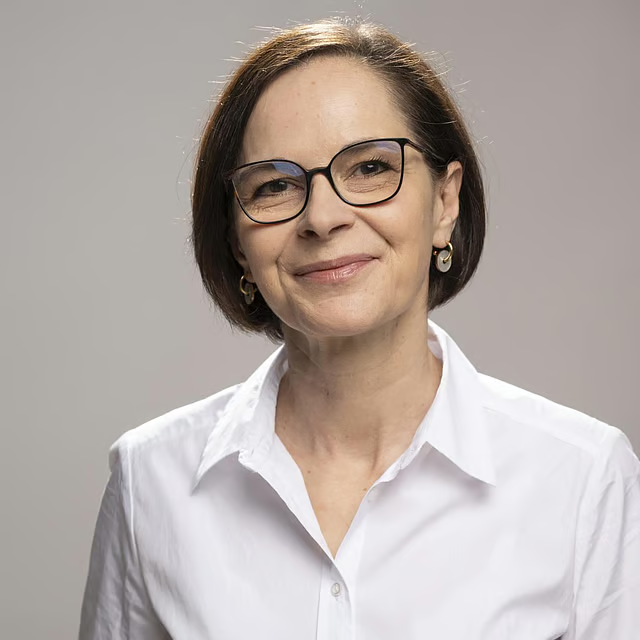
With its eyes fixed on transforming African farming, OCP Africa has entrusted the leadership of its continental strategy to Hajar Alafifi, who assumes the role of CEO effective September 1. This strategic move brings home one of Morocco’s most accomplished international executives to spearhead the group’s ambitious continental vision.
Born and educated in Casablanca, Alafifi represents the pinnacle of Moroccan talent on the world stage. A graduate of ENCG Casablanca, she embarked on an impressive career trajectory that took her from initial positions at Unilever Morocco to increasingly significant roles across multiple continents.
Over her two-decade journey with the consumer goods giant, Alafifi steadily climbed the corporate ladder, holding key positions in London, the Netherlands, and South Africa before making her mark in Southeast Asia.
Her professional evolution included roles as Regional Brand Manager, Senior Global Brand Manager, Brand Development Director for Europe, and CMO for global brands including Sun, Domestos, and CIF, where she led billion-dollar brands across four continents.
A Moroccan executive with global impact, her international career reached its apex when she was appointed Chairperson and General Manager of Unilever Sri Lanka, becoming the first Moroccan to lead a major subsidiary of this size in the region.
Most recently, she served as GM for Southeast Asia and Indonesia Nutrition at Unilever, further broadening her expertise in emerging markets.
“This designation marks a new stage in the company’s development strategy on the continent,” said OCP Africa in its announcement, stressing the significance of bringing such accomplished talent to lead its African operations.
Leadership philosophy and recognition
Throughout her career, Alafifi has distinguished herself not merely through business results but through transformative leadership. In Sri Lanka, she implemented progressive workplace policies that achieved gender parity and introduced specialized leave provisions, while also launching campaigns against domestic violence.
Her management approach is built on three clear principles: deep cultural understanding to ensure products meet local consumer needs; rapid, responsive innovation; and authentic leadership characterized by clarity and composure, particularly during challenging circumstances.
This distinctive leadership style earned her the Global Leader of the Year Award, a prestigious international recognition celebrating the world’s most inspiring executives.
True to her collaborative philosophy, upon receiving this honor, she remarked, “This is not my success, it’s that of an entire team.”
Taking the helm at OCP Africa
The decision by Mostafa Terrab, President of OCP Group, to bring Alafifi back to Morocco represents a strategic bet on combining global expertise with deep African understanding.
She succeeds Mohamed Hettiti, who had been serving in an interim capacity, successfully maintaining operational continuity and advancing strategic initiatives during the transition period.
With her appointment, OCP Africa gains a leader who brings fresh perspective on emerging markets, having navigated complex economic environments, diverse consumer landscapes, and significant operational challenges while building trusted brands and resilient value chains.
Alafifi brings extensive experience from her tenure at a Fortune 500 international group, and the Board of Directors has expressed confidence that her proven track record in driving transformation projects in complex contexts, coupled with her commitment to sustainability and ESG principles, aligns perfectly with OCP Africa’s evolving vision and strategic priorities.
OCP Group: A global phosphate powerhouse with African ambitions
Alafifi joins OCP Africa at a pivotal moment in the parent company’s development. OCP Group, Morocco’s state-owned phosphate and fertilizer leader, has been delivering impressive financial results while simultaneously implementing ambitious sustainability initiatives.
In 2024, the Group reported revenues of MAD 96.99 billion (approximately US$9.76 billion) with a robust 40% EBITDA margin, representing substantial growth from 2023 as fertilizer sales increased and Triple Super Phosphate (TSP) exports surged by 48%. Fertilizers now comprise 69% of total revenue, showing the strategic importance of this segment.
The foundation of OCP’s global strength lies in its control of what is often cited as 68% of global phosphate rock reserves, providing long-term security of supply for Africa’s fertilizer needs.
This natural advantage underpins the Group’s ambitious “Green Investment Program” for 2023-2027, valued at approximately $12-13 billion, which aims to expand capacity while transitioning toward carbon-neutral operations by 2040.
Major milestones in this sustainability journey include the utilization of 63 million cubic meters of desalinated water in 2024 and the successful injection of the first green kilowatt-hour at Benguerir.
New capacity developments at Jorf Lasfar (sulfuric acid lines, +1 Mt DAP-equivalent unit) and a TSP hub coming online from 2025 position the Group to serve fast-growing African and global demand; in 2024 alone, TSP volumes rose 48% with notable uptake in India and Brazil.
OCP Africa: Transforming continental agriculture
As the dedicated African subsidiary of OCP Group, OCP Africa executes a distinct strategy centered on “localization”: establishing blending and production facilities close to farmers, developing country-specific product formulas, and providing services that reduce adoption risks for smallholders.
The subsidiary’s customization process begins with comprehensive soil mapping, followed by tailoring N-P-K and micronutrient balances to specific agricultural needs, and where feasible, implementing local production.
This approach has led to significant investments across the continent, including the acquisition and operation of blending facilities in Ethiopia and the development of blending units in Nigeria (Ogun, Kaduna, and Sokoto).
A memorandum of understanding and joint venture (MoU/JV) with the Nigeria Sovereign Investment Authority aims to develop an industrial platform for ammonia and fertilizers, while a state-backed complex in Akwa Ibom was announced at $1.5 billion, alongside approximately $43 million allocated for blending plants.
Similar country programs in Ghana, Ethiopia, and other nations are structured around value-chain partnerships with governments, agribusiness, and research organizations to scale the adoption of appropriate fertilizers for local soils.
Farmer services constitute the second pillar of OCP Africa’s strategy. Through the Agribooster program, the company delivers a comprehensive package of inputs (fertilizer, seed, crop protection), training, market off-take, and finance/insurance.
This initiative has reached approximately 600,000 smallholder farmers, achieving average yield increases of 33% across maize, rice, millet, and sorghum value chains.
Complementing this is the mobile “OCP School Lab,” which brings free on-site soil tests and training directly to remote villages, building farmer confidence and promoting proper application practices.
The impact has been measurable: independent reporting shows that in Nigeria, fertilizer use tripled with yields increasing by about 27% since 2016, while in Ethiopia, yields rose by approximately 37% while farmers’ fertilizer expenditure decreased by about one-fifth – demonstrating how customized recommendations can simultaneously enhance productivity and input efficiency.
Financing and strategic alliances form the third component of the strategy. In 2024, OCP launched an international bond roadshow (up to $2 billion) to fund its development plan and subsequently completed a $2 billion Eurobond, later expanding it by an additional $300 million. The Group also issued MAD-denominated bonds to support its capital expenditure program.
On the developmental finance front, OCP partnered with the International Finance Corporation (IFC) to establish an agri-finance platform targeting $800 million in blended capital by 2030 to scale resilient African food systems.
Energy partnerships further extend the decarbonization initiative: OCP and Fortescue announced a joint venture to develop green hydrogen/ammonia and fertilizers (with an R&D hub in Marrakesh), while a separate framework with Engie envisions multi-billion-euro investments in renewables, desalination, and green molecules for OCP’s Moroccan sites.
In West Africa, OCP Africa’s joint venture with Nigeria’s NSIA (within the Presidential Fertilizer Initiative) aims to localize ammonia/fertilizer value chains and improve input affordability at scale.
A forward-looking African strategy
Looking ahead, OCP’s African strategy aligns its industrial expansion directly with continental food-security goals.
The foundation of this approach is greener, more resilient infrastructure – solar phases nearing completion, water pipelines, and desalination to reduce dependence on hydrological conditions – while university-led soil-mapping and agronomy research (conducted through UM6P) extend the data layer into more than ten African countries.
For OCP Africa under Alafifi’s leadership, the path forward is clear: deliver the right product in the right place with appropriate support and financing, then localize manufacturing where demand warrants it. This model has already strengthened OCP Group’s margins while delivering measurable productivity gains for African farmers.
With Hajar Alafifi at the helm, OCP Africa gains not just an executive with global credentials, but a Moroccan leader who understands that performance metrics only matter when they translate to tangible social and environmental impact – a philosophy perfectly aligned with the continental ambitions of one of Africa’s most important agricultural enablers.
Sheikh Mohammed congratulates Belkaid on her made exceptional contributions to immunology.
His Highness Sheikh Mohammed bin Rashid Al Maktoum, Vice President and Prime Minister of the UAE and Ruler of Dubai, has congratulated Algerian Professor Yasmine Belkaid on winning the ‘Great Arab Minds’ Award in Medicine for 2024.
In a post shared on his X account, Sheikh Mohammed wrote: “Today, we congratulate the winner of the ‘Great Arab Minds’ Award in the category of medicine for the year 2024, Algerian Professor Yasmine President of the Pasteur Institute in France. She has made exceptional contributions to immunology and to studies on the role of microbes in boosting immunity and preventing diseases. Professor Yasmine Belkaid has published more than 220 scientific papers in the fields of infection and immunology.”
نبارك اليوم للفائزة بجائزة نوابغ العرب عن فئة الطب لعام 2024، البروفيسورة ياسمين بلقايد من الجزائر ، رئيسة معهد باستور في فرنسا… قدمت إسهامات استثنائية في علم المناعة، ودراسات مرتبطة بدور الميكروبات في تعزيز المناعة والوقاية من الأمراض… نشرت البروفيسورة ياسمين بلقايد أكثر من… pic.twitter.com/Q4lQeZ9d4x
The Great Arab Minds initiative honours exceptional Arab individuals whose remarkable achievements have helped drive progress and enrich knowledge both within the Arab world and globally.
Heralded as the ‘Arab Nobel Prize’ for its singular efforts to recognise Arabs who have made extraordinary contributions to humanity, the initiative aims to reignite the Arab world’s remarkable spirit of scientific enquiry and leadership in such quests throughout history.
Under the patronage of Sheikh Mohammed bin Rashid, the UAE recently launched the second edition of the Great Arab Minds initiative.
The awards’ six categories encompass medicine, engineering and technology, economics, natural sciences, architecture and design, and literature and arts.
source/content: gulfnews.com (headline edited)
______________
Algerian Professor Yasmine Belkaid named ‘Great Arab Minds’ winner in medicine
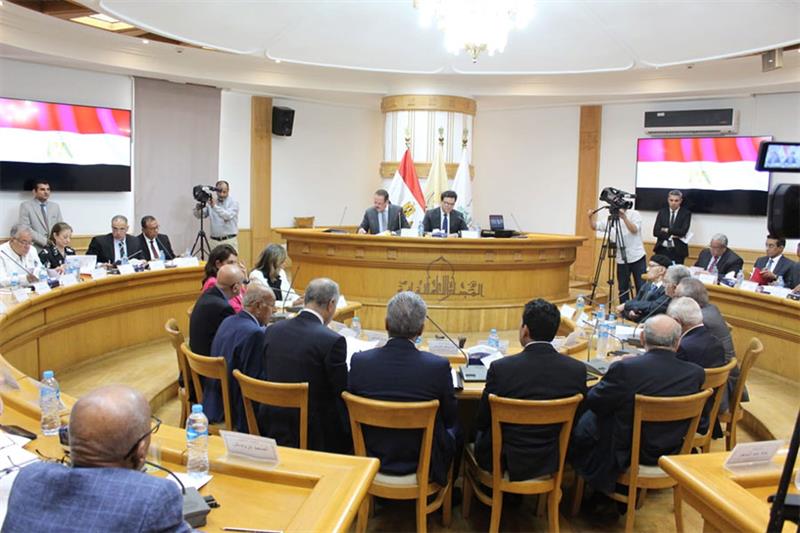
The Supreme Council of Culture (SCC), headed by Minister of Culture Ahmed Fouad Hano, has officially revealed the recipients of the 2025 State Awards.
The announcement, made via an official statement on the Ministry of Culture’s Facebook page on Tuesday, follows a comprehensive voting process that recognised individuals for their profound impact on Egypt’s cultural and intellectual spheres.
The distinguished awards include the Nile Award, the State Appreciation Award, the Excellence Award, and the Encouragement Award.
The selection process involved a meeting attended by leading intellectuals, academics, heads of cultural institutions, and representatives from professional unions.
Nile Award
The prestigious Nile Awards were granted to:
Arts category: Architect Dr. Saleh Lamai
Literature category: Dr. Ahmed Darwish
Social Sciences category: Dr. Ahmed Zayed
Nile Award for Arab Creators: Palestinian artist Suleiman Anis Mansour
Appreciation Award
The State Appreciation Awards were granted to:
Arts category: Theatre director Shaker Abdel Latif, visual artist Abdel Wahab Abdel Mohsen, and cinematographer Samir Farag.
Literature category: Poet Ahmed El-Shahawi, critic and writer Dr. Khayri Douma, and writer Fatma El-Maadoul.
Social Sciences category: University professors Dr. Anas Gaafar, Dr. Mohamed Sameh Amr, Dr. Mona Haggag, and Dr. Nevine Massad.
Literature category: Poet Masoud Shoman and Dr. Khaled Abou El-Leil.
Social Sciences category: Dr. Samah Fawzy, Dr. Atiya El-Tantawy, and Dr. Nahla Imam.
Encouragement Award
When it comes to the 2025 Encouragement Awards, 32 creatives were honoured across arts, literature, social sciences, and legal/economic studies.
Arts Category (8 prizes; 6 awarded, 2 withheld)
Piano Performance: Naghamaya Safwat for her rendition of Shostakovich’s Piano Concerto No. 2 with the Cairo Symphony Orchestra.
Film Script: Mahmoud Zein for Wala Azaa’ Lil Sayedat.
Children’s Book Illustration: Heidi Fawzy for Ta’aqqal… Ya Marah.
Theatrical Scenography: Nehad El-Sayed for Shatat.
Digital Media & Architecture: Mostafa Salem for an awareness series on heritage preservation.
Painting: Dr. Islam El-Reihany for The Music of the Body.
Withheld: Prizes for “E-marketing for handicrafts” and “Fiber Art”.
Literature (8 prizes)
Historical Novel: Doaa Gamal El-Bady for Crows That Don’t Eat the Dead.
Short Story Collection: Ahmed Yasser Fathy for A Very Lonely City.
Classical Poetry: Mohamed Refai for The Cry of a Coin.
Colloquial Poetry: Ibrahim Abou Samra for Balta Shi’r.
Computational Linguistics: Marwa Mostafa Amin for Functions of the Electronic Dictionary.
Narrative Criticism: Aly Kotb for Singing and Music in the Literature of Naguib Mahfouz.
Translation (Turkish-Arabic): Sousana Sayed Mohamed for A Strange Woman by Leyla Erbil.
Translation (Arabic to Asian/African languages): Shared by Dina Mohamed Bayoumi (Suspense and Horror Between China and Egypt) and Mohamed Abdelrahman Farag (Al-Mukhtasar Al-Shafi fi Al-Iman Al-Kafi).
Social Sciences
History, Archaeology & Heritage (shared):
Dr. Ahmed Ma’arouf for Walls with Gates: Political Borders in Islamic Historical Heritage.
Dr. Sherif Imam for Saad Zaghloul in Gramsci’s Mirror.
Geography & Environment: Dr. Shaimaa Mohamed Wehba for research on water pollution and income inequality in Egypt.
Philosophy & Anthropology: Irene Samir Hakim for The Many Faces of Female Genital Mutilation.
Educational Sciences: Dr. Mohamed Abdel Khaleq for Dimensions of Global Education in Stoic Philosophy.
Media: Student team (Ramaj Osman, Gharib Reda, Farah Abdelkarim, etc.) for the film Hayy Falasteen, directed by Martina Wagdy.
Administrative Sciences: Dr. Islam Abdel Bari for Decoding Buy Now, Pay Later in Egypt.
Documentation & Publishing: Dr. Alaa Jaafar Al-Sadiq for research on local journal indexing.
Digital Culture: Dr. Ahmed Magdy for How AI Has Changed the Film Industry.
Legal and Economic Sciences (6 prizes awarded, 2 withheld)
Inflation in the Egyptian Economy: Dr. Gehan Abdel Salam Mahmoud for Tackling Inflation amid Global Crises.
Climate Change: Dr. Ahmed Mohamed Okasha for Climate Change and Economic Sustainability.
Russian–Ukrainian War & International Relations: Shared by Dr. Raghda El-Beheiry, Dr. Adnan Moussa, and Mr. Mahmoud Kassem.
Geopolitical Shifts: Ahmed Abdel Fattah Askar for Strategic Transformations in the Horn of Africa (2020–2024).
Right to Privacy: Dr. Mohamed Mesbah El-Naghy for Constitutional Guarantees for Genetic Privacy.
Cultural Diversity Management: Dr. Mahmoud Hussein Abou Seif for The Principle of Non-Refoulement in European Human Rights Law.
Withheld: Prizes for “Personal Data Protection under Cyber Law” and “Citizenship Through Investment”.
Minister Hano emphasised that these awards represent one of the highest forms of recognition granted by the Egyptian state, describing them as the culmination of long and distinguished careers marked by creativity and dedication.
Hano reaffirmed the state’s continued commitment to supporting intellectuals and creators who contribute to strengthening Egypt’s cultural identity and promoting values of diversity, openness, and awareness, the statement pointed out.
To safeguard a vital part of Sudanese agricultural heritage, scientists quietly moved copies of strategic crops to the frozen chambers of the Svalbard vault in Norway.
In December 2023, the civil war that had broken out the previous April between the Sudanese Armed Forces (SAF) and the Rapid Support Forces (RSF) took a troubling turn when the paramilitary group seized the country’s second-largest city, Wad Madani, in a swift offensive.
The sudden fall of Wad Madani, under circumstances that are not yet fully clear, dealt a heavy blow to the regular army and came as a shock to the hundreds of thousands of people, many of them displaced from Khartoum, who had come to see the city as a safe refuge.
The RSF’s advance quickly triggered a new mass displacement of people and disrupted the work of humanitarian agencies that had relocated to the city after the war broke out.
Like in other areas they have passed through, RSF fighters extensively looted Wad Madani and widespread abuses against the population were documented.
Although it drew little attention at the time, Sudanese scientists also issued a call to protect one specific facility in Wad Madani: the city’s seed bank, the most important in all of Sudan.
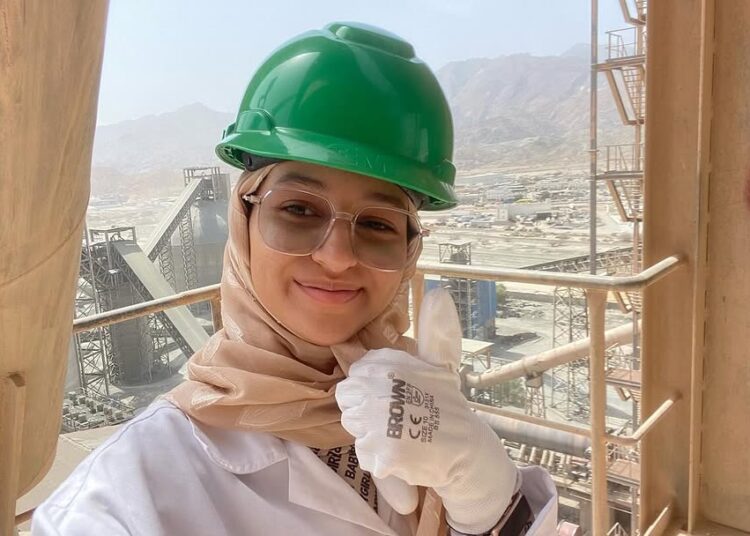
“We did not expect that the RSF would attack Wad Madani,” Ali Zakaria Babiker, director of the gene bank, told Middle East Eye.
“But when they did, all the staff fled the city to safer places.”
“We expected they would attack the gene bank,” he admitted, “because ever since they attacked Khartoum, [everyone] had already suffered a lot.”
Hidden cargo to evade checkpoints
Before the war, Sudan’s seed bank, managed by the Agricultural Plant Genetic Resources Conservation and Research Centre (APGRC), housed a collection of more than 17,000 accessions of crops and plant species, including sorghum, millet, wheat and sesame.
The collection, started in 1982, was a reflection of the crop diversity of Sudan, a country with rich biodiversity and a long agricultural tradition.
It also served as a repository for its agricultural genetic material, considered essential for both local and global food systems.
After fleeing Wad Madani, some APGRC staff met in el-Obeid, the capital of the North Kordofan region, where a subnational gene bank is located, holding copies of most of the material they had left behind.
One of their initial moves was to install a solar power system at the backup facility, ensuring a stable electricity supply to keep the freezers running and safeguard the seed copies.
At the same time, however, the staff began to develop a plan to extract as many copies of the seeds as possible and transfer them to a location where they could be safe.
“El-Obeid was also under threat from the RSF, so we went there straight away and took some duplicate accessions to dispatch them,” Babiker explained.
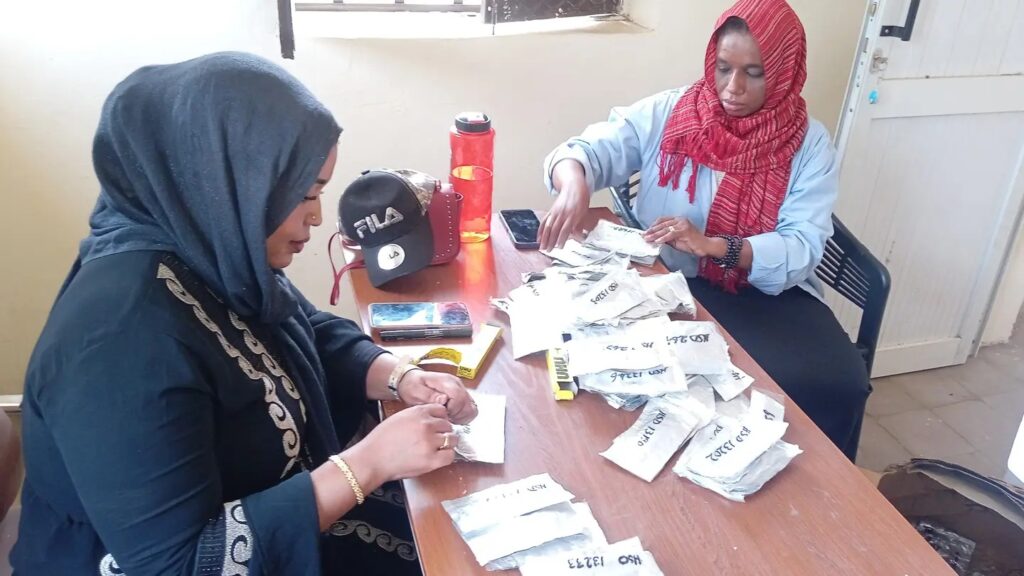
Their plan involved preparing more than 2,000 seed samples and sending them from el-Obeid to the icy chambers of Svalbard’s seed vault, located on the Norwegian island of Spitsbergen, deep in the Arctic and more than 7,000km from the capital of North Kordofan.
“[We decided to] dispatch them to Svalbard so that we would have a duplicate copy outside the country,” Babiker said.
One of their initial moves was to install a solar power system at the backup facility, ensuring a stable electricity supply to keep the freezers running and safeguard the seed copies.
At the same time, however, the staff began to develop a plan to extract as many copies of the seeds as possible and transfer them to a location where they could be safe.
“El-Obeid was also under threat from the RSF, so we went there straight away and took some duplicate accessions to dispatch them,” Babiker explained.
Their plan involved preparing more than 2,000 seed samples and sending them from el-Obeid to the icy chambers of Svalbard’s seed vault, located on the Norwegian island of Spitsbergen, deep in the Arctic and more than 7,000km from the capital of North Kordofan.
“[We decided to] dispatch them to Svalbard so that we would have a duplicate copy outside the country,” Babiker said.
“I did it to ensure that at least some of the seeds were preserved beyond Sudan’s borders.”
The scale of the mission was daunting: if they succeeded, APGRC staff would have managed to secure more than a quarter of Sudan’s seed collection in the depths of the earth.
The seeds selected included crops that have been grown in the region for thousands of years, amongst them key varieties of pearl millet and sorghum – a crop vital to Sudan’s food security, known for its drought resistance, and part of the country’s agricultural and cultural heritage.
“These [were] some of the main staple crops in Sudan, and also some of the oldest,” Babiker noted.
“They are essential for food security not only in Sudan, but also for the region – and for global food security as well.”
Before heading to one of the northernmost corners of the world, the seeds had to be taken out of el-Obeid as discreetly as possible and transported all the way to Port Sudan – the main port of the country, located in the northeast – from where they could be sent abroad.
Babiker described it as an “exciting” mission, particularly at the start, given that the RSF controlled almost all routes in and out of El Obeid.
To avoid potential trouble at checkpoints, the APGRC staff asked the truck driver transporting the seeds to load their boxes first, and only then pile on the rest of the load.
“The mission took more than 10 days because, for security reasons, it didn’t follow a normal road but routes unfamiliar to the RSF,” said Babiker, who added that no APGRC staff travelled with the shipment to avoid drawing attention.
After those 10 days on the road, the seeds finally made it to Port Sudan, although Babiker said the seed packages were scattered across the truck and had to be collected and organised.
Still, the first half of the journey – and the most challenging part – was now behind them.
Sudan Post to the rescue
Once in Port Sudan, the shipment of seeds to Svalbard was made possible because the Sudan Post courier service was still operating despite the war, said Nelissa Jamora of Crop Trust, an organisation dedicated to safeguarding the world’s crop diversity that supported the entire mission.
“Sudan Post was still functioning, at least in Port Sudan. So it was [arranged] through the regular postal service,” she told MEE, noting that there were three boxes of seeds in total.
On their way to Svalbard, the seeds made a stop at the Nordic Genetic Resource Center (NordGen), an organisation dedicated to safeguarding the Nordic region’s genetic resources.
There, the centre helped sort, catalogue, re-pack, and document the shipment from Sudan.
“It was a few days’ work for our seed technicians, but an investment well worth its price considering the importance of these seeds for the future of Sudan’s agricultural sector,” said Johan Axelsson, head of NordGen’s seed laboratory.
The seeds finally arrived at the seed vault on 25 February 2025, together with seed shipments sent by 19 other gene banks.
Established in 2008, the Svalbard Global Seed Vault has its storage area more than 100 metres inside a mountain, carved into solid rock and shielded by 40 to 60 metres of stone.
The mountain mass has a stable temperature ranging from -3 to -4 degrees Celsius, but the seed storage area is equipped with a cooling system that keeps it constantly at -18 degrees.
With more than 1,350,000 seed samples, the Svalbard Global Seed Vault is currently the largest backup facility for seeds and crop diversity in the world.
Owned by Norway, the site is operated by three partners: the country’s Ministry of Agriculture and Food, NordGen and Crop Trust.
Gene banks from all over the world can store backup copies of their seeds there free of charge and with no legal transfer of ownership, the seeds always remain property of the depositor.
Sudan made its first deposit in 2019 and today holds 1,884 accessions, a distinct, uniquely identifiable sample of seeds, from 15 different species, according to Svalbard’s website.
Jamora said that the difference from the more than 2,000 seeds initially sent by the APGRC from el-Obeid was likely due to some packages arriving in less-than-optimal condition and not making it into the final set, although they are preserved by NordGen and can be returned.
The mission to evacuate Sudan’s seeds was funded through an emergency reserve launched in 2021 by Crop Trust and the secretariat of the International Treaty on Plant Genetic Resources under the supervision of the UN Food and Agriculture Organization (FAO), to assist gene banks that are under threat.
In Sudan’s case, Crop Trust had been collaborating with the local gene bank before the war through a project called BOLD (Biodiversity for Opportunities, Livelihoods and Development).
“The mission aimed to secure as many seeds as possible,” Jamora noted.
Fears vindicated
Sudan’s army recaptured Wad Madani in January, and when the APGRC staff returned to their facilities, their worst fears were confirmed: the bank’s freezers, computers and servers had been looted, and the seed bags were torn open, their contents scattered across the floor.
However, with the support and funding from the emergency reserve jointly run by Crop Trust and the Plant Treaty, efforts to rebuild and start over are already under way.
For now, the gene bank is still assessing the losses, but it is also beginning to rebuild its seed collection despite limited state funds and power cuts that often last more than 12 hours a day.
When the situation stabilises, the centre hopes to be able to assess the state of its seeds and move into a regeneration phase, but this will require new freezers and other equipment.
During a meeting with the director of Sudan’s Agricultural Research Corporation (ARC) and FAO representatives, the governor of Gezira State – where Wad Madani is located – Tahir al-Khair, pledged to try to install a new cold storage facility for the gene bank.
In the meantime, at least, the seeds stored in the Svalbard vault remain safe, waiting for the day they can once again serve their country.
“We felt very relieved and reassured once we made sure we had these duplicate copies outside Sudan,” Babiker said.
An innovative team from the Oman Dental College has successfully developed a dental filling using Omani Portland cement reinforced with carbon nanoplates, creating the first material that combines exceptional strength with complete biocompatibility for dental tissues. This breakthrough opens new horizons in global dental treatments.
Malak Khalifa Al Harthy, a member of the research team “Pulp49,” told Oman News Agency (ONA) that the innovation stemmed from observing how traditional fillings often lack a balance between “strength” and “biocompatibility.” This prompted the team to develop a new composite that achieves this challenging balance.
She explained that the composite is a dental filling made by integrating Omani cement with graphene sheets, resulting in a material with high mechanical efficiency and significant biocompatibility. This has led to clear and rapid restoration of surrounding dental tissues.
The development of the composite took approximately five years of research and experimentation, undergoing initial cell-level testing followed by animal trials in collaboration with the Mounted Police Command. It is now in the second phase of human trials, with preliminary results showing highly promising indicators.
Regarding the expected benefits of this composite in dentistry, she noted that it provides a cost-effective solution while enhancing the longevity and efficiency of dental treatments. This represents a major advancement in dental materials, offering improved outcomes for both patients and dentists.
Among its key advantages is high biocompatibility, as the integration of carbon nanoplates enhances the material’s positive interaction with biological tissues while reinforcing its mechanical properties. This makes it particularly suitable for complex and challenging dental applications.
Additionally, the composite supports tissue regeneration by mimicking an ideal environment for the rebuilding cells in surrounding dental tissues. This effect is attributed to the synergistic interaction between the carbon nanoplates’ properties and the calcium ion-based reaction of Portland cement with physiological body fluids.
The composite also exhibits superior sealing capabilities, with the increased volume and unique properties of the nanoplates enhancing its ability to fill gaps and voids, making it ideal for applications requiring tight seals or water resistance.
The innovation has been officially recognized, securing a patent in the Sultanate of Oman and international registration. The team is currently finalizing the last stages of development after receiving essential support from the Ministry of Higher Education, Research, and Innovation, paving the way for its introduction to local and eventually global markets.
Addressing the challenges faced during the project, she explained that the team encountered difficulties in achieving the ideal composition, requiring multiple rounds of testing, experimentation, and model adjustments before finalizing the approved formula.
She emphasized the substantial support received, with the Oman Dental College providing necessary resources and the ROP Mounted Police contributing to trials. She also acknowledged the direct support of Dr. Abu Bakr Qateeshat, Head of Graduate Studies, Research, and Development at the college, and Dr. Aida Al-Wahaibi, as well as the encouragement from family, which served as a major motivator in achieving this milestone.
Regarding her selection to represent Oman at the International Invention, Innovation, and Technology Exhibition (ITEX) in Malaysia in 2025, she described it as an opportunity to showcase Omani youth’s capabilities and their role in delivering innovative solutions that elevate Oman’s global standing, while also facilitating knowledge exchange with innovators worldwide.
In closing, Malak Khalifa Al-Harthy affirmed that Omani youth are capable of remarkable achievements when they believe in their ideas and channel their creativity toward serving society—especially when innovation is genuine, addresses real needs, and contributes to the nation’s progress. -ONA
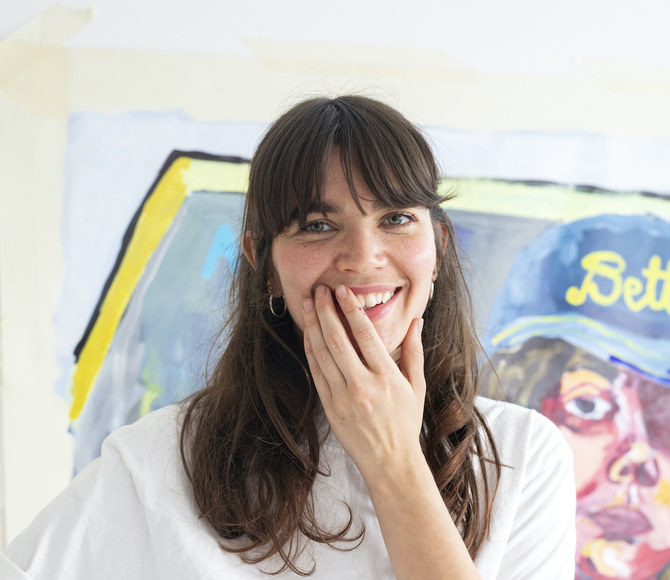
The Finnish-Tunisian painter discusses her vivid multilayered piece, completed under quarantine in Tunis.
This is a breakfast scene from last summer, when my friend Petra was visiting my studio in Tunisia — a place that is very significant to my work.
My representative and I usually think about the titles of my works and we started researching the name ‘Petra.’ It’s a town in Jordan and it used to once be a great metropolis. And I thought that’s such a good metaphor for what I’m feeling about the world now: We thought that our whole world was something so great, but then it can easily be shaken by a pandemic. When you look back at the history of great metropolises, they, in the end, have come to ruins.
To me, there’s also the personal way of thinking about this situation: you understand that something needs to break in order for something new to come out of it. The whole world is now in a situation where everybody’s plans are cancelled and they have to rethink things.
The ‘satellite image’ part represents the table, and its shapes can indicate that it kind of looks like Earth, as if it’s taken from above. I don’t really know why I love using bold and bright thick layers of color, but for me, color is always something that has so many nuances. And now that I can paint, and manipulate the colors and the shapes, there’s just something that’s magical about it.
The colors are happy ones, but sometimes the subjects are not necessarily. I don’t want to just create beautiful images. Personally, I need to have a story.
I can’t really paint if I’m not feeling good, but that doesn’t mean that I’m only painting happy things. With this particular painting I struggled a lot, because it looked good but I felt like it wasn’t ready.
So I kept changing some of the colors and shapes but then I had to end up changing everything. When it was finally ready, I just felt that all the pieces of the puzzle are complete and there’s not even a doubt about it. It was kind of like when you fall in love with someone; you just know.
source/content: arabnews.com (headline edited)
___________
Dora Dalila Cheffi is Tunisian-Finnish multimedia artist. (Supplied)
Moroccan actress Nisrin Erradi will represent Morocco at the 10th edition of the Sotigui Awards.
The Academy of African and Diaspora Cinematic Arts announced the list of nominees, featuring Erradi as Morocco’s representative, for this prestigious celebration of African cinema, which takes place from November 12-15 in Ouagadougou, Burkina Faso.
Erradi competes alongside representatives from 19 other nations for the Sotigui d’Or, the ceremony’s top honor. Her nomination also puts her in contention for the 2025 African Public Sotigui Award.
Rising star of Moroccan cinema
Born on August 6, 1989, Erradi has built an impressive career in both Moroccan and international cinema, starting her performance in theater at age six and later studying at the High Institute of Theatrical Arts and Cultural Animation (ISADAC) in Rabat.
Erradi’s experience in ISADAC allowed her to discover her passion for cinematic storytelling through the works of American playwright Tennessee Williams.
The actress has earned recognition across multiple international film festivals.
Most recently, her role in “Everybody Loves Touda,” directed by Nabil Ayouch, earned her the “Artistic Expression” award at the 30th MedFilm Festival in Rome.
Erradi’s breakthrough came with notable performances in films including “Adam” in 2019, “Catch the Wind” in 2017, and “Jahilya” in 2018.
Her international acclaim extends beyond Europe. Erradi cemented her reputation as one of Morocco’s most promising cinematic talents by winning the Best Actress Award at the Durban International Film Festival in South Africa.
This year’s edition of Sotigui Awards focuses on the theme “African Cinema Facing the Challenges of Sexual Harassment: From Indignation to Action.” The theme demonstrates the ceremony’s commitment to addressing important social issues through the film industry.
Festival director Apolline Traoré said: “For the 10 years of the Sotigui Awards, there will be many surprises. We invite you in November to see the innovations. It will be something extraordinary.”
For Erradi, the nomination represents another milestone in a career that continues to bridge Moroccan and international cinema, reflecting the growing influence of North African talent on the global stage.