Arabs & Arabian Records Aggregator. Chronicler. Milestones of the 25 Countries of the Arabic Speaking World (official / co-official). AGCC. MENA. Global. Ist's to Top 10's. Records. Read & Enjoy./ www.arabianrecords.org
The African literary world is celebrating as Sudanese author Leila Aboulela receives the 2025 PEN Pinter Prize. The announcement was made at English PEN’s summer party, where actors Khalid Abdalla and Amira Ghazalla brought Aboulela’s words to life with powerful readings from her work.
Aboulela will officially receive the award on October 10 at the British Library in London. At this ceremony, she will also reveal her choice for the PEN Pinter Writer of Courage award, an honor reserved for an author “active in defence of freedom of expression, often at great risk to their own safety and liberty.”
In a moving statement, Aboulela reflected on the significance of this recognition:
“This comes as a complete and utter surprise. Thank you English PEN and the judges for considering my work worthy of this award. I am honoured to win a prize established in memory of Harold Pinter, a great writer who continues to inspire so much loyalty and consistent high regard. For someone like me, a Muslim Sudanese immigrant who writes from a religious perspective probing the limits of secular tolerance, this recognition feels truly significant. It brings expansion and depth to the meaning of freedom of expression and whose stories get heard.”
This year’s judges include Ruth Borthwick (British arts administrator and literature executive), Mona Arshi FRSL (award-winning British poet and novelist), and Nadifa Mohamed FRSL (Somali-British novelist). Mohamed praised Aboulela’s work for its “commitment” to the “lives and decisions of Muslim women,” how she centers both their “struggles and pleasures with dignity.” She also noted the timeliness of such a work: “In a world seemingly on fire, and with immense suffering unmarked and little mourned in Sudan, Gaza, and beyond, her writing is a balm, a shelter, and an inspiration.”
Aboulela is a prominent voice in the global literary space for her celebration and examination of the lives of Muslim women. Her writing has been translated into 15 languages. She has published 11 books, with River Spirit, Lyrics Alley, and Translator gaining high critical acclaim. She is also know for being the inaugural winner of the Caine Prize for African Writing when it was launched in 2000, an award that would go on to define 21st century African fiction.
The PEN Pinter Prize, established in 2009, honors writers of outstanding literary merit who, in the spirit of Harold Pinter, cast an “unflinching, unswerving gaze upon the world” and display a “fierce intellectual determination to define the real truth of our lives and our societies.” Their work draws public attention to literature that engages with contemporary realities and injustices. Past African recipients include Chimamanda Ngozi Adichie (2018) and Tsitsi Dangaremgba (2021).
Congrats to Aboulela! This is a well-deserved win. Her work truly challenges the boundaries of whose stories are heard and brings a whole new meaning to the idea of freedom of expression in a way that makes sense for our time.
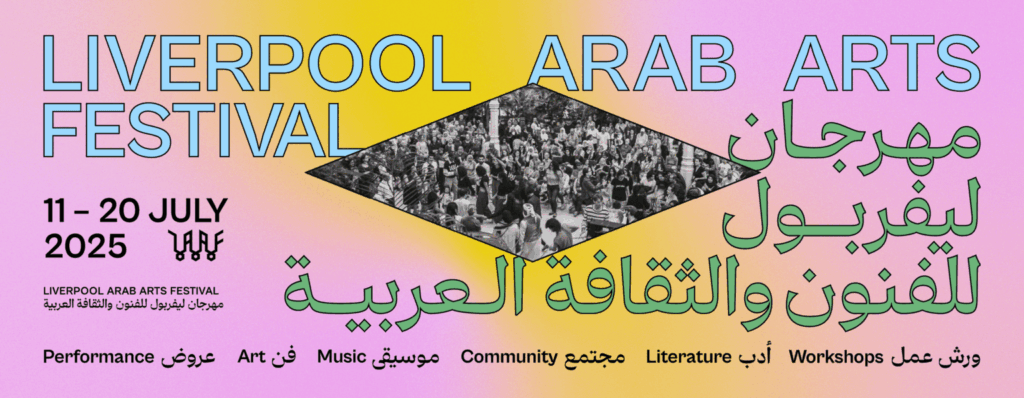
The Liverpool Arab Arts Festival, or LAAF, the UK’s longest-running annual celebration of Arab arts and culture, returns this month with a theme that feels both timely and timeless: “Nostalgia.”
Now two decades in, the festival has grown from grassroots beginnings into an internationally recognized celebration.
Running through to July 20, this year’s program explores how memory, heritage and longing shape artistic expression across the Arab world and its diasporas.
The dynamic, bilingual line-up spans film, music, literature, performance, food and family activities — all underscored by deeper reflections on identity, loss and cultural continuity.
Arab News spoke with Taher Qassim, originally from Yemen, who founded LAAF in 1998 as a community-led effort to foster cultural pride and preserve Arab identity in Liverpool.
“The theme of ‘nostalgia’ is a reflection of both how far we’ve come and where we began,” Qassim said. “Twenty-three years ago, we set out on a path that was uncertain but filled with excitement and purpose. We knew we wanted to create something that represented the Yemeni and Arab presence in Liverpool, but we didn’t yet know how to express it.”
What began as a handful of cultural activations has since evolved into a platform for Arab artists. “From those humble beginnings … the festival began to blossom,” he said. “Today, we proudly offer a platform to artists from across the Arab world, Europe, the US, and beyond — something we could only have dreamed of.”
Two events stand out for him: ‘Arabs Are Not Funny’ and ‘The Book of Sanaa.’ The former, he says, “directly challenges the long-held stereotype that Arabs lack a sense of humor. It’s refreshing, bold and liberating — exactly what the festival stands for.”
The latter brings together literature, poetry, food, and a model of Yemen’s historic capital.
“The richness of this event would’ve felt like a fantasy to us two decades ago. Now, it’s a reality — something we’ve made possible through years of dedication and community.”
Qassim, who was awarded an MBE (Member of the Order of the British Empire) in 2008 for services to community cohesion, handed over the festival’s leadership to his daughter, Afrah, who now steers LAAF with the same vision and care.
Today, LAAF is no longer seen solely as a festival for the Arab community. “That perception has shifted dramatically,” Qassim said. “People from all backgrounds and ages attend and engage. The festival has become a space for dialogue, curiosity and connection.” As he put it, “Conversations happen naturally — before, during and after events.”
One event he hopes visitors will not miss is the now-iconic “Family Day” at the Palm House in Sefton Park. “It’s become the signature event of the Liverpool Arab Arts Festival — our legacy day,” he said. “Families travel from across the UK, Europe, and even further afield to be part of it. The atmosphere is joyful, welcoming, and truly inclusive … a vibrant, heartwarming celebration of Arab culture at its best.”
Some events require tickets, but “Family Day” — an afternoon of music, crafts, performances and community — is the grand finale and free to all.
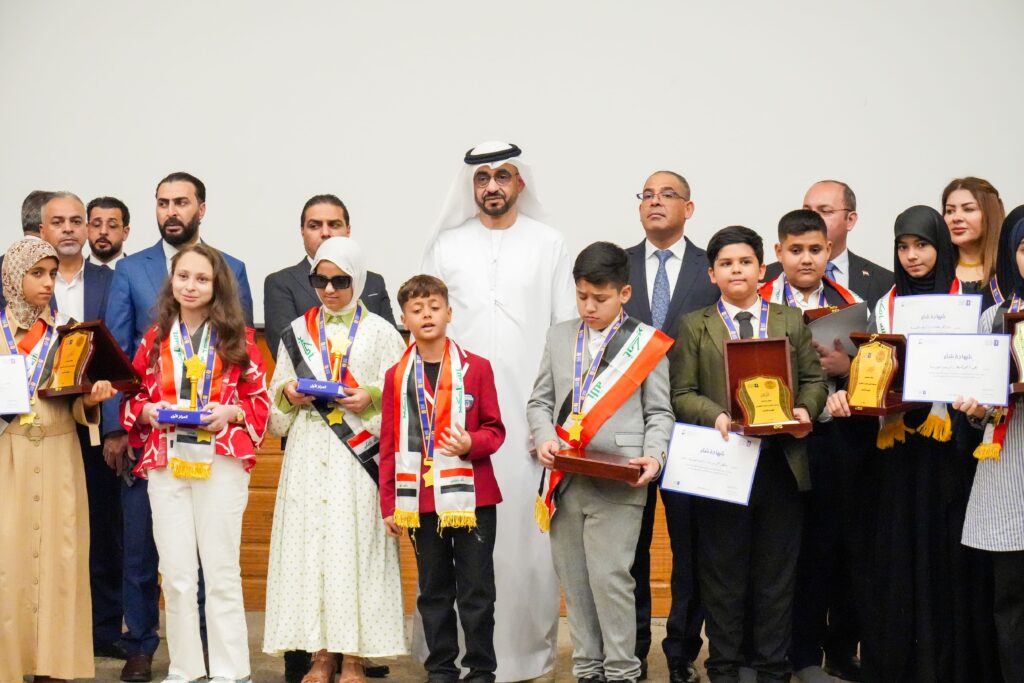
Student Aisha Nizar Nazim won the title of champion of the ninth edition of the Arab Reading Challenge in Iraq, after qualifiers in which 1,339,270 students from 38,100 schools participated, under the supervision of 16,310 supervisors, who contributed to the success of the ninth edition of the largest reading event of its kind in the Arabic language in the world, organized by the Mohammed bin Rashid Al Maktoum Global Initiatives Foundation since its launch in 2015.
Student Aisha Nizar Nazim, a seventh-grade student at Zaha Hadid School for Excellence in Nineveh, was announced as the winner during the closing ceremony of the ninth edition of the Arab Reading Challenge, which was held in the Iraqi capital, Baghdad, in the presence of His Excellency Dr. Ibrahim Namis Al-Jabouri, Minister of Education; Dr. Adnan Al-Sarraj, Advisor to the Prime Minister for Education Affairs; Mohammed Dayea Al-Azzawi, Undersecretary of the Ministry of Education for Administrative Affairs and Chairman of the Higher Committee; and Mr. Mohammed Saleh Al-Taniji, Acting Charge d’Affaires.
At the UAE Embassy in Baghdad, Dr. Fawzan Al Khalidi, Director of Programs and Initiatives at the Mohammed bin Rashid Al Maktoum Global Initiatives Foundation, participated, along with a number of officials and educators in charge of the Arab Reading Challenge initiative, and a large crowd of parents of the participating students.
The closing ceremony also witnessed the announcement of Maria Hassan Ajeel, a fifth-grade student at Al Fara’a Girls School in the Salah al-Din district, as the winner of first place in the People of Determination category, out of 450 students who participated in the qualifiers
The list of the top ten finalists from which the judging committees selected student Aisha Nizar Nazim as the champion of the ninth Arab Reading Challenge at the level of the Republic of Iraq, included: Muntadhar Ahmed Mardan from the fifth grade at Al-Insaf School in the Karbala region, Akram Khalil Abdullah from the tenth grade at Al-Dhakirin Intermediate School (Kirkuk), Fatima Muhammad Abdul-Amir from the eleventh grade at Shams Al-Hurriyah Preparatory School (Najaf), Yusr Hamza Farhan from the eleventh grade at Al-Nabaa Al-Azim Secondary School (Qadisiyah), Rawan Muntadhar Mansour from the tenth grade at Haifa Intermediate School for Girls (Babylon), Hadi Hassan Hadi from the eleventh grade at Al-Nahrawan School for Boys (Rusafa 3), Aya Ziad Subhi from the eleventh grade at Al-Rafidain School (Kirkuk), Hussein Ali Ahmed from the tenth grade at Al-Dhakirin School (Kirkuk), and Haider Ali Abdul-Aziz from the seventh grade at Al-Muhwebin School (Najaf).
The ninth edition of the Arab Reading Challenge initiative achieved a record participation of 32 million and 231 thousand students from 50 countries representing 132,112 schools, under the supervision of 161,004 supervisors. His Excellency Professor Ibrahim Namis Al-Jabouri, Minister of Education of the Republic of Iraq, praised the vital role played by the Mohammed bin Rashid Al Maktoum Global Initiatives Foundation in empowering new Arab generations to acquire the knowledge, sciences, and skills necessary to build the future. He pointed to the successive successes achieved by the Arab Reading Challenge initiative in this context, and its tangible impact in spreading the culture of reading and developing the potential of Arab students.
He said: “We are proud of this new participation in the Arab Reading Challenge initiative. 133,920 students, through their interaction with this knowledge competition and their outstanding performance, have proven the development of the educational and cultural landscape in Iraq and the effectiveness of the plans put in place by the Ministry of Education to advance students’ levels and enhance the status of the Arabic language, in line with our rich cultural heritage and the creativity of the people of Iraq in various fields, thus strengthening our confidence in a brighter tomorrow for our country and the Arab nation.
Dr. Ibrahim Al-Jubouri extended his congratulations to student Aisha Nizar Nazim, all the winners, participating students and their families, as well as to the schools and educational staff across Iraq. He extended his thanks to the Mohammed bin Rashid Al Maktoum Global Initiatives Foundation and everyone who contributed to the success of the ninth round’s qualifiers.
Dr. Fawzan Al Khalidi affirmed that the Arab Reading Challenge initiative continues to fulfill its mission of spreading the culture of knowledge, providing the means for rising Arab generations to enhance their capabilities, hone their talents, and strengthen their connection to the Arabic language, thus providing them with the visions and tools necessary to revive Arab civilization and contribute effectively to the development of Arab societies.
The Director of Programs and Initiatives at the Mohammed bin Rashid Al Maktoum Global Initiatives Foundation praised the wide Iraqi participation in the qualifying rounds of the ninth edition of the Arab Reading Challenge, saying: “We greatly appreciate the participation of more than 1.3 million students in the ninth edition, which reflects the great efforts made by the Ministry of Education in the sisterly Republic of Iraq, and those concerned with cultural affairs and Iraqi society to motivate students to read. These efforts represented a significant contribution to the achievement of the ninth edition, in which more than 32.2 million students from 50 countries around the world participated.”
On behalf of the Mohammed bin Rashid Al Maktoum Global Initiatives Foundation and the Arab Reading Challenge, Dr. Fawzan Al Khalidi congratulated the ninth edition’s champions in Iraq and all the participants. He also thanked the Iraqi Ministry of Education and everyone who helped the students advance to the ninth edition’s qualifying rounds.
The Arab Reading Challenge, launched in the 2015-2016 academic year under the directives of His Highness Sheikh Mohammed bin Rashid Al Maktoum, Vice President and Prime Minister of the UAE and Ruler of Dubai, aims to foster a comprehensive reading and knowledge movement, instill a culture of reading in Arabic as a language capable of keeping pace with all forms of literature, science, and knowledge, and encourage young generations to use Arabic in their daily interactions. It also aims to develop mechanisms for understanding and self-expression in fluent Arabic, and foster creative thinking skills.
The challenge seeks to enhance the importance of cognitive reading in building self-learning skills and fostering a value system for young people by exposing them to the values, customs, and beliefs of other cultures. This instills the principles of tolerance, coexistence, and acceptance of others, and encourages dialogue and cultural and human openness.
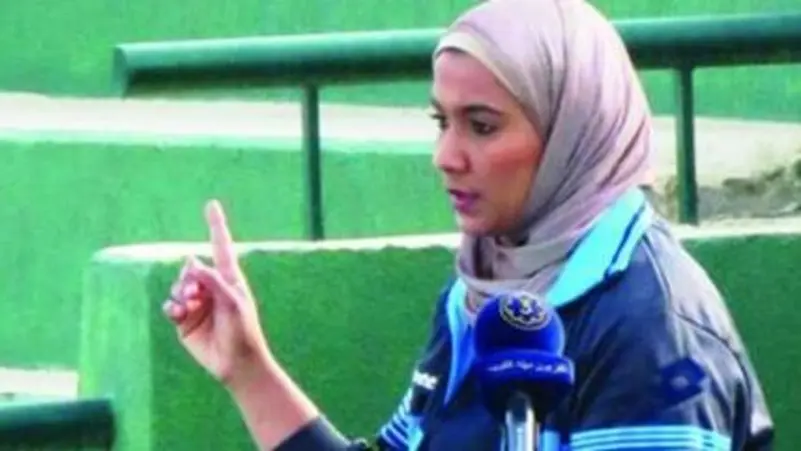
Kuwaiti line umpire Aseel Shaheen was one of the 350 people selected to officiate in the main round of the prestigious tournament.
She is making waves at the All England Club this year after becoming the first Arab woman to officiate in the tournament.
Kuwaiti line umpire Aseel Shaheen was one of the 350 people selected to officiate in the main round of the prestigious tournament.
“It’s an indescribable feeling being here. It’s something big, it’s a challenge. I’m the first female from the Arab world to be an umpire at Wimbledon,” Shaheen, who is on the waiting list for the U.S. Open, told UAE sports paper Sport360.
“I was worried that they wouldn’t accept me because I wear a hijab, but on the contrary, they really accepted me,” she said.
“London is quite open towards hijab, but maybe it’s not too common around the tennis world. But me wearing the hijab and working on court during a tennis match at Wimbledon is a sign that the world is starting to accept us more,” the former swimmer and coach added.
Shaheen, who started officiating classes in 2002 said that reaching her position was a “challenge … because they would always nominate the guys and ignore me.”
“I told them I wanted to be an international umpire, I have the qualification and I have the language skills, because I speak good English. So I went to officiating school and I became a white badge in 2011.”
Last year, Shaheen gained experience of working in the Wimbledon qualifiers.
US Qatari artist and writer Sophia Al-Maria has been announced as the recipient of the 2025 Frieze Artist Award, one of the art world’s most highly anticipated annual commissions.
The award is part of Frieze London, a leading international art fair that will return to Regent’s Park from Oct. 15-19, bringing together more than 280 galleries from 45 countries.
Presented in partnership with Forma, the award supports early- to mid-career artists in debuting new works. This year, Al-Maria will perform “Wall Based Work (a Trompe LOL),” a live stand-up comedy show held daily inside the fair tent.
The work marks Al-Maria’s first attempt at stand-up, in which she will blend sharp humor with her long-standing interest in mythology, empire and pop culture.
“In partnership with Forma, we are proud to continue supporting artist-centered programming,” said Eva Langret, director of Frieze EMEA. “Al-Maria’s debut stand-up promises a collective experience exploring vulnerability, creativity, shared anxieties and LOLs.”
Meanwhile, Chris Rawcliffe, artistic director at Forma, said: “By wielding humor as a tool for survival, Al-Maria not only provokes reflection but actively reshapes the cultural conversation … Al-Maria is more than an artist and critic, she is a catalyst for change, and an indispensable voice in both the art world and the wider social landscape.”
Al-Maria’s proposal was selected by a jury of leading industry professionals, including curator and museum consultant Lydia Yee and the artistic director of exhibitions at Ikon Gallery, Melanie Pocock, artistic director of exhibitions at Ikon Gallery, as well as Langret and Rawcliffe.
Based in London, Al-Maria works across drawing, collage, sculpture, film and writing. Her practice is unified by a focus on storytelling and mythmaking, often reimagining histories and envisioning speculative futures. Her work has been shown at major institutions and biennales, including the Gwangju Biennale, the New Museum and Whitney Museum in New York, the Venice Biennale, and Tate Britain.
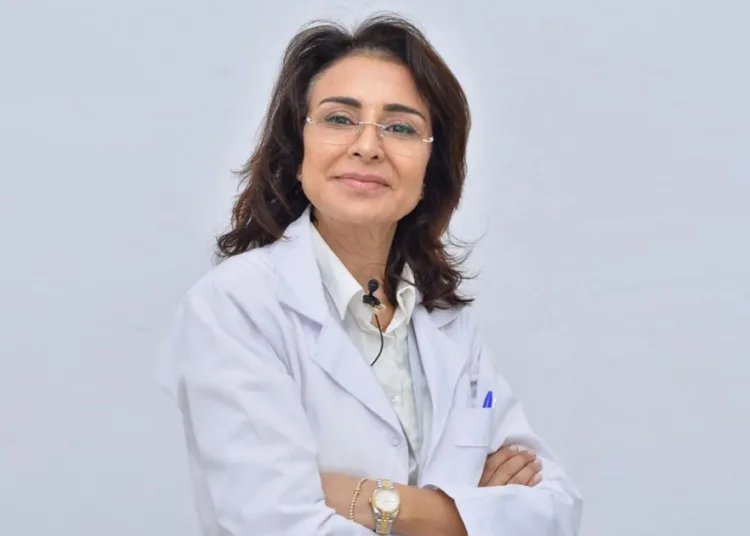
Zouaki made history in 2023 as the first Moroccan to join the Royal Academy of Pharmacy in Catalonia.
Moroccan biologist Jinane Zouaki has been appointed as an academic corresponding member of the Ibero-American Academy of Pharmacy.
Her appointment marks a big milestone, as she is the first Moroccan, Arab, and African woman to receive this honor. The official ceremony took place on Tuesday at the Faculty of Pharmacy in Granada, Spain. The event gathered many scientists from Spain, Portugal, Latin America, and Morocco.
In her speech to the academy, Zouaki spoke about her history of pharmacy in Morocco. She outlined the country’s recent efforts to strengthen its health sovereignty under the leadership of King Mohammed VI.
She explained that this national strategy has helped Morocco become a leading industrial hub and a strong, competitive player in both regional and international healthcare sectors.
Speaking to Morocco’s state news agency MAP, Zouaki shared her pride and gratitude for joining such a prestigious institution. She said the recognition is not only a personal achievement, but also a proud moment for Moroccan women and for the country as a whole.
This recognition contributes to Morocco’s scientific presence on the international stage, she added.
Originally from the northern city of Tetouan, Zouaki holds a doctorate in pharmacy. In 2022, she became the first Moroccan and African to receive the Medal of Privilege from the University of Granada, a high honor that celebrates her long journey in education and biomedical research.
Zouaki also made history as the first Moroccan to join the Royal Academy of Pharmacy of Catalonia.
During the COVID-19 pandemic, she volunteered to help medical teams. At her molecular biology lab in Saniat Rmel Hospital in Tetouan, she worked on COVID-19 testing and helped train healthcare workers.
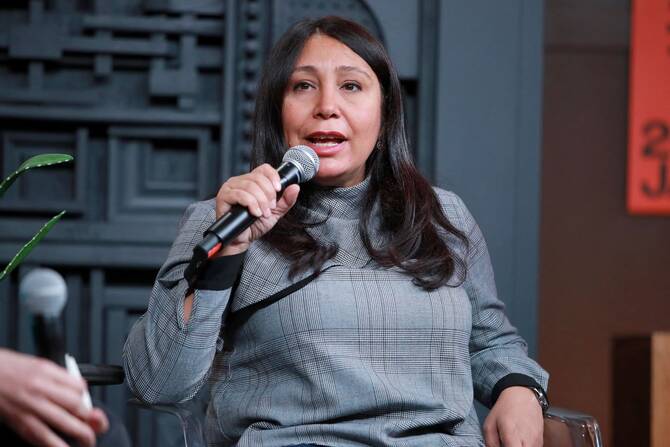
Pioneering Saudi filmmaker Haifaa Al-Mansour has been appointed to the Academy of Motion Picture Arts and Sciences’ Board of Governors, the Red Sea Film Foundation announced on Instagram.
“As one of three newly named governors-at-large, Al-Mansour will represent the Directors Branch and bring her singular voice, vision, and global perspective to the Academy’s leadership for the 2025–2026 term and beyond,” they captioned the post.
“An incredible milestone for one of Saudi Arabia’s most celebrated filmmakers. We’re proud to see her continue shaping the future of cinema on a global stage.” In 2012, Al-Mansour made history as she released her first feature film “Wadjda.” It was the first feature film shot entirely in the Kingdom and the first feature-length film made by a female Saudi director.
Over the years, Al-Mansour has also become one of the most in-demand television directors in Hollywood, helming episodes of hit series including “Archive 81,” “City of Fire,” “Tales of the Walking Dead,” and “Bosch: Legacy.”
In 2019, Al-Mansour’s feature film “The Perfect Candidate” was submitted as Saudi Arabia’s official entry for the International Feature Film Award at the 92nd Academy Awards, but it was not nominated.
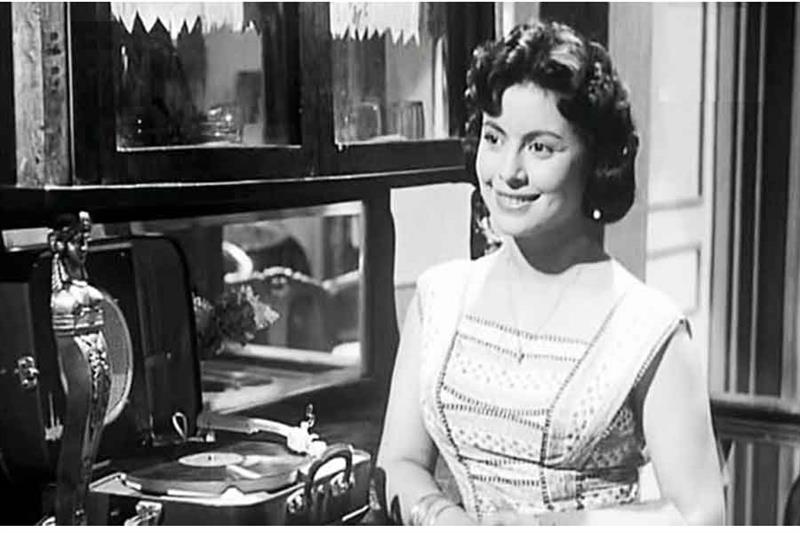
19 June marks 7th death anniversary of Amal Farid (1938-2018), an iconic Egyptian actress who captured hearts with her elegance and innocence.
Amal Farid was born on 12 February 1938 in Cairo’s Abbassiya district.
Farid’s career was launched at the hands of Baba Sharo (Mohamed Mahmoud Shaaban) in the early 1950s, when she was hired to work on his children’s radio show.
She was recommended by writers Mostafa Amin and Anis Mansour to appear in her first movie Mawed Maa El-Saada (A Date with Happiness), with mega star Faten Hamama in 1954.
This was soon followed by roles alongside the greatest stars of her time—most notably Abdel Halim Hafez, with whom she shared the screen in the classic film Layali El-Hob (Nights of Love, 1955), marking beginning of a connection that stirred rumors of a relationship between the two.
The starlets for whom Abdel-Halim sang in movies were very few. Amal Farid was among them, however, and she was envied by almost every girl in the Arab world for decades after Abdel-Halim sang Kefaya Norak Alaya in the film, where he and Farid danced in an iconic romantic scene.
Farid said in interviews that it was Abdel-Halim who asked for her by name to star alongside him in the movie.
Farid, who was known for her elegant and convincing acting style, worked most frequently alongside Ahmed Ramzy and the famous comedian Ismail Yassin.
She was fortunate to find directors who were able to utilise her talent in various roles. Such directors include Fateen Abdel-Wahab, Salah Abou Seif, Kamal El-Sheikh and Hussein Helmy El-Mohandes.
Farid was not always the main starlet in movies, but her presence was always felt, and she always made her mark with her convincing performance.
Director Henry Barakat brought Farid out of the pure girl role in Banat El-Yom (1957), where she embodied the personality of a spoiled, selfish girl. In the film, she provokes the hatred of the audience when she tries to spoil her sister’s love affair a nobleman played by Abdel-Halim, whom she accuses of trying to rape her out of jealousy.
The role was a surprise when the movie came out in 1957, but critics appreciated her performance and recognised the talented, capable and credible actress.
Farid’s filmography includes Banat El-Yom (1957), Seraa Maal Hayat (1957), Min Agl Emraa (1959), Ismail Yassin Fil Tayaran (1959), Banat Bahri (1961), Zekrayat El-Talmaza (1965), and Geziret El-Oshak (1968).
Farid gave up on her acting career in the late 1960s and moved to live with her husband in Moscow. She returned to Egypt a decade later and received a number of smaller roles, but her film career never picked up with the same strength.
Farid spent her final years in a home for the elderly in Cairo, and went through surgery months before her passing on 19 June 2018 at the age of 80.
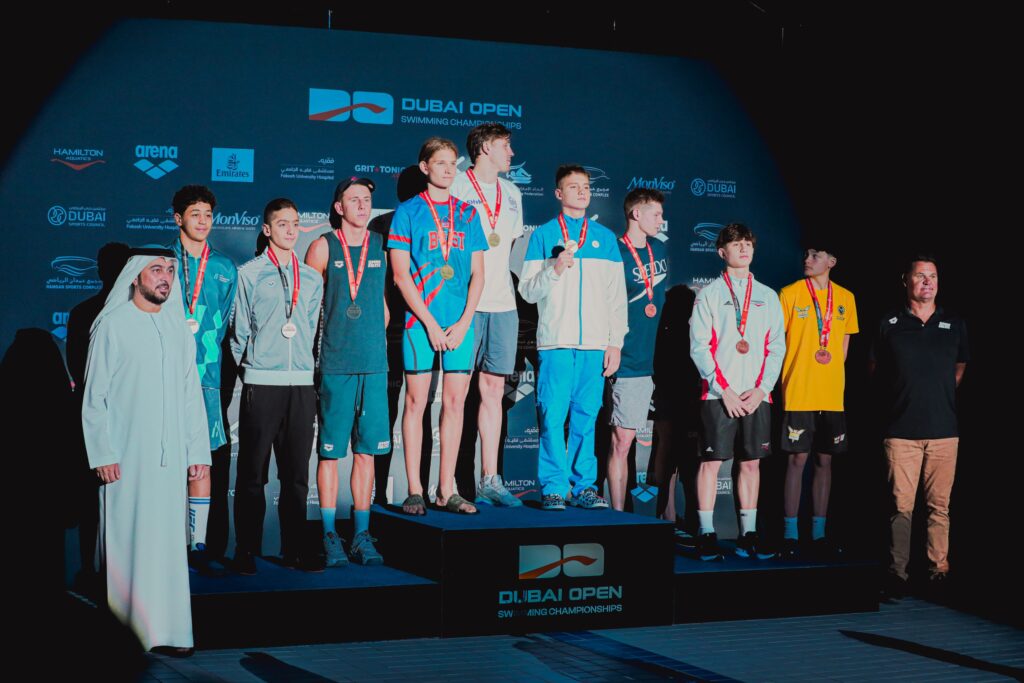
The Championship, which was held with participation of huge numbers of Olympic & world champions, took place at Hamdan Sports Complex and organized by Hamilton Aquatics and ESM Academy in collaboration with the Dubai Sports Council, as part of the Council’s policy to attract & develop sports talents, and in line with Dubai Government’s vision to attract & develop talents in all fields.
The Arab male & female swimmers have attained new records at the level of their national federations during this Championship. In this regard, the Tunisian swimmer Habiba Belghaith has set a new Tunisian record in the 50 M breaststroke (women’s category) with a time of 32.35 seconds, surpassing the previous Tunisian record of 32.68 seconds which was achieved by her compatriot Sara Lajnef.
Tara Aloul of Jordan finished the 200 M race (women’s individual category) within a time of 2:24.78 minutes to break her previous record of 2:25.56 minutes.
Zaid Al-Saraj from Saudi Arabia has attained a new Saudi national record in the 50 M freestyle (men’s category) with a time of 23.22 seconds, surpassing the previous record of his compatriot Yousef Bu Arish with 23.35 seconds.
The Lebanese swimmer Lynn Al-Hajj achieved a new record for the Lebanese open swimming in the 200 M breaststroke (women’s category), as she recorded 2:32.74 minutes, breaking her previous record of 2:33.22 minutes.
The British Olympic champion Ben Praud secured 1st place in the 50 M freestyle with a time of 21.99 seconds. The Switzerland’s Noé Pont, the bronze medalist in the 100 M butterfly at Tokyo Olympics 2020 and three-time world champion, has opened his 2025 season by setting a new world record of 22.83 seconds in the 50 M butterfly during the Championship.
The Lebanese swimmer Lamar Al-Hajj from Decathlon Club was named as the Best Junior Female Swimmer, while Santiago Valbuena from Dhahran Youth Swimming Club in Saudi Arabia won the Best Junior Male Swimmer’s Award. The All-Stars Swimming Academy from the UAE claimed the Best Junior Club’s Title.
The Netherland’s Tessa Jelly from Feyenoord Albion Swimming Club won the best swimmer’s title in the women’s open category, besides the short distances’ title. The Netherlands’ Shawn Nieuwold from Feyenoord Albion Swimming Club won the best swimmer’s title in the men’s open category, and gained the short distances’ title. “My Swim Club” from Dubai won the Best Club’s title in the Open Category.
Distinctive Participation:
Dubai Open Swimming Championship was held with distinctive participation of 1,294 male & female swimmers who competed in 136 different races in juniors & professionals categories, represented 122 global clubs of 30 countries from the various continents of the world; these are: Algeria, Oman, Australia, Pristina, Azerbaijan, Qatar, Bahrain, Romania, Belarus, Russia, Egypt, Scotland, England, Serbia, Estonia, Seychelles, Faroe Islands, South Africa, India, Switzerland, Iran, Tanzania, Jordan, Thailand, Saudi Arabia, Turkey, Kuwait, Lebanon, Uganda, in addition to the UAE.
Olympic Champions:
The Championship witnessed participation of elite of Olympic champions & world record’s holders, besides group of elite of swimmers from various countries of the world, and therefore the event has become one of the top competitive swimming championships. Among the prominent participants in this Championship were the British Olympic champion Duncan Scott, winner of 8 Olympic medals & 20 global medals / the Swiss Noy Bonte, who gained Olympic bronze medal and 19 world medals / the British world champion Ben Praud, the winner of Paris Olympics 2024 silver medal besides 29 world medals / the Canadian Marie-Sophie Harvey, winner of 21 world medals /Lara Van Niekerk, winner of two world medals.
Model & Lifestyle Influencer Nour Arida Joins Serena Williams in Audemars Piguet Campaign.
When Audemars Piguet picked the faces for its 150th anniversary campaign, it chose icons. Nour Arida was the only Arab woman among them.
In the world of luxury watchmaking, Arab women aren’t often on the moodboard. But this year, that changed.
For its 150th anniversary, Audemars Piguet didn’t just call in the usual faces – it summoned a lineup of global icons. Serena Williams. Winnie Harlow. Tamara Kalinic. And, for the first time ever, an Arab woman: Nour Arida.
Draped in AP’s legacy, the Lebanese model-slash-creative-slash-cultural force owned the frame.
“I always try to push boundaries,” Arida says, in what might be the understatement of the year. “It’s like being part of a real family, being part of the AP family.”