Arabs & Arabian Records Aggregator. Chronicler. Milestones of the 25 Countries of the Arabic Speaking World (official / co-official). AGCC. MENA. Global. Ist's to Top 10's. Records. Read & Enjoy./ www.arabianrecords.org
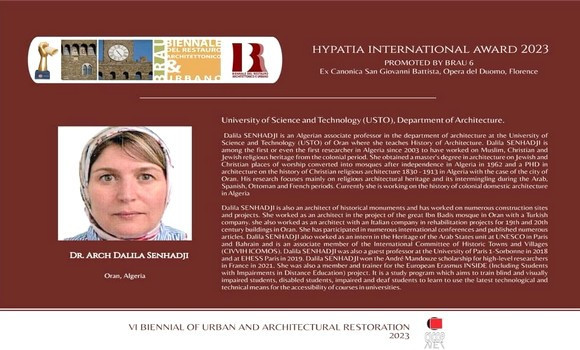
The architect, researcher and associate professor at the university of Science and Technology of Oran “Mohamed Boudiaf” (USTO), Dr. Dalila Senhadji has won the Hypatia International Award at the Biennale of architectural and Urban Restoration in Florence, Italy, for her outstanding academic career, the academician said Saturday.
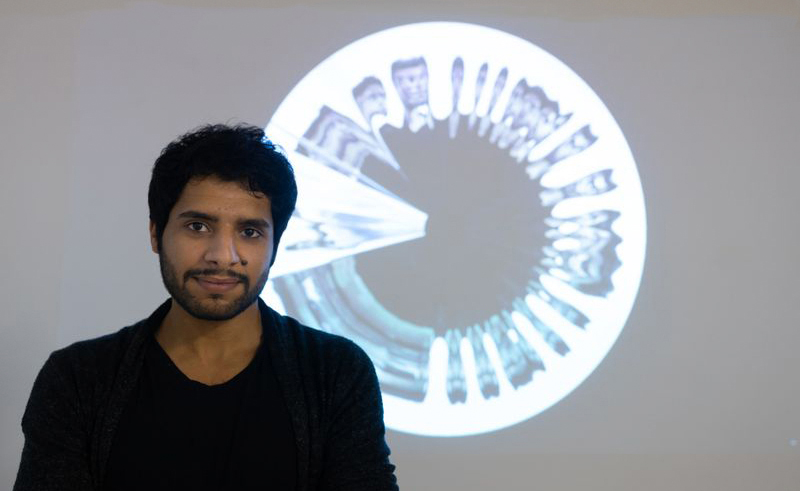
The artist’s award-winning installation will be revealed during the third instalment of the Arts AlUla Festival.
The King Abdulaziz Center for World Culture (Ithra) has announced Saudi artist Obaid Alsafi as the winner of the 6th edition of the Ithra Art Prize, the largest art grant in the MENA region. Alsafi’s winning submission, ‘Palms in Eternal Embrace’, is a large-scale sculptural installation that explores approaches to safeguarding the natural world, focusing on endangered palm trees—a powerful symbol of Arabian landscapes and heritage.
Alsafi, a multidisciplinary artist with a background in computer science, brings a scientific perspective to his creative process, investigating the impacts of the unseen on the visible environment and physical realities.
“I am honoured to receive this year’s Ithra Art Prize and to shed light on the importance of preserving the natural world in the breathtaking setting of AlUla’s natural heritage and oasis landscape,” Alsafi tells SceneNowSaudi. “Challenging the boundaries between the organic and the synthetic, the natural and the cultural, and the human and the non-human. I hope that ‘Palms in Eternal Embrace’ will inspire audiences to reflect on the extinction of a plant group that is so characteristic of our region and foundational to our identity.”
Established in 2017, the Ithra Art Prize provides MENA artists with the opportunity to receive a USD 100,000 award, along with up to $400,000 in funding to bring their ideas to life. This year’s edition, titled “Art in the Landscape,” is a collaboration with Arts AlUla, part of a broader strategic partnership with the Royal Commission for AlUla (RCU).
Alsafi’s ‘Palms in Eternal Embrace’ is set to be revealed during the third instalment of the Arts AlUla Festival on February 8th. The unveiling will include a live performance art piece focusing on the conservation of the biological essence of the palm tree.
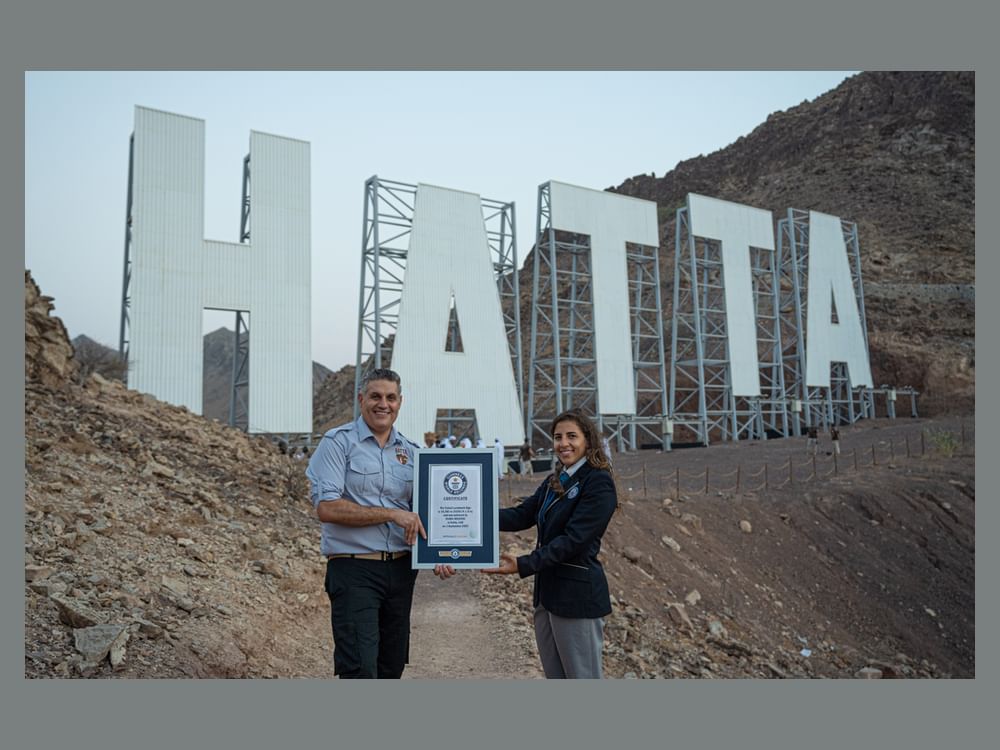
Dubai Holding’s iconic Hatta Sign has garnered international acclaim by breaking the Guinness World Records title for ‘The Tallest Landmark Sign’. Situated atop the Hajar Mountains, the commanding 19.28-metre-tall structure stands as a striking symbol of Hatta’s identity and its status as one of the UAE’s most scenic regions.
The Guinness World Records title will shine a global spotlight on the Hatta region. What was once a local gem is now set to attract international interest, enticing travellers from around the world to experience the enchantment of Hatta firsthand. The heightened attention will help stimulate economic growth, create employment opportunities, and foster local business development, contributing to Hatta’s sustainable growth.
As Dubai Holding’s Hatta Resorts readies itself for opening its upcoming sixth season, the record-breaking Hatta Sign will be a globally recognised attraction that provides visitors a unique backdrop for capturing memorable pictures. Hikers are encouraged to make the ascent to the sign and take in the area’s breathtaking panoramic scenery from a higher altitude.
Hatta’s visitors are welcome to indulge in further adventures at the Hatta Resorts Wadi Hub, the main centre for outdoor activities in the region, including ziplining, mountain biking, rock climbing, zorbing, archery and axe-throwing, with new thrilling activities soon to be introduced in Season 6.
Visitors may also extend their journey with a stay at Hatta Resorts by Dubai Holding and enjoy an array of unique glamping experiences that seamlessly blend nature and culture with its array of outstanding trailers, lodges, domes and caravans. Already impressing visitors with its physical presence, the Hatta Sign now acquires global cultural significance. The landmark serves as a reminder of Hatta’s rich history as well as its newly attained international recognition.
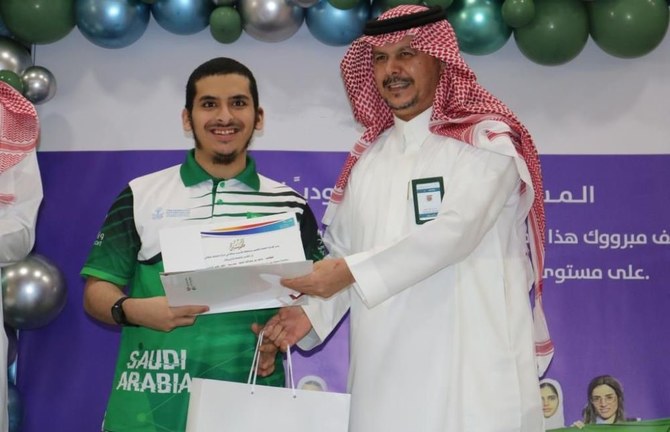
Mujtaba Hussein Salem and Majed Abdullah Al-Majed claimed first place in a World Robot Olympiad final
General director of Al-Ahsa Education Hamad bin Muhammed Al-Issa: This is certainly a win for the Kingdom and its people
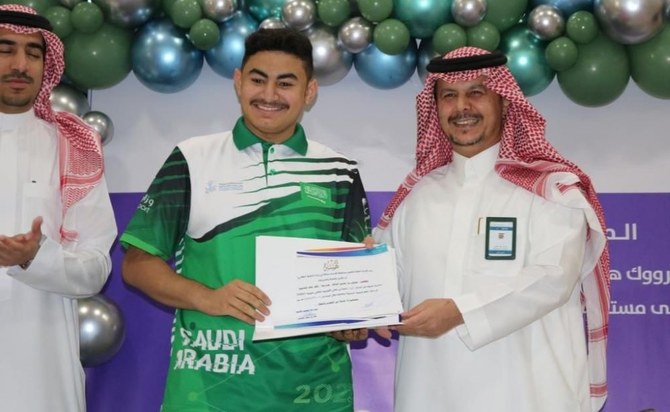
Two Saudi secondary school students have claimed first place in a World Robot Olympiad final in Panama.
Mujtaba Hussein Salem and Majed Abdullah Al-Majed, both from Al-Ahsa, triumphed against student competitors from around the world in the Virtual Robot Challenges category.
Elementary students Fatima Ali Al-Rashid and Fatima Akil Salem finished fifth in the Future Innovators category.
Scores of students in different age groups competed in a variety of categories at the international olympiad, held from Nov. 7-9.
Hamad bin Muhammed Al-Issa, general director of Al-Ahsa Education, described the Saudi students’ performance as a “significant accomplishment.”
Many teams of Al-Ahsa students have performed well while representing the Kingdom in global competitions, he added.
“Not only are our students drawn to the world of artificial intelligence, but they also lead in this field worldwide. This is certainly a win for the Kingdom and its people,” he said.
“To every loyal teacher who has provided support, and to every school principal who has worked hard to unleash the students’ potential in all fields, I hope your efforts will be blessed and I wish you all the best, as such achievements do not happen out of nowhere or by chance, but are the results of dedicated work and innovative students who don’t know the meaning of impossible and can face any challenge.”
Student instructor Khaled Al-Massoud told Arab News that the students’ performance is an “accomplishment for the country.”
The two winners told Arab News that support provided by the Kingdom played a key role in their victory.
Intensive training under the supervision of Al-Massoud “helped us reach the highest levels in the Olympiad,” they added.
source/content: arabnews.com (headline edited)
____________
Mujtaba Hussein Salem and Majed Abdullah Al-Majed, both from Al-Ahsa, triumphed in the Virtual Robot Challenges category. (Supplied)
After years lost in an educational wilderness, the Egyptian-British designer found his niche as a world authority on Islamic art and architecture with noble patrons such as King Charles III.
The Chelsea Flower Show was just some annual event that happened in London as far as Khaled Azzam was concerned, until the day he answered a call from the heir to the throne.
Prince Charles , inspired by two antique Turkish rugs at his residence in Gloucestershire, was on the phone with an unusual brief: “I want you to work with me to design a garden.”
“I thought it was fabulous,” Azzam tells The National. “I’d never designed a garden before in my life so I went to see him at Highgrove House. He’s long been fascinated with Islamic art and architecture, and, because that’s what I practise, we always spoke about such things.
“He said, ‘All these carpets that I live with and love are interpretations of gardens, but I would like to design and build a garden that is an interpretation of carpets. I want to flip it around’.”
So it was that in 2001, among the usual avant-garde displays and emerging trends at the horticultural showcase, the first entry ever submitted by a member of the British royal family instead dug deep into the past.
The classic Islamic charbagh representing the four gardens of Paradise in the Quran was a crowd-drawing triumph yet, when it won a coveted silver-gilt medal, Azzam remembers thinking: “Whoa, that’s crazy.”
In situ ever since at the Highgrove estate, The Carpet Garden is the living incarnation of the two men’s long combined efforts to bring forth new shoots from ancient artistic roots.
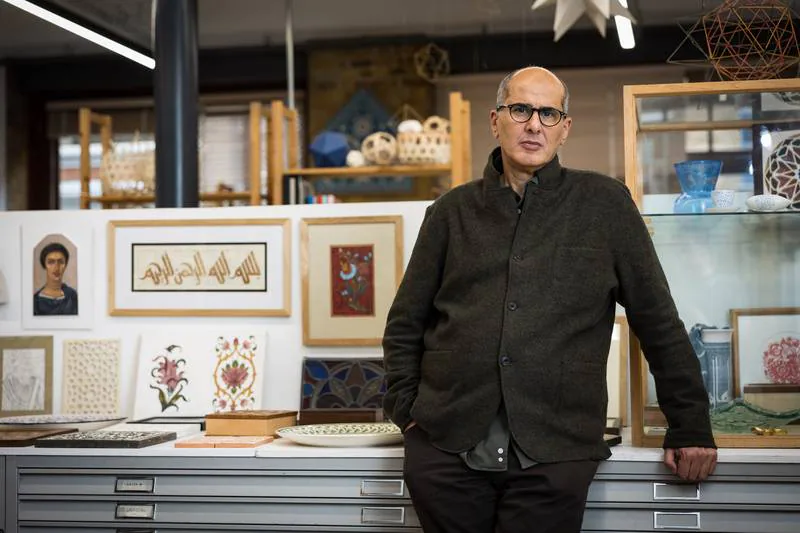
Now, more than 20 years on, Azzam presides as director of the Prince’s School of Traditional Arts that is regarded as a centre for excellence in teaching the geometries held to be the common thread between age-old skills all but abandoned in much of the modern world.
The aim is to nurture patterning techniques such as the kind of inlaid stone workmanship used to create the Cosmati Pavement, the 13th-century mosaic floor on which, fittingly, the throne will be placed during the coronation ceremony for King Charles III inside Westminster Abbey on Saturday.
An extensive network of PSTA outreach programmes has spread across the globe from the core educational base in London to regenerate the cultural heritage of different regions and communities, from Jamaica to the UAE to China.
But, from the outset, the school’s ethos often evoked incomprehension, ridicule and, at times, undisguised animosity from some within the art establishment.
“There were moments that I was very, very worried, saying, ‘if this dies, it dies with us’,” Azzam recalls. “What His Majesty was saying that architecture, cities and education should be about, and how we should deal with the environment, was not commonplace. All those things were seen to be interesting and quaint. We never saw ourselves as being alternative. We were part of what we used to call ‘essential thinking’.
“Very early on, we had this strong bond; we understood exactly what we had to do. Then, I had to understand something. He was a prince, now he’s a king. We’ve had visionaries, we’ve had patrons all throughout history, that is the role of a prince. But my role is to make it happen.”
If the mission was to accumulate centuries of precious creative knowledge for alumni to reinvigorate and, in turn, hand to the next generation then there was one significant impediment.
“There weren’t any masters to teach us,” Azzam says.
The disconcerting discovery came when he went to set up a regional centre in his birthplace in 2005 with the Egyptian Ministry of Culture, Art Jameel and local artisans from whom he had hoped to gain a deeper understanding of tradition.
Instead, Azzam had a moment of transformational thinking that “not everything old is beautiful” — the craftsmen and women, in spite of their evident skills, had for generations been learning by rote.
“I really respect them and their role in the community but some of it was quite shoddy workmanship. They would start telling me, ‘Ah, but you don’t know, I am an eighth-generation carpenter and I learnt this from my grandfather’.
“But, because we came from an academic background and could analyse this stuff, I said, ‘your grandfather made a mistake three generations ago and you’re just repeating that mistake’.”
Most saddening for Azzam, however, was that the artists were stuck perpetually reproducing the same designs over and over again. Without much grasp of the underlying mathematical principles, they were incapable of extending the lineage of their traditional arts and crafts by creating anything new.
“It opened my eyes to the limitations of simply teaching young people through copying the forms of the past. We had to go back to the origin, to deconstruct buildings and understand how they were built. We had to look at certain principles to see what they were about. In a way, it was a voyage backwards.
“Then there was a moment where we started turning around, and now we feel that there is enough of a contemporary heritage to call it a living tradition and move into the future.
“If we’ve been successful in one thing, it’s in really delivering the philosophy into practice. It’s not just talk, it’s about making things, creating this process from the origin to the manifestation.”
That their son would end up running any school, let alone a prestigious art institution for the Prince’s Foundation, would once have been inconceivable for Azzam’s parents, Laila and Omar, who long kept quiet their fears over his prospects.
Young Khaled, despite being widely read and full of curiosity about what was happening in the world, was nonetheless lost within the four walls of a classroom.
“I was always last in the class because I just didn’t understand what was going on at all.
“Although my parents never let on, they admitted it much later, saying, ‘You know, we didn’t think you’d even make it into university’.
“And the fact that I not just got into university but then got a PhD and became involved in education … my brother says it’s a sign of the end of the world,” he says, smiling affectionately at the long-running joke.
It pops up again when we’re discussing Azzam’s receipt of the Lieutenant of the Royal Victorian Order, a knighthood granted by Queen Elizabeth II in 2009, and his speech before Pope Benedict XVI as representative of Muslims at an interfaith forum the following year.
“I don’t know why until this day that I was chosen,” he says. “It’s another sign of the end of the world, according to my brother.”
Azzam puts being such “a terrible student” down to a childhood disrupted by frequent geographical moves but doesn’t rule out an undiagnosed learning difficulty. “In our day, you were just stupid if you didn’t get it,” he says.
Education eventually took its place as the most important part of his working life once he began to understand that the Latin root, educere, means “to draw out of” not “to put into”.
As a consequence of his own difficulties, he feels an enormous responsibility towards those unable to cope with school systems intent on treating students like empty vessels that need filling with facts and figures.
“I became very, very interested in the journey you take a student through to bring what’s in them out to the surface,” he says.
Though born in Egypt, where his mother “always returned to have her babies”, the family lived abroad because of his father’s job as a senior urban planner for the UN.
After a stint in Saudi Arabia, there was a relatively settled period of 10 years in Lebanon until civil war broke out. They struggled on for almost a year until Omar, working in Paris at the time, suggested that the rest of the family join him temporarily: “Just come over for Christmas,” was the gist, “things will die down.”
“We managed to get on a flight one day very, very quickly — just packed a hand bag each and ran off to the airport. We left everything behind, all our books, our toys, our belongings, our clothes and just never went back because the war never ended. We had to rebuild our life. Then England became my home and I’m very grateful.”
This is not quite how his younger self felt when first pitching up late one Autumn afternoon in what was then the “very, very small town” of Cambridge.
“There was nothing to do. In those days, everything shut at five o’clock. It was foggy, cold and damp, and I’d just spent two years in the South of France. I was trying to figure out what I had done wrong.”
The posse of four siblings received a hospitable welcome from the locals and quickly grew to love their adopted home and the architecture lining the cobbled streets.
There was a particularly memorable encounter, surrounded by fluted limestone columns, medieval stained-glass windows and Tudor symbols in King’s College Chapel that would later inform much of Azzam’s work.
Beneath the celebrated fan-vaulted ceiling of the 500-year-old Gothic landmark built by a succession of English monarchs, the teenager made an unexpected discovery: he found himself.
“Physically, I had nothing to do with that place. Culturally, I was an Egyptian who came to England. I wasn’t even an architect yet. I was doing my O-Levels and A-Levels.
“But there was something in me that completely understood that building; the message, the beauty of it.
“I felt I belonged there, that it was part of me. It was a very profound experience that changed my life somehow.”
Arriving at what he says all the great civilisations of the world had known, however, came only with time and experience.
It has been a constant journey of learning with two particular guiding lights along the way. The first was Abdel Wahed El Wakil, the foremost authority in Islamic architecture with whom Azzam subjected himself completely for eight intense years at a “hothouse” of an office in London.
“We had a difficult relationship because he was very demanding but he was my master who taught me everything I know about architecture,” he says. “I just totally understood that this idea of apprenticeship is to give yourself to somebody, and if you find that person, you’re very, very lucky.”
Through El Wakil, he met Keith Critchlow, the renowned geometer and founder of the Visual and Traditional Arts Department at the Prince’s Institute of Architecture, and developed a deep fascination with the properties underpinning the order of nature.
He talks of the intricate chambers of the nautilus shell and the honeycomb built in hives by bees or the movement of planets over time across the night sky, but perhaps his favourite example is the delicate, six-fold symmetry of a single ice crystal.
“All snowflakes are hexagonal because the molecular structure of water is hexagonal yet — and this blows my mind every time I say it — no two snowflakes that fall on the ground are the same.
“There is a principle of unity manifesting variety. All snowflakes start from the same origin but their final form is the record of their journey down to Earth. In a way, that’s us as human beings as well.
“If you look at a DNA structure, the very basic thing that binds us all together, it’s a beautiful spiral that has a certain proportional system and yet we’re all different.”
The firm belief that we all have the same origin is fundamental not only to his work at the school but also as principal of Khaled Azzam Associates, the “little practice” he started in 1991.
It is hard, he agrees, not to lose count of the many architectural projects he has been involved in over the years: mosques like that commissioned by King Abdallah II to commemorate his father, the late King Hussein, in Amman; royal residences, commercial buildings, offices and schools across the Middle East; and, most recently, the master plan launched by Crown Prince Mohammed bin Salman to sustainably develop the historic Al Ula site in Saudi Arabia where he is headed a few days after our interview.
“I’ve been running two careers, that’s why the number of projects looks bigger than it is,” Azzam, now 62, says modestly.
When it’s pointed out that there doesn’t seem to be much spare time weighing on his hands, Azzam concedes that he wouldn’t know what to do with it if he had any. He works all day, never tiring because, well, he doesn’t see it as work.
“I am blessed in my life because I do things I love. I think very, very early on in my career, I just said: I want work to be part of my identity, part of my character — it all has to be one.
“The school has always been somewhere that I found a great sense of nourishment and fulfilment. And it’s very much part of my life. My wife, Mona, complains that they’re my family more than my family at home.”
Home proper is Clapham in south London, where Mona has laid the unshakeable foundation that has made “all this possible”, Azzam acknowledges. Everything is taken care of so that he never has to worry: the house, the well-being of their children, Issam, 24, and Nadia, 19, and the bills “that she knows I won’t pay”.
A few hours before the rest of the family wakes each day, he is already at his desk with a cup of coffee, drawing while looking out across one of London’s largest parks.
“It’s very quiet,” he says. “There’s nobody there, and then you see one person, then two people, and then you see life coming through, and you start having a funny relationship with it. It’s beautiful.”
From his perch, Azzam envies the super fit elderly man who runs around Clapham Common each day, and often wonders with a glint of amusement what the dogs make of their owners diligently picking up after them.
He watches the latest exercise trends come and go with the seasons — the boxing or tai chi or, as with a few years back, “everybody standing on their heads”.
No surprises, though, that after a lifetime eschewing fleeting fashions, he isn’t inclined to join them.
Khaled Azzam concedes that he wouldn’t know what to do with spare time if he had any away from work. ‘I am blessed in my life because I do things I love,’ he says. Photo: Mark Chilvers
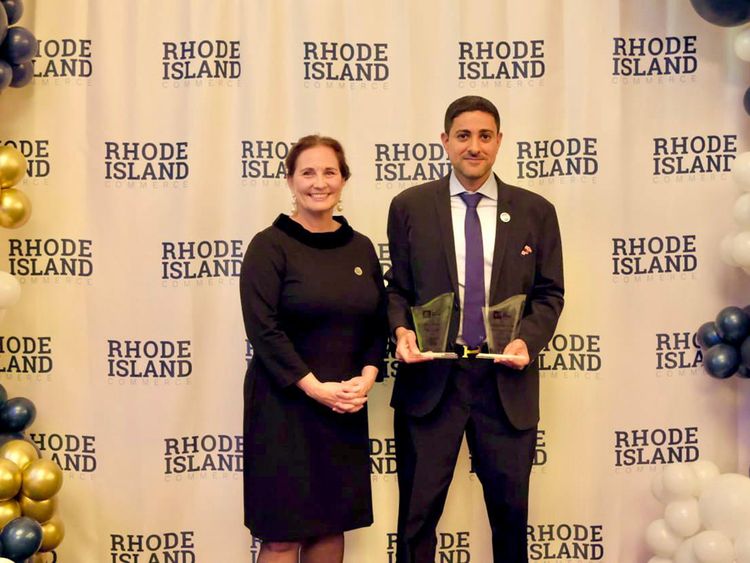
Go Global Awards ceremony was held in the US state of Rhode Island.
Emirati entrepreneur Dr. Khalifa Saif Almuheirbi, Chairman of the Arabian Gulf Investment Group, has achieved a significant global milestone by securing both the Best Man in Real Estate Award and the Best Real Estate Company Award in the World for 2023.
He was awarded at the 2023 Go Global Awards ceremony held in the US state of Rhode Island. The event, organized by the Rhode Island Department of Commerce and the World Trade Council, was attended by distinguished guests, including James Jolson, US Deputy Secretary of Commerce, and Elizabeth Tanner, Rhode Island Secretary of Commerce. The ceremony brought together over 1,200 international economic and commercial figures, as well as ambassadors and representatives from various countries in the United States of America.
Dr. Khalifa Saif Almuheirbi achieved the prestigious Best Man in Real Estate Award worldwide, a category introduced for the first time on the agenda of this annual global event held in one of the most significant capitals each year. During the ceremony, Gina Raimondo, US Secretary of Commerce, delivered a virtual speech, emphasizing the event’s crucial role in promoting global trade and economic activities, and discussing opportunities for economic cooperation among participating companies.
James Goldson, Deputy Secretary of Commerce of the United States of America, also addressed the ceremony, welcoming the participating companies, praising their excellence, and highlighting his ministry’s efforts to encourage investment across various sectors. During the ceremony, Elizabeth Tanner, the Commerce Minister of the State of Rhode Island, extended a warm welcome to the attendees and presented the award to Dr. Khalifa Saif Almuheirbi.
Expressing his pride, Dr. Khalifa Saif Almuheirbi highlighted the significance of receiving the Best Man in Real Estate Award for 2023 during the GO Global Awards ceremony. He explained that this honor marks a significant milestone in his professional career in the real estate field, which began in Abu Dhabi.
Dr. Almuheirbi stated that the award for the Best Real Estate Company in the World for 2023, received by the Arabian Gulf Investment Company, represents the culmination of the company’s efforts in real estate investment over the past years. The company has successfully concluded real estate deals worth billions of dirhams and has expanded its presence by opening representative offices in more than 20 international capitals and cities.
Almuheirbi extended his thanks and appreciation to the wise leadership of the UAE providing him with unwavering support and encouragement. This support has been instrumental in his success in the real estate sector, leading to a series of achievements in his professional and practical career.
Dr. Almuheirbi emphasized that these awards are a tribute to the United Arab Emirates, which provided the young Emiratiwith the capabilities and opportunities necessary for success and business expansion. These opportunities allowed him to establish the Arabian Gulf Investment Company, now recognized as one of the largest investment companies in the real estate sector—both locally and globally. The company has not only expanded its business in various international capitals but has also played a crucial role in attracting global real estate companies to invest in Abu Dhabi and the UAE as a whole.
source/content: gulfnews.com (headlines edited)
_____________
Dr. Khalifa Saif Almuheirbi, Chairman of the Arabian Gulf Investment Group, at the awards ceremonyImage Credit: Supplied
The World Health Organisation (WHO) recently awarded Egypt the Gold Level certificate for eliminating hepatitis C, a chronic viral infection that affects millions of people worldwide.
Egypt is the first country in the world to receive this certification, after reducing its infection rate from 14.7 per cent in 2015 to less than 1 per cent in 2021.
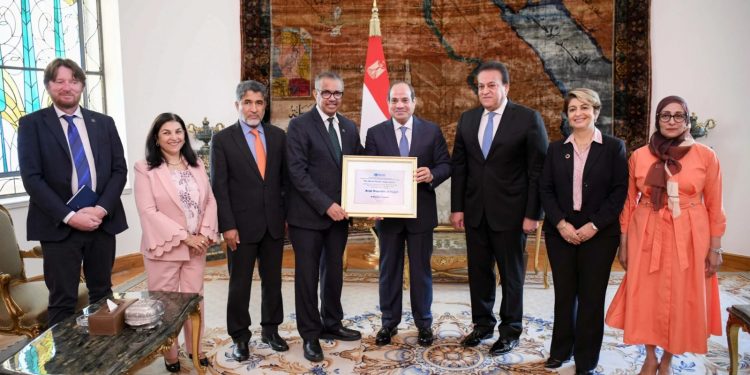
The certificate was presented to President Abdel Fattah El Sisi by WHO director general Tedros Adhanom Ghebreyesus on October 9.
Ghebreyesus praised Egypt’s success story, which he said was achieved in record time and could serve as a model for other countries. He attributed this achievement to the full commitment and personal follow-up of President Sisi, who launched ‘100 Million Healthy Lives’ presidential initiative to eliminate hepatitis C in 2018. The initiative involved establishing treatment centres, providing diagnostic tools, training staff, supporting local production of medicines, and offering free treatment to millions of citizens. The initiative also covered patients with complications of the disease, such as liver cirrhosis and cancer.
President Sisi thanked the WHO and its director general for their sincere support to Egypt’s health sector. He expressed his happiness with the improvement of the health of Egyptian citizens, who had long suffered from this disease.
The Gold level means that Egypt has met the criteria for reducing new infections and deaths caused by hepatitis C to the levels that qualify the country to eradicate the epidemic.
Ghebreyesus hailed Egypt’s remarkable progress, saying: “Egypt has transformed from a country with one of the highest rates of hepatitis infection to a country that has reached the path of eradicating the disease in less than 10 years. This is an amazing journey.”
He added that Egypt has provided the world with a role model for what can be achieved when adopting the latest tools and securing political commitment at the highest levels to use those tools to prevent infection and save lives.
“Egypt’s success should inspire us with hope and motivation to eliminate hepatitis C everywhere,” he concluded.
In 2018, some 63 million people were screened and treated, which is being studied globally, as it is a huge process that was crowned with success, and treatment was offered to those who were infected.
Less than 10 years ago, Egypt had one of the highest hepatitis C prevalence rates in the world. Left untreated, hepatitis C can cause liver disease and cancer, and premature death.
There is no vaccine for hepatitis C, but it can be cured with treatments that cost as little as $60 for an 8 to 12 week course.
Yet globally, 80 per cent of people living with hepatitis C remain undiagnosed, and almost 90 per cent remain untreated.
Egypt has showed the world that this should not be the case.
These achievements exceed the targets WHO has set for achieving gold tier status.
A key factor in the campaign’s success was using locally manufactured direct acting antiviral treatments.
Egypt also scaled up programmes on patient safety, injection safety, blood safety, and harm reduction for people who use drugs.
The WHO supported the Egyptian Health Ministry with technical guidelines and tools, providing a human-rights-based approach to hepatitis C diagnosis and treatment.
Egypt’s success in eliminating virus C is an example for the world of what is possible.
It is not the only health achievement of which Egypt should be proud. It follows Egypt’s validation last year for the elimination of rubella and measles.
The WHO notes with appreciation the ongoing commitment of the Ministry of Health and Population to sustain robust screening, care and treatment services for people with HCV. Since Egypt launched its nationwide campaign, the100 million healthy lives, over 60 million people have been screened and more than 4 million have received treatment. And by doing so, Egypt reduced the incidence of new infections from 300 per 100, 000 in 2014 to 9 per 100, 000 in 2022. This is very close to the ultimate goal of hepatitis C elimination of less than 5 per 100, 000 new cases per year and similar levels for viral hepatitis deaths.
“Egypt is an inspiration to many other countries who are working towards the elimination of hepatitis C, hepatitis B or mother to child transmission of hepatitis B. Similar achievements are within reach of many countries if they follow Egypt’s example – and use the tools available and assure political commitment,” said Dr Meg Doherty, WHO’s Director of Global HIV, Hepatitis and STI Programmes.
“However, we cannot be complacent as the work for Egypt and other countries is not over; they have achieved the gold tier status on the path to elimination for Hepatitis C, but will need to continue to sustain and step up efforts to reach the final destination of full elimination by the end of 2023. The WHO will be with Egypt every step of the way,”Doherty said in recent remarks.
There are five key elements, which contributed to Egypt’s successful HCV elimination programme. The first element is the sufficient and reliable epidemiologic data to quantify and monitor public health threats; while the second is a robust public health care infrastructure. The third element is inclusive care that reached all sectors of society. Political commitment to public health through increased health care spending and a comprehensive long-term national control strategy is the fourth, while the fifth factor is innovative scientific research and use of information technology.
Egypt has made significant efforts to strengthen hepatitis prevention since the early 1990s with programmes aimed at eliminating schistosomiasis, a parasite carried by water snails, which is mainly responsible for the disease, and to end the unhealthy practice of sharing or reusing needles and syringes resulting in the accidental transfer of infection.It also focused on harm prevention activities and on increasing public awareness.
Dr Ahmed Al-Mandhari, WHO Regional Director for the Eastern Mediterranean, praised Egypt’s unprecedented success, saying: “It is a testament that success is unstoppable when there is commitment, even when faced with daunting challenges and difficult times, including the Covid-19 pandemic and the subsequent global crises. With its commitment to eliminate hepatitis C, Egypt has succeeded in testing virtually the whole of the eligible population and has treated almost all those who are living with the virus. This represents one third of the 12 million people living with hepatitis C in the Eastern Mediterranean Region. This reflects the essence of our regional vision and the call for solidarity and action.”
According to the 2023 WHO Guidance for country validation of viral hepatitis elimination and path to elimination, countries can apply for full validation of gold, silver or bronze tiers on the path to elimination based on achieving relevant targets. Egypt is the first country that applied for validation and achieved gold tier status on the path to elimination, meaning that it is well on its way towards reaching all elimination targets before 2030.