UAE assumes Security Council presidency with vow to tackle ‘deep divisions, polarization’
- Emirati envoy pledges to ‘build bridges and find space for consensus’
- Signature event will highlight role of climate change in fueling conflict around the world
Jordan’s Crown Prince Hussein bin Abdullah II weds Saudi national Rajwa Al-Saif at royal wedding
SAUDI ARABIA: ‘Mawhiba’ Nurtures 606 Gifted Students under its ‘Gifted Arabs’ Initiative in 16 Arab countries
- Mawhiba representatives told the 13th Conference of Arab Ministers of Education in Rabat that its ‘Gifted Arabs’ initiative had identified and was supporting people in 16 Arab countries
- Secretary-General Dr. Amal bint Abdullah Al-Hazaa said that the program allows Saudi leadership to share their expertise and discover, nurture, and empower talent around the Arab world
More than 600 ‘gifted’ students have been granted support to realize their academic talents under an initiative launched by a Saudi foundation, an education conference has been told.
Leaders from Mawhiba, or the King Abdulaziz and his Companions Foundation for Giftedness and Creativity, Mawhiba, told the 13th Conference of Arab Ministers of Education in Rabat, Morocco, that its ‘Gifted Arabs’ initiative had identified and was supporting people in 16 Arab countries.
Secretary-General Dr. Amal bint Abdullah Al-Hazaa said that the program allows Saudi leadership to share their expertise and discover, nurture, and empower talent around the Arab world.
Dr. Khaled Al-Sharif, director general of Mawhiba’s Center of Excellence, said that 606 students were identified in the first and second rounds of the ‘Gifted Arabs’ initiative’s recruitment.
The initiative has provided the talented students with qualitative enrichment and academic programs to develop their knowledge and capabilities, he added.
Mawhiba said that its efforts were part of its vision to empower talent and creativity to further prosperity.
The conference, “Future of Education in the Arab World in the Digital Transformation Era,” was held on May 29 and 30.
source/contents: arabnews.com (headline edited)
___________
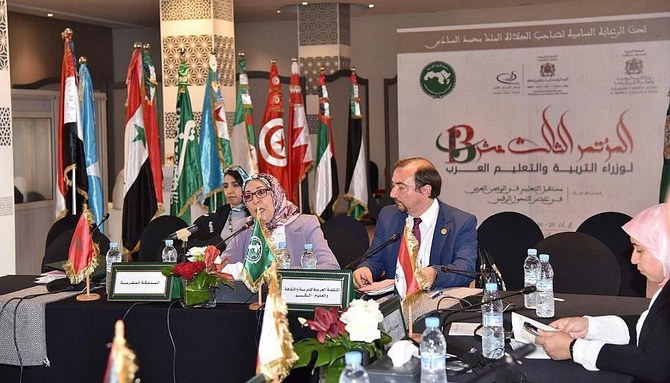
Mawhiba has grant aided 606 students under its ‘Gifted Arabs’ initiative. (SPA)
_________________________________
SAUDI ARABIA / ARAB WORLD
SYRIAN GERMAN: Ryyan Alshebl, the Syrian Refugee who became Mayor of Ostelsheim, a German Village near Althengstett
Ryyan Alshebl fled war-torn Syria in 2015, arriving on the Greek island of Lesbos after a harrowing four-hour journey on a rubber boat.
Eight years on, he is the mayor of a German village.
“It was dark and cold and there was not a single light to be seen on Lesbos,” he recalls.
“A few hours ago we had been in a normal Mediterranean town in Turkey. The environment had transformed with the cold and dark, and of course the feelings of fear that go with such a journey.”
Alshebl, then barely 21, was among a huge wave of refugees who arrived in Europe that year.
After landing in Greece, he made his way through Macedonia, Serbia, and Croatia by public transport and on foot, taking 12 days in total to reach Germany.
He eventually ended up at a refugee center at Althengstett, a rural region near the Black Forest.
“In the shared accommodation, where you cannot expect more than a bed, a roof, and some food, for which you are still thankful, you can only do one thing: get back on your feet quickly and invest rapidly in your own future,” he said.
Alshebl soon learned to speak German fluently — “if you are in the countryside you have no other choice” — and landed a traineeship as an administrative assistant at Althengstett town hall.
He earned German citizenship in 2022, a prerequisite for anyone who wants to stand in local elections in Germany.
‘Taking responsibility’
Now 29, he will take up his post as mayor of Ostelsheim, a village near Althengstett, in June.
He is believed to be the first Syrian from the wave of refugees who arrived in Germany in 2015-16 to be elected to a political post.
Alshebl was joined by four friends on his journey to Europe. But he left behind his parents and one brother, though a second brother had already moved to Germany on a student visa.
He said his experience of fleeing Syria and having “to take responsibility not only for (myself) but also for the environment” had given him the drive to go into politics.
“To take on this responsibility at such an age, you learn a lot. Of course, it creates a new person, a new personality,” he said.
Alshebl ran as an independent candidate in the election, winning 55.41 percent of the vote.
But he is also a member of the Greens, “because climate protection is very important” to him.
His victory is all the more striking given that Ostelsheim, a village of 2,700 people, is a traditionally conservative community.
Situated among a cluster of hills, the village is surrounded by rolling fields lined with dry stone walls and hedges.
The far-right Alternative for Germany (AfD) party harnessed anger over the influx of asylum seekers in 2015-16 to win votes and ultimately enter parliament for the first time.
Openness
But Alshebl said he has not seen right-wing extremism personally.
Alshebl believes he was elected because he listened to the people’s concerns — from childcare to digitalization issues.
He admits to not really “feeling anything” on hearing he had won the election in March as he was “overwhelmed”.
But as congratulations poured in from around the world, it became clear that his story was “bigger than a mayoral election in a small community”.
Alshebl believes the fact he triumphed against two other local candidates who grew up in the area says a lot about the mentality of the voters.
“It is a sign that people did not count the origin, but the qualifications. It is a sign of openness to the world,” he said.
Alshebl’s parents, a schoolteacher and an agricultural engineer, belong to Syria’s Druze minority, but he describes himself as not religious.
He has “mixed feelings” about Syria, which he has not been able to visit since living in Germany.
“It is the country where you were born and raised… You long for the people you grew up with,” he said.
“But I am happy that I got this chance to live here at all” when others have not, he said.
source/content: english.ahram.org.eg (headline edited)
________
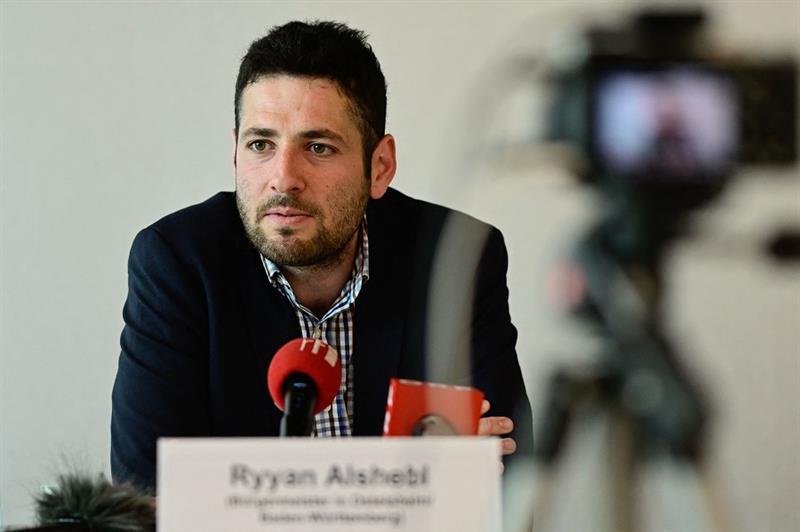
Ryyan Alshebl, mayor of the community of Ostelsheim in Baden-Wuerttemberg, southwestern Germany, addresses a press talk with the Association of the Foreign Press in Germany (VAP) in Berlin, Germany on May 30, 2023. AFP
_____________________
GERMAN / SYRIAN
IRAQ Showcases $17-billion Development Road Project that will Link Asia to Europe
Baghdad hosted the transport ministers of GCC states, Iran, Turkey, Syria and Jordan to discuss the initiative.
Iraq unveiled on Saturday an ambitious transport project that will connect Asia to Europe, and enhance regional co-operation and economic opportunities.
The one-day conference in Baghdad brought together transport ministers and officials from the GCC, Iran, Turkey, Syria and Jordan to discuss the establishment of the Development Road initiative.
The huge infrastructure project will link southern Iraq to the border with Turkey, from where it will connect to rail and road networks in Europe.
Addressing the conference, Iraqi Prime Minister Mohammed Shia Al Sudani said the project would provide an “economic artery and a promising opportunity to bring interests, history and cultures together to make our region a destination for anyone seeking successful investment”.
“Your presence today in stable and secure Baghdad, loaded with opportunities and aspirations, is part of the process of finding solutions,” Mr Al Sudani said.
“The Development Road is an ambitious and well-studied plan towards a strong and successful economy. We see it as a cornerstone for a sustainable non-oil economy, serving Iraq’s neighbours and the region and contributing to efforts for economic integration,” he said.
“It will take all the peoples of the region to an unprecedented stage of communication and integration and that means more stability and capability to face challenges.”
The project involves the construction of about 1,200km of two-way rail networks and a new motorway for passengers and goods originating from Al Faw port, which is being built along the Arabian Gulf in Basra province.
The Iraqi government envisions high-speed trains moving goods and passengers at up to 300 kilometres per hour. Logistic centres and industrial cities are also planned along the network and it could include oil and gas pipelines.
It estimates that the project will cost up to $17 billion, generate $4 billion annually and create at least 100,000 jobs.
“As Iraq [has] recovered and retrieved its pivotal political role in the region, becoming a political convergence point, the time has come for [it] to retrieve its economic role,” Transport Minister Razzaq Al Saadawi told a local TV station on Thursday.
He said the project would transform the economy.
Saturday’s conference “will be a consultative meeting to explain the Development Road project and Al Faw Port, and to listen to the points of view of the participating delegations”, Mr Al Saadawi said.
The participants will discuss a number of proposals with regards to finance – from government funds to investment to the creation of a sovereign fund, with the money coming from the government, investors and loans, he said.
The co-operation between the countries involved in the project is expected to boost the “security and stability of the region and preserve its economy, therefore we are determined to carry out this project”, Mr Al Saadawi said.
At the end of the meeting, Mr Al Saadawi said joint legal, technical, financial and management committees would be formed to discuss financing and implementation.
The project offers an alternative to traditional sea routes, with reduced transport costs and shorter transit times. It will benefit not only the participating countries but also the broader global trade network.
Iraq is keen to join China’s Belt and Road Initiative – a global development strategy involving infrastructure development and investments in about 70 countries in Asia, Africa and Europe – through the Development Road and Al Faw port.
Despite its oil wealth, with about 145 billion barrels of proven reserves, Iraq lags behind neighbouring economies due to decades of war since the 1980s, UN economic sanctions imposed in the ’90s and political and security instability that followed the 2003 US-led invasion that toppled Saddam Hussein.
The World Bank’s country representative, Richard Abdulnour, said building infrastructure was a must for “unleashing the geographical potential of Iraq” and expressed the bank’s readiness to support the Development Road project.
Iraq needs to invest more than $21 billion in the coming five years on transportation alone, Mr Abdulnour told the conference.
He said the transportation sector contributed 9 per cent to Iraq’s gross domestic product, and that its annual growth has been 7.4 per cent over the past 10 years.
Iraq has a chequered history of rail transport, reflecting the country’s ups and downs.
A modest form of railway was introduced during the reign of the Ottoman governor to Baghdad Midhat Pasha between 1869 and 1872.
With financial support from wealthy Baghdadi merchants, Midhat Pasha established a horse-drawn tram linking central Baghdad to its northern district of Kadhimiyah.
Decades later, Britain and Germany raced to build railway lines in Iraq to not only transport troops and military equipment but also to establish a connection point linking their colonies.
A railway line linking Iraq to Berlin through Turkey was proposed in 1903 but opened only in 1940. Known as the BBBor the “Three Bs” — for Baghdad, Byzantium (now Istanbul) and Berlin — the line served travellers and was also used to transport commodities, mainly cereals and oil products.
Local rail networks also flourished thanks to oil revenue, with the number of daily train services rising to more than 50.
The BBB line was closed in the late 1970s, shortly before Iraq’s gruelling war with Iran that lasted from 1980 to 1988 and also affected rail operations inside Iraq.
In late 1990s, amid the UN-imposed economic sanctions on Iraq following the 1991 Gulf War, Iraq reactivated the BBB line after restoring relations with Syria and Turkey. Demand was high from both travellers, mainly pilgrims from and to Syria, and also from merchants transporting goods.
But the revival was short-lived — Turkey asked Iraq to stop services only days before the 2003 US-led invasion that toppled Iraqi dictator Saddam Hussein.
The poor security situation in much of northern Iraq after the invasion hindered plans to reactivate the line. Then came the 2014 ISIS onslaught in large areas in the north and west, and the military operations to drive the militants out. The war left railway stations and other infrastructure heavily damaged, with plans for repairs hindered by a lack of funds.
Now, only a few passengers trickle through the once bustling Baghdad Railway Central Station, which was built by the British and inaugurated in 1952 to expand the old station from which the BBB line started. Only two passenger services operate each day, taking commuters between Baghdad and the southern city of Basra, with stops in the cities of Hillah, Diwaniyah, Samawah and Nasiriyah.
source/content: thenationalnews.com (headline edited)
___________
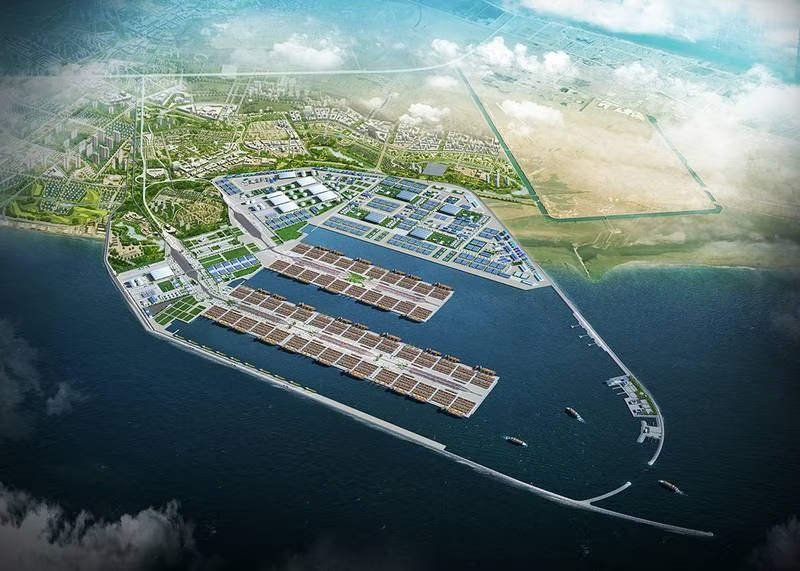
An aerial of the Grand Port of Al Faw, Iraq, with the first phase of the project currently underway. (Daewoo E&C)
________
IRAQ
KUWAIT: 18th ‘Arab Media Forum’ kicks off in Kuwait, May 28th
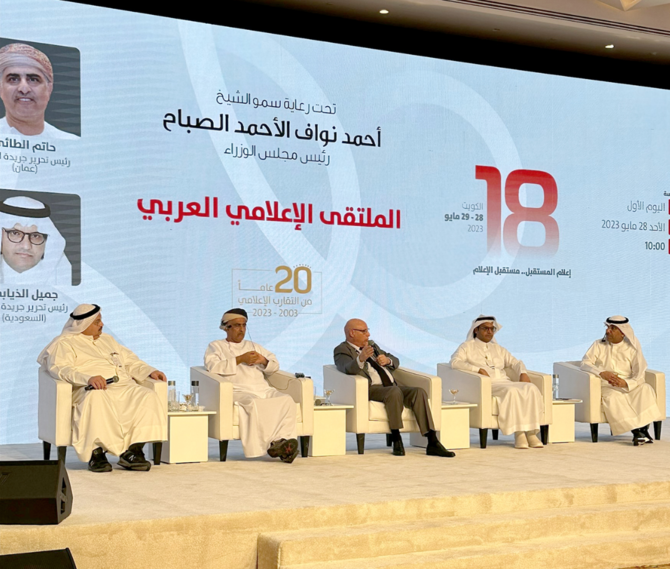
The 18th Arab Media Forum kicked off on Sunday in Kuwait under the patronage of Prime Minister Sheikh Ahmad Nawaf Al-Sabah.
The event focused on a range of issues pertaining to the future of media in the region, Kuwait News Agency reported.
During one of the sessions, Jameel Al-Thiyabi, editor-in-chief of Saudi newspaper Okaz stated that the rise of Artificial Intelligence would have an impact on media outlets all over the world, emphasizing the importance of keeping up with AI developments in media rather than falling behind.
The Arab League’s assistant secretary-general for media Ahmed Khattabi stressed the importance of addressing challenges within digital media, adding that improving media capacities should not overshadow topics of significant importance to the Arab world, particularly the Palestinian cause.
Meanwhile, Waleed Al-Jasim, editor-in-chief of Kuwaiti newspaper Al-Rai, said Arab media faced challenges surrounding media freedoms, adding that social media platforms allowed for more freedom of expression compared with mainstream media.
Hatim Al Taie, editor-in-chief of Omani newspaper Al-Roya, warned younger people working in the industry needed to prepare for the oncoming digital media transformation. He called on the Arab League to impose fees on international media companies, with the money used in funding media entities in the Arab region.
source/content: arabnews.com (headline edited)
___________
__________________________
KUWAIT / ARAB WORLD
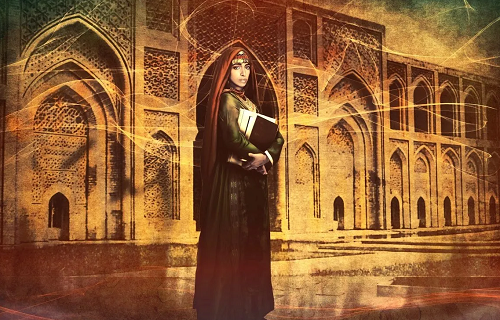
TUNISIA / MOROCCO: Fatima Al-Fihri: The Woman who Founded the World’s First University in Fez, Morocco
During her lifetime, Fatima was called the “mother of boys”. According to historian Mohammed Yasser Hilali, “this nickname probably stems from her charity and the fact she took students under her wing”.
When thinking of the oldest universities in the world, probably the first ones that come to most people’s minds are Oxford and Bologna, but according to UNESCO and the Guinness World Records, Al-Qarawiyyin University (also written as Al-Karaouine) is the “oldest existing, and continually operating educational institution in the world.”
Founded in 859 A.D. by Tunisian-born Fatima al-Fihri in Morocco’s Fez, the university is not only the oldest higher education institution on Earth but also the first to be founded by a Muslim woman. Fatima used her inheritance from her merchant father’s wealth to found the university which started as an associated school – known as a madrasa – and a mosque that eventually grew into a place of higher education. It also introduced the system of awarding degrees according to different levels of study in a range of fields, such as religious studies, grammar and rhetoric. Though the university first focused on religious instruction, its fields of study quickly expanded to include logic, medicine, mathematics and astronomy, among many others.
The University of Al Quaraouiyine became a state university in 1963 and now awards degrees in Islamic, religious and legal sciences with an emphasis on classical Arabic grammar and linguistics and law.
Interestingly, teaching is still delivered in a very traditional manner, whereby students are seated in a semi-circle around a Sheikh (Islamic scholar), who prompts them to read sections of particular texts, asks them questions on aspects of grammar, law, or interpretation, and explains difficult points. Education at the University of al-Qarawiyyin concentrates on the Islamic religious and legal sciences with a heavy emphasis on, and particular strengths in, Classical Arabic grammar/linguistics and Maliki Sharia, though lessons on non-Islamic subjects are also offered to students. Teaching is still delivered in the traditional methods. The university is attended by students from all over Morocco and Muslim West Africa, with some also coming from further abroad. Women were first admitted to the institution in the 1940s
Fatima al-Fihri was born in 800 A.D. She was the daughter of Mohammed Bnou Abdullah al-Fihri – a rich merchant who settled in Fez with his family during the reign of Idris II.
Fatima’s family was part of a community called the “Qarawiyyin” (the ones from Qayrawan) whose two thousand families migrated from Qayrawan in Tunisia, to Fez in Morocco which was then under the rule of Idris II, a respected and devout ruler.
After the community was banned by the local ruler. The caravan included Fatima’s father Muhammad bin Abdullah Al-Fihri, and sister Mariam. Fatima was well versed in classical Islamic learning such as fiqh (jurisprudence) and hadith (Islamic traditions based on Prophet’s life). She inherited a large fortune from her merchant father which she used to build the university. She personally supervised the entire gigantic enterprise, from putting up the foundation to the functionalizing of these institutions. When she embarked on her mission, she had lost her father, husband, and brother – all primary sources of support and protection for a woman. Any other woman would have retreated to the backwaters of domestic life. But Fatima appears to have been an extraordinarily inspired and determined woman with steely grooves. All her great achievements came during periods of loneliness and in circumstances when women normally shun the world and seek the company of the home.
During her lifetime, Fatima was called the “mother of boys”. According to historian Mohammed Yasser Hilali, “this nickname probably stems from her charity and the fact she took students under her wing.” Fatima al-Fihri herself is considered a saint and she is much respected among the believers especially in Fez. In 2017, a prize was created in Tunisia in her honor. It rewards initiatives which encourage access to training and professional responsibilities for women. Furthermore, an academic program and a scholarship given to students from Europe and North Africa pay tribute to Fatima al-Fihri.
The University of Al-Qarawiyyin (also Al-Karaouine), which was then just called a madrasa (an institute of religious learning), was 30 m long, with a courtyard, a large library, and several schoolrooms. Although initially only the Qur’an and related religious lessons were taught, many other courses of study, like mathematics, medicine, Arabic grammar, history, geography, astronomy, chemistry, music and logic were soon introduced. Fatima studied there herself, along with her students, and awarded them degrees once they completed the courses: a degree that was chiseled onto a wooden board, which is now displayed in the university’s library. She also conducted debates and symposiums periodically for her students, producing politically-aware individuals.
With these innovative ideas, Fatima al-Fihri had not merely founded the first university but had introduced the concept of awarding degrees that is now an essential part of modern higher education.
In fact, the university produced many celebrated intellectuals and historians who are still known to this day: the Islamic philosopher Ibn Rushd, Andalusi diplomat and geographer, Hassan al-Wazzan and historian and thinker Ibn Khaldun, the famous Jewish philosopher, Moses Ben Maimon and Aka Maimonides.
The Christian scholar, Gerbert of Aurillac, who later became Pope Sylvester II, is believed to have visited the university several times. His visits helped him introduce Arabic numerals and the concept of zero to Europe. The University of Al Qarawiyyin is still considered a leading religious and education institution in the Muslim world. The university has moved away to another part of Fez, but the mosque and the library remain at the ancient complex. The University of Al-Qarawiyyin is the oldest existing, continually operating and the first degree awarding educational institution in the world according to UNESCO and Guinness World Records and is sometimes referred to as the oldest university.
(M Ahmad is a regular writer for this newspaper and can be reached at specialachivers78@gmail.com)
source/content: risingkashmir.com (headline edited)
__________
___________
TUNISIA
EGYPTIAN Soprano Neveen Allouba to be Awarded France’s Order of Arts and Letters
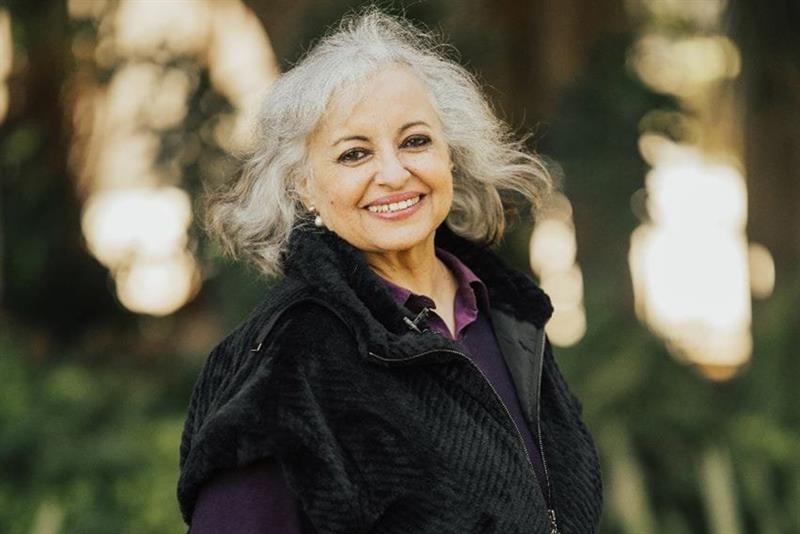
Well-known Egyptian soprano Neveen Allouba will be awarded France’s Ordre des Arts et des Lettres in the grade of Chevalier (Knight) by France’s ambassador to Cairo next week.
Allouba’s award for exceptional achievements in the Egyptian music scene follows decades of work in the many aspects of the country’s cultural scene.
Born in 1955, she is among the best known personalities of the Egyptian music scene, with substantial influence outside the country.
Her career includes working with the Cairo Opera Company, where she has performed in countless operas. She has taught numerous young singers and both founded and directed many successful creative endeavours of the Fabrica musical theatre company.
As a young girl, Allouba had dreams of becoming an actress, but was not supported by her family. Instead, she turned to playing piano and singing, graduating from the Cairo Conservatory in 1978.
She was granted scholarships from the Deutscher Akademischer Austauschdienst (West German Cultural Exchange) and the Friedrich-Naumann Foundation to study opera performance and vocal pedagogy at the Hannover Hochschule fur Music and Theatre where she deepened her singing techniques and eventually obtained a doctorate in 1988.
During her decade-long stay in Germany, Allouba performed as soloist at the Detmold Opera. She also performed in other European operas and theatres and across the Arab world at that time. In 1985, she won the first prize in the female voice category of the competition for young opera singers in Berlin.
Upon her return to Egypt, the soprano became a soloist at the Cairo Opera Company, becoming the first female singer to perform in the newly opened Cairo Opera House. As her singing career progressed, Allouba coupled her performances with her teaching career at the Cairo Conservatory, Cairo Opera Development Centre, University of Alexandria and the American University in Cairo where she is an adjunct professor of voice. She also participated as a jury member in a number of singing competitions.
Some of her students went on to continue their education outside Egypt and thrived as internationally renowned singers.
These include Farrah El-Dibani, a mezzo soprano who performs at the Paris Opera; the Germany-based Rita Sebeih, the lead role of Jasmine in the Disney German production of Aladdin; Nesma Mahgoub, winner of the eighth season of the Star Academy Arab World; Fatma Said, a soprano who was the first Egyptian to join the Academy of Milan’s Teatro alla Scala before launching a big international career.
Fabrica chapter
In mid-2010, Allouba founded the Fabrica musical theatre company, through which she trains, develops and promotes new voices.
Fabrica’s pilot production of Mozart’s opera The Magic Flute in Egyptian Arabic was staged in collaboration with the Bibliotheca Alexandrina in 2011.
In 2013, the company premiered Les Miserables in Egyptian Arabic and even toured in the USA. It experienced an additional boost in popularity when it was promoted by the internationally famous Egyptian comedian Bassem Youssef.
This was only the beginning of many successes of Fabrica and its members. Its successes include performances of Brecht’s Threepenny Opera and adaptations of local shows including El-Leila El-Kebira by Salah Jaheen and Sayed Mekawy, in addition to rock, jazz and Disney concerts.
Fabrica also performed during the inaugural El Gouna Film Festival’s opening ceremony (2017), the SNL Bel Araby’s 50th episode celebration, the Egyptian Media and Production Company’s 20 year anniversary and the Intra-African Trade Fair (2018), among other events. Fabrica was brought to light again, as the company won the award for Best Music Video at the ninth annual MoziMotion festival, held in Hilversum, the Netherlands (October 2019) for Mercury Rising: A Queen Tribute, released in January 2019 (a few months after Bohemian Rhapsody was released in theatres).
Overdue recognition
Allouba’s portfolio and well-established position in the field combines many operatic appearances as well as an unconditional belief in the young generation and a natural – almost motherly – dedication to support and promote young talents, while offering to the Egyptian audiences valuable performances.
It’s worth mentioning that most recently, Allouba was appointed director of the new Arkan Theatre in Sheikh Zayed.
The award comes after Allouba’s decades of perseverance and work that often lacked sufficient limelight. It is an important recognition, if overdue, for an artist whose work has created a strong impact on many singers of more than one Egyptian generation.
The France’s Order of Arts and Letters will be awarded to Allouba during a ceremony held at the French Embassy in Cairo, in the first week of June.
Over the past years, a number of Egyptian figures have also been awarded the Knight of the Order of Arts and Letters in the grade of Chevalier.
They include Egyptian novelist and Nobel laureate Naguib Mahfouz, novelist and journalist Gamal El-Ghitani, visual artist and women’s activist Inji Aflatoun, novelist Alaa al-Aswany, theatre director Ahmed El Ettar , composer and conductor Hisham Gabr , producer and scriptwriter Mohamed Hefzy, mezzo soprano Farrah El-Dibany , artist Karima Mansour , among others.
Also the Tunisian-Egyptian actress Hend Sabry is among the recipients of the award in grade of the Commander.
source/content: english.ahram.org.eg/ (headline edited)
___________
________
EGYPT