Arabs & Arabian Records Aggregator. Chronicler. Milestones of the 25 Countries of the Arabic Speaking World (official / co-official). AGCC. MENA. Global. Ist's to Top 10's. Records. Read & Enjoy./ www.arabianrecords.org
The Moroccan investor managed to create a name for herself in the financial industry at such a young age.
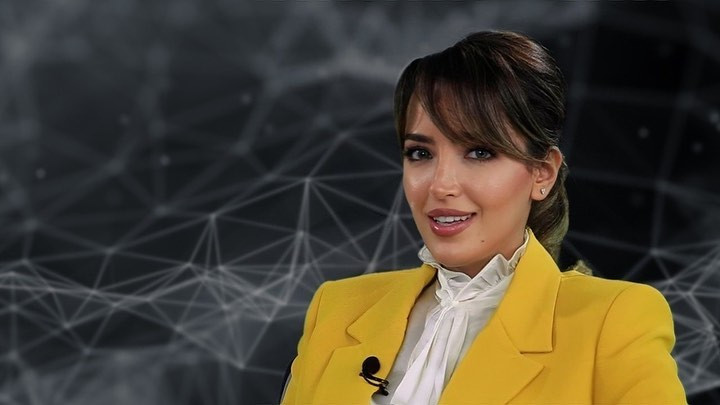
Moroccan entrepreneur, investor, and financial expert Hasnae Taleb has become the first Arab and African woman to be nominated as “The Shewolf of Nasdaq” by the New York-based American stock exchange.
Taleb’s passion for finance and trading began at a young age. She started her career as an equity trader at Nasdaq at the age of 21, making her the youngest and only Arab woman in that position.
At 17 years old, she won the NASA Marshall’s Space Competition, representing her country, Morocco.
The Moroccan entrepreneur, who is currently a member of the American Chamber of Commerce in the UAE, made her first million dollars at the age of 23. Since then, Taleb has gone on to become a “successful entrepreneur, financial expert, TV personality, and investor,” indicated a press release published by EIN Presswire.
Thanks to her hard work and passion for the financial industry, Taleb was nominated as “The Best Youngest Trader of the Year” in the United States by TheRichest in 2014. The same year, Nasqad nominated her as “The Youngest Self-Made Equity Trader.”
Taleb attributes her success to her hard work, dedication, and passion for the financial industry. She believes that individuals from humble beginnings often develop a strong work ethic and resilience that are crucial to success, regardless of the industry.
“When someone comes from a background that lacks privilege or resources, they are forced to rely on their own drive, determination, and resourcefulness to achieve their goals,” she said.
While Taleb recognizes the role of “luck and external circumstances” in achieving success, she puts a huge emphasis on “individual effort” as well.
The Moroccan trader, who has become a role model for women and youth in finance, has built an important following on social media. With nearly 100k followers on Instagram, Taleb regularly shares tips and advice on trading and investing with her audience.
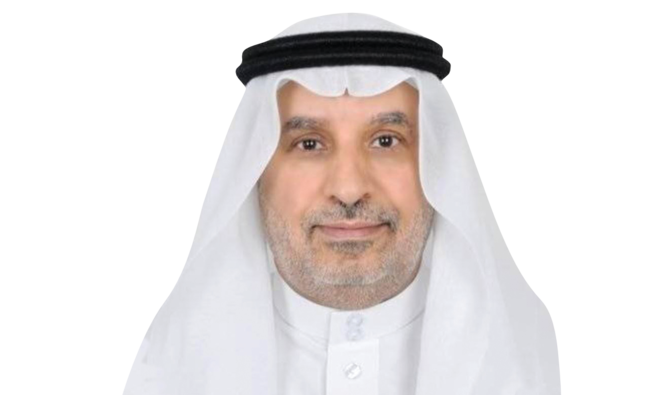
Mohammed bin Yahya Al-Sayel has been appointed to become a member of the UN’s Global Geospatial Knowledge and Innovation Center following a royal decree on April 16.
The UN-GGKIC aims to build geospatial capabilities and competencies at the global level, develop centers of knowledge and innovation in countries, and benefit from the mechanisms, techniques, and analysis used in the field of geospatial information.
The center is working on implementing the Integrated Geospatial Information Framework to improve and strengthen work on managing national geospatial information for achieving sustainable development goals.
Al-Sayel has been the regional coordinator for Arab countries at the International Society for Photogrammetry and Remote Sensing since January.
Al-Sayel, who has also been the president of the Kingdom’s General Authority for Survey and Geospatial Information since 2021, was nominated for his new position by the board of directors at the ISPRS.
The general authority is mandated with developing national capacities in the sector, in cooperation with universities and specialized institutes with its counterparts in other countries, international bodies, and organizations related to the sector.
The ISPRS is a non-governmental organization devoted to the development of international cooperation for the advancement of photogrammetry, remote sensing, and their applications.
Al-Sayel received a bachelor’s degree in civil engineering in 1984 from Roger Williams University, Rhode Island, US. He also received a high diploma in geodesy and map production from the Royal School of Military Survey.
He was granted a master’s degree in geomatics in 1994 from the University of Toronto, Canada, and obtained a doctorate in surveying engineering and geospatial information from Leibniz University Hannover, Germany.
Al-Sayel has taken a number of advanced training courses on geographic information and global positioning systems. He has attended several training courses on negotiations and boundary delimitation at Durham University in the UK.
Al-Sayel, who is both the CEO of Quality Geospatial Engineering Co. and Vision Intelligence, a digital sustainability solution-providing company, has risen in the military to the rank of major general and was an assistant director at the General Directorate of Military Survey. He was also the head of the boundaries and documents department.
He is the secretary-general of the Cooperative Society of Moringa and Desert Plants, one of the first Saudi cooperative societies aiming at increasing the country’s vegetation.
Al-Sayel is a consultant member of the Saudi Council of Engineers and a member of the American Imaging and Geospatial Information Society, and the ISPRS.
Three recent titles on the life and history of the Copts reflect on elements of a complex story.
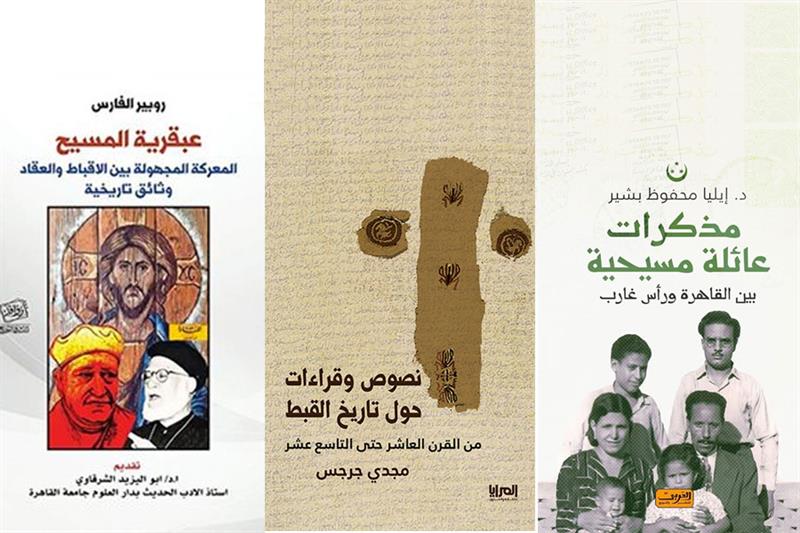
Mozakerat Aaela Masseihiya bein Ras Ghareb wal Qahera (Memoirs of a Christian family between Ras Ghareb and Cairo), by Elia Mahfouz Bashir, Cairo: Al-Arabi Publishing. pp. 196.
“At that time there was a [spontaneous] acceptance of the other; actually, the concept of this other was not really there – not as a fully defined concept any way”.
This is one of very few lines that evokes the “Christian” in the title of the pleasant-to-read 196-page text.
Elia Mahfouz Bashir, now a 65-year-old pathologist, recalls memories of his easy-going and uninhibited childhood in the Red Sea city of Ras Ghareb where his father worked for an oil company.
This is the interesting thing about the choice of the title. It offers a contrast to a sequel of articles where Bashir offers accounts from his time in this city in the late 1950s and early 1960s prior to the retirement of his father that forced the family away from its Red Sea haven to Cairo. Those are accounts of the city, the sea, playmates, school, family gatherings, comparisons between the Red Sea and the Mediterranean and so on.
So, for a while, the reader is left to wonder about the significance of the “Christian” reference. And this is exactly the point. In the childhood of Elia Mahfouz Bashir, his faith and that of his family was not an issue. It only comes up across when he refers to a trip to his maternal family in Upper Egypt where he was escorted by his mother to one of the moulids of the Coptic saints or when he talks about the prayers for healing that a priest performed for he and a playmate of his, who happened to be a Muslim.
As Bashir put it in one of the articles, both the mosque and the church of Ras Ghareb were part of a wider communal ownership. He is attributing this state of mind to the norms that prevailed during the rule of Gamal Abdel-Nasser when the focus was on Egyptian identity and not the affiliation of faith as it later became under the rule of Anwar Sadat.
Bashir had originally started sharing his reflections on his childhood in Ras Ghareb on Facebook before he decided to assemble the pieces into a book that stands as a testimony for his experience.
Abkareit Al-Massih: AlMaaraka AlMaghoula bein AlAqbat wa Al-Akkad – Watheiq Tarikheyah (The Genius of Jesus: The Unknown Battle Between Copts and Al-Akkad – archival documents), by Robert Al-Fares: Rawafd Publishing, 2023. pp. 172.
In line with his head-on and mince-no-words approach, Robert Al-Fares, journalist and author of several titles on Coptic social history, is putting out a book that addresses the strongly established but often averted conflict between the Christian and Muslim creeds over the nature of Jesus Christ. For Christians, Jesus is as divine as human, and as such there is no point in trying to argue his genius as Al-Akkad did in his book that came out in 1953, under the title of “The Genius of Jesus,” to the dismay of the Copts of Egypt and particularly that of the Coptic Church of Egypt. For Muslims, however, Jesus is a prophet just like any other prophet that God had sent prior to Muhammad.
In this 172-page book, El-Farres digs out the archival details of a confrontation that took place when the book was put out by Akhbar Al-Youm Publishing, at the end of a sequel that Al-Akkad dedicated to argue the genius of Prophet Muhammad and the four early rulers of the Muslim state that followed him.
Those include letters and remarks from Coptic commentators and clergy, including Father Sergius, the prominent preacher of 1919 Revolution, who was put under house arrest by the Free Officers regime “for worry over his public influence.”
He also included the remarks and views of Muslim scholars who defended or disagreed with Al-Akkad.
The book also includes the replies that Al-Akkad offered and the remarks he added to the second edition of the book that came out in 1958 under the new title of “The Life of Jesus.”
While zooming in on this particular account of Al-Akkad “The genius of Jesus”, Al-Fares is being open in his criticism of the attempt of some Coptic and Muslim figures to overlook this difference instead of simply accepting ‘the other’ – given that as much as for Muslims, Christ is just a prophet, for Christians, Muhammad is not a prophet.
“We just need to acknowledge that we have different creeds; this is the core of coexistence,” he wrote.
Nossous wa Kerat hawla tarikh Al-Qapt min Al-Qarn Al-Aasher Hattah Al-Qarn Al-Tassaeiaashr (Texts and Narratives on the History of Copts – From the 10thCentury to the 19thCentury), by Magdi Girgus: Al-Maraya Publishing, 2023. pp. 273.
This book is part of the ambitious and really interesting work of historian Magdi Girgis who has been digging out accounts on the history of Copts from the archives to assemble a comprehensive and solid narrative on the lives of Copts in Egypt under the Muslim rule. As Girgus put it in the introduction to his most recent 273-page volume, it is “a free stroll across the history of Copts [during 10 consecutive centuries] through the text of some archival documents.”
The selection of documents, Girgus writes, is designed to address some significant points of Coptic history, and that of Egypt. He notes that his purpose is not just to share and analyse the content of these documents but to put the accounts they address within the wider context of social and political contexts.
Throughout his 10 chapters, with documents and with narratives on the context of the documents, Girgus goes through some of the most interesting accounts of the history of Copts.
These accounts include history of the Coptic Church and the Arabisation of the language of the church.
They also include a history of the sources used to chronicle the Coptic history and the archiving of documents on the Coptic history.
He also examines the relation between Church and State and the Islamic judiciary system as well as relations between Coptic clergy and Coptic notables and the state.
Moreover, he also examines the role of Coptic clergy in the rural areas.
A most controversial part of this book might relate to the argument Girgus offers on the issue of Arabisation.
Traditionally, many Coptic intellectuals have often argued that this was the outcome of the pressure of the Arab rulers of Egypt.
However, according to Girgus, the ‘choice’ of the Coptic Church to adopt the Arabic language was not necessarily about the pressure from Arab rulers but rather about the ‘choice’ of the Church of Egypt to embrace a national line away from the influences of the Church of Rome.
It was also, he argued, about the wish of the clergy to go along with the notables who had been trying to go along with culture of the new rulers in so many ways, including the most peculiar practice of polygamy by some Coptic notables despite the fact that polygamy is strictly forbidden in Christianity.
Actually, the evolution of relations between Church and State is perhaps one of the best explained issues in this book.
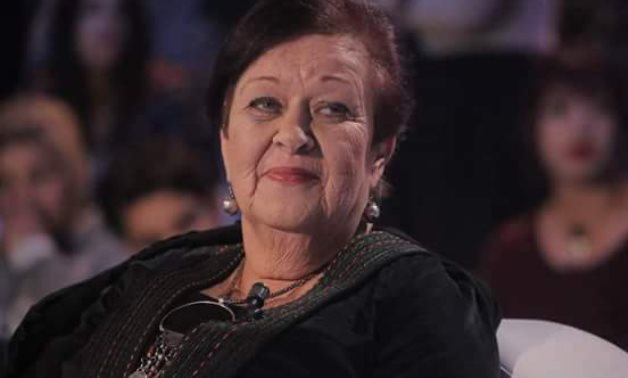
The seventh edition of Aswan International Women Film Festival ( AIWFF) will honor the great Tunisian director, producer and politician Selma Baccar for her tremendous influence in the cinematic field being the first female Tunisian director who directed a feature-length film.
Her works include Fatma 76 (1976), The Fire Dance (1995), Flower of Oblivion (2005), El Jaida (2017), among others.
The seventh edition of AIWFF will kick off from March 5-10, 2023.
Dr Azza Kamel, Vice Chairman of the Board of Trustees of Aswan International Women Film Festival said that Selma Baccar is a great filmmaker not only in Tunisian cinema, but also in Arab cinema, as her films conveyed the concerns of Tunisian women in different historical stages, in addition to her historical postion as the first Tunisian director to present a feature film.
Kamel stressed that the festival decided to honor Baccar as it seeks to honor creative women who have contributed to the portrayal of women’s issues from all over the world.
Kamel pointed out that Baccar’s struggle for women’s issues wasn’t limited to cinema screen, as a director or as a producer, but she was strongly present in the Tunisian political scene, as a member of the National Constituent Assembly to draft the constitution after the Tunisian Revolution, in addition to her work as a member in the Tunisian parliament defending rights and freedoms, stressing that honoring Baccar is a tribute to Tunisian cinema, which in recent years has achieved great successes at the international level by producing acclaimed films that support women.
The seventh edition of Aswan International Women Film Festival ( AIWFF) announced that it will honor veteran Egyptian actress dubbed Egypt’s first star Nabila Ebeid, acclaimed TV presenter Dorria Sharaf Eldin and the award-winning Dutch director, screenwriter and producer Mijke De Jong.
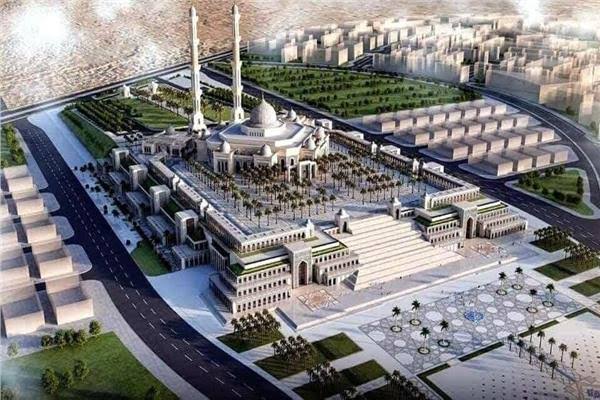
President Abdel-Fattah al-Sisi listened to an explanation of the details of Egypt’s Islamic Cultural Center and the Egypt’s Grand Mosque, during his visit to the New Administrative Capital at dawn, Thursday, to join workers for the first suhoor in the blessed month of Ramadan.
According to the explanation, Egypt’s Grand Mosque obtained three international certificates from the Guinness World Records.
The first was for the largest pulpit in the world with a height of 16.6 meters, handcrafted from the finest types of wood.
The second and third were for the main chandelier of the mosque, being the heaviest chandelier in the world of 50 tons, and it being the largest chandelier with a diameter of 22 meters and four levels.
Egypt’s Islamic Cultural Center in the New Administrative Capital is a great achievement and one of the most important projects established in the New Administrative Capital.
The Islamic Cultural Center was established in the new capital on an area of 15,000 square meters. It has a large place for services, as well as a group of spacious and multi-storey garages, with a capacity of about 4,000 cars.
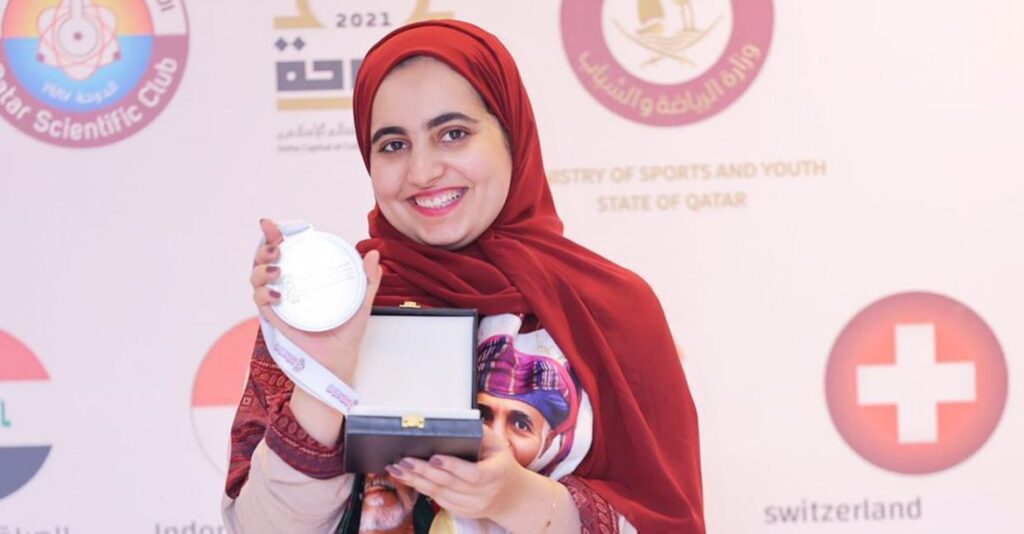
Manar al Jahwari won Saudi Arabian Innovation Hackathon award for her project Royal Filament.
Oman’s own Manar al Jahwari competed against 24 projects (shortlisted out of 700 total projects) in the final round of the Saudi Arabian Innovation Hackathon award, where her project was chosen along with three others as the most promising project.
Her project aimed at restricting the use of plastic filaments in 3D printing, and she fashioned 3D printing filament out of seaweed and other environment-friendly materials. She is currently in talks with government agencies to make her project a viable business, and she hopes to attract numerous local and international investors.
The Saudi Arabian Water Technologies Hackathon is a competition held virtually that lasts for two days, October 21 and 22, and involves three challenges that need to be solved within the given two days.
The second challenge was to control the excessive growth of algae in Jeddah’s desalination facilities, for which Al Jahwari came up with the innovative solution of “Royal Filament.”
The EGMO is an international competition in mathematics targeting female high school students whose commitment to mathematics goes beyond the usual school curriculum
To participate at the EGMO, students must qualify first at a national competition, after which they, together with their advisors, form their respective national delegations
Two Saudi girls have achieved advanced positions in the European Girls’ Mathematical Olympiad 2023, which is being held in Slovenia from April 13-19.
The EGMO is an international competition in mathematics targeting female high school students whose commitment to mathematics goes beyond the usual school curriculum.
To participate at the EGMO, students must qualify first at a national competition, after which they, together with their advisors, form their respective national delegations.
“Saudi Arabia, represented by King Abdulaziz and his Companions Foundation for Giftedness and Creativity (Mawhiba) and the Ministry of Education won two medals in the EGMO 2023 in Slovenia,” Mawhiba tweeted on Tuesday.
The young talents have raised Saudi Arabia’s medal tally to 26 in all editions of the EGMO, in which 213 students representing 55 countries are currently participating.
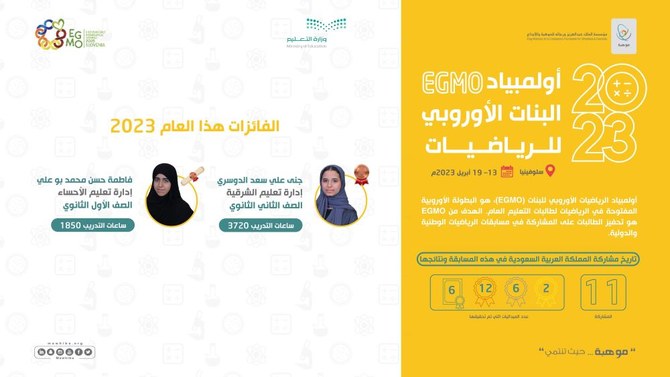
Saudi students Jana Ali Saad Al-Dosar from the Eastern Region and Fatimah Hassan Mohammed Bu Ali from Al-Ahsa won a bronze medal and a certificate of appreciation, respectively.
Mawhiba’s Secretary-General Dr. Amal bint Abdullah Al-Hazzaa congratulated the winners and expressed gratitude to King Salman and Crown Prince Mohammed bin Salman for their support of higher education, which led to these achievements.
Al-Hazzaa noted that the students’ successes embody the integration between Kingdom’s institutions and its commitment to advancing young talents through education and training in line with international standards.
She also praised the cooperation between Mawhiba, the Ministry of Education, and the King Abdullah University of Science and Technology, a partnership that aims to develop Saudi human capital and increase competitiveness in the labor market in line with the National Transformation Program and Saudi Vision 2030.
The Saudi girls participating in the EGMO 2023 have undergone intensive training to develop their scientific skills and were nominated to participate based on the results they achieved in the training forums held by Mawhiba.
The EGMO was initially launched in the UK, which hosted its first edition in April 2012 with 19 participating countries.
The international competition aims to motivate more female students to participate in the International Mathematical Olympiad, where girls currently constitute only 10 percent of the participating students.
This is Saudi Arabia’s 11th participation in the EGMO. The Kingdom has achieved two gold medals, six silver medals, 12 bronze medals, and six certificates of appreciation.
The EGMO 2023 awards are scheduled to be distributed on Wednesday during a final ceremony.
source/content: arabnews.com (headline edited)
____________
Fatimah Hassan Mohammed Bu Ali and Jana Ali Saad Al-Dosar. (Twitter/Mawhiba)
Americans born in or with ancestral ties to Arab-speaking countries have made countless significant scientific, medical and engineering contributions.
While Americans born in or with ancestral ties to Arab countries have made countless significant scientific, medical and engineering contributions, most have never made it into record books. From cryptography, to the artificial heart, to the iPod, here are a few examples of some of the major advancements by Arab Americans.
1. Television Transmission and LCD Screens
Born in Nabatieh, Lebanon in 1895, Hassan Kamel Al-Sabbah studied and then taught mathematics at the American University of Beirut before immigrating to the United States in 1921. After a brief stint studying at the Massachusetts Institute of Technology (MIT), Al-Sabbah earned a master’s degree in engineering sciences from the University of Illinois, says Lujine Nasralla, communications specialist at the Arab American National Museum in Dearborn, Michigan.
“In 1923, General Electric (GE) hired him to work in its Engineering Laboratory under a contract that awarded him a dollar for each of his patents,” Nasralla explains, noting that between 1927 and 1935, he applied for patents for 52 of his inventions while working at GE. Some of the patents Al-Sabbah was awarded during his time at GE include three for innovations in television transmission technology (granted between 1928 and 1930), and two for cathode ray tubes (1935).
Though Al-Sabbah died in a car accident 1935, GE engineers continued to rely on the technology he invented, including developing the liquid crystal display (LCD) based on one of his patents. Al-Sabbah made numerous other significant contributions to science, technology and engineering, especially in the field of solar energy.
2. Emotion Recognition Technology
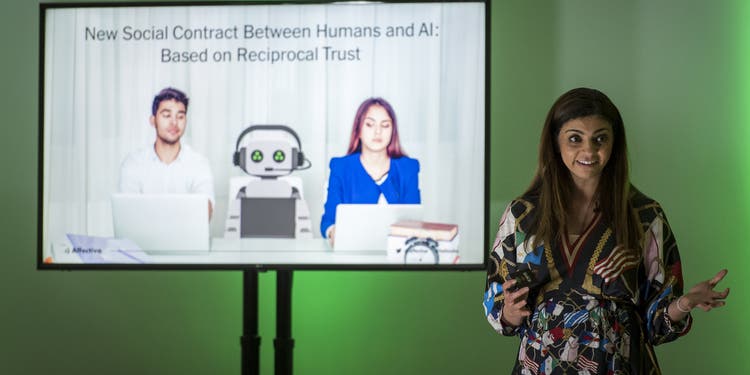
RANA EL KALIOUBY, CO-FOUNDER AND CHIEF EXECUTIVE OFFICER OF AFFECTIVA, SPEAKING DURING THE NEW WORK SUMMIT, CALIFORNIA, 2019. / DAVID PAUL MORRIS/BLOOMBERG VIA GETTY IMAGES
While Rana El Kaliouby was completing her doctoral research at the University of Cambridge in England in the early 2000s, she never felt as though she could ever truly connect with her loved ones back home. “Away from her family and friends in Egypt, El Kaliouby wished her computer could better convey her emotional state,” Nasralla says. That’s when she decided to find a way to make more emotionally intelligent technology.
After earning her doctorate, El Kaliouby took a position as a research scientist in the Affective Computing group in the MIT Media Lab. There, she was part of a team that developed an “emotional hearing aid,” as well as a pair of eyeglasses that could read emotions, along with social cues. Officially known as “the Emotional-Social Intelligence Prosthesis,” El Kaliouby and a colleague created the wearable technology in 2006 for people living with autism who have difficulty identifying and processing other people’s emotions as they communicate.
In 2009, El Kaliouby and the same MIT colleague co-founded a company called Affectiva, which used deep learning, computer vision, speech science and vast amounts of real-world data to develop emotion recognition technology. “Her pioneering technology accurately reads minute changes in facial expressions that convey emotions,” Nasralla says, adding that El Kaliouby is a member of the Women in Engineering Hall of Fame.
3. The iPod and iPhone
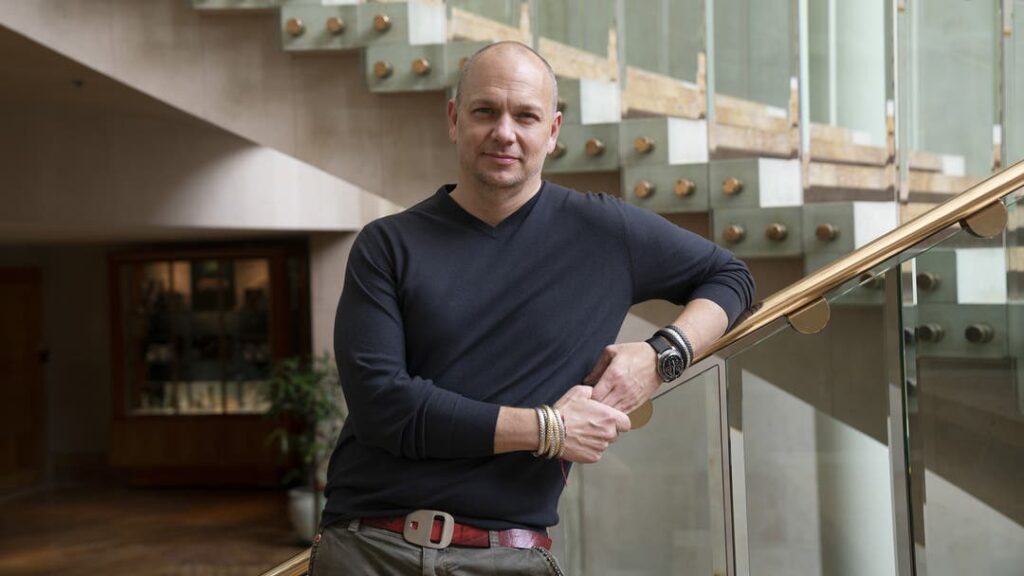
TONY FADELL, WHO OVERSAW THE DESIGN OF THE IPOD AND IPHONE, PHOTOGRAPHED IN SINGAPORE, 2019 / WEI LENG TAY/BLOOMBERG VIA GETTY IMAGES
There was a time in the not-so-distant past when listening to music outside of your home meant bringing the physical album with you on a record, audio cassette or compact disc. And while portable MP3 players existed before 2001, none were popular enough to make the device the standard way of listening to music on the go. That is, until Apple CEO Steve Jobs hired Arab American inventor Anthony “Tony” Fadell and put him in charge of a new special projects group within the company tasked with doing exactly that.
The result was the iPod, which launched in 2001. Fadell, who is now known as “ the father of iPod,” went on to oversee the first 18 iterations of the device before Jobs gave him his next assignment: to create a mobile phone with many of the same features as the iPod.
This time, the end product was the iPhone, which essentially allowed people to carry a highly compact computer with internet capability around at all times, and, in the process, changing the way people access information. Fadell was involved with developing the first three generations of the iPhone.
4. Developments in Surgery
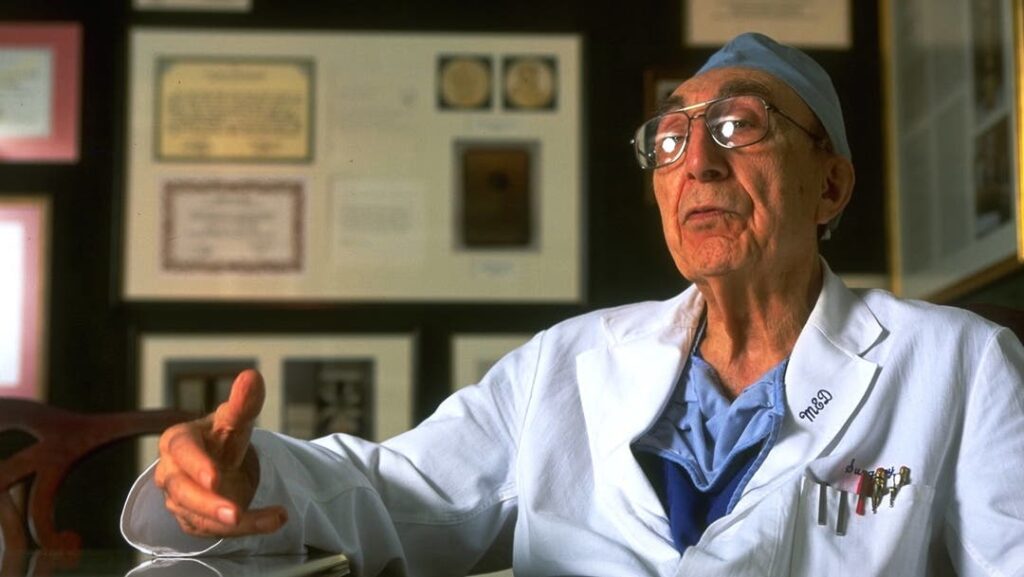
HEART SPECIALIST DR. MICHAEL DEBAKEY, C. 1994. / F. CARTER SMITH/SYGMA/GETTY IMAGES
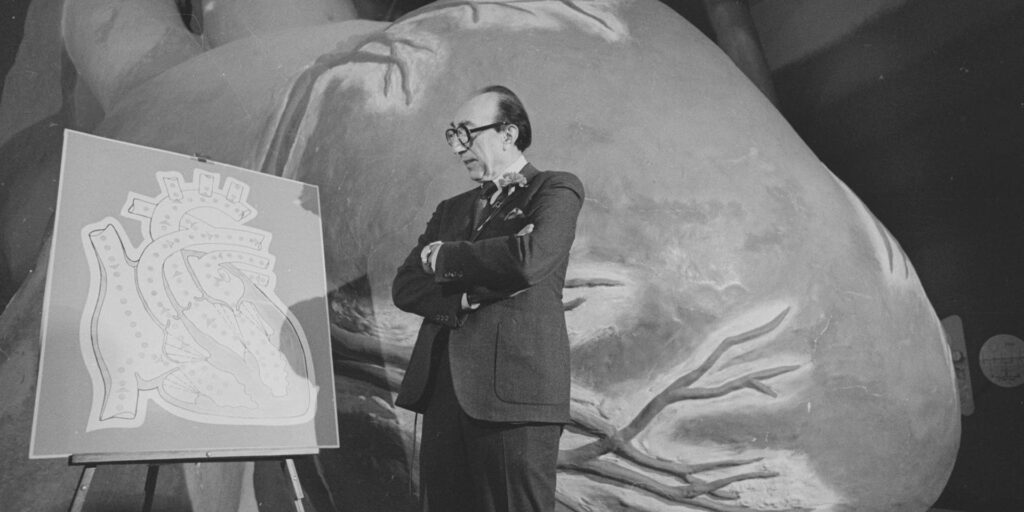
Born in Lake Charles, Louisiana in 1908 to Lebanese immigrants, Michael DeBakey (the Anglicized form of Debaghi) grew up spending time in his father’s pharmacy and enjoyed sewing, gardening and learning how motors and other machinery work. He earned his medical degree in 1932 and served in the Surgical Consultants Division of the Army Surgeon General’s Office from 1942 to 1946.
It was during this time that DeBakey and his colleagues developed special units dedicated to providing surgical care to soldiers wounded near the front lines. They were first deployed in 1943, though are best known for their work during the Korean and Vietnam conflicts, when they were known as the Mobile Auxiliary Surgical Hospital (MASH) units.
DeBakey’s surgical contributions continued for the next several decades and included performing the first successful removal of a blockage of the carotid artery (1953), developing the concept behind coronary bypass surgery (1963), pioneering the field of telemedicine with the first demonstration of open-heart surgery transmitted overseas via satellite (1965), and being the first to use a partial artificial heart (1966).
5. Internet Security
While internet security is top-of-mind now, that wasn’t the case when Egyptian-born cryptographer Taher Elgamal began his pioneering work in the field in the 1980s. “Elgamal published a paper in 1984, ‘A Public Key Cryptosystem and a Signature Scheme based on Discrete Logarithms,’ which became the basis of the Elgamal Digital Signature algorithm,” says Richard Gardner, a software developer and CEO of Modulus. This work was then utilized in the development of the Digital Signature Algorithm (DSA).”
Elgamal’s work became even more influential after the National Institute of Standards and Technology (NIST) adopted it as the Digital Signature Standard (DSS). “Like the name implies, it became the standard for electronic signatures,” Gardner explains.
And according to Abdulrahman Henedy, an Arab American entrepreneur and founder of Financeive , Elgamal’s invention of the discrete logarithm was also an important milestone in cryptography. “His work inspired other encryption variations and paved the way to create more advanced algorithms, like Advanced Encryption Standard,” he explains.
In addition, Elgamal was the driving force behind the Secure Sockets Layer (SSL), a protocol that keeps online communications like email and instant messaging secure. Because of this major technological development, he is known as the “father of SSL.”
6. The Waffle Cone
Though it may not be the most high-tech invention on the list, the waffle cone stands out not only because it’s delicious, but because not one, but four different Arab Americans claimed to have invented it. And what’s perhaps even more bizarre, is that in an origin story with so many inconsistencies, all four of the men contend that their ice cream innovation was born at the 1904 Louisiana Purchase Exposition—better known as the Saint Louis World’s Fair.
According to Nasralla, Ernest Hamwi, Nick Kabbaz, Abe Doumar and Leon B. Holwey each had their own story about how they came up with the waffle cone in 1904. “We give credit to all four of them, but we don’t recognize any of the stories as more plausible than the others,” she explains. “It remains a mystery to this day!”
But that mystery extends beyond which of the Arab American vendors (if any) deserves credit for the waffle cone. That’s because on top of these four narratives, there are several other origin stories , including some that took place prior to 1904. And though we may never know who first devised a handheld edible ice cream container, it’s safe to say that the 1904 World Fair and its Arab American dessert vendors did have a hand in popularizing what we now know as the waffle cone.
source/content: history.com (headline edited) / Elizabeth Yuko
____________
HEART SURGEON DR. MICHAEL DEBAKEY. CREDIT: BETTMANN ARCHIVE/GETTY IMAGES
The Moroccan footballer’s value on the transfer market is estimated at € 32 million.
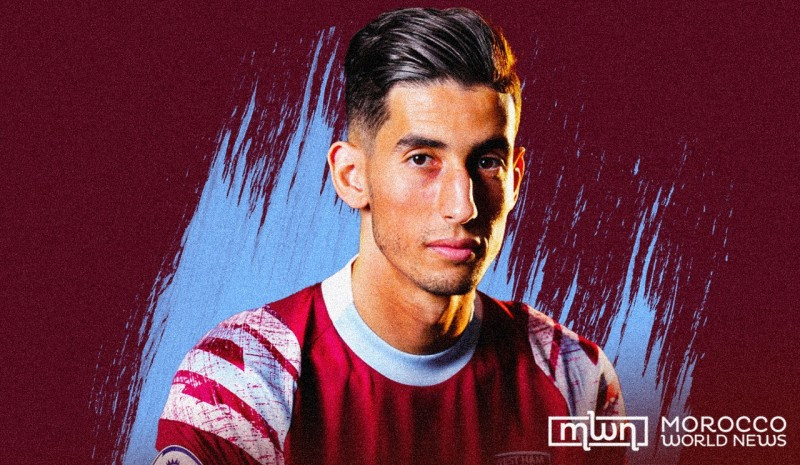
Moroccan professional football player Nayef Aguerd has been featured in a new documentary that explores his inspiring journey from playing in the streets of Kenitra to joining Premier League team West Ham as a center-back.
The documentary, titled “Premier League Stories – Nayef Aguerd,” follows the Moroccan defender’s journey from playing for the Moroccan club FUS Rabat, Dijon, and Rennes in France, to joining West Ham United in the English Premier League.
One of the documentaries’ outstanding, particularly emotional scenes shows how Aguerd suffered a serious ankle injury that nearly halted his first season in England’s top league.
Speaking about the footballer‘s inspirational story, French football journalist Julien Laurens said, “I think Aguerd’s story is incredible. He is a symbol of a Moroccan kid who played in Morocco and who was born there and still made his way all the way up to the best league in the world.”
The journalist enthused: “For the kids in Morocco, Aguerd is this Hollywood story.”
Born in Kenitra, Aguerd started his career at the Mohammed VI Football Academy in Sale, a city near Rabat. He landed his first professional contract with Fath Union Sport, also called FUS Rabat, in 2014.
Aguerd spent four seasons with FUS Rabat before joining Dijon in the French Ligue 1. In 2020, he joined Rennes FC, another Ligue 1 club. After to years of brilliant displays during which he established himself as an undroppable and reliable defender at the heart of of Rennes’ defense, the Moroccan footballer signed a five-year contract with England’s West Ham United in July 2022
At a pivotal time in his professional life, the sought-after defender underwent ankle surgery after injuring his ankle in a preseason friendly against Rangers in 2022.
“The two weeks after the surgery, it was difficult to move, so I was in the hotel, taking a lot of pain killers,” Aguerd is seen explaining in the documentary.
Aguerd, whose current value on the transfer market is estimated at € 32 million, pointed out his much-reported, high-value transfer to the Premier League put a lot of pressure on him as he felt the need to prove himself. “When you come with a transfer value like mine, you want to show that you deserve it,” the player said.
Prior to playing for the Moroccan national team, Argued stated that it was his childhood dream to represent his country in the world’s most important competition.
Little wonder then that, in the documentary, the sought-after defender was ecstatic when recalling his country’s historic World Cup journey. “I will never forget this tournament,” he said of the Moroccan Atlas Lions’ heroics in Qatar.
Dewa Sat-2 will help further improve Dubai’s utility network.
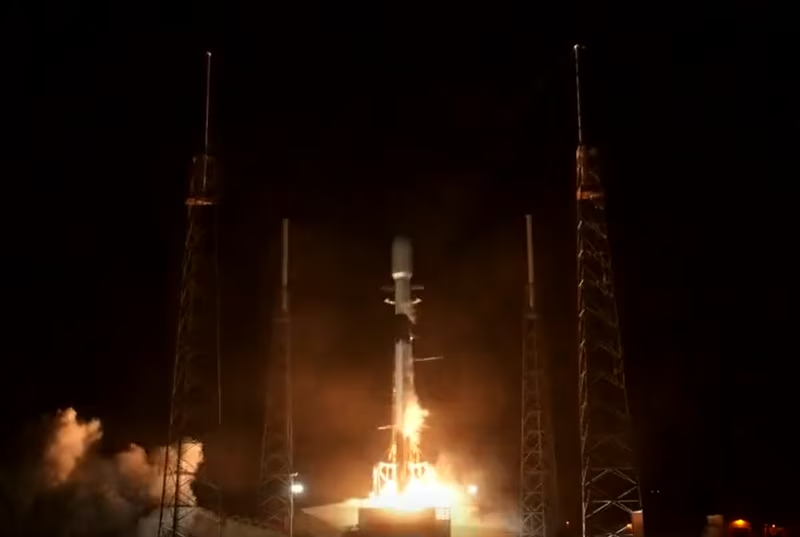
Dewa’s second nanosatellite was launched on Saturday morning on a SpaceX rocket from Vandenberg Air Force Base in California.
After several postponements due to bad weather, Falcon 9’s launch of the Transporter-7 mission took place shortly before 11am UAE time.
The launch is the seventh dedicated smallsat rideshare mission for SpaceX with 51 payloads on the flight, including CubeSats, MicroSats, hosted payloads, and orbital transfer vehicles carrying spacecraft to be deployed at a later time.
Dewa’s 6U nanosatellite — Dewa Sat-2 — comes a year after it launched its first satellite and will help further improve Dubai’s utility network.
The nanosatellite (or cubesat) features a high-resolution camera (4.7 metres) that will be used for Earth observation missions.
It was designed and developed at Dewa’s R&D centre, in co-operation with NanoAvionics in Lithuania, and is part of Dewa’s Space-D programme that it announced in 2021.
The programme aims to improve operations, maintenance and the planning of its networks by using nanosatellite technology, the Internet of Things and remote sensing technologies.
This involves launching a nanosat constellation that will support Dewa’s primary satellite.
Utility companies like Dewa can use satellite technology to monitor and map their infrastructure as well as track the environmental impact their operations have. The data can also help these companies improve their services.
Dewa is the first utility in the world to launch nanosatellites to improve its operations.
The high-resolution camera on Dewa Sat-2 will provide continuous line-scan imaging in seven spectral bands from approximately 500km orbit.
The satellite is also equipped with infrared equipment to measure greenhouse gases.