JORDAN: Pharmacologist Dr.Nancy Hakooz Receives International Honour by the International Society for the Study of Xenobiotics’ (ISSX), USA

The Jordanian pharmacologist Nancy Hakooz has been chosen as the first recipient of a prestigious new prize for a scientist from a developing country, given by the International Society for the Study of Xenobiotics.

The society, known as ISSX, is the premier scientific organisation for researchers who study how organisms metabolise and dispose of xenobiotics. Xenobiotics are compounds that are foreign to an organism or are not part of its normal nutrition. Examples include drugs, food additives, and environmental pollutants.

The new prize, called the Award for Outstanding Achievement in Xenobiotic Research by a Scientist from an Underrepresented Nation, will honour researchers either for a single major contribution to research in the field of xenobiotics, or for significant sustained contributions over time.

Hakooz, a professor of pharmacogenetics in the University of Jordan’s School of Pharmacy, was chosen to receive the inaugural award “in appreciation of her efforts in studying the effect of genes on drug response, and her studying the genes of genetically isolated peoples such as the Circassians and Chechens in Jordan.”

She will receive the award at the society’s international conference in Seattle in September

In an interview with Al-Fanar Media, Hakooz said it was important for Arab scientists to be represented in international scholarly societies like the ISSX. “We have distinguished research in this field, despite the lack of capabilities,” she said.

A Practical Element in Her Research

During her research career, Hakooz has focused on practical aspects of the topics she studies, such as how genetics affect the appropriateness of certain drugs for specific patients.

“Not all patients benefit from the same drug or the same dose, since there are genetic differences between people,” she said.

“If we can study the effect of these differences on the effectiveness of a drug in patients, then the prescription for each drug will be different from one person to another,” she said. “This is called personalising medicine, meaning that the drug is provided in accordance with each patient’s condition.”

Studying a Subject She Loved

Hakooz says she chose to study pharmacy “out of love and conviction.” She had many choices of what to study at university, she said, because her excellent grades in high school. “However, I was satisfied to study what I really loved.”

After she received her bachelor’s degree in pharmaceutical sciences from the University of Jordan in 1992, Hakooz worked for a year as a teaching assistant in the School of Pharmacy. She then got a scholarship to study for a doctorate at the University of Manchester, in the United Kingdom.

She obtained her Ph.D. four years later, specialising in drug metabolism and pharmacokinetics, the branch of pharmacology concerned with the movement of drugs within the body.

Challenges for Arab Researchers

After returning to the University of Jordan in 1997, Hakooz tried to work on research similar to her studies at the University of Manchester, but she ran into difficulties for lack of funding and support. She needed lab animals, she said, but their cost was very high, and it was not easy to obtain them in Jordan at that time.

The lack of sustained funding is one of the major challenges facing scientific research in Jordan, she said. Others include the lack of a group research culture, in which scientists exchange advice and knowledge.

When she first returned from abroad, Hakooz said, she found researchers working on isolated “islands”. However, things have become better in the last ten years, with much better collaboration among research groups, she said.

To have a group culture, she tells young researchers, it is not a requirement that all of them do the same type of research, but that they support each other through research participation, each in their own discipline.

Medicinal Clinical Trials in Jordan 

Despite these challenges, Hakooz believes Jordan has a great opportunity to become a regional centre for clinical studies of new drugs. Jordan has distinguished, globally recognised research centres that could participate in such studies, she said.

Pharmaceutical companies need to conduct clinical trials of new medicines in more than one place to collect data on a drug’s effectiveness and safety, Hakooz said.

An important question, she said, is, “How similar are the genetics of the people who participate in drug trials?”

Being able to answer that question will allow researchers to say whether the drug will be just as effective when it is widely circulated, she said. “The answer may be positive or negative. In order to be sure, we must participate in those experiments.”

Women in Higher Education

In addition to conducting research, Hakooz has held several administrative positions in her academic career.

She served as the founding dean of the Faculty of Pharmacy at Zarqa University, in northern Jordan, between 2010 and 2016. She was also a vice president of the university for three years during the same period.

In 2016, she returned to her alma mater, the University of Jordan’s School of Pharmacy. Four years later, she become the head of the college’s department of biological and clinical pharmacy.

On women’s leadership in Arab higher education institutions, she said: “In our country, administrative positions are granted, not acquired, and are not open to competition.”

“At the University of Jordan, for example, we have one female vice president compared to four male vice presidents, and three female deans compared to 21 college deans,” she said.

“Academic leadership positions in public universities are governed by a permanent factor, which is personal acquaintances because they are governed by appointment.”

“Administrative positions in academia come and go,” she added. “My genuine passion is teaching and seeing my students’ eyes shine when they catch a new idea.”

source/content: al-fanarmedia.org (headline edited)

___________
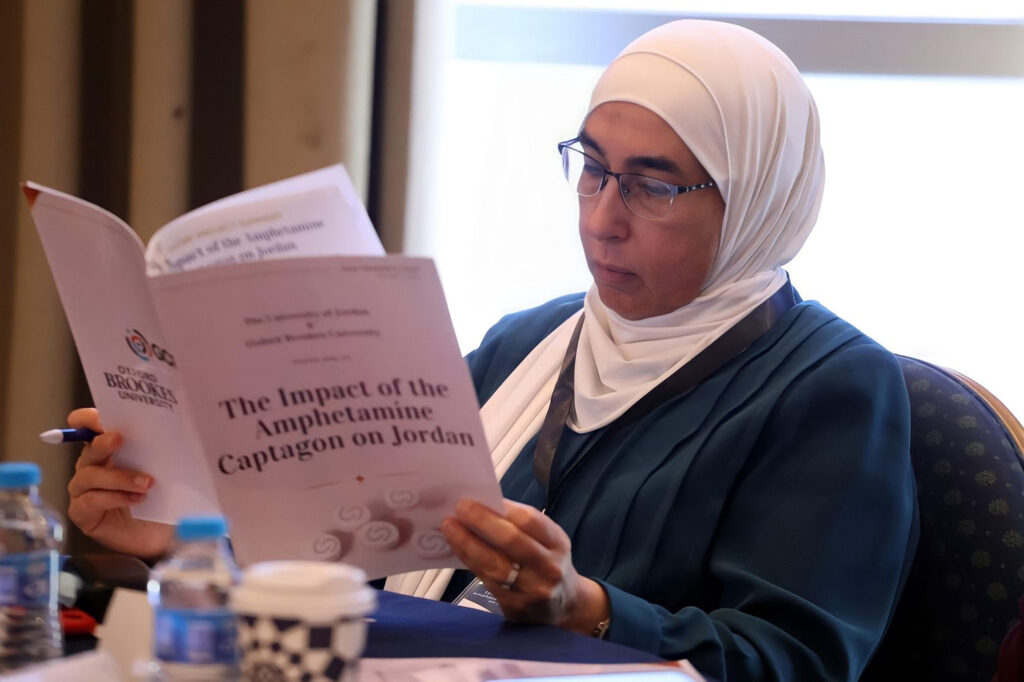
After being chosen for a prestigious international award, the Jordanian scientist talked to Al-Fanar Media about her work and the challenges for researchers in the Arab region. (Photo: Nancy Hakooz).

__________

JORDAN

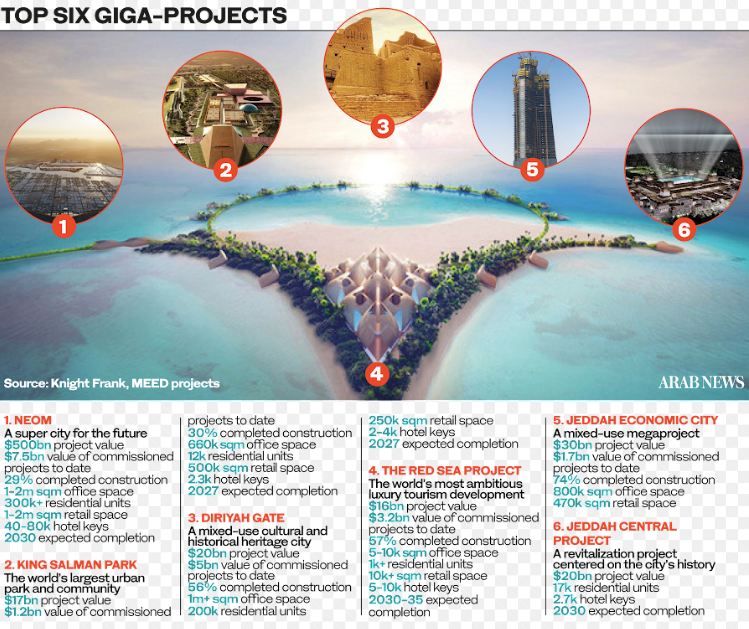
SAUDI ARABIA: With $1.1tn Investment, Saudi Arabia to become the World’s Biggest Construction Site: Knight Frank

Following the launch of Saudi Arabia’s Vision 2030 in 2016, the Kingdom is on its way to becoming the world’s biggest construction site with a total investment of SR4.13 trillion ($1.1 trillion) in infrastructure and real estate projects, according to global real estate consultancy Knight Frank.

The real estate firm projected that Riyadh’s population will reach 17 million by 2030, up from about 7.5 million today. The city has unveiled real estate projects worth $104 billion since the Kingdom’s National Transformation Plan launch in 2016.

“Vision 2030 has lit the embers of excitement across the Kingdom, and with NEOM positioned as a crown jewel in the transformative plans, people are eager to be part of history,” Faisal Durrani, partner and head of Middle East research, Knight Frank told Arab News.

Saudi Arabia will easily become the largest construction site in history, with planned construction projects in the Kingdom being over 555,000 residential units, over 275,000 hotel keys, over 4.3 million square meters of retail space, and over 6.1 million square meters of office space, Durrani said.

The consultancy firm is currently monitoring 15 giga-projects in the Kingdom, many of them new standalone supercities, said Harmen de Jong, partner and head of real estate, Strategy& Consulting in the Kingdom.

NEOM is expected to house 9 million residents across 300,000 new homes once completed, making it the largest giga-project announced to date, Jong added.

Among 1,000 Saudi households surveyed, Diriyah Gate came third in popularity as a place to own a home, behind NEOM and The Red Sea Project.

NEOM is radically redefining urban living in resource-poor regions, Durrani said. At the same time, sub-cities like the Octagon, Trojena and the Line will set new benchmarks for luxury living in the area.

Around 30 percent of Saudi homeowners are prepared to spend more than $800,000 on a second home at NEOM. “Developers have their work cut out to satisfy this pent-up demand,” Durrani added.

De Jong said that the construction progress of part of the projects stands at 29 percent, with only $7.5 billion of subprojects being commissioned.

Riyadh’s rebirth 

Another head-turning giga-project is the $20 billion Diriyah Gate which will give Riyadh 20,000 homes when it is completed in 2027, creating a city-sized historic district.

Knight Frank estimated that about $2.3 billion had been spent on Diriyah Gate’s construction.

“Not to be outdone, Riyadh’s repositioning as a commercial nerve center of the Kingdom is well underway. And businesses from the world over are already clamoring to be at the center of the Middle East’s second and much-needed global hub,” Durrani said.

Durrani added that the planned development of 2.8 million square meters of world-class office space could not come at a better time with Grade A office occupancy levels hovering around 97 percent across the city.

According to Knight Frank, an international airport worth $147 billion is also set to open shortly. Nearly 74 percent of the $200 billion national infrastructure investment goes toward the new airport. 

“The city is also attracting a huge number of internal migrants, and with readily available support to get on the housing ladder, house prices are rising rapidly and currently stand some 26 percent higher than this time last year,” he said. 

Well-being hub

The Kingdom is also improving and providing world-class urban environments for its residents with the $500 million Riyadh Sports Boulevard and the $23 billion Green Riyadh, planting 7.5 million trees in the Saudi capital to transform it into a green, vibrant metropolis.

It also extends to the 19,000 hospital beds planned for $13.8 billion, of which $8.6 billion will be spent in Riyadh Province alone.

According to de Jong, over 80 new educational institutions are being constructed for $82 billion.

“What’s more, healthcare, education and well-being sit at the core of the transformative plans, which will contribute to an extraordinary evolution in the Kingdom’s physical realm, making it unrecognizable from what we see today by the end of the decade,” Durrani said.

source/content: arabnews.com (headline edited)

___________

_________________

SAUDI ARABIA

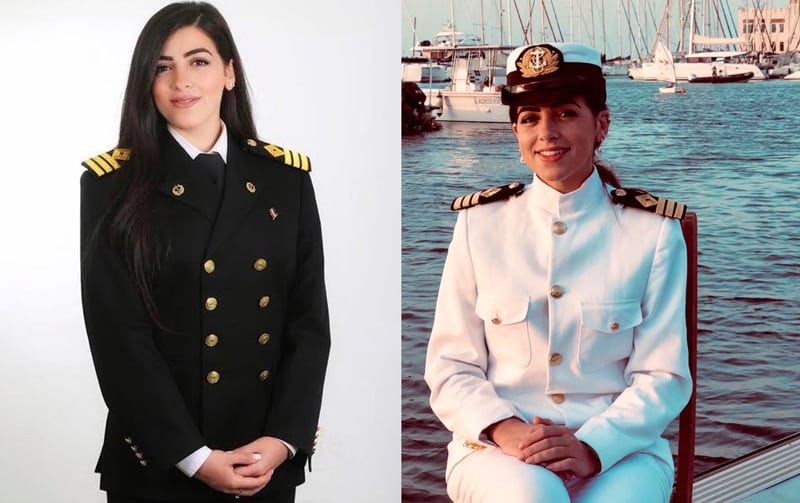
EGYPT: Marwa El-Selehdar Egypt’s First and Youngest 24-year Female Shipmaster

Navigating AIDA IV through new Suez Canal on opening day: Meet Egypt’s 1st female shipmaster.

Marwa El-Selehdar reveals how she became Egypt’s first female shipmaster and her journey to be part of the new Suez Canal celebrations.

As the government promoted the new Suez Canal as “Egypt’s gift to the world,” Marwa El-Selehdar, the country’s first and youngest female shipmaster, received the good news.

The 24-year-old would assist in navigating a naval vessel through the new waterway during the opening celebrations on 6 August, she was recently informed.

“I never thought that my dream would finally come true. I am going to be part of the inauguration as a second naval officer on the deck of the training ship AIDA IV,” El Selhdar told Al-Ahram newspaper.

El-Selehdar believes that her participation as the youngest and first Egyptian and Arab female shipmaster would bolster the image of the “civilised Egyptian women.”

“I was filled with joyous fear when I first learned about my participation.”

A 2012 graduate of the Arab Academy of Science, Technology and Maritime Transport (AASTMT) in the coastal city of Alexandria, El-Selehdar said that becoming a shipmaster was a childhood dream.

“In my first time ever training on board a ship, [My] Captain Abdel Hamid El-Qady and the rest of the crew made me feel at home,” El-Selehdar recalled.

Initially enrolled as a student in the maritime transport department at AASTMT, El-Selehdar was later encouraged to move to the marine navigation department at the school when she found out that there were no rules that prohibit females from studying to become shipmasters, she said in a television interview back in 2010.

Her determination to join the marine navigation department was further fuelled when she heard that a female student from the African Island of Djibouti won a scholarship to study at the department. 

“I challenged myself and asked for a transfer from the maritime transport department to the marine navigation department. Amid a wave of refusals, this was the battle I had to fight in order to achieve my dream,” El-Selehdar said.

As she joined a male-dominated profession, El-Selehdar says that her mother encouraged her [as a woman] to continue on the path she chose.

Egypt has been preparing for grand celebrations for the opening ceremony of the new Suez Canal waterway on Thursday.

On Tuesday, nine swimmers who belong to the Egyptian Paralympics team – set to compete in the 2016 Rio de Janeiro Paralympics —  crossed the new waterway holding a huge Egyptian flag.

Incoming visitors to the country had their passports stamped with “Egypt’s gift to the world” by Customs authorities. 

After fulfilling her first dream of becoming a shipmaster, El-Selehdar is ready to achieve her second dream of living through the opening of the new canal.

“I always thought this project was a major one, but I never realised we would actually witness this remarkable and extraordinary event,” El-Selehdar said.

source/content: english.ahram.org.eg (headline edited) text / pix: marineinsight.com

___________

pix: marineinsight.com

_________

EGYPT

UNITED ARAB EMIRATES(U.A.E) :ADNOC Sends First-ever Low-Carbon Ammonia Shipment from the UAE to Germany

 Abu Dhabi National Oil Company (ADNOC) announced, today (September 01) that its first shipment of low-carbon ammonia has left the United Arab Emirates (UAE) bound for Hamburg, Germany. This is the first ever cargo of low-carbon ammonia to be shipped to Germany.

The demonstration cargo will be delivered to Aurubis, a leading global provider of non-ferrous metals and one of the largest copper recyclers worldwide, that has its headquarters in Hamburg. On arrival in Germany, Hamburger Hafen und Logistik AG (HHLA), one of Europe’s leading logistics companies will handle the cargo.

Produced by Fertiglobe, a partnership between ADNOC and OCI, at its Fertil plant in Abu Dhabi’s Ruwais industrial complex, the demonstration cargo is the first of several test cargoes sold to customers in Germany as ADNOC expands its strategic energy partnership across the hydrogen value chain. The cargo follows a number of similar low-carbon ammonia sales that have been made to customers in Asia. Aurubis plans to utilize the low-carbon ammonia as a feedstock in its wire rod plant, testing its application as an additional, lower-carbon energy source for industial ulilization. The hydrogen it contains has the potential to be a low-carbon energy alternative for the energy-intensive processes in multi-metal production.

This is another important milestone in the planned scale-up of hydrogen and low-carbon ammonia production capabilities in Abu Dhabi, where ADNOC is developing a new world-scale 1 million tons per annum low-carbon ammonia plant at TA’ZIZ, the chemicals, industrial services and logistics hub in the Ruwais Industrial Complex.

His Excellency Dr. Sultan Ahmed Al Jaber, UAE Minister of Industry and Advanced Technology and ADNOC Managing Director and Group CEO, said: “This demonstration cargo of low-carbon ammonia builds upon the longstanding bilateral relationship between the UAE and Germany and our growing partnership in clean energy. It highlights ADNOC’s expanding role as a trusted exporter of low-carbon fuels, as the UAE focuses on the industrial growth opportunities within the energy transition.

“Our collaboration with customers in Germany also underlines ADNOC’s ambitious growth plans for the production of clean hydrogen, and its carrier fuels such as ammonia, which will play a critical role in decarbonizing hard-to-abate industrial sectors. We are committed to accelerating and deepening private and public sector collaboration in clean hydrogen projects that will reduce carbon emissions and the carbon intensity of the energy that supports our everyday lives.”

Roland Harings, CEO of Aurubis, said: “As the most efficient and sustainable smelter network in the world, Aurubis provides metals that are key for megatrends such as renewable energies, electric mobility and digitalization and hence for decarbonization. To guarantee stable processes at our sites, we are expanding our portfolio of reliable energy sources and thus investing in the decarbonization of our production at the same time. This first trial shipment of low-carbon ammonia from ADNOC represents an important milestone in our long-term vision for hydrogen solutions that will help meet our decarbonization goals.”

Angela Titzrath, CEO of HHLA, said: “With its experience in port handling and logistic of containerized dangerous goods, its vast network of seaport terminals, hinterland connections and intermodal hubs across Europe, HHLA is pleased to facilitate the import of hydrogen and its derivates to Germany and Europe as part of the strategic energy partnership.”

H.E. Michael Westhagemann, Hamburg Senator for Economy and Innovation, said: “I very much welcome the fact that our international and national partners in business and the port are leading the way with these real-world trials for decarbonizing industry. We need these real-world findings and commitment to support the ramp-up of a Green Hydrogen Economy. Hamburg as an industrial location and as a European distribution port is a blueprint for this transformation and is therefore also in the German focus.”

During the visit of H.E. Dr. Robert Habeck, Germany’s Vice Chancellor and Federal Minister for Economic Affairs and Climate Action to the UAE in March 2021, ADNOC signed agreements with a number of German companies to explore opportunities for collaboration in low-carbon and renewable hydrogen derivatives.

Building on its position as an early mover in the production of hydrogen, ADNOC plans to significantly grow its hydrogen production in support of the UAE’s ambition to supply up to 25% of imported hydrogen in key global markets. Germany’s national hydrogen strategy expects an import demand for clean hydrogen of approximately 3 million tons per annum (mtpa) by 2030 and up to 15 mtpa by 2050 when, according to research from the Hydrogen Council, hydrogen could meet up to 18% of the world’s energy demand.

Low-carbon ammonia is the most promising at-scale hydrogen carrier and potential clean fuel for a wide range of applications, including transportation, power generation and industrial, including steel, cement, and fertilizer production. It is made from nitrogen and clean hydrogen derived from natural gas feedstocks, with the carbon dioxide by-product from hydrogen production captured and stored.

Collaboration with end-user Aurubis and logistics company HHLA underscores expanding role of ADNOC as a trusted exporter of low-carbon fuels as the UAE focuses on industrial growth opportunities within the energy transition

ADNOC plans to significantly grow its hydrogen production in support of the UAE’s ambition to supply up to 25 per cent of hydrogen demand in key global markets.

source/contents: adnoc.ae (headline edited)

________________

_________________________________________________

ABU DHABI, UNITED ARAB EMIRATES (U.A.E.)

QATAR: Microsoft Opens First Global Datacenter Region in Qatar, bringing New Opportunities for a Cloud-First Economy

The new cloud datacenter region launches with Microsoft Azure and Microsoft 365, giving organizations access to hundreds of scalable, highly available and resilient cloud services.

Today, Microsoft announced the launch of its new datacenter region in Qatar, marking a major milestone for Microsoft as the first hyperscale cloud provider to deliver enterprise-grade services in the country. The new world-class datacenters are open for business with Microsoft Azure and Microsoft 365 available today.

The continued investment is in response to Qatar’s growing demand for high performance computing, and fast and reliable access to Microsoft services. The new datacenter region will play a pivotal role in providing access to scalable, highly available, and resilient cloud services to accelerate the digital transformation and advance intelligent cloud adoption of businesses, customers, and partners across Qatar.

Speaking at the opening ceremony, H.E. Mr. Mohammed bin Ali Al Mannai, Minister of Communications and Information Technology, said: The launch of the Data Centre today is considered an important milestone in the process of transforming the State of Qatar into an advanced and pioneering digital center in the Middle East and the world. This journey was inspired by the Qatar National Vision 2030, which aims to establish a diversified and competitive national economy.”

His Excellency continued: “These pioneering projects in the field of digital transformation, communications and information technology would not have been achieved without the ambitions of the country’s wise leadership and its vision to this vital sector, believing in its crucial role in the development of other economic sectors. Legislative and legal regulation of the sector and enhance its attractiveness.

Microsoft has more datacenter regions than any other cloud provider and today we are proud to deliver the first hyperscale cloud datacenter region to Qatar. This development will increase opportunities for organizations of all sizes and across all sectors to leverage our trusted cloud to innovate, better serve their customers and achieve their business goals – ultimately supporting continued economic growth that benefits all residents. said Ralph Haupter, President of Microsoft EMEA.

Providing new opportunities for customers and partners

The Qatar cloud data center region will drive growth and scale for Microsoft customers and partners in the country. Microsoft customers across multiple industries, including the Ministry of Communication and Information technology, TASMU PLATFORM, the Supreme Committee for Delivery & Legacy, and many others, have already embraced the Microsoft Cloud to develop digital capabilities and innovate in their industries. Microsoft partners such as EY, Ooredoo, Vodafone, QDS, PWC, ICT,  Malomatia, Intel, Mannai, Meeza, Starlink, and Veeam are delivering transformative solutions across the Microsoft Cloud to drive customer success.

 Building future-ready skills for employability

Earlier this year, Microsoft, in partnership with the Ministry of Communications and Information Technology (MCIT), launched the National Skilling Program, with the goal to upskill over 50,000 people in Qatar through providing digital skills acquisition programs over the next four years. To date, the program had benefited over 14,000 people.

Microsoft has also established a first-of-its kind Digital Center of Excellence to help bridge the skills gap amongst the IT community and help accelerate digital transformation, in collaboration with leading universities such as MIT xPro, the European Institute of Business Administration (INSEAD) and HEC Paris.

Delivering reliable, trusted, and resilient cloud, securely

Businesses of all sizes and industries can now host their cloud workloads in Microsoft’s Qatar datacenter, taking advantage of enterprise-grade reliability and performance. Customers can begin leveraging Microsoft Azure to develop advanced applications using AI, data and analytics, IoT and hybrid capabilities with advanced digital security and more, as well as Microsoft 365, the world’s productivity cloud that delivers best-of-breed productivity apps delivered seamlessly through cloud services.

With over 100 compliance offerings – the broadest set of compliance offerings and programs of any public cloud provider – the Microsoft cloud significantly empowers customers to meet local compliance and policy requirements. This includes the National Information Assurance Certification issued by the National Cyber Security Agency, which Microsoft received earlier this year.

With its longstanding history as an early adopter of technology, Qatar has completely embraced cloud solutions and revolutionized entire industries to develop a new, advanced digital economy. Today’s announcement will enable the country to take these groundbreaking innovations to the world, showcase its standing as a leader in digital transformation and cement Qatar’s place as a global hub for innovation,” said Lana Khalaf, Microsoft Country Manager.

To learn more about the Microsoft cloud datacenter region in Qatar, please visit the website.

source/content: news.microsoft.com

____________

_______________________

MICROSOFT / QATAR

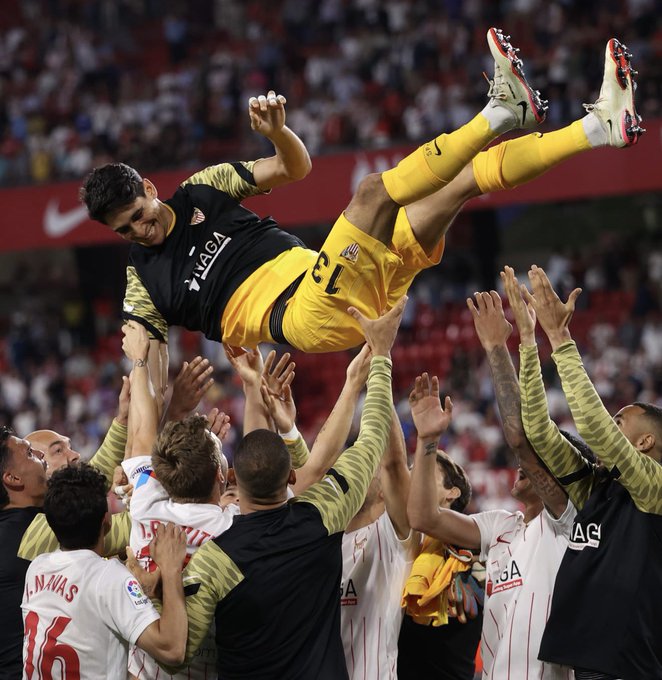
MOROCCO: Yassine Bounou (aka..Bono) makes History, becomes First Arab to Win Spanish Football League’s ‘Best Goalkeeper Award – Ricardo Zamora Trophy’

Moroccan goalkeeper Yassine Bounou, who plays for Sevilla FC, has become the first ever Arab goalkeeper to win the Spanish football league’s best goalkeeper award, the Ricardo Zamora Trophy.

Morocco and Sevilla FC goalkeeper Yassine Bounou has made history as the first Arab goalkeeper to win the Ricardo Zamora Trophy, which is awarded to the Spanish football league’s best goalkeeper of the season.

The coveted trophy, which has been awarded since 1958, is handed to the La Liga keeper with the lowest goals-to-games ratio, having played a minimum of 60 minutes in at least 28 matches.

Bounou, who has played for Sevilla since 2019, conceded 24 goals in 31 matches during the 2021-2022 season, finishing ahead of  Real Madrid and Belgium goalkeeper Thibaut Courtois who conceded 29 goals, while 32 goals were scored against Real Sociedad’s Alex Remiro. Bounou also received 13 clean sheets, meaning that no goal was conceded in those matches.

The Morocco international first joined Sevilla on loan for a year, before signing a permanent four-year contract with the Andalusian giants in 2020.

The goalkeeper, who is nicknamed ‘Bono’ by football fans, is also the first ever Sevilla player to win the award.

He also became the second African to win the prize after Cameroonian Jacques Songo’o, who played for Deportivo La Coruna and was awarded the trophy in 1997.

Bounou’s efforts also lead to Sevilla’s fourth-place finish in La Liga, enabling the team to qualify for next season’s UEFA Champions League, alongside Spanish heavyweights Real Madrid, Atletico Madrid and Barcelona.

Canada-born Bounou, who has earned 40 caps for the Moroccan national team, will be one of the Arab players to watch in this year’s FIFA World Cup in Qatar, where the Atlas Lions will be making their sixth appearance.

source/content: english.alaraby.co.uk (The New Arab) (headline edited)

____________

pix: @SevillaFC-EN

_____________

MOROCCO

UNITED ARAB EMIRATES (U.A.E): Sultan Al Neyadi Chosen As First Arab To Go On 6-Month Mission To Space

The United Arab Emirates (UAE) became the third Middle Eastern nation to send a man into space in 2019 when it launched Hazza Al Mansouri to the International Space Station, making him the nation’s first astronaut according to catapult. The UAE then rose to the position of the 40th spacefaring nation. Now, Sultan Al Neyadi is another astronaut embarking on a new journey to set new records. An announcement was made earlier last week that UAE’s Al Neyadi will be flying to the orbiting lab on SpaceX’s Crew-6 mission, which is expected to launch in the first half of 2023 from Florida’s Kennedy Space Centre in the U.S. His participation was arranged through a previously disclosed agreement with Axiom Space, a Texas-based aerospace company.

Al Neyadi was chosen among a group of Emirati astronauts to serve as the first Arab astronaut on a protracted space mission to the International Space Station (ISS). The Crew-6 mission will be launched by NASA and SpaceX. Al Neyadi will carry out numerous intricate and sophisticated scientific experiments throughout the flight as a part of the UAE Astronaut Program.

Last year, the UAE made history with its unmanned Hope Probe to Mars by becoming the first Arab country and the fifth globally to reach the Red Planet. The mission has since discovered a new type of aurora on Mars, challenging scientists’ understanding of the planet, which was thought not to possess auroras at all. It is clear that the UAE is looking for possibilities to utilize advanced satellite communications, and use cutting-edge space technology on Earth. Therefore, the UAE established the National Space Fund which is an AED 3 billion fund from UAE Space Agency.

The fund will promote innovative initiatives that assist foreign and Emirati businesses in working together on applications in the engineering, sciences, and research fields related to space. A constellation of sophisticated remote sensing satellites using radar technologies will be the fund’s first project to be sent into orbit and will offer unmatched imaging capabilities.

This fund is crucial since it has made other projects possible and enabled economic diversification. A unifying factor among many of the Gulf Region’s nations is the transition away from an economy reliant on the production and sale of oil. In addition to the UAE, other nations like Saudi Arabia, Bahrain, and Kuwait are currently investing billions of dollars in research and development to open up new businesses, which has gradually raised regional interest in space.

The UAE’s trajectory is one that is ambitious to expand its space sector which was made official In March 2019. This is when the UAE Government launched the National Space Strategy 2030, which sets the general framework for the UAE’s space industry and activities carried out by public and private sectors for the years leading up to 2030.

source/content: scoopempire.com

_____________

pix: nasa.gov / NASA/Beth Weissinger

___________________________________

UNITED ARAB EMIRATES (U.A.E.)

QATAR to Build World’s Largest ‘Blue’ Ammonia Plant

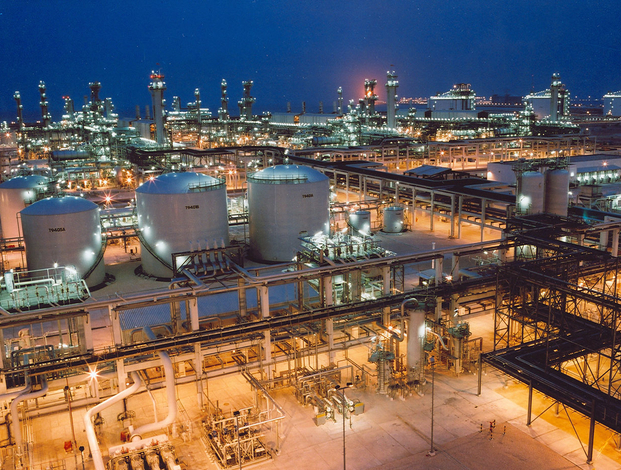
QatarEnergy will build the world’s largest “blue” ammonia plant, which is expected to come online in the first quarter of 2026 and to produce 1.2 million tons per year, Saad Al-Kaabi, chief executive and state minister for energy, said .

While conventional ammonia production emits CO2 if it is made with fossil fuel, during the production of blue ammonia any carbon dioxide generated is captured and stored.

The facility, the Ammonia-7 project, will cost $1.156 billion to build and capture and sequester 1.5 million tons of carbon dioxide a year through the manufacturing process, he added.

“We see an increasing interest in using ammonia as fuel, driven by the need to reduce CO2 emissions in the energy ecosystem,” Al-Kaabi said.

Ammonia is mainly made from hydrogen produced from natural gas and nitrogen from the air. It does not emit CO2 when burned.

It is principally used as a raw material for fertilizer and chemicals, but it can also be used as a low-carbon fuel in power stations.

Thyssenkrupp and Consolidated Contractors Co. are the contractors of the project.

source/content: arabnews.com

___________

While conventional ammonia production emits CO2 if it is made with fossil fuel, during the production of blue ammonia any carbon dioxide generated is captured and stored.

_________

QATAR

MOROCCO: Laila Amili: Mutlifront Activist, Passionate Pan-African

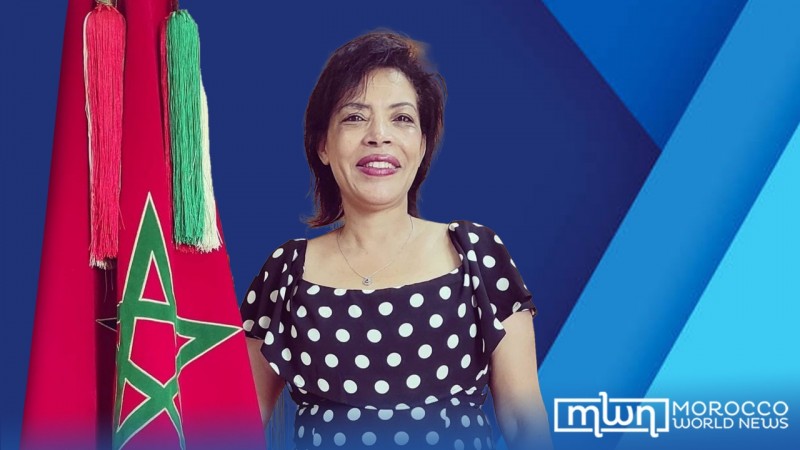
A women’s rights advocate and secretary general of the Moroccan climate coalition, Laila Amili is now working to build a bridge between Moroccan associations and the All-African-Movement Assembly.

From August 29 to 31, pan-African activists from across Africa and the Diaspora will gather in Arusha, Tanzania, for the All-African-Movement Assembly (AAMA) conference promoting justice, peace, and dignity. 

AAMA organized a first validation conference in August 2016 in Arusha, gathering 272 people from 40 countries from across the continent. 

The pan-African movement is built on five pillars : fighting for more civic and political action; promoting women’s rights and individual freedoms across the continent; advocating for the right to equity and dignity; promoting democratic and corruption-free governance; and calling for climate and environmental justice. 

Morocco’s Lingering Gender Injustices

Laila Amili, president of Mains Libres (Free Hands), a Moroccan association fighting for girls and women’s rights, joined the AAMA two months ago. She’s a socialist, a founding member of the Arab feminist network Tha’era, and a climate activist. 

In conversation earlier this week with Morocco World News, Amili spoke passionately of her new challenge: working to build a bridge between the pan-African movement AAMA and Moroccan associations. 

“We hope to promote African solidarity to build the future we want as Africans: the right to peace, social inclusion, and prosperity for Africans all around the world,” Amili said. 

For the Moroccan activist, sharing different experiences from different African actors would be a way to build progress for women’s rights. In Morocco, much of Amili’s activism revolves around fighting against underage marriage and domestic violence, as well advocating for greater female visibility in leadership positions.

It’s been three years since Mains Libres first launched its fight to forge substantive changes in the Moudawana, the Moroccan family code. In particular, the group has ceaselessly called for both the criminalization of child marriages and the protection of divorced mothers’ rights to keep their children. 

Underage Article 175 and 176 of the current Moroccan family code,  a divorced mother loses child custody if she remarries and her child is over 7 years old. 

For Mains Libres, Amili said, “the child should stay with her mother until 15, even if she decides to remarry.” 

And when legislative change does occur, as was the case in 2018 with the parliament’s adoption of Law 103.13 about violence committed against women, Amili insists that effective implementation should follow. Legislative change is only meaningful if it actually leads to tangible impact or perceptible changes in the everyday lives of the women who have long borne the weight of gender inequality.    

Embracing Africa

“I see that these struggles are common in most African countries,” Amili said. “That’s why a lot of people are willing to join AAMA and participate in African solidarity.” 

She recalled that after the first AAMA regional convention in Rabat on July 28, 2022, more Moroccan associations expressed keen interest in pan-African cooperation. This was a notable, emphatic, and overdue break from a long tradition, Amili argued, pointing out that Moroccan activists previously tended to work a lot with Arab or European countries. Now is the time to value and participate in pan-African solidarity, she insisted.  

The AAMA summit in Tanzania is even more relevant amid the slow post-COVID across Africa. For Amili, one main reason for the event’s particular significance is the opportunity to discuss with fellow pan-African activists the far-reaching consequences that the pandemic has on the lives of many women across their continent, especially those who were already living in a precarious financial situation. 

According to a March 2021 information note from Morocco’s High Commission for Planning (HCP), women were by far the hardest hit by the COVID-induced unemployment in the North African country. 

The World Needs Solidarity

In addition to the devastating socio-economic disruptions brought about or further exacerbated by the COVID crisis, people – especially women – from the Global South are also the principal victims of the emerging ecological challenges.

“Us, people from the South, are the ones who are suffering more and more, because of poverty and increasing drought,” Amili said. “Poor people are the main victims of climate change.” 

Amili is also the secretary general of the Moroccan coalition for climate justice, a gathering of 230 associations. Having participated in numerous international climate conventions in that role, she  deplores the lack of women in leadership decisions. 

One of the priorities of the Moroccan climate coalition is to heighten awareness about climate justice to make it “real” and not only written on official papers, said Amili. 

Over the past months, one of Amili’s many activities – or duties – as the president of the coalition has been to travel to rural, marginalized areas to raise awareness about the climate and share vital information about environmental challenges with underserved communities whose lives and livelihoods have long been upended by rampant changes that they do not know of, let alone understand.  

For Amili, the world can meet several of the challenges it faces if enough people are taught – or learn – to nurture a certain disposition toward empathy and solidarity when making sense of global challenges. 

“We need solidarity for peace, human dignity, and human rights,” she said. “One hand can’t build anything, it’s with two, three, or four hands that we can achieve our goals.” 

source/content: moroccoworldnews.com (headline edited)

_____________

_____________

MOROCCO

TUNISIA: Haute Couture Designer Ali Karoui talks about being at the Zenith of World of Fashion

I like the idea of making people dream through creation, says Ali.

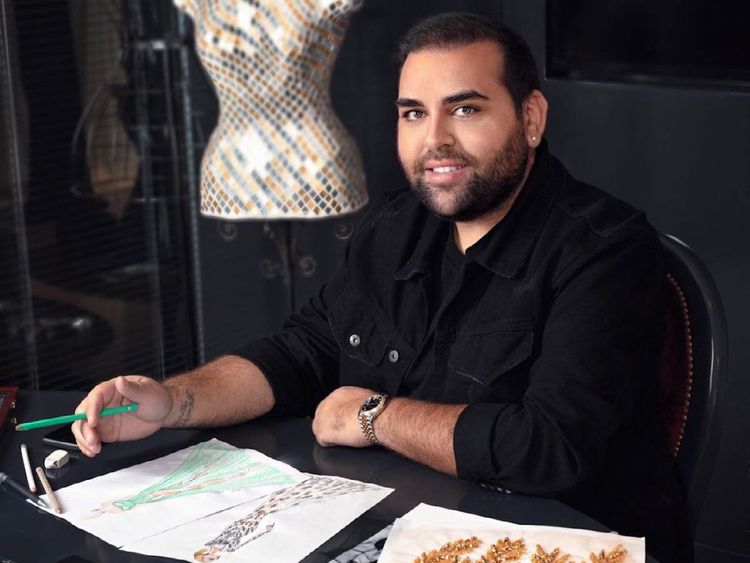
Tunisian designer Ali Karoui is best known for his red carpet haute couture as the favoured creator for fashion icons such as Cristiano Ronaldo’s girlfriend Georgina Rodriguez.

He chatted to The Kurator exclusively about being at the zenith of the world of fashion.

What draws you toward the world of haute couture instead of ready-to-wear?

I like this idea of making people dream through creation… And the rarity and the mystery that surrounds the world of haute couture.

Your interest in fashion began at an early age – how did your upbringing in Tunisia inspire you to go into fashion design?

I was lucky enough to grow up in an environment where women are treated like queens. I was looking at the closets of famous couturiers when I was a child, especially that of my grandmothers and mother, and that’s what gave me the love that I have today for haute couture.

You now dress A-listers and celebrities all over the world – does this create additional pressure to impress and attract attention with your designs?

Yes, of course, it creates a bit of stress because the more we are known the more demand there is on us, and it means more work for me and my team, but it is so enjoyable to see your creations worn by celebrities on the world’s biggest red carpets. It is a consecration for each artist to see his work recognized.

How did you first start collaborating with Georgina Rodriguez and in a way creating her signature look for her?

I met the beautiful Georgina at the Cannes festival in 2019. Her stylist contacted me to try one of my dresses that she saw in a picture. As she said on Netflix, I’m not trying to change her, she fell in love with my work and since then we are inseparable.

Your style can be interpreted as somewhat risqué – has this affected your career early on and did you face resistance in the Arab world of fashion design?

In no case did it affect my career, on the contrary, my style has made me known all over the world. You must believe in your dreams and continue to move forward, that is the key to success.

What kind of influence did Azzedine Alaïa have on you?

Azzedine Alaïa was a visionary. I had the chance to meet him several times. He gave hope to young Tunisian fashion designers, and allowed us all to dream that for us too, it was possible…

Who are some other fashion designers that you respect or that you looked up to early in your career?

There are many… I was in love with the vision of Gianni Versace, Thierry Mugler, Jean Paul Gaultier, and the master, Alaïa. Legends!

Do you keep an eye out on young and up-and-coming designers from the North Africa and Middle East region?

Of course! Many of them have a very bright future

source/content: gulfnews.com

_____________

Tunisian designer Ali Karoui is drawn to the “mystery that surrounds the world of haute couture”.Image Credit: Instagram @alikaroui

___________

TUNISIA