Award-Winning Egyptian Filmmaker Ali El-Arabi finds his Voice through Film

 Nearly 10 years ago, Egyptian filmmaker Ali El-Arabi, the award-winning documentarian behind “Captains of Zaatari,” which hits Netflix this month, made a promise. He was in the Zaatari refugee camp in Jordan, the largest temporary settlement of displaced Syrians in the world, and a teenaged boy he had just met named Fawzi Qatleesh asked if he could speak his truth to the camera.

“On the first day I arrived, he asked me, ‘Ali, can you film me? I want to say something to the people outside of this camp.’ The second he started to talk, I said to myself, ‘This boy is my hero,’” El-Arabi tells Arab News.

As the film hits Netflix this month in the Middle East, El-Arabi is overjoyed. Finally, after seven years of filming and a years-long global festival tour, his promise is fulfilled.

El-Arabi knew what it felt like to have a message that people needed to hear. He was himself once an athlete, a dedicated and successful martial artist, even winning Egypt’s national kickboxing championship. During the Egyptian revolution, however, El-Arabi abandoned any future he might have in sport, instead turning towards filmmaking.

“I started to feel I had something to say, but I couldn’t say it with my voice,” he says. “I realized filmmaking was the way I could say it. I started making small documentaries about what was happening and screening them in the street. One day, the police came and I took my film and I ran. That made me realize the power of what I could say with a camera.” 

El-Arabi left Egypt, partnering with the ZDF TV channel to film documentaries in war zones including Iraq, Syria, Kurdistan and Afghanistan. War reporting, however, was unfulfilling, as it so often stripped away the humanity of those caught in its horrors.

After meeting Qatleesh and his friend Mahmoud Dagher — the two boys he would ultimately follow from the refugee camp in Jordan all the way to an elite soccer program in the Gulf — El-Arabi filmed them for seven years before whittling their story down to a scant 75 minutes, resulting in a story that showed their incredible journey while also refusing to gloss over the realities of refugee life.

Since its limited release in 2021, the film has already transformed the lives of both young men whose story it follows.

While he may be done telling their story, El-Arabi has been hard at work over the last few years on another — “Ashish’s Journey” — about the upcoming FIFA World Cup. It is inspired by a man who approached him in Qatar as he filmed “Captains of Zaatari.” 

The more time El-Arabi spent with the man, the more his innocent aspirations intrigued him, leading him to not only film Ashish in Qatar, but to follow him and his family back to India, even adding fictional elements (with Ashish playing himself) inspired by the classic French satirical novella “Candide” to the docu-film.

“He’s actually a very good actor,” El-Arabi says.

While El-Arabi knows that he will finish filming later this year at the World Cup, chronicling Ashish’s adventures during the games, he does not plan to rush the film out in the immediate aftermath of the event. 

El-Arabi has other projects in the works as well. He’s currently producing a film about Algeria and discussing producing an upcoming project with his best friend Mohamed Diab, the director of Marvel’s “Moon Knight.” Closest to his heart, though, is the fiction film he has in the works between Los Angeles and Egypt, inspired by both his own history in boxing and his relationship with his father. 

While telling Arab stories will remain a key part of El-Arabi’s career moving forward, ultimately what drives him is not capturing his identity — it’s capturing his soul. 

source/content: arabnews.com (edited)

_____________
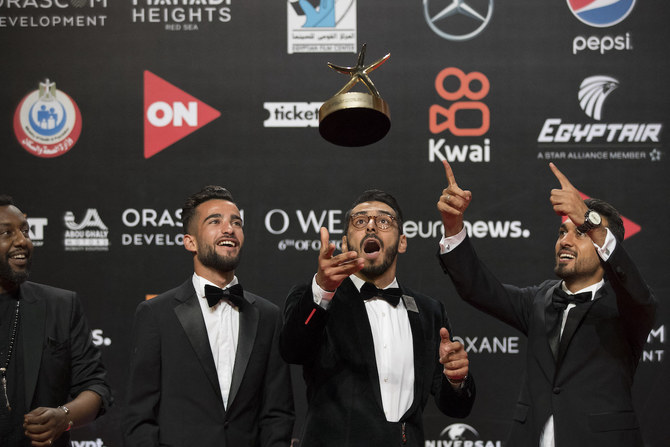
(From left) Mahmoud Dagher, Ali El-Arabi and Fawzi Qatleesh with the award for Best Arab Documentary Film at El Gouna Film Festival in 2021. (AFP)

________

EGYPT

Khulood Al Zaabi, the First Emirati Female Football Referee to join the Asian Football Confederation (AFC)

 Khulood Al Zaabi, the first Emirati female football referee to join the Asian Football Confederation (AFC), said she is delighted to join the AFC’s elite referee list, noting that her new status comes with great responsibilities that include showcasing the leadership of Emirati women globally.

Al Zaabi’s appointment came after she passed several referee training courses.

In an interview with the Emirates News Agency (WAM), Al Zaabi said that being the first woman in the list of eight referees, which include Mohammed Abdullah Hassan, Ammar Al Junaibi, Omar Al Ali, Adel Al Naqbi, Yahya Al Mulla, Sultan Muhammad Salih and Ahmed Issa Darwish, is a great honour.

She also highlighted her gratitude for the support of Sheikh Rashid bin Humaid Al Nuaimi, Chairman of the UAE Football Association.

Speaking about her ambitions, Al Zaabi explained that she aims to referee games at the World Cup and the UAE Pro League, noting that she can effectively referee men’s games and has self-confidence.

Regarding her participation as a video assistant referee (VAR) in some UAE Pro League games, Al Zaabi said, “During the previous season, I participated as a VAR in two matches in the ADNOC Pro League last year, which aligns with my focus on enhancing my work and training to gain experience.”

Al Zaabi encouraged young girls to play sports and achieve excellence in a sport.

Regarding her vision of women’s football in the UAE, she explained that the sector is continuing its growth, especially with the great support provided by the UAE Football Association, which serves to ensure creating a major transformation in the sector.

source/content: wam.ae (headline edited)

__________

____________________________________

UNITED ARAB EMIRATES (U.A.E.)

Tunisian Artist Nadia Kaabi-Linke Wins Saudi Arabia’s ‘4th Ithra Art Prize’ underlining Pan-Arab Emphasis of this Year’s Award at the 1st Diriyah Contemporary Art Biennale

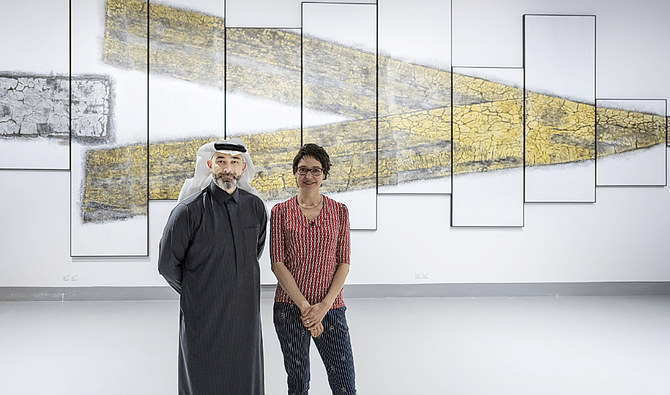
 As visitors arrive at the end of the impressive first Diriyah Contemporary Art Biennale their attention is drawn by a gigantic yellow arrow nearly 20 meters long on the wall.


If they look closer at the artwork, titled “E Pluribus Unum – A Modern Fossil,” they can see the numerous cracks in the body of the arrow.


The artwork was created by Tunis-born, Berlin-based artist Nadia Kaabi-Linke, who this year won the fourth Ithra Art Prize. Each year the prize, which was set up in 2017, gives up to $100,000 for the creation of a new artwork that becomes part of Ithra’s permanent collection.


Kaabi-Linke’s massive work presents a contemplative way to look at the pandemic, notably, the decline in commercial air traffic during 2020, which, according to the artist, raises questions as to how humanity measures its progress and environmental awareness versus economic profit.


“The work is meant as a metaphor for modern times,” she told Arab News. “It is particularly relevant to 2020 because all of the airplanes in the world stopped flying.”


The artist relates it also to Tempelhof Airport in Berlin, which has been shut for around 13 years and is used as a camp accommodating up to 7,000 refugees. “I saw a parallel in this because we were all grounded, all of humanity and I think it is an exceptional moment in human history,” she added. “I also wanted to draw the parallel between the aviation industry and the economy. The symbol of economic growth is the rising arrow.”


The cracks, explains Kaabi-Linke, are there because it represents an abandoned airport. The work is a print made from an existing arrow that shows where the planes land and where they take off. “It brings you back to the earth as the cracks in the arrow also refer also to the idea of a cracked earth. The question that the work asks is: Do we want to stay in a world as we know it that has no future or do, we want to take the risk to go to something that is unknown but that probably has a future?”


“At Ithra, our commitment to contemporary art is embodied in this art prize,” Ashraf Fagih, head of programming at Ithra told Arab News. “This year is different for two reasons: First, we have opened up the prize to 22 Arab countries and not just artists in Saudi. Secondly, we are collaborating with the Diriyah Contemporary Art Biennale. To us this has special significance because it means the Ithra Art Prize came back home.”


The prize was previously unveiled during Art Dubai.


“As a distinctive landmark in the Saudi art scene, and in integration with its most prominent event ever, the prize’s artwork was unveiled during the Diriyah Contemporary Art Biennale,” said Fagih. After the biennale the artwork will travel back to Ithra in Dhahran in the Eastern Province to become part of the institution’s permanent collection.

source/content: arabnews.com (headline edited)

___________

Ashraf Fagih, head of programming at Ithra with Ithra Prize winner artist Nadia Kaabi-Linke. (Supplied)

________________________________________

GERMAN / TUNISIAN / SAUDI ARABIA

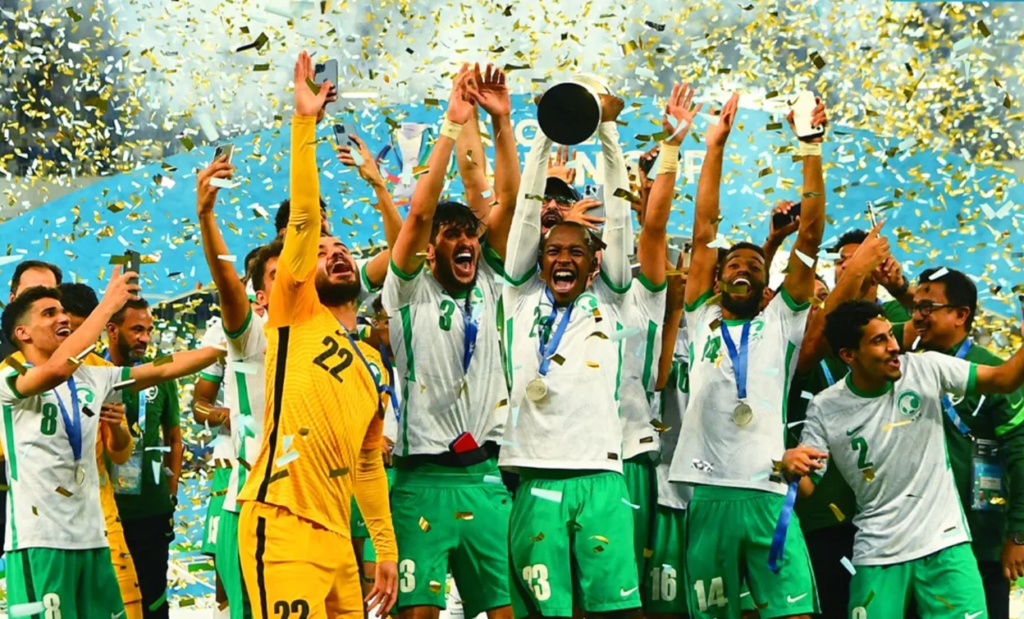
Saudi Arabia Crowned AFC U-23 Asian Cup Champion for the First Time.

The young Green Falcons lifted the title for the first time after finishing as runner-ups in 2013 and 2020.

On Sunday, Saudi Arabia made history by becoming Asian U-23 champions for the first time after defeating hosts Uzbekistan 2-0.

Strikes from players Ahmed Al-Ghamdi and Firas Al-Buraikan in the second half made the team Saudi, Green Falcons the winner of the finals.

The win also marks the first major continental trophy for Green Falcons’ coach Saad Al-Sheri who has previously lost two continental finals in his career.

Team Saudi Arabia won the finals without conceding a single goal in all the six matches of this edition of the competition.

The first half of the match saw the Saudis almost take the lead but couldn’t as Uzbekistan’s goalkeeper Vladimir Nazarov stopped Ayman Yahya’s header from going in.

In the second half of the game, player Al-Ghamdi gave Saudi Arabia the lead by making a strike. Player Al-Buraikan made another strike with sixteen minutes remaining in the game.

The Young Falcons were crowned the winners of the AFC U-23 Asian Cup in the presence of the Saudi Arabian Football Federation president, Yasser Al-Misehal.

However, this is the first time a team from the United Arab Emirates has won the trophy. The young Green Falcons were runner-ups for the AFC U-32 Asian Cup in 2013 and 2020.

Previously, team, Saudi Arabia has defeated Australia by 2-0 in the 2022 AFC U-23 semi-finals held on Wednesday at Pakhtakor Central Stadium in Tashkent. The goals were scored by Hussain Al-Eisa and Ayman Yahya.

Whereas, Uzbekistan defeated Japan by 2-0 in the second match of the semi-final held on Wednesday.

source/content: me.mashable.com

____________

pix: facebook. com

_________________

SAUDI ARABIA

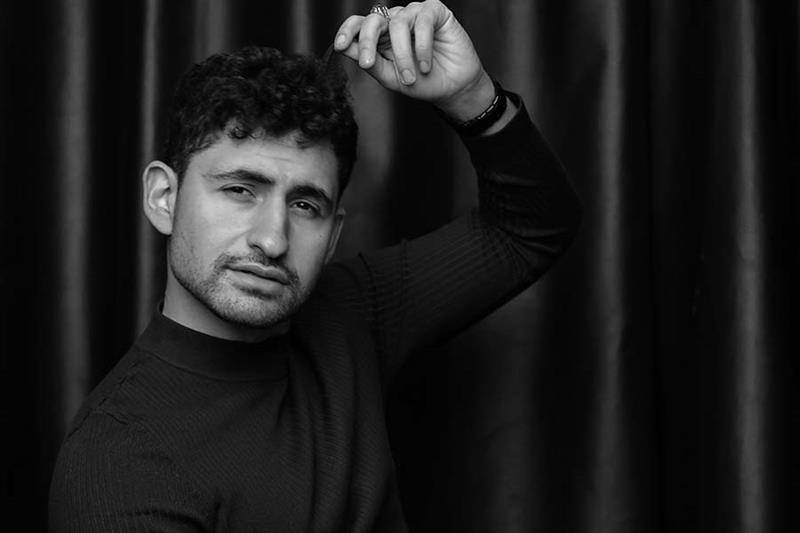
Egyptian Actor Amir El-Masry cast in Netflix’s The Crown

Egyptian actor Amir El-Masry was cast in the upcoming fifth season of Netflix’s historical drama The Crown, according to a PR representative on Wednesday.

El-Masry will portray the young Egyptian billionaire Mohamed Al-Fayed, Egyptian-born UK-based businessman, owner of Hôtel Ritz Paris and formerly Harrods department store and Fulham FC.

The cast of the fifth season also includes Egyptian-British actor Khalid Abdalla who has ben cast as Dodi Fayed , Mohamed Al-Fayed’s son and late Princess Diana’s boyfriend. Abdalla will play opposite Elizabeth Debicki as Diana.

Born in Cairo in 1990 and raised in London, El-Masry’s career kicked off with roles in Egyptian films, earning him Best Young Actor at the Egyptian Oscars in 2009.

Graduating from The London Academy of Music and Dramatic Art in 2013, Amir appeared in Jon Stewart’s debut feature Rosewater and various acclaimed TV series before his breakthrough role in The Night Manager (2016), followed by Lost in London (2017), The State (2017) and Age Before Beauty (2018).

Other notable credits include the critically acclaimed BAFTA nominated mini-series The State, a series regular role of Dante in the new BBC series Age Before Beauty and the lead in the first American-Saudi feature The Arabian Warrior.

Following the reign of Queen Elizabeth II, including political and romantic events that have shaped the twenty-first century, The Crown is considered one of the greatest series in the history of drama.

The series has won over 130 awards, including 21 Primetime Awards, of which seven were during the 73rd Primetime Emmy Awards in 2021, scooping awards of all categories. 

The first season of The Crown was released in November 2016. Its fifth season is scheduled for release in November 2022.

source/content: english.ahram.org.eg

____________

_______________________

BRITISH / EGYPTIAN

Bahrain Wins Chairmanship Seat of the WTO’s Committee on Safeguards

Bahrain has won the chairmanship seat of the Committee on Safeguards, a subcommittee of the Council of Trade in Goods at the World Trade Organization (WTO).

Maryam Abdulaziz Al Doseri, Commercial Attaché of the Ministry of Industry, Commerce and Tourism at Bahrain’s Permanent Mission to the United Nations and other organizations in Geneva, is now the Chairperson of the Committee on Safeguards. 

On May 23, WTO members reached consensus on the names of the chairpersons for the 14 subsidiary bodies that report to the Council for Trade in Goods.

The Committee on Safeguards (the Safeguards Committee) was established to administer the Safeguards Agreement. It oversees the operation of the Agreement and is responsible for the surveillance of Members’ commitments.

Minister of Industry, Commerce and Tourism Zayed bin Rashid Al Zayani extended his heartfelt congratulations to His Majesty King Hamad bin Isa Al Khalifa and to His Royal Highness Prince Salman bin Hamad Al Khalifa, the Crown Prince and Prime Minister, on Bahrain’s achievement. 

“The success of Bahrain in becoming the chair of the Committee on Safeguards is a source of immense pride as it affirms the unlimited support to the Kingdom of Bahrain,” the minister said.

“It reflects the ambitious and unprecedented visions to chart a strong trade based on justice, transparency, diversity and innovation  under the generous support of HM King Hamad bin Isa Al Khalifa and the follow-up of HRH Prince Salman bin Hamad Al Khalifa, Crown Prince and Prime Minister.  This success is a strong motivation for further achievements and accomplishments by the Kingdom of Bahrain.”

source/content : bna.bh

__________

Maryam Abdulaziz Al Doseri

___________

BAHRAIN

Saudi Arabia’s ‘The Islamic University of Madinah’ Achieves its Second World Record with 170 Nationalities on Campus 

With more than 20,000 students, the Islamic University of Madinah has become a meeting place for the world’s diverse cultures.

The Islamic University of Madinah has entered the Guinness World Records for the second time for having more than 170 nationalities in its student body.

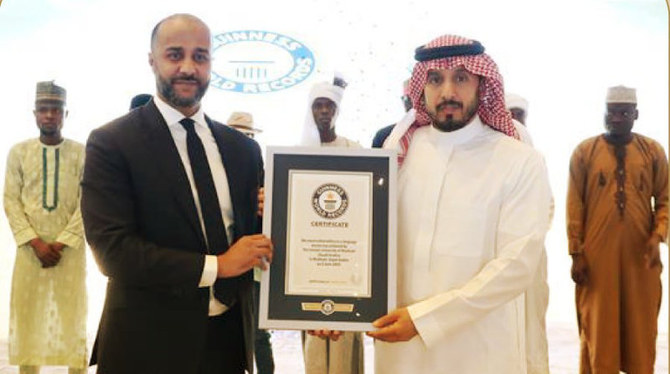
Talal Omar, the MENA director of the records reference book, handed the framed certificate bearing the new world record to the president of the university, Prince Dr. Mamdouh bin Saud bin Thunayan Al-Saud, in Madinah this week.

Opened by royal decree in 1961, the university first broke the record in 2016, but has overcome its own standard with another expansion in nationalities.

With more than 20,000 students studying in nine faculties, the Islamic university has become a meeting place for the world’s diverse cultures.

The Saudi government offers students from around the world full scholarships that cover the entire cost of education, accommodation and transportation.

Notable alumni include Sheikh Abdul Latif Derian, the grand mufti of Lebanon; Sheikh Khaled Hafiz, former advisor to the Muslim minority in New Zealand; Dr. Abdullah Hakim Quick, Canadian scholar and historian; Prince Saud bin Abdul Rahman bin Nasser, deputy governor of the Northern Borders region; Sheikh Mishary Al-Afasy, famous Qur’an reciter who is a specialist in the 10 readings; and Dr. Mohamed Jallow, a Senegalese Islamic preacher and author.

source/content: arabnews.com (headline edited)

___________

Prince Dr. Mamdouh bin Saud bin Thunayan Al-Saud (right), president of the Islamic University of Madinah, receiving the award from Talal Omar, MENA director of Guinness World Records. (Supplied)

_________________

SAUDI ARABIA

Eritrean Athlete Nazareth Woldu Registers New Record

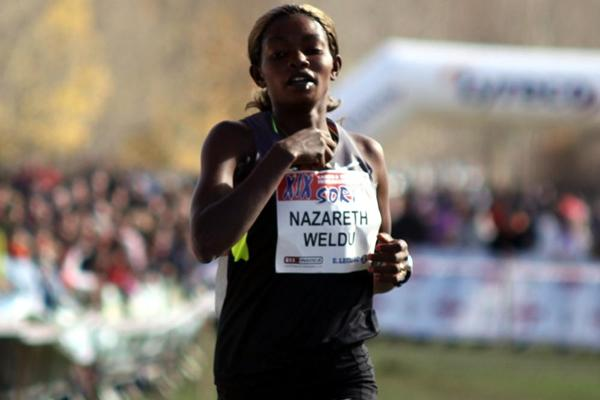
Olympian Athlete Nazareth Woldu registered new record finishing the race in 21 minutes and 28 seconds at the Seoul International Marathon (Daegu) that was held today, 03 April in Seoul, South Korea.

Athlete Nazareth improves the record that was held by herself with 7 minutes.

Moreover, Olympian Athlete Nazareth has improved the 10 km national record that was held by Athlete Simret Sultan since 2006.

Athlete Nazareth has also improved her national marathon record for the fourth time including at the Beirut Marathon 2018, Gold-Coast Marathon 2019, Australia, Milano Marathon 2021 and at this year’s Seoul Marathon 2022.

According to her coach, Livingston Abraha, Athlete Nazareth is preparing to take part at the International Athletics competition that will be held this year in the United States.

The Mereb Setit Athletics Training Center has produced many Olympian Athletes including Nazareth Woldu and Rahel Daniel.

Distributed by APO Group on behalf of Ministry of Information, Eritrea.

source/content: african.business (headline edited)

_________

pix: facebook.com / @ERITREA

___________

ERITREA

‘FIFA World Cup Qatar 2022’ Creates History, Debut’s Women Referees for First Time in Men’s Competition

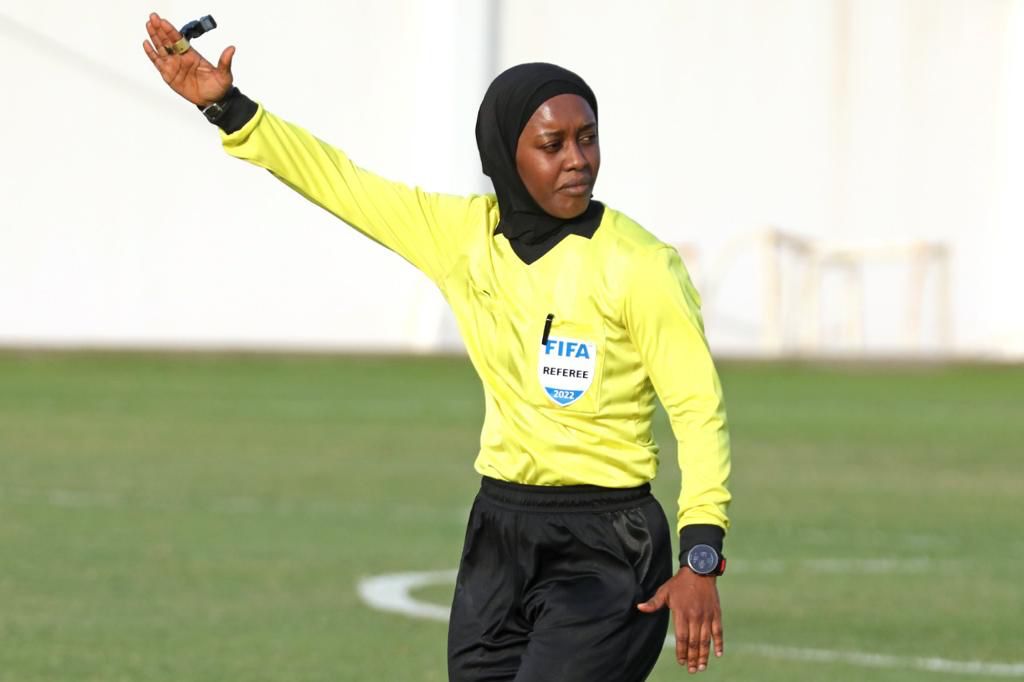
Women referees will officiate matches at the men’s World Cup for the first time in Qatar this year, the sport’s governing body FIFA announced on Thursday.

Three women referees and three women assistant referees will be part of the global showpiece event in Qatar, which will be held from Nov. 21 to Dec. 18.

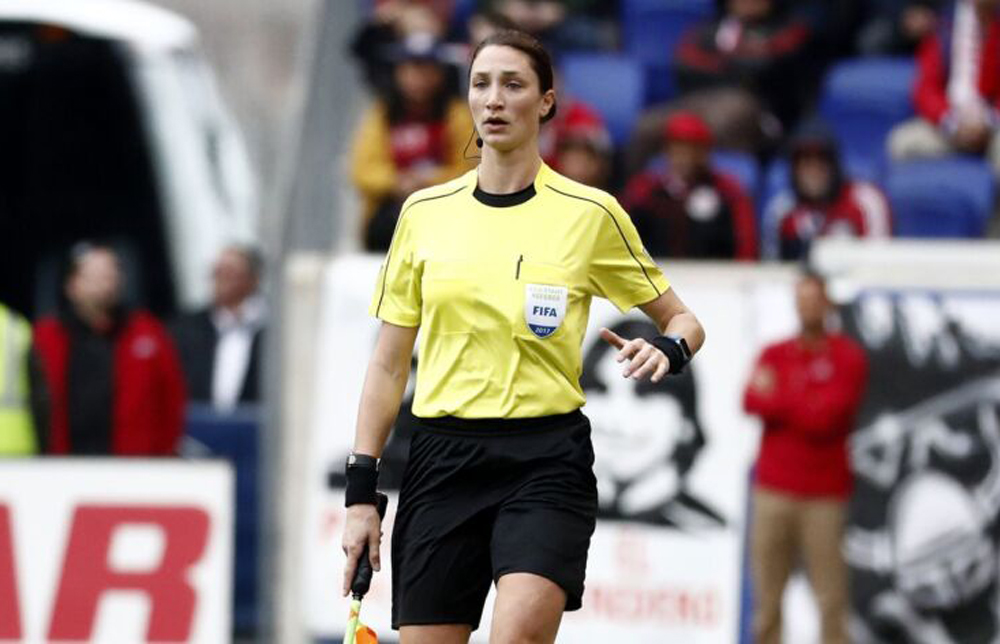
Referees Stephanie Frappart from France, Salima Mukansanga from Rwanda and Japan’s Yoshimi Yamashita, as well as assistant referees Neuza Back from Brazil, Karen Diaz Medina from Mexico and American Kathryn Nesbitt have all been called up.

A total of 36 referees, 69 assistant referees and 24 video match officials have been chosen by FIFA for the tournament.

“This concludes a long process that began several years ago with the deployment of female referees at FIFA men’s junior and senior tournaments,” said Pierluigi Collina, FIFA Referees Committee chairman.

“They deserve to be at the FIFA World Cup because they constantly perform at a really high level, and that’s the important factor for us.

“As always, the criteria we have used is ‘quality first’ and the selected match officials represent the highest level of refereeing worldwide.”

Frappart became the first female official to be involved in European Championship matches after UEFA included her in the list of referees for the tournament last year.

source/content: thepeninsulaqatar.com (headline edited) / Reuters

____________

Kathryn Nesbitt

__________

QATAR

7th edition of ‘Cairo International Biennale of the Arabic Calligraphy Art’ 07- 20 June. A Simultaneous 3-day Seminar on ‘Pioneers and Renovators in 100 Years (1922 – 2022)’

Cairo witnessed the seventh edition of the Cairo International Biennale of the Arabic Calligraphy Art under the auspices of Minister of Culture Ines Abdel-Dayem at the premises of Cairo Opera House.

Under the slogan ‘Pioneers and Renovators in 100 years (1922/2022)’, the biennale included a three-day seminar that ran from 6 to 9 June at El-Hanager Cinema that highlighted the most prominent figures of Arabic Calligraphy in Egypt and the Arab world as well as an art exhibition showcasing artistic gems of this Art from 125 countries represented by 15 artists at the Art Palace in the Cairo Opera House Complex that is running from 7 to 20 June.

This year’s biennale coincides with the announcement of Cairo as the Capital of Islamic Culture and only a few months after Arabic Calligraphy was added on the Representative List of Intangible Cultural Heritage of Humanity.  

Furthermore, the event established a new tradition of honouring artists and researchers for their achievements, and a side competition was held in the name of renowned Egyptian calligrapher Khedr El-Portsaidy — the founder of the Arabic Calligraphy Museum as well as the one who accredits and certifies Arabic calligraphers in Egypt.

In the opening session, Mohamed El-Baghdady — the general commissioner of the biennale — noted that this year marks the centenary jubilee of the establishment of Egypt’s first calligraphy school during the reign of king Fouad in 1922.

The session also included the presentation of a research paper written by Nahla Imam — country representative of Egypt at the 2003 Convention of Safeguarding the Intangible Heritage of UNESCO — who shared her experience in adding Arabic calligraphy knowledge, skills, and practice on UNESCO’s representative list of intangible cultural heritage in December 2021.

Mohamed Hassan Abu El-Khair — the first to innovate the ‘mashq’

The second day of sessions showcased the pioneers and renovators of such enchanting art.

The first paper was presented by researcher and calligrapher Mohamed El-Shafaai on passing down the practice of such art in Egypt, taking the family of Mohamed and Abdel-Aziz Abu El-Khair as an example, as the two are renowned Egyptian calligraphers that this year’s round was dedicated to.

He started off by revealing that the concept of passing down this form of art dates back to the pre-Islamic era, explaining that the initial idea behind Arabic calligraphy was transcription, and then the artistic element came later.

“During the pre-Islamic era, except for a small circle, very little knew how to write Arabic, and according to Abdalla Ibn Abbas, the first person to begin writing in Arabic in the tribe of Qureish was Harb Ibn Umaya — one of the masters of the tribe and the father of Sufian Ibn Harb.

The other key person in calligraphy art was El-Wazir Ibn Noqla, who was famous during the Abbasid Caliphate and inherited the art from his father El-Ali Ibn Hassan, explained El-Shafaai.

Mohamed Hassan Abu El-Khair was born in Cairo in 1921, he studied in Al-Azhar and then joined The School of Improving Calligraphy when he was only 17, where he was the top of his class and was taught by calligraphy masters such as Sheikh Fakhr El-Din, Sheikh Ali Badawi, and Mohamed Hosni El-Baba — the father of iconic Egyptian actress Soad Hosni to name but a few.

He excelled in El-Sulus and Reqaa calligraphy and soon became a professor of the art of calligraphy at Oum El-Qoura University in Mecca for 20 years.

“He was the first to innovate in the mashq (an educational manual technique) of the solos of Arabic calligraphy that are taught to fourth graders, where he started teaching students to write whole sentences from the beginning instead of focusing on letters with no context,” El-Shafaai added.

Abdel-Qader Al-Shihabi — the calligrapher of the Palestinian government

The second paper focused on Abdel-Qader Al-Shihabi — a Palestinian calligrapher — that was written by Farag Hussieny. Al-Shihabi is a renowned Palestinian calligrapher whose fame reached its peak during the first half of the 20th century and was known as the ‘calligrapher of the Palestinian government.’

“Born and raised in Jerusalem, Abdel-Qader Al-Shihabi comes from a long line of calligraphers that started off this art between the 12th and 14th year of the Hijri calendar, however, Al-Shihabi learned calligraphy in Istanbul at the hand of Mohamed Ezzat, the biggest artist. He was known for his suluth calligraphy, which decorates the walls of Al-Aqsa Mosque to date. He also spent all his life teaching calligraphy in Jerusalem and encouraging young artists to follow his passion,” explained Hussieny.

Abdalla Al Zohdi: the calligrapher of Al-Haramein Al-Sharifine 

The third paper covered the ‘calligrapher of Al-Haramein Al-Sharifine (The Two Holy Mosques) Abdalla Al-Zohdi and was written by Sami Saleh Abdel-Malak.

“Born in Nablus, Abdalla Al-Zohdi was born around 1251. His family moved to Istanbul, where he studied and excelled in calligraphy at a very early age. His artistic fame made him the official calligrapher of the Prophet’s Mosque in Medina, where his calligraphy adorns the walls and ceilings of the mosque till now,” the paper explained,

“During the reign of khedive Ismail, he was commissioned to write the calligraphy of the Keswa of the Kaaba and Mahmal. His implacable calligraphy was quite visible and stood out in the design of the keswa from that day onwards. He was known by his highly complex and geometric Sulus calligraphy.”

source/content: english.ahram.org.eg (headline edited)

________

_________

EGYPT