Arabs & Arabian Records Aggregator. Chronicler. Milestones of the 25 Countries of the Arabic Speaking World (official / co-official). AGCC. MENA. Global. Ist's to Top 10's. Records. Read & Enjoy./ www.arabianrecords.org
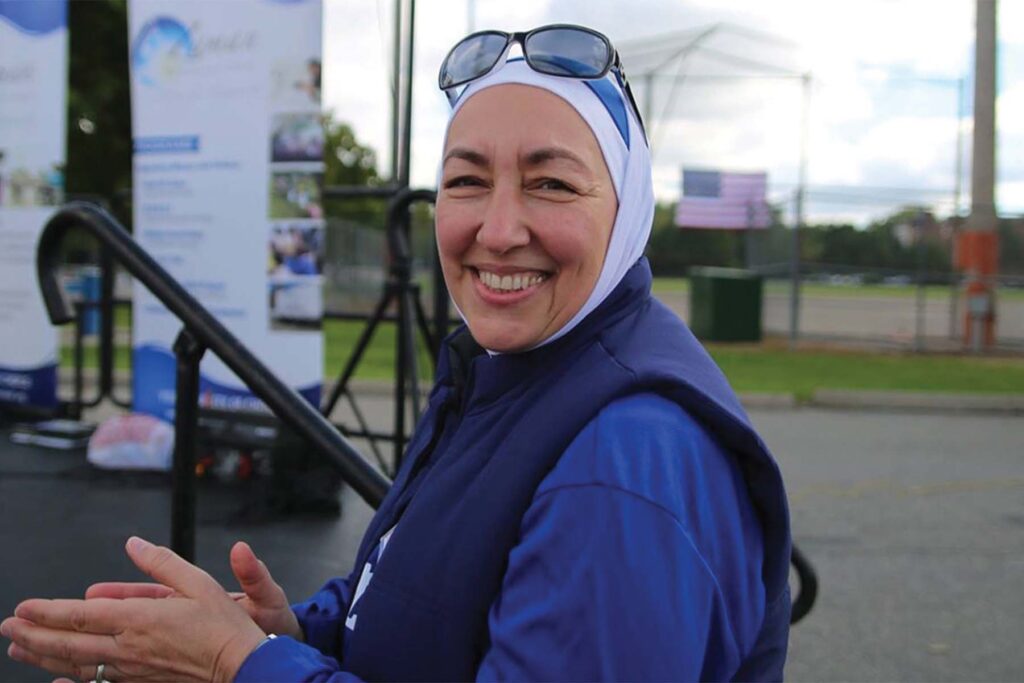
Just recently CNN revealed the Top 10 CNN Heroes of 2019 – these are men and women that are changing the world by helping families affected by the tragedy, cleaning up the environment, protecting neglected animals, and so much more. They were nominated by CNN to receive a ten thousand dollar cash prize with the Hero of the Year to receive one hundred thousand dollars. One of the nominees is Najah Bazzy, an Arab-American who changed the lives of thousands of women and children in the Detroit Metropolitan Area.
Background
Najah learned to navigate through attitudes and beliefs that were conflicting very early in life. Born in a neighborhood that was predominantly Arab and Muslim – Dearborn, Michigan – she refers to herself as ‘a new thing’ – a by-product of a merger between being Arab, American, and Muslim all at once. She believes these are not mutually exclusive identities, even in a post 9/11 America.
They are, which is now having the largest concentration of Arab Americans in the United States, back then was a hub of immigrants. In an interview, Najah says: “It was the people from Poland, Italy, Macedonia, Mexico, and others that we learned about their traditions and their different faiths. That’s why I love diversity so much. Neighbors sat on the front porch and they shared food while their children would go from house to house visit other children and play. The amount of care that people had for each other was tremendous, and this is where I learned to love my neighbor.”
However, she also felt a different attitude towards Muslims after the September 11 attacks. “I’ve had death threats. I’ve had to have protection placed on me. It’s an uncomfortable feeling,” she shares. “To know that you can put out love, and other people judge that love saddens me. I want to make every breath count, so I can’t fear those who choose hate. I can only control the love I have in my heart and choose that love.”
Cause
Najah is the founder of Zaman International, a non-profit organization, which has the mission to facilitate change and advance the lives of marginalized women and children of different backgrounds in the Detroit area; she has been doing it by enabling them to meet essential needs common to all humankind. The group’s 40,000-square-foot warehouse offers for free aisles of food, rows of clothes, and furniture to those in need.
The history of the organization is truly inspirational. In 1996, when a three-month-old infant was with a terminal diagnosis, Najah Bazzy, a Transcultural Clinical Nurse Specialist, provided clinical, spiritual and cultural support to his parents who were new arrivals to the United States. She helped them face the reality that no treatment would save their child.
After visiting the family at their home, Najah was shocked by their living conditions. Instead of a refrigerator, the family used a picnic cooler to house their limited food supply and baby formula. Instead of a stove, a portable propane stove was used for cooking. The infant’s bed was a laundry basket piled high with towels, and the infant only had the hospital’s receiving blanket to keep him warm. When the infant passed away and the family was unable to pay for a funeral, Najah raised funds from the community to provide him with a proper burial. This was the beginning of Plots for Tots, Zaman’s signature program which provides dignified burial support for families that have lost a fetus or infant.
Witnessing this family’s sorrowful experience and shocking living conditions, Najah was inspired and determined to harness the community’s efforts to help struggling families. She asked community members to donate furniture, food, clothing, and household goods. The support and need for such efforts quickly increased, encouraging Zaman to formalize as an organization committed to using community support to address community needs.
Impact
In 2018, Zaman distributed 170,400 pounds of food, collected 886,950 pounds of clothing, provided over 7,750 hours of job skills and literacy instruction to more than 90 women, and gave 268 winter coats and 895 school supply-filled backpacks to local children. Meanwhile, it partnered with 444 community partners on a range of initiatives and funded overseas relief projects, bringing safe water and humanitarian relief to more than 431,900 people.
Now that Zaman’s mission has been shared with the world, Bazzy is encouraging interested readers to help by donating through the CNN Heroes program, for which a CrowdRise donation page has been set up.
“What I’m most proud of this year is that Zaman is 94 cents on the dollar (which has been audited financially), she said, and it goes to programs,” she said about the percentage of donation dollars used to help fund its operations to serve those in need.
“We really encourage people to go to the website and to donate any amount that they can, anything helps.”
Dr Hawa Abdi Dhiblawe, prominent human rights activist, founder and chairperson of the Dr Hawa Abdi Foundation and one of Somalia’s first female obstetricians has passed away in Mogadishu. She was 73.
She died Wednesday morning, but the circumstances surrounding her death remain unestablished at the moment.
Dr Abdi affectionately referred to as the Mother Theresa of Somalia, was a Nobel Peace Prize nominee. Her work is credited for saving the lives of thousands during some of Somalia’s darkest moments. She cared for the wounded, the sick – often for free – at a hospital, she established on her family’s land in 1983. What began as a humble one-room operation would eventually care for close to 90,000 people during Somalia’s catastrophic drought in 2011.
While caring for her patients, Dr Abdi famously faced down nearly 750 militants from Hizbul Islam who laid siege to her compound in 2011. She heroically told them at the time, “I’m not leaving my hospital. If I die, I will die with my people and my dignity.’ She yelled at the young gunmen, “You are young, and you are a man, but what have you done for your society?”. The militants were met with fierce resistance from the locals who gathered around the hospital demanding to see Dr Hawa and mounting international pressure. After a week, the second-in-command came to Dr Hawa with a signed apology letter written in both Somali and English.
When the civil war broke out in 1991, Dr Abdi’s grandmother implored her to stay behind and use her skills to assist the most vulnerable. She witnessed firsthand the devastation that occurred in Somalia early after the collapse of the government.
“During those dark days of 1992, starvation set in, and I sold my family’s gold to buy enough food to sustain the vulnerable children and give the gravediggers enough strength to work. Even when we were burying 50 people per day, I was still able to provide free land, security, and medical treatment. We clung to one another, and we survived, but the fighting continued. Now, again, we see famine—not caused by drought alone, but by the conflict that continues to ravage Somalia,” she said in an interview.
Dr Hawa Abdi was born in Mogadishu in 1947 and attended local elementary, intermediate and secondary academies.
In 1964 she travelled to the Kiev to study gynaecological medicine with the help of a Soviet scholarship. In 1971, she began her medical career as one of Somalia’s first female gynaecologists working in Mogadishu’s most prominent hospital. She quickly recognized the lack of resources for a hospital birth outside the capital. She decided in 1983 to open her clinic known as the Rural Health Development Organisation (RHDO) in the outskirts of Mogadishu. She focused primarily on the treatment of women from non-urban areas.
Dr Hawa told the New York Times that her dream to become a doctor began when she was 12 after her mother died during childbirth.
She was also an author; her moving memoir, Keeping Hope Alive: How One Somali Woman Changed 90,000 lives was published in 2013 and was well-reviewed.
Her unwavering commitment to the downtrodden has earned her recognition worldwide. She and her daughters whom Glamour Magazine named Women of the Year in 2010 and described as ‘Saints of Somalia’ have been running the clinic and Dr Hawa Abdi Foundation. She was nominated for a Nobel Peace Prize in 2012. In that same year, she was honoured with the BET’s Social Humanitarian Award, Women of Impact Award from the WITW Foundation, and the John Jay Medal for Justice. In 2014, she received the Medal from Want award from the Roosevelt Foundation. She was awarded the 2013 Vital Voices’ Women of the Year Award. In 2015, she was the recipient of the Pilosio Building Peace Award. Most recently, she was honoured by Harvard University with an honorary Doctors of Law degree in May 2017.
source/content: hiraan.com (headline edited)
____________
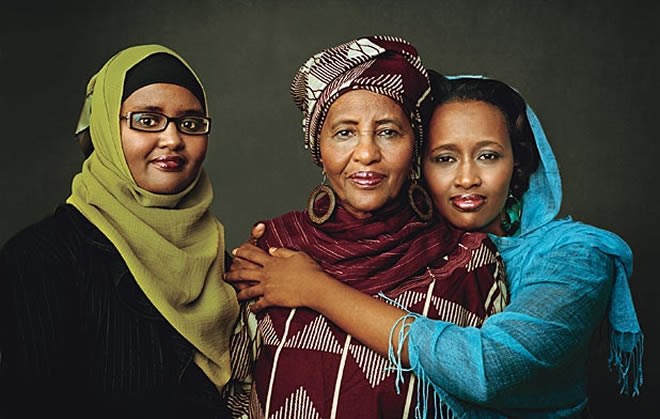
A Family Affair: From left: Dr. Amina Mohamed, Dr. Hawa Abdi and Dr. Deqo Mohamed, photographed during a business trip to Geneva, Switzerland, on September 18, 2010. Hair and makeup: Mitzi for Visage Management
Academics are sceptical about whether the ancient Semitic language can ever be accurately reconstructed but a group on Discord have taken up the challenge.
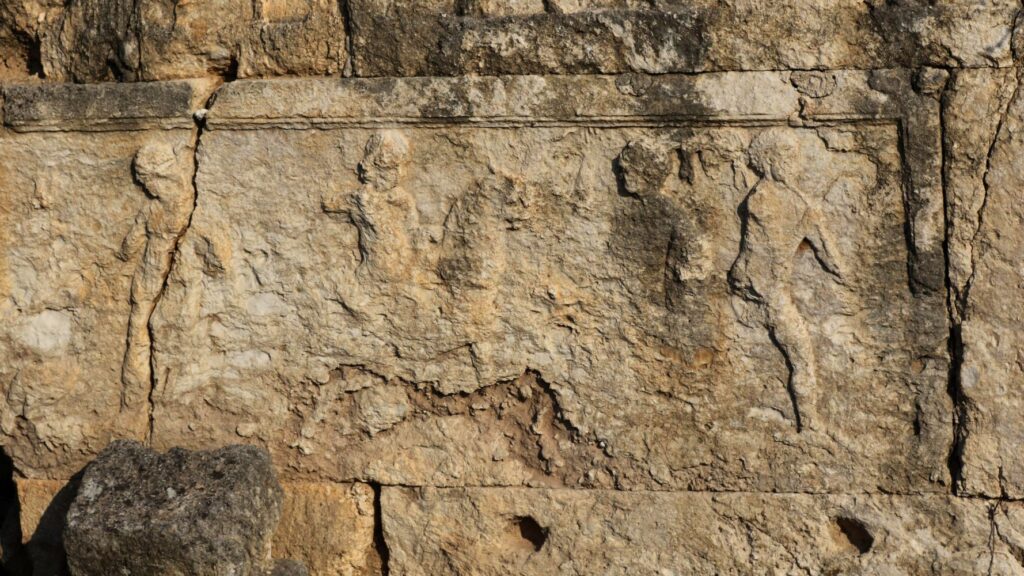
In 2016, archaeologists unearthed a 3,700-year-old lice comb at an archaeological site in what is now northern Israel that would later be determined to contain the oldest inscription in the Canaanite language discovered to date.
Found at Tel El Duweir, near the Yarmuk River in Galilee, the site was once a strategic Canaanite city state.
The comb bears a seven-word inscription in early Canaanite, which translates as “May this tusk root out the lice of the hair and the beard”.
It is significant as the first full sentence found in the Canaanite language, which itself was the first to use an alphabet as we understand it today.
While Sumerian Cuneiform and Egyptian hieroglyphics are older, they used pictographs, not individual letters.
Canaanite, a semitic tongue, is long extinct. With the exception of Hebrew, which was resurrected by the Zionist movement in a modern form, none of its descendants, including the ancient Phoenician language survive.
Once spoken on the Levantine coast, North African varieties descended from Phoenician, known as Punic developed with the settlement of Phoenician traders, most notably at Carthage in modern Tunisia.
That vast heritage across the region has inspired a group of digital linguists to try to revitalise the original Phoenician Canaanite dialects millennia later.
Discord servers and YouTube channels
Several notable attempts at increasing Phoenician language awareness currently exist online.
YouTube has a number of channels dedicated to Phoenician-language reconstruction, including LearnPhoenician, which is run by Algerian linguist Mohamed Amine Slimani, who even published his own dictionary.
Another is Adoon, founded in 2021 by Lebanese musicians Youssef Helayel and Tony Elk.
The music published by Adoon blends Arabic Oud and electric guitar melodies with Phoenician poetry and features animated videos of cobblestone cities and cedarwood ships.
Another linguistics channel, Ilovelanguages, showcases numbers, phrases and prayers in the language.
One other popular outlet is the Phoenicia server on Discord, a messaging server initially used by video gamers but now also by hobby groups separated geographically but brought together online.
The server is run by two Lebanese users, named Hanni and Adon*, whose interests are in Levantine culture.
They say their server is non-political, educational and dedicated to revitalising Phoenician, and that anyone is welcome to join.
That said, membership of the server is only through an invite link, which Hanni says filters out “non-serious individuals”.
The server has more than 863 members and is teaching is in English, Arabic, French and German.
“We teach the language, help with reading and understanding sentences, and with how words are spoken within certain stages of the language,” Hanni says.
Thanks to the internet and social media, says Adon, Phoenician language materials are now more readily available than ever before.
Such initiatives indicate the blossoming of a niche hobby into a vibrant movement aimed at making language learning more accessible beyond academic circles.
Phoenicia and the West
Phoenician belongs to the Northwestern Canaanite branch of the Semitic family, meaning it is also related to Aramaic and Arabic, both languages spoken today in the Middle East.
In the first millennium BCE, it spread throughout the Mediterranean Sea through Phoenician expansion, but became extinct as a vernacular around the 2nd century CE.
A significant factor was societal collapse after military defeats of Phoenicians by Alexander the Great and Rome.
In the case of Punic, after Hannibal’s campaign against Rome, which nearly resulted in its conquest, the Romans suppressed Carthaginian culture and carried out what is considered by historians to be the first documented genocide.
Nevertheless, Phoenician had already made its mark on Roman culture through Greek civilisation.
Greek myths were heavily influenced by Levantine legends and the Latin script was ultimately derived from Phoenician letters.
Phoenician therefore plays an important part in the development of western cultures.
Hobbyist scholarship and its limits
The modern day reconstruction of Canaanite and Phoenician by enthusiasts is not without its limitations.
George Handal Handal, a retired industrial electronics engineer from Palestine who owns the Star of Bethlehem Winery, exhibits Canaanite stone tablets worldwide and is a member of the Phoenicia server.
His visits to Native American reservations inspired him to learn more about indigenous Levantine language.
While he is critical of the extent of Arabic language instruction on the server, he says studying and translating inscriptions with the group has deepened his understanding of the Phoenician language.
He says it is important “we know at least a little about the hidden history that we don’t learn in schools here in Palestine since we live under [Israeli] occupation”
Maroun Khreich, an associate professor at the Lebanese University, welcomes the renewed interest in Canaanite languages but cautioned that the challenge for digital linguists is formidable.
Khreich, who is also co-director of the Chair of Phoenician Studies at University Saint Joseph of Beirut, said incomplete records of the language reveal a very limited number of words spanning 14 centuries, making periodisation – the process of dividing its history into distinct, named chronological stages – difficult.
Any reconstruction based on existing word databases would therefore feature words from several different eras.
Khreich argues that the results of hobbyists’ efforts will remain “shallow” due to the lack of a thorough academic approach.
Professor Roland Tomb, the co-founder of the Chair of Phoenician Studies, was just as critical.
He studied Semitic languages, including Phoenician, at various European and Lebanese universities and is currently translating a Phoenician grammar book written by the late Italian scholar Maria Giulia Amadazzi Guzzo into French, English and Arabic.
Tomb said the efforts by hobbyists have “no accuracy at all because Phoenician is a dead language … transmitted by scripts, [almost] all of which are lost forever”.
This is partly because Phoenicians wrote on papyrus, a material that easily disintegrates during Lebanon’s humid summers.
Other obstacles
While the Phoenician grammar, phonology and its evolutionary stages are mostly understood, many surviving inscriptions are brief or duplicates, while others are lost.
Also complicating revitalisation efforts, Adon says, is that for most Lebanese, Phoenician heritage is largely symbolic.
“They teach you at school that the Phoenicians were behind the invention of the alphabet, which is a great source of pride in Lebanon, but it doesn’t go beyond that… It’s just a sort of slogan,” Tomb explains.
Compounding the problem, Khreich notes, is that there are very few published linguistic scholarly works on the language.
Adon admits “we are forced to self-study to find such papers and put all the things together”.
Despite these obstacles, our knowledge of its phonology and grammar comes from comparative analysis of surviving inscriptions of Phoenician, especially bilingual ones, to related languages, such as Hebrew, Ugaritic, and Edomite and later stages, like Punic, which slightly outlived its sister language.
The main obstacles, however, lie in the unrecorded invisible vowels and the fact that surviving inscriptions are narrow in scope and do not cover everyday terms essential for daily conversation in the language or only mention terms once.
Based on the more than 10,000 surviving inscriptions since the 14th century, Hanni says, what is certain is that the Phoenician abjad (alphabet) was purely consonantal, having no vowels, and has one of the fewest number of consonants among Semitic languages at just 22.
Phoenician had more consonants in its older stages, but gradually reduced them to 22.
Hanni describes Phoenician phonology as “very innovative” compared to other conservative nomadic languages.
Some attested dialects include Byblos, Tyrian, and South Phoenician.
Hanni believes successful language revitalisation requires more proactive efforts from governments and schools alongside grassroots initiatives.
A glimmer of hope
The relative success of projects for Hawaiian and Wampanoag, a Native American language, in producing new speakers show revitalisation is possible.
Another promising trend for the project, says Hanni , is that most members are under the age of 30, primarily from Lebanon, North Africa, and their related diasporas.
Handal adds many people in Palestine are also eager to rediscover the language.
“The Canaanite and Aramaic alphabets belong to us… the inhabitants of Palestine, because we are descendants of the Canaanites and Aramaeans,” says Handal.
These server members do not see Phoenician as a language disconnected from their modern heritage but as an inherent part of it.
For example, countless place names and words in Levantine Arabic are derived from Phoenician, such as “Beirut”, from the term “be rut” meaning “wells”, and “Baalbek”, from the Canaanite deity “Baal”.
Even the word “Lebanon” itself comes from the word “lbn” meaning “white”, referencing its snow-capped mountains during winter.
Khreich says that because Phoenicians are “the only culture of which Lebanon was the centre, not the periphery, it’s our duty as Lebanese to preserve this culture” but revitalisation efforts must address sectarianism within Lebanese society.
In a paper he published for a French journal, Tomb argues that while interest in Phoenician heritage in Lebanon was initially a purely Christian one, a movement called Al-Harakat al-Finiqiyya [“the Phoenician movement” in Arabic] is composed primarily of Druze and Shia Muslims.
A now-obsolete variant of Lebanese nationalism during the First World War emphasised shared Phoenician ancestry to counter sectarianism.
Tomb compares it to similar shifts he observed during his visits to Gulf Arab states, where he was surprised to see huge investments in research on pre-Islamic Arabian heritage, and languages such as Mehri and Jiballi.
Universities in Lebanon have already begun teaching Phoenician in French-language instruction, but as a reconstructive, archaic language (often using Punic examples).
“We already started giving courses at the universite pour tous [University for All at St Joseph University of Beirut], which is open for everybody … from all academic levels, not necessarily [just] university students,” says Khreich.
He taught his first course last year, with a turnout of 48 students, and intends to continue.
When Tomb first taught Phoenician as an elective while dean of the Faculty of Medicine, he says more than a hundred students enrolled each year.
Aside from the University for All, the Lebanese University, and formerly the American University in Beirut, have offered courses, both of which Khreich taught.
More recently, Tomb’s friend from the Ecole Pratique des Hautes Etudes (Practical School of Higher Studies) in Paris, Professor Robert Hawley, also taught the language.
Tomb says universities actively collaborate to avoid “closed systems”. He adds that motivations among his students vary, ranging from pure curiosity to historical or political interest.
The youth-led digital movement to revitalise Phoenician, whether through Discord or YouTube, indicates renewed interest in the region’s indigenous languages, albeit with a mixed reception and practical obstacles.
Hanni and Adon hope that someday, Phoenicia server members, such as Handal, will teach the language themselves.
*Editor’s note: Hanni and Adon requested that Middle East Eye use pseudonyms
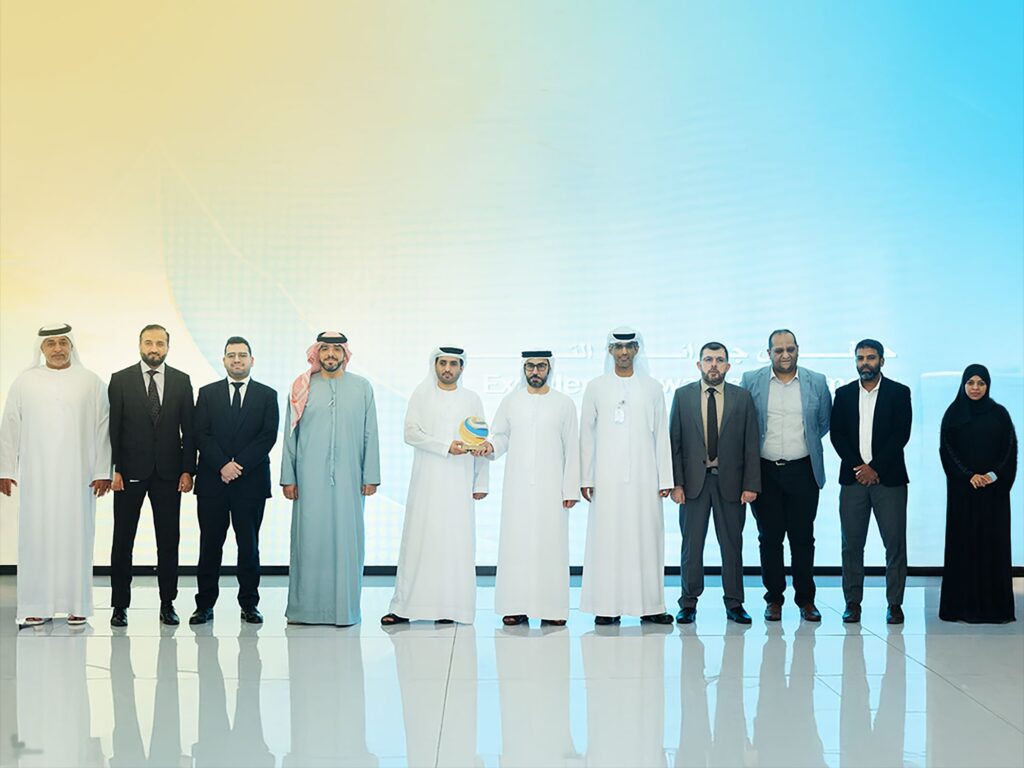
Dubai Customs has continued its excellence in service innovation by obtaining three prestigious international accreditations from the Global Innovation Institute in the United States. This milestone once again highlights its ability to develop an advanced customs ecosystem built on innovation, proactivity and value creation.
The three accreditations covered high-impact projects representing a qualitative leap in service development: automation of vehicle clearance certificates, the mega X-ray scanner and the attestation service in collaboration with the Ministry of Foreign Affairs. Two projects were classified at Level 2, which focuses on enhancing services to increase competitive value, while the third achieved Level 3—the institute’s highest classification—due to its strategic value in expanding service scope and strengthening long-term sustainability.
Atiq Al Mehairi, Executive Director of the Customs Development Division at Dubai Customs, stated that this global achievement reflects the organisation’s ability to translate its strategic vision into tangible results. By adopting advanced digital solutions, Dubai Customs has improved operational efficiency, accelerated procedures and enhanced trade flow. The accredited projects also represent a leading model in leveraging technology to support the business environment and reinforce Dubai’s position as a pivotal global hub in supply chains and international trade.
He added that Dubai Customs continues to develop an integrated suite of digital services that keeps pace with global changes and supports the competitiveness of the national economy. Investment in innovation and institutional capability development remains a fundamental pillar for achieving global leadership and strengthening Dubai’s position as a leading trade and logistics hub.
Dr. Hussam Juma, Director of Service Innovation Department at Dubai Customs, affirmed that this achievement is a significant addition to the organisation’s record and reflects renewed international confidence in its ability to develop services in line with the highest standards. He noted that Dubai Customs is steadily enhancing its global presence by investing in talent and fostering a work environment that encourages creativity and supports the adoption of innovative solutions.
He further emphasised that Dubai Customs continues to implement ambitious development initiatives based on adopting the latest technologies and automating customs procedures. These efforts contribute to improving operational efficiency, increasing customer satisfaction and supporting the Dubai Government’s direction towards delivering proactive and innovative services that meet future expectations.
Dubai Customs previously achieved a major milestone by obtaining the Certified Government Organisation – Excellence Level accreditation from the same institute in 2023. It became the first government entity in Dubai and the first customs authority globally to receive this prestigious classification, further confirming its leadership in delivering innovative government services aligned with global best practices.
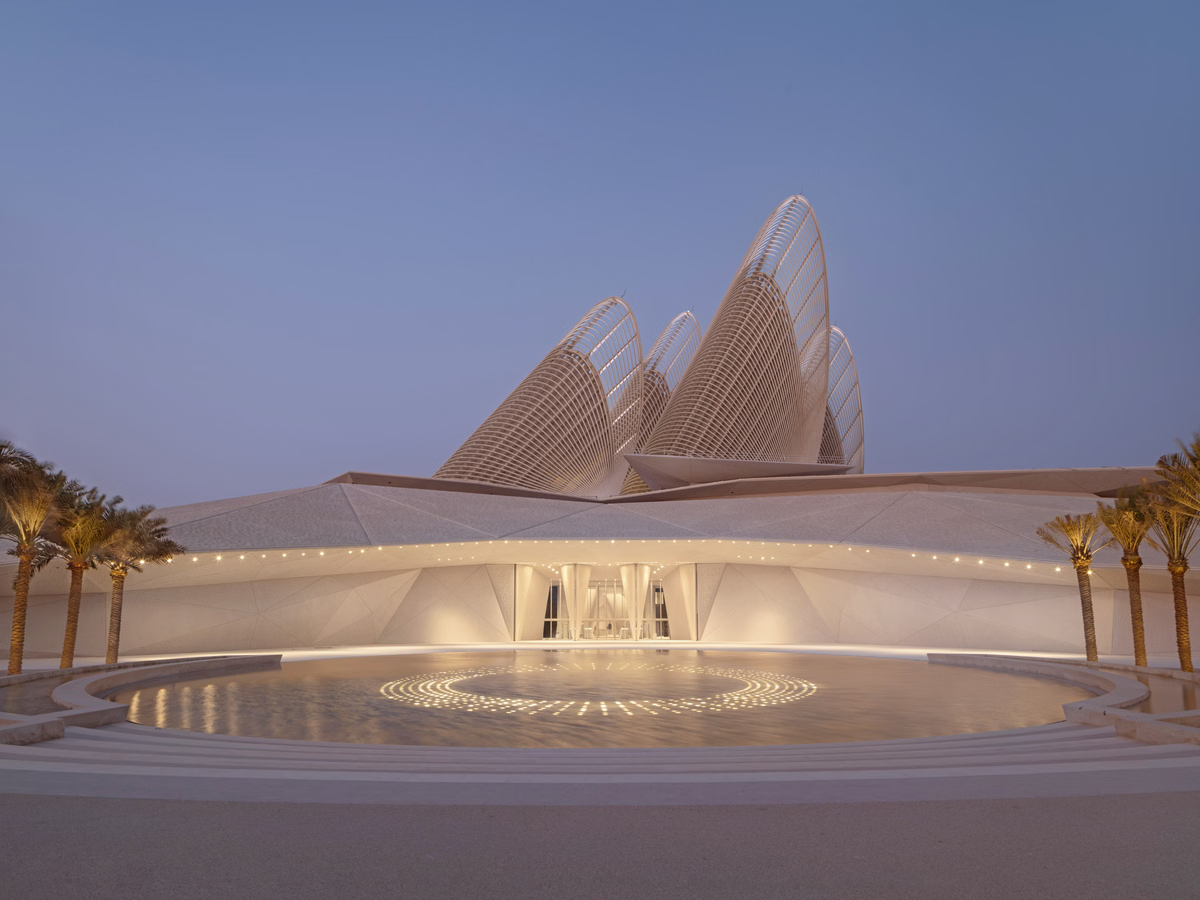
Abu Dhabi’s newest cultural landmark earns global recognition from TIME in 2026.
Abu Dhabi has added another standout to its cultural scene. The Zayed National Museum has been named one of TIME’s World’s Greatest Places for 2026, placing it among 100 destinations that offer something truly special for visitors.
Nestled within the growing Saadiyat Cultural District, the museum has quickly become a place people are curious about. It opened its doors in December 2025 and has since drawn attention for both its design and what it represents.
Rather than feeling like a traditional museum, it leans more towards a calm, reflective space where you can spend a few hours moving through stories of the UAE’s past.
Even before stepping inside, the building itself makes an impression. Designed by Norman Foster, the structure is inspired by the wings of a falcon in flight. The shape is striking but not over the top, and it ties back neatly to Emirati heritage.
Inside, the journey stretches back around 300,000 years, tracing human life in the region long before the country we know today. At the heart of it all is the story of Sheikh Zayed bin Sultan Al Nahyan, whose life and values shape much of what you see. The galleries are not overwhelming, which makes it easy to take your time and actually absorb what is on display.
Some pieces naturally draw more attention than others. The Abu Dhabi Pearl, believed to be one of the oldest natural pearls ever discovered, is one of those quiet highlights.
Another is the Blue Qur’an, known for its deep colour and fine detail, offering a glimpse into the artistic traditions of the Islamic world.
One of the more unexpected features is a full-scale reconstruction of an ancient Magan boat. It gives a sense of how people in this region once travelled and traded, long before modern borders existed. It is the kind of exhibit that makes history feel more real and less distant.
Places are selected through nominations from TIME’s international network of correspondents and contributors, as well as an open application process.
With several major institutions now based in the same district, it is becoming a place where visitors can easily spend a full day, or even more, exploring art, history and ideas.
For residents, it is another reason to take a closer look at what is on their doorstep. For travellers, it adds one more stop to an already evolving map of must see places in the region.
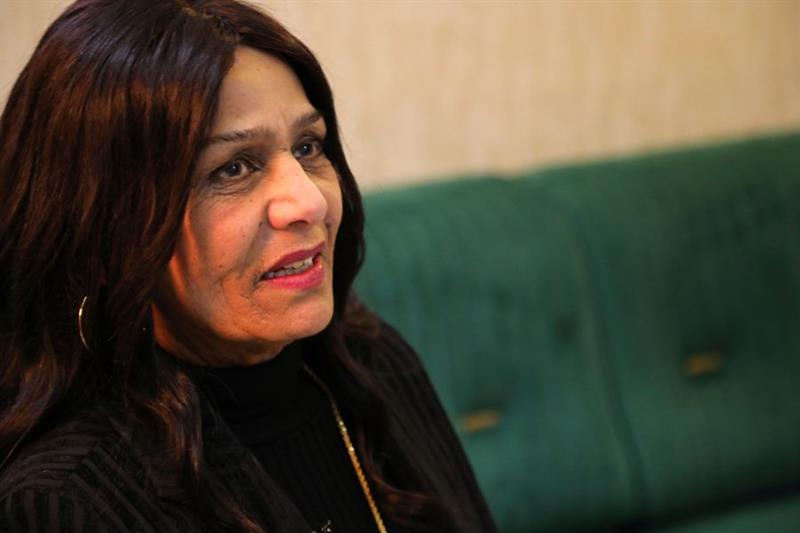
Seven days after the legendary Iraqi singer Sajida Obaid died, women sat wrapped in black veils and abayas, their faces wet at her family home in the northern city of Irbil. Some were family members and others were fans who had loved her for decades.
Bitter black coffee, the drink of Iraqi mourning, passed quietly from hand to hand. The music drifting in from outside filled the spaces between sobs.
Outside, men sat under a canvas tent in the street. A traditional band beat the daf as some of the men wiped their eyes. In Iraq, the seventh day marks a return, a final gathering before grief begins to thin into memory.
Obaid died on April 4 at the age of 68 after a battle with lung cancer. The news was overshadowed by the Iran war that had spilled over into neighboring Iraq. But for her fans, her death felt personal — the loss of a woman whose voice had given them, for a few hours at a time, something close to freedom.
A space for women to let loose
In Iraq, a woman moving through public life carries weight with her; eyes watching what she wears, how she moves, whether she is stepping too far outside the lines. So Obaid decided to hold parties only for women. Every staff member including the DJ, the waiters, the security, and the organizers was a woman. No phones were allowed to prevent photography. To protect the women in the room, their freedom stayed inside those walls.
Women who would never dream of dancing in front of male audience came. They dressed how they wanted and danced the way they had forgotten they could.
Virgin Jaji, 68, was one of them. While the Arab world traditionally begins its mornings with the dreamy songs of the Lebanese singer Fayrouz, Jaji said she has listened to Obaid every morning for years, in the car, at home, even at the gym. “Even my parrot only dances to Sajida Obaid’s music.
“In her women’s parties we danced like we had no cares in the world,” Jaji said, her eyes red from crying. “We felt free. Truly free.”
Mina Mohammed, 40, said, “The first time I heard about a women-only party by Sajida, I borrowed money from friends just to be in that hall. Her voice will always take me back to the best moments of my life.”
A quick rise to stardom
Obaid was born in Baghdad in 1957, the daughter of a Roma family. In Iraq, Roma people are known as “Kawliya,” a community long tied to music and performance, but also one that has lived for generations at the edge of society. Sajida began singing at 12, performing at parties to help her family pay the bills.
By her teenage years she was already a known name. Her voice was warm and commanding, rooted in the dance rhythms of the Kawliya and in the older, more tender Iraqi style known as mawal. By the 1980s, it had reached the most powerful and most dangerous men in Iraq.
Saddam Hussein’s security guards would pull her away mid-performance from other people’s weddings and bring her to sing. She performed at the weddings of Saddam’s children and at birthday parties for his sons and daughters. It was the complicated price of being a national star in an era of dictatorship. She traveled the world, performed at international festivals and sometimes played as many as seven shows a week.
Shrinking space for Iraqi women
But the women-only parties were always special to her, said her brother and manager, Aayed Awda.
“Those parties were something the women themselves asked for, including women from the most conservative families, because they wanted a place where they could dress freely, move freely, be themselves,” he said. “Sajida believed deeply in helping women and giving them that space.”
Obaid’s songs sometimes pushed social boundaries, like “Inkasarat al-Sheesha” (“the shisha broke”), about a woman who has lost her virginity and must now face her family. “What will I tell my mother?” the lyrics ask. In Iraq, that is not a light question. Obaid sang it with a full voice, without apology.
Many Iraqi women feel that the gains they had made in rights over the years are receding. Last year, Iraqi Parliament passed amendments to the country’s personal status law that opponents say would in effect legalize child marriage and erode women’s rights in matters like divorce and inheritance.
“Iraq feels like it’s moving backward, and the space for women’s freedom is shrinking,” said Mohammed, the fan who borrowed money to attend Obaid’s parties. She hopes that the carefree moments they brought can “be carried forward, even in small ways, like women-only DJ nights with her music.”
A quiet end
In her final months, the woman who had sung on stages across five continents lived quietly in Irbil, in the home of her elder brother’s family. She had no children. She had married twice and divorced twice. She rarely went out. She spent her days close to the people she loved and played with the children in the house.
“She was gentle and warm, and she never once caused harm to anyone,” said her niece Sahar Sabti, 38, who shared the home with her. “She took care of everyone around her.”
About four months before Obaid died, doctors found lung cancer, Sabti said. She still insisted on flying to Canada for a concert. But when she came home to receive her first chemo session, her body gave up.
She was hospitalized in Irbil, where she remained for more than two weeks before being sent home on oxygen. Her family took her to the hospital once more, and this time she didn’t come home.
Her brother recalled the 40 years they worked together, and their sibling bickering about the shade of her makeup, the cut and color of her dress, the theme of the next party.
“We disagreed on everything,” Awda said, his voice breaking. “And I miss every single one of those arguments.”
On the seventh day of mourning, as the drum outside finally fell silent and the women inside dried their faces, they spoke about Obaid the way people speak about someone who has stepped out of the room for a moment.
“For me and my friends, dancing and Sajida are the same word,” said Leila Botrus, 55. “She brought people together everywhere she went through joy, through music.”
Outside in the tent, the band played its last song of the evening. The coffee in the cups grew cold, but the women stayed a little longer together.
In that room, filled with women sitting close together, it felt as though Sajida had left behind exactly what she always gave them; a space of their own.
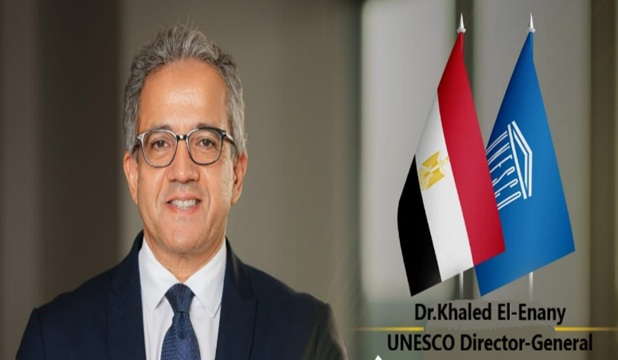
Egypt’s former Minister of Tourism and Antiquities, Dr. Khaled El-Enany, has been elected as the new Director-General of the United Nations Educational, Scientific and Cultural Organization (UNESCO), succeeding France’s Audrey Azoulay after securing a majority of votes in the organization’s Executive Board elections in Paris today, Monday, October 6, 2025, coinciding with the 52nd Anniversary of the Glorious October War Victory.
El-Enany won 55 votes against just two for his closest rival, Firmin Edouard Matoko of the Republic of Congo, the largest winning margin in UNESCO’s history.
His victory marks a historic moment as El-Enany becomes the first Arab and only the second African to lead the United Nations Educational, Scientific and Cultural Organization since its establishment in 1945.
During his acceptance speech, El-Enany said: “I have visited 65 countries in 30 months and one day. I have conducted an inclusive campaign engaging all member countries.”
He added “During my first 100 days, I promise to work with all member states to modernize UNESCO, without discrimination or personal agenda.”
In his speech following his election, El-Enany extended heartfelt thanks to his homeland, Egypt, for entrusting him with this mission, as well as to his Arab family and the Arab League for their steadfast support, and to the African continent and African Union, which had embraced and endorsed his candidacy on three occasions.
He said: “I stand before you with humility and a heart full of gratitude,” acknowledging the broad coalition of support that had propelled his historic victory.
He went on to express his appreciation to all countries that had backed his bid and placed their trust in him, asserting that their confidence in him was a gift that he would never take for granted.
He went on to express his appreciation to all countries that had backed his bid and placed their trust in him, asserting that their confidence in him was a gift that he would never take for granted.
Reflecting on his journey, El-Enany shared that over the past 30 months, his campaign had taken him to 65 countries across the world from the Pacific to the Caribbean and involved more than 400 meetings and dialogues that had helped shape his vision.
He described the experience as “the adventure of a lifetime”, expressing deep gratitude to his Egyptian team and colleagues who “stood by my side with passion and devotion to bring this dream to life.”
His message also carried a tone of unity and inclusivity. “I assure you that, if elected in November by the General Conference, I will serve all nations and peoples as a director-general for all, working together with you to build a UNESCO that is a true home for all humanity, a UNESCO for the People,” he said.
His remarks also paid tribute to the Egyptian team that had accompanied him throughout the 30-month long campaign to bring this project to life in “a dream in which we have deeply believed”.
El-Enany’s remarks were met with warm applause from the delegates gathered at UNESCO’s headquarters in Paris. Leading diplomats and prominent figures described the moment as both historic and deeply symbolic, not only for Egypt but also for the broader Arab and African communities that had rallied behind his candidacy.
About the elections
The elections for the position of Director-General of the United Nations Educational, Scientific and Cultural Organization (UNESCO) for the period 2025-2029 will begin on Monday, October 6, 2025. The elections are witnessing fierce competition between Egyptian candidates Dr. Khaled El-Enany, former Minister of Tourism and Antiquities, and Congolese Firmin Edouard Matoko, UNESCO’s Deputy Director-General for Africa and External Relations.
These elections are of great importance, as they determine who will lead this specialized UN agency, founded in 1945 and headquartered in Paris. Its mission is to promote shared human values by strengthening education, science, and culture, setting standards and tools, and developing knowledge to find solutions to some of the greatest challenges of our time. UNESCO also supports a world of greater equality and peace. UNESCO works with its 194 Member States on a range of issues, including protecting biodiversity, addressing artificial intelligence, promoting quality education, preserving human heritage, and ensuring access to reliable information.
All eyes are on who will succeed Frenchwoman Audrey Azoulay, who has served two terms as president of this organization since 2017. Azoulay’s primary goal is to contribute to peace and security by enhancing cooperation among countries in the fields of education and culture.
Two strong candidates are vying for this high-profile position: Congolese Firmin Edouard Matoko and Egyptian Khaled El-Enany. These elections are of utmost importance to Egypt, which is strongly supporting its candidate for the prestigious position. Previous Egyptian candidates include Ambassador Moushira Khattab in 2017, Minister of Culture Farouk Hosni in 2009, and former Director of the Bibliotheca Alexandrina Ismail Serageldin in 2001.
Egypt’s intensive efforts to support Dr. El-Enany
Egypt has intensified its efforts to garner support for Dr. El-Enany, both regionally and internationally, since the announcement of his candidacy. In April 2023, Prime Minister Dr. Mostafa Madbouly announced the Council’s endorsement of Dr. Khaled El-Enany, former Minister of Tourism and Antiquities, for the position of Director-General of UNESCO for the period 2025 to 2029, as Egypt’s candidate.
The League of Arab States adopted a summit-level resolution in May 2024 supporting and endorsing Dr. El-Enany’s candidacy as the only Arab candidate for the position. This marks the first time a candidate has received such broad Arab consensus. This reflects the aspirations of Arab countries for an effective role within the international organization and the importance of Arab leadership for UNESCO in the coming period.
Al-Anani also received the African Union’s endorsement in February 2024, July 2024, and July 2025, which confirms the official African alignment behind the Egyptian candidacy in appreciation of Al-Anani’s competence and ability and a reflection of the African continent’s confidence in Egypt to achieve the common aspirations of African countries.
Minister of Foreign Affairs, Migration, and Egyptian Expatriates Badr Abdelatty met on Sunday, 5th September, 2025, with the permanent representatives of Turkey, Brazil, Bangladesh, Japan, Qatar, Saudi Arabia, Luxembourg, and the UAE to the United Nations Educational, Scientific and Cultural Organization (UNESCO).
This meeting took place during his visit to Paris as part of the intensive efforts made to support Dr. Khaled El-Enany, Egypt’s candidate in the elections for the Director-General position, and to garner support from various countries.
El-Enany’s Biography
Khaled Ahmed El-Enany Ali Ezz, born in 1971, is a leading figure recognized for his expertise and commitment across diverse fields including teaching, scientific research, culture, tourism, management, public service, and international relations.
A former Egyptian Minister of Tourism and Antiquities, El-Enany currently holds the position of Professor of Egyptology at Helwan University, where he has been a faculty member for over thirty years. His teaching, focused on the civilization, archaeology, and epigraphy of Ancient Egypt, is not only taught in Egypt but also at prestigious international institutions. As a mentor, he has enabled thousands of students and researchers, both Egyptian and international, to benefit from his in-depth knowledge and vast experience. Through his conferences and scientific engagements across twenty countries, he has shared his expertise, enriched academic discourse and encouraged access to knowledge, while promoting intercultural dialogue. His proficiency in Arabic, French, and English demonstrates his communication skills, a key asset for fostering international cooperation. He has served as Vice Dean of the Faculty of Tourism and Hospitality, Director of the Open Learning Center, and Head of the Tour Guide Department. He holds a PhD in Egyptology from Paul-Valéry Montpellier 3 University (France), where he has been a visiting Professor on several occasions.
He directed the National Museum of Egyptian Civilization (2014-2016) and the Egyptian Museum in Cairo (2015-2016). From 2016 to 2022, he served as Minister of Antiquities and then Minister of Tourism and Antiquities of the Arab Republic of Egypt.
He is also a member of several international learned societies. In November 2024, he was appointed Special Ambassador for Cultural Tourism by the World Tourism Organization and, more recently, patron of the African World Heritage Fund. He holds several international distinctions. He speaks Arabic, French and English.
Achievements
El-Enany has wide-ranging academic, scientific, administrative, and executive experience in Egypt and abroad. Over the course of his career, he has developed a strong international network with governments, institutions, and organisations.
During his six-and-a-half-year tenure in government he supervised numerous major projects, boosting tourism and archaeology across Egypt. More than 20 museums, including the National Museum of Egyptian Civilisation (NMEC), developed in collaboration with UNESCO, were opened, and work on the Grand Egyptian Museum (GEM), one of the largest museums in the world, neared completion.
More than 50 restoration and development projects at archaeological sites were inaugurated, and more than 20 restoration projects of historical mosques, monasteries, and churches (including five locations on the Holy Family Trail), and the Eliahu Hanavi Synagogue in Alexandria, were opened.
He inaugurated five ground water-lowering projects at archaeological sites, and the number of archaeological missions, particularly Egyptian ones, increased significantly. He also secured the return of 7,000 smuggled artefacts from more than 20 countries.
El-Enany has played a key role in strengthening Egypt’s international relations through his cultural diplomacy skills, collaborating closely with many countries, academic institutions, and international organisations.
He oversaw the Pharaoh’s Golden Parade and Luxor: The Sphinx Avenue Parade and was instrumental in mitigating the repercussions of the Covid-19 pandemic and the Ukraine-Russia war on Egypt’s tourism sector.
Awards
Dr. Khaled El-Enany Anani has been decorated with several international honors. In 2025, France awarded him the insignia of the Chevalier de la Légion d’honneur, the official emblem awarded to recipients of France’s highest distinction for civil merit, and in 2015 he was awarded the French Order of Arts and Letters, naming him a Knight of the Order of Arts and Letters.
In 2020, he received the Order of Merit of the Republic of Poland, and in 2021 was awarded the Order of the Rising Sun by Japan. In September 2024, El-Enany received an honorary doctorate from the University of Paul-Valéry Montpellier 3 in France.
Annemarie Jacir’s award-winning film “Palestine 36” leads the nominations for the 10th Critics Awards For Arab Films, which were announced on Wednesday.
The annual prizes, organized by the Arab Cinema Center, have been voted on by a record 307 Arab and international critics from 75 countries this year, with the awards ceremony due to take place during the Cannes Film Festival on May 16.
“Palestine 36” has been nominated in six categories including best film, director and screenplay. It is followed by Maryam Touzani’s “Calle Malaga” with five nominations; Cherien Dabis’ “All That’s Left of You” with four; and “Yunan,” “My Father’s Scent,” and “Once Upon a Time in Gaza” with three each.
Kaouther Ben Hania’s Oscar-nominated “The Voice of Hind Rajab” garnered one nomination in the best director category.
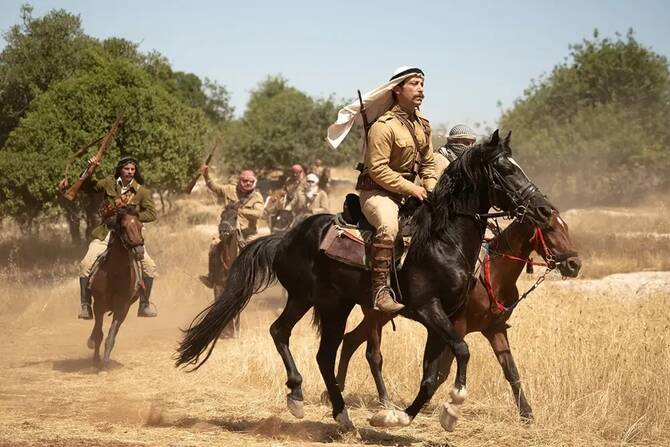
“Palestine 36” is set during the 1936 Arab Revolt and follows five interconnected narratives as villages across Palestine confront British colonial rule.
With rising numbers of Jewish immigrants escaping antisemitism in Europe, and the Palestinian population uniting against Britain’s 30-year dominion, all sides spiral toward inevitable collision in a decisive moment for the British Empire and the future of the entire region.
“I hope people see themselves in the film,” she told Arab News in December last year. “I don’t want to teach anyone anything. There’s a lot of history in the film and there’s a lot of history that’s been erased. I hope that’s something that comes through.”
source/content: arabnews.com (headline edited)
______________
Annemarie Jacir’s award-winning film “Palestine 36” leads the nominations for the 10th Critics Awards For Arab Films, which were announced on Wednesday. (Supplied)
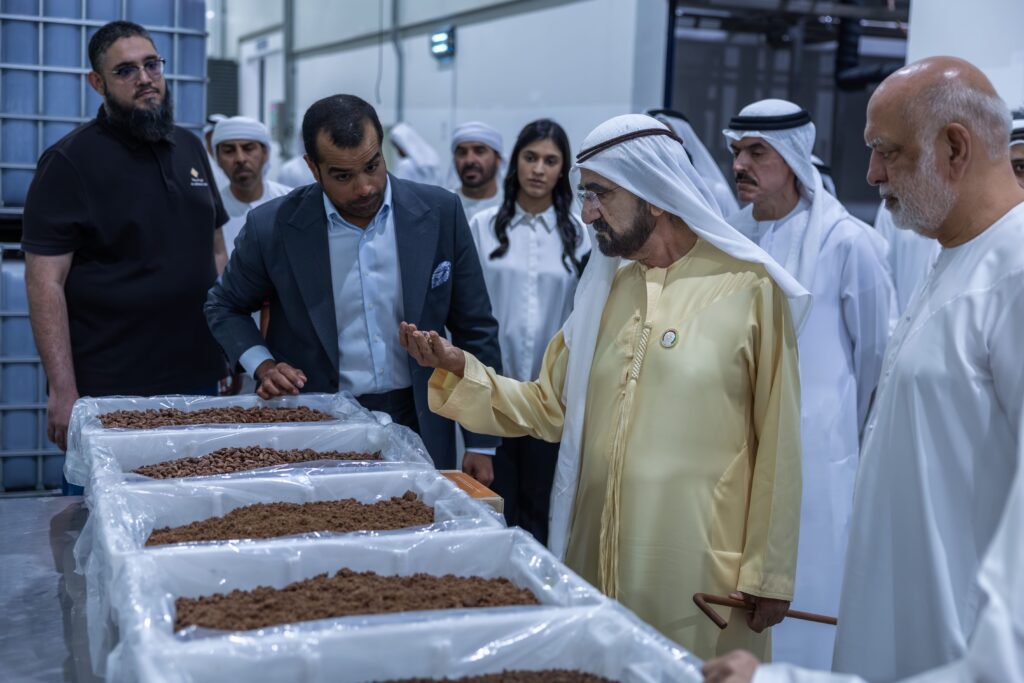
His Highness Sheikh Mohammed bin Rashid Al Maktoum, Vice President, Prime Minister and Ruler of Dubai, visited Al Barakah Dates Factory, the world’s largest privately-owned dates factory located in Dubai Industrial City.
The facility spans over 800,000 square feet, with an annual production capacity of 100,000 tonnes, one of the market leaders for packaging and processing dates in the world.
During the visit, H.H. Sheikh Mohammed said that the UAE continues to strengthen its position as a global hub for advanced food industries through innovation, stronger production chains, and boosting the competitiveness of national products. He noted that the dates industry is a successful example of turning the country’s agricultural heritage into a modern, high-value-added sector that supports the economy and enhances food security.
H.H. Sheikh Mohammed said that the UAE continues to invest in key sectors that impact people’s lives, especially the food sector, and is developing its national industries to be more globally competitive through advanced technologies, higher production efficiency, and expanded access to international markets.
H.H. Sheikh Mohammed added that the dates industry is part of the UAE’s identity and heritage, and its development reflects a vision of turning resources into sustainable opportunities.
He also said humanitarian initiatives in the sector, including efforts to combat malnutrition, reflect the UAE’s commitment to improving lives and addressing global food security challenges.
During the visit, H.H. Sheikh Mohammed, accompanied by Malek Al Malek, Chairman of TECOM Group, was briefed by the factory founder Saleem Mohammed and his son Yousuf Saleem Mohammed, Managing Director, on production lines, manufacturing and packaging stages, as well as the factory’s range of products.
H.H. Sheikh Mohammed also reviewed the global reach of the factory’s products, which are exported to 97 countries, with the US, the UK, and EU among the key markets.
The factory is located in Dubai Industrial City, part of TECOM Group’s industrial parks, which was launched in 2004. The Dubai Industrial City hosts over 350 factories and more than 17,000 employees, and is strategically located near Jebel Ali Port, Al Maktoum International Airport, and Etihad Rail’s freight terminal, ensuring strong logistics connectivity. The factory reflects private sector success in the food industry, and was founded by businessman Saleem Mohammed, who began his career in Dubai in 1983 before moving into dates trading and processing in the 1990s.