ARAB-AMERICAN : Najah Bazzy–The Arab-American CNN Hero of 2019

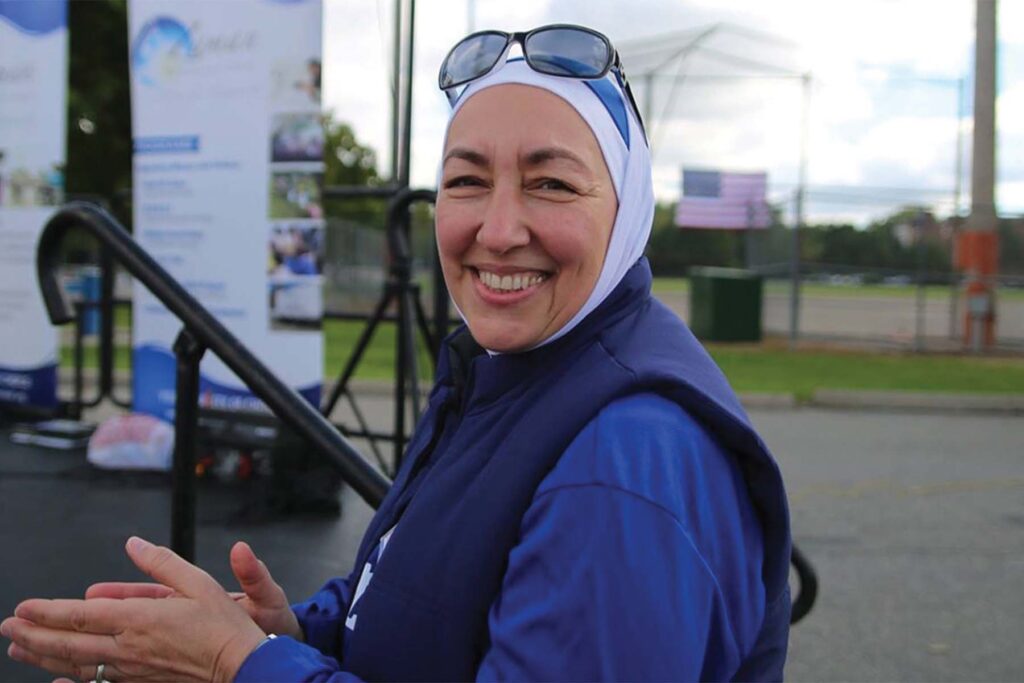
Just recently CNN revealed the Top 10 CNN Heroes of 2019 – these are men and women that are changing the world by helping families affected by the tragedy, cleaning up the environment, protecting neglected animals, and so much more. They were nominated by CNN to receive a ten thousand dollar cash prize with the Hero of the Year to receive one hundred thousand dollars. One of the nominees is Najah Bazzy, an Arab-American who changed the lives of thousands of women and children in the Detroit Metropolitan Area.

Background

Najah learned to navigate through attitudes and beliefs that were conflicting very early in life. Born in a neighborhood that was predominantly Arab and Muslim – Dearborn, Michigan –  she refers to herself as ‘a new thing’ – a by-product of a merger between being Arab, American, and Muslim all at once. She believes these are not mutually exclusive identities, even in a post 9/11 America.

They are, which is now having the largest concentration of Arab Americans in the United States, back then was a hub of immigrants. In an interview, Najah says: “It was the people from Poland, Italy, Macedonia, Mexico, and others that we learned about their traditions and their different faiths. That’s why I love diversity so much. Neighbors sat on the front porch and they shared food while their children would go from house to house visit other children and play.  The amount of care that people had for each other was tremendous, and this is where I learned to love my neighbor.”

However, she also felt a different attitude towards Muslims after the September 11 attacks. “I’ve had death threats. I’ve had to have protection placed on me. It’s an uncomfortable feeling,” she shares. “To know that you can put out love, and other people judge that love saddens me. I want to make every breath count, so I can’t fear those who choose hate. I can only control the love I have in my heart and choose that love.”

Cause

Najah is the founder of Zaman International, a non-profit organization, which has the mission to facilitate change and advance the lives of marginalized women and children of different backgrounds in the Detroit area; she has been doing it by enabling them to meet essential needs common to all humankind. The group’s 40,000-square-foot warehouse offers for free aisles of food, rows of clothes, and furniture to those in need.

The history of the organization is truly inspirational. In 1996, when a three-month-old infant was with a terminal diagnosis, Najah Bazzy, a Transcultural Clinical Nurse Specialist, provided clinical, spiritual and cultural support to his parents who were new arrivals to the United States. She helped them face the reality that no treatment would save their child.

After visiting the family at their home, Najah was shocked by their living conditions. Instead of a refrigerator, the family used a picnic cooler to house their limited food supply and baby formula. Instead of a stove, a portable propane stove was used for cooking. The infant’s bed was a laundry basket piled high with towels, and the infant only had the hospital’s receiving blanket to keep him warm. When the infant passed away and the family was unable to pay for a funeral, Najah raised funds from the community to provide him with a proper burial. This was the beginning of Plots for Tots, Zaman’s signature program which provides dignified burial support for families that have lost a fetus or infant.

Witnessing this family’s sorrowful experience and shocking living conditions, Najah was inspired and determined to harness the community’s efforts to help struggling families. She asked community members to donate furniture, food, clothing, and household goods. The support and need for such efforts quickly increased, encouraging Zaman to formalize as an organization committed to using community support to address community needs.

Impact

In 2018, Zaman distributed 170,400 pounds of food, collected 886,950 pounds of clothing, provided over 7,750 hours of job skills and literacy instruction to more than 90 women, and gave 268 winter coats and 895 school supply-filled backpacks to local children. Meanwhile, it partnered with 444 community partners on a range of initiatives and funded overseas relief projects, bringing safe water and humanitarian relief to more than 431,900 people.

Now that Zaman’s mission has been shared with the world, Bazzy is encouraging interested readers to help by donating through the CNN Heroes program, for which a CrowdRise donation page has been set up.

“What I’m most proud of this year is that Zaman is 94 cents on the dollar (which has been audited financially), she said, and it goes to programs,” she said about the percentage of donation dollars used to help fund its operations to serve those in need.

“We really encourage people to go to the website and to donate any amount that they can, anything helps.”

source/content: wisconsinmuslimjournal.org (headline edited)

____________
_____________________

AMERICAN / ARAB
ARAB-AMERICAN: Meet the Arab-American Women Tech Leaders shaping the future

Three entrepreneurs share their stories as well as tips to succeed, regardless of background

Steve Jobs, Tony Fadell of iPod and Nest thermostat fame, and Taher Elgamal, the father of SSL technology, may be some of the most successful Arab Americans the global tech world has seen – but bit by bit, that picture is starting to change.

An emerging group of Arab-American women is increasingly taking up the tech mantle in a host of diverse fields.

A year spent in Kansas as a cultural exchange student at the age of 17 led to Morocco native Yasmine El Baggari feeling a profound need to help people connect.

“Most people [in Kansas] had never met someone from Morocco before. It felt like I was a cultural ambassador for Morocco at every opportunity,” she says.

The experience morphed into something more: a road trip to all 50 US states, during which she stayed with families and taught French and Arabic to get by, and later, a career that has seen her visit more than 45 countries – while securing a degree from Harvard University along the way.

All this led Ms El Baggari to found Voyaj, an online platform that fosters connections between people from diverse backgrounds in all corners of the globe.

“Once you build a human connection with someone, they’re more open to considering different perspectives … which is the basis of the work I continue to do: building and facilitating connections with people around the world,” she says.

Voyaj has collaborated with organisations to bring dozens of students from Africa to California for cultural exchange trips.

In March, Ms El Baggari raised more than $50,000 through a crowdfunding campaign involving more than 260 people from 40 countries to help fund the app.

Recently, Voyaj started working with non-profit Alight to help connect Afghan refugees recently arrived in Minnesota with local residents.

With the number of immigrants from the Middle East and North Africa in the US doubling over the past 20 years to 1.2 million, Arab-American women are set to play an increasing role in the tech and entrepreneurial landscape.

But getting to the top is not easy – just ask serial achiever Sherien Youssef.

Born and raised in Cairo, she emigrated to the US aged 11.

“My parents gave up a lot in Egypt to come here. They were comfortable there, but wanted a better life for their children,” she says.

Now living in a suburb of Washington, Ms Youssef is a senior executive and vice president at CGI, a major IT and consulting multinational that employs more than 90,000 people in about 40 countries.

It has taken serious determination to get to where she is.

“Growing up, being Arab American and being a Muslim, it wasn’t easy to find a person that looked like me [in this industry],” she says.

“It wasn’t very prevalent in my field. When you come as an immigrant, you have a desire to be constantly working harder and proving yourself over and over again.”

Today, her professional life consists of speaking at conferences, working closely with chief executives at partner companies and mentoring staff.

Having raised a family, grown her career and secured an MBA, she says there is still room for change.

“This is still a male-dominated field. We don’t see as many women in the C suites in the IT field,” she says.

Health and wellness is another area Arab-American women are making inroads.

For 12 years, Megan Moslimani was a dedicated public servant, working as a lawyer for the city of Detroit and serving as a board member of the Detroit Bar Association.

But a trip to Los Angeles in 2016 made her realise health care and wellness were industries on the up, and that IV drip therapy could be a game-changer.

“We visited different medical spas for fun and to enjoy the luxury experience. I was impressed with the way you could feel instantly better and hydrated [from using the drips],” she says.

Last spring, Ms Moslimani, whose family arrived in the US from Lebanon in the early 19th century, and her colleague, Biane Bazzy, dove headfirst into their passion, opening the House of Drip & Wellness in Dearborn, Michigan.

American designer brings hijabs to the high street

Made popular by celebrities such as the Kardashians and Hailey Bieber, and appearing in popular TV shows such as Billions, restorative IV drip therapy is a way to get vitamins, electrolytes and other nutrients into the bloodstream quickly.

It is believed to help people recover more quickly from illnesses, jet lag, fatigue and other ailments.

“Clients feel results instantaneously as the drip directly enters the bloodstream, bypassing the digestive tract,” she says.

“People love instant gratification, and I knew all could benefit – athletes, tired mums, overworked professionals.”

Restorative IV drip therapy spas or “drip bars” are springing up in strip malls and neighbourhoods across the US. With the global wellness industry estimated to be worth about $1.5 trillion and expected to grow by 5 per cent to 10 per cent per year, IV drip therapy is set to become an important health recovery tool.

For Arab-American women thinking about starting out in the tech and entrepreneurial worlds, the trio have tips to share.

Ms Moslimani says it is important to be prepared to spend money on the right things to grow your business.

“Look for attorneys offering pro bono hours and get real business law advice,” she says.

Ms El Baggari says getting past the stigma of asking for help is essential to succeeding as an entrepreneur.

“Don’t be afraid to ask for what you need – if people say no, that’s OK,” she says. “You want a clear sense of mission. Understand your ‘why?’”

For Ms Youssef, investing in yourself is key, “whether it’s in degrees and certificates, or in networks”.

“Oftentimes it’s the relationships and connections that you make will be the reason that you get to the next step in your career,” she says.

source/content: thenationalnews.com (headline edited)

_____________

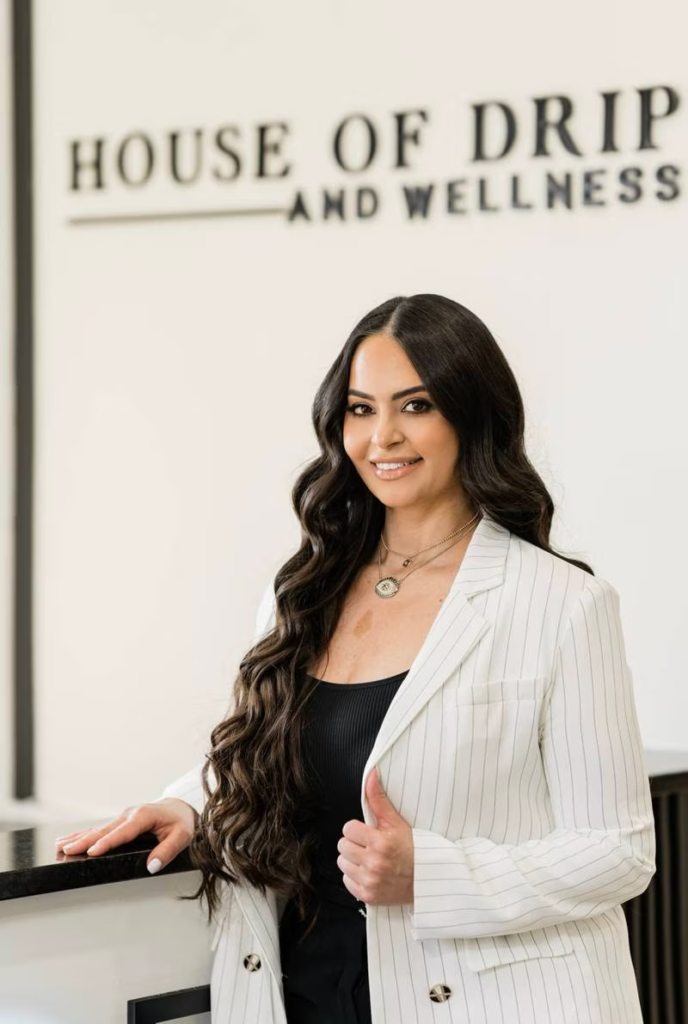
Last spring, Megan Moslimani and a colleague launched the House of Drip & Wellness in Dearborn, Michigan. Photo: Megan Moslimani

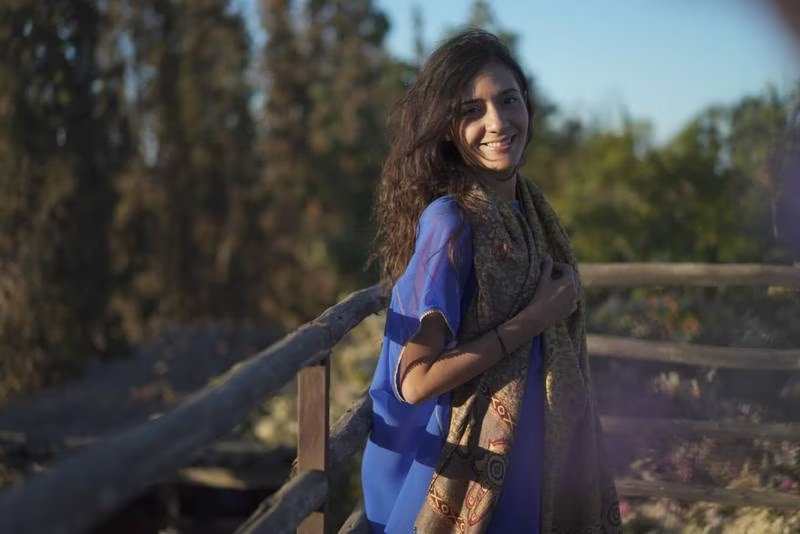
Yasmine El Baggari is the founder of Voyaj, an online platform that fosters connections between people from diverse backgrounds. Photo: Yasmine El Baggari

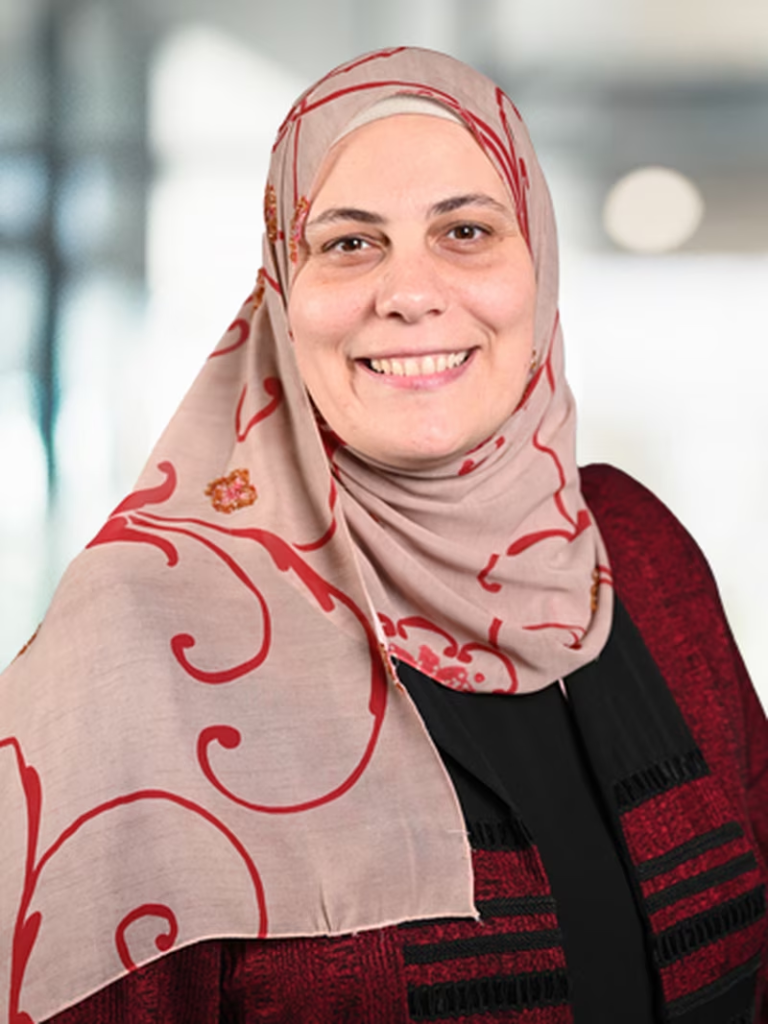
For Sherien Youssef, investing in yourself is key, ‘whether it’s in degrees and certificates, or in networks’. Photo: Sherien Youssef

______________________________________________________

AMERICAN / ARAB / EGYPT / LEBANON / MOROCCO