Arabs & Arabian Records Aggregator. Chronicler. Milestones of the 25 Countries of the Arabic Speaking World (official / co-official). AGCC. MENA. Global. Ist's to Top 10's. Records. Read & Enjoy./ www.arabianrecords.org
In a groundbreaking move, Qatar’s homegrown tech champion, Snoonu, has joined forces with Jahez Group, a leading integrated ecosystem of on-demand services in Saudi Arabia, setting the stage for a transformative journey in the Gulf’s digital landscape.
The deal sees Snoonu, Qatar’s fastest-growing technology company, valuing the company at over QR 1 billion, making Snoonu the first Qatari tech startup to cross this milestone. This supports its path to becoming Qatar’s first unicorn and establishing one of the most dynamic technology powerhouses in the GCC. This transaction represents a strong vote of confidence in Snoonu’s growth trajectory and will support the company in regional expansion and enhance innovation across its platforms.
“This transformative partnership with Jahez marks a defining moment in Snoonu’s journey,” said Hamad Al Hajri, Founder and CEO of Snoonu. “Together, we are creating a true regional technology champion built on shared values and a common vision for innovation, excellence, and sustainable growth. By joining forces, we are combining complementary strengths and deep market knowledge to set new benchmarks in the GCC’s digital economy. This partnership also reaffirms our unwavering commitment to Qatar, a thriving and dynamic market with immense potential, and supports Snoonu’s continued growth journey. Together, we will continue driving technological advancement, creating meaningful value to our users and merchants, and delivering exceptional experiences at scale.”
Key Highlights:
Empowering Local Innovation: The initiative accelerates Snoonu’s mission to deliver cutting-edge solutions, fostering local talent and attracting bright minds from around the world to contribute to Qatar’s growing tech ecosystem.
Boosting Qatar’s Digital Economy: The investment signifies a robust vote of confidence in Qatar’s digital infrastructure and its potential to lead in the tech arena.
Regional Synergy: Combining Snoonu’s dynamic approach with Jahez’s extensive experience creates a powerhouse poised to redefine the digital experience across the GCC.
This strategic transaction is more than a business deal; it’s a commitment to shaping a future where technology bridges communities, enhances lives, and positions Qatar at the forefront of digital transformation.
Since its launch in 2006, the Sheikh Zayed Book Award has established itself as one of the most prominent literary and cultural awards in the Arab world, and one of the most important international awards in terms of value and influence. This embodies the UAE’s vision of making culture a pillar of sustainable development and a tool for building bridges of dialogue and communication between civilizations.
The award, named after the late Sheikh Zayed bin Sultan Al Nahyan, may God rest his soul in peace, has transformed from a national initiative celebrating knowledge into a prestigious international platform that celebrates creativity and creative individuals, contributing to highlighting the civilized face of Arab culture on the global stage.
Over the course of nineteen years, the award has attracted more than 33,000 entries from nearly 80 countries, honoring 136 winners across ten categories covering diverse intellectual, literary, and cultural fields. These include children’s and young adult literature, young authors, translation, literature, arts and critical studies, manuscript editing, development and nation-building, Arab culture in other languages, and publishing and cultural technologies. The award also includes the “Cultural Personality of the Year” category, which recognizes distinguished contributions to the cultural field. The categories have contributed to strengthening the Arab presence on the international cultural map by honoring writers, thinkers, and publishers who have made a clear impact on the literary and intellectual scene and have contributed to consolidating the concepts of identity, openness, and diversity.
The award’s first cycle began in 2007 with 1,220 nominations. The title of “Cultural Personality of the Year” was awarded to British translator Dr. Denys Johnson-Davies, in recognition of his contribution to the translation of Arabic literature into English.
In the second edition in 2008, the award received 731 entries, and the “Cultural Personality of the Year” award went to former Moroccan Minister of Culture, Mohamed Benaissa.
The third edition in 2009 saw 621 entries, and the prize was won by Spaniard Pedro Martinez Montavez.
The fourth edition, in 2010, honored His Highness Sheikh Dr. Sultan bin Muhammad Al Qasimi, Member of the Supreme Council and Ruler of Sharjah, with the “Cultural Personality of the Year” award. The number of nominations at the time reached 693.
In its fifth edition in 2011, the award received 715 entries, and Chinese orientalist Zhong Jikun won in recognition of his scholarly career in service to the Arabic language.
In the sixth session in 2012, 560 nominations were submitted, and UNESCO won the award in recognition of its role in promoting cultural dialogue.
The seventh session in 2013 saw 1,262 nominations, and the title of “Cultural Personality of the Year” went to His Eminence the Grand Imam Dr. Ahmed El-Tayeb, Sheikh of Al-Azhar.
The eighth edition, in 2014, received 1,482 entries, and the award was presented to the late Saudi King Abdullah bin Abdulaziz Al Saud.
In 2015, the ninth edition registered 1,024 entries, and His Highness Sheikh Mohammed bin Rashid Al Maktoum, Vice President and Prime Minister of the UAE and Ruler of Dubai, may God protect him, won the “Cultural Personality of the Year” award.
In its tenth edition in 2016, the award received 1,169 entries from 33 countries, and French-Lebanese writer Amin Maalouf was named “Cultural Personality of the Year.”
In 2017, the eleventh edition received 1,175 entries from 54 countries, and the award was given to Moroccan thinker Dr. Abdullah Laroui.
The twelfth edition, in 2018, received 1,191 entries, and the “Cultural Personality of the Year” award went to the Arab World Institute in Paris.
In 2019, there were 1,500 nominations from 35 countries, and the award was awarded to academics Dr. Jaroslav Stetkevych and Dr. Susan Stetkevych.
The fourteenth edition in 2020 received 1,900 entries, with the late Palestinian poet and translator Dr. Salma Al-Khadra Al-Jayyousi winning. The fifteenth edition in 2021 saw 2,349 nominations, rising to more than 3,000 nominations from 55 countries in the sixteenth edition in 2022. The award was awarded to critic Dr. Abdullah Al-Ghadami.
The 17th edition, in 2023, received 3,151 nominations from 60 countries, with Egyptian musician Omar Khairat winning the Cultural Personality of the Year award. The 18th edition, in 2024, received 4,240 nominations from across various continents, with the award awarded to the Casa Árabe Foundation in Spain.
The 19th edition, in 2025, saw more than 4,000 nominations from 75 nationalities. The “Cultural Personality of the Year” award went to world-renowned Japanese novelist Haruki Murakami, in recognition of his cross-cultural literary contributions that have helped build bridges of dialogue between East and West.
The 19th edition alone saw the participation of 75 Arab and foreign countries, including five countries participating for the first time: Albania, Bolivia, Colombia, Trinidad and Tobago, and Mali. Egypt topped the list of participating countries, followed by Iraq, Morocco, and Saudi Arabia, while the United States, Britain, and France led the list of foreign countries.
In terms of branches, the Young Author branch came first with 1,034 entries (26%), followed by the Literature branch with 1,001 entries (25%), then the Children’s and Young Adult Literature branch with 439 entries (11%), followed by the Arts and Critical Studies, Development and State Building, Translation branch, Arabic Culture in Other Languages, Manuscript Verification, Publishing and Cultural Technologies, and Cultural Personality of the Year branches.
In 2013, the award established the “Arab Culture in Other Languages” category to honor works published in foreign languages about Arab culture.
In 2023, it launched the “Manuscript Verification” branch, which represents a qualitative addition to supporting heritage.
In 2018, the Translation Grant was launched. From 2019 to mid-2025, it contributed to the publication of 48 translations into 12 languages of prominent literary and intellectual works, such as “The Dinoraf,” “Autumn of Innocence,” and “In the Footsteps of Enayat Al-Zayyat.” These translations have received critical acclaim at international exhibitions and events.
Women’s participation increased significantly by 17% in just three editions, with female nominations rising from 1,042 in the seventeenth edition to 1,218 in the nineteenth. Female authors also won in multiple categories, and female names were included on judging panels and academic councils, further strengthening women’s presence in the cultural landscape.
At the international level, the award has organized more than 200 events in global cities such as Paris, Frankfurt, New York, Tokyo, New Delhi, Madrid, and London, in collaboration with publishing houses, universities, and research centers. It has also developed an advanced electronic platform for receiving nominations and judging, and published periodic reports that support transparency and enhance institutional performance.
The total value of the award is AED 7,750,000 and is granted across ten categories covering literature, translation, children’s literature, young authors, arts and critical studies, Arab culture in other languages, manuscript editing, development and nation-building, publishing and cultural technologies, and the Cultural Personality of the Year. The award is independent and impartial, rewarding excellence and supporting Arab and international creators. Today, nearly two decades after its launch, the Sheikh Zayed Book Award continues its journey as an incubator for creativity and a platform for Arab culture, embodying the UAE’s vision of building a sustainable cultural future.
Middle East’s second-largest ‘healthy city’ after Jeddah
15 other cities in Saudi Arabia included in WHO list
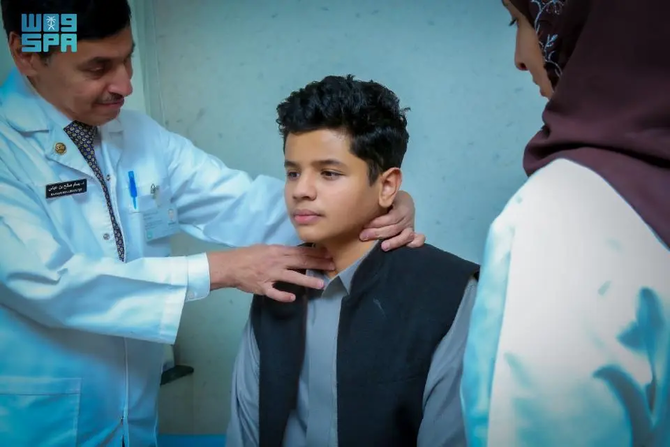
The World Health Organization has renewed its accreditation of Madinah as a “healthy city,” with Islam’s second-holiest location scoring an impressive 80 points, the Saudi Press Agency reported.
Prince Salman bin Sultan, governor of Madinah region, received the WHO accreditation certificate from Minister of Health Fahad AlJalajel during a ceremony on Thursday.
Prince Salman said Madinah’s renewed accreditation exemplifies the leadership’s dedication to enhancing quality of life for the Kingdom’s people in urban centers.
He emphasized Madinah’s ongoing transformation as a leading development model regionally and internationally, aligning with the Kingdom’s Vision 2030 goals.
Madinah has solidified its position as the second-largest healthy city in the Middle East, after Jeddah, the SPA reported.
To win the WHO’s nod, an entrant must meet 80 criteria, including parks, walking areas, and the promotion of health through primary care centers and schools.
The WHO has also recognized 14 other healthy cities in Saudi Arabia. These include Taif, Tabuk, Ad-Diriyah, Unaizah, Jalajel, Al-Mandaq, Al-Jumum, Riyadh Al-Khubra and Sharurah, according to Leaders MENA Magazine.
source/content: arabnews.com (headline edited)
______________
With the new accreditation, Madinah has solidified its position as the second-largest healthy city in the Middle East, next to Jeddah. (SPA photo)
Moroccan actress Nisrin Erradi will represent Morocco at the 10th edition of the Sotigui Awards.
The Academy of African and Diaspora Cinematic Arts announced the list of nominees, featuring Erradi as Morocco’s representative, for this prestigious celebration of African cinema, which takes place from November 12-15 in Ouagadougou, Burkina Faso.
Erradi competes alongside representatives from 19 other nations for the Sotigui d’Or, the ceremony’s top honor. Her nomination also puts her in contention for the 2025 African Public Sotigui Award.
Rising star of Moroccan cinema
Born on August 6, 1989, Erradi has built an impressive career in both Moroccan and international cinema, starting her performance in theater at age six and later studying at the High Institute of Theatrical Arts and Cultural Animation (ISADAC) in Rabat.
Erradi’s experience in ISADAC allowed her to discover her passion for cinematic storytelling through the works of American playwright Tennessee Williams.
The actress has earned recognition across multiple international film festivals.
Most recently, her role in “Everybody Loves Touda,” directed by Nabil Ayouch, earned her the “Artistic Expression” award at the 30th MedFilm Festival in Rome.
Erradi’s breakthrough came with notable performances in films including “Adam” in 2019, “Catch the Wind” in 2017, and “Jahilya” in 2018.
Her international acclaim extends beyond Europe. Erradi cemented her reputation as one of Morocco’s most promising cinematic talents by winning the Best Actress Award at the Durban International Film Festival in South Africa.
This year’s edition of Sotigui Awards focuses on the theme “African Cinema Facing the Challenges of Sexual Harassment: From Indignation to Action.” The theme demonstrates the ceremony’s commitment to addressing important social issues through the film industry.
Festival director Apolline Traoré said: “For the 10 years of the Sotigui Awards, there will be many surprises. We invite you in November to see the innovations. It will be something extraordinary.”
For Erradi, the nomination represents another milestone in a career that continues to bridge Moroccan and international cinema, reflecting the growing influence of North African talent on the global stage.
Artwork is based on an original Qur’an manuscript written by calligrapher Mustafa Dhul-Fiqar in 1656.
The Holy Qur’an Museum in the Hira Cultural District in Makkah features a mosaic panel of Surah Al-Fatiha and the beginning of Surah Al-Baqarah, spanning 76.67 sq. meters and composed of over a million porcelain mosaic pieces.
This artwork is based on an original Qur’an manuscript written by calligrapher Mustafa Dhul-Fiqar in 1656, preserved at the King Abdulaziz Complex for Endowment Libraries in Madinah.
As the first museum in Makkah dedicated solely to the Holy Qur’an and located near the historic Mount Hira, it serves as a cultural and civilizational beacon for the holy city, the Saudi Press Agency reported.
The museum houses a rich collection of rare artifacts and Qur’an manuscripts from various Islamic eras, showcasing diverse calligraphic styles throughout history.
It also features educational exhibits tracing the evolution of Qur’anic writing, along with modern interactive technologies that highlight the Qur’an’s profound significance.
Visual displays further illuminate the history of Qur’anic documentation through the ages. The museum also holds Guinness World Records for the largest Qur’an and the largest Qur’an stand.
______________
A mosaic panel of Surah Al-Fatiha and the beginning of Surah Al-Baqarah is made up of over a million porcelain pieces. (SPA)
He played the Devil, challenged shame, and made Arab cinema speak. On his birthday, we revisit Youssef Wahbi – the man who dared to redefine the rules of the screen and stage.
Youssef Wahbi broke every mould – actor, director, and pioneer of Arabic cinema. On his birthday, we honour a legend who shaped generations of stage and screen.
Wahbi’s love for acting started when he first watched the Lebanese artist Salim Al-Qardahi’s troupe in Sohag. Since then, he started delivering monologues and performing theatrical acts at Al Ahly Club and at school. But at the time, acting was seen as shameful, and his father disapproved. Refusing to bend, Wahby fled to Italy and studied acting under the Italian actor Cantoni. He didn’t come back until after his father’s death in 1921 and used all his inheritance to establish a theatrical troupe named Ramses, which was also the name given to him during his stay in Europe.
In 1923, the troupe premiered with a successful play called ‘Al Magnoun’. But Wahby wasn’t done breaking ground. Later, in 1930, he established his film production company, Ramses Film, which produced the very first speaking film in the history of Arabic cinema, ‘Awlad El Zawat’. The movie was adapted from one of his successful plays, as he wrote the script and starred in the film.
Throughout his prolific career, Youssef Wahbi wrote, directed, or starred in over 300 theatrical plays and contributed to more than 60 films. Among this vast body of work, a few standout titles have become milestones in the history of Arabic drama and cinema…
Awlad El Zawat (1932)
‘Awlad El Zawat’ tells the story of Hamdi, who marries a French woman only to discover she’s cheating on him. In a powerful scene, he confronts her with the line: “You woman of all men… you garbage of history.” In a rare interview, Youssef Wahbi revealed that he insisted on making ‘Awlad El Zawat’ as the first Arabic-speaking film to defend the image of the East, after Western narratives described the region as barbaric and trivial, particularly during the trial of a woman who had murdered an Egyptian young man.
Safir Gohannam (1945)
‘Safir Gohannam’ follows Abd Elkhallak, a humble professor worn down by life’s hardships and became a bitter and resentful man. His shaky faith opens the door for the Devil (played by Youssef Wahbi) to lead him astray, tempting him with a false paradise to ruin his life, destroy his children, and tear his family apart. The film marks the first-ever portrayal of the Devil in Egyptian cinema.
Bayoumi Effendi (1949)
‘Bayoumi Effendi’ is considered one of Wahbi’s most powerful socially driven films, tackling the issue of children born out of wedlock. The film calls for compassion toward these individuals, emphasising that they should not be treated as criminals for a sin they did not commit.
Hayah Aw Mout (1954)
‘Hayah Aw Mout’ – one of the most famous films in Egyptian cinema – follows the story of a man who suffers a heart attack and sends his daughter to fetch his medicine, only for the pharmacist to realise he accidentally gave her poison. As the police, led by Wahbi’s character, race to save him, a dramatic city-wide radio broadcast becomes his only hope. This is the film that gave us the famous line: “لا تشرب الدواء الذي أرسلت بنتك لشرائه…الدواء فيه سم قاتل.” (“Do not drink the medicine your daughter was sent to fetch; the medicine contains deadly poison.”)
Esha’et Hob (1960)
‘Esha’et Hob’ is one of the most memorable comedy films in Egyptian cinema. Starring Omar El Sherif, Soad Hossny and Youssef Wahbi, it follows the story of Hussein, a shy young man in love with his cousin Samia, who prefers her charming cousin Lucy ‘Ibn Tante Fakeeha’. To help him win her heart, Hussein’s uncle Abdel Qader comes up with a clever plan: spread a rumour about a love story between Hussein and the famous actress Hind Rostom.
Egyptian physicist Kerolos Mousa played a role in a Harvard breakthrough using metasurfaces to control light at the photon level, which may pave the way for major advances in quantum technologies.
Kerolos Mousa, an Egyptian PhD student who hails from Minya, has contributed to a breakthrough in quantum physics at Harvard University, where a team of physicists developed a device capable of controlling the shape and path of individual photons with unprecedented precision.
The innovation is based on metasurface technology, engineered materials that can manipulate electromagnetic waves, and represents a major advancement in the way light is handled within miniature optical environments. Mousa led efforts to design the nanostructures critical to regulating photon behaviour.
The research, conducted at Harvard’s Applied Physics Lab and supported by leading US scientific institutions, was published in Nature, a top US science journal, and Science, a leading British publications. It was also featured on the university’s official channels.
The advancement is hoped to significantly impact fields such as quantum communication, quantum computing, and the development of next-generation smart optical devices.
Space42 announced today the signing of a memorandum of understanding with Microsoft and Esri to develop high-resolution digital maps covering the entire African continent. The initiative aims to support development and planning efforts in infrastructure, investment, and corporate decision-making across the continent.
This step comes within the framework of the “Map of Africa” initiative, which aims to create a unified and comprehensive map of the continent. It is the largest of its kind to date, encompassing 54 countries and more than 1.4 billion people.
The MoU aims to establish a smart information infrastructure that enhances the ability of governments, institutions, and communities to make accurate decisions and drive economic and social development based on data-driven knowledge.
The five-year partnership also aims to enhance geospatial capabilities in both Africa and the UAE, and provide accurate and accessible data to stakeholders at the national and regional levels.
Hassan Al Hosani, CEO of Bayanat Smart Solutions, a subsidiary of Space42, emphasized that building a more sustainable and resilient future begins with access to reliable data and accurate insights, especially in markets with information gaps. He explained that advanced geospatial maps and geospatial intelligence solutions are essential tools for supporting decision-makers, achieving comprehensive economic development, and empowering communities in Africa and beyond. Peng Xiao, CEO of G42, said that artificial intelligence is the cornerstone of societal development, yet access to it remains limited in many countries in the Global South. From this perspective, this partnership represents a strategic step to bridge the data and knowledge gap and enable governments to make decisions based on insights and advanced analysis. He pointed out that through this collaboration, we are working to transform artificial intelligence into a practical tool that contributes to smarter urban planning, the development of resilient infrastructure, enhanced natural resource management, and accelerated economic empowerment.
Jack Dangermond, President of Esri, explained that transforming satellite imagery into accurate continent-wide maps requires advanced geospatial technologies and precise professional methodologies. These same capabilities have supported similar initiatives in various regions of the world and are now being put to use in Africa. He said, “With this initiative, the partnership contributes to the creation of a vital resource that will support infrastructure planning and enhance economic and sustainable development across the continent.”
Space42 is leading this pioneering project by securing funding, overseeing implementation, and providing satellite data through its sovereign capabilities and network of strategic partnerships. This data is analyzed using AI-powered digital twin models to produce dynamic maps tailored to different uses. The company is also leading an integrated research and development roadmap aimed at innovating new models and automating map production processes to meet future requirements.
Esri is leading the map development methodology, leveraging its advanced geospatial intelligence and remote sensing technologies, while supporting regional centers to train local talent and build sustainable capacity. In return, Microsoft provides secure cloud infrastructure via the Azure platform, enabling data processing, integration, and sharing at scale, ensuring operational efficiency and rapid access to actionable results.
As part of the G42 ecosystem, Space42 is further strengthening its collaboration with Microsoft to develop smart solutions that meet the needs of communities and support business ecosystems.
The initiative is expected to have a broad positive impact across multiple sectors, such as ports and logistics, renewable energy, security and disaster response, smart cities, and digital economies.
The data will be licensed to national government entities, ensuring their sovereignty over it and ensuring its continued updating by the relevant mapping authorities. The initiative also aims, in the long term, to enable an innovative commercial ecosystem that includes African startups that contribute to expanding the scope of geospatial solutions. The data will subsequently be stored in data centers operated by G42 and Microsoft on the continent.
The UAE is the largest foreign investor in Africa, with investments exceeding $44 billion by 2024, roughly equivalent to the combined investments of the United Kingdom and China. As the leading national space entity, Space 42 supports this agenda by exporting Emirati capabilities in artificial intelligence and geospatial data, enabling data-driven development.
When Princess Nouf Al-Saud started her role as general manager of marketing at Saudi Arabia’s Ministry of Sport in 2018, she confronted a world unfamiliar with the Kingdom’s pulse.
“When I first began this journey,” she said, “I realized that many people around the world had never truly experienced our culture, our energy or our vision.”
Six years and more than 135 global events later — from the electrifying debut of Formula 1 to the pioneering E1 Electric Boat Race — Al-Saud now orchestrates a marketing portfolio that has drawn more than 3 million attendees and broadcast Saudi Arabia’s evolution to more than 160 countries.
Her greatest triumph? Rewriting the narrative. Al-Saud told Arab News: “We’ve evolved from being seen simply as a destination that hosts events, to being recognized as a forward‑thinking leader in sports.”
Where skepticism once lingered, Al-Saud now projects certainty: “Today, the most important message is that Saudi Arabia is not only open to the world, but actively shaping the global sports narrative.”
This conviction permeates every campaign — whether amplifying community participation at Extreme E or embedding cultural storytelling into the WTA Finals.
The most profound transformations, however, unfold in Saudi stands. “A decade ago, it was rare to see parents, daughters and sons attending events side by side,” Al-Saud said.
Now, stadiums brim with multi-generational energy. Al-Saud said: “Girls are proudly wearing team jerseys, parents are cheering with their children and young fans are recognizing themselves in the athletes they watch.”
She calls this phenomenon “a ripple effect where sport becomes a shared cultural language” — a testament to Vision 2030’s societal impact.
Challenging global perceptions remains intrinsic to her work. “We viewed every global event as a fresh opportunity to open a new window,” she said, countering stereotypes with experiential proof — be it through world-class venues or volunteers’ warmth.
Her creative arsenal relies on authentic storytelling: “We flip the script by designing campaigns that don’t just market a match or a race, they tell stories.”
These narratives, showcasing international fans’ pilgrimages or homegrown talent, serve a higher purpose: “Our role goes far beyond ticket sales; it is about inspiring the next generation of athletes.”
As chair of the Women’s Sports Committee, Al-Saud wields platforms like the WTA Finals as catalysts. “It’s never been enough to simply host a women’s tournament,” she added.
Her strategy is inclusion at every level: “We use these platforms to show that Saudi women are athletes, leaders, strategists and innovators.”
From mentorship programs to leadership panels, the objective is unequivocal: “Redefining roles not just on the court, but in boardrooms, production teams and strategy tables.”
Amid the scale of progress, human moments anchor her. She vividly recounts the Italian Super Cup: “Watching them, dressed in their club colors, walking through our fan zones with their children, laughing, taking photos, I felt an overwhelming sense of pride.”
In that instant, the mission crystallized: “It wasn’t just about the game. It was about Saudi Arabia becoming a magnet for people who love sport, wherever they come from.” For Al-Saud, those smiles are more than rewards — they are proof that sport can build bridges no statistic can measure.
source/content: arabnews.com (headline edited)
___________
Princess Nouf Al-Saud started her role as general manager of marketing at Saudi Arabia’s Ministry of Sport in 2018. (Supplied)