Arabs & Arabian Records Aggregator. Chronicler. Milestones of the 25 Countries of the Arabic Speaking World (official / co-official). AGCC. MENA. Global. Ist's to Top 10's. Records. Read & Enjoy./ www.arabianrecords.org
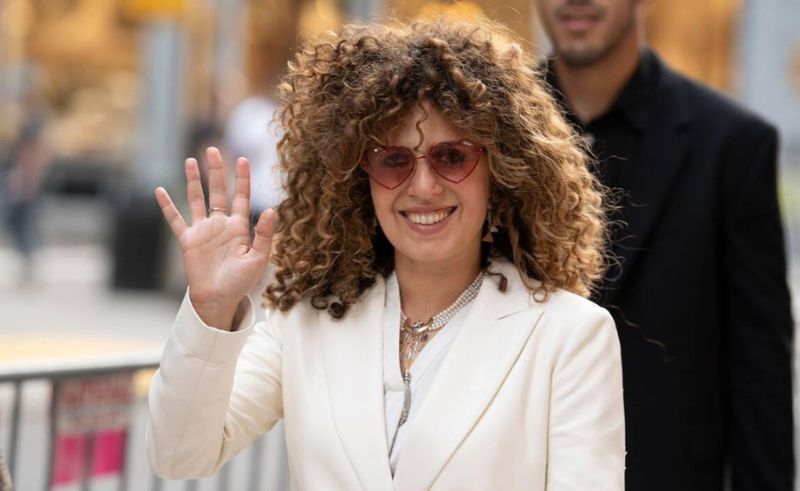
Sarah Goher has become the first Egyptian director included in Variety’s “10 Directors to Watch” list.
Among the 10 emerging directors on Variety’s list are Kristen Stewart, Walter Thompson-Hernandez and Akinola Davies. Goher’s selection follows the runaway success of her debut feature film, Happy Birthday, a tender yet powerful story about class and longing, told through the eyes of an 8-year-old maid.
Goher co-wrote the script with Mohamed Diab; production is handled by Ahmed El Desouky, Ahmed Abbas, Ahmed Badawy, along with Hollywood-heavyweights Jamie Foxx and Datari Turner.
‘Happy Birthday’ premiered at the 2025 Tribeca Film Festival, winning Best International Narrative Feature, Best Screenplay and the Nora Ephron Award for Outstanding Female Director.
The film was also Egypt’s official submission to the Oscars.
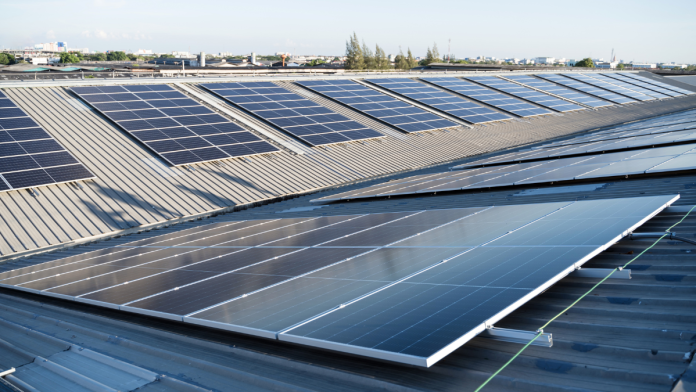
Foulath Holding, the parent company of Bahrain Steel and SULB, has announced a major sustainability collaboration with Yellow Door Energy, a leading sustainable energy developer in the Middle East and Africa. The partnership will deliver a large-scale 123-Megawatt-Peak (MWp) solar project, marking a milestone in industrial clean energy. The initiative includes the development of the world’s largest single-site rooftop solar power plant with a capacity of 50 MWp. A total of 77,000 solar panels will be installed across a newly constructed 262,000-square-meter stockyard shed. The project is being executed under a power purchase agreement (PPA).
This announcement was made during the third edition of Gateway Gulf, a major investment forum hosted by the Bahrain Economic Development Board at the Four Seasons Hotel, Bahrain Bay. The forum brought together global industry leaders, investors, and policymakers from across various regions such as the Americas, Europe, Asia, and the Gulf.
H.E. Noor bint Ali Alkhulaif, Minister of Sustainable Development and Chief Executive of Bahrain EDB, expressed pride in this initiative, stating that Bahrain is at the forefront of global sustainable innovation. She emphasized that the project reinforces Bahrain’s regional leadership in clean energy and supports its long-term national vision for competitiveness and sustainability.
Mr. Meshary Al-Judaimi, Chairman of Foulath Holding, highlighted that the company has invested nearly USD 250 million in sustainability projects over recent years. He noted that this solar project reflects Foulath’s ongoing commitment to environmental stewardship, responsible industrial development, and community well-being.
Sherif ElKholy, Managing Director and Head of Middle East and Africa at Actis, and Chairman of Yellow Door Energy, congratulated both partners on what he described as a landmark agreement. He said the project sets a global benchmark for decarbonizing steel production through cost-competitive clean energy solutions.
This project will be among the largest industrial-scale on-site solar developments worldwide. It includes ten rooftop solar photovoltaic (PV) plants and four ground-mounted PV installations. Over 189,900 high-efficiency solar panels will cover 707,000 square meters, generating 200 million kilowatt-hours of renewable electricity in the first year alone. The system is expected to reduce carbon emissions by 90,000 metric tons annually, contributing significantly to Bahrain’s Net Zero 2060 target.
Yellow Door Energy will manage financing, design, construction, commissioning, operations, and maintenance through the PPA duration. Its operating solar projects have already produced more than 1 billion kWh, avoiding 400,000 metric tons of carbon emissions. With a portfolio of 400 MWp and 10 years of operations, the company continues to lead renewable deployment across the MEA region.
Foulath Holding affirmed its dedication to sustainable development aligned with Bahrain’s Vision 2030 and the UN Sustainable Development Goals.
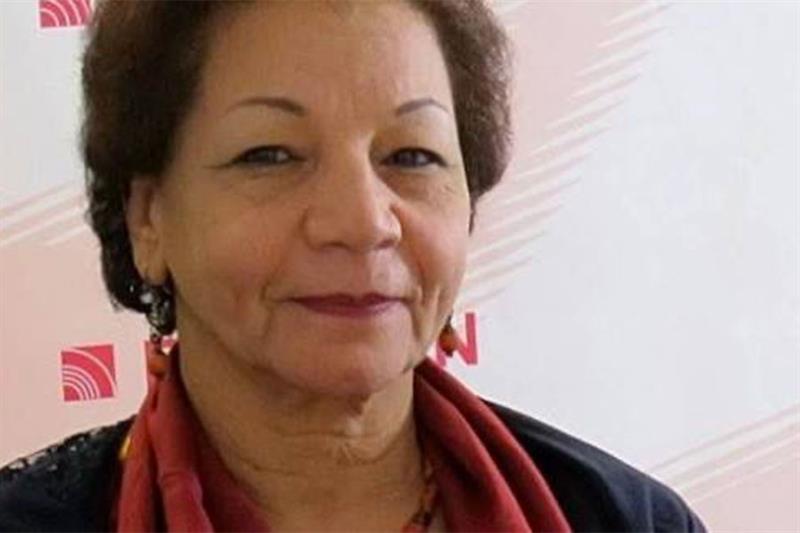
Egyptian novelist Salwa Bakr has won the inaugural BRICS Literary Prize, receiving one million Russian rubles at a ceremony in Khabarovsk, Russia.
The first edition of the prize drew nominees from across the BRICS bloc—Brazil, Russia, India, China, and South Africa—as well as the United Arab Emirates.
Bakr’s victory reflects the growing international recognition of Arab authors on major literary platforms.
The BRICS Prize Board of Trustees had previously announced a longlist of 27 writers competing in the literature category.
Egyptian authors included Ibrahim Abdel Meguid, Salwa Bakr, and Fathi Imbabi, alongside UAE writers Sheikh Ali bin Tamim, Maisoon Saqr, and Reem Al Kamali.
The longlist also featured Russian writers Alexey Varlamov, Andrey Gelasimov, and Dmitry Danilov; Brazilian authors Ana Maria Gonçalves, Patrícia Melo, and Ricardo Aleixo; Indian writers Jay Vasavada, Dr. Rajan Kumar.
It also included Sonu Saini; Chinese authors Ma Boyong and Ai Yi; South African nominees Ntabiseng Jah Rose Jafta, Bongiwe Mhlongo, and Zainab Khan; Ethiopian writer Abere Adamu; Iranian authors Mansour Ali Moradi, Majid Ghasemi, and Reza Amerihani; and Indonesian writers Ekasakti Panu, Intan Paramaditha, and Deni Jha.
The winner receives a cash prize, a commemorative shield and a certificate of appreciation.
Organizers said the award aims to promote cultural exchange among BRICS nations and highlight literature’s role in advancing shared human values, including solidarity and peace.
Salwa Bakr (born 1949, Cairo) is a renowned Egyptian writer, novelist, and critic. She is the author of seven short story collections, seven novels, and a play.
Bakr graduated from Ain Shams University and has worked as a film and theatre critic for leading Arab publications, as well as a professor at the American University in Cairo.
Her works, including the novel The Golden Chariot, often explore the lives of the disadvantaged and marginalized, with a particular focus on the challenges faced by women in Egyptian society.
Bakr’s books and stories have been translated into numerous European languages. Her novel The Man from Bashmour was selected for the Arab Writers Union’s list of the 100 Best Arabic Novels.
She has received the Deutsche Welle Literary Prize and is a member of Egypt’s Supreme Council for Culture and the Egyptian Writers’ Union.
The award was established by participants of the BRICS Forum “Traditional Values” in Moscow, November 2024.
Pioneering a knowledge economy through talent and investment.
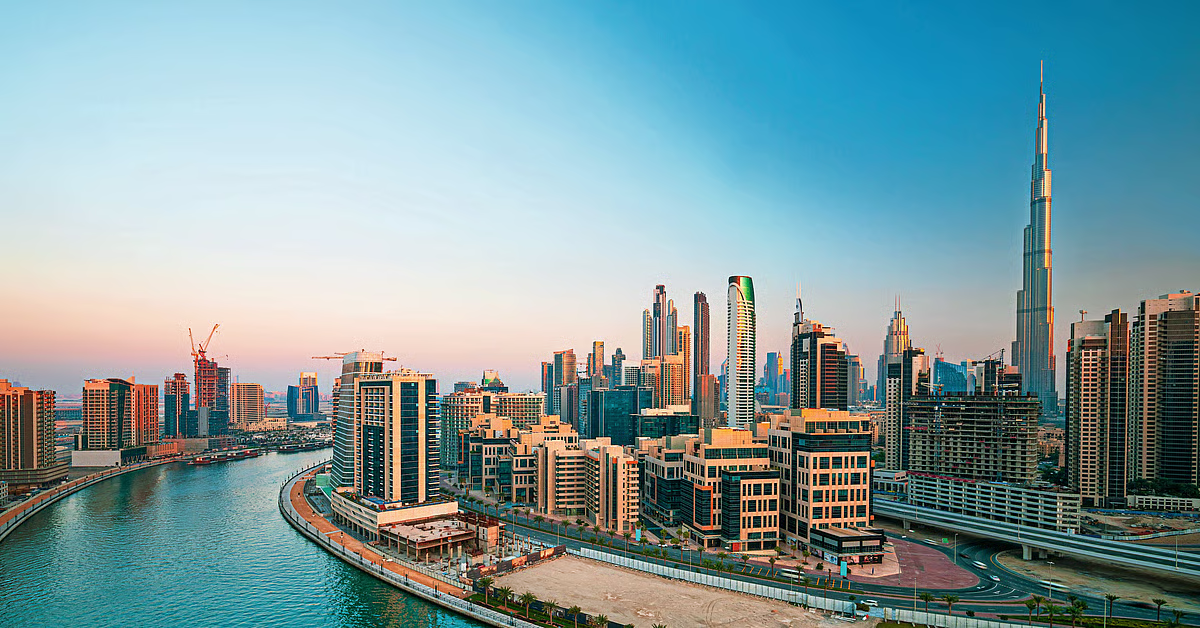
On its 54th National Day, the UAE stands as a global exemplar of strategic reinvention. In just over five decades, the nation has transformed itself from an oil-dependent federation into a dynamic, diversified knowledge economy. What began in 1971 as a resource-driven state has, by 2025, evolved into a global hub for innovation, talent, and enterprise.
This transformation did not happen by chance. It is the result of deliberate, long-term policy decisions anchored in visionary national frameworks such as Vision 2031, which placed human capital and innovation at the center of economic strategy. The UAE made a conscious choice to invest in people rather than depend on natural resources and the results speak for themselves.
Today, the non-oil sectors account for 77.3 per cent of GDP in first quarter of 2025, up from under 50 per cent two decades ago, and overall GDP reached Dh455 billion. This diversification has cushioned against oil volatility, fostering resilience that benefits not just the nation but the wider Mena region through shared prosperity models.
Economic diversification milestones
The UAE’s non-oil GDP grew 5.3 per cent in first quarter of 2025, outpacing total GDP expansion of 3.9 per cent, signalling a structural pivot toward high-value industries. Projections for full-year 2025 estimate 4.9 per cent overall growth, with non-oil sectors at 4.5 per cent, fuelled by tech, finance, and healthcare.
In finance, the UAE’s fintech ecosystem has attracted $1.3 billion in investments by mid-2025, while healthcare spending, at under five per cent of GDP, is set to rise to 5.1 per cent by 2029 amid an 8.6 per cent CAGR in the sector. These figures underscore a deliberate strategy: non-oil trade ballooned 28-fold from 1981 to 2012, and today it sustains a 4.7 per cent average real GDP growth forecast through 2030.
The UAE’s magnetic appeal to top-tier institutions underscores its global stature, drawing entities like NYU Abu Dhabi, Sorbonne University Abu Dhabi, Cleveland Clinic Abu Dhabi, and recently Bascom Palmer Eye Institute. Healthcare FDI reached a staggering $45 billion in 2024, up about 50 per cent, fuelled by streamlined visas, tax incentives, and AI-driven ecosystems. Healthcare has become a talent magnet, with the sector’s staffing market projected to reach over $170 million in 2025, growing to $350 million by 2033 at a 12.4 per cent CAGR in analytics. Expatriates dominate, filling over 70 per cent of medical roles, drawn by per capita spending of over $2,000 and over 150 hospitals, positioning the UAE as a hub for global professionals in preventive and AI-driven care. This influx reflects the UAE’s exceptional culture of inclusivity, forward-thinking leadership under Vision 2031, and government’s prowess in facilitating seamless operations, ensuring mutual success and innovation for all stakeholders.
Accordignly, the UAE is experiencing significant benefits from the global billionaire migration, thanks to its high quality of life, respect for law, incredible safety and tremendous respect for women. The UAE also ranks first in the Gulf region and 18th globally for gender equality.
With a low crime rate and a stable political environment, the UAE provides a secure haven for residents. Policies like long-term residency have retained skilled migrants, enhancing diversity and inclusivity.
Surging investments and innovation
According to a 2025 ranking by one global FDI monitor, the UAE is the second most-preferred destination globally for FDI, just behind the US.
The National Investment Strategy 2031 aims to double inflows from 2023’s $30.5 billion, targeting tech and healthcare amid R&D spending at 1.5 per cent of GDP — the GCC’s highest. In healthcare, AI-integrated ecosystems align with UN goals for non-communicable diseases.
On the greenfield front, the UAE ranked #1 globally in the 2025 Greenfield FDI Performance Index. This turnaround from oil exporter to innovation exporter embodies a moral imperative: building equitable, sustainable growth that inspires global economies to prioritise knowledge over extraction.
As the UAE celebrates its 54th National Day, this knowledge-driven trajectory offers a blueprint for sustainable global development. By attracting top talent and investments, it ensures equitable growth, from AI-enhanced healthcare to fintech innovations. This moral high ground — prioritizing people over profits positions the UAE as a milestone for emerging economies, fostering a legacy of inclusive prosperity for generations ahead.
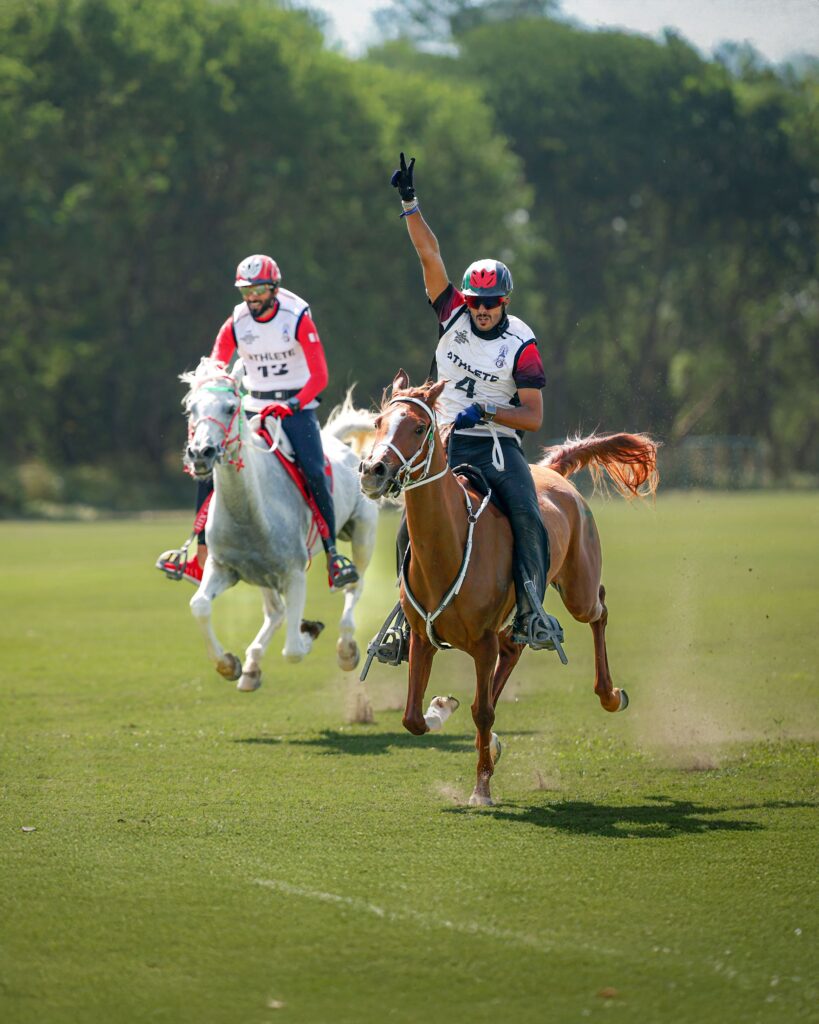
UAE rider Saeed Ahmed Jaber Al Harbi was crowned champion of the FEI Endurance Asian Championship 2025, hosted in Pattaya, Thailand, with the participation of an elite field of riders from across the continent — adding a new continental achievement that reinforces the UAE’s leadership in equestrian sports.
Al Harbi, riding the nine-year-old mare Ras Flor Del Pago, topped the 120-kilometre (two-star) race, which featured 19 male and female riders, completing the course in 5:31:59 hours to secure the title with distinction.
Sheikh Rashid bin Dalmouk Al Maktoum, Chairman of the Dubai Equestrian Club, expressed his pride in this victory, dedicating the achievement to the UAE’s leadership and people on the occasion of the 54th UAE Eid Al Etihad.
Prince Sultan bin Salman, founder and chairman of the club, said: “This achievement demonstrates the Kingdom’s ambition to lead in the global aviation sector.
The Saudi Aviation Club achieved a groundbreaking milestone at the General Aviation Airshow “Sand & Fun,” setting a new Guinness World Record for the most fireworks launched while suspended from a helicopter.
The achievement took place on Thursday at Al-Thumamah Airport in Riyadh using a modified Messerschmitt-Bolkow-Blohm BP 105 P1M helicopter.
The aircraft was equipped with a custom-engineered pyrotechnic platform that launched hundreds of fireworks during flight.
This world-first spectacle was developed in collaboration with international partners Aeropact from Poland and Flash Art from the UAE, combining advanced aviation engineering with creative show technology.
Prince Sultan bin Salman, founder and chairman of the club, said: “This achievement demonstrates the Kingdom’s ambition to lead in the global aviation sector. We are establishing new international standards from the heart of Riyadh, supporting the goals of Saudi Vision 2030.”
The airshow, concluding on Saturday, attracted more than 200,000 visitors and featured over 90 aerial displays. Its diverse offerings included static aircraft exhibits, the “Hangar Talks” forum on eVTOL and artificial intelligence technologies, the technology-focused “Terminal X” zone, and a dedicated “Kids Zone” for young aviation enthusiasts.
The business aspect of the airshow featured more than 150 exhibitors and attracted more than 3,000 VIP visitors and international delegations.
Capt. Farres Moneer, board member and general executive manager at the club, said that the show is confirming its status as the largest and most dynamic general aviation platform in the Middle East.
Moneer added: “We successfully surpassed our targets, welcoming over 200,000 visitors this year, including participants and delegates from more than 90 countries.”
This level of attendance underscores the transformation of general aviation from a niche hobby into a major cultural and economic force, he added.
Moneer noted that the airshow is a vital economic engine supporting the ambitious goals of Saudi Vision 2030.
He said the high level of engagement translated into tangible value, with 18 strategic agreements and memoranda of understanding signed during the airshow, generating an economic impact exceeding SR250 million ($67 million), specifically targeting technology transfer and the localization of advanced aviation industries.
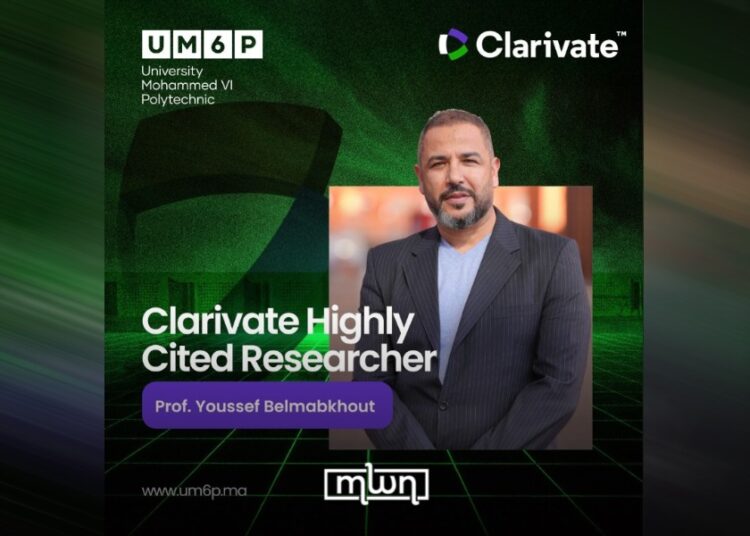
With just 16 African researchers featured on Clarivate’s 2025 Highly Cited list, the two Moroccans mark a standout moment for the country’s scientific landscape.
Mohammedia – Professor Youssef Belmabkhout of Mohammed VI Polytechnic University (UM6P) has been named to the Clarivate Highly Cited Researchers 2025 list, placing him among the world’s most influential scientific voices.
The distinction recognizes researchers whose work ranks in the top 1% by global citations and reflects a broad and lasting impact across multiple fields.
Belmabkhout earned his place in the Cross-Field category, which spotlights scholars whose research extends beyond a single discipline.
Clarivate’s data shows that his work accumulated more than 20,600 citations — nearly 20,000 excluding self-citations — across over 13,600 citing articles.
His research has also been cited in 219 patents from 138 patent documents, underscoring significant industrial relevance in addition to academic influence.
UM6P celebrated his success earlier this week, emphasizing his “sustained scientific impact” and the university’s commitment to high-level research that contributes both locally and globally. His recognition marks one of two Moroccan entries on the 2025 list.
Belmabkhout’s work focuses on advanced material-separation processes, with contributions spanning gas storage and purification, catalysis, CO2 capture, and sensing materials.
As global industries confront the challenge of increasing energy demands while adhering to strict environmental targets, his research provides pathways toward cleaner, more efficient, and economically viable solutions.
Born in Rabat in 1974 and raised in Khouribga, Belmabkhout began his studies in Casablanca before pursuing graduate and doctoral training abroad.
He earned a PhD in Applied Sciences in Belgium in 2005 and went on to join leading institutions including the French Petroleum Institute, the University of Ottawa, Canada’s National Research Council, and King Abdullah University of Science and Technology.
He previously appeared on Clarivate’s Highly Cited list in 2019, 2020, 2021, and 2022.
A second Moroccan researcher recognized in 2025
The 2025 Highly Cited Researchers list includes one other Moroccan: Professor Aziz Bousfiha, an immunologist, pediatric infectious disease specialist, and expert in primary immunodeficiencies.
He is affiliated with Hassan II University of Casablanca and serves at CHU Ibn Rochd’s Department of Pediatrics.
Bousfiha was selected in the Immunology category, reflecting worldwide recognition for his work across multiple subject areas.
His Clarivate profile lists contributions in Immunology, Research & Experimental Medicine, Allergy, Pediatrics, and Genetics & Heredity.
He has appeared consecutively on Clarivate’s Highly Cited Researchers list in 2022, 2023, 2024, and now 2025, demonstrating the consistency and global reach of his medical research.
Both of Morocco’s representatives stand among only 16 African researchers selected this year, alongside peers from South Africa, Kenya, and Egypt.
Their inclusion highlights the strengthening of Morocco’s scientific landscape and the growing visibility of its research institutions within global networks.
For UM6P, Hassan II University, and the country’s wider academic community, the 2025 recognitions mark a significant milestone — affirming that Moroccan science increasingly contributes to global discovery, innovation, and public health.
Following the designation, Katara has announced it would host the first edition of the Arab Opera Festival from December 8 to 11.
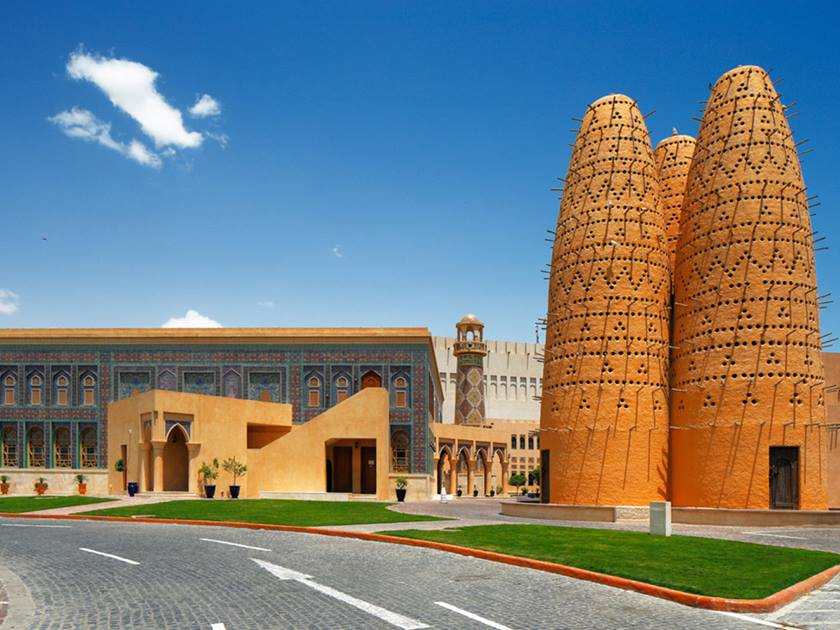
The Arab Educational, Cultural and Scientific Organization (ALECSO) officially designated Katara Cultural Village in Doha as the “Arab Opera City,” recognising its role in promoting Arab opera at both regional and international levels.
The decision, announced during a ceremony held at ALECSO headquarters in Tunisia on Wednesday, reflects wider acknowledgement of Katara’s long-standing efforts supporting musical arts and preserving Arab cultural identity.
The ceremony was attended by Director General of the Katara Cultural Village Foundation Khalid bin Ibrahim Al-Sulaiti, Director General of ALECSO Mohamed Ould Amar, Qatar’s ambassador to Tunisia Zayed bin Saeed Al Kumait Al Khayarin and a number of the ambassadors of Arab countries in Tunisia.
Al Sulaiti described the title as both an honour and a renewed commitment, as well as “a tribute to the Foundation’s efforts in supporting musical creativity and preserving Arab cultural identity,” according to Qatar News Agency.
As part of the new status, Katara will host the first edition of the Arab Opera Festival from December 8 to December 11.
The festival will bring together 13 Arab opera houses, feature performances by orchestras including the Qatar Philharmonic Orchestra and the Cairo Opera Orchestra, and include workshops on operatic singing and performance.
In addition, an online platform dedicated to Arab opera houses was also revealed, offering access to their schedules and programmes throughout the year, an initiative aimed at enhancing visibility of opera across the Arab world.
This latest recognition adds to Katara’s growing legacy. In previous years it was honoured as the “City of the Arabic Novel” and as the “Cultural Heritage City of Arabian Horses,” underscoring its central role in cultivating diverse strands of Arab cultural heritage.
Oman has been elected as a member of the International Coordinating Council of the United Nations Educational, Scientific and Cultural Organisation’s (UNESCO) Man and the Biosphere (MAB) Programme.
The country, represented by its Environment Authority, will serve on the Council for the term from 2025 to 2029. The election took place on the sidelines of the 43rd session of the UNESCO General Conference in Samarkand, Republic of Uzbekistan.
The election highlights Oman’s continuous efforts to promote environmental sustainability and reflects its commitment to achieving a balance between national development and the preservation of ecosystems, in line with Oman Vision 2040 and the UN Sustainable Development Goals.
The MAB Programme works to foster scientific and research cooperation among member states, concentrating on expanding nature reserves, conserving biological diversity, and tackling climate change challenges through sustainable innovation.
Oman has previously achieved international recognition within the programme by successfully integrating two sites, the Al Sareen Nature Reserve and the Jabal Akhdar Scenic Reserve, into the UNESCO World Network of Biosphere Reserves.