Arabs & Arabian Records Aggregator. Chronicler. Milestones of the 25 Countries of the Arabic Speaking World (official / co-official). AGCC. MENA. Global. Ist's to Top 10's. Records. Read & Enjoy./ www.arabianrecords.org
EDGE, the world’s leading advanced technology and defence group, and 4iG Aerospace, the leading ICT, space and defence industries group in Hungary and the Western Balkans, have signed three Memoranda of Understanding (MoUs) to establish significant and wide-ranging industrial cooperation between the UAE and Hungary.
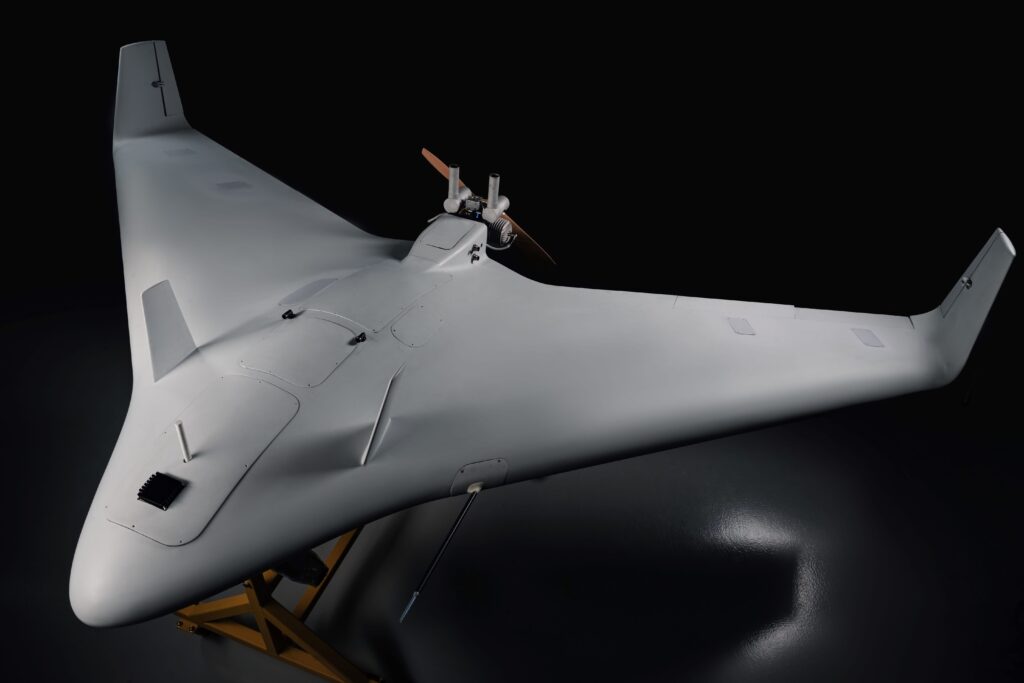
During a state visit by an official UAE delegation to Hungary, EDGE and 4iG signed three memoranda of understanding (MoUs) aimed at enabling a broad technology partnership for the joint development and marketing of advanced defense systems, including EDGE’s Skyknight air defense missile system, Shadow 25 and Shadow 50 cruise munitions, and Vega and Orion autonomous air traffic control solutions.
Hamad Al Marar, Managing Director and CEO of EDGE Group, said: “Our goal, through strengthening partnerships with partners like 4iG, is to help countries develop and adopt advanced sovereign defense technology and industrial capabilities. The global security landscape calls for renewal programs to leverage the latest autonomous technologies and counter rapidly evolving airborne threats. This collaboration enhances EDGE Group’s ability to continue delivering competitive, NATO-compliant, and export-ready solutions, in support of Hungary’s national objectives and as a gateway to deeper engagement across Europe and NATO member states.
For his part, 4iG CEO Istvan Šarhigyi said: “The agreements signed today represent a significant achievement in 4iG’s international efforts in the defense sector. By partnering with one of the world’s fastest-growing defense technology companies, we can develop systems with strong potential for success in European and African markets on a mutually beneficial basis. EDGE Group’s trust and openness provide Hungary with the opportunity to transform into a strategic player in the global defense innovation ecosystem.
Under the first agreement, the two companies will establish a broad technology partnership to jointly develop and explore cross-market opportunities for next-generation autonomous aerial systems (AAAS), counter-AAAS solutions, and space technologies in Central and Eastern Europe and Africa.
The agreement also covers the possibility of establishing a joint venture. The second agreement focuses on the potential development and production of the Sky Knight domestically deployable air defense missile system and the Shadow high-precision cruise munition series in Hungary.
The third and final agreement aims to provide EDGE’s Vega autonomous air traffic management and Orion drone swarm management systems to the European market, with the potential for joint development of air traffic control solutions. The MoU also includes an evaluation of the possibility of establishing a joint venture as a European development and sales center for the Vega and Orion systems.
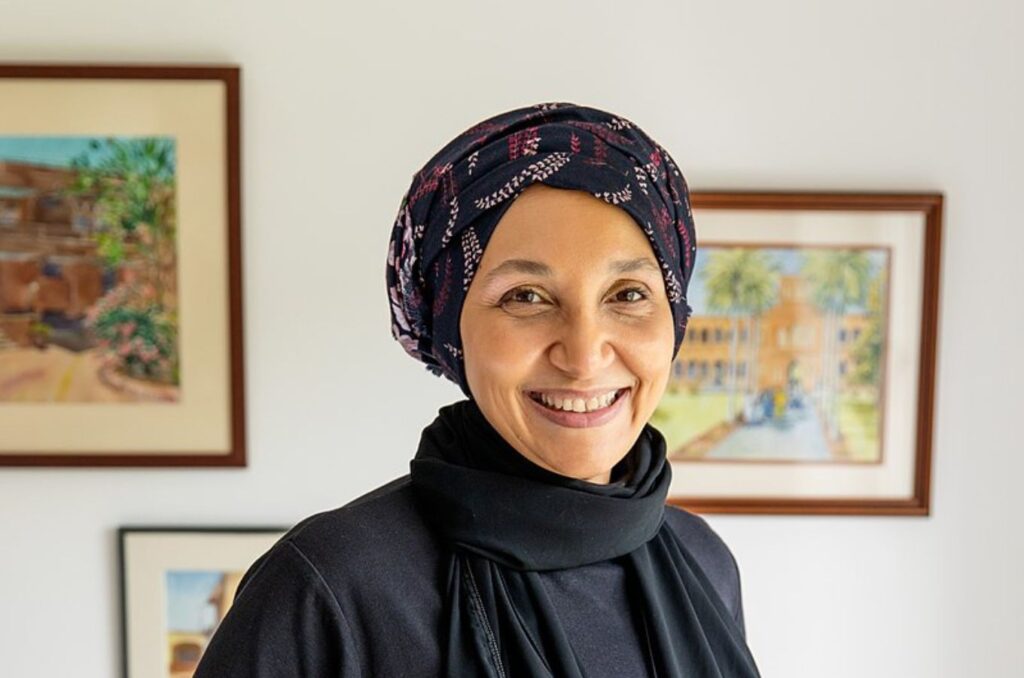
The African literary world is celebrating as Sudanese author Leila Aboulela receives the 2025 PEN Pinter Prize. The announcement was made at English PEN’s summer party, where actors Khalid Abdalla and Amira Ghazalla brought Aboulela’s words to life with powerful readings from her work.
Aboulela will officially receive the award on October 10 at the British Library in London. At this ceremony, she will also reveal her choice for the PEN Pinter Writer of Courage award, an honor reserved for an author “active in defence of freedom of expression, often at great risk to their own safety and liberty.”
In a moving statement, Aboulela reflected on the significance of this recognition:
“This comes as a complete and utter surprise. Thank you English PEN and the judges for considering my work worthy of this award. I am honoured to win a prize established in memory of Harold Pinter, a great writer who continues to inspire so much loyalty and consistent high regard. For someone like me, a Muslim Sudanese immigrant who writes from a religious perspective probing the limits of secular tolerance, this recognition feels truly significant. It brings expansion and depth to the meaning of freedom of expression and whose stories get heard.”
This year’s judges include Ruth Borthwick (British arts administrator and literature executive), Mona Arshi FRSL (award-winning British poet and novelist), and Nadifa Mohamed FRSL (Somali-British novelist). Mohamed praised Aboulela’s work for its “commitment” to the “lives and decisions of Muslim women,” how she centers both their “struggles and pleasures with dignity.” She also noted the timeliness of such a work: “In a world seemingly on fire, and with immense suffering unmarked and little mourned in Sudan, Gaza, and beyond, her writing is a balm, a shelter, and an inspiration.”
Aboulela is a prominent voice in the global literary space for her celebration and examination of the lives of Muslim women. Her writing has been translated into 15 languages. She has published 11 books, with River Spirit, Lyrics Alley, and Translator gaining high critical acclaim. She is also know for being the inaugural winner of the Caine Prize for African Writing when it was launched in 2000, an award that would go on to define 21st century African fiction.
The PEN Pinter Prize, established in 2009, honors writers of outstanding literary merit who, in the spirit of Harold Pinter, cast an “unflinching, unswerving gaze upon the world” and display a “fierce intellectual determination to define the real truth of our lives and our societies.” Their work draws public attention to literature that engages with contemporary realities and injustices. Past African recipients include Chimamanda Ngozi Adichie (2018) and Tsitsi Dangaremgba (2021).
Congrats to Aboulela! This is a well-deserved win. Her work truly challenges the boundaries of whose stories are heard and brings a whole new meaning to the idea of freedom of expression in a way that makes sense for our time.
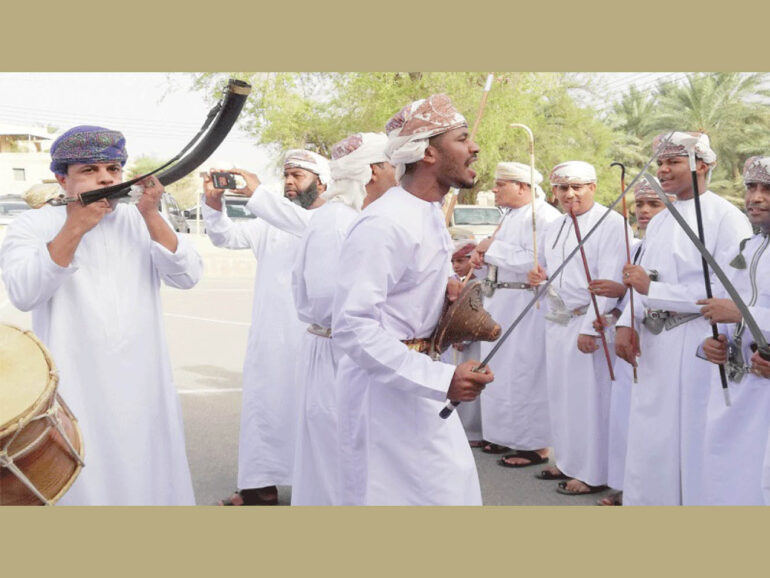
Ministry of Culture, Sports and Youth (MCSY) is intensifying efforts to document and publish the country’s oral history as part of a strategy to preserve intangible cultural heritage and reinforce national identity. The initiative aligns with Oman Vision 2040 and aims to promote Omani culture in global forums.
Fahd bin Mahmoud al Rahbi, Head of Oral History Department at the ministry’s Literary Forum, said the initiative reflects Oman’s commitment to protect its oral traditions and cultural expressions. These include stories, biographies, folk tales, customs, performing arts, traditional crafts and the knowledge systems associated with these.
“Oral history forms an integral part of Oman’s intangible cultural heritage. It is a crucial source of historical knowledge, especially in areas not captured by written records,” Rahbi said. “Our aim is to preserve this history through research, documentation and publication, as well as through public engagement and international cooperation.”
According to Rahbi, Oman’s geographical location has historically made it a crossroads of civilisations. This has contributed to the country’s rich and diverse cultural heritage. Several elements of Oman’s intangible heritage are already inscribed with Unesco, highlighting the global relevance of these preservation efforts.
Since 2006, MCSY has undertaken multiple field projects to record oral history across the governorates and wilayats. Local researchers have worked with elders, artisans and tradition bearers to document narratives, customs and knowledge passed down through generations.
The ministry has published several books as part of this initiative. Notable among these is Omani Traditional Musical Instruments, which documents the styles of Omani music, and Omani Traditional Musical Arts, a comprehensive reference on music and performance arts. Together, these publications offer a detailed record of Omani musical traditions.
Newer works include The Diving Craft in the Popular Traditions of the Batinah Coastal Community by Saeed Abdullah Mubarak al Farsi, which explores the oral traditions associated with coastal livelihoods, and The Craft of Tabsil in South Batinah by Wadha bint Mohammed al Shukaili, which chronicles the history and cultural significance of the palm-based food preservation craft.
MCSY has also supported research on frankincense traditions, culminating in the publication Frankincense and Cultural History, a collaborative project involving multiple Omani scholars.
Another recent work, Radio in the Interior of Oman, by Rana bint Nasser al Abri, explores the development of radio broadcasting in Dakhliyah from the 1940s to the 1980s, viewed through oral narratives. The Bahla Wall: The Wristband of Civilisation by Saeed bin Abdullah al Shaqsi examines the architectural and historical relevance of one of Oman’s iconic defensive structures.
“Preserving our oral history is not just about protecting the past,” Rahbi said. “It is about shaping national identity, supporting cultural diplomacy and preparing for a future that values heritage.”
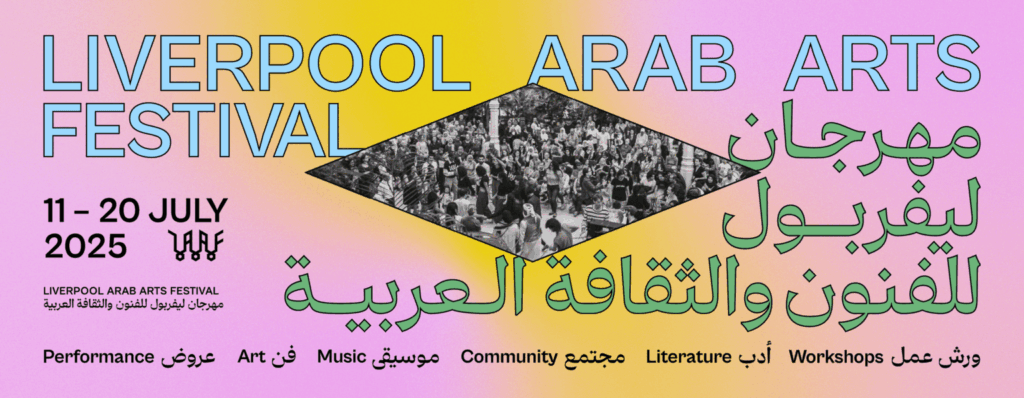
The Liverpool Arab Arts Festival, or LAAF, the UK’s longest-running annual celebration of Arab arts and culture, returns this month with a theme that feels both timely and timeless: “Nostalgia.”
Now two decades in, the festival has grown from grassroots beginnings into an internationally recognized celebration.
Running through to July 20, this year’s program explores how memory, heritage and longing shape artistic expression across the Arab world and its diasporas.
The dynamic, bilingual line-up spans film, music, literature, performance, food and family activities — all underscored by deeper reflections on identity, loss and cultural continuity.
Arab News spoke with Taher Qassim, originally from Yemen, who founded LAAF in 1998 as a community-led effort to foster cultural pride and preserve Arab identity in Liverpool.
“The theme of ‘nostalgia’ is a reflection of both how far we’ve come and where we began,” Qassim said. “Twenty-three years ago, we set out on a path that was uncertain but filled with excitement and purpose. We knew we wanted to create something that represented the Yemeni and Arab presence in Liverpool, but we didn’t yet know how to express it.”
What began as a handful of cultural activations has since evolved into a platform for Arab artists. “From those humble beginnings … the festival began to blossom,” he said. “Today, we proudly offer a platform to artists from across the Arab world, Europe, the US, and beyond — something we could only have dreamed of.”
Two events stand out for him: ‘Arabs Are Not Funny’ and ‘The Book of Sanaa.’ The former, he says, “directly challenges the long-held stereotype that Arabs lack a sense of humor. It’s refreshing, bold and liberating — exactly what the festival stands for.”
The latter brings together literature, poetry, food, and a model of Yemen’s historic capital.
“The richness of this event would’ve felt like a fantasy to us two decades ago. Now, it’s a reality — something we’ve made possible through years of dedication and community.”
Qassim, who was awarded an MBE (Member of the Order of the British Empire) in 2008 for services to community cohesion, handed over the festival’s leadership to his daughter, Afrah, who now steers LAAF with the same vision and care.
Today, LAAF is no longer seen solely as a festival for the Arab community. “That perception has shifted dramatically,” Qassim said. “People from all backgrounds and ages attend and engage. The festival has become a space for dialogue, curiosity and connection.” As he put it, “Conversations happen naturally — before, during and after events.”
One event he hopes visitors will not miss is the now-iconic “Family Day” at the Palm House in Sefton Park. “It’s become the signature event of the Liverpool Arab Arts Festival — our legacy day,” he said. “Families travel from across the UK, Europe, and even further afield to be part of it. The atmosphere is joyful, welcoming, and truly inclusive … a vibrant, heartwarming celebration of Arab culture at its best.”
Some events require tickets, but “Family Day” — an afternoon of music, crafts, performances and community — is the grand finale and free to all.
Saudi Arabia have hosted the Dakar Rally since 2020, when it moved from South America.
The Overdrive pilot held onto his overnight lead to beat South Africa’s Henk Lategan in a Toyota by 3min 57sec with Mattias Ekstrom of Sweden third in his Ford, 20min 21sec adrift.
Saudi Arabia have hosted the Dakar Rally since 2020, when it moved from South America.
There was also a first win in the world’s most famous endurance rally for Australia’s KTM rider Daniel Sanders in the motorbike category.
Sanders, 30, dominated from the moment he won the prologue and finished a comfortable 8min 50sec faster than Spanish runner-up Tosha Schareina on his Honda.
Sanders is the second Australian to prevail in the motorbike category, Toby Price emerging victorious in 2016 and 2019.
“It was a tough race,” said Sanders.
“The last three days couldn’t come quick enough. It was really, really exciting to see the finish line when we came over one dune.
“You see the whole bivouac, I just smiled and had chills go through my whole body. Super special, won’t forget that moment.”
source/content: arabnews.com (headline edited)
__________
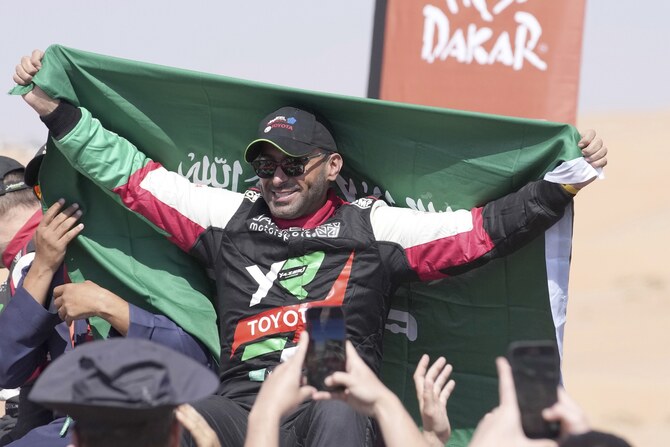
Yazeed Al Rajhi celebrates after winning the Dakar Rally 2025 in the car category at the end of the 12th and last stage in Shubaytah, on January 17, 2025 (AFP)
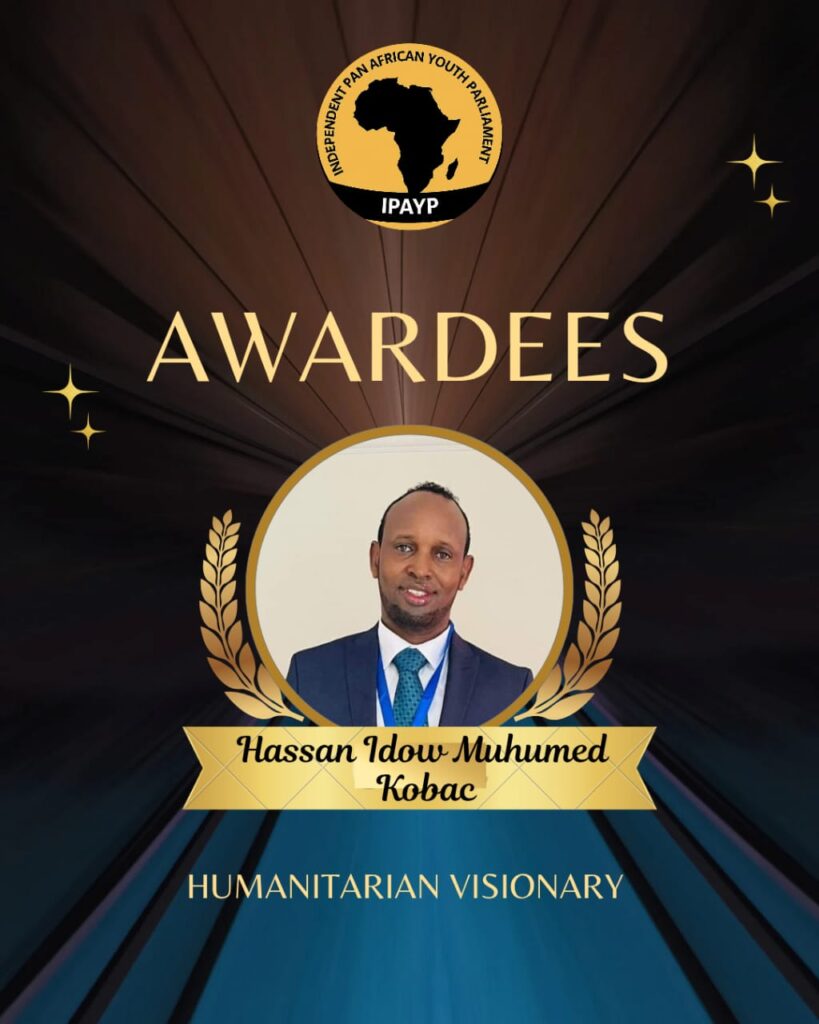
Independent Pan African Youth Parliament awarded Humanitarian Visionary Award to Hassan Idow Muhumed Kobac – a Senator, a business elite and humanitarian worker among other awardees at the Kenyan capital Nairobi.
The three-day summit gathered over 50 youth leaders, policymakers, academics, and civil society voices from across the continent focusing youth-driven solutions for key challenges including education, employment, leadership, democracy, climate change, and digital innovation.
“I am honoured to receive this important award which is the recognition of the humanitarian work I have been doing in Somalia for more than a decade and all other humanitarian workers” Hassan Idow Muhumed Kobac said, “The Award not only encourages the humanitarian workers, but also boosts the morale of other humanitarian workers.”
“My goal is to create a better life for the Somali people and restore their dignity.” Hassan Kobac who is a true example of honest leadership that stands for progress and compassion said.
Mr. Kobac has dedicated his life to the development of vulnerable communities. Through the Hassan Kobac Foundation (HKF), a foundation he founded himself, has become a source of hope for many people affected by drought, displacement, and poverty.
In the face of one of the most severe droughts in recent history, the Hassan Kobac Foundation (HKF) has emerged as a beacon of hope, delivering emergency water trucking assistance and food rations to thousands of families in the Hiiraan region of central Somalia.
In February this year, Hiiraan Youth Association honored and celebrated the achievements of Senator Hassan Kobac in a grand event held in Beledweyne. The ceremony, attended by various societal groups, intellectuals, and youth, honored Senator Kobac’s four-year tenure in the upper house of the Federal Parliament of Somalia
Hassan Kobac has been described as the true voice of the people of Hirshabelle, continuously working to defend their rights and improve their well-being. His dedication to youth empowerment and community development has earned him the admiration of and respect of many.
The meeting highlighted the Kingdom’s $10 million commitment over five years to strengthen early warning systems.
Saudi Arabia’s international efforts to combat sand and dust storms were commended this week during a high-level meeting at the UN Headquarters in New York, the Saudi Press Agency reported on Friday.
The meeting highlighted the Kingdom’s $10 million commitment over five years to strengthen early warning systems and support countries vulnerable to dust storm impacts.
The initiative, led by Saudi Arabia in cooperation with regional centers affiliated with the World Meteorological Organization, was praised for enhancing forecasting and response capabilities.
Jumaan bin Saad Al-Qahtani, deputy CEO of the National Center of Meteorology, emphasized the Kingdom’s work through Vision 2030 programs such as the Saudi and Middle East Green Initiatives.
He also noted the establishment of the Regional Center for Dust and Sand Storms in Jeddah as a strategic hub for regional coordination, data exchange, and capacity building.
Saudi Arabia has hosted major research events, including the First International Conference on Dust and Sand Storms in Riyadh, and plans to hold a second edition in 2026.
Its environmental efforts have resulted in planting over 142 million trees and reclaiming more than 436,000 hectares of degraded land.
Al-Qahtani reaffirmed the Kingdom’s readiness to expand international partnerships to reduce dust sources, protect the environment, and improve resilience against climate change, SPA added.
source/content: arabnews.com (headline edited)
_____________
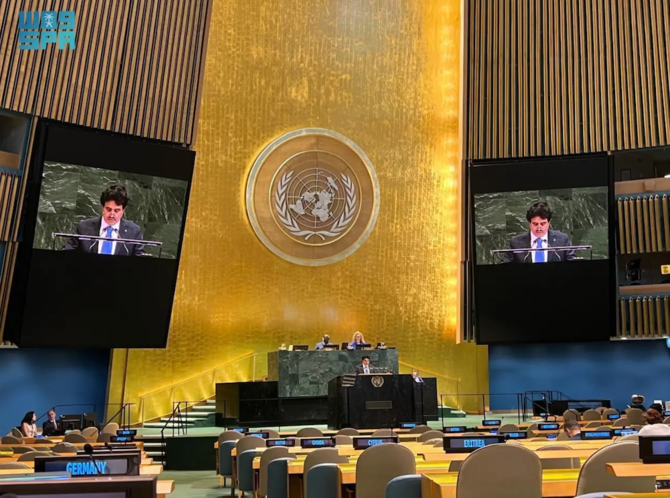
Saudi Arabia’s international efforts to combat sand and dust storms were commended this week during a high-level meeting at the UN Headquarters in New York. (SPA)
Since 1924, UChicago’s Epigraphic Survey has recorded history carved into walls of Luxor’s tombs and temples.
Each October, an expedition from the University of Chicago’s Institute for the Study of Ancient Cultures (ISAC) returns to Chicago House, their headquarters in Luxor, Egypt. Known as the Epigraphic Survey, the team spends six months a year painstakingly recording the ancient hieroglyphs and reliefs inscribed on the walls of Egypt’s monuments—a project that has operated continuously for 100 years.
In 1924, the Epigraphic Survey was founded by James Henry Breasted, a famed Egyptologist and founder of ISAC (then the Oriental Institute). Breasted pioneered a technique, now known as the Chicago House Method, to record the historic texts carved into temples and tombs without damaging them. Refined over a century, the process blends photography, illustration and careful eyes to create a facsimile—an exact copy.
“The walls of those monuments are covered with incredibly important economic, religious and historical documents. These are real records of what was going on in Egypt 3,000 years ago,” said Egyptologist Emily Teeter, co-curator of ISAC’s current special exhibition “Chicago on the Nile: 100 years of the Epigraphic Survey in Egypt.” “But the problem is that these records are rapidly perishing through 3,000-years-plus of erosion, groundwater, vandalism and the pressures of tourism.”
Increasingly, the Epigraphic Survey’s mission has expanded to include not just documentation, but also conservation, training and site management to preserve Egypt’s ancient history before it disappears forever.
The Chicago House Method
The modern city of Luxor, known in the ancient world as Thebes, has one of the largest concentrations of ancient monuments in Egypt. This includes the site of Medinet Habu, a massive walled temple complex mainly built by pharaoh Ramesses III over 3,000 years ago.
When Breasted first visited Egypt in the early 20th century, he saw the potential of a new, developing technology to record the vast number of hieroglyphs and decorative reliefs: photography. However, Breasted quickly realized the camera’s limitations.
“When you take a photograph of the wall surface, it sees everything,” said J. Brett McClain, field director of the Epigraphic Survey, who first joined the Survey as a graduate student in 1998. “It sees the details that you want to see, but it also sees a lot of information that you may not want to see.”
Photos show damage, discoloration, and encrustation, making images harder for scholars to interpret. In response, Breasted came up with a new technique—one that combines photography with illustration.
This technique, known as the Chicago House Method, begins with an enlarged photo of a wall section. An artist, trained in scientific illustration, then traces the photographic print with pencil while looking at the original wall. Back in the studio, the lines are redrawn with ink. Then the photograph is bleached away to leave behind a perfect illustrated replica. To maintain the highest level of accuracy, two Egyptologists independently review the drawing in a process known as collation.
“By combining the three skill sets of a variety of different people throughout the process, we create a record of the wall that is more accurate than any one person or any one technique by itself could create,” McClain said.
Today, digital tools augment Breasted’s large-format camera and the artist’s ink pen, but the underlying approach has remained virtually the same for a century. New technologies have also made it easier to make the Survey’s work accessible to all.
“Everything that we publish is simultaneously published in hardcopy, but also available as a free PDF. And this is really our way of making sure that our very important work is disseminated throughout the world,” Teeter said.
Preserving for the future
For the past several decades, environmental change has accelerated the threats to the ancient monuments at Luxor. As agricultural areas have expanded, salt from the rising groundwater level has eaten away at the stones.
“The soft stone that enabled them to carve these spectacular reliefs and monuments also is what makes them vulnerable to erosion and destruction over time,” said ISAC’s director, Prof. Timothy P. Harrison. “So, an increasingly active part of the Epigraphic Survey’s mission has been not just documentation, but also the actual conservation and preservation of these monuments.”
Since the 1990s, with the help of grant funding and in partnership with the Egyptian government, the Survey has cleaned, conserved and even rebuilt monuments.
For example, the team completely dismantled and rebuilt three ceremonial gates at Medinet Habu that were on the verge of collapse. Each large stone block was carefully removed by stoneworkers so it could receive conservation treatment. A new foundation was poured, and the stones were carefully put back in place.
Salt and erosion also continue to eat away at the inscriptions on these monuments—records of the past that will eventually be illegible. The mission of the Survey is to create documentation so precise that it can stand in place of the original texts.
“We may not be able to—this is sad to say—save the actual monument,” Teeter said. “But at least we’ll be able to know what the Egyptians were telling us.”
For the past century, the Epigraphic Survey has documented thousands of inscriptions, but the work is far from complete; at least half of all known ancient Egyptian texts remain insufficiently documented and published. With the assistance of new technology like powerful databases and analytic tools, the survey’s vast data can be compiled together in new ways Harrison calls “a game changer.”
“We know that our records are going to preserve this information for the future,” McClain said. “And that is something incredibly motivating to be a part of.”
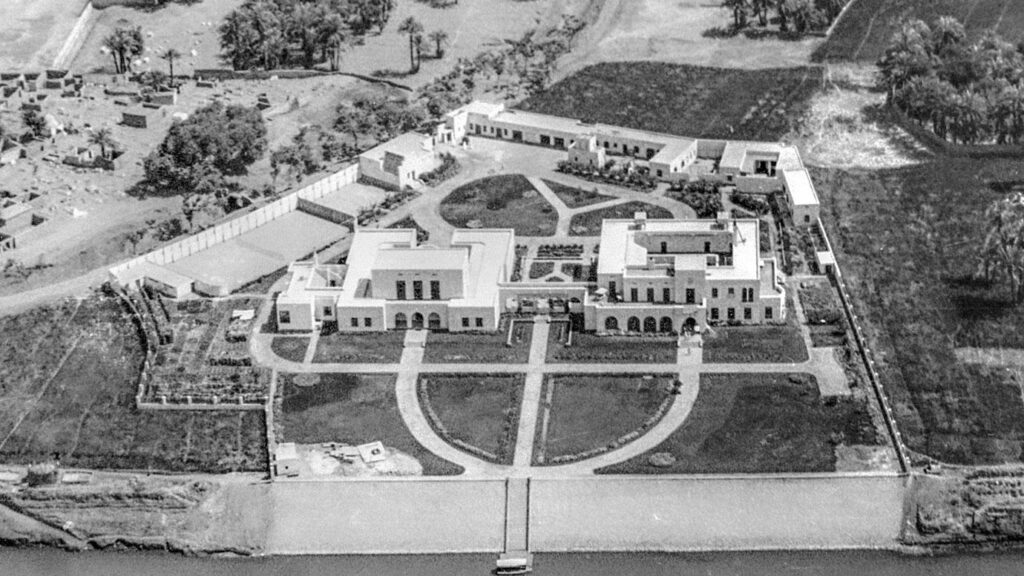
Chicago House in Luxor, Egypt ca. 1932, shortly after its construction on the east bank of the Nile River. The facility still serves as the headquarters of the Epigraphic Survey.Photo courtesy of the Institute for the Study of Ancient Cultures
Three Libyan companies won awards at the Athens International Olive Oil Competition , the Libyan Export Promotion Centre (LEPC) announced yesterday.
’’Once again, Libyan olive oil is in the advanced ranks in the world in terms of quality in the Athens International Competition for the year 2025’’ the LEPC said.
At the competition, the Mishkah and Celine companies won gold medals. The Mountain Olive Company won the bronze medal as the best excellent olive oil. The Mishkat company also won the award for the best Shamlali variety in the same competition.
This is the tenth edition of the Athens International Competition with the participation of 630 contestants from different countries of the world.