Arabs & Arabian Records Aggregator. Chronicler. Milestones of the 25 Countries of the Arabic Speaking World (official / co-official). AGCC. MENA. Global. Ist's to Top 10's. Records. Read & Enjoy./ www.arabianrecords.org
Saudi Arabia has officially unveiled a special Riyadh Season stamp that set a new Guinness World Record.
Measuring an incredible 64 square feet 7 square inches, it broke the record for the biggest special stamp in the world on Feb. 14. The public finally got a glimpse of it when Saudi Post displayed it at Boulevard Riyadh City, one of the special Riyadh Season zones.
“By revealing this stamp, the world’s largest special stamp, we broke Walt Disney’s record, set in 2019,” Bandar Al-Toaimi, Saudi Post’s general manager of corporate communications, told Arab News.
“We are so delighted it has been achieved by Saudi capabilities; from concept to design and implementation, it was all done by Saudi talents devoted to Riyadh season.”
The special stamp celebrates Riyadh Season, which was introduced in 2019 and has become one of the biggest events in the Saudi entertainment calendar. The design includes a winter wonderland scene, the Riyadh Season logo, a hot air balloon, a fountain, a racing car and fireworks.
source/content: arabnews.com
___________
The special stamp is modeled around Riyadh Season, Saudi Arabia’s major event, and features winter wonderland, the Riyadh Season emblem, an airship, a fountain, a race vehicle, and fireworks. (Basheer Saleh)
Ahmed bin Saleh al Maskari. Athlete. Body Building.
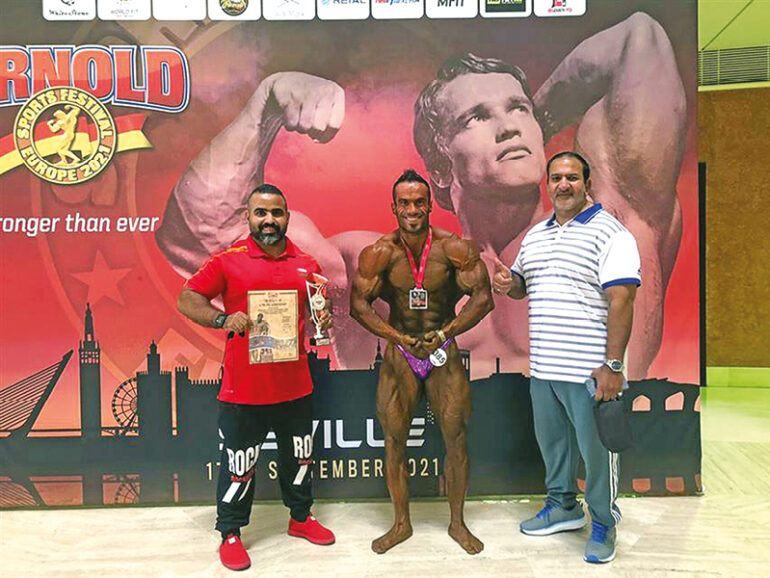
Oman’s Ahmed bin Saleh al Maskari won silver medal in the 90kg weight category at the Arnold Classic Europe 2021 bodybuilding championship held in Spain from September 16 to 18.
Badr al Amri, head of the Technical Committee of the Oman Committee for Weightlifting and Bodybuilding, supervising the player’s training, said that Maskari was able to make his presence felt among the world’s most experienced bodybuilders.
“The Arnold Classic is one of the biggest bodybuilding tournaments in the world, and Maskari proved his mettle as he prepared well for it,” Amri said.
“Maskari is an important member of the national bodybuilding team. He has achieved great success and brought laurels for the sultanate in many international and local events.”
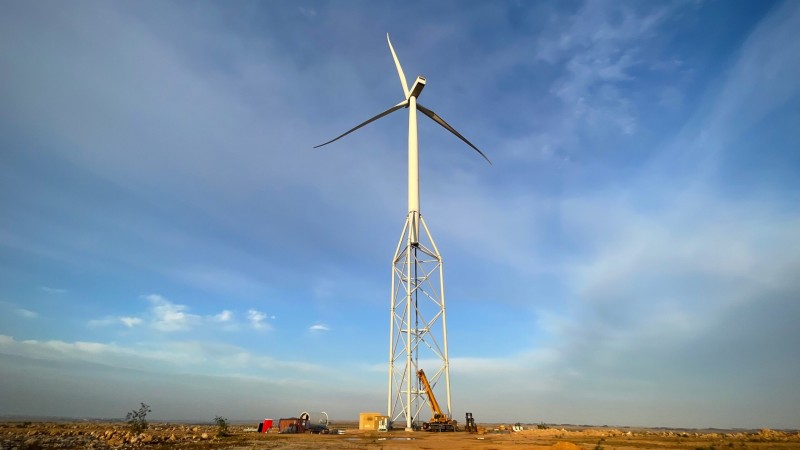
The state-of-the-art wind turbine in Morocco’s Oualidia is expected to generate an annual average of 2.500 MW/h, reducing CO2 emissions by 2.500 tonnes every year.
The 144-meter tall structure, part of the InnoVent’s Oualidia wind farm, provides a milestone thanks to high production capacity and cost-efficiency.
Construction work for the turbine began in 2019 following a deal between Morocco’s government and Spanish renewable energy company Nabrawind Technologies.
The installation is the first “self-erecting turbine” for Nabrawind Technologies.
Aside from breaking the continental height record for turbines, the Nabralift tower is special on grounds of the innovative construction method. The company used an innovative self-erecting system to construct the tower, without the need for conventional large-size cranes.
Built in collaboration with French developer InnoVent, the turbine additionally breaks the record for the tallest turbine constructed with a self-erecting system.
The innovative construction model was also cost-optimal as the tower only needed 80 square-cubic meters of concrete for its foundation, down from 500 square-cubic meters necessary for structures of such height, lowering cost by 60%.
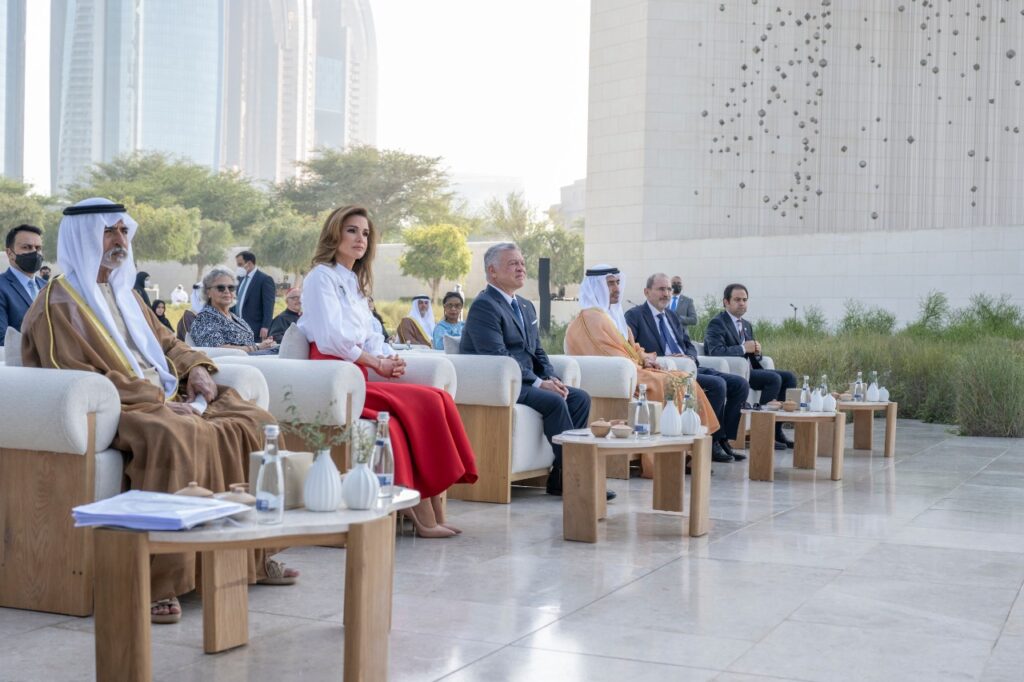
Their Majesties King Abdullah II and Queen Rania Al Abdullah of Jordan on Saturday, February 26th, received the 2022 Zayed Award for Human Fraternity.
In the presence of H.H. Sheikh Abdullah bin Zayed Al Nahyan, Minister of Foreign Affairs and International Cooperation, and Jordanian Foreign Minister Ayman Al Safadi, the award, presented during a ceremony hosted by the Higher Committee of Human Fraternity at the Founders Memorial in Abu Dhabi, was granted in appreciation of Their Majesties’ efforts to promote human fraternity, mutual respect, and peaceful coexistence. The award was also presented to Haitian humanitarian organisation FOKAL.
Attending the ceremony virtually, Grand Imam of Al Azhar Sheikh Ahmad Al Tayyib and His Holiness Pope Francis congratulated Their Majesties, describing them as role models for fraternity and coexistence.
Mohammed Abdulsalam, Secretary-General of the Higher Committee of Human Fraternity, also delivered a speech during the ceremony.
The award is organised by the Higher Committee of Human Fraternity, an independent international committee instituted to promote human fraternity values in communities around the world and to fulfil the aspirations of the Document on Human Fraternity, signed by Grand Imam of Al Azhar Sheikh Ahmad Al Tayyib and Pope Francis in Abu Dhabi in 2019.
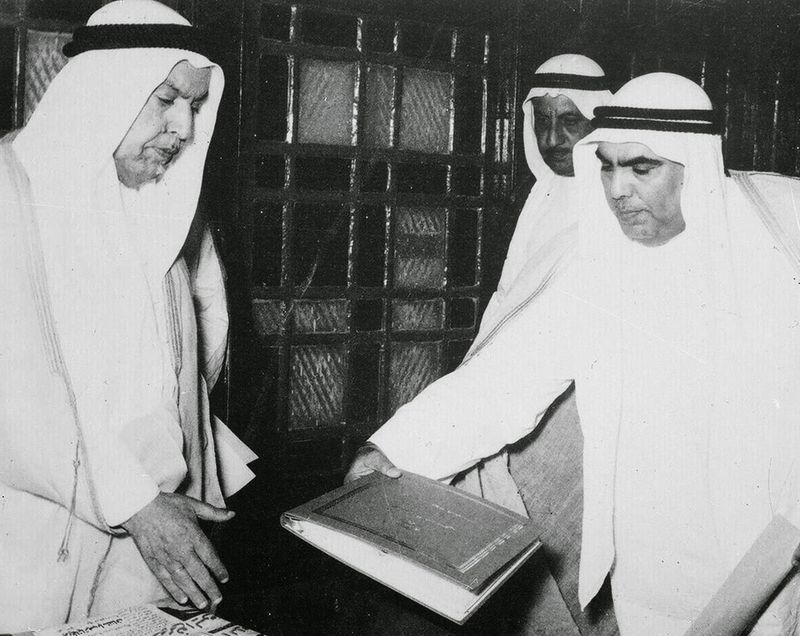
Kuwait National Day is always celebrated on 25th February. This holiday marks the day when Sheikh Abdullah Al-Salem Al-Sabah ascended to the throne in 1950.
To commemorate the day , Kuwait’s Ministry of Defense held a show of military vehicles and equipment
NATIONAL DAY KUWAIT – Timeline
1613
Kuwait City is Founded
Kuwait City is founded as a fishing village.
1792
The East India Company Arrives
The East India Company secures the sea routes between Kuwait, India, and the east coasts of Africa.
1946 — 1982
Golden Era of Kuwait
Kuwait experiences a period of prosperity driven by oil and its liberal atmosphere.
2006 — 2009
The Peak of Prosperity
Kuwait has the highest Human Development Index ranking in the Arab world
______________________________
KUWAIT LIBERATION DAY
Kuwait Liberation Day is observed annually on February 26.
This holiday remembers the day Kuwait was liberated from Iraqi occupation in 1991.
The Liberation was the U.S. marshaled military operation — Operation Iraqi Freedom, to recoup Kuwait from Iraq after the 1991 bombing of Iraq. U.S. troops arrived to find the Iraqis surrendering as a whole, although pockets of resistance prevailed, especially at Kuwait International Airport where Iraqi troops, supposedly clueless that a retreat order had already been given, proceeded with fighting, which only resulted in an intense battle over the airport itself. Most of the fight happened in Iraq instead of Kuwait. The military operation is also commonly referred to as the Gulf War.
source/content : nationaltoday.com
_________
On February 25, Kuwait celebrates 61 years since it gained its independence from the British mandate. While the treaty was signed in June, Kuwait’s National Day was changed to February 25 in 1963 to coincide with the date that Abdullah Al Salem became ruler of Kuwait back in 1950. / Image Credit: Supplied / www.gulfnews.com
Tunisia bid a final farewell on June 1 to the prominent historian and scholar of Islam – Hichem Djait, whose input was seminal to research on critical periods of Islamic history. From sociological, philosophical and anthropological perspectives, Djait’s publications offer insight into key issues facing the interpretation of Islamic history and the interaction of Islam with modernity.
Born in 1935 in Tunis to an erudite family in Islamic jurisprudence, Djait received a conservative education in his immediate milieu before attending the Sadiki high school in Tunis, which opened the gates for him to French and Western culture in general. He received an advanced degree in history in France in 1962. Afterwards, he obtained a Ph.D. in Islamic history from the Sorbonne University in Paris in 1981.
In a comment on his learning journey from Tunis to Paris, he said: “My discovery of philosophy was decisive. It was a conquest and a spiritual awakening, and I do not mean that only in a metaphysical sense, but also at the level of psychology, ethics and logic. It was then that preconceived certainties began to melt away and I discovered biology and the theory of evolution, and all of this amazed me and astonished me at the same time.” (See a related article, “Do Human Evolution and Islam Conflict in the Classroom?”)
Djait, who died at age 86, spent nearly half a century investigating Islamic history and Arab culture. He was an emeritus professor at the University of Tunis and a visiting professor in several renowned higher education institutions, including McGill University, in Montreal, and the University of California at Berkeley. He was also a member of the European Academy of Sciences and Arts, chairman of the Tunisian Academy of Sciences, Letters and Arts, and a member of the International Scientific Committee that produced Unesco’s eight-volume General History of Africa.
His stay in the West inspired him to write Europe and Islam, a book that sheds light on the interplay between Islam and Western civilization. His magnum opus remains The Great Fitna (La Grande Discorde), a groundbreaking work in the study of a major period of Islamic history in line with a rigorous academic approach.
His focus shifted more towards writing the biography of the Prophet Muhammad using scientific lenses in what has been described as a bold approach to Islamic history that breaks away from the sacralization that permeates the work of many Arab scholars on the subject. His goal was to rewrite prophetic tradition in a scientific way that combines comparative history with anthropological insight.
In this respect, he made it clear that a distinction should be made between historical thought, historiography and the philosophy of history. This book was written in three parts and puts the genesis of Islam in its historical context. (See a related article, “A New Perspective on the Last Days of the Prophet.”)
Djait received a constellation of distinctions and prizes, including being named Arab Cultural Personality of the Year by the Arab Institute for Research and Publishing in Beirut in 2016, and being honored in 2018 by a group of Arab researchers who dedicated to him a book that sheds light on his rich academic and intellectual journey.
source/content: www.al-fanarmedia.org (edited for length)
_____________
Hichem Djait died June 2021 at age 86. The Tunisian scholar spent nearly half a century investigating Islam’s place in history and in the modern world (Photo: from Facebook).
Coinciding with the country’s 51st National Day celebrations, Karwa Motors has rolled out its first Karwa-branded bus proudly bearing the ‘Made in the Sultanate of Oman’ tag called ‘Salam’.
The company has a manufacturing facility in the Duqm Special Economic Zone.
The event also marks the start of manufacturing operations for the joint investment project between Oman and Qatar, which in its first phase aims to produce 500 buses annually.
Karwa Motors is a joint venture between Mowasalat Qatar, the state-owned transport company of Qatar, and Oman Investment Authority’s sovereign wealth fund.
Commenting on the new facility, Dr Ibrahim al Balushi, chief executive officer of Karwa Motors, said, “Located on a 600,000sqm site, the manufacturing facility is outfitted with the latest in technology. Our factory will also create job opportunities for Omanis, whether they are regular jobseekers or have experience in the automotive field.
“The first phase of ramp-up will be focused on producing the first of three Karwa-branded buses – Salam – which will be used at the FIFA World Cup 2022.
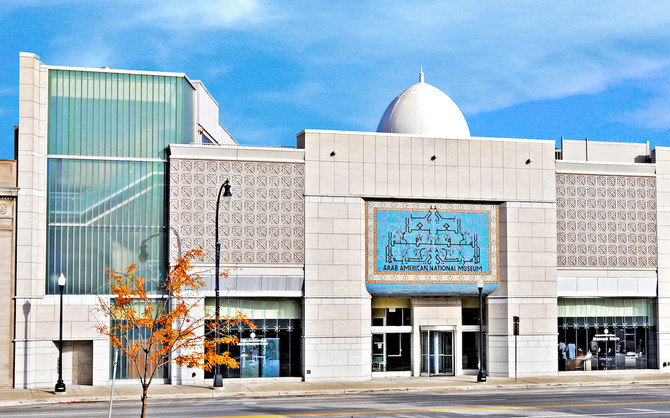
After the COVID-19 pandemic sparked a near-two-year closure, the Arab American National Museum in Dearborn, Michigan, has finally reopened its doors to visitors.
Founded in 2005, AANM bills itself as America’s first and only museum devoted to telling the stories of Arab-American history and culture. Its location is apt; Dearborn is home to the largest Arab community in the US — around 40 percent of the city’s population is of Lebanese, Syrian, Yemeni, Iraqi, or Palestinian origin.
eaturing a courtyard, a fountain, and thematic spaces, the interior of AANM pays homage to Middle Eastern and North African design and architectural aesthetics. Through its galleries, the museum details Arabs’ varied contributions to humanity, and the phases of Arab immigration: the challenges of coming to America, the challenges of establishing a life there, and the impact of Arab-Americans in the public and private spheres.
It tells the stories of peddlers, entrepreneurs, scholars, military men and women, artists, and entertainers. There are some important but relatively unknown names highlighted. Take Ruth Joyce Essad, a fashion designer born in 1908, for example. She became one of Detroit’s first couturiers — dressing socialists and singers, including big-band vocalist Dinah Shore. Another interesting personality is the Syrian business owner Leon B. Holwey, who claimed to have co-invented the ice-cream cone in the early 1900s.
On a national level, the profile of Arab-Americans was raised last year by President Joe Biden, who made history by establishing National Arab American Heritage Month, which will take place in April every year.
source/content: arabnews.com
_________
The Arab American National Museum is in Dearborn. (Supplied) / arabnews.com
The Fiber Connect Council MENA has announced the appointment of Eng. Ahmed Mekky, Chairman and CEO of Benya Group, as Chairman of the council for a two-year term, succeeding Mr. Juan Colina. His appointment for this esteemed role, marks the first time an Egyptian assumes this position.
Eng. Mekky has been involved with the council in his capacity as a member of the Board of Directors since 2011, and was nominated for his role as Chairman of the council, in light of his endless contributions to the ICT industry on a global level and particularly for his extensive experience in the field of optical fibers.
Benya Cables, a subsidiary of Benya Group, began with ambitious plans to build the region’s largest optical fiber factory, and is now months away from materializing that reality.
Fiber Connect Council MENA has a mandate to exponentially increase the deployment of high-speed fiber networks, to connect consumers, businesses, governments and organizations, with the products and services needed to enhance quality of life, make a sustainable impact on the environment, boost business competition and develop apps to ultimately transform the way people live and businesses operate.
The Council’s Board of Directors is comprised of a notable cohort of member organizations such as Corning, Prysmian MEFC, OFS, Etisalat, and Oman Broadband. The board was formed in 2011 as an initiative launched by the founding members, and since inception, now boasts a member and partner count over 50 prominent industry leaders.
Kholoud Al-Dergham, Director General of Fiber Optic Connect Council MENA, welcomed the appointment of Eng. Ahmed Mekky as the Council’s new Chairman, highlighting “his expert record and experience in this field as invaluable assets to the Council, as well as a unique opportunity to invest that kind of experience, to accomplish the council’s objectives to expand the use of fiber optics”.
Eng. Ahmed Mekky is one of the most influential and prominent leaders in the ICT sector. In 2017, he founded Benya Group, formerly known as “Fiber Misr Systems,” and its affiliates with the goal of accelerating the Middle East and Africa’s digital transformation.
Prior to that, he launched Gulf Bridge International (GBI) in 2008 to build and operate the first underwater cable network, stretching over 40,000 kilometers and connecting 25 nations.
In 2011, he was appointed to the SAMENA Council’s Telecommunications Committee, and was selected on the Board of Governors (PTC).
Eng. Mekky has received various honors in recent years, including the “Telecom Review” award for best CEO in the area of enterprises offering services in telecom infrastructure for three consecutive years (2019, 2020 and 2021)
Qatar’s Nasser Saleh Al Attiyah won Qatar International Rally to record a 16th victory at his home event and achieve a stunning milestone of 80 wins in the FIA Middle East Rally Championship (MERC) since 2003.
The success was a 28th for co-driver Mathieu Baumel in the MERC and his fifth in Qatar, while Al Attiyahs 80th success as a driver equaled the number of wins achieved last month by French legend Sébastien Loeb in the FIA World Rally Championship.
Oman’s Abdullah Al Rawahi was patient and stayed clear of trouble as chaos ensued around him. He and Jordanian co-driver Ata Al Hmoud were rewarded with a stunning second place in their Oman Rally Team-run Skoda Fabia R2 evo and a useful haul of championship points.
Andorra-based Ulsterman Kris Meeke and co-driver Chris Patterson led after two stages on Friday before rolling out of contention for the win in stage four. Meeke climbed from fifth to third during the final day and then overcame a damper issue on the final loop of three stages to regain third overall and the final place on the podium.