Arabs & Arabian Records Aggregator. Chronicler. Milestones of the 25 Countries of the Arabic Speaking World (official / co-official). AGCC. MENA. Global. Ist's to Top 10's. Records. Read & Enjoy./ www.arabianrecords.org
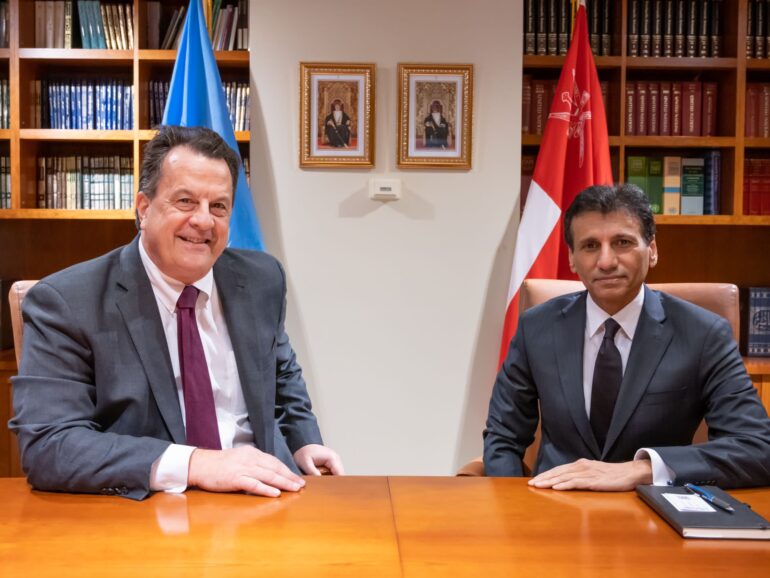
The United Nations General Assembly has elected Oman’s Permanent Representative to the world body as chairman of its Special Political and Decolonisation Committee.
In his speech to the 77th session of the General Assembly, H E Dr Mohammed bin Awadh al Hassan, the sultanate’s Permanent Representative, stated that Oman is keen to chair the Special Political and Decolonisation Committee, owing to its belief in the freedom of peoples and their independence, as well as the importance of ending colonisation in line with the UN’s related decisions.
The Special Political and Decolonization Committee also known as Fourth Committee considers a broad range of issues covering a cluster of five decolonization-related agenda items, the effects of atomic radiation, questions relating to information, a comprehensive review of the question of peacekeeping operations as well as a review of special political missions, the United Nations Relief and Works Agency for Palestinian Refugees in the Near East (UNRWA), Israeli Practices and settlement activities affecting the rights of the Palestinian people and other Arabs of the occupied territories, and International cooperation in the peaceful uses of outer space.
The film, Sharjah Media City’s first production, was nominated in three categories – Best Director, Best Actress and Best Asian Film.
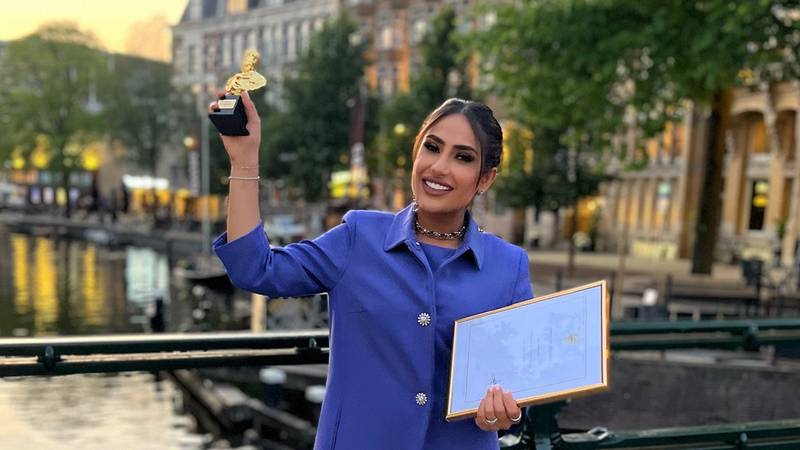
Emirati actress Amal Mohamed has won Best Asian Actress at the Septimius Awards for film, in the Netherlands, for her role in the Emirati film 218: Behind the Wall of Silence.
The movie is the first production by Sharjah Media City or Shams and is the result of a two-year initiative that involved more than 2,000 aspiring creatives from around the UAE.
The film, which deals with issues of domestic violence, nostalgia and revenge, tells the story of three young women from different backgrounds, whose fates become intertwined because of a mysterious event in apartment 218.
It is directed by The Tainted Veil filmmaker Nahla Al Fahad and stars, alongside Mohamed, several renowned Emirati actors including Habib Ghuloom, Merei El Halyan, Mansoor Alfeeli, Abdulla Bin Haider and Haifa Al Ali.
The film was nominated in three categories at the Septimius Awards, namely Best Director, Best Actress and Best Asian Film. The festival, held on Monday and Tuesday in Amsterdam, is aimed at encouraging independent film talents and supporting visionary films.
“Shams is proud to produce works of art that leave an unmistakeable mark on the Emirati creative scene,” Shams chairman Khalid Omar Al Midfa said. “The film 218 is our first foray into this field, and for Emirati actress Amal Mohamed to win Best Asian Actress at the prestigious Septimius Film Awards truly underlines the meticulous quality of the production, as well as its ability to deliver an important social message. This, in turn, demonstrates our ability to compete and produce works that can make an impact in the film industry.”
Al Midfa congratulated Mohamed on her achievement and said this was “only the beginning” for Shams.
How ‘218’ was made
218 was the first film to be produced under the Shams initiative UAE Entertainment Experience, and is touted as being the “first crowdsourced film in the Arab world.”
The campaign began in 2019 by calling on fresh university graduates from around the UAE to enrol in a free filmmaking training programme.
“We had a team in every major city that actually met those interested in participating in the initiative,” Shihab Alhammadi, director of Shams, previously told The National. .
In its early stages, the programme had more than 2,000 participants taking part in the training courses, that were offered online and in person. The training focused on developing various skills in filmmaking, from scriptwriting to directing and post-production to scoring.
A committee consisting of film professionals oversaw the training programme and offered mentorship to its participants.
“We have experts in directing, acting, scriptwriting and music production to name a few,” Alhammadi said. “They were all involved in the team as well as those who were involved in managing the programme.”
The committee included Al Fahad, Ghuloom, scriptwriter Mohammed Hasan Ahmed and Bin Haider.
source/contents: thenationalnews.com
________________
Emirati actress Amal Mohamed shows off her Septimius Award for Best Asian Actress, in Amsterdam. Photo: Shams
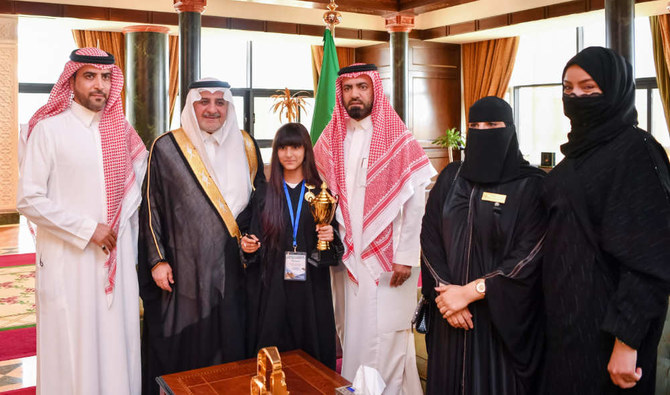
Tabuk Gov. Prince Fahd bin Sultan honored Itizaz Alnefaie, the primary school pupil from Tabuk International Schools who won second place in this year’s Worldwide Mental Arithmetic Competition, recently held in Egypt’s Sharm El-Sheikh.
Alnefaie broke the world record by solving 100 maths problems, testing herself against the clock.
He congratulated Alnefaie for this achievement, wishing her more success, noting the Saudi leadership’s support for outstanding students in all scientific fields.
“I’m pleased to meet you and everyone is proud of your achievement,” Prince Fahd said, praising the efforts made by Alnefaie’s parents and teachers, who created the environment for her to reach excellence, and who supported her talent. He also wished her and all of Tabuk’s students future success.
The prince then offered Alnefaie his personal pen as a gift. The head of Tabuk International Schools, Maram Al-Atwi, praised Prince Fahd for the achievement, which comes as a result of his great support for the education sector in Tabuk, noting that this success is an extension of the local and international achievements made by public school students from all Saudi regions.
Hundreds of talented pupils representing more than 25 countries, including Saudi Arabia, participated in this year’s competition.
Solving a math problem might take most people a few minutes. However, Alnefaie takes just a second or two.
source/content: arabnews.com (edited)
___________
Tabuk Gov. Prince Fahd bin Sultan honors Itizaz Alnefaie, the primary school pupil from Tabuk International Schools. (SPA)
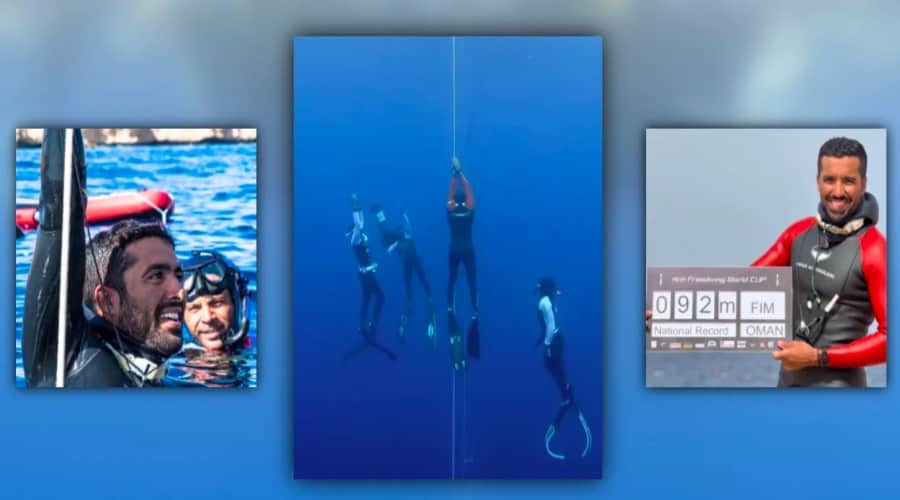
Omani diver Omar Al Ghailani achieved the deepest Asian record for the third time in the dual fins specialty with a depth of 92m CWTB in the diving championship held in Sharm El Sheikh in Egypt – AIDA Freediving world cup – May.
Omar Al-Ghilani said that he is determined to achieve more national numbers in the coming days, noting that the feeling is different every day in the atmosphere of the tournament.
Al-Ghilani said: Every day I develop a plan and scenario for the next day, but changes occur that can change everything, explaining: Sometimes there are unexpected waves or the water temperature changes, and these are some conditions that can affect concentration and readiness to dive.
Al-Ghilani confirmed that his diving experience made him ready to perform better and enjoyable despite all circumstances, adding: I am still learning and developing myself in this field.
Omani diver Omar Al Ghailani achieved a national record on the second day of the championship, as he managed to dive to 92 meters in free diving.
It is worth noting that the Omani champion Omar Al Ghailani is the world record holder in free diving and has strengthened the position of the Sultanate of Oman in regional and international forums.
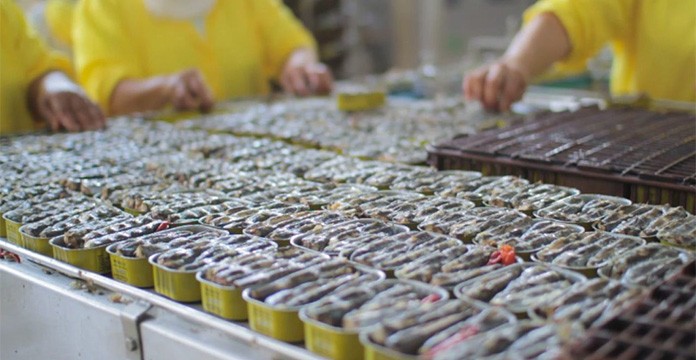
Morocco exports 90% of its sardines to 100 countries.
With a 3,500-kilometer-long coastline, Morocco produces half of all canned sardines available in supermarkets worldwide.
Mehdi Dhaloomal, Executive Manager of Moroccan canned sardine producer MIDAV, recently reportedthat the North African country annually produces 1.4 million tonnes of seafood, with sardines making up 850,000 of the collected seafood.
The Moroccan businessman stressed that Morocco has “exclusive” access to the sardina pilchardus walbaum which is a type of sardine that is only available in Bretagne, France, and southern Morocco.
Morocco notably fishes 60% of the sardina pilchardus walbaum that is primarily directed to exports – 90% of local sardines are exported.
Earlier this year, the Moroccan Ministry of Fisheries stated that canned sardines represented 53% of total seafood exports in 2021.
Besides sardines, frozen octopus and squid, as well as fishmeal, represent most of the 778,000 tonnes of Moroccan exported seafood, valued at MAD 24.2 billion ($2.46 billion).
Yet canned sardines remain a major food export of Morocco and Dhaloomal considers the country to be a “leader in the valorization” of sardines.
He further noted that the canned food sector in Morocco consists of roughly 50 Moroccan and international companies that are based along the country’s coastline.
Currently, the industrial zone of Sali delivers 30% of Moroccan production of sardines that is primarily exported to 100 countries. Export destinations include European countries such as the United Kingdom market, where 60% of consumed canned sardines come from Morocco.
Dhaloomal shared the prior statements at the first edition of the Safi Investor Day. The May 25 event gathered Moroccan and foreign investors operating or interested in the Marrakech-Safi region with the objective of celebrating the region and its assets, as well as attracting additional Moroccan and foreign capital.
source/content: moroccoworldnews.com
___________
Morocco Produces Half of All Canned Sardines Worldwide
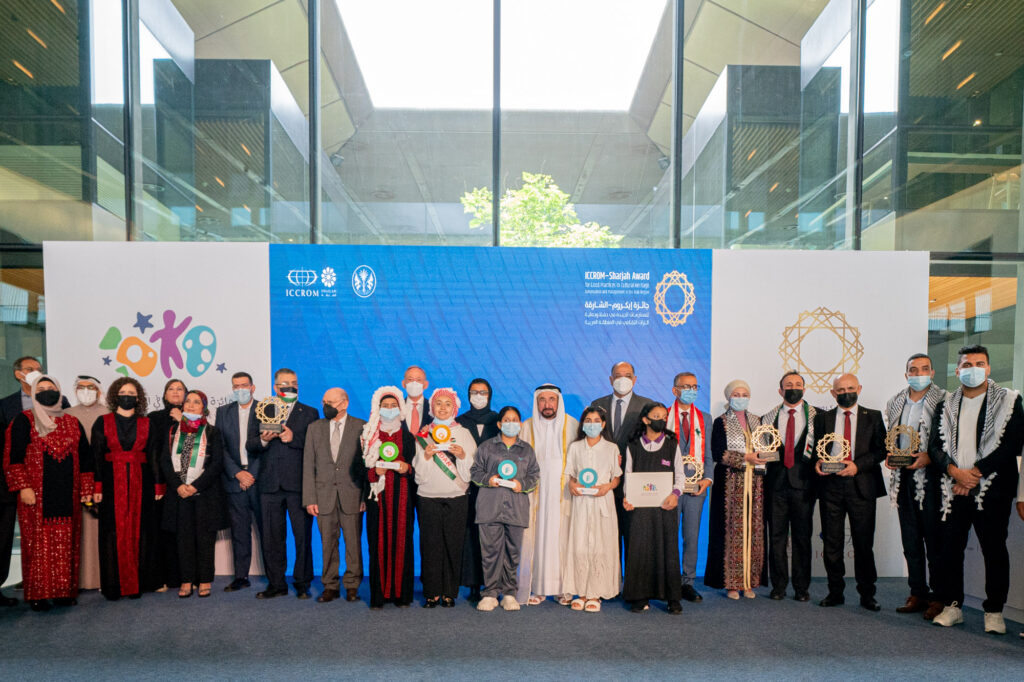
H.H. Sheikh Dr. Sultan bin Muhammad Al Qasimi, Supreme Council Member and Ruler of Sharjah, attended on Thursday an honouring ceremony of the third cycle’s winners of the ICCROM-Sharjah Award for Good Practices in Cultural Heritage Conservation and Management in the Arab Region (2022-2021), and the second cycle of the ICCROM-Sharjah Award The Arab cultural heritage for young people, in the House of Wisdom.
The ceremony began with a speech delivered by Dr. Zaki Aslan, Regional Director of International Centre for the Study of the Preservation and Restoration of Cultural Property (ICCROM) in Sharjah.
Dr. Aslan mentioned the award’s goal to spread the notion of cultural and heritage preservation in the region within international standards through initiatives and events that help exchange knowledge and experience.
Then John Robbins, Chairman of the Executive Board of ICCROM, thanked the Ruler of Sharjah, for sponsoring this event and all other activities in the region.
H.H. the Ruler of Sharjah and the audience watched several visual films about the ICCROM-Sharjah Award and the winning projects.
H.H. honored the winners of the 3rd cycle of the ICCROM-Sharjah Award for Good Practices in Cultural Heritage Conservation and Management in the Arab Region; and the 2nd cycle of the Arab Cultural Heritage Award for the Young.
The grand prize for the 3rd cycle went to Beirut Assist Cultural Heritage (BACH), a project to recover the affected area following the 2020 blast in the Port of Beirut, Lebanon; and the rehabilitation and restoration of residential courtyards and historical buildings in the vicinity of Al Aqsa Mosque, Palestine.
In the Special Excellence category, four projects won: sheltering and protecting Hicham’s Palace’s mosaic floor, Palestine; Collart-Palmyre: a comprehensive project on the Baalsahamîn temple in Palmyra; the revitalization and conservation of the cultural heritage of Al Qarara Village in Gaza, Palestine; and the digital documentation of historical documents in Jerusalem, Palestine.
As for the 2nd cycle of the Award for the Young, the student Sarah Hassan Al Hosani, from the Al Amal School for the Deaf – United Arab Emirates, and the student Al Yasar Al Masry, from the Omar Bin Al Khattab College – Al-Makassed Islamic Charitable Association – Lebanon, won first place.
The student, Ghala Abdel Rahim Mahmoud Al Raheel, from Bayouda Al-Sharqiya Mixed Secondary School – Jordan, won first place in the photography category, while the first place in the folk dance category, Al Takadum School for Basic Education – Libya, won the old street dance, and Qasr Al-Hallabat Al-Gharbi Mixed Secondary School – Jordan won first place in the awareness film category for the movie “A Story of Joy from the Heart of the Badia”.
The honouring ceremony was attended by Sheikh Salem bin Abdulrahman Al Qasimi, Chairman of the Sharjah Ruler’s Office, Sheikh Mohammed bin Humaid bin Mohammed Al Qasimi, Chairman of Department Of Statistics and Community Development, Sheikha Alyazia bint Nahyan bin Mubarak Al Nahyan, Noura bint Mohammed Al Kaabi, Minister of Culture and Youth, and several senior officials, ambassadors and representatives cultural organisations.
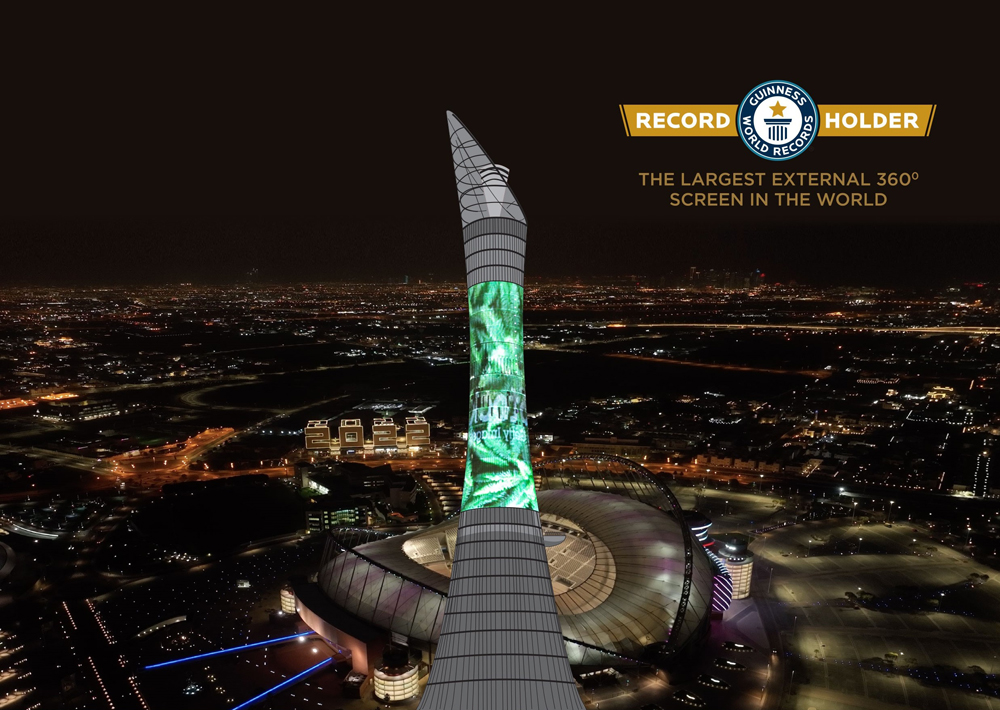
Torch Tower set the Guinness World Record for being the largest external 360 degree screen in the world.
Aspire Zone Foundation announced that it will officially launch the screen on June 6, 2022 between 7pm to 9pm.
Situated at 300m high and with 360° panoramic views across the city, the Torch Doha is the result of comprehensive architectural, engineering and technical design, formerly shaped to represent a colossal torch for the duration of the 15th Asian Games in 2006 held its symbolic flame.
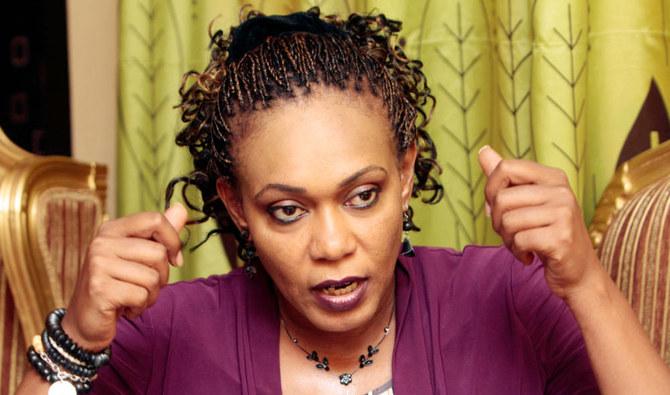
Sudanese women’s activist Amira Osman Hamed has won a Front Line Defenders Award for Human Rights Defenders at Risk, the organization announced.
The activist and engineer, now in her forties, has been advocating for Sudanese women for two decades, and was detained this year in a crackdown following the country’s latest coup.
She was among defenders from Afghanistan, Belarus, Zimbabwe and Mexico who also received the 2022 award for Human Rights Defenders at Risk.
Osman “never deterred from her mission,” Dublin-based Front Line Defenders said in its awards announcement, “consistently (advocating) for democracy, human rights, and women’s rights.”
After first being charged for wearing trousers in 2002, she drew international support in 2013 when she was detained and threatened with flogging for refusing to wear a headscarf.
In 2009, she established “No to Women Oppression,” an initiative to advocate against the much-derided Public Order Law. It was finally repealed in 2019 after Bashir’s ouster following a mass uprising.
The award has honored human rights defenders annually since 2005.
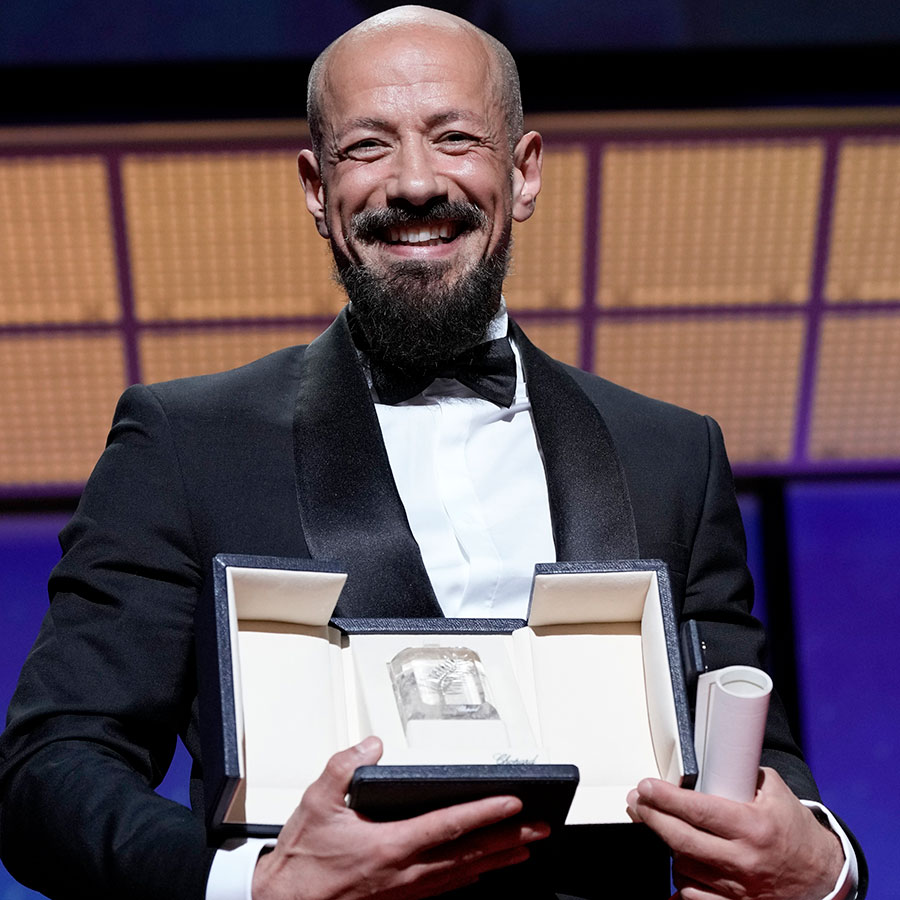
Tarik Saleh — an experienced Swedish-Egyptian filmmaker — clinched the Best Screenplay Award at the 75th Cannes Film Festival’s closing ceremony on Saturday for his latest feature film, ‘Boy from Heaven’ (‘Walad Min El-Janna’).
The filmmaker — who started his career as a journalist — also received the Prix François Chalais Award for his film’s “dedication to the values of life-affirmation.”
Boy from Heaven reportedly caused controversy amid Cannes’ Egyptian attendees after the premier, as its plot — which takes place in Al-Azhar University in Cairo — tackles the relationship between the country’s authorities and the Islamic organisation.
The film is produced by Atmo, Kristina Rikberg, and Fredrik Zander.
Previously, Saleh’s ‘Metropia’ (2009) won the Future Film Festival Digital Award of the Venice Film Festival, and his ‘Nile Hilton Incident’ (2017) — which was also set in Egypt — brought home the Grand Jury Prize from the 2017 edition of the Sundance Film Festival.
The winners of the 75th Cannes Film Festival are as follows:
– Palme d’Or: Ruben Ostlund for ‘Triangle of Sadness’ (Sweden, Germany, France, the UK)
– Grand Prix: Shared by Lukas Dhont for ‘Close’ (Belgium, the Netherlands, France) and Claire Denis for ‘Stars at Noon’ (France)
– Best director: Park Chan-wook for ‘Decision to Leave’ (South Korea)
– Best actress: Zar Amir Ebrahimi for ‘Holy Spider’ (Denmark, Germany, Sweden, France)
– Best actor: Song Kang-ho for ‘Broker’ (South Korea)
– Best screenplay: Tarik Saleh for ‘Boy from Heaven’ (Sweden, France, Finland, Denmark)
– Jury prize: Shared by Jerzy Skolimowski for ‘EO’ (Poland) and Charlotte Vandermeersch and Felix van Groeningen for ‘The Eight Mountains’ (Italy, Belgium, France, Britain)
– Camera d’Or for best first film: Riley Keough and Gina Gammell for ‘War Pony’ (The US)
– Best short film: Jianying Chen for ‘The Water Murmurs’ (China)
source/content: english.ahram.org.eg
________________
Swedish-Egyptian director Tarik Saleh poses during a photocall after he equally won the Best Screenplay prize for the film Boy From Heaven (Walad Min Al Janna) during the closing ceremony of the 75th edition of the Cannes Film Festival in Cannes (Photo: AFP)
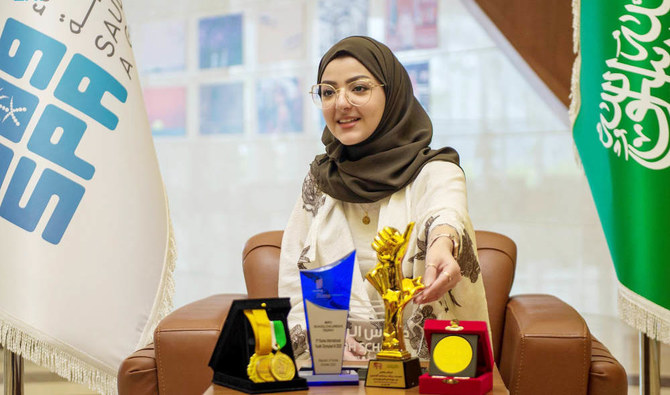
A Saudi medical student has won a string of an international awards for an invention that opens up a new world for hearing impaired or deaf drivers by dramatically improving their safety behind the wheel.
Renad bint Musaed Al-Hussein, a student at the College of Medicine at King Saud University, developed special sensors that operate as soon as they detect sounds outside the vehicle.
Sound frequencies are sent to a device inside the car, which then identifies and displays a description, image and color of the sound source visually, alerting the driver to any possible risk.
Her innovation has won several global awards and medals, including best invention at the World Intellectual Property Organization Cup and a gold award in the international invention competition as part of the Korea International Youth Olympiad.
The awards honor outstanding inventors, creators and innovative firms from around the world.
Al-Hussein said that her invention will reduce the risks facing hearing impaired drivers and may also help to save lives.
“One of the things that prompted me to come up with this invention is that some countries prevent hearing impaired or deaf people from driving because they are unable to hear important sounds. This invention will contribute to reducing the risks they face,” she said.
The Saudi inventor said that her invention could allow more than 466 million deaf people worldwide to drive, while also improving road safety by protecting their lives and the lives of others.
source/content: arabnews.com (edited)
_____________
Renad Al-Hussein said that her invention will improve road safety by protecting the lives of deaf drivers. (SPA)