Saudi Water Agency MEWA Wins ‘Public Water Agency of the Year Award’ at Global Water Summit, Madrid, Spain

The Saudi Ministry of Environment, Water and Agriculture has gained international recognition by winning the Public Water Agency of the Year Award, announced during the Global Water Summit in Madrid.

Deputy Minister for Water Abdul Aziz Al-Shaibani and Deputy Minister for Economic Affairs and Privatization Abdulrahman Alzughaibi accepted the award

Al-Shaibani told Arab News that the award was given in recognition of the Kingdom’s efforts in implementing a national water strategy, reforming the sector, enacting a new water law, integrating management of water resources, and engaging the private sector.

The Global Water Summit in Spain allows leaders and decision-makers to exchange ideas, and share information on progress and trends in the industry.

Industry leaders and investors from around the world, as well as government representatives, took part in the forum, considered among the most prominent events for the water industry worldwide.

Since 2006, the UK-based consultancy Global Water Intelligence has presented awards at the summit, recognizing achievements by water companies, high-tech firms, public agencies and project developers.

During the conference, leaders of the Kingdom’s water sector highlighted its initiatives and solutions in support of innovation and development in the industry.

They also discussed the summit themes aimed at achieving zero carbon emissions, ensuring the sustainability and reliability of freshwater resources worldwide, mitigating the impact of climate change, and increasing job opportunities and growth in the industry.

Conference sessions included extensive discussions on global best practices for ensuring efficient water use, the latest technologies for desalinating and reusing water, and the role of artificial intelligence in the sustainability of the water sector.

source/content: arabnews.com (edited)

__________

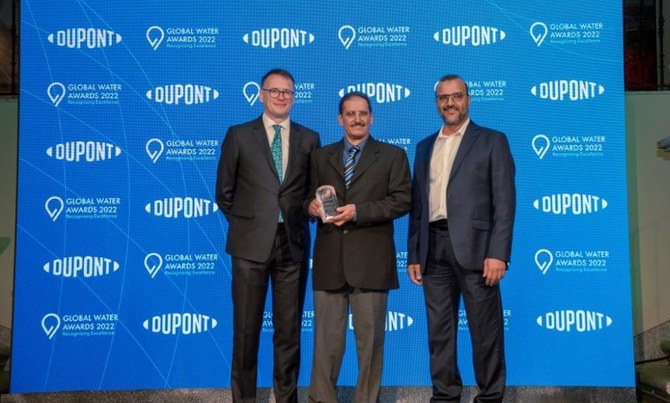
DM for Economic Affairs and Privatization Abdulrahman Alzughaibi, right, DM for Water Abdul Aziz Al-Shaibani, center, and Global Water Intelligence’s Christopher Gasson. (Supplied/MEWA)

________________

SAUDI ARABIA

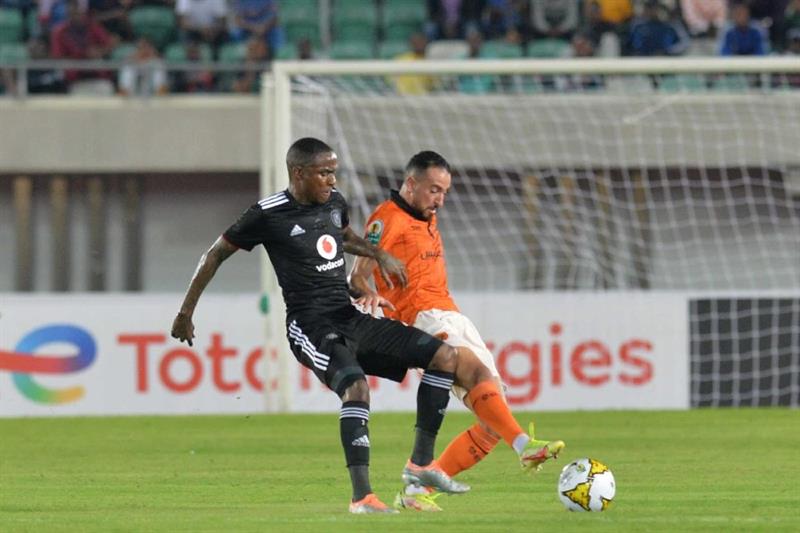
Morocco’s RS Berkane Win 2nd African Confederation Cup Title (CAF) with a Shootout Victory over South Africa’s Orlando Pirates

Moroccan side RS Berkane won their second African Confederation Cup title in three years after beating South Africa’s Orlando Pirates 5-4 on penalties following a 1-1 draw at Nigeria’s Godswill Akpabio Stadium on Friday 20th May.

Brahim El Bahraoui scored the winning penalty after Pirates keeper Richard Ofori, who had scored his side’s fourth spot kick, failed to save any of Berkane’s efforts.

Winger Thembinkosi Lorch turned from hero to zero as Pirates missed out on their maiden Confederation Cup triumph after also losing in the 2015 final.

He scored a bizarre 117th-minute equaliser to cancel out Youssef El Fahli’s penalty in the first half of extra time but had his effort blocked by keeper Hamza Hamiani in the shootout.

Hamiani was Berkane’s standout performer, producing some superb saves to keep his side in the game as Pirates looked the better side throughout.

Berkane lost on penalties to Egypt’s Zamalek in the 2019 final but won the trophy a year later. Another Moroccan side, Raja Casablanca, clinched the title last year.

Key saves

Hamiani kept out a low, angled effort from striker Kwame Peprah on 34 minutes before producing an even better save to smother a close-range effort from Deon Kavendji early in the second half, denying Orlando a certain goal.

He also comfortably collected a tame shot from Lorch, who was well-positioned to score following some slack defending.

Berkane, who rarely threatened, took the lead in the 97th minute when Pirates substitute Thabang Monare, who had just been on the pitch for a few minutes, clumsily stuck out a leg to foul an opponent following a corner.

El Fahli sent keeper Ofori the wrong way with a low effort as Berkane thought they had the match dead and buried.

But Pirates did not give up, with Tshegofatso Mabasa heading just wide from a corner before Lorch brought them level three minutes from the end of extra time.

After his initial effort was blocked by the defence, Mabasa collected the loose ball just inside the area and sent a stray pass that somehow eluded all defenders and found its way into the bottom corner past Hamiani, who had been unsighted by his own defence.

But Berkane had the last laugh in the shootout, converting all of their kicks, as Moroccan teams made it a hat-trick of straight Confederation Cup triumphs.

source/content: english.ahram.org.eg

_____________

Morocco s RS Berkane beat Orlando Pirates in the African Confederation Cup final on Friday (Photo: Pirates official Twitter account)

_____________

MOROCCO

Dubai Airport on Right Track, retains Position as ‘World’s Busiest International Airport ‘: Deputy CEO of Dubai Airports

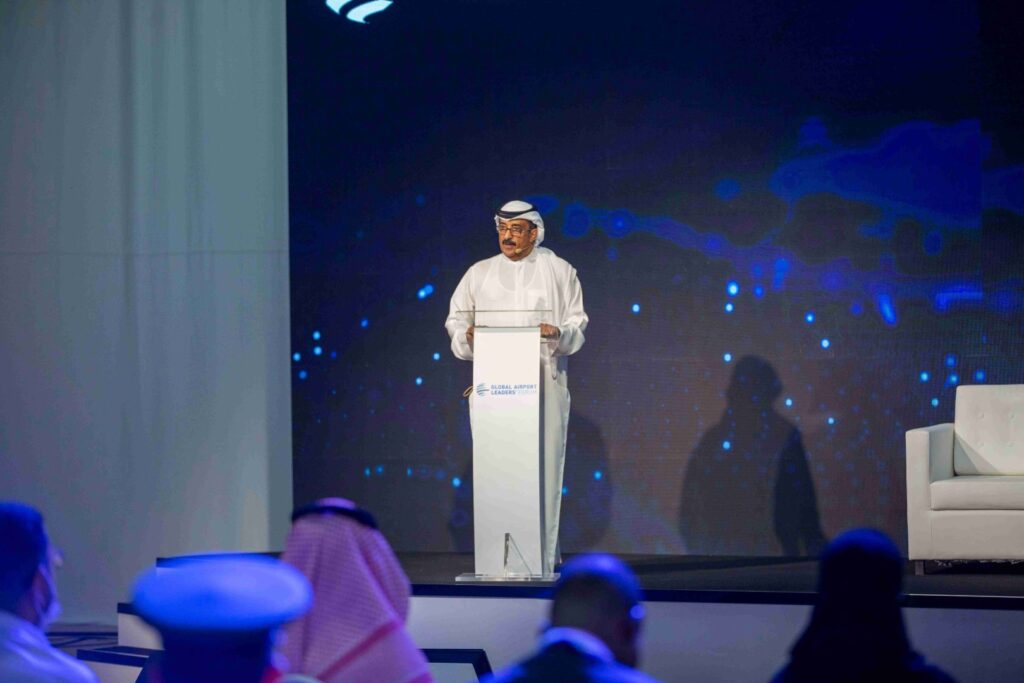
Dubai Airport is on the right track, having retained its position as the world’s busiest international airport with 29.1 million passengers, and just last week, announcing its busiest quarter since 2020, said Jamal al Hai, Deputy CEO of Dubai Airports.

Jamal al Hai made this statement while delivering the welcome address at the Airport Innovation and Development Conference at the Gulf Airport Leaders’ Forum (GALF) held alongside the 21st edition of the Airport Show in Dubai.

Welcoming the delegates, he said the GALF is organised in person after two years of the pandemic, marking a new healed era of aviation.

“This is, in fact, the outcome of a successful handling of the crisis and what you see in Dubai today is the outcome of a flawless response to the pandemic achieved through a balance between protecting the health and well-being of the people while minimising the impact on business and economy.”

Delivering the welcome address, Ibrahim Ahli, Deputy CEO of Dubai Air Navigation Services (dans) said Dubai is galloping in all economic and social sectors, attracting businesses, talents, investors and tourists in hordes. Dubai is fast becoming the Future City of the world, driven by the maximum embrace of technology, relaxed regulations and reforms. All this will result in increased traffic, and it underscores the need for enhancing the safety, capacity and efficiency of the airspace of Dubai, where dans plays a crucial role.

Khalid Aljabir, Senior Vice President, Operations, dans, read out Ahli’s speech in his absence.

“We had proved our mettle when dans efficiently managed more than 1,338 aircraft movements daily through Dubai airports, before the COVID-19 pandemic. dans manages the air traffic through Dubai International, which has ranked first in the world for international passengers since 2014, and it had handled about 1.115 billion passengers on more than 7.47 million flights since the airport started operating in 1960,” he said.

“We take pride in implementing the region’s first procedures for Enhanced Wake Turbulence Separation (eWTS) Minima within the controlled zone. The Dubai RECAT-Enhanced Wake Turbulence Separation is part of the vision to make Dubai the airport for the world, enhance its airspace and the efficiency of airports along with the profitability of carriers.”

In his keynote address titled “Standardising Regulations Regionally and Globally”, Mohammed Faisal al Dossari, Senior Director, Air Navigation and Aerodromes Department, UAE General Civil Aviation Authority (GCAA), said that post-COVID the industry must work across all aspects of aviation to standardize regulations and spur growth.

The UAE is expected to develop draft regulations on Vertiport in the first quarter of 2023 and publish them in the fourth quarter of 2023 to be implemented in the first quarter of 2024.

Al Dossari said the number of GCAA registered commercial drone organisations is increasing. “Up to 2022, we have registered 20,000 private drone users, 870 commercial drones, and 181 commercial drone organisations to operate drones.”

Future developments include Unmanned Traffic Management, Scheduled UA operations, Night Operations, Multiple Unmanned Aircraft Operations, Autonomous Unmanned Aircraft Operations, Urban Air Mobility, Unmanned Aircraft Delivery, High-Speed Unmanned Aircraft and High Altitude Unmanned Aircraft.

Yahya Abdalla Al Hammadi, CEO, Global Air Navigation Services (GANS), in his keynote address “Disrupting ATM to support the recovery of the industry,” said Air Traffic Control could play a huge role in reducing carbon emissions by adopting new technologies that can help airlines plan more efficient routes and work with other stakeholders to help reduce the overall carbon footprint.

The Airport Show, the world’s largest annual airport event, was opened by H.H. Sheikh Ahmed bin Saeed Al Maktoum, President of the Dubai Civil Aviation Authority, Chairman of Dubai Airports, and Chairman and Chief Executive of Emirates Airline and Group, under whose patronage the event is held.

Organised by RX Global, the world’s largest airport industry B2B platform has a sharp focus on sustainability to help the aviation industry achieve a more sustainable airport industry that aims to reduce the carbon footprint year on year.

The Airport Show is supported by Dubai Airports, Dubai Police, Dubai Civil Aviation Authority (DCAA), dnata (part of Emirates Airline and Group), Dubai Aviation Engineering Projects (DAEP), Global Air Navigation Services (GANS), and dans.

source/content: wam.ae

__________

___________________________________________

DUBAI, UNITED ARAB EMIRATES (U.A.E.)

Somalia Elects Hassan Sheikh Mohamud as New President : May 2022

Hassan Sheikh Mohamud elected president for the second time, defeating incumbent President Mohamed Abdullahi Mohamed in a final round.

Somali legislators have elected former leader Hassan Sheikh Mohamud as the country’s next president, following a long-overdue election on Sunday in the troubled Horn of Africa nation.

Hassan Sheikh Mohamud, who served as Somalia’s president between 2012 and 2017, won the contest in the capital, Mogadishu, amid a security lockdown imposed by authorities to prevent deadly rebel attacks.

After a marathon poll, involving 36 candidates, that was broadcast live on state TV, parliamentary officials counted more than 165 votes in favour of Mohamud, more than the number required to defeat incumbent President Mohamed Abdullahi Mohamed.

Supporters of Somalia’s new leader defied the curfew to pour onto the streets of Mogadishu, cheering and firing guns as it became clear that Mohamud had won the vote.

Many hope the election will draw a line under a political crisis that has lasted well over a year, after Mohamed’s term ended in February 2021 without an election.

Mohamed, who is also known as Farmaajo, conceded defeat, and Mohamud was immediately sworn in.

The new president struck a conciliatory tone in his acceptance speech from the airport compound in Mogadishu, which was patrolled by African Union (AU) peacekeepers.

“It is indeed commendable that the president is here standing by my side,” Mohamud said, referring to the former leader, who had sat with him as ballots were counted.

“We have to move ahead, we do not need grudges. No avenging,” he said.

War, drought

The 66-year-old Mohamud is the leader of the Union for Peace and Development party, which commands a majority of seats in both legislative chambers.

A member of the Hawiye clan, one of Somalia’s largest, Mohamud is regarded by some as a statesman with a conciliatory approach. He is also well-known for his work as a civic leader and education promoter, including for his role as one of the founders of Mogadishu’s SIMAD University.

source/content: aljazeera.com (edited)

______________

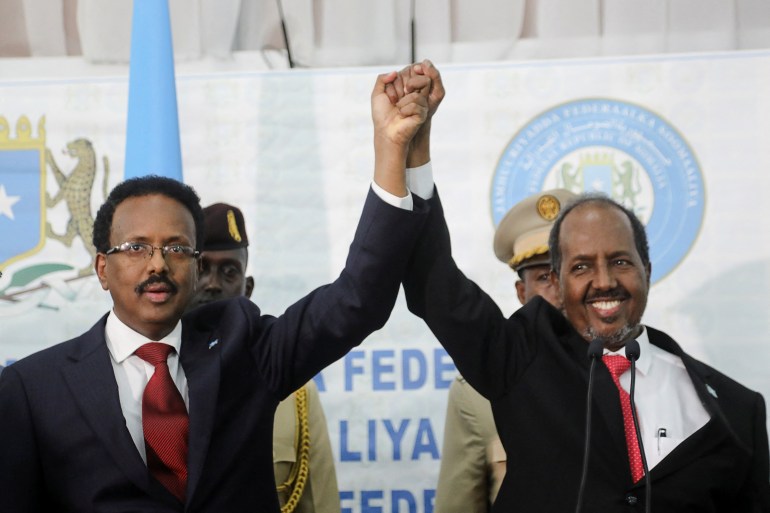
Somalia's newly elected president Hassan Sheikh Mohamud holds hands with incumbent president Mohamed Abdullahi Mohamed after winning the elections in Mogadishu,
Somalia’s newly elected President Hassan Sheikh Mohamud, right, holds hands with incumbent President Mohamed Abdullahi Mohamed, left after winning the elections in Mogadishu, Somalia, May 16, 2022 [Feisal Omar/ Reuters]

____________

SOMALIA

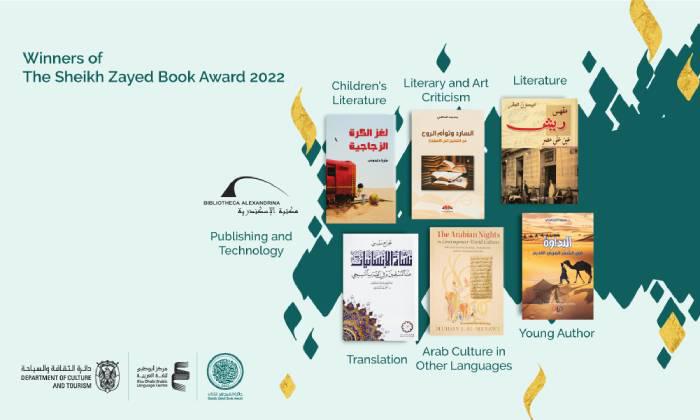
Winners of 2022 Sheikh Zayed Book Award (SZBA)

The award saw a high turnout from authors around the world, with more than 3,000 applications submitted from more than 55 countries, including 20 Arab countries.

Sheikh Zayed Book Award (SZBA) announced on Monday the winners for its 16th edition across seven categories, selecting six literary figures, intellectuals and translators, along with Egypt’s Bibliotheca Alexandrina, for top honours.

Over the years, the Sheikh Zayed Book Award has managed to expand and become one of the most prestigious events in the Arab world, allowing for the development of cultural dialogue and the creation of new opportunities for authors and translators around the world.

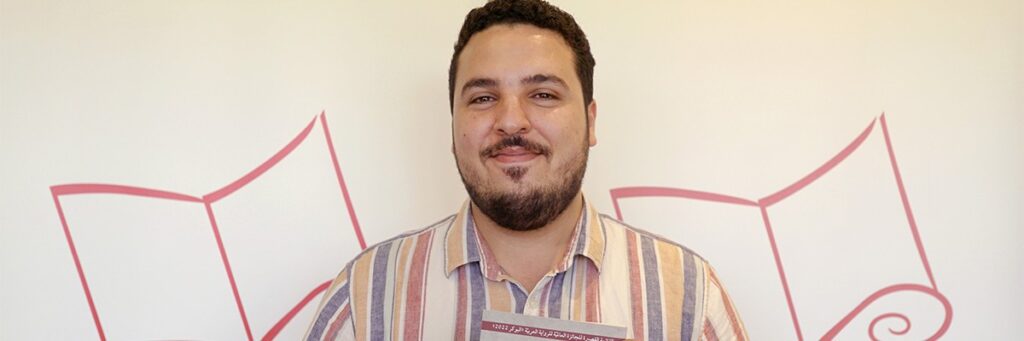
This year’s winner in the young author category is Tunisian professor Mohamed al-Maztouri with his book Al Badawa fi al She’er al Arabi al Qadeem (Bedouinism in Ancient Arabic Poetry).

“The author of this book, Mohamed al-Maztouri, presents a serious academic study of bedouinism in ancient Arabic poetry,” the Zayed programme commented.

Adding that Maztouri “discusses its diverse concepts and many manifestations, describing it as a culture with special landmarks and a lifestyle inseparable from its place, environment, and geography.”

From pre-Islamic times the Arabian Peninsula has been home to world-class poetry that is deeply connected to values of bravery, nobility, eloquence and at times sensitivity.

Throughout the centuries, poetry’s popularity has only grown in the region, attracting new audiences in both the Arabian Peninsula and other Arab countries in North Africa and the Levant.

Today, the trend has been further boosted by Emirati initiatives and competitions.

The translation award went to Egyptian translator and author Ahmed Aladawi for his translation of the American author, George Makdisi, book “ The Rise of Humanism in Classical Islam and the Christian West” into Arabic.

Each winner receives a life-changing prize of AED 750,000 (USD 204,190/GBP165,220).

Winners will also be honoured in a ceremony at the Abu Dhabi International Book Fair later this year.

The Cultural Personality of the Year winner will be presented with a gold medal and a certificate of merit, as well as a Dh1 million prize.

source/content: thearabweekly.com

______________________

Full list of winners of the Sheikh Zayed Book Award 2022:

Literature

Maq’ha Riche, Ain Ala Massr (Eye on Egypt: Cafe Riche) by Maisoon Saqer. Published by Nahdet Misr Publishing

Children’s Literature

Loghz al Kora al Zujajiya (The Mystery of the Glass Ball) by Maria Daadoush. Published by Dar Al-Saqi

Young Author

Al Badawa fi al She’er al Arabi al Qadeem (Bedouinism in Ancient Arabic Poetry) by Mohamed Al-Maztouri. Issued by the Faculty of Literature, Arts and Humanities at Manouba University and the GLD Foundation

Translation

Nash’at al Insaniyat Einda al Muslimeen wa fi al Gharb al Maseehi (The Rise of Humanism in Classical Islam and the Christian West) by Ahmed Aladawi. Published by Madarat for Research and Publishing.

Art and Literary Criticism

Al Sarid wa Taw’am al Rooh: Min al Tamtheel ila al Istinaa (The Narrator and the Soulmate: From Acting to Faking) by Mohamed Aldahi. Issued by Le Centre Culturel du Livre.

Arab Culture in Other Languages

The Arabian Nights in Contemporary World Cultures: Global Commodification, Translation, and the Culture Industry by Muhsin J. Al-Musawi. Cambridge University Press.

Publishing and Technology

Bibliotheca Alexandrina

source/content: thenationalnews.com

__________

______________________________________________

EGYPT / MOROCCO / SYRIA /TUNISIA / U.A.E.

Jordan’s King Abdullah and Queen Rania Receive Vatican’s ‘2022 Path to Peace Award’

  • Vatican envoy to UN presents royal couple with 2022 Path to Peace award at gala event
  • Queen Rania praised for focus on education, prioritization of young people

The Vatican’s Path to Peace Foundation has presented Jordan’s King Abdullah and Queen Rania with the 2022 Path to Peace award for their promotion of interfaith harmony and dialogue.

Commending the royal couple for a “years-long effort” in promoting peace and interfaith cooperation in the Middle East, Vatican Ambassador to the UN Archbishop Gabriele Caccia made the presentation at the foundation’s 29th annual gala in New York.

The envoy singled out the queen’s focus on education and the prioritization of young people in her work.

He said: “She has long shown concern for the questions of education, connectivity, and cross-cultural dialogue, as well as sustainability, the environment, and migration, which places young people at the heart of solutions and is imbued with a sense of hope.”

King Abdullah said he accepted the award on behalf of “Jordanians, men and women, young people and elders, Muslims and Christians alike.”

Noting that Jerusalem was also home to many Arab Christians, part of the oldest Christian community in the world, he noted that “our journey to peace must travel through Jerusalem,” describing the city as “key to the future and stability that we all seek.”

He added: “Jerusalem should be an anchor for peace and coexistence, not for fear and violence.

“The (world’s most difficult challenges) will be met by drawing on our faith in God, our common humanity, and our will to jointly defeat poverty and despair, and end occupation and injustice.

“(Also), to help refugees everywhere return home, ready to rebuild shattered communities, and renew the hope that young people everywhere so desperately need.”

The monarch called on the international community to work toward a just and lasting peace in the Holy Land through a two-state solution with East Jerusalem as the capital of an “independent, sovereign, and viable Palestinian state … living side-by-side with Israel.”

source/content: arabnews.com (edited)

_________

Jordan’s King Abdullah and Queen Rania receive the Path to Peace Award in New York for their promotion of interfaith harmony and dialogue. (AFP)

__________

JORDAN

 UAE : Federal Supreme Council elects Mohamed bin Zayed as UAE President: May 14th, 2022

The Federal Supreme Council today unanimously elected His Highness Sheikh Mohamed bin Zayed Al Nahyan as President of the United Arab Emirates.

The Council held a meeting today at Al Mushrif Palace in Abu Dhabi, chaired by Huis Highness Sheikh Mohammed bin Rashid Al Maktoum , Vice President, Prime Minister and Ruler of Dubai.

The meeting was attended by His Highness Sheikh Mohamed bin Zayed Al Nahyan; H.H. Dr. Sheikh Sultan bin Muhammad Al Qasimi, Supreme Council Member and Ruler of Sharjah; H.H. Sheikh Humaid bin Rashid Al Nuaimi, Supreme Council Member and Ruler of Ajman; H.H. Sheikh Hamad bin Mohammed Al Sharqi, Supreme Council Member and Ruler of Fujairah; H.H. Sheikh Saud bin Rashid Al Mu’alla, Supreme Council Member and Ruler of Umm Al Qaiwain; and H.H. Sheikh Saud bin Saqr Al Qasimi, Supreme Council Member and Ruler of Ras Al Khaimah.

A statement issued by the Ministry of Presidential Affairs said that according to Article 51 of the Constitution, His Highness Sheikh Mohamed bin Zayed Al Nahyan was unanimously elected as the President of the UAE to succeed the late Sheikh Khalifa bin Zayed Al Nahyan .

Their Highnesses, the Supreme Council Members and Rulers of the Emirates have reaffirmed their keenness to continue implementing the authentic values and principles laid down by the late deceased, Sheikh Khalifa, following on from the founding father, the late Sheikh Zayed bin Sultan Al Nahyan. These have consolidated the UAE’s status at both regional and global levels.

The Federal Supreme Council expressed its full confidence that the people of the UAE will remain, as Sheikh Zayed and the founders believed, “a faithful guardian of the Union and its gains at all levels”.

Their Highnesses wished H.H. Sheikh Mohamed bin Zayed Al Nahyan success in serving his people and country.

Sheikh Mohamed bin Zayed expressed his appreciation for the precious trust placed in him by his brothers, Their Highnesses the Supreme Council Members and Rulers of the Emirates, praying to the Almighty to guide and help him to bear the responsibility of this great trust and to fulfil its tasks of serving his country and people.

source/content: wam.ae

_________

________________________________________________

ABU DHABI, UNITED ARAB EMIRATES (U.A.E.)

Ghalia Benali: Tunisian Singer, Writer, Graphic Designer & Actress

An electrifying voice.

Ghalia Benali is a Tunisian poet, writer, and songwriter best known for dabbling in multiple music genres, multiculturalism, and defining contemporary Arabic music. She is also an actress and a graphic designer, a talent that goes hand-in-hand with her literature works such as “Romeo and Leila.”

Although born in Brussels in 1968, Benali was raised in Zarzis, in southeastern Tunisia, where she got her early exposure to songs and dances, with her mother being her personal music teacher. Growing up, she was exposed to the world of Egyptian and Indian films, as well as the voices of Arab singers such as Adib AlDayikh, Oum Kalthoum, and Sabah Fakhri, all of which influenced her multicultural style of singing growing up.

By the age of 19, Benali returned to Belgium to study graphic design at the Institut Saint-Luc of Graphic Arts where she would begin to sing and perform professionally. Her early performances would include collaborations with live bands and fellow musicians in 1993, a tour in Portugal in 1994, and a live performance with the band “Timna,” in Brussels, in 1999.

From 2001, she released a number of loved albums such as “Wild Harissa,” “Nada,” and “Romeo and Leila.” However, the very album that put her on the map was “Ghalia Benali Sings Umm Kulthum.” In fact, it was a smashing hit, earning her the title Ambassador of Arab Culture in Europe in 2009. By the following year, Benali would be featured on television across several Arab countries.

Benali is also renowned for her poetry, some of which centered around works by famous poets, Sufism, and Persian mystics. She is also known for her acting, winning an award from Women for Africa Foundation for her role in “As I Open My Eyes” in 2016, and nominated by Les Magrittes du Cinema for “Best Hope Actress” in 2017. She had played recent roles in the films “Fatwa,” and “A Tale of Love and Desire.”

Finally, Benali is credited for launching the Brussels-based MWSOUL Art Foundation. Having had to deal with unorganized management, she took it upon herself to launch her very own platform, a non-profit organization that brings awareness through art. You can follow them on Instagram for featured artworks and photography.

source/content: abouther.com

_________

_______________________

BELGIAN / TUNISIAN

Faouzi Annajah: Moroccan-French Businessman Behind Hydrogen SUV NamX

NamX’s prototype was unveiled earlier this week. Yet the car will not be available in the market until 2025.

Morocco-French businessman Faouzi Annajah, founder of NamX, has co-created the world’s first car partially powered by a patented removable hydrogen tank system.

NamX’s patented technology consists of a fixed hydrogen tank and six removable capsules. 

Set to be released in 2025, NamX responds to the rising demand for hydrogen and hybrid cars amid an increasingly prevailing shift towards clean energy sources and decarbonization worldwide. 

“Our double ambition is to become a new reference in the world of zero-emission cars, and to constantly explore new territories to facilitate mobility of our consumers,” Faouzi ANNAJAH, Founder and President of NAMX said in a press release. “ NAMX is a collective project built with the best industrial and technical partners in Europe and Africa.”

The European-African project gathered the support of renowned stakeholders on both continents including Ibrahima Sissoko, founder of over 30 companies, Pierre-Yves Geels, former VP strategy of Matra automotive, Alain Diboine, former Director of the R&D Division at Renault, Mustapha Mokass, clean energy and carbon finance expert, and Raphaël Schoetgen, former Chairman of Hydrogen Europe and international hydrogen expert. 

NamX was co-designed by Thomas de Lussac, co-founder of NamX, and Kevin Rice, Chief Creative Officer of Italian car design firm Pininfarina. Inspired by science fiction and American designs of the 50s and 60s, Lussac “chose to give the vehicle’s shape the cutting edge of the coming era.”

NamX is the first car designed by Pininfarina that was created from the back to the front with an eye-catching feature, an X-shaped chassis. 

Commenting on the hydrogen SUV, Paolo Pininfarina, President of the Italian design firm, said that “the NAMX HUV [hybrid utility vehicle] is simply at the heart of our DNA: inventing the best driving experience to infinite mobility, with style.” 

Upon its release in the final quarter of 2025, NamX will be marketed in two different versions including an entry-level rear-wheel drive with a regulated top speed of 200 km/h and acceleration from 0 to 100 km/h in 6.5 seconds. The second option provides a four-wheel drive with a regulated top speed of 250 km/h and acceleration from 0 to 100 km/h in 4.5 seconds. 

The two versions will have a price tag ranging between €65,000 and €95,000. 

The NamX prototype was first unveiled on May 11 in the Pininfarina headquarters in Cambiano. The public will have a glimpse of NamX at the upcoming Paris Motor Show scheduled between October  17 and 23, 2022. 

As Annajah’s home country, Morocco might host the production operations of NamX, the founder told a Moroccan news outlet, promising future announcements on the matter. 

As a leading African automotive hub, Morocco has attracted renowned international automotive manufacturers including ones interested in developing hybrid and electric cars. 

source/content: moroccoworldnews.com

________

Faouzi Annajah: Moroccan-French Businessman Behind Hydrogen SUV NamX

________________________

FRENCH / MOROCCAN

Algeria’s Noureddine Morceli Dominated Middle Distances in 1990s with World Records

Noureddine Morceli is an Algerian middle-distance runner and a gold medalist in the 1500 metres at the Atlanta 1996 Summer Olympic Games. He won three straight gold medals at that distance at the World Championships. He also set world records in the 1500m, mile and the 3000 metres in the 1990s.

Morceli was twice the gold medalist in the mile at the 1994 and 1998 Goodwill Games, the Arab champion in the 1500m in 1988, the Millrose Games champion in the mile in 1992 and 1993, the 1500m winner at the 1994 IAAF World Cup, and the overall champion in the 1994 IAAF Grand Prix series. Besides, he was Algerian national champion in the 1500m in 1989.

In international competitions, middle-distance events include the 800 metres, the 1500 metres and the 3000 metres. In English-speaking countries, until the second half of the 20th century, the 880 yards and the mile were run as the equivalents of the 800 metres and the 1500 metres.

An early favourite among middle-distance races was the mile, which in the first half of the 20th century was run in times exceeding four minutes. Breaking the “four-minute barrier” was considered unlikely.

On May 6, 1954, however, the 25-year Roger Bannister of Great Britain set a record of 3:59.4 in a dual meet at Oxford. With increasingly controlled climatic and surface conditions and increasingly accurate timing devices, however, the record was lowered many times thereafter.

Birth and Career

Born on February 28, 1970 in Tenes, Noureddine Morceli attended Riverside Community College in Riverside, California, throughout his career, in winter, he would return there to enjoy the mild climate and train.

At the age of seven Morceli was inspired by his brother Abderrahmane, a world-class runner who finished fourth in the 1500 metres in the 1977 World Cup and represented Algeria at Moscow 1980 and at Los Angeles 1984Summer Olympic Games. Later, his brother would become Morceli’s coach.

In the early 1980s, Morceli came to idolize Said Aouita, a Moroccan who won the gold in the 5000 metres in the 1984 Summer Olympic Games. By age 17, Morceli had taken second place in the 1500 metres in the World Junior Championships.

Morceli rose to athletic prominence after winning the silver medal in the 1500m at the 1988 World Junior Championships in Sudbury, Canada, clocking 3:46.93. A year later, he enrolled at Riverside Community College in California, renowned for its coaching and track facilities. He spent two years there, at the end of which he had run the world’s fastest 1500 metres for 1990.

At the age of 20, he was ranked first in the world in the 1500 metres. In 1990, he moved up to senior class and set the season’s best mark of 3:37.87 in 1500m. He continued this dominance into 1991, when he broke the world indoor record for 1500m at Seville, Spain on February 28, setting a new mark of 3:34.16. Only nine days later, on the same track, he won the 1500m title at the 1991 World Indoor Championships with a time of 3:41.57.

Throughout the outdoor season 1991, Morceli remained undefeated over 1500m. At several Grand Prix meetings, he ran times around 3:31. At the World Championships in Tokyo, Japan, Morceli was already a clear favourite for the 1500m and he won the gold easily setting a new World Championships record of 3:32.84.

In the beginning of 1992, Morceli ran a new 1000m indoor world record of 2:15.26. There seemed to be no greater certainty for a gold medal at the Olympic Games in Barcelona later that year than Morceli. But prior to the Olympic Games Morceli lost unexpectedly to Gennaro di Napoli in Rome and David Kibet in Oslo. There were signs that he was not in the same shape as the year before.

However, in the Olympic semi-final he looked strong. The Olympic final was run at a woefully slow pace, with the field passing through the 800m mark in a slower time than in the women’s final. That was not the sort of pace to which Morceli had become accustomed, or that he was comfortable with, and when the frantic sprint for home began, he found himself unable to respond, eventually finishing a disappointing seventh clocking 3:41.70.

However, after just three days Morceli set a world season’s best in Monaco and a week later he broke his personal best to win in Zurich in 3:30.76. In September 1992, Morceli set a new 1500m world record of 3:28.86 in Rieti.

In 1993, Morceli narrowly missed his own world record when he won the Mediterranean Games in Narbonne in 3:29.20. By that time Morceli had set himself a new aim: to break Steve Cram’s eight-year-old record over the Mile. In Monaco, he narrowly missed the 3000m world record. There was even talk that he might skip the World Championships in order to concentrate fully on the world-record hunt. However, in the end he decided to take part.

At the 1993 World Championships in Stuttgart, Germany, the final of 1500m started at a relatively slow pace, but Morceli was always in complete control, sprinting away in the last lap to win easily and retain his world title with a time of 3:34.24. In the following weeks, he failed twice to set a new world record over the Mile in Berlin and Brussels. But just two days after the race in Brussels he astonished everyone by crushing the record with a time of 3:44.39.

In 1994, he set the new 3000m world record, clocking 7:25.11. He also experimented successfully with the 5000m. In Zurich, he out-sprinted the rest of the field to take the victory and also won the 5000m in Rieti, Italy. Morceli broke the 2000m world record in the following season, setting a new mark of 4:47.88.

Nine days later Morceli set the last world record of his magnificent career, when he lowered his own 1500m record to 3:27.37 in Nice. Only a few days after this he almost broke the record again when he triumphed in 3:27.52 in Monaco. He easily defended the 1500 m World Champion title in Gothenburg. Shortly after, Morceli tried to improve on his Mile record in Zurich but did not succeed.

World Records

Standing 172 cm and weighing 60 kg, he added the outdoor world record for the 1500 metres in 1992, the mile in 1993, and the 3000 metres in 1994. By the end of 1994, the Algerian track star’s accomplishments had reached even greater proportions. In August, after breaking the outdoor world record for 3,000 metres (7:25.11), he could claim five middle-distance world records, which also included (outdoor) the 1500 metres (3:28.86) and the mile (3:44.39) and (indoor) the 1,000 metres (2:15.26) and the 1500 metres (3:34.16).

Morceli was named Athlete of the Year by Track & Field News in 1993 and 1994 and by the International Athletic Foundation in 1994. In that two-year period, he lost only once, at 800 metres. As he set his sights on more records, most notably the 800-metre, 2000-metre, and 5000-metre events, his driving force was a deeply rooted dedication to bring glory to his country. A devout Muslim, during the sacred holy days of Ramadan he would fast from sunrise to sunset despite the rigours of training.

As Morceli looked forward to the 1995 season, sportswriters unabashedly proclaimed him the greatest runner in the world or even the greatest of all time. Perhaps his spirit was best exemplified by his winning performance in the 1994 Grand Prix. Racked with flu, weakened and hacking, he not only ran but left the field behind at the finish.

Morceli was soon tested by a new challenger, Moroccan Hicham El Guerrouj. Morceli bested El Guerrouj in the 1500 metres at the 1995 outdoor World Championships clocking 3:33.73; however, the 1500metres race at the 1996 Olympic Games in Atlanta the following year was considered one of the most dramatic contests in athletics history.

Morceli and El Guerrouj led the field with 400 metres to go when the young Moroccan tripped on his rival’s heel and fell to the ground, allowing Morceli to capture the gold medal in that event. At the Grand Prix final in Milan later that year, however, Morceli lost the 1500metres event for the first time in years to El Guerrouj. Morceli competed in subsequent events, including the 2000 Games in Sydney 2000 Olympic Games, before his eventual retirement.

Atlanta 1996 Summer Olympics

At the start of the 1996 season, Morceli set a world season’s best of 3:29.50. However, a new and serious opponent suddenly appeared on the scene, when Hicham El Guerrouj won in Hengelo in a time of 3:29.51.

The 1500m at 1996 Olympics was the 23rd appearance of the event and one of 12 athletics events to have been held at every Summer Olympics. All three medalists of the previous edition, Fermín Cacho of Spain, Rachid El Basir of Morocco, and Mohamed Suleiman of Qatar returned, along with seventh-place finisher Noureddine Morceli of Algeria and ninth-place finisher Graham Hood of Canada. Morceli had been favored in Barcelona, and was again a favorite in Atlanta; he had won the last three world championships and broken the world record twice.

Hicham El Guerrouj of Morocco was a rising star expected to challenge Morceli; he had come in second at the 1995 World Championships and would go on to win the next four and break the world record himself. Venuste Niyongabo of Burundi would have been another contender but chose not to enter in order to focus on the 5000 metres.

Burundi, Dominica, the Maldives, the Solomon Islands, and Ukraine each made their first appearance in the event. The United States made its 22nd appearance, most among all nations, having missed only the boycotted 1980 Games.

The competition was again three rounds (used previously in 1952 and since 1964). The “fastest loser” system introduced in 1964 was used for both the first round and semifinals. The 12-man semifinals and finals introduced in 1984 and used again in 1992 were followed.

There were five heats in the first round, each with 11 or 12 runners. The top four runners in each heat, along with the next four fastest overall, advanced to the semifinals. The 24 semifinalists were divided into two semifinals, each with 12 runners. The top five men in each semifinal, plus the next two fastest overall, advanced to the 12-man final.

At the time men’s 1500 metres took place at the 1996 Summer Olympic Games in Atlanta, Georgia, the standing world record was 3:27.37, established at Nice, France on July 12, 1995 by Noureddine Morceli. The Summer Olympic Games record belonged to Sebastian Coe of the Great Britain at 3:32.53 established in Los Angeles, United States on August 11, 1984.

There were 57 competitors from 37 nations. The maximum number of athletes per nation had been set at 3 since the 1930 Olympic Congress. The event took place on July 29, 31 and August 3. The event was won by Noureddine Morceli of Algeria. Fermín Cacho of Spain was unable to repeat as gold medalist, but took silver to become the fourth man to win two medals in the event.

At the 1996 Summer Olympic Games, Morceli was under enormous pressure. The final was run at an average pace when his main rival, Hicham El Guerrouj, fell down on the final lap. Morceli accelerated and crossed the line first ahead of the defending Olympic champion, Fermín Cacho.

Morceli had dominated the 1500 metres for five years, holding the world record and winning the previous three world championships. But Hicham El Guerrouj, from neighboring Morocco was the rising star, who had chased Morceli in the most recent world championships. This was expected to be the match race. While Morceli had led the semi-finals in close to Olympic Games record time, the final race was much slower and entirely strategic.

Approaching the bell at the end of the third lap, Morceli had moved into the lead with El Guerrouj sprinting up to his shoulder. Morceli held him off with El Guerrouj having to concede position and move in behind Morceli squeezing in front of defending champion, master tactician Fermin Cacho who was perfectly positioned directly behind Morceli. Two strides later, El Guerrouj tripped and fell.

Morceli took off sprinting at the same moment the rest of the field had to evade El Guerrouj’s body on the track. Cacho was forced to leap over the fallen El Guerrouj, almost stepping on him. Next in line Abdi Bile had to jump off the track to the infield. Morceli opened up 2 metres in the process, which he widened to 5 metres down the backstretch.

Cacho and Bile held that gap onto the final straight. Bile faded while Cacho held on until he could see it was futile to catch Morceli, jogging in for silver. Stephen Kipkorir led two other Kenyan teammates around Bile to take bronze. After quickly staggering to his feet, El Guerrouj chased the field but shocked and disheartened, he was unable to catch anybody.

At the end of 1996, Morceli suffered his first 1500m defeat in four years at the hands of El Guerrouj in Milan. In the 1997 World Championships at Athens, Morceli was fourth in 1500m with a time of 3:37.37 and in 1999 at Seville, he qualified for his fifth straight 1500m final at a World Championships, where he dropped out at the bell while well out of medal contention. Morceli’s last appearance at a major international championship was at the 2000 Olympic Games in Sydney where he could manage only the 24th position with a time of 4:00.78.

Ambassador of Sport

His Personal Best performances: 800 metres – 1:44.79; 1500 metres – 3:27.37 at Nice, France on July 12, 1995; Mile – 3:44.39 at Rieti, Italy on September 6, 1993; 3000 metres – 7:25.11 at Monte Carlo, Monaco on August 2, 1994; 5000 metres – 13:03.85.

In January 2020, he was appointed Secretary of State for Elite Sport, reporting to the Minister of Youth and Sports in the new government chosen by Algerian President Abdelmadjid Tebboune after the presidential election of December 2019. Morceli has no political affiliation to any party in Algeria and was chosen as an independent member in the first Djerad government.

Currently, Morceli serves as an ambassador of the sport by assisting with the International Olympic Commission, the African Games, as well as assisting the development of young track and field athletes in Algeria.

(The author is an Associate Professor, International Scholar, winner of Presidential Awards and multiple National Accolades for Academic pursuits. He possesses a PhD, MPhil and double MSc. His email is shemal1216@gmail.com)

source/content: sundayobserver.lk

___________

___________

ALGERIA