EGYPT : 13 Egyptian women on Forbes Middle East 100 Most Powerful businesswomen 2023

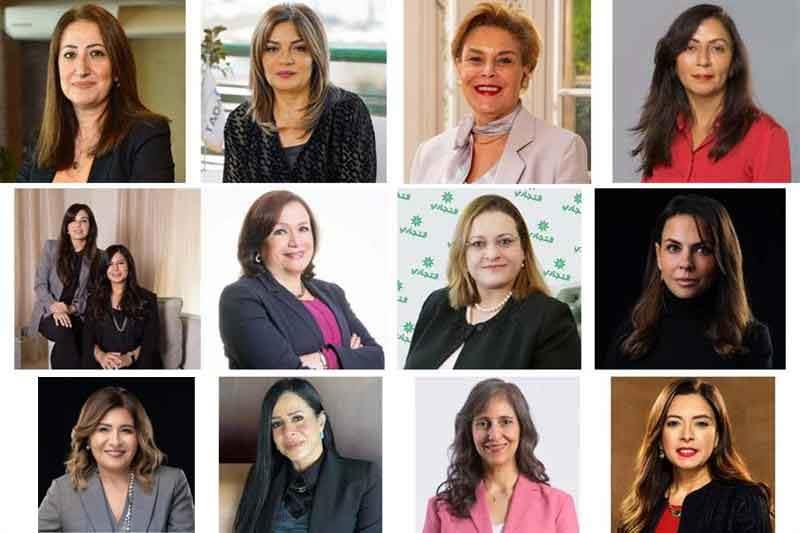
Thirteen Egyptian businesswomen made it to the Forbes Middle East 100 Most powerful businesswomen 2023 list this year.

The list was prepared by the famous financial magazine’s Middle East edition according to the size of the business, the individual’s impact and achievements, performance over the last year, and the scope of CSR and other initiatives led by the person.

The 100-entry list included 104 women from 27 different sectors and 27 nationalities.

The UAE and Egypt scored the most entries at 15 and 12, respectively, followed by Saudi Arabia (11) , Kuwait (eight), and six from each of Lebanon, Qatar and Oman.

Egyptian businesswomen are no strangers to the list, having topped the list in previous years in terms of the number of entries.

In 2021, Egyptian businesswomen topped the list with eight entries, and in 2022 they had seven entries. 

Below Ahram Online sheds light on the Egyptian businesswomen who made it to the list:

  • Dalia El-Baz (13th on the list)

An American University in Cairo alumna, El-Baz is the executive deputy chairman of the National Bank of Egypt (NBE).

El-Baz, who has been on the list before, posseses 28 years of experience in the banking sector.

She joined Egypt’s largest bank in terms of assets in 2008 as head of the operational risk management group, becoming Chief Operating officer (COO) in December 2015.

In 2016, she was appointed on the bank’s executive committee.

In September 2017, she became the first woman to become the executive deputy chairman of the NBE.

  • Pakinam Kafafi (21st on the list)

A Cairo University graduate, Pakinam Kafafi started her career in finance and banking at EFG-Hermes in the mid-1990s, rising to the position of vice president in 2000.

She then moved to the oil and energy sector.

In 2003, Kafafi was appoointed the strategy and investment general manager of Gas & Energy Group (GENCO).

When Citadel Group acquired GENCO and merged it with TAQA Arabia, Kafafi maintained her role.

In April 2013, Pakinam Kafafi was selected as the company’s CEO.

  • Rawya Mansour (27th on the list)

A Cairo university graduate, Rawya Mansour proved herself one of Egypt’s leading businesswomen.

Mansour is a descendant from one of Egypt’s oldest families in the field of business.

In 1999, she founded RAMSCO for Refined Architecture and Interior Design.

In 2007, she started RAMSCO for Trade and Distribution.

She also established the Organic Agriculture for Social International Solidarity (OASIS) in Monaco in 2012.

  • Reem Asaad (39th on the list)

An Egyptian American, Reem Asaad is a Harvard business school graduate who continued her career in Egypt when she served as the CEO of Raya Data Center from January 2012 till December 2016.

From January 2017 to February 2020, Asaad served as Raya Contact Center CEO befor

In 2020, she was appointed Cisco Middle East and Africa Vice President.

Cisco employs 3,000 people and contractors in 74 countries across the Middle East and Africa. 

In March 2021, she was appointed by Egypt’s Minister of Communications and Information Technology to serve on the board of directors for the country’s Information Technology Industry Development Agency.

  • Hend El-Sherbini (42nd on the list)

A graduate of Cairo University, Dr Hend El-Sherbini is a professor of clinical pathology at the University’s Faculty of Medicine.

El-Sherbini served as the CEO of Al-Mokhtabar between 2004 and 2012.

She has been seving as IDH Group’s CEO since 2012.

IDH has a network of 546 branch labs as of September 2022 in Egypt, Nigeria, Sudan and Pakistan.

The group recorded revenues of $281 million in 2021 and $143 million in the first nine months of 2022.

In August 2022, El-Sherbini increased her holdings in the group with 7.3 million additional shares through Hena Holdings.

Now, she owns 26.71 percent of the group.

  • Farida and Yasmine Khamis (43rd on the list)

The daughters of the famous Egyptian carpets tycoon, Farida and Yasmine Khamis are considered veterans of the Forbes list.

American University of Cairo alumni, Yasmine Khamis is currently the Chairwoman of Oriental Weavers Group, while her sister Farida is her vice-chair.

Both sisters made headlines last December when they transferred their combined 24.61percent stake in Oriental Weavers Carpet to London-based FYK limited, which is fully owned by them.

They are also board members of the British University in Cairo .

  • Mona Zulficar (48th on the list)

The famous renowned lawyer and human rights activist is the Forbes Middle East 100 women list veteran who has appeared constantly on the list since it started.

A Cairo University graduate, Zulficar is a veteran corporate, banking, and project finance attorney and human rights activist.

She cofounded Zulficar & Partners in 2009. Mona Zulficar chaired EFG Hermes Holding since 2008 and the Egyptian Microfinance Federation since 2015.

Mona Zulficar is currently a member of Egypt’s National Council of Human Rights.

  • Elham Mahfouz (56th on the list)

An AUC alumna, Elham Mahfouz has over 30 years of banking experience mostly in Kuwait.

Mahfouz has been the CEO of the Commercial Bank of Kuwait (Al-Tijari) since 2014.  

Al-Tijari recorded $179 million in net profit and $14.1 billion worth of total assets in 2021. 

Mahfouz is a member of the supervisory board of the American University of Kuwait.

  • Hilda Louca (62nd on the list)

A graduate of the Arab Academy for Science, Technology, Transport and Maritime Transport, Hilda Louca is a newcomer to the list.

Louca started her career in Lufthansa’s customer service before moving to become a sales marking manager at Al-Ahram Beverage Company-Heineken Egypt for three years.

In 2018, she founded MITCHA – platform to support Egyptian designers.

Today, the platform features 200 designers and brands. 

  • Omnia Kelig (84th on the list)

An AUC alumna, Omnia Kelig is a banking and cooperate financing veteran who started her career in the CIB in 1999.

Kelig is currently Deputy CEO, Chairwoman and Managing Director of NAEEM Holding, a dual-listed company on the Egyptian Stock Exchange and the Dubai Financial Market.

In the first nine months of 2022, NAEEM reported $8.2 million in total revenues and $273 million in assets.

Before joining NAEEM, Kelig was a founder and managing director of Viveris Mashrek, a subsidiary of France’s Viveris Management.

She was also a partner and director for Haykala Investment Management and a co-head of investment banking at Barclays Bank in Egypt.

  • Abir Leheta (87th on the list)

An AUC alumna, Abir Leheta is another veteran on the Forbes list.

Leheta joined the Egyptian Transport and Commercial Services Company “EgyTrans” in 1997.

She has been EgyTrans CEO since 2017.

She is also the chairman of Barwil Egytrans and ScanArabia.

  • Abeer Helmy Saleh ( 99th on the list)

An AUC alumna, Abeer Helmy Saleh previously held a number of managerial positions, including managing director and board member at Wafa Life Insurance Company and managing director of Bupa Egypt Insurance.

In March 2022, Saleh was appointed as a Board Member & Managing Director of Misr Life Insurance, Takaful, which was established as a joint venture between Misr Insurance Holding Company, the National Bank of Egypt, and Banque Misr, with a capital of over $5 million. 

source/content: english.ahram.org.eg (headline edited)

____________
__________

EGYPT
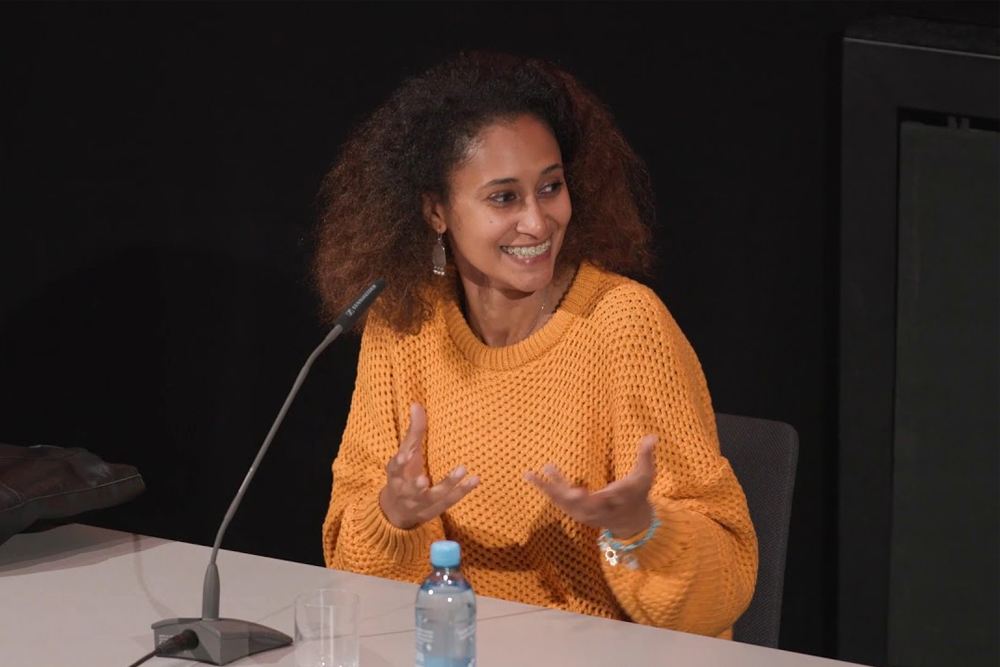
SUDANESE-EGYPTIAN Marwa Zein, A Multi-identity Film Director, Scriptwriter, & Film Producer

Get to know this brilliant Arab woman !

Born in Saudi Arabia and the daughter of a Sudanese father and Egyptian mother, Marwa Zein is a woman that truly embodies multiple identities, and for many it is this that perhaps shines through the most in her work. Even when it comes to her roles, that diversity and multiplicity are frontline and center. An award-winning director, scriptwriter, film producer, women’s rights activist, and founder of ORE Production, a Khartoum-based film production company, Zein is inspiring in every way.

Before setting off on a journey to become a filmmaker, Zein enrolled in Cairo University as a chemical engineering student to please her parents. While studying, she worked and saved up to have the means to leave her degree behind three years later, instead study cinema at the Academy of Arts in Cairo, Egypt in 2005. In 2009, she graduated with honors and moved to Germany to continue her film studies. Her graduation project, “A game,” was an official selection of more dozens of international festivals across the globe and was translated into five languages.

From her inspiring start into the world of film and her academic achievements, Zein moved on to bigger goals, nabbing awards for her short film “One Week, Two Days,” which premiered at the 2016 Dubai International Film Festival. In 2019, she was selected as one of the seven young filmmakers from across to attend the Cannes Film Festival 2019 by the International Emerging Film Talent Association (IEFTA).

Perhaps her most renowned recent work is “Khartoum Offside,” which was awarded Best Documentary for 2019 at the 15th Africa Movie Academy Awards AMAA 2019. The documentary tells the story of women footballers whose dream it is to play for Sudan at a Women’s World Cup hosted by their home country, revealing the challenging social, economic, and political situations they face and inspiring audiences with their tale.

Speaking to Women and Hollywood in 2019, Zein had some inspiring words of advice for other female filmmakers, saying, “There’s no competition. Everyone is unique, and we can’t tell the same story even we have the same idea. You are special, different, and inspiring, and you lead the way for the people coming after you.”

“Take care of your mental, physical, and financial situations. It’s a very challenging and demanding business, so don’t lose your soul in the process. Stay true to who you are, and you will reach the horizon,” she continued.

source/content: abouther.com (headline edited)

________

_________________________

SUDAN / EGYPT

EGYPTIAN Researcher records new unknown genus of rodents dating back 34 million years

About 34 million years ago, in the Eocene period of the Paleogene (the period from 66 to 23 million years ago), and in a tropical-like environment with forests and swamps in what is today the Qatrani Desert in Egypt’s Fayoum Depression, a genus of rodents that was not known before, used to live. 

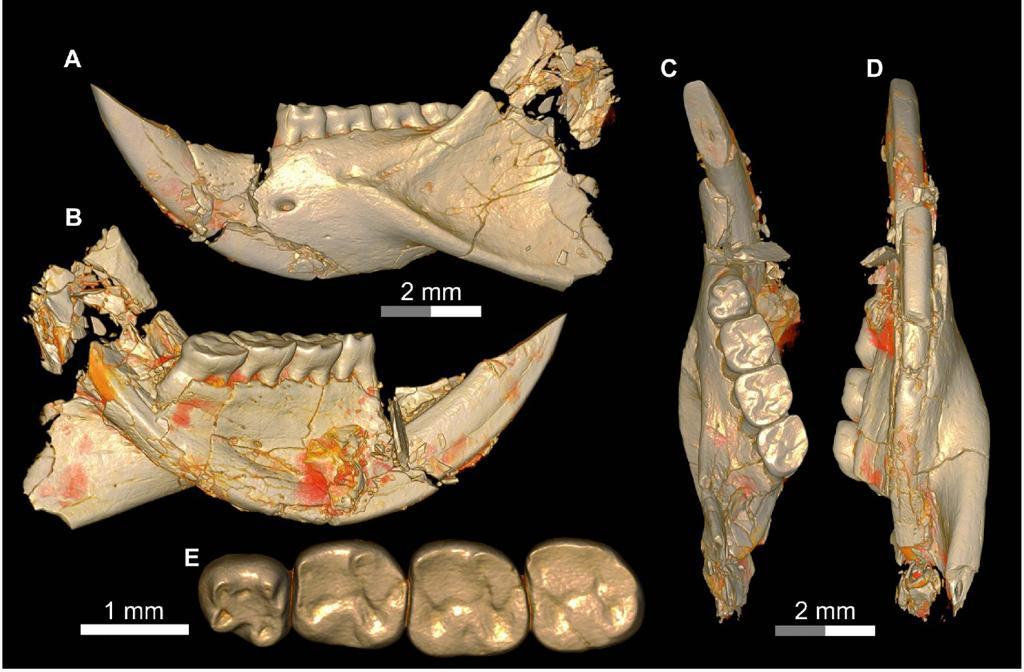
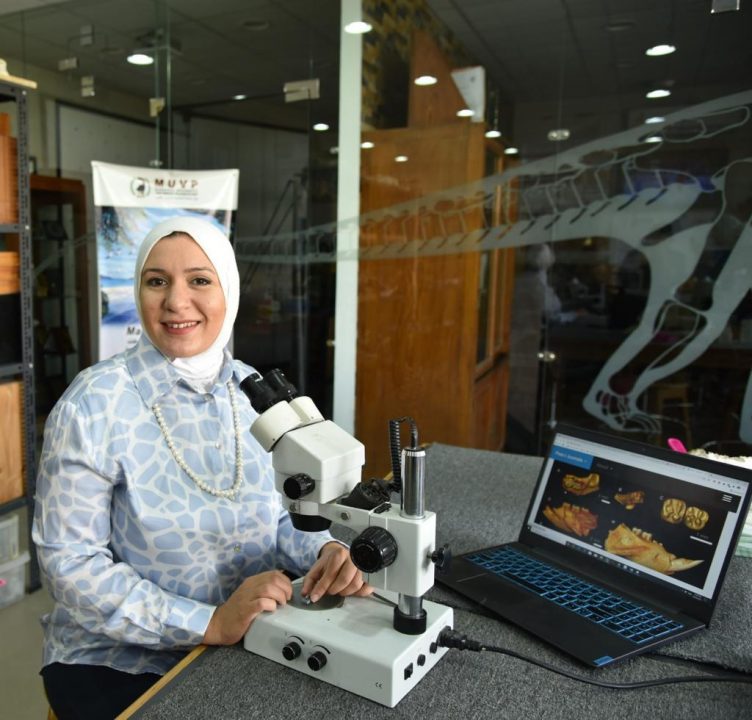
In a new study published in PeerJ, researcher Shorouk Al-Ashqar, a member of the “Sallam Lab” team specialised in vertebrate fossils at Mansoura University, studied two skulls and a large group of mandibles of fossils belong to the “Qatranimys Safroutus”.

“But it wasn’t easy; the samples were very small and very thin and adhered to the solid rocky clay, which made preparing the samples for study very difficult. We had to make accurate CT scans to be able to study them in a three-dimensional image,” said Hesham Sallam, the lead author of the study. 

The newly discovered genus of rodents was called “Qatranimys Safroutus” which refers to the location of the discovery in the first word, whilst “safroutus” means too small in the Egyptian Arabic dialect.

The length of the molar of Qatranimys Safroutus was one millimetre, and its skull was about 1.5 centimetres long, and its weight did not exceed 45 grams. 

Jebel Qatrani Formation is famous for its rich rodent assemblages from the Eocene–Oligocene deposits, which contributes to enhancing our understanding of the origin and paleobiogeography of what scientists call the “Hystricognathi” which are an infraorder of rodents, distinguished from other rodents by the bone structure of their skulls.

Al-Ashqar said that the samples used in the study showed clear differences in the morphological characteristics of the upper and lower teeth. And by comparing these samples with the discovered rodents from Afro-Arabia, it was clear that it belongs to a new genus that has never been discovered before.

“We did not only record a new genus and species, but we were able to record the first bones of the skull of a large group to which the discovery belongs, called the “Phiocricetomys”, she added. 

Researchers from Mansoura University, the American University in Cairo, the Egyptian Environmental Affairs Agency, Duke University and the University of Salford participated in the study.

source/content: dailynewsegypt.com (headline edited)

________

_________

EGYPT

SAUDI ARABIA: Russian team takes first place in ‘ 2nd Arabic Hackathon’

  • An awards ceremony hosted by the King Salman Global Academy for Arabic Language honored the top three teams in the event
  • Event aims to enhance the dictionary with innovative applications and new ideas

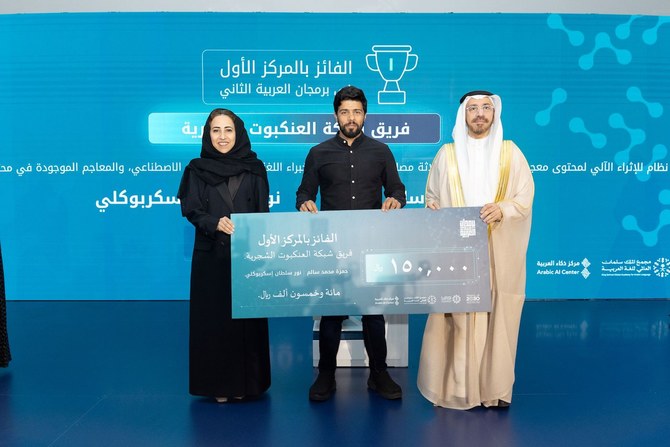
Russian team Spiderweb Network has won first place in the second Arabic Hackathon, scooping a prize of SR150,000 ($39,994) for their innovative idea.

Their project proposed an automatic enrichment system for the “Riyadh Dictionary” using three knowledge sources — the Arabic language expert community, artificial intelligence, and dictionaries found on the web.

An awards ceremony hosted by the King Salman Global Academy for Arabic Language honored the top three teams in the event, which aims to enhance the dictionary with innovative applications and new ideas.

This global technical challenge is aimed at individuals and organizations with technical and linguistic skills from all over the world. Teams develop innovative technical solutions and digital platforms for automatic Arabic language processing to enhance its status among the world’s living languages.

Second place went to the Pioneers of Intelligence, a joint Algerian-French team who received SR100,000. Their project focused on using AI to provide terms and definitions from specialized fields in a fast and effective way, with the possibility of creating specialized lexicons such as the “Riyadh Medical Dictionary.”

The Saudi-Egyptian Arabic Examples team took third place and a prize of SR50,000 with their idea for an AI system that provides appropriate examples for the meaning of each word.

The second edition of the challenge saw a total of 546 participants, 57 percent of whom were female and 43 percent male, representing 30 countries in 142 competing teams.

Abdullah Al-Washmi, Secretary-General of the King Salman Global Academy for Arabic Language, highlighted the establishment’s commitment to promoting the use of the Arabic language and launching supportive initiatives.

The closing ceremony was accompanied by activities such as an exhibition by the Arabic Intelligence Center, which was launched in April and specializes in automated Arabic language processing.

The center includes several initiatives, such as: the “Suwar” platform for digital dictionaries, “Falak” for digital corpora, and the Riyadh Dictionary for Contemporary Arabic Language.

Al-Washmi said the center represented a significant leap in the digital transformation of Arabic language services by developing technologies that aided its use, analysis, understanding, and production.

source/content: arabnews.com (headline edited)

__________

The Russian team won first place in the Arabic Hackathon challenge, which concluded in Riyadh on Thursday (June 6). / Russian team Spiderweb Network has won first place in the second Arabic Hackathon, scooping a prize of SR150,000 for their innovative idea. (KSGAFAL)

_________________

SAUDI ARABIA

EGYPT: Sherine Abdel-Wahab First Arab Artist Awarded at ‘Billboard Women in Music’

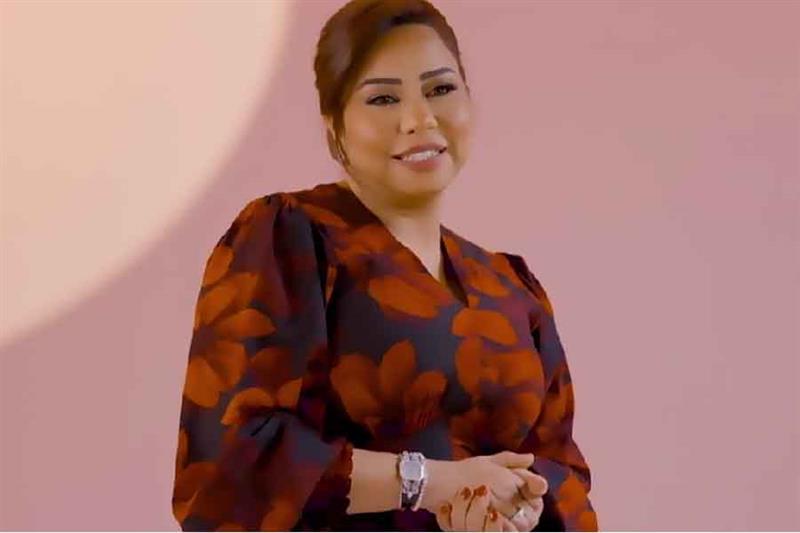
Egyptian singer Sherine Abdel-Wahab became the first Arab artist to be awarded at the Billboard Women in Music Awards.

Sherine, 43, claimed the title of Billboard Arabia, a partnership between Billboard and SRMG, a Saudi-integrated media group.

She became one of seven winners of the Global Force Awards at Billboard Women in Music, part of the Billboard Awards held at the YouTube Theatre in Los Angeles on 7 March.

Global Force also included Annalisa (Billboard Italy), Maria Becerra (Billboard Argentina), Sarah Geronimo (Billboard Philippines), Nini Nutsubidze (Billboard Georgia), Tia Ray (Billboard China), and Luísa Sonza (Billboard Brasil).

Sherine was awarded for her Kalam Eineh at No. 1 and El-Watar El-Hassas at No. 2 which topped Billboard Arabia’s global flagship charts.

In her acceptance speech, Sherine expressed her appreciation for Billboard, saying “I am very proud you enjoyed my work, and of course, I am thrilled and proud that there is a music award specially for women. I hope that my work will always reach the entire world.”

Billboard Arabia was launched in June 2023 to shed light on Arab artists, while pledging “to be the premiere global destination for artists with Arab roots.”

According to Billboard Arabia, the platform follows the well-established parameters set by Billboard over eight decades, drawing data from leading digital streaming platforms like Spotify, Anghami, YouTube, and Apple Music, reflecting Arab music preferences globally.

In its inaugural year, Billboard Arabia included ElGrandeToto, Marwan Pablo, Amr Diab, and Ahmed Saad in its top five Arab artists.

source/content: english.ahram.org.eg (headline edited)

___________

Still from Sherine Abdel-Wahab s acceptance speech

__________

EGYPT

EGYPT : The record-breaking Freedivers of Egypt

Masters of relaxation: The record-breaking freedivers of Egypt.

When the countdown began, Khaled Elgammal took one final, deep breath before descending without any breathing equipment into the ocean. One minute and 29 seconds later, still holding his breath, the Egyptian athlete had free-fallen to 102 metres (335 feet) – a national record.

But for it to count, he had to reach the surface again. He turned at the bottom of the line and began his ascent – focusing on deep relaxation and the feelings of the surrounding water. In all, he had held his breath for two minutes and 50 seconds.

Elgammal is Egypt’s deepest freediver, and his remarkable achievement set a new national record at the Sharm el-Sheikh competition in October 2023.

“When I came to the surface, it was bliss. It felt amazing,” Elgammal recalls.

Freedivers like Elgammal rely solely on the ability to hold their breath while diving underwater. Through training, these divers master relaxation to slow down their heart rate, allowing them to stay beneath the surface without breathing equipment for minutes at a time. Very deep dives like the one he did recently usually require divers to hold their breath for around three minutes at a time.

The practice of freediving can be traced back to traditional fishing in communities like Asia’s Bajau people, where coastal groups have used freediving to hunt underwater for 200 years. As a sport, freediving is now undergoing record growth, attracting people looking to connect with the ocean and better understand their body’s abilities.

As for Elgammal, he says he was captivated by the unique sensations of diving with a single breath.

“I always say that scuba diving is everything in slow motion; you’re moving slow, breathing slow, and the sound of the bubbles is hypnotising, so everything is in slow motion. Freediving is like you’ve paused… and are the only thing moving down there. So you give yourself the chance to sink within.”

The sport is now growing in popularity around the world. According to AIDA International rankings, 2,889 freedivers registered to compete in competitions in 2023, more than twice the number a decade earlier.

The freediving organisation told Al Jazeera that around 20,000 people have become certified freedivers in recent years. Scuba Schools International (SSI) has similarly seen a steady 10 percent annual rise in the number of people earning their first freediving certification.

Many of these certifications are awarded in Dahab, a bohemian enclave on Egypt’s Red Sea coastline which has become home to numerous freediving schools and elite instructors. Dahab featured a shoreline of palm trees and traditional Bedouin homes just a few decades ago. While still considered a small town today, it boasts a thriving beachfront of Egyptian and international restaurants and attracts a growing crowd from Cairo, Europe and Asia. A handful of luxury hotels have emerged but Dahab still maintains an authentic charm – with herds of goats freely roaming the streets.

It’s also one of the world’s best-known freediving hotspots due to its year-round water conditions and proximity to Egypt’s Blue Hole. Just 20 minutes away by car, the Blue Hole is a famous reef-lined sinkhole accessible from the shore.

Here, divers can descend to around 90 metres (295 feet) – almost the height of the Statue of Liberty.

A heightened state of self-awareness

But what has contributed to the rise of freediving?

The sport is linked to several mental and therapeutic benefits. A 2013 study by academics at ​​Atilim University in Turkey, found that freedivers tend to exhibit lower stress and anxiety levels than non-freedivers.

Carlos Diezel, the manager of Dahab Freedivers, a school that trains divers, explained that much of this is down to “breathwork”.

“The fact that we have to pay attention to our breath, our mind and relaxation when we go down teaches us awareness,” he says. “I believe that part of the problem, statistically speaking, for mental health issues is related to the lifestyle in modern society, that’s leading people to forget or block any kind of self-awareness.”

This heightened state of self-awareness is something that dedicated freedivers like Elgammal strive for. “I’m always aware now of what I’m feeling, what I’m sensing,” he says. “Freediving helped me to connect with myself.”

Freediving’s connection with nature and immersion in water may also contribute to its mental health benefits. Diezel says the most common reasons people sign up for freediving courses are a fascination with the ocean and learning more about themselves.

“They grasp this connection with themselves when you hold your breath and go deep,” he said, adding that students consider it “a ‘deep’ experience – sorry for the pun”.

Social media equally plays a role in bringing freediving to the forefront. Many freediving pictures allude to a sense of freedom, featuring divers among marine life and colourful reefs. The hashtag #freediving has amassed more than 3.5 million mentions on Instagram so far. “It’s getting a lot of attention as it’s quite photographic. Some videos are just mesmerising,” Diezel adds.

Diving safely

Within the existing freediving community, the sport’s surge in popularity brings added responsibility. Considered an “extreme sport”, freediving can be risky if safety protocols aren’t followed, or divers push themselves beyond their physical limits. They can experience oxygen deficiency symptoms like hypoxia and blackouts, as well as pressure-related risks like a ruptured eardrum, an example of a barotrauma.

Contrary to portrayals such as Netflix’s The Deepest Breath, divers losing consciousness – known as blackouts – are relatively uncommon, particularly in recreational diving at shallower depths.

Freedivers are also trained to rescue a fellow diver safely as part of their earliest training, learning to monitor each dive, spot signs of distress and how to react. Under the buddy system, which helps to ensure freedivers remain safe, divers never dive alone.

Tamsyn Signe is a professional freediver who champions safety whenever she enters the water. She has worked as a safety freediver in multiple competitions, and it’s her role to ensure the competing divers make it to the surface safely. Last year, she saved a diver’s life 30 metres (98 feet) underwater in a rare example of a deep rescue.

“As he got in front of me, the lights went out,” Signe recalls, describing the moment the ascending freediver just stopped moving after losing consciousness. At 30 metres below the surface, Signe was also holding her breath. However, she wasn’t thinking about the carbon dioxide building in her body – she had a job to do.

“Everything really slowed down,” she says. “I knew I was his best shot at being ok.” As she’s trained to do, Signe closed his airways with her hands and started finning (swimming up with flippers) with him toward the surface – a tricky job with the added weight of another diver. The competitor regained consciousness after reaching the surface, partly thanks to Signe’s quick thinking and supportive team. He would later reach out and thank her for saving his life.

Signe says the rescue changed her life too, making her more observant and prepared for unexpected risks, but it’s part of the job. Most freedivers believe that practising safety in freediving, such as never diving alone and being trained for rescue, is crucial to the sport’s survival.

But this is not just a tick-box exercise; safety also forges close bonds within the community. “When you go through an experience with people where you could potentially die, there’s some sort of connection that happens that is way deeper and intimate than normal. And those friendships do last a lifetime,” Signe adds.

Responsibilities beyond the breath-hold

Alongside valuing safety, Zahraa El-Husseiny, a freediving instructor and Egyptian national record holder, believes that protecting our oceans is also an important responsibility which comes with freediving. Many freedivers collect plastic they find floating in the water; others, like Diezel, stopped eating seafood after learning about the human impact of overfishing.

As Earth’s oceans face increasing pressures from pollution and global warming, those who rely on the sea will play a vital role in future conservation. First drawn to freediving because she was fascinated with marine life, El-Husseiny tries to teach others about respecting the ocean through her sport.

“We are very connected to the ocean, and we owe it to this to protect it. We know how essential it is to move freely underwater, so… we need to protect it,” she says.

For many, freediving offers a path for self-discovery and a deeper connection to the natural world. As a sport, it’s poised for continued growth in the future.

Freediving isn’t reserved for a select few either, and freediving communities are expanding in many coastal locations. “Everyone can learn how to hold their breath,” El-Husseiny adds.

“Everyone can learn how to enjoy the ocean and the peacefulness of diving. I would like people to know that this is something they can do, learn and progress in”, she says.

Passing on the love of this sport is something many freedivers take seriously. When Elgammal isn’t training for record-breaking dives, he’s working as an instructor and coach. He similarly urges those interested in the sport to “be curious”.

“Relax, enjoy, trust. Think about what you like and try to visualise that feeling.”

source/content: aljazeera.com (headline edited)

____________

___________

EGYPT

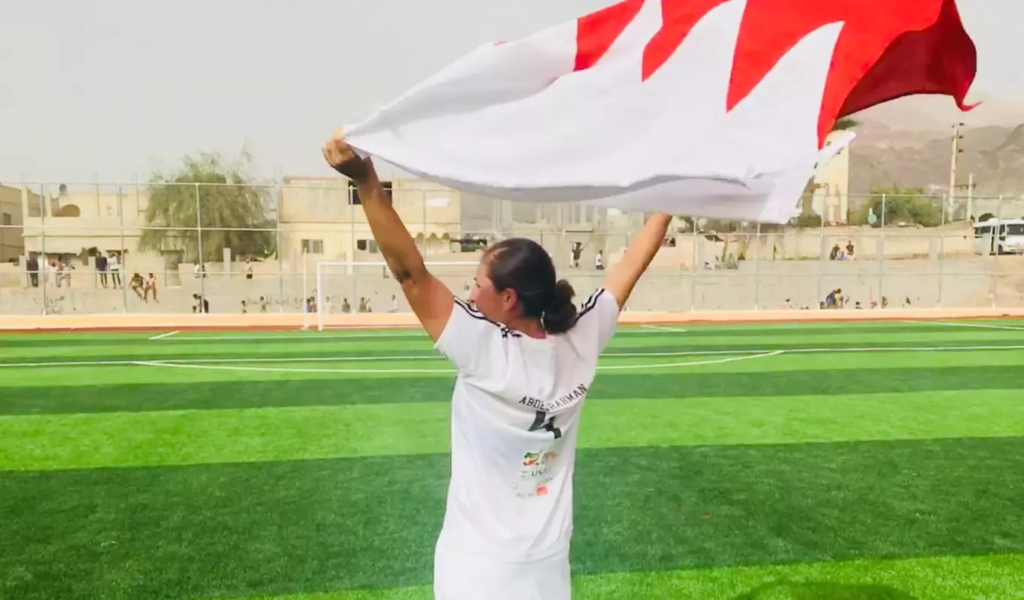
EGYPTIAN-BRITISH: Deena Rahman: Bahrain’s record-breaking trailblazer

Rahman was one of the first women to be paid to play football in Europe – and set a host of records!

  • Deena Rahman owns five Guinness World Records
  • She was one of the players who got contracts when Fulham became professional in 2000
  • Rahman represented Bahrain in 40 matches, and scored 23 goals

In 2000, almost a decade before the English Football Association awarded the first central contracts to women, Fulham Ladies, at the insistence of club chairman Mohamed Al-Fayed, turned fully professional. It was a watershed moment in the history of women’s football. One of the 16 players paid to play professional football, a first in Europe, was Deena Rahman.

Deena Rahman’s career has since become one of football’s enduring legacies. She has played for the England women’s age group teams, then Bahrain national team. A midfielder during her playing days, the 39-year-old now works to promote gender equality in football while also creating a host of world records. The former Fulham midfielder currently holds five Guinness World Records!

Born to an Egyptian father, Deena Rahman rose through Fulham’s youth ranks, then joined the Arsenal Academy. But she returned to Fulham, and became a member of the team which completed a treble of Premier League National Division, FA Cup and League Cup in 2003. The club became semi-professional soon enough, after three years.

At 15, Rahman made her England U-18 debut. She also represented the country of her birth in two UEFA Women’s Under-19 Championships. However, she retired as a Bahraini player, having scored 23 goals in 40 matches after making her debut in 2011. She is regarded as one of the greatest to have played for the Reds, the nickname for the team from the small Western Asian kingdom.

In her journey – from Fulham to Manama with a brief stoppage in Cairo – Deena Rahman has witnessed a whole gamut of human experience. As a prodigious talent in England, she was a regular at the all-conquering Fulham. But injury and the disbandment of the Cottagers in 2006 forced her to move to Egypt, where she played for Wadi Degla for a brief spell. Another injury sidelined her, and she was back in England.

Then Bahrain came calling, thanks to her association with Arsenal. In 2010, Rahman arrived in the Gulf to work as a coach at Arsenal Soccer School at Soccer City in Janabiya. After five years there, she and her husband Paul Shipwright established their own academy, Tekkers Academy.

Meanwhile, Rahman was also busy creating her own legacy. In 2017, she, along with 32 women from 20 countries, set the Guinness World Record for the highest game of football ever played. And the setting was 18,760 feet above sea level, atop Mount Kilimanjaro in Tanzania – the highest mountain in Africa.

The following year, Deena Rahman played her part in setting another Guinness World Record, this time for a game of football at the lowest point in the world, the Dead Sea in the Jordan Rift Valley, at 1,412 ft below sea level.

In 2019, Rahman clocked two more Guinness World Records by taking part in a match featuring 822 players during the biggest five-a-side game at Olympic Lyonnaise Training Academy in Meyzieu, Lyon. Then in an exhibition match on the sidelines of the 2019 FIFA Women’s World Cup in France, she got her fourth Guinness World Record as a part of the match with the most nationalities – 114 participants, representing 53 nationalities. In 2020, Rahman secured her fifth record by hammering 7,876 penalties in 24 hours at the Kick Off Academy in Saar.

source//content: fifa.com (headline edited) / Jayanta Oinam

_________

__________________________________

BRITISH / EGYPTIAN / BAHRAIN

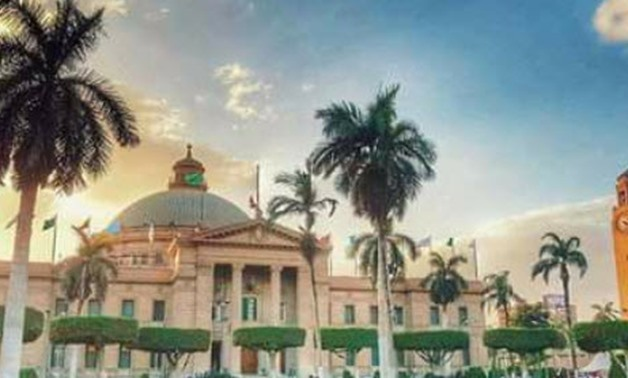
EGYPT: 79 Cairo University Scholars among Best Scientists in Stanford University report

A total of 79 scientists from Cairo University are among a list of 160,000 scientists whose practical opinions are cited in various specializations with a (2 percent). 

President of Cairo University Dr. Mohamed Othman Elkhosht received a report on Stanford University’s announcement of a list of scientists whose practical opinions are cited in various specializations with a (2 percent), featuring about 160,000 scientists from 149 countries, based on the Scopus database, in 22 scientific specializations, and 176 sub-specialization for distinguished researchers.

Dr. Elkhosht announced that the Stanford list included a large number of Cairo University scientists, with a total of 79 scientists on the two lists, whether the total from 2011 to 2022, or the latest version 2023, as this year’s list included scientists from 11 colleges (an increase of 8% over the previous year).

Number of scholars featured from Cairo University in the report’s 2022 edition was 73 scholars, representing 9 of the university’s faculties, and compared to the number of 74 and 55 scholars during the previous years (2021 and 2020, respectively), Cairo University thus leads all Egyptian universities and research centers in all years from 2020 until now.

Dr. ElKhosht explained that the annual Stanford University report is an objective, external indicator of the progress of scientific research at Cairo University.

It is also a quantitative indicator for the university to identify the number of distinguished faculty members in research and a reflection of the university’s methodology, plan, applied practices, and the support that the university provides to its employees from the various colleges and institutes affiliated with it.

Dr. Mahmoud Al-Saeed, Vice President of the University for Postgraduate Studies and Research, pointed out that the report reflects the strengthening of the confidence of the international scientific and research community in our scientists in all fields and specializations, and that the results of the classification this year included two lists, the first of which is specific to the list of the total practical years 2011 – 2022 (with a total of 417 scientists), While the second included the list of last year, 2022, with a total of 817 scientists, adding that this year’s list (2023 edition) contained 926 Egyptian scientists, while last year’s list (2022 edition) included 680 Egyptian scientists from various universities and research centers, compared to 605 and 396 during the years 2021 and 2020, respectively.

Stanford University used the Scopus database of the international publisher Elsevier to extract various indicators in this list, including global scientific publishing, the number of citations, the H index, and co-authorship, all the way to the composite citation index.

source/content: egypttoday.com (headline edited)

__________

Cairo University – file

____________

EGYPT

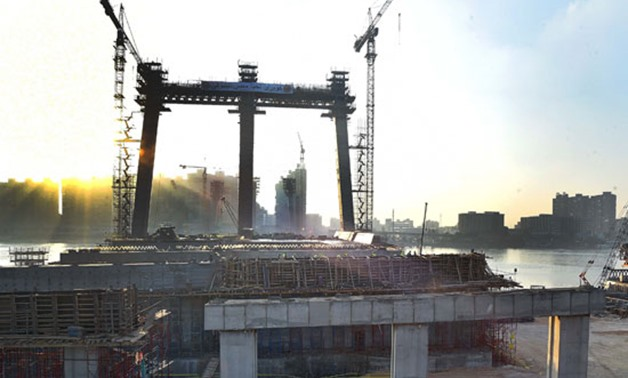
EGYPT’s Rod al-Farag Axis featured in Guinness World Records as Widest Suspension Bridge

Egypt received on Wednesday a Guinness World Records’ certificate on Rod al-Farag Axis Bridge (Tahya Misr Bridge) passing over the Nile, for being the widest suspension bridge in the world at a width of 67.36 meters.

Guinness World Records website has not yet published news about the new Egyptian record-holder.

Regional Director for the Guinness World Records in the Middle East and North Africa region Talal Omar handed over the certificate to Mohamed Mohsen Salah, President and CEO of Arab Contractors company.

President Abdel Fatah El Sisi attended Wednesday the opening of Rod el Farag Axis Bridge, int the presence of Prime Minister Moustafa Madbouli, Presidential Adviser for National and Strategic Projects Sherif Ismail, Transport Minister Kamel el Wazir and a number of high-ranking state officials.

The Arab Contractors, a leading construction company in the Middle East and Africa, officially requested that Rod El-Farag Axis sets a record in the Guinness Book of World Records, said Ahmed Makled, chief executive manager of B Premium, the official partner of Guinness Records in Egypt.

Rod El-Farag Axis (TahyaMisr Bridge) links areas in northern and eastern Cairo with west Cairo. The Egyptian government said that the bridge, which aims to ease traffic and reduce commuting time, is the widest over a waterway.

Makled said that the relevant minimum limit set by Guinness is 65.235 meters, hoping that the bridge will meet other requirements and conditions set by Guinnessto become the world’s widest bridge, replacing Canada’s Port Mann Bridge, which was considered the world’s widest.

Port Mann, which has a width of 65 meters, was opened to traffic in 2012. California’s Bay Bridge was then opened in 2013, to replace Port Mann as the world’s widest. The aforementioned San Francisco-Oakland Bay Bridge has a width of over 78 meters.

Makled said that the TahyaMisr Bridge will seek to enter the Guinness World Records in the coming few days after it is officially inaugurated.

The construction of the flyover bridge is 100 percentcompleted, said Salah, the CEO of the Arab Contractors, adding that the bridge has been paved.

As many as 4,000 engineers, technicians and other workers have contributed to the construction of the bridge with a cost of LE 5 billion ($292.7 million), Salah said, adding that the second phase of the project costs LE 4 billion.

source/content: egypttoday.com (headline edited)

___________

The Arab Contractors officially requested that the Rod El-Farag Axis sets a record in the Guinness Book of World Records – Press photo

________

EGYPT

EGYPT: Nour El Refai Wins Architecture Masterprize 2023 Photography Award

The Egyptian architect turned photographer walks us through his award-winning photographs in Dubai.

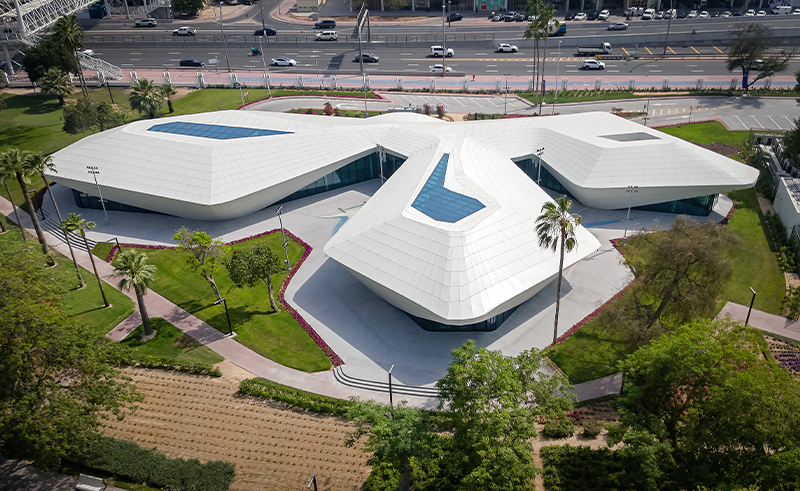
Renowned Egyptian architectural photographer Nour El Refai was announced as the winner of Architecture Masterprize 2023 Photography Award in the ‘Healthcare-Exterior’ category for his work on Thukher Club, a seniors social club in Al Wasl, Dubai which was designed by Naga Architects. This is the second year in a row that El Refai wins the prestigious award, after his shots of Museum of the Future won the ‘Cultural-Interior’ category in 2022.

Capturing the organic architecture and layout of Thukher Club, the brilliance of El Refai’s photographs rest in their nuanced approaches. From meticulous compositions and dramatic perspectives to calm lighting and consistent tones, his work helped translate Naga Architects’s design and concept.

Over the past decade, El Refai has steadily grown into a benchmark in architectural photography within the MENA region. Whether it’s stunning summer houses or cultural centres, his work is helping document the design upheaval taking over the region. In Al Wasl, he delivers a masterclass in the relationship between architecture and lighting.

Light rain set the tone to the first day of photographing Thukher Club. “Clouds felt dramatic. For Naga Architects, it made sense to opt for a clear sky to define the architecture,” El Refai tells SceneHome. “I adjusted the composition based on the natural sky and clouds to balance the architecture without overshadowing it.”

A key parameter of El Refai’s work on Thukher Club was our yellow dwarf star. “The sun’s movement helped define the masses. I visited early in the day and imagined the shape of shadows against them,” he recalls. After almost completing his work, El Refai revisited Thukher Club at noon, which required a new set of permissions since it was during a peak time, when crowds of people would pass through. “When the sun’s perpendicular there’s contrast between the masses and the foreground. Human elements add a sense of scale. It shows you how the masses overlap, that’s why I needed the sun to be high. Had it been low, both surfaces would’ve been white and lacked shade.”

The exterior masses of Thukher Club featured irregular and organic forms. Its main entrance, covered by undulating architecture, was photographed from two different angles; one emphasises its curves before sunset and the other has a wider view that establishes context. “Lines guide me in terms of where to stand and look, and lenses provide the freedom to shift in direction,” El Refai says. Both perspectives guided him and how shifts were illustrated in the former entrance image.

“I exaggerated the curve by getting closer to the building with an acute angle. I wasn’t photographing elevations but accentuating them,” he says, referring to the dramatic perspective where the building appears in motion towards its vanishing point. On the far right side of the same image, Thukher Club’s logo (which is the abstracted layout of the buildings) appears from within the club. To get this shot, El Refai kept adjusting the frame until it felt right.

Every architectural project presents unique challenges to photographers. Once they’ve become confident in their process and tools, only then will they be able to showcase it in the best light possible. That’s something El Refai learned from practice. “Practice makes you understand that you don’t have to be perfect,” he says. “You understand the parameters of perfection but more importantly you’re able to tell when it’s enough, how to have vision and imagine situations in advance.”

In Al Wasl, El Refai predicted that night shots would be challenging because lamp posts close to the building switched between too many colours. A full day was spent solving the issue and as a result, instead of having 10 colours switching during twilight, there were only three. This was an example of the importance of preparing in advance and understanding the project.

From inside, Thukher Club was composed of three main spaces with skylights providing natural light. An all-white interior provoked nuanced approaches by El Refai, which conveyed the desired level of brightness intended by the design, highlighted the importance of toning and how subtle changes in composition make all the difference. In one of the shots, El Refai pictures a space flanked by a corridor, followed up by a closer shot that places viewers within the seating area.

“I tried to show different levels without appearing too overlapped,” El Refai says. “The oddity of photographing a 3D space into a 2D plane is that people don’t experience space in 2D, so when you add it on a page the masses blend together, and you have to figure out the point from which you’re photographing and the lens you’re using in order to ease the composition.”

Once the composition is settled, the rest of the process includes lighting, editing and adjusting the layers and tones. “Consistency of tones is crucial. Depending on camera measuring, sunlight and timings, tones are always changing but they need to remain consistent,” El Refai adds. Between day and night, there are naturally changes in tones but in both sets of images the tones of each need to remain consistent.

“Most of the work is in the composition and the rest is timing,” El Refai continues. “It’s all about enjoying the process. I roam around the project to get a feel for the spaces and the relationships between them.” To be able to get these shots, El Refai schedules the entire day and determines how much time each perspective will have, the window of opportunity so to speak.

presentation. “Transitioning from day to night needs to be seamless, unless designers request to emphasise different moods of the same space,” he says. “I prefer telling the story of the project as an experience, walking from one space to another. Visual storytelling is of paramount importance, I don’t deliver an album without ordering it. It may not be the same order of photography because that depends on context, presenting the images is a different story. The order depends on the story that I want people to feel.”

When asked for advice for upcoming photographers, El Refai says, “Research the designer and the design to understand the project. If you receive plans or renders, use them to envision the space. On the ground, there will be some changes but when you imagine the project’s architecture you can interpret it properly through images.”

If El Refai’s insights are an indication of anything, it’s that preparing for a shoot is equally as important as the shoot itself. Whether it’s the scheduling or communication, proper briefing and communication, when a photographer understands the context, they find the freedom to explore nuanced angles. With time, as demonstrated by El Refai’s serial award-winning approach, there will be less photos and more keepers.

Photography Credit: Nour El Refai

source/content: scenehome.com (headline edited)

_________

__________

EGYPT