EGYPT : Ten Egyptian Monuments the World Still Won’t Give Back

With the news of the Netherlands returning a 3,500-year-old Egyptian sculpture this week, here is a list of ten important Egyptian artefacts that are still held abroad.

Earlier last week, Dutch Prime Minister Dick Schoof announced his government would be returning a sculpture from the reign of King Thutmose III to Egypt, where it had been illegally taken during the 2011 Revolution and sold abroad. The announcement was made in the wake of the opening of the Grand Egyptian Museum and was met with praise and applause by many Egyptian observers. In recent years, there have been increasing calls by Egyptians (and by many people of formerly colonized countries) to bring home their country’s lost artefacts. However, the story of how artefacts came to leave a country is often complicated. Oftentimes they were looted, but sometimes they were given as gifts (or otherwise lawfully taken). In any case, in an effort to commemorate the Grand Egyptian Museum becoming the largest museum in the world dedicated to one civilization, here is a list of some of the Egyptian artefacts you still won’t find there.

1) The Oldest Bible in the World (British Library, London)
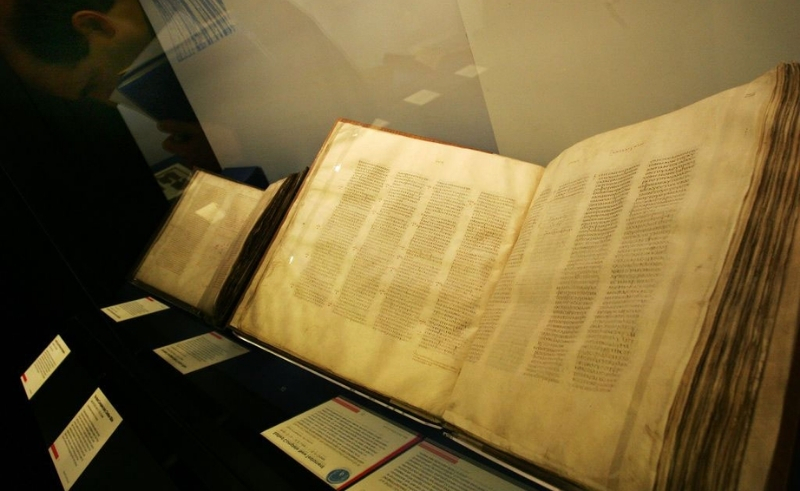
The Codex Sinaiticus, also known as the Sinai Bible, is the oldest complete copy of the New Testament ever found. Dating to around 350 CE during the time of Roman Egypt, it is also the youngest artefact on this list. (The timeline of the Grand Egyptian Museum, which chronicles ancient Egyptian history from prehistoric times to the Greco-Roman period, ends at 400 CE.)

The story of how this Bible left Egypt is complicated. Although the Bible was found in Saint Catherine’s Monastery in Sinai in 1844 by a German theologian, it was given to Tsar Alexander II of Russia, and then sold to the British Museum in London in 1933 by the Soviet government. Today, most of the manuscript remains in British Library (where very few scholars have been allowed to see it in full), though smaller fragments are still scattered across Germany, Russia, and St. Catherine’s Monastery.

2) Luxor Obelisk (Paris)
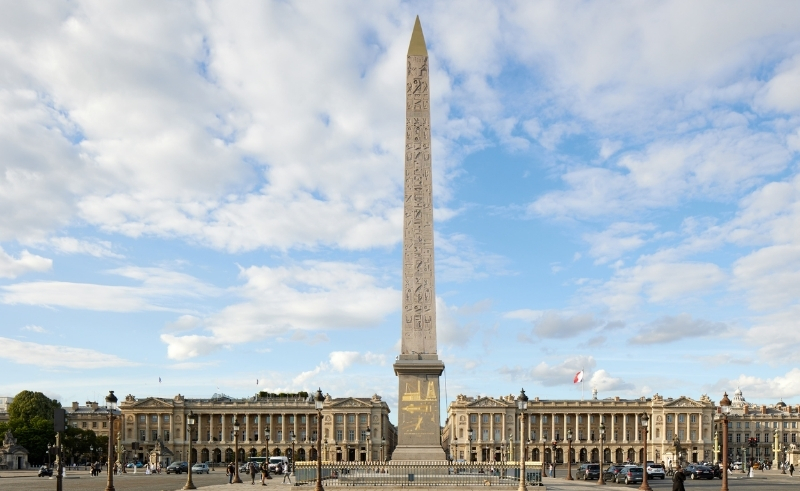
If you’ve ever been to the Luxor Temple on the east bank of the Nile River, you will have noticed that in the entranceway there stands only one obelisk, the other clearly missing. Carved during the reign of Ramses II of Egypt’s New Kingdom, the missing granite obelisk now sits in the center of Place de la Concorde in Paris. It was gifted to the French Empire by Muhammad Ali Pasha in 1829 as a gesture of friendship, and it remains the oldest monument in all of France.

3) The Oldest Woven Dress in the World (Petrie Museum, London)
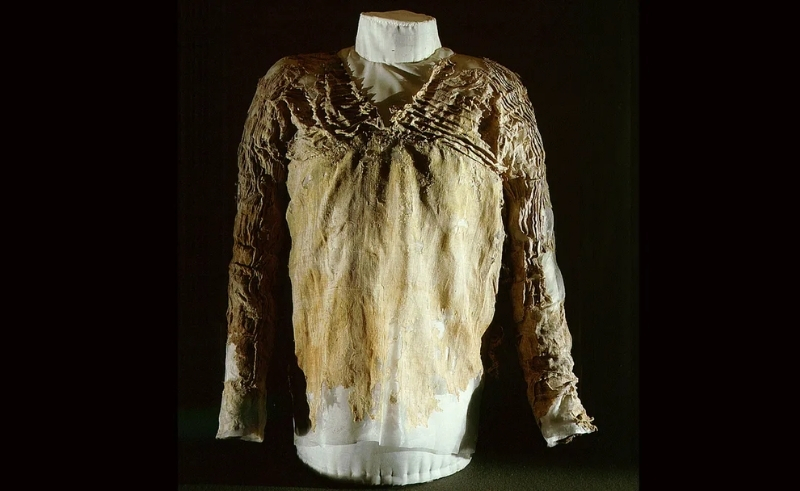
The Tarkhan dress, a linen garment that was once likely once worn by an Egyptian worker, is a 5000 year old piece of clothing—the oldest woven garment ever found. The dress was found south of Cairo in 1913 by Flinders Petrie, a British archaeologist, who at first believed it to be little more than a rag. He decided to take the rag with him to London anyway, and it wasn’t until the clothing was carbon-dated in 2015 that the true age—and significance—of the dress was understood.

The roughly size 2 dress remains in remarkably good condition (for its age), featuring a V-neck cut and long sleeves, and armpit stains left by its original wearer. 

4) The Oldest Complete Map of the Ancient Sky (Louvre Museum, Paris)
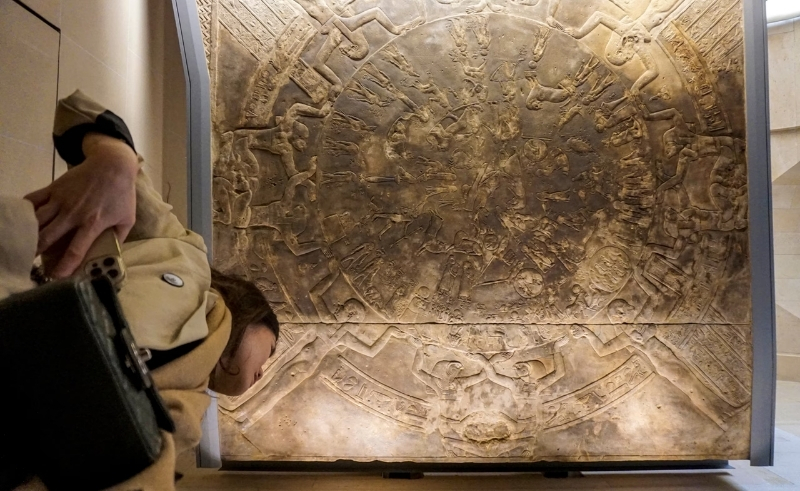
The Dendera Zodiac is a celestial map from the time of Ptolemaic Egypt, depicting the twelve zodiac signs (a Greek invention) with Egyptian imagery and style. It was likely created during the reign of Cleopatra, around 50 BCE, and was etched into the walls of the Dendera Temple of Hathor north of Luxor. Besides its beauty, its significance lies in the fact that it is the oldest (and possibly only) known complete map of the ancient sky.

The French removed it from Egypt in 1821 (with some versions of the story claiming they used dynamite to do so), and today it can be found in the Louvre Museum in Paris. 

5) The Rosetta Stone (British Museum, London)
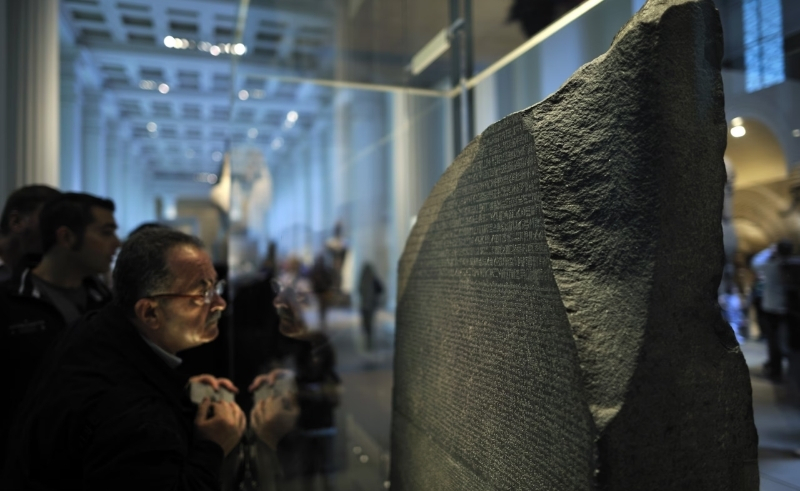
Many people believe that the Rosetta Stone was taken by the British from Egypt, but in reality, it was taken by the British from the French, who took it from Egypt. Discovered by French soldiers in the town of Rashid (Rosetta) in 1799, this stone is perhaps the most important archaeological discovery of all time (and it remains the most visited artefact in the British Museum). Its decryption paved the way to understanding ancient Egyptian hieroglyphics (and with it most of ancient Egyptian history), which until then had been illegible to all who tried to read it.

When Egypt formally asked for the Stone’s repatriation in 2003, the British Museum refused to return it, and instead gave Egypt a replica of the Stone. That replica now sits inside the National Museum in Rashid. 

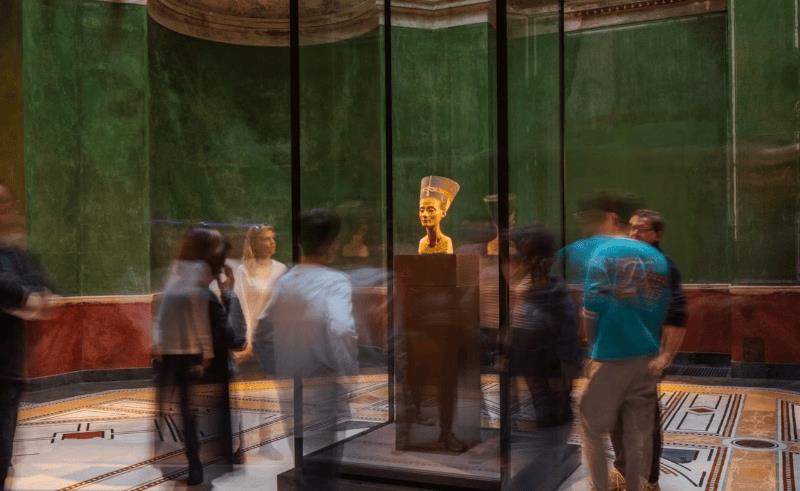
6) The Bust of Nefertiti (Neues Museum, Berlin)
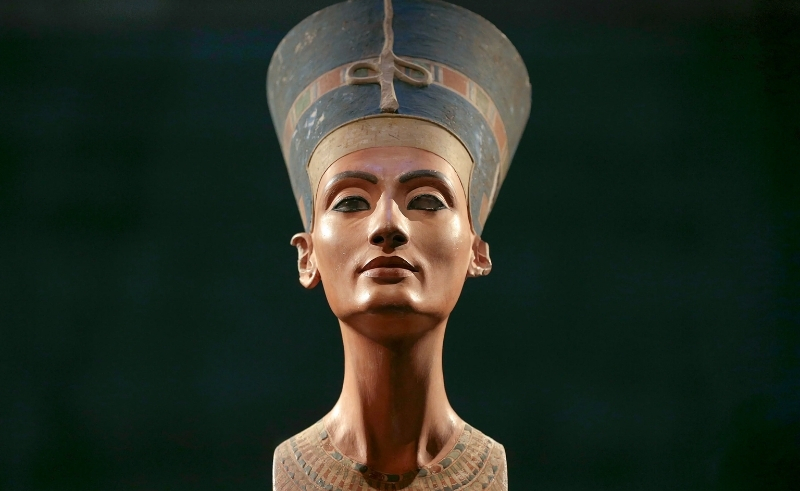
This iconic sculpture is one of the most well-known artefacts from ancient Egypt, and it depicts an equally legendary figure: Queen Nefertiti, wife of Akhenaten, stepmother of Tutankhamun. 3,400 years ago, Akhenaten’s sculptor captured Nefertiti’s beautifully slender neck, raised chin, and level gaze, and when it was discovered in 1912 the painted sculpture was still in remarkably good condition.

At the time of its finding, excavations in Egypt were conducted under a system whereby all items discovered were split between Egypt and the foreign country sponsoring the excavation, but there was a caveat: only ‘non-unique’ items could leave the country. The controversy that surrounds this bust is that the German team that discovered it hid its true value, and thus the bust was allowed to leave Egypt and be transported to Berlin, where it remains today. 

7) Colossal Figure of Ramses II (British Museum, London)
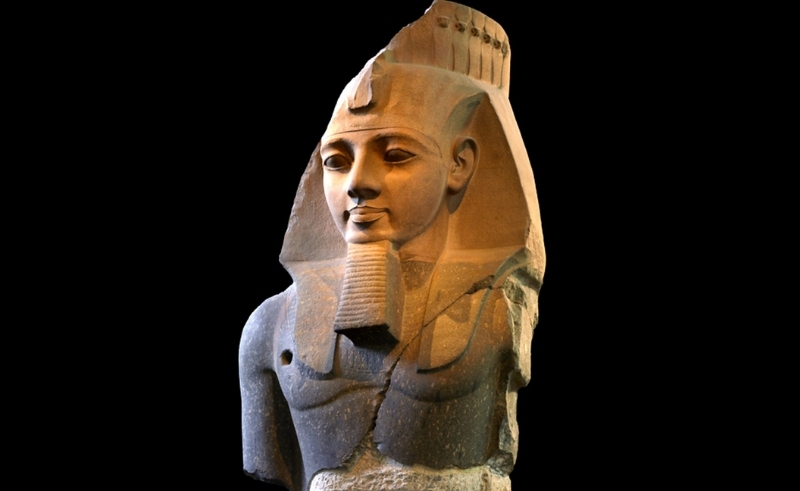
Also known as the Younger Memnon, this colossal torso and head once sat atop a statue of Ramses II located at his mortuary temple in Luxor. In 1798, Napoleon’s men tried extracting the statue but failed, and a couple of decades later the British succeeded in removing the upper portion of the statue (which had, long before, been damaged and detached from the rest of the body during an earthquake). Weighing nearly 20 tonnes, the statue is the largest Egyptian sculpture in the British Museum.

8) Bust of Ankh-haf (Museum of Fine Arts, Boston)
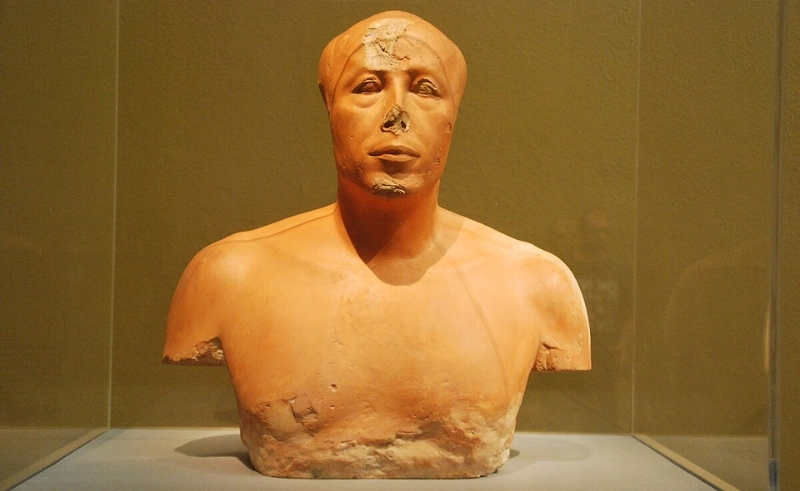
This lesser known artefact is striking for its high level of realism. Its namesake, Ankh-haf, was a government official of the Old Kingdom who oversaw the building of the Great Pyramid of Giza and the Sphinx.

The bust was discovered in 1925 during an expedition by Harvard University, and in 1927 it was gifted by the Egyptian government to an American archaeologist. Perhaps fittingly given the sculpture’s realism, it now rests in the Museum of Fine Arts in Boston.

9 & 10) Cleopatra’s Needles (London & New York)
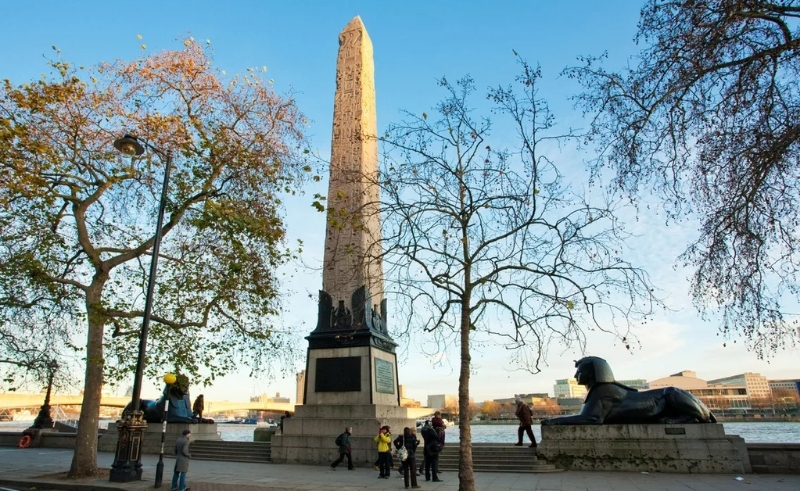
Despite their name, the pair of obelisks called Cleopatra’s Needles bear no relation to Queen Cleopatra herself. Instead, they were constructed during the reign of King Thutmose III of the New Kingdom, more than a thousand years before Cleopatra’s reign. During the Roman era they were moved from their original location in Heliopolis to Alexandria, where they stood for nearly two thousand years.

By the 1800s, one of the two needles had fallen. It was this needle that Muhammed Ali Pasha, in 1819, decided to gift to Britain (as he had gifted the Luxor Obelisk to France). However, the 21-meter tall obelisk was so massive that it was not actually transported to London until the reign of Ismail Pasha in 1877. It was also Ismail Pasha who, in the same year, gifted the remaining needle to the United States.

source/content: cairoscene.com (headline edited)

______________
Originally published on November 9th, 2025.

____________

EGYPT
EGYPT : A world spectacle for history – Grand Egyptian Museum (GEM) inaugration November 01st, 2025

After more than 20 years in the making.

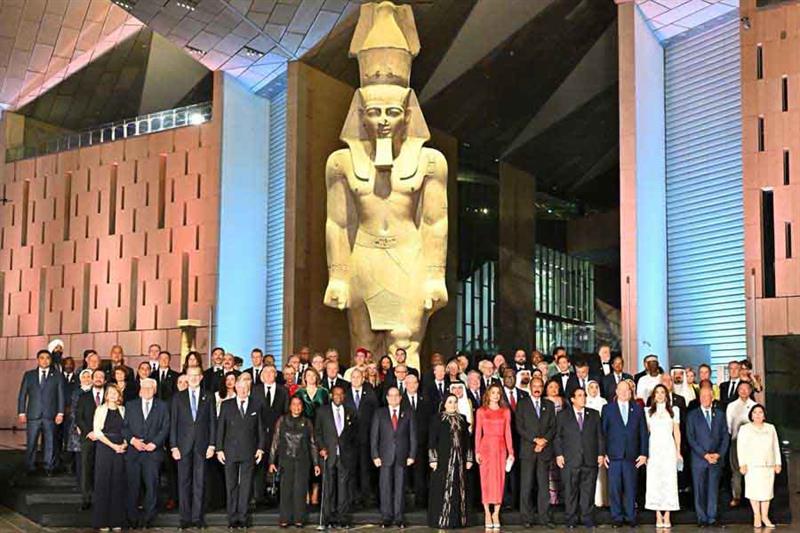
In an evening that blended history, culture and global celebration, President Abdel-Fattah Al-Sisi and First Lady Entissar Al-Sisi presided over the official inauguration of the Grand Egyptian Museum (GEM) on Saturday, marking a milestone in the modern cultural landscape of Egypt and the world. The ceremony was attended by nearly 80 high-level delegations, including kings, presidents, princes, heads of government, and representatives of regional and international organisations.

Among them was German President Frank-Walter Steinmeier, Dutch Prime Minister Dick Schoof, Spain’s King Felipe VI, Queen Rania of Jordan, Prince Albert II of Monaco, and Greek Prime Minister Kyriakos Mitsotakis. Also present were Palestinian President Mahmoud Abbas, Saudi Arabia’s Minister of Culture Badr bin Abdullah, and the crown princes of Oman and Bahrain.

Held at the GEM’s open-air court overlooking the Giza Plateau, the celebration unfolded as a multisensory homage to Egypt’s timeless civilisation. Performances combining music, light, laser projection, and drone choreography traced the evolution of Egyptian architectural genius, from the Giza Pyramids to the modern era, and highlighted the message that civilisations thrive in times of peace.

The façade of the museum became a canvas for immersive light and projection displays, with vast screens illuminating Egypt’s ancient monuments and artistic heritage. Dancers in Pharaonic-inspired costumes, adorned with gold crowns and sceptres, performed to a live international orchestra, while fireworks and synchronised drone formations traced the silhouettes of ancient deities across the night sky.

President Al-Sisi welcomed the distinguished guests and emphasised that the GEM, now the largest museum in the world dedicated to a single civilisation, stands not merely as a showcase of ancient treasures, but as a testament to the creative spirit and enduring legacy of the Egyptian people.

He also described the museum as a new chapter in Egypt’s cultural story, affirming that it stands as a testament to the creativity and legacy of the Egyptian people and as a space for dialogue, knowledge, and exchange.

The ceremony began with the performance “The World Plays One Melody”. The programme featured a laser and drone show illustrating the Orion Belt alignment and its symbolic connection between the museum and the Giza Pyramids, followed by a performance titled “A Journey of Peace in the Land of Peace”.

The sequence highlighted the evolution of Egyptian architectural ingenuity, from the Step Pyramid of Djoser to modern Egyptian design, accompanied by a Coptic hymn of Sufi spiritual singing, and a drone message reading: “Civilisations Flourish in Times of Peace.”

The evening’s performances brought together some of Egypt’s most celebrated voices. Soprano Fatma Said and tenor Ragaaeddin delivered stirring pieces composed by Hisham Nazih, whose music blends contemporary orchestration with the tonal motifs of ancient Egypt, a style previously showcased during the Golden Mummies parade.

Sisters Amira and Mariam Abu Zahra, granddaughters of renowned Egyptian actor Abdel-Rahman Abu Zahra, appeared in stylised Pharaonic attire, performing a violin duet accompanied by the Cairo Opera House Orchestra and international ensemble players under the baton of maestro Nayer Nagui.

The celebration also highlighted Egypt’s cultural diversity. Nubian singer Ahmed Ismail performed in the Nubian language, while Haneen Al-Shater sang in Arabic from a floating stage overlooking the Nile, symbolising Egypt’s enduring identity as a crossroads of civilisations.

Iconic Egyptian actress Sherihan delivered an evocative spoken tribute to ancient Egypt’s artistic legacy, set against sky projections of the Pyramids. She was followed by Sherine Ahmed, the first actress of Egyptian descent to play Eliza Doolittle on Broadway, who gave a powerful musical performance before Islamic chanter Ehab Younis offered a spiritual finale.

On giant screens above, scenes from celebrations in countries all over the world played out against the backdrop of Egypt’s ancient monuments.

Dozens of performers dressed in elaborate white costumes, as a symbol of peace, their foreheads crowned with golden wreaths and sceptres in hand, played traditional tunes as a laser show depicting the Pharaohs and fireworks lit up the night sky above the museum.

As the night drew to a close, a drone light show mapped the sky with hieroglyphs, Pharaonic figures, and the golden mask of Tutankhamun, shimmering above the Giza Plateau, an image that captured both the grandeur of the past and the cultural confidence of the present.

Among the many moments that captured global attention during the GEM’s opening ceremony was the appearance of 12-year-old Asser Ahmed Hamdi, whose poised and expressive performance resonated with viewers across Egypt and beyond. The young performer quickly became one of the most talked about faces of the event, representing a new generation engaging with the country’s cultural narrative.

Asser described his participation in the ceremony as a defining moment in his life. “I was very happy to be there, and proud that my effort represented Egypt in front of the world,” he said, explaining that his preparation for the role involved months of rehearsals and that he had been training in performance and acting for seven years. “When the opportunity came, I felt like a dream had been achieved.”

Performing before President Al-Sisi and dozens of world leaders brought initial nerves, he admitted, but the atmosphere on stage quickly shifted those feelings. “I was nervous backstage, but once I stepped onto the stage, I felt calm,” he said. After the performance, he exchanged a few words with the president, who praised his portrayal linked to the story of Tutankhamun.

Asser spoke with pride about standing before the golden mask of Tutankhamun and the monumental statue of Ramses II inside the museum. “I had seen them only in books and on TV, but standing in front of them at the GEM was something completely different,” he said. “I felt proud to be representing Egypt.”

Reflecting on the journey, he said, “All the effort in rehearsals was worth it. I’m grateful I could present something worthy of Egypt. I will always be proud that I was part of the opening of the GEM.”

Among the creative figures behind the opening night spectacle was Ahmed Essam, the artist and designer responsible for the fireworks and pyrotechnic displays that illuminated the GEM during the ceremony. Speaking about the experience, Essam described it as one of the defining moments of his career, noting that the preparations took several months of planning, rehearsal and technical coordination.

“It was an honour to be part of an event of this scale,” he said, explaining that the ceremony’s postponements provided valuable time to refine the visual narrative and ensure that the display matched the cultural weight of the occasion. Essam highlighted that working in a field he is passionate about has been central to his development. “I travel constantly to learn and experiment with new ideas. When you love what you do, you invest your whole self into it.”

Creating the fireworks show for the GEM opening, he noted, required an approach tailored to the museum’s identity as a celebration of ancient Egyptian civilisation. Colours, rhythms, and sequences were chosen to complement the architectural setting and underscore the narrative themes of heritage and renewal.

He was also quick to highlight the scale of teamwork behind the scenes. “What viewers saw was the result of a coordinated effort involving more than 150 people, from designers and technicians to support staff. Everyone worked with passion and commitment to present Egypt in the best possible light.

“The opening of the GEM is a landmark in Egypt’s cultural journey. The presence of President Abdel-Fattah Al-Sisi and world leaders underscored its importance. We are proud to have contributed to an event that showcased Egypt’s ability to inspire and captivate the world,” Essam added.

Soprano Said, who took the stage as one of the evening’s principal performers, revealed that the concert marked a deeply personal milestone for her as it was her first since becoming a mother.

“I recently gave birth to twins,” she said, “and I wasn’t sure I would be able to perform because the concert came so soon after the delivery. I was a little anxious. But my children gave me the strength and energy to take part in this extraordinary occasion.”

Her appearance added an intimate emotional layer to the celebration, reflecting both the resilience of artists and the symbolic continuity between generations that the museum itself seeks to embody.

Most of the international state leaders expressed their enthusiasm over the grand opening. In a diplomatic gesture that blended cultural appreciation with a touch of modern creativity, Danish Foreign Minister Lars Løkke Rasmussen presented Egypt’s Foreign Minister Badr Abdelatty with a LEGO replica of the Great Pyramid of Khufu, a symbolic gesture marking Denmark’s participation in the GEM’s opening and celebrating Egypt’s architectural heritage.

Zambian Minister of Tourism Rodney Sikumba noted his country’s appreciation for the commemorative gift presented to Zambia on the occasion of the GEM’s opening, a piece representing part of the GEM’s architectural model. He pointed out that the artefact will be placed on a temporary display in one of Zambia’s national museums, accompanied by an explanatory panel narrating its significance. The gesture, he said, reflects Zambia’s pride in taking part in this historic cultural moment and serves as a testament to the growing cultural ties between the two nations.

As with any major cultural event, public reaction to the GEM’s opening ceremony was not uniform. Such occasions naturally invite a spectrum of opinions, shaped by personal taste, expectations, and aesthetic preferences. While some critics viewed the event as more modest than anticipated, others praised its scale and artistic ambition, seeing in it a carefully curated blend of ancient symbolism and modern cultural expression. Supporters argue that the ceremony succeeded in presenting Egypt as both a guardian of a timeless civilisation and a dynamic cultural force in the present day — a duality at the heart of the museum’s identity.

* A version of this article appears in print in the 6 November, 2025 edition of Al-Ahram Weekly

source/content: english.ahram.org.eg (headline edited)

______________

__________

EGYPT