A sword that belonged to Bedouin leader Rizkalla Salim, known for most raids on Suez canal and disruption of the movement ships during the World War I, has been with the family of the late Risaldar Lingaraj Urs, who was part of Mysore Lancers.
The role of Mysore Lancers in the liberation of Haifa, an important port city in Israel during World War I, has been well documented. Even as the Haifa Liberation Day is set to be observed on Monday (September 23, 2024), another slice of Mysuru’s connection to the history of World War I has largely remained in the shadows.
A war memorabilia is tucked away inside a family home connected with the erstwhile Mysore royals. The sword that belonged to Bedouin leader Rizkalla Salim, known for most raids on the Suez Canal and disruption of the movement of ships during World War I, has been with the family of the late Risaldar Lingaraj Urs that resides in Mysuru.
Though it has been in their home for over 100 years, it became public only recently. Those in the Urs community connected to the family knew of the sword of the Bedouin leader that was seized by Lingaraj Urs after killing him in a hand-to-hand combat. He had kept it as part of his personal belongings.
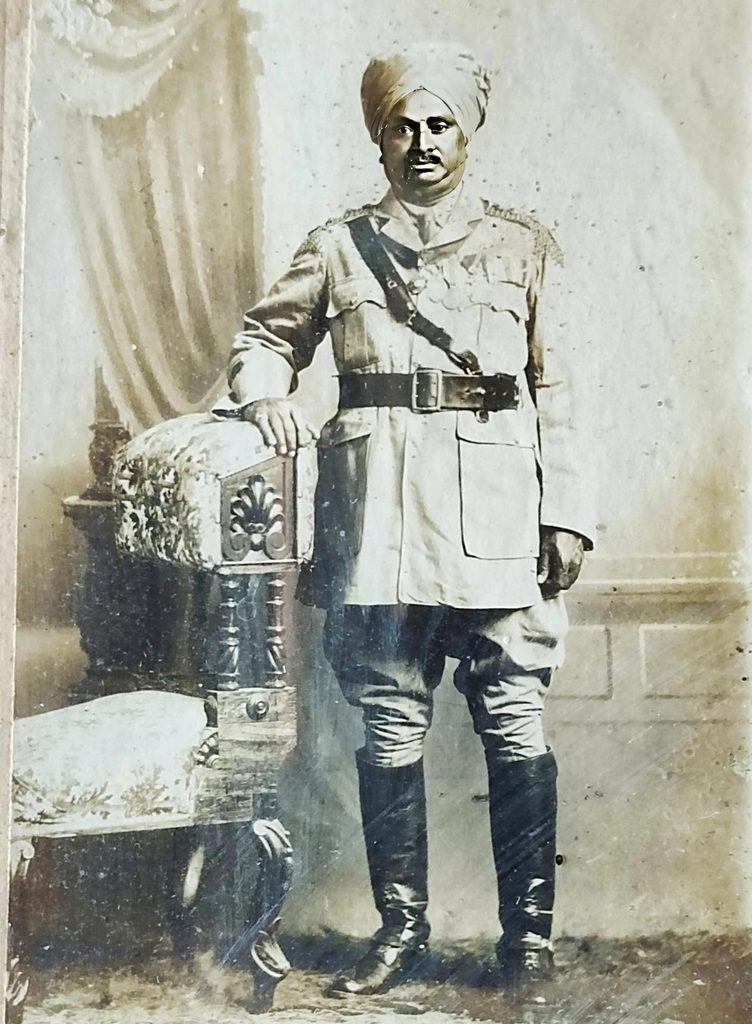
The late Risaldar Lingaraj Urs, who killed Bedouin leader Rizkalla Salim in a hand-to-hand combat in October 1915, effectively putting an end to the raids on the Suez Canal during World War I. | Photo Credit: Sriram M.A.
Lingaraj Urs was part of Mysore Lancers, that fought in the war as part of the Imperial army. They were posted in the Suez Canal area and assigned to guard it from the East Bank from the Ottomans and Germans, who were regularly attacking the canal area, says Traces of War, which tracks the war history.
“In October 1915, in the eastern parts of Kantarah area, Mysore Lancers saw 60 camel mounted Turkish troops, with a back up of 200 more, advancing. They were engaged, chased seven miles, eastwards. The notorious Salim was engaged in a hand-to-hand fight, and was killed by A. Lingaraj Urs. After Salim’s death, the attempts on the canal entirely ceased. For his act of bravery, Lingaraj Urs was awarded the Indian Order of Merit (2nd Class).”
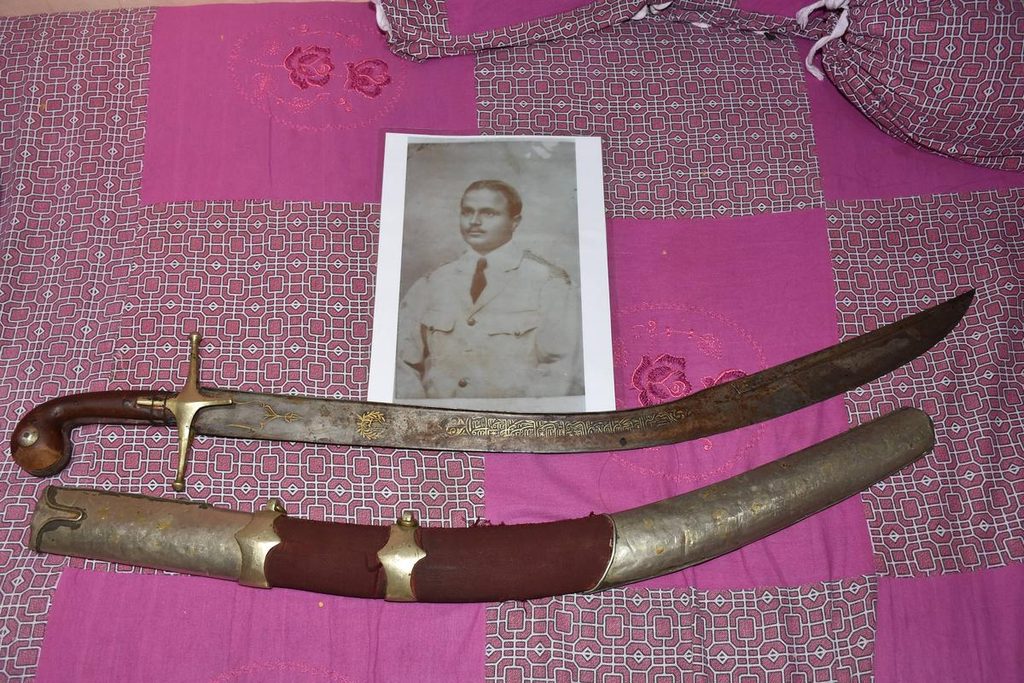
A photo of the late Risaldar Lingaraj Urs, who killed Bedouin leader Rizkalla Salim in a hand-to-hand combat in October 1915, is seen along with the latter’s sword which Mr. Urs kept as part of his personal belongings. The sword has remained with the Urs family for over 100 years. | Photo Credit: Sriram M.A.
Decorated for bravery
Lingaraj Urs, however, could not be part of the jubilant returning troops that received a royal welcome. Just before the World War I ended, a fight broke out at Aleppo in current day Syria on October 25, 1918, between the British army and the Ottoman troops that were moving toward Damascus. As many as 13 soldiers from Mysore Lancers, including Lingaraj Urs, were killed on October 26. According to Commonwealth Grave Commission, Lingaraj Urs was cremated at Basra memorial in Iraq. His name is also engraved in the Teen Murti Memorial at Delhi and World War I memorial in Bengaluru.
source/content: thehindu.com (headline edited)
____________
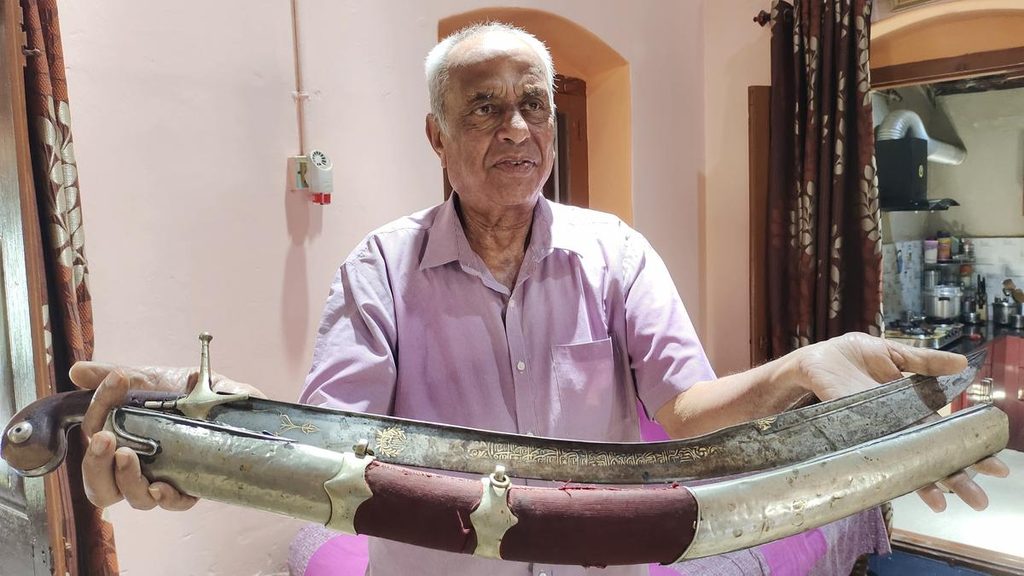
T.V. Nagaprasanna Raje Urs (81), an agriculturist and grandson of Mysore Lancers soldier Risaldar Lingaraj Urs, holds the sword that belonged to Bedouin leader Rizkalla Salim who was killed in 1915. The sword, a war memorabilia has remained with the family of the late Lingaraj Urs in Mysuru for over 100 years. | Photo Credit: Sriram M.A.
________________________________________________________________________________
HAIFA (Ottoman Empire, part of Mandated Palestinen, now present day Israel)