Arabs & Arabian Records Aggregator. Chronicler. Milestones of the 25 Countries of the Arabic Speaking World (official / co-official). AGCC. MENA. Global. Ist's to Top 10's. Records. Read & Enjoy./ www.arabianrecords.org
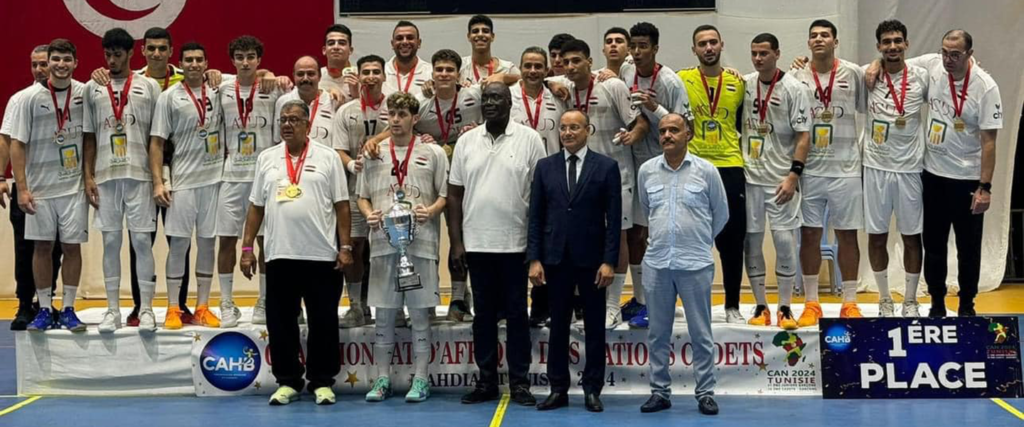
For the eighth time in history and for the third consecutive time, Egypt secured the title at the CAHB African Men’s Youth Handball Championship, displaying a flawless performance in Mahdia, Tunisia, taking six wins in six matches to secure yet another gold medal, the eighth in 10 editions of the competition.
The eight participating teams at the 2024 CAHB African Men’s Youth Handball Championship were divided into two groups of four teams each, with all teams progressing to the quarter-finals, but Egypt and hosts Tunisia taking three wins in three matches in the preliminary round.
Egypt clearly outplayed their opponents in their group, taking wins against Guinea (46:22), Burundi (66:15) and Algeria (42:22) to secure the first place, being followed by Guinea, Algeria and Burundi in the final standings.
In the other group, hosts Tunisia took wins against Libya (30:17), Kenya (44:16) and Morocco (26:17), to set up a path towards a final against Egypt, with Morocco, Libya and Kenya finishing second, third and fourth respectively.
The reigning champions, the big favourites to take another gold medal, had no issues against Kenya in the quarter-finals, 55:14, while Tunisia also easily disposed of Burundi, 48:27, to progress to the semi-finals.
The closest match in the quarter-finals was the one between Morocco and Algeria, with Morocco taking a 25:20 win, while Guinea dominated Libya, 34:22, as the top two sides in each group went into the semi-finals.
The semi-finals saw the two big favourites take control again, with Egypt sealing their fifth double-digits win in a row, this time against Morocco, 40:15, while Tunisia slowly followed suit, setting up the final against Egypt, with a 31:22 over Guinea.
However, in the last act of the competition, Egypt did not have an easy mission. After the first half, the hosts had a 16:15 lead, which morphed into a two-goal lead after 35 minutes, 19:17. But in the next 25 minutes, Egypt doubled the number of goals scored, adding another 17, to cruise to yet another win.
With their sixth win in the competition, 34:29, Egypt, the future hosts of thr 2025 IHF Men’s Youth World Championship, secured the eighth title in 10 editions of the CAHB African Men’s Youth Handball Championship, delivering a pitch perfect performance, to consolidate their status as a powerhouse of the continent, as Tunisia secured the fifth silver medal in the continental competition at this age category.
The bronze medal was sealed by Guinea, with a 20:11 win over Morocco, their maiden medal in the history of the competition, after their best performance was the fifth place in 2018.
2024 CAHB African Men’s Youth Handball Championship – final standings
Lack of historical resources means that there is some debate over which club is officially the oldest in the nation.
Football is such an integral part of culture in the Kingdom that the history of the game in the country dates back to the era before the formation of the modern Saudi state.
However, a lack of historical resources means that there is some debate over which club is officially the oldest in the nation.
Al-Wehda in Makkah is one that claims to be the first. Though the club acknowledges it was officially registered in its current form in 1946, its official website quotes historian Mohammed Ghazali as saying it was originally founded under the name Al-Hizb in 1916.
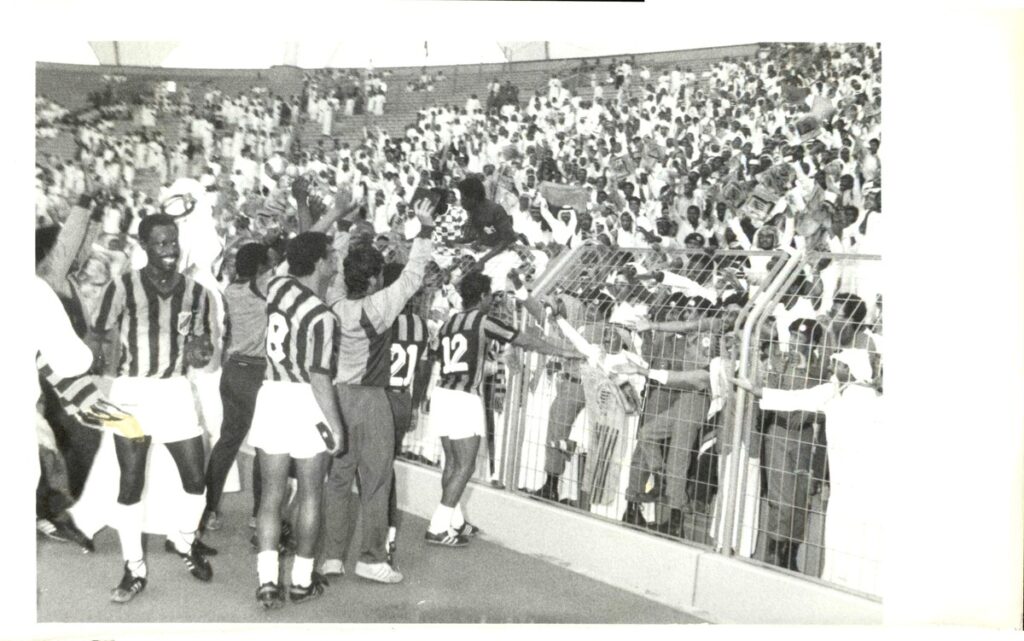
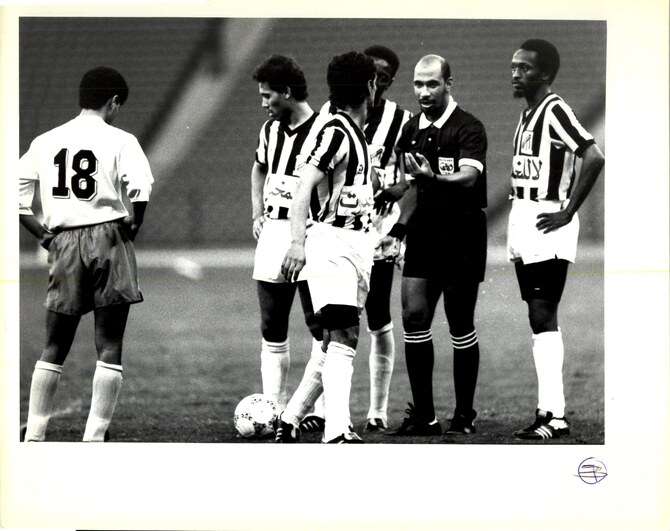
Jeddah side Al-Ittihad believes it is the Kingdom’s oldest club, however, with an official founding date of Dec. 26, 1927, almost five years before the unification in September 1932 that created the modern Saudi state.
Al Ittihad. Photo: Arab News Archive / Al-Ittihad believes it is the Kingdom’s oldest club. (Photo: Arab News Archive)
Given such uncertainty about the exact origins of the game in the country, in 2023 the Saudi Arabian Football Federation launched the Saudi Football History Documentation Project.
Saudi historians and international experts nominated by FIFA are working to research and record a definitive, agreed-upon history of football in the Kingdom.
The committee announced on Sept. 16 the completion of the first phase of the project, finding that the national team played a total of 92 matches and the clubs played more than 7,000 matches between 1902 and 1982.
But much of Saudi Arabia’s footballing history is clear.
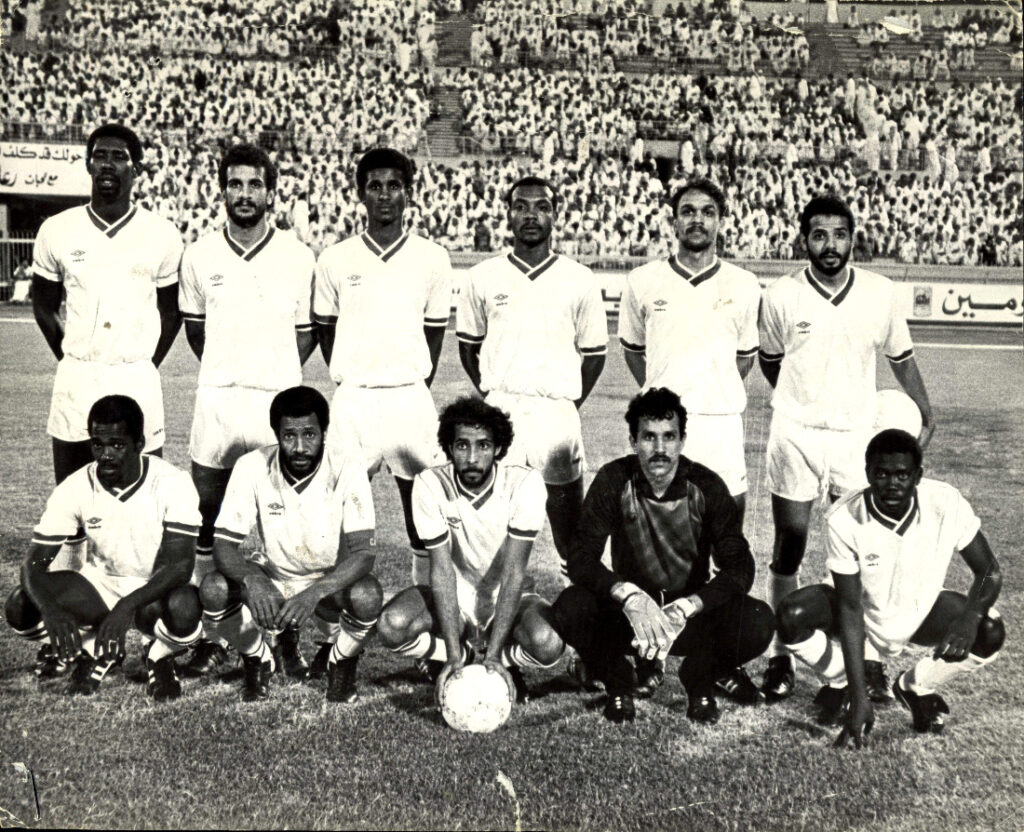
Al-Ahli club, for example, is another one of the Kingdom’s oldest clubs, having been founded in 1937. Other early organizations include Al-Ettifaq (1945), Al-Shabab (1947), Al-Riyadh (1953), Al-Nassr (1955), and Al-Hilal (1957).
The SAFF was established in 1956 as the governing body for the sport in the country. That same year, the Kingdom gained international football recognition when it joined FIFA, allowing local teams to participate in global competitions.
Al Ahli. Photo: Arab News Archive / Al-Ahli club is another one of the Kingdom’s oldest clubs, having been founded in 1937. (Photo: Arab News Archive)
In 1957, the Kingdom’s national team played its first competitive international match, a game against Lebanon in Beirut that ended in a 1-1 draw.
While there have been domestic national leagues in Saudi Arabia since the 1970s, the Saudi Pro League was not established in its current form until 2008.
In 1984, the Saudi national team won the AFC Asian Cup for the first time, with Majed Abdullah and Shaye Al-Nafisah claiming the goals in a 2-0 win over China in the final. The Kingdom retained the trophy four years later.
Saudi Arabia made their debut at the FIFA World Cup in 1994, which was held in the US, and reached the round of 16. Their success continued when they were once again crowned Asian Cup champions in 1996.
In more recent years, the Kingdom has continued to make strides in football, including the introduction of the first domestic women’s league in 2020, followed by the SAFF Women’s Cup in 2023.
Fuad Anwar is a former member of the Saudi national team who began his career in 1991 with Al-Shabab. He is perhaps best remembered for his performances during the 1994 World Cup, in which he scored two goals that helped the Saudis qualify for the knock-out stage. He also participated at the 2000 FIFA Club World Cup with Al-Nassr.
He told Arab News that three football clubs in particular shaped the football scene in the Kingdom.
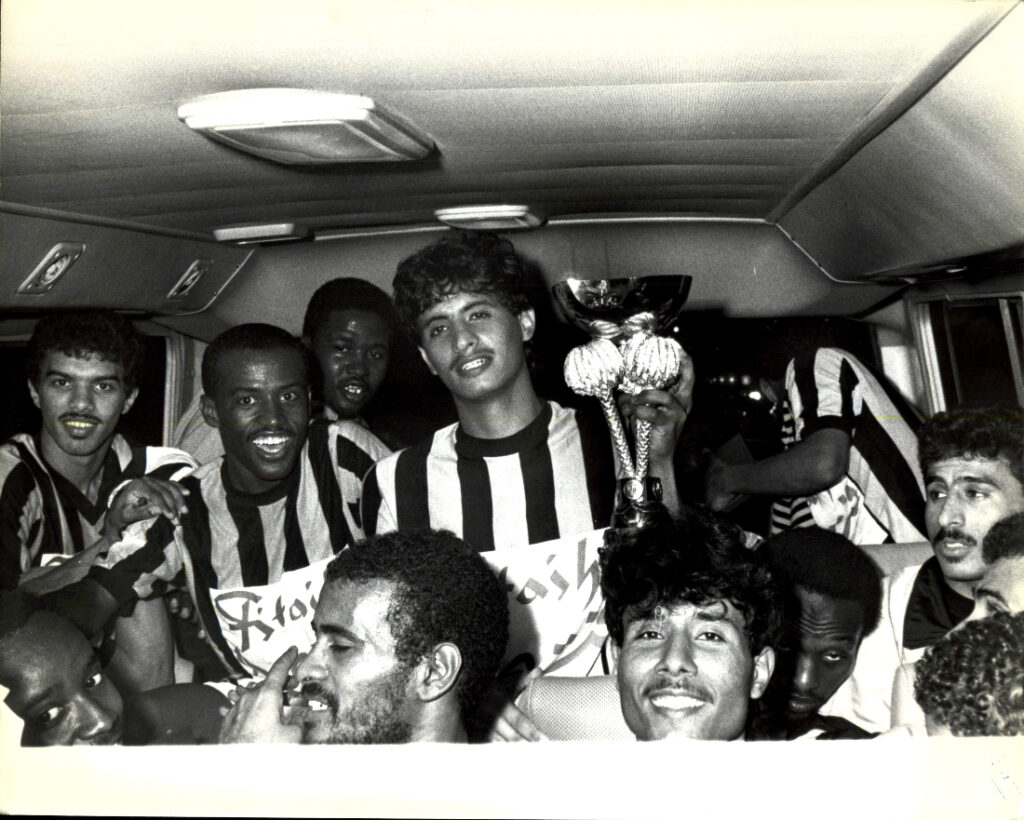
Al Ittihad. Photo: Arab News Archive / Al-Ittihad believes it is the Kingdom’s oldest club. (Photo: Arab News Archive)
“There was a cultural shift in sports because of Al-Ahli, Al-Ittihad and Al-Wehda,” Anwar said. “The world became more accepting of Saudi Arabia and the region to be a part of the football scene … football culture became relevant in every part of the country, from Riyadh and beyond.”
Anwar highlighted in particular the efforts of Prince Khaled Al-Faisal, Prince Abdullah Al-Faisal, and Prince Faisal bin Fahad to create a successful foundation for sports culture in the Kingdom.
Prince Khaled Al-Faisal played an instrumental role in the development of football in the region, having come up with the idea of launching a tournament for the Arabian Gulf in the late 1960s. Prince Abdullah, meanwhile, served as co-founder and chairperson of Al-Ahli, and Prince Faisal held a number of positions with domestic and regional sporting organizations.
Ahmed Eid Al-Harbi, a former Al-Ahli player who now chairs the SAFF’s board of directors, highlighted Prince Abdullah’s significant role in the development of Saudi football and sport in general.
He told Arab News the prince devoted much of his time to the development of youth to benefit the future of sport not only in the Kingdom but in the wider Gulf and Arab world, and on the continental and international stages.
“He didn’t merely adopt the club (Al-Ahli) for the sake of exercising a sport or achieving trophies, he spoke of the club as a university established to nurture and spotlight sports talents, giving them the attention and care they deserve,” said Anwar.
Nader Al-Sahleh, 61, a Saudi from the Eastern Province, told Arab News that he has witnessed the evolution of football in the Kingdom through the years, all the way back to the 1970s when, as a child, he played the game with neighbors and schoolmates in parks and fields.
“Those were beautiful, irreplaceable days filled with challenges, such as participating in neighborhood football leagues and Ramadan tournaments,” he said.
“These experiences impacted my life, introduced me to friends I still cherish today and created wonderful memories that I wish could return.”
Football in the Kingdom has evolve tremendously over the years, Al-Sahleh said, and “as a result, Saudi teams now compete to win, as seen in our victories in the Asian Cup and our dominance in Asian football.”
He added: “Crown Prince Mohammed bin Salman has stated his ambition to make the Saudi League one of the top 10 leagues in the world, which is a testament to the development of Saudi football.
“Currently, Saudi Arabia is constructing massive stadiums to host the Asian Cup and even the FIFA World Cup. This is just a brief overview of the progress of Saudi football, and we are grateful to our government, led by the (king) and the crown prince, for their continued support. May our sports continue to advance and prosper.”
source/content: arabnews.com (headline edited)
______________
Saudi historians and international experts nominated by FIFA are working to research and record a definitive, agreed-upon history of football in the Kingdom. Photo: Arab News Archive
After a revolt in 1871, French colonial authorities in Algeria exiled 2,000 insurgents to New Caledonia. Now their descendants are seeking to reclaim their heritage.
When Christophe Sand landed in Algiers for the first time in 2005 and saw the city’s Casbah surrounded by clouds, he started to cry.
“I felt this pain I’d never felt before, that was unfamiliar to me,” he said. “I wanted to scream.”
Sand grew up 11,000 miles from Algeria in New Caledonia, a French territory in the South Pacific that is, culturally and geographically, worlds away from the North African city of Algiers. For most of his life, Sand’s family history remained a mystery to him. While Sand had been told his great-grandfather was a convict from Algeria, his grandmother refused to speak about him and her Algerian heritage, changing her name from “Yasmina” to “Mina” to create distance between herself and her Arab roots.
“She never embraced her origins,” Sand said, noting that he never fully understood how his family had ended up in New Caledonia.
As he got older, Sand set out to uncover the truth about his Algerian ancestors. What he discovered brought to light a complex colonial history that unveils how far the French colonial state went to protect its empire — and the lasting impact it has had on communities around the world.
In January 1871, 40 years after the French seized control of Algeria, the Kabyle people, a Amazigh ethnic group, banded together to lead what was at the time, the biggest revolt against French occupation in Algerian history.
Kabyle leaders believed it was the opportune moment to strike against French colonial powers. France had just lost a war against Prussia, which had led to the collapse of the French government, and was more vulnerable after its defeat. The revolt spread rapidly, with 250 tribes in the rebels’ ranks.
But the French authorities responded more brutally than expected, destroying entire villages and killing tens of thousands of people, both rebels and civilians. After a year of fighting, the revolt was definitively quashed in 1872. The French authorities seized over 450,000 hectares of land that it distributed to French settlers and quickly put in place trials to prosecute anyone who had rebelled against the French state.
Over 2,000 insurgents, among them leaders of the revolt, faced trial in Constantine where they were presented not as anti-colonial leaders but as petty criminals. Because most of the men hailed from noble families, however, the French were wary of sentencing them to death. Instead, they decided to exile the men to the farthest place imaginable: New Caledonia.
Sand’s great-grandfather was one of these leaders. Along with more than 2,000 other men, he was exiled to New Caledonia in the late 19th century to work in labor camps. The men were sent to Bourail, a place chosen to be a first colony for prisoners. Archives reveal that throughout this journey, the Algerian men continued to resist colonial forces, giving particular importance to their faith: Even during trying passages at sea, they still dutifully observed the fast of Ramadan and continued following certain dietary restrictions, abstaining from the consumption of pork and alcohol.
New Caledonia wasn’t only a place for political prisoners from France’s colonies, the French exiled convicts from the mainland, too. When the men landed on New Caledonia’s shores, they were not allowed to practice Islam, had to adopt Christian names and were forced to marry exiled French women or daughters of French exiles. The colonial administration was hoping that through these marriages, they would create Christian families that conformed to their idea of settlers. The reverse happened: French women took on Algerian traditions and kept alive their heritage, learning how to cook Algerian food and teaching it to following generations. These families cultivated date palm trees as they did back in Algeria. They gave their children Muslim names, in spite of a prohibition to do so by the colonial administration. In 1936, when the ban was lifted, many finally used their Arab names in public.
But for all the traditions that were passed down, many were not. Over time, their languages were forgotten and, critically, so was the history of their ancestors and their rebellion against the French colonial state. Rather than carrying forth the anti-colonial legacies of their ancestors, their descendants became defenders of colonialism in New Caledonia.
At first, many Algerian men had no choice but to help French authorities suppress revolts by the local Kanak — the Indigenous Melanesian inhabitants of New Caledonia — in order to gain back their freedom. But over time, their participation was not simply forced; in some cases it was voluntary. The descendants who were assimilated into French settler society played a key role in the repressive apparatus of the colonial state; it was an Algerian prisoner who killed the Kanak chief Bwëé Noël Pwatiba, an important leader of the 1917 Kanak revolt. Algerian prisoners settled on lands captured by French authorities in the aftermath of Indigenous insurrections. This alliance — both forced and later voluntary — with the French colonial authorities meant that for most of their history in New Caledonia, these descendants were not seen as victims of the same colonial force but instead their helping hand.
Today, 15,000 descendants live in New Caledonia, with the majority residing in the town Nessadio Bourail. Until recently, however, many descendants did not know or share their ancestors’ history.
This was the case for Sand’s grandmother, who believed for most of her life that her grandfather was a criminal. “In New Caledonia, the descendants of these communities had their cultural memories eradicated,” Sand said.
As Sand got older, however, he became more curious about his family’s history. He went as far as traveling to the archives of overseas territories in Aix-en-Provence, France, where he discovered that his great-grandfather was not a criminal but an anti-colonial leader. “My life changed that day, when I realized he was a revolt leader,” Sand said.
At the time, Sand thought the discovery of these archives was the end of his journey to better understand his family’s origins. Then, in the early 2000s, documentary filmmakers came to New Caledonia to interview the descendants of the revolt leaders. They brought a book with them about those exiled from Algeria. In it, Sand found the forgotten story of his great-great-grandmother Tessadit who, upon learning her son would be exiled to New Caledonia, ran down to the port of Algiers to beg a soldier to let her say goodbye one last time. “They gave her 30 seconds,” Sand said. “That’s inhumane.”
When the documentary filmmakers arrived in New Caledonia, elders shared stories passed down to them from their relatives for the first time. “It was a real tipping point for the community,” Sand said, who noted most young people had never heard these stories from elders before. “When the elders got in front of the camera, they let it all come out,” he said. “It was as if they had been carrying knots in their stomachs since childhood that were finally coming out.”
The documentary, Les témoins de la mémoire, was hugely popular when it premiered in 2004, not only with descendants but also with Algerians themselves, who viewed these men as the leaders who put the country on track to eventually achieve independence in 1962.
“We did not know the history, we did not know people were uprooted like that,” said Myriam Moussa, 47, who lives in Algiers. “I had tears in my eyes when I watched the documentary and spoke about it extensively with friends and family.”
Sand, who featured in the film, didn’t realize how popular the documentary was in Algeria until he went to visit in 2005. On the flight over, other passengers recognized Sand and told him: “Welcome, you are at home here.” When he got off the plane, people were waiting for him at the airport to see with their own eyes if their cousin from New Caledonia was coming home.
In Algeria, Sand went to visit his great-grandfather’s village and, for the second time on his trip, began sobbing when the car pulled into the village. People had gathered to meet Sand, many of whom had traveled from afar, to welcome him back home. They offered him dates and goat milk and commented on how, despite the generations of separation, he still bore a resemblance to his relatives.
In the village, Sand visited the small home where his great-grandfather was born and touched the floor where, as per tradition, his umbilical cord was buried. When Sand emerged from the house, onlookers told him: “Son, your face has changed.”
Since the documentary aired, many descendants say the way they view themselves and their identity has changed.
Prior to the film coming out, there was some awareness about the history of North Africans in New Caledonia. The Association of Arabs and Arab Friends, for instance, was created in 1969 in an effort to bring people with shared history together. But like Sand’s grandmother, many descendants spent their lives feeling shame about who they were and what their ancestors represented, facing racism when trying to integrate into the white settler community. The documentary and learning their ancestors’ history changed that.
The Algerian community in New Caledonia, however, is far from homogenous: While some people now embrace their Algerian cultural heritage, others do not, remaining profoundly Caledonian. Many blend their multiple cultures and heritages together. Sand, for instance, continues to identify as Catholic but observes Ramadan.
“We are not a diaspora, the link was too cut for too long for us to be one,” Sand said. But after several years of feeling shame about their heritage, many people are reclaiming it and identifying as Arab. Sand even named his daughter Tessadit, after his great-great-grandmother who forced her way past French soldiers to say goodbye to her son.
Celebrating their ancestors’ anti-colonial struggle is also complicated for many descendants, whose families have actively supported the French colonial state in New Caledonia and the oppression of the local Kanak people.
Sand, who is now dedicated to popularizing this history, hopes that by sharing it more widely and showing that both Algerians and the Kanak were oppressed by the same colonial force, he can help ease tensions between the two communities. Though their histories are different, Sand said, the legacies of French colonialism, dislocation and oppression have similarly afflicted both peoples’ cultures.
In 2013, the Algerian government invited the descendants, including Sand and his mother, to visit Algeria and celebrate the 50th anniversary of the country’s independence, for which their ancestors fought. The delegation from New Caledonia included 30 Algerian descendants as well as 17 Kanaks. “It was the first time we could recognize a shared history and point of view,” Sand said. “We came as a country, not just as descendants.”
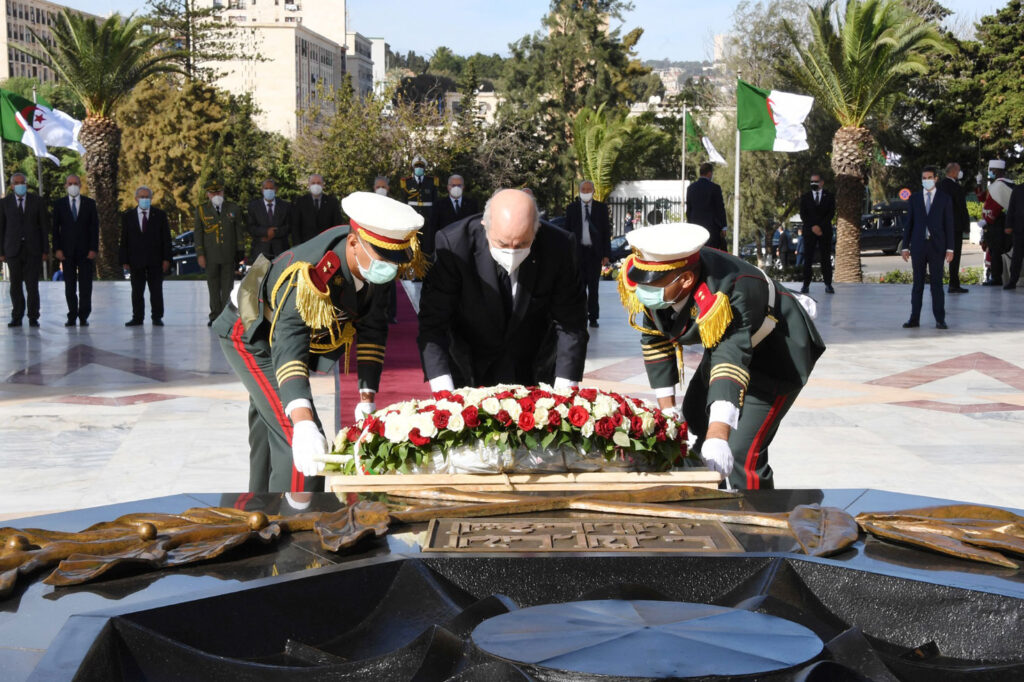
President of Algeria, Abdelmadjid Tebboune lays a wreath at the Soldiers’ Monument during a celebration last November marking the anniversary of the outbreak of the liberation revolution against French colonial rule / Algerian Presidency / Anadolu Agency via Getty Images
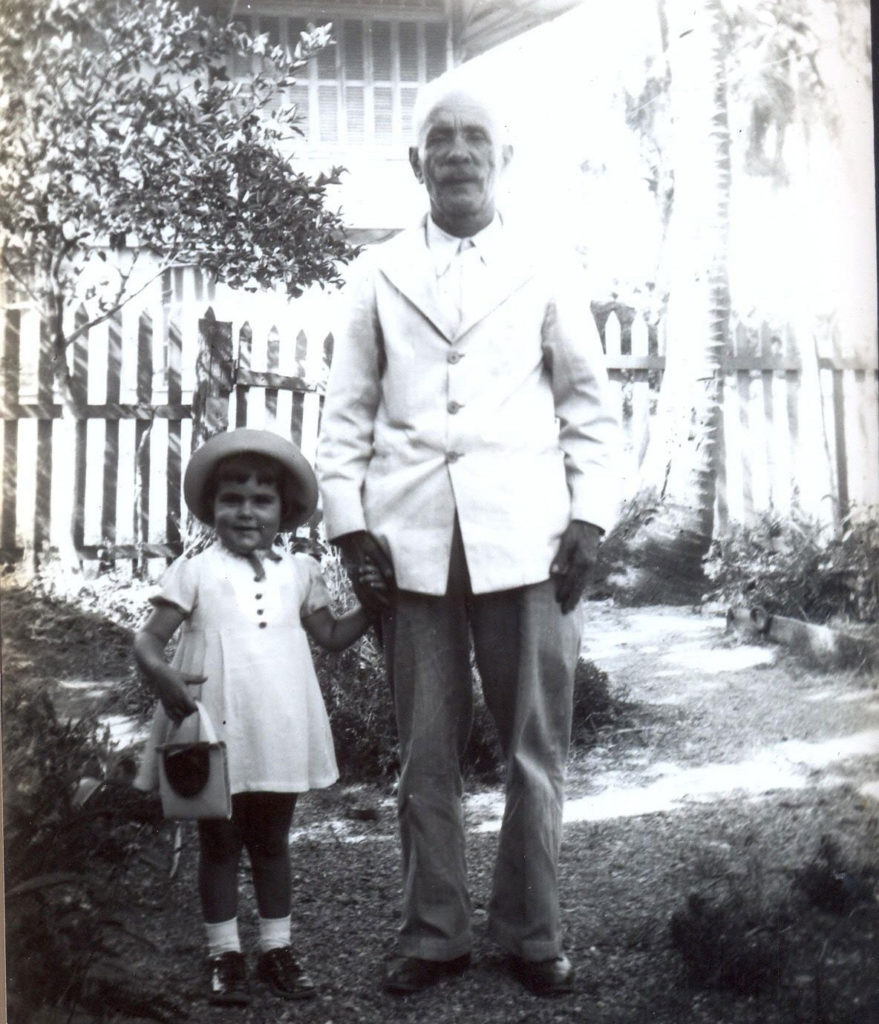
Christophe Sand’s great-grandfather / Courtesy of Christophe Sand
Safeya Binzagr helped bridge the cultural link between Japan and Saudi Arabia.
Katakura Kunio, the former Japanese ambassador to Egypt, Iraq, and the UAE, has paid tribute to Safeya Binzagr, who passed away last week, emphasizing the profound impact of her contributions to enhancing Japan’s cultural ties with Saudi Arabia.
Binzagr, known as the “mother” of Saudi Arabia’s fine art movement and a symbol of Vision 2030, helped bridge the cultural link between Japan and Saudi Arabia and was the aunt of current Saudi Ambassador to Japan Dr. Ghazi Faisal Binzagr.
Katakura, chairman of Japan’s Foundation for Desert Culture, fondly recalled Safeya’s “warm and encouraging nature” toward him and his late wife, Motoko.
“Her support was instrumental in Motoko’s cultural anthropological fieldwork in Wadi Fatima,” he said. “She always welcomed the foundation’s follow-up missions with open arms, fostering a deep and personal connection with us.”
Katakura said Binzagr was not only a gifted artist whose work inspired many but also a cherished friend and mentor. Her passion for creativity and dedication to her paintings left an indelible mark, and her artistic legacy will continue to inspire future generations.
Ambassador Binzagr commented: “Building a cultural bridge is the core for creating a distinguished future between two countries and I strive, as an ambassador, to support this because it creates an opportunity for common interests to rise to a common outlook and mutually supportive values.
“The mission carried out by my late aunt will continue (in) the making of a new era. She was one of the pillars that paved the way for this through her dedication to building and promoting the culture of the arts for future generations. The Kingdom considers her the mother of the cultural heritage of creative fine arts.”
The ambassador said there are ongoing efforts to further collaboration between Japan’s Foundation for Desert Culture and prominent foundations in the Kingdom to build upon the cultural ties between the two countries.
source/content: arabnews.com (headline edited)
__________
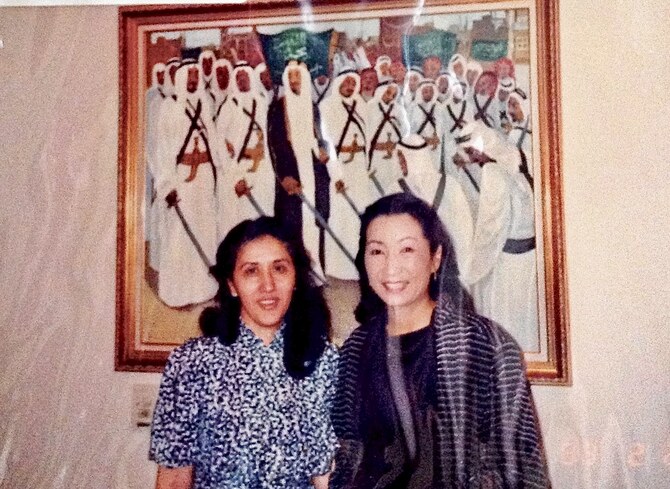
Late Safeya Binzagr and Professor Katakura. (National Museum of Ethnology, Japan & Kanakawa Foundation)
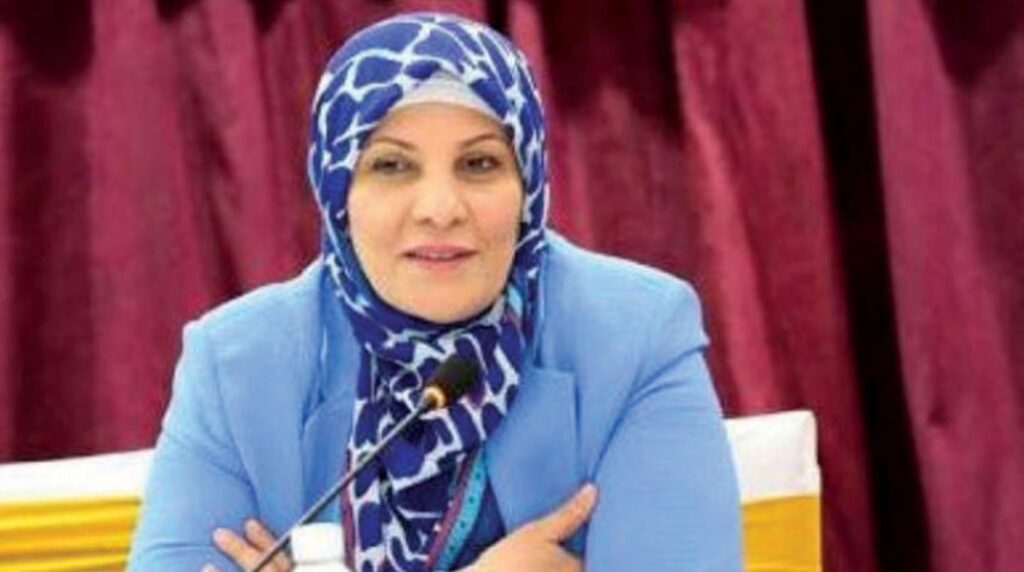
Dr. Azhar Hussein Saleh, Undersecretary of the Ministry of Planning and the head of Syndicate of Iraqi Engineers, received the Arab Woman of Excellence Award in the field of public service.
In an interview she gave to the Iraqi News Agency, Dr. Saleh said that she received this award, the first Iraqi woman to do so, as the only woman in the Arab region to head a syndicate of engineers, in addition to her other accomplishments. She added that she did not receive the award in person in light of the current circumstances. A ceremony that would allow her to officially receive it from Arab League will be held in Tunis early next year as part of Arab Women Week.
She goes on to say: “This major award is considered among the most prestigious honoring Arab women.” She then emphasizes that she will continue to move along the same path and work to keep pace with technological development, in order to help her country grow and prosper.
Dr. Saleh then explained that this award honors the distinguished role Iraqi women play in the development and construction of Iraq despite the difficult circumstances.
Dr. Saleh holds a Ph.D. in engineering and has held many high-ranking administrative positions; before being an Undersecretary, she had been the General Director of the General Government Contracts Department and Director General of Sector Planning Department at the Ministry of Planning. She also represents Iraq in the World Federation of Engineering Organizations, and has many academic and social achievements to her name.
H.H. Sheikh Mohammed bin Hamad Al Sharqi, Crown Prince of Fujairah, stressed the role of reading and knowledge in developing the skills of the individual and providing him with the expertise and knowledge that enhance his human and societal awareness, pointing to the support and follow-up of H.H. Sheikh Hamad bin Mohammed Al Sharqi, Supreme Council Member and Ruler of Fujairah, for the achievers among the sons of the Emirates and their empowerment in the process of building the present and future of the nation.
This came during His Highness’s meeting, in his office at the Emiri Diwan, with the student Ghareeb Mohammed Al Yamahi from the Emirate of Fujairah, who won first place in the People of Determination category at the conclusion of the Arab Reading Challenge qualifiers in its seventh session at the level of the UAE.
His Highness congratulated the student, Ghareeb Al Yamahi, praising his determination and willpower in facing challenges, overcoming them and achieving the greatest ambitions. His Highness stressed the pivotal role of the family in instilling the value of love of knowledge and learning in the souls of its children, and supporting them to continue their creativity and excellence in various fields.
Gharib Al Yamahi expressed his happiness at meeting His Highness the Crown Prince of Fujairah, extending his thanks and appreciation to His Highness for his supportive and encouraging words to the people of Fujairah towards achieving more accomplishments.
The meeting was attended by His Excellency Dr. Ahmed Hamdan Al Zeyoudi, Director of the Office of His Highness the Crown Prince of Fujairah.
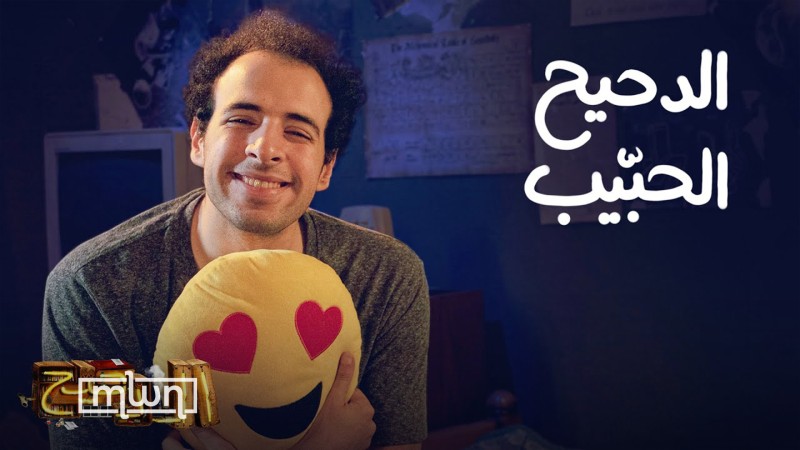
When you think of YouTube sensations who can turn any topic into a binge-worthy experience, this name is the one that pops up.
In a world overflowing with content creators, this Egyptian YouTuber stands out as a modern-day educator, transforming dry subjects into exhilarating lessons wrapped in humor and charisma.
With a knack for breaking down complex topics into digestible chunks, “Da7e7’s” videos are like your favorite comfort food — if comfort food could explain quantum physics or the intricacies of ancient civilizations.
With a channel boasting 1.93 million subscribers and 208 videos, this Egyptian YouTuber has become a beacon of educational entertainment
But Da7e7’s reach doesn’t stop at his own channel. His videos have also found a home on the New Media Academy Life YouTube channel, a hub dedicated to content creation and education.
This platform aims to amplify the presence of Arabs in the digital space, and Da7e7’s engaging content is a perfect fit.
Through this collaboration, his insightful and humorous videos are reaching an even broader audience, making education not just accessible but highly entertaining.
His channel, a treasure trove of knowledge and wit, has garnered millions of subscribers who tune in not just to learn but to be entertained.
Who knew that physics could be as gripping as a season finale of your favorite drama?
Da7e7’s approach is anything but ordinary. Imagine sitting in a lecture where the professor actually understands memes, pop culture references, and can make you laugh while dropping knowledge bombs.
That’s Da7e7 for you. His ability to connect with a diverse audience, from teens to adults, is what makes him a standout in the digital realm.
It’s like he’s the cool teacher we all wish we had, minus the 8 a.m. classes.
In a landscape where educational content often feels as exciting as watching paint dry, Da7e7’s channel is a breath of fresh air.
Each episode feels like a lively conversation with a brilliant friend who has a way of making even the most daunting topics approachable.
Plus, his knack for storytelling and his infectious enthusiasm mean that viewers aren’t just learning—they’re eagerly anticipating what will come next.
So, the next time you’re in the mood for some brainy fun, turn on Da7e7’s channel.
Whether you’re a lifelong learner or just someone looking for a few laughs mixed with some knowledge, this YouTube genius has got you covered.
Think of it as your personal TED Talk, but with a lot more pizzazz and a lot fewer PowerPoint slides.
Rawan Amir, 28, along with twin brothers Amaar and Baraa, 23, as well as Muaaz, 17, are siblings in a wider family of seven doctors.
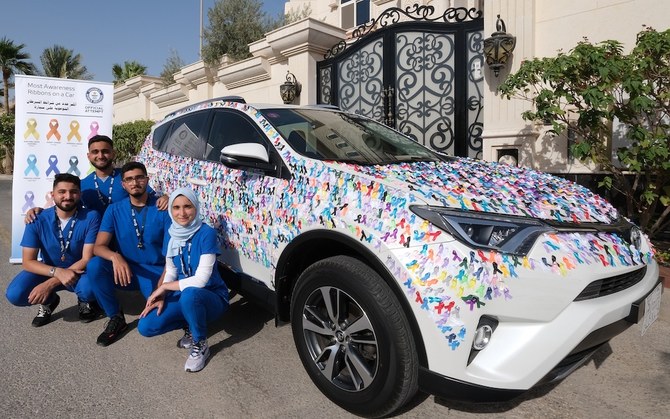
Four siblings who are all doctors, or training to become doctors, from Saudi Arabia have broken the Guinness World Records title for the most awareness ribbons on a car with 5,637 ribbons, it was announced this week.
The ribbons featured 16 different colors, representing major types of cancers as the initiative is aimed at encouraging people to take up early screening.
Rawan Amir, 28, along with twin brothers Amaar and Baraa, 23, as well as Muaaz, 17, are siblings in a wider family of seven doctors.
The parents along with another sister are also doctors in different fields. The family lost their grandfather to colon cancer, and their grandmother to ovarian cancer.
Speaking to Guinness World Records Amaar Amir said: “If we managed to educate at least one person, then there is a possibility that we save a life, which is the greatest deal for us as doctors and medical students.”
He continued: “Medical students see a lot suffering in this area. Cancer affects lots of people’s lives, and different type of cancers are possible in different ages. The earlier someone know about it the better. This makes a big difference for survivals.”
The four siblings grew up in a well-educated environment. The parents used to buy books, especially biology ones, and allow their children to read them from an early age.
According to Amaar, the medical curriculum is very strong in Saudi Arabia, so most of the family studied in the Kingdom, with some continuing their majors in the US.
Amaar and Baraa are senior medical students, while Rawan is a Cardiology Fellow. Their brother Muaaz is high school graduate who has applied to medical school. Their elder sister is also an Endocrinology Fellow, while their mother is Chief of Pathology, and finally their father is Consultant Nephrologist.
Living in Dhahran in the Eastern Province of Saudi Arabia, the team used their family car, Toyota Rav 4, for the attempt. They have also used 56,370 centimeters of ribbons, and 21,385 cm of double-sided tape, all cut individually by hand to create 10cm ribbons, and placed on the car.
The family’s work and study schedules are usually busy, so they decided to do something special and bring benefit to the community. In ribbons and tape, they have used six times the height of The Great Pyramid of Giza, all placed on a single SUV family vehicle.
“We wanted to apply to break a Guinness World Records title because it is the gold standard in providing a platform for talented people and unique achievements. We know that our Nobel cause will reach thousands and potentially millions around the world by obtaining this prestigious certificate,” Amaar added.
source/content: arabnews.com (headline edited)
____________
The ribbons featured 16 different colors, representing major types of cancers as the initiative is aimed at encouraging people to take up early screening. (GWR)
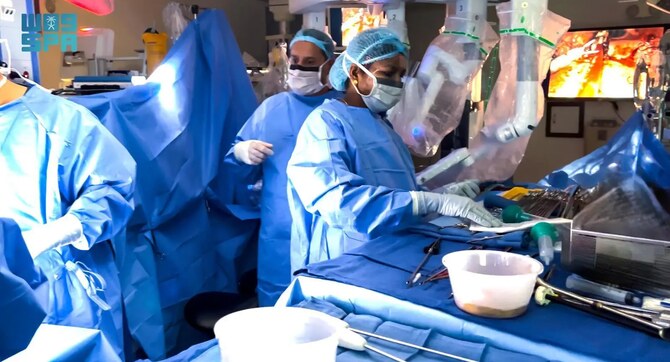
Saudi Arabia’s King Faisal Specialist Hospital and Research Center has performed the world’s first fully robotic heart transplant, Saudi Press Agency reported.
The two-and-a-half-hour operation was carried out on a 16-year-old patient suffering from end-stage heart failure.
A medical team led by Dr. Feras Khaliel, head of Cardiac Surgery and director of the Robotics and Minimally Invasive Surgery Program at KFSHRC, performed the operation after weeks of preparation.
The pioneering achievement, overcoming significant medical challenges associated with such procedures, reinforces Saudi Arabia’s leadership in healthcare, and highlights KFSHRC’s ability to innovate medical practices, SPA said.
The process began with detailed theoretical planning to ensure precision and minimize potential risks.
The team devised a surgical approach to access the heart and perform the transplant without opening the chest of the patient.
To ensure the effectiveness of this approach, the team practiced the procedure virtually seven times over three days before carrying out the operation.
The successful operation has been hailed as a significant development in heart transplant surgery, moving away from traditional chest-opening procedures that require long recovery periods, often lasting months.
Robotic technology allows for minimally invasive surgery, reducing pain, shortening recovery time, and minimizing the risk of complications. This significantly improves patients’ quality of life and accelerates recovery.
KFSHRC CEO Dr. Majid Al-Fayyad said that the successful operation marked another major advance in heart transplant surgery, first performed in the 1960s.
“The success of the world’s first robotic heart transplant marks a transformative leap, not only for our institution but also for Saudi Arabia’s journey toward global leadership in specialized medicine, in line with Saudi Vision 2030, which places innovation at the core of its efforts to improve quality of life,” he said.
“This remarkable achievement would not have been possible without the unwavering support of the Saudi leadership, who have prioritized the development of the healthcare sector, paving the way for a transformative leap in health care services, unlocking new possibilities to elevate the quality of life for patients both locally and globally,” he added.
The breakthrough aligns with KFSHRC’s commitment to medical innovation. As a leading training center in robotic organ transplant surgery, KFSHRC contributes to advancing the global understanding of minimally invasive organ transplants by collaborating with medical institutions worldwide to train their medical teams and achieve better outcomes, further elevating global medical practices.
source/content: arabnews.com (headline edited)
______________
Saudi hospital conducts world’s first fully robotic heart transplant. (SPA)
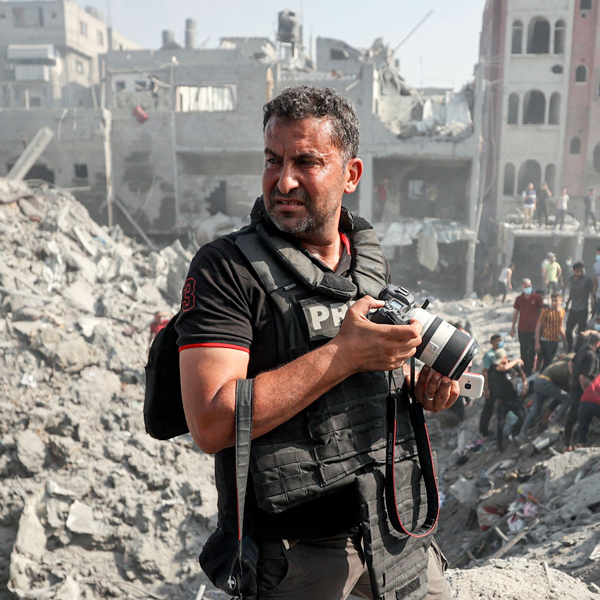
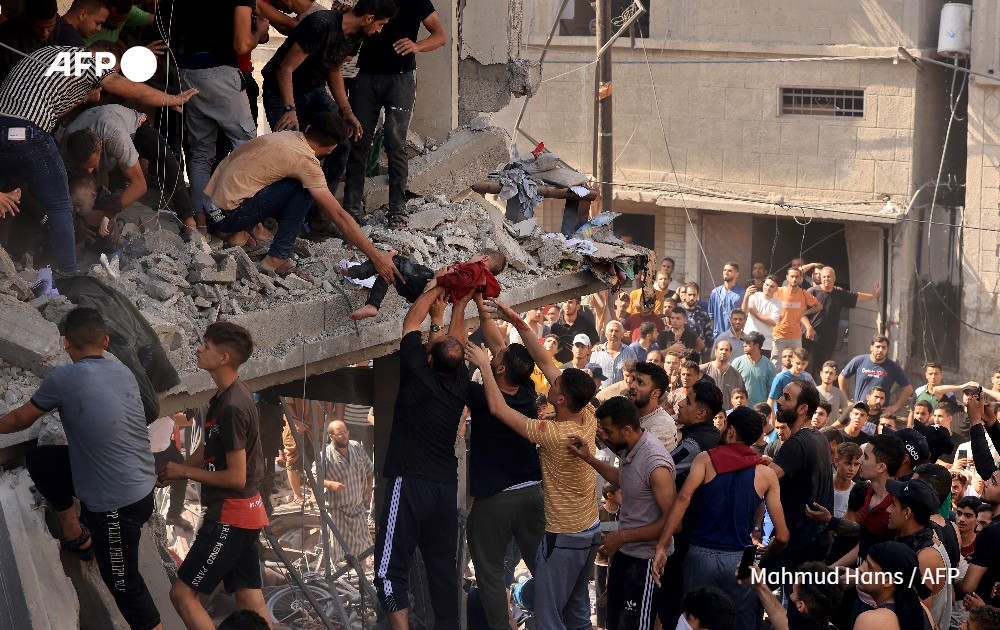
Palestinian AFP photojournalist Mahmud Hams was awarded the Visa d’Or News prize on Saturday for his coverage of the conflict in Gaza. The prize, one of the most prestigious in the field of photojournalism, is supported by the Visa pour l’Image Association – Perpignan.
Amidst the bombings, with death ever-present and the constant fear of being targeted, Mahmud Hams, who has worked for AFP for over two decades in the Palestinian territories, has relentlessly continued to document the war ignited by Hamas’s attack on Israel on October 7, 2023.
“I spent my childhood in Gaza, and in 23 years of photojournalism, I have witnessed every war, every conflict there. But this war is unlike any other, without precedent from the very first day,” says Hams. “My colleagues and I have had to face incredibly difficult conditions, with no red lines and no protections for anyone. There were even attacks targeting journalists’ offices, which are supposed to be off-limits in times of war.”
“Many journalists have been killed; others wounded. I’ve also lost friends and loved ones. We struggled to keep our families safe,” he explains. “Yet, despite the ever-present danger, I continued to cover the conflict because it is my duty, the one I chose when I embraced the profession of journalism.”
“I stayed calm, for my family, and to carry out my mission until the very last moment,” says Hams, who left Gaza with his family in February. “I hope the photos we take show the world that this war, and the suffering, must end,” he adds.
“Mahmud and his colleagues, photographers and journalists from AFP in the Gaza Strip, have carried out extraordinary work in every respect, considering the conditions in which they lived with their families and loved ones,” remarks Éric Baradat, AFP’s Deputy News Director for Photo, Graphics, Data and Archives. “It is staggering and often unimaginable. Their testimony will be recorded in history.”
Having remained in Gaza for several months with no way to leave, all AFP staff and their families have since been evacuated. The Agency continues to report on the war through other Palestinian journalists, working closely with its Jerusalem office, which has been leading the coverage since the beginning of the conflict.
_________
Photojournalist Mahmud Hams, aged 44, holds a degree in Journalism and Information from the Islamic University of Gaza. He joined AFP in 2003 and has since covered daily news in the Gaza Strip. He has also reported from Libya and Egypt. Mahmud Hams left Rafah in February 2024 with his family and has since been working for AFP in Qatar.
First Prize in the “News Story” category for his coverage of Gaza at the 10th edition of the Istanbul Photo Awards (organised by Anadolu Agency) in April 2024;
First Prize in Photography at the 25th Bayeux Calvados-Normandy War Correspondents Award for his photograph of Palestinian protester Saber al-Ashkar, aged 29, throwing stones during clashes with Israeli forces (“Great March of Return”) along the Gaza Strip’s border east of Gaza City on 11th May 2018.This photo also received the Varenne International Photo Award in December 2018.