Arabs & Arabian Records Aggregator. Chronicler. Milestones of the 25 Countries of the Arabic Speaking World (official / co-official). AGCC. MENA. Global. Ist's to Top 10's. Records. Read & Enjoy./ www.arabianrecords.org
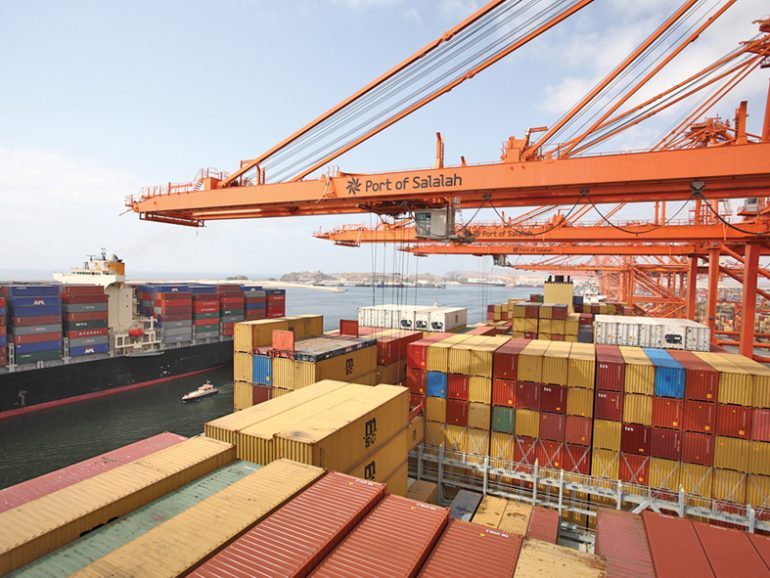
The Port of Salalah retained its position as the second most efficient container port in the world, according to the 2023 Container Port Performance Index (CPPI). Additionally, Salalah Port claimed the top spot in the West Central and South Asia region.
The CPPI, developed by the World Bank and S&P Global Market Intelligence, is based on an extensive dataset from 405 ports worldwide, the largest to date. This dataset comprises over 182,000 vessel calls, 238.2mn moves, and approximately 381mn twenty-foot equivalent units (TEUs) for the full calendar year of 2023.
Port performance is measured by the efficiency of vessel turnaround time, known as ‘Total Port Hours’ – the total duration from when a ship reaches the port limits, pilot station, or anchorage zone until it departs the berth after completing its cargo exchange.
According to the report, the Port of Salalah, with 1,146 vessel calls, achieved 164.72 index points, ranking second only to Yangshan in China, which had 3,509 vessel calls and an index score of 177.9.
Amidst the changes in global rankings caused by regional disruptions, China’s Yangshan Port retained its first-place position, while the Port of Salalah secured its second-place ranking. The Port of Cartagena in Colombia moved up to third place, Tanger-Mediterranean in Morocco held fourth, and Malaysia’s Tanjung Pelepas Port rounded out the top five.
Salalah Port’s strategic location, expanding connectivity, and world-class operations provide its customers with a significant competitive edge in the region. As a vital transshipment hub, Salalah also plays a crucial role in boosting the local economy in Dhofar by offering exceptional connectivity for importers and exporters to trade globally.
The port’s high efficiency enhances local business confidence and attracts investment, including foreign direct investment (FDI).
The Port of Salalah is currently carrying out a $300mn container terminal upgrade and expansion project. Next week, the port will receive the final four out of ten new ZPMC ship-to-shore cranes. The first cranes, with a 75-meter/26-container outreach, arrived at the start of 2024 and are currently being commissioned and tested to start operations.
Once the project is completed in the first quarter of 2025, annual capacity at the terminal will increase from 5mn to 6mn TEUs. The extra capacity will allow it to efficiently serve as a key hub for the Gemini Cooperation – a long-term operational collaboration between Maersk and Hapag-Lloyd, which will start in February 2025, with additional capacity available for other shipping lines.
“Retaining this title for the third consecutive year reaffirms our strong commitment to continuous performance improvement, even during challenging times,” said Keld Christensen, CEO of the Port of Salalah.
Scott Selman, Chief Operating Officer of Salalah Port, said, “I am pleased to see the Port of Salalah retaining our position despite the challenges to global container trade that have negatively impacted vessel schedules. The year 2023 has been particularly challenging operationally due to the ongoing Container Terminal upgrade construction.”
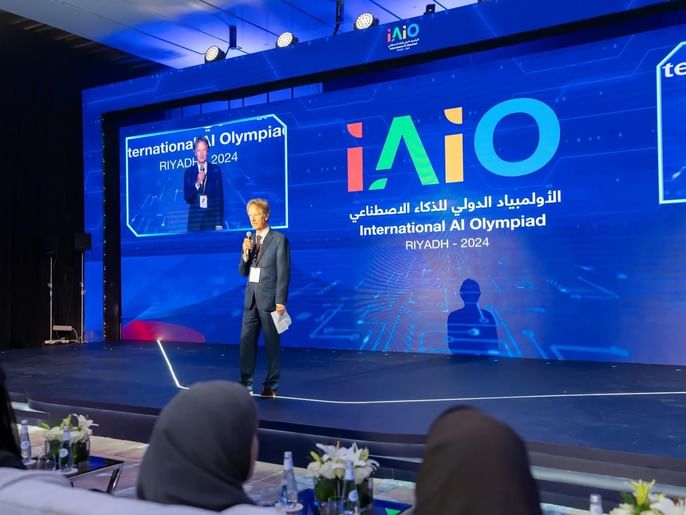
The first activities of the International Artificial Intelligence Olympiad (IAIO) began yesterday, Sunday, which is organized by the Kingdom of Saudi Arabia, represented by the Saudi Data and Artificial Intelligence Authority (SDAIA), for the first time in the world, in cooperation with the International Center for Research and Ethics in Artificial Intelligence (ICAIRE) and the International Research Center for Artificial Intelligence in Slovenia, and under the auspices of the United Nations Educational, Scientific and Cultural Organization (UNESCO), with the participation of more than 25 countries.
The Saudi Press Agency (SPA) reported that the Olympiad, which will continue until September 12, 2024, contributes to strengthening friendly international relations between technology and software experts and artificial intelligence teachers in various countries, drawing the attention of young people to these modern technologies, and encouraging other countries to organize similar competitions in the future.
The Olympiad aims to motivate participants to engage in active discussions to explore the various applications of artificial intelligence, and encourage exceptionally talented young people in this field, which is of increasing global interest.
It also contributes to enhancing the organization of artificial intelligence competitions for secondary school students, and motivating them to find smart solutions by designing algorithms based on learning, data structuring, and programming.
The Olympiad enables male and female students, artificial intelligence specialists, and influencers in the world to delve into the future landscape of artificial intelligence, keep pace with the rapid changes the world is witnessing in this field, and provide young cadres with modern technical skills
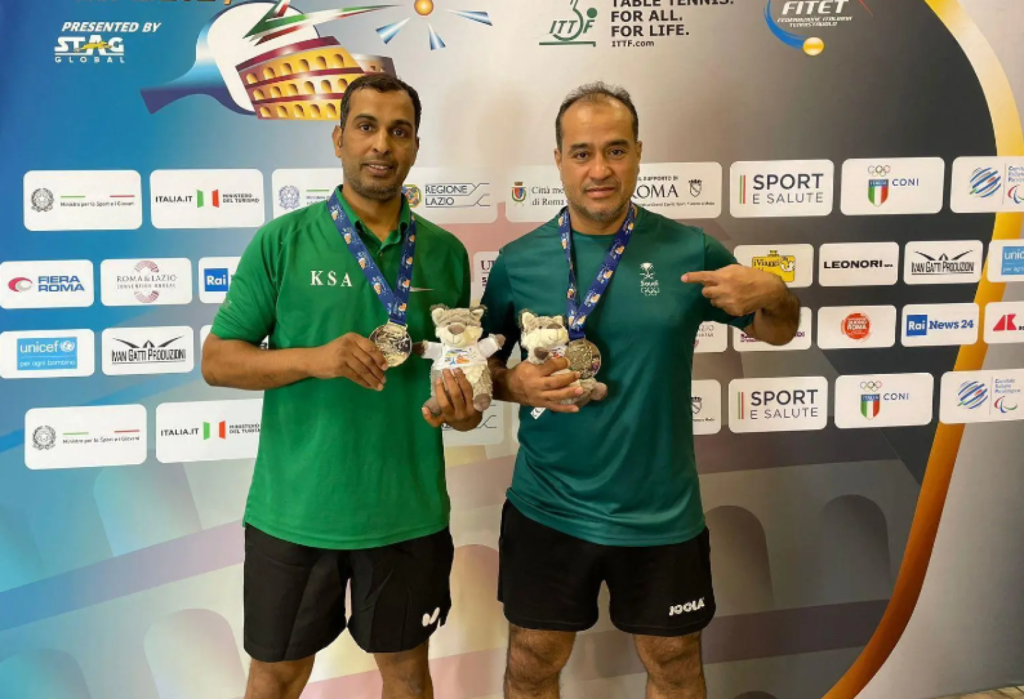
Saudi Arabia’s Majid Binsuaiger and Khalid Al-Harbi achieved a remarkable feat on Sunday by winning the silver medal in table tennis doubles at the ITTF World Masters Championships Rome 2024.
Competing in the 45-49 years age category, the Saudi duo showcased their skills and defeated teams from Sweden, Germany, and France on their way to the podium, SPA reported. Their exceptional performance earned them a well-deserved spot in the finals, where they secured the silver medal.
They narrowly finished behind the duo of Giovanni Maria from Italy and Cédric Merchez from Belgium, highlighting their strong performance throughout the championship.
Saudi Arabia’s Majid Binsuaiger and Khalid Al-Harbi win the silver medal in table tennis doubles at the ITTF World Masters Championships Rome 2024. SPA
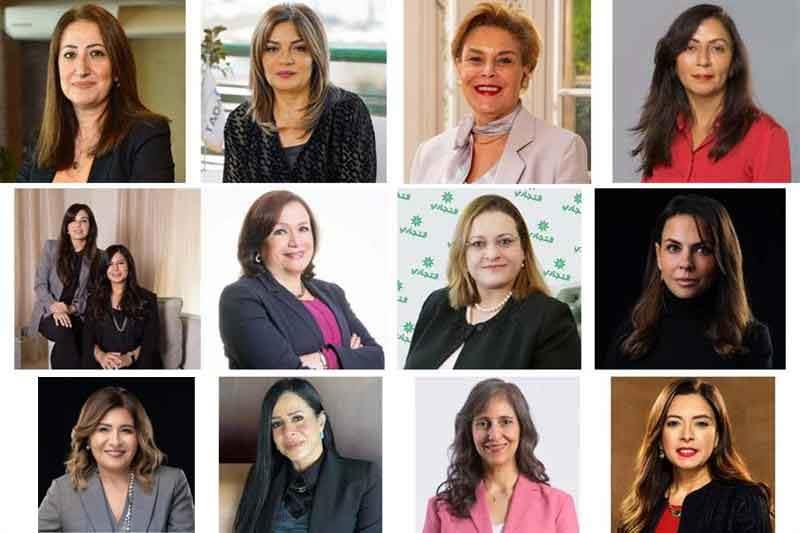
Thirteen Egyptian businesswomen made it to the Forbes Middle East 100 Most powerful businesswomen 2023 list this year.
The list was prepared by the famous financial magazine’s Middle East edition according to the size of the business, the individual’s impact and achievements, performance over the last year, and the scope of CSR and other initiatives led by the person.
The 100-entry list included 104 women from 27 different sectors and 27 nationalities.
The UAE and Egypt scored the most entries at 15 and 12, respectively, followed by Saudi Arabia (11) , Kuwait (eight), and six from each of Lebanon, Qatar and Oman.
Egyptian businesswomen are no strangers to the list, having topped the list in previous years in terms of the number of entries.
Below Ahram Online sheds light on the Egyptian businesswomen who made it to the list:
Dalia El-Baz (13th on the list)
An American University in Cairo alumna, El-Baz is the executive deputy chairman of the National Bank of Egypt (NBE).
El-Baz, who has been on the list before, posseses 28 years of experience in the banking sector.
She joined Egypt’s largest bank in terms of assets in 2008 as head of the operational risk management group, becoming Chief Operating officer (COO) in December 2015.
In 2016, she was appointed on the bank’s executive committee.
In September 2017, she became the first woman to become the executive deputy chairman of the NBE.
Pakinam Kafafi (21st on the list)
A Cairo University graduate, Pakinam Kafafi started her career in finance and banking at EFG-Hermes in the mid-1990s, rising to the position of vice president in 2000.
She then moved to the oil and energy sector.
In 2003, Kafafi was appoointed the strategy and investment general manager of Gas & Energy Group (GENCO).
When Citadel Group acquired GENCO and merged it with TAQA Arabia, Kafafi maintained her role.
In April 2013, Pakinam Kafafi was selected as the company’s CEO.
Rawya Mansour (27th on the list)
A Cairo university graduate, Rawya Mansour proved herself one of Egypt’s leading businesswomen.
Mansour is a descendant from one of Egypt’s oldest families in the field of business.
In 1999, she founded RAMSCO for Refined Architecture and Interior Design.
In 2007, she started RAMSCO for Trade and Distribution.
She also established the Organic Agriculture for Social International Solidarity (OASIS) in Monaco in 2012.
Reem Asaad (39th on the list)
An Egyptian American, Reem Asaad is a Harvard business school graduate who continued her career in Egypt when she served as the CEO of Raya Data Center from January 2012 till December 2016.
From January 2017 to February 2020, Asaad served as Raya Contact Center CEO befor
In 2020, she was appointed Cisco Middle East and Africa Vice President.
Cisco employs 3,000 people and contractors in 74 countries across the Middle East and Africa.
In March 2021, she was appointed by Egypt’s Minister of Communications and Information Technology to serve on the board of directors for the country’s Information Technology Industry Development Agency.
Hend El-Sherbini (42nd on the list)
A graduate of Cairo University, Dr Hend El-Sherbini is a professor of clinical pathology at the University’s Faculty of Medicine.
El-Sherbini served as the CEO of Al-Mokhtabar between 2004 and 2012.
She has been seving as IDH Group’s CEO since 2012.
IDH has a network of 546 branch labs as of September 2022 in Egypt, Nigeria, Sudan and Pakistan.
The group recorded revenues of $281 million in 2021 and $143 million in the first nine months of 2022.
In August 2022, El-Sherbini increased her holdings in the group with 7.3 million additional shares through Hena Holdings.
Now, she owns 26.71 percent of the group.
Farida and Yasmine Khamis (43rd on the list)
The daughters of the famous Egyptian carpets tycoon, Farida and Yasmine Khamis are considered veterans of the Forbes list.
American University of Cairo alumni, Yasmine Khamis is currently the Chairwoman of Oriental Weavers Group, while her sister Farida is her vice-chair.
Both sisters made headlines last December when they transferred their combined 24.61percent stake in Oriental Weavers Carpet to London-based FYK limited, which is fully owned by them.
They are also board members of the British University in Cairo .
Mona Zulficar (48th on the list)
The famous renowned lawyer and human rights activist is the Forbes Middle East 100 women list veteran who has appeared constantly on the list since it started.
A Cairo University graduate, Zulficar is a veteran corporate, banking, and project finance attorney and human rights activist.
She cofounded Zulficar & Partners in 2009. Mona Zulficar chaired EFG Hermes Holding since 2008 and the Egyptian Microfinance Federation since 2015.
Mona Zulficar is currently a member of Egypt’s National Council of Human Rights.
Elham Mahfouz (56th on the list)
An AUC alumna, Elham Mahfouz has over 30 years of banking experience mostly in Kuwait.
Mahfouz has been the CEO of the Commercial Bank of Kuwait (Al-Tijari) since 2014.
Al-Tijari recorded $179 million in net profit and $14.1 billion worth of total assets in 2021.
Mahfouz is a member of the supervisory board of the American University of Kuwait.
Hilda Louca (62nd on the list)
A graduate of the Arab Academy for Science, Technology, Transport and Maritime Transport, Hilda Louca is a newcomer to the list.
Louca started her career in Lufthansa’s customer service before moving to become a sales marking manager at Al-Ahram Beverage Company-Heineken Egypt for three years.
In 2018, she founded MITCHA – platform to support Egyptian designers.
Today, the platform features 200 designers and brands.
Omnia Kelig (84th on the list)
An AUC alumna, Omnia Kelig is a banking and cooperate financing veteran who started her career in the CIB in 1999.
Kelig is currently Deputy CEO, Chairwoman and Managing Director of NAEEM Holding, a dual-listed company on the Egyptian Stock Exchange and the Dubai Financial Market.
In the first nine months of 2022, NAEEM reported $8.2 million in total revenues and $273 million in assets.
Before joining NAEEM, Kelig was a founder and managing director of Viveris Mashrek, a subsidiary of France’s Viveris Management.
She was also a partner and director for Haykala Investment Management and a co-head of investment banking at Barclays Bank in Egypt.
Abir Leheta (87th on the list)
An AUC alumna, Abir Leheta is another veteran on the Forbes list.
Leheta joined the Egyptian Transport and Commercial Services Company “EgyTrans” in 1997.
She has been EgyTrans CEO since 2017.
She is also the chairman of Barwil Egytrans and ScanArabia.
Abeer Helmy Saleh ( 99th on the list)
An AUC alumna, Abeer Helmy Saleh previously held a number of managerial positions, including managing director and board member at Wafa Life Insurance Company and managing director of Bupa Egypt Insurance.
In March 2022, Saleh was appointed as a Board Member & Managing Director of Misr Life Insurance, Takaful, which was established as a joint venture between Misr Insurance Holding Company, the National Bank of Egypt, and Banque Misr, with a capital of over $5 million.
Rafeef Ayedh Alshahrani wins gold for innovative tech; Dr. Najia Al-Zanbagi silver for her work in medical parasitology .
Two Saudi citizens were awarded prestigious medals for their groundbreaking work at the Indonesia Inventors Day 2024 exhibition, which was held from Aug. 28 to 31 in Bali, Indonesia.
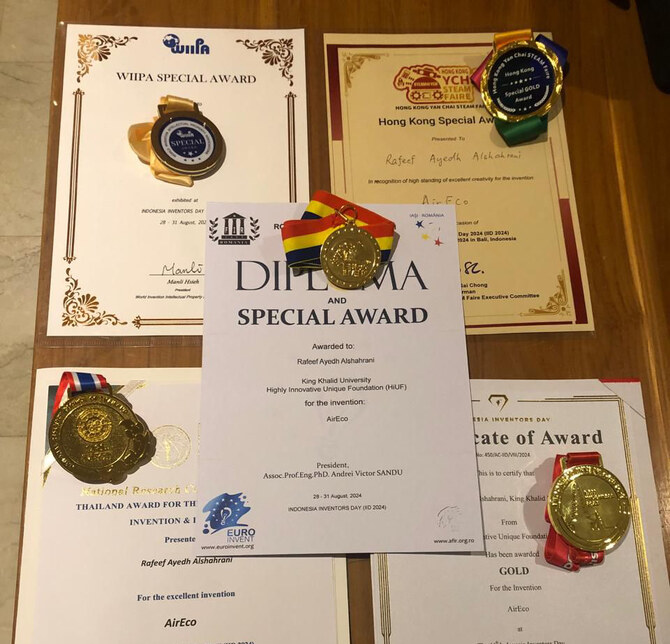
Rafeef Ayedh Alshahrani, a researcher from King Khalid University, won a gold medal for her innovation “AirEco,” which has the ability to detect and locate living beings in hard-to-reach mountainous terrain, where search efforts are typically hindered by challenging conditions.
By integrating advanced detection technologies with artificial intelligence, the device provides crucial support to rescue teams. It not only identifies precise locations but also executes functions to assist in rescue operations once the target is located.
It is one of the projects backed by the university’s Agency for Business and Community Partnership, through the Entrepreneurship Center.
The project has also earned four prestigious awards from Taiwan, Romania, Hong Kong and Thailand.
Reflecting on her achievement, she described it as a truly unique and fulfilling experience. She expressed the joy of seeing the fruits of her hard work over the past days and months, stating that the greatest reward was the pride and recognition from those around her. “It’s an incredible feeling,” she said.
“This accomplishment has fueled my desire to see it implemented quickly and made widely available,” she added. “I sincerely hope that authorities and companies will adopt the project, provide support, and help manufacture it to the highest standards so it can fully achieve its purpose.”
When asked how such achievements can positively influence Saudi participation in international competitions, she said: “Accomplishments serve as a powerful driving force for young people, pushing them toward their ambitions and future goals.
“The Kingdom’s Vision 2030, in particular, has become a major source of motivation, inspiring all Saudis to think creatively and pursue their aspirations.
“Saudi achievements have now become a source of national pride, shifting perspectives on the significance of success and its far-reaching impact. These accomplishments are key drivers of development, progress and prosperity.
“Beyond boosting individual self-confidence, they foster a positive mindset in society, encouraging leadership, innovation and the creation of economic opportunities. The impact of success doesn’t stop with the individual; it resonates throughout the community.”
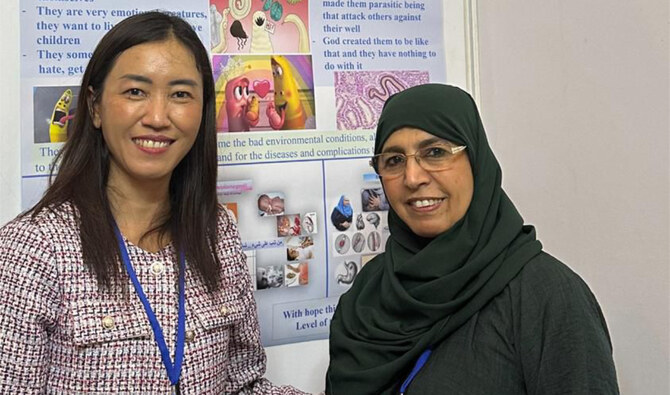
Dr. Najia Al-Zanbagi, headmaster of Highly Innovative Unique Foundation, also earned a silver medal at the Indonesia Inventors Day 2024 for her remarkable work in medical parasitology.
“My contribution was a personal achievement: I authored a book on medical parasitology, using engaging, narrative-driven stories to simplify the complex scientific content and make it easier for learners to distinguish between various parasites.
“I first introduced this approach while teaching at King Abdulaziz University, and it was incredibly well received by students, who found the subject much more enjoyable and accessible.”
She aid that the book, titled “Lisan Al-Hal,” has now been published and is now available in the market.
Dr. Majid Al-Aziman, director of the Entrepreneurship Center at King Khalid University, emphasized the university’s commitment to supporting innovators, raising awareness and redefining the concept of entrepreneurship.
The university also seeks to spotlight the success of projects incubated by the Entrepreneurship Center and actively contribute to creating new job opportunities.
source/content: arabnews.com (headline edited)
___________
Dr. Najia Al-Zanbagi (R), headmaster of Highly Innovative Unique Foundation, earned a silver medal at the Indonesia Inventors Day 2024 for her remarkable work in medical parasitology. (Supplied)
Rafeef Ayedh Alshahrani’s project has also earned four prestigious awards from Taiwan, Romania, Hong Kong and Thailand. (Supplied)
Winning novel The Water Diviner is a poetic work set in rural Oman.
Novelist Zahran Alqasmi is the first Omani to win the International Prize for Arabic Fiction for his fourth novel The Water Diviner.
Announced at a ceremony in Abu Dhabi on Sunday, Alqasmi was named winner of the $50,000 prize and will also receive funding for an English translation.
Published in 2021, The Water Diviner follows the life of an enigmatic and mystical man employed by Omani villages to track the ebb and flow of local rivers and ravines.
Haunted by the deaths of his parents, “the water diviner” faces his fear as he battles for his life while stuck in a water channel.
Moroccan author Mohammed Achaari, the 2011 IPAF winner and chairman of this year’s judging panel, hailed the work for its innovative subject matter and cohesive structure.
“It is a new subject in modern fiction: water and its impact on the natural environment and the lives of human beings in hostile regions.
“Blurring the boundaries of reality and myth, the novel’s precise structure and sensitive poetic language are the conduit for compelling characters like the water diviner, who plays an essential role in people’s lives, yet simultaneously inspires their fear and revulsion,” he said.
“The Water Diviner transports us to the world, little known in the Arabic novel, of the riverbeds and the aflaj [water channels] of Oman, showing how natural forces influence the relationship between individuals, environment and culture.”
Professor Yasir Suleiman, chairman of the award’s board of trustees, praised Alqasmi’s rich prose and use of authentic Omani colloquialisms.
“The novel takes the reader into a world dominated by vulnerability and ready-made modes of thinking,” he said.
“Written in exquisite language suffused with the local cadences, the novel charms the reader with its narrative flow and poetic impulse.
The Water Diviner was one of six shortlisted novels , which included The Highest Part of the Horizon by Saudi author Fatima Abdulhamid, published by Masciliana in the UAE.
All shortlisted authors will receive a $10,000 prize.
Who is Zahran Alqasmi?
Born in the agriculture region of Dima Wattayeen in northern Oman, Alqasmi is a prolific author – having published four novels, 10 poetry books and two Biography of the Stone short story collections,released in 2009 and 2011.
In an interview on the IPAF website, he says the novel was inspired by his experience growing up in rural Oman.
“Anyone looking at life in the Sultanate of Oman will find that it largely depends upon an old system for providing water for drinking and agriculture, the system of the aflaj,” he said.
“They are a complicated social system, linked to social and class strata. Water is divided in equal shares throughout the year so that the owners of gardens can take what is due to them.
“Since I am a son of one of these villages, since my early childhood I have known a lot about the system of aflaj and heard many astonishing stories and legends connected with this system.
“This enriched me as I wrote the novel. I imagined the environment of the book as an Omani village. I visualised its paths, gardens, alleyways. It was easy at that time to write the chapters fluidly.”
Alqasmi will make his first public appearance after winning the prize at the Abu Dhabi International Book Fair on Monday.
Taking place at the Ayasofya Stage at 8.45pm, the discussion will include the shortlisted authors and centre on their works and the challenges facing modern Arabic fiction.
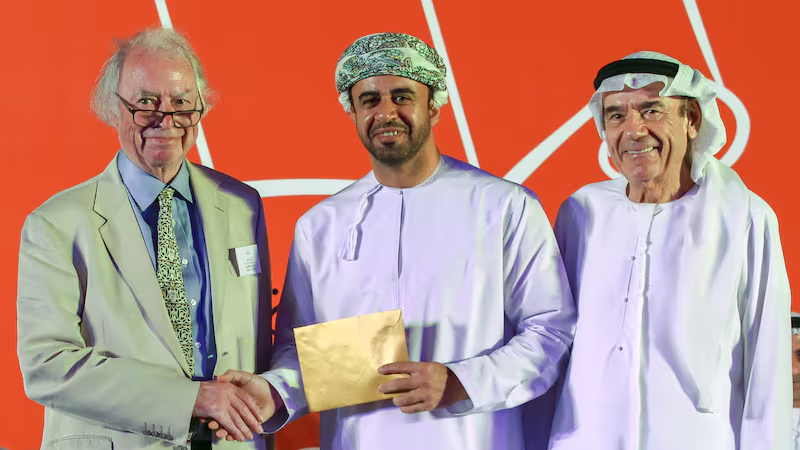
2023 International Prize for Arabic Fiction Awards winner Zahran Alqasmi, centre, with Jonathan Taylor, left and Zaki Nusseibeh, cultural adviser to the President of the UAE. Victor Besa / The National
Multiple area and national records broken in men’s 10,000m event at World Athletics U20 Championships 2024.
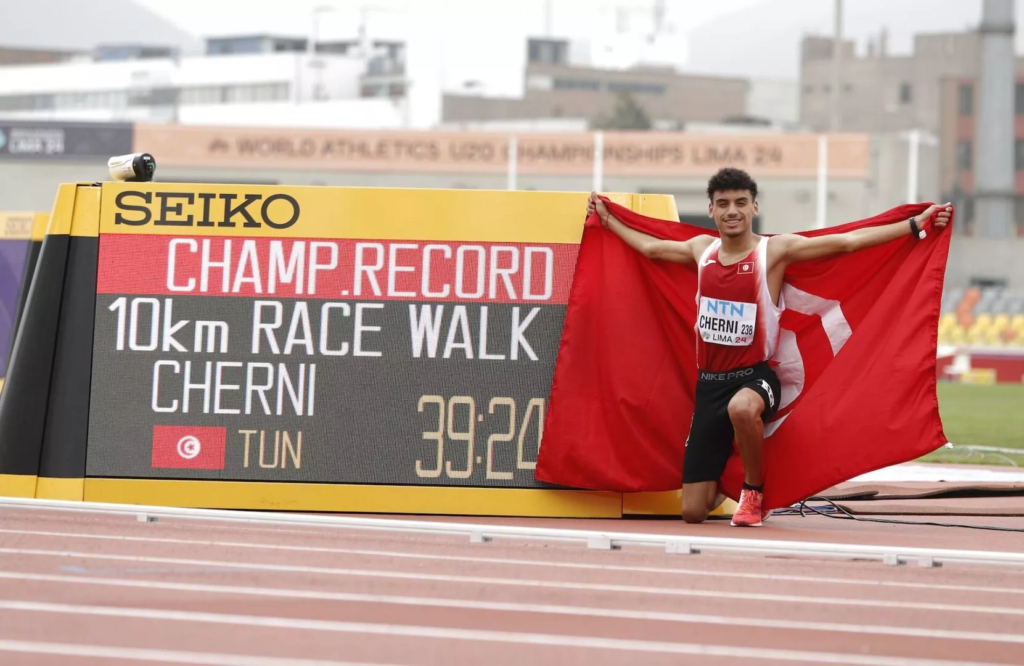
Rayen Cherni set a championship record in the men’s 10,000m race walk to win the first ever gold medal for Tunisia at the World Athletics U20 Championships 2024, while China’s Baima Zhuoma dominated the women’s race during the final morning session of action in Lima on Friday.
In a hard-fought men’s race, the top 17 all set area or national U20 records, or achieved PBs, with Cherni winning in an African U20 record of 39:24.85, Mexico’s Emiliano Barba securing silver in a North and Central American U20 record of 39:27.10 and Italy’s Giuseppe Disabato gaining bronze in a national U20 record of 39:31.25.
Australia’s Isaac Beacroft, who won the U20 title on the roads at the World Race Walking Team Championships in Antalya in April, finished fourth on the track in Lima, setting an Oceanian U20 record of 39:36.39, while Japan’s Sohtaroh Osaka finished fifth in a PB of 39:39.36.
It was Germany’s Frederick Weigel who had taken the early lead, but Osaka, Beacroft and Kenya’s Stephen Ndangiri Kihu took control by the halfway point, passed in 20:05.03.
As the pace gradually picked up, the lead pack whittled down, and Barba, Disabato and Cherni made their break. Six athletes remained in contention with four laps to go and eventually 17-year-old Cherni left his rivals behind to win by more than two seconds.
China’s Baima Zhuoma claims gold with personal best in women’s 10,000m race walk at World Athletics U20 Championships 2024
In the women’s race, Baima looked calm and in control throughout. The field quickly spaced out and the 19-year-old, who claimed Asian U20 silver in April, was well clear as she passed the 5000m mark in 21:47.33.
She was followed by India’s Aarti and her Chinese teammate Chen Meiling, last year’s Asian U20 champion, with Romania’s 17-year-old Alessia Cristina Pop, the European U18 silver medallist, looking determined behind them.
While Baima was never under threat, Aarti seemed to be moving away from Chen, but with two red cards Aarti had to be cautious and Chen made her move, passing her rival with three and a half laps to go.
Baima maintained her lead to cruise to victory in a world U20 lead and big PB of 43:26.60, as Chen held on for silver to complete a 1-2 for China in a PB of 44:30.67. Aarti claimed bronze in an Indian U20 record of 44:39.39, while Pop also set a national U20 record of 44:54.32 in fourth. Similar to the men’s race, the top 16 all set national records or PBs.
Al-Kaabi also announced that QatarEnergy will more than double the local solar energy production by adding new power plants in Dukhan, to become “one of the largest” of their kind in the world.
QatarEnergy is set to become the world’s largest exporter of urea by building a new production complex, a move that is set to ramp up production from a current six MTPA (million tonnes per annum) to 12.4 MTPA by 2030, marking a 106 percent spike.
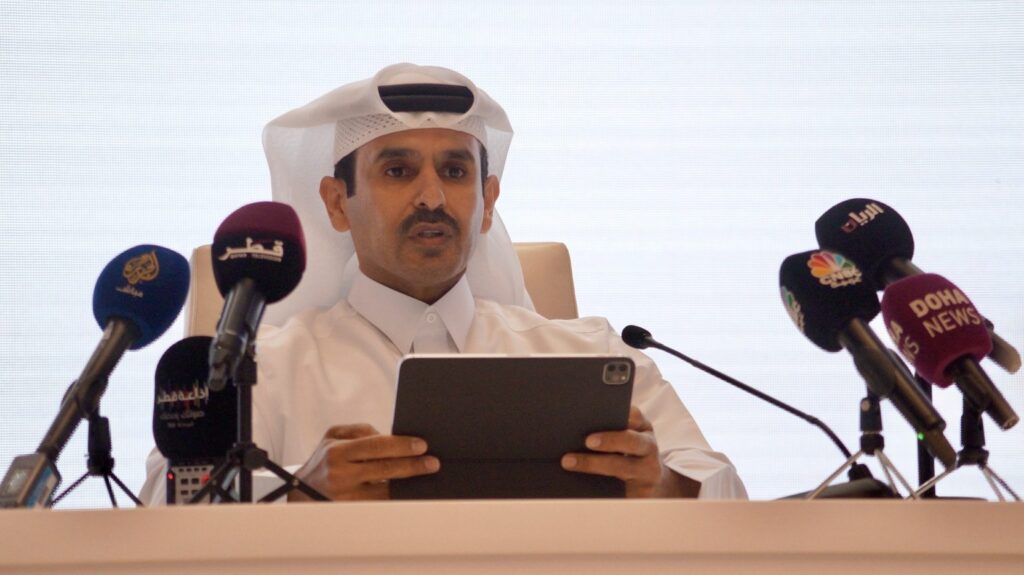
QatarEnergy’s President and CEO Saad Sherida Al-Kaabi announced the mega project in a press conference on Sunday at the Qatari company’s headquarters in Doha.
In response to the press, Al-Kaabi said the new facility will more than double Qatar’s urea, or fertilizer, production while supporting global food production and security. He noted that the production from the project’s first urea train is expected before the end of this decade.
“When we look at the future market of urea with the growth of humanity[…]the urea requirement for food production will be exponentially increased,” Al-Kaabi told the press.
The expansion process will take place by building three ammonia production lines that will in turn provide feedstock to four new mega urea production trains in Mesaieed Industrial City.
The announcement also came against the backdrop of Qatar’s growing ammonia and urea production over the past 50 years.
In 2022, QatarEnergy Renewable Solutions and the Qatar Fertilizer Company (QAFCO), inked a major agreement over the development of the Blue Ammonia project, the largest of its kind in the world, in Mesaieed Industrial City.
Production is expected to commence in the first quarter of 2026.
Qatar to more than double solar power production
Al-Kaabi also announced that QatarEnergy will more than double the local solar energy production by adding new power plants in Dukhan, which will become “one of the largest” of their kind in the world.
The new plant will have a production capacity of 2,000 megawatts, doubling Qatar’s solar power production capacity from existing projects and those still under construction. Some of the projects include the Al-Kharsaah solar power plant, inaugurated in 2022 with the capacity of 800 megawatts.
Others include two solar power plants under construction in Ras Laffan and Mesaieed with a total production capacity of 875 megawatts. According to Al-Kaabi, the production will commence before the end of this year.
“By adding the Dukhan solar power plant to these three plants, we will achieve our Sustainability Strategy objective of about 4,000 megawatts of electricity from solar power by 2030, which makes up 30 percent of Qatar’s total electric power production,” he explained.
Al-Kaabi described the latest announcement as a “continuation” of Qatar’s efforts to provide the world with energy products and meet global needs.
“QatarEnergy’s specialised technical teams will immediately begin the necessary detailed engineering studies to implement these mega projects in accordance with the highest safety, health and environmental standards,” Al-Kaabi said.
The films tell stories of hopes, dreams, and challenges from the Arab world.
Arab cinema is about to make waves as the 81st Venice Film Festival rolls out the red carpet.
Running from August 28 to September 7, this year’s Venice International Film Festival will feature 12 Arab films backed by the Doha Film Institute.
These movies will light up key sections of the festival, including Orrizonti and Orrizonti Shorts, and make waves at Critics Week, Giornate degli Autori, Final Cut, and the Venice Gap-Financing Market.
These selections showcase the rich diversity of the region, bringing unique stories from Egypt, Jordan, Lebanon, Morocco, Palestine, Tunisia, and Yemen into the spotlight.
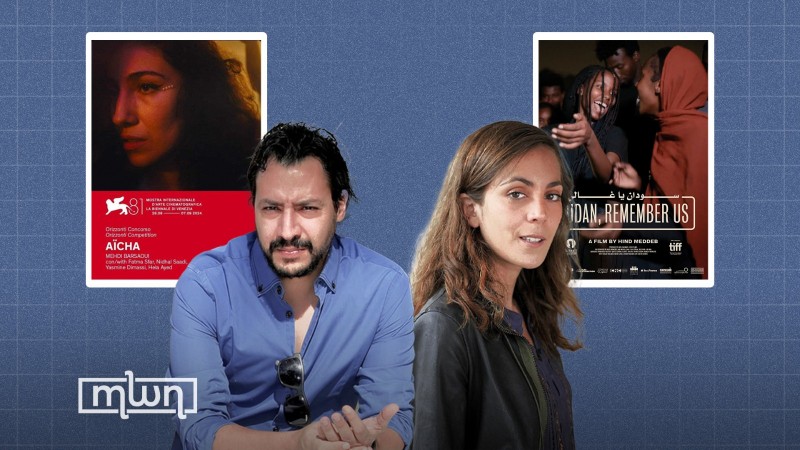
Highlights include “My Father’s Scent” by Mohamed Siam, featuring Egyptian star Ahmed Malek, “Aïcha” by Mehdi Barsaoui, and “Sudan, Remember Us” by Hind Meddeb, which offers a powerful portrayal of a generation’s fight for freedom through words, poems, and chants.
“We are proud to continue a successful festival season with a strong showcase of films by Arab talent at Venice,” stated Fatma Hassan Alremaihi, chief executive officer of the Doha Film Institute.
“Our mission is to support independent creators in cinema, and the compelling selection at Venice is a testament to our commitment to shed light on stories that transcend borders and present unique perspectives. We hope these films receive the acclaim and attention they deserve,” she added.
The 2024 Venice International Film Festival is set to showcase a diverse array of Arab cinema.
In the Orizzonti category, the festival will present “Aïcha” directed by Mehdi Barsaoui and “Happy Holidays” by Scandar Copti. The Orizzonti Shorts category will meanwhile include “Shadows” by Rand Beiruty.
“Sudan, Remember Us,” directed by Hind Meddeb, will be showcased in the Giornate degli Autori section. Critics’ Week will highlight “Perfumed with Mint” by Muhammed Hamdy.
The Final Cut section will present several notable films, including “Aisha Can’t Fly Away” by Morad Mostafa, “In This Darkness I See You” by Nadim Tabet, “My Father’s Scent” by Mohamed Siam, and “Those Who Watch Over” by Karima Saidi.
Finally, the Venice Gap-Financing Market will feature “Marie & Jolie” by Erige Sehiri, “The Station” by Sara Ishaq, and “Theft Of Fire” by Amer Shomali.
With a lineup that promises to dazzle and surprise, these films are set to turn heads and set new standards.
The League of Arab States has hailed the achievements and contributions of Emirati women at the national level, calling them a role model in the Arab world.
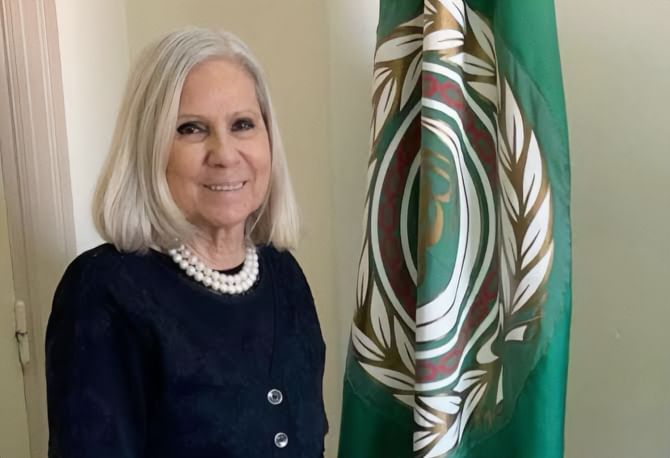
Ambassador Dr. Haifa Abu Ghazaleh, Assistant Secretary-General and Head of Social Affairs sector at League of Arab state, congratulated the UAE leadership, government and people on Emirati Women’s Day, which is a source of pride for Arabs due to the prominent position achieved by the UAE women at the Arab, regional and international levels.
In her statements to the Emirates News Agency (WAM), Dr. Abu Ghazaleh praised the efforts of HH Sheikha Fatima bint Mubarak (The Mother of the Nation), Chairwoman of the General Women’s Union (GWU), President of the Supreme Council for Motherhood and Childhood (SCMC), and Supreme Chairwoman of the Family Development Foundation (FDF), to enhance the status of Emirati women in all fields for more than 5 decades and commended the great achievements of the General Women’s Union under her leadership, making Emirati women an honorable model for Arab women.
She added that the assumption of important and influential positions by Emirati women reflects their pioneering role in society and makes them a bright sign in the Arab world, noting that the achievements of Emirati women represent a strong push towards further progress and excellence at all levels.
Dr. Abu Ghazaleh wished Emirati women further success and prosperity and expressed her aspiration for women in the UAE and the Arab world to witness more progress and active participation in building societies.