Arabs & Arabian Records Aggregator. Chronicler. Milestones of the 25 Countries of the Arabic Speaking World (official / co-official). AGCC. MENA. Global. Ist's to Top 10's. Records. Read & Enjoy./ www.arabianrecords.org
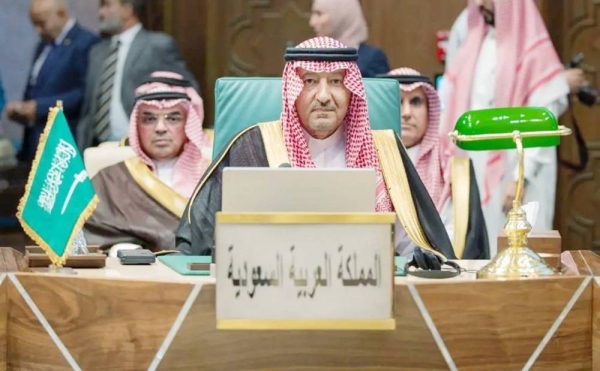
Saudi Arabia’s Deputy Minister of Foreign Affairs Eng. Waleed Al-Khereiji emphasized that the Kingdom has never hesitated to harness all its capabilities to serve humanitarian causes. “The humanitarian aid provided by the Kingdom over the past 70 years has exceeded $95 billion and that benefited 160 countries around the world, making it at the forefront of donor countries for humanitarian and development aid,” he said.
Al-Khereiji made the remarks while attending, on behalf of Foreign Minister Prince Faisal bin Farhan, the meeting of the 160th regular session of the Council of the Arab League at the ministerial level, at the league headquarters in Cairo.
He reiterated the Kingdom’s emphasis on the importance of peace in the Middle East, as it is the strategic choice for the Arab countries, and the importance of encouraging accelerated negotiations to reach a just and comprehensive solution that meets the aspirations of the Palestinian people in accordance with international resolutions and the Arab Peace Initiative. He expressed the Kingdom’s condemnation of the attacks, unilateral actions and repeated provocations by the Israeli occupation forces, which undermine the peace process.
Al-Khereiji expressed the Kingdom’s backing on Syria’s return to the Arab fold, stressing that this will contribute positively to efforts to resolve the crisis there and restore stability to Syria and the region. He reiterated the Kingdom’s support for all efforts made to reach a political solution to the Syrian crisis in a way that preserves Syria’s unity, security, stability and Arab identity. He repeated the Kingdom’s demand for the withdrawal of foreign forces and armed militias from Syria.
Regarding Sudan, Al-Khereiji said the Kingdom voices its deep concern over the cessation of talks that are aimed at ending the conflict and reaching a permanent ceasefire agreement.
Al-Khereiji also led the Saudi delegation, on behalf of Minister of Foreign Affairs Prince Faisal bin Farhan to the third session of the ministerial meeting for the Arab-Japanese political dialogue. The meeting of the foreign ministers from the Arab and Japanese sides was held at the headquarters of the Arab League. The Arab side was headed by Egyptian Foreign Minister Sameh Shoukry, while the Japanese side was headed by its Foreign Minister Yoshimasa Hayashi.
In his speech, Al-Khereiji expressed the Kingdom’s aspiration to advance Arab-Japanese cooperation to better levels in various fields. He stressed the importance of making the Middle East a safe, stable, and prosperous region that gives hope for a better future for all. “There is broad agreement with Japan regarding the importance of establishing peace, encouraging negotiated solutions, and strengthening security, stability, and development,” he said.
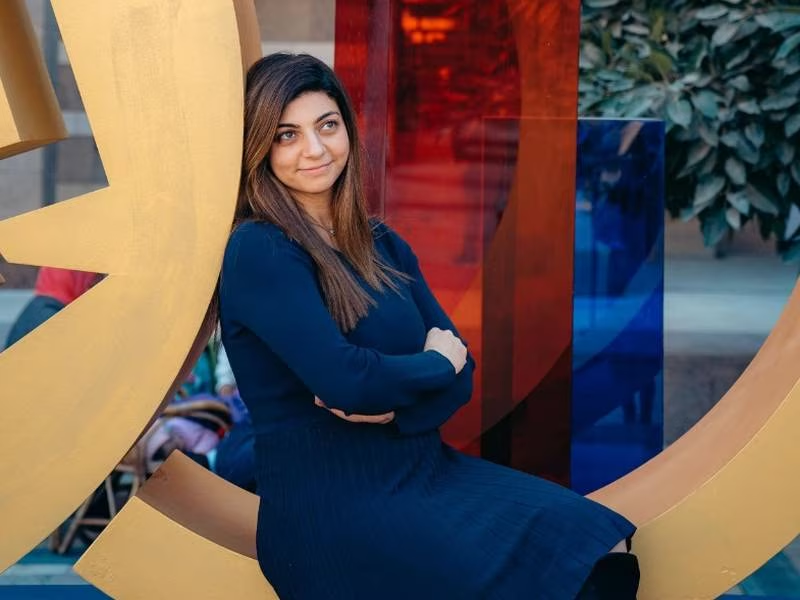
Egyptian-American founder of Affectiva is on a mission to revolutionise the way we connect with our digital devices, and each other, by building in emotional intelligence.
The earliest memory that Rana El Kaliouby can conjure is of standing on a tiny blue plastic chair in a romper suit confidently declaring whatever was on her toddler mind at the time.
She is about three years old, revelling in her father’s attention as he dispenses tips – “look at the audience, enunciate your words” – and records the ramblings for posterity with the first commercially available home video camera.
These regular living room sessions led to El Kaliouby going on to give many accomplished public-speaking performances around the world as an artificial intelligence scientist and entrepreneur, most recently this month at the CogX Festival Deep Tech Summit in London.
Her big message after decades working in technology is that the final frontier lies at the point where AI can be immersed in emotional intelligence , or EI, to revolutionise the human-to-computer experience.
But it’s obvious that the first seeds of that life-fulfilling mission were sown more than 40 years ago in her childhood home in Kuwait where she was first encouraged to get to grips with ideas and machines.
“Our family is really big on education, the thing my parents invested in me and my sisters,” El Kaliouby, 45, tells The National.
“And because they were both in tech, we were always exposed to the latest and greatest gadgets. I was a big Atari game player,” she adds, laughing.
El Kaliouby looks back fondly on those clunky old VHS cassettes and hours the family spent playing Pac-Man as examples of the positive way in which electronic devices can bring loved ones together.
Less happy interactions with latter-day technology, however, brought about the realisation that something was missing – all the rich communication signals provided by non-verbal cues were being lost.
An enterprising mission
Her focus ever since has been on developing artificial intelligence that recognises facial expressions so that people can have better connections with their laptops, and, crucially, with each other.
Born in Egypt after her tech guru father, Ayman, met his future wife, Randa Sabry, on a university campus, it seems almost inevitable that El Kaliouby grew up to be a proud geek pursuing a career in computer science.
“It’s a cute story,” she says. “My dad was teaching COBOL programming, this obsolete language that nobody uses any more but was the programming language in the 70s.
“My mum, who was a business major, decided to explore this thing called computer science, and he was kind of interested in going out with her. She said, ‘I don’t do that. No dating allowed.’ And he was like: ‘Ok, then I’ll propose.’”
Soon after, the newlyweds moved to Kuwait, and her mother became one of the first female computer programmers in the Middle East, until having to flee when Saddam Hussein invaded.
Aiming for the stars
Next stop was Abu Dhabi, where El Kaliouby’s Muslim-Arab upbringing was conventional in many ways, bounded by “lots and lots” of rules that included not making any boy friends while at school.
“I always imagined walking around with a gold star on my forehead. I was a very nice, rule-abiding daughter. I stuck to the strict curfews. I never dated through high school or college and I think, by and large, I was always an A student.
“But, at the same time, it was very empowering. I have two younger sisters and the message was always: ‘You can do anything you want in the world.’”
She continued to meet these expectations into her early 20s, earning undergraduate and master’s degrees in Computer Science at the American University in Cairo, and marrying the founder of a start-up, Wael Amin.
Within a year, though, El Kaliouby was undertaking a PhD 5,000km away at Cambridge University despite both sets of parents saying: “Wait a second, you’re married now and you can’t leave.”
Amin, she says, deserves the credit for supporting her daring dream and agreeing to a long-distance relationship.
“It was really unheard of. I did break rules more as an adult as I explored my passions and my quest for being a researcher and an entrepreneur.
“That’s how I think I pushed the boundaries and definitely made my parents uncomfortable.”
And then? “I like the wording that my life went off the rails. I think that kind of encapsulates it.
“Cambridge opened my horizons. It’s like I discovered the world and it was hard to unlearn that.”
The enthusiasm for her life’s work comes across even through the medium of our Zoom interview, but it’s also clear that this was not an easy time.
El Kaliouby arrived in England a few days after the September 11, 2001 attack in America, a young Arab woman then wearing a hijab.
“I was visibly Muslim. My parents were very concerned about my safety.”
The perpetual smile she adopted by way of a peace offering was also something of a mask, hiding the loneliness and separation from those she loved.
Back then, the technological means for staying in contact across the distance was largely restricted to the kind of messaging that proved a barrier to expressing true feelings, making El Kaliouby all the more determined to humanise technology.
“My PhD was centred around building a machine with emotional artificial intelligence, and I recognised at the time that a lot of the ways I was communicating with my family back home, and especially my husband, was through chat.
“We didn’t have video communication and it was certainly very expensive to make phone calls so we would use texting.
“I often felt I could hide my emotions behind the machine. There were many days where I would be homesick or even in tears, but I’d never communicate that. The best I could do was send a sad face emoji.”
The personal hardships became a driving force for her work. In a career paved with “what if” moments, El Kaliouby began to ask: “What if we could teach technology to understand us in the same way that we understand each other?”
“It’s not even in the choice of words we use. It’s our vocal intonations, our facial expressions, our body posture – and all of that was just getting lost via digitally mediated communications.”
Life was about to take another decisive twist as she received an email that the scientist, inventor and entrepreneur Professor Rosalind Picard was coming to give a talk on campus.
El Kaliouby had long been an admirer of this trailblazing woman in an almost overwhelmingly male-led field, whose book on designing computers to recognise human emotions she read while still in Cairo.
Life-changing encounter
“I often say this is the moment that changed the trajectory of my life,” she says of Picard’s request to meet some of the students.
So impressed was Picard by this intense young woman that she offered El Kaliouby a post-doctorate place on the Affective Computing Research Group at the Massachusetts Institute of Technology Media Lab before their first 20-minute conversation had ended.
“I remember thinking, ‘But I need to go back to Egypt. I have this husband waiting for me.’ And she basically said, ‘Just commute from Cairo. Show up whenever you want to.’’’
By then, El Kaliouby had a daughter, Jana, born in the UK, and a son, Adam, arrived in that other Cambridge in the US, but the constant round trips were becoming unsustainable.
“I was just doing that crazy back and forth. I would say it was OK until it went insanely chaotic when I started the company.”
The company was Affectiva, founded with Picard in 2009 with the goal of creating a commercial applications of emotion-sensing AI.
Growth was fast and it was an exciting time but there was another, darker side. “I was travelling so much, there was very little presence in anything I did,” El Kaliouby says.
Big lesson learnt
“I feel like I was out of balance. I didn’t make any time to sleep well. I would wake up at three in the morning almost every day and fire all these emails to my team. And so these poor people would wake up at six or seven in the morning with a whole slew of notes from me.
“I would go on vacation with my husband and my two young kids, and I’d just be on call all the time. There were zero boundaries, zero balance, and that was a big lesson learnt. There’s always time for self-care. There should always be time to spend with family and loved ones and friends. And, I didn’t do that, you know?”
By 2016, she was a divorced mother of two young children living full-time in America, and decided to bare that vulnerability in her role as chief executive of Affectiva.
Staff could see on El Kaliouby’s calendar that 3.30pm was demarcated to collect her son from school, and she explained to them that a Zumba class each Friday ensured a happier, healthier leader.
“I think it made for a much more authentic environment,” she says.
The family now lives in what El Kaliouby describes as a charming New England home filled with distinctive Middle Eastern touches and often by the aroma of molokhia soup made to her mother’s recipe.
Love for Egypt
“It’s very modern but with a lot of Egyptian things, Arab and Islamic inscriptions. I think of myself as Egyptian American, and very Egyptian in a lot of ways. I love Egypt. A lot of qualities – the Arab warmth, generosity and even intimacy – that’s very much who I am and I would say it’s the same for my kids.
“But I also have embraced what people would call American values. I’m very ambitious, very driven, very globally minded.”
That ambition and drive has taken her far. Affectiva is employed by brands in about 90 countries for market research, but also helps children with developmental difficulties, such as autism , to better interact with those around them.
More recently, the company has developed technology to make driving safer by enabling cars to detect if a motorist is becoming drowsy or distracted.
It was acquired in 2021 by the Swedish AI giant SmartEye for what was said to be about $73 million, with El Kaliouby becoming deputy chief executive.
She has long predicted that the day will come when all devices have an emotion chip and we won’t remember what it was like before screens could comprehend the meaning of us frowning at them.
“When we first started doing this work, we always said this will become ubiquitous and ingrained in every technology. Now, I think it’s more true than ever because AI is becoming a lot more conversational and perceptual.
“You can imagine that the final frontier is this emotional and social intelligence. Initially, my work was very much around human-to-computer interaction, making machines more intelligent, and how they communicate with humans.
“Now it’s back to the human connection. How are AI assistants and AI technologies going to make us better humans, especially better at connecting with each other?”
Along the way, she has learnt that daily affirmations are as integral to life as algorithms, and celebrating the small achievements, such as growing her own tulips, is as important as publishing a best-selling memoir, Girl Decoded.
Among the accolades amassed, El Kaliouby can cite becoming a World Economic Forum Young Global Leader, being listed on the Forbes Top 50 Women in Tech, and receiving the Smithsonian Magazine’s American Ingenuity Award in Technology. Earlier this year, she was invited to ring the opening bell on New York’s Nasdaq exchange as a female pioneer in AI, and was recently made a 2023 Eisenhower Fellow.
None of this seems to have gone to her head, however, perhaps because her family does a good job of keeping her grounded.
When El Kaliouby gave a TED Talk some years ago, she explained that in emotion science all facial muscle movements are measured as action units with specific numbers for each.
Words from the wise
In a throwback to those early guided sessions in the family living room in Kuwait, the night before she walked on stage, her daughter Jana, 12 at the time, helpfully texted: “Good luck mummy!! I’m sure your gonna do awesome. Remember: don’t play with your hair, connect with audience, give them a present, gesture on words, gesture to emphasise.”
The response sent in live time was the old-school 🙂 emoticon but the algorithm that is El Kaliouby’s labour of love would have strongly detected action unit 12, the main component of, in this particular case, a very indulgent smile.
From her parting message to readers of The National, it is clear that she won’t rest until the technology responds just as accurately across the whole gamut of social and emotional states irrespective of people’s age, gender or ethnicity. Going forward, El Kaliouby insists, the watchword has to be inclusivity.
“I’m on this mission to diversify the face of AI. So it’s a call to action to get involved. It’s super exciting and we need a lot of diverse people being part of it.”
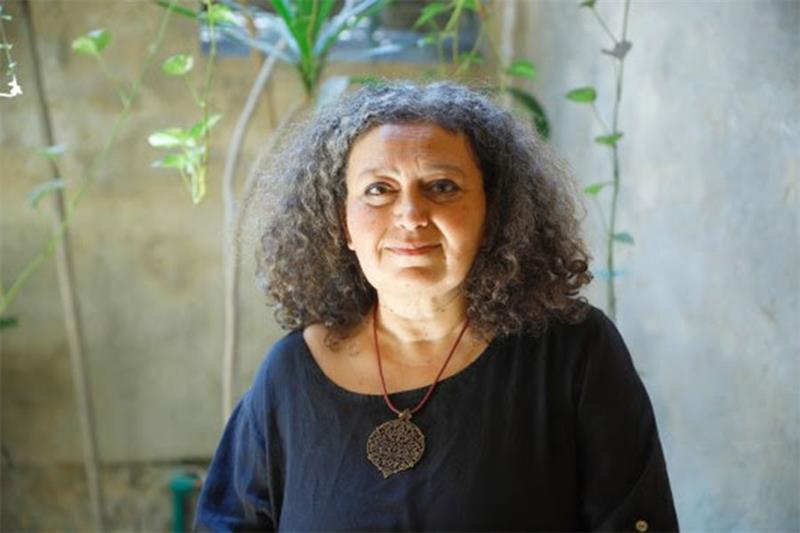
Egyptian architectural historian May El-Ibrashy is among the winners of the 2022 Prince Claus Impacts awards for her contribution and innovation in her community.
The Prince Claus Fund has announced on Tuesday the six recipients of the first 2022 Prince Claus Impact Awards.
The new award honours individuals whose work in art and culture engages their communities in innovative, positive ways while addressing issues of urgent contemporary relevance.
El-Ibrashy is an architect whose work centres on community engagement through heritage conservation, rehabilitation, preservation, and re-signification. She is the founder of the Megawra Built Environment Collective, a twinship between an architectural firm and an NGO.
Through her work she has managed to create a real difference for the often-marginalised communities living in Cairo’s historic centre and has created an important counter narrative to the current government’s focus on urban expansion and renewal, creating a new sense of hope and pride for the communities she works with.
Focusing on Al-Khalifa District in Sayeda Zeinab, Al-Hattaba district by the citadel, and Al-Imam Al-Shafii district, El-Ibrashy’s participatory conservation initiative is an inspiring successful community dialogue that has been going on for 10 years. The impact of the dialogue still resonates in the communities of Al Khalifa District, Al-Hattaba and Al-Imam Al-Shafii.
The other five recipients are:
Ailton Alves Lacerda Krenak (Brazil), an indigenous leader, environmentalist, and philosopher.
Alain Gomis (Senegal), a Senegalese-French film director and screenwriter.
Hassan Darsi (Morocco), a visual artist whose work promotes critical thinking about public spaces and citizenship.
Luis Manuel Otero Alcántara (Cuba), an artist and human rights defender.
María Medrano (Argentina) is a writer, poet and editor.
The Awards Ceremony shall take place in the Royal Palace Amsterdam on the 7th of December.
Esa hopes that his new role will help him raise Morocco’s profile in the fintech and digital industry globally.
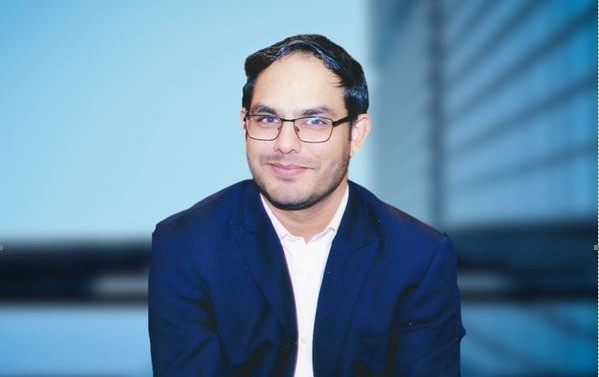
Founder and CEO of Moroccan fintech startup moneyIN Arif Esa has assumed the position of Deputy Chairman for the Banking/Finance/Blockchain & Trade Finance department at the International Trade Council (ITC).
This appointment not only recognizes Esa’s outstanding contributions but also positions him as the first Moroccan entrepreneur to hold such a role within the ITC.
Esa, who holds a stellar track record in finance and fintech, with a portfolio of global recognition and awards, spoke with Morocco World News about his motivation for taking this role, as well as his new responsibilities and objectives.
“Accepting this responsibility was not just an honor but an opportunity to provide pivotal advice and give back to the community. It also aligns seamlessly with our global vision to establish Morocco and Africa as prominent players in the fintech and digital industry,” he said.
As a globally recognized figure, Esa’s reputation in the finance and fintech industry drew the attention of the ITC panel, which spans 179 countries, 79 government trade and investment agencies, 418 chambers of commerce, and a vast network of businesses and employees.
After undergoing a “meticulous” evaluation process, Esa was humbled to be selected as the Deputy Chairman of this division, he said.
In his capacity as Deputy Chairman, Esa will play a key role in shaping the strategic direction of the ITC’s Banking/Finance/Blockchain & Trade Finance department.
This role includes overseeing various key focus areas, including financial Instruments, risk mitigation, regulatory compliance, promoting innovative solutions, and capacity building, among others.
A bridge to Morocco
Highlighting the significance of his new role, the Moroccan entrepreneur emphasized, “I am excited about the impact we can collectively achieve, and I look forward to contributing meaningfully to the growth and transformation of trade finance and continuing to promote Morocco and the economy in the years to come.”
One of the central aspects of Esa’s new position is its potential impact on the Moroccan fintech landscape and businesses. His appointment is expected to open doors for Moroccan start-ups and fintech ventures on an international platform, he said.
“With my reputation, influence, and track record in the finance and fintech industry, I am poised to attract heightened attention and interest from investors, venture capitalists, and family offices,” he underlined.
In addition, the Moroccan entrepreneur intends to use his position to advocate for supportive regulatory frameworks for fintech start-ups in Morocco, fostering an environment that encourages investment.
He also emphasized the importance of mentorship and personalized guidance, stressing that he is “committed to assisting start-ups in overcoming challenges, honing their strategies, and maximizing their potential for success.”
Esa’s engagement with international networks through the ITC is expected to provide Moroccan start-ups with expanded access to global markets, he noted, explaining that it will help them open doors to new markets and strengthen their credibility and standing on a global stage.
He further emphasized that his appointment “symbolizes a bridge between the Moroccan fintech ecosystem and the international financial landscape,” allowing him to “catalyze a transformational shift in how Moroccan start-ups are perceived, supported, and propelled towards greater success.”
Esa reflected on his journey with Morocco moneyIN, an instant payment solution, and how it prepared him for this new position.
“My journey with moneyIN Morocco has been a transformative experience that has uniquely prepared me for the prestigious role of Deputy Chairman within the Banking/Finance/Blockchain & Trade Finance department at the International Trade Council,” he explained.
He highlighted several key areas where his experience with moneyIN proved instrumental, including his ability to navigate the rapidly evolving fintech landscape and understand the potential of technologies like blockchain.
In particular, his background as an entrepreneur equipped him to empathize with the challenges start-ups face and advocate for measures that facilitate their growth.
His engagement with start-ups underscored the importance of mentorship and education, which Esa plans to extend globally.
Esa concluded by offering valuable advice to aspiring Moroccan entrepreneurs, encouraging them to “dream boldly, embrace disruption, and lead with integrity.”
He emphasized the importance of resilience, continuous learning, and global thinking, saying, “Aspire not only to make a mark but to leave an indelible legacy of positive change that reverberates across borders and generations.”
Saudi Arabia has reached a significant milestone as its gross domestic product crossed the coveted 1 trillion-dollar mark for the first time, revealed the umbrella body of the Kingdom’s business community.
According to the state-run news agency, the Federation of Saudi Chambers revealed that the Kingdom achieved the GDP of SR4.15 trillion ($1.11 trillion), meeting the state’s goals for 2025.
The Saudi Press Agency cited the FSC study reporting that the Kingdom achieved an economic growth rate of 8.7 percent in 2022, the highest among the member states of G20.
The report also found that the private sector’s contribution to the economy increased to SR1.63 trillion, or 41 percent of GDP in 2022, with a growth rate of 5.3 percent.
Strengthening the non-oil private sector is a crucial agenda of Saudi Arabia’s Vision 2030, as the Kingdom’s economy has steadily reduced its dependence on oil.
The report added that non-governmental investments increased to SR907.5 billion, with a growth rate of 32.6 percent in 2022, while the number of private workers rose from 8.08 million in 2021 to 9.42 million in 2022.
Moreover, the number of Saudis working in the private sector increased from 1.91 million in 2021 to 2.19 million in 2022.
Highlighting Saudi Arabia’s success in its economic diversification efforts, the Saudi Chamber of Commerce added that the value of non-oil exports reached SR315.7 billion in 2022, accounting for 20.5 percent of commodity exports.
Earlier this month, the International Monetary Fund said Saudi Arabia’s fiscal prospects are solid in the near term, with risks broadly balanced, driven by Vision 2030, which has been diversifying the Kingdom’s economy since its launch in 2016.
According to the UN financial agency, Saudi Arabia has sufficient precautionary reserves, and the peg of the exchange rate to the US dollar served the Kingdom’s economy well.
IMF added that Saudi Arabia has maintained its average consumer price index despite rising inflation in other nooks.
source/content: arabnews.com (headline edited)
___________
The Kingdom achieved an economic growth rate of 8.7 percent in 2022, the highest among the member states of G20. Shutterstock
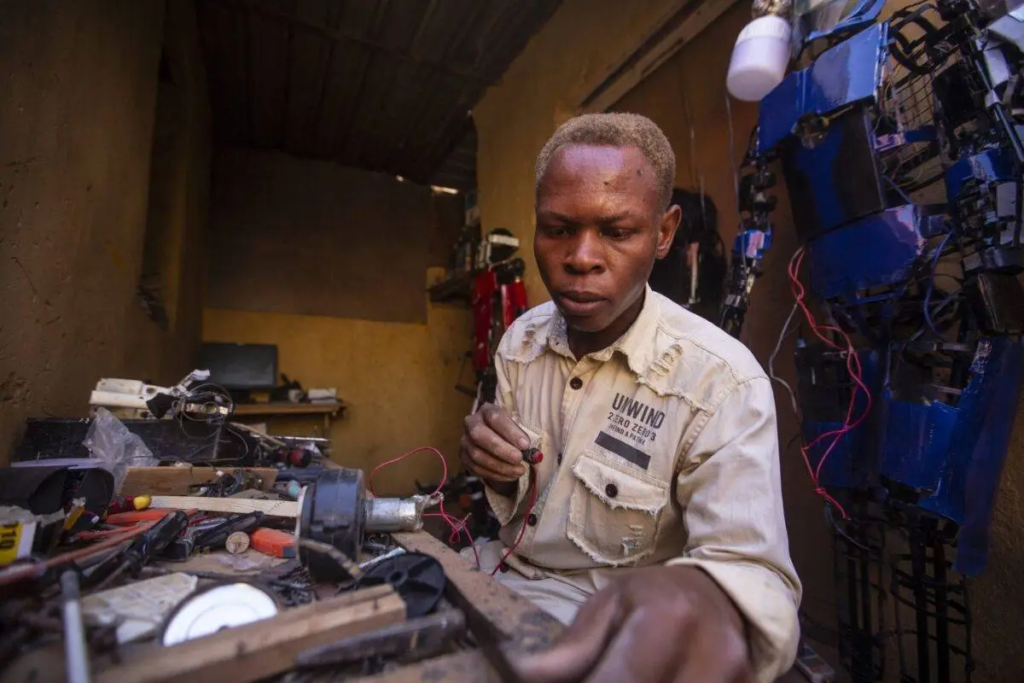
Moatasem Jibril, a young man from Sudan, is realising his dream of conducting technological experiments to manufacture robots by using recycled electronic waste.
Despite modest capabilities and living in a mud house in the city of Omdurman, west of the capital, Khartoum, Jibril did not give up on his dream of making a robot, even after having to quit university due to the deteriorating economic conditions of his family.
For about ten years, Jibril has been trying to create robots in a narrow space inside his family house, and he challenges poverty by working daily in the market to earn money to purchase the materials he needs for his project. He hopes that his dream will be funded by any businessman or institution.
Sudan is suffering from many crises, starting with a shortage of basic and imported commodities, as well as the depreciation of the local currency, in addition to the government’s measures to lift fuel subsidies at the request of the International Monetary Fund in 2021.
Childhood dream
Jibril’s dream of making robots arose from his childhood, inspired by cartoons.
“Making robots is a dream that has been in my mind since childhood, and I try hard to turn my dream into reality,” he said.
He started making robots nine years ago, after watching many movies that talk about inventors.
The young man mainly relies on the electronic waste that he obtains at a low price from local markets to build his robots, since the basic components exceed his financial ability.
He is searching continuously and painstakingly in electronic markets on the internet for any electronic parts offered for sale that are suitable for his industry, to buy them at reasonable prices.
Sudan is witnessing fluctuations in the abundance of foreign exchange, which raises the cost of imports and bears the final consumer the exchange rate differences, in addition to the rise in global prices, especially fuel and food.
Economic conditions
“In the initial stages, I moved more freely after studying and saving some money from my daily allowances,” Jibril said.
He was studying electronics engineering at the International University of Sudan. He often worked while studying, to save money to pay tuition fees and sit for exams. However, due to financial weakness of his parents, he missed many exams and eventually found himself dismissed from the University.
Jibril did not pay attention to the ridicule of his school and neighbourhood friends, and continued to implement his idea day and night.
“I still suffer from the mockery of colleagues and friends at the University when I begin to explain my project related to the manufacture of robots,” he said. “They consider it mere triviality, despite my continuous explanation of the idea of the project using engineering methods and three-dimensional designs.”
Jibril hopes that his economic conditions will improve, so he can return to the University to complete his academic studies in engineering and software fields.
He aspires to complete a project in building robots on a scientific basis and then start selling them.
As for his big dream, it is to go beyond the robotics industry and reach the stage of manufacturing micro-precision missiles and apply his motto that says: “Everything is possible with determination and persistence.”
He is looking forward to the future by completing his academic studies and hopes to find sponsorship from local or international institutions that will adopt his project to crown his success story and reach the world.
Sudanese Moatasem Jibril, who dropped out of his electronics engineering course for economic reasons, works on a robot in his house using waste products in Khartoum, Sudan on 2 March 2023 [Mahmoud Hjaj/ Anadolu Agency]
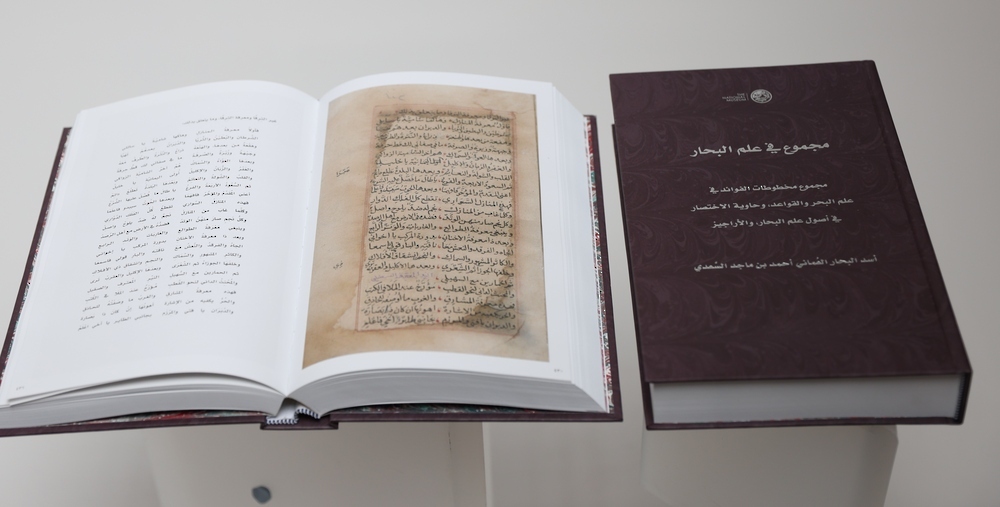
The National Museum has issued a special edition titled ‘Collection in Marine Science.’
The issue documents the greatness of Omani navigator Ahmed bin Majid Al Saadi, reviving his marine prowess and navigational creativity.
The collection documents the origin of the manuscript titled “Kitab al-Fawa’id fi ‘Ilm al-Bahr wa al-Qawa’id” (Collection of Manuscripts of Benefits in the Science of the Sea and Rules, as well as the abbreviation container in the origins of marine science and Arajiz), which has been on loan from Al Assad National Library in the Syrian Arab Republic to the National Museum since 2019.
In the opening speech of the publication, Jamal Hassan al Moosawi, Secretary General of the National Museum, said, “The display of the original manuscript ‘Collection in the Science of the Seas’ by the author Ahmed bin Majid al Saadi at the National Museum is an affirmation of the Omani identity of this unique scientific and historical personality.
This display comes in the context of the existing cooperation between the National Museum and the Ministry of Culture of the Syrian Arab Republic as part of the cultural diplomacy pursued by the National Museum.”
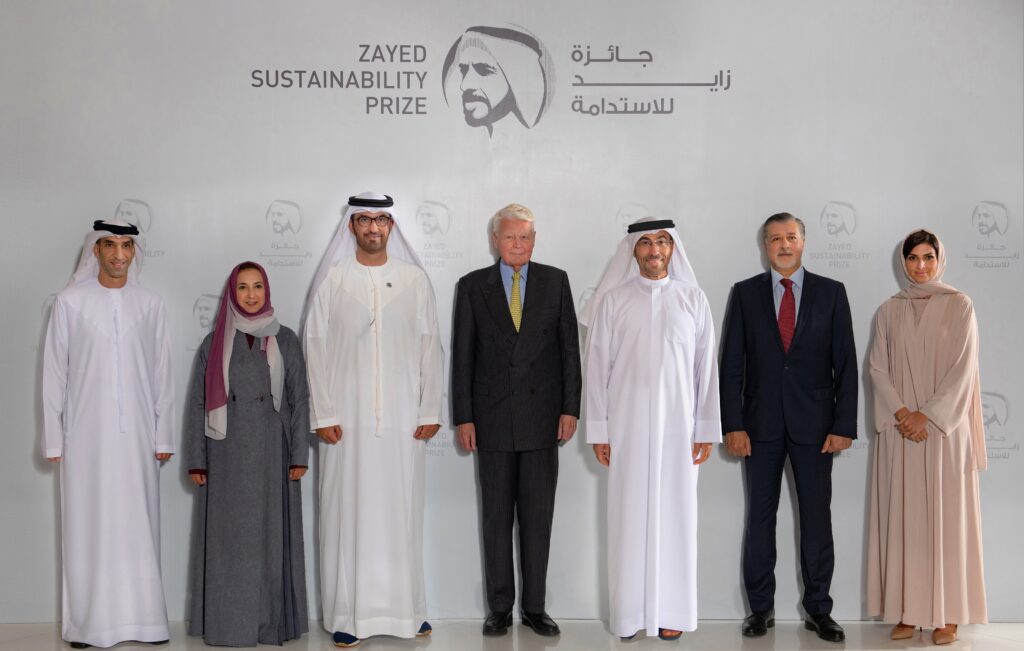
The Zayed Sustainability Prize, the UAE’s pioneering global sustainability and humanitarian award, has announced this year’s finalists following a deliberation by its esteemed Jury.
The winners will be announced at the Zayed Sustainability Prize Awards Ceremony on 1st December during the 28th Conference of the Parties (COP28) of the UN Framework Convention on Climate Change, to be held from 30th November to 12th December.
The Zayed Sustainability Prize’s Jury elected the 33 finalists from 5,213 entries received across six categories: Health, Food, Energy, Water, Climate Action and Global High Schools – a 15 percent increase in submissions compared to last year. The new Climate Action category, introduced to mark the UAE’s Year of Sustainability and hosting of COP28 UAE, received 3,178 nominations.
From Brazil, Indonesia, Rwanda and 27 other countries, the finalists represent small and medium sized businesses, nonprofit organisations and high schools, and reflect the Prize’s growing mandate to reward innovations that transcend borders and tackle pressing global challenges.
Dr. Sultan bin Ahmed Al Jaber, Minister of Industry and Advanced Technology, COP28 President-Designate and Director-General of the Zayed Sustainability Prize, said the finalists exemplify the remarkable ingenuity and unwavering commitment to shaping a more sustainable and resilient future for our planet.
Dr. Al Jaber added, “The Zayed Sustainability Prize carries forward the enduring legacy of UAE’s visionary leader, Sheikh Zayed, whose commitment to sustainability and humanitarianism continues to inspire us. This legacy remains the guiding light of our nation’s aspirations, propelling us forward in our mission to uplift communities around the globe. Over the past 15 years, the Prize has been a powerful force for positive change, transforming the lives of over 378 million people across 151 countries. We have incentivised solutions that are driving climate and economic progress in some of the world’s most vulnerable regions.
“This cycle, we received a record-breaking number of submissions from every continent. The innovations put forth by the finalists reflect a profound dedication to inclusivity and an unyielding resolve to bridge critical gaps. These solutions directly align with the four pillars of the COP28 UAE agenda: fast-tracking a just and equitable energy transition, fixing climate finance, focusing on people, lives and livelihoods and underpinning everything with full inclusivity. The work of these sustainability pioneers will contribute practical solutions for climate progress that protect the planet, improve livelihoods, and save lives.”
Through the Prize’s 106 winners to date, 11 million people have gained access to safe drinking water, 54 million homes have gained access to reliable energy, 3.5 million people have gained access to more nutritious food, and over 728,000 people have gained access to affordable healthcare.
Ólafur Ragnar Grímsson, Chair of the Prize Jury, said, “As global challenges continue to mount, our newest group of Prize finalists reveal the extraordinary efforts being made worldwide to meet the needs of the moment with purpose and innovation – inspiring hope for a brighter future. Whether it’s restoring the ocean wilderness, using technology to ensure better, more sustainable farm yields, or driving change for individuals without access to affordable healthcare, these innovators are transforming our world.”
The Health finalists are: • Alkion BioInnovations is an SME from France that specialises in supplying cost effective and sustainable active ingredients for large-scale pharmaceuticals and vaccines. • ChildLife Foundation is an NPO from Pakistan that employs an innovative Hub & Spoke healthcare model, linking Emergency Rooms as hubs to telemedicine satellite centres. • doctorSHARE is an NPO from Indonesia dedicated to expanding healthcare access in remote and inaccessible regions using barge-mounted floating hospitals.
The Food finalists are: • Gaza Urban & Peri-urban Agricultural Platform is an NPO from Palestine that empowers female agripreneurs in Gaza to achieve food security in their communities. • Regen Organics is an SME from Kenya that specialises in a municipal-scale manufacturing process that produces insect-based protein for livestock feed and organic fertiliser for horticultural production. • Semilla Nueva is an NPO from Guatemala that specialises in the development of biofortified maize seeds.
The Energy finalists are: • Husk Power Systems is an SME from the United States of America that deploys AI-enabled minigrids that provide 24/7 renewable energy to homes, micro enterprises, health clinics, and schools. • Ignite Power is an SME from Rwanda that specialises in delivering solar powered pay-as-you-go solutions to electrify last mile communities. • Koolboks is an SME from France that provides off-grid solar refrigeration solutions with integrated Internet of Things (IoT) monitoring for last mile communities, through a lease-to-own sales model.
The Water finalists are: • ADADK is an SME from Jordan that employs wireless smart sensors that use machine learning and augmented reality for the detection of both visible and hidden water leaks. • Eau et Vie is an NPO from France that offers individual taps to the homes of impoverished urban residents, ensuring access to clean water in slum areas. • TransForm is an NPO from Denmark that employs innovative soil filter technology for the cost-effective treatment of wastewater, sewage, and sludge without relying on energy or chemicals.
The Climate Action finalists are: • CarbonCure is an SME from Canada that specialises in carbon removal technology. They inject CO₂ into fresh concrete, effectively reducing its carbon footprint while maintaining performance standards. • Foundation for Amazon Sustainability is an NPO from Brazil that is dedicated to implementing projects and programmes that advance environmental conservation and empower indigenous communities to protect their rights. • Kelp Blue is an SME from Namibia that contributes to the restoration of natural ocean wilderness and the mitigation of excess CO₂ by establishing large-scale giant kelp forests in deep waters.
The Global High Schools’ finalists presented project-based, student-led sustainability solutions, with finalists divided into 6 regions. The regional finalistsinclude:
The Americas: Colegio De Alto Rendimiento La Libertad (Peru); Liceo Baldomero Lillo Figueroa (Chile); and New Horizons School (Argentina). Europe and Central Asia: Northfleet Technology College (United Kingdom); Presidential School in Tashkent (Uzbekistan); and Split International School (Croatia). Middle East & North Africa: International School (Morocco); JSS International School (United Arab Emirates); and Obour STEM School (Egypt). Sub-Saharan Africa: Gwani Ibrahim Dan Hajja Academy (Nigeria); Lighthouse Primary and Secondary School (Mauritius); and USAP Community School (Zimbabwe). South Asia: India International Public School (India); KORT Education Complex (Pakistan); and Obhizatrik School (Bangladesh). East Asia and the Pacific: Beijing No. 35 High School (China); Swami Vivekananda College (Fiji); and South Hill School, Inc. (The Philippines).
In the Health, Food, Energy, Water and Climate Action categories, each winner receives US$600,000. Each of the six winning Global High Schools receives up to US$100,000.
source/content: wam.ae (headline edited0
_____________
أبوظبي في 12 سبتمبر /وام/ أعلنت جائزة زايد للاستدامة، الجائزة العالمية الرائدة التي أطلقتها دولة الإمارات لتكريم حلول الاستدامة المبتكرة، عن المرشحين النهائيين لدورتها لهذا العام بعد مداولات أعضاء لجنة التحكيم.
وسيتم الإعلان عن الفائزين في حفل توزيع الجوائز الذي تعقده الجائزة يوم الأول من ديسمبر القادم خلال مؤتمر الدول الأطراف في اتفاقية الأمم المتحدة الإطارية بشأن تغير المناخ “COP28” الذي تستضيفه دولة الإمارات في الفترة الممتدة من 30 نوفمبر إلى 12 ديسمبر المقبلين.
واختارت اللجنة 30 مرشحاً ضمن ست فئات تشمل الصحة والغذاء والطاقة والمياه والعمل المناخي والمدارس الثانوية العالمية.
كانت الجائزة قد تلقت هذا العام 5,213 طلب مشاركة، محققةً بذلك زيادة بنسبة 15 في المائة مقارنة بالدورة الماضية.. واستقطبت فئة العمل المناخي وحدها والتي تم استحداثها مؤخراً تزامناً مع عام الاستدامة في دولة الإمارات والاستعدادات لاستضافة مؤتمر(cop28) حوالي( 3,178) مشاركة.
تضم قائمة المرشحين النهائيين مؤسسات صغيرة ومتوسطة ومنظمات غير ربحية ومدارس ثانوية من البرازيل وإندونيسيا ورواندا و27 دولة أخرى، ما يعكس الانتشار العالمي المتنامي للجائزة وسعيها المستمر لتكريم الابتكارات التي تواجه التحديات العالمية الملحة في مختلف بقاع الأرض.
وبهذه المناسبة، قال معالي الدكتور سلطان بن أحمد الجابر، وزير الصناعة والتكنولوجيا المتقدمة، الرئيس المعيّن لمؤتمر الأطراف (COP28)، مدير عام جائزة زايد للاستدامة: “تواصل الجائزة إحداث تأثير إيجابي ملموس والارتقاء بالمجتمعات حول العالم تماشياً مع رؤية القيادة الرشيدة واستلهاماً لإرث الوالد المؤسس الشيخ زايد بن سلطان آل نهيان، طيب الله ثراه، في مجالات الاستدامة والعمل الإنساني.. وعلى مدار السنوات الخمس عشرة الماضية، أسهمت الجائزة في تحسين حياة أكثر من 378 مليون شخص في 151 دولة، وذلك من خلال تكريم ودعم الحلول المبتكرة القادرة على دفع التنمية الاقتصادية ومواجهة أزمة المناخ، لا سيما في المجتمعات الأكثر تأثراً بتداعيات تغير المناخ”.
وأضاف: “تلقت جائزة زايد للاستدامة في هذه الدورة عدداً قياسياً من المشاركات من كل القارات، وتقدم الابتكارات المقترحة من قبل المرشحين النهائيين حلولاً فعالة لمجموعة من التداعيات الملحة الناجمة عن تغير المناخ، ما يعكس الالتزام الراسخ للجائزة بإحداث تغيير واسع النطاق لبناء مستقبل أكثر استدامة ومرونة لكوكبنا.. وتنسجم الحلول المتأهلة مع الركائز الأربع للأجندة المناخية التي تسعى دولة الإمارات لتحقيقها خلال استضافتها لمؤتمر الأطراف (COP28) والهادفة إلى تسريع تحقيق انتقال منظم ومسؤول وعادل في قطاع الطاقة، وتطوير أداء التمويل المناخي، والحفاظ على البشر وتحسين الحياة وسُبل العيش، وضمان احتواء الجميع بشكل تام”.
وأسهمت الجائزة من خلال الفائزين بدوراتها السابقة، والبالغ عددهم 106 فائزين، في تمكين 11 مليون شخص من الوصول إلى مياه الشرب المأمونة، وإيصال إمدادت الطاقة النظيفة إلى 54 مليون منزل، وحصول 3.5 مليون شخص على الأطعمة المغذية، وتوفير الرعاية الصحية ميسورة التكلفة لأكثر من 728 ألف شخص.
من جانبه، قال فخامة أولافور راغنار غريمسون، رئيس لجنة تحكيم الجائزة: “تعكس الحلول المقدمة من المرشحين النهائيين لهذا العام الجهود الاستثنائية التي يتم بذلها في جميع أنحاء العالم لتسخير الابتكار بهدف تلبية الاحتياجات الراهنة الملحة في ظل تنامي التحديات المناخية، ما يبرهن على الدور المستمر للجائزة في تغيير العالم نحو الأفضل من خلال توفير منصة داعمة لرواد الاستدامة.. وتميزت الحلول بالابتكار والتنوع وشملت مجموعة مختلفة من التحديات بما في ذلك استعادة الحياة البرية في المحيطات، واستخدام التكنولوجيا لزيادة وتعزيز استدامة إنتاجية المحاصيل الزراعية، وتحسين الوصول إلى خدمات الرعاية الصحية ميسورة التكلفة في المجتمعات الأشد حاجة لها”.
وشملت قائمة المرشحين النهائيين عن فئة الصحة كلاً :.
– من “ألكيون بيو إنوفيشنز”، وهي من فئة المؤسسات الصغيرة والمتوسطة في فرنسا متخصصة في إنتاج مكونات نشطة مستدامة وفعالة من حيث التكلفة للأدوية واللقاحات المستخدمة على نطاق واسع.
– “تشايلد لايف فاونديشن”، وهي منظمة غير ربحية في باكستان تستخدم نموذج الرعاية الصحية المبتكر (Hub and Spoke) لربط غرف الطوارئ مع بعضها البعض وبالمراكز التي تقدم خدمات التطبيب عن بعد عبر الأقمار الصناعية.
– مؤسسة الأطباء للرعاية “doctorSHARE”، وهي منظمة غير ربحية في إندونيسيا تعمل على توسيع نطاق خدمات الرعاية الصحية لتصل إلى المناطق النائية باستخدام المستشفيات العائمة المحمولة على السفن.
وشملت قائمة المرشحين النهائيين عن فئة الغذاء كلاً من:.
– منتدى غزة للزراعة الحضرية، وهو منظمة غير ربحية في فلسطين تهدف إلى تمكين رائدات الأعمال في القطاع الزراعي في غزة لتعزيز الأمن الغذائي في مجتمعاتهن.
– “ريجين أورجانيكس”، وهي من فئة المؤسسات الصغيرة والمتوسطة في كينيا وتعمل على إنتاج البروتين المشتق من الحشرات لتغذية الماشية، والأسمدة العضوية لإنتاج المحاصيل البستانية.
– “سيميلا نويفا”، وهي منظمة غير ربحية في غواتيمالا متخصصة في إنتاج بذور الذرة المدعّمة.
شملت قائمة المرشحين النهائيين عن فئة الطاقة كلاً من:.
– “هاسك باور سيستم”، وهي من فئة المؤسسات الصغيرة والمتوسطة في الولايات المتحدة الأمريكية، وتعمل على نشر شبكات صغيرة مدعمة بالذكاء الاصطناعي لتوفير الطاقة المتجددة على مدار الساعة للمنازل والمؤسسات الصغيرة والعيادات الصحية والمدارس.
– “إغنايت باور”، وهي من فئة المؤسسات الصغيرة والمتوسطة في رواندا، وتقدم حلول الشراء بنموذج الدفعات الدورية (go-you-as-pay) بالاعتماد على الطاقة الشمسية لإمداد المجتمعات بطاقة الكهرباء.
– “كولبوكس”، وهي من فئة المؤسسات الصغيرة والمتوسطة في فرنسا، وتوفر من خلال نموذج التأجير المنتهي بالتمليك حلول التبريد بالطاقة الشمسية والمدعومة بنظام مراقبة قائم على تقنية إنترنت الأشياء (IoT) في المجتمعات غير المتصلة بشبكة الكهرباء.
وشملت قائمة المرشحين النهائيين عن فئة المياه كلاً من:.
– “عدادك”، وهي من فئة المؤسسات الصغيرة والمتوسطة في الأردن، وتستخدم أجهزة استشعار ذكية لاسلكية مدعومة بتقنيات “تعلّم الآلة” والواقع المعزز للكشف عن تسربات المياه المرئية والمخفية.
– “الماء والحياة” (Eau et Vie) هي منظمة غير ربحية في فرنسا، توفر صنابير مياه لمنازل الأسر الفقيرة في المناطق الحضرية، لتضمن بذلك إمكانية الوصول إلى المياه النظيفة في الأحياء العشوائية الفقيرة.
– “ترانسفورم” هي منظمة غير ربحية في الدنمارك، تستخدم تقنية ترشيح مبتكرة للتربة لمعالجة مياه الصرف الصحي والمجاري والرواسب الصلبة دون الاعتماد على الطاقة أو المواد الكيميائية.
و شملت قائمة المرشحين النهائيين عن فئة العمل المناخي كلاً من:.
– “كاربون كيور”، وهي من فئة المؤسسات الصغيرة والمتوسطة في كندا، والمتخصصة بتقديم حلول إزالة الكربون.. ويتضمن حلّها حقن ثاني أكسيد الكربون في الخرسانة أثناء مرحلة الإنتاج مما يقلل من حجم الانبعاثات بصورة فعالة دون التأثير على معايير الكفاءة والأداء.
– “مؤسسة استدامة الأمازون” هي منظمة غير ربحية في البرازيل، وتنشط في تنفيذ المشاريع والبرامج التي تسهم في الحفاظ على البيئة وتمكين الأفراد من حماية حقوقهم.
– “كيلب بلو”، وهي من فئة المؤسسات الصغيرة والمتوسطة في ناميبيا، والتي تسهم في استعادة الموائل الطبيعية في المحيطات والحد من فائض ثاني أكسيد الكربون في الغلاف الجوي.
أما المرشحون النهائيون عن فئة المدارس الثانوية العالمية فقد قدموا حلولاً مستدامة قائمة على مشاريع يقودها الطلاب وتم تقسيم المتأهلين إلى 6 مناطق جغرافية.. وشملت قائمة المرشحين النهائيين عن هذه الفئة كلاً من:.
– منطقة الأمريكيتان: مدرسة الحرية للأداء العالي “Colegio De Alto Rendimiento De La Libertad” (بيرو)، مدرسة “ليثيو بالدوميرو ليلو فيغيروا” (تشيلي)، “مؤسسة أوزوريس – مدرسة نيو هورايزنز” (الأرجنتين).
– منطقة أوروبا وآسيا الوسطى: “معهد نورث فليت تكنولوجي” (المملكة المتحدة)، المدرسة الرئاسية في طشقند (أوزبكستان)، مدرسة سبليت الدولية (كرواتيا).
– منطقة الشرق الأوسط وشمال أفريقيا: المدرسة الدولية (المغرب)، “جيه إس إس الدولية” (الإمارات)، مدرسة المتفوقين للعلوم والتكنولوجيا بالعبور (مصر).
– منطقة إفريقيا جنوب الصحراء الكبرى: “أكاديمية جواني ابراهيم دان هاجا” (نيجيريا)، مدرسة “لايت هاوس الابتدائية والثانوية” (موريشيوس)، “مدرسة يوساب المجتمعية” (زيمبابوي).
– منطقة جنوب آسيا: مدرسة الهند الدولية العامة (الهند)، مجمع كورت التعليمي (باكستان)، مدرسة أوبهيزاتريك (بنغلاديش).
– منطقة شرق آسيا والمحيط الهادئ: “مدرسة بكين 35 الثانوية” (الصين)، “كلية سوامي فيفيكاناندا” (فيجي)، “ساوث هيل” (الفلبين).
ويحصل كل فائز ضمن فئات الصحة والغذاء والطاقة والمياه والعمل المناخي على 600 ألف دولار، فيما تحصل كل مدرسة من المدارس الثانوية العالمية الست الفائزة على ما يصل إلى 100 ألف دولار.
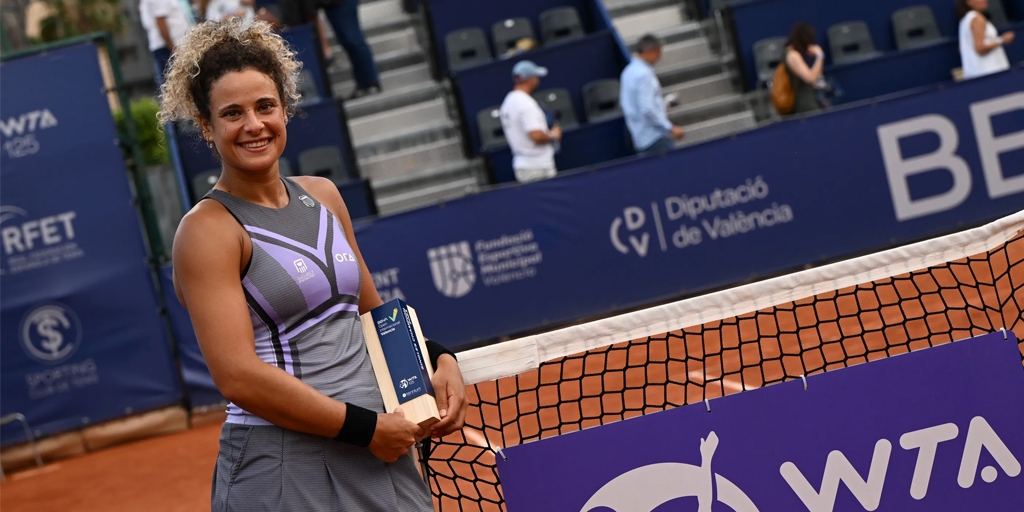
Egypt’s Mayar Sherif continued her dominant rise in the tennis world at the BBVA Open Internacional de Valencia in Spain, winning the Women’s Tennis Association (WTA) 125 title and leaping into the Top 35 world singles ranking for the first time.
This is also the tennis champion’s second consecutive WTA 125 title, having clinched the WTA 125 Makarska Open trophy in Croatia on 11 June.
Sherif enjoyed a winning streak throughout the tournament, eventually defeating Spain’s Marina Bassols Ribera 6-3, 6-3. With this victory, Sherif, now ranked 31st in the world, maintained her remarkable record in WTA 125 finals, extending it to 6-0.
“I came into this tournament with great momentum from Makarska, and I wanted to capitalize on it,” expressed Sherif after her dominant display. “Right from the beginning of the tournament, I felt very comfortable, and I believe that reflected in my straight-set victories throughout.”
With an astounding 9-place leap to 31st place in the singles world ranking, Sherif is now the highest-ranked Egyptian tennis player in history – surpassing the legendary Ismail El Shafei’s career-high of 34th place.
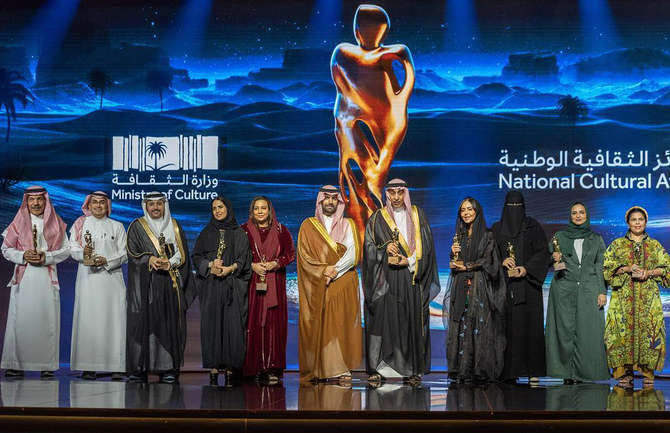
The winners of the third National Cultural Awards were honored in a ceremony held in Riyadh on Saturday. The event was a night dedicated to celebrating cultural creativity and promising ambition.
Minister of Culture Prince Badr bin Abdullah bin Farhan presented the awards to the winners in the presence of Minister of Education Yousef Al-Benyan and Minister of Media Salman Al-Dossary. The ceremony was also attended by a distinguished group of intellectuals, writers and media figures.
The National Cultural Awards, an annual initiative by the Ministry of Culture, aims to recognize and showcase the talents of individuals within the country.
The awards also serve to promote their cultural products both locally and internationally, while providing financial and moral support to encourage their continued growth and success.
The winners were nominated for awards in 16 different categories, covering a range of areas including literature, music, architecture and design, nonprofits and film.
Prince Badr said: “We are happy to honor innovators in our beloved capital,” adding that the initiative aims to “shed light on talents, celebrate achievements, honor innovators and encourage cultural production.”
He said: “The newly launched business owner award for this year reflects the cultural system’s appreciation for the contributions of supporters of cultural activity across all cultural sectors, and acknowledges their vital role as an integral part of the efforts made by the cultural system entities.”
Prince Badr added: “The international cultural excellence award celebrates international cultural personalities and institutions contributing to enriching the contemporary international cultural landscape, in addition to celebrating the significant efforts in the field of international cultural exchange on a global level.”
He concluded by congratulating the winners of the National Cultural Awards for this year, urging them to continue their efforts and wishing everyone a future filled with arts and culture.
Author Abu Abdulrahman Al-Dhaheri received the cultural pioneer award for his extensive contributions to literature and culture. He has produced a diverse collection of publications in languages, literature, philosophy, art, Shariah sciences and history.
Businessman Abdulrahman bin Mahfouz won the business owner award for supporting cultural activity. The International Alliance for the Protection of Heritage in Conflict Areas received the international cultural excellence award.
In addition, Lubna Al-Khamis, a Saudi journalist, won the youth cultural award. The cultural institutions award was given to the Saudi Research and Media Group in the private sector and the Abdulrahman Al-Sudairy Cultural Center in the nonprofit sector.
The ceremony also recognized winners in other cultural sectors. Mohammed Ibrahim Yaacoub, a poet, received the literature award, and Adab Publishing won the publishing award.
Maha Al-Faleh was honored with the translation award, and Charmaleena Jewellery received the fashion award. Dr. Abdullah Al-Masri, a historian, won the national heritage award, and Bateel International was recognized with the culinary arts award.
Artist Manal Al-Dowayan was given the visual arts award, and the Riyadh Band received the theater and performing arts award.
Abdulrahman Mohammed won the music award, while Ibrahim Al-Hsawi won the film award. Kholoud Attar was recognized with the architecture and design award.
source/content: arabnews.com (headline edited)
_____________
/Saudi Minister of Culture Prince Badr bin Abdullah bin Farhan with the winners of the third National Cultural Awards in Riyadh. (SPA)