Arabs & Arabian Records Aggregator. Chronicler. Milestones of the 25 Countries of the Arabic Speaking World (official / co-official). AGCC. MENA. Global. Ist's to Top 10's. Records. Read & Enjoy./ www.arabianrecords.org
The Holy Qur’an Museum at the Hira Cultural District in Makkah is showcasing a monumental handwritten copy of the Holy Qur’an, recognized as the largest Qur’an of its kind in the world.
The manuscript measures 312 cm by 220 cm and comprises 700 pages, earning the museum recognition from Guinness World Records for displaying the world’s largest Qur’an, the Saudi Press Agency reported.
The manuscript is a magnified reproduction of a historic Qur’an dating back to the 16th century, the SPA stated.
The original copy measures 45 cm by 30 cm, with the chapters written primarily in Thuluth script, while Surah Al-Fatiha was penned in Naskh, reflecting the refined artistic choices and calligraphic diversity of the era.
The Qur’an is a unique example of Arabic calligraphy, gilding and bookbinding, showcasing Islamic art through intricate decorations, sun-shaped motifs on the opening folio, and elaborately designed frontispiece and title pages that reflect a high level of artistic mastery.
The manuscript was endowed as a waqf in 1883. Its original version is currently preserved at the King Abdulaziz Complex for Endowment Libraries, serving as a lasting testament to Muslims’ enduring reverence for the Qur’an and the richness of Islamic arts across the centuries.
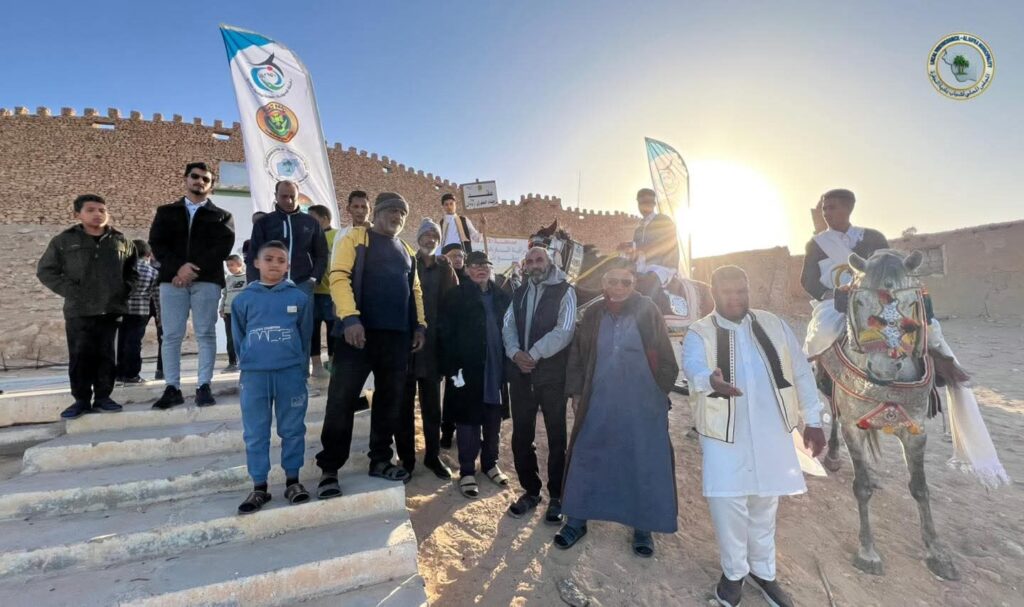
The residents of Wadān commemorated the 111th anniversary of the Battle of Qarat al-Tawza, which took place in 1915 between Libyan resistance fighters and the invading Italian forces.
The local youth council of the Jufra municipality organized a celebration on this occasion, during which several speeches were delivered praising the sacrifices and bravery of their ancestors in confronting the heavily armed Italian forces, who suffered heavy losses in lives and equipment, despite the limited resources and weapons of the heroic resistance fighters.
The celebration included equestrian displays, highlighting the prominent role horses played in the battles of the Libyan resistance and their importance at that time. The event also featured the lighting of the torch of resistance, the recitation of Surah Al-Fatihah in remembrance of the martyrs of the Battle of Qarat al-Tawza, and the laying of flowers in memory of the martyrs of Wadān who fell in the battles against colonialism.
The event was attended by youth from the National Agency for Voluntary Efforts, the Tozeur Martyrs Camping and Summer Resort Center in Wadān, the Scout and Guide Troop, the Cultural Forum, the Wadān Heritage and Tourism Association, and the Tozeur Martyrs Equestrian Club.
The program also included a detailed historical account of the Battle of Qarat Tozeur, a review of the heroic deeds of our ancestors in defense of the homeland, and the participation of a select group of poets who recited patriotic poems that embodied pride in history and struggle, and affirmed the deep sense of belonging and loyalty to the sacrifices of the martyrs.
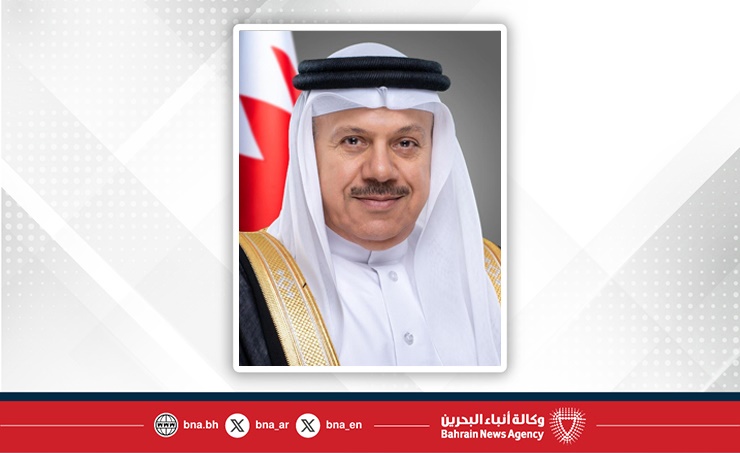
Dr. Abdullatif bin Rashid Al Zayani, Minister of Foreign Affairs and Chairman of the National Human Rights Committee, said that the Kingdom of Bahrain’s official inclusion in the Guinness World Records as the country with the highest density of places of worship for different religions represents international recognition of Bahrain’s established approach to religious tolerance, peaceful coexistence, and respect for human rights and religious, cultural, and civil freedoms.
The minister said that the achievement reflects the vision of His Majesty King Hamad bin Isa Al Khalifa and Bahrain’s national approach to coexistence, which is grounded in the rule of law, justice, and constitutional institutions, and supported by consistent government policies that have made tolerance and coexistence an integral part of national practice.
Dr. Al Zayani extended congratulations to His Majesty the King and to His Royal Highness Prince Salman bin Hamad Al Khalifa, the Crown Prince and Prime Minister, on the achievement, noting that it reflects Bahrain’s longstanding commitment to religious and cultural diversity.
The minister noted that the global achievement coincides with the international observance of the International Day of Peaceful Coexistence, adopted by the United Nations General Assembly following a Bahraini initiative, as well as with the national observance of the Year of Isa Al Kabeer. He said this alignment highlights Bahrain’s historical standing as a society rooted in religious and cultural coexistence, and its role in promoting dialogue and peace, drawing on a legacy shaped by the leadership of His Highness Isa Al Kabeer, founder of the modern Bahraini state, and carried forward under the current national approach led by His Majesty the King.
Dr. Al Zayani explained that Bahrain’s ranking in the Guinness World Records, with an average of 2.577 places of worship per square kilometre, reflects the Kingdom’s long-established practice of accommodating places of worship for different religions and denominations. These include mosques and “grand mosques” (congregational mosques), alongside churches, a Jewish synagogue, one of the oldest churches in the region, and a Hindu temple established in Manama more than two centuries ago.
He said that this diversity reflects social cohesion, equal citizenship, and respect for freedom of religion and belief, and represents a practical expression of Bahrain’s values of coexistence and peace.
The minister highlighted Bahrain’s efforts to share its experience in religious coexistence and dialogue at regional and international forums through initiatives launched under the leadership of His Majesty the King. These include the declaration on freedom of religion and belief, international conferences on intercultural dialogue, the King Hamad Award for Coexistence and Tolerance, and other initiatives aimed at serving humanity, empowering women and youth, and promoting a culture of peace.
Dr. Al Zayani reiterated that the Kingdom of Bahrain, under the leadership of His Majesty the King and the directives of His Royal Highness the Crown Prince and Prime Minister, continues its human rights and development efforts, as well as its diplomatic and humanitarian role through its non-permanent membership of the United Nations Security Council, in support of regional and international peace, dialogue among religions and cultures, the National Human Rights Plan, and the Sustainable Development Goals.
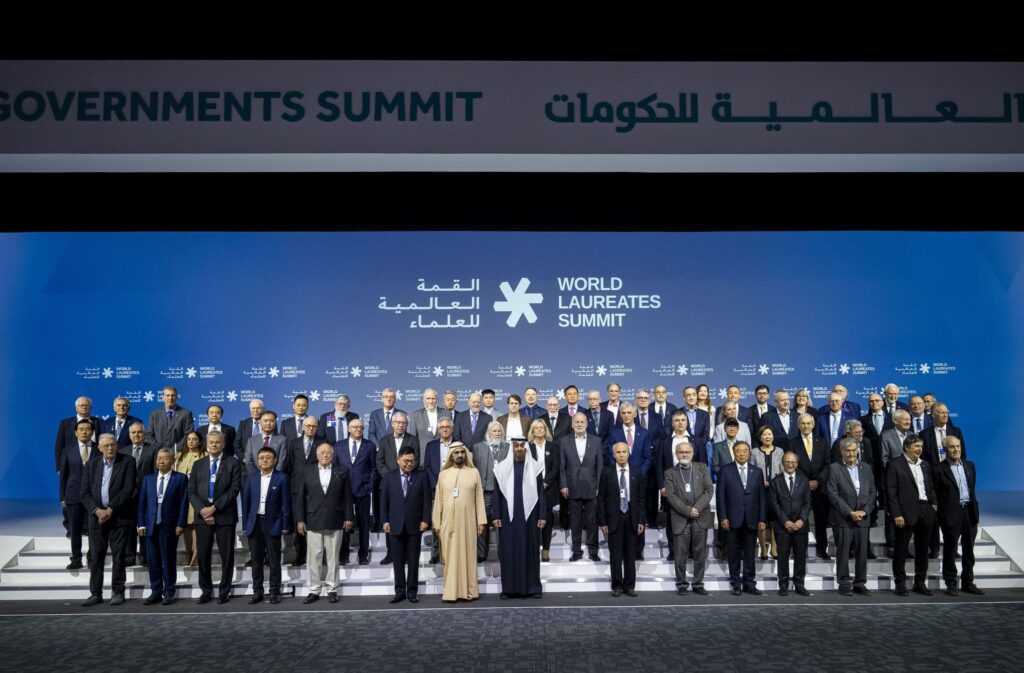
President His Highness Sheikh Mohamed bin Zayed Al Nahyan, and His Highness Sheikh Mohammed bin Rashid Al Maktoum, Vice President, Prime Minister, and Ruler of Dubai, inaugurated the World Laureates Summit, the largest global gathering of Nobel Prize winners and recipients of other prestigious scientific awards.
Also present at the inauguration were His Highness Sheikh Mansour bin Zayed Al Nahyan, Vice President, Deputy Prime Minister and Chairman of the Presidential Court, and His Highness Sheikh Hamdan bin Mohammed bin Rashid Al Maktoum, Crown Prince of Dubai, Deputy Prime Minister and Minister of Defence.
The World Laureates Summit, which commenced today and runs for three days, brings together more than 100 scientists and participants, including Nobel laureates, recipients of major international scientific awards, and leaders of research institutions.
It coincides with the World Governments Summit 2026, taking place from 3 to 5 February, with 3 February designated as a joint day that brings laureates together with heads of state and government, ministers, and leaders of international organisations and institutions participating in the World Governments Summit.
During the summit, Their Highnesses were briefed on key discussions involving a distinguished group of Nobel laureates and researchers from various vital disciplines, affirming the summit’s role as an international scientific platform for dialogue focused on long-term strategic thinking and multidisciplinary cooperation. The summit supports the role of basic sciences in addressing global challenges at a time of mounting economic, social, and political pressures and an urgent need for innovative solutions to sustain development efforts and ensure the continuity of humanity’s civilisational progress.
His Highness Sheikh Mohamed bin Zayed Al Nahyan highlighted that scientists are essential partners in shaping the future and that investing in knowledge and scientific research is the key to navigating global challenges. His Highness stated that the UAE will remain a global platform that brings visionaries and thinkers together and supports innovation in service of all of humanity.
His Highness Sheikh Mohamed bin Zayed continued by stating that science and scientists are at the core of the UAE’s vision for the future, extending from the belief that countries that make knowledge a national priority are the ones capable of leading global transformations and shaping a better tomorrow.
His Highness added that the World Laureates Summit reflects the UAE’s efforts and unwavering commitment to building a comprehensive scientific ecosystem that enhances quality of life and lays the foundations for sustainable prosperity rooted in solid scientific principles.
His Highness remarked that the world today faces major challenges that require unconventional solutions, underscoring the importance of this major scientific gathering. His Highness stated that the responsibility of scientists today extends beyond the confines of research centres, as they must become active partners in decision-making and in shaping development-focused policies.
His Highness expressed his hope that this scientific dialogue would contribute creative solutions to global challenges, ensuring the sustainability of resources for future generations. He added that the UAE will continue to strengthen its role as a bridge connecting scientific outputs with the needs of societies while supporting scientific research and the development of emerging technologies in service of peace and development.
Science is the Wealth of Nations
His Highness Sheikh Mohammed bin Rashid Al Maktoum affirmed that the UAE has been, and will continue to be, a nexus for visionaries and bold ideas. “Convening 100 scientists and Nobel Prize laureates in the World Laureates Summit is our way of saying: Civilisation happens when we appreciate science and scientists. Our goal is to open the doors wide for innovators so they can turn the impossible into tangible reality.”
His Highness added: “Science is the true wealth of nations, and scientists are the architects of humanity’s future. The UAE embraces bright minds, empowers researchers and offers the space to turn ideas into accomplishments.
His Highness stated: “People are our greatest asset. Through science, we can forge a better future for all. The UAE continues to establish itself as a global hub for science and knowledge and a magnet for talent and creative minds from around the world, driven by our belief that investing in people is key to achieving sustainable development and shaping the future.”
Investing in Knowledge and Science
His Excellency Mohammad Al Gergawi, Minister of Cabinet Affairs and Chairman of the World Governments Summit, said in his opening remarks at the World Laureates Summit that the vision of UAE President His Highness Sheikh Mohamed bin Zayed Al Nahyan has made the UAE an incubator for intellect and a meeting point for global thought leaders, praising His Highness’ continued support for science and scientists.
His Excellency Al Gergawi said the UAE believes that building a nation cannot be achieved by relying solely on resources, but also on people, and that the greatest investment in the future is an investment in knowledge and science. His Excellency noted that a nation that prioritises science and believes strongly in knowledge as the shortest path to prosperity and in research and openness as integral to its foundations is a strong nation capable of achieving and sustaining excellence.
His Excellency added that humanity’s journey of knowledge is undergoing a fundamental transformation. The rapid evolution of artificial intelligence and the aspiration for longer, healthier lives require new scientific approaches. He pointed out that conventional boundaries separating physicists, computer scientists, and biologists are beginning to dissolve, stressing that, where such boundaries continue to exist, society must overcome and redefine them.
His Excellency Al Gergawi affirmed that the World Laureates Summit draws its value and historical significance from being held at a pivotal time marked by political shifts, rapid technological acceleration, and unprecedented economic pressures amid growing concern about humanity’s future. In such moments, he said, the role of scientists is not secondary, but critical.
His Excellency concluded: “Our gathering today sends a message of hope to humanity: Despite the negative noise filling the world, human beings are still capable of choosing the path of reason and of working to improve this world. This is where the spirit of the UAE echoes the spirit of this scientific gathering, as neither sees the past as a ceiling or finish line but the future as a responsibility. Both believe that hope is not awaited but created, and that progress does not happen by chance, but as the result of collective action, clear vision, and faith in human potential.”
His Excellency Al Gergawi thanked the attending scientists, whose presence makes them part of a future that is more humane, just, and knowledgeable. He concluded: “Your being in the UAE today, in the presence of our leadership, will help shape a better future for humans and a healthier, more advanced planet.”
New WLA base in the UAE
Professor Roger Kornberg, President of the World Laureates Association (WLA), Nobel Laureate in Chemistry (2006) and Professor of Medicine, Stanford University, revealed WLA plans to launch a new base in the UAE, bringing together scientists from around the world and positioning the UAE as a global hub for scientific collaboration, research, and innovation.
Prof Kornberg stated: “The UAE is not following the future of science—it is setting its direction.”
Delivering the opening remarks for the World Laureates Summit, Kornberg described the event as a remarkable and unprecedented gathering in its scope, diversity and breadth.
Kornberg said: “This joint summit is also unprecedented in another way: it places science alongside government, industry, and finance. Scientists rarely have the opportunity to engage directly with policymakers at this level and on this scale. Here, we create a space where discovery and decision-making meet.”
Kornberg added: “In organising this summit, our goal was not only to explain science, but to address questions of broad societal importance. This is reflected in the sessions you will see over the coming days: Can AI actually discover anything? Can science save the Earth? Are we approaching the end of disease? These questions help ensure that science is not only understood but heard far beyond these halls.”
He added: “This is where the partnership with the World Governments Summit is so important. By convening the world’s leaders, the WGS ensures that the voice of science reaches decision-makers at the highest level.”
Knowledge as a driver of progress
Wang Hou, Executive Director and Secretary-General of the World Laureates Association, stated that the UAE’s deep appreciation for science and of its people’s belief in knowledge as a driver of progress are the reasons that helped the World Laureates Summit convene with great success.
He expressed his sincere thanks to members of the World Laureates Association for joining the summit, noting that their work has shaped human understanding of the world and continues to advance humanity in profound and lasting ways.
Hou stressed that the world stands at a pivotal moment that demands joint efforts for the future of humanity and the advancement of modern science. He highlighted the UAE’s hosting of the World Laureates Summit as a major step on this path, stating: “From the UAE, the future of science is not observed—it is shaped. Here, knowledge leads policy, and discovery is translated into global progress.”
The World Laureates Summit, organised in partnership between the World Governments Summit and the World Laureates Association, is the largest scientific gathering of its kind. It brings together an elite group of laureates who are recipients of the Nobel Prize, Turing Award, the Wolf Prize, the Lasker Award, the Fields Medal, and the Breakthrough Prize, alongside other recipients of prestigious international scientific awards.
The World Laureates Association comprises 187 leading scientists, including 78 Nobel laureates, as well as recipients of the prestigious scientific honours.
The summit’s agenda features a high-level programme centred on the theme “Basic Sciences: Scientific Consensus for Addressing the Challenges of Humanity” and includes keynote addresses, plenary sessions, specialised forums, strategic roundtables, and extended dialogues spanning a wide range of fields – most notably artificial intelligence and machine learning, quantum science and nanotechnology, biotechnology and genomics, data science and cryptography, and neurotechnology.
Discussions focus on how fundamental sciences contribute to governance and economic systems, how emerging technologies can be developed responsibly, and how international scientific cooperation can be strengthened in an increasingly complex geopolitical environment.
The first day’s agenda, in addition to the opening ceremony, included the AI Sciences Forum, the forum titled “AI Science Forum: Can AI Discover Anything?” and the Disruptive Technologies Forum, the New Energy Forum, and the Scientific Discovery Forum.
The second day’s agenda includes nine forums: “Six Senses and The Brain Forum”, “Genetic Science Forum”, “Life Sciences Forum”, “Physics Forum”, “Hospital Leaders Forum”, “Blockchain Science Forum”, “Carbon Materials Forum”, “Nuclear Physics Forum”, and “University Leaders Forum”.
The third day features the Young Scientists Forum, as well as joint sessions between the World Governments Summit and the World Laureates Summit.
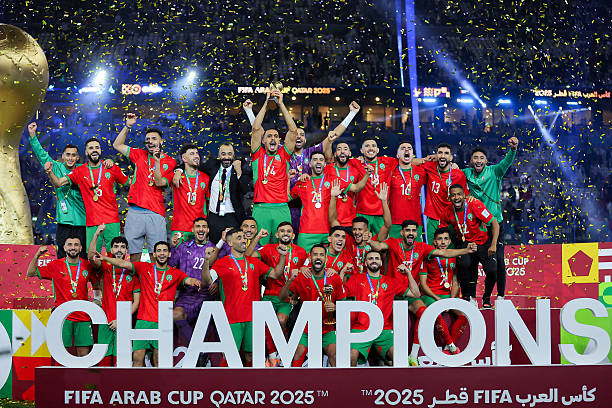
Morocco won the 11th edition of the FIFA Arab Cup with an action-packed 3–2 victory over Jordan in the final.
Exactly three years on from the unforgettable 2022 FIFA World Cup final, Lusail Stadium once again hosted the coronation of a champion. This time, it was the Arab world that came together in Qatar for the FIFA Arab Cup.
After 29 matches over 18 days, Morocco and Jordan were the last two teams left in contention for the title. The Atlas Lions had previously won the tournament in 2012, while Jordan were appearing in their first Arab Cup final, just a few years after losing the Asian Cup final at the same venue.
Before kick-off, there were concerns that the match would not go ahead at all. An unusually heavy downpour in Doha led to the suspension of the third-place match between the UAE and Saudi Arabia, raising doubts about the final. While several events were cancelled due to the weather, the showpiece match proceeded as planned.
Tens of thousands of fans braved thunderstorms to pack Lusail Stadium, and they were rewarded just minutes into the game. Oussama Tannane opened the scoring with a stunning long-range effort from inside Morocco’s own half, giving the Atlas Lions an early lead.
Jordan were unable to find an equaliser before the break, but tournament top scorer Ali Olwan levelled the match just two minutes into the second half with a powerful header. He then put Jordan ahead from the penalty spot in the 68th minute, setting up a dramatic finish.
Morocco’s pressure paid off late on when substitute Abderrazak Hamdallah turned the ball in from close range just three minutes before full time, sending the match into extra time. The veteran striker struck again in the 100th minute, restoring Morocco’s lead. This time, the Atlas Lions held firm to seal a memorable victory.
While the atmosphere of the World Cup was always going to be impossible to replicate, echoes of that tournament were felt throughout the Arab Cup. Fans travelled from across the region, filling stadiums, metro stations and fan zones to create a festival-like atmosphere.
There were memorable moments across the competition. Hosts Qatar endured a difficult campaign and exited at the group stage, while Palestine captured widespread admiration with their first-ever run to the knockout rounds. They pushed World Cup-bound Saudi Arabia to extra time in the quarter-finals before eventually bowing out.
Individual honours were also handed out following the final. Jordan’s Ali Olwan was awarded the Golden Boot, Morocco’s Mehdi Benabid received the Golden Glove, and Morocco’s Mohamed Rabie Hrimat was named Best Player of the tournament.
Attention will now turn to the future, with the FIFA Arab Cup set to return to Qatar for its next two editions in 2029 and 2033.
source/content: dohanews.co (headline edited)
____________
Morroco’s players celebrate with the trophy after winning the FIFA Arab Cup 2025 final football match between Jordan and Morocco at the Lusail Stadium Stadium, in Lusail on December 18, 2025. (Photo by Karim JAAFAR / AFP via Getty Images)
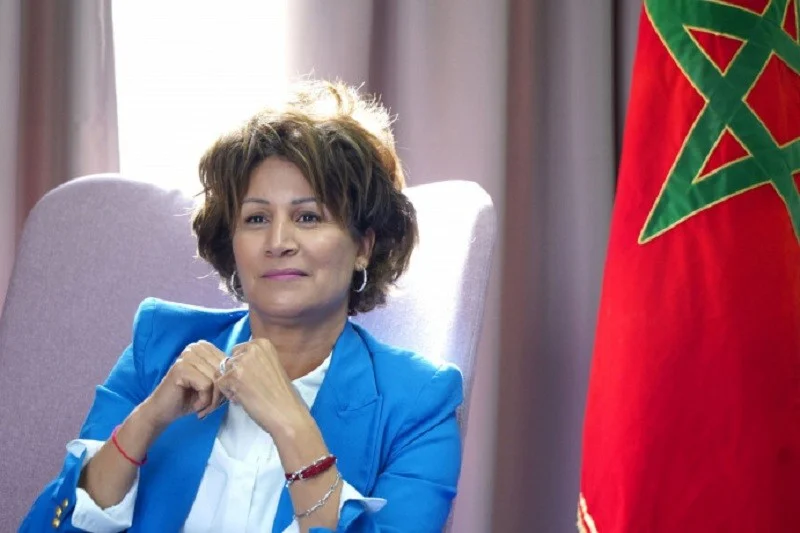
Nezha Bidouane has been granted a new four-year term on the governing board of the International Sport for All Federation (FISPT) following elections held during the organization’s general congress in central Italy.
The Moroccan sports official, who serves as President of the Royal Moroccan Federation for Sport for All, retained her seat as delegates from dozens of countries convened on January 24 and 25 to determine the federation’s future leadership.
Bidouane’s renewed mandate reinforces Morocco’s representation within global sports governance at a time when the country continues to expand its engagement on the international sports stage. Her role reflects sustained efforts to promote wider access to sport, emphasizing community participation and inclusivity beyond elite-level competition.
A former world-class athlete, Bidouane built a distinguished career in athletics, securing multiple international titles in the 400-meter hurdles and earning a bronze medal at the 2000 Sydney Olympic Games. She has since transitioned into sports administration, where she remains actively involved in advancing inclusive and developmental sporting initiatives worldwide.
The African media organisation Financial Afrik, during the current edition of its annual conference hosted by the Gambian capital Banjul, selected Ali Alshimmari, Managing Director and CEO of the UAE-based company Global South Utilities, as a pioneer of Arab–African cooperation, as part of a list of 100 influential African figures in the fields of economy, investment, and development, in recognition of his role in supporting sustainable energy projects and promoting long-term investment across the African continent.
President Adama Barrow of The Gambia received Alshimmari and expressed his appreciation for the UAE’s support and investments in the continent.
This recognition marks the second of its kind that Alshimmari has received within a few months. In September, he was awarded the Officer of the National Order of Chad by Chadian President Mahamat Idriss Déby Itno, one of the country’s highest honors, making him the first foreign company CEO to receive this distinction from the Chadian president. The award recognised Alshimmari’s commitment to delivering the Noor Chad Solar Power Plant in record time.
Alshimmari has emerged as one of the UAE’s prominent young executives in the renewable energy sector. He previously held senior positions at Abu Dhabi National Energy Company (TAQA) and Masdar, and worked on cross-border renewable energy projects, before assuming leadership of Global South Utilities, a subsidiary of Resources Investment Group in Abu Dhabi.
Following the award ceremony, Alshimmari said, “In Africa, energy is neither a luxury nor a technical issue. When electricity reaches an African village, it is not just lighting, but life in motion. Schools operate, clinics remain open, and the economy moves. This is the Africa we are working for.”
Alshimmari recently stated during the Global South Utilities Forum, hosted as part of Abu Dhabi Sustainability Week, that, “In the Global South, sustainability is not a vision of the future-it is the price of delay, paid today,” adding that, “While much of the world debates sustainability in the Global South, the UAE is busy building it.”
The company is currently implementing several renewable energy projects in a number of African countries, including Madagascar, the Central African Republic, the Comoros Islands, and Chad, contributing to improving local production capacity and supporting economic stability.
Global South Utilities aims to reach a production capacity of 750 megawatts by 2027, having so far financed projects with a total capacity of nearly 400 megawatts, including projects implemented within the African continent.
Saudi Arabia won several Arab awards in medicine and nursing during the 63rd session of the Council of Arab Health Ministers, held recently in Tripoli, Libya, highlighting the Kingdom’s growing prominence in regional health excellence and the strength of its national health workforce.
The achievements reflect the rapid development of Saudi Arabia’s health sector and the high caliber of its medical and nursing professionals, who continue to contribute to innovation, enhanced health preparedness and the delivery of sustainable healthcare — in line with the objectives of the Health Sector Transformation Program under Saudi Vision 2030, said a statement issued on Thursday by the Saudi Ministry of Health.
As part of the Arab Doctors Award 2025 by the General Secretariat of the Arab League’s Social Affairs Sector, Dr. Ahmed bin Salem Bahammam, director of the Prince Naif Center for Health Research, received the award for excellence in scientific research and innovation.
Dr. Zuhair bin Yousef Al-Hlais, senior consultant in cardiac surgery at King Faisal Specialist Hospital, was honored with the award for excellence, leadership and professional medical impact.
For nursing, a Saudi team comprising Dr. Manal Saeed Banassr, Iman Mohammed Al-Shammari, Abdulrahman Abdullah Abu Khadaah, Jawharah Fahad Al-Harbi and Reem Mohammed Al-Humaidan won first place in the clinical practice category of the “Outstanding Work in Nursing and Midwifery” award for their project, the INS Model.
The innovative scheme focuses on strengthening surge capacity in intensive care units during disasters by enhancing nursing workforce readiness and increasing ICU capacity in times of crisis.
The model was developed during the COVID-19 pandemic.
In addition, Dr. Badriah Awad Al-Shehri, chief nursing executive at King Saud Medical City, jointly won the “Outstanding Work in Nursing and Midwifery” award with Egypt for the Nethathon Project, which aims to advance nursing education and training, enhance workforce competencies and improve the quality of health education outcomes.
The awards highlight Saudi Arabia’s leadership in medical innovation and professional excellence across the Arab region.
source/content: arabnews.com (headline edited)
______________
Saudi Arabia wins Arab awards in medicine and nursing at Arab Health Ministers’ Meet 2025. (Supplied)
Building Capacity in a Time of Digital Chaos: How Arabi Facts Hub Works with Media Students and Journalists to Rebuild Trust in Info.
Al-Fanar Media and Arabi Facts Hub, a nonprofit organisation that detects false Arabic content on the internet, are uniting to combat misinformation.
The two organisations have signed a protocol agreeing to exchange expertise and conduct training courses and research on confronting misinformation and disinformation in Arabic content on the internet.
This agreement is rooted in both parties’ belief in the importance of professional journalism, fostering a culture of fact-checking, and strengthening the abilities of journalists, researchers, and students in digital media, media literacy, and investigative journalism.
The protocol involves the two organisations running joint training programmes for journalists, researchers, and students; organising fact-checking meetings, seminars, and panel discussions at Arab universities; distributing educational material about media literacy, fact-checking, and open-source information; and combining to publish investigative reports.
Combating Misinformation
Mohammad El-Hawary, Al-Fanar Media’s executive director and editor-in-chief, said, “Al-Fanar Media’s strategy is built on coordinating efforts and establishing partnerships with Arab and international institutions to help Arab youth combat misinformation and rumours. We do this by producing training and educational material and organising events to try to create responsible content creators for traditional media and social media audiences.”
Al-Fanar Media’s efforts in this area have included joining the Unesco Alliance for Media and Information Literacy, offering media literacy training workshops for Arab university students in Egypt, Jordan, Morocco, and Saudi Arabia, and starting a Gen Z project that trains young content creators in professional journalism standards, particularly for social media.
The organisation also organises online discussions with experts and academics through its Al-Fanar Media Talks series.
El-Hawary added: “Our world today is extremely complex, yet highly interconnected in terms of shared destiny and risks. It requires flexibility, the exchange of expertise and best practices, and understanding specific societies when providing resources that let communities, often led by young people, tackle these common challenges in a responsible manner.
“We value our partnership with Arabi Facts Hub and are pleased that Al-Fanar Media’s platforms can be a window through which the Arab public—including young people, experts, academics, and others interested in Arab affairs—can access the professional output produced by the Arabi Facts Hub team.”
The collaboration with Arabi Facts Hub will include forming joint policies and fact-checking events. It is one of a series of new partnerships that Al-Fanar Media is planning to build on its reputation and increase its impact in the Arab world, El-Hawary said.
New Horizons in Media Literacy
Maha Salah El-Din, head of communications and partnerships at Arabi Facts Hub, also expressed her enthusiasm for the partnership with Al-Fanar Media, saying it opened new horizons for cooperation in media literacy to address the information disorder in the Arab region.
The training, academic, and editorial projects that the project plans will help journalism and fact-checking abilities in the Arab region, she said.
El-Hawary and El-Din both said they hoped that the cooperation would raise public awareness about misinformation and help curb its spread.
The formal cooperation agreement is valid for one year but will automatically renew as long as each party wishes to continue.
Al-Fanar Media is an independent news organisation that covers higher education, research, and culture in the Arab world. It seeks to provide accurate and balanced content in both Arabic and English about issues relevant to Arab higher education across the region and beyond.
Arabi Facts Hub is an independent platform that promotes a culture of fact-checking and combating misinformation in the Arab region through training, content production, support for investigative journalism, and building skills for journalists, researchers, and media students.
501 vehicles drive through the dunes of scenic Tuwaren.
Hail entered the Guinness World Records at the weekend after producing the largest-ever off-road production car convoy.
The previous record, some 449 vehicles in Australia, was smashed with 501 vehicles driving through the dunes of the scenic Tuwaren area, 42 km northwest of Hail and a location surrounded by the Aja Mountains.
A large number of people from various regions of the Kingdom, Gulf and Arab countries gathered to navigate an unpaved desert trail of 7 km, showcasing their spirit of adventure and the diversity of the region’s terrain.
The event was open to both seasoned off-road drivers and newcomers looking for a unique winter entertainment. This made it suitable for individuals, groups of friends, and families.
The convoy was accompanied by a variety of cultural and entertainment activities that contributed to enhancing the experience for visitors and participants.
Prince Abdulaziz bin Saad bin Abdulaziz, the governor of Hail Province and the chairman of the board of the Development Authority, thanked the Saudi leadership for supporting the development of the Kingdom’s regions. He also praised Hail’s youngsters for taking part in breaking the world record.
Omar Abdullah Al-Abdul-Jabbar, the CEO of Hail Region Development Authority, told Arab News that Hail’s entry into the Guinness World Records was a national achievement.
He said: “Hail’s achievement of this Guinness world record for organizing the largest off-road rally further solidifies its position as a leading destination for desert adventures and activities, and strengthens its presence on the local and regional tourism map.”
The event was organized by the Saudi Tourism Authority and Hail Region Development Authority, with sponsorship from the King Salman bin Abdulaziz Royal Reserve Development Authority, and Culture House.
In addition, 14 government entities supported the event, including the Principality of Hail Region, and the Saudi Automobile and Motorcycle Federation.
source/content: arabnews.com (headline edited)
______________
501 vehicles took part in an off-road drive in Hail over the weekend, smashing the previous world record. (Supplied)