Arabs & Arabian Records Aggregator. Chronicler. Milestones of the 25 Countries of the Arabic Speaking World (official / co-official). AGCC. MENA. Global. Ist's to Top 10's. Records. Read & Enjoy./ www.arabianrecords.org
Guinness-accredited arbitrator honours owner of Bisht Al Baghli exhibition.
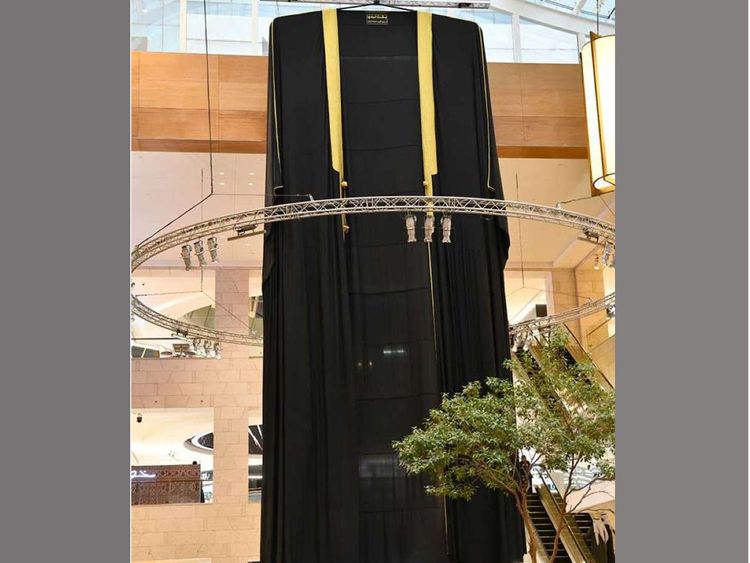
Guinness Book of Records recognizes Kuwait’s impressive bisht achievement
Kuwait has set a new world record for the largest bisht in the world. The impressive garment, measuring 17 by 16 meters, broke the previous record of 17 by 9 meters held by Saudi Arabia, Kuwait News Agency (KUNA) reported.
The bisht was produced under the supervision of the Al Baghli Exhibition for the Bisht Industry, a well-known establishment in Kuwait famous for its high-quality traditional garments. Its sewing took a total of 48 days, with the team of craftsmen working tirelessly to ensure every detail was perfect.
The achievement has been recognized by the Guinness Book of Records, with Guinness-accredited arbitrator Kenzi Al Dafrawi honouring Riyad Al Baghli, owner of the Bisht Al Baghli exhibition.
A bisht is a long cloak traditionally worn over a thobe or kandura at special occasions or celebrations in Middle Eastern countries.
The garments are typically black, but also come in white and brown, and are made from a light, often sheer, material with gold trimming.
Traditionally, they are worn at times of celebration, for weddings, Eid and significant festivals. Historically, they were a winter garment, reserved for keeping the wearer warm on colder nights.
source/content: gulfnews.com (headline edited)
___________
The impressive garment measures 17 by 16 meters. / Image Credit: Kuna
Syrian American Mayor Khairullah says Biden should end ‘racism’ against Muslims and Arabs
‘I don’t think it is fair to make a documentary to show that Cleopatra was Black. This is changing history,’ says Egyptologist Zahi Hawass
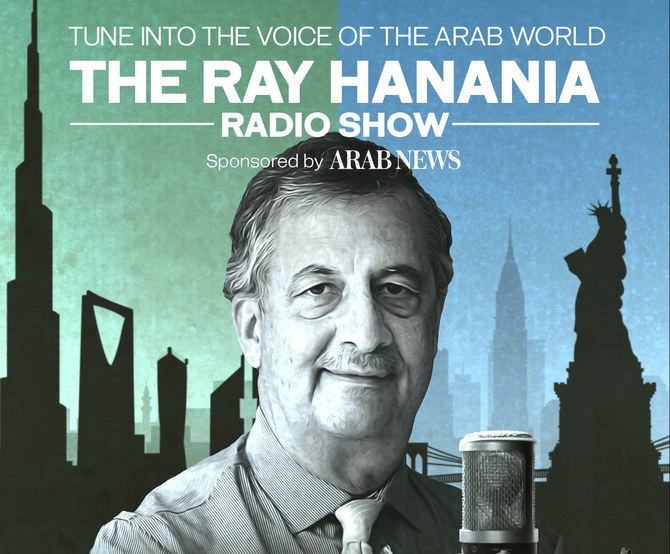
The Ray Hanania Radio Show, a weekly program sponsored by Arab News, kicked off its third season on Thursday with an explosive episode last night. It featured as its first guest Syrian American Mayor Mohamed T. Khairullah, who was controversially banned from the White House Eid celebration.
During his appearance on the show, Khairullah slammed President Joe Biden, saying it is his responsibility to end the “racism” and “discrimination” against Muslims and Arabs that is a part of the system.
The Ray Hanania Radio Show, which first aired in October 2020 ahead of the US elections at the time, hosts a wide array of guests tackling crucial topics in the Arab world.
One such topic tackled this season is the recent Netflix docuseries controversy surrounding the casting of Adele James, a Black actress, as Cleopatra, whom historians agree was of Greek origin.
The furor came from Egyptians and other Arabs accusing the producers of the film of appropriating their culture. The Ray Hanania Radio Show thus hosted world-renowned Egyptologist Zahi Hawass who set the facts straight.
“Cleopatra was a Macedonian…I really think that the reason this film is shown now (is) because some people want to say that the origins of Ancient Egypt were Black,” he said on the show, adding, “I don’t think it is fair to make a documentary to show that Cleopatra was Black. This is changing history.”
Continuing with the topic of Arab representation in Hollywood was Arab News’ very own Editor-in-Chief Faisal J. Abbas.
On the show, Abbas cited Arab American writer and academic Jack Shaheen and his book “Reel Bad Arabs,” which says that, out of 1,000 films, Arabs were only presented or portrayed positively in 12 percent of them.
“As Arabs, we should not wait for Hollywood, and we should not wait for people with Orientalist agendas to tell our story. We should be the masters of our own destiny, we should be the masters of our own storytelling,” Abbas said.
“I’ll tell you one more thing before we conclude. Actions speak louder than words.”
The Ray Hanania Radio Show is broadcast live on WNZK AM 690 Radio in Greater Detroit and on WDMV AM 700 in Washington D.C. every Wednesday at 5pm EST / 12am KSA, also available on all Arab News podcast channels.
May Elghety, the talented Egyptian actress, has announced her upcoming role in Disney’s animated series “Kizazi Moto: Generation Fire”. This sci-fi series, inspired by Africa’s diverse cultures and histories, promises to bring viewers thrilling stories of advanced technology, aliens, spirits, and monsters from a uniquely African perspective.
Elghety, who has won critical acclaim for her performances in several TV series and films, took to Instagram to express her excitement and honor at being part of the project. The 24-year-old actress is currently filming for the British movie “Due Dating,” which is directed by Daniel Pacquette and written by Jade Asha.
Born to renowned TV presenters and writers Mohamed Elghety and Mona Barouma, May Elghety began her acting career as a child artist. Her outstanding performance in the controversial TV series “El-Kaserat” earned her the Best Upcoming Actress award at the Arab Drama Festival in 2013.
Since then, Elghety has starred in several successful productions, including “Clash” in 2016, “Taye’a” in 2018, and “Every Week Has A Friday” in 2020. Her most recent film, “MAMA,” premiered at the Cairo International Film Festival in 2022.
“Kizazi Moto: Generation Fire” is a 10-part anthology that promises to bring together rising animation talents from six African nations. The series features an impressive production team, with Oscar-winning director Peter Ramsey serving as executive producer and Cape Town-based animation house Triggerfish leading the studio. Egyptian director Ahmed Teilab has also joined the writing and directing team for the series.
The show is set to premiere on Disney+ this year and is sure to delight audiences with its captivating storytelling and stunning visuals. “Kizazi Moto: Generation Fire” is yet another feather in the cap of May Elghety, who continues to prove herself as one of the most talented and versatile actresses of her generation.
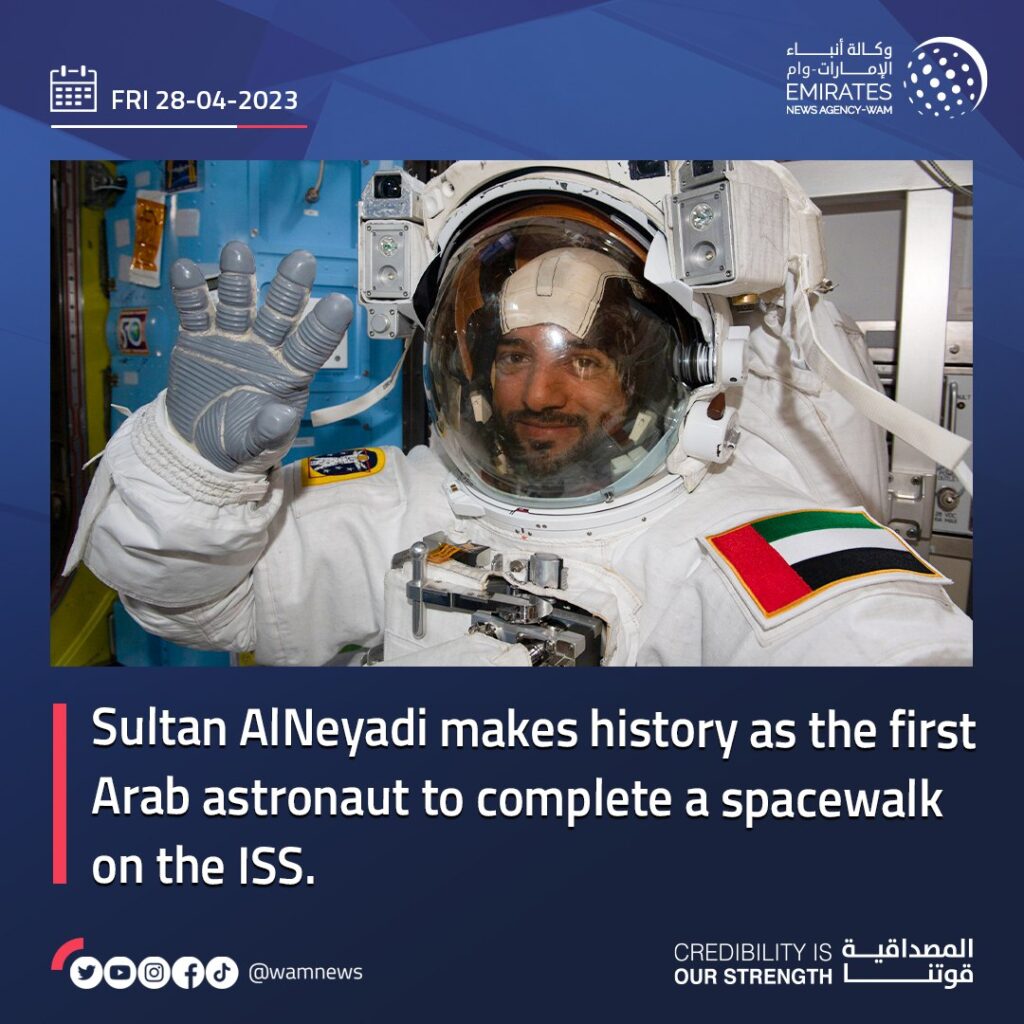
The Mohammed Bin Rashid Space Centre (MBRSC) achieved a new milestone on Friday when astronaut Sultan AlNeyadi ventured out of the International Space Station (ISS) and completed his spacewalk. With the conclusion of the mission task, the UAE commemorates AlNeyadi as the first Arab to undertake a spacewalk during Expedition 69, currently underway on the ISS. This accomplishment marks an important step forward for the Arab world’s participation in space exploration.
His Highness Sheikh Mohammed bin Rashid Al Maktoum, Vice President and Prime Minister of the UAE and Ruler of Dubai, said: “After three years of intensive training, today we see Sultan AlNeyadi on his first spacewalk, carrying out several tasks outside the International Space Station. AlNeyadi is the first ever Emirati, first Arab and first Muslim astronaut to perform a spacewalk.”
His Highness Sheikh Mohammed bin Rashid added: “It is a fact that many stars have Arabic names. Arabs are capable and innovative. Our focus on science and investment in youth will shape our future.”
The historic first Arab spacewalk lasted 7.01 hours in the vacuum of space on the starboard side of the International Space Station’s truss structure, accomplishing two key objectives. One of the objectives of the Extravehicular Activity (EVA), undertaken by AlNeyadi along with NASA Flight Engineer Stephen Bowen, was to work on a series of preparatory tasks which involved routing power cables, which was successfully concluded. These cable works were completed as a precursor to the installation of the Space Station’s fourth roll-out solar array, known as the International Space Station Roll-Out Solar Array (iROSA), which is scheduled to be delivered on the upcoming SpaceX Dragon cargo mission. The next objective was to retrieve a crucial Radio Frequency Group (RFG) unit. This communications antenna, or RFG will stay bolted on the station for now due to the difficulty of removing it.
Prior to embarking on their spacewalk, AlNeyadi and Bowen underwent a two-hour oxygen purge to eliminate nitrogen from their bodies. Following this, Warren Hoburg and Frank Rubio assisted the astronauts in donning their spacesuits – a major operation in itself. It took both AlNeyadi and Bowen an additional hour to put on their spacesuits and safety gear before entering the airlock to gradually reduce the pressure to a safe level for opening the exterior hatch.
Bowen was out of the hatch connecting his cable to the outside of the hull before anchoring AlNeyadi’s line outside as well. AlNeyadi then disconnected from the inside of the airlock and commenced the tasked activities.
AlNeyadi’s progress during the spacewalk was observed by Hazzaa AlMansoori, the Expedition 69 increment lead, from the NASA ground station in Houston.
Key safety checks of Sultan’s spacewalk Prior to the spacewalk, a thorough set of checks were conducted to ensure the safety of the astronauts. During their high-altitude walk outside the ISS, AlNeyadi and Bowen had to contend with two major challenges: radiation and extreme temperatures. The surrounding environment in space can reach scorching temperatures of up to 120 degrees Celsius in the sunlight and drop as low as -150 degrees Celsius when the sun is out of sight. While the spacesuit is geared to handle all this, careful management of the suit during the mission was also a task at hand.
Another pressing concern, even after all the necessary precautions were taken, was the threat of space debris. It is not uncommon for space debris to come dangerously close to the orbital outpost, posing a significant risk to the crew.
Hamad Obaid AlMansoori, Chairman, MBRSC, said, “The UAE Mission 2 is a truly inspiring endeavour that embodies the spirit of Emirati excellence and determination to achieve greatness in all our pursuits. From its inception as the longest Arab space mission to the historic appointment of the first Arab increment lead on an ISS expedition, and now continuing with the groundbreaking achievement of the first Arab spacewalk by Sultan AlNeyadi, this mission has set a new standard for excellence in space exploration. Under the patronage of the wise leadership, this remarkable milestone not only represents the UAE’s unwavering commitment to consolidating its position as a dominant force in space, science, and technology but also serves as a powerful motivator for future generations to strive for knowledge and innovation with boundless enthusiasm and dedication.”
Salem Humaid AlMarri, Director General, MBRSC, said, “Sultan AlNeyadi’s spacewalk has generated an unprecedented level of excitement and interest within the public, underscoring the immense significance of this mission. We are grateful to our visionary leadership for their unwavering support and guidance, which has enabled us to realise this ambitious goal and set the stage for even greater achievements in the future. While Sultan is conducting ground-breaking scientific experiments on the ISS, the addition of the spacewalk showcases yet another dimension of the UAE’s remarkable expertise in space exploration. This milestone achievement will play a critical role in restoring the International Space Station to its full operational capability, cementing the UAE’s position as a leading contributor to the global space community. “
Adnan AlRais, Mission Manager, UAE Astronaut Programme, MBRSC, said, “The historic achievement of the first-ever Arab spacewalk by Sultan AlNeyadi, as part of the longest Arab space mission in history, represents a remarkable milestone for the UAE. From the outset of the UAE Astronaut Programme journey, our astronauts have always set their sights on achieving the extraordinary, and with unparalleled skill and determination, they have risen to the challenge in a way that has captivated the world’s attention. As we celebrate this momentous achievement, we look eagerly to the future with great anticipation, as a new cadre of UAE professionals prepares for future missions that will enable them to further showcase our nation’s growing capabilities in the field of space exploration.”
Two months in space AlNeyadi will soon be completing two months in space after launching from Cape Canaveral in Florida with his Crew-6 team members on 2 March. For his second month aboard the Space Station, AlNeyadi conducted multiple experiments, including several key ones, such as:
• Collecting air samples from the Destiny and Columbus laboratory modules before cleaning the Veggie space botany facility. The samples were analysed for research purposes. • Sending approximately 1,950 kg of valuable scientific experiments and other cargo back to Earth on a Dragon cargo spacecraft, as part of the 27th contracted cargo resupply mission to the International Space Station (ISS). The spacecraft splashed down off the coast of Tampa, Florida in the US earlier this month. • Setting up the hardware for the CapiSorb Visible Systems fluid physics study. This experiment investigates the potential of using a liquid-based carbon dioxide removal system to promote more efficient space-based solutions and advanced Earth-bound applications. • Treating samples In the Kibo laboratory module for the Engineered Heart Tissues-2 experiment using Kibo’s Life Sciences Glovebox. This research may help doctors treat, as well as prevent, space-caused heart conditions and Earth-bound cardiac disorders. • Working on two technology experiments. In the first experiment, AlNeyadi demonstrated the use of a 3D printer to manufacture tools, components, and experiments on the orbital outpost. The second experiment entailed collecting and stowing samples in a science freezer for a study exploring the biomanufacturing of pharmaceuticals in space.
The UAE Astronaut Programme is one of the projects managed by MBRSC under the UAE’s National Space Programme and funded by the ICT Fund of the Telecommunications and Digital Government Regulatory Authority (TDRA), which aims to support research and development in the ICT sector in the UAE and promote the country’s integration on the global stage.
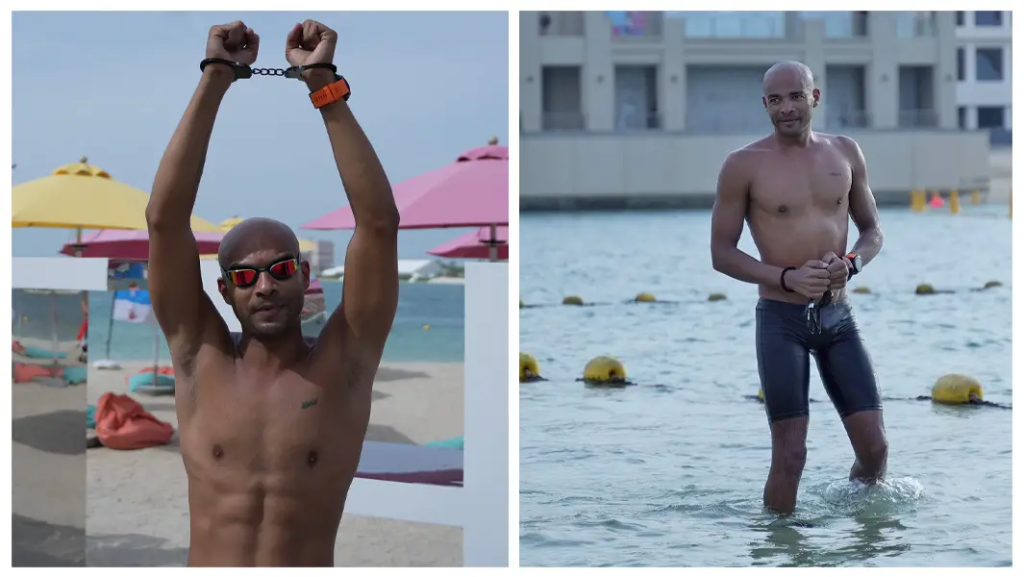
Shehab Allam, a swimmer and coach from Dubai, has broken the Guiness World Record for the longest swim wearing handcuffs by swimming over 11km (6.8 miles) continuously with the cuffs on.
With his swim, Allam broke the record previously held by American Ben Katzman, who set the old record by swimming 8.6km (5.3 miles) in a Virginia swimming pool in February 2022.
Notably, the 31 year-old Allam did not opt to complete his swim in a pool, instead using a marked area of approximately 164 yards in the Arabian Gulf, swimming laps between two buoys. During his attempt, he had an official with him to ensure his recorded distance was accurate.
According to Allam, he hit the 50 lap mark, surpassing the previous record, and made it his goal to hit 70 laps to surpass 11km. He told The National, “At 50 laps I realized I had gone past the record, so kept going. I hit the 10km mark and then felt good so kept on swimming until I had done 70 laps — so it was more than 11km in the end.”
“It feels amazing to be a Guinness Record holder, this is my biggest achievement — and was a longer swim than the Dubai Canal,” said Allam.
This was not Allam’s first attempt at a record-breaking swim, as he previously became the first person to ever swim the length of the 25km Dubai Canal back in 2020.
Of both of his swims, Allam said, “Being In the record books makes me feel like a superhero, and I want to stay there.” He plans to take an attempt at breaking the World Record for the furthest swim in handcuffs and leg chains next, which is currently held by Dolphin Ratheesh, who swam 10km wearing both devices back in November 2020.
Mohammed bin Yahya Al-Sayel has been appointed to become a member of the UN’s Global Geospatial Knowledge and Innovation Center following a royal decree on April 16.
The UN-GGKIC aims to build geospatial capabilities and competencies at the global level, develop centers of knowledge and innovation in countries, and benefit from the mechanisms, techniques, and analysis used in the field of geospatial information.
The center is working on implementing the Integrated Geospatial Information Framework to improve and strengthen work on managing national geospatial information for achieving sustainable development goals.
Al-Sayel has been the regional coordinator for Arab countries at the International Society for Photogrammetry and Remote Sensing since January.
Al-Sayel, who has also been the president of the Kingdom’s General Authority for Survey and Geospatial Information since 2021, was nominated for his new position by the board of directors at the ISPRS.
The general authority is mandated with developing national capacities in the sector, in cooperation with universities and specialized institutes with its counterparts in other countries, international bodies, and organizations related to the sector.
The ISPRS is a non-governmental organization devoted to the development of international cooperation for the advancement of photogrammetry, remote sensing, and their applications.
Al-Sayel received a bachelor’s degree in civil engineering in 1984 from Roger Williams University, Rhode Island, US. He also received a high diploma in geodesy and map production from the Royal School of Military Survey.
He was granted a master’s degree in geomatics in 1994 from the University of Toronto, Canada, and obtained a doctorate in surveying engineering and geospatial information from Leibniz University Hannover, Germany.
Al-Sayel has taken a number of advanced training courses on geographic information and global positioning systems. He has attended several training courses on negotiations and boundary delimitation at Durham University in the UK.
Al-Sayel, who is both the CEO of Quality Geospatial Engineering Co. and Vision Intelligence, a digital sustainability solution-providing company, has risen in the military to the rank of major general and was an assistant director at the General Directorate of Military Survey. He was also the head of the boundaries and documents department.
He is the secretary-general of the Cooperative Society of Moringa and Desert Plants, one of the first Saudi cooperative societies aiming at increasing the country’s vegetation.
Al-Sayel is a consultant member of the Saudi Council of Engineers and a member of the American Imaging and Geospatial Information Society, and the ISPRS.
Three recent titles on the life and history of the Copts reflect on elements of a complex story.
Mozakerat Aaela Masseihiya bein Ras Ghareb wal Qahera (Memoirs of a Christian family between Ras Ghareb and Cairo), by Elia Mahfouz Bashir, Cairo: Al-Arabi Publishing. pp. 196.
“At that time there was a [spontaneous] acceptance of the other; actually, the concept of this other was not really there – not as a fully defined concept any way”.
This is one of very few lines that evokes the “Christian” in the title of the pleasant-to-read 196-page text.
Elia Mahfouz Bashir, now a 65-year-old pathologist, recalls memories of his easy-going and uninhibited childhood in the Red Sea city of Ras Ghareb where his father worked for an oil company.
This is the interesting thing about the choice of the title. It offers a contrast to a sequel of articles where Bashir offers accounts from his time in this city in the late 1950s and early 1960s prior to the retirement of his father that forced the family away from its Red Sea haven to Cairo. Those are accounts of the city, the sea, playmates, school, family gatherings, comparisons between the Red Sea and the Mediterranean and so on.
So, for a while, the reader is left to wonder about the significance of the “Christian” reference. And this is exactly the point. In the childhood of Elia Mahfouz Bashir, his faith and that of his family was not an issue. It only comes up across when he refers to a trip to his maternal family in Upper Egypt where he was escorted by his mother to one of the moulids of the Coptic saints or when he talks about the prayers for healing that a priest performed for he and a playmate of his, who happened to be a Muslim.
As Bashir put it in one of the articles, both the mosque and the church of Ras Ghareb were part of a wider communal ownership. He is attributing this state of mind to the norms that prevailed during the rule of Gamal Abdel-Nasser when the focus was on Egyptian identity and not the affiliation of faith as it later became under the rule of Anwar Sadat.
Bashir had originally started sharing his reflections on his childhood in Ras Ghareb on Facebook before he decided to assemble the pieces into a book that stands as a testimony for his experience.
Abkareit Al-Massih: AlMaaraka AlMaghoula bein AlAqbat wa Al-Akkad – Watheiq Tarikheyah (The Genius of Jesus: The Unknown Battle Between Copts and Al-Akkad – archival documents), by Robert Al-Fares: Rawafd Publishing, 2023. pp. 172.
In line with his head-on and mince-no-words approach, Robert Al-Fares, journalist and author of several titles on Coptic social history, is putting out a book that addresses the strongly established but often averted conflict between the Christian and Muslim creeds over the nature of Jesus Christ. For Christians, Jesus is as divine as human, and as such there is no point in trying to argue his genius as Al-Akkad did in his book that came out in 1953, under the title of “The Genius of Jesus,” to the dismay of the Copts of Egypt and particularly that of the Coptic Church of Egypt. For Muslims, however, Jesus is a prophet just like any other prophet that God had sent prior to Muhammad.
In this 172-page book, El-Farres digs out the archival details of a confrontation that took place when the book was put out by Akhbar Al-Youm Publishing, at the end of a sequel that Al-Akkad dedicated to argue the genius of Prophet Muhammad and the four early rulers of the Muslim state that followed him.
Those include letters and remarks from Coptic commentators and clergy, including Father Sergius, the prominent preacher of 1919 Revolution, who was put under house arrest by the Free Officers regime “for worry over his public influence.”
He also included the remarks and views of Muslim scholars who defended or disagreed with Al-Akkad.
The book also includes the replies that Al-Akkad offered and the remarks he added to the second edition of the book that came out in 1958 under the new title of “The Life of Jesus.”
While zooming in on this particular account of Al-Akkad “The genius of Jesus”, Al-Fares is being open in his criticism of the attempt of some Coptic and Muslim figures to overlook this difference instead of simply accepting ‘the other’ – given that as much as for Muslims, Christ is just a prophet, for Christians, Muhammad is not a prophet.
“We just need to acknowledge that we have different creeds; this is the core of coexistence,” he wrote.
Nossous wa Kerat hawla tarikh Al-Qapt min Al-Qarn Al-Aasher Hattah Al-Qarn Al-Tassaeiaashr (Texts and Narratives on the History of Copts – From the 10thCentury to the 19thCentury), by Magdi Girgus: Al-Maraya Publishing, 2023. pp. 273.
This book is part of the ambitious and really interesting work of historian Magdi Girgis who has been digging out accounts on the history of Copts from the archives to assemble a comprehensive and solid narrative on the lives of Copts in Egypt under the Muslim rule. As Girgus put it in the introduction to his most recent 273-page volume, it is “a free stroll across the history of Copts [during 10 consecutive centuries] through the text of some archival documents.”
The selection of documents, Girgus writes, is designed to address some significant points of Coptic history, and that of Egypt. He notes that his purpose is not just to share and analyse the content of these documents but to put the accounts they address within the wider context of social and political contexts.
Throughout his 10 chapters, with documents and with narratives on the context of the documents, Girgus goes through some of the most interesting accounts of the history of Copts.
These accounts include history of the Coptic Church and the Arabisation of the language of the church.
They also include a history of the sources used to chronicle the Coptic history and the archiving of documents on the Coptic history.
He also examines the relation between Church and State and the Islamic judiciary system as well as relations between Coptic clergy and Coptic notables and the state.
Moreover, he also examines the role of Coptic clergy in the rural areas.
A most controversial part of this book might relate to the argument Girgus offers on the issue of Arabisation.
Traditionally, many Coptic intellectuals have often argued that this was the outcome of the pressure of the Arab rulers of Egypt.
However, according to Girgus, the ‘choice’ of the Coptic Church to adopt the Arabic language was not necessarily about the pressure from Arab rulers but rather about the ‘choice’ of the Church of Egypt to embrace a national line away from the influences of the Church of Rome.
It was also, he argued, about the wish of the clergy to go along with the notables who had been trying to go along with culture of the new rulers in so many ways, including the most peculiar practice of polygamy by some Coptic notables despite the fact that polygamy is strictly forbidden in Christianity.
Actually, the evolution of relations between Church and State is perhaps one of the best explained issues in this book.
The seventh edition of Aswan International Women Film Festival ( AIWFF) will honor the great Tunisian director, producer and politician Selma Baccar for her tremendous influence in the cinematic field being the first female Tunisian director who directed a feature-length film.
Her works include Fatma 76 (1976), The Fire Dance (1995), Flower of Oblivion (2005), El Jaida (2017), among others.
The seventh edition of AIWFF will kick off from March 5-10, 2023.
Dr Azza Kamel, Vice Chairman of the Board of Trustees of Aswan International Women Film Festival said that Selma Baccar is a great filmmaker not only in Tunisian cinema, but also in Arab cinema, as her films conveyed the concerns of Tunisian women in different historical stages, in addition to her historical postion as the first Tunisian director to present a feature film.
Kamel stressed that the festival decided to honor Baccar as it seeks to honor creative women who have contributed to the portrayal of women’s issues from all over the world.
Kamel pointed out that Baccar’s struggle for women’s issues wasn’t limited to cinema screen, as a director or as a producer, but she was strongly present in the Tunisian political scene, as a member of the National Constituent Assembly to draft the constitution after the Tunisian Revolution, in addition to her work as a member in the Tunisian parliament defending rights and freedoms, stressing that honoring Baccar is a tribute to Tunisian cinema, which in recent years has achieved great successes at the international level by producing acclaimed films that support women.
The seventh edition of Aswan International Women Film Festival ( AIWFF) announced that it will honor veteran Egyptian actress dubbed Egypt’s first star Nabila Ebeid, acclaimed TV presenter Dorria Sharaf Eldin and the award-winning Dutch director, screenwriter and producer Mijke De Jong.
Manar al Jahwari won Saudi Arabian Innovation Hackathon award for her project Royal Filament.
Oman’s own Manar al Jahwari competed against 24 projects (shortlisted out of 700 total projects) in the final round of the Saudi Arabian Innovation Hackathon award, where her project was chosen along with three others as the most promising project.
Her project aimed at restricting the use of plastic filaments in 3D printing, and she fashioned 3D printing filament out of seaweed and other environment-friendly materials. She is currently in talks with government agencies to make her project a viable business, and she hopes to attract numerous local and international investors.
The Saudi Arabian Water Technologies Hackathon is a competition held virtually that lasts for two days, October 21 and 22, and involves three challenges that need to be solved within the given two days.
The second challenge was to control the excessive growth of algae in Jeddah’s desalination facilities, for which Al Jahwari came up with the innovative solution of “Royal Filament.”
Americans born in or with ancestral ties to Arab-speaking countries have made countless significant scientific, medical and engineering contributions.
While Americans born in or with ancestral ties to Arab countries have made countless significant scientific, medical and engineering contributions, most have never made it into record books. From cryptography, to the artificial heart, to the iPod, here are a few examples of some of the major advancements by Arab Americans.
1. Television Transmission and LCD Screens
Born in Nabatieh, Lebanon in 1895, Hassan Kamel Al-Sabbah studied and then taught mathematics at the American University of Beirut before immigrating to the United States in 1921. After a brief stint studying at the Massachusetts Institute of Technology (MIT), Al-Sabbah earned a master’s degree in engineering sciences from the University of Illinois, says Lujine Nasralla, communications specialist at the Arab American National Museum in Dearborn, Michigan.
“In 1923, General Electric (GE) hired him to work in its Engineering Laboratory under a contract that awarded him a dollar for each of his patents,” Nasralla explains, noting that between 1927 and 1935, he applied for patents for 52 of his inventions while working at GE. Some of the patents Al-Sabbah was awarded during his time at GE include three for innovations in television transmission technology (granted between 1928 and 1930), and two for cathode ray tubes (1935).
Though Al-Sabbah died in a car accident 1935, GE engineers continued to rely on the technology he invented, including developing the liquid crystal display (LCD) based on one of his patents. Al-Sabbah made numerous other significant contributions to science, technology and engineering, especially in the field of solar energy.
2. Emotion Recognition Technology
RANA EL KALIOUBY, CO-FOUNDER AND CHIEF EXECUTIVE OFFICER OF AFFECTIVA, SPEAKING DURING THE NEW WORK SUMMIT, CALIFORNIA, 2019. / DAVID PAUL MORRIS/BLOOMBERG VIA GETTY IMAGES
While Rana El Kaliouby was completing her doctoral research at the University of Cambridge in England in the early 2000s, she never felt as though she could ever truly connect with her loved ones back home. “Away from her family and friends in Egypt, El Kaliouby wished her computer could better convey her emotional state,” Nasralla says. That’s when she decided to find a way to make more emotionally intelligent technology.
After earning her doctorate, El Kaliouby took a position as a research scientist in the Affective Computing group in the MIT Media Lab. There, she was part of a team that developed an “emotional hearing aid,” as well as a pair of eyeglasses that could read emotions, along with social cues. Officially known as “the Emotional-Social Intelligence Prosthesis,” El Kaliouby and a colleague created the wearable technology in 2006 for people living with autism who have difficulty identifying and processing other people’s emotions as they communicate.
In 2009, El Kaliouby and the same MIT colleague co-founded a company called Affectiva, which used deep learning, computer vision, speech science and vast amounts of real-world data to develop emotion recognition technology. “Her pioneering technology accurately reads minute changes in facial expressions that convey emotions,” Nasralla says, adding that El Kaliouby is a member of the Women in Engineering Hall of Fame.
3. The iPod and iPhone
TONY FADELL, WHO OVERSAW THE DESIGN OF THE IPOD AND IPHONE, PHOTOGRAPHED IN SINGAPORE, 2019 / WEI LENG TAY/BLOOMBERG VIA GETTY IMAGES
There was a time in the not-so-distant past when listening to music outside of your home meant bringing the physical album with you on a record, audio cassette or compact disc. And while portable MP3 players existed before 2001, none were popular enough to make the device the standard way of listening to music on the go. That is, until Apple CEO Steve Jobs hired Arab American inventor Anthony “Tony” Fadell and put him in charge of a new special projects group within the company tasked with doing exactly that.
The result was the iPod, which launched in 2001. Fadell, who is now known as “ the father of iPod,” went on to oversee the first 18 iterations of the device before Jobs gave him his next assignment: to create a mobile phone with many of the same features as the iPod.
This time, the end product was the iPhone, which essentially allowed people to carry a highly compact computer with internet capability around at all times, and, in the process, changing the way people access information. Fadell was involved with developing the first three generations of the iPhone.
4. Developments in Surgery
HEART SPECIALIST DR. MICHAEL DEBAKEY, C. 1994. / F. CARTER SMITH/SYGMA/GETTY IMAGES
Born in Lake Charles, Louisiana in 1908 to Lebanese immigrants, Michael DeBakey (the Anglicized form of Debaghi) grew up spending time in his father’s pharmacy and enjoyed sewing, gardening and learning how motors and other machinery work. He earned his medical degree in 1932 and served in the Surgical Consultants Division of the Army Surgeon General’s Office from 1942 to 1946.
It was during this time that DeBakey and his colleagues developed special units dedicated to providing surgical care to soldiers wounded near the front lines. They were first deployed in 1943, though are best known for their work during the Korean and Vietnam conflicts, when they were known as the Mobile Auxiliary Surgical Hospital (MASH) units.
DeBakey’s surgical contributions continued for the next several decades and included performing the first successful removal of a blockage of the carotid artery (1953), developing the concept behind coronary bypass surgery (1963), pioneering the field of telemedicine with the first demonstration of open-heart surgery transmitted overseas via satellite (1965), and being the first to use a partial artificial heart (1966).
5. Internet Security
While internet security is top-of-mind now, that wasn’t the case when Egyptian-born cryptographer Taher Elgamal began his pioneering work in the field in the 1980s. “Elgamal published a paper in 1984, ‘A Public Key Cryptosystem and a Signature Scheme based on Discrete Logarithms,’ which became the basis of the Elgamal Digital Signature algorithm,” says Richard Gardner, a software developer and CEO of Modulus. This work was then utilized in the development of the Digital Signature Algorithm (DSA).”
Elgamal’s work became even more influential after the National Institute of Standards and Technology (NIST) adopted it as the Digital Signature Standard (DSS). “Like the name implies, it became the standard for electronic signatures,” Gardner explains.
And according to Abdulrahman Henedy, an Arab American entrepreneur and founder of Financeive , Elgamal’s invention of the discrete logarithm was also an important milestone in cryptography. “His work inspired other encryption variations and paved the way to create more advanced algorithms, like Advanced Encryption Standard,” he explains.
In addition, Elgamal was the driving force behind the Secure Sockets Layer (SSL), a protocol that keeps online communications like email and instant messaging secure. Because of this major technological development, he is known as the “father of SSL.”
6. The Waffle Cone
Though it may not be the most high-tech invention on the list, the waffle cone stands out not only because it’s delicious, but because not one, but four different Arab Americans claimed to have invented it. And what’s perhaps even more bizarre, is that in an origin story with so many inconsistencies, all four of the men contend that their ice cream innovation was born at the 1904 Louisiana Purchase Exposition—better known as the Saint Louis World’s Fair.
According to Nasralla, Ernest Hamwi, Nick Kabbaz, Abe Doumar and Leon B. Holwey each had their own story about how they came up with the waffle cone in 1904. “We give credit to all four of them, but we don’t recognize any of the stories as more plausible than the others,” she explains. “It remains a mystery to this day!”
But that mystery extends beyond which of the Arab American vendors (if any) deserves credit for the waffle cone. That’s because on top of these four narratives, there are several other origin stories , including some that took place prior to 1904. And though we may never know who first devised a handheld edible ice cream container, it’s safe to say that the 1904 World Fair and its Arab American dessert vendors did have a hand in popularizing what we now know as the waffle cone.
source/content: history.com (headline edited) / Elizabeth Yuko
____________
HEART SURGEON DR. MICHAEL DEBAKEY. CREDIT: BETTMANN ARCHIVE/GETTY IMAGES