SYRIAN-LEBANESE: Defender of the Displaced: Dr. Rouba Mhaissen, Economist & Activist – puts the World to Rights

The Syrian-Lebanese economist and activist favours advocacy now over anger in her humanitarian mission to protect refugees.

Rouba Mhaissen was on a spring break in Beirut to visit her parents when she heard about the 40 families fleeing lives that had become intolerable over the border in Syria.

It was 2011, when the term “Syrian refugees” did not yet exist, and the arrivals were a harbinger of something inconceivable to Ms Mhaissen back then – the largest displacement crisis of our time.

Little knowing that the families would still be refugees more than a decade on, the 22-year-old student at the London School of Economics raced off to see what they needed.

“I took the family car and drove to meet the families to offer them help,” she tells The National.

“My parents were very worried. At the beginning of my work and until this day, they worry about me because there are risky situations.

“You get threats, and our advocacy work, in particular, can be very controversial. But they believe in the cause and support me.”

Fast forward a decade, and Ms Mhaissen is in London to appear at a charity event run by the Hands Up Foundation as the founder of Sawa for Development and Aid, a grassroots organisation that offers protection, education and relief for Syrian refugees in Lebanon.

Sawa, which means “together” in Arabic, now has about 400 employees, many of whom are from refugee communities, and operates in 130 camps.

In some ways, it is a continuation of work that the young Rouba began as a child in Beirut and Damascus, where she would often volunteer to assist orphans, and refugees from Palestine and, later, those from Iraq.

“I never knew that this would be my career,” Ms Mhaissen says. “I thought I was going to be an academic.

“When the war started in Syria in 2011, I had already applied for my PhD and had no idea I would only end up being a part-time academic.”

Born in Beirut, a “surprise” 10 years after two brothers and a sister, she had been gently steered towards academia by her Lebanese stay-at-home mother and father, a Syrian businessman.

She claims to have been raised as a very spoilt last child yet her parents convinced Ms Mhaissen against studying her heart’s desire, theatre, because it was not what they described as a rigid path.

“I definitely think that, if I was reborn, I would be a dancer because I love to dance and perform,” she says.

It was not to be. Ms Mhaissen grew up going to school in Beirut because the education was deemed better there, and then driving as a family two hours to Damascus for the weekends.

After an undergraduate degree in economics at the American University of Beirut, she embarked on a master’s in development studies at the LSE, followed by a PhD in gender and development at the School of Oriental and African Studies at the University of London.

Somehow, in the middle of all these studies, she found the time to start Sawa, through which Ms Mhaissen unsurprisingly gives priority to education.

Of prime importance to her is that refugees acquire skills to live in dignity, take ownership of their lives and rebuild their communities themselves.

The demands have been many, and, with the spread of coronavirus, she thought that perhaps she might finally learn what it is to relax a little.

“I love, love, love travelling, learning about new cultures, new food and new countries,” Ms Mhaissen says. “But with my son now it’s very hard.”

She shuttles between southern Turkey, Beirut and London with her husband, a one-year-old and another baby on the way.

The pandemic gave rise to a more acute need for aid than ever, although one silver lining is that the whole world has for the first time experienced what it is to be refugees – at least the uncertainty, the inability to plan ahead and lack of communication.

“Camps are one of the hardest environments to sit out Covid as there is nowhere to self-isolate, no internet or devices for home-schooling, and gender-based violence rose dramatically,” Ms Mhaissen says.

“People talk about refugees and their ‘resilience’, a term that is so misused. Conditions for refugees in host countries and their neighbours are constantly terrible and getting worse all the time.

“A Syrian family in Lebanon has to move their tent three times on average in winter when it floods, and then people wonder why they get on boats. It’s because they have no hope.”

Over the years, Ms Mhaissen has received many accolades and honours, including being named on the 2017 Forbes 30Under30 list of most influential people in Policy and Law.

There was also the Vital Voices Global Leadership Award and the Rafto Prize “for defending human rights from the local to the global level for people living as refugees”, both in 2019.

She has been invited to conferences, summits on Syria – at one in Brussels she met her husband, an activist from Aleppo – and this year became the 10th Arab woman to address the UN Security Council.

Late last month, days befor 27 migrants died in the English Channel, she was at the Opera Garnier in Paris being presented with the International Diane von Furstenberg Award alongside businesswoman and philanthropist Melinda Gates, CNN chief international correspondent Clarissa Ward, Burmese human rights advocate Wai Wai Nu, and climate change activist Vanessa Nakate.

She took the opportunity to tell the room full of European policymakers and philanthropists that attempting the crossing is not an illegal act.

“You have the right legally to apply for asylum in whatever country you are in,” Ms Mhaissen says. “We need to live up to our responsibility to these people.”

She also talked about the refugees stuck at the border of Belarus and Poland, and of one in particular, Ahmed, who had grown up in a camp, but was the first of the refugees to be buried officially after he drowned in a river there. His mother joined the funeral on a conference call.

“I reminded those listening that this was a woman who had been pregnant with him, who had celebrated his birthdays, who had brought him up like any mother, and who was now connecting with him on social media, just like [those in the audience] used social media to connect with their loved ones during the pandemic … except this was his funeral.

“Everyone was really moved and many were in tears. I always try to humanise it for the wider public, and I use the word ‘humans’ as often as I can when I talk about refugees.

“‘Refugee’ carries a lot of legal rights with it so while there is certainly fatigue associated with the word, it’s not a redundant word that we should stop using.

“Politicians, on the other hand, want us to call them migrants because it sounds more scary.”

The citation on the DVF award was for Ms Mhaissen’s “dedication and fierceness to support displaced Syrian individuals and families”, which world leaders gathered at the Support for Syria donor conference in London a few years earlier experienced in full force.

She was the first speaker up and was introduced by then UN secretary general Ban Ki-moon, who said: “Rouba Mhaissen, you have the floor. Two minutes.”

But a stern-looking Ma Mhaissen retorted that, as one of the few Syrians at the event speaking in the name of Syria, she wasn’t sure that she would stick to two minutes. She was at the podium for nearly nine.

It was a passionate speech in which she criticised “Fortress Europe”, her “token presence at an ad hoc event for which the priorities have already been pre-determined without our involvement”, and counter-terrorist legislation stopping funds being sent where they were most needed.

“Don’t fight the wrong people, guys,” Ms Mhaissen said.

She said she could see good leaders in the room but hoped for greatness from them along the lines of “the next Martin Luther King, the next Benazir Bhutto, the next Churchill, the next Madeline Albright, the next Mandela of our time …

“Each one of you can be that person,” she told them, “Remember that.”

Ms Mhaissen smiles at the memory.

“I realised that those in power have incredibly thick skin,” she says. “They are inured to what the situation is on the ground.

“I used to be very angry and lead a crazy life where I would come out of the field where kids had to step over their parents’ dead bodies to get to safety, and then you’re invited as the token Syrian to an event in a five-star hotel where people are drinking champagne and eating caviar.”

With a dawning realisation that advocacy, not anger, was the way to go about beating the system, the focus has since been more on changing laws that help refugees and doing the day-to-day work that affects people’s lives.

Her spirituality has been of great support throughout. “Knowing that God has been alongside me all along, and my faith, have helped me along the way,” she says.

Ms Mhaissen’s message to those gathered on Wednesday night in the 17th-century Great Hall of Lambeth Palace at the annual Singing for Syrians carol concert will be comparatively gentler in nature.

The event raises funds for Hands Up Foundation’s humanitarian work in Syria for which Sawa is a partner on educational projects.

This year it will feature the author and illustrator Nadine Kaadan, Citizens of the World Choir, actress and activist Joanna Lumley and actor Tom Hollander.

She will, she says, of course push everyone to donate to the foundation’s Big Give Christmas Challenge as a firm believer in how the deeds of the few can transform the lives of the many.

“I always say that what goes around comes around, and the more we give the more blessed our lives are,” Ms Mhaissen says. “It’s like investing in the best thing ever.”

The memory of an email received from a young Icelandic citizen will also be shared. It arrived in her inbox at the time of a terrible massacre in Syria, with the sender asking what help he could give.

Shocked, Ms Mhaissen recalls staring at the message for a long time, wondering how to answer a person on a Nordic island country in the North Atlantic Ocean.

“I told him, ‘If you want to help Syria today, call your mother. Just call your mother and see how she is doing. We are in a world of small circles and they are all interconnected …

“Sometimes,” she says, “it’s best just to start local.”

source/content: thenationalnews.com (headline edited) 

___________

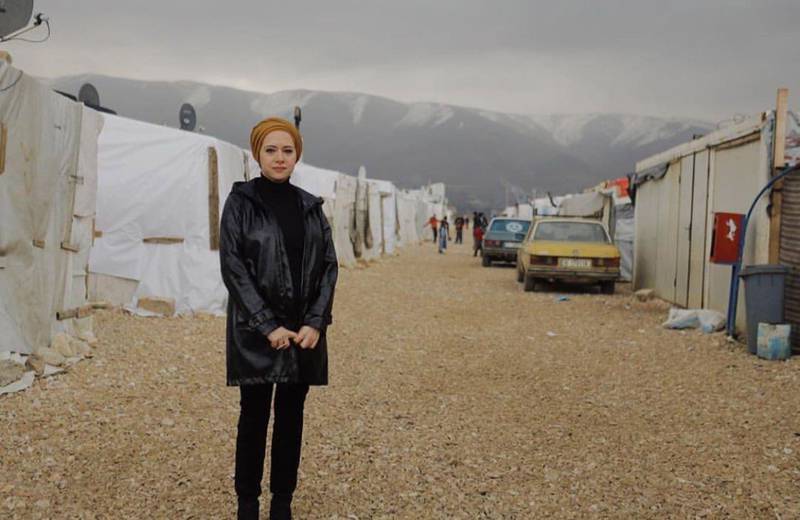
The founder of Sawa for Development and Aid, Rouba Mhaissen, in a refugee camp in the Bekaa Valley, Lebanon. Courtesy: Rouba Mhaissen

______________________

SYRIAN / LEBANESE

BAHRAIN’s 51st National Day: December 16th. HM King patronises Bahrain’s celebrations of its National Days

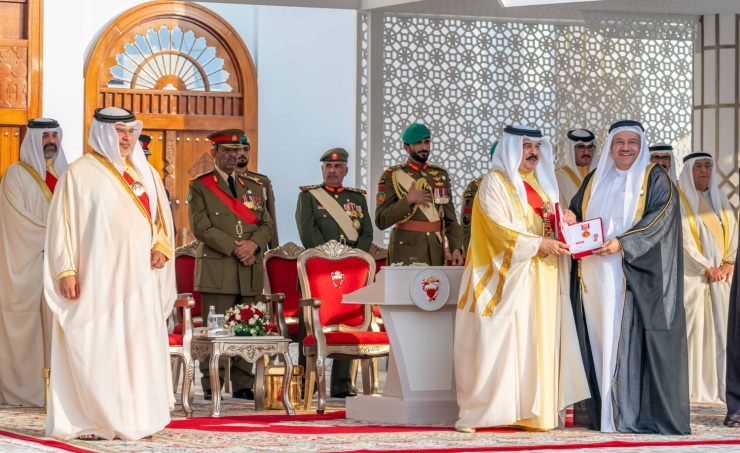
His Majesty King Hamad bin Isa Al Khalifa today patronised, in the presence of His Royal Highness Prince Salman bin Hamad Al Khalifa, the Crown Prince and Prime Minister, the ceremony held at the Al-Sakhir Palace on the occasion of the kingdom’s National Days, in commemoration of the establishment of the modern Bahraini State as an Arab and Muslim state, founded by Ahmed Al Fateh in 1783, the anniversary of its full membership in the United Nations, and the anniversary of His Majesty the King’s Accession to the Throne.

On arrival at the Al-Sakhir Palace, the artillery fired 21 rounds to salute HM the King, who was accompanied by a constellation of cavalry.

The National Anthem was played, and some holy Quran verses were recited.

After that, HM King Hamad delivered the following keynote speech:

“In the name of God, the most Merciful, the most Compassionate,

Praise be to Allah, and prayers and peace be upon Prophet Mohammed and his family and companions,

Your Highnesses, Excellencies, Distinguished Guests,

May the peace, mercy and blessings of God be upon you,

This year’s glorious National Day arrives with its atmosphere full of joy on the return of our lives to their former state, thanks to God. Here, we meet you on this blessed day of our dear homeland, in the essence of its commemoration, which returns to us with good and affection, in the expansive glory of the Kingdom of Bahrain, whose civilisational achievements have, for over two centuries, continued to transcend among nations, through the giving of its people at all times and periods.

In fact, with every new commemoration of this day with its experiences and achievements, the more confidence we feel in our progress in building towards the goal of the advancement and prosperity of our honourable citizens, a matter to which our esteemed Government is committed, and for which it strives with determination and diligence.

In this regard, we must first commend the national endeavours being undertaken to achieve our ultimate goal to achieve good and prosperity for every citizen, and we refer, in this context, to the results of the Economic Recovery Plan, whose positive impact extends to all sectors of development. We are proud of the active role of financial and economic support programmes, particularly in facing the economic and health difficulties, and we direct raising their efficiency and enhancing equitable access to them, by considering their effectiveness and great benefit to living standards.

Here, we express our satisfaction with what has been achieved in meeting the housing needs of the Bahraini family, commending the record government achievement, and emphasising in this regard the need to continue development plans for the housing sector with their innovative solutions and vast investments, in partnership with the private sector, to ensure decent and suitable housing for citizens.

In the context of its priorities, our country continues to preserve and protect human rights under the auspices of its independent legal institutions, and among the results of those efforts is the comprehensive programme of alternative sanctions and measures, which we are keen to realise given its noble objectives of giving its beneficiaries new hope for the stability of their families, and for a promising future of giving and contributing to the building of their society.

Brothers and sisters, on such a special occasion that brings us together with you today, it gives us pleasure to celebrate the pioneers of national action, from the sons and daughters of our dear nation, in honour of their efforts, and in recognition of their outstanding services, which we greatly appreciate, and we will not find a more remarkable day in the life of the country to express to them pride in their leadership and excellence, and to thank them for giving this day its most beautiful meaning.

May God grant you all success, and may the peace, mercy and blessings of God be upon you.”

Then, HM the King conferred medals on national work pioneers.

After that, Kefaya Habib Al-Anzoor, delivered a statement on behalf of the honourees in which she expressed deepest pride in HM the King’s patronage of the auspicious National Days, and honouring of national work pioneers.

She asserted that the annual honouring of the distinguished national work pioneers is an impetus for them to be more dedicated in serving the nation and raising its flags at all international gatherings so that Bahrain always remains at the top across various fields.

She lauded the historic wide-ranging achievements attained by the kingdom during HM King Hamad’s prosperous era, noting that the precious royal honouring is a source of pride, and that it motivates everyone to do their utmost to be more dedicated to serving the homeland.

She affirmed that the kingdom’HM the King’s patronage of the honouring of military and civilian national work pioneers will optimise the kingdom’s accomplishments, noting that thanks to the constant royal support and forward-looking vision, Bahrainis have brought about unprecedented achievements in the scientific, cultural and youth fields, locally and abroad. 

She extended deepest thanks, appreciation and gratitude to HM the King for honouring national work pioneers on this cherished national occasion.

She also extended sincere congratulations to HM King Hamad on the glorious National Days, wishing HM the King abundant health, happiness and long life.

The honouree list included: 

–     Shaikh Mohammed bin Khalifa bin Ahmed Al Khalifa

–     Faeqa bint Saeed Al-Saleh

–     Ali bin Mohammed Al-Romaihi

–     Ayman bin Tawfiq Al-Moayyed

–     Shaikh Hesham bin Abdulrahman bin Mohammed Al Khalifa

–     Eman Ahmed Al-Dossari

–     Osama Saleh Al-Alawi

–     Major-General Mohammad Abdulla Al-Noaimi

–     Brigadier-General Fahd Mohammed Al-Humaidan Al-Najdi

–     Brigadier-General Dr. Hassan Mohammad Noor

–     Brigadier-General Mohammed bin Mohammed bin Dinah

–     Colonel Tariq Ahmed Ali Al-Buflasa

–     Warrant Officer Ahmed Mohammad Ali Mohammad

–     Abdulla Jehad Abdulla Al-Zain

–     Faisal Mohammed Hassan Al-Mahroos

–     Ghassan Ali Muhanna Mohammed Al-Muhanna

–     Mark Joseph Thomas

–     Mazen Mohammed Ahmad Mattar

–     Ahmed Yousif Talib Abdulghani

–     Abdulla Ali Al-Binkhalil

–     Mustafa Mohammed Ahmed Mustafa

–     Nawaf Abdulla Hamza

–     Shaikha Mariam bint Abdulwahhab Al Khalifa

–     Chancellor Rashid Mohammed Bu Najma

–     Abdulla Khalid Ahmed Al-Nassar Al-Dossari

–     Mohammed Khalid Al-Fadhala

–     Hamad Ali Al-Mannai

–     Ambassador Ali Jassim Al-Aradi

–     Nada Ahmed Mustafa

–     Adnan Abdulwahhab Eshaq

–     Kefaya Habib Al-Anzoor

–     Akbar Jassim Ashour

–     Ziyad Adel Darwish

–     Fatima Abdulghani Ismail

–     Amna Ali Al-Arrayad

–     Huda Mirza Abbas Al-Salman

–     Mohammad Yusif Al-Binfalah

–     Ramzi Raisan Al-Badran

–     Najlaa Mohammed Qassim Al-Shirawi

–     Dr. Haitham Ali Jahrami

–     Dr. Abdulla Mohammed Al-Khan

–     Badriya Jassim Al-Kuwaiti

–     Marwan Fuad Salman Kamal

–     Alia Ali Al-Aali

–     Mustafa Aqeel Al-Shaikh

–     Lama Abbas Saeed Al Mahrous

–     Abdulhussain Ibrahim Isa

–     Beshara Abdo Beshara

–     Hanan Ibrahim Al Emadi

–     Mohammed Salman Makki Habib

–     Ahmed Abdulghani Isa Ahmed Madan

–     Nabeel Abdulrahman Ajur

–     Hussain Jassim Mohammed Ali Al-Sakran

–     Khalifa Yacub Yousif Al-Amer

–     Mohammed Jassim Al-Amer.

WHQ

source/content: bna.bh (headline edited)

_____________

HM King patronises Bahrain’s celebrations of its National Days

____________

BAHRAIN

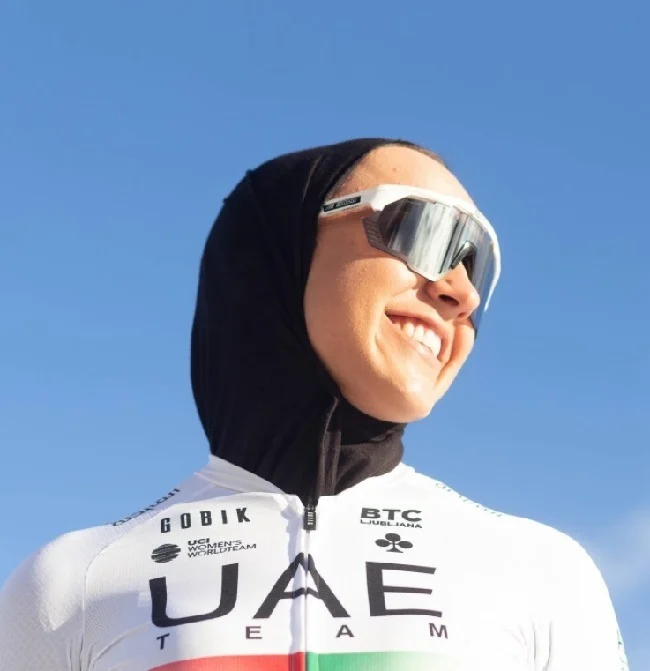
UNITED ARAB EMIRATES: Safiya Al Sayegh: First Female Emirati Athlete to ride in the Road Cycling World Championship 2022, Wollongong, Australia

‘I feel like I hold a lot of hope’ says first Emirati rider in Women’s WorldTour.

As the first Emirati rider in the Women’s WorldTour and the sole national representative on UAE Team ADQ,  Safiya Al Sayegh is feeling both the pressures and the privileges of her position going into 2022.

20-year-old Al Sayegh is the UAE national road race and time trial champion, and was approached by the team last November after UAE Team Emirates took over Alé BTC Ljubljana’s WorldTeam licence. 

This is Al Sayegh’s first professional contract and a significant adjustment from racing for the Dubai Police Cycling Team, but her first experience with the UAE Team ADQhas been positive.

“When I was going to Spain [for training camp] and before I left, it was quite overwhelming to think of how it was going to be and how it’s going to go,” she wondered. 

“Will I adjust with the team and how will I get on? But I’m very happy to say that everything went really well. I really enjoyed it, it was a really good start.”

Al Sayegh is the first female rider from the UAE to join a WorldTeam and only the second of any gender, after UAE Team Emirates’ Yousif Mirza, and she acknowledged the pressures that come with being in that position.

“It’s a big honour, and it’s actually a big responsibility on my shoulders,” she said. “I feel like I hold a lot of hope, especially from my country, because lots of people have helped me. And it really makes me want to push harder and strive even higher, with all the support and hope I have from the country – and from the Arab world, actually. It really pushes me to want more, to achieve more and to progress.

The men’s UAE Team Emirates squad, Al Sayegh said, has helped raise the profile of the sport in the UAE among both men and women, and she is looking forward to ‘representing all the local girls’. 

Though an experienced racer in the UAE and Asia, Al Sayegh has only raced in Europe once before, the Rás na mBan stage race in Ireland in 2017, and she is conscious of the challenges ahead of her this year.

“Keeping up with the level is one concern I have,” she said. 

“But hopefully with hard work, I will try to progress to the level of Europe. And one of my concerns is that pretty much every day in the peloton, crashes are happening. So I just hope to stay safe while racing.”

In the UAE much of Al Sayegh’s riding is done on wide highways or flat, protected bike paths, meaning even the change in terrain is a source of apprehension.

“In Europe, I know some races can be on quite dangerous roads or have quite steep downhills and stuff. So I do look forward to racing but I am quite worried about all the crashes and the dangers.”

Al Sayegh will continue to compete primarily in the UAE for the opening months of the season as she completes her university studies in Dubai, and will join the team in Europe from May.

“I really look forward to all the races my team is going to race, and I’ll be cheering here from the UAE.”

source/content: cyclingnews.com (headline edited) / matilda price

______________

Safiya Al Sayegh is rolling into European pro cycling, this season. (Photo: UAE Team ADQ)

___________________________________

UNITED ARAB EMIRATES (U.A.E)

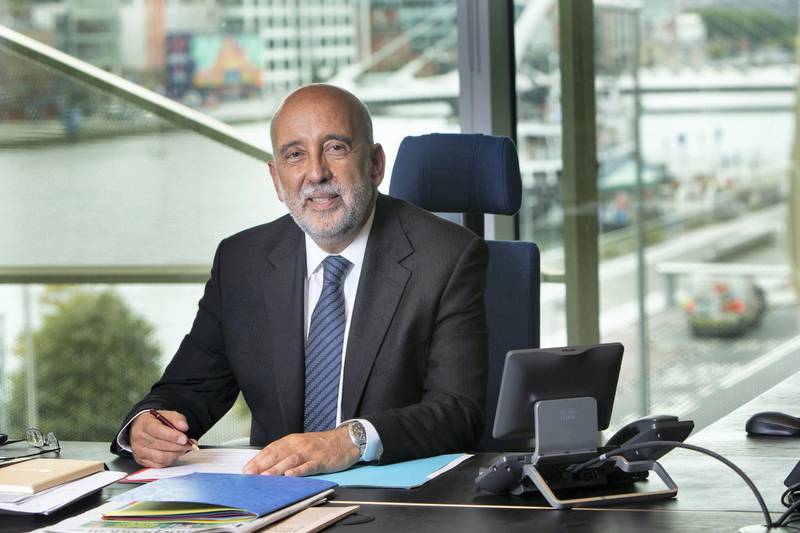
BRITISH / LEBANESE: Central Bank of Ireland, Governor Gabriel Makhlouf confronts crisis with the perspective of a well-travelled man

With a Lebanese name and a Cairo birthplace in the background, Gabriel Makhlouf is steering Ireland’s financial recovery.

As governor of the Central Bank of Ireland, Gabriel Makhlouf is much preoccupied by the issue of resilience in a small, open economy challenged by a year of pandemic.

Mr Makhlouf’s own peripatetic life has shown him how precious an asset the quality of adaptability is at a time of change, be it in a person or for a national economic system.

Upheaval and the Makhloufs on the move could be a theme stretching back to when his father’s side of the family travelled across the Mediterranean from their Lebanese homeland to Cyprus.

When the island was part of the Empire, the family became British subjects and Makhlouf Snr ended up working at the embassy in Cairo after the Second World War.

It was in that palatial building near the Nile that he fell for a Greek-Armenian woman whose forebears had fled the historical turmoil of Izmir in 1922. Her family moved to Athens where she has come full circle to live today.

Mr Makhlouf was talking to The National at a time when Ireland’s strict national Level 5 lockdown is both defining his job and providing a perspective on the decades of movement and upheaval that have brought him to where he is now.

At a conference last week, the governor spoke of how the outlook had deteriorated in 2021 with the renewed lockdown. The short-term need to bolster the economy coincided with structural changes from technological innovation and climate policies. Ireland suffered a 7.1 per cent slump in domestic demand last year but is expected to see a 2.9 per cent increase in 2021.

Unemployment is predicted to reach 9.3 per cent this year and for an economy with a high level of property-focused debt, ensuring that households are supported is a priority. Mr Makhlouf points out that growth is not the same as having the capacity to recover quickly.

“We cannot anticipate every type of shock but we can build resilience,” he said in his keynote address. “Resilience is what has prevented the financial system repeating its previous failure. Resilience is what has protected households, businesses and communities against the worst of the damage from the shock of the pandemic.

“Economic resilience is what helps communities to manage the disruption caused by change and to manage the economic transitions we are living in right now.”

In providing leadership during financial strife, it is perhaps a boon to have some sense of dislocation. He describes his mother’s family as refugees. His parents met in a milieu that was the product of worlds with roots as far back as the Phoenicians, ancient Greeks, Romans and Egyptians. And yet the people of Mr Makhlouf’s parents’ generation made their choices and moved to build new lives.

“My mother, who was born in Athens, had spent most of her life outside of Greece, but when my dad retired she came back,” he recalls. “My dad moved on and lived all over the world and settled in Greece at the end, before he passed away.”

Mr Makhlouf was born in Egypt but left at the age of three when his father joined the United Nations and moved to the Congo. Makhlouf pere’s time as an international diplomat exposed the young Gabriel to many cultures.

“My first language was French, because my parents’ mutual tongue was French,” he says. “So I learned English when I was about seven when we went to Bangladesh, and when we got to the Pacific we lived in Samoa.

“I went to school in Samoa. My parents then decided they ought to send me to boarding school if I was going to get a proper education and not one that changed every few years.”

Travelling during the school holidays from the school in England was a regular odyssey in itself. “The trip to get to Samoa and back to England involved stopping in Los Angeles, Honolulu and Pago Pago, an American territory pronounced ‘Pango Pango’,” he recalls.

“But then they moved to the Philippines, they moved to Fiji, they were in Ethiopia and they were in Thailand. So, you know, my brother and I got used to this life.”

It is a puzzle, then, to establish the appeal to the young Mr Makhlouf of embarking on a career as a Whitehall civil servant. He explains it as following his father’s footsteps in to the bureaucracy. Certainly, the career path was more about determination and making opportunities than wanderlust.

“I don’t think I joined the civil service for stability, to be honest, but maybe somewhere deep inside me there might have been that,” he says. “I joined the civil service really for interest. I joined as a tax inspector at the beginning. And it was an interesting career option – it involved law, it involved accountancy and it gave early opportunity to manage.”

Fate intervened to resume the family’s roving tradition when Mr Makhlouf was headhunted in 2010 to run New Zealand’s finance ministry, the Treasury. There, he was responsible for developing a measure of well-being as a replacement for the traditional gross domestic product yardstick.

In one memorable allusion in a speech he compared the role of an economist to that of an artisan, challenged with weaving together different strands of evidence into a structured framework.

Before upping sticks to the southern hemisphere, Mr Makhlouf at one point worked directly with then-UK chancellor Gordon Brown, who became prime minister at the time of the global financial crisis in 2008.

Asked about his former boss and a recent warning that the world now faces another lost decade or perhaps even worse than after that crash, Mr Makhlouf acknowledges how bad it was last time around but disagreed on the dangers now.

“I think that there is one massive difference between the crisis in 2008 and today’s crisis,” he says. “Which is that the crisis in 2008 was a crisis of the financial system, the financial system basically collapsed.

“Today, the financial system is still standing, and it’s the financial system that’s playing a very important role in supporting businesses and households through the pandemic and hopefully into a recovery and out the other end.”

World leaders are proving to be different kinds of players, having recognised that this is an economic crisis caused by a health crisis. “Governments throughout the world have chosen to close down economies for the sake of people’s health. In some respects that is been planned. In comparison to what happened in 2008 where actually events completely overwhelmed us.”

So Mr Brown’s fears are too pessimistic? “A lot of the changes and challenges that are ahead of us, I think if we manage them, then I think they can be managed well,” he says.

Mr Makhlouf takes heart from the rapid adjustment of businesses to home-working and new patterns of demand. “Economies across the world and certainly in the industrialised world have adapted to the restrictions,” he says. “More businesses are set up for that and more consumers were ready and knew how to proceed.”

The scale of “technological adaptation” since he accepted the Irish job in 2019 is something he could well have guessed was just around the corner.

The governor has not been immune to the extraordinary pressures imposed by lockdowns. Even at the outset of the pandemic, the family’s far-flung ways isolated him in Athens just as the 2,000-strong staff of the central bank in Dublin were forced to work from home.

With his mother ill in hospital, Mr Makhlouf was on hand to help her recover. “Effectively, I carried on working like everyone else via laptops and iPads. It’s quite an extraordinary thing that we all seem to have got used to.”

History means that a British citizen running the Irish central bank will always be a talking point. The moment that the UK left the EU put Mr Makhlouf in an invidious spot.

First, there is migration of businesses and banking activity from the City of London to Dublin so that firms remain within the EU umbrella. Is this an opportunity?

“Overall, I think the impact of Brexit is negative. It’s negative for Ireland and for the UK and for the EU,” he says. “We’re most exposed as a country in the agricultural sector, in particular. The fact that there was, at the end of the day, a deal albeit a very slim deal was better than there being no deal.

“On financial services, we have seen post-referendum a move of business from London to Dublin,” he agrees. “I’m not sure I would necessarily call it an opportunity at all. I think from my perspective as a regulator this increases the need for us to manage and ensure the financial system works properly.”

With his son, brother and wife’s relatives living in London, the governor observes that the pandemic has played a greater role than Brexit in cutting off families and friends. But things are different.

“I feel sorry for someone like my son — his opportunities to work in 27 other countries have now been limited. So his generation has lost out,” he says. “Ireland and Irish people have got many connections in the UK, we recognise Brexit has happened but those connections haven’t disappeared, they haven’t been lost.”

As two movie-perfect countries on the periphery of continents with roughly similar populations, one wonders what the biggest change is for Mr Makhlouf in switching from New Zealand to Ireland.

There is the remoteness of the former compared with the latter’s position within the wealthy European market. But the answer, he feels, is the perspective on China. In New Zealand, much time was spent thinking about and visiting that part of east Asia. He himself went at least nine times.

“The role that Asia has been playing and will play in the 21st century usually dominated a lot of thinking. And what’s interesting coming back to Europe, and perhaps now it’s not surprising at one level, but it was noticeable how little of our time was spent thinking about Asia.”

For the well-travelled, there is the unchanging truth that proximity is often the most powerful force in geography.

source/content: thenationalnews.com (headline edited) (feb 18th, 2021)

______________

The lockdown both defines Gabriel Makhlouf’s job as Governor of the Irish central bank and provides a perspective on the decades of movement and upheaval that have brought him where he is today. Courtesy Central Bank of Ireland

_______________________

BRITISH / LEBANESE

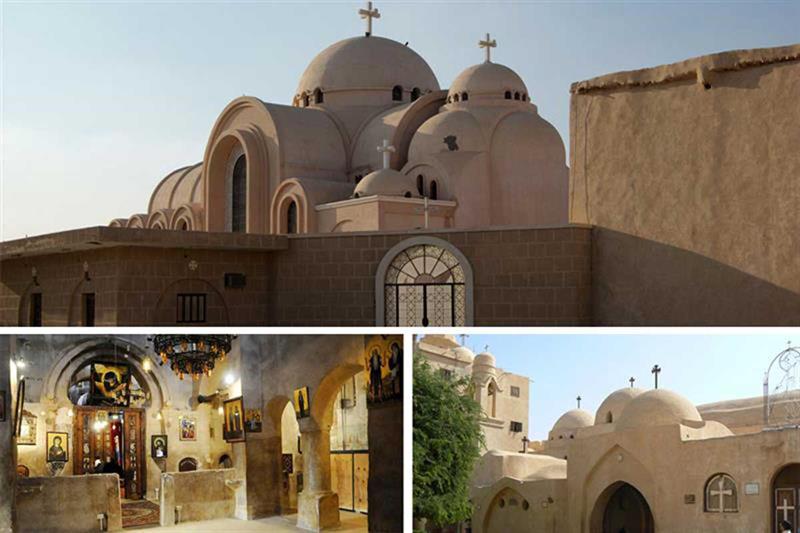
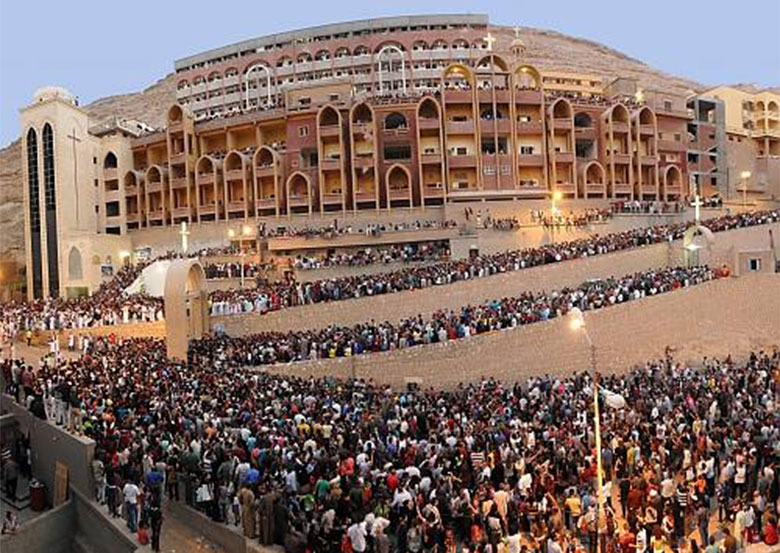
EGYPT enlists ‘Journey of the Holy Family Festivals’ on UNESCO List of Intangible Cultural Heritage of Humanity

“Festivities and celebrations affiliated with the Journey of the Holy Family in Egypt are now on UNESCO’s Representative List of Intangible Cultural Heritage of Humanity,” professor Nahla Imam, heritage consultant at the Egyptian Ministry of Culture and country representative of Egypt at the 2003 Convention of Safeguarding the Intangible Heritage of UNESCO, told Ahram Online on Wednesday.

Imam credited the move to the efforts of the Egyptian ministries of culture and foreign affairs, adding that Egypt’s efforts were almost unanimously supported by UNESCO’s Inter-Governmental Committee.

This is the seventh intangible cultural heritage element that Egypt enlists in UNESCO. Prior to the Journey of the Holy Family, the Egyptian manual-textile industry in Upper Egypt was put on the UNESCO List of Intangible Cultural Heritage Sites in Need of Urgent Preservation.

Egypt first enlisted El-Sirah El-Helalya (The Epic of Beni Helal) in 2008, Tahteeb (Stick Art) in 2016, the Aragouz Puppet in 2018, and the knowledge and traditions affiliated with palm trees in 2019.

According to the accounts of historians, the Holy Family spent around four years in Egypt.

Their trip started in the Sinai at Al-Farma, on the border with Gaza, where they arrived after fleeing Jerusalem. Their trip ended in Durnaka, Assiut, venue of the famous Monastery where the feast of Virgin Mary is celebrated in August each year. ​

source/content: english.ahram.org.eg (headline edited)

___________

__________

EGYPT

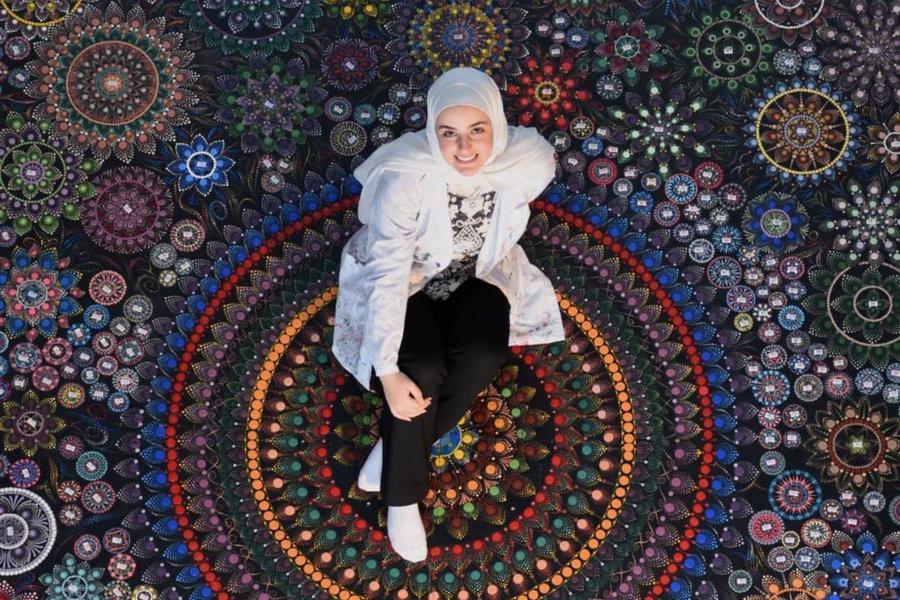
SYRIA: Young Artist Lama Zakaria Enters Guinness World Records with ‘Largest Mandala’ in the World

Syrian young artist, Lama Zakaria has recently achieved the first world record in the Guinness World Records for the largest display of mandala in the world, raising the name of Syria high and proving once again the ability of Syrian youth to excel in various scientific and artistic fields.

Lama told SANA’s reporter that she spent two years of continuous and diligent effort for reaching this stage, stressing that she worked with precision and patience to achieve the required symmetry in her painting, which achieved the record for the largest painting of mandala in the world.

She added that the mandala contains 4096 mandala circles of various diameters, colors and various decorations by using special dotting tools and acrylic paints on a 6 mm-thick wooden board.

She pointed out that the painting with dimensions 488 x 488 cm contains a large number of circles overlapping with each other and free circles with flowing lines that enhance cohesion among them.

Zakaria noted that in each quarter of the painting forms a part of a major basic circle that is the center of the painting and its eye-attracting heart, which required work carefully on all colors and various decorative units.

Lama Zakaria, a third-year student at the Faculty of Architecture at al-Baath University, has sought to specialize in mandalas, as she worked individually to learn the origins of this art and master its methods, and participated in several art exhibitions.

source/content: sana.sy (headline edited)

______________

Actress Lama Zakaria – Photo from Lama’s official Instagram page

_________

SYRIA

IRAQI Calligrapher Wissam Shawkat’s love letters blend tradition and modernity in new show

The artist’s latest exhibition of 50 works is the culmination of a lifetime spent studying ancient script.

One day in 1984, in Basra, Iraq, an art teacher taught his students calligraphy. He drew four letters on the blackboard in Ruqʿah script, a plain style often used for signage.

As the teacher drew the letters alif, bah, jim, dal, Wissam Shawkat, then aged 10, watched absolutely entranced.

“Seeing that Arabic letters can take that form was fascinating for me,” Shawkat tells The National at the Mestaria Gallery in Alserkal Avenue — where his latest calligraphy exhibition, Letters of Love II, is running until November 30. “I was really intrigued by this.”

Today, Shawkat is an international leading authority on calligraphy, a self-taught master who pioneered his own technique known as “calligraforms.”

On the eve of his solo exhibition, Shawkat is surrounded by 50 original artworks all centred on the theme of love. He stands in the middle, surrounded by a landscape of letters, composed and morphed by a myriad styles that push the boundaries of traditional calligraphy practices. The result is a delicate balance of ancient forms and modern sensibilities.

“Letters by themselves are like an abstract shape,” he says.

“If you take any letter in Arabic or in English, any part of that letter, you will end up with an abstraction. We give it sound or when it’s merged with another letter, we give it meaning. But in reality, it’s a form, a beautiful form.”

As a teenager, due to the sanctions imposed on Iraq following the Gulf War, Shawkat’s resources were limited. Despite this stark reality, the artist took what summer courses were available, worked in sign-making shops and practised with different mediums and brushes. He drew comics, decorated skateboards, created sketches for friends, and took any chance available to practice mark-making and the art of calligraphy.

“If you spend years writing and perfecting this form, it’s definitely something you’ll fall in love with,” Shawkat says.

“After all these years, I arrived at this point where I love the abstract form of the letters and I think that’s why I’m still making it.”

Letters of Love II was launched on November 11, a significant date for Shawkat. Not only did he leave Iraq on the same date in 2002, but 11 years ago, his solo exhibition, Letters of Love, took place in New York to major critical success.

Shawkat’s new exhibition is an extension of the technical ideas he first experimented with in the New York show, an homage to his personal milestones and, of course, a celebration of love.

“For me, love is a universal concept,” Shawkat says.

“Plus, I wanted to take calligraphy away from always being associated with religion. Historians from the West call it Islamic calligraphy, but it’s not true. The art of calligraphy is about the language, it’s not the religion.”

Shawkat took the Arabic word for love, “hub”, and some of its variations such as “mahaba”, meaning to have love for something, “‘ishq”, to long for something, and “gharam”, meaning desire, and reconstructed them — experimenting with the inner and outer forms of the letters and the composition of the words; blocking parts of their shape, opening up others; extending and bending; changing their silhouettes.

The range of forms and shapes he created within each frame are meticulously composed. They exist in relation to the frames and the spaces they occupy, possessing a uniquely stylised sense of harmony fuelled by Shawkat’s departure from the traditional “rules” of calligraphy.

Even the notion of freedom is expressed uniquely within the works. Free of the cliche of words bursting out of their frame or paint spilling out on to the physical space, freedom is organic and planned in Shawkat’s work. It teases and pushes the idea of Arabic letter forms and calligraphy into new spaces.

“I want to show something aesthetically beautiful,” Shawkat says. “When I’m sketching or putting together the work, everything I do is first in black and white. Colour comes as a second thing, I work with it later.”

It’s this focus on form and composition that gives the varied works an overall sense of grounded weight, rooted and connected to each other through a slow gravitational force, as opposed to an intertwined sense of drama.

Shawkat achieves this thorough planning, like an architect of words, an engineer of letters.

“When I started planning for this show, I went back and opened my old files from the New York show,” Shawkat says.

“I found some ideas that were interesting but weren’t refined yet. I took some of them and made them work, and now they are pieces in this show. It’s always a process, it’s progress. Sometimes it fails and sometimes it works.”

Shawkat’s work reveals not only an artist who has a significant understanding of the forms and symbolism of letters and language, but one with technical knowledge and prowess.

All the paper in the show is handmade, the ink made from personalised pigment colours. Each piece is a juxtaposition of these traditional materials with Shawkat’s forward-thinking experimentation in calligraphy.

It’s also these part-conscious, part-instinctive decisions that make Shawkat’s work timeless and appealing to an international audience, many of whom don’t speak or can’t read Arabic.

“I think people who don’t know Arabic fall in love with calligraphy for the same reason I first did in class,” Shawkat says.

“It’s because they enjoy the form. They look at them as beautiful abstract shapes. As simple as that.”

Letters of Love II will be on show at the Mestaria Gallery in Alserkal Avenue

The exhibition revealing the evolution of Arabic script – in pictures

source/content: thenationalnews.com (headline edited)

_______________

Wissam Shawkat’s solo exhibition Letters of Love II is on show at Mestaria Gallery in Alserkal Avenue until November 30. All Photos: Antonie Robertson/The National

________

IRAQ

ARAB WORLD: Arab-Chinese Media Cooperation Forum launches Joint Broadcasting Initiative

Ahead of the Chinese President’s visit to Saudi Arabia, the Saudi Ministry of Media and the China Media Group announced the launch of a joint partnership initiative to promote relations between Arab countries and China through media in a ceremony in Riyadh on Monday.

“It gives me great pleasure to welcome you to the Arab-Chinese Media Cooperation Forum, which is being held today in Riyadh…between the Saudi Ministry of Media and the China Media Group,” Acting Minister of Media Majid Al-Qasabi said.

Al-Qasabi addressed the audience in a speech via video extending his support for the cooperation.

“We look forward to the cooperation today to launch new media initiatives that contribute to deepening the ties between the Arab and Chinese cultures and between their peoples,” he said.

The initiative, he explained, will promote the presence of Chinese media on Arab channels, translating Chinese television shows into Arabic.

Through the initiative, Saudi and Chinese television will also work together to create programs highlighting the stories of individuals from both Saudi Arabia and China who achieved success in each other’s countries.

The initiative will also create opportunities for travel between the two countries, opening a space for greater understanding and strengthening the relationship between China and Saudi Arabia through media and cultural exchange.

In line with the aim of improving communication, the ceremony was held in both Arabic and Chinese in the presence of Ambassador of China to Saudi Arabia Chen Weiqing, Director-General of the Arab States Broadcasting Union Abdulraheem Sulaiman, and Chinese politician Li Shulei, head of publicity at the Central Committee of the Chinese Communist Party.

Mohammed Fahad Al-Harthi, president of the Arab States Broadcasting Union and CEO of the Saudi Broadcasting Authority, presented the initiative in a speech during the ceremony.

“Saudi-Chinese relations are old and well-established and strong, and they are witnessing prosperity and expansion,” he said, citing Crown Prince Mohammed bin Salman’s visit to China, the over 20,000 Arab students studying in China and the several schools in Saudi Arabia that teach the Chinese language and culture.

“We hope that this relationship will witness greater growth with the connection of interests and relations between the two peoples,” he added.

Toward the end of the ceremony, top media representatives from Palestine, Egypt, Bahrain, Libya, Yemen and Iraq extended their support for the initiative.

Al-Harthi stressed the importance of media in any country’s diplomatic relations.

“To achieve a solid relationship between the two societies, the media must play this role,” Al-Harthi said.

Through the initiative, translated Chinese works will be broadcast in Palestine, Algeria, Jordan, Sudan, Iraq and Saudi Arabia.

source/contents: arabnews.com (headline edited)

____________

_________________

SAUDI ARABIA

SUDANESE AMERICAN: Alsarah, Singer, Songwriter, and Ethnomusicologist

A singer, songwriter, and ethnomusicologist, Alsarah is a self-proclaimed practitioner of East African music, inspired by songs and cultures of Africa and the Middle East. Throughout her career, she performed as a band member of Sounds of Tarab, in addition to producing songs and albums under her stage name, and her band with her sister, Alsarah and the Nubatones. Furthermore, she was also featured in the documentary “Beats of the Antonov” in 2014.

Alsarah was born Khartoum, Sudan in 1982. As a child, her parents worked as activists at a time when many encouraged citizens to vote in the 1986 elections. Following the coup d’etat in 1989, however, her family fled the country to Yemen before the nation’s civil war forced them to relocate to Boston, the United States in 1994.

At this point in life, Alsarah turned to music for solace. In fact, music has been a big part of her childhood, with the very first music that spoke to her being played during her family’s activism in Sudan. Growing up, she studied ethnomusicology at Wesleyan University before relocating to Brooklyn, in New York, where became lead singer of the Zanzibari band Sounds of Tarab.

In 2010, Alsarah and her sister would start a band entitled “Alsarah and the Nubatones” along with band members Haig Manoukian, Kodjovi Mawuena, and Rami El-Aasser. The band released their debut EP, “Soukura,” followed by full-length album “Silt” in 2014, “Manara” in 2016, and “Manara Remixed” in 2017. In addition, Alsarah has also produced songs as a solo artist with albums such as “Aljawal,” “The Crow,” and “Min Ana.”

In general, many of Alsarah’s songs were influenced by artists from Sudan, Zanzibar, and Ethiopia. Her songs are available on Spotify and Deezer.

source/content: abouther.com (headline edited)

____________

__________________________

AMERICAN – SUDANESE

SAUDI AMERICAN: Woman of Substance: the Materials World of Adah Almutairi, Celebrated Chemist, Nano Engineer and Inventor

The celebrated pharmaceutical chemist, nano engineer and inventor reveals why she has spent a career focusing her mind over matter.

When the Berlin Wall came down, Adah Almutairi watched the event unfold on a television screen 5,000 kilometres away in the family living room in Jeddah.

Too young at the time to fully understand the implications, 12-year-old Adah could nonetheless tell that the moment was significant, by the reaction of her parents.

Years later, at a conference to mark the 25th anniversary of the reunification of Germany, Ms Almutairi was on a stage in Berlin talking about her ground-breaking achievements in knocking down walls in science.

Back then, public speaking made her nervous. The knowledge that  Chancellor Angela Merkel, a fellow chemist revered by Ms Almutairi, was among the 700 top international scientists and guests taking part merely compounded the feeling.

She broke the ice with a quote from the 1967 romantic comedy drama The Graduate, which earned her a laugh from the audience: “I just have one word to say,” she told them. “Just one word. Are you listening? Are you listening? Plastics.”

Ms Almutairi went on to describe herself as a plastics chemist, but she is much more besides. Her wide-ranging work combining materials chemistry with nanotechnology as well as developing tools for the future of biology and medicine makes her in great demand at conferences in the US, Europe, the Middle East and China.

The Saudi-American pharmaceutical chemist and nanomedicine engineer has won all manner of honours and recognition, including the prestigious and lucrative National Institutes of Health director’s new innovator award.

At the Falling Walls event, she gave an engaging, if sometimes faltering, presentation of her life-changing nanoparticle discovery feted in the US Congress as one of the four most important US technology breakthroughs of 2012.

“I used to be a nervous wreck before I gave a talk and would practise for two weeks beforehand,” she tells The National. “Plus, Angela Merkel is such an amazing woman, so meeting her was really special.

“She got elected just as I got my degree in chemistry and the way she spoke at that conference, and later welcomed so many Syrians into Germany, made me really respect her views on being kind citizens.”

With practice, Ms Almutairi, now 45, is much more comfortable as a public speaker. “Preparation,” she says, “is key.”

It was a lesson she learnt as a schoolgirl after a fluffed first gymnastics performance before a crowd left her sobbing on a bench. Determined never to repeat the same mistake, she rose to become the top gymnast on the team as well as the fastest 1,500-metre runner.

Preparedness forms the backbone of her professional life as she puts known scientific truths into practice while always remaining open to unexpected outcomes.

Discoveries and their effects, she and Ms Merkel wholeheartedly agree, can often surprise the scientists and engineers themselves.

“If you decide there is going to be a challenge down the road and that is going to deter you, nothing will happen,” she says. “If you go down that road anyway, you’ll solve the problem when you get there.”

No amount of planning, though, could have readied her for a year when the rug was pulled out from beneath her feet. In 2015, her beloved father died at the age of 65 and her 20-year marriage to a banker she met at university fell apart.

It was, she says, a painful time – not least because Mutlaq bin Abdul Rahman Almutairi, born into a traditional Saudi family, was his daughter’s greatest ambassador, enabling her to break free from what could have all too easily been a restrictive mould.

He was just five years old and still mourning his mother’s death when his own father packed up their goat-hair tent, strapped their few possessions to the back of a camel and made the arduous 100km journey from the Bedouin desert enclave of Al Harra to seek work and a new life in Jeddah.

Desperately poor, the family squatted on land and, when old enough, the enterprising Mutlaq enrolled himself and his younger sister in school.

His conservative father, who could not read or write, was furious and sent his daughter home. Mutlaq stood his ground and continued with his education – a moment that shaped the course of his own future and subsequently that of his five children.

“Sometimes in life, one decision changes everything,” Ms Almutairi says.

Mutlaq’s offspring have flourished in their respective fields of science and medicine. Khalid, 46, a plastic surgeon, Heba, 38, a professor in radiology, and Ahmed, 37, a dentist, still live in Saudi Arabia while Amer, 41, a professor in family medicine, is based in Houston.

Ms Almutairi was named recently on the Forbes list of the world’s Top 10 Influential Female Engineers, and often thinks of the debt owed to a father who championed her right to education.

The stance made him something of an anomaly among the Almutair tribe, whose roots can be traced back to the Quran.

“It still makes me emotional,” she says. “He was enlightened from God.

“No one around him was educated. He was the first in his entire family to learn how to read and write and go to college.

“My father and grandfather got into a lot of fights because my grandfather did not believe women should be educated.”

While she inherited drive and motivation from her father, a love of learning was instilled at a young age by her mother Najat, who, aptly enough, was a teacher.

“My family on my mother’s side were extremely well educated and my mother is very well read,” she says.

Indeed, her parents met because Mutlaq had become besotted with Ms Almutairi’s great-aunt Hilal, an intellectual who was one of the first dentists in Saudi Arabia.

Despite the 20-year age gap, he approached the family to ask for her hand in marriage but was advised instead to wed the daughter of Hilal’s brother, with whom he would build a strong bond.

“My father appreciated a smart woman,” Ms Almutairi says. “He didn’t go after the young, pretty girl. He initially went for the older woman he enjoyed talking to.

“Now when I think back, I realise how special and unique he was, and how much respect he had for women.”

Mutlaq studied criminology and justice administration in Portland, Oregon, where Adah Almutairi was born, before returning to his homeland to become a police investigator.

The young Adah attended international schools in Jeddah and Riyadh, excelling not only at sport but in maths and science.

On leaving school at 16, she was at a loss as to what to do next. Her mother was applying for teaching posts so, on a whim, Ms Almutairi submitted an application to Najd National School in Riyadh – and surprised everyone, including herself, by landing a job teaching English.

“I didn’t have a degree, and when the headmistress realized how young I was, she said: ‘Don’t tell anyone, just put some lipstick on.’

“It was the best job ever. I loved every minute of it. I had such a connection with the girls. I used to take in copies of my mother’s Reader’s Digests and make up writing exercises around them.”

A year later, she began applying to universities. King Abdulaziz University in Jeddah turned her down but she secured a sports scholarship to Occidental College in Los Angeles, Barack Obama’s alma mater.

The opportunity once again put her father at loggerheads with her grandfather and members of the Almutairi clan, who did not think a young woman should travel overseas alone. Unperturbed, Mutlaq sent her anyway, even though he and Najat had doubts about her choice of subject.

The couple wanted her to be a doctor but Ms Almutairi chose maths as her major before switching to chemistry in her second year.

The lightbulb moment came when her tutor, the widely loved chemistry professor Tetsuo Otsuki, told her she was “a diamond in the dirt”.

“He made me feel smart and capable, and worth being taught,” she says.

“I have twice been told the phrase: ‘You remind me of myself’. It is one of the nicest things you can say to a young person if they look up to you. It really sat in my heart.”

Chemistry appealed because it was based on “concepts where once I wrapped my head around them, I could use them in so many ways”.

A scholarship to continue her studies at the University of California, Riverside, led her to create lightweight plastic polymers, or molecules, capable of conducting electrons that had uses in everything from robotics to space research.

“Around that time,” she says, “Hideki Shirakawa was winning the Nobel chemistry prize for his work with conductive polymers, and both Nasa and Walt Disney were funding and supporting that work.”

She may not have become a doctor of medicine as her parents had wished, but Ms Almutairi did turn her attention to the field during postdoctoral studies at the University of California, Berkeley, where she worked with Jean Frechet, a chemist innovating in the area of in-vivo imaging to diagnose disease.

After being turned down for jobs in Saudi Arabia, she took up a post at the University of California, San Diego, going on to lead an interdisciplinary research group at the Centre for Excellence in Nanomedicine and Engineering.

Perhaps one of Ms Almutairi’s proudest moments was collaborating with an ophthalmologist for a decade to come up with a way to regenerate failing retinas and prevent blindness.

“That particular innovation is now commercialised and makes me feel really good about myself,” she says. “I enjoy all sorts of application materials but medicine is especially rewarding. I like to solve problems and have a positive impact on the world.”

Her work with lanthanides – popularly classed as rare earth elements but actually, she says, abundant – involves a chemical reaction that could be applied to the delivery of drugs and diagnostics in medicine but also solar energy harvesting.

She has more than 100 patents registered, including one with her brother Khalid to use gold molecules in liposuction.

“My work is very rewarding,” Ms Almutairi says, “and my father was very proud of me. When I became well known in the US, it was a big moment because the people who were criticising him for sending his daughter away were the same people congratulating him.”

A strong proponent of the “health is wealth” philosophy, she may no longer run, but she does lift weights regularly and spends time in the garden with her 10-year-old son cultivating avocados, figs, and citrus trees, and growing aubergines, tomatoes and cucumbers.

She has visited Saudi Arabia many times to see her family and speak at conferences. One in particular that has stayed with her was a graduation speech at Princess Nourah bint Abdulrahman University in Riyadh.

There was no film quote for these graduates of the largest women’s university in the world. In a clear voice, without a hint of nerves, she instead passed on the words of that staunch defender of her own access to education.

Remain forever curious about the world, she told the audience, and live a meaningful life with impact.

It was clear that the woman of substance standing before them had been shaped by her father’s advice. She didn’t need to ask if they were listening.

source/content: thenationalnews.com (headline edited)

____________

The Saudi Arabian-American pharmaceutical chemist and nanomedicine engineer is in great demand at conferences in the US, Europe, the Middle East and China. Photo: Adah Almutairi

_______________________________

AMERICAN / SAUDI ARABIA