Arabs & Arabian Records Aggregator. Chronicler. Milestones of the 25 Countries of the Arabic Speaking World (official / co-official). AGCC. MENA. Global. Ist's to Top 10's. Records. Read & Enjoy./ www.arabianrecords.org
Tunisian Women Entrepreneurs Honored for Innovation and Impact at the 10th FET Awards
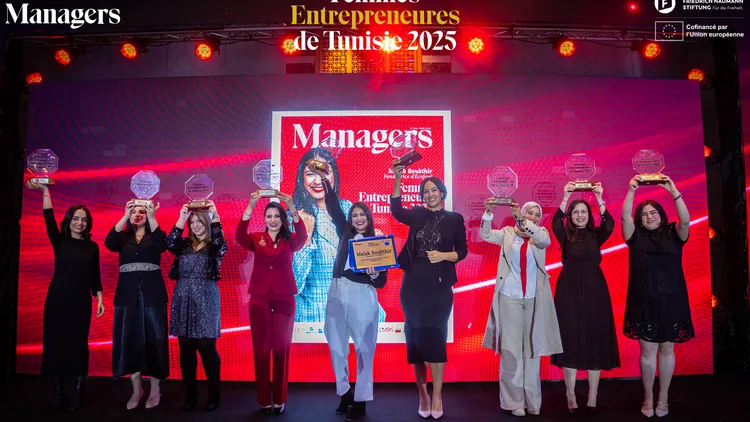
On February , 2025, the 10th edition of the Trophées de Femmes Entrepreneures de Tunisie (FET) honored nine outstanding Tunisian women entrepreneurs for their innovation, resilience, and the impact of their ventures. Organized by Managers magazine in collaboration with the Delegation of the European Union and the Friedrich Naumann Foundation for Freedom, the event brought together a distinguished audience, including ministers Asma Jabri (Family, Women, Children, and Seniors), Fatma Thabet Chiboub (Industry, Mines, and Energy), and Jihene Srioui (Financing and Partnerships, Ministry of Employment and Vocational Training).
In her opening speech, Sahar Mechri, Executive Director of Managers, emphasized that the FET Awards are more than a celebration, they are a validation of bold journeys and a source of inspiration for future generations of women leaders.
Spotlight on the 2025 Woman Entrepreneur of the Year
Malak Boukthir, founder of Ecofeed, was named Tunisian Woman Entrepreneur of the Year 2025 for her groundbreaking project that transforms crab waste into sustainable animal feed a powerful example of eco-innovation.
Imen Bakhti (La Seine) – Microcred Empowerment Award
Fatma Midani (Soul & Planet) – Meninx Marketplaces Award
Beyond Recognition: Support for Growth
Along with financial prizes from sponsors, the winners will benefit from a tailored mentorship program offered by the Club des Femmes Entrepreneures de Tunisie. Thanks to the support of the European Union Delegation, they will also receive personalized guidance through various EU-funded projects, including Adapt, Greenov’i, CQE (Qualitative Growth for Employment), Insadder, and Initiative Tunisie.
The FET Awards go beyond accolades, they celebrate a thriving community of women entrepreneurs driving Tunisia’s social and economic development. By highlighting their stories and successes, the event strengthens the spirit of sorority and underscores the transformative power of female entrepreneurship in Tunisia.
source/content: freiheit.org /Friedrich Naumann Foundation (headline edited)
______________
Tunisian Women Entrepreneurs Honored for Innovation and Impact at the 10th FET Awards
Sidi Ould Tah is the first Mauritanian to become president of the African Development Bank (AfDB) and will need all his international experience to tackle the challenges facing the institution.
The 60-year-old economist was the last to declare his candidacy for the post and ran a whirlwind campaign during which he highlighted his 10 years as head of the Arab Bank for Economic Development in Africa (BADEA).
He claimed to have transformed it from an institution “unknown to rating agencies” to one of the highest-rated development organisations in Africa.
“I have demonstrated my transformative leadership style that has elevated the bank to the level of a leading player in the African development landscape,” he said in his application statement to the AfDB.
A discreet man who speaks sparingly, his style will be a clear contrast with his flamboyant predecessor, Nigeria’s Akinwumi Adesina.
Tah’s programme is based on four main points: strengthening regional financial institutions; asserting Africa’s financial independence in global markets; leveraging demographic dynamics as a development tool; and building resilient infrastructure to climate change.
His entourage is touting his ability to replicate his successes at the BADEA at a larger institution like the AfDB, which has $318 billion in capital.
“The AfDB has to abandon traditional bureaucratic models for a more fluid approach based on results,” he said.
– African legitimacy –
Tah, who was Mauritania’s economy minister from 2008 to 2015, is calling for a “break with the approaches of the past”, in a world where the “challenges and opportunities of Africa have taken a new dimension”.
The new AfDB president speaks French, English, Arabic and Wolof, which is spoken in several west African countries.
He managed the impressive feat of rallying diplomatically diverse supporters behind his candidacy, from Sahel countries such as Mali to France.
His score of more than 72 percent among African voters gives him continental legitimacy. His entourage claimed before the vote he had support from the very first round from all African regions.
US President Donald Trump’s administration has vowed to suspend $500 million in aid to the AfDB, but Tah has argued other financial backers such as Gulf countries could step in.
On environmental questions, he intends to promote Africa’s natural resources to move towards a “viable energy transition, reconciling economic and environmental imperatives”.
“Even though Africa is a minimal contributor to global CO2 emissions, it bears the full brunt of the effects of climate change,” he said.
“It is therefore imperative to integrate sustainable practices and to harness renewable energy in development projects.”
Tah holds a master’s degree in economics from the University of Nouakchott in his native Mauritania and a doctorate from the University of Nice in France.
source/content: digitaljournal.com / Pierre Donadieu (headline edited)
_____________
Sidi Ould Tah is the first Mauritanian to serve as African Development Bank president – Copyright AFP/File SAUL LOEB
Syria’s new administration announced on Monday the appointment of Maysaa Sabrine as the governor of the Central Bank of Syria, making her the first woman to hold this position in the bank’s history.
Prior to her new role, Sabrin held several prominent positions within the Central Bank, including First Deputy Governor and Supervising Director. She also served as the Head of the Office Supervision Department.
In addition to her roles within the Central Bank, Sabrin has been a member of the Board of Directors of the Damascus Securities Exchange since 2018, representing the Central Bank.
Sabrine holds a master’s degree in accounting.
Her appointment comes amid calls for the inclusion of Syrian women in the new Syrian government.
Earlier this month, Aisha al-Dibas was appointed as the head of the Office for Women’s Affairs, becoming the first woman to hold an official position in the new Syrian administration.
source/content: english.alarabiya.net / AlArabiya English (headline edited)
This combination of compassion and technology earned Al-Matrudi’s team multiple global awards this year.
For Dalal Al-Matrudi, innovation began not in a lab but at home, watching a loved one battle multiple sclerosis. What started as empathy soon turned into invention, leading her and her team to develop a smart medical device that is now winning awards on international stages.
“Our innovation is a smart medical device designed to assist patients with multiple sclerosis by providing localized muscle massage controlled through a mobile application,” said Al-Matrudi. “It helps relieve pain, reduce muscle stiffness and improve patients’ comfort and daily mobility.”
The device also connects patients directly with their doctors for real-time monitoring. “In emergency situations, it can instantly alert healthcare providers to ensure the patient receives immediate assistance,” she said.
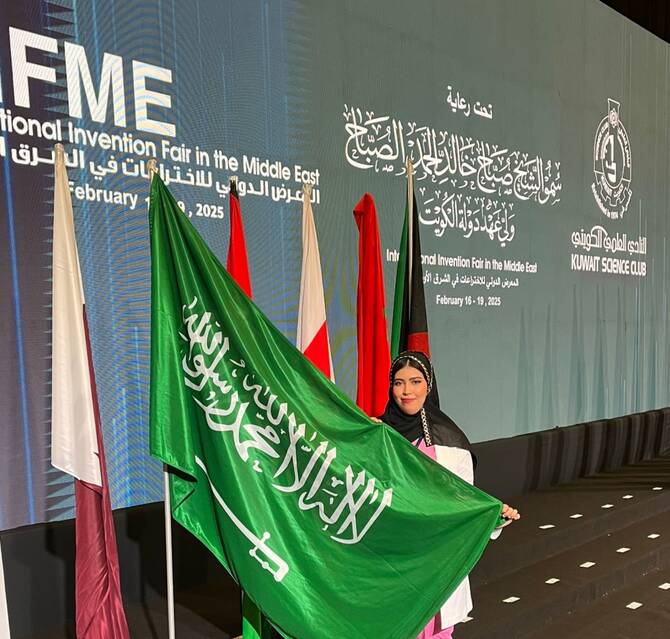
This combination of compassion and technology earned Al-Matrudi’s team multiple global awards this year, including the Gold Medal with Jury’s Honor, the GCC Patent Office Award, and the Grand Prize at the International Invention Fair of the Middle East, or IIFME, hosted by the Kuwait Science Club. The invention was also recognized at the Geneva International Exhibition of Inventions, one of the most prestigious global platforms for innovation.
For Al-Matrudi, 21, who hails from Riyadh, the project was deeply personal. “Our inspiration came from personal experience — one of my family members suffers from multiple sclerosis, and seeing their daily struggle with pain and mobility challenges deeply affected me,” she said.
Together with her teammates, she transformed that emotional drive into a purpose-driven invention. “We wanted to create something practical and compassionate that could truly improve patients’ lives,” she said.
Under the mentorship of Prof. Dr. Kholoud Al-Muqrin, a distinguished professor of nuclear physics known for empowering young Saudi innovators, the team refined their prototype into an award-winning solution. “Her continuous guidance and scientific insight played a vital role in shaping our project and transforming our idea into a tangible, award-winning innovation,” Al-Matrudi said.
She believes the foundation of every great innovation is care. “We believed that technology should serve humanity, and that small ideas born from care can evolve into meaningful advancements that bring relief and hope to many,” she added.
Months of research, design and testing culminated in an unforgettable moment at IIFME 2025.
“The most emotional moment was standing on stage when our team’s name, Team May, was announced as the Grand Prize Winner,” she said. “I remember holding my teammates’ hands tightly, feeling both disbelief and overwhelming pride.”
For Al-Matrudi, the victory symbolized much more than recognition. “It wasn’t just about the prize — it was about realizing that months of dedication, late nights and countless trials were finally worth it,” she said.
She recalls how their mentor’s tears turned the win into a collective triumph. “I could see tears in everyone’s eyes, especially our supervisor’s, which made it even more special,” she said. “That moment reminded me that passion and persistence can turn ideas into achievements that reach beyond borders.”
Although the invention is not directly tied to her academic major, medical physics, Al-Matrudi says her background gave her the edge she needed to design effectively.
“Studying medical physics enhanced my scientific thinking and deepened my knowledge of how the human body interacts with medical devices,” she said. “This understanding helped me design a solution that is both safe and effective.”
She believes the key to meaningful innovation lies in combining technical knowledge with emotional intelligence. “Gaining international recognition encouraged me to continue combining my medical knowledge with creative thinking to develop innovations that make healthcare more compassionate, practical and accessible for all,” she said.
Al-Matrudi’s story reflects a growing wave of young Saudi women who are redefining the global image of innovation.
“I hope my journey shows Saudi women that ambition and creativity have no limits,” she said. “Science and innovation are not exclusive fields — they welcome curiosity, persistence and passion.”
Her experience also underscores how inclusion fuels progress. “When women step into these spaces, they bring empathy and fresh perspectives that drive real progress,” she said.
Her message is simple but powerful: “I want every Saudi girl with a dream to believe that she can represent her country globally, no matter her field. Our achievements are proof that with teamwork, guidance and confidence, Saudi women can lead the way in shaping the future of science and technology.”
Today, Al-Matrudi stands as one of the brightest examples of how Saudi youth are translating Vision 2030’s goals into real-world impact. Through her invention, she’s proving that innovation is not just about devices, it’s about dignity, hope and humanity.
As she proudly waved the Saudi flag on stage in Kuwait, surrounded by fellow inventors and mentors, Al-Matrudi’s message was clear: Saudi women are not just participating in the global innovation movement, they’re leading it.
source/content: arabnews.com (headline edited)
______________
Saudi innovator Dalal Almatrudi proudly holds the Saudi flag after winning the Grand Prize at the International Invention Fair of the Middle East 2025 in Kuwait. (SUPPLIED)
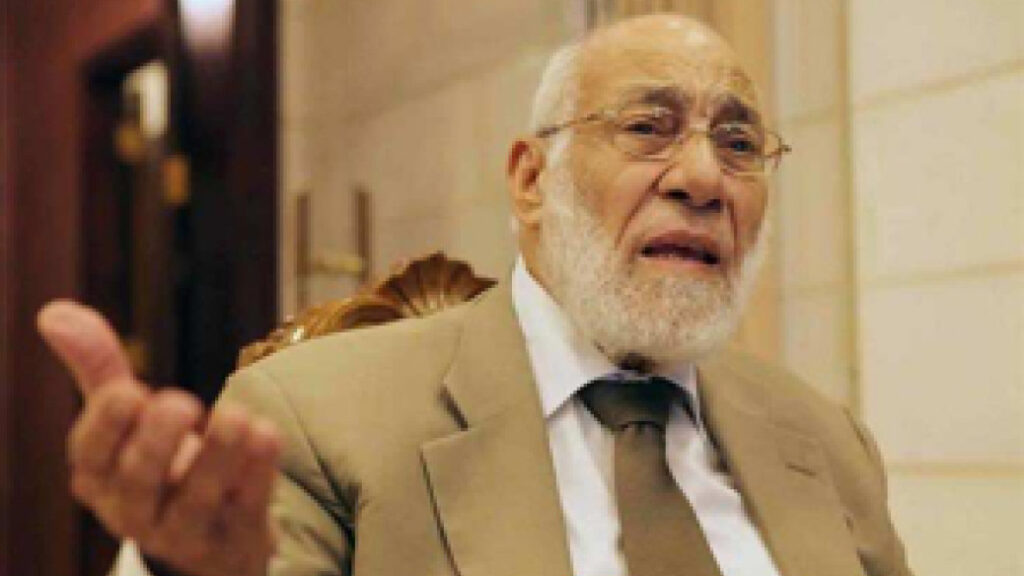
Egyptian Islamic scholar and geologist Zaghloul El-Naggar, a leading figure in the field of scientific interpretation of the Qur’an, has died at the age of 92.
El-Naggar passed away in Amman, Jordan, after a battle with illness, according to statements released on his official social media accounts on Sunday.
His funeral prayer will be held on Monday at Abu Aisha Mosque in Amman, followed by burial at Umm Al-Qutain Cemetery.
Born on 17 November 1933 in the village of Mashal in Egypt’s Gharbia Governorate, El-Naggar showed an early passion for science.
He graduated with honours in geology from Cairo University in 1955, earning the Mustafa Baraka Award in Earth Sciences. He obtained a PhD from the University of Wales in 1963 and became a full professor in 1972.
El-Naggar’s career spanned decades of teaching and research at universities in Egypt, the UK, Saudi Arabia, Qatar, Yemen, Jordan, and the United States.
He chaired the geology department at Qatar University, taught at King Fahd University of Petroleum and Minerals, and served as a visiting professor at UCLA.
He also directed Al-Ahqaf University in Yemen and later taught at the World Islamic Sciences and Education University in Jordan.
He became one of the Arab world’s most recognised voices on the relationship between science and faith, authoring numerous books and delivering hundreds of lectures on what came to be known as the “scientific miracles of the Qur’an and Sunnah”.
His popular TV programme Ayat Bayyinat (“Clear Verses”) aired across Arab channels, exploring Quranic descriptions of natural phenomena.
El-Naggar was a member of the International Commission on Scientific Signs in the Qur’an and Sunnah and was honoured several times for his contributions to promoting scientific understanding within an Islamic framework.
source/content: newarab.com (headline edited)
______________
El-Naggar passed away in Amman, Jordan, after a battle with illness [Al-Araby Al-Jadeed]
Under the auspices of H.E. Mr. Qubad Talabani, Deputy Prime Minister of the Kurdistan Regional Government, Iraq marked a major step toward safeguarding its agricultural heritage and enhancing its food security with the laying of the foundation stone for the first-ever Gene/Seed Bank in the Region.
The facility, located in Hawari Shar Park in Sulaymaniyah, is funded by the European Union (EU) and implemented by the Food and Agriculture Organization of the United Nations (FAO), in collaboration with the Federal and Regional Governments as part of the “Restoration and Strengthening the Resilience of Agri-Food Systems in Iraq” project. The facility will enable the preservation of plant genetic diversity, enhance food security, and build resilience against climate change.
The event was inaugurated by H.E. Deputy Prime Minister of the Kurdistan Regional Government, Mr. Qubad Talabani; H.E. Minister of Agriculture and Water Resources, Ms. Begard Talabani; the Governor of Sulaymaniyah, Dr. Haval Abubakir; the Mayor of Sulaymaniyah, Ms. Leyla Omar Ali; the FAO Representative in Iraq, Mr. Salah El Hajj Hassan; along with a number of senior representatives from academic and agricultural institutions.
H.E. Mr Qubad Talabani, Deputy Prime Minister, emphasised the importance of this initiative, saying: ‘The gene bank is an investment for the future; it protects our past and secures our future.’
The Gene/Seed bank is a strategic facility for conserving Iraq’s rich plant genetic diversity, which includes over 3,500 plant species originating from the ancient civilizations that once flourished in Iraq—the cradle of civilization. These species hold scientific, historical, and human value across the region and globally. The facility will enable the conservation of rare plant genetic resources, including wild varieties of grains, vegetables, and indigenous crops. It will also strengthen Iraq’s capacity to conserve seeds and make use of valuable genetic traits—such as drought tolerance—from wild species to support the development of more climate-resilient crops.
In her remarks, H.E. Minister Begard Talabani stated: “This initiative represents a strategic milestone in the journey of developing the agricultural sector by protecting plant diversity and supporting scientific research. It will enable farmers to benefit from our historical plant heritage and will allow us to preserve our agricultural legacy for future generations.”
FAO Representative in Iraq, Mr. Salah El Hajj Hassan, expressed his sincere appreciation to FAO’s national partners in the federal government and the Kurdistan Regional Government for their close collaboration and support. He also acknowledged and thanked the European Union for funding this initiative under the scope of the “Restoration and Strengthening the Resilience of Agri-Food Systems in Iraq,” project, which also reflects the follow-up to the recommendations resulting from the FAO Director-General visit to Iraq and his meetings with senior officials. He added that this facility represents a center for scientific innovation in research and resilience-building. It enables the preservation of Iraq’s historical, environmental and agricultural heritage, ensures that future generations can benefit from it, and stands as a testament to FAO’s commitment to transforming Iraq’s agricultural legacy into a powerful tool for sustainable development.”
The gene bank will house modern storage vaults, laboratories, research and training facilities, and seed data documentation and conservation areas. Future expansion is anticipated to include a field gene bank, a tissue culture laboratory, and a cryobank.
The initiative directly contributes to the Sustainable Development Goals (SDGs), particularly SDG 2: Zero Hunger and SDG 13: Climate Action, by investing in biodiversity conservation and climate-resilient agriculture.
source/content: fao.org – FAO of the UN (headline edited)
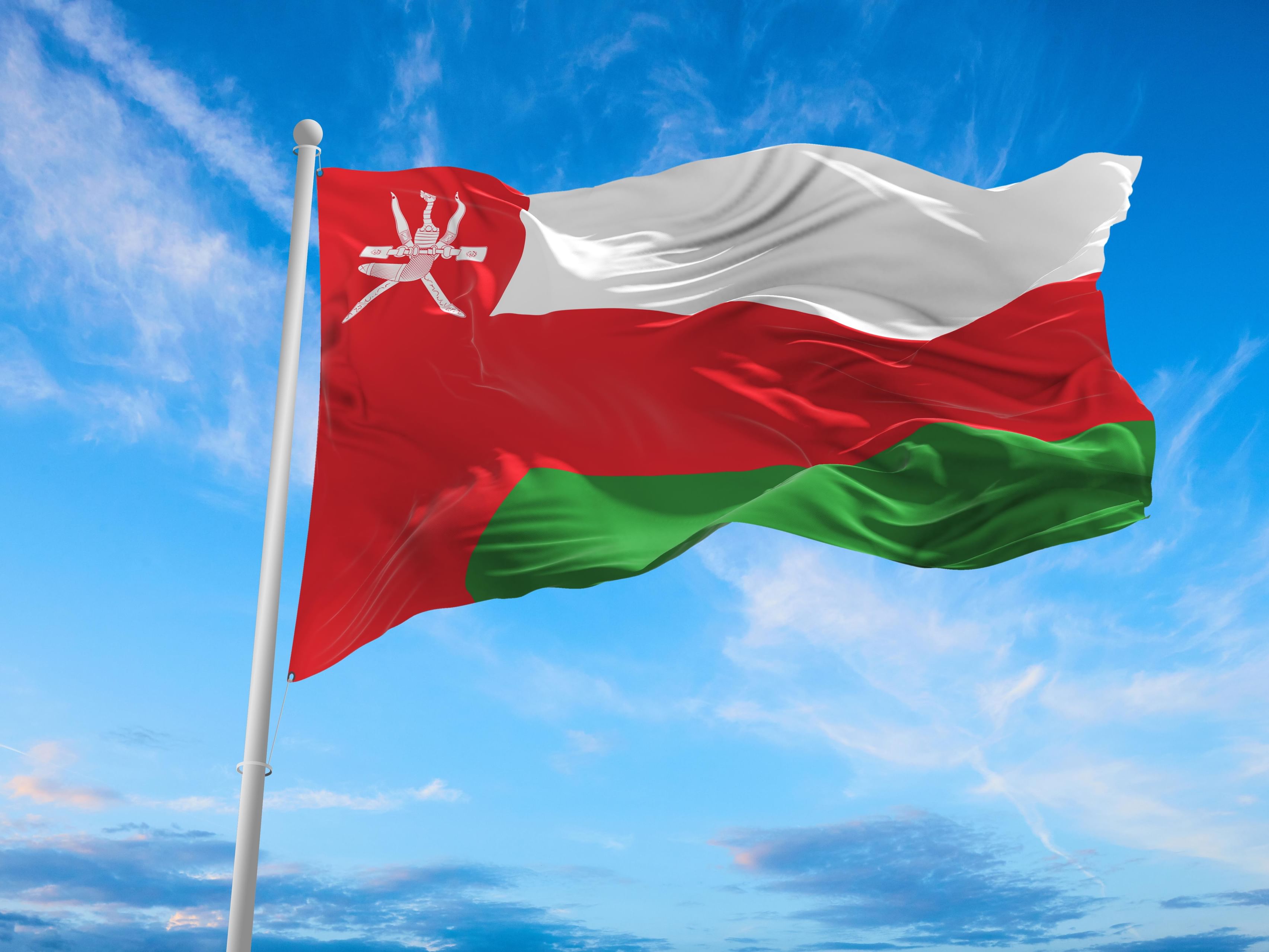
In a significant step for Oman’s research sector, Eng Najat al Fadhili of the Industrial Innovation Academy has contributed to an international peer-reviewed study examining the effects of environmental changes on ancient marine organisms.
The study, published on the European Geosciences Union (EGU) platform, was conducted in collaboration with Vrije Universiteit Brussel, Utrecht University, and Friedrich-Alexander University of Erlangen-Nuremberg.
Researchers analysed marine species dating back more than 60 million years to understand their response to climate shifts over geological time. Fieldwork was carried out at the Saiwan geological site in Al Wusta, internationally recognised for its scientific importance.
The project aligns with national efforts to strengthen the research ecosystem and support the objectives of Oman Vision 2040, particularly in innovation and sustainability.
According to the Industrial Innovation Academy, the study contributes critical insights into the long-term impact of climate change on marine ecosystems. It also demonstrates Oman’s capacity to support advanced research through local expertise in geosciences and climate science.
Such initiatives are seen as strategic to enhancing scientific output, informing sustainable resource management, and reinforcing Oman’s role as a regional player in environmental research.
This year’s commemoration is especially significant, coming just a week after a UNSC resolution placed Morocco’s autonomy plan at the heart of efforts to resolve the Sahara dispute.
The Mohammed VI Museum of Modern and Contemporary Art in Rabat is commemorating the 50th anniversary of the Green March with a new exhibition titled “50 Years of the Green March: A Memory in Motion.”
The exhibition pays homage to one of Morocco’s most defining moments and invites visitors to reflect on the enduring values of peace, unity, and loyalty that continue to shape the nation’s identity five decades after the historic march.
Opened this week, the exhibition combines historical documentation with contemporary artistic interpretation. The exhibition includes an evocative collection of photographs that aims to reaffirm the strength of visual memory and its role in preserving national heritage. This is a key element in Morocco’s ongoing narrative of sovereignty and unity.
A tribute to a defining moment
Organized by the National Foundation of Museums (FNM), the exhibition brings together works by renowned Moroccan photographer Daoud Oulad-Syad and a selection from the Rencontres de la Photographie de Marrakech (RPM). Together, they offer a visual journey that captures both the emotion and symbolism of the Green March, which represents a cornerstone of Morocco’s modern history.
Nadia Sabri, Director of the Mohammed VI Museum of Modern and Contemporary Art, emphasized the exhibition’s importance as a bridge between generations.
“What we can really emphasize is that this exhibition provides both visual and historical archives for the public,” she told Morocco World News.
“It caters to a wide audience, including younger visitors as well as older ones who may have experienced this historic event but do not necessarily remember its key moments, particularly during the march,” Sabri added.
She noted that the exhibition spotlights major figures in the Moroccan photography scene, like Daoud Oulad-Syad, with a photographic series dedicated to the Sahara and the beauty of the desert.
Through Oulad-Syad’s lens, the exhibition moves beyond mere documentation to celebrate the spirit of a nation united under a shared cause. His photographic series dedicated to the Sahara, showcased in the museum’s second gallery, highlights the region’s natural beauty and its deep cultural and emotional connection to the Moroccan people.
The Green March, which took place on November 6, 1975, was a peaceful mass demonstration that changed the course of Moroccan history. Called for by the late King Hassan II, it saw over 350,000 unarmed volunteers, men and women, from all regions of Morocco march southward to reclaim the territory of Western Sahara, then under Spanish occupation.
Carrying Qurans and Moroccan flags instead of weapons, the marchers symbolized Morocco’s unity and commitment to recovering its southern provinces through peaceful means. The event came shortly after the International Court of Justice (ICJ) issued an advisory opinion affirming that Western Sahara was not “terra nullius” (empty land or unclaimed territory) before colonization and that it had historical and legal ties to Morocco.
The enduring significance of the Green March for Morocco
This year’s commemoration carries added significance, as it comes just a week after the United Nations Security Council adopted a new resolution embracing Morocco’s autonomy plan as the most “serious and credible” framework for achieving a lasting and realistic political solution to the regional dispute over the Sahara.
The resolution is widely seen as a diplomatic success for Morocco, as it reinforces international support for its initiative and paves the way for renewed efforts toward a peaceful settlement.
Mehdi Qotbi, artist and President of the National Foundation of Museums, highlighted this connection in his remarks to MWN at the exhibition.
“We are very happy to be celebrating this anniversary today, here at the Mohammed VI Museum of Modern and Contemporary Art … is not only an occasion to mark the anniversary itself, but also to celebrate the diplomatic success achieved thanks to the foresight of His Majesty King Mohammed VI,” Qotbi said.
For him, this success “paves the way for a definitive resolution of the artificial conflict over the Moroccan Sahara and for a better future for the entire region.” The Moroccan artist added that the Foundation and the Museum are proud to take part in this “popular enthusiasm for this cause, for this victory at the United Nations.”
Beyond commemoration, the “Memory in Motion” exhibition aims to spark dialogue about the meaning of the Green March in contemporary Morocco. For many visitors, especially younger ones, the exhibition is an opportunity to connect with a pivotal chapter in Morocco’s collective memory.
The exhibition includes an evocative collection of photographs that aims to reaffirm the strength of visual memory and its role in preserving national heritage
The United Arab Emirates University announced that it has obtained a new patent from the United States Patent and Trademark Office in the field of environmental science and renewable energy, which is the invention of a carbon nitride graphite compound supported by date syrup.
This patent represents an important step in the development of photocatalytic technologies for converting water into hydrogen using light, which represents a significant advance in sustainable energy technology.
The innovative compound, developed by a team of researchers at the United Arab Emirates University, including PhD student Malath Sulaiman, under the supervision of Dr. Mohammed Taher, Associate Professor in the Department of Chemical and Petroleum Engineering, uses date syrup as an aid to accelerate the photocatalytic process. The compound is manufactured by mixing carbon nitride graphite with date syrup at high temperatures, which improves the efficiency of converting water into hydrogen.
Dr. Mohammed Taher, the project’s principal investigator, explained: “We are proud of this invention, which reflects the United Arab Emirates University’s commitment to innovation in the field of renewable energy. By combining date syrup with carbon nitride graphite, we were able to develop an effective material that can greatly enhance the photocatalytic process, helping to address the challenges of climate change and reduce dependence on fossil fuels.”
This discovery is the result of ongoing efforts by researchers at the United Arab Emirates University, who are working on developing innovative solutions to environmental and energy challenges. Initial studies have confirmed that the new compound is capable of generating hydrogen with high efficiency, opening up new and wide-ranging applications in the field of clean energy and green hydrogen production, and represents a promising step towards enhancing the UAE’s position in the renewable energy sector globally.
A young Libyan scientist has secured a bronze medal at the International Festival of Science and Technology (I-FEST) 2025 in Tunisia after developing a patented natural antibiotic.
Halima Al-Khazali, 18, from Bayda, claimed third place among 800 international competitors for her invention of an antibiotic derived from wormwood and other herbs. Her achievement adds to Libya’s growing reputation in scientific innovation.
The breakthrough came after five months of rigorous research into a traditional Libyan remedy for dental infections, culminating in Al-Khazali obtaining a patent for her discovery.
This latest success follows her previous gold medal at the Bosnia and Herzegovina Science Olympiad (BOSEPO) 2025, where she finished first among 300 participants.
Al-Khazali’s accomplishments highlight both her exceptional scientific talent and Libya’s potential contributions to global scientific research, making her an inspirational figure for young people across Libya and the broader Arab world.