SAUDI ARABIA assumes Presidency of ‘Arab League Educational, Cultural & Scientific Organisation (ALESCO) until 2026

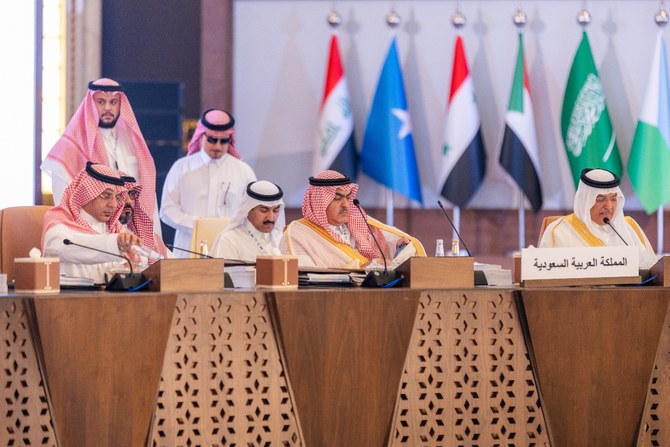
Saudi Arabia has assumed the presidency of the Executive Council of the Arab League Educational, Cultural and Scientific Organization until 2026.

The official announcement was made on Friday during the 27th session of the ALECSO, which was held in Jeddah under the presidency of Saudi Arabia. During the session, Iraq handed over the presidency to the Kingdom.

In a speech delivered on behalf of Minister of Culture Prince Badr bin Abdullah bin Farhan, Minister of Education and Chairman of the Saudi National Committee for Education, Culture and Science Yousef Al-Benyan welcomed the ministers and heads of national committees for education and science participating in the session.

Al-Benyan stressed the Kingdom’s humanitarian and fraternal support for the Gaza Strip within the framework of Arab cooperation and solidarity.

He affirmed Saudi Arabia’s support for Khalid Anan, the only Egyptian and Arab candidate for the position of director-general of the organization.

Al-Benyan concluded the speech by praising the efforts of Arab countries in supporting ALECSO, and building bridges of communication to achieve common regional goals.

Saudi Deputy Minister of Education Mohammed Al-Sudairi confirmed that holding the ALECSO meetings in Jeddah coincides with an increase in the role of Saudi national institutions to support the work of the organization.

He added that the number of Saudi initiatives exceeded 45, reflecting Saudi Arabia’s interest and belief in the importance of working with international organizations and its regional environment.

Iraqi Minister of Education Ibrahim Al-Jabouri, head of the 26th session, pointed out achievements made in the previous session, and various programs aimed at building bridges of cooperation between Arab culture and the rest of the world.

Director General of ALECSO Mohammed Ould Omar thanked King Salman and Crown Prince Mohammed bin Salman for hosting the event in Jeddah.

He presented the most prominent programs, initiatives, and projects implemented by the organization between the 26th and 27th sessions with international organizations, such as UNESCO, the work of the Arab Summit in Algeria, the Francophone Summit, the 13th Conference of Arab Ministers of Education in Rabat, and the International Conference on Adult Education, also held in Morocco.

At the end of the 27th session, ministers and heads of the Arab delegations agreed on the importance of supporting the Palestinian cause, condemning and denouncing the displacement that the Palestinian people, as well as the destruction of Palestinian antiquities.

They also addressed the importance of supporting culture, education, innovation, and science in the Arab world. 

source/content: arabnews.com (headline edited)

_________

__________________________________

SAUDI ARABIA / ARAB SCIENCE

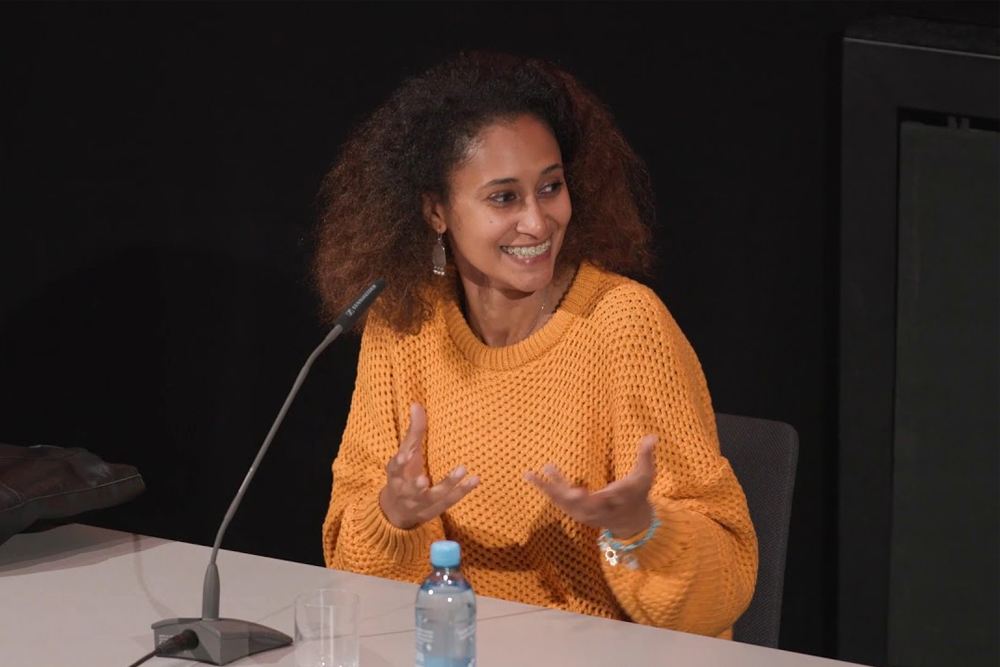
SUDANESE-EGYPTIAN Marwa Zein, A Multi-identity Film Director, Scriptwriter, & Film Producer

Get to know this brilliant Arab woman !

Born in Saudi Arabia and the daughter of a Sudanese father and Egyptian mother, Marwa Zein is a woman that truly embodies multiple identities, and for many it is this that perhaps shines through the most in her work. Even when it comes to her roles, that diversity and multiplicity are frontline and center. An award-winning director, scriptwriter, film producer, women’s rights activist, and founder of ORE Production, a Khartoum-based film production company, Zein is inspiring in every way.

Before setting off on a journey to become a filmmaker, Zein enrolled in Cairo University as a chemical engineering student to please her parents. While studying, she worked and saved up to have the means to leave her degree behind three years later, instead study cinema at the Academy of Arts in Cairo, Egypt in 2005. In 2009, she graduated with honors and moved to Germany to continue her film studies. Her graduation project, “A game,” was an official selection of more dozens of international festivals across the globe and was translated into five languages.

From her inspiring start into the world of film and her academic achievements, Zein moved on to bigger goals, nabbing awards for her short film “One Week, Two Days,” which premiered at the 2016 Dubai International Film Festival. In 2019, she was selected as one of the seven young filmmakers from across to attend the Cannes Film Festival 2019 by the International Emerging Film Talent Association (IEFTA).

Perhaps her most renowned recent work is “Khartoum Offside,” which was awarded Best Documentary for 2019 at the 15th Africa Movie Academy Awards AMAA 2019. The documentary tells the story of women footballers whose dream it is to play for Sudan at a Women’s World Cup hosted by their home country, revealing the challenging social, economic, and political situations they face and inspiring audiences with their tale.

Speaking to Women and Hollywood in 2019, Zein had some inspiring words of advice for other female filmmakers, saying, “There’s no competition. Everyone is unique, and we can’t tell the same story even we have the same idea. You are special, different, and inspiring, and you lead the way for the people coming after you.”

“Take care of your mental, physical, and financial situations. It’s a very challenging and demanding business, so don’t lose your soul in the process. Stay true to who you are, and you will reach the horizon,” she continued.

source/content: abouther.com (headline edited)

________

_________________________

SUDAN / EGYPT

QATAR: Msheireb Downtown Doha wins Guinness World Records title™ for ‘Largest Underground Car Park” in the world

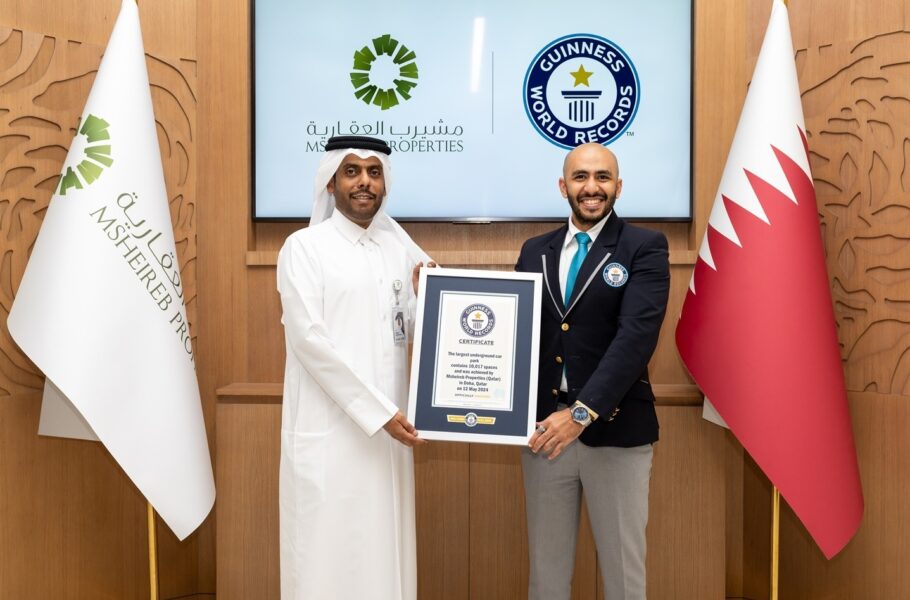
Msheireb Downtown Doha, Qatar’s pioneering sustainable and smart city district, has clinched the Guinness World Records™ title for the “Largest Underground Car Park” with a capacity of 10,017 spaces. The Guinness World Records™ recognition highlights the creative thinking that went into designing Msheireb Downtown Doha to create a sustainable urban district that sets a new benchmark for future smart city projects globally.

Msheireb Downtown Doha was designed for the human scale, which starts from the ground up. Locating car parking and building services underground has allowed the district to keep streets traffic-lite, enabling narrow, pedestrian-friendly walkways. This design improves connectivity across the wider city area, extending underground basements throughout the entire district.

“We wanted to reclaim outdoor spaces for the community by removing vehicles from the streets around Msheireb,” said Msheireb Properties CEO Eng. Ali Al Kuwari. “The Guinness World Records™ for the Largest Underground Car Park is a testament to our dedication to creating a sustainable and innovative city district that prioritizes the well-being of our community. By locating car parking and building services underground, we enabled architects to design attractive buildings with active façades on all sides.”

With an impressive capacity of 10,017 vehicles spread across six levels, Msheireb Downtown Doha’s underground parking system ensures ample space for residents, tenants, and visitors. The cutting-edge facility boasts an intelligent parking system that guides drivers to available spaces, making the parking experience seamless and hassle-free.

The underground parking system also had a significant impact on building design by removing the need for back service entrances which improved street quality and aesthetic cohesion.

As the flagship project of Msheireb Properties, Msheireb Downtown Doha has been designed to revive the historical downtown area with a new architectural language that is modern yet inspired by traditional Qatari heritage. The district incorporates the latest smart city technology and sustainability features, making it a model for future urban development’s worldwide.

Raafat Tawfik, Guinness World Records™ Official Adjudicator, commented, “We are thrilled to recognize Msheireb Downtown Doha for its outstanding achievement in creating the Largest Underground Car Park. This feat showcases the district’s commitment to innovation, sustainability, and enhancing the urban living experience.”

Msheireb Downtown Doha’s underground parking is just one of the many features that make the district a unique and attractive destination. With its pedestrian-friendly streets, diverse mix of residential, commercial, and retail offerings, and cultural attractions such as the Msheireb Museums, the district has become one of Qatar’s go-to destinations for residents and visitors alike.

Source and cover image credit: Press release

source/content: iloveqatar.net (headline edited)

____________

__________

QATAR

ARAB CANADIAN : Six Arab Women praised for their ambition and leadership in Waterloo Region

The women are part of an ascending community that has gained a higher profile after waves of recent immigration.

Six Arab women were honoured Saturday by their peers for their work in the community and in business.

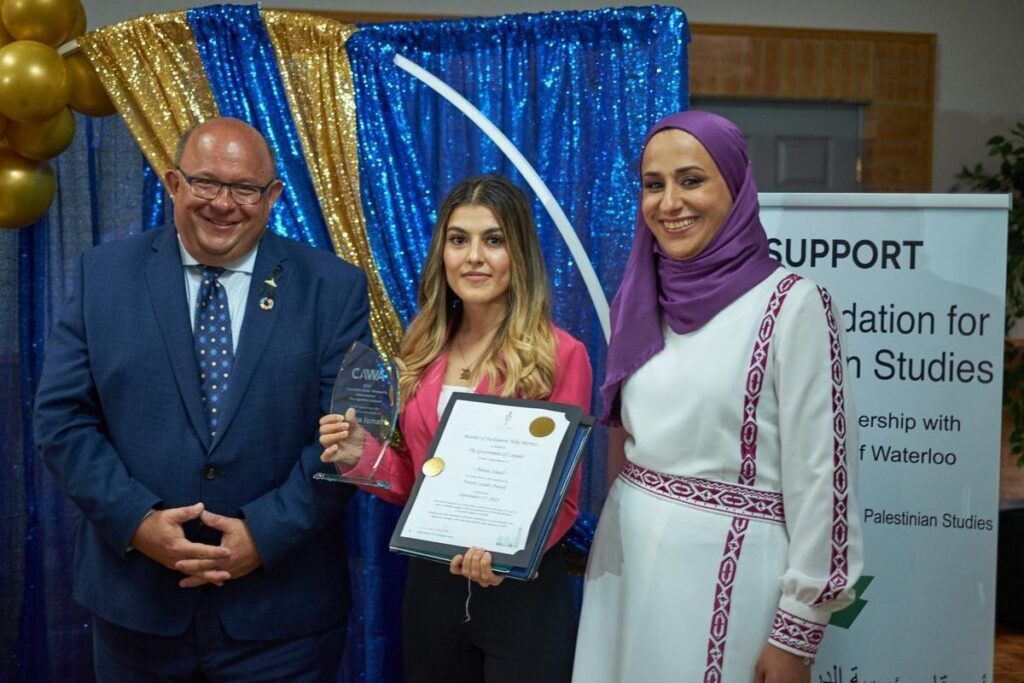
“It really is a great opportunity to educate people,” said Asma Al-wahsh, founder of the non-profit Canadian Arab Women’s Association. The association named six Women of the Year in part to challenge stereotypes that immigrant women do not contribute.

Noura Alkhiwled was celebrated for “rocking it on the work floor” as a woman in the workforce. Ansam Shafi was recognized for her community leadership.

Hiba Al Zaben has made a name for herself in a science-related field that is dominated by men. Bahiyye Ahram owns a business and is an exceptional entrepreneur.

Yasmin Haloubi was honoured for making a difference in Guelph. Amina Ismail is a future leader, recognized as an example of the next generation of Arab women.

These Arab women are part of an ascending Arab community that is gaining a higher profile after waves of recent immigration. The community was little known a generation ago, but is now big enough to hold its first Middle Eastern festival last month in Kitchener.

Arabic has surged to become the No. 3 foreign language spoken around dinner tables at home in this region, the 2021 census has found. It has surpassed German and trails Chinese languages and Punjabi.

Growth over a decade has been “really huge,” Al-wahsh said. She came to Canada in 2012 and sees this region as a magnet for Canadian Arabs who are relocating from other cities and provinces.

It’s the second time the women’s association has honoured women of the year. The ceremony was held in west Kitchener at the Portuguese Club.

source/content: therecord.com (waterloo region) / (headline edited)

____________

From left: Kitchener Mayor Berry Vrbanovic, Amina Ismail (celebrated as a future leader), and Asma Al-wahsh, founder of the Canadian Arab Women’s Association .Peaceful Films

____________________

CANADIAN / ARAB

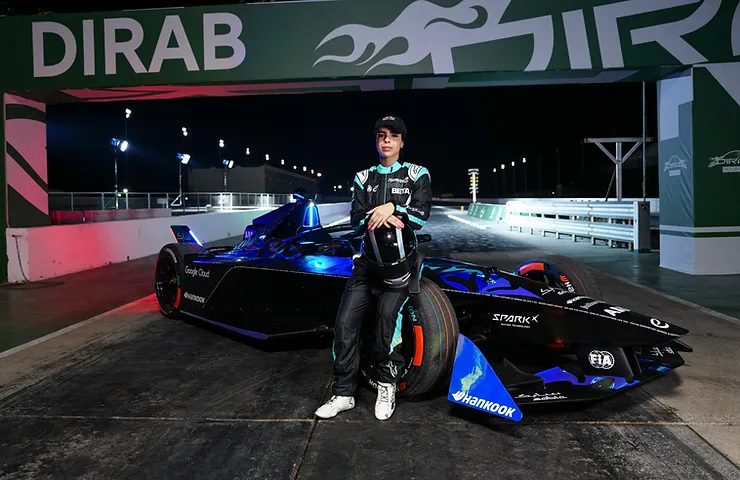
SAUDI ARABIA: WORLD RECORD: Breaking Barriers: 23-year old Reem Al Aboud and Formula E Set an FIA Single-Seater Benchmark breaking World Record

This January, Saudi racer Reem Al Aboud set a new acceleration benchmark for an FIA single-seater by reaching 0-60mph in 2.49 seconds in an ABB FIA Formula E GENBETA car. Ahead of International Women’s Day, we reflect on the implications of this achievement for motorsport.

Every Federation Internationale de l’Automobile-sanctioned single-seater championship race begins with a standing start. The lights at the starting line flash on, and flash off. Idle cars roar to life, accelerating through the straight and into the waiting corner. 

How quickly these cars can accelerate depends on the series. F1 Academy goes from zero to 60mph in approximately 3.6 seconds. Formula 3 and Formula 2 manage in 3.1 and 2.9, respectively. Formula E’s GEN3 car takes 2.8. The current Formula 1 car takes 2.64. 

But F1’s 2.64 seconds is no longer the benchmark. Now, Formula E’s newly developed GENBETA car holds the title — and with a woman in the cockpit.

Last July, Formula E unveiled its GENBETA prototype at the ExCeL London. While testing the car, World Champion Jake Hughes clinched a top speed of 218.71km/h, smashing the Guinness World Record for fastest speed indoors by more than 50km/h. 

Having designated GENBETA as its development platform, Formula E sought to explore the model’s potential and performance further. The series set its sights on setting a second benchmark: the time an FIA single-seater takes to reach 0-60mph. 

Yet in chasing after the F1 benchmark, Formula E was not content with breaking only technological and physical barriers. So, to honour its founding commitment to social progress, it added motorsport’s longstanding gender barrier as yet another to break.

Accordingly, Formula E tapped 23-year-old Saudi female racer Reem Al Aboud to take the GENBETA’s driver seat. The 2023 Saudi Toyota Ladies Cup Champion has partnered with the series since 2018, when she became the first Saudi woman to test a Formula E car. 

Experienced in driving GEN2 and GEN3 cars  — plus breaking barriers across karting, hillclimbing and autocross series — Reem was Formula E’s choice for a 2024 FIA Girls on Track Ambassador. Naturally, she was their choice for the GENBETA test as well. 

And that choice certainly paid off. This January at Dirab Motor Park, Reem’s GENBETA car achieved 0-60mph in 2.49 seconds — besting F1’s by 0.15 seconds. 

Of course, the technological aspect of the January test is remarkable. Behind GENBETA’s new benchmark is its front powertrain kit, which previous Formula E models (and other road electric vehicles) only use for energy harvesting. However, GENBETA also turns on this kit for greater traction during acceleration, using it to produce 536 horsepower that will launch the car into action. Instant torque allows for instant acceleration and thus a 2.49-second 0-60mph time.

What’s also remarkable is that a woman is the face of this test. 

After all, motorsport’s gender barrier is cyclical. Doubt that female drivers can perform on par with their male counterparts dominates the sport. Doubtful investors shy away from funding young female drivers. Underfunded female drivers can’t enter, remain and progress through racing series. Series sorely lack female representation — when representation is what validates the reality that women can indeed perform. That lack of validation perpetuates the doubt about female drivers. And so, the cycle continues.  

But Reem’s benchmark throws a wrench into this cycle by tackling the doubt head-on. She reaffirms that when women are given the time on track they are so often denied, they can excel. That when women are included in the conversation, they can contribute to the technological developments that push this sport forward. That when this sport values women, women can bring equal — if not more — value to the sport in turn. 

As the face of this test, Reem represents the generations of women who have been denied from motorsport on the basis of their gender. Of women who challenge prejudice in cockpits, paddocks and audiences. Of girls who see Reem on their screens and wonder if they, too, can wrestle state-of-the-art cars at inhuman speeds. 

Reem breaks the cycle by showing them that they can, and that they should. 

In doing so, she and Formula E bring motorsport a step closer to a new era. One where women are no longer the exception, but the standard. 

source/content: femalesinmotorsport.com (headline edited)

__________

_________________

SAUDI ARABIA

LIBYA : Museum honouring Libyan artist Ali Gana’s memory finally opens in Tripoli

Bayt Ali Gana (“Ali Gana’s House” in Arabic) finally opened this year, and seeks to offer both retrospection and hope in the country.

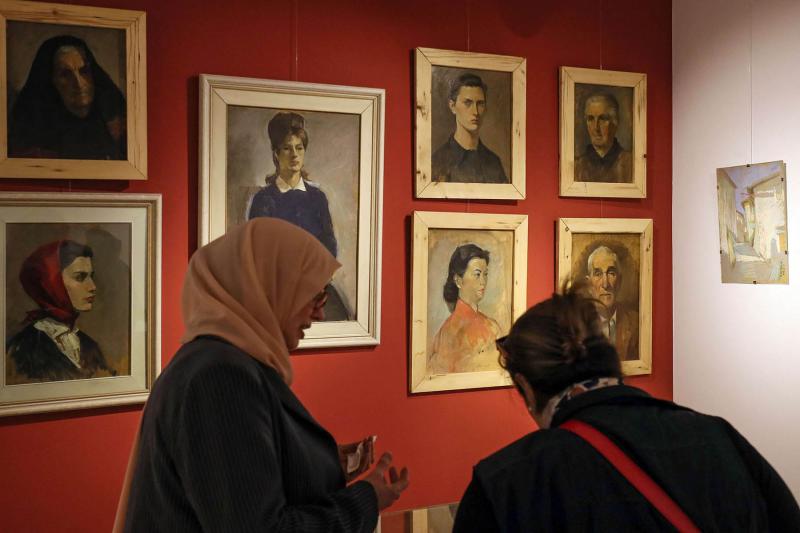
A seemingly ordinary villa in the heart of Tripoli holds a lifetime of works by the late Libyan artist Ali Gana, whose family has turned his house into a unique museum.

In the North African country still grappling with divisions and conflict after the fall of long-time dictator Muammar Gadhafi in 2011, “art comes last”, said Hadia Gana, the youngest of the artist’s four children.

A decade in the making and with the help of volunteers, she had transformed the classic-style Tripolitian villa her father had built, before dying in 2006 at age 70, into “the first and only museum of modern art in Libya”, Gana said.

Bayt Ali Gana (“Ali Gana’s House” in Arabic) finally opened this year, and seeks to offer both retrospection and hope in a country constantly threatened by violence and where arts and culture stand largely neglected.

“It is seen as something superfluous,” Gana said, adding that galleries in the war-torn country often focus solely on selling pieces rather than making art more accessible.

Once past a lush garden, visitors reach the museum’s permanent exhibition of paintings, sculptures and sketches by the masterful Ali Gana.

Other rooms include temporary exhibitions, and offer space for seminars and themed workshops.

Set on a wall, an old shipping container houses an artist residency for “curators and museologists” whose skills are scarce in Libya, said Hadia Gana.

Libyan artists had long been subject to censorship and self-censorship under Gadhafi’s four-decade rule, and “we couldn’t express ourselves on politics”, recalled Gana, 50, a ceramic artist.

Art “must not have barriers”, she said, proudly standing in the family-owned space for artistic freedom.

Bayt Ali Gana appears timeless, though the villa bears some signs of the unrest that followed the overthrow and death of Gadhafi.

A road sign riddled with bullets hangs from the gate that separates the museum from the private residence.

Mortar shells turned upside down sit among flowers in the garden, where visitors are offered cold drinks or Italian espressos in a setting that replicates Cafe Said, once owned by Ali Gana’s father in the old medina of Tripoli.

During the unrest that began in 2011, Hadia Gana said she feared “losing everything if a rocket hit the house”.

Then came the idea of creating a museum in the hopes of conserving her father’s precious works and archives.

Sporadic fighting, water or electricity cuts, and forced isolation due to the COVID-19 pandemic have piled challenges on the family’s mission, while the Ganas steered clear of state funding or investors to maintain the independence of their nascent institution.

Gradually, the house morphed into a cultural centre celebrating Ali Gana’s calling to “teach and educate through art”, said his daughter.

It “is not a mausoleum”, but a hub of creativity and education, she said.

Gana’s archives also document traditional crafts and trades, some of which have now completely disappeared.

After taking power in a 1969 coup, Gadhafi had imposed a ban on all private enterprise, and “for 40 years, crafts became an outlawed activity”, said the late artist’s oldest son Mehdi, who now lives in the Netherlands.

He said that in his lifetime, Ali Gana took on a mission to “build archives in order to link Libya’s past to a possible future”.

It is “the nature of the family” to preserve and share knowledge, said matriarch Janine Rabiau-Gana, 84.

Hadia Gana lamented that while museums should be educational spaces, “here in Libya, we don’t have that notion yet”.

She said she wanted to avoid “making it a museum where everything is transfixed”.

Instead, “I wanted something lively, almost playful, and above all a place that arouses curiosity in all its beauty.”

source/content: thearabweekly.com (headline edited)

_________

________

LIBYA

EGYPTIAN Researcher records new unknown genus of rodents dating back 34 million years

About 34 million years ago, in the Eocene period of the Paleogene (the period from 66 to 23 million years ago), and in a tropical-like environment with forests and swamps in what is today the Qatrani Desert in Egypt’s Fayoum Depression, a genus of rodents that was not known before, used to live. 

In a new study published in PeerJ, researcher Shorouk Al-Ashqar, a member of the “Sallam Lab” team specialised in vertebrate fossils at Mansoura University, studied two skulls and a large group of mandibles of fossils belong to the “Qatranimys Safroutus”.

“But it wasn’t easy; the samples were very small and very thin and adhered to the solid rocky clay, which made preparing the samples for study very difficult. We had to make accurate CT scans to be able to study them in a three-dimensional image,” said Hesham Sallam, the lead author of the study. 

The newly discovered genus of rodents was called “Qatranimys Safroutus” which refers to the location of the discovery in the first word, whilst “safroutus” means too small in the Egyptian Arabic dialect.

The length of the molar of Qatranimys Safroutus was one millimetre, and its skull was about 1.5 centimetres long, and its weight did not exceed 45 grams. 

Jebel Qatrani Formation is famous for its rich rodent assemblages from the Eocene–Oligocene deposits, which contributes to enhancing our understanding of the origin and paleobiogeography of what scientists call the “Hystricognathi” which are an infraorder of rodents, distinguished from other rodents by the bone structure of their skulls.

Al-Ashqar said that the samples used in the study showed clear differences in the morphological characteristics of the upper and lower teeth. And by comparing these samples with the discovered rodents from Afro-Arabia, it was clear that it belongs to a new genus that has never been discovered before.

“We did not only record a new genus and species, but we were able to record the first bones of the skull of a large group to which the discovery belongs, called the “Phiocricetomys”, she added. 

Researchers from Mansoura University, the American University in Cairo, the Egyptian Environmental Affairs Agency, Duke University and the University of Salford participated in the study.

source/content: dailynewsegypt.com (headline edited)

________

_________

EGYPT

SAUDI ARABIA: Russian team takes first place in ‘ 2nd Arabic Hackathon’

  • An awards ceremony hosted by the King Salman Global Academy for Arabic Language honored the top three teams in the event
  • Event aims to enhance the dictionary with innovative applications and new ideas

Russian team Spiderweb Network has won first place in the second Arabic Hackathon, scooping a prize of SR150,000 ($39,994) for their innovative idea.

Their project proposed an automatic enrichment system for the “Riyadh Dictionary” using three knowledge sources — the Arabic language expert community, artificial intelligence, and dictionaries found on the web.

An awards ceremony hosted by the King Salman Global Academy for Arabic Language honored the top three teams in the event, which aims to enhance the dictionary with innovative applications and new ideas.

This global technical challenge is aimed at individuals and organizations with technical and linguistic skills from all over the world. Teams develop innovative technical solutions and digital platforms for automatic Arabic language processing to enhance its status among the world’s living languages.

Second place went to the Pioneers of Intelligence, a joint Algerian-French team who received SR100,000. Their project focused on using AI to provide terms and definitions from specialized fields in a fast and effective way, with the possibility of creating specialized lexicons such as the “Riyadh Medical Dictionary.”

The Saudi-Egyptian Arabic Examples team took third place and a prize of SR50,000 with their idea for an AI system that provides appropriate examples for the meaning of each word.

The second edition of the challenge saw a total of 546 participants, 57 percent of whom were female and 43 percent male, representing 30 countries in 142 competing teams.

Abdullah Al-Washmi, Secretary-General of the King Salman Global Academy for Arabic Language, highlighted the establishment’s commitment to promoting the use of the Arabic language and launching supportive initiatives.

The closing ceremony was accompanied by activities such as an exhibition by the Arabic Intelligence Center, which was launched in April and specializes in automated Arabic language processing.

The center includes several initiatives, such as: the “Suwar” platform for digital dictionaries, “Falak” for digital corpora, and the Riyadh Dictionary for Contemporary Arabic Language.

Al-Washmi said the center represented a significant leap in the digital transformation of Arabic language services by developing technologies that aided its use, analysis, understanding, and production.

source/content: arabnews.com (headline edited)

__________

The Russian team won first place in the Arabic Hackathon challenge, which concluded in Riyadh on Thursday (June 6). / Russian team Spiderweb Network has won first place in the second Arabic Hackathon, scooping a prize of SR150,000 for their innovative idea. (KSGAFAL)

_________________

SAUDI ARABIA

ALGERIA: Hassiba Boulmerka: The trailblazing Algerian star who defied death threats to win Olympic gold

The former Algerian middle-distance runner won her country’s first-ever Olympic gold medal. She navigated a deadly and divisive political crisis within her nation to emerge as “a symbol of victory and defiance”.

Hassiba Boulmerka and her family received death threats, and she was even denounced as anti-Islam at her local mosque.

However, in her home country of Algeria, there was no safe space for her to run.

The world 1500m world champion feared that radical Islamist militants would kill her, and the surrounding atmosphere was equally terrifying.

But despite the risks, the ‘Constantine Gazelle’ continued to train, running even faster and defying the threats to her life.

A year after clinching the first of her two world titles, she made history at the Barcelona Olympics in 1992, winning the first Olympic gold for Algeria .

Hassiba Boulmerka: Africa’s first world track champion

Running had been Boulmerka’s way of life since the age of 10.

Growing up in Constantine, in the east of Algeria, she gained recognition for her speed and stamina, which led her to claim four African gold medals in the 800m and 1500m.

Two years after her double triumph at the continental championships, she stunned the field, sprinting to the lead in the homestretch of the 1500m race to clinch the gold.

It was a glorious moment for Boulmerka, as she became the first African woman to earn a World Championships title.

“I screamed for joy and for shock, and for much more,” she said. “I was screaming for Algeria’s pride and Algeria’s history, and still more.”

Her triumph was significant, symbolising progress for Algerian sport and Arab women.

Despite the heroic reception that awaited her and her teammates upon their return from the 1991 World Championships, her running didn’t quite resonate with everyone.

Her sporting endeavours continued to be frowned upon.

Training and competing meant exposing her arms and legs, which was perceived as not adhering to Islam’s code of modesty.

Hassiba Boulmerka was labelled ‘anti-Muslim’ for choosing to run

Boulmerka pressed ahead, enduring the criticism.

She faced hostility, being spat on and having to dodge stones thrown at her while training on Algerian roads.

In a matter of months, her hopes and dreams of participating in the Olympics started to fade as her country was plunged into civil unrest, resulting in over 150,000 lives lost.

Training became not only impossible but also dangerous during the crisis, with Islamist militants seeking to impose oppressive rule.

She was forced to relocate to Berlin to train ahead of the 1992 Olympic Games.

“I remember it well,” she recalled in an interview with the BBC. “It was Friday prayers at our local mosque, and the imam said that I was not a Muslim, because I had run in shorts, shown my arms and my legs. He said I was anti-Muslim.”

When she arrived in Barcelona just before her event, Boulmerka was accompanied by armed escorts into the stadium, highlighting the unprecedented security measures.

“There were police everywhere. In the stadium, in the changing rooms – they even came with me to the bathroom!” she said.

Despite these challenges, the ‘Constantine Gazelle’, as she was affectionately dubbed for her agile and graceful running style, defied the odds and her performance at the Estádio Olímpico was remarkable.

Hassiba Boulmerka: A heroine for women in sport

The Unified Team’s Lyudmila Rogacheva set the pace for most of the 1500m race before the Algerian powered past her with half a lap to go, securing her greatest career victory. Her time of three minutes, 55.30 seconds earned her the Olympic gold medal, marking the second time second time an Arab woman had stood atop the Games podium (after Morocco’s Nawal El-Moutawakel at Los Angeles 1984).

It was a beautiful ending after months of navigating political challenges – an example of ‘courage in defying taboos and pursuing passion’.

“As I crossed the line, I thrust a fist into the air. It was a symbol of victory, of defiance. It was to say: ‘I did it! I won! And now, if you kill me, it’ll be too late. I’ve made history!'”

As Boulmerka stood on the podium, feeling the weight of the medal around her neck, she was overwhelmed by emotions.

“I tried to hold myself together, to be brave…but the tears just started to fall. They were tears of sacrifice, for all the people I loved that I had abandoned for this race.

“It was a triumph for women all over the world to stand up to their enemies. That’s what made me really proud.”

There was no fanfare when the two-time Olympian returned home to reunite with her family.

Algeria was still far away from the end of its dark period, prompting he exile in Cuba before she returned to Algeria after recapturing the gold medal at the 1995 World Championships.

Her medals stand as a testament to her courage, and Hassiba Boulmerka continues to serve as a beacon of inspiration for women in sport.

source/content: olympics.com (headline edited)

___________

(Getty Images)

____________

ALGERIA

MOROCCO: Impressive Ayoub El Kaabi Etches Name in African Football History Books

After a few anonymous years in the Chinese Super League, El Kaabi’s 2023 transfer to Olympiacos is quickly proving to be a game-changer.

Rabat-Olympiacos’s prolific Moroccan striker Ayoub El Kaabi has made history in the 2023-24 UEFA Europa Conference League season. 

At 30 years old, the Moroccan has become the first African player to score an impressive 15 goals in a single European campaign, far surpassing legends like Didier Drogba, Samuel Eto’o, and Mohamed Salah.

The Atlas Lion’s journey to this remarkable achievement is a tale of inspiration and dedication. Born in Casablanca in 1993, he began his football career in the Moroccan amateur league, showcasing his talent with clubs such as Racing AC, RS Berkane, and Wydad AC.

His standout performances domestically earned him a spot in the Moroccan national team, where he excelled, winning the African Nations Championship (CHAN) in 2018 and 2020 while clinching the titles of top scorer and best player in both tournaments.

After a few anonymous years in the Chinese Super League, El Kaabi’s 2023 transfer to Olympiacos is quickly proving to be a game-changer. His impact has been immediate and decisive for the Greek club, with his bagful of goals playing a pivotal role in guiding the team to the final of the UEFA Europa Conference League. 

Notably, he scored five crucial goals in the two legs against Aston Villa in the semi-finals, showcasing his clinical finishing and ability to shine on the grandest stages.

Ayoub’s achievement stands out even more when compared to the performances of other African football stars in European competitions. 

Surpassing the likes of Didier Drogba and Sebastien Haller, as well as outshining Sadio Mane and Mohamed Salah, the Moroccan striker’s 15-goal tally in a single European campaign is a testament to his exceptional skills and prowess as a striker.

This historic campaign has solidified El Kaabi’s position as one of the most prominent strikers in Moroccan and African football. His journey from grassroots football to the pinnacle of European competition exemplifies his unwavering determination, hard work, and natural talent.

As he leads Olympiacos into the Europa Conference League final against Fiorentina, El Kaabi has the opportunity to script another chapter in his extraordinary story, inspiring a new generation of Moroccan and African footballers with his remarkable achievements on the pitch.

source/content: moroccoworldnews.com (headline edited)

_____________

Olympiacos Moroccan striker Ayoub El Kaabi

_____________

MOROCCO