Arabs & Arabian Records Aggregator. Chronicler. Milestones of the 25 Countries of the Arabic Speaking World (official / co-official). AGCC. MENA. Global. Ist's to Top 10's. Records. Read & Enjoy./ www.arabianrecords.org
Algeria’s new law declares French colonial rule a crime, seeking accountability and reparations for the colonial past.
Algeria’s parliament has unanimously passed legislation declaring France’s colonisation of the country a crime.
On Wednesday, lawmakers stood in the chamber draped in scarves bearing the national colours, chanting “Long live Algeria” as they approved the bill.
Parliament also formally demanded an apology and reparations from Paris in a move that seeks to redress attempts to sweep the issue aside.
The law assigns France “legal responsibility for its colonial past in Algeria and the tragedies it caused”, placing historical accountability at the centre of the state’s legal framework.
While analysts say the law carries no enforceable international weight, its political impact is significant, signalling a rupture in how Algeria engages France over colonial memory.
Parliament Speaker Ibrahim Boughali said the legislation sent “a clear message, both internally and externally, that Algeria’s national memory is neither erasable nor negotiable”, according to the APS state news agency.
The text catalogues crimes of French colonial rule, including nuclear tests, extrajudicial killings, “physical and psychological torture” and the “systematic plundering of resources”.
It also asserts that “full and fair compensation for all material and moral damages caused by French colonisation is an inalienable right of the Algerian state and people”.
‘Crime against humanity’
France brutally ruled Algeria from 1830 to 1962 through a system marked by torture, enforced disappearances, massacres, economic exploitation, mass killings and large-scale deportations and marginalisation of the country’s indigenous Muslim population.
The war of independence between 1954 and 1962 alone left deep scars. Algeria puts the death toll at 1.5 million.
President Emmanuel Macron has previously described the colonisation of Algeria as a “crime against humanity” but has consistently refused to issue a formal apology. He reiterated that position in 2023, saying: “It’s not up to me to ask forgiveness.”
Last week, French Ministry for Europe and Foreign Affairs spokesperson Pascal Confavreux declined to comment on the parliamentary vote, saying he would not engage with “political debates taking place in foreign countries”.
Hosni Kitouni, a colonial history researcher at the University of Exeter, told the AFP news agency that the law has no binding effect on France but stressed that “its political and symbolic significance is important: it marks a rupture in the relationship with France in terms of memory”.
The vote comes amid a diplomatic crisis between the two countries. Algeria and France maintain ties through immigration in particular, but today’s vote comes amid friction in the relationship.
Tensions have been high for months since Paris recognised Morocco’s autonomy plan for resolving the Western Sahara conflict in July 2024. Western Sahara has witnessed armed rebellion since it was annexed by Morocco after the colonial power, Spain, left the territory in 1975.
Algeria supports the Sahrawi people’s right to self-determination in Western Sahara and backs the Polisario Front, which rejects Morocco’s autonomy proposal.
In April, the tensions escalated into a crisis after an Algerian diplomat was arrested along with two Algerian nationals in Paris. The diplomatic crisis came barely a week after Macron and Algeria’s President Abdelmadjid Tebboune expressed their commitment to revive dialogue.
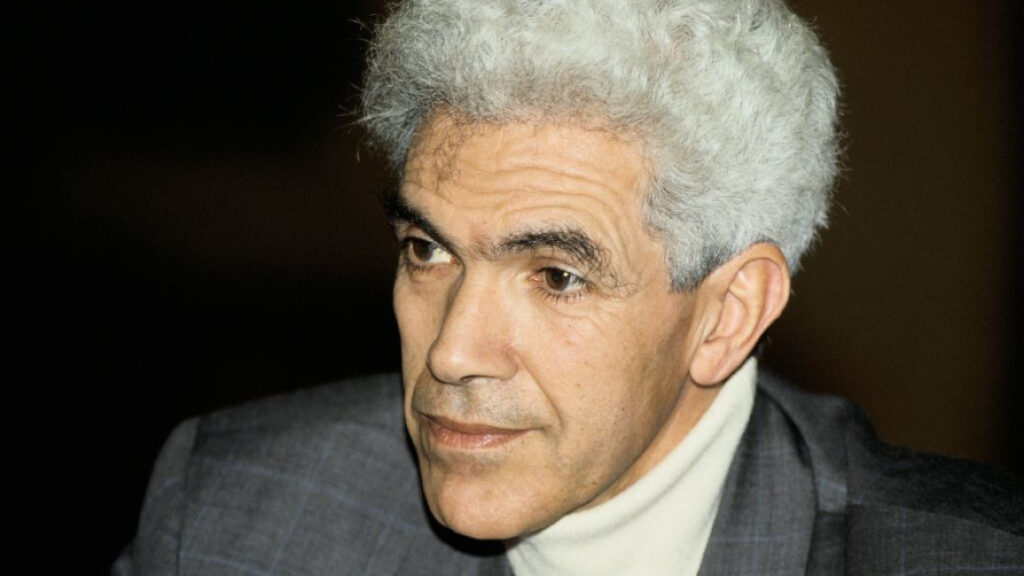
From challenging French colonial nostalgia to critiquing Algerian nationalism, revolutionary historian Mohamed Harbi served truth, writes Rachid Sekkai.
For those of us who live between Algeria and France, between family memory and official public archives, Mohamed Harbi was more than a name on a book spine, he defined our way of thinking. This is why I am so deeply saddened by his passing.
His death is certainly a real loss to the shared Franco–Algerian memory of the twentieth century—not the sentimental commemoration that comforts nations, but the difficult memory that forces them to mature.
But on a more personal note, I am disappointed that I was never able to meet the late, great historian whose contributions are immeasurable.
On the side of the oppressed
Harbi came from a milieu that was far more accommodating to French colonial rule. This collaboration was even viewed by many as respectable, including members of his own family who served in the French-established Algerian Assembly (1947–56). Nevertheless, Harbi chose to side with the colonised very early in his life.
Even when he was sent to France to study, Harbi commitment to standing with the oppressed remained, and he refused to join the ranks of the ‘integrated’ intelligentsia. He became active in the student networks linked to the National Liberation Front (FLN) and entered the revolution from the inside.
Later he worked close to the Provisional Government of the Algerian Republic (GPRA), specifically within the orbit of Krim Belkacem—one of the FLN leaders who signed the Evian Accords. Harbi was not a signatory, but he was close enough to those who had been to see what independence negotiations were going to look like: ideals constrained by strategy, unity tested by rivalry.
Following Algerian independence in 1962, he served during the Ben Bella era, persuaded—as many were—by the promise of social change. The 1965 coup marked a rupture, however; and Harbi paid the price for his criticism of the succeeding president of Algeria, Houari Boumediene. He was imprisoned and then put under house arrest, before escaping into exile in 1973.
Exile
Mohamed Harbi’s life in France is not a footnote. It is where he wrote the very work that led to his international recognition.
Renowned French historian Benjamin Stora recalled how surprised he was as a 25-year-old graduate student preparing a thesis on Messali Hadj, when he read Harbi’s first major book in 1975. For him, Harbi embodied an intellectual freedom rare in the memory of those who were so close to the historical events.
Harbi wasn’t an outside commentator, he was a former senior FLN figure in France who was close to the movement’s leadership and connected to the GPRA circle during independence negotiations. Yet, his sharpness and refusal to serve states in what he produced, always remained.
What makes Harbi’s work enduring is also the gaps it fills in terms of the memory of a colonised Algeria. Stora spoke to me about chapters that the late revolutionary’s writing covers, which break with cliché that include an entre-soi shaped by communal boundaries and religiosity, colonial segregation, inequality and racism.
In doing so, Harbi escaped the nostalgic racist colonial memory of French Algeria, and the monochrome official memory of an authoritarian nationalism indifferent to historical nuance.
Speaking truth to power
Reactions to Harbi’s death in Algeria were a mixed bag. In a notable official tribute, President Abdelmadjid Tebboune publicly described him as a mujahid and a “cultured historian.” He added that he was an exceptional man.
In reality, for Harbi and all those who respected him, official recognition serves no value.
As many, including Stora have noted, Harbi went further than many of his generation and positioning. He spoke truth to power, even foregrounding the role of violence in organisational construction in his work. He named the “war within the war” between rival nationalist currents, and honestly described internal struggles for power and legitimacy before and after 1962.
Similarly, he was brutally frank about the French Socialist Party, for example, which he told historian Martin Evans, was “enemy number one” because of the way parts of the French Left repressed Algerian nationalism on the ground.
Liberation could be both courageous and tragic—and Harbi refused to choose between those truths.
Algerians at home and abroad are caught between family pride versus public stigma, French labels versus Algerian injunctions, and silence versus shouting. Decades on since Algeria’s independence and dark decade of civil war, Harbi offers a third position within such a complex reality: fidelity without worship; critique without self-hate.
He showed us how to honour emancipation while still critiquing power, how to name violence without licensing new silence, and crucially, how to demand truth and reconciliation without pretending neutrality.
Mohamed Harbi punctured comforting stories wherever they lived, that is why he will forever serve as an example of what a historian should be.
He left us a library, but also a moral framework: history is not a temple, but a civic discipline. It demands rigour and patience with complexity, especially when communities prefer righteous simplifications.
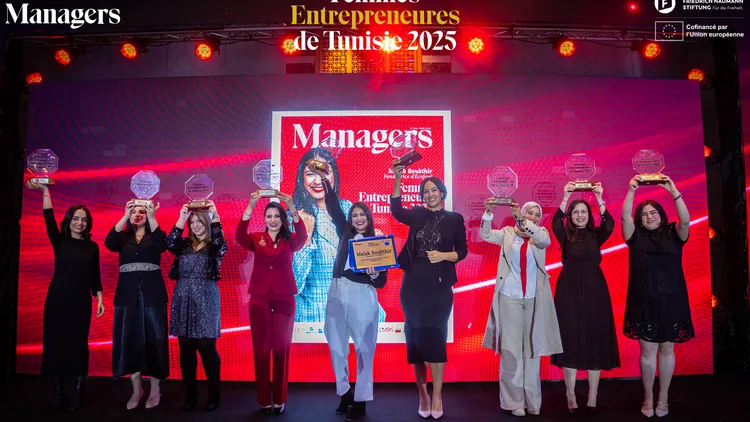
Tunisian Women Entrepreneurs Honored for Innovation and Impact at the 10th FET Awards
On February , 2025, the 10th edition of the Trophées de Femmes Entrepreneures de Tunisie (FET) honored nine outstanding Tunisian women entrepreneurs for their innovation, resilience, and the impact of their ventures. Organized by Managers magazine in collaboration with the Delegation of the European Union and the Friedrich Naumann Foundation for Freedom, the event brought together a distinguished audience, including ministers Asma Jabri (Family, Women, Children, and Seniors), Fatma Thabet Chiboub (Industry, Mines, and Energy), and Jihene Srioui (Financing and Partnerships, Ministry of Employment and Vocational Training).
In her opening speech, Sahar Mechri, Executive Director of Managers, emphasized that the FET Awards are more than a celebration, they are a validation of bold journeys and a source of inspiration for future generations of women leaders.
Spotlight on the 2025 Woman Entrepreneur of the Year
Malak Boukthir, founder of Ecofeed, was named Tunisian Woman Entrepreneur of the Year 2025 for her groundbreaking project that transforms crab waste into sustainable animal feed a powerful example of eco-innovation.
Imen Bakhti (La Seine) – Microcred Empowerment Award
Fatma Midani (Soul & Planet) – Meninx Marketplaces Award
Beyond Recognition: Support for Growth
Along with financial prizes from sponsors, the winners will benefit from a tailored mentorship program offered by the Club des Femmes Entrepreneures de Tunisie. Thanks to the support of the European Union Delegation, they will also receive personalized guidance through various EU-funded projects, including Adapt, Greenov’i, CQE (Qualitative Growth for Employment), Insadder, and Initiative Tunisie.
The FET Awards go beyond accolades, they celebrate a thriving community of women entrepreneurs driving Tunisia’s social and economic development. By highlighting their stories and successes, the event strengthens the spirit of sorority and underscores the transformative power of female entrepreneurship in Tunisia.
source/content: freiheit.org /Friedrich Naumann Foundation (headline edited)
______________
Tunisian Women Entrepreneurs Honored for Innovation and Impact at the 10th FET Awards
Sidi Ould Tah is the first Mauritanian to become president of the African Development Bank (AfDB) and will need all his international experience to tackle the challenges facing the institution.
The 60-year-old economist was the last to declare his candidacy for the post and ran a whirlwind campaign during which he highlighted his 10 years as head of the Arab Bank for Economic Development in Africa (BADEA).
He claimed to have transformed it from an institution “unknown to rating agencies” to one of the highest-rated development organisations in Africa.
“I have demonstrated my transformative leadership style that has elevated the bank to the level of a leading player in the African development landscape,” he said in his application statement to the AfDB.
A discreet man who speaks sparingly, his style will be a clear contrast with his flamboyant predecessor, Nigeria’s Akinwumi Adesina.
Tah’s programme is based on four main points: strengthening regional financial institutions; asserting Africa’s financial independence in global markets; leveraging demographic dynamics as a development tool; and building resilient infrastructure to climate change.
His entourage is touting his ability to replicate his successes at the BADEA at a larger institution like the AfDB, which has $318 billion in capital.
“The AfDB has to abandon traditional bureaucratic models for a more fluid approach based on results,” he said.
– African legitimacy –
Tah, who was Mauritania’s economy minister from 2008 to 2015, is calling for a “break with the approaches of the past”, in a world where the “challenges and opportunities of Africa have taken a new dimension”.
The new AfDB president speaks French, English, Arabic and Wolof, which is spoken in several west African countries.
He managed the impressive feat of rallying diplomatically diverse supporters behind his candidacy, from Sahel countries such as Mali to France.
His score of more than 72 percent among African voters gives him continental legitimacy. His entourage claimed before the vote he had support from the very first round from all African regions.
US President Donald Trump’s administration has vowed to suspend $500 million in aid to the AfDB, but Tah has argued other financial backers such as Gulf countries could step in.
On environmental questions, he intends to promote Africa’s natural resources to move towards a “viable energy transition, reconciling economic and environmental imperatives”.
“Even though Africa is a minimal contributor to global CO2 emissions, it bears the full brunt of the effects of climate change,” he said.
“It is therefore imperative to integrate sustainable practices and to harness renewable energy in development projects.”
Tah holds a master’s degree in economics from the University of Nouakchott in his native Mauritania and a doctorate from the University of Nice in France.
source/content: digitaljournal.com / Pierre Donadieu (headline edited)
_____________
Sidi Ould Tah is the first Mauritanian to serve as African Development Bank president – Copyright AFP/File SAUL LOEB
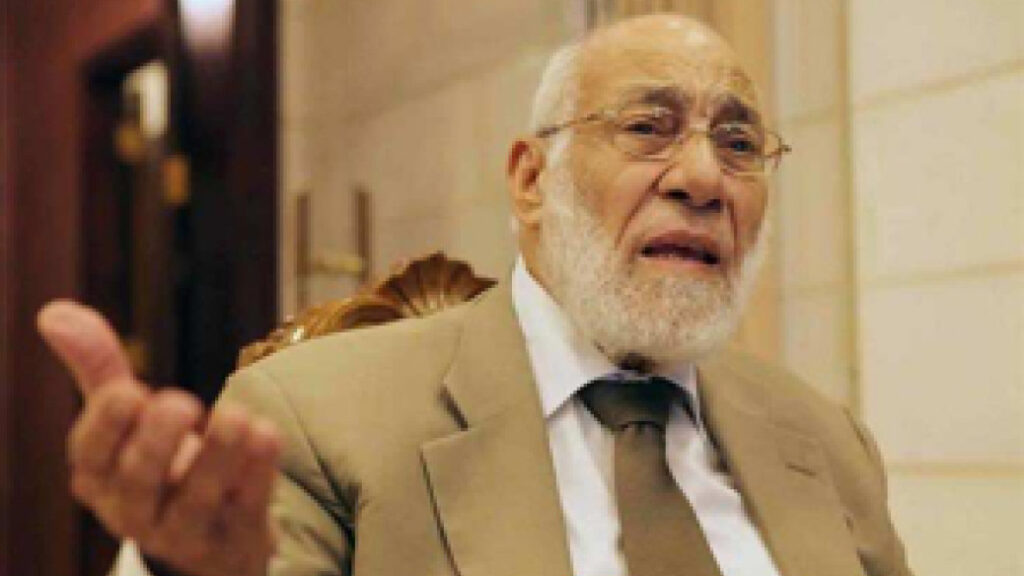
Egyptian Islamic scholar and geologist Zaghloul El-Naggar, a leading figure in the field of scientific interpretation of the Qur’an, has died at the age of 92.
El-Naggar passed away in Amman, Jordan, after a battle with illness, according to statements released on his official social media accounts on Sunday.
His funeral prayer will be held on Monday at Abu Aisha Mosque in Amman, followed by burial at Umm Al-Qutain Cemetery.
Born on 17 November 1933 in the village of Mashal in Egypt’s Gharbia Governorate, El-Naggar showed an early passion for science.
He graduated with honours in geology from Cairo University in 1955, earning the Mustafa Baraka Award in Earth Sciences. He obtained a PhD from the University of Wales in 1963 and became a full professor in 1972.
El-Naggar’s career spanned decades of teaching and research at universities in Egypt, the UK, Saudi Arabia, Qatar, Yemen, Jordan, and the United States.
He chaired the geology department at Qatar University, taught at King Fahd University of Petroleum and Minerals, and served as a visiting professor at UCLA.
He also directed Al-Ahqaf University in Yemen and later taught at the World Islamic Sciences and Education University in Jordan.
He became one of the Arab world’s most recognised voices on the relationship between science and faith, authoring numerous books and delivering hundreds of lectures on what came to be known as the “scientific miracles of the Qur’an and Sunnah”.
His popular TV programme Ayat Bayyinat (“Clear Verses”) aired across Arab channels, exploring Quranic descriptions of natural phenomena.
El-Naggar was a member of the International Commission on Scientific Signs in the Qur’an and Sunnah and was honoured several times for his contributions to promoting scientific understanding within an Islamic framework.
source/content: newarab.com (headline edited)
______________
El-Naggar passed away in Amman, Jordan, after a battle with illness [Al-Araby Al-Jadeed]
This year’s commemoration is especially significant, coming just a week after a UNSC resolution placed Morocco’s autonomy plan at the heart of efforts to resolve the Sahara dispute.
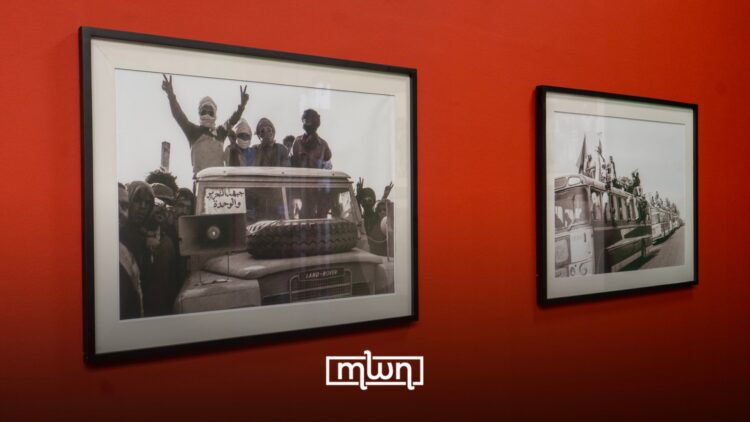
The Mohammed VI Museum of Modern and Contemporary Art in Rabat is commemorating the 50th anniversary of the Green March with a new exhibition titled “50 Years of the Green March: A Memory in Motion.”
The exhibition pays homage to one of Morocco’s most defining moments and invites visitors to reflect on the enduring values of peace, unity, and loyalty that continue to shape the nation’s identity five decades after the historic march.
Opened this week, the exhibition combines historical documentation with contemporary artistic interpretation. The exhibition includes an evocative collection of photographs that aims to reaffirm the strength of visual memory and its role in preserving national heritage. This is a key element in Morocco’s ongoing narrative of sovereignty and unity.
A tribute to a defining moment
Organized by the National Foundation of Museums (FNM), the exhibition brings together works by renowned Moroccan photographer Daoud Oulad-Syad and a selection from the Rencontres de la Photographie de Marrakech (RPM). Together, they offer a visual journey that captures both the emotion and symbolism of the Green March, which represents a cornerstone of Morocco’s modern history.
Nadia Sabri, Director of the Mohammed VI Museum of Modern and Contemporary Art, emphasized the exhibition’s importance as a bridge between generations.
“What we can really emphasize is that this exhibition provides both visual and historical archives for the public,” she told Morocco World News.
“It caters to a wide audience, including younger visitors as well as older ones who may have experienced this historic event but do not necessarily remember its key moments, particularly during the march,” Sabri added.
She noted that the exhibition spotlights major figures in the Moroccan photography scene, like Daoud Oulad-Syad, with a photographic series dedicated to the Sahara and the beauty of the desert.
Through Oulad-Syad’s lens, the exhibition moves beyond mere documentation to celebrate the spirit of a nation united under a shared cause. His photographic series dedicated to the Sahara, showcased in the museum’s second gallery, highlights the region’s natural beauty and its deep cultural and emotional connection to the Moroccan people.
The Green March, which took place on November 6, 1975, was a peaceful mass demonstration that changed the course of Moroccan history. Called for by the late King Hassan II, it saw over 350,000 unarmed volunteers, men and women, from all regions of Morocco march southward to reclaim the territory of Western Sahara, then under Spanish occupation.
Carrying Qurans and Moroccan flags instead of weapons, the marchers symbolized Morocco’s unity and commitment to recovering its southern provinces through peaceful means. The event came shortly after the International Court of Justice (ICJ) issued an advisory opinion affirming that Western Sahara was not “terra nullius” (empty land or unclaimed territory) before colonization and that it had historical and legal ties to Morocco.
The enduring significance of the Green March for Morocco
This year’s commemoration carries added significance, as it comes just a week after the United Nations Security Council adopted a new resolution embracing Morocco’s autonomy plan as the most “serious and credible” framework for achieving a lasting and realistic political solution to the regional dispute over the Sahara.
The resolution is widely seen as a diplomatic success for Morocco, as it reinforces international support for its initiative and paves the way for renewed efforts toward a peaceful settlement.
Mehdi Qotbi, artist and President of the National Foundation of Museums, highlighted this connection in his remarks to MWN at the exhibition.
“We are very happy to be celebrating this anniversary today, here at the Mohammed VI Museum of Modern and Contemporary Art … is not only an occasion to mark the anniversary itself, but also to celebrate the diplomatic success achieved thanks to the foresight of His Majesty King Mohammed VI,” Qotbi said.
For him, this success “paves the way for a definitive resolution of the artificial conflict over the Moroccan Sahara and for a better future for the entire region.” The Moroccan artist added that the Foundation and the Museum are proud to take part in this “popular enthusiasm for this cause, for this victory at the United Nations.”
Beyond commemoration, the “Memory in Motion” exhibition aims to spark dialogue about the meaning of the Green March in contemporary Morocco. For many visitors, especially younger ones, the exhibition is an opportunity to connect with a pivotal chapter in Morocco’s collective memory.
The exhibition includes an evocative collection of photographs that aims to reaffirm the strength of visual memory and its role in preserving national heritage
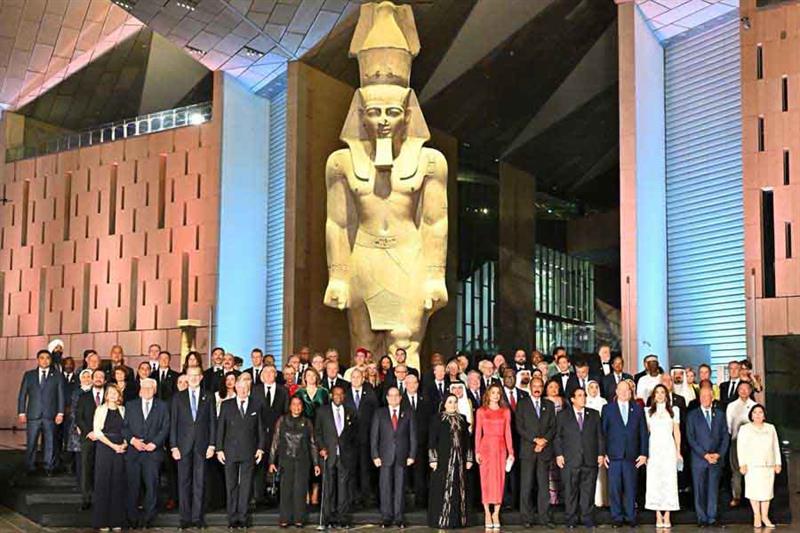
In an evening that blended history, culture and global celebration, President Abdel-Fattah Al-Sisi and First Lady Entissar Al-Sisi presided over the official inauguration of the Grand Egyptian Museum (GEM) on Saturday, marking a milestone in the modern cultural landscape of Egypt and the world. The ceremony was attended by nearly 80 high-level delegations, including kings, presidents, princes, heads of government, and representatives of regional and international organisations.
Among them was German President Frank-Walter Steinmeier, Dutch Prime Minister Dick Schoof, Spain’s King Felipe VI, Queen Rania of Jordan, Prince Albert II of Monaco, and Greek Prime Minister Kyriakos Mitsotakis. Also present were Palestinian President Mahmoud Abbas, Saudi Arabia’s Minister of Culture Badr bin Abdullah, and the crown princes of Oman and Bahrain.
Held at the GEM’s open-air court overlooking the Giza Plateau, the celebration unfolded as a multisensory homage to Egypt’s timeless civilisation. Performances combining music, light, laser projection, and drone choreography traced the evolution of Egyptian architectural genius, from the Giza Pyramids to the modern era, and highlighted the message that civilisations thrive in times of peace.
The façade of the museum became a canvas for immersive light and projection displays, with vast screens illuminating Egypt’s ancient monuments and artistic heritage. Dancers in Pharaonic-inspired costumes, adorned with gold crowns and sceptres, performed to a live international orchestra, while fireworks and synchronised drone formations traced the silhouettes of ancient deities across the night sky.
President Al-Sisi welcomed the distinguished guests and emphasised that the GEM, now the largest museum in the world dedicated to a single civilisation, stands not merely as a showcase of ancient treasures, but as a testament to the creative spirit and enduring legacy of the Egyptian people.
He also described the museum as a new chapter in Egypt’s cultural story, affirming that it stands as a testament to the creativity and legacy of the Egyptian people and as a space for dialogue, knowledge, and exchange.
The ceremony began with the performance “The World Plays One Melody”. The programme featured a laser and drone show illustrating the Orion Belt alignment and its symbolic connection between the museum and the Giza Pyramids, followed by a performance titled “A Journey of Peace in the Land of Peace”.
The sequence highlighted the evolution of Egyptian architectural ingenuity, from the Step Pyramid of Djoser to modern Egyptian design, accompanied by a Coptic hymn of Sufi spiritual singing, and a drone message reading: “Civilisations Flourish in Times of Peace.”
The evening’s performances brought together some of Egypt’s most celebrated voices. Soprano Fatma Said and tenor Ragaaeddin delivered stirring pieces composed by Hisham Nazih, whose music blends contemporary orchestration with the tonal motifs of ancient Egypt, a style previously showcased during the Golden Mummies parade.
Sisters Amira and Mariam Abu Zahra, granddaughters of renowned Egyptian actor Abdel-Rahman Abu Zahra, appeared in stylised Pharaonic attire, performing a violin duet accompanied by the Cairo Opera House Orchestra and international ensemble players under the baton of maestro Nayer Nagui.
The celebration also highlighted Egypt’s cultural diversity. Nubian singer Ahmed Ismail performed in the Nubian language, while Haneen Al-Shater sang in Arabic from a floating stage overlooking the Nile, symbolising Egypt’s enduring identity as a crossroads of civilisations.
Iconic Egyptian actress Sherihan delivered an evocative spoken tribute to ancient Egypt’s artistic legacy, set against sky projections of the Pyramids. She was followed by Sherine Ahmed, the first actress of Egyptian descent to play Eliza Doolittle on Broadway, who gave a powerful musical performance before Islamic chanter Ehab Younis offered a spiritual finale.
On giant screens above, scenes from celebrations in countries all over the world played out against the backdrop of Egypt’s ancient monuments.
Dozens of performers dressed in elaborate white costumes, as a symbol of peace, their foreheads crowned with golden wreaths and sceptres in hand, played traditional tunes as a laser show depicting the Pharaohs and fireworks lit up the night sky above the museum.
As the night drew to a close, a drone light show mapped the sky with hieroglyphs, Pharaonic figures, and the golden mask of Tutankhamun, shimmering above the Giza Plateau, an image that captured both the grandeur of the past and the cultural confidence of the present.
Among the many moments that captured global attention during the GEM’s opening ceremony was the appearance of 12-year-old Asser Ahmed Hamdi, whose poised and expressive performance resonated with viewers across Egypt and beyond. The young performer quickly became one of the most talked about faces of the event, representing a new generation engaging with the country’s cultural narrative.
Asser described his participation in the ceremony as a defining moment in his life. “I was very happy to be there, and proud that my effort represented Egypt in front of the world,” he said, explaining that his preparation for the role involved months of rehearsals and that he had been training in performance and acting for seven years. “When the opportunity came, I felt like a dream had been achieved.”
Performing before President Al-Sisi and dozens of world leaders brought initial nerves, he admitted, but the atmosphere on stage quickly shifted those feelings. “I was nervous backstage, but once I stepped onto the stage, I felt calm,” he said. After the performance, he exchanged a few words with the president, who praised his portrayal linked to the story of Tutankhamun.
Asser spoke with pride about standing before the golden mask of Tutankhamun and the monumental statue of Ramses II inside the museum. “I had seen them only in books and on TV, but standing in front of them at the GEM was something completely different,” he said. “I felt proud to be representing Egypt.”
Reflecting on the journey, he said, “All the effort in rehearsals was worth it. I’m grateful I could present something worthy of Egypt. I will always be proud that I was part of the opening of the GEM.”
Among the creative figures behind the opening night spectacle was Ahmed Essam, the artist and designer responsible for the fireworks and pyrotechnic displays that illuminated the GEM during the ceremony. Speaking about the experience, Essam described it as one of the defining moments of his career, noting that the preparations took several months of planning, rehearsal and technical coordination.
“It was an honour to be part of an event of this scale,” he said, explaining that the ceremony’s postponements provided valuable time to refine the visual narrative and ensure that the display matched the cultural weight of the occasion. Essam highlighted that working in a field he is passionate about has been central to his development. “I travel constantly to learn and experiment with new ideas. When you love what you do, you invest your whole self into it.”
Creating the fireworks show for the GEM opening, he noted, required an approach tailored to the museum’s identity as a celebration of ancient Egyptian civilisation. Colours, rhythms, and sequences were chosen to complement the architectural setting and underscore the narrative themes of heritage and renewal.
He was also quick to highlight the scale of teamwork behind the scenes. “What viewers saw was the result of a coordinated effort involving more than 150 people, from designers and technicians to support staff. Everyone worked with passion and commitment to present Egypt in the best possible light.
“The opening of the GEM is a landmark in Egypt’s cultural journey. The presence of President Abdel-Fattah Al-Sisi and world leaders underscored its importance. We are proud to have contributed to an event that showcased Egypt’s ability to inspire and captivate the world,” Essam added.
Soprano Said, who took the stage as one of the evening’s principal performers, revealed that the concert marked a deeply personal milestone for her as it was her first since becoming a mother.
“I recently gave birth to twins,” she said, “and I wasn’t sure I would be able to perform because the concert came so soon after the delivery. I was a little anxious. But my children gave me the strength and energy to take part in this extraordinary occasion.”
Her appearance added an intimate emotional layer to the celebration, reflecting both the resilience of artists and the symbolic continuity between generations that the museum itself seeks to embody.
Most of the international state leaders expressed their enthusiasm over the grand opening. In a diplomatic gesture that blended cultural appreciation with a touch of modern creativity, Danish Foreign Minister Lars Løkke Rasmussen presented Egypt’s Foreign Minister Badr Abdelatty with a LEGO replica of the Great Pyramid of Khufu, a symbolic gesture marking Denmark’s participation in the GEM’s opening and celebrating Egypt’s architectural heritage.
Zambian Minister of Tourism Rodney Sikumba noted his country’s appreciation for the commemorative gift presented to Zambia on the occasion of the GEM’s opening, a piece representing part of the GEM’s architectural model. He pointed out that the artefact will be placed on a temporary display in one of Zambia’s national museums, accompanied by an explanatory panel narrating its significance. The gesture, he said, reflects Zambia’s pride in taking part in this historic cultural moment and serves as a testament to the growing cultural ties between the two nations.
As with any major cultural event, public reaction to the GEM’s opening ceremony was not uniform. Such occasions naturally invite a spectrum of opinions, shaped by personal taste, expectations, and aesthetic preferences. While some critics viewed the event as more modest than anticipated, others praised its scale and artistic ambition, seeing in it a carefully curated blend of ancient symbolism and modern cultural expression. Supporters argue that the ceremony succeeded in presenting Egypt as both a guardian of a timeless civilisation and a dynamic cultural force in the present day — a duality at the heart of the museum’s identity.
* A version of this article appears in print in the 6 November, 2025 edition of Al-Ahram Weekly
The call invites emerging photographers residing and working in the Arab region to develop documentary projects within a structured process.
Submissions are open for the 12th Cycle of the Arab Documentary Photography Program (ADPP) from the Arab Fund for Arts and Culture (AFAC), in partnership with the Prince Claus Fund and the Magnum Foundation, and with support from the Norwegian Embassy to Lebanon and Syria.
The call invites emerging photographers residing and working in the Arab region to develop documentary projects within a structured process.
Selected grantees receive three intensive workshops led by regional and international experts, tailored one-on-one mentorship sessions, and a production grant to complete their projects.
Since its inception in 2014, ADPP has supported more than 120 photographers across the Arab region, building a community of visual storytellers working on regional narratives.
Visit the AFAC website to learn more and apply.
The deadline for submission falls on December 10th, 2025 at 5:00 PM Beirut Time.
The third edition of the Asian Arabic Debating Championship began on Tuesday at Arab Open University in Seeb.
The opening ceremony was held under the patronage of H E Mohammed bin Saeed al Balushi, Undersecretary in the Ministry of Information, in the presence of H E Basil bin Ahmed al Rawas, Undersecretary for Sports and Youth in the Ministry of Culture, Sports and Youth (MCSY).
The event has been organised by MCSY, Oman Debate Center and Qatar Debate Center. The championship aims to promote dialogue among young people and enhance the presence of the Arabic language in international platforms.
A total of 145 students from 40 educational institutions from 18 Asian countries are taking part. Organisers said the competition encourages logical reasoning, respect for differing views and persuasion skills within a multicultural environment. The championship will run till November 1.
Hilal bin Saif al Siyabi, Director General of the Youth Affairs at MCSY, said Oman takes pride in hosting the tournament, which reflects the country’s growing role in intellectual and cultural activities.
He said this edition includes competitive debate rounds, workshops, cultural site visits in Muscat, and an Omani cultural evening to provide a complete cultural and social experience for participants.
Reem al Musallam, Director of QatarDebate Center, said debates demonstrate that the strength of words lies in logic and that dialogue builds understanding.
Oman is hosting the event for the second consecutive year, following the success of the 2024 edition.
Organisers stated that the championship reinforces the country’s commitment to supporting educational and cultural initiatives that develop youth skills and encourage informed discussion on current issues.
Arab identity, in both historical and anthropological terms, has never been solely about genealogy.
Morocco is, in fact, an Arab country. While this assertion may appear self-evident, it has become a subject of debate in contemporary discourse. Some voices insist that Morocco’s identity lies exclusively in its Amazigh or North African roots, rejecting its place within the Arab cultural sphere. Yet, such claims overlook the complex processes through which cultural affiliations are formed, internalized, and lived. Moroccan Arab identity is neither imposed nor superficial; it is a deeply ingrained civilizational reality that is experienced, performed, and transmitted across generations.
Arab identity, in both historical and anthropological terms, has never been solely about genealogy. It is a cultural and civilizational framework, a shared language, religion, and set of symbolic practices, that transcends bloodlines and geography. The Arab Islamic expansion of the 7th-century introduced Arabic and Islam to what is known now as the Arab World, setting in motion a centuries long process of cultural integration. This integration was not a simple imposition, but a dynamic interaction between incoming and indigenous traditions, producing a distinctly Moroccan expression of Arabness. It is a process in which the Arab and the local coexist, interact, and mutually shape each other.
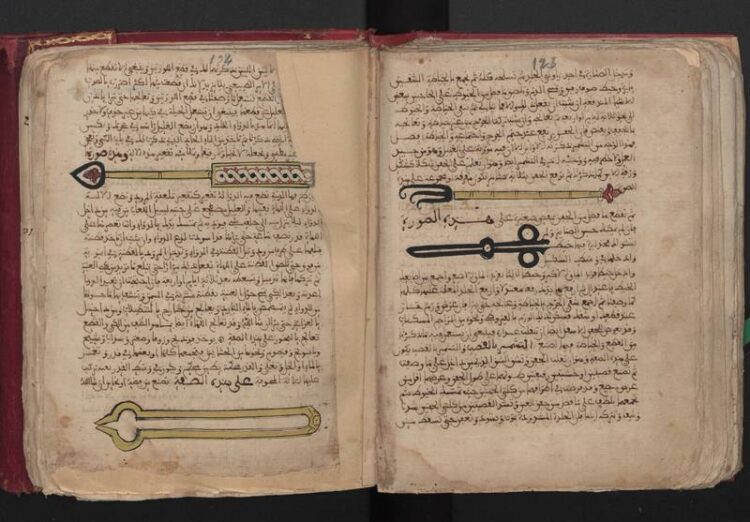
[First Illustration of surgical instruments in history] from Al-Zahrāwī, Al-Taṣrīf liman ‘aǧiza ‘an al-Ta’līf, 30th volume (Surgery). Bibliothèque Nationale du Royaume du Maroc (BNRM), as reproduced on the Islamic Studies Library Blog, McGill University
Morocco is, in fact, an Arab country. While this assertion may appear self-evident, it has become a subject of debate in contemporary discourse. Some voices insist that Morocco’s identity lies exclusively in its Amazigh or North African roots, rejecting its place within the Arab cultural sphere. Yet, such claims overlook the complex processes through which cultural affiliations are formed, internalized, and lived. Moroccan Arab identity is neither imposed nor superficial; it is a deeply ingrained civilizational reality that is experienced, performed, and transmitted across generations.
Language lies at the heart of this Arab identity. Classical Arabic became the medium of religious practice, scholarship, and literary expression, while Moroccan Darija evolved as a vernacular rooted in Arabic but enriched over centuries through interaction with Amazigh and Andalusi traditions, as well as later European influences. Computational linguistic analysis by Mrini and Bond (2018) found that approximately 42% of Moroccan Darija’s lexicon shares at least 60% similarity with Standard Arabic, while only about 3% aligns with French and 2% with Spanish. This demonstrates that, although Darija incorporates foreign and Amazigh influences, its core lexical foundation remains predominantly Arabic (Mrini & Bond, 2018, Putting Figures on Influences on Moroccan Darija from Arabic, French and Spanish Using the WordNet). This linguistic presence is more than practical; it is existential. Arabic provides the conceptual framework through which Moroccans think, communicate, and participate in a shared cultural universe. Anthropologists have long argued that language is the “house of being”, and in Morocco, Arabic offers that house, the structure within which Moroccan society organizes its collective life.
Yet Morocco’s Arab identity is not reductive. Its population is ancestrally diverse, encompassing Amazigh, Arab, sub-Saharan, Andalusi, and Mediterranean lineages. Rather than contradicting Arab identity, this diversity illustrates the inclusive, integrative nature of Arab culture, which historically has absorbed and harmonized a multitude of peoples and traditions. Being Arab in Morocco is thus defined not by ethnicity but by cultural practice, speaking Arabic, engaging with Islamic religious life, and participating in the intellectual and spiritual traditions of the Arab world. This identity is lived and internalized, a product of historical continuity and daily enactment.
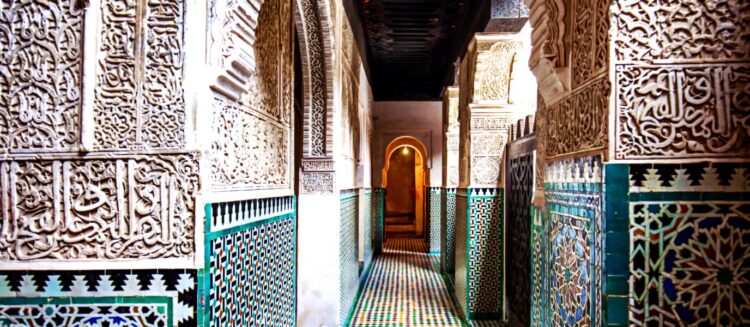
Medersa Bou Inania in Fez
Moroccan Arabness is dynamic and regionally inflected, expressed through a mosaic of Arabic dialects that embody the country’s historical and cultural layering. The pre-Hilali urban dialects, such as Fassi, Meknassi, and Rbati Arabic, spoken in the historic cities of Fez, Meknès, and Rabat-Salé, preserve many features of early Andalusian and Classical Arabic, including the conservative pronunciation of qāf as /q/ and more formal morphosyntactic patterns. In contrast, the Jebli dialect of northern Morocco, prevalent in Tetouan, Chefchaouen, and the Rif region, blends Andalusian, Amazigh, and Spanish influences, producing softer phonetics and a Mediterranean lexicon. The Hilali or ‘Aroubi (Bedouin) varieties, dominant across the Atlantic plains, Chaouia, and Souss, descend from Arab tribal migrations and underpin the speech of rapidly urbanized centers such as Casablanca and Settat. Further south, the Marrakchi dialect represents a transitional form combining urban and Bedouin traits, while Judeo-Moroccan Arabic, historically spoken in Jewish communities in Fez, Essaouira, and Sefrou, incorporates elements from Hebrew and Spanish (Haketía). In the southeast, around Errachidia and the Tafilalet region, daily speech follows Hilali Bedouin patterns, but the area also preserves a rare, literary form of Filali Arabic used in Melhoun poetry and song, reflecting a deep historical connection to Classical Arabic and regional artistic expression. Further south and toward the Sahara, Hassani Arabic, a Bedouin variety influenced by Maghrebi and Saharan linguistic currents, illustrates the continued interplay of migration, trade, and cultural exchange in shaping Moroccan Arabic. Collectively, these dialects illustrate how Moroccan Arabic varies across geography and social history, forming a linguistically plural yet distinctly Arab national identity. These variations reflect the adaptability of the language and, by extension, the adaptability of Arab identity itself. Moroccan Arabness, therefore, is neither monolithic nor static; it evolves through time while maintaining continuity with a broader Arab cultural framework.
Describing Morocco as an Arab country is to acknowledge the primacy of this linguistic, religious, and cultural fabric. Arabic is not merely an official language; it is the deep structure of Moroccan society, shaping poetry, moral discourse, social interaction, and ritual life. Arab identity in Morocco is lived in the streets of Casablanca and Fez, in the rhythms of daily prayer, and in the idioms and expressions of everyday conversation. It is experienced through shared cultural symbols and practices that bind Moroccan society to the larger Arab world while remaining distinctively local.
Recognizing Morocco as an Arab country does not erase its rich cultural diversity; rather, it highlights the central role that Arab language, culture, and religion play in the nation’s historical and contemporary identity. Moroccan Arabness is a living, evolving phenomenon, formed through centuries of interaction, internalized through daily life, and transmitted through language, ritual, and social practice. It reflects a society that is at once rooted in its local context and deeply connected to the broader Arab civilization.
In conclusion, Morocco’s Arab identity is a complex, multidimensional reality, grounded in linguistic, religious, and cultural practices. It is the result of historical processes, dynamic interactions, and the continuous enactment of shared meanings. To affirm that Morocco is an Arab country is not to deny its diversity but to recognize the living fabric of its identity, a fabric woven from Arabic language, Islamic faith, and the symbolic systems.