Arabs & Arabian Records Aggregator. Chronicler. Milestones of the 25 Countries of the Arabic Speaking World (official / co-official). AGCC. MENA. Global. Ist's to Top 10's. Records. Read & Enjoy./ www.arabianrecords.org
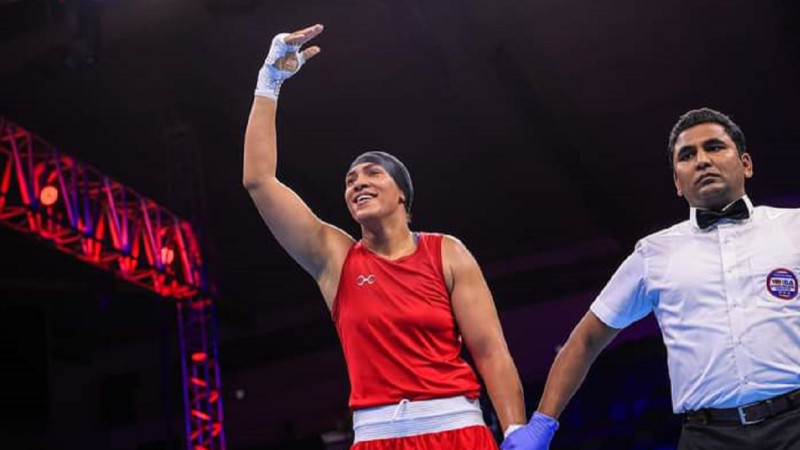
Moroccan boxer Khadija El Mardi won the gold medal on Sunday in New Delhi, India, during the Women’s World Amateur Boxing Championships.
The national champion El Mardi, who competed in the heavyweight division (Over 81kgs), won the women’s world boxing championship by defeating the Kazakh Kungeibayeva Lazzat.
El Mardi has achieved a number of victories over the years, including the title of African champion in 2022, a victory at the African Games in Rabat in 2019, a silver medal at the World Championships in 2022, and this year’s Mohammed VI Trophy gold medal.
Born in Casablanca in 1991, El Mardi’s everlasting commitment and heroic efforts to achieve success have made her name stand out.
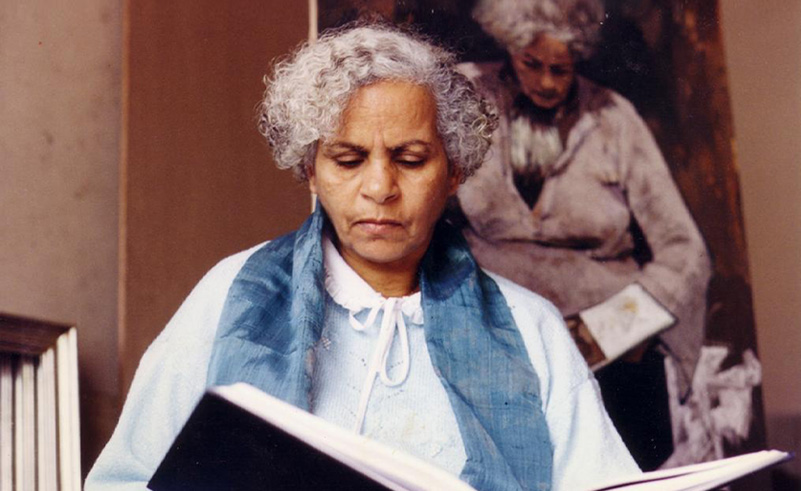
Elsayed’s family spent a year curating her works, as well as that of her husband El Dessouki Fahmi, from between 1960 and 1970.
When art becomes a family affair, each member with their own medium and distinct style, keeping legacies alive becomes a personal and collective mission, in which each of them pays tribute to loved ones while reviving a piece of modern art history. ‘Press Illustrations and Other Works’ is an exhibition in Zamalek’s Picasso Art Gallery that has been curated by graphic designer and filmmaker Alia Ibrahim and her father Ibrahim El Dessouki, who sought to honour the works of his late mother and father, painter and illustrator Attayat Elsayed and El Dessouki Fahmi.
Elsayed and Fahmi were both professional illustrators at the prominent Egyptian newspaper El Masa in the 1960s and 1970s, with Elsayed also contributing to Al Joumhouria newspaper. The family spent a year curating the exhibition, navigating the late painter’s extensive archive with a focus on her press illustrations.
“Our main objective was to exhibit the press illustrations, and then we added a selection of their paintings as well,” Alia Ibrahim tells CairoScene. “The process of finding the sketches for the illustrations, and copies of the newspapers they were published in was extremely difficult, and there are still countless sketches to be found and documented.”
Upon entering the gallery, visitors are met with two halls, one dedicated to Elsayed’s work and the other to Fahmi’s (which includes a portrait of Elsayed herself). Elsayed’s pieces reflect a progressive focus on the mundane, capturing movement through her intricate brush strokes. With the ‘Swing Machine’ and ‘Fan’ pieces – her granddaughter’s favourites – Elsayed spotlights the overlooked items and their constant flow in everyday life.
As an artist herself, Alia credits her late grandmother’s presence and talent to her ability to look at the world from a different perspective, with her abstract paintings becoming an inspiration and lens through which she views her own artistic endeavours. The exhibition is currently running at Zamalek’s Picasso Art Gallery until February 27th.
Saadi Yacef, the Algerian revolutionary leader who fought for his country’s liberation from French colonial rule, died on 10 September 2021. Yacef is perhaps one of the better known of Algeria’s resistance fighters because of the role he played in the creation of the film The Battle of Algiers , directed by the renowned Italian film maker Gillo Pontecorvo.
The Battle of Algiers was filmed in 1965 as a co-production between an Italian creative team and the new Algerian FLN (Front de Libération Nationale) government, whose representative Yacef produced the film and stars as the character of Jaffar.
One of the most extraordinary films ever made, The Battle of Algiers is an emotionally devastating account of the anticolonial struggle of the Algerian people and a brutally candid exposé of the French colonial mindset. Many French people were unhappy with the representation of their army and country in the film. It was not officially censored in France , but the general public and all cinemas boycotted it. It was seen as anti-French propaganda.
In later years, the film was screened to groups classed as revolutionaries and terrorists, apparently becoming a “documentary guidebook” in the Palestinian struggle, and for organisations such as the Irish Republican Army and the Black Panthers, who examined its detailed representation of guerrilla tactics.
It was also shown in the Pentagon in 2003, in the middle of the Iraq War. US Counterterrorism experts Richard Clarke and Mike Sheehan suggest that the film showed how a country can win militarily, but still lose the battle for “hearts and minds”.
What relevance does The Battle of Algiers hold today, 55 years after it was first released?
The message of the film is ultimately one of hope: the oppressed multitude will eventually triumph because their cause is just. The images of revolutionary crowds in the film recall the jerky, grainy footage that has emerged from a wave of recent protests in the last decade, from the Black Lives Matter movement to Extinction Rebellion . Pontecorvo thrillingly captures the power and possibility of large gatherings of citizens, who come together to demand rights, putting their bodies at risk to create social and political change.
Additionally, the film refuses to condemn any of the agents in this conflict. As Pontecorvo has stated
in a war, even if from a historical standpoint, one side is proven right, and the other wrong, both do horrendous things when they are in battle.
A film of contrasts
Shot in black and white, the film is difficult to classify in terms of style. Its military action sequences and tactical montages remind us of films like Zero Dark Thirty and The Eye in the Sky; indeed, it is almost impossible to film a scene of politically-motivated torture without having The Battle of Algiers as an implicit or explicit point of reference.
The collective aspect of the film’s creation, and the socialist ideals that inspired it, link it to what’s called Third Cinema. This was a kind of revolutionary cinema, a cinema of the “Third World”, that was designed to overthrow the systems of colonialism and capitalism.
The Battle of Algiers is also an example of Italian neorealism, a major film movement coming out of mid-twentieth century Italy. The neorealists made films that opposed Mussolini’s fascist regime, and they focused on the hardships of the working class in Italy. Neorealism was a moral and aesthetic system: it brought art and politics together to expose the ills of society and bring about social change.
The Battle of Algiers was shot entirely on location in Algiers, and Colonel Mathieu was the only professional on set. Pontocorvo selected the other actors from the local population based on their faces and expressions.
Other elements of the neorealist style was the use of techniques that create a documentary aesthetic such as the hand-held camera. Pontecorvo also uses extracts from real-life FLN and police communiqués, letters, and title cards. And he used newsreel stock, which was cheaper, but also added to the sense of verisimilitude in the film.
Although he believed the Algerians cause to be just, Pontecorvo wanted to create a nuanced and fair account of the war. Therefore, he sets up a series of contrasts to reflect this opposition between French and Algerian. This is present in the original musical score by Ennio Morricone: while groups of French soldiers rampage through the Casbah to the sound of jaunty military drums and horns, a haunting flute theme accompanies sequences which feature Algerian civilians.
Contrast is also evident in the use of light and shadow: there are strong chiaroscuro effects, perhaps reflecting the themes of right and wrong in the film. Pontecorvo also uses shadow to highlight the covert operations of the Algerians: Ali La Pointe’s face is filmed with deep shadows, and the face of Colonel Mathieu is always brightly lit.
Space provides another important contrast in the film. Frantz Fanon, a famous theorist of the Algerian revolution, describes the colonial world as a world “cut in two” because of the stark divide between the coloniser and the colonised. In The Battle of Algiers, the wide boulevards of the European quarter are juxtaposed to the narrow, winding, labyrinthine alleyways of the Casbah. Space is also divided vertically and horizontally – the European quarter is flat, while the Casbah is steep and sloping.
This opposition of space highlights the gap between rich and poor, coloniser and colonised.
The question of bias
The biggest contrast in the film is of course between the French and Algerians. The embodiment of French and European values in the film is Colonel Mathieu. He is a suave figure, confident and controlled in army fatigues, stylish sunglasses and slick speech – he has more dialogue than other characters in the film. A number of critics have argued that Mathieu is far ‘too cool’, given that he is a practitioner and a proponent of torture.
Yet Colonel Mathieu is not depicted as an ogre: above all, he embodies reason. We see this in his statements about the use of torture, when he uses solid rhetorical devices to justify it. He says:
…do you think France should stay in Algeria? If you do, you have to accept the necessary consequences.
This is persuasive as a logical argument – if you want French Algeria, you have to accept the actions that result in this outcome – torture.
If Mathieu and the French have reason, what do the Algerians have?
Firstly, they have raw, visceral emotion and the power of the group. The victory at the end of the film is a victory of the masses, embodied in two figures – the martyr Ali La Pointe, the illiterate everyman who becomes a hero for the revolution, and the gyrating, anonymous Algerian women, whose gaze outwards to the future closes the film.
This takes me to the final point about what the Algerians have on their side – the power of historical right. We see this through Pontecorvo’s use of chronology – the narrative proceeds as a flashback, until we leap forward in time to the euphoria and mania of the end of the war and the triumph of the revolutionaries. Pontecorvo here glosses over the fact that the real Battle of Algiers was lost by the Algerians, and jumps into a future of eventual victory in the war.
This is how he views the process of history – the masses, with moral right on their side, will eventually win.
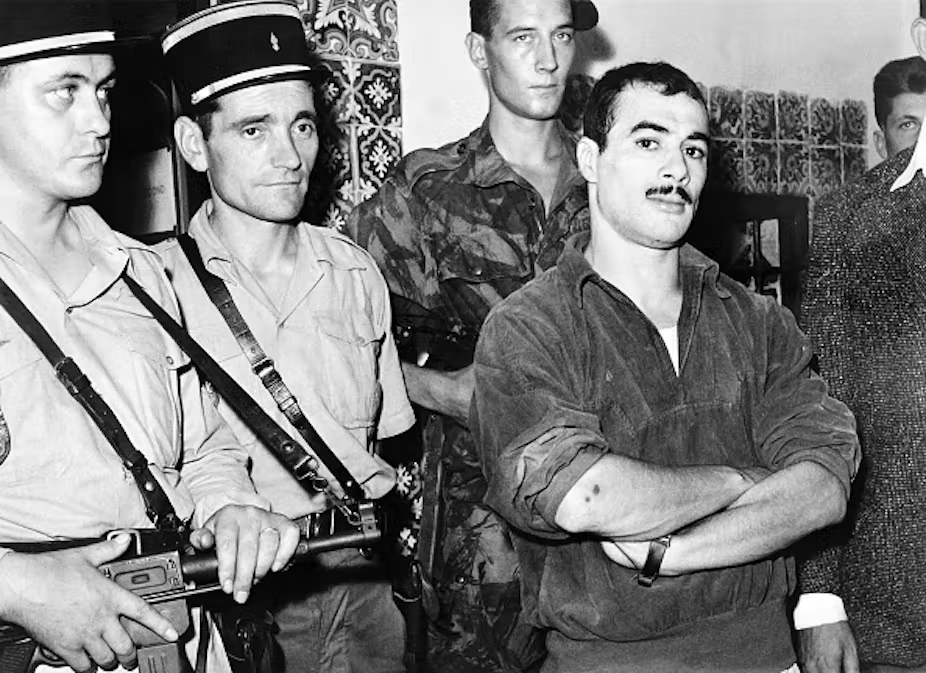
Yacef Saadi (R), military leader of the FLN National Liberation Front networks of the autonomous zone of Algiers, poses after being captured at the end of the “Battle of Algiers”. Photo by -/AFP via Getty Images
Morocco’s berry production is one of the country’s key contributors to the agricultural sector.
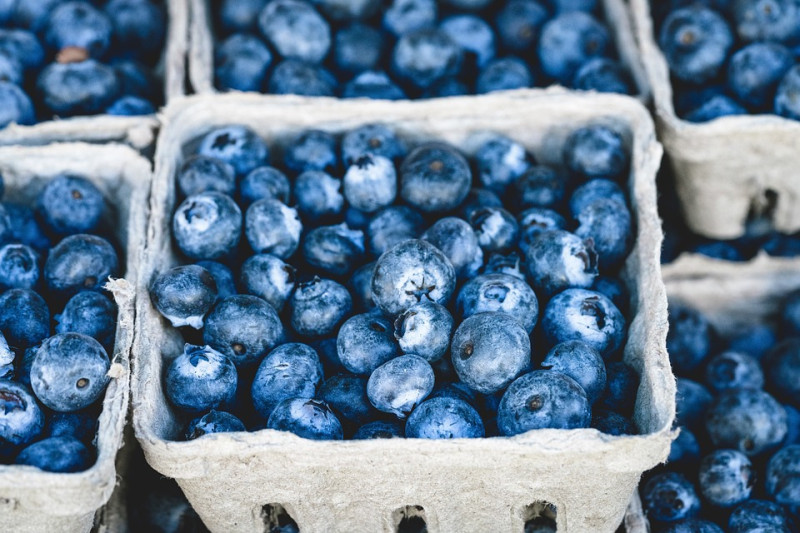
Morocco has outperformed the US becoming the fourth largest blueberry exporter in the world.
Data from East Fruit said that Morocco exported 53,000 tonnes of blueberries in 2022. Peru was the largest exporter of fresh blueberries last year, with 277,000 tonnes, followed by Chile (105,000 tonnes) and Spain (87,000).
Despite Morocco’s leading position in blueberry exports, the Netherlands exported more blueberries than the North African country in 11 months of last year, the same source said.
“It should be noted that the exports from the Netherlands in 11 months of last year were higher than that of Morocco, having amounted to 104 000 tonnes,” East Fruit reported.
Elaborating on the data, the news outlet said: “However, if we take into account the volume of re-exports, the real result of the Netherlands will be much lower since it imported 130 000 tonnes of fresh blueberries during this period.”
East Fruit also recalled that Morocco ranked seventh place among the largest exporters of cultivated blueberries in 2017.
Berry production in Morocco has contributed to the country’s agricultural sector significantly.
Morocco’s revenues from strawberry exports to the international market are estimated between $40 and $70 million annually.
According to previous data from East Fruit strawberry products are one of the top 10 most exported goods from Morocco.
According to estimates, Morocco exported 22,400 tonnes of fresh strawberries globally in 2022, representing an increase of 17% compared to a year earlier.
Countries like the UAE, Qatar were key buyers of Moroccan goods. In Europe, the US is one of Morocco’s strawberry importers. In 2022, the US imported almost half of Morocco’s strawberry export supply.
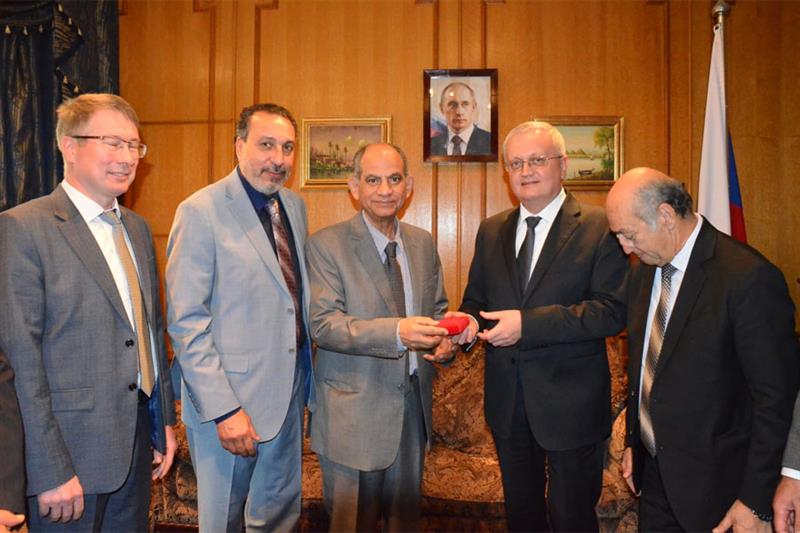
Russian ambassador to Egypt Georgiy Borisenko has awarded the Dostoyevsky Medal to Anwar Ibrahim – the under-secretary of the Ministry of Culture and former head of the ministry’s Foreign Cultural Relations Department – for his work in translating Russian literature into Arabic.
The honouring ceremony took place at the headquarters of the Russian Embassy in Cairo on 6 March. It was attended by a delegation from the Egyptian Association of Graduates of Russian and Soviet Universities headed by Sherif Gad.
Ambassador Borisenko expressed appreciation for Ibrahim’s efforts in translating classic and contemporary Russian literature into Arabic, thereby promoting Russian culture.
“The Arab reader is lucky when he reads translated Russian literature through creative translators like Anwar Ibrahim,” Borisenko said.
Borisenko wished Ibrahim continued success in his literary career, which he described as part of the soft power between Russia and the Arab peoples.
The Dostoyevsky Medal was established by the Russian Writers Union to be awarded to translators on the occasion of the 200th anniversary of the birth of the great Russian writer Fyodor Dostoyevsky, who is one of the most iconic writers of the Russian literary canon.
For his part, Ibrahim said that “this honour is a new birth for me, and I am extremely proud of receiving the Dostoyevsky Medal.”
Toghan, Secretary-General of the Association of Graduates, affirmed that the award for Ibrahim is a tribute to all graduates of the association, especially since Anwar is the first Arab to receive the prestigious medal.
Dostoyevsky, who was born in 1821 in Moscow and died in 1881 in St. Petersburg, gave up an engineering career early in order to write.
In 1849, he was arrested for belonging to a radical discussion group and was sentenced to be shot. He was reprieved at the last moment and sentenced to four years of hard labour in Siberia, where he developed epilepsy and experienced a deepening of his religious faith.
Dostoyevsky’s novels are especially concerned with faith, suffering, and the meaning of life; they are famous for their psychological depth and insight and their near-prophetic treatment of issues in philosophy and politics.
By the end of his life, he was acclaimed as one of his country’s greatest writers, and his works had a profound influence on 20th-century literature.
Trailblazing Jordanian-British research fellow reveals that her prescription for success requires dispensing – but only with tradition.
Most Damascene moments are dramatic by definition but few occur, as Atheer Awad’s did, on an actual road that leads to the Syrian capital.
Her own turning point came when the vehicle she was travelling in with her family to register for university in Amman blew a tyre, hit an electricity pole and flipped several times.
The accident meant that Awad ended up in hospital and missed the window to sign up to study medicine. By the time she was discharged, the only degree option still open to her was pharmacy.
Though bitterly disappointed at the time, she has come to believe that there were greater forces at work on the day of the crash on Jordan Street.
“Let’s just say we put our car to the test,” Awad tells The National. “It was a complete wreck. We are lucky to be alive.
“But it wasn’t meant to be that I should study medicine. I took the car accident as a sign that the future held better things for me.”
As a result, she was steered into an unexpected career in which the eventualresearch fellow at University College London would amass numerous accolades: the Journal of Clinical Medicine‘s 2021 PhD Thesis award; an appearance on the Forbes 30 Under 30 list for Europe; reaching the finals in the Women of the Future awards 2022 in the science category; named as an International Pharmaceutical Federation FIPWise Rising Star for 2022 as well as one of the top 15 outstanding innovators under the age of 35 by the MIT Technology Review.
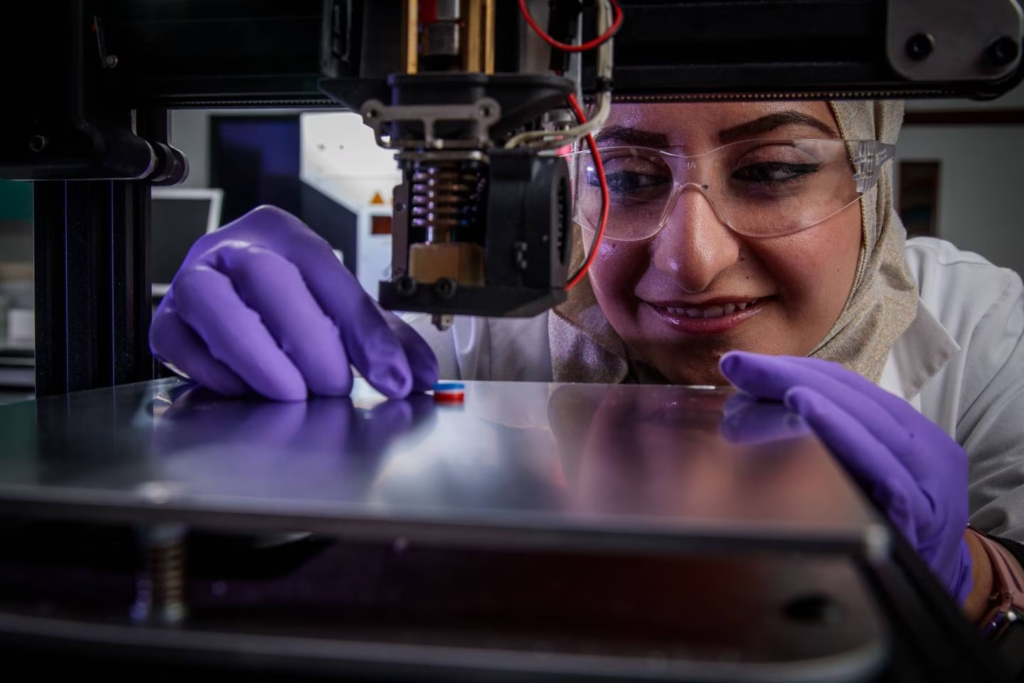
Her groundbreaking research is paving the way towards the creation of personalised medication that can be 3D-printed in patients’ homes via smartphone — a potentially transformative innovation for those who find it hard to gain access to health care or don’t suit a one-size-fits-all service.
Born in Abu Dhabi and raised in Dubai by Jordanian parents, her hand was always first in the air in class when volunteers were sought to dissect animals at Al Mawakeb School in Garhoud.
It was an early display of Awad’s enthusiasm for the sciences, particularly biology, and a prelude to her ambition of becoming a heart surgeon.
“I was so determined to make a difference and medicine is one of those industries that has a greater impact when it comes to changing people’s lives,” she says.
“There is never a boring day with science because every day is a new learning experience.
“You come across things that you haven’t discovered before or create new stuff by just playing around with things in the lab and mixing them together. It’s that sort of curiosity that motivates me.”
Back then, holidays were regularly spent visiting Jordan — trips that Awad still makes annually to catch up with extended family, go to weddings and indulge a soft spot for the local food.
“I love those traditional connections,” she says, “and still follow as many of these practices as I can, wherever I am.
“My faith helps a lot. But it isn’t easy trying to keep a balance between sticking to faith and being able to live in a foreign country.”
Moving to England wasn’t as daunting as it might have been without the unwavering support of her parents and four older siblings — a pharmacist, a consultant with whom she lived until recently, an IT specialist and a doctor.
“It is rare for all of us to be in the same country at the same time,” she says, laughing. “We travel between the three countries and there is always at least one of us living in each of the three. That makes it interesting for my parents, who get to travel everywhere.”
Awad herself, now 29, is a keen traveller and has put on her bucket list the wish to visit every country in Europe before turning her sights to other continents.
She fell in love with Turkey after a trip to Cappadocia, the semi-arid central region known for its “fairy chimney” rock formations, and particularly enjoys explorations on foot.
London, however, holds a special place in her heart, where there is, she points out, a big Jordanian community.
“I have a lot of friends I consider my second family. They’re a mixture of scientists, people outside work, and others with Jordanian or Arab heritage. That keeps me connected to my roots and it is one of the beauties of London — it’s international.”
But she calls Dubai home and makes many happy returns to Living Legends, a newly developed 14 million-square-foot community on the outskirts of the city where her parents still live.
Part of the appeal of the emirate, it should be said, is the chance to hit the luxury shops. Dior and Prada are favourites — her handbag collection alone extends to “about 40 or 50 … I’ve lost count” — and the Swarovski-encrusted mobile phone she takes everywhere is a particularly prized purchase.
Invariably, though, one of the first stops is to fill up on luqaimat, known as awama in the Levant. She has sampled the sugary doughnuts wherever she finds them but maintains that the ones whipped up for as long as Awad can remember by her mum, Hanan Swais, “are the best”.
They were an abiding taste of a childhood in which the extroverted Awad, left to explore her own interests by her father, Jamal, an electronics retailer, and Hanan, a homemaker, played the piano exuberantly if not with any notable proficiency and went on Scouting expeditions.
There was never an expectation that she would follow in the footsteps of any of her siblings but the desire to pursue medicine was strong nonetheless.
“It wasn’t until we were discharged from hospital [after the car accident] that I realised I had missed the deadline,” she says. “There was no going back in time. I just thought: ‘What’s the next best option?’
“That’s why I always say I did not choose pharmacy — it chose me.”
Despite a reluctant start, Awad’s enthusiasm grew throughout a five-year degree at the private Applied Science University in Amman as she gained insight into the extent of what pharmacists could actually do.
“I started looking at pharmacy as having a bigger impact than I had previously thought,” she says.
“People sometimes look at pharmacists as if they are beneath or less important than doctors when, in fact, they do most of the work behind the scenes.”
Little by little, with the consolidation of hours of satisfying sessions spent researching in laboratories or learning about the differences in the properties of various drugs, it dawned on Awad that she had stumbled across her calling.
Which is not to say that she appreciated being treated as little more than a saleswoman while doing work experience in a community pharmacy during the degree course.
“People assume that the pharmacist just takes the prescription and gets the medication without doing anything else,” she says. “There is a misconception.”
The experience hardened Awad’s resolve to focus on research rather than the direct, community-facing side of the profession.
After graduation in 2015, she embarked on a master’s in pharmaceutics and drug design at UCL, where she learnt about 3D printing during an end-of-year project with her professor, Abdul Basit.
She was inspired to keep working with the Basit Research Group within the School of Pharmacy to undertake a doctorate specialising in using the drug-delivery technology in the manufacture of medicines.
“I’ve always been interested in technology so it grabbed my interest immediately,” says Awad, who is still a research fellow with the group.
Weekends when she is not working are spent dining with friends, indulging her obsession for Harry Potter — “I’ve watched all the films multiple times” — and baking. Coffee cake is her speciality and made a well-received appearance at her professor’s 50th birthday.
“I do like experimenting with baking and cooking. I think there are similarities between baking and science.”
She doesn’t rule out applying to appear on The Great British Bake Off television show but, for now, Awad’s ambitions are confined to the lab.
“I want to make a change,” she says. “I don’t want 3D printing to stay a theory. I want to see it being implemented and taken up by healthcare agencies.”
Most recently, Awad has been printing tablets with Braille and moon patterns on their surfaces for visually impaired patients, or changing their shape, size and colour so that children or those with limited capacity find them easier to take. She has also been researching how to combine several medications into a single pill.
One of her team’s successes has been in creating tablets that can be swallowed without water. Manufactured in partnership with pharmaceutical 3D-printing specialist FabRx by melting powder particles with a laser beam and using heat, the porous product dissolves on the tongue.
She talks about how 3D printing allows alterations of a fraction of a milligram, making medication much more tailored and precise than the standard variety available off the shelf.
“Every person is different and our bodies do not react the same,” Awad says. “The requirements when it comes to medication differ, and sometimes they differ within the same person, depending on the disease progression.
“We can also take patients’ preferences into consideration. That’s important when it comes to children or elderly patients. Often children refuse to take medicine because they don’t like the taste, the shape isn’t appealing or the pill might be too big.”
While 3D printing for customised pharmaceuticals has yet to be introduced commercially in the UK, Awad’s UCL team has managed to convert a smartphone into an on-demand 3D drug printer with an app that could be used in remote GP surgeries and even at home.
“We’re not far from the industry adopting 3D printing, probably in the next two to five years,” she says. “Approval will have to be on a medication-by-medication basis because each medicine could behave differently to the same technology, depending on its properties, and the 3D-printing technologies themselves differ.”
Awad’s passion for her work is tangible. The British-American analytics company Clarivate clearly thought so when last month listing her on its influential Highly Cited 2022. It was a remarkable achievement for such a young scientist to appear among fewer than 0.1 per cent of the world’s researchers across 21 fields.
Such recognition is welcome but, she says, the many “titles are more of an assurance that I am on the right track and that my work is important”.
“That’s the driving force to keep me moving forward and become even more ambitious to try new things,” she says.
One of her guiding principles is that researchers should be brave and adopt different approaches because even the most “ridiculous” ideas can be turned into brilliant inventions or innovations.
As she has been known to opine, not all scientific breakthroughs happen through planned research: “Sometimes, you come across things by accident.”
Given the route into her career in pharmaceuticals, it could be said that Awad started very much as she meant to continue.
UNESCO added Tunisia’s spicy and most famous national condiment Harissa to its list of intangible cultural heritage, saying it was part of the North African country’s identity.
UNESCO placed the Tunisian condiment Harissa to its list of intangible cultural heritage, citing its significance to the identity of the North African nation.
The cultural agency of the United Nations is meeting in Morocco to consider proposals for its list of Intangible Cultural Heritage, which strives to safeguard cultural traditions, practices, and knowledge.
It tweeted “Just inscribed on the #IntangibleHeritage List: Harissa, knowledge, skills, and culinary and social practices.”
Tunisia’s Spicy Harissa
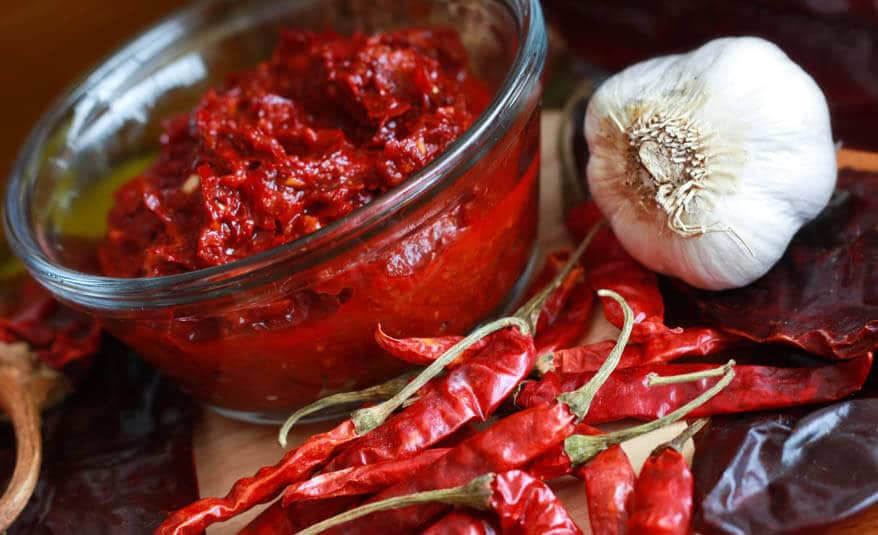
Harissa is a paste made from sun-dried hot peppers, freshly prepared spices, and olive oil, which preserves and slightly tones down its intensity. It is served in nearly every restaurant in Tunisia and is also exported internationally.
The condiment is wonderfully spicy, smoky, and packed with rich, deep flavors. It’s also extremely versatile, as it pairs well with sandwiches, different dishes, and even plain olive oil.
Harissa is “an integral part of domestic provisioning and the everyday culinary and dietary traditions of Tunisian culture,” according to Tunisia’s application for the status. It is typically cooked by families and communities.
“Harissa is used as a condiment, an ingredient, and even as a dish in its own right, and is well-known throughout Tunisia, where it is consumed and manufactured, particularly in the regions where chilli peppers are farmed,” the source explained.
It is regarded as a distinguishing part of national culinary heritage and a role in social cohesiveness.
The 2003 Convention for the Safeguarding of the Intangible Cultural Legacy seeks to protect and increase awareness of the “intangible cultural heritage of the communities, groups, and individuals involved.”
UNESCO emphasizes that the list recognizes traditions, practices, and knowledge as “human treasures” that must be safeguarded.
Wednesday, the organization also recognized French baguettes, bringing the total number of goods on the list to over 530.
Award-winning Egyptian filmmaker Ayten Amin will be part of the GWFF Best First Feature Award’s three-person jury.
Award-winning Egyptian filmmaker Ayten Amin will be a part of the jury line-up during the Berlin Film Festival. Amin is the only Arab and Egyptian artist participating in the acclaimed festival’s jury, and will be one of three people on the panel for the GWFF Best First Feature Award, which was founded in 2006 to support emerging filmmakers.
Ayten Amin is best known for her feminist cinematic works, and for tackling controversial social issues through her storytelling. Her Egyptian series ‘Sabea Gar’ (2017), which she wrote and directed alongside Heba Youssry and Nadine Khan, was praised for its authentic representation of Egyptian family dynamics and its diverse, multidimensional female characters.
More recently, her feature film ‘Souad’ (2020), a coming-of-age story that explored womanhood, social media performance and suicide, won multiple awards and was part of the Cannes Film Festival’s official selection, as well as the Tribeca Film Festival’s International Competition. ‘Souad’ also won the best feature film award at IndieLisboa International Independent Film Festival, and was selected for Berlin Film Festival’s Panorama section.
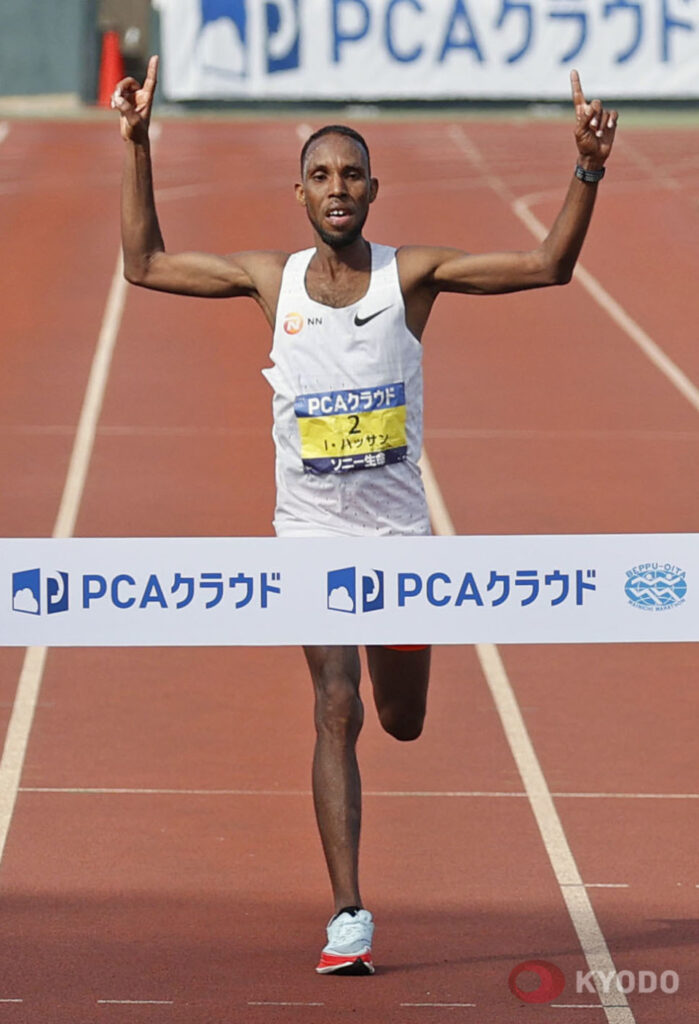
Ibrahim Hassan of Djibouti won the Beppu-Oita Mainichi Marathon in Oita, southwestern Japan, with a meet record of 2 hours, 6 minutes and 43 seconds Sunday.
Kenya’s Daniel Kipchumba crossed the finish line five seconds later for second place, and Japan’s Tsubasa Ichiyama placed third in 2:07:44.
The 71st edition of the race started in front of the Umitamago aquarium and finished at J-Lease Stadium.
“With the win and course record, I’m very, very happy,” the 26-year-old Hassan said. “The course was very good.”
Aoyama Gakuin University’s Shungo Yokota came in fourth in 2:07:47, setting the marathon record for a Japanese student runner.
Ibrahim Hassan of Djibouti crosses the finish line at J-Lease Stadium to win the Beppu-Oita Mainichi Marathon in Oita, southwestern Japan, on Feb. 5, 2023. (Kyodo)
“Tears in my eyes as I listen to the last broadcast by BBC Arabic, closing down after 85 years. It meant so much to so many people here over the decades,” tweeted British journalist Jim Muir, Middle East correspondent for the BBC News, “Now the airwaves are dead. End of an era.”
BBC’s Arabic radio service officially ended its decades-long broadcast on Friday, leaving behind a legacy that many believe to be everlasting.
The station launched in early 1938 as the BBC Empire Service’s first foreign language radio broadcast.
“BBC Arabic will always be a beautiful picture from the good old days; its professionalism a great education and its stars exceptional mentors and examples to follow,” journalist Eyad Abu Chakra told Arab News.
He added that the radio station was his father’s favorite. “Despite his reservations on some of its political coverage and views, he always admired its professionalism, informative program, and high caliber presenters,” he added.
“I grew up admiring several names, whom I was later honored to meet and befriend after settling in London in the fall of 1978,” Abu Chakra continued, “the Bush House canteen was one of my favorite meeting places in the late 1970s. It took me short walks from my Asharq Al-Awsat office in Gough Square and, later, High Holborn, to Bush House, where I enjoyed the hospitality of the BBC giants of the day.”
“To name just a few of my BBC dearest friends, departed and alive, there were the greats Musa Beshuti, Akram Saleh, Hassan Al Karmi, Nadim Nasser & Madiha AlMadfa’i, Majed Serhan, Huda Al-Rasheed and many others.”
Many journalists and public figures took to Twitter to express grief and share fond memories of BBC’s Arabic radio station. Some believed the event marked a decline in the United Kingdom’s soft power while others recalled their days at the studios.
“It’s far beyond sad and painful to see BBC Arabic radio shutting down today,” wrote Egypt-based BBC Arabic correspondent Sally Nabil on Twitter.
“It’s incredibly difficult to describe how we feel!” She added.
Amal Mudallali, former permanent representative of Lebanon to the UN, said: “As someone who worked for the BBC Arabic, I do not understand the decision.
“It is the only thing people know and remember about Britania, as we call it, in the region for generations.”
The final words and signature statement of BBC Arabic radio presenter Mahmoud Almossallami, “Huna London” (This is London), seems to have brought tears to many eyes.
Almousallami’s daughter, Osha, wrote: “I grew up listening to my dad presenting on BBC Arabic, and now here he is, presenting the final hour of BBC Arabic before it’s closed and taken off the air.
“It really is the end of an era.”
The head of David Nott Foundation, Elly Nott, wrote: “Huna London no more,” hailing BBC Arabic radio for helping her to learn its language.
BBC News Lead Technical Operator Jack Mooney shared a footage showing the last moments as the Arabic news network went off the air, while sound producer Tome Roles wrote: “I’ll always treasure the magic of sitting in a tiny studio at 3 am in London, picturing the sun rising thousands of miles away, and wondering about the lives of those tuning in.”
“It’s a painful moment,” wrote photographer Ali Al-Baroodi.
“BBC Arabic was one of few windows to the world in the time of the economic blockade (in the) 1990s (and) ISIS occupation,” he added, “Iraq was under (a) huge blackout. My father used to stock batteries for his radio in prep for the tough times.”
BBC correspondent Emir Nader shared the last two minutes of the Arabic radio’s final broadcast and wrote: “Today is a tragic day for Arab media… One of many huge losses following cuts in BBC World Service’s budget.”
source/content: arabnews.com (headline edited)
___________
The online Arabic service will remain. (BBC/Sourced)