TUNISIA: Olympics: Oussama Mellouli Sets His Sights On Seventh Olympics At Paris 2024

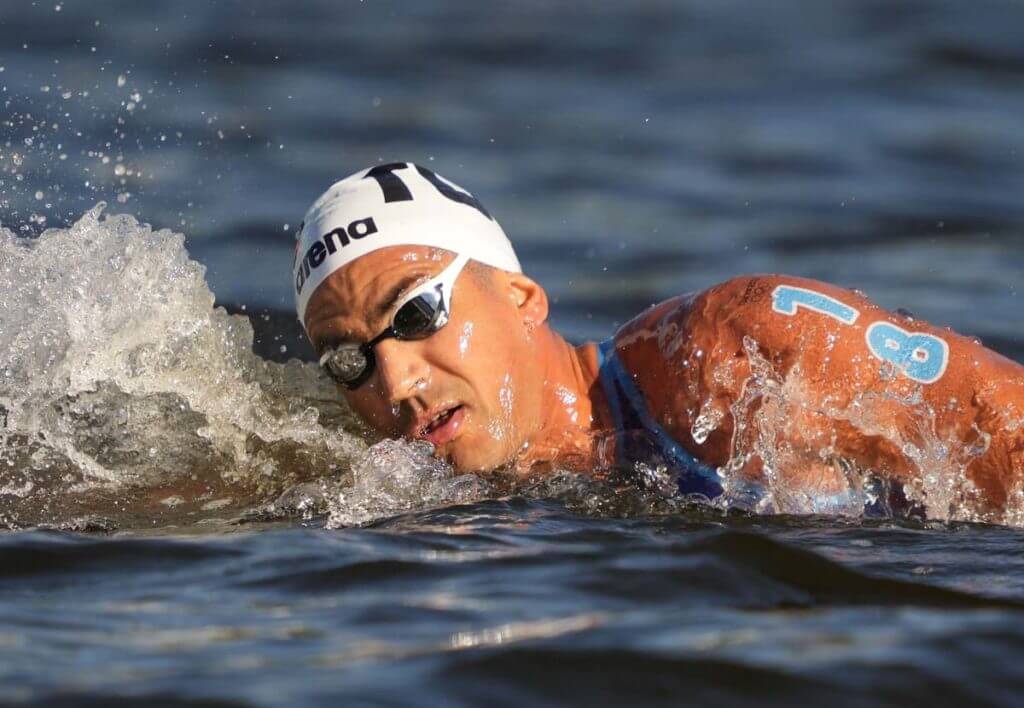
Oussama Mellouli became only the fourth swimmer to compete at six Olympic Games when he dived off the pontoon at Odaiba Marine Park on Thursday and then set his sights on Paris 2024 when he will be 40.

The Tunisian made his Olympic debut at Sydney 2000 and has now competed at five subsequent editions to join Therese Alshammar and Lars Frolander – both of Sweden – and Derya Buyukuncu of Turkey in an exclusive club.

The 37-year-old won gold in the 1500 free at Beijing 2008 followed four years later by bronze in the longest event in the pool as well as the open water title at London 2012.

He was 20th at Odaiba Marine Park on Thursday almost eight minutes behind winner Florian Wellbrock who delivered a masterclass in open water swimming.

Mellouli almost didn’t make it to Tokyo at all because of an ongoing dispute with the Tunisian Swimming Federation which saw him announce his retirement last month.

Days later, however, he confirmed he would race in Japan after Tunisian Olympic Committee president Mehrez Boussain pledged to mediate between Mellouli and the federation.

Mellouli though said the dispute had affected his training and subsequent performance, saying:

“I think I could have done a better job. Considering the last five weeks since Setubal (the FINA qualifying race), I’m a bit disappointed about (not being) a bit more in the fight.

“I think I wasn’t in the race for the first three loops and then I was below average in the last four loops.

“I think the poor situation that I’ve been in after my qualifier, I think a lot of extra stuff that’s been happening in my preparation didn’t get me in top form and top condition.

“After the qualifier I was hoping the situation could have been better so I could be in a better condition.”

It seems that Mellouli doesn’t want to end his career on such a note and when asked if he intended to compete in France, Mellouli said:

“I honestly hope so. I think I have more to prove.”

Should he do so, the eight-time world medallist would become the first swimmer to compete in seven Olympics after Alshammar attempted to qualify for the Sweden team in the women’s 4×100 free this year although her bid came to an end at the Sette Colli meet in June.

Thursday’s race saw Wellbrock win by more than 25 seconds ahead of Kristof Rasovszky and European champion Gregorio Paltrinieri and add to his bronze in the 1500m freestyle.

The German now holds the Olympic and world titles and Mellouli said:

“He did an amazing job, congratulations to the German team.

“Florian is a superstar. He has shown tremendous skills in the pool and today dominated the 10k so congrats.”

The first morning of swimming finals at the Tokyo Aquatics Centre featured Mellouli’s fellow Tunisian Ahmed Hafnaoui who won the 400 free from lane eight, prompting an outburst of emotion and unconfined joy.

Hafnaoui described Mellouli as a “legend” and said he aspired to be like him, a legacy of the older man’s success in the pool since he claimed his first global medal with 400IM bronze at the 2013 World Championships in Barcelona.

“I hope so,” said Mellouli.

“I’m very proud of him, words can’t describe how proud I am of him. I know the 400 freestyle is a very tough event, I think my best finish was fifth.

“He is a mature athlete at a young age.”

He added:

“That was great for Tunisian swimming, for Arab swimming, for north African swimming.

“I’m very proud of the kid. He shook the world and did an amazing job, an inspirational job.”

source/content: swimmingworldmagazine.com / Liz Byrnes

___________

Oussama Mellouli : Photo Courtesy: Kareem Elgazzar / USA TODAY Sports

___________

TUNISIA

ARAB FILMS 2022: Year in Review: The Best Arab Films of 2022

William Mullally picks the best movies by Arab filmmakers over the past year.

‘Perfect Strangers’

Director: Wissam Smayra

Starring: Mona Zaki, Nadine Labaki, Georges Khabbaz

The original Italian version of “Perfect Strangers” had already been remade across the world before its Arabic-language iteration was released on Netflix. But nowhere else has it caused the stir that it did in the Middle East. The conceit is simple: Seven friends at a dinner party decide to play a game, placing their phones in the center of the table to make their calls and messages known to all. As the night goes on, their secrets are revealed, upending everything they thought they knew about each other. Not only was this the best version of the film so far, with pitch-perfect casting and memorable performances, it was also the bravest: each of its stars pushed themselves in ways they had never been able to in regional film previously, shattering taboos, capturing the world’s attention and changing Arab cinema forever.

‘Kira & El Gin’

Director: Marwan Hamed

Starring: Karim Abdel Aziz, Hend Sabri, Razane Jammal

The highest grossing film in the history of Egyptian cinema, “Kira & El Gin” is Marwan Hamed at his best. This is a crowd-pleasing historical epic that not only captures the spirit of Egypt past and present, but sets a course for a new future for the country’s film industry. Following two men fighting the British occupation in Egypt during the 1919 revolution, Hamed’s film rarely sags despite its nearly three-hour run time and sprawling cast, structured more as a suspense thriller than a social studies lecture. As Hamed jumps from genre to genre across his films, proving equally adept at each, one wonders how he will top this, should he try. But it would be foolish to bet against him as he continues to notch up career high after career high.

‘Boy From Heaven’

Director: Tarik Saleh

Starring: Fares Fares, Tawfeek Barhom, Mohammad Bakri

Egyptian-Swedish filmmaker Tarik Saleh has a bone to pick. Growing up in Europe, he was always labeled as ‘other’ — an idea reinforced in the books in his school library describing Arabs as “stupid” and “uncivilized.” Now firmly entrenched as a filmmaker, Saleh refuses to make films tailored to the Western gaze, turning his camera deep into the inner workings of Egyptian society and forcing international viewers to accept that they are seeing things through eyes that are not their own. In “Boy from Heaven,” Saleh goes deep into a corruption scandal at the influential Al-Azhar Mosque, following a hero whose strong Muslim faith is unrattled as he uncovers the evils hiding from plain sight, with scenes and images you won’t soon forget.

‘The Alleys’

Director: Bassel Ghandour

Starring: Maisa Abd Elhadi, Nadia Omran, Munther Rayahna

In 2014’s “Theeb,” Jordanian writer Bassel Ghandour crafted perhaps the greatest example of the Bedouin Western in cinema history. With “The Alleys,” Ghandour steps into the director’s chair for the first time and turns the streets of Amman into the setting for a modern noir, in which the darkness hiding in the city’s back streets slowly boils to the surface. The film’s sprawling nature is both benefit and detriment, but it’s a stirring snapshot nonetheless, elevated by star-making performances from Maisa Abd Elhadi and Nadia Omran.

‘You Resemble Me’

Director: Dina Amer

Starring: Dina Amer, Mouna Soualem, Lorenza Grimaudo

Filmmaker Dina Amer is most familiar to global audiences for her fearless journalism in 2013’s “The Square” and various Vice News stories she produced as their foreign correspondent from the front lines of regional conflicts. “You Resemble Me” cements her as a filmmaker to watch, as her harrowing experimental recounting of the life of Hasna Ait Boulahcen, the woman miscredited as Europe’s first suicide bomber, is a deeply affecting dissection of the roots of terrorism and the racism that Arab women face in Europe. One of the most original films released this year.

‘The Swimmers’

Director: Sally El-Hosaini

Starring: Nathalie Issa, Manal Issa, Kinda Alloush

The story of Yusra and Sara Mardini, two sisters from Syria who risked their lives to escape conflict for a better future only for one of them to become an Olympian, is so powerful that a film capturing their story could not help but be inspirational. El-Hosaini, the Welsh-Egyptian filmmaker behind 2012’s excellent “My Brother the Devil,” made it into something more — a thought-provoking reframing of the refugee experience at a time when Syrians and many others still suffer from that stigma, as well as a chronicle of women’s empowerment as the structures that held them back crumble, all told with a light touch that never alienates the huge global viewership the Netflix film has enjoyed.

‘Mediterranean Fever’

Director: Maha Haj

Starring: Amer Hlehel, Ashraf Farha, Anat Hadid

Palestinian cinema is often, understandably, a no-holds-barred dissection of the plight of its people. But that is by no means its only manifestation, as Maha Haj, a previous collaborator with renowned satirist Elia Suleiman, proves with her latest feature, “Mediterranean Fever,” the follow up to her acclaimed 2016 feature “Personal Affairs.” Haj focuses here on smaller human problems, following an aspiring writer who suffers from depression and befriends a small-time crook living next door. At times comedic, the film drifts into dark territory while always keeping its audience guessing. After winning best screenplay at Cannes in 2022, Haj has confirmed herself as one of the region’s most singular voices.

‘The Blue Caftan’

Director: Maryam Touzani

Starring: Saleh Bakri, Lubna Azabal, Ayoub Missioui

There is no more versatile actor working in Arab cinema today than Palestinian actor Saleh Bakri, who, with Touzani’s “The Blue Caftan,” has capped off a tremendous run of eight films in the last two years, including Farah Nabulsi’s Oscar-nominated “The Present” and Mohammed Diab’s “Amira.” This is perhaps his best performance yet. He plays Halim, a struggling master tailor in Morocco whose life is turned upside down when he and his wife take in a young apprentice. Stealing the strikingly-filmed show, however, is his co-star Lubna Azabal as his wife Mina, who is quietly enduring her own private battle with breast cancer as she and her husband struggle to communicate.  With this and 2019’s “Adam,” Touzani is already one of Morocco’s great chroniclers.   

‘Raven Song’

Director: Mohamed Al-Salman

Starring: Asem Alawad, Ibrahim Alkhairallah, Abdullah Aljafal

The singular contemporary Gulf filmmaker Mohamed Al-Salman is not making films so that the world may understand Saudi Arabia — he’s making them so that Saudi Arabia may understand itself. “Raven Song,” his debut feature after years of acclaimed shorts, is a stylish jump back to 2002 in the Kingdom, a formative time for both the filmmaker and his country, in which the fight between traditionalism and modernity was so heated that it manifested prominently even in the world of poetry. At times dream-like, “Raven Song” is a film that defies definition, with interpretations likely to roll in for years to come.

source/content: arabnews.com (headline edited)

__________

________________

ARABIC FILMS
SAUDI ARABIA: World’s Largest Light Ball illuminates Riyadh Season 2022

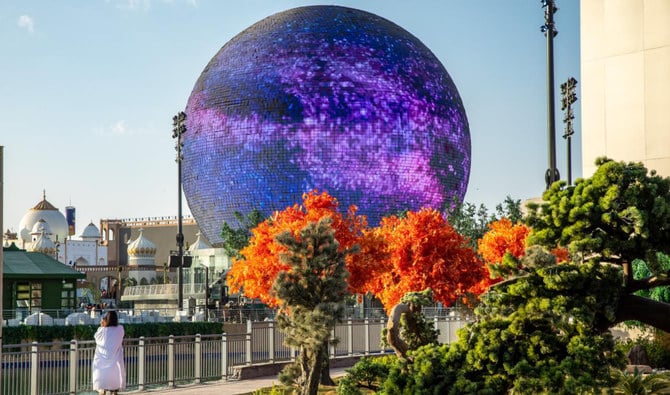
A new modern landmark in the capital of the Kingdom, the Light Ball, has been named by Guinness World Records as the largest illuminated LED ball in the world, with an estimated height of 35 meters.

Located at Boulevard World, the exterior of the ball emanates bright lighting that flickers in different patterns, while the interior boasts a 220-seat theater equipped with state-of-the-art features.

Guests can recline in their seats facing a 360-degree circular screen. The short films presented in the theater are five minutes long, with varying genres suitable for families to enjoy. The shows run every 30 minutes daily from 3:30 p.m. to 10:30 p.m.

In addition to cultural experiences, Boulevard World includes the largest artificial lake in the world. Visitors can take part in boat and submarine rides in the lake — a first for Riyadh Season.

There are also distinctive entertainment options, such as Combat Village, Super Hero, the largest sphere in the world and cable car trips between Boulevard World and its neighboring zone, Boulevard Riyadh City.

The zone offers visitors other entertainment experiences as well, such as Boulevard Pier, Discovery, Realistic Monopoly, The Mountain, Area 15, Ninja Warriors and Fun Zone for children.

source/contents: arabnews.com (headline edited)

___________

Located at Boulevard World, the exterior of the ball emanates bright lighting that flickers in different patterns, while the interior boasts a 220-seat theater equipped with state-of-the-art features. (Supplied)

_________________

SAUDI ARABIA

OMAN: The Mall of Oman opens ‘Snow Oman’ the Region’s Largest Snow Park

A multifunctional snow park was opened at the Mall of Oman. The project Snow Oman is the largest in the Middle East. The snow park was developed by Majid Al Futtaim, who has experience building indoor snow and ski amusements. In 2005 the company unveiled its first project in the flagship Mall Al Futtaim and later realized the mega project Ski Dubai in the Mall of the Emirates.

The total area of Snow Oman is 160 000 square feet. The complex combines a variety of winter attractions, the country’s first colony of penguins, and natural snow. The main decorations are an ice port town and a sunken ship with a lighthouse.

Rides include Mountain Thriller, Snow Bullet, Slide Winder, Cloud Climber, and Zorb Ball, unique attractions such as Cold Town Muscat, and a 5112-square feet ice rink. Admission to the park starts at 12.5 OMR, equivalent to $32.5.

Snow Oman caters to guests of all ages and offers activities for both kids and thrill-seekers. Outside the ski and skate slopes are cafes with hot winter drinks, warm seating, and a photo area.

Majid Al Futtaim is one of the largest mall, retail, and entertainment companies in the Middle East, Africa, and Asia. The company operates 29 malls, 13 hotels, and four mixed-use complexes in the UAE, as well as more than 600 cinemas and several entertainment centers.

source/content: malls.com (headline edited0

____________

_________

OMAN

EGYPT enlists ‘Journey of the Holy Family Festivals’ on UNESCO List of Intangible Cultural Heritage of Humanity

“Festivities and celebrations affiliated with the Journey of the Holy Family in Egypt are now on UNESCO’s Representative List of Intangible Cultural Heritage of Humanity,” professor Nahla Imam, heritage consultant at the Egyptian Ministry of Culture and country representative of Egypt at the 2003 Convention of Safeguarding the Intangible Heritage of UNESCO, told Ahram Online on Wednesday.

Imam credited the move to the efforts of the Egyptian ministries of culture and foreign affairs, adding that Egypt’s efforts were almost unanimously supported by UNESCO’s Inter-Governmental Committee.

This is the seventh intangible cultural heritage element that Egypt enlists in UNESCO. Prior to the Journey of the Holy Family, the Egyptian manual-textile industry in Upper Egypt was put on the UNESCO List of Intangible Cultural Heritage Sites in Need of Urgent Preservation.

Egypt first enlisted El-Sirah El-Helalya (The Epic of Beni Helal) in 2008, Tahteeb (Stick Art) in 2016, the Aragouz Puppet in 2018, and the knowledge and traditions affiliated with palm trees in 2019.

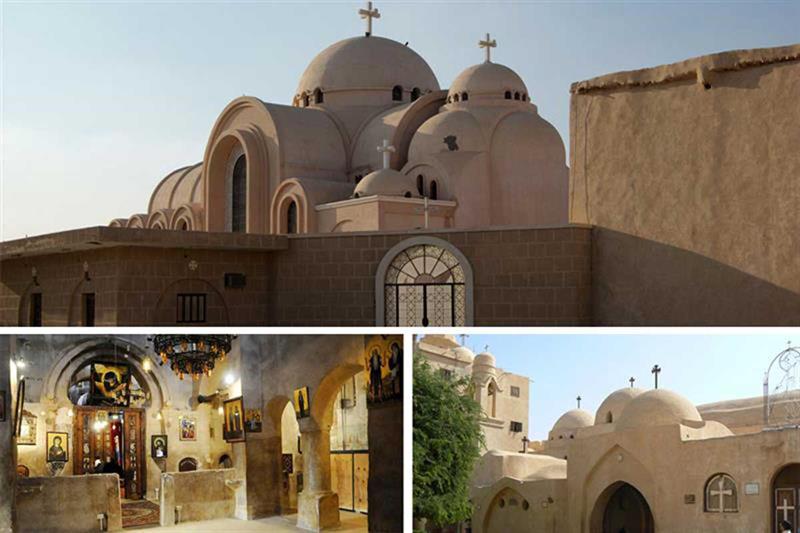
According to the accounts of historians, the Holy Family spent around four years in Egypt.

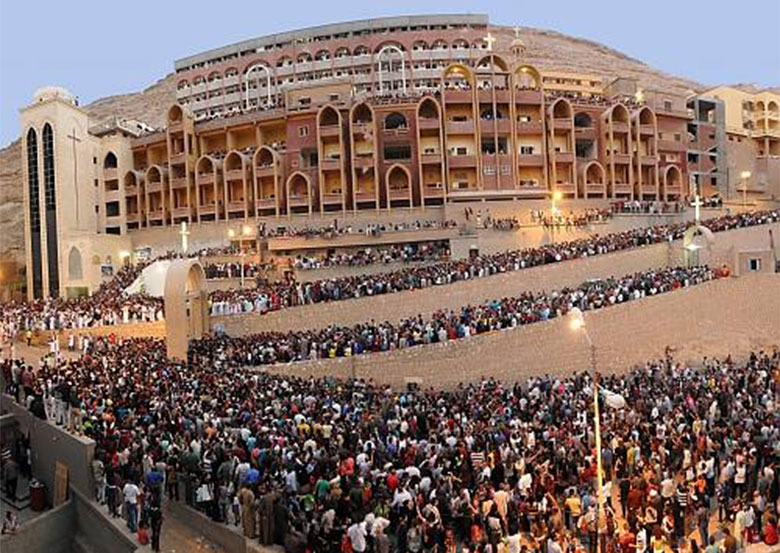
Their trip started in the Sinai at Al-Farma, on the border with Gaza, where they arrived after fleeing Jerusalem. Their trip ended in Durnaka, Assiut, venue of the famous Monastery where the feast of Virgin Mary is celebrated in August each year. ​

source/content: english.ahram.org.eg (headline edited)

___________

__________

EGYPT

SUDANESE AMERICAN: Alsarah, Singer, Songwriter, and Ethnomusicologist

A singer, songwriter, and ethnomusicologist, Alsarah is a self-proclaimed practitioner of East African music, inspired by songs and cultures of Africa and the Middle East. Throughout her career, she performed as a band member of Sounds of Tarab, in addition to producing songs and albums under her stage name, and her band with her sister, Alsarah and the Nubatones. Furthermore, she was also featured in the documentary “Beats of the Antonov” in 2014.

Alsarah was born Khartoum, Sudan in 1982. As a child, her parents worked as activists at a time when many encouraged citizens to vote in the 1986 elections. Following the coup d’etat in 1989, however, her family fled the country to Yemen before the nation’s civil war forced them to relocate to Boston, the United States in 1994.

At this point in life, Alsarah turned to music for solace. In fact, music has been a big part of her childhood, with the very first music that spoke to her being played during her family’s activism in Sudan. Growing up, she studied ethnomusicology at Wesleyan University before relocating to Brooklyn, in New York, where became lead singer of the Zanzibari band Sounds of Tarab.

In 2010, Alsarah and her sister would start a band entitled “Alsarah and the Nubatones” along with band members Haig Manoukian, Kodjovi Mawuena, and Rami El-Aasser. The band released their debut EP, “Soukura,” followed by full-length album “Silt” in 2014, “Manara” in 2016, and “Manara Remixed” in 2017. In addition, Alsarah has also produced songs as a solo artist with albums such as “Aljawal,” “The Crow,” and “Min Ana.”

In general, many of Alsarah’s songs were influenced by artists from Sudan, Zanzibar, and Ethiopia. Her songs are available on Spotify and Deezer.

source/content: abouther.com (headline edited)

____________

__________________________

AMERICAN – SUDANESE

WORLD RECORDS: ALGERIA: The Mosque that has the Record-Breaking 265m Tallest Minaret In The World. The Great Mosque of Algiers (aka) Djamaa el Djazair’ an Architectural Marvel & Monumental Wonder

One doesn’t have to be a Muslim to visit the mosque or see the tallest minaret in the world.

Many people who think of a vacation to Africa make plans with Morocco in mind, South Africa at times, maybe Kenya, and definitely Egypt—to see the famous pyramids—or the 4,100-mile-long river that gave birth to that momentous civilization. Yet, as a continent, Africa has 54 countries, almost as many as the number of states in the U.S. Though it may come as a surprise, almost all of these countries are safe and have nearly the same conveniences as those found in many First World countries. Take Algeria, for instance, the biggest country in Africa and more than three times the size of Texas. This northern African country has pyramids, just like Egypt, and several fascinating ruins that would interest any history buff or anyone who’s out for some real adventure.

The Great Mosque Of Algiers And Its Record-Breaking Minaret

Also known as Djamaa el Djazaïr, the Great Mosque of Algiers is itself a monumental structure and an architectural marvel in its own right. However, what really puts it in the Guinness Book of World Records is its minaret. The reason is that the Great Mosque of Algiers is noted for having the tallest minaret in the world. For those who may be scratching their heads, a minaret is a tower—or a tower-like structure—built into mosques primarily to project the “Adhan,” the Muslim call to prayer. Of course, today, minarets serve other purposes as well. For instance, they are important landmarks of Islamic presence. Coming to the minaret of the Great Mosque of Algiers, we would not be remiss to expect a structure described as the world’s tallest to answer to that exceptional description. Well, the minaret of the Great Mosque of Algiers is 265 meters tall and hence, by all accounts, impressive.

For perspective, that’s the same height as Truist Plaza, the 60-story skyscraper in downtown Atlanta or the Panorama Tower in Miami, Florida. It’s also about half the height of the One World Trade Center, the tallest building in the United States. Minarets, however, have never been this tall. Before the Great Mosque of Algiers secured a page in the Guinness Book of World Records for its minaret, the tallest minaret was the 670-feet tower of the Hassan II Mosque in Casablanca, Morocco. The Algiers minaret, according to the Guinness Book of World Records, is now not just the tallest minaret in the world but the tallest building in Africa as well. This minaret is designed to withstand a magnitude nine earthquake, the highest earthquake magnitude. This type of earthquake can cause major damage over a region more than 1,000 km across.

Here’s A Brief History Of The Great Mosque Of Algiers And Its Minaret

The government of Algeria launched the construction of the Great Mosque and its record-breaking minaret in 2012. However, according to an adviser to the minister of housing responsible for the construction, the idea of constructing a mega-mosque had been in the cards from way back in 1962 when Algeria got its independence after 132 years of French occupation and after a 7-year brutal war that would send seismic revolutionary waves across the continent. For some reason, the efforts to put up a mega-mosque in Algiers had failed and foundered. However, with the election of Abdelaziz Bouteflika as President of Algeria in 1999, the building efforts would soon receive significant impetus.

Famous for his religious zeal and devotion to Muslim art and culture, Bouteflika would, unsurprisingly, actualize the mega-mosque dream even though his tenure as president would dramatically come to a premature end before the completion of his pet project. The mosque, however, including its record-breaking minaret, was an outstanding architectural masterpiece. According to the Guinness Book of World Records, the Great Mosque of Algiers sits on an expansive area of around 400,000 square meters (about 50 acres). For perspective, the building itself, plus the outside courtyard, can seat up to 120,000 worshipers.

Other Reasons Why The Great Mosque of Algiers Is Worth Visiting (& How To Visit)

The mosque looks towards the scenic Bay of Algiers, which features dazzling white buildings and panoramic views as far as the eye can see. Part of the mosque is a library that can stock more than a million volumes. In addition, the mosque has a Koranic school and a museum of Islamic art and history.

  • Where Is The Great Mosque of Algiers Located? This mosque is located on the Rue de la Marine in Algeria’s capital city, Algiers.

A crucial travel tip is to get in as a worshiper, probably during worship. Some visitors even carry a prayer mat or wear a scarf, especially women. Of course, one doesn’t have to be a Muslim to visit the mosque or see the tallest minaret in the world.

source/content: thetravel.com (jeff oganga) (headline edited)

____________

The New Great Mosque in Algiers

___________

ALGERIA

TUNISIA: The 33rd International Carthage Film Festival: a breath of fresh air in trying times

Tunisia’s prestigious industry event enjoys another successful year, helping spread a love of culture across the country.

Another week of movie magic, street art and music has come to an end following the 33rd edition of the International Carthage Film Festival in Tunisia.

Titled “Hel Thneya”, which means “Open the Path” in Tunisian dialect, the festival once again cemented its status as a major cultural attraction for visitors of all ages, who flocked to cinemas and filled the streets en masse.

The festival, one of the eldest and most prestigious in the Mena region, ended on Sunday.

As is tradition, the capital Tunis was transformed into an open celebration of not only cinema but all forms of arts, with independent young painters getting the chance to show their artworks to the public for the first time and musicians performing every evening to audiences in the middle of Avenue Habib Bourguiba. For many, it was an opportunity to watch films that they don’t usually have the means or the opportunity to see.

Speaking outside the Theatre de Region Cinema, Downtown Tunis, Amina told The National she had been waiting for the festival to introduce her two children to the world of the cinema.

“As a family, we always discuss films together but we never find the time nor age-appropriate films to watch. This is a great opportunity to let them discover the big screen,” Amina said.

Amina’s daughter Ritej, who is in the sixth grade, was grinning with happiness as she prepared to enter the cinema hall. “I’m excited, I’m sure I’m going to enjoy this and tell my friends about it,” Ritej said.

Amina said that she often encourages her children to value the arts, with Ritej currently rehearsing for a school play, and she wishes there were more events like it in Tunisia.

This year’s International festival was an opportunity to revive the city. According to organisers, the festival aimed to showcase both new cinema productions and also timeless films that the younger generations needed to be introduced to.

This year, 72 countries participated with Saudi Arabia being the guest of honour and special emphasis placed on Palestinian and Spanish Cinema — a choice that organisers said highlighted the intersection between north and south, placing migration under an artistic lens.

The festival also paid tribute to Arab filmmakers, both living and dead, namely the Moroccan director Mohamed Abderrahmen Tazi and Egyptian director Daoud Abdel Sayed, as well as the late Algerian director Yamina Chouikh and late Tunisian director Kalthoum Bornaz.

“Through this 33rd edition, we continued to foster cultural decentralisation by bringing new sections to the festival and programming screenings in different parts of the country,” journalist and cinema critic Yosra Chikhaoui told The National.

“This year marks the first edition of JCC for kids. We are bringing more screenings as part of our “street cinema” section as well as continuing the special screenings for prisoners and members of the Tunisian army inside military bases,” Chikhaoui, who is a member of the festival’s media committee, added.

JCC in Prisons, now in its eighth year,is the fruit of a partnership between the Tunisian Ministries of Culture and Justice and the International Organisation Against Torture. This year, 12 films were showcased in three prison facilities, while juvenile detainees were transferred to Tunis for a special showcase in a cinema.

According to Ridha Behi, general director of this year’s festival, film screenings in prisons serve as a reminder of the right all people have to access and experience culture.

Awards, meanwhile, highlighted the multitude and variety on show, with a focus on filmmakers whose work depicts the struggles of their respective societies.

The Tanit d’Or award for best feature film was given to Tug of War, directed by Amil Shivji — marking the first time a film from Tanzania has won the award. Meanwhile, the Tanit d’Argent and Tanit de Bronze were respectively awarded to the films Under the Fig Trees by Erige Sehiri from Tunisia and Sharaf by Samir Nasr from Egypt

source/content: thenationalnews.com (headline edited)

___________

___________

TUNISIA

EGYPT: World’s Second Oldest, 1,200 Years-Old Jewish Cemetery Restored & Reopened in Basatin, Cairo

Over 1,200 years old, and after facing extreme neglect for decades, the Basatin Jewish Cemetery finally reopens.

The Basatin Jewish Cemetery – the second oldest Jewish cemetery in the world, and one of Cairo’s few remaining Jewish cemeteries – has undergone extensive renovations and opened its doors once more.  

With a foundation dating to the 9th century during Egypt’s Tulunid Dynasty, the 147 acres of land designated for the cemetery at the time included separate areas for Rabbanite and Karaite Jews and extended beyond the Tulunid capital of Egypt.

In more recent times, allegedly during the reign of Mamluk Sultan Qaitbay in 1482, the cemetery was divided into separate pieces of property totaling roughly 27 acres. These plots include the Basatin graveyard’s common burial grounds, the private Mosseri family cemetery, Rav Haim Capusi’s grave, the private Moise Cattaui Pasha cemetery, and the remaining Karaite section of the original cemetery.

Over the past three years, the American Research Centre in Egypt and the United States’ Ambassadors Fund for Cultural Preservation and Drop of Milk Foundation have been working to restore the neglected cultural and religious heritage site.

After the completion of the conservation project, members of the Karaite Jewish community –  known for exclusively respecting the principles of the Torah and disowning oral traditions like the Talmud and other writings of the Rabbis – from various nations attended the ribbon-cutting ceremony, and were able to revisit their families’ graves for the first time in decades.

source/content: cairoscene.com (headline edited)

____________

_________

EGYPT

MOROCCO: OCP’s DOOC CEO Ibtissam Bensetti , the ‘First Moroccan Woman’ named in ‘100 Global Inspiring Women in Mining’ (WIM100) 2022

With a strong determination to help women’s inclusion in the mining industry, Bensetti has a strong belief in women’s ability to defy norms and pursue a career in any industry.

Women in Mining UK, an NGO dedicated to supporting women in the mining sector, selected  CEO of OCP subsidiary DOOC Ibtissam Bensetti to feature in the 2022 “100 Global Inspirational Women in Mining” (WIM100) in recognition of her contributions to the global mining industry.

With this nomination, Bensetti became the first OCP personnel and Moroccan national to feature in the 100 Global Inspirational Women in Mining.

The NGO’s global top 100 list celebrates women’s contribution to the mining industry at all levels. The biennial publication stresses women’s skills and expertise in the global mining industry and celebrates role models for future generations.

Women inclusion in mining

The organization selects nominees based on different criteria, including creative innovation and sustainable working.

“A WIM100 woman offers proactive advocacy to those working in the mining industry and beyond. She empowers her colleagues to ensure everyone feels heard, welcomed, and respected,” the NGO said.

Bensetti has been able to take her place in the WIM100 for her leadership in OCP as a CEO at the group’s subsidiary DOOC, which specializes in industrial operations consulting, safety, and sustainability. 

Having joined OCP in 2012, Bensetti has more than a decade of experience in the mining industry at different levels, particularly in sustainability roles in mining and chemical industrial operations, as well as corporate development.

Carrying the spirit of women’s empowerment during her journey, Bensetti has been working on spreading that spirit among her team members, particularly women, through supporting  OCP’s female talent as well as increasing the number of women in management.

Delighted to be part of the WIM100 list, Bensetti stressed her emphasis and belief in women’s talents.

“In my mind, there is no impenetrable fortress for women, women can defy the norms and pursue a career in any industry,” she said, conveying her encouragement and endorsement for the inclusion of women in the mining industry.

The CEO acknowledged that the industry might have been a male-dominated industry but claimed that that’s in the past thanks to global efforts seeking to ensure gender equality at different levels.
 Women make up between 8% and 17 % of the global mining workforce, a McKinsey report has found.

The report also identified, however, several reasons and challenges that prompt women’s exit from the industry.

“The top reasons for leaving the industry are feeling that work is no longer intellectually challenging and having the perception that there are fewer advancement opportunities than there are for their male colleagues,” the report stressed.

Appointment and education

Bensetti was appointed as CEO of DOOC in June 2021 to replace Hamid El Mahfoudi, who retired.

She joined OCP a decade ago, filling positions related to strategy, corporate development, and industrial operations.

Graduating from Telecom Paris in 2004, Bensetti amassed 18 years of experience in management consulting, industry managing, coaching, and leading teams in transformation journeys.

Bensetti is also a graduate of The World Business Council for Sustainable Development’s LEAP Program, a one-year sustainability training program that seeks to empower women and help advance their positions and careers.

Having gender equality as a center of focus during her career, Bensetti is determined to continue her battle to help empower women in the mining industry.

“Being a woman engineer in industry, I have been fighting this battle all my life,” she wrote on her LinkedIn bio.

source/content: moroccoworldnews.com (headline edited)

___________

____________

MOROCCO