Arabs & Arabian Records Aggregator. Chronicler. Milestones of the 25 Countries of the Arabic Speaking World (official / co-official). AGCC. MENA. Global. Ist's to Top 10's. Records. Read & Enjoy./ www.arabianrecords.org
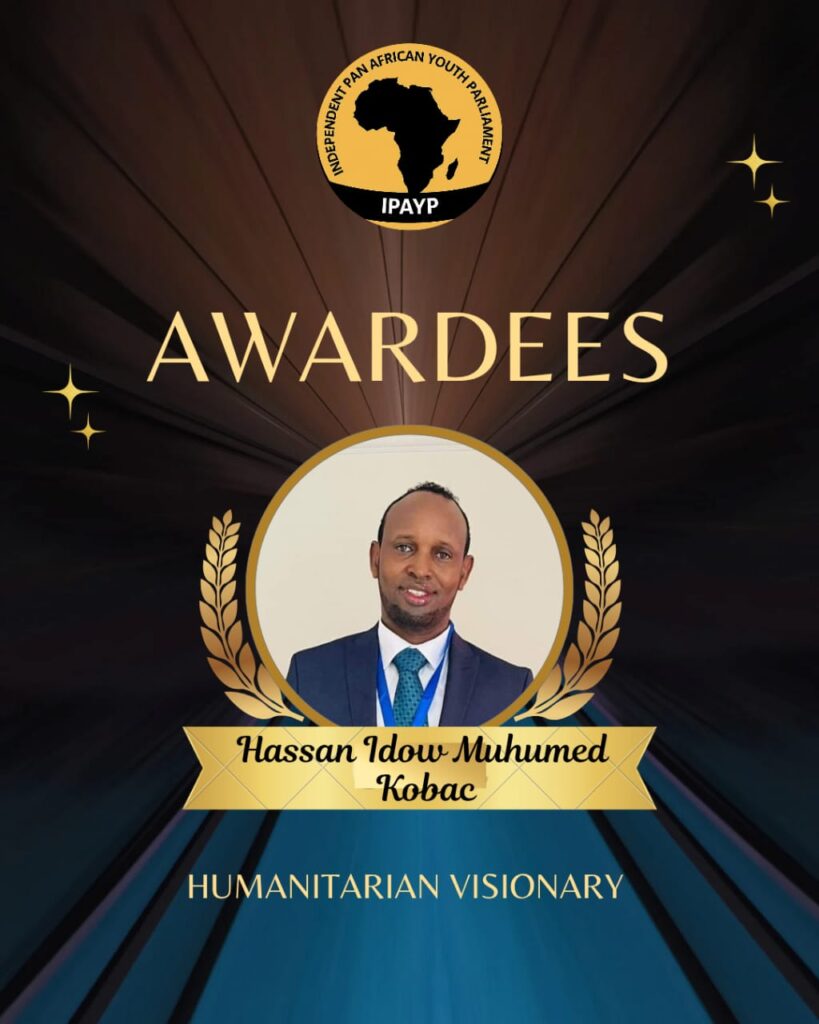
Independent Pan African Youth Parliament awarded Humanitarian Visionary Award to Hassan Idow Muhumed Kobac – a Senator, a business elite and humanitarian worker among other awardees at the Kenyan capital Nairobi.
The three-day summit gathered over 50 youth leaders, policymakers, academics, and civil society voices from across the continent focusing youth-driven solutions for key challenges including education, employment, leadership, democracy, climate change, and digital innovation.
“I am honoured to receive this important award which is the recognition of the humanitarian work I have been doing in Somalia for more than a decade and all other humanitarian workers” Hassan Idow Muhumed Kobac said, “The Award not only encourages the humanitarian workers, but also boosts the morale of other humanitarian workers.”
“My goal is to create a better life for the Somali people and restore their dignity.” Hassan Kobac who is a true example of honest leadership that stands for progress and compassion said.
Mr. Kobac has dedicated his life to the development of vulnerable communities. Through the Hassan Kobac Foundation (HKF), a foundation he founded himself, has become a source of hope for many people affected by drought, displacement, and poverty.
In the face of one of the most severe droughts in recent history, the Hassan Kobac Foundation (HKF) has emerged as a beacon of hope, delivering emergency water trucking assistance and food rations to thousands of families in the Hiiraan region of central Somalia.
In February this year, Hiiraan Youth Association honored and celebrated the achievements of Senator Hassan Kobac in a grand event held in Beledweyne. The ceremony, attended by various societal groups, intellectuals, and youth, honored Senator Kobac’s four-year tenure in the upper house of the Federal Parliament of Somalia
Hassan Kobac has been described as the true voice of the people of Hirshabelle, continuously working to defend their rights and improve their well-being. His dedication to youth empowerment and community development has earned him the admiration of and respect of many.
The meeting highlighted the Kingdom’s $10 million commitment over five years to strengthen early warning systems.
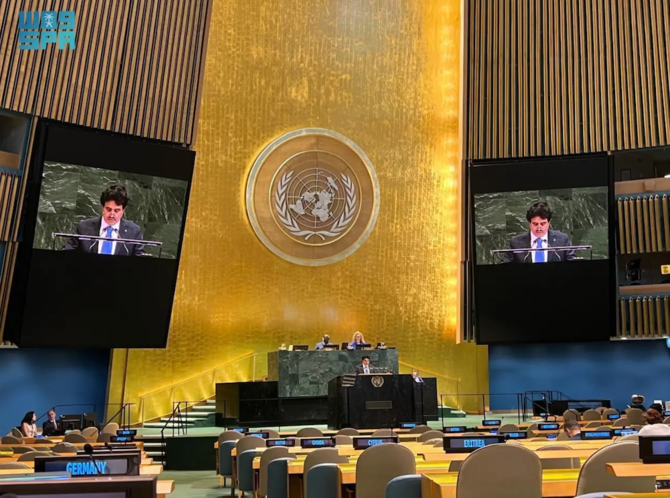
Saudi Arabia’s international efforts to combat sand and dust storms were commended this week during a high-level meeting at the UN Headquarters in New York, the Saudi Press Agency reported on Friday.
The meeting highlighted the Kingdom’s $10 million commitment over five years to strengthen early warning systems and support countries vulnerable to dust storm impacts.
The initiative, led by Saudi Arabia in cooperation with regional centers affiliated with the World Meteorological Organization, was praised for enhancing forecasting and response capabilities.
Jumaan bin Saad Al-Qahtani, deputy CEO of the National Center of Meteorology, emphasized the Kingdom’s work through Vision 2030 programs such as the Saudi and Middle East Green Initiatives.
He also noted the establishment of the Regional Center for Dust and Sand Storms in Jeddah as a strategic hub for regional coordination, data exchange, and capacity building.
Saudi Arabia has hosted major research events, including the First International Conference on Dust and Sand Storms in Riyadh, and plans to hold a second edition in 2026.
Its environmental efforts have resulted in planting over 142 million trees and reclaiming more than 436,000 hectares of degraded land.
Al-Qahtani reaffirmed the Kingdom’s readiness to expand international partnerships to reduce dust sources, protect the environment, and improve resilience against climate change, SPA added.
source/content: arabnews.com (headline edited)
_____________
Saudi Arabia’s international efforts to combat sand and dust storms were commended this week during a high-level meeting at the UN Headquarters in New York. (SPA)
Nobel Peace Prize nominee was an internationally recognised human rights activist who documented abuses under Ben Ali.
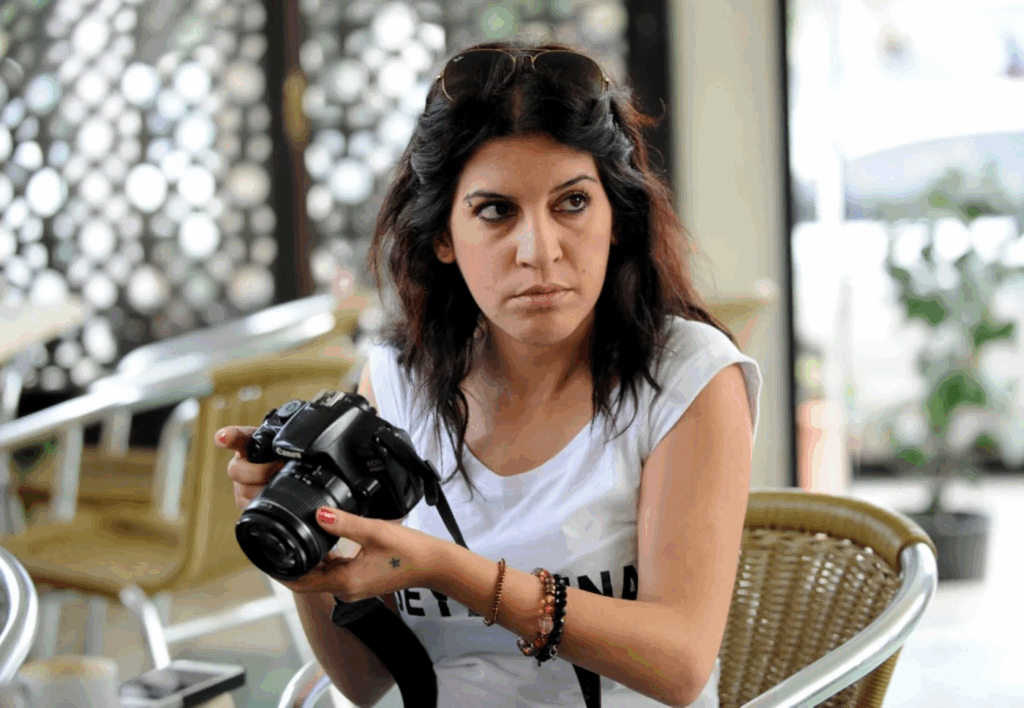
Tributes are pouring in after prominent Tunisian human rights activist and blogger Lina Ben Mhenni, one of the heroes of the 2011 revolution, died in the early hours of Monday from a chronic illness.
The 36-year-old was an English teacher at the University of Tunis. Her father and fellow activist, Sadok Ben Mhenni, was a political prisoner under Habib Bourguiba and one of the founders of the Tunisian branch of rights group Amnesty International.
Her final blog post was published on Sunday morning, in which she took aim at a spat-turned-fracas between MPs in parliament, asking Tunisians to remember their political past and learn from it.
A cyber-dissident, Ben Mhenni became well known for her “A Tunisian Girl” blog and using her real name at great personal risk, documenting human rights abuses under Zine El Abidine Ben Ali. In response, Ben Ali’s government banned her blog in 2007.
But in the 2011 uprising that toppled the longtime autocrat, Ben Mhenni began blogging once again, becoming a vital source of information through her documentation in English, French and Arabic of the violent crackdown on protesters by police, particularly in Sidi Bouzid, Regueb and Kasserine.
Her blog soon gained international recognition. In 2011, she was nominated for a Nobel Peace Prize and received the Best Blog Award at the Deutsche Welle Global Media Forum in Germany’s Bonn.
“I had to ensure that the voices of these people and their families be heard so that they hadn’t died in vain,” she said speaking at the time.
In 2013, following the assassinations of leftist politicians Chokri Belaid and Mohamed Brahmi, she was informed by authorities of being “number 1 on a kill list” drawn up by hardline groups.
Despite her ailing health and being in need of a kidney transplant, in recent years Ben Mhenni participated in many panels and cultural events, most recently at the Arab Women Literature Festival, and she campaigned for Tunisia’s youth and a reading initiative in Tunisian prisons.
Tunisia’s culture ministry expressed “great sorrow” at Ben Mhenni’s death.
Unveiled during a ceremony in Damascus on Thursday
New emblem reimagines iconic Syrian golden eagle with symbolic elements representing country’s history, geography and post-conflict aspirations
The Syrian Arab Republic has launched a new national visual identity featuring a redesigned golden eagle emblem, in what officials described as a break from the legacy of authoritarianism and a step toward a state defined by service, unity and popular legitimacy.
Unveiled during a ceremony in Damascus on Thursday, the new emblem reimagines the iconic Syrian golden eagle with symbolic elements representing the country’s history, geography and post-conflict aspirations, the Syrian Arab News Agency reported.
The redesign forms the centerpiece of a wider national branding effort aimed at redefining Syria’s image at home and abroad.
The eagle has long held significance in Syrian history, appearing in early Islamic military symbolism, notably in the 7th-century Battle of Thaniyat Al-Uqab, and later as part of the 1945 emblem of Syria.
The new design retains this historic continuity but shifts its meaning, and the combative shield clutched by previous iterations of the eagle has been removed.
Instead, the emblem now features the eagle topped by three stars representing the people symbolically placed above the state.
The redesigned wings are outstretched, balanced rather than aggressive, with seven feathers each to represent Syria’s 14 governorates.
The tail carries five feathers symbolizing the country’s major geographical regions: north, south, east, west, and central Syria — a nod to national unity and inclusivity, SANA reported.
Officials described the design as a “visual political covenant,” aimed at linking the unity of land with the unity of national decision-making.
“The people, whose ambitions embrace the stars of the sky, are now guarded by a state that protects and enables them,” said a statement accompanying the launch. “In return, their survival and participation ensure the renaissance of the state.”
The emblem is designed to signal historical continuity with the original post-independence design of 1945, while also representing the vision of a modern Syrian state born from the will of its people, SANA said.
Officials said the elevation of the stars above the eagle was intended to reflect the empowerment and liberation of the people, and the transition from a combative state to a more civic-minded one.
The symbolism also reinforces Syria’s territorial integrity, with all regions and governorates represented equally. The design, they said, reflects a new national pact, one that defines the relationship between the state and its citizens based on mutual responsibility and shared aspirations.
The new emblem is also intended as a symbolic end to Syria’s past as a security-driven state, replacing a legacy of repression with one of reconstruction and citizen empowerment.
President Ahmad Al-Sharaa, who has positioned his administration as one of reform and renewal, described the change as emblematic of “a government emanating from the people and serving them.”
The visual identity was developed entirely by Syrian artists and designers, including visual artist Khaled Al-Asali, in a deliberate effort to ground the new identity in local heritage and creativity.
Officials said that the process was intended not only as a rebranding exercise but as a reflection of Syria’s cultural and civilizational legacy — and its future potential.
Foreign Minister Asaad Al-Shaibani, speaking at the event, framed the launch as part of a broader transformation in Syrian governance and diplomacy.
“In every encounter, we carried a new face of Syria,” he said. “Our efforts brought Syria back to the international stage — not as a delayed hope, but as a present reality.”
He said the country was now rejecting the “deteriorated reality” inherited from decades of authoritarian rule, and described the new emblem as a symbol of Syria’s emergence as a state that “guards” and empowers its people, rather than controlling them.
Al-Shaibani concluded his remarks by calling the moment “a cultural death” for the former regime’s narrative.
“What we need today is a national spirit that reclaims the scattered pieces of our Syrian identity, that is the starting point for building the future.”
source/content: arabnews.com (headline edited)
____________
The Syrian Arab Republic has launched a new national visual identity featuring a redesigned golden eagle emblem, in what officials described as a break from the legacy of authoritarianism and a step toward a state defined by service, unity and popular legitimacy. (SANA)
The UAE leads the global market in mobile shopping, according to the results of the Global Digital Shopping Index 2025, a joint study by PYMNTS Intelligence and commissioned by Visa Acceptance Solutions.
The study, which surveyed 1,679 consumers and 329 merchants in the country, showed that 67% of UAE consumers used their smartphones for their most recent purchase, a 23% increase compared to 2022.
The UAE also recorded the highest rate of mobile shopping at 37%, ahead of Singapore, the UK, and Brazil.
The country also recorded an advanced global rate of biometric authentication use (32%) when making online purchases, surpassing the global average of 17%. Fifty-three percent of consumers expressed a desire to shop across multiple channels, while 75% preferred rewards programs, 73% preferred free shipping, and 70% preferred price matching.
The report also indicated that 38% of shoppers in the UAE made their recent purchases using a mobile phone or computer, with the option of home delivery.
The results confirmed that consumers in the UAE are increasingly adopting a “mobile first” lifestyle, particularly among millennials, with a usage rate of 73%.
Commenting on the study results, Salima Joteva, Vice President and General Manager, Visa UAE, said, “The UAE’s approach reflects the great potential that can be achieved by uniting efforts to build the future of commerce. At Visa, we are working in partnership with the government and private sectors to offer innovative solutions such as Click to Pay to provide secure and seamless digital payment experiences.
These indicators reflect the country’s advanced regulatory environment and its continued support for the digital business ecosystem, enabling retailers to enhance customer experiences and achieve sales growth by offering flexible and secure payment options.
The Global Digital Shopping Index is based on a survey of 18,468 consumers and 3,464 merchants across eight countries, including the UAE, Saudi Arabia, the United States, the United Kingdom, Singapore, Australia, Mexico, and Brazil, during the period from October to December 2024.
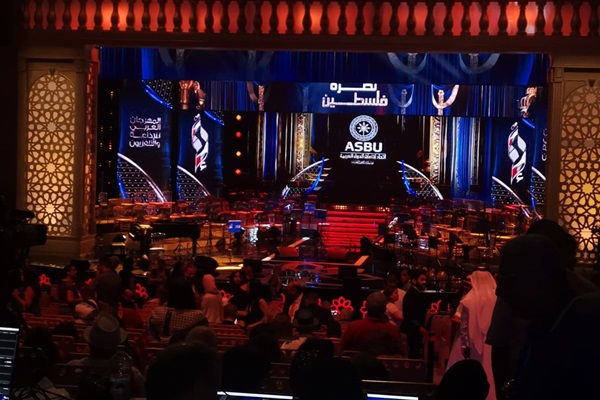
The opening ceremony concluded with a musical performance by Lebanese artist Ragheb Alama, with proceeds dedicated to supporting the people of Palestine.
Abdelrahim Suleiman, Director General of the Arab States Broadcasting Union (ASBU) and Mohammed bin Fahd Al-Harthi, President of ASBU and CEO of Saudi Broadcasting Authority (SBA), presented the awards to the winners of the 24th Arab Radio and Television Festival that was held in Tunis from June 26 to 29.
Part of the Text is Missing, a Kuwaiti TV show won the award for Best Arab TV Programme at the festival.
Saudi Broadcasting Authority (SBA) secured four radio and TV awards, including the second prize in the health programmes category for “Mental Health: Violence in Schools.” In the TV category, Saudi Arabia won three awards, including the second prize in the news category for talk shows, honouring the Saudi street programme on its episode about Vision 2030. Heritage in the Maqam of Hijaz took first prize in the general documentary films and programmes category, while the Saudi social drama series Al-Arbaji 2 secured second place in the social series category.
Additionally, the SBA received the second prize in the 2024 news exchange competition and also, the second prize in the 2024 programme exchange competition. The festival also honoured the judging panels for its radio and television competitions and distributed the exchange awards.
Qatar Media Corporation won three awards. Qatar TV took first prize for the documentary film Museums in Qatar, showcasing the distinctive museums of the country, and secured the second prize for Programme Exchanges of 2023 within the festival’s Arab Radio and Television competition in Tunisia. Qatar Radio won second prize in the “Notable Arab Figures” category.
The Ministry of Information, represented by the Sultanate of Oman Radio and the Sultanate of Oman Television, along with the private media institution Al Wisal, bagged 10 awards. Sultanate of Oman TV won four awards, including the Arab Joint Television Production Award for the documentary Holding Breaths, produced by the Ministry of Information and directed by Issa al Subhi.
Meanwhile, the Palestine Public Broadcasting Corporation (PBC) secured six awards. The radio programme Psychological Counseling in Times of War claimed first prize, while Radio Flash on school violence also earned top honours. Additionally, PBC received first prizes for radio news exchanges and a television report dedicated to the late journalist Mohammad Abu Hattab, a correspondent for Palestine TV killed by Israeli troops in Gaza. Furthermore, PBC was awarded second prize for the cultural programme Sadanat al-Riwaya and another award for the film Noura, produced by Palestine TV.
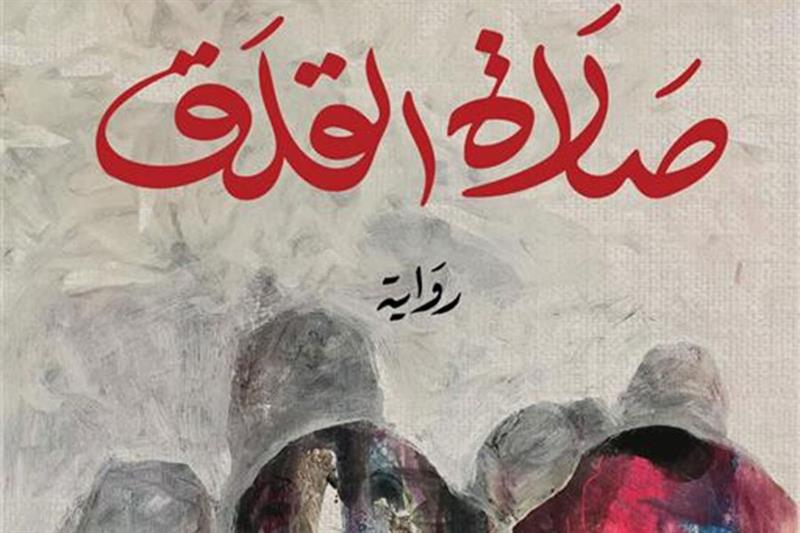
On 25 April, Egyptian author Mohamed Samir Nada was awarded the 2025 International Prize for Arabic Fiction (IPAF) for his novel The Prayer of Anxiety, a darkly allegorical tale set in a secluded village in Upper Egypt.
This marks the third time an Egyptian writer has won the prestigious literary award, following Youssef Zidan’s Azazel in 2009 and Bahaa Taher’s Sunset Oasis in 2008.
Nada’s novel, published by the Tunisian press Masciliana, was chosen from a six-title shortlist.
In a televised interview earlier this year, Nada revealed that he had turned to Masciliana after three Egyptian publishers declined to print the manuscript.
Set in the fictional hamlet of Nag’ Al-Manassi — literally “the village of forgetfulness” — the novel unfolds in a reality suspended in misinformation and fear.
Its inhabitants believe a minefield surrounds them and are still at war with Israel decades after the 1967 conflict.
Their only contact with the outside world is Khalil Al-Khoja, a local authority figure who produces the village newspaper, controls access to goods and maintains the illusion of unending war.
When a mysterious object falls from the sky, triggering an illness among villagers, the local sheikh responds by creating a new ritual prayer—The Prayer of Anxiety.
The plot evolves against the backdrop of national icons, culminating in the 1977 death of Abdel-Halim Hafez, a singer synonymous with the era of Gamal Abdel-Nasser.
Told through eight character “sessions,” each beginning with a nightmare and dreamlike awakening, the novel functions as both a dystopian fable and a meditation on collective delusion.
Nada’s characters offer confessional narratives haunted by guilt and helplessness. The result is a richly layered text that explores how fear and propaganda can distort memory and shape reality.
Mona Baker, chair of this year’s IPAF judging panel, praised the novel for “transforming anxiety into an aesthetic and intellectual experience that resonates with the reader and awakens them to pressing existential questions.”
Yasser Suleiman, Chair of the IPAF Board of Trustees, highlighted the novel’s “gripping poetic language” and its “clever use of symbolism,” calling it a powerful reflection on life under tyranny and the mechanisms that uphold it.
Yet the novel’s success has not gone without controversy.
Some critics have criticized its handling of Egypt’s modern history, especially its allusions to Abdel-Nasser’s legacy.
Literary critic Reda Attiya publicly dismissed The Prayer of Anxiety as “poorly structured” and accused the prize committee of rewarding a novel that “takes aim at Nasser,” calling it a “conspiracy against Egypt.”
Others pushed back. Novelist Mohamed Mawafai likened such attacks to the 1994 stabbing of Nobel laureate Naguib Mahfouz by a young man who admitted to never reading his work.
“Both are acts of incitement,” Mawafai said. “There is no difference between one and the other.”
Nada’s novel joins a growing wave of dystopian fiction in the Arab world.
In a recent study of the genre, Syrian novelist and critic Shahla Al-Ogaily argued that dystopian literature has gained traction in post-2011 Arab societies to confront painful political and social realities.
“This genre represents the inability to forgive,” she wrote, “and a confrontation with the hallucinations and phobic fears that emerged after the revolutions failed to deliver on their promises.”
Al-Ogaily traced the rise of Arabic dystopian writing to the translation of authors like Franz Kafka and George Orwell, whose works explored the horrors of surveillance, repression, and modernity.
The influence is evident in Nada’s novel — from Kafka’s The Metamorphosis, echoed when a village sheikh wakes up to find his head missing, to Orwell’s 1984, in the depiction of total narrative control and a fearful, manipulated public.
At its heart, The Prayer of Anxiety critiques political, religious, and media-driven systems that manufacture obedience and stifle thought.
Through poetic language and surreal events, Nada lays bare the quiet complicity that enables authoritarianism.
One of the novel’s characters voices the core dilemma:
“How many shooting stars must fall before we gain a new memory? How many men must die in war for old women to tell a different story?”
Despite occasional tonal inconsistencies—particularly between the elevated language and the characters’ rural backgrounds—the novel’s literary ambition, conceptual depth, and striking imagery have resonated widely.
The IPAF, launched in 2007 with support from the Emirates Foundation, awards $50,000 to the winner and $10,000 to each shortlisted author. This year’s judges included Said Bengrad, Maryam Al Hashimi, Bilal Orfali, Sampsa Peltonen, and chair Mona Baker.
With The Prayer of Anxiety, Nada has delivered a novel that provokes, unsettles, and — crucially — invites deeper engagement with the structures of power that shape the Arab world’s past and present.
Ilies is making a name for himself in the football landscape, especially with the Atlas Cubs.
Morocco’s rising star Ilies Belmokhtar has been named the best U17 youth player competing in France at the inaugural Golden Kid Awards.
Le Monde Du Foot reported that Belmokhtar is taking home a well-deserved recognition, rewarding his exceptional 2024-2025 season.
“For this inaugural edition, Ilies Belmokhtar truly shone. Gifted with genuine tactical maturity, he was one of the key architects of AS Monaco’s success in youth competitions this season,” the same source said.
Commenting on his new achievement, Belmokhtar commented that the award is a “great pride.”
“Especially to my parents, I hope they are proud of me,” he said .
The same sports-focused website recalled the triumphs the Atlas Cub has achieved with Morocco , including his U17 Africa Cup of Nations win in April.
The Golden Kid awards seek to recognize the best young developing players in France. The initiative is the fruit of L’Equipe journalist Loic Tanzi and streamer Isoline Almeida.
In May, Ilies Belmokhtar signed his first professional contract with AS Monaco.
Belmokhtar was born in Ivry-sur-Seine in 2008, and joined the AS Monaco Academy in 2023.
In April, the Atlas Cub was among the five players from the national U-17 team selected for the Best XI of the Under-17 AFCON in its 15th edition.
In addition to Belmokhtar, the players chosen for the Best XI include: goalkeeper Chouaib Bellaarouch, right-back Moncef Zekri, central defender Driss Aït Chiekh, and attacking midfielder Abdellah Ouazzane.
Morocco’s AFCON triumph came after a dramatic 0-0 draw against Mali in the final, followed by a 4-2 win in the penalty shootout, securing their spot in football history.
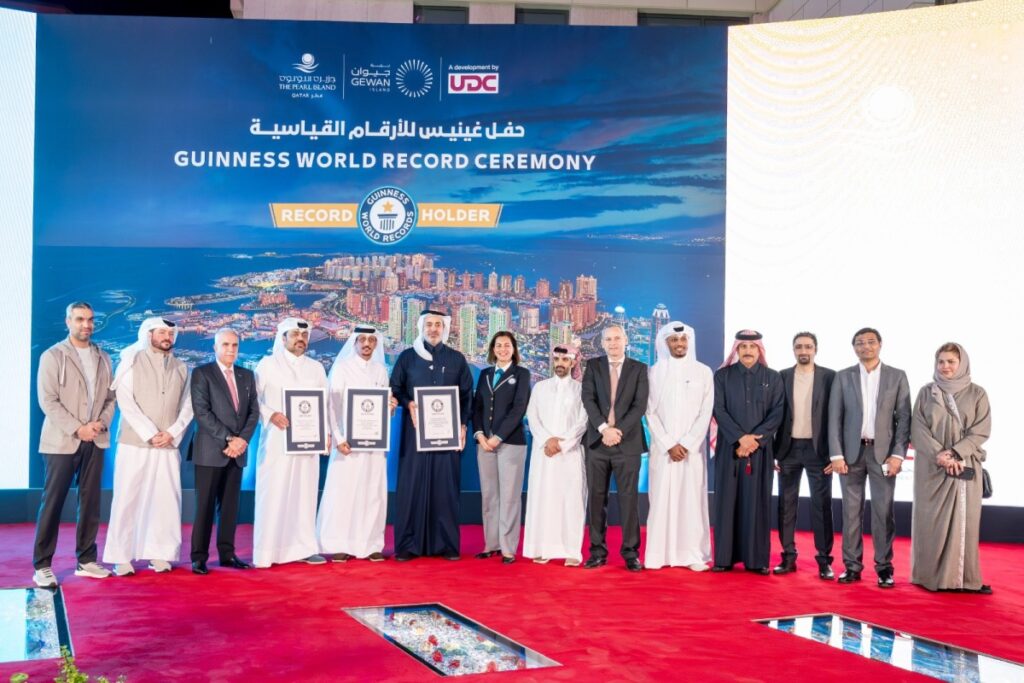
United Development Company (UDC), the master developer of The Pearl and Gewan Islands, has continued its global track record of accomplishments by securing three new Guinness World Records. This remarkable achievement further strengthens UDC’s position as one of the leading real estate developers in the region.
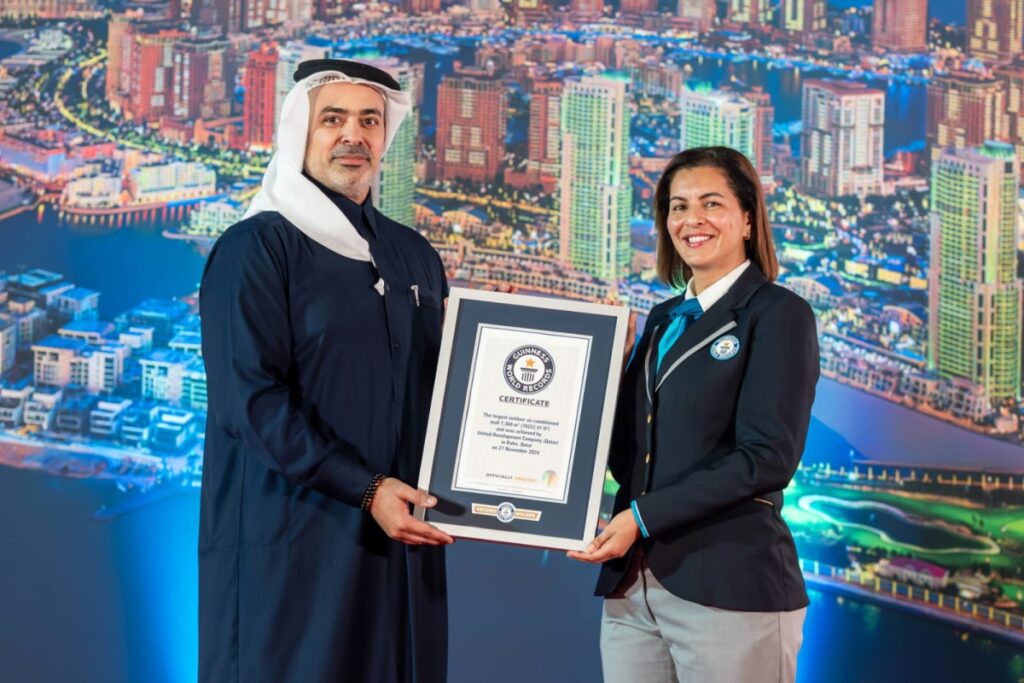
During an official ceremony, Yasser Salah Al-Jaidah, CEO of United Development Company, received the Guinness World Record certificates in recognition of these milestones, which include the largest outdoor air-conditioned shopping mall, Largest outdoor interactive lighting canopy, located on Gewan Island, and Largest pneumatic waste management network on the Pearl Island.
Largest outdoor air-conditioned mall
The Crystal Walk not only establishes itself as the largest outdoor air-conditioned mall with 7,360 square meters (79222.41 sq ft) but also impresses visitors with its exceptional design and amenities. A standout feature is the breathtaking crystal display, featuring over 10 tons of crystals and a 1000- meter crystal path, the longest in the world, creating a visually stunning environment that enhances the shopping experience.
Thanks to its state-of-the-art cooling technology, The Crystal Walk maintains a comfortable environment by achieving temperatures as low as 21- 23 degrees Celsius during the summer season. This ensures shoppers enjoy a pleasant and refreshing experience, regardless of the outdoor weather. Maintaining a consistently pleasant atmosphere, even during Qatar’s hot summers, is achieved through a cutting-edge district cooling system. This system offers significant advantages over traditional individual air conditioning units, Lower energy consumption directly translates to a smaller carbon footprint. The reduced reliance on individual air conditioning units minimizes greenhouse gas emissions, promoting a more environmentally friendly approach to retail development and Centralized cooling systems offer greater reliability than individual units. A centralized system is easier to monitor, maintain, and repair, leading to fewer disruptions and improved overall efficiency.
The 10 Crystal buildings were positioned in an oriented maximizing shading, providing a flow stream of airflow improving cooling while deploying a high-tech energy-efficient cooling system that conserves energy by at least 20% compared with conventional systems and this system mobilized a chilled water district cooling system that future reduce carbon emissions and footprint by at lowest 20 – 50% of the crystal walk.
With over 100 unique retail experiences that cater to a luxurious lifestyle, The Crystal Walk offers a diverse range of brands along with exquisite dining options. This combination of luxury and innovation transforms the mall into a comprehensive lifestyle destination, attracting a distinguished clientele.
Recently, The Crystal Walk has registered for the Global Sustainability Assessment System (GSAS) under the Green Ozone Rating for Design (GORD) certification. This commitment to sustainable design and construction is evident in features such as optimized building designs for energy efficiency and the incorporation of native landscaping and tropical landscaping with more than 13,000 tropical plants. This recognition highlights the mall’s dedication to environmental responsibility and efficiency.
The combination of luxurious offerings, innovative cooling solutions, and commitment to sustainability makes The Crystal Walk a pioneering destination for shoppers and a model for future developments in retail architecture.
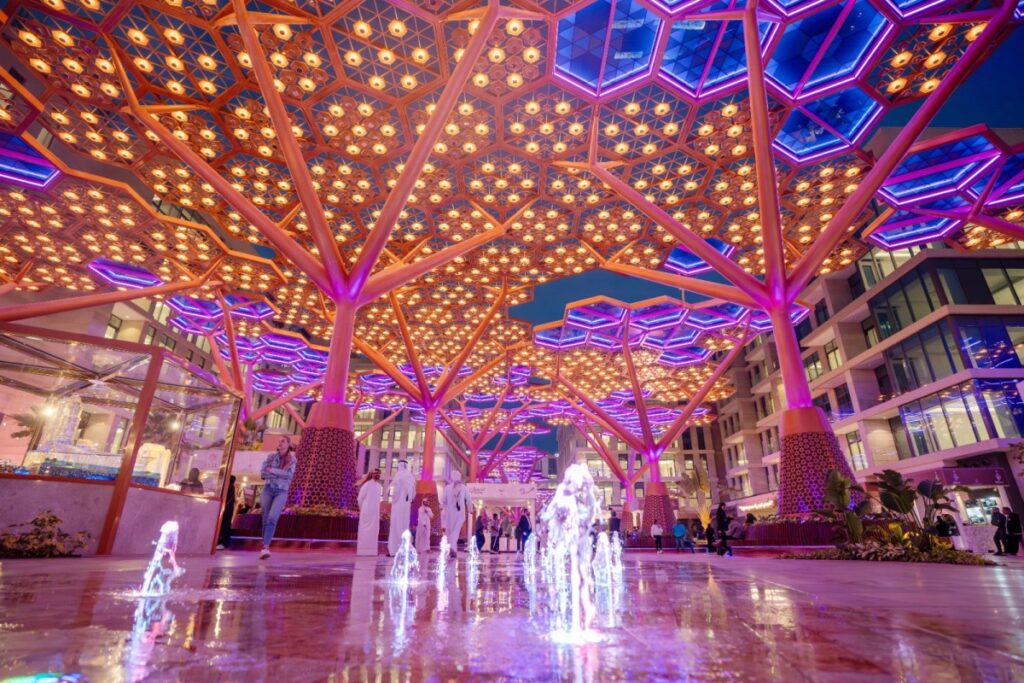
Largest outdoor interactive lighting canopy
Beyond the cooling system, the Crystal Walk also boasts the world’s largest outdoor interactive lighting canopy, covering an impressive 3,689.55 square meters (39,713.98 square feet).
This architectural marvel seamlessly blends art and technology, providing functional shade during the day and transforming into a mesmerizing light display at night, enhancing the already captivating ambience at night. This record-breaking canopy utilizes state-of-the-art LED lighting technology, offering significant advantages over traditional lighting solutions:
l Energy Efficiency: The LEDs boast an energy savings of 20% – 50% compared to conventional lighting, contributing substantially to the overall sustainability goals of Gewan Island. This reduction in energy consumption translates to lower operating costs and a significantly reduced carbon footprint.
l Longevity: LEDs have a much longer lifespan than traditional lighting, minimizing maintenance requirements and reducing waste.
l Versatility and Control: The advanced LED system allows for dynamic and customizable lighting displays, offering unparalleled versatility in creating captivating visual effects.
The lighting canopy is more than just illumination; it’s an interactive spectacle. Over 1000 individual lighting points are meticulously coordinated, creating a mesmerizing array of colors, patterns, and effects. This sophisticated system integrates seamlessly with a state-of-the-art music system, synchronizing the light displays with music to create a truly immersive and unforgettable experience for visitors. The lighting choreography can be programmed to adapt to different events, moods, and times of day and interact with live music, ensuring a constantly evolving and engaging visual feast.
During the day, the canopy provides much-needed shade, enhancing the comfort of shoppers exploring the Crystal Walk’s unique retail experiences. This thoughtful design maximizes natural light while minimizing direct sunlight exposure. The combination of advanced cooling systems and intelligent shading strategies allows for a pleasant and comfortable outdoor shopping environment regardless of the climate.
This impressive interactive lighting canopy, alongside the other innovative features of the Crystal Walk, showcases UDC’s commitment to creating exceptional spaces where luxury, technology, and sustainability converge. It’s not just a retail destination, but a destination for experiencing technological innovation within a luxurious and environmentally responsible environment.
Largest pneumatic waste management network
Furthermore, the company achieved another global milestone with the largest pneumatic waste management network on The Pearl Island, utilizing an advanced Pneumatic system for efficient and sustainable waste collection. These innovative solutions reflect UDC’s commitment to smart environmental practices and sustainability, this system achieves fully operational 66 kilometers (41.01 miles) and more than 500 chute inlets.
The advanced pneumatic waste management system also brings a number of environmental and community benefits. It reduces vehicular movement, leading to a decrease in direct and indirect greenhouse gas emissions in the area. By minimizing traffic congestion around The Pearl Island, the system helps maintain better road service levels. The system is the first of its kind in the country since the island’s inception, with an expanded network and a recent extension to Gewan Island. Moreover, the system promotes a convenient, clean, and sustainable lifestyle, encouraging residents to maintain a clean community.
On Gewan Island, the new waste management system takes advantage of the opportunity to segregate waste at disposal sites through a dual chute system. This initiative engages the community in waste segregation and aims to increase participation in recycling efforts. Currently, the recycling rate stands at 36%, highlighting the company’s commitment to sustainable practices and its ongoing efforts to improve environmental impact.
Commenting on this achievement, Al-Jaidah said, “This accomplishment reflects our ambitious vision and commitment to developing world-class projects that incorporate advanced technologies and sustainability principles. We are incredibly proud to achieve these Guinness World Records and will continue to deliver exceptional developments that enhance the quality of life for residents and visitors to The Pearl and Gewan Islands. We look forward to reaching new milestones that strengthen our leadership in the real estate sector.”
This recognition adds to United Development Company’s impressive track record of global achievements, having received numerous prestigious awards and certificates across various fields. Notable among these are the Crystal Residence GSAS 3 stars design and build certification, Green Organization Awards, Best CSR Awards, Golden Globe Tiger Awards, and Abu Dhabi Maritime Awards. These awards highlight the company’s continuous commitment to innovation and sustainability, reinforcing its position as a leader in the real estate development sector.
UDC continues its pursuit of further global achievements by developing integrated real estate projects that adhere to the highest standards of quality and innovation. These projects further cement The Pearl and Gewan Islands as premier destinations in the region, attracting visitors and investors seeking exceptional residential and commercial environments.
The UAE maintained its position as the top destination for deals in the Middle East and North Africa (MENA) region during the first quarter of 2025, with a total of 63 deals worth $20.3 billion.
The UAE remains the preferred destination for foreign direct investment (FDI) in the region by 2025, accounting for 53% of the total number of incoming deals and 99% of their total value. Austria was the leading investor, accounting for 94% of the total value of incoming deals, driven primarily by a major deal in the chemicals sector.
This was stated in a report issued by Ernst & Young (EY) on “Mergers and Acquisitions in the Middle East and North Africa”, which indicated that the region recorded an increase in deal activity during the first quarter of 2025, with 225 deals compared to 172 deals in the same period last year, representing a 31% increase in the number of deals year-on-year. The total value of announced deals in the first quarter of this year also increased by 66% to reach US$46 billion, compared to US$27.6 billion in the first quarter of 2024.
role in deal volume and value, with 117 deals recorded, representing 52% of the total number of deals, valued at USD 37.3 billion, or 81% of the total value of announced deals. The first quarter of 2025 saw the highest cross-border deal activity, both in terms of volume and value, compared to the same period in the past five years, as companies increasingly sought to grow and diversify outside their home markets.
“We saw a steady flow of M&A deals in 2025, and the MENA region will continue to experience strong deal flow for the remainder of 2025,” said Brad Watson, MENA Leader, EY-Parthenon. “This strong deal flow is driven by regulatory reforms, policy shifts, and a positive macroeconomic outlook, including easing interest rates and improved investor confidence.”
contributed 48% of the total number of deals in the first quarter of 2025. This growth in local M&A deals is in line with the International Monetary Fund’s forecast of 3.6% GDP growth for the Middle East and North Africa region this year, supported by the strong momentum of M&A activity around the world. Companies are re-aligning their strategies to better meet the needs of diversification, digital transformation, and the integration of emerging technologies.
He stressed that the UAE maintained its position as the top destination in the Middle East and North Africa region in the first quarter of 2025, recording 63 deals worth a total of USD 20.3 billion. Kuwait ranked second in terms of deal revenue, with USD 2.3 billion, driven by two major deals in the diversified industrial products and energy and utilities sectors.
During the first three months of 2025, Canada attracted the highest value of outbound deals from Middle Eastern and North African investors, at US$6.4 billion, while the United States remained the preferred target destination in terms of the number of deals.
number of deals in the first quarter of 2025, while the value of deals increased significantly to USD 8.7 billion, compared to USD 1.69 billion in the first quarter of 2024.
The technology sector led local mergers and acquisitions (M&A) activity in the Middle East and North Africa (MENA) region during the first quarter of 2025, contributing 37% of the total value of local deals and 27% of the total number of deals.
Inter-regional deals involving the UAE, Kuwait, and Saudi Arabia accounted for 83% of the total value of local deals and 56% of the total number, highlighting the strong activity of cross-regional mergers and acquisitions, particularly in the technology, industrial, and real estate sectors.
foreign direct investment (FDI) during the first few months of 2025, with the number of inbound deals increasing by 21% and their value rising to USD 17.6 billion, compared to USD 2.5 billion in the first quarter of 2024.
The report indicated a 63% increase in the number of deals issued during the first three months of 2025 compared to the first quarter of 2024, reaching USD 19.7 billion, contributing 43% of the total deal value. The UAE and Saudi Arabia topped the list of deals issued from the Middle East and North Africa region, accounting for 77% of the total number of deals and 94% of their total value.
Anil Menon, MENA M&A and Capital Markets Leader, EY-Parthenon, said: “The MENA deal market has remained resilient, and the MENA deal pipeline for the rest of 2025 is promising and strong, with increased activity expected in the consumer, technology, and energy sectors. Artificial intelligence will drive fundamental value shifts, as we see significant capital allocation in technology.”