Arabs & Arabian Records Aggregator. Chronicler. Milestones of the 25 Countries of the Arabic Speaking World (official / co-official). AGCC. MENA. Global. Ist's to Top 10's. Records. Read & Enjoy./ www.arabianrecords.org
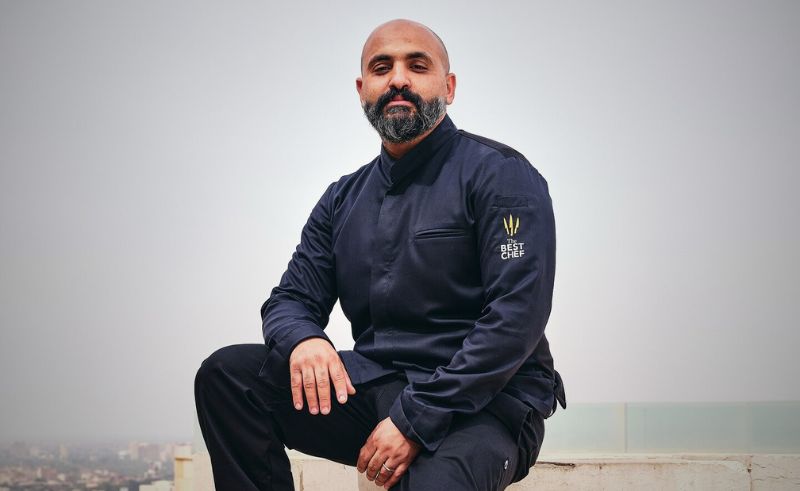
Chef Mostafa Seif of Khufu’s has been awarded the Skillet of Distinction by The Best Chef Awards, becoming the first Egyptian chef to receive the accolade. The award follows Seif’s recognition last year as the first Egyptian to earn a one-knife “Excellent” rating under the awards’ updated tiered system.
The Best Chef Awards, which moved away from its traditional top-100 ranking in 2023, now recognises chefs through one, two, or three “knives,” denoting levels of excellence. Seif’s one-knife placement in Dubai was the first for an Egyptian chef and signalled growing international attention to his work.
At Khufu’s – founded by Pier 88 Hospitality’s Giovanni Bolandrini – Seif leads a kitchen grounded in technical discipline and regionally sourced ingredients. His cooking is rooted in Egyptian culinary traditions but avoids nostalgia or showmanship, favouring clarified broths, cured seafood, and slow-roasted meats that reflect a restrained, detail-oriented approach.
In January, Seif participated in The World’s 50 Best Signature Sessions in Abu Dhabi, where he co-hosted a dinner with Argentinian chef Sergio Cabrera at MouzMari. He also joined 50 Best Talks for a panel titled Memory on a Plate, exploring the role of food in cultural and personal memory.
The Skillet of Distinction acknowledges Seif’s consistency in the kitchen and his contribution to platforming Egyptian cuisine in international settings – through technique rather than adaptation.
The pact interweaves water security, renewable energy mastery, and industrial sovereignty – binding Morocco’s future with a 1,400 km electricity superhighway, four desalination jewels, and 25,000 employment opportunities in a $14 billion choreography.
The largest private investment in Morocco’s modern history has just been inscribed in the country’s economic annals. Yesterday, the country sealed an extraordinary $14 billion accord with the United Arab Emirates – an injection of unprecedented scale that promises to permanently alter the country’s water and energy equation, while fundamentally reshaping its infrastructure landscape for generations to come.
The ceremonial ink still fresh, the agreement binds Morocco’s government and the National Office of Electricity and Drinking Water (ONEE) with a consortium of financial titans: the Mohammed VI Investment Fund, TAQA Morocco (the local subsidiary of Abu Dhabi’s energy colossus), and Nareva (the energy arm of the royal holding Al Mada).
At MAD 130 billion ($14 billion), this collaboration transcends mere commercial arrangement – it heralds a profound reengineering of critical national infrastructure by 2030.
Central to this ambitious blueprint stands a colossal 1,400-kilometer high-voltage transmission corridor stretching from Western Sahara to Casablanca, complemented by a network of sophisticated seawater desalination facilities.
These projects emerge as the culmination of meticulous diplomatic chess moves, coming just five months after King Mohammed VI’s private visit to Abu Dhabi and 18 months following his official state visit to the Emirati capital, where the groundwork for this Moroccan-Emirati renaissance was carefully laid.
Desert kingdoms understand water’s value. The consortium’s hydric strategy unfolds with architectural precision: a vast network connecting the Sebou and Oum Rabia river basins, engineered to channel 800 million cubic meters annually across thirsty territories.
The first phase of water transfer between the Sebou and Bouregreg basins became operational in August 2023, successfully diverting approximately 350 million cubic meters to the Sidi Mohammed Ben Abdellah dam, critical for supplying drinking water to the Rabat region.
Four jewels in this water crown will rise across Morocco’s map. In Tanger, a 50-million-cubic-meter annual capacity station will quench the industrial thirst of this burgeoning port hub.
Nador’s installation, six times more ambitious at 300 million cubic meters, will transform the eastern region’s hydric calculus. The agricultural heartland of Souss will benefit from Tiznit’s 350-million-cubic-meter facility – the largest of the quartet. Completing this hydraulic network, either Tan-Tan or Guelmim will host a 100-million-cubic-meter operation to serve the arid southern frontier.
These cutting-edge desalination facilities, engineered to operate exclusively on renewable energy, will collectively produce 900 million cubic meters annually.
Notably, they will maintain competitive pricing at or below MAD 4.50 per cubic meter (excluding tax), aligning with national benchmark rates established for ongoing desalination initiatives – all without requiring public subsidies.
The electric heartbeat: Energy sovereignty reimagined
The consortium’s energy infrastructure vision is anchored by a groundbreaking high-voltage direct current (HVDC) transmission network spanning 1,400 kilometers between Morocco’s southern territories and its central economic hub.
This sophisticated “electricity highway” will connect Dakhla to Casablanca with a 3,000 megawatt capacity, dramatically strengthening energy distribution capabilities while catalyzing economic and industrial development throughout the corridor.
This transmission masterpiece will be fed by 1,200 megawatts of fresh renewable capacity, predominantly harvested from the sun-drenched southern provinces. The geographic strategy is to harness the natural abundance of Morocco’s desert regions, translate it into clean energy, and deliver it to industrial centers at competitive rates.
Complementing these renewable ambitions, the Tahaddart complex will undergo a renaissance. This gas-fired installation will see its capacity quadrupled through new combined-cycle units, elevating total output to 1,500 megawatts. This expansion offers crucial ballast to a grid increasingly danced upon by the variable rhythms of wind energy.
The human dividend, capital choreography, and implementation cadence
Beyond pipes and pylons lies perhaps the most valuable yield: people. This grand design promises to spawn over 25,000 employment opportunities through construction and operation, with 10,000 permanent positions taking root after commissioning.
The consortium envisions not merely infrastructure but ecosystem – a fertile soil where technology transfer blooms and local industrial expertise in desalination and renewable energy flourishes. From this terrain will grow new educational pathways and technical specializations, training the standard-bearers of Morocco’s water and energy future.
The financial architecture of this mammoth endeavor will be orchestrated by the consortium, drawing capital from domestic and international financial wellsprings. The urgency is palpable; the project’s partners have pledged to assemble elite technical minds to ensure methodical implementation through 2030.
As with all ventures of this magnitude, regulatory gauntlets must be run, particularly regarding concentration operations. Each project component will be governed by bespoke development agreements between ONEE and the consortium. The first such accord, focusing on Tahaddart’s expansion, has already materialized.
The architects of the alliance
This historic partnership harmonizes complementary strengths. Nareva, Morocco’s private electricity champion, brings 3,200 megawatts of installed capacity producing over 15 terawatt-hours annually. As Africa’s wind energy pioneer, it operates eleven parks totaling 1,810 megawatts alongside the thermal goliath of Safi (1,386 megawatts).
With extensive expertise in electrical transmission infrastructure (exceeding 300 kilometers of high-voltage lines) and advanced water engineering, Nareva currently leads the innovative Amensouss project and is constructing the world’s first exclusively renewable-powered desalination facility in Dakhla.
TAQA Morocco, publicly traded on the Casablanca Stock Exchange since 2013, delivers 34% of Morocco’s national electricity requirements despite representing only 17% of installed capacity.
With a strategic focus on desalination, renewable energy development, low-carbon solutions, and infrastructure networks, the company actively advances national energy transition objectives and water security initiatives.
Its parent organization, Abu Dhabi National Energy Company PJSC (TAQA), operates as a diversified energy and utilities powerhouse with operations spanning 25 countries worldwide.
A diplomatic masterpiece
These accords signal the diplomatic renaissance between Morocco and the Emirates after a period of relative ambiguity. They physically manifest the vision sketched during King Mohammed VI’s December 2023 meeting with Sheikh Mohamed bin Zayed Al Nahyan – a blueprint for collaboration in strategically vital domains.
This official visit established a “renewed partnership” between the Maghreb and Gulf country with announcements of strengthened collaboration in strategic domains including energy and infrastructure development.
The sovereign’s subsequent private voyage proved equally fertile, brokering peace between telecommunications titans Maroc Telecom and Inwi, ending a decade-long legal skirmish and birthing a joint venture to develop 5G infrastructure for international events including the 2025 Africa Cup of Nations and the 2030 World Cup.
For fifteen years, Morocco has methodically invested in renewable energy, which now covers 38% of its electricity needs, with aspirations to reach 52% by 2030. Simultaneously confronting chronic water scarcity, the kingdom has embraced desalination as salvation. This Emirati partnership accelerates both these vital transitions, binding two desert nations in a quest for resource security and sustainable prosperity.
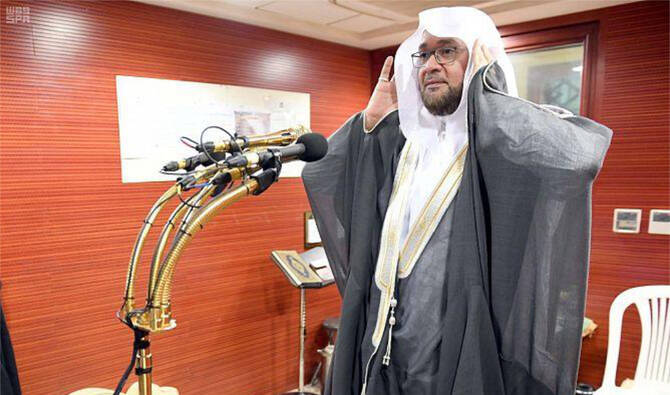
The King Abdulaziz Foundation for Research and Archives, known as Darah, has released a new book on the history of the adhan (call to prayer) and biographies of the muezzins of the Two Holy Mosques throughout the centuries.
The book was authored by Sheikh Dr. Saleh bin Abdullah bin Humaid, member of the Council of Senior Scholars and imam and preacher at the Grand Mosque.
It meticulously examines the adhan ritual in the Two Holy Mosques, covering its origins, virtues, and significance, the Saudi Press Agency reported.
The book is divided into three sections: the adhan’s history, biographies of 95 Grand Mosque muezzins, and 147 Prophet’s Mosque muezzins.
It presents biographies of muezzins who have issued the call to prayer from the time of Prophet Muhammad to the present, the SPA reported.
Drawing on credible historical sources and interviews, the author used a scientific approach to document the evolution of adhan tools and the relationship between the muezzin and the mosque.
The book also highlights the Saudi government’s support in selecting skilled muezzins and using advanced audio technology for local and global broadcasts.
This publication enriches the foundation’s collection, serving as a vital resource for researchers and those interested in the history of the Two Holy Mosques and Islamic rituals.
Egypt’s presence at Cannes Film Market wins top honour for design, programming, and industry engagement.
The Egyptian pavilion at Cannes Film Market, headed by a joint cooperation between El Gouna Film Festival, Cairo International Film Festival and the Egyptian Film Commission, has won the award for Best Pavilion Design Award during the 78th Cannes Film Festival.
Designed by cinematic set designer Shereen Farghal, and recognised over competing pavilions from 150 nations, the Egyptian pavilion was awarded for its design, curated programming, and strategic networking opportunities offered to Arab and international filmmakers.
“This award is a global recognition of the position Egyptian cinema occupies today, and of the continuous efforts we make to represent it in international contexts,” Hussein Fahmy, President of Cairo International Film Festival, said. “We made sure that the pavilion reflects the spirit of cooperation and openness to the world through a program full of dialogue, and cultural and artistic interaction, and represents a new step for Egypt’s presence in the global film industry.”
Held annually in parallel with the Cannes Film Festival, Marché du Film is a key space for co-productions, distribution deals, and film financing.
The Moroccan Poets Festival concluded its sixth edition after three days of illustrious writing and celebrating the word.
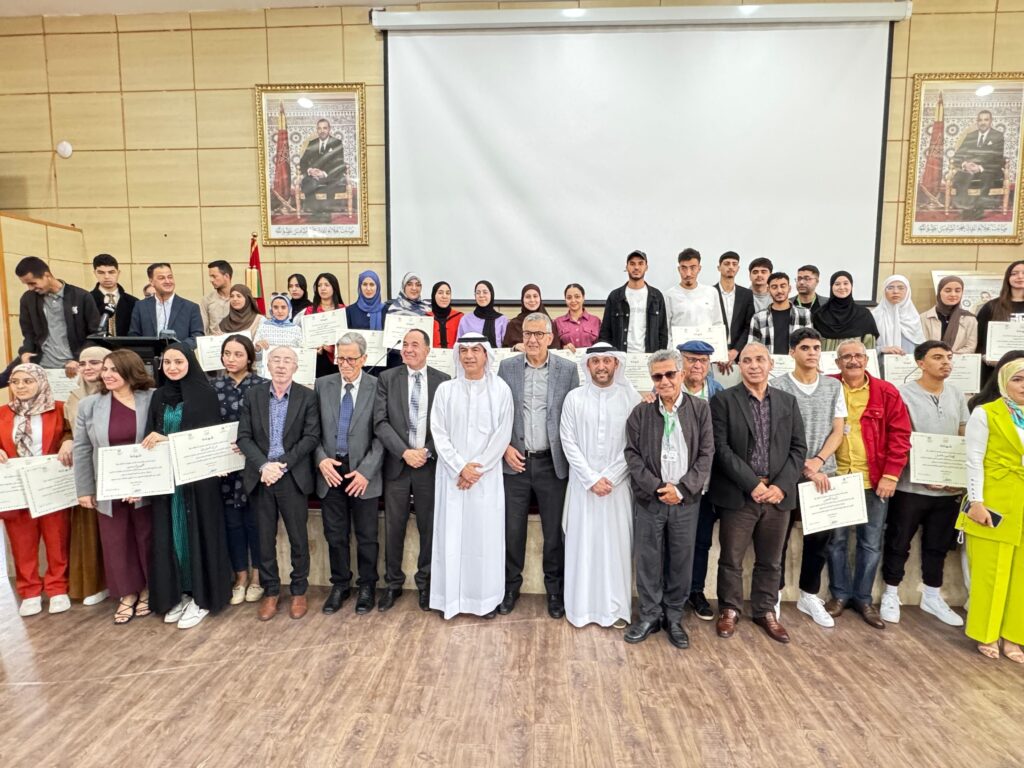
The closing ceremony was held at the National School of Crafts and Arts in Tetouan, in the presence of Abdullah bin Mohammed Al Owais, Chairman of Sharjah Department of Culture; Professor Mohammed Ibrahim Al Qaseer, Director of the Cultural Affairs Department at the Department; Rachid Al Mustafa, Head of the Cooperation Department in the Culture Sector at the Moroccan Ministry of Youth, Culture, and Communication; Dr. Youssef Al Fahri, President of the Higher School of Teachers in Martil; Mukhlis Al Sagheer, Director of the House of Poetry in Tetouan; and a large number of writers, intellectuals, and university students.
Al Sagheer pointed out that the Moroccan Poets Festival strives to innovate with each new edition, and to grow in poetry and cultural resonance in the Arab world. He highlighted that the sixth edition enjoyed a prominent official presence, alongside a public audience with a passion for poetry and art.
He explained that the House of Poetry in Tetouan, founded in 2016, affirms its tireless efforts to organise a distinguished seventh edition next year, to celebrate its tenth anniversary.
Participants in the Moroccan Poets Festival agreed that Sharjah has become a pioneering model in supporting Arab culture and actively contributing to shaping a new generation of Arab intellectuals. They emphasised that Sharjah’s cultural, intellectual, and cultural achievements over the past decades were not a coincidence, but rather the result of the broad cultural vision of His Highness Sheikh Dr. Sultan bin Mohammed Al Qasimi, Supreme Council Member and Ruler of Sharjah. His Highness believes that culture is the cornerstone of human and societal development.
Participants believe that Sharjah’s experience represents a model to be emulated, as it has not only supported cultural production but has also strived to create an integrated knowledge environment that attracts new generations and instils in them a love of reading, thinking, and criticism. They explained that many young Arabs who have benefited from Sharjah’s cultural experiences have now become prominent voices in the fields of literature, thought, and the arts.
The second day of the festival featured a critical symposium titled “Poetry and the Performing Arts”. The speakers emphasised that when poetry is recited on stage, or combined with movement or music, it transforms into a performance art. This is where what is known as “the poetics of performance” emerges, where poetry emerges from the page and is embodied through the body, voice, gaze, and silence. They noted that at this moment, literature intersects with the live arts, providing the recipient with a multi-sensory artistic experience.
Speakers emphasised the intersection of poetry and performance, where word meets movement, voice meets silence. This is when a magic called the poetics of the performing arts is born; where the poem becomes a vibrant body, and the scene becomes a visual poem that is read by the eye and felt by the heart.
The Moroccan Poets Festival has an exceptional section, bringing the audience together with visually impaired poets at the Taha Hussein Institute in Tetouan, in a poetic and humane moment where poetry met with a number of visually impaired creatives who drew inspiration from life’s features and, from its details, wove their vast worlds.
The festival saw the participation of more than 40 poets, poetesses, intellectuals, and artists amidst a festive atmosphere of poetry and its creators. It honoured 83 students in a poetry writing workshop organised by the House of Poetry in Tetouan, in collaboration with the Faculty of Arabic Language at the Higher Teachers’ School in Martil.
Eighteen students were also honoured in the regional competition for Arabic Language Pioneers, organised by the House of Poetry in collaboration with more than 37 secondary and middle school educational institutions.
The award is in recognition of the professor’s efforts in scientific research, teaching, and online learning.
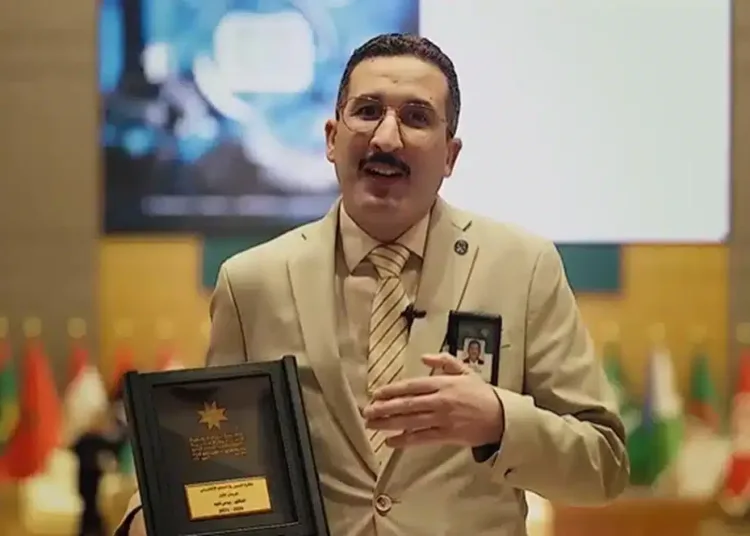
Moroccan scholar and researcher Younes Nafid received this week the Excellence Award in Online Learning from Naif Arab University for Security Sciences in Saudi Arabia.
He received the award on Thursday, recognizing his academic excellence and efforts in scientific research, teaching, and learning.
Nafid is a professor in the Department of Criminal Law at the College of Criminal Justice and Forensic Sciences in Riyadh. He also serves as an advisor for scientific research and innovation at the same university.
The Moroccan scholar authored various books and studies, and also supervised research projects and doctoral theses.
A PhD in Criminal Law and Forensic Sciences from Mohammed First University in Oujda, Nafid previously worked in Moroccan universities as a professor, including Cadi Ayyad University and Chouaib Doukkali University.
At the award ceremony, the Saudi university celebrated the Moroccan professor and his fellows, honoring the “outstanding efforts in the fields of scientific research, teaching, and online learning, in line with the university’s strategic vision to enhance the academic environment and support the Arab security system.”
In addition to Nafid, several Moroccan professors and teachers were honored on an international scale for their efforts, contributing to enhancing research, teaching, and learning.
In January, Messaoud Ariba, a Moroccan teacher, received an award at the Global Teacher Awards in New Delhi.
Ariba was the sole representative of both North Africa and the Arab world at large, earning recognition from thousands of applicants during the ceremony.
“For me, this is not just about personal achievement but about honoring the incredible work of all those shaping education in the country,” Ariba said.
In February, Moroccan professor Anasse Bari received the Dr. Martin Luther King Jr.Faculty Award for 2025 at New York University. The award recognizes leadership work and commitment to justice and fairness.
In a statement to Morocco World News, Bari said he dedicates the award to his fellow Moroccans.
“Every day in my classroom, I encourage my students to use the skills they have learned at New York University to serve the world,” Bari said, noting that his students are finding “new ways” to use AI and data science to improve the world.
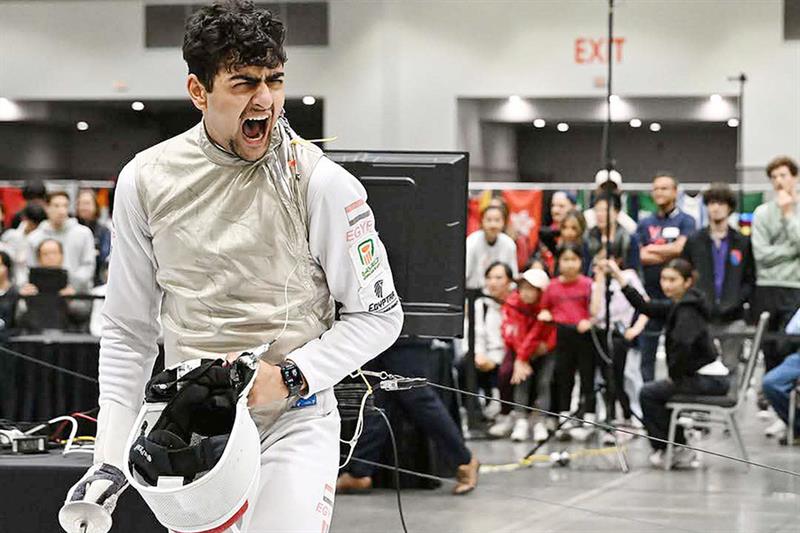
Egyptian foil fencer Abdel-Rahman Tolba continued his impressive international trajectory by capturing the bronze medal at the Foil World Cup in Canada, held from 1-4 May.
Tolba’s journey to the podium was a standout performance, marked by a series of remarkable victories over several top-ranked opponents.
Tolba, from Al-Zohour Club, claimed the bronze after a narrow semi-final defeat to world No 9 Alexander Massialas of the US, falling by the slimmest of margins, 15-14, in a golden touch decider.
His campaign commenced in the Round of 64 with a confident 15-11 win over Brazil’s Guilherme Toledo, followed by a hard-fought 15-13 victory against Spain’s Mario Díaz in the Round of 32.
Tolba then produced one of the tournament’s most notable upsets in the Round of 16, dismantling Czech Republic’s Alexander Choupenitch, the Tokyo 2020 bronze medalist and world No 6, by a commanding 15-7 scoreline.
In the quarter-finals, he delivered another standout performance, overpowering American star Nick Itkin, the bronze medalist at the Paris 2024 Olympics and silver medalist at the 2023 World Championships in Milan, and currently ranked No 4 globally, with a decisive 15-9 victory.
Tolba’s semi-final clash with the experienced Massialas proved a thrilling contest, as both fencers exchanged points in a high-calibre bout. Ultimately, Massialas edged past Tolba in sudden death.
The latest medal adds to Tolba’s rapidly expanding list of accolades, including a bronze at the Grand Prix in Italy earlier this year, and a gold medal at the Junior World Championships in China last month.
* A version of this article appears in print in the 8 May, 2025 edition of Al-Ahram Weekly
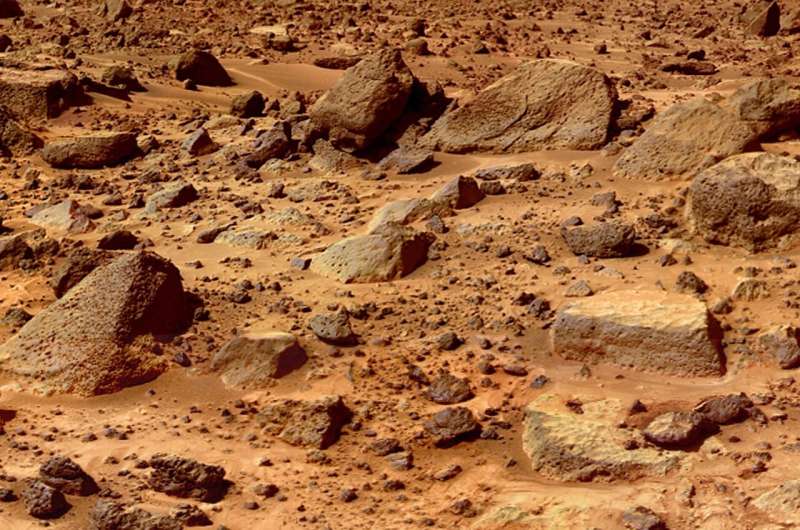
NASA’s mapping of Mars now bears the names of three iconic Algerian national parks, Algerian physicist Noureddine Melikechi, a member of the US space agency’s largest Mars probe mission, has told AFP.
The Tassili n’Ajjer, Ghoufi and Djurdjura national parks have found their Martian namesakes after a proposition by Melikechi, which he sought as both a tribute to his native Algeria and a call to protect Earth.
“Our planet is fragile, and it’s a signal to the world that we really need to take care of our national parks, whether they are in Algeria or elsewhere,” the US-based scientist told AFP in a recent interview.
He said the visual resemblance between some of the Martian landscapes and the ones after which they were labeled was also a key reason for the naming.
“The first one that came to my mind was the Tassili n’Ajjer,” he said of the UNESCO-listed vast plateau in the Sahara Desert with prehistoric art dating back at least 12,000 years.
“Every time I see pictures of Mars, they remind me of Tassili n’Ajjer, and now every time I see Tassili n’Ajjer, it reminds me of Mars,” added Melikechi, who left Algeria in 1990 for the United States, where he now teaches at the University of Massachusetts Lowell.
The ancient art found in Tassili n’Ajjer depicts figures that can seem otherworldly, he said.
Some of the paintings show single-eyed and horned giants, among others which French archaeologist Henri Lhote dubbed as “great Martian” deities in his 1958 book, “The Search for the Tassili Frescoes”.
“Those paintings are a signature… a book of how people used to live,” said Melikechi.
“You see animals, but also figures that look like they came from somewhere else.”
‘Historic’
Melikechi’s second pick was the Ghoufi canyon in eastern Algeria, whose rocky desert landscape was the site of an ancient settlement off the Aures Mountains.
Now a UNESCO-listed site and a tourist attraction, it has cliffside dwellings carved in the mountain, a testament to human resilience in a place where survival can be adverse.
“Ghoufi gives you a sense that life can be hard, but you can manage to keep at it as you go,” Melikechi said.
“You can see that through those homes.”
The third site, Djurdjura, is a snowy mountain range some 140 kilometers (about 90 miles) east of the capital Algiers.
Comapred to Tassili or Ghoufi, it bears the least resemblance to Mars.
Melikechi said its pick stemmed of Djurdjura’s “reminder of the richness of natural habitats”.
He said the naming process came after Perseverence, NASA’s Mars rover exploring the Red Planet, made it into uncharted territory.
That area was then split into small quadrants, each needing a name.
“We were asked to propose names for specific quadrants,” he said.
“I suggested these three national parks, while others proposed names from parks worldwide. A team then reviewed and selected the final names.”
The announcement, made by NASA earlier this month, sparked celebrations among Algerians.
Algerian Culture Minister Zouhir Ballalou hailed it as a “historic and global recognition” of the North African country’s landscapes.
Melikechi said he hopes that it will attract more visitors as Algeria has been striving to promote tourism, especially in the Sahara region, with authorities promising to facilitate tourist visas.
Official figures said some 2.5 million tourists visited the country last year—its highest number of visitors in two decades.
“These places are a treasure that we as humans have inherited,” Melikechi said.
The celebrated vocalist started her singing career in the 1970s, contributing to Morocco’s musical heritage.
Renowned Moroccan singer Naima Samih died early Saturday morning at the age of 71 following a prolonged period of illness.
The deceased left behind a significant legacy in Moroccan musical culture.
Born in Casablanca in 1954, Samih earned a prestigious position and popularity in Morocco and the Arab world because of her sweet voice and delicate sensibility.
While Moroccans mourn the death of the iconic singer, fellow Moroccan artists have paid tribute to the musical icon.
Latifa Raafat wrote on her Facebook, “We share in mourning the departure of the lady of Moroccan music, the dear one who will never be forgotten, Lalla Naima Samih.
The celebrated vocalist started her singing career in the 1970s, contributing to the musical heritage of the country.
Samih’s true breakthrough came through talent discovery programs broadcast on Moroccan radio and television. Her first appearance was on “Lucky Thursday” (Khamis Al-Hazz), followed by her participation in the competition program “Talents” (Mawahib).
The artist’s journey to becoming a musical icon wasn’t without obstacles. Her father was initially reluctant to allow her to enter the world of singing, as was common for most fathers during that era.
He only consented after the intervention of influential media figures. But he insisted that his daughter should only perform modern songs and be selective in choosing quality poets and composers.
The young artist quickly rose to prominence in Morocco’s music scene, establishing herself as a leading figure alongside Abdelhadi Belkhayat and Abdelouahab Doukkali.
Through her musical and poetic choices, Samih developed a unique identity that resonated with modern song audiences in Morocco.
She collaborated with composers known for their dedication to incorporating traditional Moroccan rhythms into modern templates (including Abdelkader Rachdi, Abdelkader Wahbi, and Ahmed Alaoui), as well as with prominent zajal poets who adapted local dialects to achieve sophisticated expressiveness (such as Ahmed Tayeb Alj and Ali Haddani).
Among the late artist’s most important musical works were the songs “Jari Ya Jari” (My Neighbor, Oh My Neighbor), “Yak A Jarhi” (Oh My Wound), and “Amri Lillah” (My Life is for God).
These beloved classics helped establish her as a pillar of Moroccan musical heritage and left a stamp in the souls of her era’s Moroccans.
In the early 1970s, Samih married Moroccan cycling champion Mustafa Belkayed. The couple had one son named Shams.
His team’s research benefits industries such as automotive, power grids, satellites, military, and healthcare.
Khalil Amine, a Moroccan materials scientist, has been elected to the National Academy of Engineering of the United States for his contributions to battery and energy storage technologies.
The recognition comes for his leadership in the field of materials science, specifically in the development of batteries and energy storage devices.
Amine, who also serves as a professor at the University of Chicago, is among 128 members and 22 international members inducted into the NAE class of 2025.
“I am very delighted to be selected as a member of the National Academy of Engineering,” said Amine. “This is a recognition not only for me, but also for all my co-workers and collaborators around the world, as well as Argonne, which has provided an unmatched, state-of-the-art capability to do excellent work.”
Amine leads the Advanced Battery Technology team at Argonne, where his research focuses on the development of advanced chemistries, materials, and battery systems. His team’s work spans several industries, including automotive, power grids, satellites, military, and medical applications.
A key focus of Amine’s research is the creation of new cathodes, anodes, solid-state electrolytes, and additives for lithium-ion batteries, as well as exploring “beyond-lithium” batteries that use alternative chemistries for energy storage.
Amine’s significant contributions to the field of battery technology have made him a leading figure in materials science. He holds more than 200 patents or patent applications in the field, and he was for 23 years the most cited scientist in battery technology globally.
His accomplishments have earned him numerous accolades, including the prestigious Global Energy Prize in 2019. Amine is also a member of several prestigious scientific organizations, including the National Academy of Inventors, the European Academy of Sciences, and the Electrochemical Society, among others.
Born in Morocco, Amine earned degrees in chemistry and materials science from the University of Bordeaux. After his academic training, he joined Argonne in 1998, bringing with him experience gained from research positions in Belgium and Japan.
His innovative work has played a pivotal role in advancing energy storage technologies that have far-reaching applications in today’s technological landscape.
The National Academy of Engineering, founded in 1964, provides independent analysis and advice on engineering matters, offering leadership and insight into complex global challenges. Amine, along with other members of the NAE class of 2025, will be formally inducted at the Academy’s annual meeting in October.