Arabs & Arabian Records Aggregator. Chronicler. Milestones of the 25 Countries of the Arabic Speaking World (official / co-official). AGCC. MENA. Global. Ist's to Top 10's. Records. Read & Enjoy./ www.arabianrecords.org
Crafted by COPAG-Jaouda, this plant-based milk skips the gluten, lactose, preservatives, and added sugars, keeping things simple and natural.
For Moroccans looking to swap traditional dairy for a local plant-based option, the wait is over!
COPAG-Jaouda, a household name in the country’s dairy industry, has introduced “Nabatlé”, Morocco’s first entirely homegrown plant-based milk.
More than just a substitute, “Nabatlé” is set to revolutionize the country’s approach to food innovation.
It also answers a growing demand for healthier, natural choices while proving that local expertise can keep pace with evolving consumer palates.
Plant-based milk for everyone
As more Moroccans explore healthier alternatives, COPAG-Jaouda is making sure “Nabatlé” is not just an option but an accessible and affordable choice.
This plant-based milk skips the gluten, lactose, preservatives, and added sugars, keeping things simple and natural.
The cooperative says it delivers healthy fats, essential vitamins, and minerals while staying low in calories.
Whether vegan, vegetarian, or just curious, consumers can choose from three different varieties to suit their taste:
– Almond: Naturally sugar-free with a light, smooth taste and no cholesterol.
– Oat: Rich in fiber, minerals, and plant-based proteins.
– Coconut: Creamy with a mild exotic flavor, offering a source of calcium and vitamins A and D3.
To set the record straight on plant-based milk, which is new territory for some Moroccans, COPAG-Jaouda is rolling out an awareness campaign to showcase the milk’s nutritional perks and discover how versatile and beneficial they can be.
But “Nabatlé” is not just a dairy alternative. The company sees it as a symbol of Morocco’s ambition to create top-tier, competitive products that also care for the planet, all while staying eco-conscious.
What began in 1987 with 39 agricultural producers has grown into COPAG, Morocco’s largest cooperative.
Now, with over 12,000 employees and support for 24,000 farmers, COPAG continues to shape the agricultural landscape, spanning citrus, fresh produce, dairy, and meat industries.
After weeks of speculation, Marmoush agrees to a deal with the Premier League champions that runs until 2029.
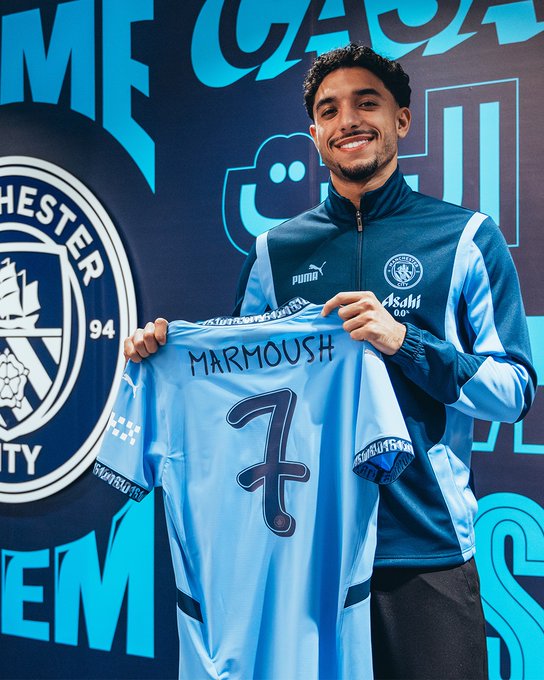
Manchester City have announced the signing of Eintracht Frankfurt forward Omar Marmoush for a reported initial fee of about $72.6m.
“The 25-year-old Egyptian striker has completed a move to the Etihad Stadium on a four-and-a-half-year deal, meaning he will remain at the Club until the summer of 2029,” City said in a statement on Thursday.
“This is a day I will never forget,” Marmoush said after signing up with the English Premier League champions.
“To sign for Manchester City – one of the best teams in the world – is an amazing feeling. I am delighted, my family are so proud, and we are all very happy to be here in Manchester.
“With Pep, his technical staff and the world-class facilities here, players have everything they need to improve. That was really enticing for me when I had the chance to come here.”
Marmoush is City’s third signing of the January transfer window following the arrivals of defenders Abdukodir Khusanov and Vitor Reis.
The former Bundesliga star’s contract is understood to include a potential further $5m in add-ons.
Born in Cairo in 1999, Marmoush stood out early in the academy of club Wadi Degla in the Egyptian Premier League. At just 17, he was promoted to the first team and joined Wolfsburg’s reserves a year later.
At Wolfsburg, Marmoush initially struggled for consistency and game time, resulting in loans to St Pauli and Stuttgart.
The striker moved to Frankfurt on a free transfer before the 2023-2024 season and scored 12 goals in 29 league games.
Marmoush’s development has drawn inevitable comparisons to his compatriot Mohamed Salah, but the Liverpool superstar warned against such correlations.
“Omar has great potential and is an important player for his team and the national team currently, but I hope we stay away from the idea of comparisons because it will put him under pressure,” Salah said in November.
“Do not compare him to me. Do not say the ‘new Mohamed Salah’. Let him live his career. Comparing a player at the beginning of his career with another who has achieved a lot over many years does not help him.”
City’s director of football Txiki Begiristain said Marmoush was an “accomplished and exciting forward”.
“He’s had an outstanding season, and every time we have watched him, he has influenced matches,” he said.
“He has all the attributes a top-class attacker requires. He has outstanding pace and awareness, and he is exceptional in front of goal. He can also play a number of different positions, which is a really valuable asset.”
His arrival at the Etihad Stadium comes during a frustrating season for City.
City, champions for the past four seasons, are currently fifth in the Premier League, 12 points behind leaders Liverpool having played a game more.
Defeat at Paris Saint-Germain on Wednesday has also left Pep Guardiola’s side in danger of missing out on the Champions League knockout stages.
source/content: aljazeera.com/sports (Al Jazeera and News Agencies) / (headline edited)
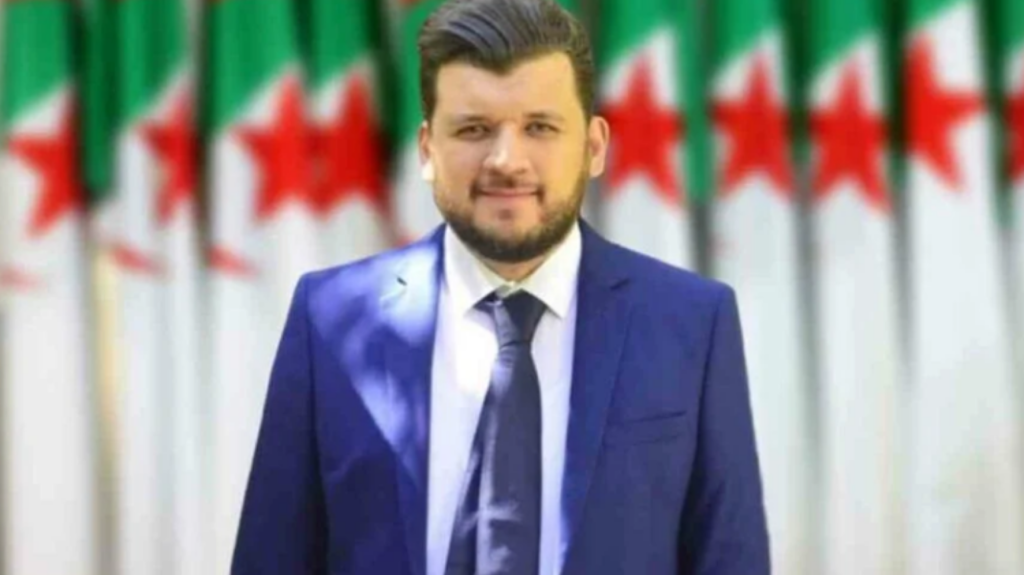
In a momentous acknowledgment of his pivotal contributions to the global entrepreneurial landscape, Yacine El-Mahdi Walid, Algeria’s Minister of Vocational Training and Apprenticeship, was named the “2024 Startup Ecosystem Star.” This honor was conferred by the International Chamber of Commerce and the renowned innovation organization “Mind the Bridge” during the ninth edition of the celebrated award ceremony.
Celebrating Leadership in Innovation
The accolade recognizes El-Mahdi Walid’s instrumental role in driving innovation and nurturing startup ecosystems not only in Algeria but across the African continent. The minister’s efforts have been hailed as transformative, positioning Algeria as a rising hub for technology and entrepreneurship.
In a statement on his official Facebook page, Minister El-Mahdi Walid expressed his gratitude, emphasizing the significance of the award in celebrating individuals who make substantial global impacts within startup ecosystems.
“This recognition,” he remarked, “although awarded individually, is truly a testament to the extraordinary efforts of my former team at the Ministry of Knowledge Economy, Startups, and Small Enterprises.”
A Visionary Path for Algerian Startups
Acknowledging the collaborative spirit behind the honor, the minister reaffirmed his confidence in Algeria’s continued trajectory towards innovation under the stewardship of his successor, Noureddine Ouadah. “I am certain,” he added, “that this outstanding work will persist and that Algeria’s startup ecosystem will rise to meet the aspirations and hopes of its people.”
A Global Celebration of Innovation
The 2024 Startup Ecosystem Star event is an annual celebration that recognizes individuals who have made an indelible mark on the global entrepreneurial landscape. By highlighting exceptional contributions, it inspires collaboration and innovation worldwide.
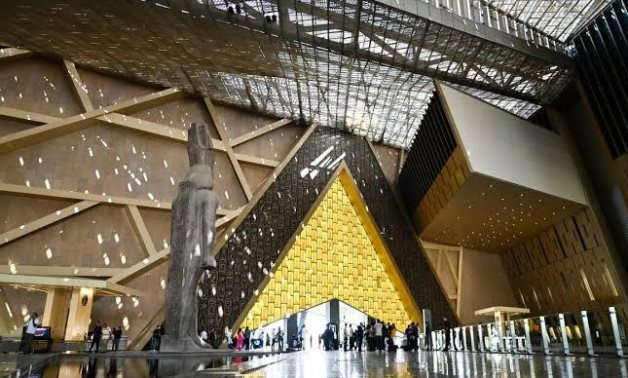
The British magazine The Telegraph published its annual list titled “Travel’s 50 Biggest Winners and Losers in 2024.” Topping the list of winners was the Grand Egyptian Museum.
The British magazine wrote that the Grand Egyptian Museum has finally opened on a trial basis for visitors. It spans an area of 490,000 square meters and, once fully operational, will house over 100,000 artifacts, with the most notable being the complete collection of items discovered in Tutankhamun’s tomb.
The list also included other places, such as the UAE and Notre Dame Cathedral following its reopening.
The Grand Egyptian Museum (GEM) project continues to achieve international milestones, winning the 2024 Project of the Year Award for users of FIDIC (International Federation of Consulting Engineers).
The award was presented during the 6th Annual FIDIC Contract Users Awards ceremony held in London.
GEM is the first Egyptian project that win this prestigious award.
Egypt’s Minister of Tourism and Antiquities, Sherif Fathy, highlighted President Abdel Fattah El-Sisi’s unwavering support for the Grand Egyptian Museum, recognizing its importance as one of the most significant cultural and heritage projects in Egypt and globally.
President Sisi has consistently followed every stage of its implementation, ensuring the removal of obstacles to deliver a museum that reflects the grandeur and legacy of ancient Egyptian civilization.
The minister emphasized that this remarkable achievement would not have been possible without the President’s ongoing support and interest.
The President’s chairmanship of the museum’s Board of Trustees further demonstrates his commitment to developing the museum as a global hub for heritage and culture.
The Minister also praised this award, which is the second international recognition for GEM this month.
Last week, the museum won the Prix Versailles, ranking among the seven most beautiful museums in the world for 2024.
He expressed his gratitude to everyone who contributed to the completion of this monumental project over the years, and to the extensive efforts of all state agencies and entities that helped elevate the museum to its prestigious global status.
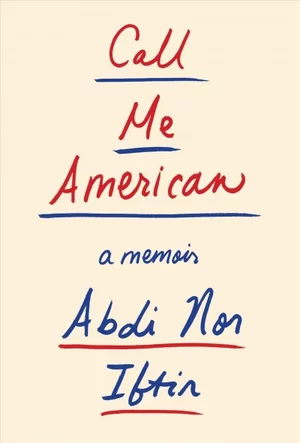
What does it take to become an American? In 2015, This American Life told the story of a Somali refugee who was finally issued a visa to come and live in the United States. “This big smile was on my face. I’ve never had such a big smile,” Abdi Nor Iftin said at the time.
Iftin’s long road to the US began when he was only a child in Mogadishu, watching American movies and teaching himself English, while brutality and war raged around him. In his new memoir, Call Me American, he tells his story from the beginning: with his nomadic parents and their now-unimaginably peaceful, pastoral life.
“She had no idea that the country she was living in was called Somalia,” Iftin says of his mother. “She had always told me, ‘You know, Abdi, there’s only two days: The day that you’re born and the day that you die. Everything else is just grazing and hanging out with the animals.'” Life was so easy, he says, before drought and famine wiped everything out.
Interview Highlights
On his first memories of Somalia’s long-running civil war
I was six years old when the civil war started, militias started pouring into the city, and death and killings and torture, and I just cried. The smell of Mogadishu, it was just the smell of gunpowder. And that had been sticking with me forever … I think this is the most touching memory that I can remember, to have our youngest sister die, and we said, “Good. That is so easy for her,” and then I was jealous. I was jealous because that was the time when our feet were swollen, our bellies were empty. It was a feeling that you could die any time … and I looked at my other sister, and she was just eating sand. And I think that’s the stories that people don’t hear about.
On his encounters with Marines in Mogadishu
I still say they stole my heart, because it was the very first time that I saw people with guns, and the guns were pointed up in the air, not in my face. Then they were coming and giving us sweets — I wanted these people to stick around, I wanted these people to be part of my life.
On being targeted by Islamists because of his nickname, “Abdi the American”
Unfortunately, I still believe that Islamists were born out of the American involvement somewhere in the Middle East, and the phrases that they had used to attract young men of my age was just “America.” They said, “They are the enemies of Islam” … surprisingly, I was out on the streets, defending President Bush, I don’t even know why I did that. But I was defending him, and blaming Osama bin Laden for all the problems. But I thought, to me it was just expressing myself, but then it got me into trouble, and I received a phone call saying, “You got to stop and drop that nickname, or we’re going to kill you.”
On whether Americans know how hard it is to get a visa to come here
I don’t think they do! You know, Americans take so many things for granted. For example, I came to the U.S. through the diversity immigrant visa lottery, which [President Trump] would like to cancel. But if it was not the diversity lottery, I would have never come to America, never. I had been an American since I saw those Marines, and my nickname is going to be my nationality, very soon … When I wake up in the morning, I say, oh, I’m so lucky — I have arrived here before America had turned its back against the rest of the world. If this had happened when I was hiding myself from Islamic terrorists, just trying to come to America and become an American and all that, it would be a disappointment, it would be a betrayal by the United States. Because the way I understand is that America is open to the rest of the world. And I am here to make America great. I did not come here to take anything. I came here to contribute, and to offer and to give.
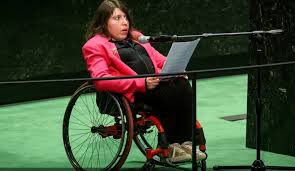
Khadija Jallouli, a young Tunisian entrepreneur with a disability, has called for redoubling international efforts aimed at integrating people with disabilities and involving them in decisions related to finding solutions to the challenges they face.
She is the co-founder and CEO of HawKar, a start-up specialising in manufacturing electric vehicules for people with disabilities with the aim of improving their lives by providing convenient, accessible and sustainable mobility solutions.
Ms. Jalouli spoked about her experience from the podium in the iconic General Assembly Hall at the opening session of the activities of the 17th session of the Conference of States Parties to the Convention on the Rights of Persons with Disabilities (COSP17), which began on Tuesday and continues until June 13, under the theme Rethinking disability inclusion in the current international juncture and ahead of the Summit of the Future, which is taking place at UN Headquarters in September.
In an interview with UN News, Ms. Jallouli said she is participating in COSP17 to shed light on the challenges facing people in motion and how to find solutions to them to create a more inclusive world as well as to inspire participants to take action to find solutions and involve everyone.
Bouayech praised Morocco’s efforts in promoting human rights including recently proposed changes to the country’s family code.
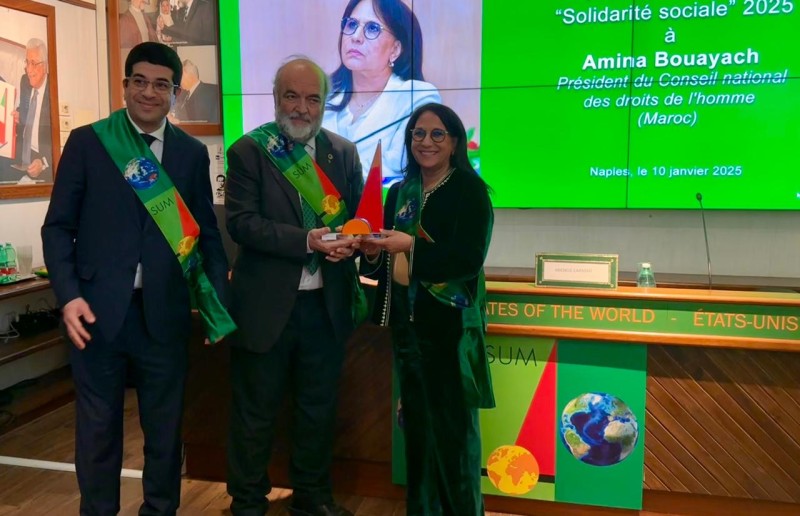
Amina Bouayach, the President of Morocco’s National Human Rights Council (CNDH), has been awarded the 2025 Mediterranean Foundation Award for her contributions to promoting human rights in Morocco and internationally.
The award, presented to her on Friday in Naples, Italy, recognizes individuals or organizations dedicated to upholding the values of human dignity and freedom.
Established by Italian sculptor Mario Molinari, the Mediterranean Prize is a symbol of peace and coexistence between countries. It recognized Bouayach’s work in advancing equality, justice, and fundamental freedoms, the foundation said in a statement.
During the ceremony, President of the foundation, Michael Capasso, along with international jury members and Professor Abdelhak Azouzi, praised Bouayach for her extensive work in human rights.
Bouayach was born in Tetouan, a small city in northern Morocco. For decades, she has been a tireless advocate for women’s and children’s rights, often speaking out against the injustices they face. She has also worked to improve the rights of marginalized groups around the world.
In recognition of her dedication and leadership, King Mohammed VI appointed her as president of CNDH in 2018.
She has also held significant positions in global human rights organizations, including Vice-President of the Global Alliance of National Human Rights Institutions and Vice-President of the International Federation for Human Rights.
In addition to her work in human rights, Bouayach has had a career in diplomacy, having served as Morocco’s Ambassador to Sweden and Latvia.
In her acceptance speech, Bouayach expressed gratitude for the recognition and praised Morocco’s efforts in promoting human rights. She particularly mentioned recent reforms like the vote in favor of a universal moratorium on the death penalty.
“This distinction, while touching me as a woman and activist, is primarily a tribute to my country, Morocco, for its unwavering commitment to the universal values of dignity, justice, and equality,” Bouayech said.
She also mentioned the proposed reforms to Morocco’s family code and they recognize women’s contributions in the household when distributing marital property. “These ambitious reforms, full of hope, aim to strengthen the rights of women and children, bringing significant advancements,” Bouayach said.
CNDH President also noted that the Mediterranean is more than just a geographic area; it is a place rich with shared history, where different cultures have come together to build a common heritage.
She acknowledged the challenges the region faces, such as conflicts and climate change, but stressed that the Mediterranean’s heritage of humanity and diversity offers hope and the potential for renewed dialogue.
In addition, she noted the important role of women in driving social and political change in the Mediterranean, especially in Morocco.
“I dedicate this award to all Mediterranean women who, every day, build bridges between cultures and generations,” she concluded.
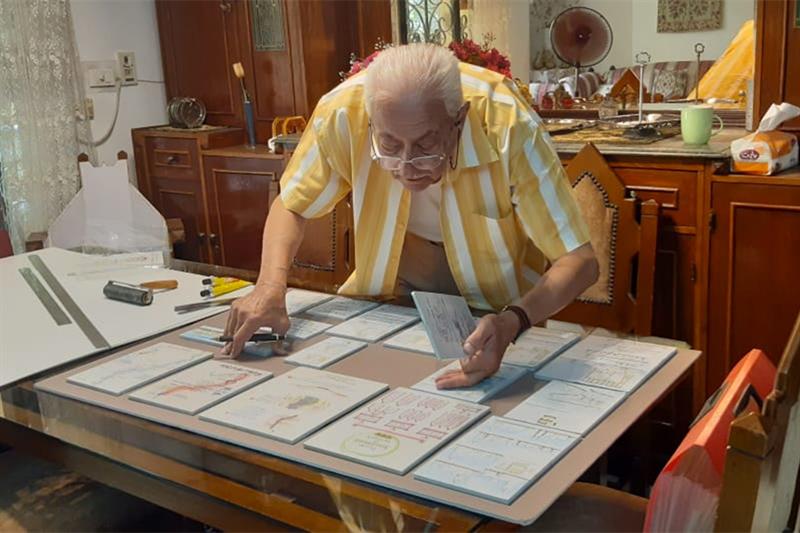
As he submitted the final maquettes (small-scale models) of Egypt’s folk architecture to the soon-to-open Museum of Folk Arts, Ahram Online spoke to the master himself about the merits and grace of architecture.
To Professor Essam Safi El-Din, architecture is an authentic musical note that resonates with the human touch of the people who conceptualised, built and lived in the building.
Known as the Architect and Tutor who, for over 55 years taught, designed and founded the house of Egyptian Architect and The museum of Folk Arts, Essam Safi El-Din has always believed in the philosophy and grace of popular architecture.
From Shubra Tramway to El-Refaai and Sultan Hassan
“In the 1980s, I designed the pedestrian passage between Sultan Hassan and El-Refaai Mosque, which was originally the tracks of the tramway. So my sketches were inspired by my daily tram ride from Shubra where I lived as a child in 1947 to the Citadel. I copied the same pattern that the tram took from narrow streets that end up in a vast square and the pedestrian area captured the grace and serenity of the architectural gems of the two heritage mosques,” he told Ahram Online.
On revisiting the tramway voyages with open eyes, Safi El-Dien realised that his eyes captured the human wisdom and truth in the details of the buildings that ran by him as the tramway moved across various districts of Cairo.
Handmade Architecture
A child to a renowned architect, Safi El-Din has always been fascinated by designing houses. Making his own handmade maquettes was his passion since childhood. “Since I was seven-years-old I was charmed by architecture and my prize for doing my homework was that I would go to my father’s architecture office and draw with him. My eyes started to watch the buildings and ask who built it and why,” he remembered. This passion was manifested into Egypt’s oldest mockup and design architecture in Egypt and the Arab World.
Passion for Old Buildings
Describing his favorite work spot in his home, Safi El-Din revealed to Ahram Online his relationship with the radio. “Wherever I work, I have two radios to choose from, one set to a music programme and the other to the Quran channel,” he noted
“I was always enchanted by the old architecture because of its beautiful art effects, motifs and language. There is a human and visual dialogue between me and the building because I feel the presence of the head of builders, the builders, and the inhabitants of such building. Old architecture is close to me for it fits the human scale with all its space, physiological and emotional needs,” he explained, describing how buildings can promote serenity and induce better mood for humans.
“You see, architecture is still music, and an architect has to be an artist who has a taste in music,” he explained.
Inspiring Architects
“The architects that have inspired me at an early age are Said Karim whose sketches were the first drawings I have seen in my Dad’s office. I was very fond of Hassan Fathy and Ramsis Wissa Wassef because they have this great sense of belonging to the local building techniques as a mission and a cause,” he added. His passion to safeguard the valuable knowledge in architecture and the grace of local architecture was passed on to all the students he taught and mentored in college throughout the course of over 55 years of academic world. However his keenness to pass on such knowledge to the public made him go the extra mile.
The House of Egyptian Architecture and The National Folk Museum
In the early 1980s, he wanted to document all types of Egyptian architecture under one roof. The Ministry of Culture granted him the current House of Egyptian Architecture. The charming Ottoman-style house that belonged to Hassan Fathy – the father of modern architecture in Egypt – was once the studio of Orientalist artists and has since become a cultural hub, and a museum of local architecture.
Safi El-Din’s maquettes portraying the unique identity of Egyptian architecture were the foundation of The National Folk Art Museum that held its soft opening a few months ago.
Located at the High Institute for Folk Arts in the Haram district, Giza, the official opening date for the museum has not yet been announced.
“The National Folk Art Museum is different from any museum of history because it is not focused just on the historic facts, it is more focused on the cultural value of such items in that era. The value of architecture and its types and how it is comforting. Folk arts as well as folk architecture, reveal the indigenous roots of culture, conduct, the skills of craftsmanship and handicrafts, ” he added.
Essam Safi El-Din’s name resonates with success and authenticity. There is a library dedicated to his works at the British University in Cairo, and he is currently working on a book on his eternal dialogue between architecture and art.
Gems of Wisdom
The most important thing that I have learned is that the value of history is not about knowing the facts, it’s about contextualizing such facts. He stated that his motto in life is a verse from the Quran stating that God will reward all your efforts.
“A person needs to know what his/her mission in life is; why is he here? We need to teach architectural criticism as a subject not a mere cross cutting theme. We need to know the impact of architects on social life and the environment.”
Beginning January 1, 2025, Algeria assumes the presidency of the United Nations Security Council for one month, marking a notable step in its diplomatic engagement. With its long-standing support for just causes in the Middle East and Africa, this presidency provides the country with a strategic opportunity to highlight crucial issues.
Clear Priorities for a Central Role As a non-permanent member of the Council for a year, Algeria is concentrating on major issues such as the situation in Palestine, the humanitarian crisis in Gaza, and security challenges in Africa, especially the fight against terrorism.
An open ministerial discussion on “The Situation in the Middle East, including the Palestinian Question” will bring together key international players, including UN Secretary-General Antonio Guterres.
Focus on Palestine: A Historic Priority The Palestinian issue, a cornerstone of Algeria’s diplomacy, is paramount to this presidency. Fifteen months after a deadly escalation in Gaza, Algeria reaffirms the need for an “immediate” and “permanent” ceasefire.
Algerian Ambassador to the UN, Amar Benjama, has been leading efforts since March 2024 to promote peace in the region. In parallel, Algeria is renewing its call for full Palestinian membership in the UN, aiming to realize the two-state solution and restore the legitimate rights of the Palestinian people.
Addressing Regional Crises In addition to Palestine, Algeria will focus on other major conflicts:
Syria: A session will address the political and humanitarian situation in this war-torn country. Yemen: UN Special Envoy Hans Grundberg will intervene to evaluate peace prospects and respond to the humanitarian emergency.
An African Priority: Fighting Terrorism On the African front, Algeria will convene a high-level meeting on counterterrorism, a growing threat to the stability of many states on the continent.
Ahmed Attaf, Minister of Foreign Affairs, will emphasise ways to strengthen international cooperation in addressing this scourge.
A Presidency Full of Hope Under the leadership of President Abdelmadjid Tebboune, Algeria aims to use this platform to promote peace, security, and justice in key regions.
With ambitious initiatives and active leadership, this presidency of the Security Council represents a unique opportunity for Algeria to defend the interests of Arab and African nations while consolidating its position on the global diplomatic stage.
His Highness Sheikh Mohammed bin Rashid Al Maktoum, Vice President, Prime Minister and Ruler of Dubai, has congratulated Professor Yacine Aït-Sahalia, Professor of Finance and Economics at Princeton University, for winning the Great Arab Minds Award in Economics for 2024.
His Highness Sheikh Mohammed praised Professor Yacine Aït-Sahalia for his pioneering contributions to financial econometrics, data measurement, and financial analysis. His work advanced the modelling of high-frequency financial data and continuous-time processes, enabling deeper understanding of variables.
His Highness Sheikh Mohammed said, “We congratulate the winner of the Great Arab Minds Award in Economics for 2024, Professor Yacine Aït-Sahalia from Algeria, Professor of Finance and Economics at Princeton University, who has made exceptional contributions by developing an advanced economic and financial metric to determine volatility levels and understand future patterns of market fluctuations. His work has enhanced financial market analysis, improved economic risk assessments, and increased the efficiency of financial and economic planning.
“We celebrate his achievement and take pride in all Arab minds who have inspired us with their creativity. We look forward to meeting them soon at the Great Arab Minds ceremony.”
Mohammad bin Abdullah Al Gergawi, Minister of Cabinet Affairs and Chairman of the Great Arab Minds Higher Committee, informed Professor Yacine Aït-Sahalia of his win via video call. Al Gergawi highlighted that the award reflects Sheikh Mohammed’s vision to celebrate and support exceptional Arab talent, highlight their achievements, and expand their effective cognitive and developmental impact in their specialisations to foster innovation and excellence across the Arab world.
“Your theories on econometrics and financial analysis have become a reference for numerous institutions, markets, economies, and governments. Your studies inspire a new generation of skilled economists, both in the Arab world and globally, and you are a source of pride for everyone in the Arab world,” Al Gergawi added.
Professor Aït-Sahalia developed high-frequency econometric methods to analyse financial data, estimate volatility, forecast market trends, and evaluate risk. His techniques for addressing microstructure noise and capturing market dynamics have provided essential tools for asset pricing and financial decision-making.
With over 80 academic studies and two books, Professor Aït-Sahalia’s research introduced innovative methods for analysing financial data, and enhancing economic planning.