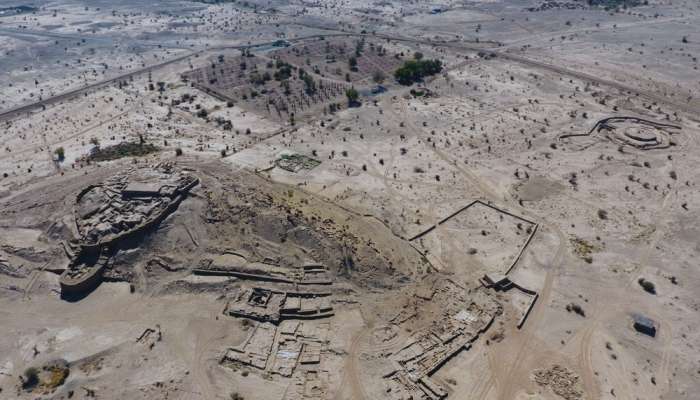
The archaeological oasis of Bisya and Salut, nestled between the banks of Wadi Saifam and Wadi Bahla in A’Dakhiliyah Governorate, constitutes an extraordinary cultural treasure, with archaeological evidence spanning from the Bronze Age through the Iron Age and into the Islamic era, representing an organized human settlement of profound historical importance.
Ibtisam Abdullah Al Maamari, Director of the World Heritage Department at the Ministry of Heritage and Tourism, told Oman News Agency that the Bisya and Salut site in the Wilayat of Bahla embodies criteria of outstanding universal value, representing a unique and exceptional global artistic masterpiece. The site eloquently expresses human creativity, reflects a significant exchange of human values, bears witness to enduring cultural traditions, and occupies a landscape of remarkable natural beauty encompassing environments rich in biodiversity.
She further elaborated that the Ministry of Heritage and Tourism, in partnership with relevant stakeholders, is actively working to enhance the representation of Oman’s historical sites on the UNESCO World Heritage List. The nation is currently in the advanced stages of preparing the nomination file for the Bisya and Salut site, to be submitted under the title “Salut: An Iron Age Settlement.” The designated expert tasked with preparing the dossier will concurrently develop a comprehensive site management plan to accompany the nomination submission. The endeavour is expected to require approximately two years of concerted effort and strategic planning until its culmination.
Ahmed bin Mohammed Al Tamimi, Director of the Bisya and Salut Archaeological Site Department, affirmed the exceptional richness of the site, first documented in 1973. Archaeological missions have been conducting excavations since the early 1980s, with a succession of international teams contributing to its exploration. Presently, the Italian mission from the University of Milan is engaged in excavating the archaeological tombs at Bisya, seeking to unravel the mysteries enshrouding these ancient burial structures. Concurrently, a mission from the Sorbonne University in France is conducting excavations at the archaeological sites of “Fal” and “Al-Dhabi.” Both missions are diligently working to determine the chronology of the sites under investigation, complete previous excavation efforts, and develop a comprehensive vision and deeper understanding of these archaeological expanses, whose habitation traces back to the late fourth millennium BC.
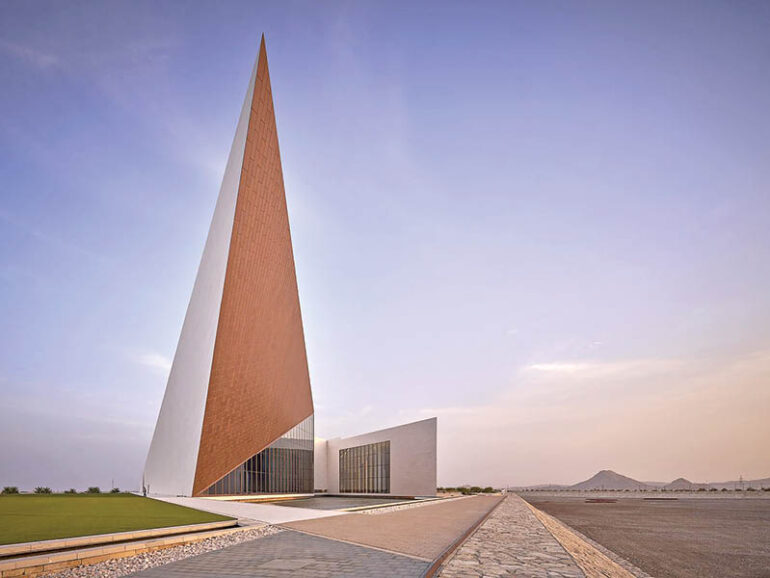
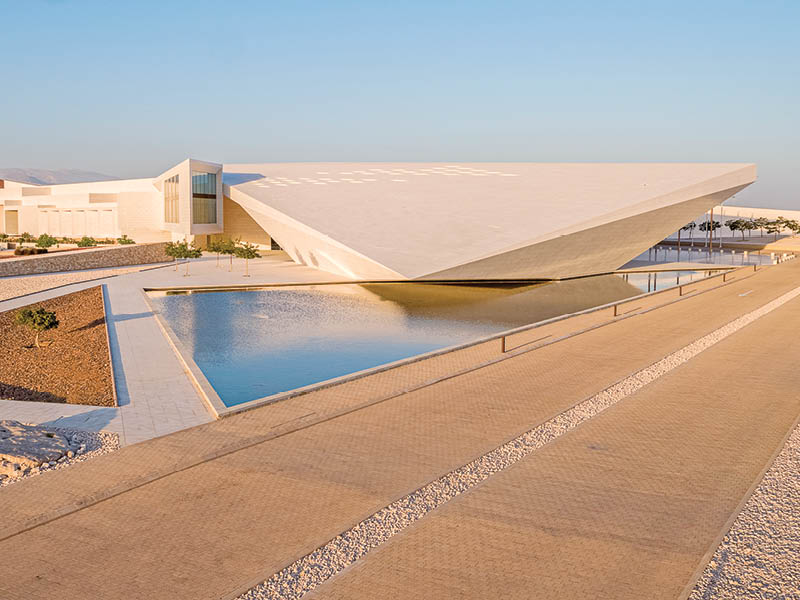
Al Tamimi highlighted the ongoing endeavours of the Ministry of Heritage and Tourism, channelled through the Bisya and Salut Visitor Center, to introduce and promote this historical site. Since its inauguration in February 2023 until the close of December 2025, the site has welcomed over 16,400 visitors, encompassing citizens, residents, and international tourists.
Promotional initiatives include an annual programme of events executed in collaboration with the local community, with dedicated outdoor spaces allocated for hosting diverse activities. These include programs organized by Omani Women’s Association branches, sports teams affiliated with Bahla Club, civil society institutions, and community libraries. Among the events realized are poetry evenings, productive family exhibitions, children’s activities, and art exhibitions, fostering community engagement and cultural enrichment.
He further elaborated that the Visitor Center at the Bisya and Salut archaeological complex features comprehensive exhibition panels delineating the history of archaeological investigation in the region, diverse patterns of human settlement, typological classifications of ancient tombs, and the commercial networks that connected this civilization with neighboring polities. The center annually welcomes a cohort of scholars and researchers who independently visit the site to pursue scientific inquiry across multiple disciplines, thereby advancing the Ministry’s ongoing mandate of archaeological survey and documentation.
He added that the center incorporates a dedicated repository for archaeological artifacts, tasked with receiving and preserving objects from the moment of their discovery during excavation campaigns. These artifacts subsequently undergo systematic registration, archival documentation, and secure storage. Selected items proceed to conservation and restoration laboratories at either the Ministry of Heritage and Tourism headquarters or the on-site Visitor Center facilities, while others are designated for museum exhibition. Numerous significant finds from the Bisya and Salut excavations have been displayed at the National Museum and the Oman Across Ages Museum, underscoring the site’s national archaeological importance.
He affirmed that the site constitutes an exceptionally rich archaeological landscape, encompassing thousands of Bronze Age funerary monuments, the imposing Salut Fortress with its adjacent urban settlement, third-millennium BCE towers, extensive cemeteries spanning both Bronze and Iron Ages, and a remarkable corpus of rock art. The archaeological hinterland extends to the nearby villages of Al-Dhabi, Fal, and Al-Ma’mur, revealing a densely occupied cultural landscape. The settlement of Salut itself represents a particularly significant urban center, attesting to intensive occupation and human agency during the first millennium BCE. The fortress, serving as an administrative nucleus, confirms the existence of sophisticated governance structures and an economic foundation built upon agriculture and the aflaj irrigation systems.
Regarding ongoing research initiatives, he stated: “The Bisya and Salut Archaeological Site Department, operating through the Visitor Center, coordinates various research activities. We engage external researchers through collaborative projects as circumstances warrant. During the current year, 2026, we inaugurated a comprehensive project to inventory and document the rock art corpus distributed throughout the Bisya and Salut region, enlisting local community guides possessing intimate knowledge of the drawings’ locations across mountainous terrain, valleys, and rocky outcrops. Upon completion of this documentation phase, we will undertake analytical studies to establish chronological frameworks for these artistic expressions.”
Addressing site development initiatives launched with the February 2023 opening of the Visitor Center, he noted: “Visitor pathways have been upgraded and paved to provide access to principal archaeological features, including Salut Fortress, the Bronze and Iron Age necropolises, the ancient urban core of Salut, and the third-millennium tower. During the current year, we will enhance visitor stopping points with interpretive panels presenting scientific information in accessible formats. Since the second half of 2025, we have conducted comprehensive rehabilitation, maintenance, and restoration operations at multiple locations, continuing through February 2026 at Salut Fortress, along the visitor circuit, and within the urban precinct adjacent to the fortress. A local Omani enterprise is finalizing the design and production of multimedia installations for the Visitor Center’s display systems, scheduled for completion this month, February 2026. These technological enhancements will facilitate information dissemination and showcase previously unexhibited archaeological discoveries through interactive screens. Furthermore, a field classroom has been established within the palm grove situated within the site’s protected perimeter, designated for programs integrating theoretical instruction with practical field applications. Since the center’s inauguration through the conclusion of 2025, we have conducted 79 educational programs and cultural events, serving 6,230 participants spanning all age demographics.”
He further detailed the programs and events scheduled for implementation during 2026, including the UNESCO Associated Schools Forum, the second edition of the Salut Photography Forum, in addition to numerous community-engaged activities, training workshops, and artistic initiatives designed to promote the archaeological site, introduce the Visitor Center and its surrounding antiquities, facilitate the exchange of expertise, and explore diverse experiential methodologies.
It is noteworthy that archaeological discoveries unearthed at the Bisya and Salut site collectively attest to the profound civilizational interconnections between Oman and the ancient world. Among the most significant finds are seals bearing stylistic influences from the Indus Valley Civilization, serpent figurines, various anthropomorphic and zoomorphic terracotta artifacts reflecting Indus Valley cultural traditions, and an assemblage of ceramic vessels. Particularly remarkable discoveries from the 2024/2025 excavation season include a collection of charred dates and date stones unearthed at the Al-Dhabi site, meticulously dated to the third millennium BCE, providing invaluable evidence of ancient agricultural practices and trade networks.
source/content: timesofoman.com (headline edited)
___________
________
OMAN