Arabs & Arabian Records Aggregator. Chronicler. Milestones of the 25 Countries of the Arabic Speaking World (official / co-official). AGCC. MENA. Global. Ist's to Top 10's. Records. Read & Enjoy./ www.arabianrecords.org
The award was received by Oman’s Ambassador to Japan Dr. Mohammed bin Said Al Busaidi on behalf of the government of Oman.
The University of Tokyo has announced that it has awarded the prestigious Shokomon Award to the government of the Sultanate of Oman in recognition of its contribution to supporting scientific research and academic and cultural exchange in the field of Middle Eastern studies.
The award was received by Oman’s Ambassador to Japan Dr. Mohammed bin Said Al Busaidi on behalf of the government of Oman.
The award was based on the role played by the Sultan Qaboos Chair for Middle Eastern Studies, which was inaugurated at the university in 2011.
It is the highest honor bestowed by the University of Tokyo on individuals and institutions who have made significant and influential contributions to enriching the university’s progress and serving its academic goals.
Oman is the first Arab government to receive it.
The University of Tokyo has a significant academic relationship with Oman, primarily through the University of Tokyo Centre for Middle Eastern Studies (UTCMES), which was established with funding from Oman. The relationship includes academic exchange, research, and events such as seminars, lectures, and exhibitions focusing on Oman.
The university also works with institutions like Sultan Qaboos University and has received book donations from Oman.
UTCMES conducts and disseminates research on the Middle East and organizes events like public lectures, symposia, and exhibitions that focus on Oman.
source/content: arabnews.com (headline edited)
__________
The award was based on the role played by the Sultan Qaboos Chair for Middle Eastern Studies, which was inaugurated at the university in 2011. (Supplied)
An innovative team from the Oman Dental College has successfully developed a dental filling using Omani Portland cement reinforced with carbon nanoplates, creating the first material that combines exceptional strength with complete biocompatibility for dental tissues. This breakthrough opens new horizons in global dental treatments.
Malak Khalifa Al Harthy, a member of the research team “Pulp49,” told Oman News Agency (ONA) that the innovation stemmed from observing how traditional fillings often lack a balance between “strength” and “biocompatibility.” This prompted the team to develop a new composite that achieves this challenging balance.
She explained that the composite is a dental filling made by integrating Omani cement with graphene sheets, resulting in a material with high mechanical efficiency and significant biocompatibility. This has led to clear and rapid restoration of surrounding dental tissues.
The development of the composite took approximately five years of research and experimentation, undergoing initial cell-level testing followed by animal trials in collaboration with the Mounted Police Command. It is now in the second phase of human trials, with preliminary results showing highly promising indicators.
Regarding the expected benefits of this composite in dentistry, she noted that it provides a cost-effective solution while enhancing the longevity and efficiency of dental treatments. This represents a major advancement in dental materials, offering improved outcomes for both patients and dentists.
Among its key advantages is high biocompatibility, as the integration of carbon nanoplates enhances the material’s positive interaction with biological tissues while reinforcing its mechanical properties. This makes it particularly suitable for complex and challenging dental applications.
Additionally, the composite supports tissue regeneration by mimicking an ideal environment for the rebuilding cells in surrounding dental tissues. This effect is attributed to the synergistic interaction between the carbon nanoplates’ properties and the calcium ion-based reaction of Portland cement with physiological body fluids.
The composite also exhibits superior sealing capabilities, with the increased volume and unique properties of the nanoplates enhancing its ability to fill gaps and voids, making it ideal for applications requiring tight seals or water resistance.
The innovation has been officially recognized, securing a patent in the Sultanate of Oman and international registration. The team is currently finalizing the last stages of development after receiving essential support from the Ministry of Higher Education, Research, and Innovation, paving the way for its introduction to local and eventually global markets.
Addressing the challenges faced during the project, she explained that the team encountered difficulties in achieving the ideal composition, requiring multiple rounds of testing, experimentation, and model adjustments before finalizing the approved formula.
She emphasized the substantial support received, with the Oman Dental College providing necessary resources and the ROP Mounted Police contributing to trials. She also acknowledged the direct support of Dr. Abu Bakr Qateeshat, Head of Graduate Studies, Research, and Development at the college, and Dr. Aida Al-Wahaibi, as well as the encouragement from family, which served as a major motivator in achieving this milestone.
Regarding her selection to represent Oman at the International Invention, Innovation, and Technology Exhibition (ITEX) in Malaysia in 2025, she described it as an opportunity to showcase Omani youth’s capabilities and their role in delivering innovative solutions that elevate Oman’s global standing, while also facilitating knowledge exchange with innovators worldwide.
In closing, Malak Khalifa Al-Harthy affirmed that Omani youth are capable of remarkable achievements when they believe in their ideas and channel their creativity toward serving society—especially when innovation is genuine, addresses real needs, and contributes to the nation’s progress. -ONA
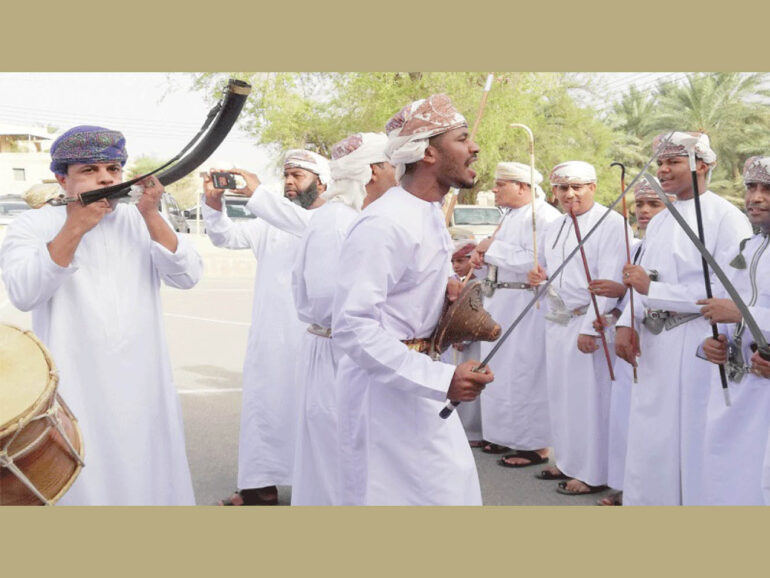
Ministry of Culture, Sports and Youth (MCSY) is intensifying efforts to document and publish the country’s oral history as part of a strategy to preserve intangible cultural heritage and reinforce national identity. The initiative aligns with Oman Vision 2040 and aims to promote Omani culture in global forums.
Fahd bin Mahmoud al Rahbi, Head of Oral History Department at the ministry’s Literary Forum, said the initiative reflects Oman’s commitment to protect its oral traditions and cultural expressions. These include stories, biographies, folk tales, customs, performing arts, traditional crafts and the knowledge systems associated with these.
“Oral history forms an integral part of Oman’s intangible cultural heritage. It is a crucial source of historical knowledge, especially in areas not captured by written records,” Rahbi said. “Our aim is to preserve this history through research, documentation and publication, as well as through public engagement and international cooperation.”
According to Rahbi, Oman’s geographical location has historically made it a crossroads of civilisations. This has contributed to the country’s rich and diverse cultural heritage. Several elements of Oman’s intangible heritage are already inscribed with Unesco, highlighting the global relevance of these preservation efforts.
Since 2006, MCSY has undertaken multiple field projects to record oral history across the governorates and wilayats. Local researchers have worked with elders, artisans and tradition bearers to document narratives, customs and knowledge passed down through generations.
The ministry has published several books as part of this initiative. Notable among these is Omani Traditional Musical Instruments, which documents the styles of Omani music, and Omani Traditional Musical Arts, a comprehensive reference on music and performance arts. Together, these publications offer a detailed record of Omani musical traditions.
Newer works include The Diving Craft in the Popular Traditions of the Batinah Coastal Community by Saeed Abdullah Mubarak al Farsi, which explores the oral traditions associated with coastal livelihoods, and The Craft of Tabsil in South Batinah by Wadha bint Mohammed al Shukaili, which chronicles the history and cultural significance of the palm-based food preservation craft.
MCSY has also supported research on frankincense traditions, culminating in the publication Frankincense and Cultural History, a collaborative project involving multiple Omani scholars.
Another recent work, Radio in the Interior of Oman, by Rana bint Nasser al Abri, explores the development of radio broadcasting in Dakhliyah from the 1940s to the 1980s, viewed through oral narratives. The Bahla Wall: The Wristband of Civilisation by Saeed bin Abdullah al Shaqsi examines the architectural and historical relevance of one of Oman’s iconic defensive structures.
“Preserving our oral history is not just about protecting the past,” Rahbi said. “It is about shaping national identity, supporting cultural diplomacy and preparing for a future that values heritage.”
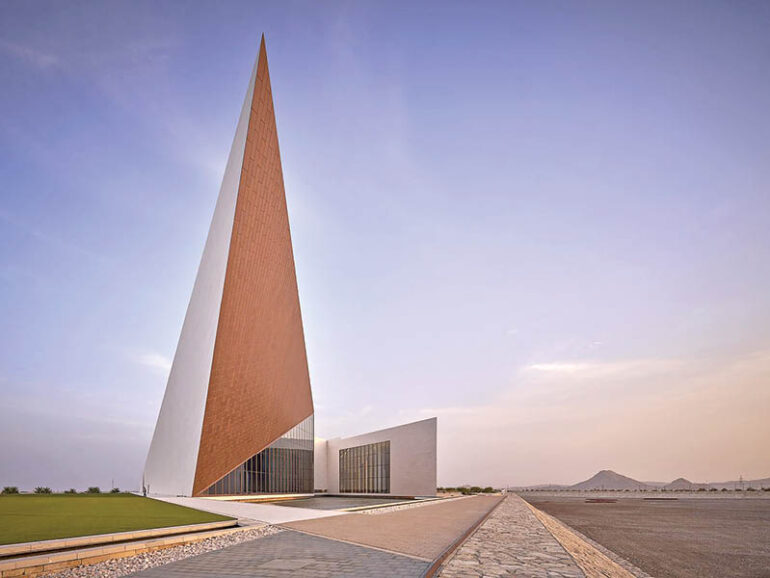
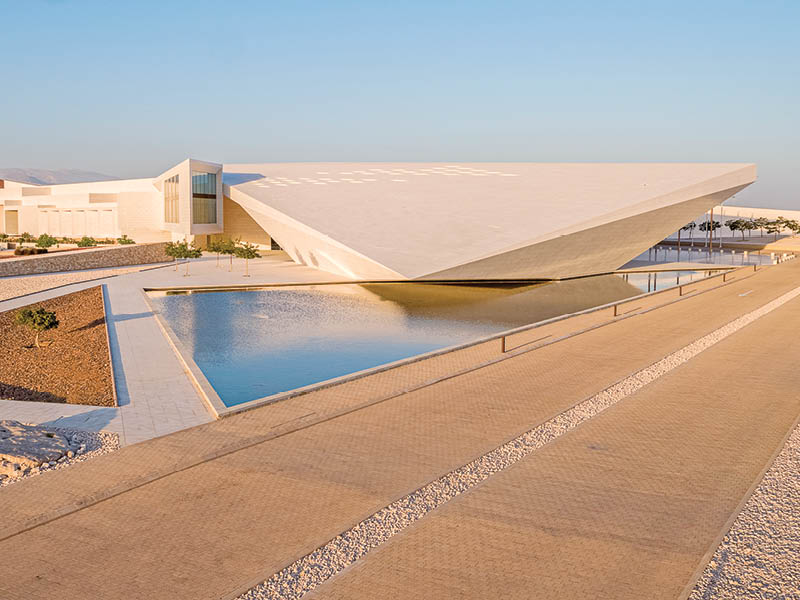
Oman Across Ages Museum in Manah has been honoured with one of the world’s most prestigious architecture awards – the Prix Versailles World Titles.
The museum received the ‘Special Prize for an Exterior’, while the ‘Special Prize for an Interior’ was awarded to the Smritivan Earthquake Museum in Bhuj, India. The grand prize, the Prix Versailles, went to the Simose Art Museum in Otake, Japan.
Granted annually at Unesco headquarters in Paris since 2015, the Prix Versailles celebrates architectural excellence by showcasing the finest contemporary achievements worldwide.
In June, for the first time, Prix Versailles unveiled its World’s Most Beautiful Museums List for 2024, featuring seven newly opened or reopened museums that embody creativity, local heritage, and ecological efficiency.
Among the listed museums was Oman Across Ages Museum, recognised for its exceptional impact on its surroundings. Other shortlisted museums included the A4 Art Museum in Chengdu, China; Grand Egyptian Museum in Giza, Egypt; Paleis Het Loo in Apeldoorn, Netherlands; and the Polish History Museum in Warsaw, Poland.
This year’s ceremony was held on December 2, celebrating 70 of the ‘World’s Most Beautiful’ achievements across eight categories: Museums, Hotels, Restaurants, Emporiums, Airports, Campuses, Passenger Stations, and Sports.
This year’s finalists were selected through a rigorous process that reviewed new and recently opened sites across 31 nations. The 2024 World Jury, chaired by Benjamin Millepied, awarded three World Titles in each category.
Commenting on the event, Millepied said, “Architecture has the ability to display creative and stylistic diversity with great force. That diversity is the sign that the attention given to nature, togetherness, and different forms of expertise can help an environment emerge – one that is both receptive to expression and capable of harmony. Such an assembly of actors from every background reminds us of culture’s unique talent for leading humankind into dialogue.”
The recognition affirms Oman Across Ages Museum’s standing as a cultural and architectural beacon, reflecting the nation’s commitment to preserving heritage while embracing modernity.
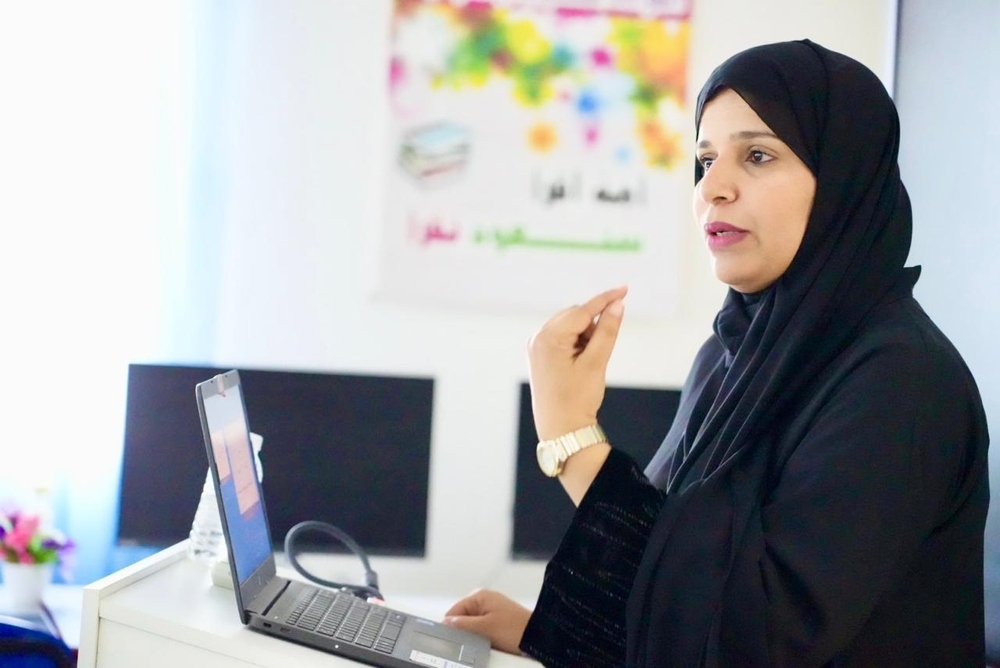
The Arab League Educational, Cultural and Scientific Organization (ALECSO) announced that Omani researcher Dr. Huda Mubarak Al Dai’ree won the “ALECSO Innovation Award for Young Researchers” due to her active role in promoting green economy.
The research that won the award was titled “Role of government school principals and teachers in endorsing green economy in education and activating it as one of the objectives of Oman Vision 2024.”
The award reflects ALECSO’s keenness on inspiring and supporting innovative Arab researchers who excel in the fields of technology and scientific applications. The award is an initiative undertaken by ALECSO to spread the culture of research and innovation among Arab youth.
Maria Mohammed Al Rahbi, a student of Sultan Qaboos University (SQU), won second place at the individual level in the World Photography Cup for Universities and Higher Education Institutions 2024.
Maria Al Rahbi is a computer science major at the University’s College of Science and a member of the photography group at the Deanship of Student Affairs. She took part in the contest as part of a team representing SQU after the competition was announced to all higher education institutions around the world.
Each institution is allowed to participate with a maximum of 5 students. Each student can compete with 4 photos.
The competition was organized by the International Federation of Photographic Art (FIAP) and it saw the participation of 88 universities from around the world.
The jury included prominent specialists in the world of photography, including photographers from National Geographic society, the Silk Road Photography Organisation, and officials from the International Federation of Photographic Art or “Fédération Internationale de l’Art Photographique” (FIAP).
It is worth noting that the award will be presented at a ceremony in China in October 2024 as part of similar events that include an international conference and a photography exhibition.
Fifteen of Maria Al Rahbi’s works of art will be displayed in FIAP wings. On the sidelines of the award ceremony, Maria will participate in a workshop to be attended by international photographers.
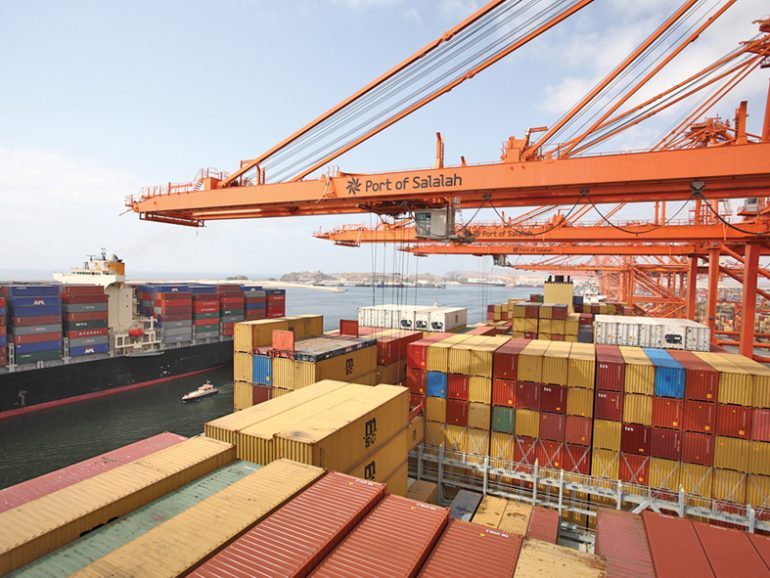
The Port of Salalah retained its position as the second most efficient container port in the world, according to the 2023 Container Port Performance Index (CPPI). Additionally, Salalah Port claimed the top spot in the West Central and South Asia region.
The CPPI, developed by the World Bank and S&P Global Market Intelligence, is based on an extensive dataset from 405 ports worldwide, the largest to date. This dataset comprises over 182,000 vessel calls, 238.2mn moves, and approximately 381mn twenty-foot equivalent units (TEUs) for the full calendar year of 2023.
Port performance is measured by the efficiency of vessel turnaround time, known as ‘Total Port Hours’ – the total duration from when a ship reaches the port limits, pilot station, or anchorage zone until it departs the berth after completing its cargo exchange.
According to the report, the Port of Salalah, with 1,146 vessel calls, achieved 164.72 index points, ranking second only to Yangshan in China, which had 3,509 vessel calls and an index score of 177.9.
Amidst the changes in global rankings caused by regional disruptions, China’s Yangshan Port retained its first-place position, while the Port of Salalah secured its second-place ranking. The Port of Cartagena in Colombia moved up to third place, Tanger-Mediterranean in Morocco held fourth, and Malaysia’s Tanjung Pelepas Port rounded out the top five.
Salalah Port’s strategic location, expanding connectivity, and world-class operations provide its customers with a significant competitive edge in the region. As a vital transshipment hub, Salalah also plays a crucial role in boosting the local economy in Dhofar by offering exceptional connectivity for importers and exporters to trade globally.
The port’s high efficiency enhances local business confidence and attracts investment, including foreign direct investment (FDI).
The Port of Salalah is currently carrying out a $300mn container terminal upgrade and expansion project. Next week, the port will receive the final four out of ten new ZPMC ship-to-shore cranes. The first cranes, with a 75-meter/26-container outreach, arrived at the start of 2024 and are currently being commissioned and tested to start operations.
Once the project is completed in the first quarter of 2025, annual capacity at the terminal will increase from 5mn to 6mn TEUs. The extra capacity will allow it to efficiently serve as a key hub for the Gemini Cooperation – a long-term operational collaboration between Maersk and Hapag-Lloyd, which will start in February 2025, with additional capacity available for other shipping lines.
“Retaining this title for the third consecutive year reaffirms our strong commitment to continuous performance improvement, even during challenging times,” said Keld Christensen, CEO of the Port of Salalah.
Scott Selman, Chief Operating Officer of Salalah Port, said, “I am pleased to see the Port of Salalah retaining our position despite the challenges to global container trade that have negatively impacted vessel schedules. The year 2023 has been particularly challenging operationally due to the ongoing Container Terminal upgrade construction.”
The last book of the “Sultan of History” encyclopaedia, titled “History of Oman from Human Settlement to the End of the Ibadi State,” was launched by His Highness Sheikh Dr Sultan bin Mohammad Al Qasimi, Member of the Supreme Council and Ruler of Sharjah.
This volume completes the encyclopaedia, which is a thorough and authoritative study of Oman’s history. This is the 84th edition of His Highness’s varied works, encompassing several realms of study, including history, biography, literature, theatre, and more.
The latest volume, “History of Oman from Human Settlement to the End of the Ibadi State” is a chapter of Oman’s historical encyclopaedia. His Highness selected a name for the Oman Historical Encyclopaedia that has precise connotations and profound allusions. He titled it the “Sultan of History” encyclopaedia, which means “Authoritative Reference to History.” The “Sultan of History” encyclopaedia is now complete with the current release.
The “Sultan of History” encyclopaedia is divided into four main parts: Part One covers Oman’s history from human settlement until the end of the Ibadi state. Part Two tells the story of Oman’s Nabhani monarchs from 1154 to 1622 AD. Part Three details the history of Oman’s Yarubid dynasty from 1622 to 1747 AD. Part Four of the encyclopaedia covers the history of the Al Bu Said imams in Oman from 1749 to 1856 AD.
Sheikh Dr Sultan bin Mohammed Al-Qasimi, Member of the Supreme Council and Ruler of Sharjah, delved into the history of Oman from its first settlement until the end of the Ibadhi state in his current volume of the “Sultan of History” encyclopaedia.
The 84th volume of publications has been divided into five chapters and five appendices. The first chapter focuses on human settlement in Oman, while the second delves into the history of Oman’s Azd monarchs. The third part focuses on Oman’s position throughout the early Islamic period and succeeding periods. The fourth and fifth chapters deal with Oman’s first and second Ibadhi states. Rare papers, one-of-a-kind maps, and significant archaeological objects discovered in Sharjah round out the encyclopaedia.
Three years of thorough research and historical study went into this piece of work. His Highness Sheikh Dr Sultan Al-Qasimi meticulously tackled Oman’s past, incorporating his extensive understanding of history, geography, and archaeology with his extensive field experience.
He also drew from his own library, which contained rare books, rare references, and priceless manuscripts, as well as historical records and maps. The encyclopaedia “Sultan of History” is a valuable historical resource, revealing major events and archaeological locations, and historical facts that add to our understanding of Oman’s past.
The Ministry of Transport, Communications and Information Technology (MTCIT), in cooperation with Universal Postal Union, will host the first edition of the Arab Postal Leaders Forum from February 12 to 14 in Muscat.
An official at MTCIT informed that with participation of more than 60 representatives from 18 Arab countries, the forum will serve as a platform for discussions of crucial topics related to the digital transformation of business models within the postal sector. He explained that the primary focus of the forum is on leveraging digital technologies to reshape the postal industry.
Among its key objectives is exploration of opportunities to broaden access to digital economy services, encompassing e-governance and e-commerce, through various digital platforms.
The event will delve into the challenges associated with digital transformation across diverse sectors such as trade, finance, communications, transportation and customs.
“The forum’s agenda includes presentations and discussion sessions that will spotlight innovative digital solutions in the postal and e-commerce domains. Moreover, global best practices in the realms of digitisation and postal transformation will be discussed. The goal is to underscore the significance of collaborations and information exchange among stakeholders, fostering increased adaptability in postal systems amid the rapid pace of digital transformation,” the MTCIT official said.
The event seeks to enhance the adaptability of postal services and systems in response to the evolving technological landscape.
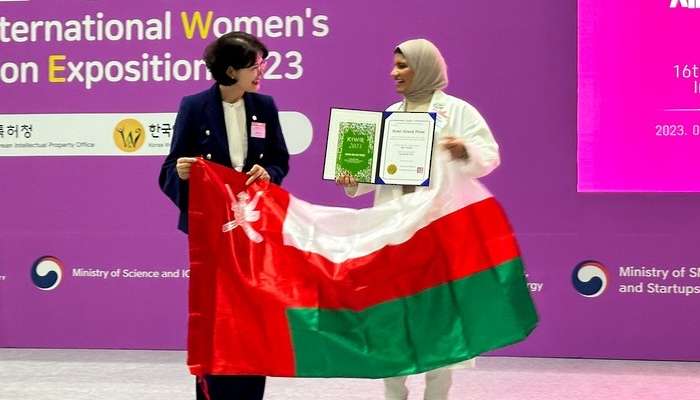
An Omani innovator has won the Grand Prize in an international competition in South Korea among 353 innovations from more than 18 countries around the world, Oman News Agency (ONA) announced.
Omani innovator Razan bint Hamad Al Kalbani won the Grand Prize in the Korea International Women’s Innovations Exhibition and Competition (KIWIE) for her innovation “X-ray absorbing coating from a natural ingredient”, among 353 innovations from more than 18 countries around the world.
Razan Al-Kalbani told Oman News Agency that her scientific innovation is a coating that absorbs X-rays from a natural ingredient (lycopene), which is the red pigment found in tomatoes, watermelons, red fruits and vegetables in general.
She added “After extracting the lycopene, I carried out laboratory tests and mixed it with a coating with unique properties and techniques to ensure that the properties of the lycopene were not affected.”
She pointed out that the scientific innovation is the first of its kind in the world using a natural compound to shield rays, indicating that the paint absorbs rays by 97%, and is characterized by being 100% water and moisture resistant, and 95% heat resistant, and prevents the formation of mold and bacteria, and is non-flammable.
She pointed out that one of the most prominent features of this scientific innovation is the possibility of using tomato mold to extract lycopene, and in terms of mechanical advantage, it is less expensive than the lead currently used.
She stated that her participation in the Korea International Women’s Innovations Competition and Exhibition (KIWIE) came with the support of the Ministry of Culture, Sports and Youth.
She stated that her scientific innovation achieved many achievements at all levels, whether global, regional and local, most notably her winning the first place in the Falling Walls Lab competition in November 2020, the silver medal at the Challenge and Innovation Forum in the State of Qatar, the gold medal at the Second Beirut International Innovation Exhibition.
She also won the silver medal at the level of the Middle East in the Mabaret Fayda Al-Saad competition in the State of Kuwait.