EGYPT: Remembering Salah Fadl: Egypt’s Extraordinary Literary Critic And Translator

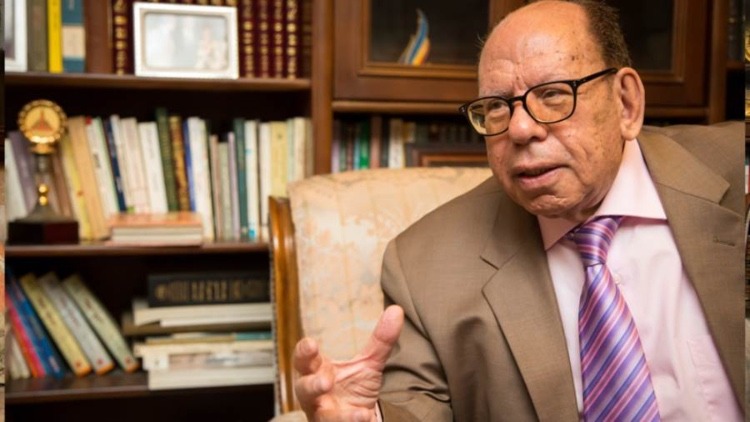
The renowned Egyptian literary critic Salah Fadl, who was 84 years old, passed away yesterday after a battle with illness. He was described by the Arabic Language Academy as a “major figure in Arabic and literature” and “had a march full of dedication and accomplishment as he was a literary critic well-versed in arts of Arabic literature and comparative literature.” To commemorate his long life of accomplishments, we will shed light on some of his greatest achievements throughout his career.

Early Life

Fadl was born in an Egyptian Delta village called Shabas Al Shuhadaa in March 1938 and majored in Arabic language and literature at Cairo University where he graduated in 1962. From 1962 to 1965, he was hired as a researcher at Cairo University. Fadl then sought new horizons away from Egypt as he traveled to Spain on a scholarship to earn a doctorate in literature from the Central University of Madrid.

Life Abroad

During his study period abroad, he taught Arabic literature and translation at the Faculty of Philosophy and Arts at Madrid University from 1968 to 1972. At the same time, he worked with the Supreme Council for Scientific Research in Spain on a project aiming to revive and promote the philosophical legacy of Ibn Rushd (a jurist who wrote on many subjects, including philosophy).

Fadl then returned to Egypt to become a Professor of Literature and Criticism at the Faculty of Arabic Language and Girls College at Al Azhar University. His stay in Egypt didn’t last too long as he then went to Mexico to serve as a visiting Professor at Mexico College for higher studies from 1974 to 1977. There, Fadl established an Arabic language and art department. Additionally, he taught in numerous universities in Egypt and abroad, including Bahrain, Yemen, and Mexico.

Books

The scholar was an exceptional writer who wrote numerous publications in the fields of criticism, comparative literature, theatre, novels, and poetry. Amongst his most famous works was “Medieval Spanish Poetry: A Study and Examples” (1974), “The Realistic Approach in Literary Innovation” (1978), and “Structuralist Theory in Literary Criticism” (1978). Through these publications, Fadl helped enrich Arab literature by producing books that are used as a source of knowledge today.

Just before his death, he applauded the Abu Dhabi Centre for choosing Taha Hussein as the face of the Book Fair while serving as president of the Cairo Academy of the Arabic Language. He explained that this initiative strengthens ties between Egypt and the UAE and their desire to value the two nations’ icons in various spheres of creativity and culture.

Fadl had success in a variety of disciplines before taking on the role of Egypt’s cultural attaché, where he worked to strengthen ties with the countries he visited. His legacy will remain as he contributed to the Arab world through his interesting perspectives and rich knowledge in several fields.

source/content: scoopempire.com (headline edited)

__________
________

EGYPT
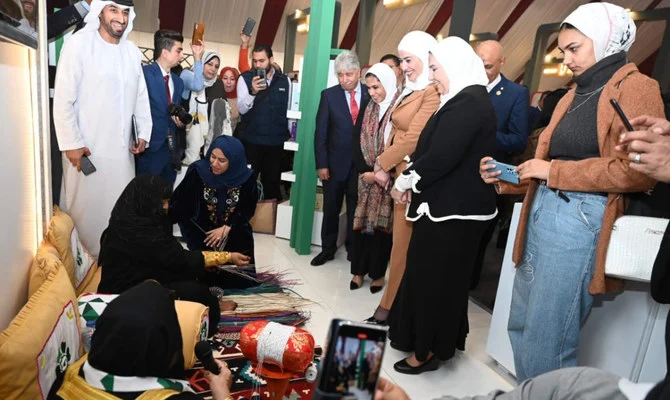
EGYPT & ARAB: Heritage of 12 Arab countries on show at the 1st Bayt Al-Arab Fair (House of the Arabs) 2023 in Cairo

The first Arab exhibition for productive families, Bayt Al-Arab (House of the Arabs) opened in Cairo in the presence of Ahmed Aboul Gheit, the Arab League secretary-general, and several Egyptian and Arab officials, including a high-ranking Saudi delegation.

The products at the exhibition reflect the identity of the 12 participating Arab countries.

It offers an important opportunity to learn about the richness of the cultures of these countries in craftwork and handicrafts in order to protect these industries from extinction.

The number of participants featuring at the exhibition is about 150, of which 70 are Egyptian and 80 from other Arab countries.

The exhibition, which continues until Jan. 11, opens areas for the exchange of expertise between craftsmen, producers and exhibitors. 

Saeed Al-Zahrani, head of the Saudi delegation, shared with the audience at the opening ceremony a number of success stories, and said the participation of the Social Development Bank aimed at supporting and empowering micro-enterprises for family businesses, which are considered a fundamental pillar of the Kingdom’s Vision 2030.

At the Saudi pavilion, visitors were drawn to the heritage products of various regions of the Kingdom, such as Al-Sadu weaving, Al-Qat Al-Asiri, and the manufacture of Al-Masleh, in addition to the products of many Saudi family businesses displayed within the Tagseed (incarnation) initiative, which is marketed for home projects in all international and local exhibitions. 

Nevin Al-Kilani, Egypt’s culture minister, said that the participation of dozens of families from Egypt and the Arab world was “the best evidence of Egypt’s keenness to support heritage both locally and regionally.”

Raef Al-Khouli, an official involved in the organization of the exhibition, told Arab News: “The Arab House exhibition in the Dome Palace is a wonderful opportunity to visit because there are many handicrafts from all Arab countries, which are sold at very reasonable prices, because all who are present are the owners of the profession or craft, and are not merchants.” 

At the entrance, Al-Khouli said, visitors can register their names and phone numbers, and will receive entry for free, taking a dedicated bus to the exhibition venue.

Al-Khouli added: “At the Saudi pavilion there is a wonderful medal that the visitors can buy. It is a commemorative medal for the door of the Kaaba and the door of the Prophet’s Mosque.

“On the sidelines, there is a large theater and artistic performances are held in it throughout the day,” Al-Khouli said, adding that visiting families could bring children as well, because there is a play area and many drawing and coloring activities.

source/content: arabnews.com (headline edited)

___________

The first Arab exhibition for productive families, which continues in Egyptian capital Cairo until Jan. 11, opens areas for the exchange of expertise between craftsmen, producers and exhibitors. (Supplied)

___________________________

EGYPT & ARAB NATIONS

EGYPT: Suez Canal Authority (SCA) Named Best Arab Government Institution by 2nd Arab Government Excellence Award 2023

Egypt’s Suez Canal Authority (SCA) was named as the best Arab government institution in the second edition of the Arab Government Excellence Award.

SCA Chairman Osama Rabie received the award on Thursday during a ceremony held at the Arab League (AL) premises in Cairo to announce the winners of Arab Government Excellence Awards.

This Arab competition is organised under the auspices of Sheikh Mohammed bin Rashid, the ruler of Dubai and Prime Minister of the UAE.

The 72-kilometre-long Suez Canal – which connects the Mediterranean and the Red Seas – is the shortest maritime route between Asia and Europe and is the fastest crossing from the Atlantic Ocean to the Indian Ocean.

Around 12 percent of the world’s trade passes through the canal.

The world’s longest man-made canal without locks is one of Egypt’s main sources of foreign currency.

In 2022, the Suez Canal’s revenue hit a record $7.9 billion, up from $6.3 billion in the previous year.

The total number of vessels that crossed the canal this year reached 23,400, up from 21,700 in 2021.

Meanwhile, total cargoes that crossed the canal this year hit a record high of 1,420 billion tons, up from 1,220 billion tons in 2021.

The Egyptian Ministry of Communications and Information Technology was also picked as the best Arab ministry

source/content: english.ahram.org.eg (headline edited)

___________

File photo: Egypt s Suez Canal

________

EGYPT

EGYPTIAN Mezzo Soprano Farrah El-Dibany Performs French Anthem in FIFA World Cup Qatar 2022 Final – December 18th

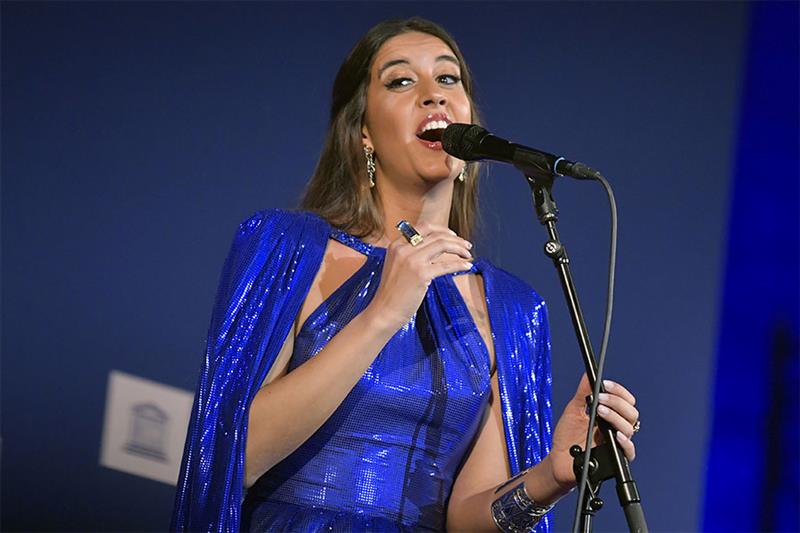
Egyptian mezzo soprano Farrah El-Dibany has performed La Marseillaise the French national anthem, in the beginning of the final FIFA World Cup match against Argentine in Doha, Qatar on Sunday.

Farrah El-Dibany has sang during the re-election of Emmanuel Macron on April 24.

She was awarded France’s Ordre des Arts et des Lettres in the grade of Chevalier (Knight) by France’s Ambassador to Cairo Marc Baréty during an official ceremony in April.

Born in Alexandria in 1989, El-Dibany is one of the well-known Egyptian singers of her generation, establishing herself on an international scale in a short time.

Read more about Farrah  El-Dibany here.

source/content: english.ahram.org.eg (headline edited)

____________

_________

EGYPT

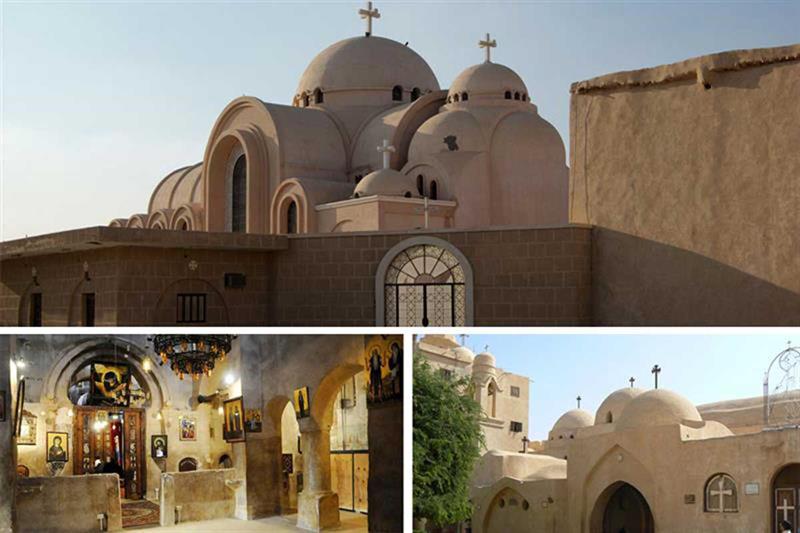
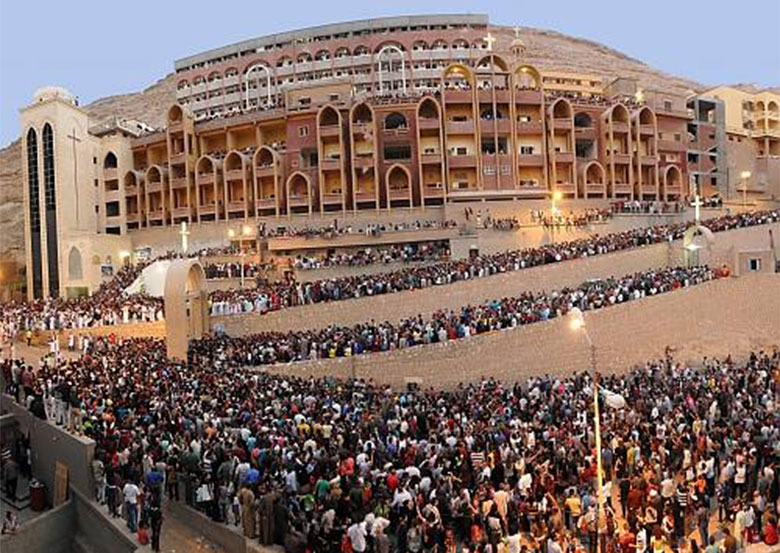
EGYPT enlists ‘Journey of the Holy Family Festivals’ on UNESCO List of Intangible Cultural Heritage of Humanity

“Festivities and celebrations affiliated with the Journey of the Holy Family in Egypt are now on UNESCO’s Representative List of Intangible Cultural Heritage of Humanity,” professor Nahla Imam, heritage consultant at the Egyptian Ministry of Culture and country representative of Egypt at the 2003 Convention of Safeguarding the Intangible Heritage of UNESCO, told Ahram Online on Wednesday.

Imam credited the move to the efforts of the Egyptian ministries of culture and foreign affairs, adding that Egypt’s efforts were almost unanimously supported by UNESCO’s Inter-Governmental Committee.

This is the seventh intangible cultural heritage element that Egypt enlists in UNESCO. Prior to the Journey of the Holy Family, the Egyptian manual-textile industry in Upper Egypt was put on the UNESCO List of Intangible Cultural Heritage Sites in Need of Urgent Preservation.

Egypt first enlisted El-Sirah El-Helalya (The Epic of Beni Helal) in 2008, Tahteeb (Stick Art) in 2016, the Aragouz Puppet in 2018, and the knowledge and traditions affiliated with palm trees in 2019.

According to the accounts of historians, the Holy Family spent around four years in Egypt.

Their trip started in the Sinai at Al-Farma, on the border with Gaza, where they arrived after fleeing Jerusalem. Their trip ended in Durnaka, Assiut, venue of the famous Monastery where the feast of Virgin Mary is celebrated in August each year. ​

source/content: english.ahram.org.eg (headline edited)

___________

__________

EGYPT

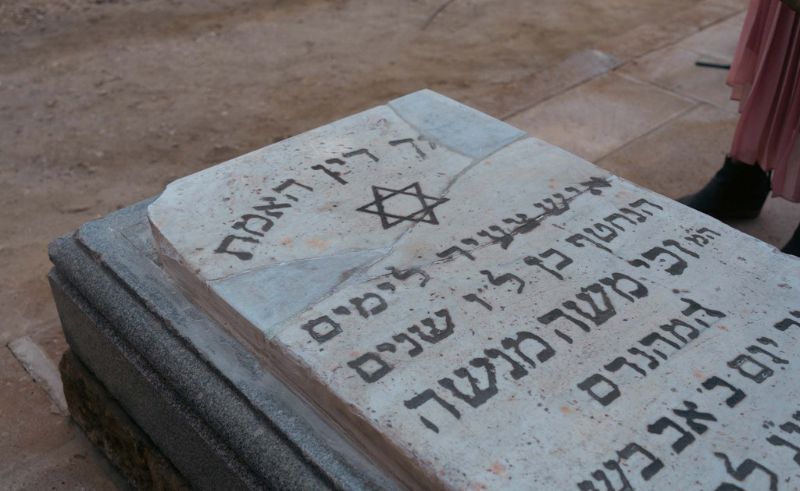
EGYPT: World’s Second Oldest, 1,200 Years-Old Jewish Cemetery Restored & Reopened in Basatin, Cairo

Over 1,200 years old, and after facing extreme neglect for decades, the Basatin Jewish Cemetery finally reopens.

The Basatin Jewish Cemetery – the second oldest Jewish cemetery in the world, and one of Cairo’s few remaining Jewish cemeteries – has undergone extensive renovations and opened its doors once more.  

With a foundation dating to the 9th century during Egypt’s Tulunid Dynasty, the 147 acres of land designated for the cemetery at the time included separate areas for Rabbanite and Karaite Jews and extended beyond the Tulunid capital of Egypt.

In more recent times, allegedly during the reign of Mamluk Sultan Qaitbay in 1482, the cemetery was divided into separate pieces of property totaling roughly 27 acres. These plots include the Basatin graveyard’s common burial grounds, the private Mosseri family cemetery, Rav Haim Capusi’s grave, the private Moise Cattaui Pasha cemetery, and the remaining Karaite section of the original cemetery.

Over the past three years, the American Research Centre in Egypt and the United States’ Ambassadors Fund for Cultural Preservation and Drop of Milk Foundation have been working to restore the neglected cultural and religious heritage site.

After the completion of the conservation project, members of the Karaite Jewish community –  known for exclusively respecting the principles of the Torah and disowning oral traditions like the Talmud and other writings of the Rabbis – from various nations attended the ribbon-cutting ceremony, and were able to revisit their families’ graves for the first time in decades.

source/content: cairoscene.com (headline edited)

____________

_________

EGYPT

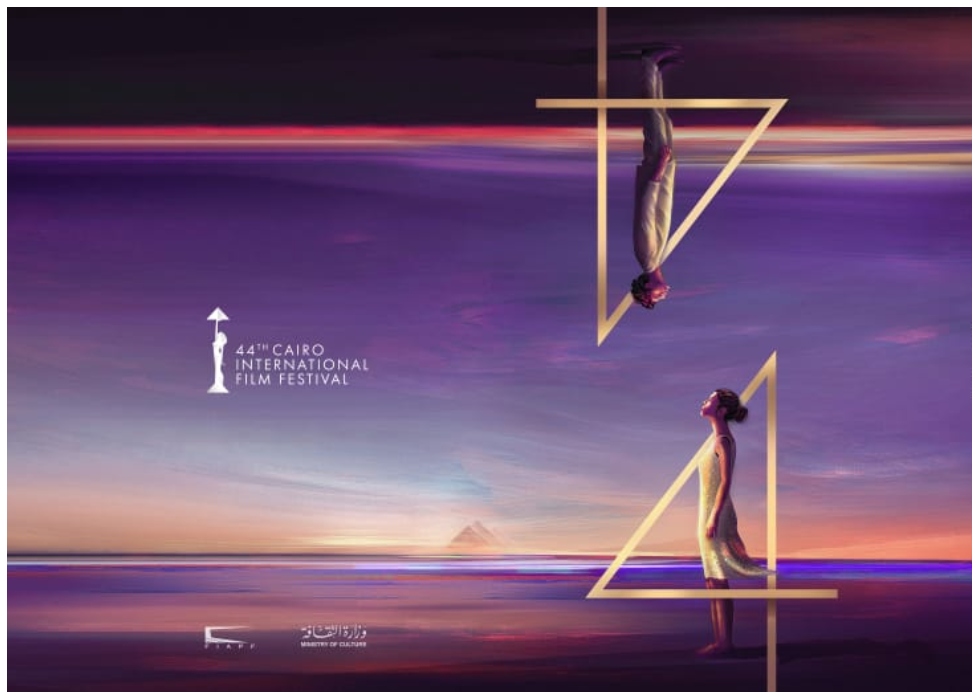
EGYPT: Award Winners of the ’44th Cairo International Film Festival 2022′ (CIFF), 13-22 November

The 44th CIFF’s closing ceremony took place on the stage of the Cairo Opera House on Tuesday evening.

Awards of the 44th Cairo International Film Festival are as follows:

International Competition

The Golden Pyramid Award
Alam by Firas Khoury (France, Tunisia, Palestine, Saudi Arabia, Qatar)

The Silver Pyramid Award, Special Jury Award, for Best Director
Love According to Dalva by Emmanuelle Nicot (Belgium, France)

The Bronze Pyramid Award For Best First or Second Feature
Bread and Salt by Damian Kocu (Poland)

Naguib Mahfouz Award For Best Screenplay
A Man (Japan), screenplay by Kosuke Mukai

Best Actor Award
Maher El Khair for his role in The Dame by (France, Lebanon, Sudan, Qatar, Germany, Serbia)

Best Actor Award
Mahmoud Bakry for his role in Alam (France, Tunisia, Palestine, Saudi Arabia, Qatar)

Best Actress Award
Zelda Samson for her role in Love According to Dalva (Belgium, France)

Henry Barakat Award for Best Artistic Contribution (Awarded to the Cinematographer)
19B, cinematography by Mostafa El Kashef (Egypt)

The Horizons of Arab Cinema Competition 

Saad Eldin Wahba Award for Best Arabic Film
Mother Valley by Carlos Chahine (France, Lebanon)

Salah Abu Seif Award 
Riverbed by Bassem Breche (Lebanon, Qatar)

Best Non-Fiction Film Award
Far From the Nile by Sherief Elkatsha (Egypt, USA)

Best Acting Performance Award
Carole Abood for her role in Riverbed ( Lebanon, Qatar)

Special Mention for Film
I’m Coming Home by Yassine Redissi (Tunisia)

Special Mention for Best Actress
Lyna Khoudri for her role in Houria (France, Belgium)

International Critics’ Week Competition 

Shadi Abdel Salam Award for Best Film
PAMFIR by Dmytro Sukholytkyy-Sobchuk (Ukraine, France, Poland, Chile, Luxembourg)

Fathy Farag Award
Joyland by Saim Sadiq (Pakistan)

Special Mention
Victim by Michal Blaško (Slovakia, Czech, Germany)

Short Film Competition

Youssef Chahine Award for Best Short Film
Rosemary A.D. (After Dad) by Ethan Barrett (USA)

The Special Jury Award
My Girlfriend by Kawthar Younis (Egypt)

Special Mention
One F*cking Wish by Piotr Jasiński (Czech)

Special Mention
Riverbed by Bassem Breche (Lebanon, Qatar)

CIFF Cash Awards

Best Arab Film Award (USD 10,000)
19B by Ahmad Abdalla, Produced by Mohamed Hefzy (Egypt)

Youssef Chahine Award for Best Short Film (EGP 10,000)
Rosemary A.D. by Ethan Barrett  (USA)

Youssef Cherif Rizkallah Award (Audience Award, USD 15,000)
Alam by Firas Khoury produced by Marie Pierre Macia, Claire Gadéa and distributed in Egypt by Mad-Solutions (France, Tunisia, Palestine, Saudi Arabia, Qatar)

source/content: english.ahram.org.eg (headline edited)

___________

__________

EGYPT

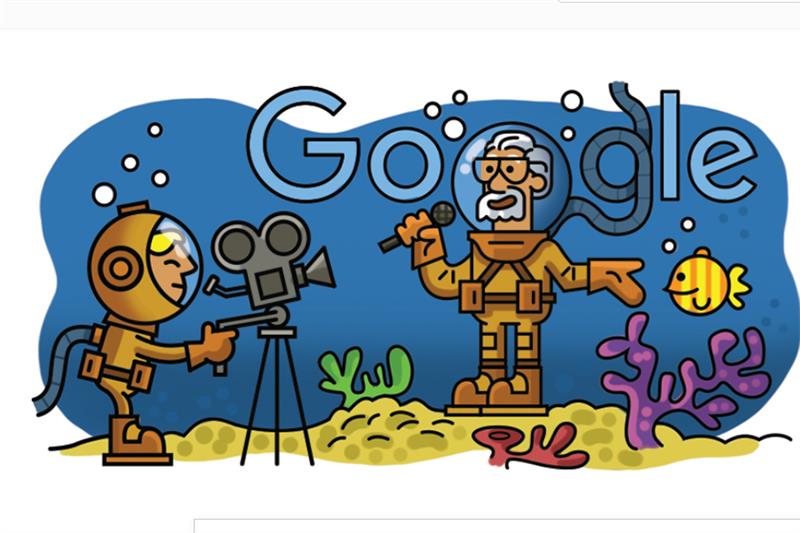
EGYPT: 15th November: Google Doodle Celebrates Iconic Egyptian Scientist, TV Presenter Hamed Gohar

Google search engine celebrated the late Hamed Gohar’s 115th birth anniversary on 15 November with a Google Doodle.

The Egyptian scientist, marine biologist and TV host, Gohar is considered the founding father of oceanography in Egypt and the Arab world.

Born on 15 November 1907, he studied medicine at Cairo University in 1925 before shifting to biology. He then received his master’s degree in oceanography from Cambridge University in 1931.

The note under the doodle adds that “Gohar discovered that dugong, a sea mammal that was thought to be extinct in the region, still existed in the Red Sea. He continued studying underwater life for 25 years at the Hurghada marine biological station.”

He worked with the Arabic Language Academy to create scientific dictionaries in Arabic and served as an adviser to the United Nations’ Secretary General and helped organize the first International Conference on Law of the Sea in Geneva.

The general public knows Gohar for his educational show called “The Sea World” which he hosted on national television for 18 years. The programme highlighted underwater scenery and natural sea life, bringing the viewers closer to marine biology.

Gohar died on 17 June 1992 at the age of 84.

source/content: english.ahram.org.eg (headline edited)

__________

_________

EGYPT

EGYPT : The Digital Archive Preserving the Fading Art of Egyptian Typography

Two graphic designers decided to share their most inspirational street finds with everyone on the internet – and launched an online platform to let everyone else share as well.

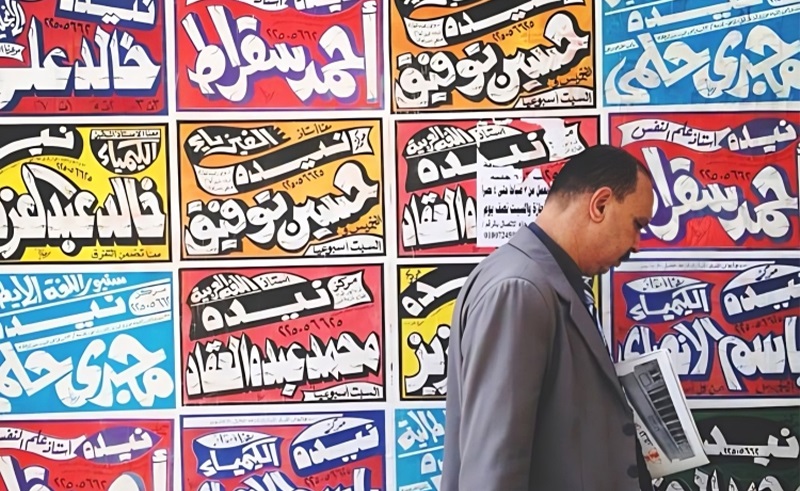
In Egypt, where there are streets and roads and passageways, there are signs and posters and billboards dating back decades and even centuries, each reflecting their own era of styles, tastes and contexts. It’s a beautiful mess of typography that often gets lost with time, and the Egyptian Type Archive was born to capture and encapsulate it for good.

The founders, Toka Assal and Abdo Mohamed, met online and bonded over their shared interest in street typography, drawing inspiration from their travels to cities across Egypt, from Aswan to Minya and Port Said. As graphic designers and type artists, they decided to share their most inspirational street finds with everyone on the internet – and launched an online platform to let everyone else share as well.

“When we started we didn’t even have a logo, we just used a picture I took of some text on a microbus that said ‘Semsem’ and ‘Semsema’,” Mohamed tells CairoScene. “We found out later that those were the names of the bus owners, a brother and sister. Although we know it’s not professionally designed, the text really looked like it was. But now everything is digital and fast-paced, so we’re losing the artistry and craftsmanship of typography and calligraphy.”

Exclusively focused on Arabic street typography in Egypt, the Egyptian Type Archive has amassed a loyal community on Instagram. They collectively document any text they stumble upon, from the quirky to the horrific to the beautiful, whether it’s an ancient sign on a vintage shop or an announcement sprayed on the walls of a local cafe.

“My favourite finds are food carts, their typography has a very distinct style embodying the essence of street art,” Asal shares. “It’s also very instinctual with the text written tackling hasad or rizq.” Here Asal refers to written prayers or phrases traditionally used to ward off the evil eye, or invite God’s blessing – a visual manifestation of deeply held beliefs and spirituality.

Mohamed and Asal’s view on what constitutes art or on the nature of street typography questions notions of ‘professionalism’, where they treat every sign and piece as a story on its own. Initially, they wanted to document the names of the calligraphers until they found that – more often than not – the text is created by commission, so the artists don’t normally sign their names under their work.

Although strangers in the street often regard them with confusion when they see them taking pictures of manhole covers or old movie posters, the founders believe their documentation serves a purpose to typographers, designers, and Egyptians at large. Through their work, and the work of their burgeoning community, they preserve a dying visual culture and ensure it survives to the next generation of Egyptian creators.

source/content: cairoscene.com (headline edited)

_________

_________

EGYPT

EGYPT/ EMIRATES/ LEBANON/ PALESTINE/ TUNISIA: 6 Arab Female Filmmakers to Keep an Eye On 

Read on for a list of regional female filmmakers who have been taking the industry by storm.

Farida Khelfa

Farida Khelfa is an Algerian-French documentary filmmaker. She is currently set to release a new film titled “From The Other Side of the Veil” that aims to dismantle misconceptions and stereotypes that often surround Arab women.

Kaouther Ben Hania

The Tunisian filmmaker made headlines in the film industry after her critically acclaimed movie “The Man Who Sold His Skin” was shortlisted for the Oscar’s Best International Feature Film award this year.

Ayten Amin

The Egyptian director has long chronicled the lives of women in modern Egypt. Her feature film “Souad” was selected for the cancelled 2020 Cannes Film Festival.

Danielle Arbid

Danielle Arbid is a Lebanese filmmaker. Her work has screened at numerous film festivals in France and the rest of the world, including New York, San Francisco, Tokyo and more.

Annemarie Jacir

The Palestinian filmmaker has written, produced and directed award-winning films such as “A Post Oslo History.” Her movie “Wajib” (2017) won her 18 international awards.

Nujoom Al-Ghanem

The Emirati filmmaker, writer and poet had to overcome societal stigma and family disapproval to make it. She defied the odds and produced films such as “Amal” (2011) and “Sounds of the Sea” (2015).

source/content: arabnews.com (headline edited)

__________

______________________________________________________________

EGYPT/ EMIRATES(U.A.E)/ LEBANON/ PALESTINE/ TUNISIA