Arabs & Arabian Records Aggregator. Chronicler. Milestones of the 25 Countries of the Arabic Speaking World (official / co-official). AGCC. MENA. Global. Ist's to Top 10's. Records. Read & Enjoy./ www.arabianrecords.org
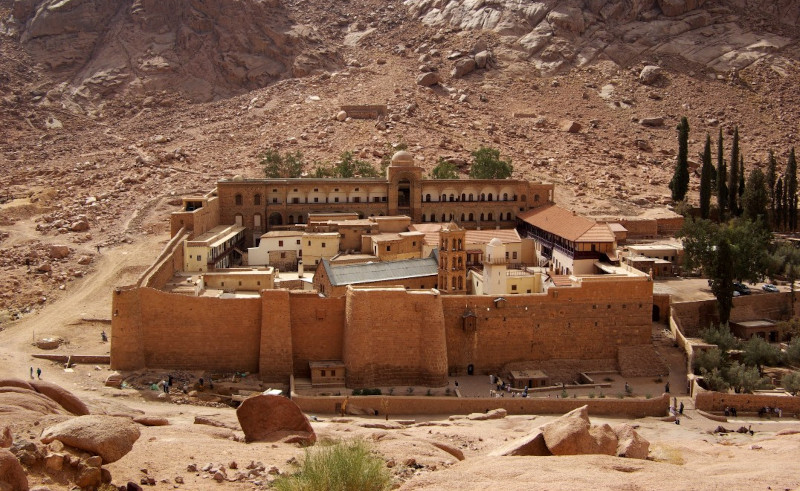
A fragment of the legendary star map by ancient Greek astronomer Hipparchus has been uncovered in St. Catherine’s Monastery.
Within the library of St. Catherine’s Monastery in South Sinai – the oldest continuously-running Christian monastery in the world – researchers have uncovered a fragment of history’s oldest complete star map, penned by ancient Greek astronomer and mathematician Hipparchus.
Hipparchus is considered to be the greatest astronomer in ancient Greece, and so researchers had been searching for his catalogue of stars for centuries. The manuscript in St. Catherine’s Monastery appeared to be something completely different; the pages contained a collection of 10th or 11th century Syriac text called the Codex Climaci Rescriptus. But as it turned out, it wasn’t just that – the pages were a palimpsest, or a parchment in which previous text was wiped clean so that it can be reused.
But much like scribbling your pencil over recently erased writing, it was possible to discover what was erased from a palimpsest. Researchers from the University of Cambridge, the University of Rochester in New York, the Early Manuscripts Electronic Library in Rolling Hills Estates, California and the French national scientific research centre CNRS in Paris worked together to find layers of writing that had been wiped away. Amongst them were the coordinates for the constellation Corona Borealis, and by comparing these precise coordinates with how the night sky would have been arranged in antiquity, the researchers found that the coordinates would have been made in 129 BC – right when Hipparchus was making his revolutionary cosmic calculations.
An excerpt of the discovered document was recently published in the Journal for the History of Astronomy, and is available online.
Egyptian doctors ranked among the top five ‘joiner doctors’ who joined the UK medical workforce in 2021, according to a report released the British General Medical Council (GMC).
The GMC, a UK public body responsible for maintaining the official register of medical practitioners within the kingdom, said that Indian, Pakistani, Nigerian and Sudanese doctors were the other four nationalities in the top five who joined the kingdom’s medical system that year.
The GMC report also found that the number of Egyptian – as well as Chinese and Sudanese – doctors who joined the UK’s medical system tripled between 2017 and 2021.
It explained that the number of Egyptian doctors who joined the UK medical workforce was 435 in 2017 and increased to 765 in 2018. But, these numbers, it added, increased by almost 200 percent in the following three years on average, registering 1,301 in 2019, 1,220 in 2020, and 1,312 in 2021.
More IMGs – less UK and European
The GMC report analysed statistics related to the UK medical workforce and discussed various challenges that faced the kingdom’s medical system in 2022.
It found that the number of international medical graduates (IMGs) who joined the UK workforce in 2021 exceeded the numbers of graduates from UK and European Economic Area (EEA) who joined the kingdom’s workforce.
These increasing numbers of IMGs came primarily from doctors from South Asia, the Middle East and Africa, the report found.
Doctors from these three regions comprised 84 percent of all ‘IMG joiners’ in 2021 at 8,900 doctors, a number which actually exceeded the number of 8,200 UK graduates who joined the country’s workforce in the same year, the report added.
According to the GMC report, the ‘joiner doctor’ category includes doctors who obtained a license to practice medicine in the year before applying for a job in the UK medical system.
The single fastest route to becoming a ‘joiner doctor’ is through enrollment in the UK’s medical graduate programmes, the GMC report found.
Egyptian doctors: Challenges and solutions
In recent decades, Egyptian doctors have faced increasing financial difficulties due to low pay as well as an increasing workload amid population growth.
According to a March 2019 study released by the ministries of health and higher education, the numbers of doctors who held a license to practice medicine in Egypt were estimated at 212,000 in 2018, with 82,000 of them – or 38 percent of the total – working in hospitals, both public and private.
The study also found there was an average of 8.6 doctors for every 10,000 citizen – or one doctor for every 1,162 citizen, when the global average was 23 doctors for every 10,000 citizen – or one doctor for every 434.
The Egyptian Medical Syndicate, which represents the country’s doctors, said in a report in April of this year that the doctor-to-citizen ratio improved to 9.2 doctors for every 10,000 citizen by March 2022 but remained far short of the global average.
The syndicate also said that 11,536 doctors resigned from the Egyptian public health sector from 2019 through March 2022.
Though these numbers do not represent more than five percent of the total of practicing physicians in the country, still, they have pushed many in the public to call on the government to improve the work conditions and salaries for doctors in order to stop any “doctors exodus” – real or not – and prevent any acute shortages that could impact the health system adversely.
The government has responded to these public calls by increasing the number of medicine faculties in the last few years in order to graduate more physicians.
It has also increased spendingon the health sector to EGP 128 billion in the budget for the FY 2022/23 up from EGP 108 billion in 2021/2022 – an 18.5 percent increase.
In 2021, the government, as per President Abdel-Fattah El-Sisi’s directives, raised salaries and allowances for doctors and nurses in the public health sector by 75 percent.
Last August, President El-Sisi also instructed the government to offer financial incentive package for medical staff to improve their work conditions and raise their incomes.
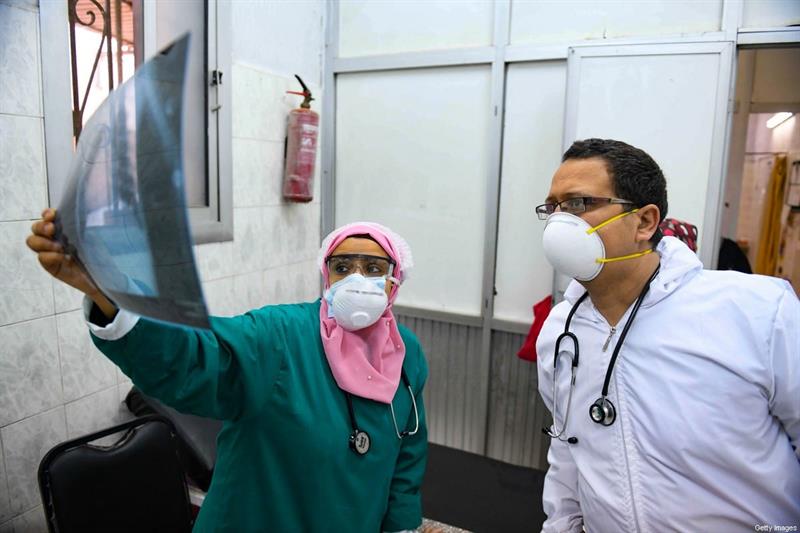
Egyptian doctors check a patient s X-ray at the infectious diseases unit of the Imbaba Hospital in Cairo, during the novel coronavirus pandemic crisis. (AFP)
The Egyptian Chamber of Commerce in Alexandria, the first in Egypt and Africa, is celebrating its centenary, reports Ameera Fouad.
It has been 100 years of success, 100 years of international and local relations, 100 years of developing markets and companies, 100 years of trade agreements, and 100 years of boosting made-in-Egypt products.
The Egyptian Chamber of Commerce in Alexandria is celebrating its centenary this year, having been established in April 1922. It was the first national chamber of commerce to be established in Egypt, Africa, and the Arab region. Situated near the Raml Station in Alexandria, it acts as a national economic and business institution that fosters economic and business development in Alexandria and the Arab and Mediterranean region.
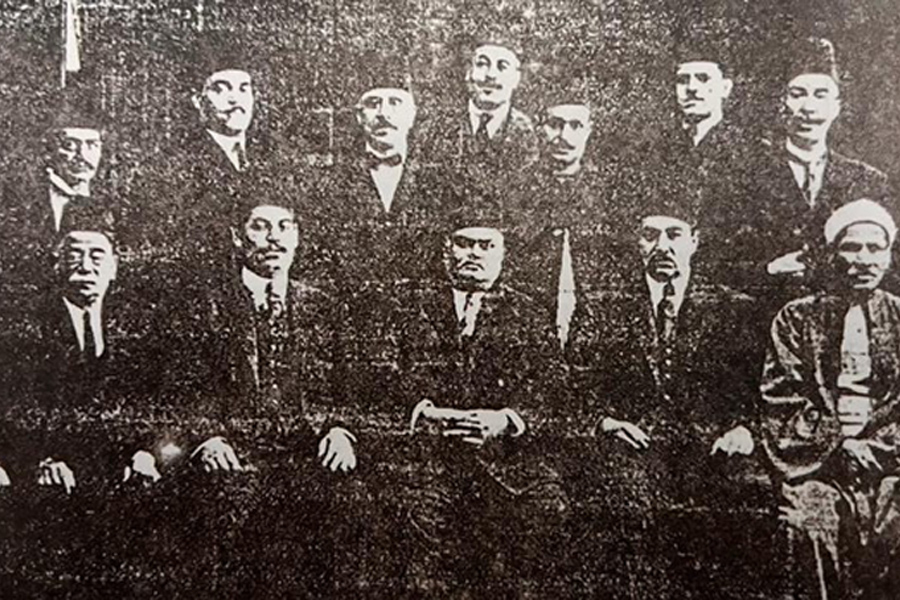
The idea of setting up the chamber developed after the 1919 Revolution, which demanded the freedom and independence of Egypt’s industry and commerce. With the agreement of traders and industrialists, the chamber’s first board members were elected in 1922.
Its first elected president was businessman Mohamed Effendi Tawfik. According to a report published by the chamber, 129 members joined it when it was founded, a large number, and in addition to the president 15 board members were elected.
The centenary of the chamber coincides with the 40th anniversary of the foundation of the Federation of Mediterranean Chambers of Commerce (ESCAMI). This brings together more than 500 chambers from 23 countries overlooking the Mediterranean and more than 22 million companies. It is headed by Ahmed Al-Wakeel, president of the Chamber of Commerce in Alexandria.
The ESCAMI chambers implement regional projects financed by the EU with a budget of more than 180 million euros in the sectors of the food and textile industries, tourism, transport and logistics, new and renewable energy, environment and training for employment, regional development, transport and logistics, and the participation of workers abroad in the development of their countries. There is also a regional programme for the development of trade and investment.
At a press conference held to announce the centenary, Al-Wakeel said that the Alexandria chamber was working on automating all the services provided to its affiliates by the end of this year at a cost of LE7 million as part of the country’s larger commitment to digital transformation.
“The process includes the establishment of an electronic portal for the chamber, in addition to launching an electronic application on mobile phones,” Al-Wakeel said. He added that it also includes the internal systems of chamber employees and financial and administrative aspects.
The chamber has begun to provide online services to its members, such as obtaining certificates and getting acquainted with the laws that regulate the business environment as well as regulations and tenders. In terms of financial inclusion and the electronic transformation, the chamber is currently studying ideas for signing a protocol with an electronic payments company.
During the press conference, Al-Wakeel stressed the leading role played by the software industry, not only at the level of the Egyptian market, but also globally in the light of the availability of suitably qualified professionals. “Our professionals compete globally and are considered one of the sources of our national income,” he added.
He also highlighted the importance of updating the laws on intellectual property rights in Egypt after the launch of the Egyptian Strategy for Intellectual Property, which guarantees the rights of companies and individuals.
DEVELOPMENT ROLE: One of the core roles the chamber undertook just after its establishment was to resolve the economic problems that resulted from World War I.
“Among these problems were the lack of sugar in the markets, the tram tariffs, the issue of reducing freight fees and freight for ships and railways, and reducing floor fees and many more,” said Ahmed Sakr, a board member of the chamber.
“The then council addressed all these problems to meet contemporary concerns and needs.”
Since its establishment, the chamber has paid special attention to fostering and developing national industry and made-in-Egypt products. In 1940, it held its first permanent exhibition for national industries in Said Al-Awal Street in Alexandria. Then king Farouk visited the exhibition and hailed it as a success.
To hold the exhibition, the chamber made an agreement with Banque Misr to allow exhibitors participating in it to pay an interest rate on loans for exhibitions not exceeding two or three per cent. This succeeded in encouraging and assisting manufacturers and Egyptian-made products at the time.
A hundred years on, the chamber is still keen on taking the necessary steps to cope with global developments and the environmental changes associated with the climate change crisis. “The chamber is one of the first buildings that uses solar energy in its historic building in the Raml Station area,” Sakr added.
The chamber also uses solar energy in the wholesale market in the Ameriya district, making it the first of its kind in the world to operate on solar energy. The market was opened last February in the presence of Ali Moselhi, the minister of supply, Mohamed Al-Sharif, the governor of Alexandria, and Christian Berger, the EU ambassador to Egypt.
“We are always striving to play our important role in terms of social responsibility and sustainable development,” Sakr said.
WOMEN’S ROLE: Realising the important role that youth and women play in the economic sector, the chamber has helped strengthen their roles in society.
It activated an amendment introduced to the chambers law in 2002 that allowed the election of women as board members of the Chambers of Commerce. In 2015, the chamber established its first committee for businesswomen to represent female entrepreneurs and others. The committee aims at helping them to solve their problems and providing them with opportunities and workshops that can help them to promote their own businesses.
In an interview with Al-Ahram Weekly, Al-Wakeel stressed the importance of women’s participation in the economy and comprehensive social and economic development. “It is an essential role that works to enhance Egypt’s long-term prosperity and stability,” he said.
He expressed his hope for more cooperation with embassies and other chambers in the field of women’s economic empowerment. The chamber is seeking networking opportunities and shared experiences with other countries in order to achieve a women’s economic renaissance and an effective developmental footprint, he said.
Reem Siam, founder of the Economic Council for Businesswomen, reviewed the Alexandria Chamber’s actions over the past seven years, praising steps taken to support female entrepreneurs and the programmes that the chamber has sought to implement in the wake of the Covid-19 pandemic.
Social responsibility: Many people relate the Chamber of Commerce only to industry and trade. But it also plays an important role in society and in facing up to many economic and other challenges.
“We have faced two major problems, a deadly pandemic and now the Russian-Ukrainian War, in just one decade,” Sakr told the Weekly. “But at the same time, we are working tirelessly for the sake of members and the wider population so that the markets will remain stocked with products.
“No one expected that the Russian-Ukrainian war would affect the Egyptian economy in the way that it has, especially the tourism sector. We must open new markets, encourage more types of tourism, and seek new opportunities in every sector,” he said.
In response to the high prices of commodities and high inflation, the chamber last month inaugurated a Food Commodities Exhibition under the auspices of the Northern Military Region, the Alexandria Governorate, and the Ministry of Supply.
The exhibition offers food commodities at discounted prices ranging from 10 to 30 per cent off at the General Abdel-Moneim Riad Complex on the Agricultural Road in the Smouha district of Alexandria.
It is divided into 50 sections with the participation of 35 exhibitors and offers discounts on various products. Companies affiliated to the Food Industries Holding Company of the Ministry of Supply, some major commercial chains, fresh and processed meat and poultry companies, and various food commodity companies have all participated in the exhibition.
“We believe that crises serve as catalysts for major transformations. The present anniversary marks an important point in history where everybody in the chamber is trying out innovative methods using digital technologies, open data, and citizen engagement for the greater welfare of our country,” Sakr concluded.
*A version of this article appears in print in the 13 October, 2022 edition of Al-Ahram Weekly.
Winner of the Audience Award at Venice Film Festival’s Orizzonti Extra Section, ‘Nezouh’ follows a Syrian family on the verge of becoming refugees.
Syrian film ‘Nezouh’ starring Kinda Alloush and Samer Al Masri, and directed by Syrian filmmaker Soudade Kaadan, won the Audience Award at Venice Film Festival’s Orizzonti Extra Section, supported by Armani Beauty. This is Kaadan’s second win at the festival after ‘The Day I Lost My Shadow’ (2018), her first feature-length film and the winner of Best Debut Film.
The film stars the Cairo-based Syrian actress Alloush, known for her roles in Egyptian and Syrian dramas. She was first introduced to Egyptian audiences in 2009 with her role in ‘Welad El A’am’ and has since starred in multiple films and series including ‘El Maslaha’ (2012), and ‘El Asliyyin (2017). She’s also part of the cast of ‘The Swimmers’ (2022) which debuted at Toronto Film Festival.
‘Nezouh’ is set in war-torn Damascus and tells the story of a Syrian family at a crossroads choosing between fleeing or clinging on to their home. The father, played by Samer Al Masri, refuses to become a refugee while his fourteen-year-old daughter yearns for freedom. The film is inspired by the filmmaker’s personal journey away from Damascus and the effect of the conflict on Syrian women’s social reality.
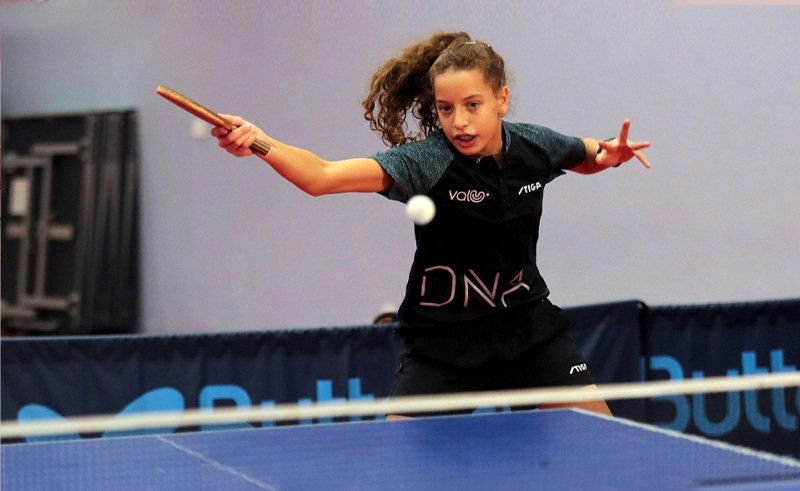
At only 14 years old, Egyptian athlete Hana Goda holds the number one rank in the International Table Tennis Federation’s (ITTF) U19 Girls’ Singles list for the first time.
Egyptian table tennis champion Hana Goda has cemented her legacy as the first person to hold the number one rank in the International Table Tennis Federation’s (ITTF) U19 Girls’ Singles list at only 14 years old.
After an exceptional performance at the 2022 ITTFA, the long-standing national champion and Africa Cup senior champion also stands at 43 in the International Table Tennis Federation’s Women’s Singles ranking worldwide.
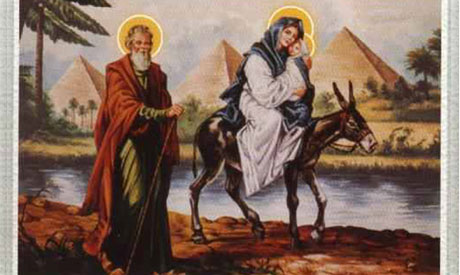
As Egypt promotes the trail of the Holy Family as a major tourist experience, Ahram Online republishes an account of stops and cities where the Virgin Mary, Joseph and Jesus found safety and shelter in the country.
“Now when Jesus was born in Bethlehem of Judaea in the days of Herod the King, behold, there came wise men from the east to Jerusalem, saying, Where is he that is born King of the Jews? For we have seen his star in the east, and are come to worship him.”
(Matthew 2:1-2)
———-
The story of the holy family’s journey from Palestine to Egypt has long been recorded with dedication by historians and authors around the world. Many look upon the journey as a mark in the history of Egypt, not merely a religious event. Egyptians look with fondness and pride on the passage of the holy mother and her child through the land of Egypt, and the fact that they found solace here.
The flight to Egypt
The Virgin Mary gave birth to Jesus in Bethlehem of Judaea in Palestine. Upon his birth, wise men preached to the people of the city, declaring that Jesus was the chosen one, and that, “according to prophecies” they had seen in the stars, he would become the next king of the Jews. Upon hearing the news, King Herod was overcome by terror at the possibility of losing his throne. He decided that killing Jesus was the only way to protect his royal status.
In a dream, Joseph, the carpenter, was ordered by God to escort Jesus and his mother to Egypt, where they would find refuge. Both Western and Eastern traditions agree that the method of transport most likely used by the holy family on their journey to Egypt would have been a donkey. In this situation, the Virgin Mary would have been seated on the donkey, holding the child Jesus in her arms and Joseph would have walked by their side, leading the way.
The holy family in Sinai
Keller writes in his book, The Bible as History (1955): “A day’s journey from Gaza brought the holy family to the ancient township of Jenysos, which is mentioned by Herodotus, the Greek historian.” Today, this village, which is part of the Gaza Strip, is known as Khan Younis. “The next town on the holy family’s route would have been Raphia (Rafah), the frontier town between the Gaza Strip and the province of Egypt.”
Continuing for another 44 kilometres, beyond Raphia, and after almost two days of traveling, the mother and child reach Wadi Al-Arish, a point at which they are safe enough to obtain food and shelter. The holy family passes by other towns in Sinai such as Al-Muhammadia and Al-Farma, located 35 kilometres east of El-Qantara City. Churches from the 5th and 6th century have recently been discovered in Al-Farma.
Route to the Nile Delta
The holy family continued on its trip to the Nile Delta, stopping at the city of Musturod, only 10 kilometres from Cairo. “The Virgin Lady”, a 12th century church, was found in the city.
Keller adds in his book: “The city of Musturod was again visited by the holy family on their return journey to Palestine.” After leaving Musturod and passing by Belbes, the holy family travel west to the Valley of Natroun, crossing the western branch of the Nile (the Rasheed branch).
The holy family in Cairo
The movie Journey of the Holy Family portrays the settlement of the blessed family in Al-Mataraya district near Ein Shams (Old Heliopolis). They find shade under a sycamore tree that came to be known as “Mariam’s Tree,” which has evolved into an engrossing attraction for religious tourists. The holy “Mayron oil,” or the “Chrism,” is nowadays prepared from the oil of the tree.
An ancient church was built in the area by the name of “The Virgin Mary” and is visited by people to this day. Paintings can be found inside the church, including maps of the holy family’s journey, as well as a statue of Jesus and his blessed mother guarded by Joseph the Carpenter.
In his book The Geography of Coptic Egypt (1989), French historian Amelenio narrates some of the stories passed down about the miracles of “Mariam’s Tree.”
One such story tells how “the French army sat by the tree, drank from its well and wrote their names on its stems.” It is believed that some of the wounded soldiers were healed by its oil. Amelenio adds: “Al-Matarya district became the most popular shrine in Egypt; a place where people flooded to for blessings and spiritual remedies.”
The second district visited by the holy family in Cairo was Al-Zeitun, where a church by the name “The Virgin Mary” was constructed in Toman Bey Street. It is said that appearances of the blessed lady were witnessed around the domes of the church up until recent years.
Another spot visited by the holy family was Zowela Avenue on at Been El-Soreen Street in El-Gamaleya district. An ancient church is found there with the same name, “The Virgin Mary”. It is considered one of the largest churches in Egypt and is distinguished by its basaltic style.
The holy family moved on to “Old Egypt” (Al-Fustaat) where they dwelled for a short time in a cave in Abi Serja’s Church, within the walls of the Roman Babylon fortress. “The cave is about 20 feet tall, 15 feet wide and does not have any windows,” as described by Amelenio, who believes the holy family’s stay in the cave did not exceed a week. After leaving Al-Fustaat, they moved to Maadi district and settled at the location where the Virgin Mary Monastery and church were later built by the Nile.
Amelenio explains that during Ottoman rule in Egypt, the church had a marina for boats allocated for the transport of people and soldiers traveling to and from Egypt. Some villages in Upper Egypt were visited by the holy family such as Assiut and Minya. In the book History of the Coptic Nation, author Samy Saleh records that the holy family took the same route on their journey back to Palestine. They first go to Maadi, passing through Old Egypt, then follow the road to Ein Shams, back to the city of Mustorod, and finally El-Arish, and from there to Gaza.
The trail of the blessed
At present, many Egyptian historians and archeologists are calling for a project to track each town or city visited by the holy family, so as to make it easier for tourists to visit the blessed spots, thus reviving the symbolism of the holy journey and its message of peace and goodwill to all men.
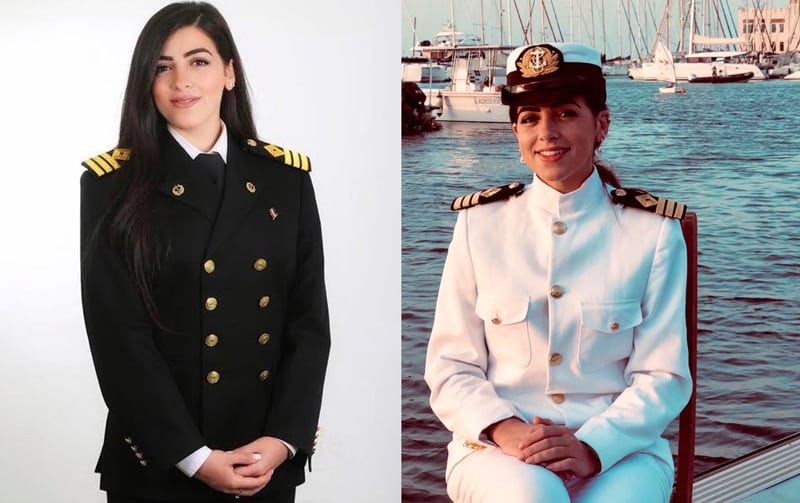
Navigating AIDA IV through new Suez Canal on opening day: Meet Egypt’s 1st female shipmaster.
Marwa El-Selehdar reveals how she became Egypt’s first female shipmaster and her journey to be part of the new Suez Canal celebrations.
As the government promoted the new Suez Canal as “Egypt’s gift to the world,” Marwa El-Selehdar, the country’s first and youngest female shipmaster, received the good news.
The 24-year-old would assist in navigating a naval vessel through the new waterway during the opening celebrations on 6 August, she was recently informed.
“I never thought that my dream would finally come true. I am going to be part of the inauguration as a second naval officer on the deck of the training ship AIDA IV,” El Selhdar told Al-Ahram newspaper.
El-Selehdar believes that her participation as the youngest and first Egyptian and Arab female shipmaster would bolster the image of the “civilised Egyptian women.”
“I was filled with joyous fear when I first learned about my participation.”
A 2012 graduate of the Arab Academy of Science, Technology and Maritime Transport (AASTMT) in the coastal city of Alexandria, El-Selehdar said that becoming a shipmaster was a childhood dream.
“In my first time ever training on board a ship, [My] Captain Abdel Hamid El-Qady and the rest of the crew made me feel at home,” El-Selehdar recalled.
Initially enrolled as a student in the maritime transport department at AASTMT, El-Selehdar was later encouraged to move to the marine navigation department at the school when she found out that there were no rules that prohibit females from studying to become shipmasters, she said in a television interview back in 2010.
Her determination to join the marine navigation department was further fuelled when she heard that a female student from the African Island of Djibouti won a scholarship to study at the department.
“I challenged myself and asked for a transfer from the maritime transport department to the marine navigation department. Amid a wave of refusals, this was the battle I had to fight in order to achieve my dream,” El-Selehdar said.
As she joined a male-dominated profession, El-Selehdar says that her mother encouraged her [as a woman] to continue on the path she chose.
Egypt has been preparing for grand celebrations for the opening ceremony of the new Suez Canal waterway on Thursday.
On Tuesday, nine swimmers who belong to the Egyptian Paralympics team – set to compete in the 2016 Rio de Janeiro Paralympics — crossed the new waterway holding a huge Egyptian flag.
Incoming visitors to the country had their passports stamped with “Egypt’s gift to the world” by Customs authorities.
After fulfilling her first dream of becoming a shipmaster, El-Selehdar is ready to achieve her second dream of living through the opening of the new canal.
“I always thought this project was a major one, but I never realised we would actually witness this remarkable and extraordinary event,” El-Selehdar said.
source/content: english.ahram.org.eg (headline edited) text / pix: marineinsight.com
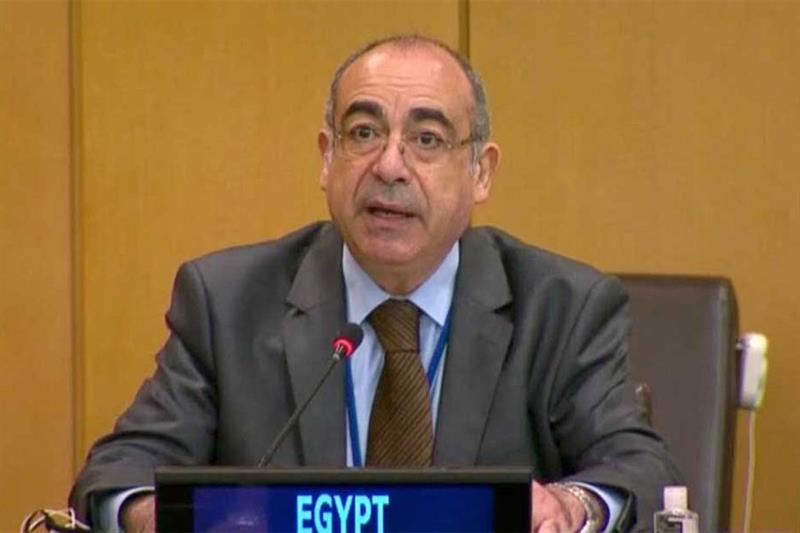
Secretary-General of the United Nations Antonio Guterres has appointed Egypt’s former permanent representative to the UN Mohamed Idris as a member of the Advisory Group of the United Nations Peacebuilding Fund, the Egyptian foreign ministry announced .
The appointment is in appreciation of the Egyptian diplomat’s efforts during Egypt’s 2021 presidency of the UN Peacebuilding Commission and as an affirmation of Egypt’s leadership in enhancing the effectiveness of the UN peacebuilding structure since its establishment in 2005, the foreign ministry said in a statement.
This is the fourth time an Egyptian has been appointed as a member of the Advisory Committee of the United Nations Peacebuilding Fund, representing African countries, it added
The members of the Advisory group have an important role in advising the UN Secretary-General on the programmes and activities of the Peacebuilding Fund in accordance with requests from Member States and overseeing the implementation of the programmes of the Fund, a large part of which is located on the African continent, the ministry said.
The award recognises AUC’s Rare and Special Books Library as a leading institution in the preservation and restoration of Arabic historical documents.
The American University in Cairo’s Rare and Special Books Library was awarded UNESCO Jikji Memory of The World Prize. This prestigious award places the American University in Cairo next to some of the world’s leading history conservation entities. The award ceremony is set to take place this coming September in Cheongju-si, South Korea.
Founded in 1992, the AUC Rare and Special Books Library plays a fundamental role in restoring and preserving Egyptian history. Starting with just a few collector’s items, the RBSCL then developed to contain historic maps of Egypt, archives of oral recordings, historical magazines and periodicals, and historical AUC archives.
The UNESCO Jikji Memory of the World Prize is a USD 30,000 grant, given every two years, that honours institutions that have made notable contributions to the preservation and accessibility of documented history. The prize also pays close attention to the degree of expertise in treating said documents and the presence of special circumstances in procuring them.
Funded by the Republic of Korea, the prize was created to commemorate the inscription of the ‘Buljo jikji simche yojeol’, the oldest movable metal print in the world.
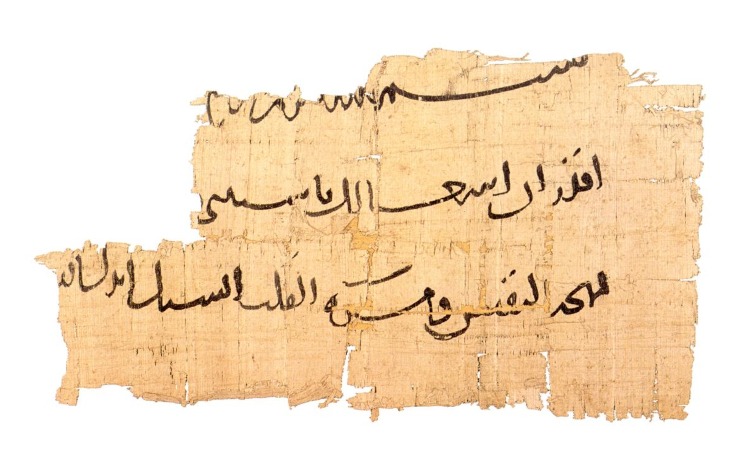
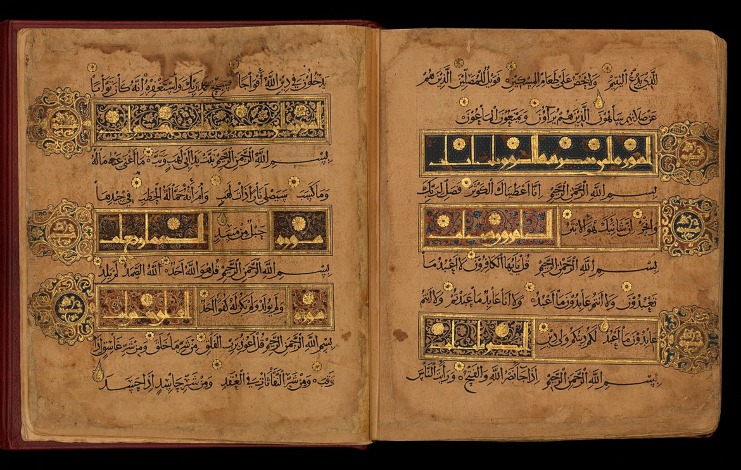
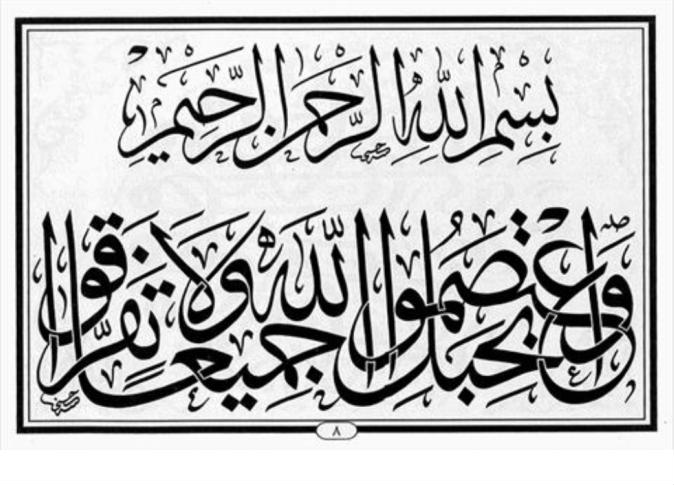
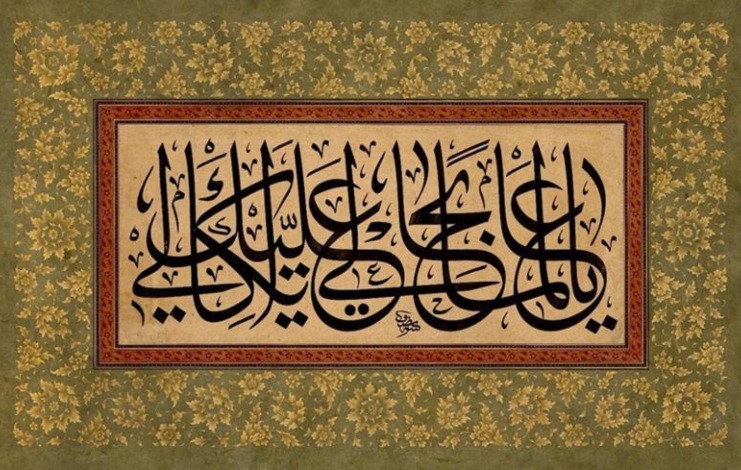
Arabic Calligraphy, the art of creating decorative handwriting or lettering, is one of the oldest art forms from the Arab region; one that has not only thrived with time but also evolved into a unique form of expression. It survived through several tumultuous periods that threatened its existence, from civil wars to an invasion by the Mongol Empire that destroyed Baghdad.
Even though the writing wasn’t as focused on in the past, with many Arabs preferring to memorize poetry and other forms of text and pass them down verbally, that changed significantly later. Calligraphy would flourish to include the preservation of the Quran, adorn mosques as well as the palaces of kings, and by royal scribes when writing decrees, among other things.
In celebration of World Calligraphy Day, we decided to dive into the past and look back at some of the most well-known and prominent calligraphers from the Arab world.
Ibn Muqla
One of the biggest names in developing and improving Arabic calligraphy, born in 885 AD in Baghdad, Iraq, during the Abbasid Caliphate, he started out as a tax collector before rising through the ranks and becoming the Caliph’s Vizier three different times.
At this time, the Kufi style dominated the calligraphy scene, but Ibn Muqla invented new art styles that superseded the previous ones. Ibn Muqla was the one who invented the Thuluth and Al-Mansoub styles, as well as the foundations and rules for others, such as Naskh. The Naskh and Thuluth got further development throughout the centuries that followed, and calligraphers still use them today.
While the Kufic style was rigid in its overall design, Naskh had a more cursive structure but wasn’t as popular and as used at the time, Ibn Muqla changed that by improving on it and using it in official decrees, and private correspondence.
Ibn Muqla’s Thuluth style was new with its letters having long vertical lines with broad spacing. Its name translates to “one-third”, in reference to the maximum height for the letters on the same line must not exceed one-third of the ‘alif.
As for the Al-Mansoubstyle, it mainly focused on three measurements: the size of the period meaning the “Noqta”, the circle with a diameter equal to the height of the alif (the first letter in the Arabic language) and, and the height of the alif.
Little is known when exactly Ibn Al-Bawwab was born. However, we know of his existence and his body of work thanks to the survival of many of his manuscripts, Qurans, and texts referring to him by name.
With his name literally translating to “son of the doorman,” he didn’t grow up in a wealthy family and had to work to make a name for himself. He did so by learning about law and theology and working in several professions, such as a home decorator. However, he would later settle on working in book illumination and calligraphy.
Over years of hard work, he became renowned as a master calligrapher; fluent in six different styles in the field, perfecting the Al-Mansoub style and developing the Reyhani, Naskh, Tawqi, and Muhaqaq styles significantly.
Housed at the Chester Beatty Library in Dublin, Ireland, is the sole surviving Qur’an penned by Ibn al-Bawwab gifted to the country by Ottoman Sultan Selim I.
Originally from Syria, Mohammad Hosni Al-Baba was born in 1894 and is considered one of the last classical calligraphers. Al-Baba received his initial formal training with the Turkish master, Istanbul-based Yousef Rasa, who had renovated the Umayyad Mosque in Damascus, Syria. Al-Baba would later study under another renowned calligrapher, Mehmed Showki Afendi, author of the work “The Thuluth & Naskh Mashqs.”
He would later travel to Cairo, Egypt, becoming one of the leaders in Islamic and Arabic calligraphy, turning his home into a hub for artists, calligraphers, and poets. Al-Baba would be famous for improvements to the lettering in the Thuluth style, the linear structure of Arabic script, and was appointed by King Farouk as the first professor to be a master at the Royal Institute of Calligraphy.
His children would continue his legacy but in different fields since many grew up surrounded by artists when they visited Al-Baba’s home. The most famous of his children are actress Soad Hosni, dubbed “Cinderella of Egyptian Cinema,” and Najat Al Saghira, who became an actress and singer.
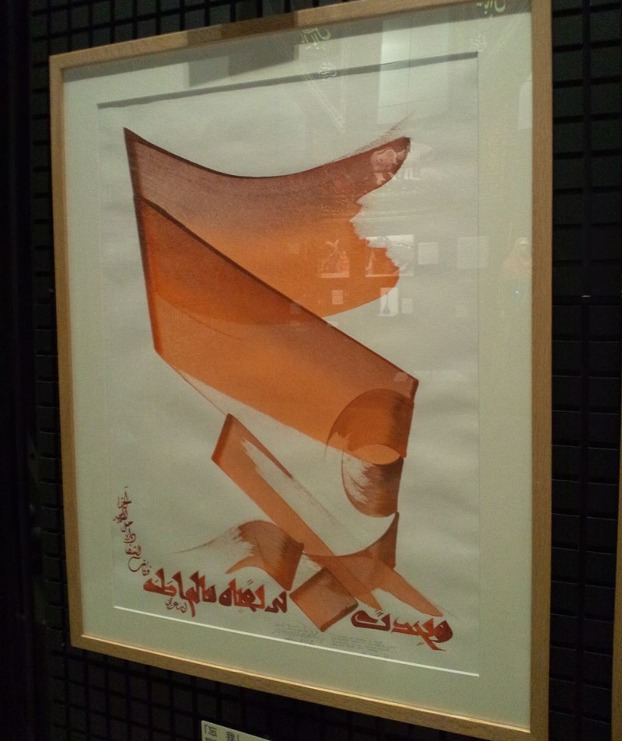
Born in 1944, Iraqi painter and calligrapher Hassan Massoudy continues to be one of the biggest inspirations for many modern artists today. French writer Michel Tournier even considered him as the “greatest living calligrapher” in 1989.
Massoudy grew up in Baghdad, Iraq, until 1969, when he fled to Paris, France, entering the École des Beaux-Arts, where he studied figurative painting. At the time, he looked for a job to pay for his studying, finally finding one as a calligrapher in Arabic magazines, writing their headlines.
While he wasn’t famous for a traditional calligraphy style, his distinct and elaborate designs made him stand out among the rest of the artists of his time. Massoudy would delve into the world of theater, collaborating with artists and choreographers, creating different productions focusing on the harmony of dance, calligraphy, and dance routines.
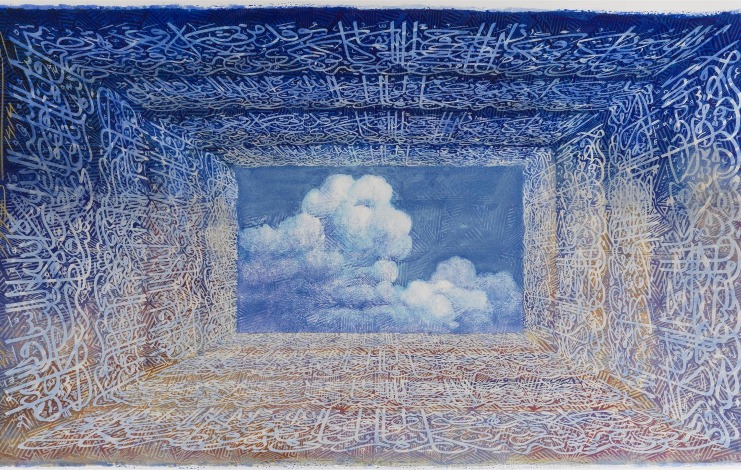
Studying abroad but seeking inspiration from his traditional roots, Tunisian artist and calligrapher Nja Mahdaoui invented the world of Arabic calligraphy as a graphic style, creating what was called “Calligrams.”
Born in 1937 in Tunis, Tunisia, he first started learning art history and painting at the Carthage National Museum. He later traveled to Rome, Italy, where he continued to study painting and learned more about philosophy at the Santa Andrea Academy. He also moved to Paris, France, where he went to the Cité Internationale des Arts and École du Louvre before returning to his home country in 1977.
His calligraphic style focuses mainly on the designs he creates as a whole rather than the composition of words since his “calligrams” resemble Arabic letters but have no literal meaning, leading to many naming him the “inventor of abstract calligraphy.” People can see Mahadaoui’s work on several materials used as a canvas, including jewelry, drums, leather, paintings, walls, glass, and so much more.
A UNESCO Crafts Prize laureate, Mahdaoui, graced the Facebook campus in 2018 by painting one of their halls using Arabic calligraphy in his unique style as part of the “FB AIR program,” turning their hall into a vividly colorful masterpiece.
Egyptian artist and calligrapher Ahmed Mustafa was born in 1943 in Alexandria, Egypt, graduating from the Faculty of Fine Arts at Alexandria University in 1966 before traveling to the UK on a scholarship to the Central School of Art and Design in London, England, where he earned his Ph.D. in 1989.
Inspired by his Islamic roots, his calligraphic works mainly focused on quotes from the Quran, among other sources. Working on several materials as his canvas, Mustafa has designs on glass and carpets, among others.
Mustafa also set up the Fe-Noon Ahmed Moustafa Research Centre for Arab Art and Design in London in 1983. He lectures and creates workshops globally as well as does commissions, one of which was presented by Queen Elizabeth II to Pakistan for the country’s fiftieth anniversary in 1997.
The following year, the Vatican invited him to do an exhibition at the Pontifical Gregorian University in Rome, Italy. World media at the time announced it as the first achievement of its kind in the history of Muslim-Christian relations.