Arabs & Arabian Records Aggregator. Chronicler. Milestones of the 25 Countries of the Arabic Speaking World (official / co-official). AGCC. MENA. Global. Ist's to Top 10's. Records. Read & Enjoy./ www.arabianrecords.org
Sara Sabry – Mechanical and Biomedical Engineer. The first female Egyptian Analog Astronaut
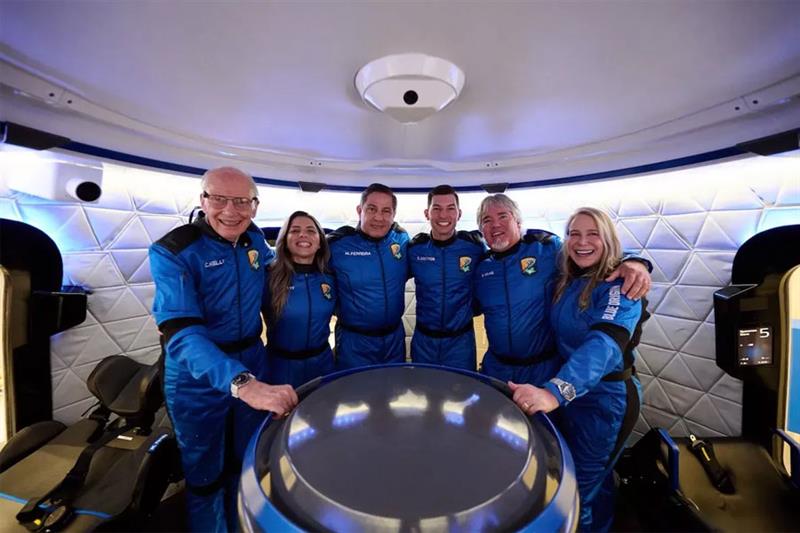
Engineer Sara Sabry has become the first Egyptian to travel on a suborbital flight, after New Shepard’s 22nd space flight (NS-22) – operated by the American private aerospace manufacturer Blue Origin – carried her and five others to the edge of space before returning to Earth.
Launched from Corn ranch, West Texas in the US, the New Shepard stayed for 11 minutes at 106 km above the ground.
The 29-year-old Sabry flew with entrepreneur Mário Ferreira, the first person from Portugal to fly to space; British-American mountaineer Vanessa O’Brien; American technology leader Clint Kelly III; telecommunications executive Steve Young; and Coby Cotton, cofounder of the YouTube channel Dude Perfect.
Sabry earned her bachelor’s degree in mechanical engineering at the American University in Cairo and her master’s degree in biomedical engineering at Italy’s Polytechnic University of Milan.
She is also currently preparing for her PhD in aerospace sciences with a focus on space suit design, according to Blue Origin.
Sabry’s seat on NS-22 is sponsored by the Colorado-based nonprofit Space for Humanity (S4H), which is concerned with increasing access to space for all of humanity.
According to the official website of Space for Humanity, its “citizen astronauts” are chosen from among “change-makers who are currently serving a community leadership role.”
Sabry is S4H’s second “citizen astronaut” to fly on board the NS-22 after Katya Echazarreta in June.
Blue Origin has not announced how much it charges for seats on its space flights, and neither has S4H revealed how much it paid to book seats for its “citizen astronauts.”
According to some news reports, however, the price possibly ranges from zero to $28 million based on several factors including who the passenger’s social status.
This is the sixth trip by Blue Origin since its launch by US billionaire and Amazon founder Jeff Bezos in 2015.
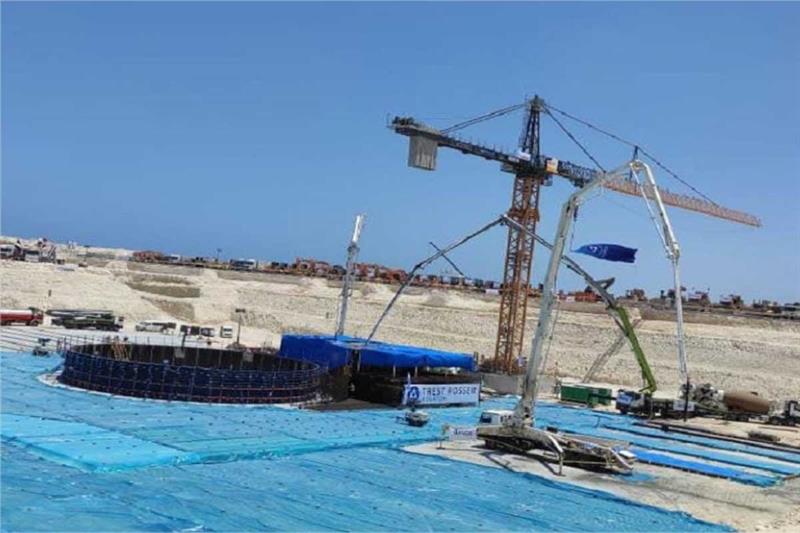
The plant is located in the northwestern governorate of Marsa Matrouh.
Minister of Electricity and Renewable Energy Mohamed Shaker and General Director of Russia’s State Atomic Energy Corporation (ROSATOM) Alexei Likhachev attended the ceremony at the plant, giving the green light to start the construction works.
Shaker said that El-Dabaa’s reactors comply with the International Atomic Energy Agency’s (IAEA) safety measurements. They can endure earthquakes and airplane crashes, he noted, adding that the reactor’s operating span may extend to 60 years.
“Building El-Dabaa NPP allows Egypt the chance to achieve a new level of industry and technology. This will be the biggest project between Russia and Egypt since establishing the High Dam project in Aswan. It has been a dream of Egyptians to acquire nuclear energy for more than half a century. ROSATOM is honoured to fulfil it,” the Twitter account of the Russian Embassy in Egypt quoted Likhachev as saying at the ceremony.
The event was attended by Osama Asran, the deputy minister of electricity and renewable energy, CEO of the Egyptian Electricity Holding Company (EEHC) Gaber Desouky, Advisor to the Minister of Electricity Amgad Said, a delegation of senior officials from Russian companies implementing the project, as well as Amgad El-Wakil, the chairman of the NPPA, which organised the event.
El-Wakil told Al-Ahram Arabic news website on Wednesday that El-Dabaa is located on the Mediterranean, 140 kilometres west of Alexandria.
He noted that funding for the project is based on a governmental financial agreement. Loans will be acquired after operating the plant and collecting revenues from electricity generation.
El-Wakil said the project is expected to generate net revenues of $264 billion for the state treasury over 60 years.
In December 2017, President Abdel-Fattah El-Sisi and Russian President Vladimir Putin signed an agreement in Cairo to initiate work on the plant at a construction cost of $28.75 billion.
Russia will finance 85 percent of the cost with a loan of $25 billion, while Egypt will provide the remaining 15 percent in the form of installments. The Russian loan is repaid over 22 years, with an annual interest of three percent.
On 30 June 2022, the Egyptian Nuclear and Radiological Regulatory Authority (ENRRA) permitted ROSATOM to start the construction work on El-Dabaa project, which Egypt and Russia signed an agreement to build in November 2015 to generate a total of 4,800 megawatts via four reactors.
Earlier in June, ROSATOM announced that it started the manufacture in Saint Petersburg of electrical components for the plant’s reactor vessel, according to Sputnik news agency.
ROSATOM had submitted a request to establish the first two reactors out of four reactors in January 2019, and received the permission in June 2021, after safety measures were checked and qualified workers and means of conducting safety tests were available.
El-Dabaa NPP is designed according to the latest 3+ Generation which is fully compliant with all post-Fukushima requirements of the International Atomic Energy Agency.
ROSATOM had previously announced that 40% of the cost of Dabaa nuclear power plant is allocated for safety measures.
The four units of the plant are expected to operate at full capacity of 4,800 megawatts by 2030, with the first reactor operating at a capacity of 1,200 Megawatts at the first phase, said El-Wakil.
According to the project’s design, the nuclear plant will have four VVER-1,200 reactor units, with the first unit scheduled for operation in 2026.
In November 2021, Egypt signed a long-term $1 million agreement with the Czech ÚJV Rež Research and Development company to consult on El-Dabaa Nuclear Plant, according to ENRRA Chairperson Sami Shaaban.
According to the contract, ÚJV Rež will provide technical assistance to the ENRRA in licensing the nuclear plant.
A scene of pouring concrete of the building the 1st reactor of El-Dabaa Nuclear Power Plant on July 20. (Photo courtesy of the official Twitter account of the Russian Embassy in Egypt)
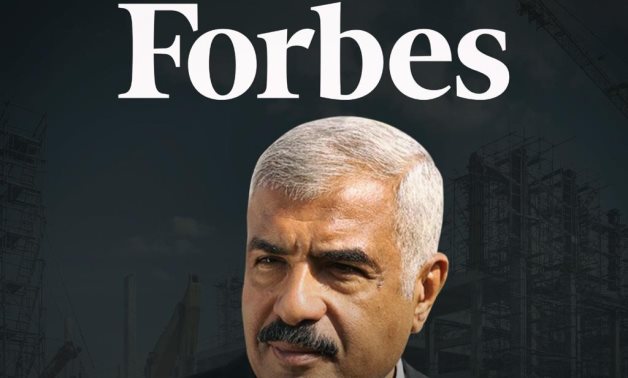
Forbes Middle East has announced its annual list of the 100 Most Powerful CEOs in the Middle East for 2022.
The American magazine confirmed the status of businessman Hisham Talaat Moustafa, CEO and Managing Director of Talaat Moustafa Holding Group, who ranked 61st, up 6 places from last year’s ranking.
Forbes Middle East magazine said that Hisham Talaat Moustafa is the youngest son of the founder of the Talaat Moustafa Group, which is currently the largest listed real estate company in Egypt.
The magazine stated that the assets of Talaat Moustafa Company amounted to 7.5 billion dollars in 2021, while the group owns a portfolio of land with an area of 74 million square meters.
The group’s revenues amounted to 825 million dollars last year, while the company developed more than 33 million square meters of land, and sold more than 90 thousand housing units.
Forbes reported that the Talaat Moustafa Group recently launched giant projects, including: Privado – Madinaty, Celia and Noor City.
The magazine said that the group has extensive investments in the hospitality sector, including: Four Seasons Resort Sharm El Sheikh, Four Seasons Nile Plaza, Four Seasons San Stefano Alexandria, and Kempinski Nile Cairo.
About the methodology used in the classification, Forbes indicated that its methodology in preparing the list was based on collecting information from financial market disclosures, industry reports, annual reports of companies, financial statements, and other primary sources.
As for the classification of CEOs, it is based on several factors: the influence of the CEO and the company on society and the country, the markets they supervise, the CEO’s experience in his current position, as well as his general experience.
Forbes indicated that the factors affecting the evaluation include: the size of the company in terms of revenues, assets, market value, the CEO’s achievements and performance in the past year, the innovations and initiatives he implemented.
This year, Forbes magazine’s list of the most powerful CEOs in the Middle East includes 100 business leaders from 26 different nationalities, led by the Emiratis with 19 CEOs, followed by the Egyptians with 16 leaders, and the Saudis with 15 business leaders.
The CEOs in the banking and financial services sector topped the list with 27 CEOs, followed by the leaders of the communications sector with 8 heads, and then 7 leaders in each of the energy and logistics sector.
The companies on the list run by CEOs are worth more than 5 trillion dollars, while revenue was more than 1 trillion dollar last year.
source/content: egypttoday.com (headline edited)
_________
Among the most powerful CEOs of 2022 Forbes highlights the CEO of Talaat Moustafa Group
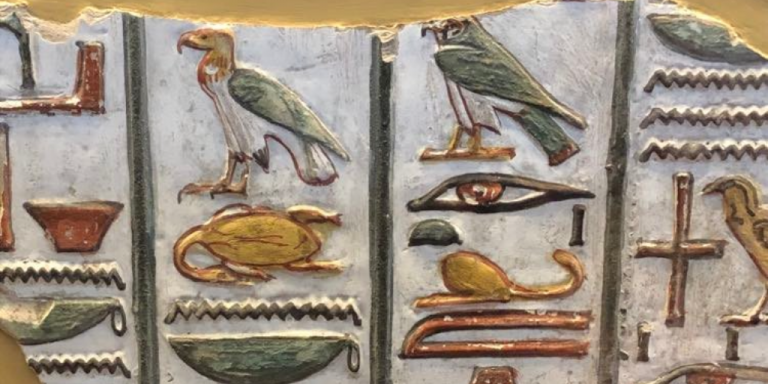
Did you know that many of the Egyptian colloquial words Egyptians use on a daily basis are not actually Arabic?
The Egyptian Arabic dialect is fundamentally Arabic, but with the influence of history and local populations, some of the peculiarities that set the Egyptian dialect apart come from the integration of ancient Egyptian, Greek and Coptic words and expressions. Surviving for thousands of years, many commonly used, modern-day Egyptian words and phrases can actually be traced back to the current dialect’s ancient predecessors.
Here are some examples of words Egyptians use, often not knowing their ancient origin, as per the books ‘From Pharaoh’s Lips’ (2003) by Ahmad Abdel-Hamid Youssef, and ‘Al Logha Al Masrreya Al Qadeema’ (Ancient Egyptian Language, 2012 ) by Abdelhaleem Nour El-din.
UMBU (DRINK)
Often, in communication with infants or toddlers, broken down or simplified words are used to allow the news speakers to express themselves without too much difficulty. For example, umbu is the word commonly used by Egyptian children to express their thirst. The ancient Egyptian term simply means “from the water”.
TA TA (STEP BY STEP)
When Egyptian parents try to help their crawling baby how to walk, they use the phrase “ta ta” derived from the ancient Egyptian word “ti ti”. Though Arabic became the primary language in Egypt, the Coptic language was initially still being used in everyday life for the majority of the population. The term “ti ti” was adopted by the Coptic language and modified to “ta ta”, which is used until today.
MAMM (FOOD)
The word Mumm is an Egyptian slang word derived from the ancient Egyptian “my wnm”, which means ‘give to eat’. Many Egyptians, until this day, teach their babies to say “mumm” whenever they are hungry — as it is easy and quick to sound out.
DAHYA TIWADDIH AL AMENDI (MAY A DISASTER SEND HIM TO HELL)
The Egyptian phrase “Dahya tiwaddih al amendi”, is originally ancient Egyptian. The word “amendi” is a Coptic word meaning “hell”, which was derived from the ancient Egyptian word “imntt”, meaning the ‘underworld’.
BIKH (BOO!)
The word “Bikh!”, meaning “Boo!”, is often used in modern day Egypt to sneak up on someone and scare them. The term is an ancient Egyptian word “pa akh” meaning “demon” or “ spirit”.
WAHAWY YA WAHAWAY IYUHA (THE MOON HAS APPEARED)
The Egyptian phrase “Wahawy ya Wahaway iyuha” is part of a song Egyptians sing during the holy month of Ramadan. Families and young children swing their fanoos (lanterns) as they sing the lyrics to Wahawy ya Wahaway iyuha. The popular lyric is believed to be inspired from the ancient Egyptian word “wah” meaning ‘to put’ or ‘appear’, and “iyah” meaning “moon”. Thus, comprising the lyric “the moon has appeared” during the month of Ramadan, which is decided upon according to the lunar calendar in Islam.
KRKR (LAUGHING)
The word “krkr” is used frequently in modern Egyptian day to describe someone who is laughing uncontrollably. The term is originally ancient Egyptian “ķrķr” and was adopted into modern day Egyptian society.
GATEK MAW (MAY A LION FETCH YOU)
The phrase “jak maw” or “gatek maw”, often switched depending on the region it is used in, essentially means “may a lion come to you”. The phrase is an Egyptian expression used as an insult. The ‘maw’ is based on a pun on the words “lion” and “mother”. The expression is often used by mothers bothered by their children.
July 10 marks the death anniversary of the late iconic international Egyptian actor Omar Sharif.
On this occasion Egypt Today looks back at some of the milestones that led to his international debut.
Sharif’s childhood
Born in Alexandria as Michel Dimitri Chalhoub on April 10, 1932, he was of Lebanese descent, but was born and bred in Egypt. His parents were of good social standards; his father in the wood business and his mother a notable society hostess who often hosted King Farouk to play cards.
Growing up, Sharif easily became multilingual as he was brought up by his French speaking mother and attended an English boarding school and Victoria College; he also became fluent in Italian, Portuguese and Spanish.
After graduating from Cairo University with a mathematics and physics degree, he attempted to follow his father’s path of work but quickly receded and went on to London to the Royal Academy of Dramatic Art.
Sharif realized his passion for acting at the tender age of 13 when he participated in his English boarding school’s theatre program.
This horrified his father, since it would stop his son from following in his footsteps and becoming a timber merchant. Later, Sharif’s talent overcame all obstacles and he became a world-renowned actor.
The immortal cinematic and romantic couple Sharif and Hamama
In 1954, Sharif starred in “The Desert’s Devil” (Shaytan al-Saharaa), but his break was the same year when he acted in “Struggle in the Valley” (Sira’ Fi al-Waady) alongside his wife, the late great Egyptian actress Faten Hamama.
The love story of Hamama and Sharif began when they worked together in Youssef Chahine’s “Struggle in the Valley.”
Despite being born Catholic, he changed his name and converted to Islam to marry her in 1955. A marriage that lasted for 20 years, the famed couple were the symbol of love to all the Egyptian audience.
They portrayed their love in a number of successful movies that will live on for years after their death; movies that taught us the true meaning of love, such as “Ayamna el Helwa” (Our Beautiful Days), “Nahr El Hob” (River of Love), “ Saydet el Kasr” (The Palace Lady), “Sra’a fe El Mena” (Struggle in the Port), among others.
El Sherif’s international Stardom
He achieved international stardom in 1962 by acting in Lawrence of Arabia alongside Peter O’Toole.
He maintained his status as a foreign heartthrob by leading in films like Dr. Zhivago and Funny Girl, which caused outrage in Egypt due to the romance with his leading co-star, Barbara Streisand, who won an Oscar for her role.
Funny Girl was based on a play with the same title also starring Streisand. This musical comedy drama is a biographic, based on the life of Fanny Brice, a famous female Jewish comedian of the 1900s who dreams of stardom in New York City’s Broadway.
Against all odds she rises to the top and falls for Nick Arnstein, played by Sharif, a businessman and compulsive gambler.
While the 60s were the best and busiest years of Sharif’s acting career, they were the ones which took a toll on his marriage with Hamama, and the couple shocked their fans by getting a divorce in 1974.
A resonating talent
His impeccable acting skills speak for themselves, but his mastery of contract bridge also precedes him. He wrote books on bridge, his favorite card game, and even established the Omar Sharif Bridge Circus.
However, his addiction to gambling eventually caused him money troubles, which led to his acting flops and his downward spiral.
Living alone and with little money, Sharif spent his later days living in hotels in Paris and London until he made a brief comeback with his role in the 2003 French film “Monsieur Ibrahim.”
The film received positive reviews, and Sharid even won the audience award for Best Actor at the Venice Film Festival.
Sharif was always keen to support and encourage young talents such as the famed Egyptian actor Mohamed Ramadan, who had a small role in Sharif’s only Egyptian soap opera “Hanan w Hanin” ( Tenderness and Nostalgia).
Ramadan previously announced in a number of TV interviews that Sharif encouraged him a lot and praised his acting talent, predicting at that time that he will be a superstar in the future.
“When I first met Omar Sharif, he greeted me as if I was family. He was someone who really loved people; when he found out that we were [both] Egyptian, we bonded instantly.
The main piece of advice he gave me was to start in Egypt and get that experience under my belt before trying to have a career internationally,” recounted the Egyptian rising international actor Amir El-Masry in an interview with Egypt Today.
The End
Sharif moved back to Egypt to spend his final days while struggling with Alzheimer’s disease. Sharif passed away at the age of 83 due to a heart attack on July 10, 2015. Sharif is a cheerful, handsome, talented and iconic artist who will remain forever alive in the hearts of his audience around the world.
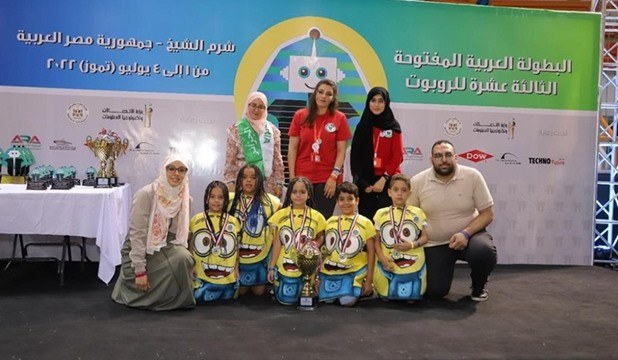
Egypt has finished in first place at the 2022 Arab Open Robotics Championship held in Sharm El Sheikh on Monday.
Since 2008, the Arab Open Robotics Championship has been the largest regional robotics tournament held in the Arab world.
The tournament was organized by the Ministries of Youth and Sports, Communications and Information Technology, Bibliotheca Alexandrina, and the Egyptian Federation of Electronic Games.
The tournament included over 650 students ranging in age from four years to the end of the university stage.
The participants represented 136 teams from 12 Arab countries: Egypt, Kuwait, the UAE, Oman, Yemen, Qatar, Jordan, Tunisia, Morocco, Algeria, Iraq, and Libya.
The Arab Robotics Association accredited 100 juries to judge the tournament’s nine robot competitions.
Egypt came first, winning seven trophies. Jordan finished second with two trophies, followed by Iraq, Libya and Qatar in third place.
In addition, the tournament hosted a lively forum for Arab youth on the sidelines.
source/content: arabnews.com
_________
Egypt placed first in 2022 Arab Open Robotics Championship, winning seven trophies. (Source: Egypt State Information Service)
Nearly 10 years ago, Egyptian filmmaker Ali El-Arabi, the award-winning documentarian behind “Captains of Zaatari,” which hits Netflix this month, made a promise. He was in the Zaatari refugee camp in Jordan, the largest temporary settlement of displaced Syrians in the world, and a teenaged boy he had just met named Fawzi Qatleesh asked if he could speak his truth to the camera.
“On the first day I arrived, he asked me, ‘Ali, can you film me? I want to say something to the people outside of this camp.’ The second he started to talk, I said to myself, ‘This boy is my hero,’” El-Arabi tells Arab News.
As the film hits Netflix this month in the Middle East, El-Arabi is overjoyed. Finally, after seven years of filming and a years-long global festival tour, his promise is fulfilled.
El-Arabi knew what it felt like to have a message that people needed to hear. He was himself once an athlete, a dedicated and successful martial artist, even winning Egypt’s national kickboxing championship. During the Egyptian revolution, however, El-Arabi abandoned any future he might have in sport, instead turning towards filmmaking.
“I started to feel I had something to say, but I couldn’t say it with my voice,” he says. “I realized filmmaking was the way I could say it. I started making small documentaries about what was happening and screening them in the street. One day, the police came and I took my film and I ran. That made me realize the power of what I could say with a camera.”
El-Arabi left Egypt, partnering with the ZDF TV channel to film documentaries in war zones including Iraq, Syria, Kurdistan and Afghanistan. War reporting, however, was unfulfilling, as it so often stripped away the humanity of those caught in its horrors.
After meeting Qatleesh and his friend Mahmoud Dagher — the two boys he would ultimately follow from the refugee camp in Jordan all the way to an elite soccer program in the Gulf — El-Arabi filmed them for seven years before whittling their story down to a scant 75 minutes, resulting in a story that showed their incredible journey while also refusing to gloss over the realities of refugee life.
Since its limited release in 2021, the film has already transformed the lives of both young men whose story it follows.
While he may be done telling their story, El-Arabi has been hard at work over the last few years on another — “Ashish’s Journey” — about the upcoming FIFA World Cup. It is inspired by a man who approached him in Qatar as he filmed “Captains of Zaatari.”
The more time El-Arabi spent with the man, the more his innocent aspirations intrigued him, leading him to not only film Ashish in Qatar, but to follow him and his family back to India, even adding fictional elements (with Ashish playing himself) inspired by the classic French satirical novella “Candide” to the docu-film.
“He’s actually a very good actor,” El-Arabi says.
While El-Arabi knows that he will finish filming later this year at the World Cup, chronicling Ashish’s adventures during the games, he does not plan to rush the film out in the immediate aftermath of the event.
El-Arabi has other projects in the works as well. He’s currently producing a film about Algeria and discussing producing an upcoming project with his best friend Mohamed Diab, the director of Marvel’s “Moon Knight.” Closest to his heart, though, is the fiction film he has in the works between Los Angeles and Egypt, inspired by both his own history in boxing and his relationship with his father.
While telling Arab stories will remain a key part of El-Arabi’s career moving forward, ultimately what drives him is not capturing his identity — it’s capturing his soul.
source/content: arabnews.com (edited)
_____________
(From left) Mahmoud Dagher, Ali El-Arabi and Fawzi Qatleesh with the award for Best Arab Documentary Film at El Gouna Film Festival in 2021. (AFP)
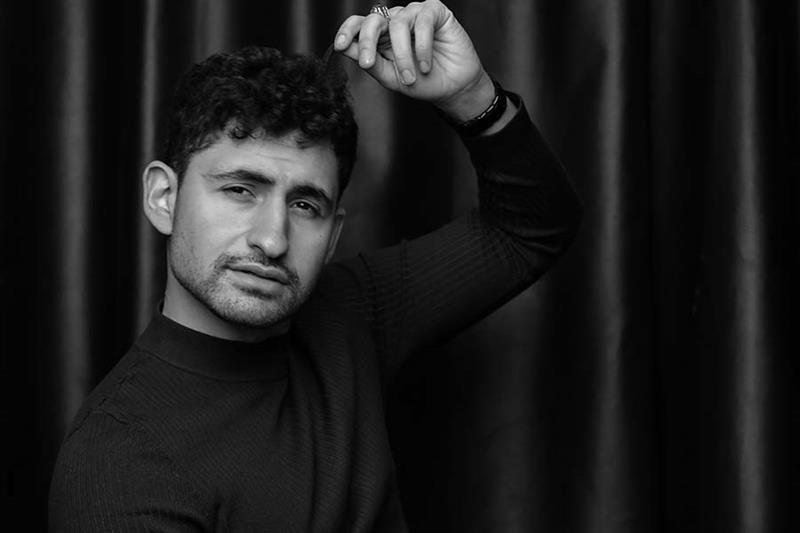
Egyptian actor Amir El-Masry was cast in the upcoming fifth season of Netflix’s historical drama The Crown, according to a PR representative on Wednesday.
El-Masry will portray the young Egyptian billionaire Mohamed Al-Fayed, Egyptian-born UK-based businessman, owner of Hôtel Ritz Paris and formerly Harrods department store and Fulham FC.
The cast of the fifth season also includes Egyptian-British actor Khalid Abdalla who has ben cast as Dodi Fayed , Mohamed Al-Fayed’s son and late Princess Diana’s boyfriend. Abdalla will play opposite Elizabeth Debicki as Diana.
Born in Cairo in 1990 and raised in London, El-Masry’s career kicked off with roles in Egyptian films, earning him Best Young Actor at the Egyptian Oscars in 2009.
Graduating from The London Academy of Music and Dramatic Art in 2013, Amir appeared in Jon Stewart’s debut feature Rosewater and various acclaimed TV series before his breakthrough role in The Night Manager (2016), followed by Lost in London (2017), The State (2017) and Age Before Beauty (2018).
Other notable credits include the critically acclaimed BAFTA nominated mini-series The State, a series regular role of Dante in the new BBC series Age Before Beauty and the lead in the first American-Saudi feature The Arabian Warrior.
Following the reign of Queen Elizabeth II, including political and romantic events that have shaped the twenty-first century, The Crown is considered one of the greatest series in the history of drama.
The series has won over 130 awards, including 21 Primetime Awards, of which seven were during the 73rd Primetime Emmy Awards in 2021, scooping awards of all categories.
The first season of The Crown was released in November 2016. Its fifth season is scheduled for release in November 2022.
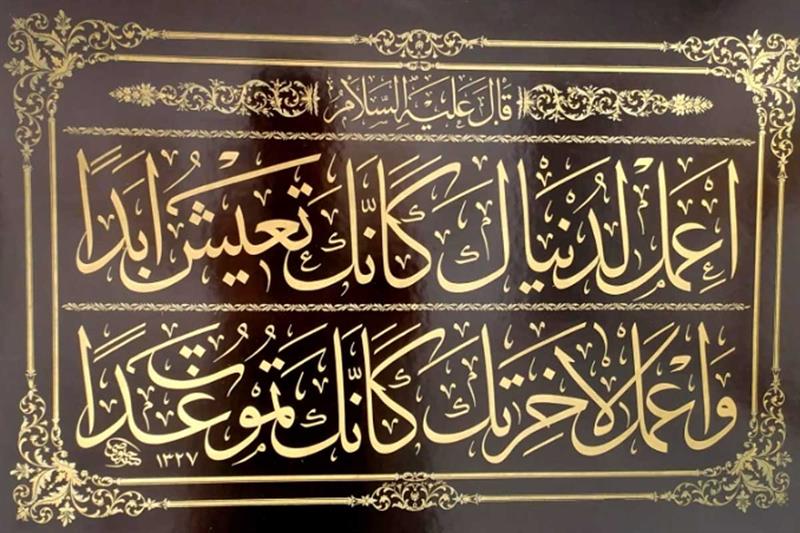
Cairo witnessed the seventh edition of the Cairo International Biennale of the Arabic Calligraphy Art under the auspices of Minister of Culture Ines Abdel-Dayem at the premises of Cairo Opera House.
Under the slogan ‘Pioneers and Renovators in 100 years (1922/2022)’, the biennale included a three-day seminar that ran from 6 to 9 June at El-Hanager Cinema that highlighted the most prominent figures of Arabic Calligraphy in Egypt and the Arab world as well as an art exhibition showcasing artistic gems of this Art from 125 countries represented by 15 artists at the Art Palace in the Cairo Opera House Complex that is running from 7 to 20 June.
Furthermore, the event established a new tradition of honouring artists and researchers for their achievements, and a side competition was held in the name of renowned Egyptian calligrapher Khedr El-Portsaidy — the founder of the Arabic Calligraphy Museum as well as the one who accredits and certifies Arabic calligraphers in Egypt.
In the opening session, Mohamed El-Baghdady — the general commissioner of the biennale — noted that this year marks the centenary jubilee of the establishment of Egypt’s first calligraphy school during the reign of king Fouad in 1922.
The session also included the presentation of a research paper written by Nahla Imam — country representative of Egypt at the 2003 Convention of Safeguarding the Intangible Heritage of UNESCO — who shared her experience in adding Arabic calligraphy knowledge, skills, and practice on UNESCO’s representative list of intangible cultural heritage in December 2021.
Mohamed Hassan Abu El-Khair — the first to innovate the ‘mashq’
The second day of sessions showcased the pioneers and renovators of such enchanting art.
The first paper was presented by researcher and calligrapher Mohamed El-Shafaai on passing down the practice of such art in Egypt, taking the family of Mohamed and Abdel-Aziz Abu El-Khair as an example, as the two are renowned Egyptian calligraphers that this year’s round was dedicated to.
He started off by revealing that the concept of passing down this form of art dates back to the pre-Islamic era, explaining that the initial idea behind Arabic calligraphy was transcription, and then the artistic element came later.
“During the pre-Islamic era, except for a small circle, very little knew how to write Arabic, and according to Abdalla Ibn Abbas, the first person to begin writing in Arabic in the tribe of Qureish was Harb Ibn Umaya — one of the masters of the tribe and the father of Sufian Ibn Harb.
The other key person in calligraphy art was El-Wazir Ibn Noqla, who was famous during the Abbasid Caliphate and inherited the art from his father El-Ali Ibn Hassan, explained El-Shafaai.
Mohamed Hassan Abu El-Khair was born in Cairo in 1921, he studied in Al-Azhar and then joined The School of Improving Calligraphy when he was only 17, where he was the top of his class and was taught by calligraphy masters such as Sheikh Fakhr El-Din, Sheikh Ali Badawi, and Mohamed Hosni El-Baba — the father of iconic Egyptian actress Soad Hosni to name but a few.
He excelled in El-Sulus and Reqaa calligraphy and soon became a professor of the art of calligraphy at Oum El-Qoura University in Mecca for 20 years.
“He was the first to innovate in the mashq (an educational manual technique) of the solos of Arabic calligraphy that are taught to fourth graders, where he started teaching students to write whole sentences from the beginning instead of focusing on letters with no context,” El-Shafaai added.
Abdel-Qader Al-Shihabi — the calligrapher of the Palestinian government
The second paper focused on Abdel-Qader Al-Shihabi — a Palestinian calligrapher — that was written by Farag Hussieny. Al-Shihabi is a renowned Palestinian calligrapher whose fame reached its peak during the first half of the 20th century and was known as the ‘calligrapher of the Palestinian government.’
“Born and raised in Jerusalem, Abdel-Qader Al-Shihabi comes from a long line of calligraphers that started off this art between the 12th and 14th year of the Hijri calendar, however, Al-Shihabi learned calligraphy in Istanbul at the hand of Mohamed Ezzat, the biggest artist. He was known for his suluth calligraphy, which decorates the walls of Al-Aqsa Mosque to date. He also spent all his life teaching calligraphy in Jerusalem and encouraging young artists to follow his passion,” explained Hussieny.
Abdalla Al Zohdi: the calligrapher of Al-Haramein Al-Sharifine
The third paper covered the ‘calligrapher of Al-Haramein Al-Sharifine(The Two Holy Mosques) Abdalla Al-Zohdi and was written by Sami Saleh Abdel-Malak.
“Born in Nablus, Abdalla Al-Zohdi was born around 1251. His family moved to Istanbul, where he studied and excelled in calligraphy at a very early age. His artistic fame made him the official calligrapher of the Prophet’s Mosque in Medina, where his calligraphy adorns the walls and ceilings of the mosque till now,” the paper explained,
“During the reign of khedive Ismail, he was commissioned to write the calligraphy of the Keswa of the Kaaba and Mahmal. His implacable calligraphy was quite visible and stood out in the design of the keswa from that day onwards. He was known by his highly complex and geometric Sulus calligraphy.”
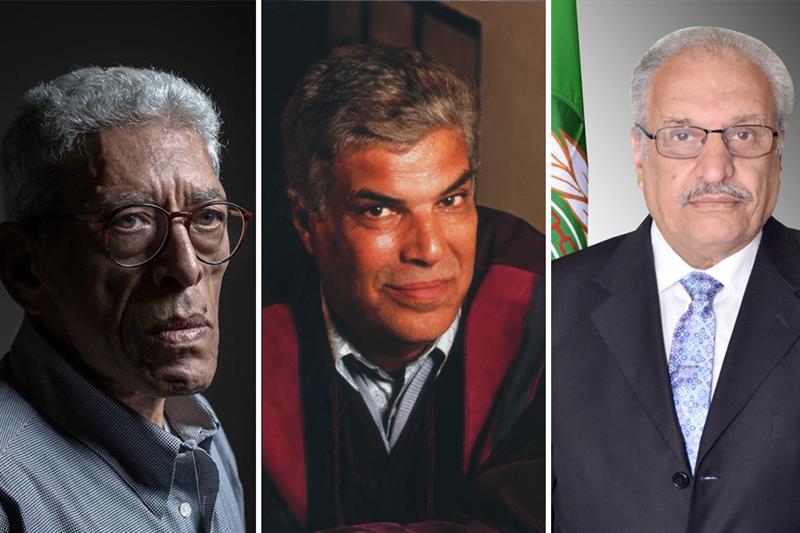
Egypt’s highest state awards in art, literature, and social sciences for 2022 were announced on 7 June, with writer Ibrahim Abdel-Meguied, director Dawood Abdel-Sayed, and late Iraq thinker Qais Azzawi winning the top honour, the Nile Award.
In a meeting chaired by Egypt’s Minister of Culture Ines Abdel-Dayem, members of Egypt’s Supreme Council for Culture (SCC) voted on the top awards.
The members voted on 53 prizes worth a total of EGP 7.5 million (around $374,632) divided into four sections:
Here is the full list of winners:
The Nile Award
The Nile Award is granted to three people in the fields of literature, arts, and social sciences. Each winner receives EGP 500,000 and a gold medal. A new award for the most creative Arab personality was added for the first time in 2018.
The Nile Award in Literature was given to writer Ibrahim Abdel-Meguied.
The Nile Award in Arts was handed to director Dawood Abdel-Sayed.
The Nile Award in Social Sciences went to the late lawyer and head of the lawyers syndicate Ragi Attia.
The Nile Award for the Most Creative Arab personality was awarded to late Iraqi thinker Qais Al-Azzawi, who died in 2022.
The Nile Award for a creative Arab personality was launched in 2018 in a bid to strengthen ties between Egypt and Arab creative minds.
Appreciation Awards
The award carries a prize of EGP 200,000 and a gold medal.
The Appreciation Award in Arts went to actor Rashwan Tawfik, architect Suhair Hawass and Ahmed Nabil Suleiman.
The Appreciation Award in Literature was awarded to writers Mohamed Abulfadl Badran, Youssef Hassan Nofal and Kamal Ruhayem.
The Appreciation Awards in Social Sciences were awarded to Said Ismail, Abdel-Salam Abu-Qahf and Moataz Sayed Abdallah.
Excellency Awards
The Excellency Award in Literature was granted to writer Reem Bassiouny and Amr Fouad Dawara.
The Excellency Award in Arts was handed to Gamal Yaqoot and Ahmed Abdel-Kareem.
The Excellency Award in Social Sciences was handed to late judge Tahany El-Gebaly, Iman Amer, and Ahmed Hassanien.
In addition to the previous awards, the SCC granted 32 encouragement awards, each one of them worth EGP 50,000.
Factbox
There are 52 prizes worth a total of EGP 7.5 million (around $374,632) divided into four sections.
Of the seven Excellency Awards, two are for the arts, two for literature, and three for social sciences. Political analyst Ammar Ali Hassan and economic expert Ahmed El-Naggar were among the winners of the prize last year.
Novelists Khairy Shalaby and Gamal El-Ghitani, poet Mohammed Afifi Mattar, and critic Gaber Asfour are among the past winners.
The Nile Award was originally named the Mubarak Award, but was changed in the aftermath of the 25 January 2011 Revolution that ousted president Hosni Mubarak from power.
Poet Abdel-Rahman El-Abnoudi, writers Bahaa Taher, Ibrahim Aslan, and Waheed Hamed, and cinema director Youssef Chahine are the most prominent figures to date who have won the Nile Award.
The State Awards were launched in 1958 and have only been cancelled once, in 1967, during the Six-Day War between Egypt and Israel.
source/content: english.ahram.org.eg (edited)
____________
Dawood Abdel-Sayed, Ibrahim Abdel-Meguied, and Iraqi Qais Azzawi