Arabs & Arabian Records Aggregator. Chronicler. Milestones of the 25 Countries of the Arabic Speaking World (official / co-official). AGCC. MENA. Global. Ist's to Top 10's. Records. Read & Enjoy./ www.arabianrecords.org
Arabs are known for having had numerous contributions to civilizations—notably in the fields of Mathematics (Arabs invented Algebra), Astronomy (Al-Biruni discussed the earth’s rotation centuries before it was confirmed by Galileo), and Medicine (Al Razi was one of the first to diagnose diseases like smallpox and measles).
But Arab achievements didn’t end in the Golden Age and have continuously evolved to modern fields, so we’re here to round up some of the lesser-known greatest modern achievements by Arabs..
Noor Ouarzazte
Morocco is turning the Sahara Desert into the largest concentrated power complex in the world. The project is currently in progress, due to be complete before the end of 2018.
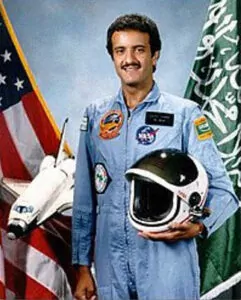
Arabs in Space
Sultan bin Salman Al Saud became the first Arab in space in 1985 – he was also the first royal astronaut ever. Syrian-born Mohammed Ahmed Faris followed in Al Saud’s footsteps in 1987.
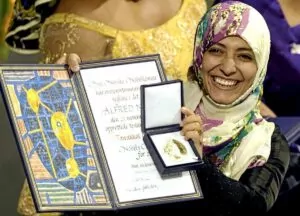
Nobel Peace Prize Winners
Photo credit ODD ANDERSEN/AFP/Getty Images
The Tunisian national dialogue quartet was awarded the Nobel Peace Prize in 2015 for their role in building a democratic state in Tunisia following the Arab Spring.
Yemeni journalist and activist Tawakkol Abdel-Salam Karman preceded the Tunisian National Dialogue Quartet in 2011 as Nobel laureate—she became the first ever Yemini and Arab Woman to win the Peace Prize, as well as the second youngest ever.
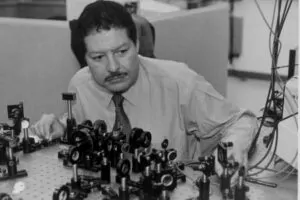
The ‘Father of Femtochemistry”
Femtochemistry is probably something too difficult for most of us to understand—but according to Wikipedia it’s “an area of chemistry that studies chemical reactions on extremely short timescales”. Ahmed Hassan Zewail, and Egyptian-American scientist, is known for pioneering a laser technique that allowed for easier analysis of chemical reactions. He even won a Nobel prize for his work in 1999.
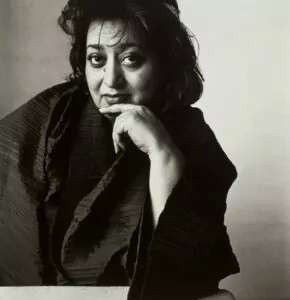
Pritzker Architecture Prize Winners
The late Iraqi-British architect Zaha Hadid was an internationally-acclaimed architect, renowned for her sci-fi creations. Having built some of the world’s most innovative spaces. In 2004, she became the first ever woman to win the prestigious Pritzker Architecture Prize—the most prestigious award in architecture.
Inside the first show dedicated to NYC’s Public Library’s Middle Eastern collections .
Outside The New York Public Library’s Stephen A. Schwarzman Building, the unmistakable scent of a halal food cart mingles with the sounds of various Arabic dialects, while two marble lions stand guard over Fifth Avenue. Inside, entire worlds are waiting to be discovered — including the often-overlooked stories of New York’s Middle Eastern and North African communities.
“Niyū Yūrk: Middle Eastern and North African Lives in the City,” the first exhibition dedicated to the Library’s Middle Eastern collections, opened Oct. 4. It will remain on view in the Ispahani-Bartos Gallery until March 8.
Curated by Hiba Abid, the exhibition contains around 60 objects — photos, books, periodicals and audio — dating from the 1850s to 2024. It centers specifically on the library’s own holdings, rather than attempting to tell a comprehensive history of MENA life in New York, Abid tells Arab News.
Drawing from over a century of rare materials the exhibition uses tangible objects to express the intangible: memory, identity and immigrant culture.
“It’s not a love letter. It’s a realistic letter,” Abid says, adding that these communities have long navigated complex questions of belonging, language, and preservation.
“The communities, from the very beginning, were wondering, ‘Where should our kids go to school? If they go to the public New York schools, they would probably lose their language, but we want them to still know Arabic and be aware of our traditions and values,’” she said.
The exhibition is divided into four chronological sections, designed to help guide visitors of all ages, from young children to seasoned scholars.
The first section, “Roads to New York,” focuses on the earliest waves of immigration. One of the first featured figures is Hatchik Oscanyan — later known as Christopher Oscanyan — an Armenian man born in what is now Türkiye. He came to New York in the mid-19th century and sought to educate Americans about the complexity of the Ottoman Empire. He wrote plays and newspaper articles, as well as “The Sultan and His People,” a book that offers insight into the region’s diverse ethnic and religious makeup.
The second section, “A Life in the City,” explores how immigrant communities began to form and thrive in New York, including in what was once known as Little Syria on Manhattan’s Lower West Side — an area that still exists today. They were entrepreneurs who opened restaurants, shops, and began publishing Arabic newspapers.
One of the most groundbreaking was Al-Hoda, founded by Naoum Antoun Mokarzel and his brother Salloum. “In the basement of Al-Hoda Press, they adapted the linotype machine from Latin characters to Arabic characters, which is very hard (because Arabic is) a cursive language,” Abid says. “By this technological innovation, he actually allowed other presses to form and to publish newspapers, periodicals, and books,” which then circulated throughout North and Latin America — and back to the Middle East.
In other words, New York was instrumental in literally building the Arabic press and exporting news to the Middle East.
Abid emphasizes how vital the library’s historical collections are to telling these stories.
“The library has been collecting these materials since the late 19th century,” she says, adding that many of them have been digitized, enabling audiences to interact with them in a new way.
The third section, “Impressions,” flips the gaze, revealing how Middle Eastern immigrants perceived New York and the US.
“Many immigrant groups embraced American values… but many (Arabs) actually didn’t like New York and didn’t like American values and left after a few years here or after a few months.” The exhibit highlights these ambivalences and the tensions of assimilation.
The final section, “In Our Own Skin,” is the most contemporary and, for Abid, the most personal. It includes raw, vulnerable stories that reflect racial identity, Islamophobia, and resistance. Among the most powerful pieces is the short documentary “In My Own Skin,” directed by Jennifer Jajeh and Nikki Byrd, which features interviews with five Arab women in New York, and was filmed just one month after the events of Sept. 11, 2001.
“The interviews are absolutely amazing. Every time I talk about it, I have goosebumps,” Abid says. “The way they talk about it — it is still very relevant today, as if nothing changed much, except that we’re probably more powerful because we are aware of this and we know how to organize and to fight back. We have the vocabulary now, and the community.”
That spirit of organization is embodied by Malikah, a grassroots collective founded by Rana Abdelhamid in 2010 as a self-defense class for Muslim women on Steinway Street in Queens. The movement has since expanded into a larger project of empowerment, healing, and solidarity — and is featured in the exhibit’s final section. The powerful sound of the athan, or call to prayer, has been important to this cultural shift.
While images of the Statue of Liberty — based on an Egyptian woman — didn’t make the cut, but Abid stresses its significance on each guided tour. On this occasion, though, she wanted to focus the visitors on lesser-known gems.
Having lived in New York for the past four years as a Tunisian immigrant who spent much of her life in France, Abid says she finds New York to be more diverse than anywhere else she has ever lived.
“I live on Atlantic Avenue in the Syrian corner. The things I witnessed here and in Middle Eastern parts of New York, like Astoria, I could never see anywhere else — even Paris,” she says. “When you go to the exhibition, you actually think, ‘Damn! We actually did a lot. And we’re here, you know—we’re here.
“It shows how New York was central to all of these struggles and how New York — thanks to its MENA community — was actually connected and aware. It puts New York on a global map, you know? I think New York is incredible terrain for this. It’s the space for it. That’s what this show is about, ultimately.”
source/content: arabnews.com (headline edited)
______________
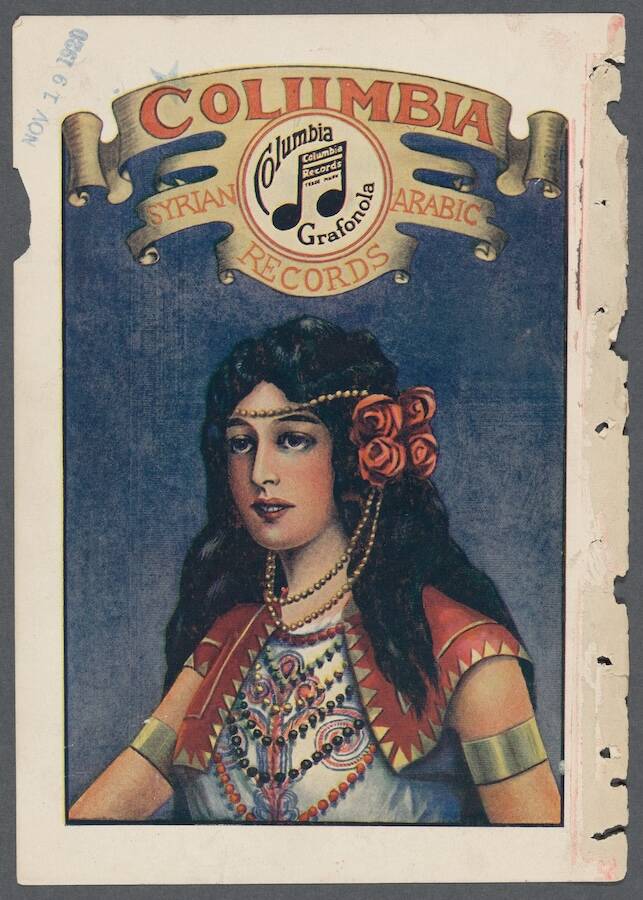
A poster from 1920 promoting Columbia Syrian Arabic Records — Columbia was one of the major American record labels to recognize the commercial potential of ethnic music markets in the US. (Courtesy of The New York Public Library)
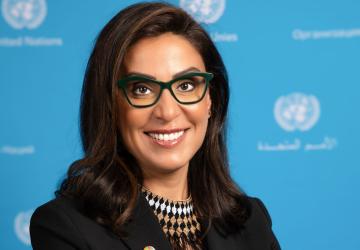
United Nations Secretary-General António Guterres appointed Rana Taha of Jordan as the United Nations Resident Coordinator in Tunisia, with the host Government’s approval, effective 19 June 2025.
Ms. Taha has over 20 years of diverse experience working for United Nations agencies, funds and programmes, and UN peacekeeping and special political missions. Prior to her appointment as Resident Coordinator in Tunisia she served as a Team Leader and the senior Peace and Development Advisor for the United Nations in Kenya.
From 2015 to 2019, she held several positions in the Departments of Political and Peacebuilding Affairs (DPPA) and Peace Operations (DPO) at UN headquarters, where she managed the Middle East/North Africa Regional Programme for Peacekeeping and Special Political Missions.
Ms. Taha served in UN missions in Lebanon (UNIFIL, UNSCOL) and Sudan (UNMIS and UNAMID), including as a Special Assistant and Advisor to successive representatives of the Secretary General from 2007 to 2015.
From 2003 to 2007, she served as the representative for Interpeace and the Programme Manager at the United Nations Office for Project Services (UNOPS) in the Occupied Palestinian Territories.
Earlier in her career, she was a research fellow at the United Nations Institute for Disarmament Research in Switzerland from 2001 to 2002.
She holds a master’s degree in International Relations and Public Policy from McMaster University and a master’s degree in sociology from the University of Jordan. Ms. Taha is married with one son.
source/content: unsdg.un.org / UN Sustainable Development Group (UNSDG) – (headline edited)
Ten months after her win in Bangkok, the 21-year-old tells Arab News about the sport, balancing studies and training, and the development of women’s boxing in the Kingdom.
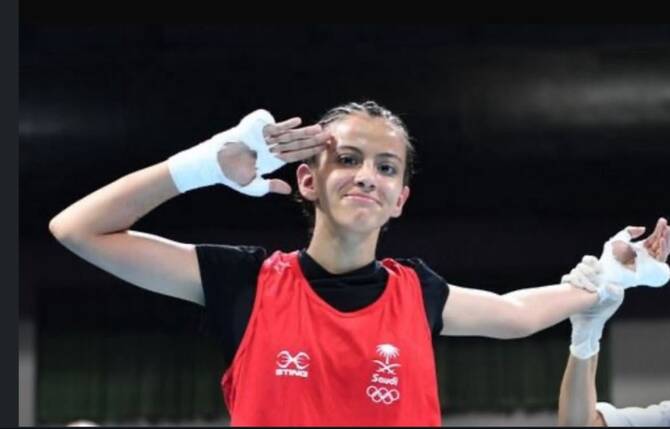
The end of 2024 will always hold special memories for Yara Al-Amri. In December last year the young boxer made history by becoming the first Saudi woman to win an Asian medal in boxing — a new milestone for the Kingdom’s fast-growing women’s sports scene.
The 21-year-old fighter earned a bronze medal at the Asian Elite Championships in Bangkok, competing in the 52-kilogram category in her first international appearance.
She told Arab News: “It was my first international appearance, which was the toughest part — competing outside my country without my home crowd and coaches.”
The win was historic not only for Al-Amri, but for Saudi sport. “This changed my life, as I wrote history for Saudi Arabia by winning the first Asian medal in women’s boxing,” she said. “It doesn’t mean we don’t have champions, but the sport is still new in our country. Despite starting later than many nations, we quickly reached their level and proved we can compete and succeed.”
Based in Riyadh, Al-Amri trains under Ali Al-Ahmari at Al-Shabab Club. Standing 174 cm tall, the right-handed orthodox fighter has built a record of 27 fights, with 23 wins and four losses, and holds seven Saudi national titles.
Her path into boxing began unexpectedly. “I first started boxing as a fitness exercise, but soon felt I truly belonged in the sport,” she said. “I’ve always loved challenge and competition, and boxing gave me exactly that. In the ring, it’s just me, my mind, and my hands. Boxing completely changed my lifestyle, making me more disciplined and committed.”
Al-Amri describes the sport as a test of focus as much as strength. “You have to be patient, strategic, and intelligent. Every movement matters.”
Outside the ring, Al-Amri is pursuing a university degree, juggling training sessions and academic deadlines.
“As a university student, my days are always a challenge,” she said. “I train twice a day — morning and evening — while balancing my classes, studies, and daily tasks. My schedule is packed, but I make sure to manage both my academic and athletic commitments.”
Her discipline extends beyond boxing. Earlier this year, she completed the Riyadh Half Marathon, describing the 21-kilometer run as “pure challenge and joy.”
After nearly 30 fights, Al-Amri has learned to embrace both victory and loss. “The biggest lesson I learned from a loss is never leaving the result to the judges,” she said. “The fight must be clear — you have to showcase your skills so strongly that there’s no doubt.
“Injuries and defeats also taught me resilience,” she added. “I always say: ‘What doesn’t kill you makes you stronger.’ Before a fight, I’ve learned to control nerves and pressure. It’s natural to feel it, but once I step into the ring, everything switches off — I focus only on my opponent.”
Al-Amri credits her success to the support around her. “My family has been my first and strongest supporters, from the beginning until today. Their belief in me gave me strength,” she said.
She also praised the institutions enabling women’s boxing to grow. “I deeply value the support of the Kingdom of Saudi Arabia — from our wise leadership to the ministry of sports, the Olympic Committee, the Saudi Boxing Federation, clubs, coaches, and the people. This collective support has been a huge force behind my journey.”
That system, she said, has helped turn a once niche pursuit into a recognized sport for Saudi women.
“My goal is to achieve as many titles as possible — national, regional, continental, and international,” Al-Amri said. “With God’s will, these achievements will come.”
She believes the next generation of Saudi women boxers will go even further. “Women’s boxing in Saudi Arabia has developed tremendously,” she said. “Clubs and coaches are now available across the country, teams are formed, and the determination of Saudi women is stronger than ever. We are capable of competing, representing, and making the sport grow even bigger.”
In only two years, Al-Amri has collected nine gold medals, seven national titles and two bronzes, combining athletic performance with academic success and public recognition.
Her rapid rise mirrors Saudi Arabia’s broader transformation under Vision 2030, which continues to expand opportunities for women in professional sports, from football and judo to boxing and beyond.
Al-Amri said her journey shows what happens when opportunity meets belief. “Boxing gave me strength and purpose,” she said. “It made me realize that nothing is impossible when you work hard, stay disciplined, and believe in yourself.”
As she continues to train for upcoming championships and sets her sights on future world competitions, Al-Amri’s mission is simple: to raise Saudi Arabia’s flag on the global stage.
From her first punch in a Riyadh gym to her medal podium in Bangkok, Yara Al-Amri’s story is one of faith, perseverance, and proof that Saudi women are not just entering the ring, they are redefining it.
source/content: arabnews.com (headline edited)
_____________
Yara Al-Amri salutes the crowd after her victory, becoming the first Saudi woman boxer to claim an Asian medal. (SUPPLIED)
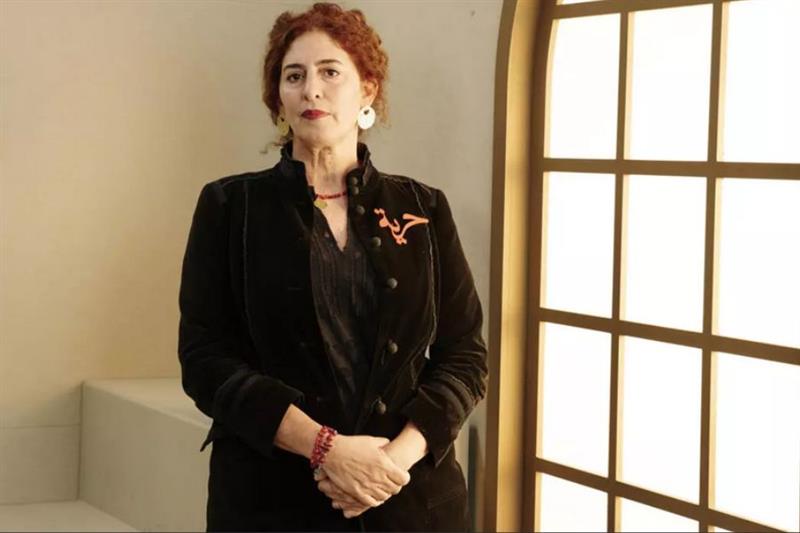
In “Palestine 36,” director Annemarie Jacir recounts a year of Arab revolt against British colonial rule that she says is crucial to understanding current events in the Middle East.
“You can’t understand where we are today without understanding 1936,” Jacir told AFP a day after the film’s world premiere at the Toronto International Film Festival.
The Palestinian filmmaker, who lives in the Israeli city of Haifa, was motivated to make the film, in part, to redress a lack of awareness about the consequences of British policies during the so-called mandate period, before Israel’s creation in 1948.
“I wanted to really point the finger at the British,” she said.
The film features a mostly Arabic-speaking cast, including Hiam Abbass from HBO’s “Succession,” and Jeremy Irons as a British high commissioner unsettled by rising violence and protests against the colonial administration.
With Jewish immigration from Europe increasing and Palestinian villagers concerned about further loss of land, Arab support for armed revolt against the British surges.
The film details the brutal crackdown launched to contain the violence.
Villagers are beaten, people are arrested en masse while soldiers torch homes after searching them for weapons.
They are tactics Jacir said Israel’s army learned from the British and have used since against Palestinians living under occupation.
But Jacir — who was born in Bethlehem in the Israeli-occupied West Bank — told AFP a key goal of the film was to shine a spotlight on the British colonial practice of divide and rule, which was used across the empire.
The narrative in “Palestine 36” builds toward the publication of the Peel Commission’s report, a British inquiry into the causes of Arab and Jewish unrest in Palestine.
The commission recommended Palestine be partitioned — with separate areas for Jews and Arabs — a finding that influenced the United Nations-backed partition plan that coincided with Israel’s creation.
“It was a British policy: first, we’ll bring (Arabs and Jews) together,” Jacir said.
Then “we separate… It was a tactic of control,” she added.
Jacir said the reception for the film at Friday’s world premiere was overwhelming.
“Yesterday was crazy,” she told AFP, an outpouring of support likely tied to widespread outrage over the conflict in Gaza.
She voiced hope that the film could foster broader awareness about the lasting impacts of the British mandate period in Palestine.
“I’m shocked how many people have told me when I tell them about the film, they were like, ‘the British were in Palestine?'”
Alrashid’s inclusion highlights her pioneering leadership and marks a milestone moment for Saudi women on the global stage
Under her leadership, SRMG has redefined how Arab media engages with audiences, while nurturing new generations of talent
Jomana R. Alrashid, CEO of Saudi Research and Media Group and chairwoman of the Red Sea Film Foundation, has made history as the first Saudi to be recognized on Time magazine’s TIME100 Next list.
An expansion of the iconic TIME100 list of the most influential people in the world, TIME100 Next highlights 100 emerging leaders who are shaping the future of business, entertainment, sports, politics, health, science, activism and more.
Alrashid’s inclusion highlights her pioneering leadership in business and media and marks a milestone moment for Saudi women on the global stage. Alongside Alrashid, the list includes names such as White House Press Secretary Karoline Leavitt, international football phenom Lamine Yamal, Irfaan Ali, the president of Guyana, and many more influential and emerging leaders in their respective fields.
Time magazine described Alrashid as “an architect of the Middle East’s shifting media landscape.” Since her appointment in 2020 as the first female CEO of SRMG, she has spearheaded the company’s comprehensive digital-first transformation, launched innovative media verticals and forged landmark global partnerships. These efforts have been reflected in the rapid growth of SRMG’s stock, signifying extensive trust by investors in her business development and management strategies across the media entertainment and technology sectors. Under her leadership, SRMG has redefined how Arab media engages with audiences, while nurturing new generations of talent.
As chairwoman of the Red Sea Film Foundation, she has championed the growth of the film industry across the Arab world, Africa and Asia, driving initiatives to empower filmmakers and foster international collaboration. This commitment has culminated in an unprecedented achievement, with over 80 supported films premiering and garnering awards and international recognition at the world’s most prestigious festivals, including Cannes, Venice, Berlin, Toronto and Sundance.
These are filmmakers and their stories that once struggled to find a place in the international film industry, now making their mark on the global stage. Today, the Red Sea International Film Festival stands as a premier global destination for cinema, culture and creativity.
Alrashid commented on the recognition: “I am deeply honored to be included in the TIME100 Next list. This recognition reflects the collective efforts of the extraordinary teams I have the privilege to work with at SRMG and the Red Sea Film Foundation. It is also a testament to the vision and leadership that have driven the remarkable transformation taking place across Saudi Arabia and the wider region — a future built on innovation, creativity and storytelling that resonates globally.”
Alrashid’s selection underscores not only her growing global influence but also the pivotal role of Saudi Arabia’s creative and media industries in shaping conversations worldwide. As the Kingdom continues its ambitious cultural and economic transformation, her leadership represents both the spirit of progress and the power of storytelling to inspire and unite communities across the globe.
source/content: arabnews.com (headline edited)
_______________
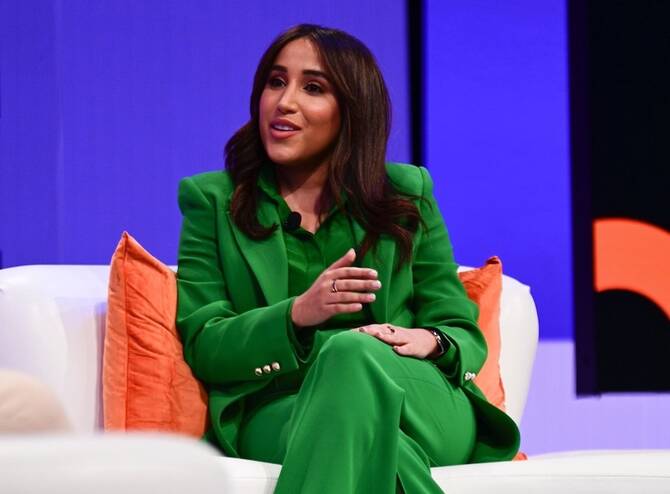
Jomana R. Alrashid, CEO of Saudi Research and Media Group and chairwoman of the Red Sea Film Foundation. (Supplied)
The World Bank has opened a new regional hub in Riyadh to serve the Middle East, North Africa, Afghanistan, and Pakistan, as the Washington-based lender continues to boost its presence in the region.
According to a press statement, the new Riyadh hub will be co-located with the World Bank Group’s Gulf Cooperation Council regional office, bringing its leadership closer to country teams, clients, and regional partners.
The opening of the new regional hub signals the deepening ties between the World Bank and Saudi Arabia, as in December, the lender signed a strategic agreement to launch a new global knowledge hub in Riyadh to facilitate regional and global knowledge exchange, joint research, and capacity-building initiatives aimed at advancing global development impact.
Commenting on the opening of the new regional hub, Ousmane Dione, vice president of the World Bank for the MENAAP region, said: “Riyadh is not only a gateway to the region’s transformation, but also a powerful platform for global knowledge exchange and policy innovation.”
He added: “It is especially meaningful to mark this relocation on Saudi National Day, a moment that celebrates the Kingdom’s transformation and its growing role as a global convener of development knowledge.”
In the press statement, the lender added that the opening of the new regional hub aligns with the 50th anniversary of technical cooperation between the World Bank and Saudi Arabia.
In recent months, the institution has awarded a $650 million disaster management loan for Turkiye, a $146 million grant to Syria to help restore reliable, affordable electricity, and $930 million in financing to help improve Iraq’s railway performance, boost domestic trade, and diversify the country’s economy away from oil.
The regional hub development aligns with Saudi Arabia’s government-backed regional headquarters program, launched in 2021, which offers incentives such as a 30-year corporate income tax exemption and withholding tax relief, alongside regulatory support for multinationals operating in the Kingdom.
A Saudi Press Agency report in March said that over 600 international companies, including Northern Trust, IHG Hotels & Resorts, and Deloitte, have already established their regional bases in Saudi Arabia.
source/content: arabnews.com (headline edited)
_____________
The new Riyadh hub will be co-located with the World Bank Group’s Gulf Cooperation Council regional office, bringing its leadership closer to country teams, clients, and regional partners. Shutterstock
HUMAIN, a Public Investment Fund company has announced the launch of its Horizon Pro PC, billed as “a groundbreaking laptop designed to revolutionize agentic artificial intelligence personal computing.” Agentic AI systems can act independently and with initiative with limited, or no, human oversight.
The launch was announced by HUMAIN CEO Tareq Amin during the Snapdragon Summit in Maui, Hawaii.
According to a press release, the Snapdragon processor family at the core of the HUMAIN Horizon Pro deliver “leading AI performance and a powerful CPU so that the PC can operate up to 100 times faster than human thought.”
It added that the company’s upcoming proprietary HUMAIN ONE operating system “enables users to manage enterprise workflows, communications, and AI applications from a unified, adaptive interface designed to anticipate needs and accelerate decision-making.” It added that the new PC “offers zero-latency wake time, over 18 hours of battery life, a 40-percent reduction in power consumption compared to competing systems, and advanced thermal architecture for sustained, high-performance use across demanding environments.”
HUMAIN’s AI integrates the Arabic-first large language model “ALLaM” and “operates locally for maximum speed and data privacy, with the flexibility of hybrid AI to tap into the cloud when complex processing or broader insights are required, offering enterprise users the ideal blend of performance, control, and scale,” according to the company.
Amin said: “The HUMAIN Horizon Pro represents a paradigm shift in agentic AI personal computing, especially for enterprise environments where AI actively collaborates with users, both locally and in the cloud, to boost productivity.”
Amin also announced that HUMAIN will give away 500 of its PCs to students as part of its launch initiative to “help unlock new potential for learning, creativity, and future leadership in AI-driven fields.”
source/content: arabnews.com (headline edited)
_____________
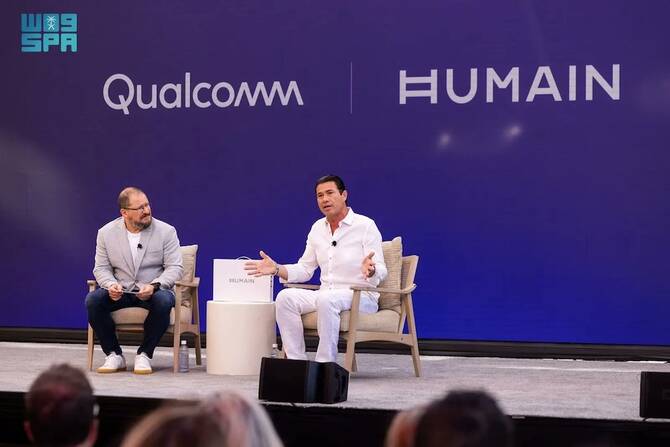
HUMAIN launched its Horizon Pro PC, a groundbreaking laptop designed to revolutionize agentic AI personal computing. The announcement was made by HUMAIN CEO Tareq Amin during the Snapdragon Summit in Maui, Hawaii. (SPA)
The Safety Wings drone can detect individuals in distress in water, swiftly navigate to their location, and drop inflatable life buoys.
Three Moroccan students from the Faculty of Sciences and Technologies (FST) in Settat have won a gold medal at the Innovation Week (IWA 2025) for their groundbreaking project, Safety Wings.
A drone that saves lives at sea
The winning project introduces a drone designed to revolutionize aquatic rescue operations.
The Safety Wings drone can detect individuals in distress in water, rapidly fly to their position, and deploy inflatable life buoys.
In contrast to existing buoys that sell for around $300 and are typically disposable, the Moroccan designers developed a reusable model that costs under $20. The only recurring expense is replacing compressed air cartridges.
Through the combination of reusability and affordability, the project provides an essential loophole in global rescue missions. The project is an affordable and scalable solution for impoverished communities with fewer resources but frequent aquatic emergency cases.
From Morocco to the world stage
Salah Bouhlal, Moad Es-Sraoui, Mohamed Kerroum, and Aziz Hraiba (supervisor) developed Safety Wings during their days as FST Settat students.
Their success at IWA 2025 places Morocco on the international innovation map and also shows how youthful scientists can convert pressing humanitarian needs into practical technological solutions.
OFEED, the organizer of the Innovation Week, describes the event as both a premier platform for showcasing and fostering cost-effective innovation and a “global community that believes ideas can become impact when courage meets collaboration.”
Innovation with human impact
Safety Wings is one component of a greater movement toward harnessing new technology for the public good. With their provision of life-saving gear, the Moroccan students seek to leave a positive impact on global standards of safety in aquatic environments, from seaside public beaches to remote fishing villages.
In addition to the Safety Wings team, other Moroccan innovators also figured among the winners of IWA 2025. Their projects spanned diverse fields. This collective achievement reinforced Morocco’s reputation as a hub of creativity and problem-solving on the international stage.
Dr. Andilyat Mohamed is a dedicated Comorian scientist who has been actively engaged in plant ecology, specifically in phytogeography, since 2007, accumulating 16 years of experience in Comorian plant formations. She expanded her focus to marine and coastal ecosystems in 2012, concentrating on mangrove algae and seagrass. As a university professor, she delivers lectures and practical work in applied plant ecology and general botany, using special mangrove field trips to demonstrate the theory and practice of different types and their roles to students at the Faculty of Science.
In 2010, Dr. Mohamed established the National Herbarium at the University of the Comoros, where 98% of the staff are women. She also initiated the Comoros mangrove house in partnership with a local village women’s association called “JEUNE FILLE DE DOMOIBOINI .” As the national focal point for the Comoros in the WIOMN network on mangroves in WIOMSA, she authored the first publication of the 23 localities hosting mangroves on the island of Ngazidja as part of her doctoral thesis.
Currently, Andilyat is concentrating on the restoration and assessment of blue carbon in the mangroves of the Comoros, searching for a specific algorithm corresponding to the particular characteristics of amphibious Comorian ecosystems dominated by a recent lava flow substrate as part of her Habilitation to Supervise Research (HDR).
Tell us, what led you to pursue a career in marine/ocean science?
What pushed me to pursue a marine career was the fact that I read the bibliography of an official document printed in 2002 that said there were 5 mangrove sites on the island of Ngazidja. However, when I supervised a master’s student in 2012, we worked on 7 sites, and I knew that there were others. In 2016, I used remote sensing to find out for the first time that the island has mangroves in 23 localities and that the ecosystems had been reduced and divided into several sites by lava flows. Since then, I’ve been working closely with the islands’ conservationists.
As a marine/ocean professional, what critical lessons have you learned? Share your insights and experience with others who aspire to become experts in this field.
Mangroves are more capricious than humans, they are mute but shout loudly in the silence by releasing CO2 when under anthropic pressure or by trapping carbon when conserving and protecting the site.
In celebration of International Women’s Day theme “Invest in Women, accelerate progress”, what progress do you envision for women in the Western Indian Ocean region?
Comorian women are fortunate to be among the few countries where inheritance is matrimonial. This gives them authority and independence in social activities. It is with this vision that I am working with my team to ensure the survival of the mangroves of the Comoros. I started by joining forces with the Jeune Fille Association.