ALGERIA declares France’s colonial rule a crime in new law – January 2026

Algeria’s new law declares French colonial rule a crime, seeking accountability and reparations for the colonial past.

Algeria’s parliament has unanimously passed legislation declaring France’s colonisation of the country a crime.

On Wednesday, lawmakers stood in the chamber draped in scarves bearing the national colours, chanting “Long live Algeria” as they approved the bill.

Parliament also formally demanded an apology and reparations from Paris in a move that seeks to redress attempts to sweep the issue aside.

The law assigns France “legal responsibility for its colonial past in Algeria and the tragedies it caused”, placing historical accountability at the centre of the state’s legal framework.

While analysts say the law carries no enforceable international weight, its political impact is significant, signalling a rupture in how Algeria engages France over colonial memory.

Parliament Speaker Ibrahim Boughali said the legislation sent “a clear message, both internally and externally, that Algeria’s national memory is neither erasable nor negotiable”, according to the APS state news agency.

The text catalogues crimes of French colonial rule, including nuclear tests, extrajudicial killings, “physical and psychological torture” and the “systematic plundering of resources”.

It also asserts that “full and fair compensation for all material and moral damages caused by French colonisation is an inalienable right of the Algerian state and people”.

‘Crime against humanity’

France brutally ruled Algeria from 1830 to 1962 through a system marked by torture, enforced disappearances, massacres, economic exploitation, mass killings and large-scale deportations and marginalisation of the country’s indigenous Muslim population.

The war of independence between 1954 and 1962 alone left deep scars. Algeria puts the death toll at 1.5 million.

President Emmanuel Macron has previously described the colonisation of Algeria as a “crime against humanity” but has consistently refused to issue a formal apology. He reiterated that position in 2023, saying: “It’s not up to me to ask forgiveness.”

Last week, French Ministry for Europe and Foreign Affairs spokesperson Pascal Confavreux declined to comment on the parliamentary vote, saying he would not engage with “political debates taking place in foreign countries”.

Hosni Kitouni, a colonial history researcher at the University of Exeter, told the AFP news agency that the law has no binding effect on France but stressed that “its political and symbolic significance is important: it marks a rupture in the relationship with France in terms of memory”.

The vote comes amid a diplomatic crisis between the two countries. Algeria and France maintain ties through immigration in particular, but today’s vote comes amid friction in the relationship.

Tensions have been high for months since Paris recognised Morocco’s autonomy plan for resolving the Western Sahara conflict in July 2024. Western Sahara has witnessed armed rebellion since it was annexed by Morocco after the colonial power, Spain, left the territory in 1975.

Algeria supports the Sahrawi people’s right to self-determination in Western Sahara and backs the Polisario Front, which rejects Morocco’s autonomy proposal.

In April, the tensions escalated into a crisis after an Algerian diplomat was arrested along with two Algerian nationals in Paris. The diplomatic crisis came barely a week after Macron and Algeria’s President Abdelmadjid Tebboune expressed their commitment to revive dialogue.

source/content: aljazeera.com (headline edited)

_______________

https://www.aljazeera.com/news/2025/12/24/algeria-declares-frances-colonial-rule-a-crime-in-new-law

French Empire: Civilising Mission

____________

ALGERIA
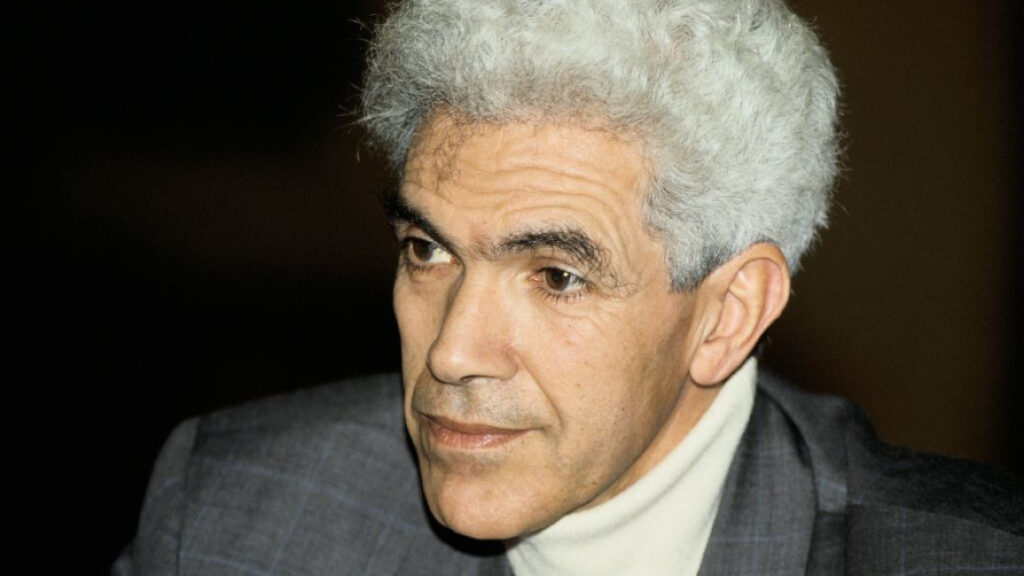
ALGERIA : Remembering Mohamed Harbi, Algeria’s ‘mujahid’ historian

From challenging French colonial nostalgia to critiquing Algerian nationalism, revolutionary historian Mohamed Harbi served truth, writes Rachid Sekkai.

For those of us who live between Algeria and France, between family memory and official public archives, Mohamed Harbi was more than a name on a book spine, he defined our way of thinking. This is why I am so deeply saddened by his passing.

His death is certainly a real loss to the shared Franco–Algerian memory of the twentieth century—not the sentimental commemoration that comforts nations, but the difficult memory that forces them to mature.

But on a more personal note, I am disappointed that I was never able to meet the late, great historian whose contributions are immeasurable.

On the side of the oppressed

Harbi came from a milieu that was far more accommodating to French colonial rule. This collaboration was even viewed by many as respectable, including members of his own family who served in the French-established Algerian Assembly (1947–56). Nevertheless, Harbi chose to side with the colonised very early in his life.

Even when he was sent to France to study, Harbi commitment to standing with the oppressed remained, and he refused to join the ranks of the ‘integrated’ intelligentsia. He became active in the student networks linked to the National Liberation Front (FLN) and entered the revolution from the inside.

Later he worked close to the Provisional Government of the Algerian Republic (GPRA), specifically within the orbit of Krim Belkacem—one of the FLN leaders who signed the Evian Accords. Harbi was not a signatory, but he was close enough to those who had been to see what independence negotiations were going to look like: ideals constrained by strategy, unity tested by rivalry.

Following Algerian independence in 1962, he served during the Ben Bella era, persuaded—as many were—by the promise of social change. The 1965 coup marked a rupture, however; and Harbi paid the price for his criticism of the succeeding president of Algeria, Houari Boumediene. He was imprisoned and then put under house arrest, before escaping into exile in 1973.

Exile

Mohamed Harbi’s life in France is not a footnote. It is where he wrote the very work that led to his international recognition.

Renowned French historian Benjamin Stora recalled how surprised he was as a 25-year-old graduate student preparing a thesis on Messali Hadj, when he read Harbi’s first major book in 1975. For him, Harbi embodied an intellectual freedom rare in the memory of those who were so close to the historical events.

Harbi wasn’t an outside commentator, he was a former senior FLN figure in France who was close to the movement’s leadership and connected to the GPRA circle during independence negotiations. Yet, his sharpness and refusal to serve states in what he produced, always remained.

What makes Harbi’s work enduring is also the gaps it fills in terms of the memory of a colonised Algeria. Stora spoke to me about chapters that the late revolutionary’s writing covers, which break with cliché that include an entre-soi shaped by communal boundaries and religiosity, colonial segregation, inequality and racism.

In doing so, Harbi escaped the nostalgic racist colonial memory of French Algeria, and the monochrome official memory of an authoritarian nationalism indifferent to historical nuance.

Speaking truth to power

Reactions to Harbi’s death in Algeria were a mixed bag. In a notable official tribute, President Abdelmadjid Tebboune publicly described him as a mujahid and a “cultured historian.” He added that he was an exceptional man.

In reality, for Harbi and all those who respected him, official recognition serves no value.

As many, including Stora have noted, Harbi went further than many of his generation and positioning. He spoke truth to power, even foregrounding the role of violence in organisational construction in his work. He named the “war within the war” between rival nationalist currents, and honestly described internal struggles for power and legitimacy before and after 1962.

Similarly, he was brutally frank about the French Socialist Party, for example, which he told historian Martin Evans, was “enemy number one” because of the way parts of the French Left repressed Algerian nationalism on the ground.

Liberation could be both courageous and tragic—and Harbi refused to choose between those truths.

Algerians at home and abroad are caught between family pride versus public stigma, French labels versus Algerian injunctions, and silence versus shouting. Decades on since Algeria’s independence and dark decade of civil war, Harbi offers a third position within such a complex reality: fidelity without worship; critique without self-hate.

He showed us how to honour emancipation while still critiquing power, how to name violence without licensing new silence, and crucially, how to demand truth and reconciliation without pretending neutrality.

Mohamed Harbi punctured comforting stories wherever they lived, that is why he will forever serve as an example of what a historian should be. 

He left us a library, but also a moral framework: history is not a temple, but a civic discipline. It demands rigour and patience with complexity, especially when communities prefer righteous simplifications.

source/content: newarab.com / Rashid Sekkai (headline edited)

______________

Harbi went further than many of his generation and positioning. He spoke truth to power, writes Rachid Sekkai. [GETTY]

______________

ALGERIA

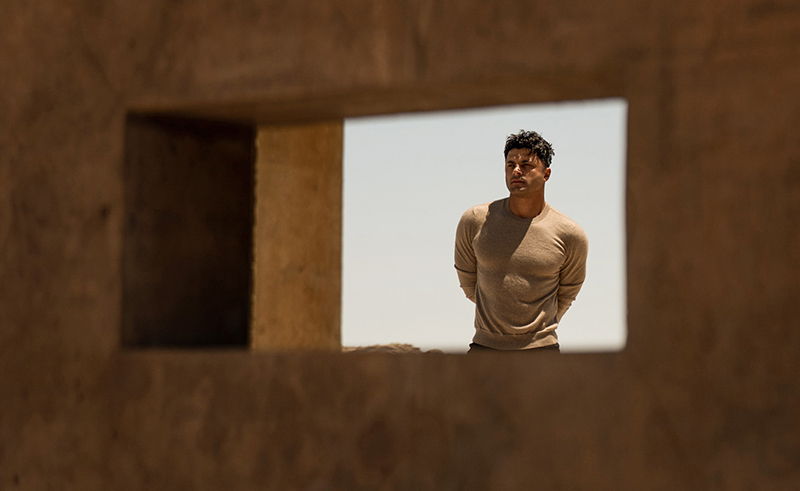
JORDANIAN-AMERICAN :How Malek AlQadi – One Jordanian Architect Brought a Piece of Petra to California

Inspired by his childhood in Amman, Malek AlQadi’s latest project, ‘The Folly Mojave’, injects desert minimalism with sustainable luxury.

Born in Amman, Jordan, raised in Florida, and based in Los Angeles, Jordanian-American architect Malek AlQadi has dedicated his life to his follies. In architecture, a folly is a building that serves no purpose aside from aesthetics. But AlQadi’s follies? They are worlds unto themselves; portals to places only visited in daydreams and memories.

His first folly came about as part of his thesis project, during which he designed and executed a humble, fully self-sustaining stay in California’s Joshua Tree National Park. Though his design language has evolved over the years, his core principles remain the same: sustainability, minimalism, and a reconnection with nature, all rooted in a childhood spent marvelling at Jordan’s deserts.

In Jordan, ancient structures like Petra dominated his early experiences. In Florida, his exposure to contrasting environments shaped his understanding of space, structure and purpose. AlQadi’s obsession with follies finds its roots in his desire to push the boundaries of design. He’s not interested in the grandiosity of skyscrapers or the utility of commercial buildings. Instead, his work delves into the ethereal, focusing on creating spaces that encourage introspection, exploration and escape.

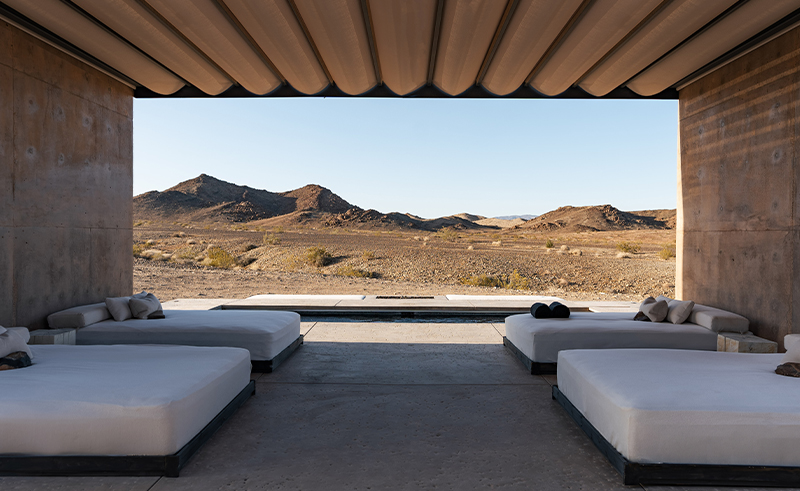
The Folly Mojave, a series of standalone suites dotted across 200 acres at the intersection of The Mojave National Preserve and Joshua Tree National Park, is AlQadi’s most recent and most ambitious project to date. The project is a retreat that blends into the arid environment while providing visitors with an isolated, immersive experience. “A lot of it was navigating childhood memories and connecting them with real-life scenarios and architectural elements, tying vastly different places in the world together, yet still grounded in similar principles and environments.” AlQadi tells SceneHome.

For AlQadi, the desert isn’t just a backdrop. It’s a critical component of the project, shaping the way the Folly Mojave interacts with the land. The retreat’s location in such an extreme environment is intentional; it encourages guests to detach from their everyday lives and engage more fully with their surroundings.

At first glance, the Folly Mojave may appear simple, but its simplicity belies the thoughtfulness of its design. The structure is fully off-grid, powered by solar energy, and equipped with self-sustaining water systems. The retreat is designed for minimal impact on the surrounding environment. Inside, the space is surprisingly open, with large windows that frame the vast desert views.

“A big part of the experience is having less light pollution and being able to see the stars at night. All of that fed into the idea of disconnection,” AlQadi explains. “It’s about having the luxury of time and space to relax and take in nature, which, at its core, is the ultimate healer.”

Malek AlQadi emphasises the “site-responsive” nature of his architectural philosophy. Unlike architects who adhere to a singular aesthetic, AlQadi’s approach is shaped by the environment he works within, adapting to the unique qualities of each location. “No two projects are ever the same,” he explains, yet there’s always a recognisable touch that connects his work. Symmetry, the use of natural materials, and a minimalist design language are core to his style, while he doesn’t shy away from incorporating brutalist elements when appropriate.

For AlQadi, creating spaces that resonate beyond the present – lasting decades or even centuries – is a key part of his architectural philosophy. “Guests often describe the experience as surreal, unique and unplugged,” AlQadi reflects. “Many mention feeling a deep connection while staying there. It’s rewarding to know that people from all walks of life have been able to share in that experience.”

source/content: cairoscene.com (headline edited)

______________

____________________________

AMERICAN / JORDANIAN

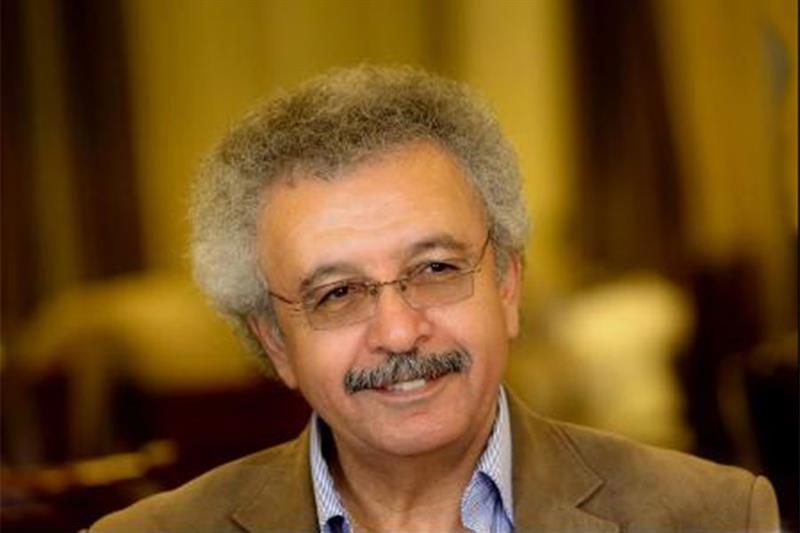
PALESTINE – JORDAN : AUC press author Ibrahim Nasrallah wins prestigious Neustadt international prize

AUC Press author Ibrahim Nasrallah, a Palestinian novelist and poet, has won the prestigious Neustadt International Prize for Literature, announced The American University in Cairo (AUC) Press and its literature imprint, Hoopoe.

Nasrallah is the 29th laureate of the prize, an honour frequently dubbed the “American Nobel.”

Nasrallah’s novel, Time of White Horses (Hoopoe, 2016), published in English translation by Hoopoe, was selected as the representative text for the prize.

The AUC Press “is proud that author Ibrahim Nasrallah and his novel, published under our Hoopoe literary imprint, have received such distinguished recognition,” said AUC Press Executive Director Thomas Willshire.

Time of White Horses tells “a deeply moving story rooted in Palestinian history and identity, exactly the kind of powerful, boundary-crossing narrative that embodies Hoopoe’s mission to bring distinguished voices from the Middle East to readers around the world,” he added.

Hoopoe has published four of Nasrallah’s novels in English, including Time of White Horses (2016), Gaza Weddings (2017), and The Lanterns of the King of Galilee (2015).

As outlined in the Neustadt Prize charter, “Any living author writing in any language is eligible, provided that at least a representative portion of their work is available in English—the language used during the jury deliberations.”

Presented biennially by the University of Oklahoma and World Literature Today, the Neustadt International Prize for Literature recognizes writers of exceptional literary achievement across all genres and languages.

The 2025 winner was announced in October, and the next Neustadt Lit Fest, organized by World Literature Today, will be held in the fall of 2026 in honour of Nasrallah.

Nasrallah was nominated for the prize by Shereen Malherbe, an award-winning novelist and children’s book author.

In her nominating statement, Malherbe said “Nasrallah’s literary works span universal issues and themes woven into the Palestinian struggle that allow readers to connect deeply with Palestine outside of a colonial framework.”

“His work is now more important than ever, considering the plight of Palestinians. It is time the world sees the true Palestine, and Nasrallah’s work can offer this perspective.”

Nasrallah’s powerful storytelling, exploring exile, identity, and resistance, places him alongside past laureates such as Gabriel García Márquez, Edwidge Danticat, and Tomas Tranströmer.

Nadine El-Hadi, senior acquisitions editor at AUC Press, noted that Nasrallah is “a writer of a generation and truly deserving of this prize.”

“Never has it been more important to amplify Palestinian voices such as his,” she added.

A leading Arab literature voice

Born in 1954 to Palestinian parents in a Jordanian refugee camp, Ibrahim Nasrallah has become one of the most important voices in contemporary Arab literature.

He has written fourteen poetry collections and fourteen novels, as well as works of literary criticism.

His writing has been translated into multiple languages, earning him international acclaim for his exploration of exile, identity, resistance, and the human condition.

source/content: english.ahram.org.eg (headline edited)

_____________

_______________________

JORDAN / PALESTINE

SAUDI ARABIA : King Faisal Prize winners announced for 2026

Pioneering scientist behind revolutionary weight-loss drugs, global scholars, innovators among winners.

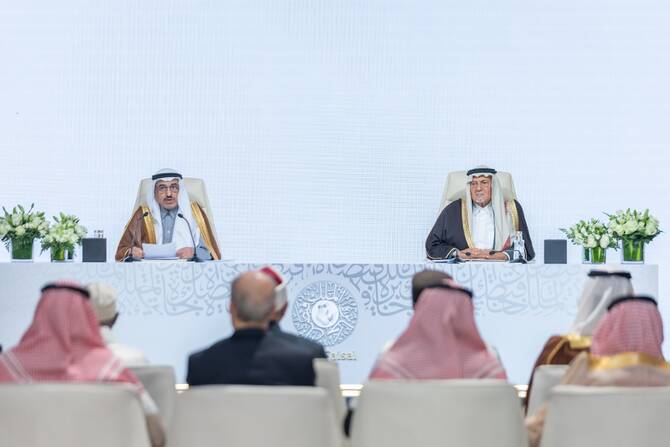
The King Faisal Prize 2026 winners were announced at a ceremony in Riyadh on Wednesday night.

The event honored pioneering scientists, global scholars and innovators for their transformative contributions to medicine, science, Arabic language, Islamic studies and the service of Islam.

Prof. Svetlana Mojsov was named winner in the medicine section for her groundbreaking discoveries that are now reshaping how we treat obesity.

Prof. Carlos Kenig was announced as science laureate in the field of mathematics for helping to revolutionize understanding of nonlinear partial differential equations.

Mojsov, the Lulu Chow Wang and Robin Chemers Neustein research associate professor at The Rockefeller University in New York, pioneered research on glucagon-like peptide-1 (GLP-1) that has fundamentally transformed how obesity and diabetes are treated.

She discovered and characterized the biologically active form of GLP-1, a natural intestinal hormone that regulates blood sugar and appetite, and identified its receptors in the human pancreas, heart, and brain.

Through cutting-edge biochemistry and physiological studies, Mojsov demonstrated that GLP-1 powerfully stimulates insulin secretion while reducing hunger and managing glucose levels.

Her groundbreaking work enabled the development of an entirely new class of medications that mimic this natural hormone, sparking a paradigm shift in obesity treatment.

These therapies today provide life-changing benefits for hundreds of millions of people worldwide living with obesity and its complications — a global health crisis affecting 890 million adults and 160 million children and adolescents in 2022 alone, according to the World Health Organization.

Mojsov’s groundbreaking contributions have earned numerous prestigious honors, including Time magazine naming her one of the 100 Most Influential People in 2024.

Kenig was honored for his groundbreaking contributions to mathematical analysis. His work has transformed understanding of nonlinear partial differential equations — the mathematical equations describing how things change and move in the physical world — and provided researchers with a now-ubiquitous set of techniques. His insights have opened new research frontiers with applications spanning fluid mechanics, optical fibers, and medical imaging.

Kenig, the Louis Block distinguished service professor at the University of Chicago, is recognized for applying harmonic analysis techniques across different areas of partial differential equations.

His work on free boundary problems — determining unknown boundaries such as where ice meets melting water or how fluids flow through soil — has been particularly influential.

Kenig has spent three decades figuring out how complex waves behave over long periods of time, especially in tricky situations where they could either spread out peacefully or build up dangerously.

This matters for understanding everything, from ocean waves to light pulses in fiber optics and to how energy moves through different materials.

His work helps explain phenomena in quantum mechanics, optics, and ocean waves. By combining different mathematical techniques, he has solved longstanding problems that had puzzled mathematicians for decades.

In addition to medicine and science, the King Faisal Prize recognized the achievements of outstanding thinkers and scholars in the field of Arabic language and literature, Islamic studies, and exemplary leaders who have played a pivotal role in serving Islam, Muslims, and humanity at large.

Pierre Larcher, an emeritus professor of Arabic linguistics at Aix-Marseille University and emeritus researcher at the Institute for Studies and Research on the Arab and Muslim Worlds, won this year’s King Faisal Prize for Arabic Language and Literature on “Arabic literature in French.”

His novel presentation of Arabic literature to French readers has earned widespread acclaim from critics and specialists, while his rigorous scholarly approach to classical Arabic literature has made it accessible and appropriate for French culture.

His critical translation project of “Al-Mu’allaqat” and rigorous study of pre-Islamic poetry demonstrate exceptional scholarly depth.

For this year’s Islamic Studies Prize, Abdelhamid Hussein Mahmoud Hammouda, the professor of Islamic history and civilization at Fayoum University, and Mohamed Waheeb Hussein, the professor of archaeology and history of art at the Hashemite University, were announced as co-laureates.

Hammouda’s work encompasses the trade routes across the Islamic world — the Mashreq, Iraq and Persia, Arabian Peninsula, Greater Syria, Egypt, Sahara, Maghreb, and Al-Andalus. This expansive scope delivers coherent understanding of Islamic trade trajectories across history, serving as an authoritative reference for both specialized research and broader scholarship.

Hussein’s groundbreaking work uses archaeological surveys, GPS documentation, and analytical mapping to systematically correlate Qur’anic texts with geographical data. His research offers definitive scholarly interpretation, significantly advancing documentation of early Arabian Peninsula trade routes.

Sheikh Abdullatif Al-Fozan and Dr. Mohammad Abou Moussa were announced as co-laureates in the Service to Islam Prize.

Laureates’ names were announced by Prince Turki Al-Faisal and the King Faisal Prize’s Secretary-General Dr. Abdulaziz Alsebail.

Selection committees included experts, specialists, and scholars who met in Riyadh and examined the nominated works. They selected the laureates in an objective and transparent manner, in accordance with the rules and regulations.

The KFP was established in 1977, and was awarded for the first time in 1979 in three categories: service to Islam, Islamic studies, and Arabic language and literature. Two additional categories were introduced in 1981: medicine and science. The first medicine prize was awarded in 1982, and in science two years later.

Since 1979 the KFP has given awards to more than 300 laureates who have made distinguished contributions to different sciences and causes.

Each prize laureate is endowed with $200,000, a 24-carat gold medal weighing 200 grams, and a certificate inscribed with the laureate’s name and a summary of the work that qualified them for the prize.

source/content: arabnews.com (headlines edited) 

_____________

King Faisal Prize laureates’ names for 2026 were announced in Riyadh on Wednesday night by Prince Turki Alfaisal and the Prize’s Secretary General Dr. Abdulaziz Alsebail. (Supplied)

_______________________________________________________

EGYPT / JORDAN / PALESTINE / SAUDI ARABIA (*Arab)


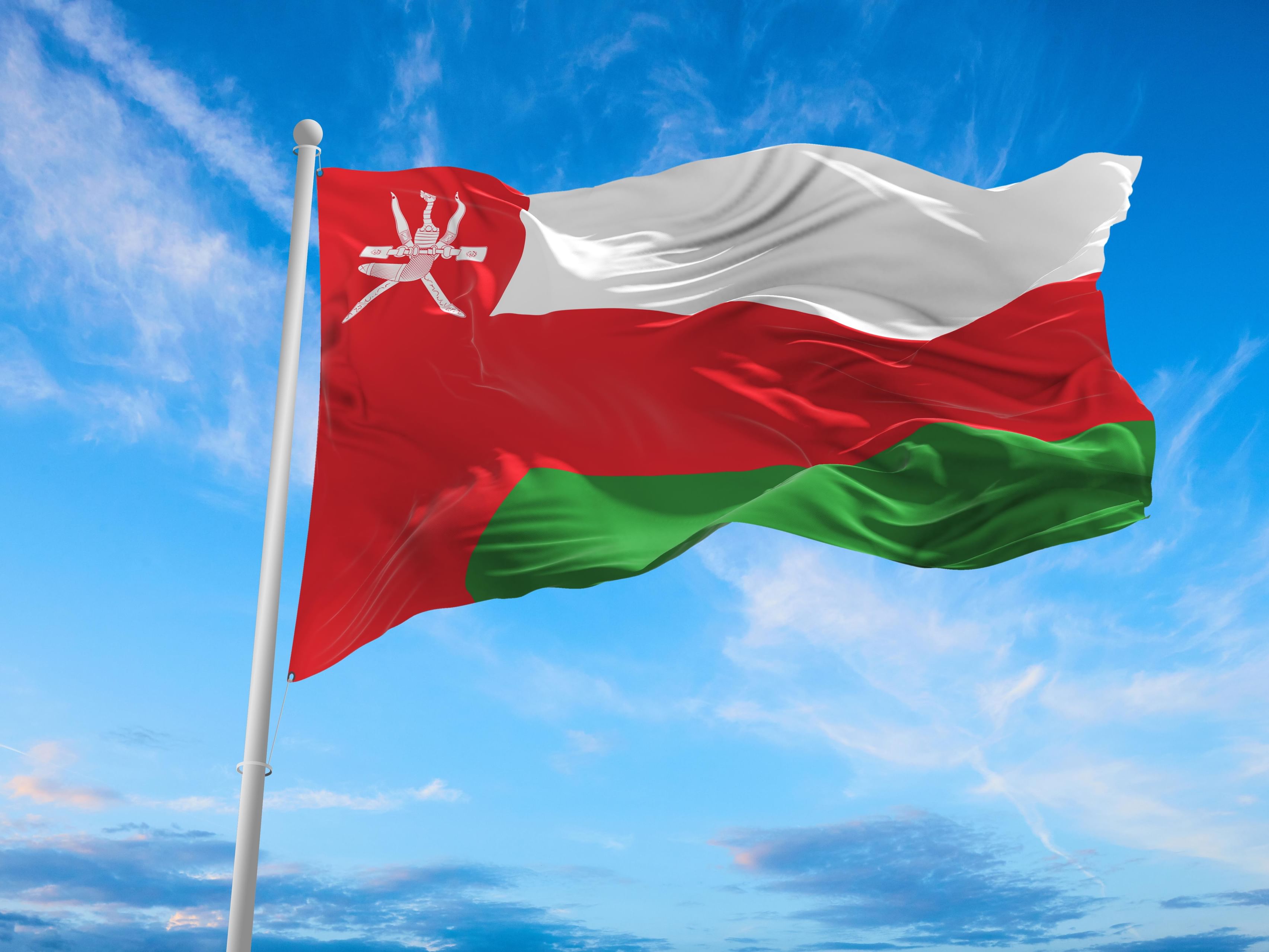
OMAN establishes ‘Oman Global Financial Centre’

In recognition of the strategic importance of establishing a global financial centre in the Sultanate of Oman to drive economic diversification, boost the financial sector’s contribution to GDP, attract capital, and foster an ecosystem attractive to investment, the Council of Ministers has approved the establishment of the “Oman Global Financial Centre.”

The centre, which will enjoy legislative, administrative, and regulatory autonomy, is designed to create a compelling environment for commercial banks and specialised global financial institutions in commercial and Islamic banking, finance, insurance, and related support services. Its establishment also aims to facilitate knowledge transfer and generate high-quality employment in the financial sector, built upon a new legal, judicial, and financial framework aligned with international standards.

The Oman News Agency quoted Sultan bin Salim Al Habsi, Minister of Finance and Chairman of the Financial and Economic Committee at the Council of Ministers, as saying that the establishment of the center will contribute to enhancing the role of the financial sector in achieving the objectives of economic diversification, in integration with efforts to develop the financial and investment sector and the future directions aspired to by the Sultanate of Oman.

He added that the centre will serve as an enabling environment with multiple privileges for managing investments, establishing companies, and forming business partnerships based on facilitating the movement of capital and financial services and supporting financial innovation.

He explained that through this centre, Oman will benefit from its advantages in terms of political stability, investment attractiveness, and economic partnerships with various countries around the world.

source/content: wam.ae (headline edited)

_____________

__________

OMAN

TUNISIAN Women Entrepreneurs Honored for Innovation and Impact at the 10th FET Awards

Tunisian Women Entrepreneurs Honored for Innovation and Impact at the 10th FET Awards

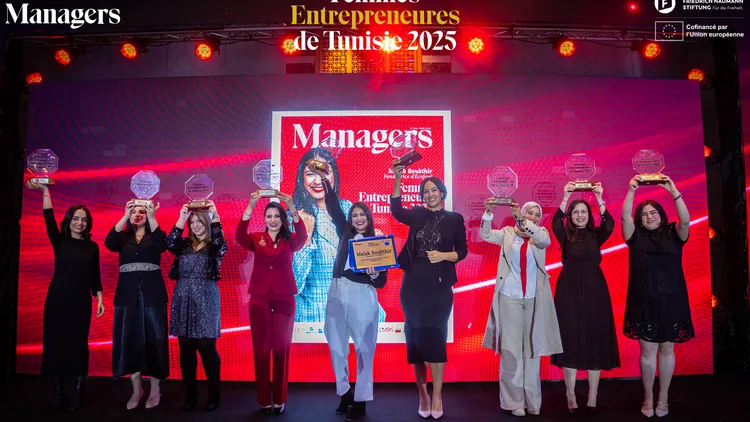
On February , 2025, the 10th edition of the Trophées de Femmes Entrepreneures de Tunisie (FET) honored nine outstanding Tunisian women entrepreneurs for their innovation, resilience, and the impact of their ventures. Organized by Managers magazine in collaboration with the Delegation of the European Union and the Friedrich Naumann Foundation for Freedom, the event brought together a distinguished audience, including ministers Asma Jabri (Family, Women, Children, and Seniors), Fatma Thabet Chiboub (Industry, Mines, and Energy), and Jihene Srioui (Financing and Partnerships, Ministry of Employment and Vocational Training).

In her opening speech, Sahar Mechri, Executive Director of Managers, emphasized that the FET Awards are more than a celebration, they are a validation of bold journeys and a source of inspiration for future generations of women leaders.

Spotlight on the 2025 Woman Entrepreneur of the Year

Malak Boukthir, founder of Ecofeed, was named Tunisian Woman Entrepreneur of the Year 2025 for her groundbreaking project that transforms crab waste into sustainable animal feed a powerful example of eco-innovation.

Other Honorees Included:

  • Teycyr Chtioui (Chkarty) – EU Inclusivity Award
  • Hadhami Rjiba (Relead) – UIB Tech Impact Award
  • Mejda Khaled (Agaruw) – BYD Sustainability Award
  • Sonia Amiri (Oléa Amiri) – CDC Agribusiness Award
  • Ibtihel Ben Hadj Mbarek (Herbalya Natural Care) – PGH Industrial Excellence Award
  • Asma Daoudi (Lihaf Home) – MAE Heritage Award
  • Imen Bakhti (La Seine) – Microcred Empowerment Award
  • Fatma Midani (Soul & Planet) – Meninx Marketplaces Award

Beyond Recognition: Support for Growth

Along with financial prizes from sponsors, the winners will benefit from a tailored mentorship program offered by the Club des Femmes Entrepreneures de Tunisie. Thanks to the support of the European Union Delegation, they will also receive personalized guidance through various EU-funded projects, including Adapt, Greenov’i, CQE (Qualitative Growth for Employment), Insadder, and Initiative Tunisie.

The FET Awards go beyond accolades, they celebrate a thriving community of women entrepreneurs driving Tunisia’s social and economic development. By highlighting their stories and successes, the event strengthens the spirit of sorority and underscores the transformative power of female entrepreneurship in Tunisia.

source/content: freiheit.org /Friedrich Naumann Foundation (headline edited)

______________

Tunisian Women Entrepreneurs Honored for Innovation and Impact at the 10th FET Awards

____________

TUNISIA

MAURITANIA : Sidi Ould Tah: Africa’s new ‘super banker’

Sidi Ould Tah is the first Mauritanian to become president of the African Development Bank (AfDB) and will need all his international experience to tackle the challenges facing the institution.

The 60-year-old economist was the last to declare his candidacy for the post and ran a whirlwind campaign during which he highlighted his 10 years as head of the Arab Bank for Economic Development in Africa (BADEA).

He claimed to have transformed it from an institution “unknown to rating agencies” to one of the highest-rated development organisations in Africa.

“I have demonstrated my transformative leadership style that has elevated the bank to the level of a leading player in the African development landscape,” he said in his application statement to the AfDB.

A discreet man who speaks sparingly, his style will be a clear contrast with his flamboyant predecessor, Nigeria’s Akinwumi Adesina.

Tah’s programme is based on four main points: strengthening regional financial institutions; asserting Africa’s financial independence in global markets; leveraging demographic dynamics as a development tool; and building resilient infrastructure to climate change.

His entourage is touting his ability to replicate his successes at the BADEA at a larger institution like the AfDB, which has $318 billion in capital.

“The AfDB has to abandon traditional bureaucratic models for a more fluid approach based on results,” he said.

– African legitimacy –

Tah, who was Mauritania’s economy minister from 2008 to 2015, is calling for a “break with the approaches of the past”, in a world where the “challenges and opportunities of Africa have taken a new dimension”.

The new AfDB president speaks French, English, Arabic and Wolof, which is spoken in several west African countries.

He managed the impressive feat of rallying diplomatically diverse supporters behind his candidacy, from Sahel countries such as Mali to France.

His score of more than 72 percent among African voters gives him continental legitimacy. His entourage claimed before the vote he had support from the very first round from all African regions.

US President Donald Trump’s administration has vowed to suspend $500 million in aid to the AfDB, but Tah has argued other financial backers such as Gulf countries could step in.

On environmental questions, he intends to promote Africa’s natural resources to move towards a “viable energy transition, reconciling economic and environmental imperatives”.

“Even though Africa is a minimal contributor to global CO2 emissions, it bears the full brunt of the effects of climate change,” he said.

“It is therefore imperative to integrate sustainable practices and to harness renewable energy in development projects.”

Tah holds a master’s degree in economics from the University of Nouakchott in his native Mauritania and a doctorate from the University of Nice in France.

source/content: digitaljournal.com / Pierre Donadieu (headline edited)

_____________

Sidi Ould Tah is the first Mauritanian to serve as African Development Bank president – Copyright AFP/File SAUL LOEB

__________________

MAURITANIA

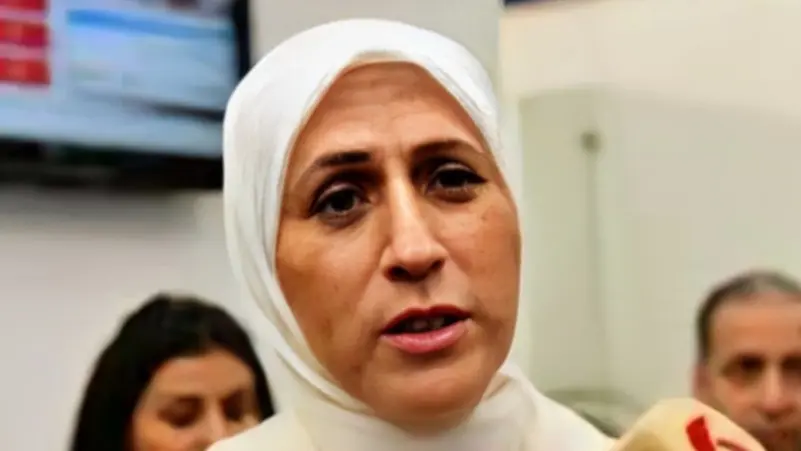
SYRIA : Maysaa Sabrine becomes first woman appointed as Syria’s Central Bank governor

Syria’s new administration announced on Monday the appointment of Maysaa Sabrine as the governor of the Central Bank of Syria, making her the first woman to hold this position in the bank’s history.

Prior to her new role, Sabrin held several prominent positions within the Central Bank, including First Deputy Governor and Supervising Director. She also served as the Head of the Office Supervision Department.

In addition to her roles within the Central Bank, Sabrin has been a member of the Board of Directors of the Damascus Securities Exchange since 2018, representing the Central Bank.

Sabrine holds a master’s degree in accounting.

Her appointment comes amid calls for the inclusion of Syrian women in the new Syrian government.

Earlier this month, Aisha al-Dibas was appointed as the head of the Office for Women’s Affairs, becoming the first woman to hold an official position in the new Syrian administration.

source/content: english.alarabiya.net / AlArabiya English (headline edited)

________________

Maysaa Sabrine. (File photo)

__________

SYRIA

SAUDI ARABIA : Dalal Al-Matrudi: Young Saudi innovator using science to ease pain and inspire change

This combination of compassion and technology earned Al-Matrudi’s team multiple global awards this year.

For Dalal Al-Matrudi, innovation began not in a lab but at home, watching a loved one battle multiple sclerosis. What started as empathy soon turned into invention, leading her and her team to develop a smart medical device that is now winning awards on international stages.

“Our innovation is a smart medical device designed to assist patients with multiple sclerosis by providing localized muscle massage controlled through a mobile application,” said Al-Matrudi. “It helps relieve pain, reduce muscle stiffness and improve patients’ comfort and daily mobility.”

The device also connects patients directly with their doctors for real-time monitoring. “In emergency situations, it can instantly alert healthcare providers to ensure the patient receives immediate assistance,” she said.

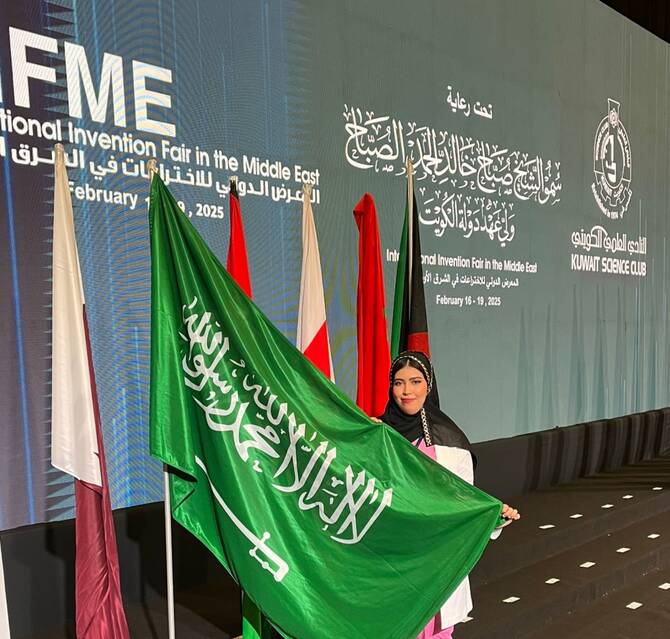
This combination of compassion and technology earned Al-Matrudi’s team multiple global awards this year, including the Gold Medal with Jury’s Honor, the GCC Patent Office Award, and the Grand Prize at the International Invention Fair of the Middle East, or IIFME, hosted by the Kuwait Science Club. The invention was also recognized at the Geneva International Exhibition of Inventions, one of the most prestigious global platforms for innovation.

For Al-Matrudi, 21, who hails from Riyadh, the project was deeply personal. “Our inspiration came from personal experience — one of my family members suffers from multiple sclerosis, and seeing their daily struggle with pain and mobility challenges deeply affected me,” she said.

Together with her teammates, she transformed that emotional drive into a purpose-driven invention. “We wanted to create something practical and compassionate that could truly improve patients’ lives,” she said.

Under the mentorship of Prof. Dr. Kholoud Al-Muqrin, a distinguished professor of nuclear physics known for empowering young Saudi innovators, the team refined their prototype into an award-winning solution. “Her continuous guidance and scientific insight played a vital role in shaping our project and transforming our idea into a tangible, award-winning innovation,” Al-Matrudi said.

She believes the foundation of every great innovation is care. “We believed that technology should serve humanity, and that small ideas born from care can evolve into meaningful advancements that bring relief and hope to many,” she added.

Months of research, design and testing culminated in an unforgettable moment at IIFME 2025.

“The most emotional moment was standing on stage when our team’s name, Team May, was announced as the Grand Prize Winner,” she said. “I remember holding my teammates’ hands tightly, feeling both disbelief and overwhelming pride.”

For Al-Matrudi, the victory symbolized much more than recognition. “It wasn’t just about the prize — it was about realizing that months of dedication, late nights and countless trials were finally worth it,” she said.

She recalls how their mentor’s tears turned the win into a collective triumph. “I could see tears in everyone’s eyes, especially our supervisor’s, which made it even more special,” she said. “That moment reminded me that passion and persistence can turn ideas into achievements that reach beyond borders.”

Although the invention is not directly tied to her academic major, medical physics, Al-Matrudi says her background gave her the edge she needed to design effectively.

“Studying medical physics enhanced my scientific thinking and deepened my knowledge of how the human body interacts with medical devices,” she said. “This understanding helped me design a solution that is both safe and effective.”

She believes the key to meaningful innovation lies in combining technical knowledge with emotional intelligence. “Gaining international recognition encouraged me to continue combining my medical knowledge with creative thinking to develop innovations that make healthcare more compassionate, practical and accessible for all,” she said.

Al-Matrudi’s story reflects a growing wave of young Saudi women who are redefining the global image of innovation.

“I hope my journey shows Saudi women that ambition and creativity have no limits,” she said. “Science and innovation are not exclusive fields — they welcome curiosity, persistence and passion.”

Her experience also underscores how inclusion fuels progress. “When women step into these spaces, they bring empathy and fresh perspectives that drive real progress,” she said.

Her message is simple but powerful: “I want every Saudi girl with a dream to believe that she can represent her country globally, no matter her field. Our achievements are proof that with teamwork, guidance and confidence, Saudi women can lead the way in shaping the future of science and technology.”

Today, Al-Matrudi stands as one of the brightest examples of how Saudi youth are translating Vision 2030’s goals into real-world impact. Through her invention, she’s proving that innovation is not just about devices, it’s about dignity, hope and humanity.

As she proudly waved the Saudi flag on stage in Kuwait, surrounded by fellow inventors and mentors, Al-Matrudi’s message was clear: Saudi women are not just participating in the global innovation movement, they’re leading it.

source/content: arabnews.com (headline edited)

______________

Saudi innovator Dalal Almatrudi proudly holds the Saudi flag after winning the Grand Prize at the International Invention Fair of the Middle East 2025 in Kuwait. (SUPPLIED)

__________________

SAUDI ARABIA