Svetlana Mojsov, who laid the foundations for weight-loss drugs such as Ozempic, and mathematician Carlos Kenig, who decoded complex laws of motion, among those honored
The 48th staging of the coveted prize-giving comes as the King Faisal Foundation celebrates its milestone 50th anniversary
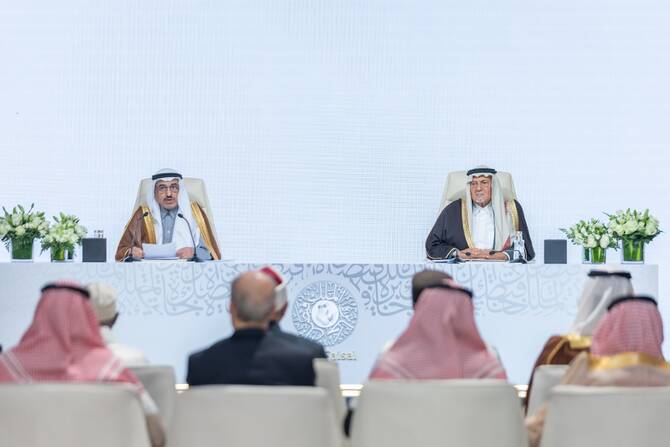
The King Faisal Prize 2026 prize-giving ceremony, which took place in Riyadh on Wednesday night under the patronage of King Salman, honored distinguished experts in medicine, the sciences, the Arabic language, Islamic studies and services to Islam for achievements said to have significantly advanced their fields and enriched all of humanity.
Prince Turki Al-Faisal, acting chairman of the board of trustees of the King Faisal Foundation, and Abdulaziz Alsebail, secretary-general of the King Faisal Prize, took to the stage to honor this year’s recipients in a celebration of exceptional minds whose work echoes far beyond their own laboratories and lecture halls. Other dignitaries at the ceremony included Prince Mohammed bin Abdulrahman bin Abdulaziz, the deputy governor of Riyadh.
The glittering ceremony this year, the 48th staging of the awards, coincided with a landmark milestone: the 50th anniversary of the King Faisal Foundation, which was established in 1976 and handed out its first prizes in 1979.
The honorees this year included distinguished scientists in the fields of medicine and mathematics, including one whose biochemical discovery would ignite a revolution in the field of obesity treatments, and another who delved into the depths of pure mathematics in search of clarity where there was once only chaos.
The King Faisal Prize in Medicine honored a biochemist whose discovery sparked a revolution in treating obesity and diabetes.
Professor Svetlana Mojsov’s early, groundbreaking research on the hormone glucagon-like peptide-1, or GLP-1, laid the biological foundation for what would eventually become the weight-loss drug Ozempic and other obesity therapies.
Her work now lies at the heart of one of the most significant public-health revolutions of our time, touching the lives of hundreds of millions of people worldwide who struggle with their weight.
Mojsov, who works at Rockefeller University in New York, carried out foundational research on GLP-1, a natural hormone that regulates blood sugar and appetite, which laid the scientific groundwork for an entirely new class of medications.
Her discovery of GLP-1’s biologically active form, and identification of its receptors in the pancreas, heart and brain, demonstrated its remarkable ability to stimulate insulin secretion, slow digestion and curb hunger.
Her work was so foundational that she is listed as co-inventor on patents licensed to Novo Nordisk that directly enabled the development of Victoza, Ozempic and Rybelsus, drugs that have become household names in the fights against diabetes and obesity.
The ripple effects of her research were said to be staggering in their scale. In 2022, obesity affected 890 million adults and 160 million children worldwide; today, the therapies her discoveries enabled are transforming lives across the globe, award organizers said.
In her acceptance speech, Mojsov said: “Twenty-five years after we published our findings, Novo Nordisk pharmaceutical company developed long-lasting, injectable GLP-1 analogs for diabetes and obesity.
“I am humbled that my work that started 40 years ago with a hypothesis has benefited the health and lives of millions of people worldwide.”
Her professional journey from basic scientific inquiry to a public-health revolution stands as a testament to the power of foundational research, the award organizers said.
The King Faisal Prize in Science honored a mathematician whose work on equations helped explain ocean waves and fiber optics.
Prof. Carlos Kenig was recognized for his transformative work on nonlinear partial differential equations, described as a stubborn, beautiful aspect of mathematics that govern everything from the crash of ocean waves to the clarity of a medical scan. Where others saw complexity, he found structure that reshaped the very landscape of modern mathematical analysis.
The Louis Block Distinguished Service Professor at the University of Chicago, Kenig built a career making the incomprehensibly complex not only solvable, but useful.
Nonlinear partial differential equations provide the mathematical language that describes how things change, move and evolve in the physical world. By applying harmonic-analysis techniques to these notoriously difficult equations, he helped open up new frontiers in fluid mechanics, optical fibers and medical imaging, award organizers said.
Kenig credited the academic path he has followed to his studies in Chicago and postdoctoral work at Princeton, where he learned from leading mathematicians and further developed his expertise
“I became interested in mathematics at the age of 12 when, in my first year of high school in my native country, Argentina, our math teacher taught us Euclidean geometry, and how to prove rigorously theorems about triangles,” he said during his acceptance speech.
“I was hooked from that time on. I then had the very good fortune to study at the University of Chicago, and to be a postdoc at Princeton University, under some of the most outstanding mathematicians of the 20th century.
“These experiences influenced the direction of my research, which turned to topics in mathematical analysis and, eventually, mostly to the study of the partial differential equations that govern our physical world.”
Professor Pierre Larcher, professor emeritus of Arabic Linguistics at Aix-Marseille University and emeritus researcher at the Institute of Research and Study on the Arab and Muslim Worlds, received the King Faisal Prize for Arabic Language and Literature for his work on Arabic literature in French.
The novel way in which he presents Arabic literature to French readers has earned widespread acclaim from critics and specialists and, in conjunction with his rigorous, scholarly approach to classical Arabic literature, has made it accessible and appropriate for French culture, the award organizers said.
His rigorous study of pre-Islamic poetry and translation of “Al-Mu’allaqat,” a collection of seven such poems, was said to demonstrate exceptional scholarly depth.
The Islamic Studies Prize went to Abdelhamid Hussein Mahmoud Hammouda, professor of Islamic history and civilization at Fayoum University in Egypt, and Mohammed Waheeb Hussein, professor of archaeology and history of art at Hashemite University in Jordan, for their work on historical Islamic trade routes.
Hammouda’s comprehensive work encompasses trade routes across the Islamic world, including the Mashreq, Iraq and Persia, the Arabian Peninsula, Greater Syria, Egypt, the Sahara, Maghreb, and Al-Andalus.
This expansive scope of his work was said to have delivered a coherent understanding of Islamic trade across history, serving as an authoritative reference tool for both specialized research and broader scholarship.
Hussein’s groundbreaking work uses archaeological surveys, GPS data and analytical mapping to systematically correlate Qur’anic texts with geographical data. His research was described as offering a definitive scholarly interpretation of the “Route of Al-Ilaf,” significantly advancing understanding of early trade routes in the Arabian Peninsula.
The Service to Islam Prize was awarded to Sheikh Abdullatif Alfozan, from Saudi Arabia, and Prof. Mohammed Hassanin Aboumousa, from Egypt.
Alfozan was rewarded for his distinctive approach to philanthropic work through support for high-impact initiatives that align with developmental needs, and the establishment of the “Ajwad Endowment” as a community-support tool for the creation and development of humanitarian initiatives.
Aboumousa, a founding member of the Council of Senior Scholars at Al-Azhar, has hosted more than 300 study circles at Al-Azhar Mosque devoted to classical texts, in an effort to strengthen cultural identity among young Muslims.
Established by the foundation in 1977, with the first awards handed out in 1979, the King Faisal Prize has honored 308 laureates from 45 countries over the years in recognition of their outstanding contributions to science and humanitarian causes.
The inaugural prizes in 1979 were awarded in three categories: service to Islam, Islamic studies, and Arabic language and literature. The medicine and science categories were introduced in 1981.
Each of the recipients receives $200,000, a 24-carat gold medal weighing 200 grams, and a commemorative certificate with their name and a summary of the work for which they were honored with a prize described as the most coveted in the Islamic world.
source/content: arabnews.com (headline edited)
_____________
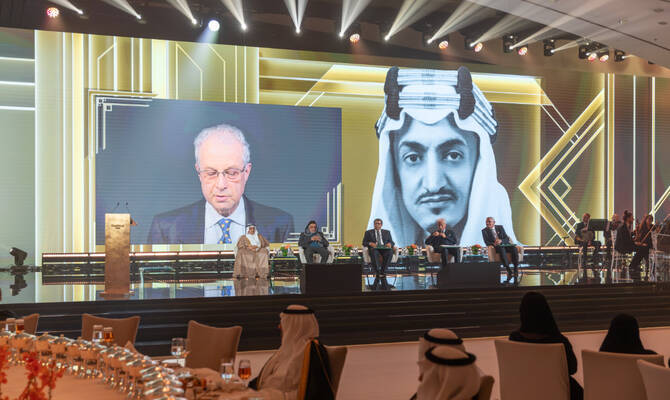
King Faisal Prize 2026 laureates honored at ceremony in Riyadh. (Supplied)
___________________________________
EGYPT / JORDAN / SAUDI ARABIA