SAUDI ARABIA: Winners of King Faisal Prize 2023 Honored in Riyadh

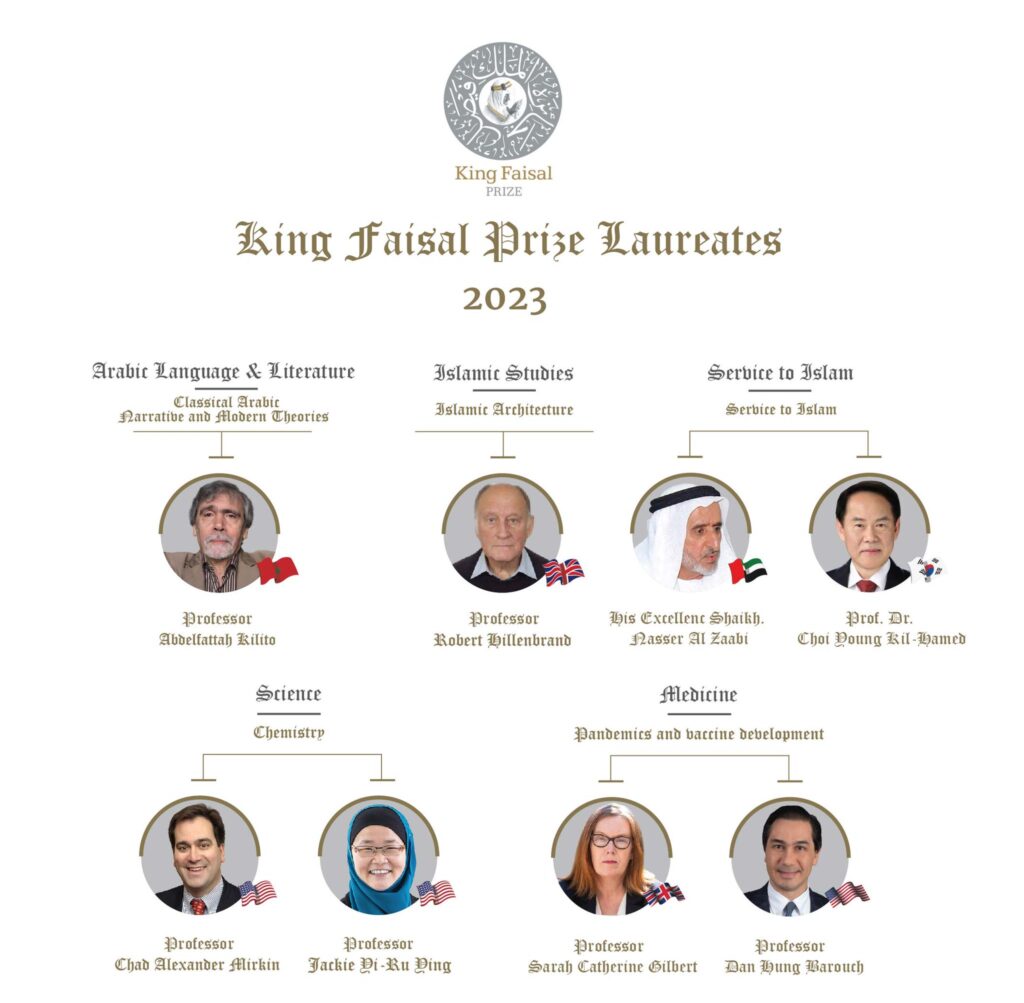
An Emirati, a Moroccan, a South Korean, two Brits and three Americans were honored with the King Faisal Prize 2023.

They served people and enriched humanity with their pioneering work so deserve to be honored and recognized for their distinguished efforts, the King Faisal Foundation said when honoring the winners of the King Faisal Prize 2023.

A glittering award ceremony was held in Riyadh on Monday under the patronage of King Salman, and on his behalf, Prince Faisal bin Bandar, governor of Riyadh Region, attended the ceremony for handing over the King Faisal Prize to the winners this year.

The annual awards are the most prestigious in the Muslim world and recognize outstanding achievement in services to Islam, Islamic studies, Arabic language and literature, medicine and science.

This year an Emirati, a Moroccan, a South Korean, two Brits and three Americans won the prestigious prize, which in its 45th session recognized COVID-19 vaccine developers, nanotechnology scientists and eminent figures in Arabic language and literature, Islamic studies, and service to Islam.

The prize for service to Islam was awarded jointly to Shaikh Nasser bin Abdullah of the UAE and Professor Choi Young Kil-Hamed from South Korea.

The prize for Islamic studies was awarded to Professor Robert Hillenbrand from the UK.

The prize for Arabic language and literature was awarded to Professor Abdelfattah Kilito of Morocco.

The prize for medicine was awarded jointly to Professor Dan Hung Barouch from the US and Professor Sarah Catherine Gilbert from the UK.

In his acceptance speech, Barouch said, “The Ad26 vaccine for COVID-19 demonstrated robust efficacy in humans, even after a single shot, and showed continued protection against virus variants that emerged. This vaccine has been rolled out across the world by the pharmaceutical company Johnson & Johnson, and over 200 million people have received this vaccine, particularly in the developing world.”

Gilbert said that she was “humbled to join the other 2023 laureates, and to follow-in the footsteps of the men and women whose work has been recognized by the foundation for more than four decades. This award is in recognition of my work to co-create a vaccine for COVID-19. A low-cost, accessible, efficacious vaccine that has now been used in more than 180 countries and is estimated to have saved more than six million lives by the start of 2022.”

The prize for science was awarded jointly to Professor Jackie Yi-Ru Ying and Professor Chad Alexander Mirkin, both from the US.

Ying’s research focuses on synthesis of advanced nano materials and systems, and their application in biomedicine, energy conversion and catalysis.

Her inventions have been used to solve challenges in different fields of medicine, chemistry and energy. Her development of stimuli-responsive polymeric nanoparticles led to a technology that can autoregulate the release of insulin, depending on the blood glucose levels in diabetic patients, without the need for external blood glucose monitoring.

“I am deeply honored to be receiving the King Faisal prize in science, especially as the first female recipient of this award,” she said in her acceptance speech.

This year two women scientists have been honored as winners of the King Faisal Prize for medicine and science categories.

The woman behind the Oxford–AstraZeneca COVID-19 vaccine, Professor Sarah Gilbert, the Saïd chair of vaccinology in the Nuffield department of Medicine at Oxford University, was honored with the medicine award.

The other woman scientist honored with the King Faisal Prize in science is Professor Jackie Yi-Ru Ying; the A-star senior fellow and director at NanoBio Lab, Agency for Science, Technology and Research. She is a professor at Massachusetts Institute of Technology, and was chosen for her work on the synthesis of advanced nanomaterials and systems, and their applications in catalysis, energy conversion and biomedicine.

The King Faisal Prize was established in 1977. The prize was granted for the first time in 1979 in three categories: Service to Islam, Islamic studies and Arabic language and literature. Two additional categories were introduced in 1981: Medicine and science. The first medicine prize was awarded in 1982, and in science two years later.

Since 1979, the King Faisal Prize in its different categories has awarded 290 laureates who have made distinguished contributions to different sciences and causes.

Each prize laureate is given $200,000 (SR750,000); a 24-carat gold medal weighing 200 grams, a certificate inscribed with the laureate’s name and a summary of their work that qualified them for the prize, and the certificate signed by chairman of the prize board, Prince Khalid Al-Faisal.

source/content: arabnews.com (headline edited)

___________
______________________________________

MOROCCO / U.A.E. / SAUDI ARABIA
MOROCCO :‘Fog Harvesting’ Organisation Also Provides Training and Study Programmes

Famous for its “fog harvesting” project in southern Morocco, the nonprofit Dar Si Hmad for Development, Education and Culture also carries out other projects to build the capacities of local populations and provide educational training projects for young people.

The fog-harvesting project, in the Sidi Ifni region of southern Morocco, uses specially designed nets to capture water droplets suspended in the fog covering mountain peaks. The fog-water drips off the nets and is channeled into a filtration system, thus providing clean water to residents of areas suffering from severe water shortages.

The project is a boon for women in the region because it frees them from having to carry water long distances, and also provides jobs and training for them.

Development Projects

Established in 2010, Dar Si Hmad for Development, Education and Culture is run by Jamila Bargach, a cultural anthropologist, and her husband, Aissa Derham , a mathematician who holds a Ph.D. from Laval University in Canada.

Bargach studied at Mohammed V University in Rabat and obtained a Ph.D. in anthropology from Rice University in the United States. She has worked for several nongovernmental organisations in Morocco and abroad.

In the region, Bargach is nicknamed “The Bride of the Fog” in reference to a local Amazigh legend of a princess named Teslet who did her best to make rain to save her village from drought.

Over the past years, the fog-harvesting project has received numerous international honours, notably an Innovation in Sustainabilty award from the GoAbroad Foundation in 2017 and a Momentum for Change award  presented at the COP22 Climate Summit in Marrakech in 2016.

Programmes for American Students

Fond of southern Morocco, Bargach believes that the region provides unique opportunities for students to learn more about the kingdom, especially in terms of how development projects are accomplished in complex and special contexts.

Many of Dar Si Hmad’s educational programmes center on the fog-harvesting project, Bargach told Al-Fanar Media. “This enables students to learn and develop their abilities through practical and field education.”

She added that the association receives students from American universities who come to southern Morocco. Over the years, it has hosted more than 54 student missions from different American universities.

The organisation provides these students with opportunities to meet with Moroccan students from Ibn Zohr University, in Agadir, and to participate in various educational programmes. These include the RISE Programme, the Ethnographic Field School and the Water School, as well as job programmes targeting women in rural areas.

Environment-Friendly Entrepreneurship

The RISE Programme aims to build capacities and promote environment-friendly entrepreneurship among students of colleges and higher schools in Agadir. The programme is a set of integrated workshops presented by experts, and meetings with employers, with the aim of exchanging experiences and creating opportunities for networking. Each participant is also required to have a project idea that benefits the local environment, besides the need to commit to attending all scheduled events.

The Ethnographic Field School  promotes cross-cultural understanding and exchange through interpersonal interaction with local communities. During their time in southern Morocco, participants learn about local issues like sustainable practices in the argan oil industry , which employs many rural Amazigh women, or languages like darija (Moroccan Arabic) and Tachelhit (the local form of Tamazight).

The Water School programme is directed to students of rural schools in the Aït Baamrane region in southern Morocco. The programme is based on lessons inspired by local reality, with openness to other horizons and cultures. The Water School brings together volunteers, environmental trainers, and other partners. Everyone is committed to building a comprehensive and ethical foundation for the benefit of environmental education, the organisation’s leaders say.

Bargach says that the success of the fog-harvesting project motivated and inspired the educational programmes’ students. She adds that they are working to transfer knowledge to young people who are passionate about more work and innovation in searching for alternative sources of water and serving the environment in southern Morocco.

Skill-Building Experiences 

Nadia El-Aissaoui, who holds a master’s degree in tourism and communication from Ibn Zohr University’s Faculty of Arts and Humanities, worked in Dar Si Hmad’s Ethnographic Field School this year. She said the experience helped her develop professional skills. “I have benefited greatly from this experience,” she said. “I worked as a fixer (‘speaking partner’) for students coming from American universities to work on field research projects.”

The programme transferred her from university halls to field research, she said. “This experience enriched my professional path,” she added. “I learned a lot of things, such as focusing on tasks, time management, documentation, interpretation methods, besides exposing me to the American mentality and working ways.”

source/content: al-fanarmedia.org (headline edited)

__________

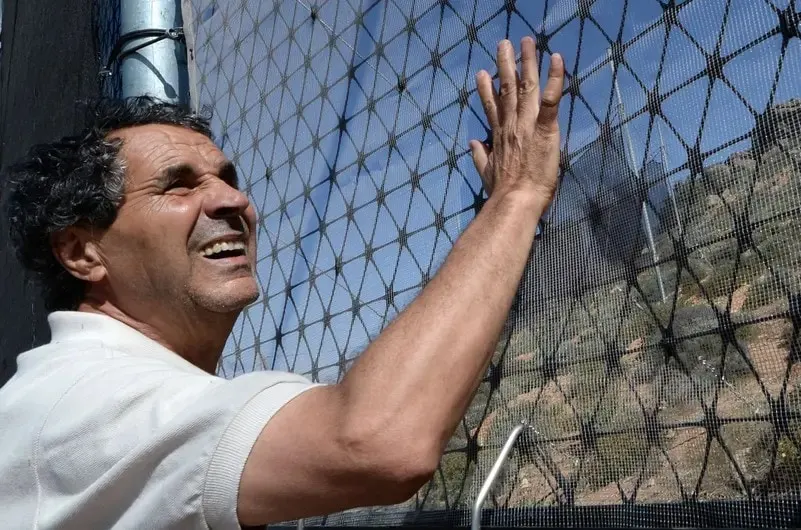
Aissa Derham checks a net used in the fog-harvest project. He and Jamila Bargach co-founded the nonprofit Dar Si Hmad for Development, Education and Culture, which runs several capacity-building and educational programmes in southern Morocco. (Photo courtesy of the organisation)

_____________

MOROCCO

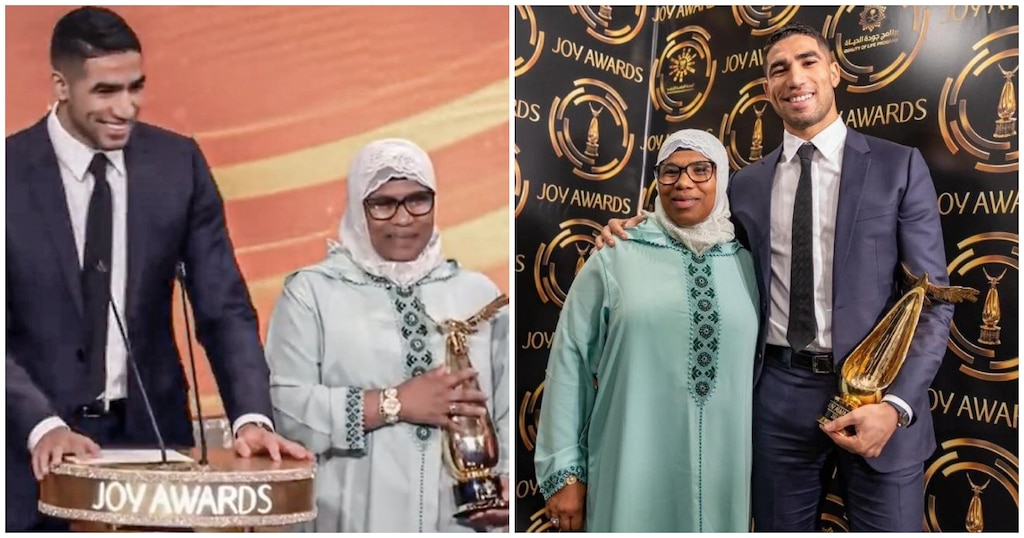
MOROCCO: World Cup Star Achraf Hakimi Named Best Arab Sportsman of the Year

-Achraf Hakimi has won the top male award at the Joy Sports Award ceremony in Riyadh

-The PSG and Morocco defender scooped the award for the best Arab sportsman

-Hakimi helped Morocco reach the semi-final of the World Cup in Qatar

Morocco and Paris Saint Germain defender Achraf Hakimi has been named the best Arab Sportsman of the Year at the Joy Sports Awards in Riyadh.

Hakimi beat Mohammed Al Owais, Salem Al Dosari and Yazid Al Rajhi for the top award.

The PSG defender walked onto the podium with his proud mother to receive the award during the ceremony in Saudi Arabia on Saturday.

Hakimi expressed excitement, thanking his mother for her support while dedicating the moment to his Morocco and PSG teammates.

source/content: sportsbrief.com (headline edited)

_________

___________

MOROCCO

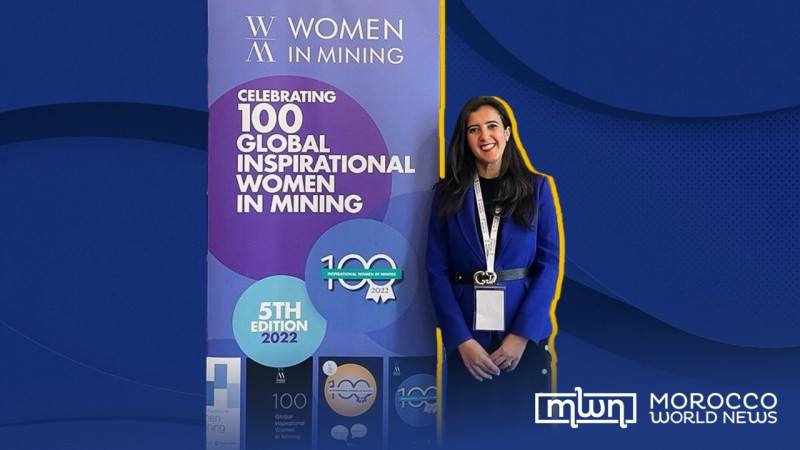
MOROCCO: OCP’s DOOC CEO Ibtissam Bensetti , the ‘First Moroccan Woman’ named in ‘100 Global Inspiring Women in Mining’ (WIM100) 2022

With a strong determination to help women’s inclusion in the mining industry, Bensetti has a strong belief in women’s ability to defy norms and pursue a career in any industry.

Women in Mining UK, an NGO dedicated to supporting women in the mining sector, selected  CEO of OCP subsidiary DOOC Ibtissam Bensetti to feature in the 2022 “100 Global Inspirational Women in Mining” (WIM100) in recognition of her contributions to the global mining industry.

With this nomination, Bensetti became the first OCP personnel and Moroccan national to feature in the 100 Global Inspirational Women in Mining.

The NGO’s global top 100 list celebrates women’s contribution to the mining industry at all levels. The biennial publication stresses women’s skills and expertise in the global mining industry and celebrates role models for future generations.

Women inclusion in mining

The organization selects nominees based on different criteria, including creative innovation and sustainable working.

“A WIM100 woman offers proactive advocacy to those working in the mining industry and beyond. She empowers her colleagues to ensure everyone feels heard, welcomed, and respected,” the NGO said.

Bensetti has been able to take her place in the WIM100 for her leadership in OCP as a CEO at the group’s subsidiary DOOC, which specializes in industrial operations consulting, safety, and sustainability. 

Having joined OCP in 2012, Bensetti has more than a decade of experience in the mining industry at different levels, particularly in sustainability roles in mining and chemical industrial operations, as well as corporate development.

Carrying the spirit of women’s empowerment during her journey, Bensetti has been working on spreading that spirit among her team members, particularly women, through supporting  OCP’s female talent as well as increasing the number of women in management.

Delighted to be part of the WIM100 list, Bensetti stressed her emphasis and belief in women’s talents.

“In my mind, there is no impenetrable fortress for women, women can defy the norms and pursue a career in any industry,” she said, conveying her encouragement and endorsement for the inclusion of women in the mining industry.

The CEO acknowledged that the industry might have been a male-dominated industry but claimed that that’s in the past thanks to global efforts seeking to ensure gender equality at different levels.
 Women make up between 8% and 17 % of the global mining workforce, a McKinsey report has found.

The report also identified, however, several reasons and challenges that prompt women’s exit from the industry.

“The top reasons for leaving the industry are feeling that work is no longer intellectually challenging and having the perception that there are fewer advancement opportunities than there are for their male colleagues,” the report stressed.

Appointment and education

Bensetti was appointed as CEO of DOOC in June 2021 to replace Hamid El Mahfoudi, who retired.

She joined OCP a decade ago, filling positions related to strategy, corporate development, and industrial operations.

Graduating from Telecom Paris in 2004, Bensetti amassed 18 years of experience in management consulting, industry managing, coaching, and leading teams in transformation journeys.

Bensetti is also a graduate of The World Business Council for Sustainable Development’s LEAP Program, a one-year sustainability training program that seeks to empower women and help advance their positions and careers.

Having gender equality as a center of focus during her career, Bensetti is determined to continue her battle to help empower women in the mining industry.

“Being a woman engineer in industry, I have been fighting this battle all my life,” she wrote on her LinkedIn bio.

source/content: moroccoworldnews.com (headline edited)

___________

____________

MOROCCO

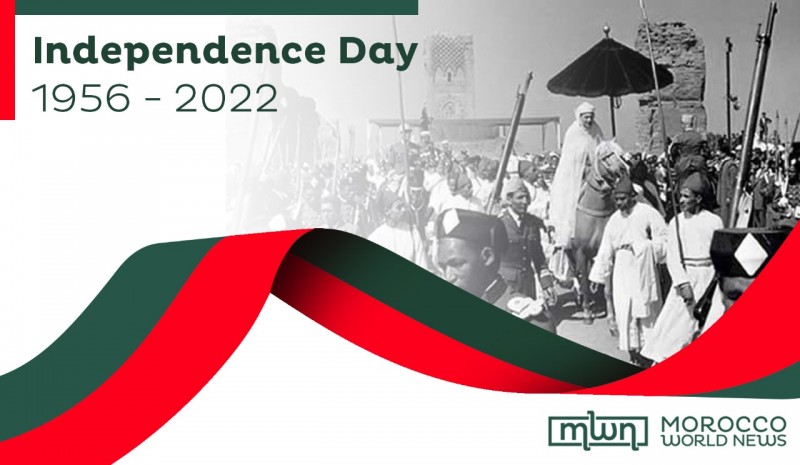
MOROCCO: 18th November – 67th Anniversary of Morocco’s Independence Day

November 18: A Reminder of Morocco’s Long Fight for Independence.

The day marks a celebration of Moroccan bravery in the face of the French and Spanish colonial regimes.

On November 18, Moroccans will celebrate the 67th anniversary of Morocco’s independence. The date, which once commemorated King Mohammed V’s ascension to the throne in 1927, celebrates nowadays the country’s long fight for freedom and independence against the French and Spanish protectorate. 

The colonial history dates back to March 30, 1912, with the signing of the Treaty of Fez, laying the foundation for the French protectorate and the division of Moroccan territories between Paris and Madrid with Spain controlling the northern and southern provinces with the exclusion of Tangier, which became an international zone in 1923. 

However, Tangier’s special status was temporarily revoked between June 14, 1940, and August 31, 1945, as Spanish dictator and general Francisco Franco occupied the international zone.

As for the Ceuta and Melilla enclaves, they have remained under Spanish control since the 17th and 15th centuries, respectively. 

A fierce fight

Since the establishment of the French and Spanish protectorate regimes in Morocco, local communities led numerous revolutionary missions fighting back the expansion of the colonial forces. 

The establishment of the Republic of the Rif by Abdelkrim al Khattabi in 1921 and its continuity until 1926 strongly reflected the Moroccan will for independence. Despite being defeated by the Spanish Army of Africa with the support of French forces, the republic remained a prominent example of Moroccan-led resistance movements.

In November 1925, the Moroccan nationalist movement was initiated to put an end to the oppressive colonial regimes. The movement was instrumental in voicing Moroccan demands in not only urban and rural centers but also on the international stage. 

In January 1944,  66 members of the Moroccan national movement signed the country’s Manifesto of Independence and presented it to the French and Spanish colonial authorities, as well as representations of the US, Great Britain, and the Soviet Union.

The manifesto was a turning point in Morocco’s struggle for independence. Aware of the threat that the declaration represented to the continuity of the French protectorate in the North African country, French colonial forces worked on pressuring Sultan Mohammed V to condemn the proclamation, while leading a purge of Moroccan nationalists and intellectuals and accusing some of the signatories of spying for Nazi Germany.

This was a time when Muslim and Jewish nationalists were discussing the prospect of establishing a modern and free Morocco that can equally celebrate both communities and reverse discriminatory measures forced by colonial authorities such as the Berber Dahir and Vichy’s anti-Jewish policies. 

Despite facing fierce oppression from French colonial forces, the Moroccan nationalists continued to voice their demand for self-determination. 

The movement further worked in coordination with Sultan Mohammed V to obtain freedom. The Sultan’s calls for independence eventually led to his forced exile along with his family members on the eve of Eid al-Adha in August 1953 to Corsica, and then to Madagascar in 1954. 

The Sultan’s forced exile fueled public uproar with many nationalists organizing protests and calling for the return of the Sultan and his family as well as the right of the people to self-determine their fate. 

Faced with rising pressure from the Moroccan public for independence, France allowed the return of Sultan Mohammed V to his homeland on November 16, 1955. 

Two days later, the monarch delivered an iconic speech, stating, “We are delighted to announce the end of the trusteeship system and protectorate and the advent of freedom and independence.”

Incomplete independence

By late 1955, Mohammed V agreed to the gradual restoration of the country’s territorial integrity in line with agreements reached with France. 

On March 2, 1956, Morocco officially gained independence from the French regime. That same year, Morocco re-integrated Tangier and the northern part of Morocco that was under Spanish rule. 

However, the Ceuta and Melilla enclaves, as well as the country’s south remained under the Spanish regime at the time.

Morocco gradually recovered its territorial integrity in the south with the withdrawal of Spain from Tarfaya in 1958, Sidi Infni in 1969, and Saqia al Hamra and Oued Eddahab region in 1975.  

A significant part of the Moroccan recovery of southern territories was led by the late King Hassan II (1961-1999) who orchestrated the Green March that contributed to the full withdrawal of Spain from southern Morocco. 

After over six decades of fighting for independence, Morocco regained the majority of its territories with the exception of the Ceuta and Melilla enclaves that remain under Spanish rule. 

The country’s southern provinces, known as Western Sahara, are also subject to disputes with the eastern neighbor and the Polisario Front, a self-proclaimed separatist group challenging Morocco’s territorial integrity and sovereignty of the region. 

Today, Rabat continues to defend its territorial integrity in international gatherings with the support of friendly states.  

source/content: arabnews.com (headline edited)

___________

_____________

MOROCCO

MOROCCO: CEO Omar Channawi Features on Forbes’ Global Meets Local List

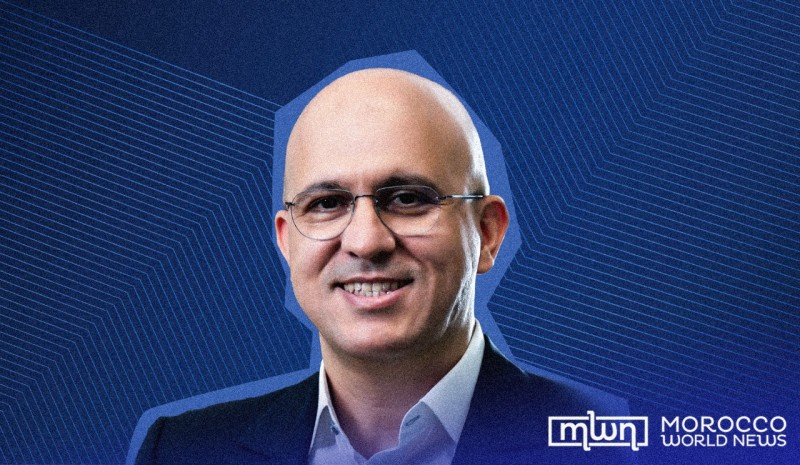
CEO of the Middle East, Global Entrepreneurial Markets, and Sub Sahara Africa at Procter & Gamble (P&G) Omar Channawi has featured in the Forbes’ “Global Meets Local 2022” list for the MENA region.

The Moroccan businessman also holds the position of P&G’s Senior Vice President of Sales in Asia Pacific, the Middle East, and Africa.

Channawi started his career with P&G Morocco in 1993 and assumed his current position in 2019 after building a solid career with the American consumer goods corporation over two decades.

P&G is the parent organization of numerous well-known brands such as Downy, Pampers, Always, Braun, Gillette, Olay, Oral-B, and Head & Shoulders. 

The company’s portfolio also includes brands that are often seen as competitors in the MENA market such as Tide and Ariel. 

According to Forbes, P&G accumulated $80.2 billion in net sales in the 2021/22 financial year with the Middle East, Africa, Asia Pacific, and India contributing to 14% of total net sales.

The decades-long economic growth recorded in some MENA economies has encouraged numerous multinational companies such as P&G to set up offices in the Middle East, most often in the region’s largest economic hub Dubai.  

The presence of multinational companies in the region, according to Forbes, “create[s] thousands of jobs as well as bringing technological advancements and capital into the region.”

This year, Forbes recognized 51 executives from 50 companies for the 10th edition of its annual Global Meets Local ranking. The companies operate in the technology, banking, food and beverage, pharmaceuticals, and automotive sectors.

As for the executives, they represent 27 nationalities with most CEOs coming from Britain and France, each had five executives on the list. 

source/content: moroccoworldnews.com (headline edited)

_____________

The Middle East, Africa, Asia Pacific, and India contributed by 14% t o P&G’s total net sales in the 2021/22 financial year.

______________

MOROCCO

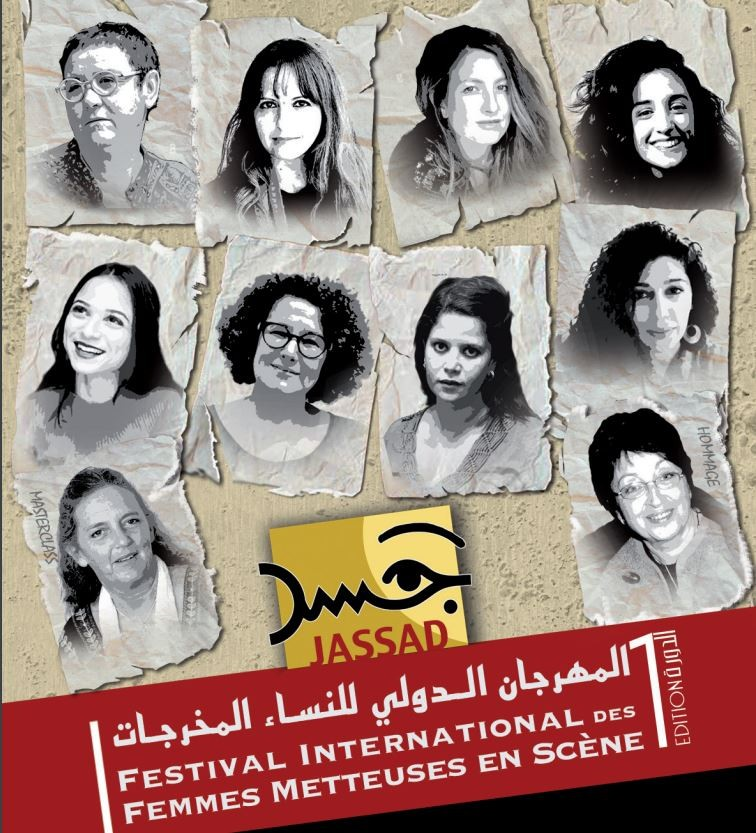
MOROCCO: 1st Edition of ‘Jassad Festival’ Honors Women Theater Directors

Morocco’s cultural capital Rabat is hosting the first edition of Jassad, the International Festival of Women Directors, between October 25 and 30. The event aims to highlight and pay tribute to the achievements of women theater directors from across the world.

Organized by Morocco’s Aquarium Theater and Anfass Theater, the festival will feature renowned women directors from Morocco, Tunisia, Lebanon, Spain, France, Denmark, and Romania.

“Through this festival, we wish to establish a ritual of recognition towards all the creative women who serve the theater,” said Amsaa Houri, director of Anfass Theater.

The six-day event also aims to “strengthen the resilience and hope of women actors in the cultural and creative industry, at a time when the sector has been seriously affected by the Covid-19 pandemic,” Houri added.

The festival serves as a platform for cultural and artistic exchanges, as its program offers a wide range of activities, including plays, a master class, workshops, as well as meetings and debates, indicated the organizers in a press release.

Director of Aquarium Theater Naima Zitan described the festival as “a meeting, an exchange, a discovery, all this and a little more,” explaining that the event is dedicated to theatrical creation, as well as exchanging ideas, experiences, and different visions of the world.

“The Jassad (meaning body in Arabic) is what unites us, wearing a festive hat to welcome and greet a vast and colorful audience,” Zitan said.

The festival will feature various theatrical pieces, including Naima Zitan’s “Le Masque” (The Mask), Asmaa Houri’s “Automne” (Autumn), as well as “Joyeux Anniversaire” (Happy Birthday) by Morocco’s Fatima Zohra Lahouitar and “Boujloud” by French-Moroccan Kenza Berrada. 

The six-day event will also feature “Nawal” by Lebanon’s Lina Abyad, “Heimat Wort” by Tunisia’s Meriam Bousselmi, “Enlorquecidas” by Spain’s Marta Ocana, and “Une Maison de Poupee” by France’s Lorraine de Sagazan.

In addition, the event will include a seminar titled “Profession: Woman of Theater,” featuring Morocco’s Zohra Makac and Omar Ferhat, Lebanese director and theater professor Lina Abyad, and Denmark’s theater actress Julia Varley.

source/content: moroccoworldnews.com (headline edited)

____________

The poster of the Jassad International Festival of Women Directors featuring renowned directors

______________

MOROCCO

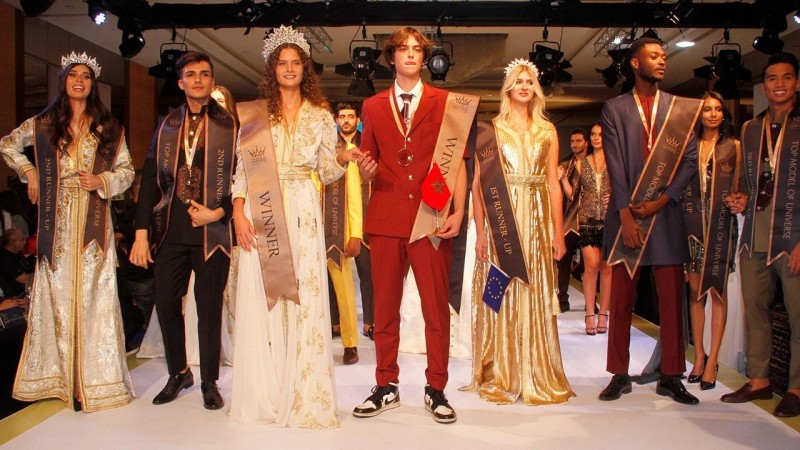
MOROCCO: Ilias Senhaji Awarded ‘Top Model of Universe 2022’

The next edition of Top Model of Universe will be held in Marrakech.

Morocco’s young model Ilias Senhaji has won the title of “Top Model of the Universe 2022’’ in a competition held in Istanbul to select the future faces of the fashion world.

A statement by the organizers added that the 17-year-old Russian-Moroccan model is the face of the Moroccan fashion house Calamain and was first discovered at the Morocco Fashion Week in Marrakech in June 2022.

The next edition of “Top Model of Universe’’ will be held in Marrakech, says the statement.

Also present at the event was the popular Moroccan designer Wafaa Idrissi.

The iconic Moroccan caftan designer debuted a new collection during the event consisting of “beautiful white caftans with gold embroidery thread, accented with pearls and Swarovski crystals, handmade by Moroccan artisans.”

Idrissi recently  showcased a set of inspiring caftan designs at The Oriental Fashion Show. Most of her designs were laced with golden and vibrant motifs, with one of her pieces also featuring a veil. 

Moroccan women have also excelled in several international beauty pageants.

Morocco’s Marwa Lahlou was crowned Miss Arab USA in August. Lahlou graduated with a honors degree from the University of New Haven with an MBA in International Business Management and Marketing. Additionally, the model speaks Arabic, English, French, and Spanish.

On October 16, Moroccan-Spanish model Sarah Loinaz was crowned Miss Universe Spain 2021 at the Los Olivos Beach Resort in Costa Adeje, Tenerife, Canary Islands.

The 23- year-old model also competed at the Miss Universe 2021 pageant held in Israel.

source/content: moroccoworldnews.com (headline edited)

____________

______________

MOROCCO

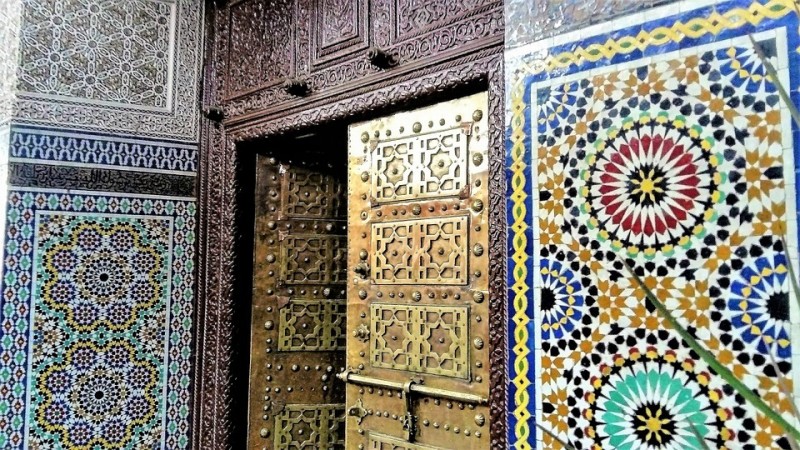
MOROCCO: ‘Zellige of Fez’ Patented to Protect Cultural Heritage

Morocco recently has stepped up efforts to restore and protect its cultural heritage.

Following a series of complaints about the cultural appropriation of Moroccan Zellige (mosaic), on Friday, Morocco’s Ministry of Culture announced the official patenting of Zellige of Fez by the World Intellectual Property Organization.

In 2015, Morocco registered the Zellige of Fez in the Vienna Classification of Figurative Elements of the World Intellectual Property Organization in an effort to preserve its national heritage.

Celebrating the new patent, the Moroccan ministry took to social media to share the news, stating “Zellij is one of the most artistic forms that express the originality of Moroccan architecture.”

The ministry’s post added that the Zellige “industry dates back to the tenth century AD, when it flourished during the Marinid era in the honorable Kingdom before moving to neighboring tribes during the following centuries.”

Given the global popularity of Zellige of Fez due to its quality, originality, and multicolored feature, the Moroccan ministry says that “the city of Fez [is] the owner of this art and the main center for its production and industry due to its special clay that is not found in other places.”

In addition to gaining global appeal among designers, interior architects, celebrities, and even international organizations , Moroccan Zellige has been studied by Moroccan and foreign experts in the fields of engineering, arts, social sciences, and mathematics including Rushita Choksey and Jean Constant.

Despite the existence of an extensive literature body asserting the Moroccan origin of the Zellige, the clay artwork remains subject to external claims. 

Earlier this week, Morocco filed a complaint against Adidas for producing and promoting new Algerian jerseys with Zellige patterns. Adidas claimed that the patterns were inspired by El Mechouar palace in Tlemcen.

Soon after Moroccan social media users learned about Adidas’ news, the brand’s post was flooded with comments from Moroccan users who denounced the company’s act. Moroccan users added social media hashtags such as  #Moroccan culture, #Moroccan Zellige, and #No theft of Moroccan heritage to spread the word.

Some internet users also stressed the Moroccan origin of the El Mechouar’s architecture stating that the Algerian-based palace was built by Sultan Youssef Ibn Tachfin during the Almoravid dynasty and renovated in 2010 with Moroccan calligraphy, mosaic, and plaster art.

In response to the social media backlash between Moroccan and Algerian users, Morocco’s Ministry of Culture filed a complaint against the multinational firm, condemning the “cultural appropriation [and the] attempted robbery of a form of traditional Moroccan cultural heritage.”

Still, Moroccan-Algerian clashes over the origins of popular products such as couscous, caftan, and mosaics are likely to persist after the patenting of the Zellige of Fez. These debates, which mostly take place in the digital space, reflect the decades-long tensions between Rabat and Algiers centered on the Western Sahara dispute.

The rising diplomatic tensions and small-scale online clashes between the North African neighbors, however, do not fully reflect the relations between the two nations’ peoples, as many Moroccan and Algerian families have shared history and lineage. 

source/content: moroccoworldnews.com (headline edited)

_________

The Moroccan Zellige industry dates back to the tenth century AD

_____________

MOROCCO

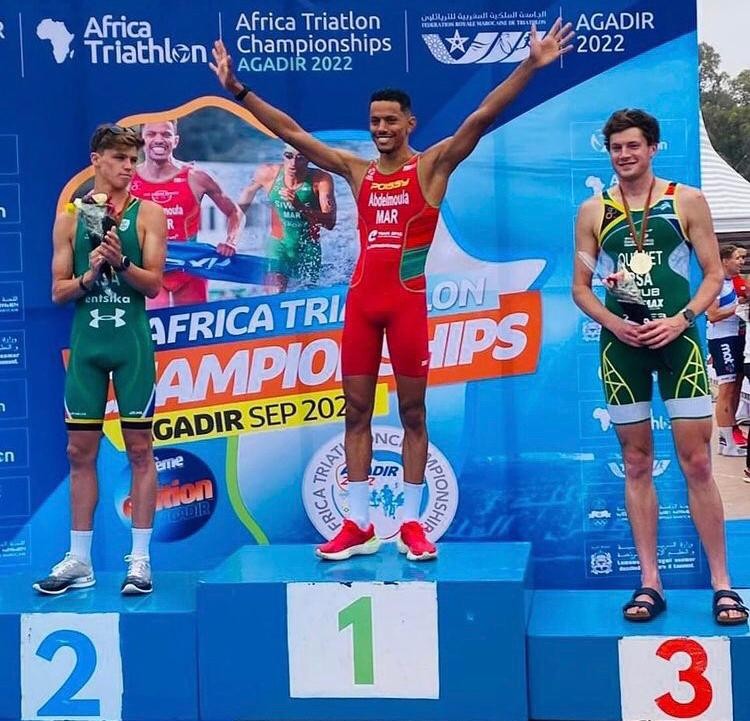
MOROCCO: Athlete Jawad Abdelmoula Crowned African Triathlon Champion, Agadir 2022

Jawad Abdelmoula is currently the best African and Arab triathlete, according to the World Triathlon Individual Olympic Qualification Ranking for Paris 2024.

Despite enduring an injury, Morocco’s Jamal Abdelmoula won the African title in the Elite category of the third Africa Triathlon Championship this weekend.

Hosted in Agadir, the Moroccan athlete said that he was honored to win the championship at home, adding that he took a risk to participate in the race given his health conditions. 

Grateful for his team, coaches, fans, and mother Saharah El Khemmar, Abdelmoula shared on social media: “Thank you also to all those who support me and follow me in my adventure!”

The African champion completed the triathlon in a record of 1:49:25, just 34 seconds ahead of South Africa’s Jamie Riddle. Nick Quenet, another South African competitor, secured the bronze medal with a time of 1:51:56. 

As Abdelmoula celebrated his second consecutive victory in the African Triathlon Championship, five of his Moroccan teammates also participated in the Elite race. 

Morocco’s Nabil Kouzkouz notably ranked 5th in the same category with a time of 1:52:59, while Badr Siwane followed in 7th  with a time of 1:53:37.

Meanwhile, Mohamed Nemsi completed the race in 1:54:12, securing the 9th position just 13 seconds ahead of Tunisia’s Seifeddine Selmi. The latter succeeded in outperforming Morocco’s Youssef El Moutaouakil, who ranked 11th. As for Yasser Mohassine, the 22-year-old athlete took over 2 hours to reach the finish line, placing him second to last. 

Besides dominating the elite category, Morocco ranked second in the mixed relay, followed by Egypt, Algeria, Tunisia, Mauritius, and Zimbabwe. South Africa, however, topped the category with a record of 1:37:33 for 4 legs. 

According to the Royal Moroccan Triathlon Federation, thirty triathletes represented Morocco in the Elite, U23, U19, U17, U15, U13, and para-games of the African championship hosted in Agadir from September 23 to 25. 

African delegations from South Africa, Zimbabwe, Egypt, Kenya, Mauritius, Tunisia, and Algeria also took part in the regional championship.

source/content: moroccoworldnews.com (headline edited)

___________

The Moroccan triathlete completed the triathlon in a record of 1:49:25.

_____________

MOROCCO