Arabs & Arabian Records Aggregator. Chronicler. Milestones of the 25 Countries of the Arabic Speaking World (official / co-official). AGCC. MENA. Global. Ist's to Top 10's. Records. Read & Enjoy./ www.arabianrecords.org
Sibaha is the director of the “Atlas Lionesses: Hear Them Roar!” documentary that honored Morocco’s Women’s Football Team.
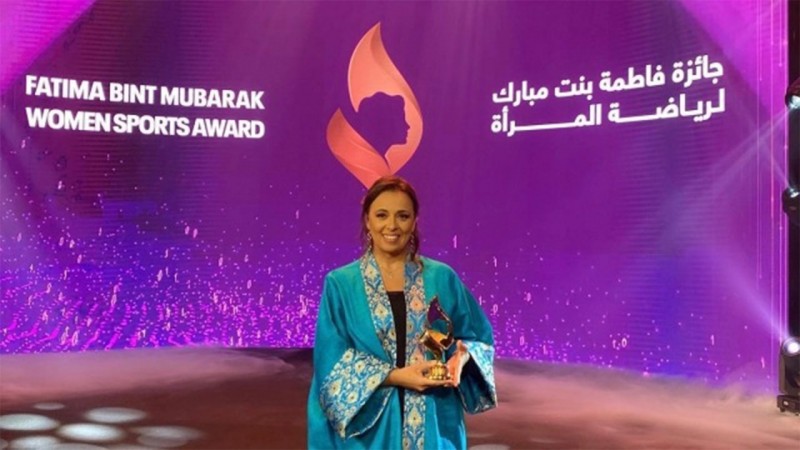
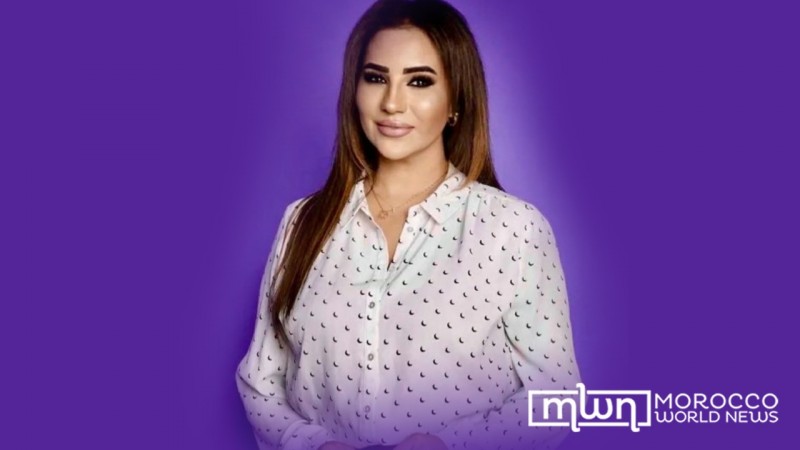
The Moroccan journalist Aziza Nait Sibaha has won the sixth “Fatima Bint Mubarak” Women Sports Award, crowning her as the Arab world’s “best sports journalist.”
Presented on September 17 in Abu Dhabi, the award is the region’s first of its kind aimed at empowering women and celebrating their sports achievements.
The “Fatima Bint Mubarak” Prize was awarded to different winners in several categories, including sports management, training, research, sports sponsorship, and women of determination.
The value of the prizes totaled AED 1,700,000 ($462,824).
Different trophies were awarded to nine competitors, individuals and teams, including Egypt’s Giana Farouk Mahmoud, who was named the “best Arab sportswoman,” and Shamma Yousef Al Kalbani, who won the “best Emirati athlete” award.
Egyptian Ahmed Gouda won the prize for the “best young athlete,” while his compatriot Rehab Ahmed Radwan was awarded the prize for the “best Paralympic athlete.”
The “best coach” award went to Faris Al-Assaf from Jordan, while the Jordanian Women’s Football Association took the award in the “ Youth Development Programs” category.
The Egyptian Weightlifting Federation won the award for “best team,” while the “Emirates International Endurance Village” earned the prize for “best innovative sports initiative.”
The celebrated Tunisian tennis player Ons Jaber won the award for “Sports Personality of the Year in the Arab World.”
In her speech at the award ceremony, the representative of Fatima Bint Mubarak Ladies Sports Academy, Maryam Al-Mansouri, said that all categories of the award have seen strong competitiveness in recent months. This proves the talent, willingness, and ambition of Arab sportswomen, she stressed.
Al-Mansouri concluded: “We hope to see Arab women continue to take the lead in local and international sports events, and this award will contribute to the birth of new achievements in the Arab women’s sports career.”
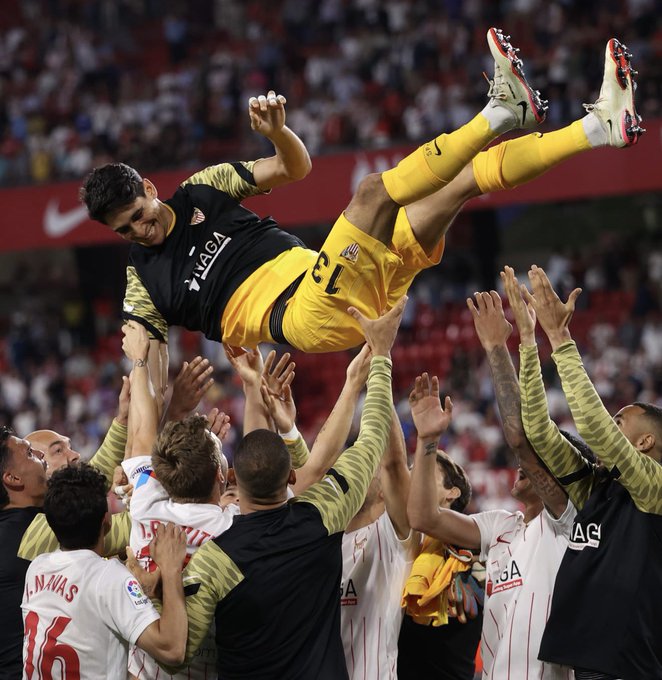
Moroccan goalkeeper Yassine Bounou, who plays for Sevilla FC, has become the first ever Arab goalkeeper to win the Spanish football league’s best goalkeeper award, the Ricardo Zamora Trophy.
Morocco and Sevilla FC goalkeeper Yassine Bounou has made history as the first Arab goalkeeper to win the Ricardo Zamora Trophy, which is awarded to the Spanish football league’s best goalkeeper of the season.
The coveted trophy, which has been awarded since 1958, is handed to the La Liga keeper with the lowest goals-to-games ratio, having played a minimum of 60 minutes in at least 28 matches.
Bounou, who has played for Sevilla since 2019, conceded 24 goals in 31 matches during the 2021-2022 season, finishing ahead of Real Madrid and Belgium goalkeeper Thibaut Courtois who conceded 29 goals, while 32 goals were scored against Real Sociedad’s Alex Remiro. Bounou also received 13 clean sheets, meaning that no goal was conceded in those matches.
The Morocco international first joined Sevilla on loan for a year, before signing a permanent four-year contract with the Andalusian giants in 2020.
The goalkeeper, who is nicknamed ‘Bono’ by football fans, is also the first ever Sevilla player to win the award.
He also became the second African to win the prize after Cameroonian Jacques Songo’o, who played for Deportivo La Coruna and was awarded the trophy in 1997.
Bounou’s efforts also lead to Sevilla’s fourth-place finish in La Liga, enabling the team to qualify for next season’s UEFA Champions League, alongside Spanish heavyweights Real Madrid, Atletico Madrid and Barcelona.
Canada-born Bounou, who has earned 40 caps for the Moroccan national team, will be one of the Arab players to watch in this year’s FIFA World Cup in Qatar, where the Atlas Lions will be making their sixth appearance.
source/content: english.alaraby.co.uk (The New Arab) (headline edited)
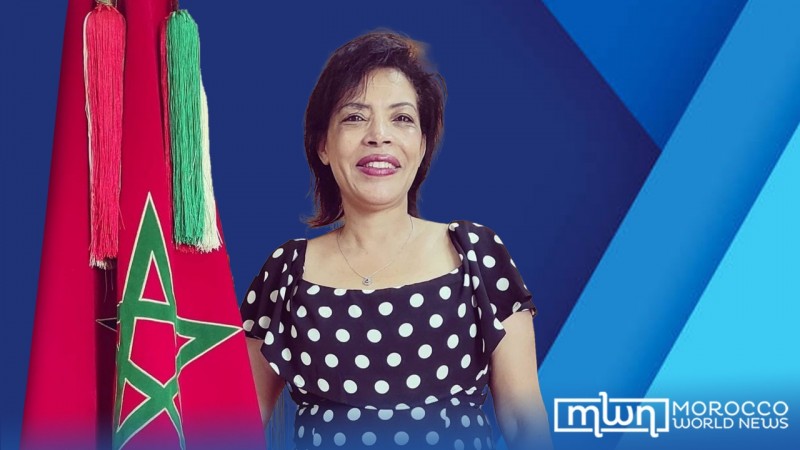
A women’s rights advocate and secretary general of the Moroccan climate coalition, Laila Amili is now working to build a bridge between Moroccan associations and the All-African-Movement Assembly.
From August 29 to 31, pan-African activists from across Africa and the Diaspora will gather in Arusha, Tanzania, for the All-African-Movement Assembly (AAMA) conference promoting justice, peace, and dignity.
AAMA organized a first validation conference in August 2016 in Arusha, gathering 272 people from 40 countries from across the continent.
The pan-African movement is built on five pillars : fighting for more civic and political action; promoting women’s rights and individual freedoms across the continent; advocating for the right to equity and dignity; promoting democratic and corruption-free governance; and calling for climate and environmental justice.
Morocco’s Lingering Gender Injustices
Laila Amili, president of Mains Libres (Free Hands), a Moroccan association fighting for girls and women’s rights, joined the AAMA two months ago. She’s a socialist, a founding member of the Arab feminist network Tha’era, and a climate activist.
In conversation earlier this week with Morocco World News, Amili spoke passionately of her new challenge: working to build a bridge between the pan-African movement AAMA and Moroccan associations.
“We hope to promote African solidarity to build the future we want as Africans: the right to peace, social inclusion, and prosperity for Africans all around the world,” Amili said.
For the Moroccan activist, sharing different experiences from different African actors would be a way to build progress for women’s rights. In Morocco, much of Amili’s activism revolves around fighting against underage marriage and domestic violence, as well advocating for greater female visibility in leadership positions.
It’s been three years since Mains Libres first launched its fight to forge substantive changes in the Moudawana, the Moroccan family code. In particular, the group has ceaselessly called for both the criminalization of child marriages and the protection of divorced mothers’ rights to keep their children.
Underage Article 175 and 176 of the current Moroccan family code, a divorced mother loses child custody if she remarries and her child is over 7 years old.
For Mains Libres, Amili said, “the child should stay with her mother until 15, even if she decides to remarry.”
And when legislative change does occur, as was the case in 2018 with the parliament’s adoption of Law 103.13 about violence committed against women, Amili insists that effective implementation should follow. Legislative change is only meaningful if it actually leads to tangible impact or perceptible changes in the everyday lives of the women who have long borne the weight of gender inequality.
Embracing Africa
“I see that these struggles are common in most African countries,” Amili said. “That’s why a lot of people are willing to join AAMA and participate in African solidarity.”
She recalled that after the first AAMA regional convention in Rabat on July 28, 2022, more Moroccan associations expressed keen interest in pan-African cooperation. This was a notable, emphatic, and overdue break from a long tradition, Amili argued, pointing out that Moroccan activists previously tended to work a lot with Arab or European countries. Now is the time to value and participate in pan-African solidarity, she insisted.
The AAMA summit in Tanzania is even more relevant amid the slow post-COVID across Africa. For Amili, one main reason for the event’s particular significance is the opportunity to discuss with fellow pan-African activists the far-reaching consequences that the pandemic has on the lives of many women across their continent, especially those who were already living in a precarious financial situation.
According to a March 2021 information note from Morocco’s High Commission for Planning (HCP), women were by far the hardest hit by the COVID-induced unemployment in the North African country.
The World Needs Solidarity
In addition to the devastating socio-economic disruptions brought about or further exacerbated by the COVID crisis, people – especially women – from the Global South are also the principal victims of the emerging ecological challenges.
“Us, people from the South, are the ones who are suffering more and more, because of poverty and increasing drought,” Amili said. “Poor people are the main victims of climate change.”
Amili is also the secretary general of the Moroccan coalition for climate justice, a gathering of 230 associations. Having participated in numerous international climate conventions in that role, she deplores the lack of women in leadership decisions.
One of the priorities of the Moroccan climate coalition is to heighten awareness about climate justice to make it “real” and not only written on official papers, said Amili.
Over the past months, one of Amili’s many activities – or duties – as the president of the coalition has been to travel to rural, marginalized areas to raise awareness about the climate and share vital information about environmental challenges with underserved communities whose lives and livelihoods have long been upended by rampant changes that they do not know of, let alone understand.
For Amili, the world can meet several of the challenges it faces if enough people are taught – or learn – to nurture a certain disposition toward empathy and solidarity when making sense of global challenges.
“We need solidarity for peace, human dignity, and human rights,” she said. “One hand can’t build anything, it’s with two, three, or four hands that we can achieve our goals.”
Moroccan athlete Salaheddine Benyazide won the bronze medal in the men’s 3000m steeplechase race on Saturday, as part of the Cali 2022 World Athletics U20 Championships, Columbia.
The young athlete was able to snatch the third place with a time of 8 minutes, 40 seconds, and 62 milliseconds, coming right behind the Ethiopians Samuel Duguna and Samuel Firewu.
Duguna achieved a time of 8 minutes, 37 seconds, and 92 milliseconds, while Firewu’s time came in at 8 minutes, 39 seconds, and 11 milliseconds.
The time is Benyazide’s fourth best in this race category, with his personal best being 8 minutes, 19 seconds, and 63 milliseconds, achieved earlier this year in Rabat.
The medal is Benyazide’s first on the world stage. Having been active in Morocco’s athletic scene since 2021, the 19 year-old athlete started participating in international races in 2022.
Celebrations and support have been pouring in following the young Moroccan’s medal, and many have hailed Benyazide’s success on the global stage as an achievement not only for Morocco, but for Arab athletics in general.
As he is participating in more international events this year, the young athlete is widely expected to represent Morocco more often on the world stage in the coming years, following in the footsteps of other Moroccans to preserve the country’s increasingly stellar athletics record.
Ethiopian athletes took the gold and silver medals in the race.
With the newly emerging social entrepreneurship movement, Moroccan youth are keen to develop entrepreneurial solutions to respond to local challenges.
Driven by innovation and the spirit of entrepreneurship, a student-led team from Enactus Club at Morocco’s Mohammadia School of Engineering (EMI) has developed a fabric made from milk to reduce dairy waste.
A team of 10 engineering students took the lead to make a positive impact within Moroccan society after observing the alarming amount of milk waste discharged in rivers and lakes. The dumping of milk waste has severe consequences for the balance of marine ecosystems as well as on the quality of drinking water.
The “S-ILK” project is a promising alternative to classic fabrics, by focusing on creating a tissue based on casein, a protein extracted from milk.
So far, the team has been able to develop the first prototype of its biodegradable fabric in the form of textile yarns and now seeks to begin mass production.
Speaking to Morocco World News, S-ILK Project Manager Omar Dirane stressed that synthetic fabrics, made from nonrenewable fossil fuels, are often bad for health and the environment. This became the reason why the team decided to use milk as a fabric to make clothes while reducing the pollution of dairy products.
Research quoted by The Guardian has found that 16% of dairy products, approximately 128 million tonnes, is lost or discarded globally each year; an efficient solution is therefore needed to reduce the environmental impacts of this large-scale food waste.
Ghita Dahhou, a project associate, told MWN that their long-term goal consists of making “S-ILK” a startup in which they seek to develop and sell eco-friendly clothes, while also raising awareness about food waste and making people eco-responsible through what they wear.
“The idea of creating a brand of ecological fibers is present and could be a big step for the textile industry in Morocco,” Dahhou said. As eco-responsible alternatives to fast fashion keep growing worldwide, the industry is significantly becoming more competitive.
Project associate Taoufiq Saaad spoke on the difficulties they could potentially face in implementing their startup in the future, especially as young students without years of experience in the field.
S-ILK team members, however, are keen to keep their optimism and ambitions to achieve their professional aspirations, noting that “our young age will not stop us from being invested in the engineering field and giving everything we have to improve it.”
Social entrepreneurship: challenges and opportunities
Eager to position their product in the Moroccan market, the team has conducted a market study to identify their niche while focusing on customers that support environmental advocacy and are eco-responsible.
Similar customers that follow the ecological trend are harder to find in Morocco due the “traditional mindset” some people still have, Ghita argued. Such a mindset, in addition to societal pressures, hinder young project holders from “taking risks and exploring what is beyond our comfort zone.”
As part of their market research, they also conducted interviews with people in the streets of Rabat. Taoufiq Saaad highlighted that people were “intrigued by the product especially when we told them that the piece will be cheaper than actual silk.”
“As we have been showing a potential to grow, we have been able to find clients who are interested in purchasing our product,” he added.
Supported by Moroccan hypermarket chain Marjane Holdings and Orange Maroc, one of three major licensed telecommunications operators in the country, the project manager expressed the team’s interest in securing more funds to be able to expand their project.
He explained that “Orange digital center” provides them with the tools needed to elaborate their research while “Orange Fab Lab” is where they experiment on their product and work on improving it.
When asked how they manage to finance projects within Enactus EMI, especially those starting from scratch, Dirane underlined that when a project within the EMI network wins a prize, they split it so that all projects can be able to expand.
Meanwhile, Ghita underlined that in recent years, Morocco has been offering several opportunities for young project holders to show their potential, either through financial aid or other facilities that banks provide, in addition to the support and mentoring from several incubators.
“With over 300 alumni of Enactus EMI, and 66 current members, we have much expertise, and engineers in different industries across Morocco, all coming together to contribute to the growth of innovative projects,” he added.
For Omar, Taoufiq, and Ghita, the project is helping them become the leaders of tomorrow by.being engaged in extracurricular activities to develop soft skills such as teamwork, communication, and problem-solving, among others, while also seeking expertise in the engineering field.
source/content: moroccoworldnews.com (edited)
____________
S-ILK: Moroccan Engineering Students Create Innovative Fabric From Expired Milk
After his recent achievement, El Bakkali became the “king of steeplechase.”.
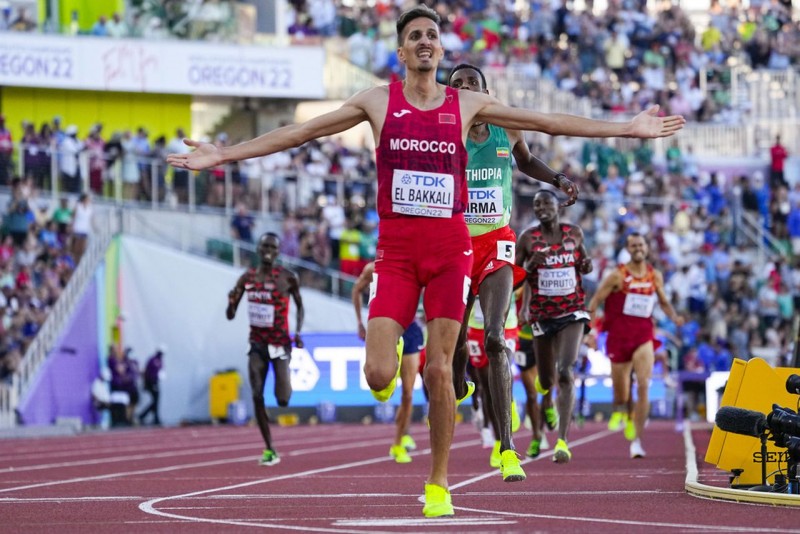
King Mohammed VI sent on Tuesday a message to Moroccan steeplechase runner Soufiane El Bakkali, congratulating him on winning the gold medal at the World Athletics Championships held in Eugene, US.
The Moroccan athlete brought Morocco its first gold in the 3,000m steeplechase in this year’s World Championships, ending Kenya’s 15-year reign in the discipline at the international competition.
The King expressed his appreciation for El Bakkali’s achievement, saying that the Moroccan athlete “was able, thanks to his competitive spirit and patriotism, to achieve this well-deserved victory.”
“As we commend this well-deserved global crown, with which you raised the flag of Morocco in this prestigious international event, we wish you success in your rich sporting career, covered by our generous sympathy and satisfaction,” the King added.
A teary-eyed El Bakkali raised the Moroccan flag after his triumph, telling the media he was dedicating this win to King Mohammed VI, his parents, and to all the Moroccans who have shown him endless support and encouragement.
Several international media reporting on El Bakkali’s recent achievement described him as the “king of steelechase” after claiming world title.
He added, “After the semi-final I had a good look at the strategy of the Kenyan athletes. I was on my own, the only Moroccan in the race, but I did not limit myself to winning silver nor bronze. Instead I managed to come first in two world league meetings and now the World Championship.”
El Bakkali began earning his first medals at international events at the 2017 World Championship in London, where he placed second, before finishing first in the 2018 Mediterranean Games in Spain.
In August 2021, Soufiane El Bakkali gave Moroccans a moment of pride after his historic achievement at the Olympics, ending Kenya’s dominance over the men’s 3,000m steeplechase and winning the gold medal at Tokyo 2020.
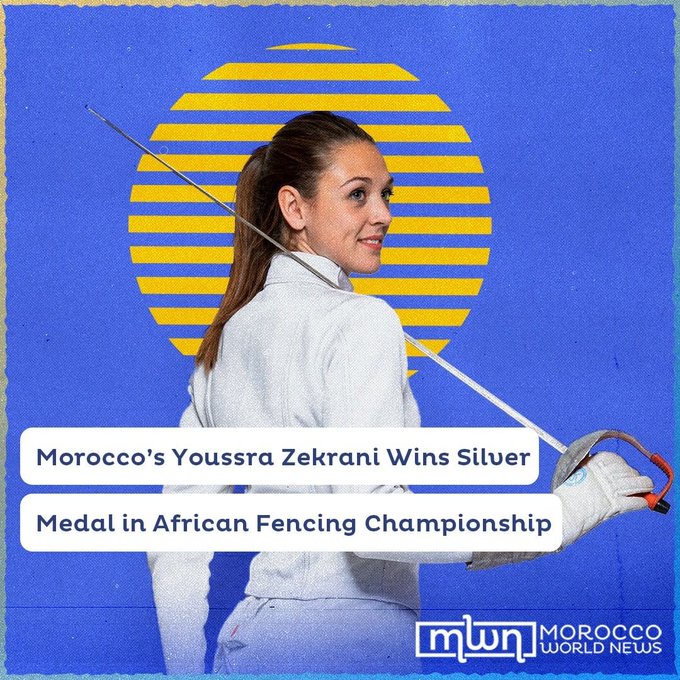
Youssra Zekrani took home a silver medal after reaching the final stage of Africa’s Fencing Championship in Casablanca.
Zekrani reached the final stages of the continental tournament, before losing to Egyptian contestant Noura Mhamad, earning her the silver medal.
In the game against the Egyptian, Zekrani lost by nine points to 15.
Zekrani, who ranked as the 91st best player in the world, faced and eliminated Algeria’s Chaymae Nihar Kamar and Egypt’s Yara Charkaoui in the quarterfinals.
While facing Algeria’s Kamar, the Moroccan athlete won by an impressive margin of 15 to 10. She equally scored a no less impressive score against Egypt’s Charkaoui, winning with nine to 15.
This is not the first time Zekrani makes national headlines for winning a tournament. The Moroccan athlete brought home a bronze medal at the 2016 African Championships. She competed at the Olympic Games in Rio, Brazil.
More than two years later, Zekrani claimed another bronze medal at the African Games in 2019.
This year’s fencing tournament in Casablanca saw the participation of several other Moroccan female contestants, including Manal Kermaoui and Ilham Belefkih.
The Casablanca tournament took place on June 15-19, under the patronage of Morocco’s King Mohammed VI. It saw the participation of athletes from across the continent, with 233 registered participants.
Born in Larache in 1969, a young and driven Souad El Markhous found herself in a position where she had to lead a double life in Amsterdam for three years. Her struggle to grow from a young ambitious Moroccan girl to an owner of a Dutch construction company is a story that captures the listener’s heart.
Determination and perseverance were key in El Markhous’ uncanny journey, and her story reflects the resilience of Moroccan women in the face of social expectations either at home or/and beyond. Still, she conveys an overwhelming sense of gratitude. For her, her story would not have been possible without Allah (God) and rdat walidin (parental blessings).
She left Larache in 1990 to settle down with her cousin in Amsterdam without telling her father. Unfamiliar with the Dutch language and culture, she soon had to look for a job to sustain herself.
Her neighbor secured a job for her as a cleaner at the construction company De Combi, on the condition of keeping a low profile since the company was only hiring men cleaners.
Boss: from a ‘monster’ to a father-figure
Although she was afraid of getting caught, El Markhous had to clean the director’s office on Wednesday when he had a day off to spend quality time with his family.
Despite the risk of being exposed, she used to sit in the director’s office and run her fingers through the keyboard, pretending to be working there.
“I wanted to dream. I wanted to be like them, work,” she told Morocco World News.
One day her fear came true. The director, Appelman, came to the office on his day off since his children and wife went on a vacation. He entered the office and found her there. They were stunned to see each other.
From the stories she heard about him, she imagined a well-built and ruthless man who looked more like a “monster.” He met her expectations at first glance, physically at least. Yet he turned out to have a good heart and he became a father figure for her in a foreign country where she barely knew anyone.
Bucket list check
“What are you doing here?” Appelman asked Souad on that fateful day in his office. Surprised and disoriented, she tried to communicate with him in broken English and French. He quickly ordered his secretary to look for a school for her. She was aged 19 at the time. “You have to learn,” he had said.
For the following years, she secretly learned the Dutch language at Joke Smit College in Amsterdam (1990-1992) before pursuing an MBA in modern business administration at Schoevers in the University of Amsterdam between 1993 and 1996.
El Markhous pretended to work overtime to attend school, while Appelman supported her cover story.
Her father’s words after hearing about her departure and her work as a cleaner were engraved in her heart. Disappointed and sad, her father asked her if he ever mistreated her or starved her to the point that she would clean toilets for Dutch people.
These words would stay with Souad for much of her formative years in the Dutch capital, motivating her, in a sense, to do her best to make her parents proud.
Hit by reality and new beginnings
She accepted to have an arranged marriage with the hope of continuing her studies. Her future husband, also of Moroccan-descent, agreed to support her studies.
Before her departure, Appelman handed her a letter in Dutch addressed to her father. In Larache, she opened and read the letter to her father. The letter, which essentially said that Appelman was her second father in the Netherlands, reassured El Markhous’ father.
As she returned to the Netherlands, she continued her studies and gradually built up her career with the support of her husband. Now married for 20 years, they have raised two daughters together and established a happy family.
Over the years, El Markhous rose through the ranks at De Combi, moving from cleaner to telephone operator to the head of administration at the Dutch construction company. She then became a member of the workers’ council, representing her fellow colleagues who all helped her through her journey of settling and integrating into her adoptive country.
Turning point
In 2014, De Combi was on the edge of bankruptcy. At the time, the construction firm had hundreds of employees and 11 branches across the Netherlands. Four branches closed down and others were sold like in Tilburg and Amsterdam. The buyers made it clear that they would cut jobs.
Feeling responsible for protecting the familial nest she had made for herself at Combi, El Markhous was determined to find a solution to prevent the company from sinking. And buying a branch was one of the few options available.
So she decided to buy the Amsterdam branch without hesitation. But then again, not having enough money, she was faced with the impossible feat of making the acquisition within a 24-hour deadline.
Along with her husband, she started to call friends and acquaintances to collect the money. The workers also contributed with their savings. At the end of the day, she made it and saved the lives of her team members. At the time, De combi workers were unpaid for three months and had to fill in for government support.
In the following meeting of the workers’ council, she announced her ownership over the Amsterdam branch in front of 600 workers. This made her the first woman to own a construction company in the Netherlands. For the next five years, she managed the company along with the business director Willie van Dijk before establishing Markhous Beheer BV in 2019
Incomplete joy
After she bought De Cambi’s Amsterdam branch, El Markhous’ story gained tremendous public and media interest. Proud of her achievement, she collected all newspaper articles and documents that commended her work and returned home to share her joy with her parents.
“I hadn’t seen my parents for three years,” she said. Excited to reunite with her family, she entered her home to learn that her father was diagnosed with Al Alzheimer’s. “He couldn’t recognize me,” she told us with teary eyes and a shaking voice.
Souad’s father passed away in 2016, two years after that visit. Until his last moment, he was unable to recognize his daughter or learn about her success story.
In 2018, El Markhous would be awarded the Ethnic Business Woman among 45 candidates. Months later, she received the Diwan award for her inspiring story and accomplishments.
A year later, she obtained a gift of appreciation and gratitude from the Moroccan embassy in the Netherlands.
She also featured in the Dutch series “Vrouwen die Bouwen” or “women who build.” Her story was further documented by Cor de Graag in a book titled “Ondernemers zijn net mensen,” which translates into English as “Entrepreneurs are just people.” The book is based on 50 interviews with inspiring entrepreneurs in the Netherlands.
Committed to helping others
With her growing success, El Markhous has committed to helping other women to achieve their dreams. Despite her busy schedule, she has accepted numerous invitations from NGOs, schools, and other organizations to share her stories but also inspire young women to be brave and pursue their dreams.
In 2015, she received a call from a young Ethiopian woman living in the Netherlands who wanted to become an engineer. The young woman asked her over the phone to convince her father.
Later on, the father and daughter visited El Markhous’ office. The father was surprised to see her in the office of a director, particularly that of a construction company.
Souad managed to convince the girl’s father. Three years later, she received a call from the same girl who told her that she now had a job in an engineering company.
The story touched the Moroccan-Dutch entrepreneur, prompting her to commit further to supporting other women as they struggle to establish themselves in male-dominated professions in the construction or STEM sectors.
Following in the footsteps of Appelman, El Markhous is becoming the guardian angel of numerous girls and women in Morocco and Europe.
Souad El Markhous’s legacy in the Netherlands and Morocco is in the making as she aspires to invest in her home country. Her dedication, determination, and resilience can be a source of inspiration for every girl and woman around the world.
The award saw a high turnout from authors around the world, with more than 3,000 applications submitted from more than 55 countries, including 20 Arab countries.
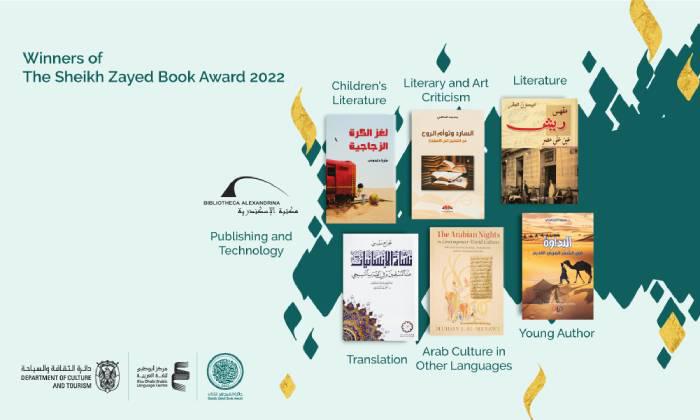
Sheikh Zayed Book Award (SZBA) announced on Monday the winners for its 16th edition across seven categories, selecting six literary figures, intellectuals and translators, along with Egypt’s Bibliotheca Alexandrina, for top honours.
Over the years, the Sheikh Zayed Book Award has managed to expand and become one of the most prestigious events in the Arab world, allowing for the development of cultural dialogue and the creation of new opportunities for authors and translators around the world.
This year’s winner in the young author category is Tunisian professor Mohamed al-Maztouri with his book Al Badawa fi al She’er al Arabi al Qadeem (Bedouinism in Ancient Arabic Poetry).
“The author of this book, Mohamed al-Maztouri, presents a serious academic study of bedouinism in ancient Arabic poetry,” the Zayed programme commented.
Adding that Maztouri “discusses its diverse concepts and many manifestations, describing it as a culture with special landmarks and a lifestyle inseparable from its place, environment, and geography.”
From pre-Islamic times the Arabian Peninsula has been home to world-class poetry that is deeply connected to values of bravery, nobility, eloquence and at times sensitivity.
Throughout the centuries, poetry’s popularity has only grown in the region, attracting new audiences in both the Arabian Peninsula and other Arab countries in North Africa and the Levant.
Today, the trend has been further boosted by Emirati initiatives and competitions.
The translation award went to Egyptian translator and author Ahmed Aladawi for his translation of the American author, George Makdisi, book “ The Rise of Humanism in Classical Islam and the Christian West” into Arabic.
Each winner receives a life-changing prize of AED 750,000 (USD 204,190/GBP165,220).
Winners will also be honoured in a ceremony at the Abu Dhabi International Book Fair later this year.
The Cultural Personality of the Year winner will be presented with a gold medal and a certificate of merit, as well as a Dh1 million prize.
source/content: thearabweekly.com
______________________
Full list of winners of the Sheikh Zayed Book Award 2022:
Literature
Maq’ha Riche, Ain Ala Massr (Eye on Egypt: Cafe Riche) by Maisoon Saqer. Published by Nahdet Misr Publishing
Children’s Literature
Loghz al Kora al Zujajiya (The Mystery of the Glass Ball) by Maria Daadoush. Published by Dar Al-Saqi
Young Author
Al Badawa fi al She’er al Arabi al Qadeem (Bedouinism in Ancient Arabic Poetry) by Mohamed Al-Maztouri. Issued by the Faculty of Literature, Arts and Humanities at Manouba University and the GLD Foundation
Translation
Nash’at al Insaniyat Einda al Muslimeen wa fi al Gharb al Maseehi (The Rise of Humanism in Classical Islam and the Christian West) by Ahmed Aladawi. Published by Madarat for Research and Publishing.
Art and Literary Criticism
Al Sarid wa Taw’am al Rooh: Min al Tamtheel ila al Istinaa (The Narrator and the Soulmate: From Acting to Faking) by Mohamed Aldahi. Issued by Le Centre Culturel du Livre.
Arab Culture in Other Languages
The Arabian Nights in Contemporary World Cultures: Global Commodification, Translation, and the Culture Industry by Muhsin J. Al-Musawi. Cambridge University Press.
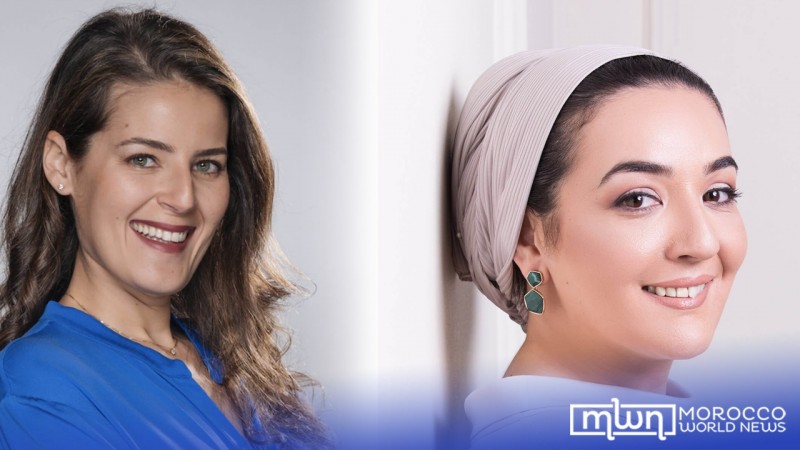
Forbes selected Mouna Abbassy and Sophia Alj for two of its prestigious rankings.
Forbes has featured two Moroccan businesswomen on its “30 Women Behind Middle Eastern Brands 2022” and “20 Women Behind Middle Eastern Tech Brands 2022” lists. The two successful, celebrated business leaders are the Founder of IZIL Mouna Abbassy and the co-Founder of Chari.co Sophia Alj.
This week, Forbes released the two lists simultaneously. The magazine’s list of “30 Women Behind Middle Eastern Brands” featured companies operating in six MENA countries, with the UAE hosting 13 of the successful businesses.
The list includes 18 nationalities in total, with Egyptian businesswomen topping the list with 11 entries, followed by Lebanese with 4 mentions.
The “20 Women Behind Middle Eastern Tech Brands” list highlighted the achievements of successful female founders and co-founders of tech platforms and apps. This year, 17 nationalities were represented in the list.
The 20 featured businesses operate in 13 sectors and are prominently based in the UAE (13), Egypt (2), and Saudi Arabia (2).
Mouna Abbassy
Moroccan businesswoman Mouna Abbassy ranked 10th in the “30 Women Behind Middle Eastern Brands 2022” list.
In 2012, Abbassy founded IZIL, an “all-natural skincare line.” The brand offers hair, skin, and body products, inspired by old Moroccan beauty recipes.
IZIL is based in the UAE with clients in Gulf countries, the US, and the UK. The brand’s e-commerce sales to the US and the UK markets recorded a 40% and 50% growth in 2021.
Last year, IZIL opened new offices in Dubai as it launched a Moroccan Hammam and Spa in the Dubai Mall. In terms of social media outreach, the brand currently counts 346K followers on Instagram and 136K followers on Facebook.
Sophia Alj
Sophia Alj ranked 8th in the “20 Women Behind Middle Eastern Tech Brands 2022” list.
She is the co-founder of Morocco’s popular e-shop and startup Chari.co, which she founded with her husband Ismael Belkhayat in 2020.
The Chari application connects retailers to fast-moving consumer goods (FMCG) companies.
In March, the startup acquired Axa Credit for $22 million. A year prior, Chari purchased Moroccan bookkeeping and credit platform Karny.ma which serves roughly 40,000 retailers. The startup concluded the deal after receiving $5 million in seed funding.
As it continues to expand into Francophone African markets, Chari.co has the potential to obtain unicorn status by reaching a valuation of $1 billion.