Arabs & Arabian Records Aggregator. Chronicler. Milestones of the 25 Countries of the Arabic Speaking World (official / co-official). AGCC. MENA. Global. Ist's to Top 10's. Records. Read & Enjoy./ www.arabianrecords.org
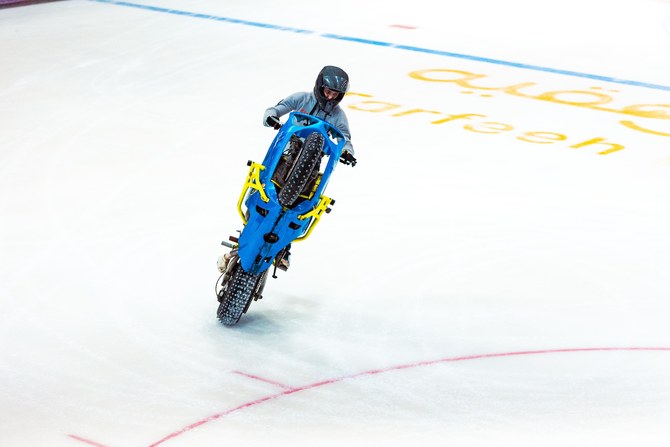
Riding on one wheel of his Kawasaki ZX-6R, he completed 14 circles in one minute.
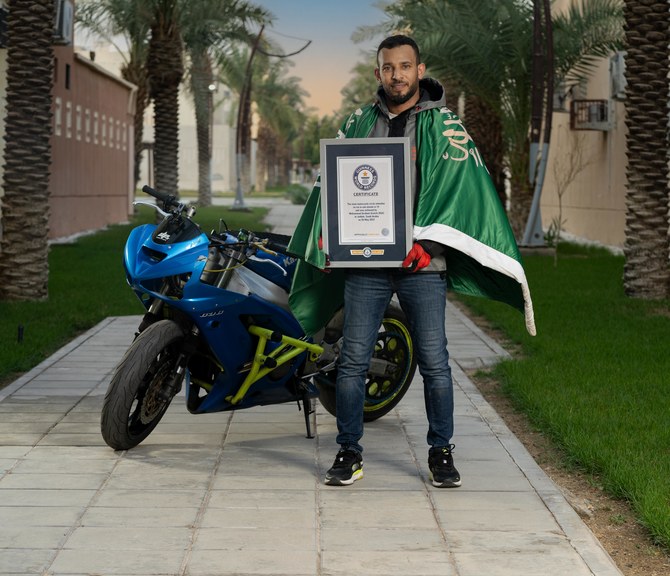
Saudi stunt rider Mohammed Ibrahim Scotch kept his cool to set a new world record for a motorcycle wheelie — on ice.
Riding on one wheel of his Kawasaki ZX-6R, he completed 14 circles in one minute, a feat that has earned him entry into the Guinness World Records 2023 edition.
Scotch, 39, told Arab News that he had been preparing for around two years for the record attempt, which took place at an ice hall in Jeddah.
He said: “I’m proud of achieving this new record because it carries the name of Saudi Arabia, my country. I didn’t break the record, but I achieved a new world record that no one had done before.
“In 2017, to deviate from the norm and at the same time to have fun, the idea stuck in my mind, and I tried it first in a skating rink in Makkah.
“(In 2022), after researching and communicating with officials (from Guinness World Records), they informed me that no one in the world had achieved this record, so I decided to do it.
“I began the journey of rebuilding the project from scratch after obtaining approval from Guinness World Records. I searched for a private ice rink to execute this experiment,” he added.
Scotch designed studded tires and worked out the variables for his motorbike.
“When I received the official email from Guinness World Records congratulating me as a new world record holder, I could not believe it or comprehend it.
“I read the email more than once, and I told my mother, my family, and all my friends who stood with me in obtaining this record, and their joy was unbelievable,” he said.
Scotch has been riding and doing stunts since the age of 16 and turned professional in 2013. He has participated in several international stunt competitions including in Bulgaria, Egypt, and the UAE.
At the beginning of last year, he became a certified trainer with the Saudi Automobile and Motorcycle Federation.
“I am glad that I could raise the name of Saudi Arabia to new levels with my latest achievement and my international appearances,” he added.
Scotch, whose achievements were recently acknowledged by the federation’s chairman, Prince Khalid bin Sultan Al-Abdullah Al-Faisal, aims to set more records.
source/content: arabnews.com (headline edited)
____________
Saudi stunt rider in Jeddah recently set new world record as he popped a wheelie on his motorcycle then drove in 14 circles on ice for one minute. (Supplied)
The Holy Qur’an Museum at the Hira Cultural District in Makkah is showcasing a monumental handwritten copy of the Holy Qur’an, recognized as the largest Qur’an of its kind in the world.
The manuscript measures 312 cm by 220 cm and comprises 700 pages, earning the museum recognition from Guinness World Records for displaying the world’s largest Qur’an, the Saudi Press Agency reported.
The manuscript is a magnified reproduction of a historic Qur’an dating back to the 16th century, the SPA stated.
The original copy measures 45 cm by 30 cm, with the chapters written primarily in Thuluth script, while Surah Al-Fatiha was penned in Naskh, reflecting the refined artistic choices and calligraphic diversity of the era.
The Qur’an is a unique example of Arabic calligraphy, gilding and bookbinding, showcasing Islamic art through intricate decorations, sun-shaped motifs on the opening folio, and elaborately designed frontispiece and title pages that reflect a high level of artistic mastery.
The manuscript was endowed as a waqf in 1883. Its original version is currently preserved at the King Abdulaziz Complex for Endowment Libraries, serving as a lasting testament to Muslims’ enduring reverence for the Qur’an and the richness of Islamic arts across the centuries.
Saudi Arabia won several Arab awards in medicine and nursing during the 63rd session of the Council of Arab Health Ministers, held recently in Tripoli, Libya, highlighting the Kingdom’s growing prominence in regional health excellence and the strength of its national health workforce.
The achievements reflect the rapid development of Saudi Arabia’s health sector and the high caliber of its medical and nursing professionals, who continue to contribute to innovation, enhanced health preparedness and the delivery of sustainable healthcare — in line with the objectives of the Health Sector Transformation Program under Saudi Vision 2030, said a statement issued on Thursday by the Saudi Ministry of Health.
As part of the Arab Doctors Award 2025 by the General Secretariat of the Arab League’s Social Affairs Sector, Dr. Ahmed bin Salem Bahammam, director of the Prince Naif Center for Health Research, received the award for excellence in scientific research and innovation.
Dr. Zuhair bin Yousef Al-Hlais, senior consultant in cardiac surgery at King Faisal Specialist Hospital, was honored with the award for excellence, leadership and professional medical impact.
For nursing, a Saudi team comprising Dr. Manal Saeed Banassr, Iman Mohammed Al-Shammari, Abdulrahman Abdullah Abu Khadaah, Jawharah Fahad Al-Harbi and Reem Mohammed Al-Humaidan won first place in the clinical practice category of the “Outstanding Work in Nursing and Midwifery” award for their project, the INS Model.
The innovative scheme focuses on strengthening surge capacity in intensive care units during disasters by enhancing nursing workforce readiness and increasing ICU capacity in times of crisis.
The model was developed during the COVID-19 pandemic.
In addition, Dr. Badriah Awad Al-Shehri, chief nursing executive at King Saud Medical City, jointly won the “Outstanding Work in Nursing and Midwifery” award with Egypt for the Nethathon Project, which aims to advance nursing education and training, enhance workforce competencies and improve the quality of health education outcomes.
The awards highlight Saudi Arabia’s leadership in medical innovation and professional excellence across the Arab region.
source/content: arabnews.com (headline edited)
______________
Saudi Arabia wins Arab awards in medicine and nursing at Arab Health Ministers’ Meet 2025. (Supplied)
501 vehicles drive through the dunes of scenic Tuwaren.
Hail entered the Guinness World Records at the weekend after producing the largest-ever off-road production car convoy.
The previous record, some 449 vehicles in Australia, was smashed with 501 vehicles driving through the dunes of the scenic Tuwaren area, 42 km northwest of Hail and a location surrounded by the Aja Mountains.
A large number of people from various regions of the Kingdom, Gulf and Arab countries gathered to navigate an unpaved desert trail of 7 km, showcasing their spirit of adventure and the diversity of the region’s terrain.
The event was open to both seasoned off-road drivers and newcomers looking for a unique winter entertainment. This made it suitable for individuals, groups of friends, and families.
The convoy was accompanied by a variety of cultural and entertainment activities that contributed to enhancing the experience for visitors and participants.
Prince Abdulaziz bin Saad bin Abdulaziz, the governor of Hail Province and the chairman of the board of the Development Authority, thanked the Saudi leadership for supporting the development of the Kingdom’s regions. He also praised Hail’s youngsters for taking part in breaking the world record.
Omar Abdullah Al-Abdul-Jabbar, the CEO of Hail Region Development Authority, told Arab News that Hail’s entry into the Guinness World Records was a national achievement.
He said: “Hail’s achievement of this Guinness world record for organizing the largest off-road rally further solidifies its position as a leading destination for desert adventures and activities, and strengthens its presence on the local and regional tourism map.”
The event was organized by the Saudi Tourism Authority and Hail Region Development Authority, with sponsorship from the King Salman bin Abdulaziz Royal Reserve Development Authority, and Culture House.
In addition, 14 government entities supported the event, including the Principality of Hail Region, and the Saudi Automobile and Motorcycle Federation.
source/content: arabnews.com (headline edited)
______________
501 vehicles took part in an off-road drive in Hail over the weekend, smashing the previous world record. (Supplied)
Pioneering scientist behind revolutionary weight-loss drugs, global scholars, innovators among winners.
The King Faisal Prize 2026 winners were announced at a ceremony in Riyadh on Wednesday night.
The event honored pioneering scientists, global scholars and innovators for their transformative contributions to medicine, science, Arabic language, Islamic studies and the service of Islam.
Prof. Svetlana Mojsov was named winner in the medicine section for her groundbreaking discoveries that are now reshaping how we treat obesity.
Prof. Carlos Kenig was announced as science laureate in the field of mathematics for helping to revolutionize understanding of nonlinear partial differential equations.
Mojsov, the Lulu Chow Wang and Robin Chemers Neustein research associate professor at The Rockefeller University in New York, pioneered research on glucagon-like peptide-1 (GLP-1) that has fundamentally transformed how obesity and diabetes are treated.
She discovered and characterized the biologically active form of GLP-1, a natural intestinal hormone that regulates blood sugar and appetite, and identified its receptors in the human pancreas, heart, and brain.
Through cutting-edge biochemistry and physiological studies, Mojsov demonstrated that GLP-1 powerfully stimulates insulin secretion while reducing hunger and managing glucose levels.
Her groundbreaking work enabled the development of an entirely new class of medications that mimic this natural hormone, sparking a paradigm shift in obesity treatment.
These therapies today provide life-changing benefits for hundreds of millions of people worldwide living with obesity and its complications — a global health crisis affecting 890 million adults and 160 million children and adolescents in 2022 alone, according to the World Health Organization.
Mojsov’s groundbreaking contributions have earned numerous prestigious honors, including Time magazine naming her one of the 100 Most Influential People in 2024.
Kenig was honored for his groundbreaking contributions to mathematical analysis. His work has transformed understanding of nonlinear partial differential equations — the mathematical equations describing how things change and move in the physical world — and provided researchers with a now-ubiquitous set of techniques. His insights have opened new research frontiers with applications spanning fluid mechanics, optical fibers, and medical imaging.
Kenig, the Louis Block distinguished service professor at the University of Chicago, is recognized for applying harmonic analysis techniques across different areas of partial differential equations.
His work on free boundary problems — determining unknown boundaries such as where ice meets melting water or how fluids flow through soil — has been particularly influential.
Kenig has spent three decades figuring out how complex waves behave over long periods of time, especially in tricky situations where they could either spread out peacefully or build up dangerously.
This matters for understanding everything, from ocean waves to light pulses in fiber optics and to how energy moves through different materials.
His work helps explain phenomena in quantum mechanics, optics, and ocean waves. By combining different mathematical techniques, he has solved longstanding problems that had puzzled mathematicians for decades.
In addition to medicine and science, the King Faisal Prize recognized the achievements of outstanding thinkers and scholars in the field of Arabic language and literature, Islamic studies, and exemplary leaders who have played a pivotal role in serving Islam, Muslims, and humanity at large.
Pierre Larcher, an emeritus professor of Arabic linguistics at Aix-Marseille University and emeritus researcher at the Institute for Studies and Research on the Arab and Muslim Worlds, won this year’s King Faisal Prize for Arabic Language and Literature on “Arabic literature in French.”
His novel presentation of Arabic literature to French readers has earned widespread acclaim from critics and specialists, while his rigorous scholarly approach to classical Arabic literature has made it accessible and appropriate for French culture.
His critical translation project of “Al-Mu’allaqat” and rigorous study of pre-Islamic poetry demonstrate exceptional scholarly depth.
For this year’s Islamic Studies Prize, Abdelhamid Hussein Mahmoud Hammouda, the professor of Islamic history and civilization at Fayoum University, and Mohamed Waheeb Hussein, the professor of archaeology and history of art at the Hashemite University, were announced as co-laureates.
Hammouda’s work encompasses the trade routes across the Islamic world — the Mashreq, Iraq and Persia, Arabian Peninsula, Greater Syria, Egypt, Sahara, Maghreb, and Al-Andalus. This expansive scope delivers coherent understanding of Islamic trade trajectories across history, serving as an authoritative reference for both specialized research and broader scholarship.
Hussein’s groundbreaking work uses archaeological surveys, GPS documentation, and analytical mapping to systematically correlate Qur’anic texts with geographical data. His research offers definitive scholarly interpretation, significantly advancing documentation of early Arabian Peninsula trade routes.
Sheikh Abdullatif Al-Fozan and Dr. Mohammad Abou Moussa were announced as co-laureates in the Service to Islam Prize.
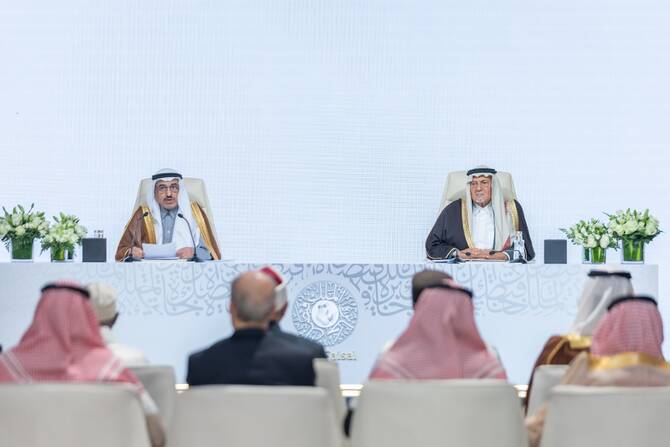
Laureates’ names were announced by Prince Turki Al-Faisal and the King Faisal Prize’s Secretary-General Dr. Abdulaziz Alsebail.
Selection committees included experts, specialists, and scholars who met in Riyadh and examined the nominated works. They selected the laureates in an objective and transparent manner, in accordance with the rules and regulations.
The KFP was established in 1977, and was awarded for the first time in 1979 in three categories: service to Islam, Islamic studies, and Arabic language and literature. Two additional categories were introduced in 1981: medicine and science. The first medicine prize was awarded in 1982, and in science two years later.
Since 1979 the KFP has given awards to more than 300 laureates who have made distinguished contributions to different sciences and causes.
Each prize laureate is endowed with $200,000, a 24-carat gold medal weighing 200 grams, and a certificate inscribed with the laureate’s name and a summary of the work that qualified them for the prize.
source/content: arabnews.com (headlines edited)
_____________
King Faisal Prize laureates’ names for 2026 were announced in Riyadh on Wednesday night by Prince Turki Alfaisal and the Prize’s Secretary General Dr. Abdulaziz Alsebail. (Supplied)
This combination of compassion and technology earned Al-Matrudi’s team multiple global awards this year.
For Dalal Al-Matrudi, innovation began not in a lab but at home, watching a loved one battle multiple sclerosis. What started as empathy soon turned into invention, leading her and her team to develop a smart medical device that is now winning awards on international stages.
“Our innovation is a smart medical device designed to assist patients with multiple sclerosis by providing localized muscle massage controlled through a mobile application,” said Al-Matrudi. “It helps relieve pain, reduce muscle stiffness and improve patients’ comfort and daily mobility.”
The device also connects patients directly with their doctors for real-time monitoring. “In emergency situations, it can instantly alert healthcare providers to ensure the patient receives immediate assistance,” she said.
This combination of compassion and technology earned Al-Matrudi’s team multiple global awards this year, including the Gold Medal with Jury’s Honor, the GCC Patent Office Award, and the Grand Prize at the International Invention Fair of the Middle East, or IIFME, hosted by the Kuwait Science Club. The invention was also recognized at the Geneva International Exhibition of Inventions, one of the most prestigious global platforms for innovation.
For Al-Matrudi, 21, who hails from Riyadh, the project was deeply personal. “Our inspiration came from personal experience — one of my family members suffers from multiple sclerosis, and seeing their daily struggle with pain and mobility challenges deeply affected me,” she said.
Together with her teammates, she transformed that emotional drive into a purpose-driven invention. “We wanted to create something practical and compassionate that could truly improve patients’ lives,” she said.
Under the mentorship of Prof. Dr. Kholoud Al-Muqrin, a distinguished professor of nuclear physics known for empowering young Saudi innovators, the team refined their prototype into an award-winning solution. “Her continuous guidance and scientific insight played a vital role in shaping our project and transforming our idea into a tangible, award-winning innovation,” Al-Matrudi said.
She believes the foundation of every great innovation is care. “We believed that technology should serve humanity, and that small ideas born from care can evolve into meaningful advancements that bring relief and hope to many,” she added.
Months of research, design and testing culminated in an unforgettable moment at IIFME 2025.
“The most emotional moment was standing on stage when our team’s name, Team May, was announced as the Grand Prize Winner,” she said. “I remember holding my teammates’ hands tightly, feeling both disbelief and overwhelming pride.”
For Al-Matrudi, the victory symbolized much more than recognition. “It wasn’t just about the prize — it was about realizing that months of dedication, late nights and countless trials were finally worth it,” she said.
She recalls how their mentor’s tears turned the win into a collective triumph. “I could see tears in everyone’s eyes, especially our supervisor’s, which made it even more special,” she said. “That moment reminded me that passion and persistence can turn ideas into achievements that reach beyond borders.”
Although the invention is not directly tied to her academic major, medical physics, Al-Matrudi says her background gave her the edge she needed to design effectively.
“Studying medical physics enhanced my scientific thinking and deepened my knowledge of how the human body interacts with medical devices,” she said. “This understanding helped me design a solution that is both safe and effective.”
She believes the key to meaningful innovation lies in combining technical knowledge with emotional intelligence. “Gaining international recognition encouraged me to continue combining my medical knowledge with creative thinking to develop innovations that make healthcare more compassionate, practical and accessible for all,” she said.
Al-Matrudi’s story reflects a growing wave of young Saudi women who are redefining the global image of innovation.
“I hope my journey shows Saudi women that ambition and creativity have no limits,” she said. “Science and innovation are not exclusive fields — they welcome curiosity, persistence and passion.”
Her experience also underscores how inclusion fuels progress. “When women step into these spaces, they bring empathy and fresh perspectives that drive real progress,” she said.
Her message is simple but powerful: “I want every Saudi girl with a dream to believe that she can represent her country globally, no matter her field. Our achievements are proof that with teamwork, guidance and confidence, Saudi women can lead the way in shaping the future of science and technology.”
Today, Al-Matrudi stands as one of the brightest examples of how Saudi youth are translating Vision 2030’s goals into real-world impact. Through her invention, she’s proving that innovation is not just about devices, it’s about dignity, hope and humanity.
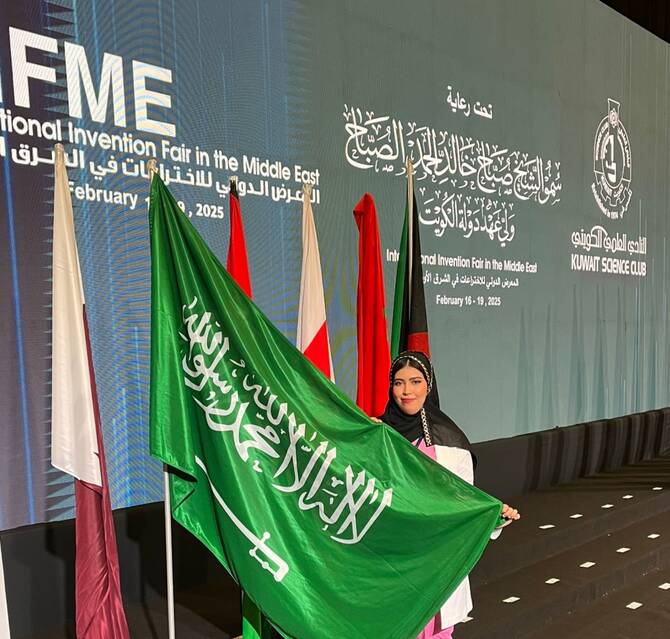
As she proudly waved the Saudi flag on stage in Kuwait, surrounded by fellow inventors and mentors, Al-Matrudi’s message was clear: Saudi women are not just participating in the global innovation movement, they’re leading it.
source/content: arabnews.com (headline edited)
______________
Saudi innovator Dalal Almatrudi proudly holds the Saudi flag after winning the Grand Prize at the International Invention Fair of the Middle East 2025 in Kuwait. (SUPPLIED)
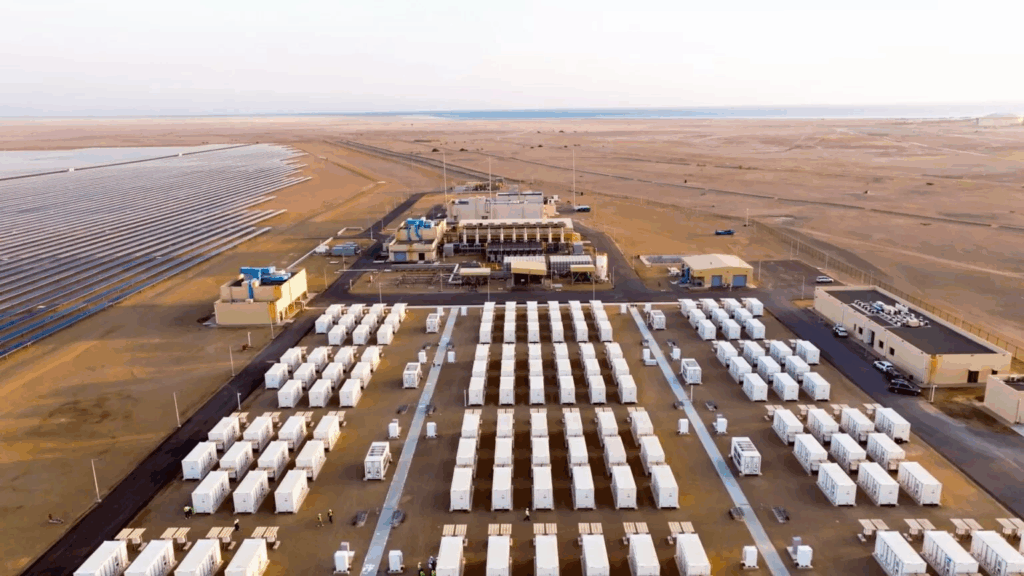
Saudi Arabia is making advances in its BESS projects as it launches one of Middle East’s largest BESS deployments, a 4GWh BESS project. The nation’s battery storage drive comes as HiTHIUM is commissioned with a 4 GWh BESS project in a joint venture between the Saudi Electricity Company and Alfanar.
The systems, to be installed in Tabuk and Hail, will deploy HiTHIUM’s 1175 Ah long-duration technology in climate-resilient containerized units, being commissioned in 2026. This follows on the back of the earlier commissioning of the 500 MW / 2 GWh Bisha BESS, the globe’s largest single-phase grid-tied project, and a record 12.5 GWh transaction with BYD, which puts Saudi Arabia at the center of the world’s biggest in-development grid-scale storage pipeline.
By the year’s end, the Kingdom should surpass 11 GWh of operational storage and place itself among the top five utility-scale BESS leaders as it targets Vision 2030 renewable ambitions. The impact and influence of BESS projects around the world cannot be overstated, with Saudi Arabia taking the lead. Other countries such as Finland are determined to catch up as they launched the world’s largest sand battery , a monumental achievement.
The Middle East is making effort in various energy projects other than the world’s largest BESS project in Saudi Arabia. The UAE has broken ground on the world’s largest solar and BESS project, first of its kind. Moreover, it will be capable of delivering round-the-clock baseload renewable energy. Masdar in collaboration with EWEC (Emirates Water and Electricity Company) is developing the $6 billion project. Moreover, it will deliver up to 1 gigawatt (GW) of baseload power 24 hours a day, seven days a week. The ceremony was witnessed by Sheikh Theyab bin Mohamed bin Zayed Al Nahyan, Deputy Chairman of the Presidential Court for Development and Fallen Heroes’ Affairs.
August 11, 2024: The implementation of the world’s largest battery energy system (BESS) project progresses as Saudi Arabia begins qualification tenders. A Saudi Arabian entity that has been tasked with procuring electricity generation projects has commenced the process. Saudi Power Procurement Company (SPPC) is licensed as the sole buyer of electrical energy. The government is soliciting bids to develop four battery energy storage system (BESS) projects. Furthermore, it is expected that each will have a 500MW output and 2,000MWh in storage capacity. The contract, which entails 15-year terms, will be awarded on a build-own-operate (BOO) model. It also entails the aspect of bidders holding 100% equity in special purpose vehicle (SPV) companies set up for the development and operation of projects. The SPPC, administered by the Saudi Ministry of Energy, aligns with the National Renewable Energy Program (NREP). Once completed, the BESS project is expected to be the world’s largest.
Project Factsheet
Location: Saudi Arabia
Capacity: 8GWh of storage capacity
Significance: World’s largest BESS Project
Main Company Involved: Saudi Power Procurement Company
Project duration: 15 years
Prequalified Bidders
The Saudi Power Procurement Company (SPPC) has released a list of 33 prequalified bidders for its 8GWh BESS project. The tender, structured as a build-own-operate model, attracted significant energy companies, both local and international. These include Masdar, ACWA Power, EDF, TotalEnergies, and Jinko Power, among others. The list also included prominent companies from nations such as South Korea, Japan, and China. Leading the pack were Samsung, the China Energy Overseas Investment Company, China Power Engineering, and China Southern Power Grid International. Of the 33 prequalified bidders, 21 applied, aiming to provide management and technological services. The remaining 12 applied solely for asset management roles for the BESS project.
The projects mark the first phase of Saudi Arabia’s ambitious battery storage program. It is designed to support its 50% renewable energy goal by 2030. Each 500 MW facility will operate for four hours, providing 2,000 MWh of total power capacity, said the SPPC. In early November, the state-owned limited liability company called for qualification for battery storage procurement. The company has so far contracted several gigawatts of solar PV and wind in competitive solicitation over the past years. Other technologies, such as Combined Cycle Gas Turbine (CCGT) and Water Infrastructure, have also had deals inked. Successful candidates will be granted 15-year Storage Service contracts with SPPC for respective projects they develop, featuring an output and storage capacity of 500 MW/2,000 MWh at various locations in the country. In addition, the bidders will have 100% equity in projects developed by SPV companies.
The State of Affairs Regarding the World’s Largest BESS Project in Saudi Arabia
The world’s largest BESS project in Saudi Arabia is one that has received accolades from the state government. Under Saudi Arabia’s Vision 2030 policy roadmap, the country aims to have a 50% share of renewable energy in its grid. According to energy minister, Prince Abulaziz bin Abdullah Al Saud, the government is prepared to incur the needed costs. Speaking in 2021, the Saudi government expects to spend $293 billion on power and energy projects by then. The biggest share of this revenue is expected to be spent on transmission upgrades and renewable energy.
Furthermore, investment is expected to be placed in the distribution network. SPPC noted earlier this week that the newly launched BESS procurement project will help the nation reach its 50% goal. The company also noted that the current tenders represent the first batches of solicitations. The locations of the four BESS facilities have already been decided. Two will be in Makkah province, one in Qassim province, and the other in Hail province. They have also been termed as independent storage projects (ISPs) by SPPC. Qualified bidders have been issued until midday, 25 November 2024, to submit their proposals for the BESS project.
Astrophile magazine reimagines how science could speak to readers across the Arab world
It reminds young Saudis and Arabs that science is not foreign, but is part of their own story
Saudi science communicator Reyam Alahmadi is bringing the cosmos closer to home. At just 25, the Madinah-born innovator has launched Astrophile, the Kingdom’s first Arabic astronomy magazine, to make space science accessible, accurate, and part of everyday conversation across the Arab world.
“What began as a personal fascination with the cosmos evolved into a full-fledged movement to revive Arab contributions to astronomy, and to give today’s generation the tools and language to rediscover them,” she told Arab News.
“The Arab world truly needed something like Astrophile. There wasn’t a single comprehensive Arabic astronomy platform, which left a huge gap in accurate knowledge. That gap led to misconceptions about space, and that’s what we wanted to fix.”
When Astrophile launched, the magazine did not simply translate international astronomy news, but also reimagined how science could speak to readers across the Arab world.
Through storytelling, visual design, and educational offerings, Alahmadi built a brand that feels both modern and deeply cultural. Every article blends cosmic wonder with accessible language, transforming scientific terms into relatable concepts.
“I believe the wonder of space belongs to everyone,” she said. “So I share what I learn in the simplest way possible, not with overwhelming numbers or formulas, but through storytelling and curiosity. My goal is to make readers feel the beauty of the universe, not the heaviness of its equations.”
In a region where complex STEM subjects often feel distant, Alahmadi’s approach bridges the emotional and intellectual, transforming astronomy into a shared cultural experience.
For Alahmadi, Astrophile is more than a publication, it is a revival. She sees it as part of a wider effort to reclaim the Arab world’s historic leadership in astronomy, from scholars who once mapped the stars to modern-day dreamers shaping the space economy.
“Astronomy, chemistry, and physics, many of these sciences were born from Arab minds,” she said. “Reviving that heritage isn’t nostalgia; it’s responsibility. We’re continuing what our ancestors began, adapting their legacy to today’s society.”
By publishing in both Arabic and English, Astrophile bridges global and regional audiences. It reminds young Saudis and Arabs that science is not foreign, but is part of their own story.
Her vision, she said, is to “restore curiosity as a national habit.”
Behind Astrophile’s elegant visuals and clean scientific precision lies a deeper challenge: language itself.
“One of the hardest parts is translation,” Alahmadi said. “Some technical terms, especially about rockets or engineering, simply don’t exist in Arabic. It can be frustrating, but also exciting; it gives us space to innovate linguistically.”
As well as science writing, each issue of the magazine also involves linguistic invention, as her team refines and localizes terminology to suit Arabic readers without losing scientific accuracy.
“In a way, it feels like exploration on two fronts,” she said. “We explore space, and at the same time, we explore our language.”
That approach has given Astrophile a distinctive voice: poetic, informed, and proudly Saudi, blending design aesthetics with factual clarity.
In just a few years, Astrophile has evolved from a passion project into a respected reference point for young science enthusiasts, teachers, and even regional media outlets seeking verified space updates in Arabic.
Under Alahmadi’s leadership, the magazine has tackled global milestones such as the James Webb Space Telescope, the Artemis lunar missions, and Saudi Arabia’s astronaut program, translating these topics into stories that resonate with Arab identity and vision.
Her message is consistent: Science is not distant, it is personal.
“My vision is for Astrophile to become the leading reference for every Arabic-speaking space enthusiast,” she said. “I want it to inspire a generation who see space as part of their world, not beyond it.”
Alahmadi’s blend of scientific precision and cultural sensitivity has positioned her as a voice for both innovation and inclusion, proving that women in Saudi Arabia are not only joining, but also shaping global scientific conversations.
Her journey also reflects a broader transformation within the Kingdom, where young women are leading initiatives that merge research, creativity, and public engagement.
As part of the new wave of Saudi science communicators, Alahmadi represents the next phase of Vision 2030’s knowledge economy, where education and innovation converge to build cultural and intellectual self-reliance.
“Vision 2030 gave people like me permission to dream bigger,” she said. “It showed us that the Saudi youth can lead global conversations, not just follow them.”
Through her work, Alahmadi has made the cosmos feel closer, in both words and ownership. She believes every child who reads Astrophile could become the next scientist, engineer, or astronaut to carry Saudi Arabia’s ambitions beyond Earth.
Looking ahead, she plans to expand Astrophile into a regional science communication hub, combining digital platforms, educational workshops, and multimedia storytelling.
Her long-term goal is simple, yet profound: to make Arabic the language of discovery again.
“Science belongs to everyone,” she said. “But when we tell it in our own language, we don’t just understand it, we own it.”
As the night sky continues to inspire humankind, young innovators such as Alahmadi are proving that Saudi Arabia’s brightest stars are not just above, but right here, building the future.
Achievement reflects ‘our growing role in shaping the future of global medicine,’ CEO Dr. Majid Al-Fayyad says
Procedure involved removing a 4.5-centimeter brain tumor with robotic arms from a 68-year-old man who had been experiencing severe headaches
In a historic leap for robotic medicine, the King Faisal Specialist Hospital and Research Centre in Riyadh has performed the world’s first robotic intracranial tumor resection.
This groundbreaking achievement sets a new global standard in neurosurgical precision and recovery.
The procedure involved removing a 4.5-centimeter brain tumor with robotic arms from a 68-year-old man who had been experiencing severe headaches and loss of concentration.
Remarkably, the patient was discharged fully conscious within 24 hours — a recovery time nearly four times faster than that of traditional brain surgeries.
Dr. Homoud Al-Dahash, KFSHRC consultant for skull base tumors and lead surgeon, stated that the robotic system provided exceptional precision and control, which enabled surgeons to navigate critical neurovascular structures with a high level of safety.
“The patient’s same-day discharge, fully conscious and without complications, represents a new benchmark for neurosurgical innovation,” he added.
Guided by a 3D optical system, the one-hour surgery enabled surgeons to operate with a clear, magnified view of the brain.
Advanced image-guided navigation technology ensured precise tumor removal while protecting vital areas of the brain.
KFSHRC CEO Dr. Majid Al-Fayyadh linked the milestone to the hospital’s ongoing transformation journey.
“This achievement reflects KFSHRC’s growing role in shaping the future of global medicine,” he said.
“It aligns perfectly with our vision, where innovation and patient-centered care define the future of healthcare.”
Before the advent of robotic neurosurgery, similar procedures required manual removal under a surgical microscope, where precision depended heavily on human steadiness and visual clarity.
Robotic systems now provide enhanced instrument stability, tremor elimination, and superior visualization — redefining global standards of safety and precision in neurosurgical care.
This landmark procedure adds to KFSHRC’s expanding portfolio of robotic surgical breakthroughs.
The institution previously performed the world’s first robotic heart transplant and robotic liver transplant, earning international acclaim and solidifying its standing among the world’s leading centers for robotic and minimally invasive surgery.
KFSHRC has been ranked first in the Middle East and North Africa and 15th globally among the world’s top 250 academic medical centers for 2025.
It was also recognized as the most valuable healthcare brand in the Middle East by Brand Finance 2024 and listed among Newsweek’s World’s Best Hospitals 2025, Best Smart Hospitals 2025, and Best Specialized Hospitals 2026.
These accolades reaffirm its position as a global leader in innovation-driven patient care.
source/content: arabnews.com (headline edited)
___________
King Faisal Specialist Hospital and Research Centre in Riyadh has performed the world’s first robotic intracranial tumor resection. (SPA
Ten months after her win in Bangkok, the 21-year-old tells Arab News about the sport, balancing studies and training, and the development of women’s boxing in the Kingdom.
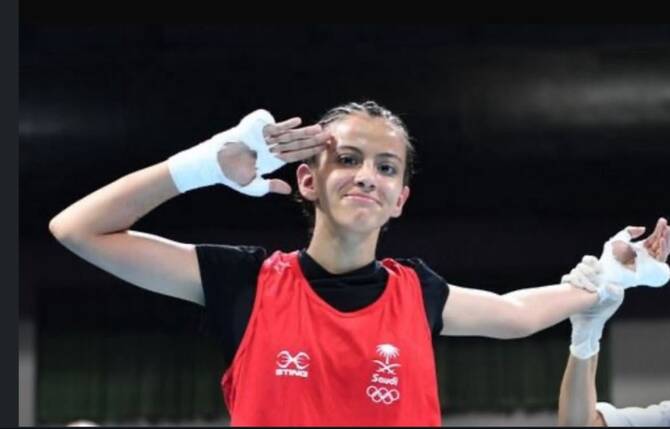
The end of 2024 will always hold special memories for Yara Al-Amri. In December last year the young boxer made history by becoming the first Saudi woman to win an Asian medal in boxing — a new milestone for the Kingdom’s fast-growing women’s sports scene.
The 21-year-old fighter earned a bronze medal at the Asian Elite Championships in Bangkok, competing in the 52-kilogram category in her first international appearance.
She told Arab News: “It was my first international appearance, which was the toughest part — competing outside my country without my home crowd and coaches.”
The win was historic not only for Al-Amri, but for Saudi sport. “This changed my life, as I wrote history for Saudi Arabia by winning the first Asian medal in women’s boxing,” she said. “It doesn’t mean we don’t have champions, but the sport is still new in our country. Despite starting later than many nations, we quickly reached their level and proved we can compete and succeed.”
Based in Riyadh, Al-Amri trains under Ali Al-Ahmari at Al-Shabab Club. Standing 174 cm tall, the right-handed orthodox fighter has built a record of 27 fights, with 23 wins and four losses, and holds seven Saudi national titles.
Her path into boxing began unexpectedly. “I first started boxing as a fitness exercise, but soon felt I truly belonged in the sport,” she said. “I’ve always loved challenge and competition, and boxing gave me exactly that. In the ring, it’s just me, my mind, and my hands. Boxing completely changed my lifestyle, making me more disciplined and committed.”
Al-Amri describes the sport as a test of focus as much as strength. “You have to be patient, strategic, and intelligent. Every movement matters.”
Outside the ring, Al-Amri is pursuing a university degree, juggling training sessions and academic deadlines.
“As a university student, my days are always a challenge,” she said. “I train twice a day — morning and evening — while balancing my classes, studies, and daily tasks. My schedule is packed, but I make sure to manage both my academic and athletic commitments.”
Her discipline extends beyond boxing. Earlier this year, she completed the Riyadh Half Marathon, describing the 21-kilometer run as “pure challenge and joy.”
After nearly 30 fights, Al-Amri has learned to embrace both victory and loss. “The biggest lesson I learned from a loss is never leaving the result to the judges,” she said. “The fight must be clear — you have to showcase your skills so strongly that there’s no doubt.
“Injuries and defeats also taught me resilience,” she added. “I always say: ‘What doesn’t kill you makes you stronger.’ Before a fight, I’ve learned to control nerves and pressure. It’s natural to feel it, but once I step into the ring, everything switches off — I focus only on my opponent.”
Al-Amri credits her success to the support around her. “My family has been my first and strongest supporters, from the beginning until today. Their belief in me gave me strength,” she said.
She also praised the institutions enabling women’s boxing to grow. “I deeply value the support of the Kingdom of Saudi Arabia — from our wise leadership to the ministry of sports, the Olympic Committee, the Saudi Boxing Federation, clubs, coaches, and the people. This collective support has been a huge force behind my journey.”
That system, she said, has helped turn a once niche pursuit into a recognized sport for Saudi women.
“My goal is to achieve as many titles as possible — national, regional, continental, and international,” Al-Amri said. “With God’s will, these achievements will come.”
She believes the next generation of Saudi women boxers will go even further. “Women’s boxing in Saudi Arabia has developed tremendously,” she said. “Clubs and coaches are now available across the country, teams are formed, and the determination of Saudi women is stronger than ever. We are capable of competing, representing, and making the sport grow even bigger.”
In only two years, Al-Amri has collected nine gold medals, seven national titles and two bronzes, combining athletic performance with academic success and public recognition.
Her rapid rise mirrors Saudi Arabia’s broader transformation under Vision 2030, which continues to expand opportunities for women in professional sports, from football and judo to boxing and beyond.
Al-Amri said her journey shows what happens when opportunity meets belief. “Boxing gave me strength and purpose,” she said. “It made me realize that nothing is impossible when you work hard, stay disciplined, and believe in yourself.”
As she continues to train for upcoming championships and sets her sights on future world competitions, Al-Amri’s mission is simple: to raise Saudi Arabia’s flag on the global stage.
From her first punch in a Riyadh gym to her medal podium in Bangkok, Yara Al-Amri’s story is one of faith, perseverance, and proof that Saudi women are not just entering the ring, they are redefining it.
source/content: arabnews.com (headline edited)
_____________
Yara Al-Amri salutes the crowd after her victory, becoming the first Saudi woman boxer to claim an Asian medal. (SUPPLIED)