Arabs & Arabian Records Aggregator. Chronicler. Milestones of the 25 Countries of the Arabic Speaking World (official / co-official). AGCC. MENA. Global. Ist's to Top 10's. Records. Read & Enjoy./ www.arabianrecords.org
A group of researchers led by a professor at NYU Abu Dhabi has developed a non-invasive system to aid in the diagnosis and treatment of gastrointestinal motility disorders.
Researchers have produced 3D magnetic field gradients using high-frequency electromagnetic coils to track the movement of an ingestible smart pill through the gastrointestinal tract, NYUAD said on Tuesday.
The ingestible wireless device measures and transmits the field magnitude to determine its precise location, which is then sent to a smartphone via Bluetooth technology.
It reportedly allows for a more accurate evaluation of the movement of food from the mouth through the throat, esophagus, stomach, intestines and out of the body.
The system has been modeled using the digestive systems of large animals.
Existing smart pills do not offer the large field-of-view, high spatial resolution and fully wireless operation that the 3D magnetic field gradient developed by the researchers allows for, WAM reported.
“The smart pill our team has developed represents a more accessible and efficient approach to assessing GI motility that can benefit both patients and medical providers,” Khalil Ramadi, NYUAD assistant professor of bioengineering, said.
“This is a new frontier for medical diagnosis and evidence-based treatment and has the potential, with further research and refinement, to revolutionize how we can most effectively address health challenges that impact millions of people worldwide,” Ramadi added.
It is estimated that more than one-third of the world’s population suffers from gastrointestinal disorders.
source/content: arabnews.com (headline edited)
_____________
The new non-invasive system aims to aid in the diagnosis and treatment of gastrointestinal motility disorders. (Shutterstock)
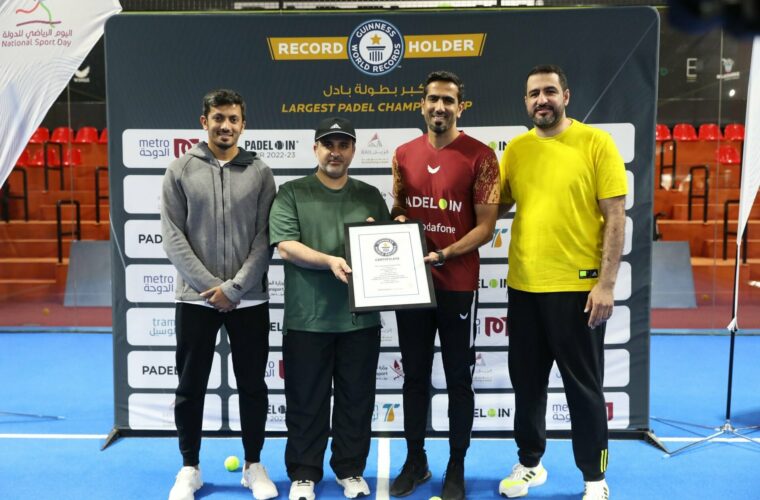
Qatar Rail has announced that MD & CEO H.E Dr. Abdulla Al-Subaie received the Guinness Records certificate for the Largest Padel Championship in the World.
The achievement was announced on the day of Qatar’s National Sport Day, 14 February 2023.
The event was organized by Qatar Rail in partnership with Padel In Qatar and witnessed the participation of 800 players.
Noor Riyadh owes much of its success to the insight and care of Crown Prince Mohammed bin Salman, which enabled the celebration to become the world’s largest in the field of light arts.
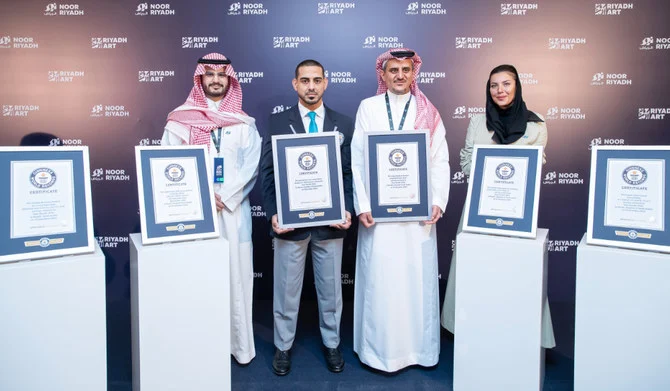
Noor Riyadh wrapped up its cultural and artistic events on Saturday, after setting six Guinness World Records, including for largest celebration of light arts.
The 17-day festival achieved five other records for the artwork titled “Pulse of Light” — longest distance covered for a light laser display, largest light laser display, highest and largest display on a building interface, and largest number of drones participating in a creative art show.
The installations were part of the annual festival of light and art featuring more than 190 works by 130 Saudi and international artists from more than 40 countries.
Noor Riyadh is the first such festival implemented under the auspices of Riyadh Art, the first public art initiative in the Kingdom. It aims to transform the capital into a “gallery without walls,” to beautify it and enhance the creative spirit among the population.
The festival, which opened on Nov. 3, has contributed to enriching the Kingdom’s cultural and artistic landscape by receiving more than 2.8 million visitors.
It presented 500 different events in 40 locations throughout the Saudi capital, including King Abdullah Park in the Malaz neighborhood, Alsafarat neighborhood, Diriyah Historical Town and King Abdullah Financial District.
Noor Riyadh owes much of its success to the insight and care of Crown Prince Mohammed bin Salman, which enabled the celebration to become the world’s largest in the field of light arts.
“This success would not have been possible without God’s grace,” said Prince Badr bin Abdullah bin Farhan, minister of culture, member of the board of directors of the Royal Commission for Riyadh City, and chairman of the steering committee of Riyadh Art.
“The achievements of the Noor Riyadh are a clear demonstration of the Kingdom’s commitment and continued efforts to support national and international talents and to embrace the greatest celebrations that contribute to placing the Kingdom at the forefront of the global art landscape,” Prince Badr added.
He emphasized the importance of continuing efforts to strengthen partnerships with all relevant parties in the future.
Noor Riyadh’s celebrations will be accompanied by an exhibition titled “From Rays to Passion,” which will be held in the Jax neighborhood and will run until Feb. 4, offering visitors an artistic journey of creative light transformation in the past and future, through the continuation of workshops and dialogues presented by elite artists and experts.
source/content: arabnews.com (headline edited)
__________
‘Noor Riyadh 2022,’ which lasted 17 days and ended on Saturday (November 19, 2022), achieved six Guinness World Records titles. More than 130 male and female artists from 40 countries took part in “Noor Al Riyadh,’ presenting more than 190 works of art. (Supplied)
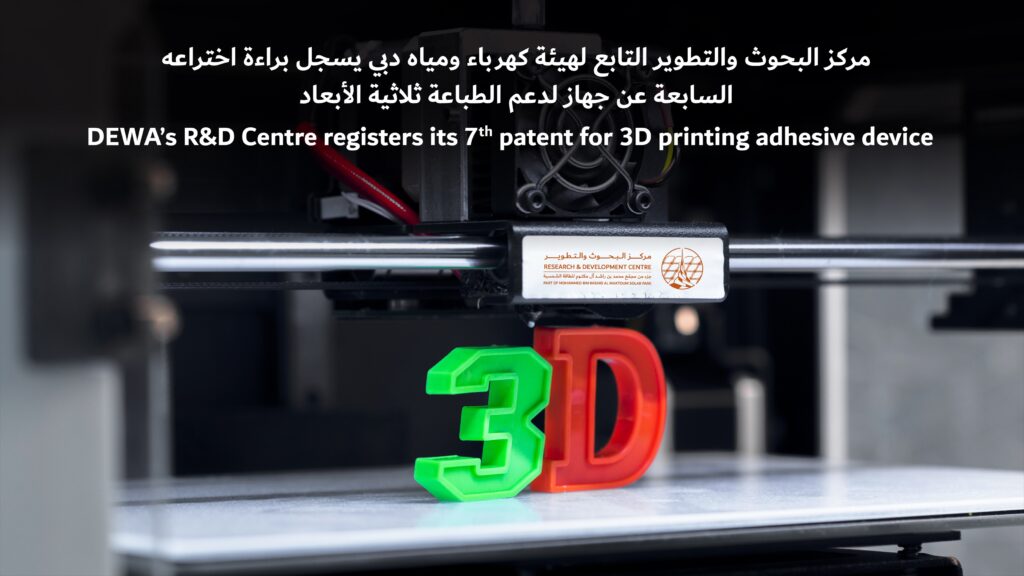
Dubai Electricity and Water Authority (DEWA)’s Research and Development Centre (R&D) has registered a new patent on an adhesive device for 3D printers, which automatically distributes the adhesive material on the 3D printing plate. This ensures that the printed material sticks adequately to the build plate. This is the seventh patent registered by the R&D Centre.
HE Saeed Mohammed Al Tayer, MD & CEO of DEWA, highlighted that this achievement supports DEWA’s efforts to develop advanced infrastructure and specialised software in 3D printing and additive manufacturing, and invest in them to overcome challenges in the energy sector. DEWA uses 3D printers to produce prototypes and spare parts for DEWA’s generation, transmission, and distribution divisions, and to support the digitisation of its inventory.
“The R&D Centre supports innovation in all production and operational areas, becoming a global platform to enhance the operations and services of all utilities’ divisions. It supports DEWA’s efforts in innovation which is a key pillar of its work. 3D printing projects launched by DEWA are widely recognised by utilities worldwide. DEWA works to enhance its production and operational capacity by investing in these technologies. This is through its 3D printing programme, which has been selected as one of the Dubai 10X initiative projects. The initiative was launched by His Highness Sheikh Mohammed bin Rashid Al Maktoum, Vice President and Prime Minister of the UAE and Ruler of Dubai, which mandates the Government of Dubai to be a global leader that is 10 years ahead of all other cities. The programme also supports the Dubai 3D Printing Strategy, which is a unique global initiative to use technology for the service of humanity and promote the status of the UAE and Dubai as a global hub for 3D printing technology, by 2030,” added Al Tayer.
“In addition to the seven patents registered by the R&D centre so far, it has published 134 research papers at international scientific conferences, journals and peer-reviewed publications. It includes 48 researchers, including 31 PhD and master’s degree holders. It enriches the scientific community with specialised research, spreading knowledge and developing the capabilities of the researchers. This enhances Dubai’s position as a global hub for research and development in solar power, smart grids, water and energy efficiency, and capacity building in these areas,” said Waleed Bin Salman, Executive Vice President of Business Development and Excellence at DEWA.
In yet another historic achievement for the Kingdom of Bahrain, Bahrain-based cybersecurity technology provider, CTM360, received Frost & Sullivan’s Best Practices Award for Enabling Technology Leadership in the global Digital Risk Protection (DRP) industry.
Frost & Sullivan Best Practices Awards recognized CTM360 for commercialization success, application diversity, commitment to creativity and customer service experience.
As a leading research and consulting firm, Frost & Sullivan has conducted extensive industry research and analysis to highlight the top companies excelling in Digital Risk Protection (DRP), as well as analysis on companies that combine comprehensive Cyber Threat Intelligence (CTI), Digital Risk Protection (DRP), and External Attack Surface Management (EASM) capabilities into a centralized External Risk Mitigation and Management (ERMM) system. Bahrain-based CTM360 is among the few that originated an integrated approach to consolidate these three technology verticals, now collectively termed ERMM.
Commenting on Frost & Sullivan’s award recognizing CTM360’s leadership in cybersecurity, Mirza Asrar Baig, Chief Executive Officer of CTM360 stated “We are proud to receive Frost & Sullivan’s award which acknowledges our commitment to a consolidated DRP strategy, making CTM360 the first company in the Arab World to be recognized at a global level.
“This Award reflects the efforts and devotion of CTM360’s team in creating and building a world class technology focusing on high data quality and relevance. Making this global mark is a testament to their remarkable design thinking, dedication and agility.” He added.
Mirza lauded Bahrain’s innovation-driven economy founded on Bahrain’s Economic Vision 2030, and the unparalleled extensive focus of the Government of Bahrain on developing and advancing the technology sector, with cyber security as one of the pillars of the Business Friendly Bahrain strategy.
He also commended the tremendous support extended by Bahrain’s various public entities and government agencies, underscoring that “CTM360 has become a technology leader through its consolidated technology platform that allows organizations to do more within one centralized environment and in an extremely cost-effective manner”
Martin Naydenov, Senior Industry Analyst at Frost & Sullivan, observed, “CTM360 empowers organizations to focus on what they do best: their business. With CTM360’s fully managed services and unlimited takedowns, organizations can save significant time and cost by automating the detection and takedowns of fraudulent sites; this is an advantage that few cybersecurity vendors can replicate.”
Frost & Sullivan Best Practices awards recognize companies in various regional and global markets for demonstrating outstanding achievement and superior performance in leadership, technological innovation, customer service, and strategic product development. Industry analysts compare market participants and measure performance through in-depth interviews, analyses, and extensive secondary research to identify best practices in the industry.
CTM360 is a unified external security platform that integrates External Attack Surface Management, Digital Risk Protection, Cyber Threat Intelligence, Brand Protection & Anti-phishing, Surface, Deep & Dark Web Monitoring, Security Ratings, Third Party Risk Management and Unlimited Takedowns. Seamless and turn-key, CTM360 requires no configurations, installations or inputs from the end-user, with all data pre-populated and specific to your organization. All aspects are managed by CTM360.
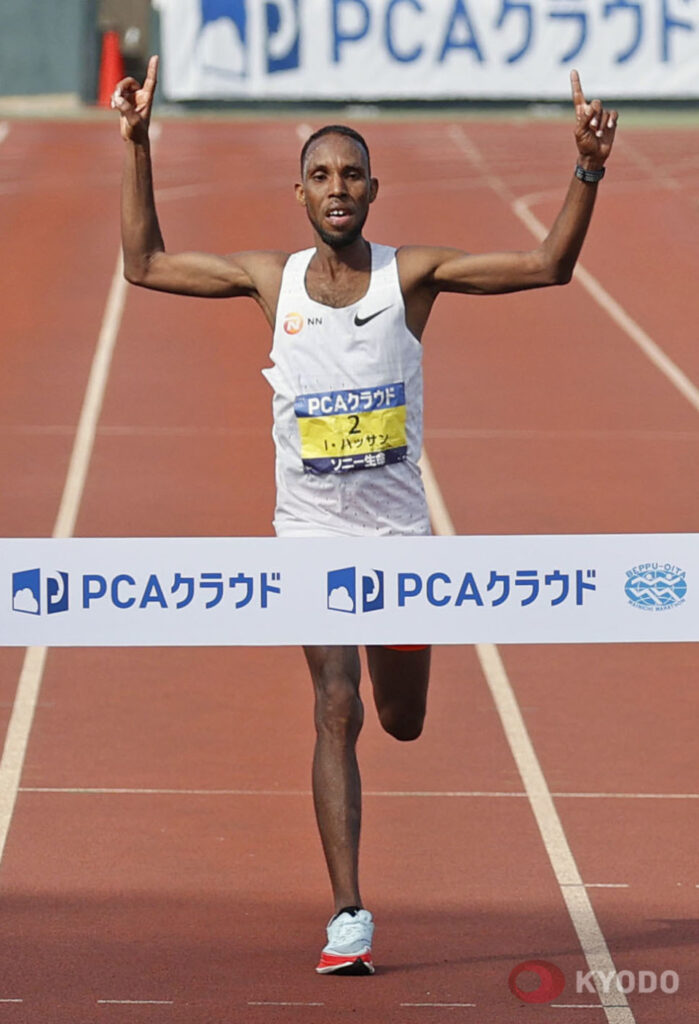
Ibrahim Hassan of Djibouti won the Beppu-Oita Mainichi Marathon in Oita, southwestern Japan, with a meet record of 2 hours, 6 minutes and 43 seconds Sunday.
Kenya’s Daniel Kipchumba crossed the finish line five seconds later for second place, and Japan’s Tsubasa Ichiyama placed third in 2:07:44.
The 71st edition of the race started in front of the Umitamago aquarium and finished at J-Lease Stadium.
“With the win and course record, I’m very, very happy,” the 26-year-old Hassan said. “The course was very good.”
Aoyama Gakuin University’s Shungo Yokota came in fourth in 2:07:47, setting the marathon record for a Japanese student runner.
Ibrahim Hassan of Djibouti crosses the finish line at J-Lease Stadium to win the Beppu-Oita Mainichi Marathon in Oita, southwestern Japan, on Feb. 5, 2023. (Kyodo)
Miniature loads and rideshare missions on rockets have made space affordable.
It has been nearly 40 years since the first Arab satellite, ArabSat-1, was launched into space by a Saudi organisation.
The UAE and Egypt sent satellites — mainly communication ones such as Thuraya-1 and NileSat-101 — in the following years.
But other countries in the region carried out little space activity after that.
Rideshare missions, such as the ones SpaceX offers, and the increasing use of nanosatellites are now giving smaller Arab countries easier access to space.
In the past five years, countries like Bahrain, Kuwait and Jordan have launched satellites and Oman also built its first satellite but was destroyed during a Virgin Orbit launch attempt on Tuesday.
Nanosatellites are miniature satellites developed quickly and at a low cost compared to standard ones.
Rideshare missions allow for multiple nanosatellites to launch on one rocket, bringing down launch costs significantly.
Miniature satellites cost less than Dh2 million to develop and launch, while standard ones can be hundreds of millions of dirhams.
The nanosatellites these Arab countries have launched have mostly been CubeSats — modular satellites that can range from one to multiple units.
Bahrain
Bahrain’s first satellite was a joint project with the UAE Space Agency.
The Light-1nanosatellite was launched on a SpaceX rocket on December 21, 2021, to study charged particles, known as terrestrial gamma ray flashes.
Students at New York University Abu Dhabi and Khalifa University built the nanosatellite. The team included nine Bahrainis and 14 Emiratis.
“Light-1 marks a milestone in our history as a successful step forward for our kingdom’s space efforts and paving the way for Bahrain’s space ambitions,” said Sheikh Nasser bin Hamad, commander of Bahrain’s Royal Guard and secretary general of the Supreme Defence Council, at the time of the launch.
Kuwait
Kuwait’s first satellite, a miniature one called QMR-KWT, was launched on June 30, 2021 on a SpaceX rocket to help students test software code.
It is unclear whether the nanosatellite, built by the OrbitalSpace company, is still operational.
KuwaitSat-1 was the second Kuwaiti satellite in space and was launched on January 4 on SpaceX Falcon 9.
It was built by students at Kuwait University to test if the on-board camera can be used for attitude determination and control.
Kuwait news agency Kuna said there are plans to develop KuwaitSat-2 for launch in three years.
Oman
Oman’s first satellite, the Aman CubeSat, was destroyed on a Virgin Orbit flight on Tuesday — the first orbital launch from UK soil.
The rocket failed to reach orbit after a take-off from an airport in Cornwall.
The Earth observation nanosatellite would have helped engineers test the possibility of a future satellite constellation.
Oman has ambitious space plans, including building a space research centre for simulation missions and science experiments.
Jordan
In 2018, Jordanian students also built and launched a CubeSat on a SpaceX rocket.
The JY1-Sat was Jordan’s first satellite and carried a video system on board.
However, it is unclear whether the technology is still operational.
UAE
Thuraya-1 was the first satellite launched by the UAE. It was a commercial satellite built by mobile satellite company Thuraya and developed by Boeing.
It was also the Middle East’s first telecoms satellite.
DubaiSat-1 was the first remote sensing satellite built by engineers at the Mohammed bin Rashid Space Centre and in South Korea in 2009.
The first locally-built satellite, however, did not launch until 2018.
Called KhalifaSat, the observation satellite was against built by space centre engineers.
It is a standard, small size satellite that has been sending back high-resolution images of the UAE and other parts of the world.
MBZ-Sat, an 800kg satellite, will be launched by the UAE later this year and is expected to be the region’s most powerful imaging satellite.
Striking image captured by the KhalifaSat satellite — in pictures
He replaces his countryman Nayef Al Hajraf, whose term is coming to an end.
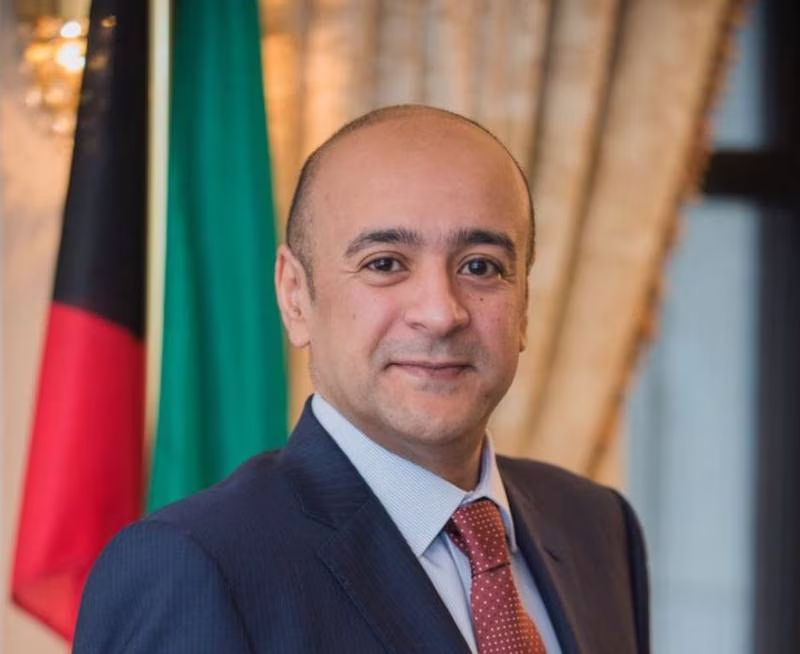
Jasem Al Budaiwi, Kuwait’s ambassador to the US, has been appointed as the new Secretary General of the Gulf Co-operation Council, succeeding Nayef Al Hajrafwhose term ends on Tuesday.
The GCC said Mr Al Hajraf welcomed the new secretary general and “wished him success”.
Mr Al Hajraf, who took office on February 1, 2020, was previously Kuwait’s minister of finance.
Mr Al Budaiwi, who will take up his new post on Wednesday, began his diplomatic career with Kuwait’s Ministry of Foreign Affairs in 1992 as diplomatic attache in the office of the deputy prime minister and minister of foreign affairs.
He was posted to Kuwait’s US embassy in June 2001, where he was promoted to first secretary in 2004, counsellor in 2007 and deputy chief of mission in October 2011.
He was appointed ambassador to Korea in 2013 and served in the post until 2016.
He then served as Kuwait’s ambassador to Belgium and head of mission to Nato until last year, when he was appointed ambassador to the US.
In December, leaders of the GCC agreed that Kuwait should retain the position of secretary general of the council for a second consecutive term during their annual summit in Riyadh.
Mr Al Budaiwi will be the GCC’s third secretary general from Kuwait after Mr Al Hajraf and Abdullah Yaqoub Bishara, who was the first person to hold the post after the council was established. Mr Bishara’s tenure was to last 11 years, making him the longest-serving chief among the six to have held the position.
Mr Al Hajraf has been making farewell visits to GCC states in recent weeks and meeting their leaders and foreign ministers.
The GCC was established in 1981 to promote economic, security, cultural and social co-operation between its six member states, Saudi Arabia, Bahrain, Kuwait, Oman, Qatar, Saudi Arabia and the UAE. The countries hold a summit every year.
The GCC’s Supreme Council is made up of the heads of the member states.
UAE Founding Father, the late Sheikh Zayed bin Sultan Al Nahyan, hosted the council’s first meeting in Abu Dhabi on May 25 and 26, 1981.
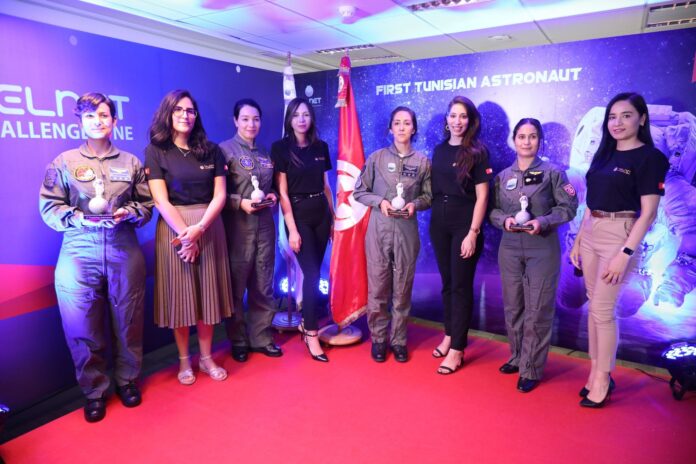
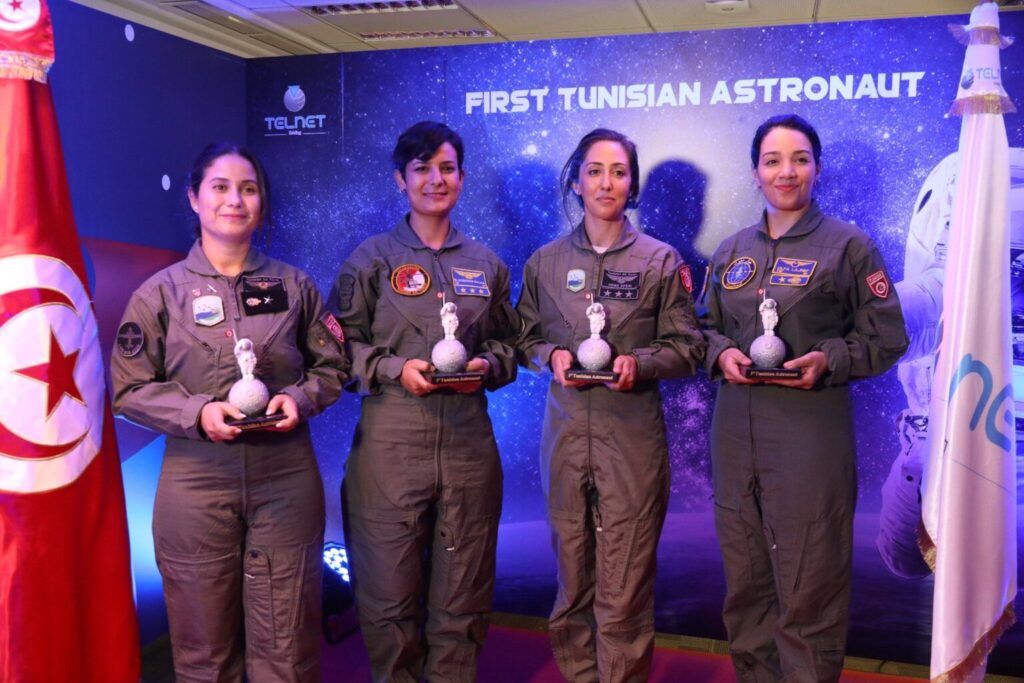
Eight Tunisian women have been selected as candidates for the first Tunisian and African female astronaut project. This selection came at Telnet’s Headquarters as Tunisia celebrated Women’s day. It is as a result of a partnership in August 2021 between Tunisia and Roscosmos to launch a Tunisian female citizen to the International Space Station (ISS) in the foreseeable future. As a result, according to Telnet’s Director-General, the ISS mission will be in 2024.
All the selected women are fighter pilots who graduated from the Borj Al-Amri Aviation School. Furthermore, they are Tunisian Air Force Corps members and have extensive experience in several challenging missions as a result. This is because the selection process requires strict conditions in terms of scientific, physiological and physical demands.
Among those names are: Hala Awassa, Ibtihal Youssef, Wafa El-Baldi-El-Yomna Dalali, Olfa Lajnef, Rahma Trabelsi, Hind Safferi and Malika Mabrouk.
During the unveiling, the current occupants of the ISS sent a message to the Tunisian candidates, expressing their support for the project and their expectations to welcome the first Tunisian astronaut in her upcoming mission. The female candidates also expressed their willingness to take up this historic challenge, raise the Tunisian national flag on the ISS and contribute to scientific advances in the service of humanity.
The candidates will subsequently undergo extensive physical and medical tests in Tunisia and abroad, from which two of the candidates will further travel to Russia. The candidates who travel to Russia will then undergo specific space-related training at one of the Russian Space agency’s training centres. This training will last for a year, after which will come the mission to the International Space Station.
Mohamed Frikha noted that all the candidates are the pride of the Tunisian woman and represent her in the best way. He added that their candidacy for this mission is a testament to their courage and willingness to honour the country and make history in a field as complicated as Space. Frikha also added that the astronauts will handle a scientific mission in Physics and Medicine and that the mission will contribute to the service of humanity. Finally, Frikha stated that the project received the support and encouragement of Tunisia at the highest level.
Tunisia is a party to and has ratified the Agreement on the Rescue of Astronauts, the Return of Astronauts and the Return of Objects Launched into Outer Space (Rescue and Return Agreement). The country is also a party to the Outer Space Treaty and the Liability Convention.
In a remote area in the Valley of Jordan, schoolgirls planned for their future debunking the stereotypical roles that society prescribed for women.
In a remote area in the Valley of Jordan, schoolgirls planned for their future debunking the stereotypical roles that society prescribed for women. Some of the girls dreamt of being “spokesperson” of the government. It was the first time Jordan had a government’s spokesperson. And she was a woman: Asma Khader.
The many times in which Khader have inspired women and girls are the moments she recalls with a warm smile. “Girls start to see that their role is not being wives only. They can be ministers and official spokespersons and get involved in politics,” says Khader. In 2003, she was the State’s Minister and the government’s spokesperson. “I was on the TV and the radio everyday talking to the public,” says Khader. She remembers holding press conferences every Monday’s morning in a public space where anyone could attend.
In a region where women could be trapped in the midst of stereotypes, cultural ones and those implied by outsiders, political and social empowerment are necessities when dealing with women’s rights advocacy. It’s a continuous battle in which women celebrate victories and overcome challenges and obstacles. With her dark short hair and formal attire, Khader is one of the warriors in this battle. A mother of three daughters and one son and a grandmother, she raised her kids on principal: gender equality. “The only son was not getting the privilege to enjoy being the only boy,” laughs Khader.
In the midst of busy Amman, Khader is in her office working tirelessly. She had to stop practicing law because of her current position as Commissioner and Vice President at the Independent Election Commission. She helped to launch, established and led several organizations promoting human rights and freedom of expression. I have visited and witnessed the works of two of them: Al-Mizan Legal Group and Sisterhood Is Global Institute Jordan. Both of the groups are nationally active and have a great impact on people’s lives. I have met several active members of SIGI in the different chapters in cities and towns all working together on women’s rights issues.
Born in 1952, Khader has been a pioneer of women and girls’ rights advocacy since her childhood. She was the eldest of her siblings. In most Arab communities, it’s a tradition to identify parents by the name of their eldest child. For several years, Khader’s parents were known to be “Abu Asma” and “Umm Asma,” Asma’s father and Asma’s mother, until a change happened.
“I was shocked when everybody started to call my parents Abu Sameer and Umm Sameer after my brother was born,” says Khader and she chuckles. “They were known as Abu Asma and Umm Asma because I was the first child and then my sister and my sister. After three children, the boy was born. And in one second everybody started calling them Abu Sameer and Umm Sameer.” It was a matter of a name, but had deep meaning of discrimination against girls.
The spark of activism was ignited focusing on gender roles in childhood. “I started to prefer going out and playing with children: with boys mainly,” says Khader. Soon, her father noticed her rebellious spirit. He was supportive and backed her activism. Khader mentions that when he noticed her passion in defending girls’ rights at a young age he told her: “You should be sure that I love you and I am proud of you. And I am sure you will be a good citizen, a good person in the society.”
“My father was a very open minded person, very educated, a believer in women and men, and a fighter against discrimination,” reiterating the importance of her father’s support in her life. “My mother was worried but she didn’t prevent me from being active. As a mother I can understand why she was worried all the time.”
Khader’s journey began. At a time when it was rare for women to be involved in politics, Khader took to the streets with her male colleagues protesting against Israeli’s airstrikes on a small village in Khalil near Hebron. She was only 13-years-old chanting while being carried on the shoulders of other protestors. She encouraged her colleagues from the girls’ school to join the demonstration.
That was her early engagement in public life. However, she was active in school, helping and defending other students. “And I think that was the root of my profession later, to be a lawyer,” mentions Khader.
While being in high school, Khader was also active in helping Palestinian refugees. Arts fill Khader’s office, accompanied by her memories. As a member of the Palestinian Women Union, in the late 1960s, Khader travelled to other countries to present Palestine in Folklore activities such as arts and traditional Dabkeh dance, and exhibiting handmade crafts made by women, especially those of the refugee camps.
Surrounded by crowds of people, mainly women, Khader announced: “We are not presenting women as victims.” Khader is one of the three judges of Manara Award for Gender Equality in Jordan, Lebanon and Palestine. She is representing her home country, Jordan.
As she entered the room, women and few men gathered around to greet her and I was one of them. A woman journalist sitting beside me was pleased to see Khader on a seat close to us. “Your excellency, this is my article,” said the journalist while flipping the pages of a magazine to show her the piece.
Despite being occupied with the event, Khader got engaged in a conversation with the journalist. During the event Khader listened to comments and questions, and answered in a professional manner. Being in a non-governmental event and listening to Khader took my imagination to a time when I was not in Jordan: when she was a government’s official having to answer the public.
The challenge that most activists go throw is making their voice heard through the official channels. Having an official who was an activist could change the equation. It meant having reforms and changes within. Lobbying is something that women’s rights groups in several countries spend a lot of time and energy on. Similarly, in Jordan, a constitutional monarchy, in which non-governmental organizations, opposition and other groups have a chance to demand changes through the existing channels. At times, it is necessary to work with the government in order to achieve rights, gender equality in particular.
Being in a leading position, Khader used her role as a government official and minister to work for gender equality. “When you are in a position where you can impact a decision, it’s very important,” says Khader speaking of her experience in the government. For instance, she was able to push to have shelters, by law, in order to protect vulnerable women. In addition to that, health insurance law was introduced that entitles working women to have the right in including their families in their health insurance plans. Khader also had a stance against death penalty that was frozen until 2014. She was also able to give licenses to independent media organizations, and thus enhancing freedom of expression condition in the country.
“It’s very important to see how problems and achievements and challenges are from the different points of view,” says Khader. “I realize that if there is good lobbying — a group who are really preparing their case well — then the ministries will discuss it and take it seriously. This was also an empowering experience: to be more active in civil society later and to know how to deal with issues and to be more effective.”
Khader graduated from Damascus University with a law degree in the early 1970s. At that time, there was no faculty of law in Jordan, and therefore, Khader had to travel to Syria. When she returned after successfully graduating, her father died. “It was a sudden death before me being a lawyer,” says Khader and her eyes are tearful. I look around to find a framed letter on her desk. “He wrote this letter to me.”
“I have always pictured you a lawyer…defending the oppressed, and serving the motherland with awareness…I wish you success and prosperity,” Khader’s father wrote. While the father didn’t see his daughter a lawyer, he was certain that she would be and that she would defend human rights. He was right with what he pictured for her.
A life filled with activism and Khader talks with pride about every battle she fought. Taking serious risks is not a choice, but is a necessity in some campaigns such as the one against what’s known as honour crimes. For instance, Khader mentions incidents in which she was threatened that her daughters would be “raped.” Her daughters were safe and she wasn’t deterred from continuing in her work despite the threats.
“Everybody now is fighting honour crimes in the country and the laws were changed and the special court was established and efforts happened,” says Khader. This would not have happened if women’s rights activists and advocates, like Khader, stopped due to threats and obstacles facing them. “Everybody now from the leadership of the country to many officials of the country to even the public opinion [have a stance against honour crimes],” says Khader. “After 20, 30 years, they are changed. So sometimes, it is a long process.”
Based on decades of experience, Khader has advice: to not lose hope if the process is taking a long time. “Reaching leading positions is not easy and is not going to happen smoothly without hard work and seriousness and knowledge based approach to challenge all the obstacles and being ready to spend years after some of the demands, some of the rights and some of the dreams, and some of the achievements you are trying to reach,” insists Khader.
Yusur is a journalist currently working in Jordan. She is board member of Canadian Voice of Women for Peace. This Project was carried out with the aid of a grant from the International Development Research Centre (IDRC), Ottawa, Canada.