Arabs & Arabian Records Aggregator. Chronicler. Milestones of the 25 Countries of the Arabic Speaking World (official / co-official). AGCC. MENA. Global. Ist's to Top 10's. Records. Read & Enjoy./ www.arabianrecords.org
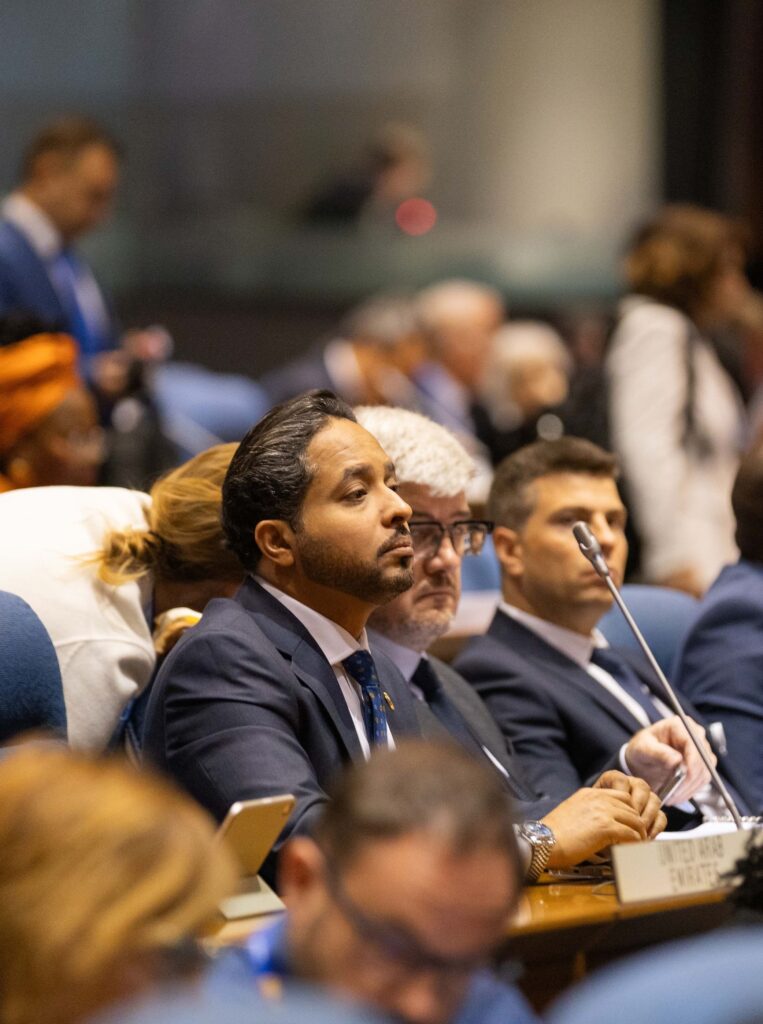
The Council of the International Civil Aviation Organization (ICAO) elected Engineer Saeed Mohammed Al Suwaidi, the UAE’s Permanent Representative to the ICAO, as Vice-President of the Council.
A press release issued today by the General Civil Aviation Authority (GCAA) stated that the election of the UAE’s representative confirms the UAE’s leading position in the international civil aviation sector and reflects the great confidence it enjoys from member states on the ICAO Council, as well as the appreciation for its prominent role in supporting ICAO’s efforts aimed at enhancing the safety, security, and sustainability of the global aviation sector.
His Excellency Saif Mohammed Al Suwaidi, Director General of the GCAA, said that the election of the UAE’s representative to this high-profile position reflects the international appreciation of the country’s contributions to the development of civil aviation policies. It also underscores the UAE’s commitment to enhancing its active participation within the ICAO Council and contributing more strongly to the formulation of decisions affecting the global aviation sector, reflecting its ambitious vision for international cooperation and leadership in this field.
For his part, Engineer Saeed Mohammed Al Suwaidi, the UAE’s representative to ICAO, expressed his pride in this international assignment, stressing that his election represents a significant responsibility and an opportunity to continue strengthening the UAE’s presence within the organization and support international efforts aimed at developing the civil aviation sector according to the highest standards of efficiency and sustainability.
The award was received by Oman’s Ambassador to Japan Dr. Mohammed bin Said Al Busaidi on behalf of the government of Oman.
The University of Tokyo has announced that it has awarded the prestigious Shokomon Award to the government of the Sultanate of Oman in recognition of its contribution to supporting scientific research and academic and cultural exchange in the field of Middle Eastern studies.
The award was received by Oman’s Ambassador to Japan Dr. Mohammed bin Said Al Busaidi on behalf of the government of Oman.
The award was based on the role played by the Sultan Qaboos Chair for Middle Eastern Studies, which was inaugurated at the university in 2011.
It is the highest honor bestowed by the University of Tokyo on individuals and institutions who have made significant and influential contributions to enriching the university’s progress and serving its academic goals.
Oman is the first Arab government to receive it.
The University of Tokyo has a significant academic relationship with Oman, primarily through the University of Tokyo Centre for Middle Eastern Studies (UTCMES), which was established with funding from Oman. The relationship includes academic exchange, research, and events such as seminars, lectures, and exhibitions focusing on Oman.
The university also works with institutions like Sultan Qaboos University and has received book donations from Oman.
UTCMES conducts and disseminates research on the Middle East and organizes events like public lectures, symposia, and exhibitions that focus on Oman.
source/content: arabnews.com (headline edited)
__________
The award was based on the role played by the Sultan Qaboos Chair for Middle Eastern Studies, which was inaugurated at the university in 2011. (Supplied)
Arabs are known for having had numerous contributions to civilizations—notably in the fields of Mathematics (Arabs invented Algebra), Astronomy (Al-Biruni discussed the earth’s rotation centuries before it was confirmed by Galileo), and Medicine (Al Razi was one of the first to diagnose diseases like smallpox and measles).
But Arab achievements didn’t end in the Golden Age and have continuously evolved to modern fields, so we’re here to round up some of the lesser-known greatest modern achievements by Arabs..
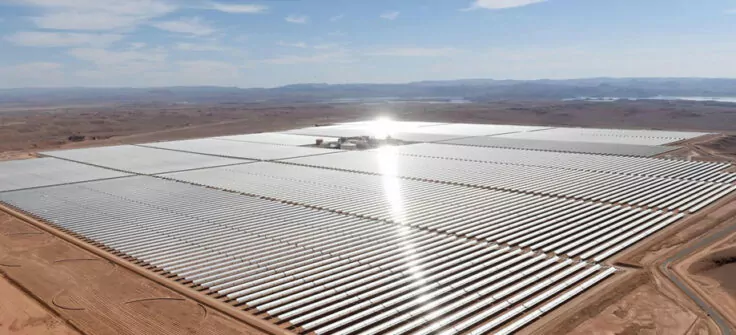
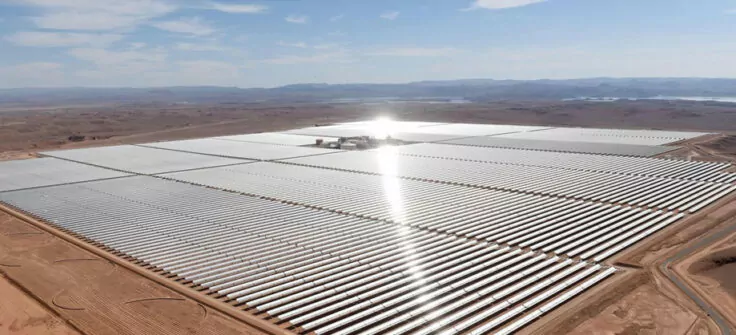
Noor Ouarzazte
Morocco is turning the Sahara Desert into the largest concentrated power complex in the world. The project is currently in progress, due to be complete before the end of 2018.
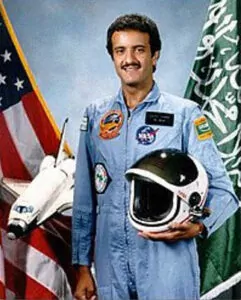
Arabs in Space
Sultan bin Salman Al Saud became the first Arab in space in 1985 – he was also the first royal astronaut ever. Syrian-born Mohammed Ahmed Faris followed in Al Saud’s footsteps in 1987.
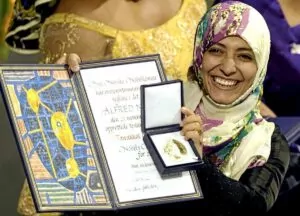
Nobel Peace Prize Winners
Photo credit ODD ANDERSEN/AFP/Getty Images
The Tunisian national dialogue quartet was awarded the Nobel Peace Prize in 2015 for their role in building a democratic state in Tunisia following the Arab Spring.
Yemeni journalist and activist Tawakkol Abdel-Salam Karman preceded the Tunisian National Dialogue Quartet in 2011 as Nobel laureate—she became the first ever Yemini and Arab Woman to win the Peace Prize, as well as the second youngest ever.
The ‘Father of Femtochemistry”
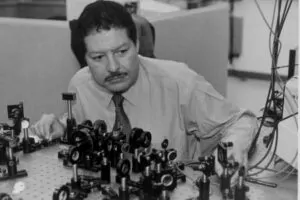
Femtochemistry is probably something too difficult for most of us to understand—but according to Wikipedia it’s “an area of chemistry that studies chemical reactions on extremely short timescales”. Ahmed Hassan Zewail, and Egyptian-American scientist, is known for pioneering a laser technique that allowed for easier analysis of chemical reactions. He even won a Nobel prize for his work in 1999.
Pritzker Architecture Prize Winners
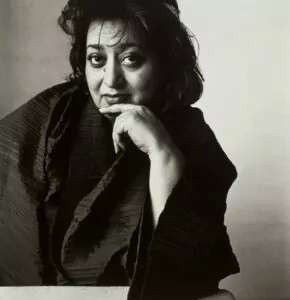
The late Iraqi-British architect Zaha Hadid was an internationally-acclaimed architect, renowned for her sci-fi creations. Having built some of the world’s most innovative spaces. In 2004, she became the first ever woman to win the prestigious Pritzker Architecture Prize—the most prestigious award in architecture.
Inside the first show dedicated to NYC’s Public Library’s Middle Eastern collections .
Outside The New York Public Library’s Stephen A. Schwarzman Building, the unmistakable scent of a halal food cart mingles with the sounds of various Arabic dialects, while two marble lions stand guard over Fifth Avenue. Inside, entire worlds are waiting to be discovered — including the often-overlooked stories of New York’s Middle Eastern and North African communities.
“Niyū Yūrk: Middle Eastern and North African Lives in the City,” the first exhibition dedicated to the Library’s Middle Eastern collections, opened Oct. 4. It will remain on view in the Ispahani-Bartos Gallery until March 8.
Curated by Hiba Abid, the exhibition contains around 60 objects — photos, books, periodicals and audio — dating from the 1850s to 2024. It centers specifically on the library’s own holdings, rather than attempting to tell a comprehensive history of MENA life in New York, Abid tells Arab News.
Drawing from over a century of rare materials the exhibition uses tangible objects to express the intangible: memory, identity and immigrant culture.
“It’s not a love letter. It’s a realistic letter,” Abid says, adding that these communities have long navigated complex questions of belonging, language, and preservation.
“The communities, from the very beginning, were wondering, ‘Where should our kids go to school? If they go to the public New York schools, they would probably lose their language, but we want them to still know Arabic and be aware of our traditions and values,’” she said.
The exhibition is divided into four chronological sections, designed to help guide visitors of all ages, from young children to seasoned scholars.
The first section, “Roads to New York,” focuses on the earliest waves of immigration. One of the first featured figures is Hatchik Oscanyan — later known as Christopher Oscanyan — an Armenian man born in what is now Türkiye. He came to New York in the mid-19th century and sought to educate Americans about the complexity of the Ottoman Empire. He wrote plays and newspaper articles, as well as “The Sultan and His People,” a book that offers insight into the region’s diverse ethnic and religious makeup.
The second section, “A Life in the City,” explores how immigrant communities began to form and thrive in New York, including in what was once known as Little Syria on Manhattan’s Lower West Side — an area that still exists today. They were entrepreneurs who opened restaurants, shops, and began publishing Arabic newspapers.
One of the most groundbreaking was Al-Hoda, founded by Naoum Antoun Mokarzel and his brother Salloum. “In the basement of Al-Hoda Press, they adapted the linotype machine from Latin characters to Arabic characters, which is very hard (because Arabic is) a cursive language,” Abid says. “By this technological innovation, he actually allowed other presses to form and to publish newspapers, periodicals, and books,” which then circulated throughout North and Latin America — and back to the Middle East.
In other words, New York was instrumental in literally building the Arabic press and exporting news to the Middle East.
Abid emphasizes how vital the library’s historical collections are to telling these stories.
“The library has been collecting these materials since the late 19th century,” she says, adding that many of them have been digitized, enabling audiences to interact with them in a new way.
The third section, “Impressions,” flips the gaze, revealing how Middle Eastern immigrants perceived New York and the US.
“Many immigrant groups embraced American values… but many (Arabs) actually didn’t like New York and didn’t like American values and left after a few years here or after a few months.” The exhibit highlights these ambivalences and the tensions of assimilation.
The final section, “In Our Own Skin,” is the most contemporary and, for Abid, the most personal. It includes raw, vulnerable stories that reflect racial identity, Islamophobia, and resistance. Among the most powerful pieces is the short documentary “In My Own Skin,” directed by Jennifer Jajeh and Nikki Byrd, which features interviews with five Arab women in New York, and was filmed just one month after the events of Sept. 11, 2001.
“The interviews are absolutely amazing. Every time I talk about it, I have goosebumps,” Abid says. “The way they talk about it — it is still very relevant today, as if nothing changed much, except that we’re probably more powerful because we are aware of this and we know how to organize and to fight back. We have the vocabulary now, and the community.”
That spirit of organization is embodied by Malikah, a grassroots collective founded by Rana Abdelhamid in 2010 as a self-defense class for Muslim women on Steinway Street in Queens. The movement has since expanded into a larger project of empowerment, healing, and solidarity — and is featured in the exhibit’s final section. The powerful sound of the athan, or call to prayer, has been important to this cultural shift.
While images of the Statue of Liberty — based on an Egyptian woman — didn’t make the cut, but Abid stresses its significance on each guided tour. On this occasion, though, she wanted to focus the visitors on lesser-known gems.
Having lived in New York for the past four years as a Tunisian immigrant who spent much of her life in France, Abid says she finds New York to be more diverse than anywhere else she has ever lived.
“I live on Atlantic Avenue in the Syrian corner. The things I witnessed here and in Middle Eastern parts of New York, like Astoria, I could never see anywhere else — even Paris,” she says. “When you go to the exhibition, you actually think, ‘Damn! We actually did a lot. And we’re here, you know—we’re here.
“It shows how New York was central to all of these struggles and how New York — thanks to its MENA community — was actually connected and aware. It puts New York on a global map, you know? I think New York is incredible terrain for this. It’s the space for it. That’s what this show is about, ultimately.”
source/content: arabnews.com (headline edited)
______________
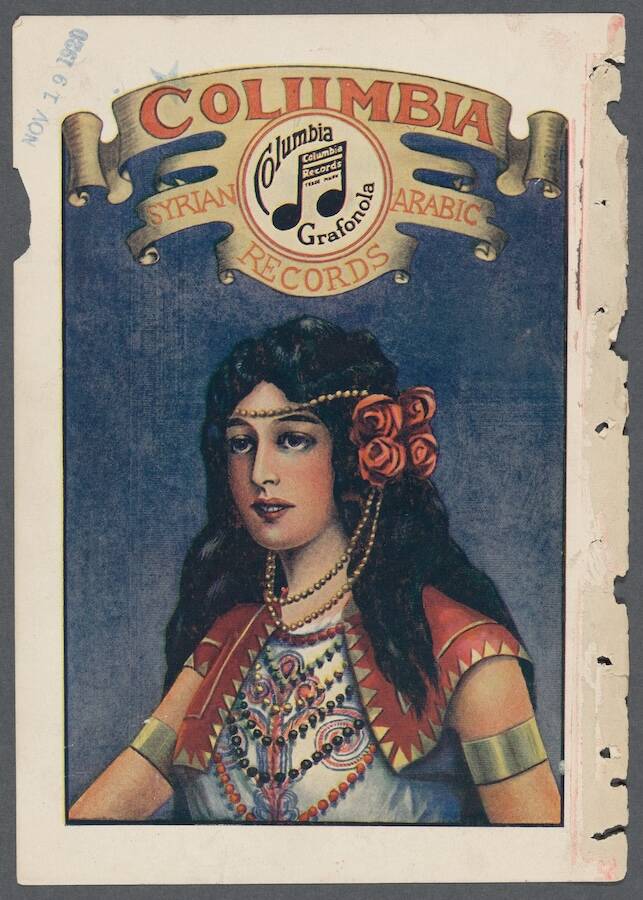
A poster from 1920 promoting Columbia Syrian Arabic Records — Columbia was one of the major American record labels to recognize the commercial potential of ethnic music markets in the US. (Courtesy of The New York Public Library)
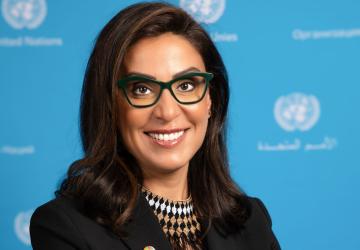
United Nations Secretary-General António Guterres appointed Rana Taha of Jordan as the United Nations Resident Coordinator in Tunisia, with the host Government’s approval, effective 19 June 2025.
Ms. Taha has over 20 years of diverse experience working for United Nations agencies, funds and programmes, and UN peacekeeping and special political missions. Prior to her appointment as Resident Coordinator in Tunisia she served as a Team Leader and the senior Peace and Development Advisor for the United Nations in Kenya.
From 2015 to 2019, she held several positions in the Departments of Political and Peacebuilding Affairs (DPPA) and Peace Operations (DPO) at UN headquarters, where she managed the Middle East/North Africa Regional Programme for Peacekeeping and Special Political Missions.
Ms. Taha served in UN missions in Lebanon (UNIFIL, UNSCOL) and Sudan (UNMIS and UNAMID), including as a Special Assistant and Advisor to successive representatives of the Secretary General from 2007 to 2015.
From 2003 to 2007, she served as the representative for Interpeace and the Programme Manager at the United Nations Office for Project Services (UNOPS) in the Occupied Palestinian Territories.
Earlier in her career, she was a research fellow at the United Nations Institute for Disarmament Research in Switzerland from 2001 to 2002.
She holds a master’s degree in International Relations and Public Policy from McMaster University and a master’s degree in sociology from the University of Jordan. Ms. Taha is married with one son.
source/content: unsdg.un.org / UN Sustainable Development Group (UNSDG) – (headline edited)
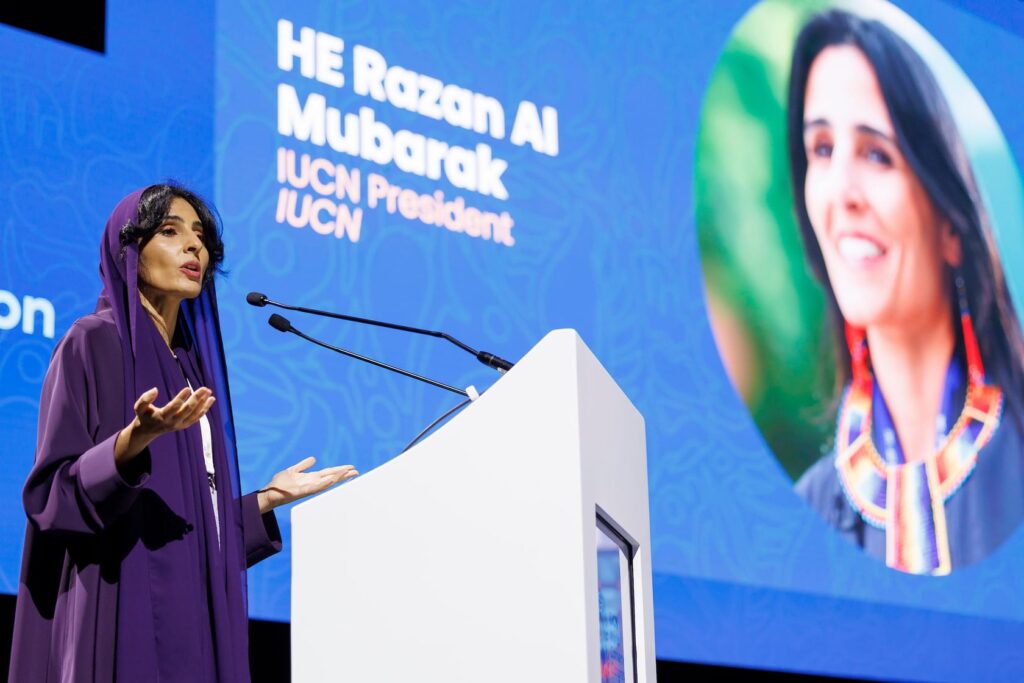
Razan Khalifa Al Mubarak, President of the International Union for Conservation of Nature (IUCN), has been re-elected for a second term at the IUCN World Conservation Congress in Abu Dhabi, United Arab Emirates.
Al Mubarak is the first president from West Asia and the second woman to lead IUCN in its 77-year history.
Al Mubarak’s re-election was announced at the IUCN Members’ Assembly, following a four-year term marked by strengthened governance, renewed trust, and the elevation of nature within global climate and biodiversity agendas. A majority of IUCN’s more than 1,400 Member organisations, representing 160 countries, confirmed their confidence in Al Mubarak to continue leading the Union through this decisive decade for nature.
The world’s oldest and largest global environmental network, IUCN is a democratic membership union that harnesses the world’s most influential organisations and experts to conserve nature and accelerate a global transition to sustainable use of natural resources.
Composed of more than 19,000 conservation experts and 1,400 Member organisations, including States, government agencies, subnational goverments,NGOs, and Indigenous Peoples’ organisations, IUCN is considered the global authority on the state of the natural world and the actions needed to safeguard the planet.
Her re-election comes as IUCN launches a new four-year Programme of Work — the final one before the global biodiversity, climate, and land restoration targets are due in 2030. Under Al Mubarak’s leadership, the Union will work to deliver on its 20-year Vision, turning ambition into measurable outcomes and ensuring that IUCN continues to guide collective action for nature, climate, and people worldwide.
“Thanks to her passionate, innovative, and decisive leadership, the Mohamed bin Zayed Species Conservation Fund has become a global model, showing that small but focused interventions on the ground can make a big difference in saving species. We know that she will continue to bring this same sense of commitment, creativity, and collaboration to IUCN as it sets the global agenda for this crucial decade for conservation,” said Mohamed Al Bowardi, Deputy Chairman of the MBZ Fund.
Al Mubarak said of her re-election as President of IUCN, “I am truly honoured to have been re-elected President of the IUCN, especially at a moment when nature, climate, and people must be brought together in action. Over the past four years, I have witnessed the extraordinary strength of our Union — our Members, Commissions, and partners — working together across boundaries and disciplines. I remain profoundly grateful for the support of the UAE leadership and its institutions, whose belief in conservation has inspired my own. This new mandate is both a privilege and a responsibility — to continue turning ambition into action for nature and for humanity.”
Al Mubarak began her career in conservation in 2001 when she helped to establish Emirates Nature – WWF, an NGO associated with the World Wide Fund for Nature. At Emirates Nature – WWF, she spearheaded initiatives to protect the UAE’s coral, conducted research leading to the establishment of the country’s first mountain national park, and created the framework to protect nesting and migrating sea turtles.
In 2010, Al Mubarak became the youngest person to lead an Abu Dhabi government entity with her appointment as Secretary-General of the Environment Agency – Abu Dhabi (EAD), an organisation for which she now serves as Managing Director. In her role leading a government agency of over 1,000 employees, EAD was instrumental in the successful reintroductions of the Arabian Oryx in the UAE and the Scimitar-horned Oryx in Chad.
Al Mubarak has helped build the Mohamed bin Zayed Species Conservation Fund (MBZ Fund) into one of the world’s largest philanthropic endowments supporting direct species conservation. Since its inception in 2009, the Fund has supported more than 3,100 projects worldwide, contributing to the rediscovery, reintroduction, and protection of over 1,900 species. Under her leadership, it has evolved from a small grants programme into a platform advancing broader conservation initiatives that link biodiversity, sustainability, and human well-being.
In addition to her national roles, Al Mubarak serves as UAE Sherpa to the High-Level Panel for a Sustainable Ocean Economy, Co-Chair of the Taskforce on Nature-related Financial Disclosures (TNFD), and Nature Champion at the World Economic Forum. She also previously served as UN Climate Change High-Level Champion for COP28 UAE, where she played a key role in elevating nature’s role in global climate action.
Al Mubarak holds an MSc in Public Understanding of Environmental Change from University College London (UCL) and a BA (Hons) in Environmental Studies and International Relations from Tufts University, USA. She also serves on the boards of Panthera, Re:wild, and the Tropical Forests Forever Facility.
Ten months after her win in Bangkok, the 21-year-old tells Arab News about the sport, balancing studies and training, and the development of women’s boxing in the Kingdom.
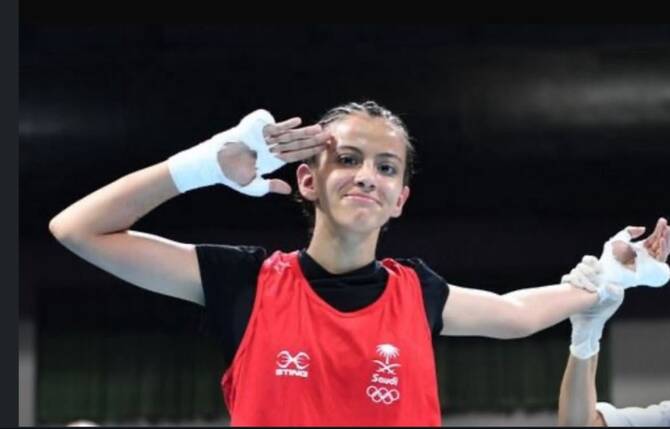
The end of 2024 will always hold special memories for Yara Al-Amri. In December last year the young boxer made history by becoming the first Saudi woman to win an Asian medal in boxing — a new milestone for the Kingdom’s fast-growing women’s sports scene.
The 21-year-old fighter earned a bronze medal at the Asian Elite Championships in Bangkok, competing in the 52-kilogram category in her first international appearance.
She told Arab News: “It was my first international appearance, which was the toughest part — competing outside my country without my home crowd and coaches.”
The win was historic not only for Al-Amri, but for Saudi sport. “This changed my life, as I wrote history for Saudi Arabia by winning the first Asian medal in women’s boxing,” she said. “It doesn’t mean we don’t have champions, but the sport is still new in our country. Despite starting later than many nations, we quickly reached their level and proved we can compete and succeed.”
Based in Riyadh, Al-Amri trains under Ali Al-Ahmari at Al-Shabab Club. Standing 174 cm tall, the right-handed orthodox fighter has built a record of 27 fights, with 23 wins and four losses, and holds seven Saudi national titles.
Her path into boxing began unexpectedly. “I first started boxing as a fitness exercise, but soon felt I truly belonged in the sport,” she said. “I’ve always loved challenge and competition, and boxing gave me exactly that. In the ring, it’s just me, my mind, and my hands. Boxing completely changed my lifestyle, making me more disciplined and committed.”
Al-Amri describes the sport as a test of focus as much as strength. “You have to be patient, strategic, and intelligent. Every movement matters.”
Outside the ring, Al-Amri is pursuing a university degree, juggling training sessions and academic deadlines.
“As a university student, my days are always a challenge,” she said. “I train twice a day — morning and evening — while balancing my classes, studies, and daily tasks. My schedule is packed, but I make sure to manage both my academic and athletic commitments.”
Her discipline extends beyond boxing. Earlier this year, she completed the Riyadh Half Marathon, describing the 21-kilometer run as “pure challenge and joy.”
After nearly 30 fights, Al-Amri has learned to embrace both victory and loss. “The biggest lesson I learned from a loss is never leaving the result to the judges,” she said. “The fight must be clear — you have to showcase your skills so strongly that there’s no doubt.
“Injuries and defeats also taught me resilience,” she added. “I always say: ‘What doesn’t kill you makes you stronger.’ Before a fight, I’ve learned to control nerves and pressure. It’s natural to feel it, but once I step into the ring, everything switches off — I focus only on my opponent.”
Al-Amri credits her success to the support around her. “My family has been my first and strongest supporters, from the beginning until today. Their belief in me gave me strength,” she said.
She also praised the institutions enabling women’s boxing to grow. “I deeply value the support of the Kingdom of Saudi Arabia — from our wise leadership to the ministry of sports, the Olympic Committee, the Saudi Boxing Federation, clubs, coaches, and the people. This collective support has been a huge force behind my journey.”
That system, she said, has helped turn a once niche pursuit into a recognized sport for Saudi women.
“My goal is to achieve as many titles as possible — national, regional, continental, and international,” Al-Amri said. “With God’s will, these achievements will come.”
She believes the next generation of Saudi women boxers will go even further. “Women’s boxing in Saudi Arabia has developed tremendously,” she said. “Clubs and coaches are now available across the country, teams are formed, and the determination of Saudi women is stronger than ever. We are capable of competing, representing, and making the sport grow even bigger.”
In only two years, Al-Amri has collected nine gold medals, seven national titles and two bronzes, combining athletic performance with academic success and public recognition.
Her rapid rise mirrors Saudi Arabia’s broader transformation under Vision 2030, which continues to expand opportunities for women in professional sports, from football and judo to boxing and beyond.
Al-Amri said her journey shows what happens when opportunity meets belief. “Boxing gave me strength and purpose,” she said. “It made me realize that nothing is impossible when you work hard, stay disciplined, and believe in yourself.”
As she continues to train for upcoming championships and sets her sights on future world competitions, Al-Amri’s mission is simple: to raise Saudi Arabia’s flag on the global stage.
From her first punch in a Riyadh gym to her medal podium in Bangkok, Yara Al-Amri’s story is one of faith, perseverance, and proof that Saudi women are not just entering the ring, they are redefining it.
source/content: arabnews.com (headline edited)
_____________
Yara Al-Amri salutes the crowd after her victory, becoming the first Saudi woman boxer to claim an Asian medal. (SUPPLIED)
US President Trump praises ‘new beautiful day’ as Gaza war comes to an end, but questions about the future remain.
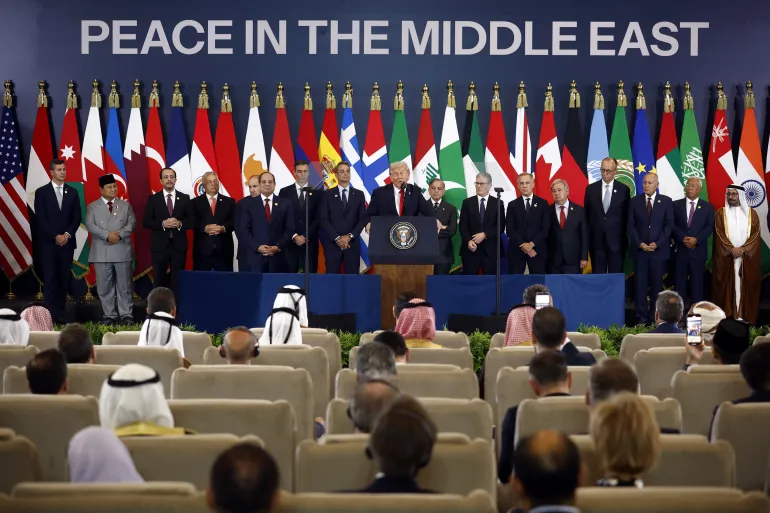
Political leaders from around the world have convened in Egypt for a ceremony to sign a ceasefire deal in Gaza, led by United States President Donald Trump and mediating partners such as Egypt, Qatar, and Turkiye.
Speaking in the Egyptian seaside resort of Sharm el-Sheikh on Monday, Trump envisioned a glimmering future for Gaza as a hub of development and investment, even as the Gaza Strip lies in ruins following Israel’s devastating, two-year assault.
“A new and beautiful day is rising and now the rebuilding begins,” said the US president, who praised regional leaders who helped broker a deal between Israel and the Palestinian group Hamas.
“Rebuilding is maybe going to be the easiest part,” he added, stating that “we know how to build better than anybody in the world.”
The ceasefire deal has been greeted with a combination of relief and anxiety about the future in Gaza, where Israeli attacks killed at least 67,869 people, with thousands more likely buried beneath the rubble.
“We drove by entire neighbourhoods that have been levelled to the ground,” Mahmoud said. “There is nothing left. There is nothing recognisable about many of the neighbourhoods that we knew.”
Despite the toll of Israel’s military campaign, which left most of the Strip unlivable and has been described as a genocide by a growing number of scholars and rights groups, the US president has framed discussions of Gaza’s future around Israeli security demands.
“Gaza’s reconstruction also requires that it be demilitarised,” Trump said in his remarks.
But later on Monday, Trump and the leaders of Qatar, Egypt and Turkiye released a joint statement emphasising equality between Israelis and Palestinians.
“We seek tolerance, dignity, and equal opportunity for every person, ensuring this region is a place where all can pursue their aspirations in peace, security, and economic prosperity, regardless of race, faith, or ethnicity,” the statement said.
Separately leaders from the region such as Egyptian President Abdel Fattah el-Sisi praised Trump at the summit, but warned that only the creation of a Palestinian state could offer a durable end to the conflict.
“Egypt reasserts along with its brotherly Arab and Muslim nations that peace remains our strategic choice, and that the experiences have shown over the past decades that this choice can only be established upon justice and equality in rights,” he said.
But progress towards that goal remains distant.
Israel has insisted that it will not allow the creation of a Palestinian state, and the US, which continued to assist Israel with massive arms transfers and diplomatic support during the conflict despite growing anger at the destruction of Gaza, has offered only vague comments about its vision of the Strip’s future.
The possible involvement of strongly pro-Israel figures, including former British Prime Minister Tony Blair and Trump’s son-in-law Jared Kushner, in the post-war governance of Gaza has also raised concerns.
“We’re seeing these global leaders gathering together, ensuring that they’re all aligned, that they want to end this conflict,” Zeidon Alkinani, a lecturer at Georgetown University in Qatar, told Al Jazeera.
“But how sustainable is the long-term future after this peace treaty? Are we ending all the issues that ended up accumulating to leading to the events of October 7 and everything that happened [after]? I think that’s the question we need to look at.”
Trump’s Gaza plan calls for a group of Palestinian policy experts to rule Gaza, but the local authorities would be supervised by a so-called “Board of Peace” headed by Trump and Blair.
“We need to look at the legitimacy of a political committee that would be governing a future Gaza,” Alkinani said. “Who would be making the decisions? Who would be nominating these people?”
source/content: aljazeera.com (headline edited) / News agencies and Brian Osgood
______________
US President Donald Trump speaks during a world leaders’ summit on ending the Gaza war in Sharm el-Sheikh, Egypt, October 13, 2025 [Yoan Valat/Pool via Reuters]
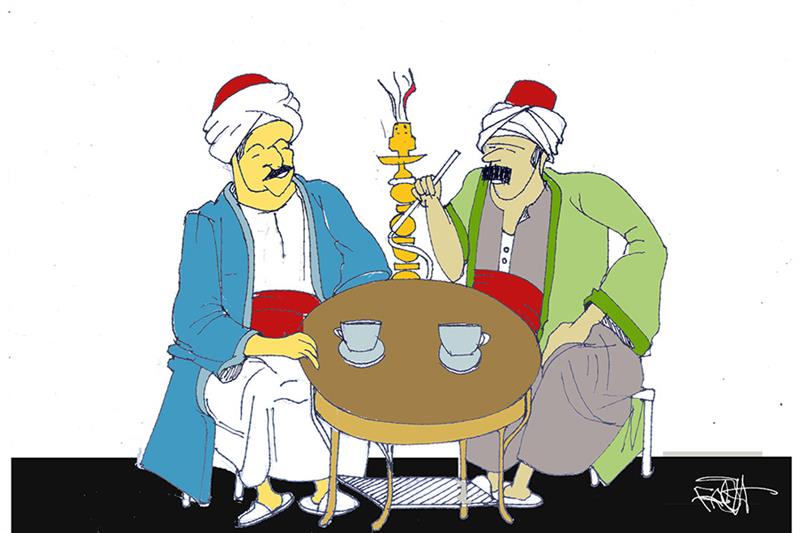
Originating in the Horn of Africa and first cultivated in the Arabian Peninsula, coffee has been providing the world with refreshment for at least 500 years.
While there is still disagreement about who first cultivated the coffee plant in Yemen in the southern part of the Arabian Peninsula, it seems that this took place in around the mid-15th century CE. It is of course the berries of the coffee plant, a kind of shrub or small tree, that enclose the seed, and it is this — the coffee bean — that, once roasted, ground, and steeped in water, is used to make the now ubiquitous drink of coffee.
According to Arab tradition, Sufi groups in Yemen discovered that drinking coffee, in Arabic qahwa, could raise levels of alertness and stamina, useful when carrying out religious rituals that could go on into the early hours. Having made this discovery, they began to profit from it, and within a few years coffee had established itself as the refreshment of choice across the region.
Nobody drank coffee at the courts of the Umayyad or Abbasid Caliphs, and there is no coffee-drinking in the stories of the Thousand and One Nights, which are otherwise full of all manner of foodstuffs from every part of the then known world. However, by the middle of the 17th century coffee and the cafés in which it was drunk were a feature of most Middle Eastern societies, with visitors to the region eagerly sampling what is still often called “Turkish” coffee.
Prepared by boiling ground coffee in a little water and allowing the grounds to settle in the bottom of the cup before drinking, this method of preparing coffee is still used today in cafés across the Middle East region, often with plenty of sugar added to take the edge off what for coffee-drinkers used to other methods of preparation can be quite a strong brew.
They may be more used to filtered coffee, in which the water is either forced or dripped through the coffee grounds, producing an altogether thinner brew, or even instant coffee made from freeze-dried coffee reconstituted with hot water — the kind of thing doled out across the world in now ubiquitous coffee machines.
However, whatever form of coffee people choose to drink the world over, its origin is the same. The seeds or beans of the coffee plant, first grown in the Ethiopian highlands before making their way to Yemen and from there across the Arab world, are today at the heart of a multi-billion-dollar global business that is essential to providing a morning — or later — caffeine hit to millions worldwide.
Yet, while coffee originated in the Arab world, little is grown there today, and while some coffee may still be grown in Yemen — associated with the famous mocha variety of coffee named after the Yemeni port of Mukha — and Ethiopia, the plant itself long ago went global, with first Southeast Asia and Latin America, particularly Brazil, providing most of the world’s needs, along with, later, parts of Sub-Saharan Africa.
Even so, coffee is still an essential part of many Middle Eastern and Arab lifestyles. While tea with mint is perhaps a more standard offering in the Maghreb countries in the west of the Arab world, in the east and in Turkey the offer of a cup of usually Turkish coffee is still an essential preliminary to many social situations, with its absence being immediately felt.
Perhaps even more important than coffee are cafés, for centuries a fixture of Middle Eastern streets. These fulfil functions that show little sign of disappearing even as some, particularly younger, coffee customers may prefer more international forms of coffee to the traditional Turkish drink.
Even if they may in some cases prefer to drink filtered coffee to that made by the traditional method in the Arab world, they are still likely to spend time in cafés — which continue to provide the functions that they always have as places of social gathering, of work, possibly now on computer, and to mull over the day’s events, not necessarily now through reading newspapers, but through discussing the latest posts or tweets.
ORIGINS: So familiar do such places feel that perhaps few people ask themselves when they started to become a fixture of Egyptian and Arab streets. But, of course, Arab cafés like other institutions have a history, one that can tell us much about changing lifestyle habits across the region.
Living in Cairo for seven years in the middle of the 19th century following several earlier visits, the English orientalist Edward Lane was a regular customer in Egypt’s cafés. It was probably there that he recruited the informants who told him about the lifestyles of the city’s population, information that ended up in his famous book Manners and Customs of the Modern Egyptians. It was probably there, too, that he did much of the research that went into his famous Arabic-English dictionary — a monumental achievement that he almost single-handedly managed to complete to the letter qaf, the 21st of the 28 letters of the Arabic alphabet.
In his book, Lane repeats the accepted story that coffee, discovered by Sufi groups in Yemen, was imported into Egypt at the beginning of the 16th century, from where, “about half a century later”, it found its way to the capital of the then Ottoman Empire in Istanbul. “Formerly, it was generally prepared from the berries and husks” of the coffee plant, he says, but now “it is prepared from the berries alone, freshly roasted and pounded.”
“Cairo contains above a thousand ‘kahwehs,’ or coffee-shops,” Lane says, “generally speaking, a small apartment, whose front, which is towards the street, is of open wooden work in the form of arches. Along the front, excepting before the door, is a mastabah, or raised seat of stone or brick two or three feet in height and about the same in width, which is covered with matting, and there are similar seats in the interior on two or three sides. The coffee-shops are most frequented in the afternoon and evening… [and] coffee is served by the kahwegee (the attendant of the shop) at the price of five faddahs a cup.”
Unfortunately, Lane, usually so punctilious, does not tell us what a faddah was worth. At the time Manners and Customs was written in the mid-1830s, Egypt was transitioning from the Ottoman currency of piastres and paras to a new system, introduced by Mohamed Ali, of pounds, piastres, and paras. Presumably, since he says that the Cairo coffee-shops were mostly frequented by “the lower orders and tradesman”, the coffee was inexpensive.
Cairo’s cafés were not the only places where coffee was drunk. In an earlier chapter of his book on “Domestic Life”, Lane says that in the houses of the “higher and middle orders” of Egyptian society most people eat little or nothing for breakfast, aside from perhaps a fateerah, “a kind of pastry saturated with butter, made very thin, and folded over like a napkin,” or fuul medammes (fuul — bean stew), eaten “with oil or butter and generally a little lime-juice”. However, all of them drink at least one cup of coffee, “made very strong and without sugar or milk”.
“In preparing the coffee, the water is first made to boil; the coffee (freshly roasted and pounded) is then put in and stirred; after which the pot is again placed on the fire until the coffee begins to simmer, when it is taken off, and its contents are poured out into the cups while the surface is yet creamy. The Egyptians are excessively fond of pure and strong coffee thus prepared.”
Lane’s account, dating from the early decades of the 19th century, will be immediately familiar, with, for many people, little or nothing having changed. This is so even if his account, like those of other writers earlier and later, seems to imply that traditional café culture was for men only. There is no mention of women customers in Cairo’s coffee-shops.
Another aspect of traditional coffee culture that Lane does not mention is the habit, later made famous in films and songs, of telling fortunes from the coffee grounds that remain in a cup of Turkish coffee after it has been drunk. Perhaps this was more widespread in Turkish culture than Egyptian at the time that Lane wrote, though it is the 20th-century Egyptian singer Abdel-Halim Hafez in his song Qariat Al-Fingan (the fortune-teller), a rendition of a poem by Syrian writer Nizar Qabbani, who has made it most famous.
While the Arab traditions are united in saying that coffee originated among Sufi communities in Yemen, they can differ on the date at which it began to spread across the wider region. Nevertheless, the evidence suggests a date in the first quarter of the 16th century for the spread of coffee to Cairo and probably a little later to Damascus, Aleppo, and Istanbul, no doubt helped by the Ottoman conquest of Mameluke Egypt and Syria in 1517 CE.
It seems that at first the new drink was eagerly seized upon, with customers including merchants, students, and others, as well as some men of religion. According to one Western authority on the coffee culture of 16th-century Istanbul, the cafés set up for the consumption of coffee “attracted gentlemen of leisure, wits, and literary men seeking distraction and amusement, who spent the time over their coffee reading or playing chess or backgammon, while poets submitted their latest poems” to the approbation of their friends.
Unfortunately, this new style of sociability soon attracted the attention of the authorities, worried that cafés were places where “current politics were discussed [and] the government’s acts criticised and intrigues concocted.” Edicts were issued against the coffee-houses by the Ottoman Sultans Murad III and Ahmed I, but it was not until the reign of Murad IV (1623-1640) that they were finally banned, even if coffee could still be bought on a take-away basis as long as it was not consumed on the premises.
This situation apparently continued until into the 18th century, so much so that when no less a person than Antoine Galland, famous for his French translation of the Thousand and One Nights that introduced this mediaeval Arab story collection to the European public between 1704 and 1717, turned his attention to coffee in a treatise on the subject written in 1699, he reports that coffee in Istanbul can be bought and consumed as a take-away product but not drunk in a public café.
Galland’s book on coffee, De l’Origine et du progrès du café, has recently been republished in an illustrated edition by Orients Editions in Paris, and in it one reads that coffee, originally cultivated in Yemen, made its way first up through the Hejaz before crossing to Egypt and arriving in Cairo.
According to Galland, the then Mameluke Sultan Qansur Al-Ghuri took a comparatively relaxed attitude towards coffee-drinking, and it was only after the end of his reign — he was killed fighting against the Ottomans in 1517 — that coffee made its way to Istanbul.
CAFÉ CULTURE: The social aspect of café culture is of course still well-known today, even if generally it does not now attract official disapproval. Many people today will have a favourite café, somewhere to go to after work perhaps, to meet friends, or to work in a more relaxed ambiance than is to be found in a library or office.
Many towns and cities are also famous for their cafés, among them Paris, where it is said that the French philosopher Jean-Paul Sartre wrote his novels and essays sitting in a café in the central district of St-Germain-des-Prés, or Vienna, where writers and artists are said to have rubbed shoulders with scientists and politicians in the city’s cafés during the final years of the Habsburg Empire before World War I.
Cairo, too, is famous for its cafés. Everyone will know the ancient Fishawi’s Café in Khan Al-Khalili in Islamic Cairo, its traditional ambiance drawing on its location in an ancient part of the city just a stone’s throw from the Al-Azhar Mosque. Then there are the cafés of Downtown Cairo, some of them set up by foreigners in the late 19th or early 20th centuries and drawing from the first a mixed or cosmopolitan clientele.
Such cafés include Groppi’s on Talaat Harb Square, Groppi’s Garden, originally on Adli Street, and Café Riche on Talaat Harb Street leading to Tahrir Square. Thanks to their fame and central position, there can be few accounts by visitors to Cairo in the first half of the last century at least that do not mention time spent in Groppi’s or Groppi’s Garden café. Café Riche, occupying the same premises since it was opened by originally Greek proprietors in the early 20th century, long served as a meeting place for many of Cairo’s writers and intellectuals, as can still be seen today in the photographs, many of them signed, that adorn its walls.
Writers in particular often thrive in cafés, and there can be few modern writers at least who have not either written parts of their works in cafés or used them as the settings for their works. Sartre certainly seems to have thrived on the mixture of sociability and anonymity that cafés provided, often to be seen writing his novels in a corner of the Café de Flore or Les Deux Magots in central Paris where he might be persuaded to open up to a group of friends.
Egypt’s writers and intellectuals have also been drawn to cafés in a similar way, with Nobel Laureate Naguib Mahfouz being possibly the best-known example. While Mahfouz may not have written his works in Cairo’s cafés, he certainly used them as stopping-off points on his daily routine and as places in which to gather with his friends in the evenings for literary meetings.
There are many stories of Mahfouz, as regular as clockwork, stopping off at the Ali Baba café in Cairo’s Tahrir Square in the early morning to read the papers and drink a cup of coffee on his way to work, in his later years at Al-Ahram. His literary nadwa, a kind of discussion circle, would meet closer to home in the evenings, at first in Abbasiya and then in Giza.
Many of Mahfouz’s novels also use cafés as settings, whether traditional or modern depending on the characters described or the situations he was trying to create. Who can forget Kirsha’s café in Zuqaq Al-Midaq, for example, the centre of the social life of Midaq Alley in the old part of the city but a place that Hamida, one of main characters, is trying to escape? Who can forget, either, the cafés that begin to appear with increasing frequency in the Cairo Trilogy, notably as the families move out of the older districts of Cairo as the trilogy develops?
Coffee earlier had led to the economic development of Yemen, and, with it, large parts of the Middle East. That was not the motive of those who began to develop coffee-drinking as a sort of universal habit, practiced as much in the home as in the public location of the café, but slowly it began to change society in unplanned ways.
This seems to have been the case for Yemen, and then for other countries too, as a result of the swift development of the coffee trade beginning in the early 17th century. According to one Western authority, “as early as 1609, the ships of the English East India Company were sent to Mukha in Yemen to inquire about trading possibilities” in coffee. In 1616, Dutch traders “managed to obtain very favourable commercial terms from the [ruler of Yemen the] imam.”
By the 1660s, Yemeni coffee was being sold in London by the East India Company, and by the 1690s it was being imported on a regular basis to the rest of Europe by the Dutch.
This led to a transformation of the economy of the region, such that by 1690 some 298,816 pounds of coffee were being exported from Yemen through the Red Sea by the East India Company alone, worth the then astronomical sum of 9,821 pounds sterling. “One of the by-products of the coffee trade was a very large influx of precious metals, largely silver, into the Red Sea area, which enabled traders to import luxury goods from India and elsewhere.”
However, this unexpected windfall was not to last. “By the end of the 18th century, when a Turk or an Arab drank a cup of coffee both the coffee and the sugar had been grown in Central America and imported by French or English merchants.”
* A version of this article appears in print in the 24 April, 2025 edition of Al-Ahram Weekly
Tunisian scientist Emna Harigua receives national recognition for her AI-powered drug discovery platform.
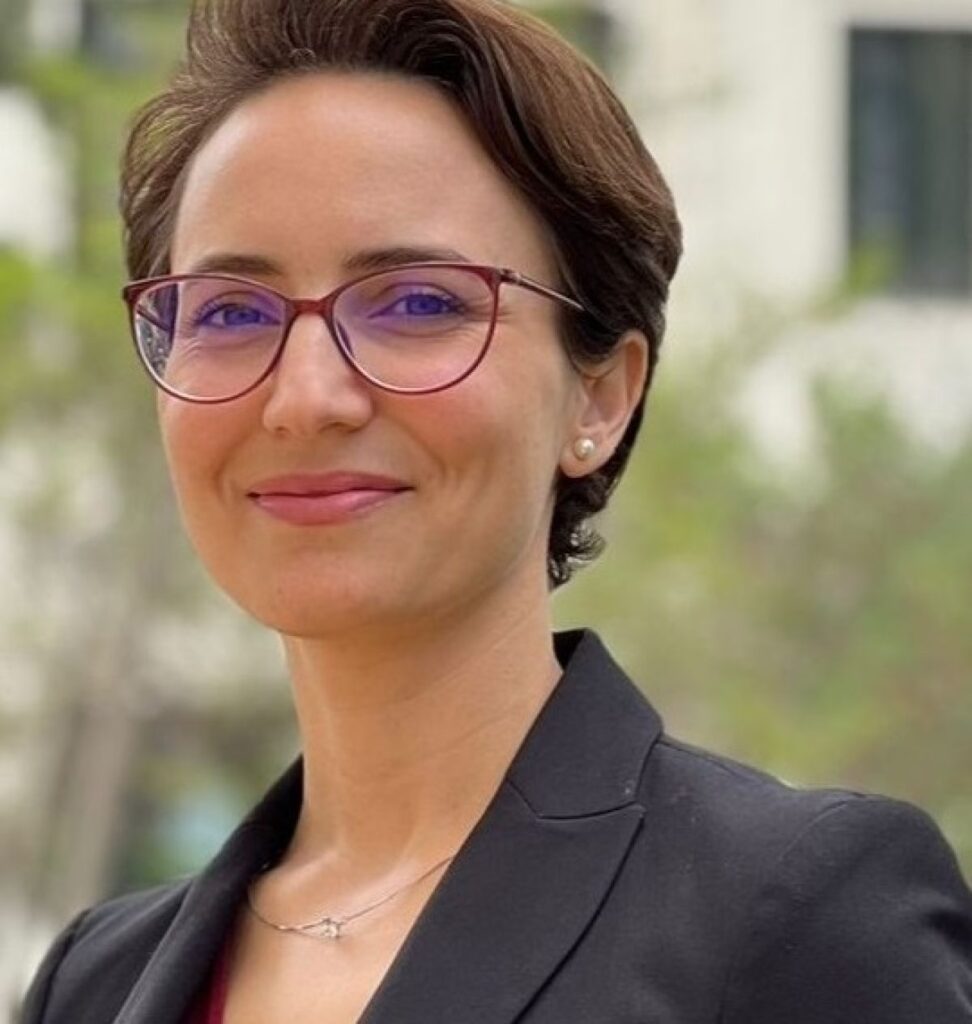
Tunisian researcher Emna Harigua has been honoured with Tunisia’s 2025 Best Female Scientific Achievement Prize for her innovative drug discovery work powered by artificial intelligence (AI).
In recognition of women’s essential contributions to science and innovation, Harigua, who holds a doctorate in biomathematics, bioinformatics and computational biology, was awarded the prestigious prize by Tunisia’s Ministry of Family, Women, Children and Seniors as part of the celebrations for the country’s National Women’s Day, observed on August 13. Her achievements include leading research in AI-powered drug discovery through a national node in the Global South AI for Pandemic and Epidemic Preparedness and Response Network, a global initiative supported by IDRC and the United Kingdom’s Foreign, Commonwealth and Development Office.
Harigua, a scientist at the Institut Pasteur de Tunis, Tunisia, and principal investigator of the BIND project (Bioinformatics and Artificial Intelligence for Infectious Diseases), is leading an AI-powered platform that accelerates research against some of the world’s most persistent infectious agents that pose health risks.
Her research targets neglected tropical diseases such as leishmaniasis and malaria, combining bioinformatics, AI and experimental validation to shorten the drug discovery timeline and reduce costs. The BIND project has already identified nine novel anti-Leishmania drug candidates, with three now in pre-clinical validation. In addition, the team launched CidalsDB, an open-access AI platform for drug identification, marking a step forward in global efforts toward open science and collaborative health research.
“This award is not just a personal milestone — it’s a recognition of the potential of African-led science to tackle global health challenges,” said Harigua.
Beyond her lab, Harigua is a strong advocate for building Africa’s capacity in computer-aided drug discovery and ensuring that cutting-edge technologies serve the health needs of African communities. Her work — presented recently at the International Science Council during a workshop held in Nairobi, Kenya, on the impact of emerging technologies on science systems — underscores a vision where innovation, collaboration and inclusion drive the future of medical research.
source/contents; idrc.crdi.ca (Intl Develop Research Centre, Canada) – (headline edited)