Arabs & Arabian Records Aggregator. Chronicler. Milestones of the 25 Countries of the Arabic Speaking World (official / co-official). AGCC. MENA. Global. Ist's to Top 10's. Records. Read & Enjoy./ www.arabianrecords.org
the award recognizes his pioneering project titled ‘Recycling Glass and Rubber Tire Waste to Improve the Properties of Concrete’.
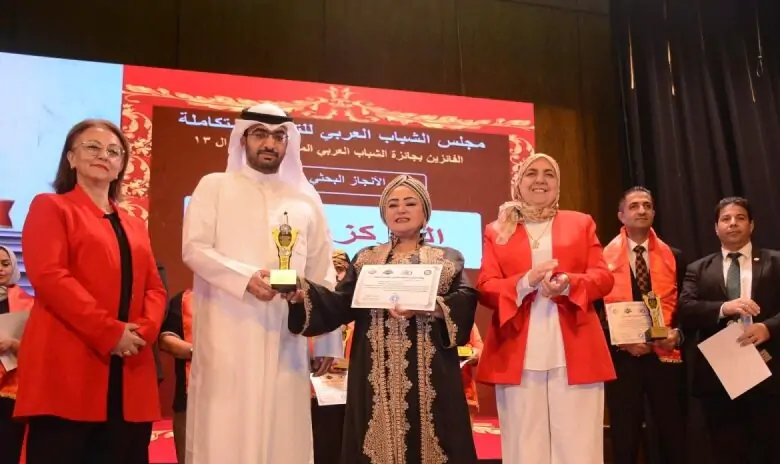
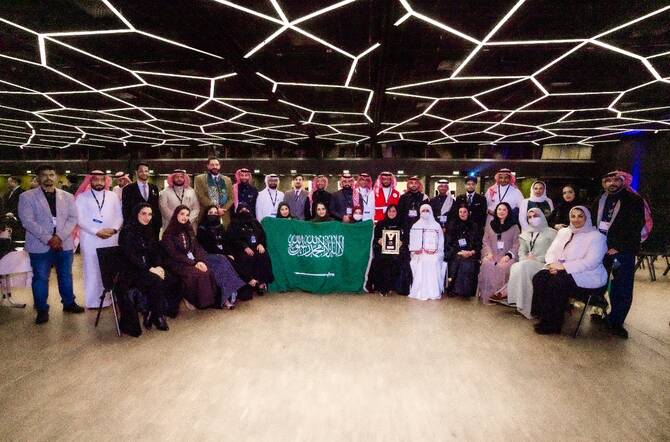
Kuwaiti Engineer Abdullah Al-Gharib, a member of the Board of Directors of the Kuwait Society of Engineers, has won the Arab Youth Excellence Award in its 13th session, organized by the League of Arab States. He received the honor in the category of Research and Innovation Achievement in the ministerial and civil field.
Speaking to the Kuwait News Agency (KUNA), Al-Gharib said the award recognized his pioneering project titled “Recycling Glass and Rubber Tire Waste to Improve the Properties of Concrete.” He described the recognition as a tribute to the collective efforts of Arab youth in advancing research and innovation.
Al-Gharib expressed pride in this achievement, noting that the project seeks to tackle environmental waste by transforming it into value-added materials that enhance concrete quality and contribute to a more sustainable infrastructure.
He explained that the research demonstrates how industrial waste can improve the mechanical properties of concrete while reducing environmental impact—an approach that supports the development of sustainable building practices across the region.
He dedicated the award to His Highness the Amir of Kuwait, Sheikh Mishal Al-Ahmad Al-Jaber Al-Sabah, His Highness the Crown Prince, Sheikh Sabah Khalid Al-Hamad Al-Sabah, and the Kuwaiti people, emphasizing that the country’s support for innovation and scientific research played a key role in this success.
Al-Gharib also thanked the Arab Youth Council for Integrated Development and the League of Arab States for their continuous encouragement of youth-led initiatives. He said the recognition serves as a motivation to continue working on projects that benefit society and advance the United Nations Sustainable Development Goals (SDGs).
He concluded by calling on Arab youth to invest in education, pursue scientific research, and embrace innovation as tools to overcome challenges and shape a brighter future for the Arab world.
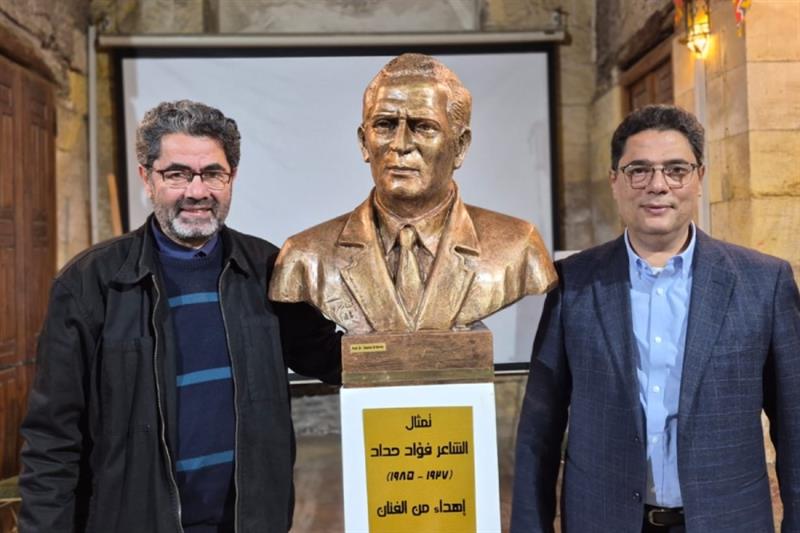
A statue of pioneering Egyptian vernacular poet Fouad Haddad (1927–1985) was unveiled at the House of Arabic Poetry in the heart of Islamic Cairo during a poetry evening.
The event, held last week, was part of the cultural Salon of renowned poet Abdel Moati Hegazi under the title “In the Presence of Fouad Haddad.”
The statue of the father of poets, Fouad Haddad, which centred the stage, was a gift from renowned international sculptor Osama Al-Serwy to the House of Arabic Poetry, Ministry of Culture. Al-Serwy created 92 statues of Egyptian figures, including those of Said Darwish and Abbas El Akkad, among others.
“Fouad Haddad is a poet who continues to live in the collective conscience and awareness of Egyptians, shaped by his words, and the least we can do for such a figure is to create a sculpture that makes his physical features eternal, for he and his art are already immortal,” explained sculptor Osama Al-Serwy.
The evening kicked off with a short speech by architect Hamdi Sotohi, head of the Egyptian Cultural Fund, who stated the grand impact of poet Fouad Haddad on the history of Arab poetry.
This was followed by a speech of renowned poet Abdel Moati Hegazi, who thoroughly explained how Haddad’s figurative language made him a master of both vernacular and classical poetry.
Poets Mohamed Baghdady and Ragab El-Sawy also spoke, with El-Sawy reciting a poem he dedicated to Fouad Haddad that incorporated verses from Haddad’s work.
“The evening comes out of the responsibility of the House of Arab Poetry to safeguard the patriotic poetic memory,” explained Sameh Mahgoub, head of the House of Arabic Poetry.
Fouad Haddad was a pioneer of Egyptian vernacular poetry in the 20th century. Born in 1927 in Cairo, he was educated in French and studied French literature.
He later turned to Egyptian and Arab poetic traditions, especially vernacular verse, which strongly shaped his work. From then on, his language and themes reflected the vitality of Egyptian culture, making his poetry a distinct part of Egypt’s intangible cultural heritage.
He wrote over 30 books of poetry, 17 of which were published during his lifetime. One of his most popular poems is Al-Mesaharaty, which renowned Egyptian composer Sayed Mekkawi set to music. His song Al-Ard Betetkalem Araby (The Earth Speaks Arabic) became an iconic pan-Arab song for generations and was written in the aftermath of the Six-Day War in 1967.
The event was a mix of poetry recitation and songs, opening with a very special poetic speech by Fouad Haddad’s youngest son, writer Hassan Haddad. The talk explored the theme of hope as a mainstream flooding in Haddad’s poetry.
The poet of hope
“Oh tanned one, my soul, the extension of the Nile that flows 2,000 miles per second, as far as the rhyme can hold, 2,000 years pass by and the beauty of my words still holds, Fouad Haddad is the poet of hope, and his belief in hope was the main force that moved the poet within him and his clear decision to make his poetry aims to attempt a better life for the people. Throughout his life, he never deviated from hope or his belief in the people,” explained writer Hassan Haddad.
Hassan Haddad elaborated on the theme of hope in Fouad Haddad’s poetry with another verse that opens his epic poem, lamenting martyr Mohamed Ebid in his poetry collection Egypt’s Word, saying, “Planting hope and dreams has a long history and tradition; my faith in victory is based on Egypt’s belief in the strength of its people.”
Hassan Haddad further recounts how hope was a cross-cutting theme in Fouad Haddad’s poetry journey, where, when he was a political prisoner and tortured, he decided to write daily poems to support his prison mates.
“Palm trees stand tall as a symbol that continues to rise. When goodness prevails, the iron of evil will bend. No faith is ever broken, no hope is lost, hardships are accounted for, and so long you live in this world, hope is a must,”he recites.
Hassan Haddad explained that in response to the Six-Day War, Fouad Haddad wrote a poetry collection that was published in 1969 during Cairo’s millennium celebrations.
The opening lines of his book, Of the Radiance of Imagination and the Creation of Generations in the History of Cairo, begin with his famous verse: “The earth talks Arabic.”
Then Hassan Haddad recited more of Fouad Haddad’s poetry.
Once upon a time, there lived affection, joy, and felicitation,
when years were spun like a braid.
I was the gardener then—and Egypt rested on a straw mat,
like a princess of honey and song.
But days kept drifting toward the horizon,
and, if I’m honest, hope’s tether was always a little too long.
O listeners, kin of one land beneath a single sky:
If only I could hold mirrors shaped from pure white patience,
Polished with dew and that inner light,
when one greets the crack of dawn,
Hard work and perseverance need hope and inspiration.
The enchanting speech unfolded into a poetry evening where Fouad Haddad’s son, renowned Poet Amin Haddad, recited Fouad Haddad’s old-time favourites:
Salute, People of Levantine
Salute, people of Levantine, O people of God
Salute the folk of God, O seekers of God,
You read a person from his presence.
I’ve pinned my heart as witness to the drum’s rhythm,
A man is known by his eyes.
You see neither his aspirations nor his fears, neither his lows nor his highs,
Whilst the moon was plundered, with no return, I chanted for dawn.
That was never exiled, never hidden. It remained at home, and I glued it together,
bringing serenity and guiding me throughout the ages.
In the poetry realm, I was Abul Tayyib,
whoever provided protection to my home, also protected my religion.
Then, music composer Ahmed Ismail sang the song of Suez.
O Suez
An honest harbour, flags, and decorations,
The crown of the city is Abu Zayd Al-Helali.
We say, “We have arrived, how sweet is the arrival.”
Our proverb states, “Patience grants wishes.”
Ayoub is promised to Naasa, Fares to Maissa,
In a traditional Suez Henna night.
On the semsemya tunes, and ropes dance of great men,
in resistance, in persistence, and in endurance.
O Suez, bold and icon of resilience,
You were always the path, the example, and the ultimate hope.
You were more steadfast than the mountains.
O salty sea and the grand breeze,
And a land yielding beauty and charm.
Walking to the rhythm of my own drum beat.
People who came before me said in the proverbs,
The footsteps wander as they wish.
And my craft is being a Mesaharaty, who roams the Country I love,
I loved and walked like a lover on long nights.
And every inch of my country is a piece of my liver (very dear and essential) and a part of my song.
The evening ended with a segment of the famous Mesaharati, sung and performed by Bassiouni Emarra.
Mesaharati
Wake up, O sleeper, and remember God, the Eternal, Ramadan Kareem.
I am a Mesaharti anyway, beating on the drum in my hand, enhancing the rhythm,
Following the lead of the fresh scent of the morning dew and the breeze that chants.
Wake up, O sleeper, and remember God the Provider (Al-Razzaq).
Ramadan Kareem, my book of Poetry is my chant.
O Egypt, O joyous oasis,
You spoke up, and the dawn was your echo,
Even the stone chanted, when you began, history itself began.
Jordan on Thursday secured four awards during the launch of the fourth cycle of the Arab Government Excellence Awards at the Arab League headquarters in Cairo.
The Ministry of Industry, Trade and Supply was awarded Best Arab Ministry, while Amman Mayor Yousef Shawarbeh received the Best Arab Municipality Director award. Jordan Customs Department, represented by director-general Ahmad Akalik, was honoured as Best Arab Institution, and the Jordan River Foundation, represented by Project Director Nizar Salibi, received the award for Best Initiative in Youth Empowerment.
Minister of Industry, Trade and Supply Yarub Qudah, who received the ministry’s award, expressed pride in the achievement, saying it “holds a special place given the competition at the regional level and the ongoing reform tracks launched by His Majesty King Abdullah.”
He noted that the ministry’s win reflects Jordan’s advancement in public administration under the King’s leadership, highlighting its progress in digital transformation, with around 90 per cent of transactions now digitised, alongside streamlined procedures and enhanced services for citizens and stakeholders.
Qudah added that the award reaffirms the ministry’s key role in strengthening institutional excellence, driving strategic initiatives at home and abroad, and advancing economic partnerships.
He also emphasised the ministry’s central role in ensuring food security, managing strategic wheat and barley reserves, safeguarding fair competition, and protecting consumers.
Shawarbeh expressed pride in the award, describing it as the result of institutional collaboration and a reflection of the royal vision to modernise municipal services and enhance efficiency for citizens. Akalik called the recognition “a symbolic culmination of the Customs Department’s efforts” and a motivator to maintain the highest standards of performance, echoing His Majesty’s belief in the capabilities of Jordanian institutions.
Salibi said the recognition coincides with the foundation’s 30th anniversary and underscores its ongoing efforts to empower youth economically and socially. “Youth are the core of development and the cornerstone of Jordan’s future,” he said.
The Arab Government Excellence Award is organised in cooperation between the Arab League and the UAE government. The fourth cycle alone received 14,390 submissions from across the Arab world, contributing to a total of 40,690 submissions across all cycles, underscoring the competitiveness and prestige of the awards, Petra reported.
source/content: jordantimes.com (headline edited)
_____________
Jordan on Thursday secures four awards during the launch of the fourth cycle of the Arab Government Excellence Awards (Petra photo)
The award reflects the university’s commitment to advanced research and strengthens its position in international scientific forums, highlighting its growing role in supporting research in technological fields.
A distinguished researcher from the University of Business and Technology in Jeddah has been awarded a gold medal at the Geneva International Exhibition of Inventions for her groundbreaking work on renewable energy technologies.
Dr. Basma El Zein’s innovation, which relates to solar cells, has been registered as a patent and received recognition from the World Intellectual Property Organization, a UN agency.
The award reflects the university’s commitment to advanced research and strengthens its position in international scientific forums, highlighting its growing role in supporting research in technological fields.
It builds on the university’s record of success and participation in local and global scientific forums and reaffirms its dedication to supporting applied scientific research, fostering technology transfer and encouraging entrepreneurship.
These efforts contribute to transforming research findings into solutions that align with global trends in innovation and technology.
source/content: arabnews.com (headline edited)
_____________
University of Business and Technology in Jeddah. (X @UBT_EDU)
International University of Rabat currently holds 734 invention patents, maintaining its status as one of the most innovative universities in Africa for the sixth consecutive year.
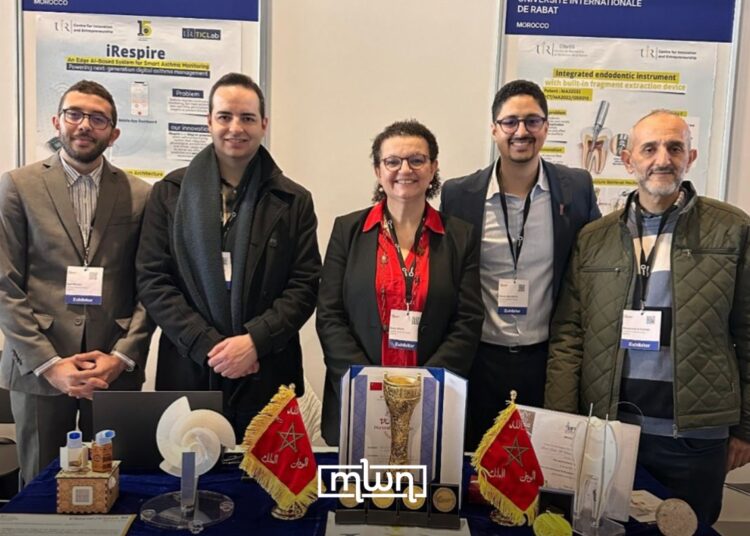
International University of Rabat (UIR) achieved an unprecedented success at the 51st International Exhibition of Inventions Geneva, held from March 11 to 15 at Palexpo.
The university secured four medals for its innovations and claimed the prestigious Chinese Delegation Prize for Invention and Innovation, a first for a Moroccan team.
The fair brought together over 1,000 inventions from 35 countries. Experts from an international jury evaluated the projects in front of industrial partners and global investors.
The recognition of Morocco’s delegation testifies to the creativity and the scientific rigor of its researchers.
Two of the awarded innovations earned gold medals. The first presents a medical device for safely extracting fractured endodontic instruments during dental procedures.
Developed by the university’s engineering and health laboratories, the tool uses a fine internal fiber to recover broken fragments in root canals, reducing procedure time while protecting surrounding tissue.
The second gold medal recognized a spiral wind turbine that adjusts its speed without electronics or external energy.
Designed by a multidisciplinary team, the turbine uses articulated centrifugal flaps that automatically limit rotation during strong winds, improving safety and reliability in renewable energy installations.
A bronze medal honored a smart system for monitoring chronic respiratory diseases. Developed by the university’s artificial intelligence team, the system combines physiological, environmental, and behavioral data collected from connected sensors.
It provides personalized care and early interventions and mainly helps patients manage conditions more effectively.
The fourth distinction, a bronze medal paired with the Chinese Delegation Prize, rewarded an advanced method to produce waterproof and earthquake-resistant construction materials from local recycled resources.
Developed through collaboration between the university’s innovation center and a private partner, the process transforms dredging sludge and other materials into high-performance, sustainable construction solutions for rural infrastructure.
University representatives noted that these awards show their commitment to turning research into practical solutions that respond to health, environmental, and industrial challenges.
International University of Rabat currently holds 734 invention patents, maintaining its status as one of the most innovative universities in Africa for the sixth consecutive year.
Saudi Arabia’s health sector secured a special award and 19 medals at the 51st Geneva International Exhibition of Inventions this weekend, highlighting the Kingdom’s expanding role in global healthcare innovation.
The recognition of the Ministry of Health and partners across the national health ecosystem came about after the presentation of 20 healthcare innovations under the Saudi pavilion during the exhibition, held from March 11 to 15, the Saudi Press Agency reported.
The National Institute for Health Research received a special award, and five medals, including two gold medals with distinction, one gold medal and two silver medals, underscoring its contribution to developing innovative healthcare solutions.
Other Saudi institutions were also recognized. The Council of Health Insurance won a bronze medal, while the Saudi Red Crescent Authority secured a silver medal for an innovation designed to improve emergency medical and ambulance services.
Saudi Health Holding Company and its health clusters also performed strongly, being awarded a silver medal as well as 12 additional medals in several regional clusters.
Among them, Taif Health Cluster and Hail Health Cluster each won gold medals, while Jeddah First Health Cluster secured a gold and a silver medal.
Northern Borders Health Cluster and Al-Baha Health Cluster received silver medals, while Qassim Health Cluster won one silver and one bronze medal.
Bronze medals were also awarded to Riyadh Second Health Cluster, Jazan Health Cluster and Najran Health Cluster.
Saudi achievements at the exhibition extended beyond healthcare. King Abdullah City for Atomic and Renewable Energy won three gold medals, a silver medal and a special award as part of the Kingdom’s energy delegation.
The institution presented innovations including a solar thermal desalination system using forward osmosis, advanced carbon electrodes for supercapacitors in energy storage systems, a battery-based control system to improve microgrid power quality, and oxygen transport reactor technology supporting clean hydrogen and low-emission energy solutions.
Officials from the ministry of health said participation in the exhibition aimed to strengthen Saudi Arabia’s presence on international health platforms, highlight national innovations, and support researchers and innovators in the Kingdom’s healthcare ecosystem.
The Geneva International Exhibition of Inventions, organized in cooperation with the World Intellectual Property Organization, is considered one of the world’s leading innovation events, bringing together participants from more than 40 countries and displaying more than 1,000 inventions.
source/content: arabnews.com (headline edited)
_____________
Saudi achievements at the exhibition also extended beyond healthcare. King Abdullah City for Atomic and Renewable Energy won three gold medals, one silver medal and a special award as part of the Kingdom’s energy delegation. (Supplied) __________________
With the iconic character of Al-Sheikh Hosni – played by the late, talented Mahmoud Abdel-Aziz – filmmaker Daoud Abdel-Sayed’s landmark film Al-Kit Kat made the 100 best Egyptian films list.
But this wasn’t the only reason Abdel-Sayed’s passing at the age of 79 on 27 December prompted a great sense of loss. Often described as Egypt’s foremost poet of the silver screen, Abdel-Sayed is one of the very few auteurs whose vision spoke volumes.
The authentically Egyptian ambiance of Al-Kit Kat, based on Ibrahim Aslan’s novel Malek Al-Hazin (The Heron, 1983), benefiting from a beautifully constructed dialogue by Abdel-Sayed, focuses Al-Sheikh Hosni, a blind widower living in Al-Kit Kat neighbourhood who refuses to admit his disability and dreams of riding a motorcycle — which he does in the course of the film — spending his nights smoking weed with his neighbours and discreetly selling his father’s house to the drug dealer for fear of censure from his son and his mother.
Al-Kit Kat, released in 1991, became a top grossing film that remained in theatres for two years, to Abdel-Aziz’s surprise because he was under the impression that he was participating in an artistic, non-commercial film. As actor Ahmed Kamal recalled in an interview published on these pages, after he saw the film for the first time at a private screening, Abdel-Aziz apologised to Abdel-Sayed for underestimating the power of the film.
Abdel-Sayed was born on 23 November 1946 in Cairo, and studied filmmaking at the Higher Institute of Cinema, graduating in 1967. Right after his graduation he started to experiment with writing screenplays. He assisted the late renowned filmmaker Kamal Al-Sheikh on Al-Ragol Al-Lazi Fakad Zilloh (The Man Who Lost His Shadow, 1968) as well as Youssef Chahine in Al-Ard (The Land, 1970).
He made his debut documentary in 1976, A Wise Man’s Advice on the Affairs of the Village and Education, following it with two other documentaries. His debut feature, Al-Saalik (The Vagabonds, 1985), captures the fierce class transformations in Egypt following the open door policy of economic liberalisation with the story of two down-and-out friends’ rise through drug dealing in Alexandria.
Abdel-Sayed’s achievement was never one of quantity, only quality; he only made nine feature films, only one of which was not written by him: Ard Al-Ahlam (1993), by Hani Fawzi; Al-Kit Kat (1991) and Sareq Al-Farah (The Stolen Joy, 1995)were based on Malek Al-Hazin and novelist Khairy Shalaby’s eponymous short story, but Abdel-Sayed adapted them both for the screen.
Abdel-Sayed is regarded one of the pillars of Egyptian neo-realism, which emerged in the 1980s. He was an adventurer who took his camera beyond the confines of the studio, shooting for example in the real Al-Kit Kat. While his cinematic language has always been allusive, delving into deep philosophical questions, he remained devoted to the struggles and triumphs of everyday people.
Abdel-Sayed’s Al-Bahth Aan Sayed Marzouk (Looking For Sayed Marzouk) was released in 1991 as well, and though not as successful it too made its mark. A day in the life of a civil servant named Youssef, it is an absurdist journey featuring encounters with a Charlie Chaplin lookalike and the Sayed Marzouk, an eccentric billionaire full of contradictions and ambiguity. While trying to find himself Youssef is accused of murder. Like Al-Kit Kat, it features a beautiful score by Rageh Dawoud.
In Ard Al-Khouf (The Land of Fear, 1999), the legendary Ahmed Zaki plays Yehia, an undercover policeman who infiltrates the world of drug lords only to end up becoming one of them. Due to administrative changes his reports to his superiors end up being lost, and he loses his original identity.
In 2001, Mowaten wa Mokhber wa Haramy (A Citizen, A Detective, and a Thief) predicted the collapse of the social contract in Egypt. Starring Hind Sabri, Khaled Abul-Naga, Salah Abdallah and the urban folk sensationShaaban Abdel-Reheim, it was followed by Rasael Al-Bahr (Messages from the Sea, 2010), a delicate love story-cum-elegy for Alexandria starring Asser Yassin and Basma.
Abdel-Sayed’s last film was Qodrat Gheir Adeya (Extraordinary Abilities, 2015), in which he continues to raise philosophical questions about Egyptian society through his protagonist Yehia, a doctor played by Khaled Abul-Naga, who conducts a scientific studies on paranormal abilities; in the end, he fails to identify anyone with provable paranormal abilities and ends up isolated in Alexandria…
After Qodrat Gheir Adeya, Abdel-Sayed announced that he would no longer be making films under social-economic conditions that were not conducive to creativity or solidarity, prompting wide-ranging debate.
Abdel-Sayed won the Silver Pyramid, the Best Screenplay Award and the best Arabic Film Award in Cairo International Film Festival in 1999. Messages from the Sea won the best actor prize (Asser Yassin) at the Carthage Film Festival in 2010, as well as the best direction, best actor and best actor in a second role (Mohamed Lotfi) at the Egyptian National Film Festival in 2013. In the same year, the Dubai Film Festival announced its choice of the best 100 Arab films and three of them were by Daoud Abdel-Sayed: Al-Kit Kat, Land Of Fear, and Messages from the Sea.
Abdel-Sayed survived by a son, Youssef, and a daughter, Salma; he had been married to journalist and writer Karima Kamal.
* A version of this article appears in print in the 8 January, 2026 edition of Al-Ahram Weekly
The Jeddah-based Organization of Islamic Cooperation marked on Sunday International Day for Combating Islamophobia.
The day of remembrance was introduced in 2019 to commemorate the victims of the Christchurch attacks in New Zealand.
On that day, 51 worshippers were killed and 89 injured when a terrorist opened fire at two of the city’s mosques during Friday prayers.
The organization published a statement Sunday from Secretary-General Hissein Brahim Taha with a call to action.
In it, Taha said: “Islamophobia is not only a Muslim concern. It undermines human dignity, pluralism and the freedom of religion or belief for all.
“The OIC calls upon governments, international organizations, media, social media and digital platforms, and civil society to translate commitment into concrete action through strong legal protections, responsible digital governance and genuine interfaith dialogue.”
Taha also noted that anti-Muslim incidents are on the rise, with Islamophobic rhetoric increasingly normalized in political discourse.
New technologies, artificial intelligence-generated content and digital transformation are increasingly weaponized to spread hatred at an unprecedented scale, he added.
On Friday, the organization visited the UNESCO headquarters in Paris for a high-level roundtable on combating Islamophobia.
Speakers discussed the causes of Islamophobia and its disproportional impact on women, and focused on the role of education and culture in countering misinformation and promoting dialogue.
Taha’s special envoy on Islamophobia, Ambassador Mohammad Bashgi, delivered a speech, and the event concluded with a Ramadan iftar ceremony that brought together the diverse attendees.
The OIC was founded in 2007 as one of the first international observatories monitoring Islamophobia.
Since then it has published 18 annual reports and 216 weekly reports in Arabic, English and French.
Its stated aims are to be the leading international reference in monitoring Islamophobia by documenting incidents, raising awareness internationally, sharing political dialogue and responding to offensive stereotypes in the media.
source/content: arabnews.com (headline edited)
_________________
Members of the OIC visit the UNESCO headquarters in Paris for a dialogue on combating Islamophobia. (X/@OIC_OCI)
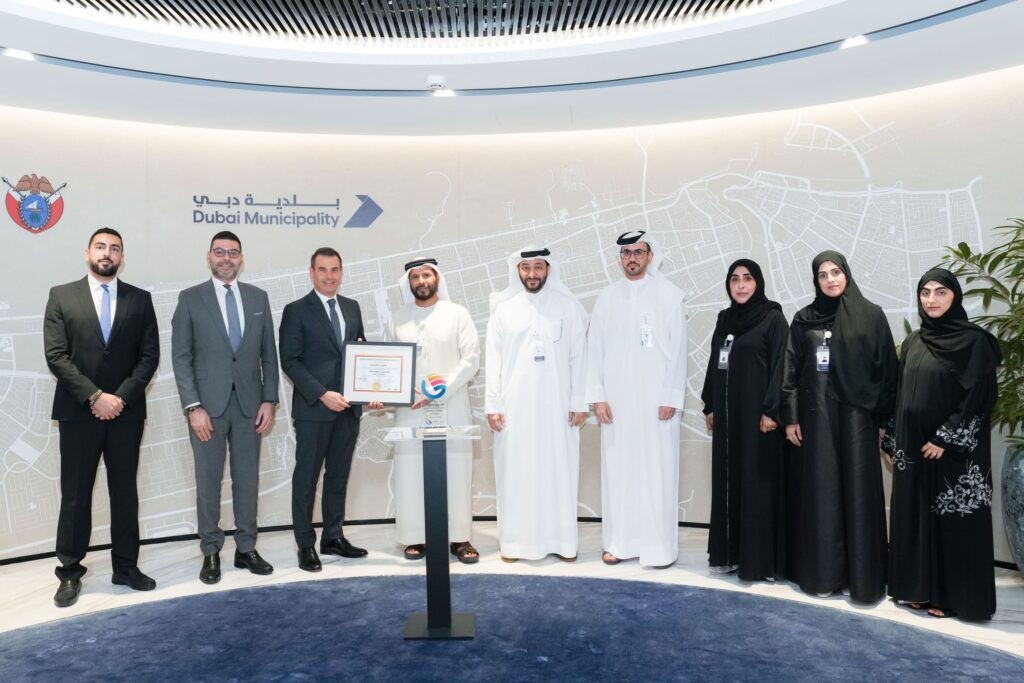
In a new milestone that reinforces Dubai’s position as a global centre for innovation, Dubai Municipality has received international accreditation from the Global Innovation Management Institute (GIMI) as the best innovative government entity in innovation leadership at Level 4 — the highest level within this category. With this achievement, Dubai Municipality becomes the first municipality in the world to attain this advanced level, underscoring the leadership and maturity of its integrated government innovation ecosystem embedded across its institutional framework.
This international accreditation reflects the significant progress made by Dubai Municipality in building a comprehensive and sustainable innovation ecosystem that adopts leading global practices in government innovation management and helps shape the future of municipal work. These efforts contribute to enhancing quality of life and further strengthening Dubai’s position as a global destination for living, working, and investment.
The global assessment was based on a range of pioneering initiatives and innovations that demonstrated the advanced maturity of institutional innovation within the Municipality. Its efforts stood out in aligning knowledge and innovation strategies with institutional priorities and digital transformation, as well as linking innovation with future foresight by analysing drivers of change and leveraging advanced technologies to strengthen future readiness. This was complemented by stronger governance frameworks, the development of an enabling regulatory environment for innovation, and the integration of the innovation lifecycle through a holistic methodology that ensures sustainability and enhances institutional value.
Nasser BuShehab, CEO of the Planning and Governance Sector at Dubai Municipality, said, “We are proud of this global accreditation, which reflects a deeply rooted institutional culture that views innovation as a continuous journey rather than a final destination. It also reflects the efforts of highly qualified teams that have transformed challenges into opportunities and demonstrated that governance and institutional innovation at Dubai Municipality are key drivers of quality of life across the emirate. This achievement crowns our efforts to build a comprehensive and sustainable innovation ecosystem that strengthens Dubai’s leadership as a global capital of innovation and a laboratory for ideas and future foresight.”
Dubai Municipality’s leadership has also been demonstrated through strengthening open partnerships and building an effective innovation network with the private sector to develop proactive solutions. The Municipality has implemented hackathons and innovation labs to generate smart solutions and innovative business models that address institutional challenges and opportunities. It has also introduced certifications and training programmes aimed at upskilling human capital and equipping employees with advanced innovation capabilities.
Reaffirming its commitment to embedding a culture of experimentation and learning, the Municipality has created a safe environment for innovative initiatives and projects while adopting advanced performance indicators to measure the return on innovation and ensure its sustainability and operational efficiency.
A record 3,428 billionaires, worth a combined $20.1 trillion – 4 trillion more than just one year ago – dominate this year’s Forbes list.
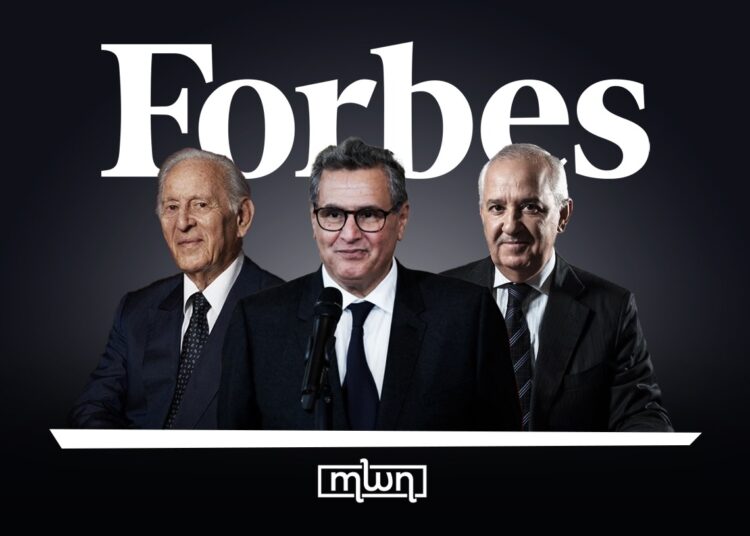
Morocco secured three spots on Forbes’ 40th annual World’s Billionaires List, released Tuesday. Othman Benjelloun, Aziz Akhannouch, and Anas Sefrioui represent the country on a list that reached a record 3,428 names. It is a mixed picture for the three – two held steady, while one saw his fortune shrink considerably.
Othman Benjelloun, 93, is the wealthiest Moroccan on the list. Forbes estimates his net worth at $1.7 billion, placing him 2,386th globally and 18th across Africa. He is the CEO of BMCE Bank of Africa, a financial institution with assets exceeding $12 billion and operations spanning West, Central, and East Africa.
His business empire extends well beyond banking. Through his holding company FinanceCom, which largely operates as O Capital Group, Benjelloun holds a stake in the Moroccan arm of French telecom firm Orange.
His father was a shareholder in RMA, a Moroccan insurance company, which Benjelloun later built into a leading insurer. In 2014, he launched a $500 million plan to construct the 55-story Mohammed VI Tower in Rabat, one of the tallest buildings in Africa.
FinanceCom is also part of a project to develop a multibillion-dollar tech city in Tangier, expected to host 200 Chinese companies. Benjelloun and his wife received the David Rockefeller Bridging Leadership Award in 2016 for building schools in rural Morocco.
A Casablanca resident with a diploma from the École Polytechnique de Lausanne, Benjelloun also co-owns Ranch Adarouch, one of Africa’s biggest cattle breeders.
Aziz Akhannouch, 65, follows with an estimated net worth of $1.6 billion. He ranks 2,481st globally and 19th in Africa. Akhannouch is the majority owner of Akwa Group, a multibillion-dollar conglomerate founded by his father and partner Ahmed Wakrim in 1932.
The group operates in petroleum, gas, and chemicals through publicly traded Afriquia Gaz and Maghreb Oxygene.
On the political front, he has served as Head of Government since September 2021. He holds an MBA from the Université de Sherbrooke and is based in Casablanca. His wife, Salwa Idrissi, runs her own company, operating franchises for Gap, Gucci, and Ralph Lauren in Morocco.
The picture is more difficult for Anas Sefrioui. The 68-year-old founder and CEO of listed homebuilder Groupe Addoha ends the year as the weakest performer among Morocco’s billionaires. His fortune dropped by $300 million after shares in Groupe Addoha fell more than 30%. Forbes now values him at $1.3 billion, ranking him 2,858th globally and 22nd in Africa.
He ties Nigeria’s Femi Otedola as the least wealthy billionaire on the continent’s list. Sefrioui built his fortune developing low-cost housing in Morocco, largely through government contracts. His daughter Kenza serves as the company’s deputy chairman.
Across Africa, Morocco ranks fourth in total billionaire count, behind South Africa with seven, Egypt with five, and Nigeria with four. The continent’s 23 billionaires collectively added $20.3 billion to their fortunes, bringing their combined wealth to $126.7 billion – up 21% from 2025.
Globally, the 2026 list broke records across every major metric. The total number of billionaires rose by 400 from last year to 3,428, the highest figure since the list launched in 1987. Their combined wealth hit $20.1 trillion, up $4 trillion year-on-year. The planet added more than one new billionaire every single day over the past 12 months.
Elon Musk leads the list for the second consecutive year, with an estimated fortune of $839 billion – the highest ever recorded for any individual. His wealth surged by roughly $497 billion over the past year, driven by Tesla’s rising valuation and SpaceX’s anticipated public listing in 2026. He is the first person to surpass the $800 billion mark.
Google cofounder Larry Page follows at $257 billion, with fellow cofounder Sergey Brin at $237 billion. Amazon’s Jeff Bezos ranks fourth at $224 billion, and Meta’s Mark Zuckerberg rounds out the top five at $222 billion.
A record 20 people now hold 12-figure fortunes – up from 15 last year and zero in 2017. The United States leads all nations with 989 billionaires, worth a combined $8.4 trillion. China, including Hong Kong, follows with 610, and India ranks third with 229.
Among the 390 newcomers this year are musician Dr. Dre, Beyoncé Knowles-Carter, tennis legend Roger Federer, and Berkshire Hathaway’s new CEO Greg Abel. At least 86 billionaires on the list owe their fortunes significantly to artificial intelligence.